ok let me help clarify a bit about the open water diver course offered by PADI for the benefit of everybody. i've not taught SDI for a while so i can't just call it off my brain right now.
the course is divided into 3 segments.
1. Theory Sessions.
Which consists of watching a video, reading the open water diver manual and completing the exercises in the book, 4 quiz and 1 final exam. This can be completed anywhere but it must be completed before the start of the open water dives (refer to No.3, some exceptions are there though)
2. Confined Water Sessions.
This sections must be completed before the Open Water Dives (again there is some exceptions but the 1st session must be done irregardless) This will consists of 5 segments, where you are taught various skills in order to survive in the underwater environment. You will also be taught on what " if's " and how to handle it.
3. Open Water Dives
This is where you employ and show the skills that you have learned in the confined water sessions to the instructor in an open environment (open = non swimming pool like conditions) there are a total of 4 dives in this segment.
So for segments 1 & 2 it can be conducted in town but 3 MUST be conducted in the open sea.
Now many people compare prices, there are a lot of variable to be taken into account. such as the dive centre you are learning with, some might use top of the range equipment, some offer 5 * like resort facilities, some offer the fastest boat in the world. So you actually get what you pay.
First decide on what is a comfortable figure for you. Then go about enquiring with that budget in mind. Again like all travel & living arrangements there is no 1 standard package that fits everybody!
Most important of them all have fun in your training but keep it serious!
Added on March 11, 2009, 9:58 amNow about the Advanced Open Water Diver course.(AOW)
A common misconception, be it intended or not that i read in this forum is that there is a minimum no of dives 1 needs to do before proceeding to this level.
Then correct answer to that question is NO (with the exception of BSAC Sports Diver)
There is no pre requisite of a minimum no of dives before going for the AOW besides the Open Water Diver certification.
But i personally recommend 1 to do at least 15 dives before going on to do this course.
Now a breakdown on the structure of the course.
There is a total of 5 dives that is required of which 2 is compulsory.
1. Deep Dive
This is one of the main reasons to do the AOW course, you learn of the extra hazards of going deeper and how to manage those hazards.
2. Navigation Dive
You will learn of more advance navigation techniques that is not taught in the open water course.
The remainder 3 dives are chosen from a list of available dives listed by the instructor. But the favorites are wreck dive, night dive, underwater photography, underwater naturalist, drift dive and peak performance buoyancy (PPB).
Note that some of these dives require special equipment, eg. camera, DSMB so there might be extra cost involved. But than again nobody said scuba diving was cheap anyway.
i agree with kimseng. i got a lot of future divers asking me about price of open water and etc. and they compare prices. it is always you get what you pay for. like some dive shop might offer you a course at a very cheap price but you get a few less confined water training which happened to my friend. if you plan to dive go for around market price. which is around rm 950 which is offered in redang. 4d 3n course.. whereby cheaper ones sometimes offered by others are 3d2n course which in my opinion might be dangerous to the student themself when they are certified.
dont rush into advanced OW. get more dive experience as much as you can especially your buoyancy. when you feel a lot more comfortable and confident underwater then only consider for your Advanced. i seen quite a number of advanced divers that is struggling underwater. there is a lot more to learn when you are just open water certified before you go doing your advance which instructors cant really teach. e.g looking for macro creatures underwater, understanding the way your buddies dive, knowing dangerous underwater creatures which are poisonous or might attack you and how to avoid them and etc.
DONT break the diving rules and take safety precautions SERIOUSLY then you'll notice diving is not a dangerous sport or hobby. just relax and enjoy the underwater beauty.
yeah..i would think so too. But doing it in "locally" would be ideal. Taking the course at the resort is too hectic and don't think we would actually enjoy the time there....spend whole day reading and learning.
Any suggestions?
heya wildchai.
i would usually suggest to do the course in the island itself rather doing confined water in kl as the situation in the sea is different from the pool. yes it may be hectic but at least it prepares you when you're still learning and roughly able to expect what it's like under the sea.


 Aug 8 2008, 04:42 PM, updated 13y ago


 Quote
Quote


 ). till then, i'm just enjoying the dives. tho not as often as before since i'm too broke now.

 SDI diver here. going next dive @ redang sept.




 PADI around 1.2k for the course itself havent include lodging




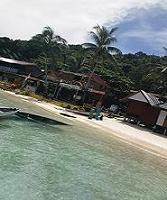


 wow expensive maa...Redang just RM1500 per head for 4 Day 3 night accommodation + Meal ans Transfer.


 the best offer i got now..Interested..PM to me.





 cu guys there


















 ask for RM 650





 0.2319sec
 0.63
0.63
 6 queries
 GZIP Disabled