

 Aug 20 2011, 12:20 AM, updated 14y ago


I poke , but i make a great pet!
Old thread
V6
The most common type of hedgehog that is kept as a pet is the African Pygmy Hedgehog. You may hear this type of hedgehog referred to as many other names, which stands to reason, since the African Pygmy Hedgehog is actually what is known as a hybrid-a mix of other breeds of hedgehogs, such as the four toed hedgehog or the white-bellied hedgehog.
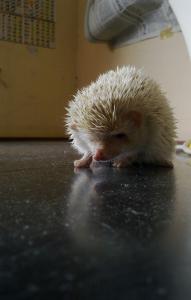
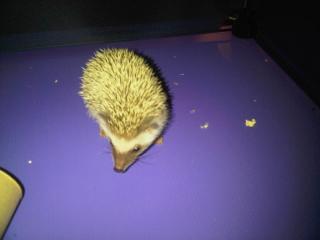
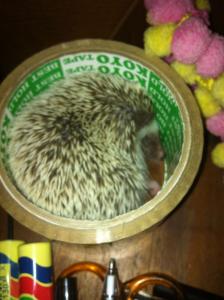
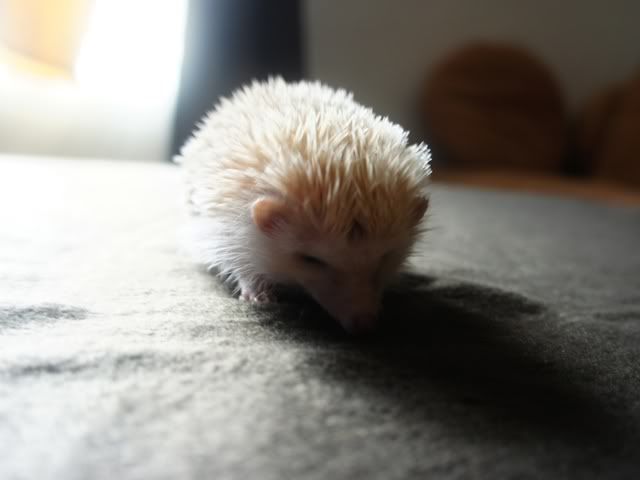
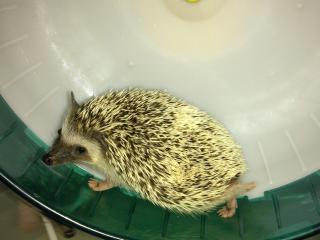
Hedgehog come in different colours , Such as...
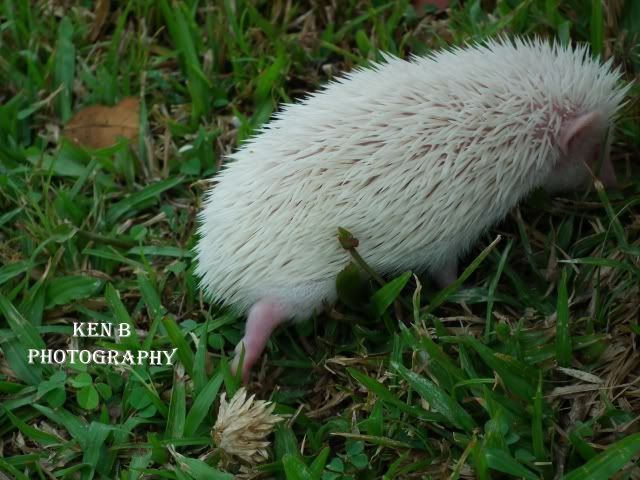
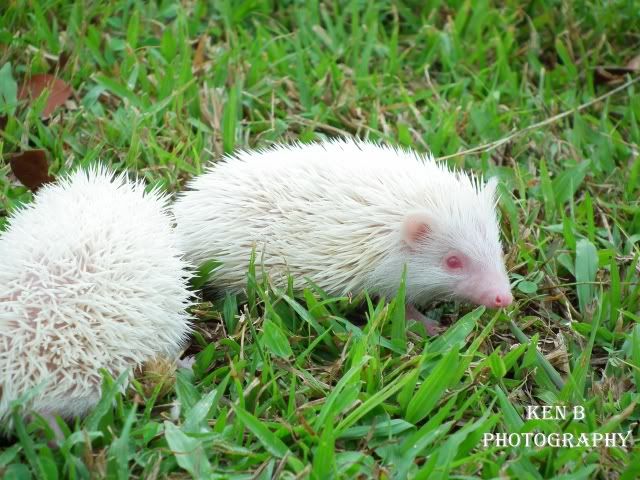
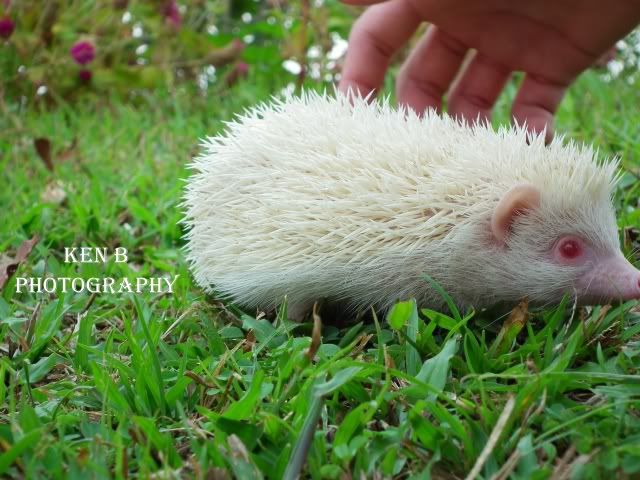
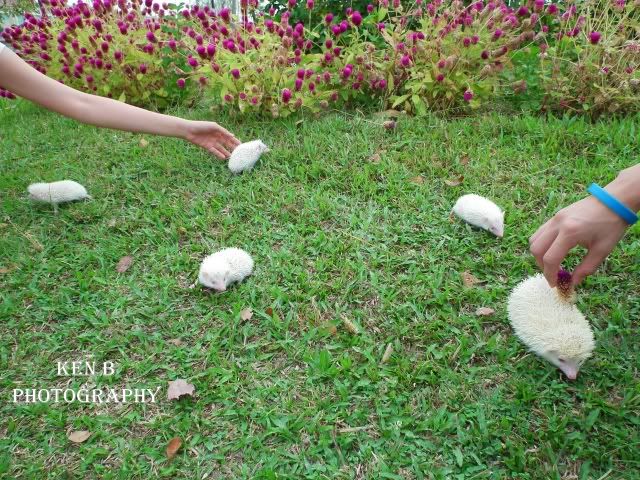
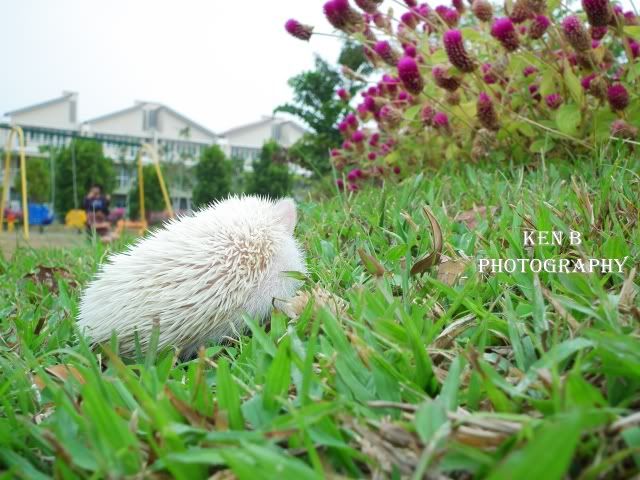
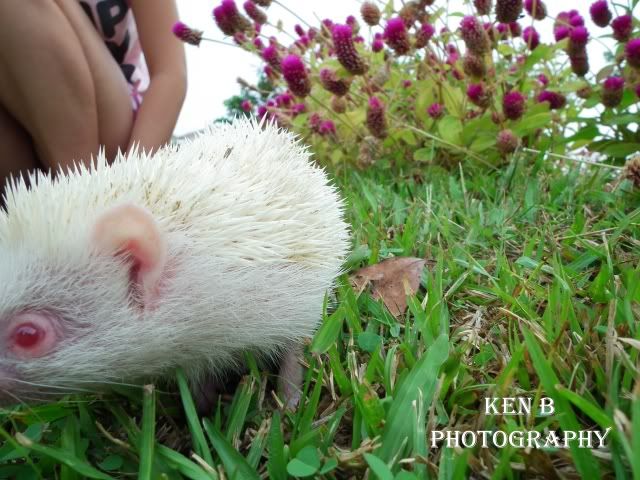
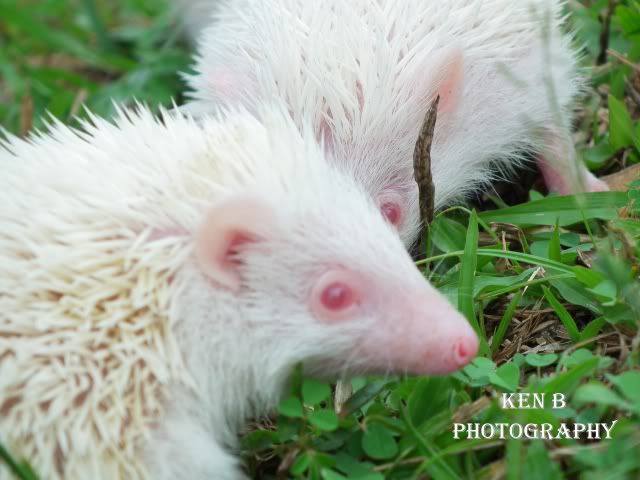
Albino

Salt and Pepper

Cinnamon

Snowflake

Pinto

1. Hedgehog general information:
Extracted and modified from Hedgehog Central - Introduction to hedgehogs
» Click to show Spoiler - click again to hide... «
There are many different types of hedgehogs spreaded across the globe, but in Malaysia you can only find African Pygmy Hedgehog, which is commonly kept as pets.
"But why," you may ask, "is there such an interest in hedgehogs as pets?"
Besides having a peaceful and humorous nature, hedgehogs readily lend themselves to just about anyone's lifestyle and schedule. Being diurnal (awake parts of both day and night) just like house cats, nearly everyone can find a time of day in which to enjoy them. They do not require a great deal of room in which to live and their dietary requirements are very easy to meet and, since they are solitary animals by nature they neither require nor want the companionship of another animal.
Unlike hamsters, Guinea Pigs and other small rodents, pet hedgehogs do not give off any appreciable odor and they are easily litter trained. They live much longer than rodents, too. With the proper care and diet, your pet can live to be 4 - 7 years old. Add to all of this the fact that they require no immunization shots and are very disease resistant and you can see why so many people consider hedgehogs to be the perfect pet.
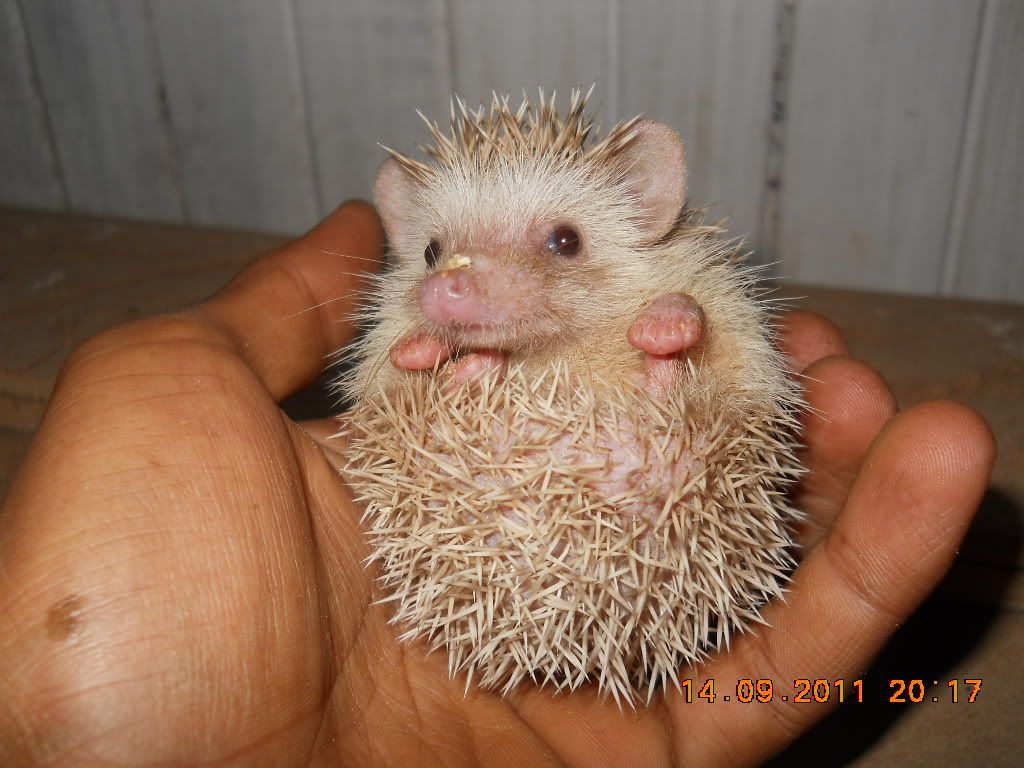
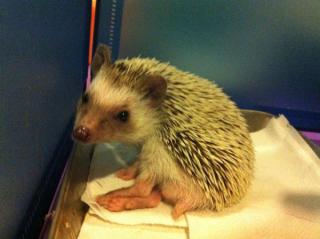
They have adorable little raccoon-like faces, set with beady little black eyes and small pointy noses that seem to twitch constantly, checking out the different odors of the room. Depending on the color variation that you choose, their little white faces may or may not have a mask. Although not related to the porcupine, they are sometimes mistaken for them because of the quills that cover their backs. The similarity ends there, however, since these quills are not barbed or nearly as sharp and remain attached to their bodies. Their little white tummies, on the other hand, are extremely soft and are covered with short, white hair. When frightened, they can roll up into a tight ball and look very much like a sea urchin. They have a short, stubby tail, but this is rarely seen since they keep it tucked up close their bodies. With their tiny little legs and round bodies, it is a real sight to see them scurry across the floor.
Unlike their much larger English cousins, the African Pygmy Hedgehog (or pet hedgehog) is rather small in size, with the average adult weighing between � and 1 � pounds and are 5 to 8 inches long - about the size of a Guinea Pig. There are a few rare adults that will grow to as much as 1 � to 2 pounds (without being fat) while others are as little as 6 or 7 ounces.
They have a quiet, gentle, disposition that makes them a true delight to own and hold. Each has a distinct personality and will bond to its owner for life. (We are assuming you purchased a socialized pet). They are surprisingly intelligent, fun to play with and are easily entertained. They love to play with tunnels, mazes and specially designed hedgehog wheels. Even something as simple as a toilet paper tube will make a good toy, as they love to stick their heads in them and run about the floor. Despite their solitary nature, they can become very affectionate with their owners and will even enjoying watching TV with you or just snuggling in your lap.
Because they are quiet, they are very easy to travel with. Most people aren't even aware that a pet hedgehog is nearby. Many hotels that restrict other animals such as cats and dogs will allow hedgehogs. Once trained to a litter box, an adult can pretty well have the run of the house. With its excellent sense of smell, keen eyesight and good memory, it will know where the litter box is and will use it on a regular basis. Because they are not a rodent, they have no body odor, but it is still important to clean the litter box daily to eliminate all smells. Some people are not comfortable with a loose pet, so a cage with a minimum floor area of 16 x 24" will keep it happy and secure.
Hedgehogs truly are a low maintenance pet. Your pet hedgehog should be kept indoors at normal room temperature (65 to 80oF); it can be fed a good quality dry cat food or a specially formulated hedgehog food; they don't bark, although when happy, some will emit a quiet purr; they do not climb curtains or chew on furniture; and, they do not ask to be taken out for a walk. All that your pet asks for is to be fed and watered, loved and appreciated. Besides simply being enjoyed as pets, there is also an active hobby.
2. Where can I get my pet hedgie?:
Extracted and modified from Hedgehog Central - Information Sheet
» Click to show Spoiler - click again to hide... «
Generally, it is better to purchase your new pet from a breeder rather than a pet store, but unfortunately, this isn't always possible. No matter where you end up looking, though, make sure that the breeder or store has at least some information on the age and background of their hedgies.
Normally petshops sell hedgehogs about Rm300 each. Here in Lowyat.net you may get it from some of our forumers, who occasionally have hoglets for sale. The price ranges from RM100 - 300.
3. Choosing your first hedgehog:
Extracted and modified from Hedgehog Central - Information Sheet
» Click to show Spoiler - click again to hide... «
Juse buy ONE, SINGLE hedgehog since they are solitary and don't normally like to share a cage. Never buy a male and female to be placed in the same cage unless you intend to breed!
Temper: After picking a potential pet up, examine it closely. Does it unroll after a few seconds? Does he click, jump or hiss? Hissing is okay. It is simply frightened because it doesn't know you. Clicking, however, means that it's trying to threaten you. This is NOT acceptable hedgehog behavior and you should look at a different, better-tempered animal. Every hedgehog is different and unique. Some like to play and explore, while others are more content to cuddle. You will be most satisfied with your new pet if you carefully choose the one that best suits your own personality and lifestyle.
Physical:
* Are his eyes nice, round, beady, wide open, and bright, without discharge? Is his nose clean and not running? Are his ears short, clean, with no discharge or crustiness behind them? Sometimes an ear has been chewed on by a sibling. As long as it has healed, this is not something to worry about.
* Is his fur on his belly soft and not matted?
* Are the spines all there with no bare spots? Bare spots indicate an unhealthy animal. Is there any sign of mites, fleas, or crustiness on his back? Fleas are a common problem to hedgehogs, but it is easily cured.
* Check the pen, is there green droppings or diarrhea?
* Is his body plump? (not fat)
* Place him on a flat surface such as a table and watch him walk. Does he wobble or have difficulty staying upright? A healthy hedgehog should have a stride that is somewhere between a walk and a shuffle?
* Can you here a rattle when he is breathing or does it seem okay? (do not mistake normal hedgehog "talk" such as chirping, purring or cheeping for a pneumonia-related rattle)
Sex:
Both male and female hedgehogs make equally good pets so this decision is entirely your own. You can readily tell a boy from a girl. If the hedgehog is tame and friendly, gently roll it over and look at the area closest to the tail. A female's genitals are immediately next to the anus, while the male's penis sheath, or "belly button" is farther up the tummy. The distance between the anus and belly button will be approximately 1/2 inch on a six week old male hoglet. However, this distance can increase to as much as an inch or more once it fully matures.
[attachmentid=109676]
** Credits to alch for providing the hedgie porn pic

Age:
Never take a hedgehog home before it is at least six weeks of age. Older hedgehogs are OK too, but keep in mind that the younger the hedgehog, the better the odds of him bonding with you.
4. Preparations for the new pet:
Extracted and modified from Hedgehog Central - Information Sheet
» Click to show Spoiler - click again to hide... «
Housing:
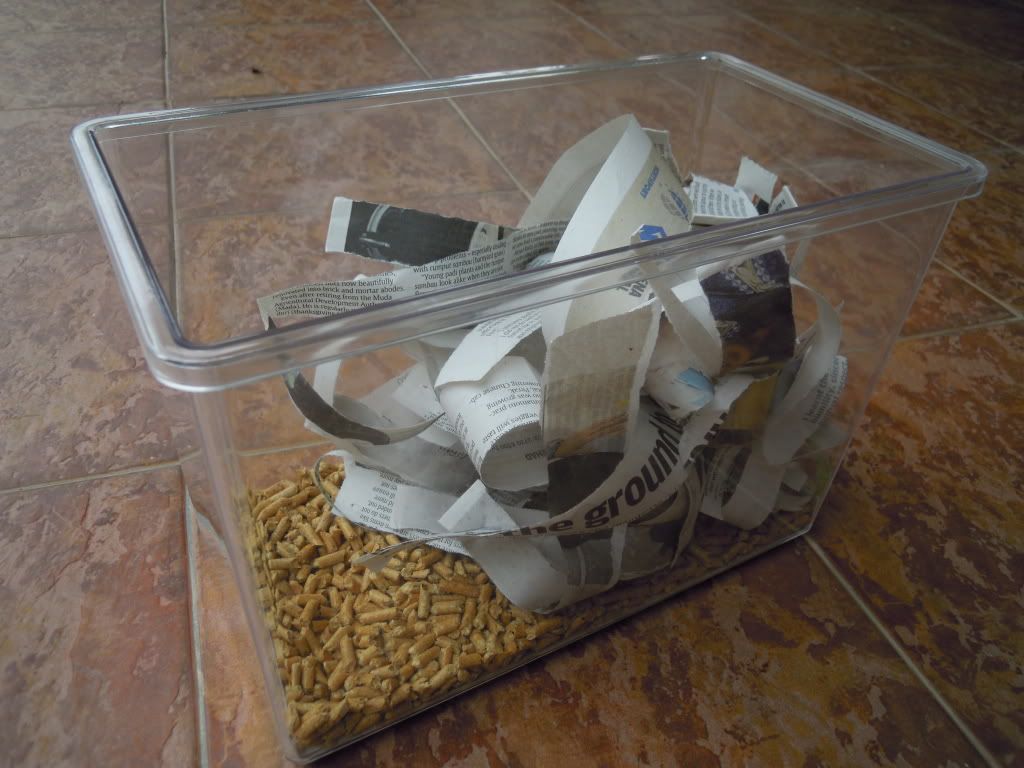
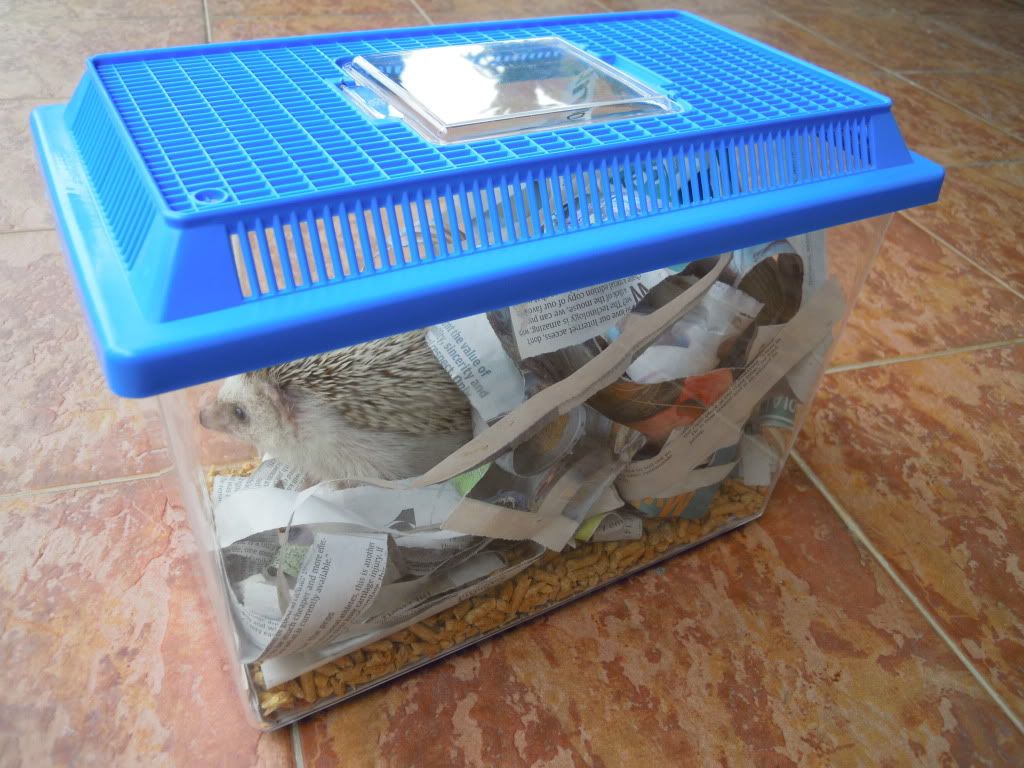
Your hedgehog will require a secure home since they are very good climbers and can easily escape from open-topped cages that are designed for animals such as guinea pigs and rabbits. If you do use a cage with an open top, it must have slippery sides that are at least 12" high and a floor space of at least l6" x 24". It must also have good circulation and be well lit but not exposed to direct sunlight during the daytime. Most of us just go to Jusco and get those large RM30 storage boxes as our pet's housing. You may use aquariums too but it will be hard to clean. Hamster cages are not suitable for hedgehogs as the gap between bars is quite wide and hedgie might get its leg stucked in between.
Placement:
No direct sunlight please. Good ventilation is required. 18-27 degrees Celsius will be good enough, any temperature lower than 18C will endanger the hedgehog as it will went into hibernation mode, further killing the poor thing.
Bedding:
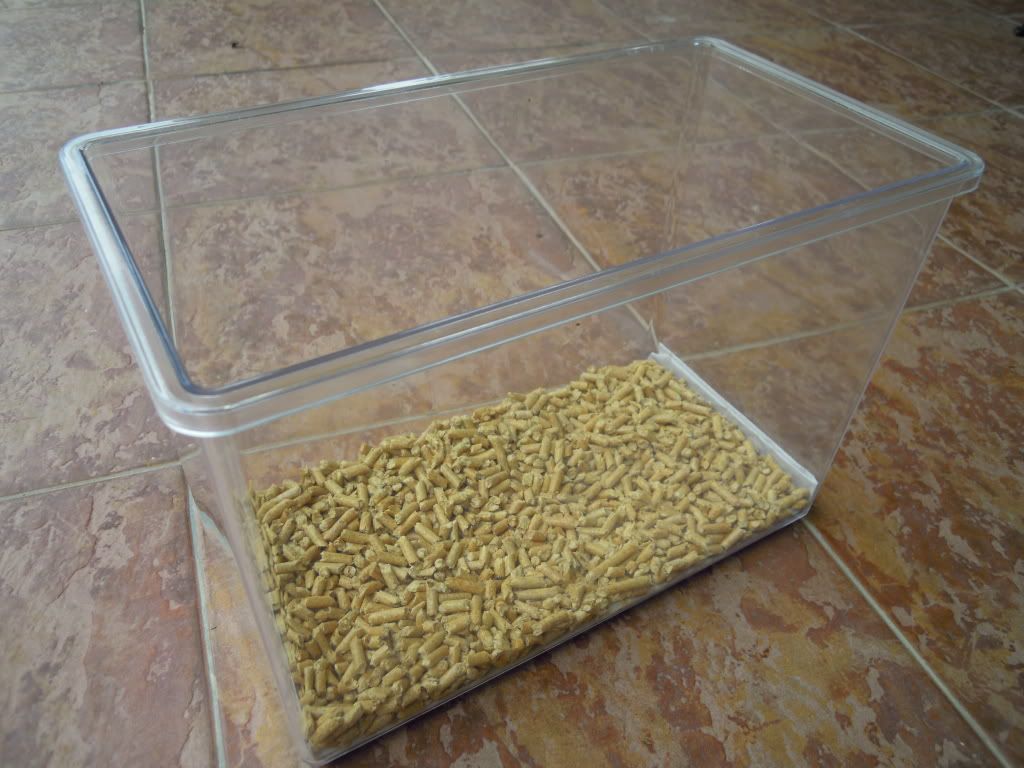
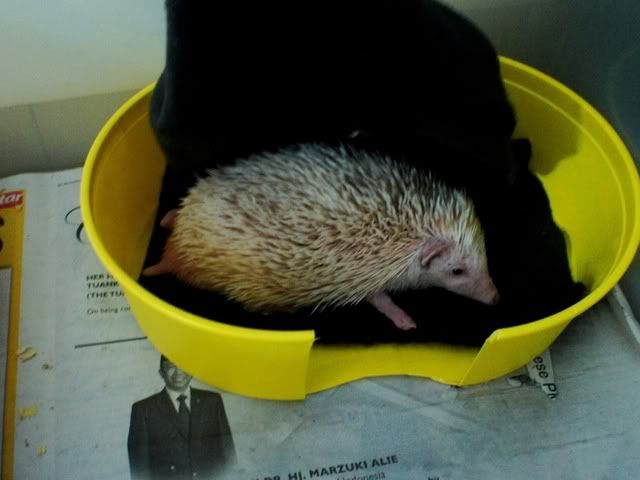
Wood shavings, newspapers, towels are some of the common beddings for hedgehogs. Wood shavings will absorb odors from hedgie's poo/pee, but you need to replace ALL the bedding with new ones often. Newspapers come cheap but some hedgehogs like to chew and tear newspapers, making a mess out of its house. Towels are hygene but you need to replace the towers very often.
Food bowl:
The food bowl needs to be fairly wide and heavy to prevent your pet from dumping out its contents and using it as a toy. Small ceramic crocks that are designed for small rodents are perfect food dishes for hedgehogs. The width or diameter of the dish can be 3 to 6 inches and it should be no more than 3 inches high. Do not get those tall food bowls and expect your poor pet to climb on.
Water supply:
Some prefer water bowls, some prefer water bottles. Its up to your preference though. But water bowls will be recommended as your pet may chip its teeth when they chew on the metal nozzle of the water bottles. And please remember that hedgies only have one set of teeth, once broken consider gone

While water bowls are recommended, hedgehogs love to fill open water dishes with shavings and this prevents them from getting enough water to drink. So keep an eye on their bowls.
Hidebox:
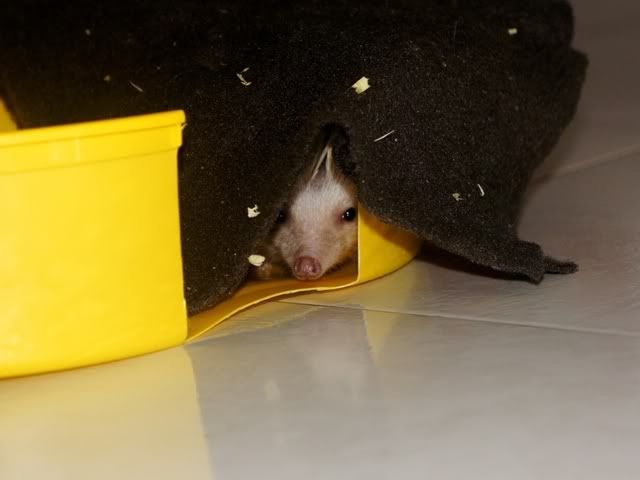
This can be as simple as a piece of 4 inch PVC pipe, an old plastic pitcher, or an old shoe box with a hole cut in one end (this should be replaced every 2 to 3 weeks). A hidebox is a must to provide protection and a place to sleep for your pet.
Litter box:
You may try to litter-train your hedgehog, but it will not be easy. The easy way is to pick up its poo and place at one spot that you want it to be its litter spot. Continue doing so until your pet eventually poo on that same spot everytime. Trust me, it won't be easy.

Toys:
If you choose, you can also add a few toys for your hedgehog to play with. An exercise wheel is an excellent addition and will help him to stay healthy and trim. Although a guinea pig wheel will suffice, there are now specially designed Hedgehog Wheels available from many pet suppliers. These are safer for your pet since they have a solid or mesh-covered running surface rather than the more common metal bars which they sometimes get their long legs caught in.
Some other common toys for hedgie includes: used toilet roll, beanie babies, soft toys...
5. What you need to do after you brought your pet home:
Extracted and modified from Hedgehog Central - Information Sheet
» Click to show Spoiler - click again to hide... «
When you bring your new hedgehog home, place him in his new cage and let him have absolute privacy for at least a day. You may pick him up and hold him once or twice for a few minutes the first day, but remember, it will probably be more like a week before he begins to feel at home.
Baby hedgehogs need quite a bit of sleep the first month after they come home with you, so don't be too concerned if he sleeps a lot at first.
6. Bathing/ Grooming:
Extracted and modified from Hedgehog Central - Grooming
» Click to show Spoiler - click again to hide... «
Hedgehogs do a fairly good job of grooming themselves but sometimes, there are things they need help with. If you wish, you can bath your hedgehog a couple times a year. Here is what you will need.
Assemble the following items at your bathroom sink:
* shampoo
* a cup (unless you have a sink with sprayer hose)
* an old toothbrush
* a towel at the sink or bathtub
1. Run an inch (no more!) of lukewarm water into the bathroom sink.
2. Place a drop or two of the shampoo into the water.
3. Place your hedgehog gently into the water and wet him thoroughly by scooping water from the sink with the cup onto his back. Using the toothbrush, gently and slowly scrub his spines from front to back and in small circles, making sure not to get any of the soapy water in his eyes.
4. Once his back is clean, reach underneath and wash his tummy by gently running your fingers over the fur, but do not flip him over. After he has been thoroughly scrubbed, remove him from the sink, drain the dirty water and once again refill the sink with an inch of lukewarm water.
5. Then, place him back in, thoroughly rinse him off, remove him from the sink and then gently towel him dry. If the room is cool, you can use a hairdryer to dry him off, but do not use it above its lowest setting.
6. After he has dried off, check his toenails to see if they need trimming. Each toenail has a large blood vein running through it and, by cutting too much of the nail off, you can easily cause your pet to bleed. This bleeding can quickly be stopped by using a commercially available blood-stop powder or caustic stick (available from your vet) or by dipping the affected toenail in corn starch. If not treated, the bleeding will eventually stop, but not before the animal has lost a considerable amount of blood. To make matters worse, your hedgehog may protest against having his nails trimmed and will make the task difficult, if not impossible for you to perform on your own.
You will have to be very patient with him. First, try to firmly but gently grab hold of one foot and maintain that hold until he relaxes a bit. Then, quickly trim the toenails making sure to avoid cutting into the quick. After finishing, give him a bit of a break or a nice treat as a reward and proceed with the next foot. In most cases, you will be unable to do more than one or two of his feet at a setting before he says enough is enough, so it may take two or three days to do all four feet. The toenails need to be checked for over-growth every couple of months. There are some hedgehogs that never need them trimmed, however, so don't automatically assume that they need doing.
7. Food:
Extracted and modified from Hedgehog Central - Information Sheet
» Click to show Spoiler - click again to hide... «
In Malaysia you'll never find hedgehog food available in stores or petshops, so stick with kitten pellets as their staple food. Whatever commercial food you choose should be supplemented by a variety of other foods such as vegetables, mealworms and crickets, cooked meats and fruit and vegetables. However none of these should be fed as anything more than a treat 3 or 4 times a week. While the dry food can be fed free choice to all but the more obese hedgehogs, the supplements should be offered for no more than 15 minutes and then removed.
Only feed your pet with good quality kitten pellets. Some examples are like: Royal Canin, ... . Purina/Whiskas although widely available in supermarkets, they are not suitable for hedgehogs.
Hedgehog snacks consist of crickets and mealworms. Don't feed your pet with whatever insect you caught, as you don't know whether they contain pesticide. So be at the safe side by feeding your pet with snacks from the petshop.
8. Handling your hedgehog:
Extracted and modified from Hedgehog Central - Handling
» Click to show Spoiler - click again to hide... «
It is never a good idea to pick up a hedgehog with gloves. Although imposing in appearance, the spines are not sharp enough to cause any real injury and, unlike porcupines, the spines do not come out and they are not barbed. It is absolutely essential for your hedgehog to recognize your scent and to recognize it as being harmless.
The correct method for picking up a hedgehog is to place your hands, palms up and his head facing away from you, on each side and gently scoop him up from underneath. If you are a bit unsure at first, scoop a little lower and take some of the shavings with him as this will help to protect your hands from his spines. After picking him up, you can drop the shavings as you move him from hand to hand. Then, carefully move him over onto one hand and hold him over the back with the other. Another way is to pick him up with a slotted spoon and place him on your hand. Once accustomed to you, he won't bother to put his spines up and he will be very easy to pick up.
If he is rolled-up into a ball, he will, in most cases, soon unroll and put his spines down. If he is stubborn, though, getting him to unroll can can sometimes be little bit tricky. The simplest and most effective means to do this is to gently rock him back and forth in your hand. He will soon pop his little head out, but if he doesn't, hold him with his head facing away from you and a little bit higher than the rest of his body. Try to figure where his neck is and, in small circles about the size of a quarter, softly rub his neck. When he peaks out, allow him to lean forward and place his front feet on your other hand. Now, you can slowly move him from hand to hand.
9. Getting along with your pet:
Extracted and modified from Hedgehog Central - Socialize
» Click to show Spoiler - click again to hide... «
1. Try placing an old t-shirt which you have worn recently or kept under your pillow for a few nights in your hedgehog's cage. This will help your hedgehog get to know your scent and be less afraid of you.
2. Hold your hedgehog every night for at least 30 minutes. You can do this while reading a book, watching TV, even while sitting on the computer.
3. Offer your hedgehog a treat when you make progress. For instance, if your hedgehog has just uncurled itself while on your lap, offer him a mealworm or other treat as a reward. Positive reinforcement is a wonderful way to get a hedgehog to be more friendly.
4. If your hedgehog you got from another breeder does not socialize with you at all after you did these steps , it is because the hedgehog you got from the breeder is bad tempered. He claims that he does not socialize with the hedgehog so that it wont be close to you. That is false. Hedgehog should be socialized since young , or else as a result you will get a very bad tempered hedgehog. Just like mine
10. Some concerns...:
Extracted and modified from Hedgehog Central - Information Sheet
» Click to show Spoiler - click again to hide... «
Obesity:
Since a healthy hedgehog is a bit on the plump side naturally, determining the difference between a healthy animal's "chubby" condition and obesity can be somewhat difficult.
An obese hedgehog will have a double chin and "ham-hocks" for legs and sometimes even rolls of fat under the arm-pits. Such animals will be so fat that they will even be incapable of rolling themselves into a ball!
If your pet should become this fat eliminate all treats from its diet but do not reduce the amount of dry food - the primary source of necessary proteins, vitamins and minerals. If after a month you see no evidence of weight loss, change the type of dry food that you are feeding to one that has a fat content of at least 20 percent. The theory is that the added fat will cause your pet to "bulk-up" and eat less and will actually help it to lose weight.
Mites:
One of the most common problems that pet hedgehogs suffer from are mites. They can get them from bedding or other hedgehogs. Symptoms include excessive scratching and dandruff, and a loss of quills. You may notice movement of little white dots on the hedgehogs skin, these dots are are the actual mites. Another check you can make is to inspect a lost quill. If the quill has been a "normal" shed, the quill will have a little ball at one end (this is where it fit into the follicle). If they quill has been lost due to mites, the ball shaped piece will be missing.
Please keep in mind that losing an occasional quill is normal. Loss of a lot of quills by an 8 or 12 week old hedgehog is also normal. This is called quilling, the time when your baby starts losing their baby quills. Also please keep in mind the only definite way to determine if your hedgehog has mites is to take it to a vet to have a skin scraping done.
Treatment: Go to a Vet and get a tube/bottle of Frontline™.
Cancer:
Hedgehogs can suffer from cancerous growths and lesions to the same extent as other comparable species. Common to female hedgehogs are ovarian, uterine and mammary tumors; and to males, jaw and testicular tumors.
Added on August 20, 2011, 12:26 am
QUOTE(hao @ Jul 2 2009, 07:59 PM)
Hedgehog DIY
This is a guide I write: DIY hidebox for your hedgehog.

This is another design of a hidebox, which Pickle is using now.

DIY toy for your hedgehog using toilet roll:

Hope you guys like it!

DIY Wheel tutorial by ix3Rukia.This is a guide I write: DIY hidebox for your hedgehog.
This is another design of a hidebox, which Pickle is using now.
DIY toy for your hedgehog using toilet roll:
Hope you guys like it!
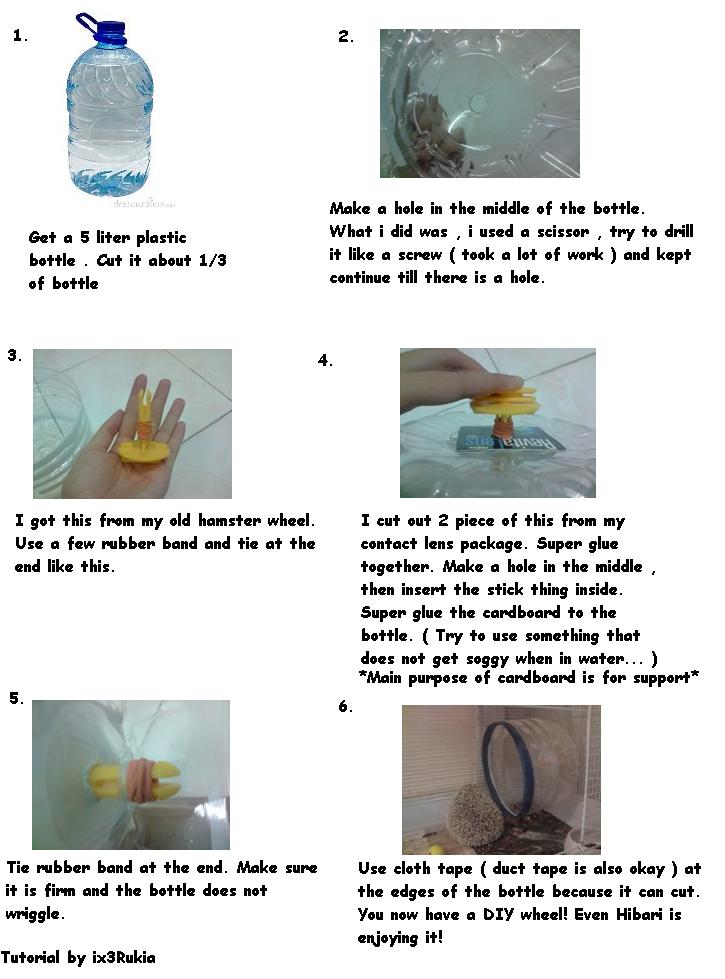
More DIY wheel tutorial.
http://chinmania.tripod.com/chin_wheels.html
This post has been edited by ix3Rukia: Aug 20 2011, 09:42 PM
 Quote
Quote


 burrow under newspapers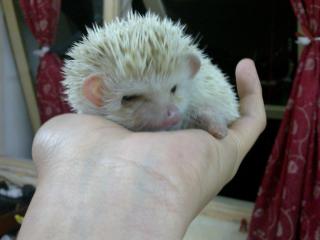











 Hope you can help me with this ques.?







 brush their skin..





 trying to convince them to let me keep 1 liao.
















 0.2502sec
 0.43
0.43
 6 queries
 GZIP Disabled