
|
QUOTE(unknown warrior @ Jul 11 2015, 12:05 AM) Quote it in context Bro. 1. The servants of Jesus who is not of this world meaning the Kingdom of Heaven, his angels. Yes they will protect Jesus from being captured by the Jews and it's not in the context of how the gospel is spread. 2. Read the entire chapter of Luke 3. John the Baptist Prepares the Way » Click to show Spoiler - click again to hide... « 1 In the fifteenth year of the reign of Tiberius Caesar—when Pontius Pilate was governor of Judea, Herod tetrarch of Galilee, his brother Philip tetrarch of Iturea and Traconitis, and Lysanias tetrarch of Abilene— 2 during the high-priesthood of Annas and Caiaphas, the word of God came to John son of Zechariah in the wilderness. 3 He went into all the country around the Jordan, preaching a baptism of repentance for the forgiveness of sins. 4 As it is written in the book of the words of Isaiah the prophet:
“A voice of one calling in the wilderness,
‘Prepare the way for the Lord,
make straight paths for him.
5 Every valley shall be filled in,
every mountain and hill made low.
The crooked roads shall become straight,
the rough ways smooth.
6 And all people will see God’s salvation.’ ”a
7 John said to the crowds coming out to be baptized by him, “You brood of vipers! Who warned you to flee from the coming wrath? 8 Produce fruit in keeping with repentance. And do not begin to say to yourselves, ‘We have Abraham as our father.’ For I tell you that out of these stones God can raise up children for Abraham. 9The ax is already at the root of the trees, and every tree that does not produce good fruit will be cut down and thrown into the fire.”
10“What should we do then?” the crowd asked.
11 John answered, “Anyone who has two shirts should share with the one who has none, and anyone who has food should do the same.”
12 Even tax collectors came to be baptized. “Teacher,” they asked, “what should we do?”
13“Don’t collect any more than you are required to,” he told them.
14 Then some soldiers asked him, “And what should we do?” He replied, “Don’t extort money and don’t accuse people falsely—be content with your pay.” 15 The people were waiting expectantly and were all wondering in their hearts if John might possibly be the Messiah. 16 John answered them all, “I baptize you with water. But one who is more powerful than I will come, the straps of whose sandals I am not worthy to untie. He will baptize you with the Holy Spirit and fire. 17 His winnowing fork is in his hand to clear his threshing floor and to gather the wheat into his barn, but he will burn up the chaff with unquenchable fire.” 18 And with many other words John exhorted the people and proclaimed the good news to them. 19 But when John rebuked Herod the tetrarch because of his marriage to Herodias, his brother’s wife, and all the other evil things he had done, 20 Herod added this to them all: He locked John up in prison. This setting took place when John the Baptist called for the people to repent. Jesus has not even started his ministry yet.
These soldier were Jews serving the government in Jerusalem. It makes no sense to say they are Christian soldiers because these soldiers generally used their power and authority to intimidate people, else it defeats the purpose for John the baptist to tell them not to extort money and not to accuse people falsely and to be content with the pay. 3) Read it carefully and quote it completely... 1 Let everyone be subject to the governing authorities, for there is no authority except that which God has established. The authorities that exist have been established by God. 2 Consequently, whoever rebels against the authority is rebelling against what God has instituted, and those who do so will bring judgment on themselves. 3 For rulers hold no terror for those who do right, but for those who do wrong. Do you want to be free from fear of the one in authority? Then do what is right and you will be commended. 4 For the one in authority is God’s servant for your good. But if you do wrong, be afraid, for rulers do not bear the sword for no reason. They are God’s servants, agents of wrath to bring punishment on the wrongdoer. 5 Therefore, it is necessary to submit to the authorities, not only because of possible punishment but also as a matter of conscience. It's talking about Government Authorities established by God, punishing those who do wrong, for example, Thieves, Murderers, etc. 4. Paul was divinely appointed by Jesus Christ verbally, Paul is one who wanted to destroy Christianity in the first place, He preached very strongly about Jesus being the Messiah after being touched by God, Jesus himself. It makes no sense to say we follow a Pauline Religion as if it's a different religion when the fact of the matter is, He only preach about Jesus Christ going back to the same fundamental of the Gospel. 5) Read the Article carefully. http://www.desiringgod.org/articles/did-jesus-teach-pacifismWhat about turning the other cheek? What, now, are we to make of Jesus' radical commands in Matthew 5:39-41? "Do not resist him who is evil; but whoever slaps you on your right cheek, turn to him the other also. And if anyone wants to sue you, and take your shirt, let him have your coat also. And whoever shall force you to go one mile, go with him two." How does this fit with what we have seen above? First, we need to clarify what the problem is not. The problem is not that Jesus appears to be telling us to lie down and let evil overtake us. That is clearly not what he is saying. Instead, he is telling us what it looks like "not [to] be overcome by evil, but [to] overcome evil with good" (Romans 12:21). We have all seen the wisdom of Jesus' words here in our everyday lives. Much of the time, the most effective way to overcome evil is by not resisting. If someone says a mean word, it is far more effective to respond with kindness than with another mean word in return. If someone tries wrongly to cut you off on the freeway, it is usually best just to let them do it. If we would learn these principles, our lives would be much more peaceful and, ironically, we would be vindicated more often. So the problem is not that it looks as though Jesus is telling us to let evil steam-roll over us. The problem is that it looks like Jesus is telling us that the only way we should ever seek to overcome evil is by letting it go and responding with kindness. It looks as though he leaves no place for using force in resisting evil. Nothing in there to indicate how the gospel should be spread by violence. 6) http://shoebat.com/2014/06/07/jesus-christ...rusading-enemy/Anti Islam as well as Anti Christian.  There you go, all debunked whatever notion you have about Crusade. Try to understand outside the view of a Moslem. Crusade is not Jihad. It was a response to take back Christian land from the Moslem. That is the established Historical Fact why it happened, nothing more. The extension of it was wrong by all account. Like an empty can, full of noice.  http://legacy.fordham.edu/halsall/source/urban2-5vers.htmlMost beloved brethren: Urged by necessity, I, Urban, by the permission of God chief bishop and prelate over the whole world, have come into these parts as an ambassador with a divine admonition to you, the servants of God. I hoped to find you as faithful and as zealous in the service of God as I had supposed you to be. But if there is in you any deformity or crookedness contrary to God's law, with divine help I will do my best to remove it. For God has put you as stewards over his family to minister to it. Happy indeed will you be if he finds you faithful in your stewardship. You are called shepherds; see that you do not act as hirelings. But be true shepherds, with your crooks always in your hands. Do not go to sleep, but guard on all sides the flock committed to you. For if through your carelessness or negligence a wolf carries away one of your sheep, you will surely lose the reward laid up for you with God. And after you have been bitterly scourged with remorse for your faults-, you will be fiercely overwhelmed in hell, the abode of death. For according to the gospel you are the salt of the earth [Matt. 5:13]. But if you fall short in your duty, how, it may be asked, can it be salted? O how great the need of salting! It is indeed necessary for you to correct with the salt of wisdom this foolish people which is so devoted to the pleasures of this -world, lest the Lord, when He may wish to speak to them, find them putrefied by their sins unsalted and stinking. For if He, shall find worms, that is, sins, In them, because you have been negligent in your duty, He will command them as worthless to be thrown into the abyss of unclean things. And because you cannot restore to Him His great loss, He will surely condemn you and drive you from His loving presence. But the man who applies this salt should be prudent, provident, modest, learned, peaceable, watchful, pious, just, equitable, and pure. For how can the ignorant teach others? How can the licentious make others modest? And how can the impure make others pure? If anyone hates peace, how can he make others peaceable ? Or if anyone has soiled his hands with baseness, how can he cleanse the impurities of another? We read also that if the blind lead the blind, both will fall into the ditch [Matt. 15:14]. But first correct yourselves, in order that, free from blame , you may be able to correct those who are subject to you. If you wish to be the friends of God, gladly do the things which you know will please Him. You must especially let all matters that pertain to the church be controlled by the law of the church. And be careful that simony does not take root among you, lest both those who buy and those who sell [church offices] be beaten with the scourges of the Lord through narrow streets and driven into the place of destruction and confusion. Keep the church and the clergy in all its grades entirely free from the secular power. See that the tithes that belong to God are faithfully paid from all the produce of the land; let them not be sold or withheld. If anyone seizes a bishop let him be treated as an outlaw. If anyone seizes or robs monks, or clergymen, or nuns, or their servants, or pilgrims, or merchants, let him be anathema [that is, cursed]. Let robbers and incendiaries and all their accomplices be expelled from the church and anthematized. If a man who does not give a part of his goods as alms is punished with the damnation of hell, how should he be punished who robs another of his goods? For thus it happened to the rich man in the gospel [Luke 16:19]; he was not punished because he had stolen the goods of another, but because he had not used well the things which were his. http://legacy.fordham.edu/halsall/source/urban2-5vers.htmlMost beloved brethren: Urged by necessity, I, Urban, by the permission of God chief bishop and prelate over the whole world, have come into these parts as an ambassador with a divine admonition to you, the servants of God. I hoped to find you as faithful and as zealous in the service of God as I had supposed you to be. But if there is in you any deformity or crookedness contrary to God's law, with divine help I will do my best to remove it. For God has put you as stewards over his family to minister to it. Happy indeed will you be if he finds you faithful in your stewardship. You are called shepherds; see that you do not act as hirelings. But be true shepherds, with your crooks always in your hands. Do not go to sleep, but guard on all sides the flock committed to you. For if through your carelessness or negligence a wolf carries away one of your sheep, you will surely lose the reward laid up for you with God. And after you have been bitterly scourged with remorse for your faults-, you will be fiercely overwhelmed in hell, the abode of death. For according to the gospel you are the salt of the earth [Matt. 5:13]. But if you fall short in your duty, how, it may be asked, can it be salted? O how great the need of salting! It is indeed necessary for you to correct with the salt of wisdom this foolish people which is so devoted to the pleasures of this -world, lest the Lord, when He may wish to speak to them, find them putrefied by their sins unsalted and stinking. For if He, shall find worms, that is, sins, In them, because you have been negligent in your duty, He will command them as worthless to be thrown into the abyss of unclean things. And because you cannot restore to Him His great loss, He will surely condemn you and drive you from His loving presence. But the man who applies this salt should be prudent, provident, modest, learned, peaceable, watchful, pious, just, equitable, and pure. For how can the ignorant teach others? How can the licentious make others modest? And how can the impure make others pure? If anyone hates peace, how can he make others peaceable ? Or if anyone has soiled his hands with baseness, how can he cleanse the impurities of another? We read also that if the blind lead the blind, both will fall into the ditch [Matt. 15:14]. But first correct yourselves, in order that, free from blame , you may be able to correct those who are subject to you. If you wish to be the friends of God, gladly do the things which you know will please Him. You must especially let all matters that pertain to the church be controlled by the law of the church. And be careful that simony does not take root among you, lest both those who buy and those who sell [church offices] be beaten with the scourges of the Lord through narrow streets and driven into the place of destruction and confusion. Keep the church and the clergy in all its grades entirely free from the secular power. See that the tithes that belong to God are faithfully paid from all the produce of the land; let them not be sold or withheld. If anyone seizes a bishop let him be treated as an outlaw. If anyone seizes or robs monks, or clergymen, or nuns, or their servants, or pilgrims, or merchants, let him be anathema [that is, cursed]. Let robbers and incendiaries and all their accomplices be expelled from the church and anthematized. If a man who does not give a part of his goods as alms is punished with the damnation of hell, how should he be punished who robs another of his goods? For thus it happened to the rich man in the gospel [Luke 16:19]; he was not punished because he had stolen the goods of another, but because he had not used well the things which were his.
"You have seen for a long time the great disorder in the world caused by these crimes. It is so bad in some of your provinces, I am told, and you are so weak in the administration of justice, that one can hardly go along the road by day or night without being attacked by robbers; and whether at home or abroad one is in danger of being despoiled either by force or fraud. Therefore it is necessary to reenact the truce, as it is commonly called, which was proclaimed a long time ago by our holy fathers. I exhort and demand that you, each, try hard to have the truce kept in your diocese. And if anyone shall be led by his cupidity or arrogance to break this truce, by the authority of God and with the sanction of this council he shall be anathematized."
After these and various other matters had been attended to, all who were present, clergy and people, gave thanks to God and agreed to the pope's proposition. They all faithfully promised to keep the decrees. Then the pope said that in another part of the world Christianity was suffering from a state of affairs that was worse than the one just mentioned. He continued:
"Although, O sons of God, you have promised more firmly than ever to keep the peace among yourselves and to preserve the rights of the church, there remains still an important work for you to do. Freshly quickened by the divine correction, you must apply the strength of your righteousness to another matter which concerns you as well as God. For your brethren who live in the east are in urgent need of your help, and you must hasten to give them the aid which has often been promised them. For, as the most of you have heard, the Turks and Arabs have attacked them and have conquered the territory of Romania [the Greek empire] as far west as the shore of the Mediterranean and the Hellespont, which is called the Arm of St. George. They have occupied more and more of the lands of those Christians, and have overcome them in seven battles. They have killed and captured many, and have destroyed the churches and devastated the empire. If you permit them to continue thus for awhile with impurity, the faithful of God will be much more widely attacked by them. On this account I, or rather the Lord, beseech you as Christ's heralds to publish this everywhere and to persuade all people of whatever rank, foot-soldiers and knights, poor and rich, to carry aid promptly to those Christians and to destroy that vile race from the lands of our friends. I say this to those who are present, it meant also for those who are absent. Moreover, Christ commands it.
"All who die by the way, whether by land or by sea, or in battle against the pagans, shall have immediate remission of sins. This I grant them through the power of God with which I am invested. O what a disgrace if such a despised and base race, which worships demons, should conquer a people which has the faith of omnipotent God and is made glorious with the name of Christ! With what reproaches will the Lord overwhelm us if you do not aid those who, with us, profess the Christian religion! Let those who have been accustomed unjustly to wage private warfare against the faithful now go against the infidels and end with victory this war which should have been begun long ago. Let those who for a long time, have been robbers, now become knights. Let those who have been fighting against their brothers and relatives now fight in a proper way against the barbarians. Let those who have been serving as mercenaries for small pay now obtain the eternal reward. Let those who have been wearing themselves out in both body and soul now work for a double honor. Behold! on this side will be the sorrowful and poor, on that, the rich; on this side, the enemies of the Lord, on that, his friends. Let those who go not put off the journey, but rent their lands and collect money for their expenses; and as soon as winter is over and spring comes, let hem eagerly set out on the way with God as their guide."http://www.usu.edu/markdamen/1320hist&Civ/...rs/15CRUSAD.htmThe Call for a CrusadeThat was chum no school of cardinals could resist. Pope Urban II warmly embraced the idea of helping Europe's "beleaguered allies" and fellow Christians in the East, so he proposed a holy war—a radical shift in Christian doctrine, to say the least—and explained this maneuver not as any substantive change of direction but as an extension of a policy already in place entitled the Truce of God. This program of measures was part of the Church's attempt to limit warfare within Europe in the day by insisting there be no fighting on holidays or weekends.
In Urban's crafty hands, the Truce of God was remolded into a declaration ending all wars in which Christian fought Christian, deflecting European militarism toward what was perceived as the "real" enemy now, the Moslem infidels in the East. Thus seen ideologically, the Crusades were the culmination of a "peace" movement, as illogical as that may sound. Needless to say, it took some monumental re-reading of the New Testament where, at least on the surface, war is hardly the preferred vehicle of peace, but in those days the Pope had the advantage of being one of the few in Europe who could read at all, much less re-read.
In giving knights a holy vocation and calling them "the vassals of Christ," Urban II was granting anyone who joined his crusade an automatic indulgence—namely, the forgiveness of all prior sins—so then, instead of paying penance for murder, killing could spell a sinner's salvation, as long as he slew the right sort of person, a Moslem that is. Not since "Die for Rome!," had Europeans heard such a stirring advertisement and, when Urban began to sense how well this was going to work, he took his marketing campaign on the road.
In a spell-binding speech before a crowd of French knights, Urban exhorted his adherents to win back "the land of milk and honey" and avenge the Turkish atrocities allegedly perpetrated against their fellow Christians. He cited several of the gory details sent to him by Alexius Comnenus and ended by bidding them fight "for the remission of your sins, with the assurance of imperishable glory." No matter his actual words, "Kill Moslems indiscriminately!" is what the crowd understood him to say and chanted back Deus le vult! Deus le vult!" ("God wills it! God wills it!")
From the perspective of history, however, it's clear that there was much more than religious frenzy at work here. The Crusades reflect other aspects of life in Europe at that time, in particular, its burgeoning population, one of the most significant features of the High Middle Ages. As destructive invasions like those of the Vikings had begun to abate around the turn of the millennium (ca. 1000 CE) and a relative calm had followed, the continent had quickly repopulated. It's difficult not to conclude, then, that the Crusades, a century later, are tied to the rapidly changing demographics within Europe, since the first three come almost exactly forty years apart, in other words, at intervals of about a generation and a half. If so, they are, in one respect, a means of bleeding off the ever-replenishing supply of young warriors, especially sons without inheritances or livelihoods and, in general, people seeking some purpose and direction in life.
And there were political forces at work as well, since the Crusades were also tied to the Investiture Controversy, the struggle for power between the rising authority of the Pope and the ruling political system in the day. From the papal perspective, the kings of Europe had long intruded upon the sacred right of the Pope to run his own business—that is, to choose the men who constituted the Church's administration—and in calling the First Crusade, Urban II shifted the theatre of action in this political conflict to an arena where medieval kings had traditionally reigned supreme, the battlefield. In doing so, Urban usurped the prerogative most secular rulers had claimed traditionally to declare an enemy and muster troops for battle.
Worse yet, by reinterpreting the Truce of God as a warrant for Europeans to kill Moslems and not each other, he also sought to embarrass secular leaders for all their intra-European wars which now looked positively "un-Christian." Never mind that the Church had for centuries up until then sanctioned European-upon-European carnage, just not on certain days. Nevertheless, popes briefly owned the momentum and set the spin. In other words, the Crusades gave them, if only for a minute by historical standards, the opportunity to redefine the rules of the game.
But for all these underlying causes, the major motivation driving the Crusades—both on the surface and well beneath it—was religious sentiment, something bordering on hysteria. There can be no doubt that a majority of Christian Europeans saw Urban's call-to-arms as a means to salvation and a way of ridding the world of infidels. That, to them, referred not only to the Moslems but also the Jews of Europe, many of whom were slaughtered before the knights of the First Crusade rolled out in search of the Holy Lands. After all, good Christians couldn't send their men off to fight one infidel and abandon the homeland to another. With this benighted stab at genocide pitched as protecting the loved ones they left behind, the crusaders surged out of Europe on a tidal bore of blood, only to wash up on the shores of the Near East soon to be bathed in more of the same.http://www.biblicalarchaeology.org/daily/b...pact-jerusalem/For almost 200 years during the Middle Ages, Christian Crusades wrested control of the Palestine region from the Selçuk Turks due to a series of military incursions made up of Christian armies largely from Western Europe. The control that the Christian Crusades exerted over the Holy Land was tenuous at best. What were the Crusades? Today, when we answer this question, it is often the images of Crusades history from Hollywood that we have in mind: glorious and righteous warriors in the form of gallant knights leading the Christian Crusades, anointed by God to save the Holy Land from the infidel.
What Were the Crusades and How Did They Impact Jerusalem?
What were the Crusades, really? In truth, the Christian Crusades were more of a series of invasions that took place in fits and starts by all manner of Europeans—young, old, poor (and poorly trained)—in addition to the occasional land-holding knight. Crusades history has acquired a bit of a romantic glow in our modern times, a glow that is far from the gritty, bloody reality.Some sample above taken from historians. Just looking at the site links they clearly show scholarly intent, not some neo-revisionist and apologist. Below is the one that suits you view, similar to some of those those 'muslim' apologist, these neo-Christian revisionist like you like to chery picking parts and ignore history altogether. http://www.cbn.com/spirituallife/churchand...tquestions.aspxThe crusades are among the most frequent objections to the Christian faith. Some Islamic terrorists even claim that their terrorist attacks are revenge for what Christians did in the crusades. So, what were the crusades and why are they viewed as such a big problem for the Christian faith?
First of all, I do not believe the crusades should be referred to as the "Christian crusades." Most of the people involved in the crusades were not Christians...though they claimed to be. The Name of Christ was abused, misused, and blasphemed by the actions of many of the crusaders. Secondly, I do not understand why the crusades are even relevant today. The crusades took place from approximately 1095 to 1230 A.D. That was between 775 and 910 years ago. Should the unbiblical and un-Christ-like actions of supposed believers 1000 years ago still be held against Christians today?
Third, not that this is an adequate excuse, but Christianity is not the only religion with a violent past. In actuality, the crusades were responses to Muslim invasions on what was once land occupied primarily by Christians. From approximately 200 A.D. to approximately 900 A.D. the land of Israel, Jordan, Egypt, Syria, Turkey, etc. was inhabited primarily by Christians. Once Islam began to spread and become powerful, Muslims invaded these lands and brutally oppressed, enslaved, deported, and even murdered the Christians living in those lands. In response, the Roman Catholic Church and "Christian" kings / emperors from Europe ordered the crusades to reclaim the land the Muslims had taken. The actions that many so-called Christians took in the crusades were still deplorable. There is no Biblical justification for conquering lands, murdering civilians, and destroying cities in the Name of Jesus Christ. At the same time, Islam is not a religion that can speak from a position of innocence in these matters.
To summarize briefly, the crusades were attempts by "Christians" in the 10th through 12th centuries A.D. to reclaim land in the Middle East that had been conquered by Muslims / Arabs. The crusades were brutal and evil. Many people were forced to "convert" to Christianity. If they refused, they were put to death. This is blatantly unbiblical...and perhaps that is the best summary of the issue. The idea of conquering a land through war and violence in the Name of Christ is completely unbiblical. The crusades may have been done by so-called Christians...but many of the actions that took place in the crusades were completely antithetical to everything the Christian faith should stand for.
How can we respond when, as a result of the crusades, the Christian faith is attacked by atheists, agnostics, skeptics, and those of other religions? Ask them the following: (1) Do you want to be held accountable for the actions of people who lived 900+ years ago? (2) Do you want to be held accountable for the actions of everyone who claims to represent your faith?Deuteronomy 20:16-17 “However, in the cities of the nations the LORD your God is giving you as an inheritance, do not leave alive anything that breathes. Completely destroy them…as the LORD your God has commanded you.”Samuel 15:18“Go and completely destroy those wicked people, the Amalekites; make war on them until you have wiped them out.” John 10:30"I and the Father are one.”Malachi 3:6“For I the Lord do not change; therefore you, O children of Jacob, are not consumed."James 1:17"Every good gift and every perfect gift is from above, coming down from the Father of lights with whom there is no variation or shadow due to change."Luke 22:37–39"For I tell you that this Scripture must be fulfilled in me: And he was numbered with the transgressors.’ For what is written about me has its fulfillment.” And they said, “Look, Lord, here are two swords.” And he said to them, It is enough.”John 18:10"Then Simon Peter, whaving a sword, drew it and struck the high priest’s servant and cut off his right ear."Luke 22:51"But Jesus said, “No more of this!” And he touched his ear and healed him."John 18:11"So Jesus said to Peter, “Put your sword into its sheath; shall I not drink the cup that the Father has given me?”For all your peaceful claim, below are how many times the word war is mentioned in the bible. 225 times in 220 verses in the KJV 137 times in 136 verses in the NIV 210 times in 205 verses in the ESV 228 times in 219 verses in the NASB Does the harsh language in the Koran explain Islamic violence? Don't answer till you've taken a look inside the Bible wrote Philip Jenkins. http://www.boston.com/bostonglobe/ideas/ar...ages/?page=fullWE HAVE A good idea what was passing through the minds of the Sept. 11 hijackers as they made their way to the airports.Their Al Qaeda handlers had instructed them to meditate on al-Tawba and Anfal, two lengthy suras from the Koran, the holy scripture of Islam. The passages make for harrowing reading. God promises to "cast terror into the hearts of those who are bent on denying the truth; strike, then, their necks!" (Koran 8.12). God instructs his Muslim followers to kill unbelievers, to capture them, to ambush them (Koran 9.5). Everything contributes to advancing the holy goal: "Strike terror into God's enemies, and your enemies" (Koran 8.60). Perhaps in their final moments, the hijackers took refuge in these words, in which God lauds acts of terror and massacre.
On a much lesser scale, others have used the words of the Koran to sanction violence. Even in cases of domestic violence and honor killing, perpetrators can find passages that seem to justify brutal acts (Koran 4.34).
Citing examples such as these, some Westerners argue that the Muslim scriptures themselves inspire terrorism, and drive violent jihad. Evangelist Franklin Graham has described his horror on finding so many Koranic passages that command the killing of infidels: the Koran, he thinks, "preaches violence." Prominent conservatives Paul Weyrich and William Lind argued that "Islam is, quite simply, a religion of war," and urged that Muslims be encouraged to leave US soil. Today, Dutch politician Geert Wilders faces trial for his film "Fitna," in which he demands that the Koran be suppressed as the modern-day equivalent to Hitler's "Mein Kampf."
Even Westerners who have never opened the book - especially such people, perhaps - assume that the Koran is filled with calls for militarism and murder, and that those texts shape Islam.
Unconsciously, perhaps, many Christians consider Islam to be a kind of dark shadow of their own faith, with the ugly words of the Koran standing in absolute contrast to the scriptures they themselves cherish. In the minds of ordinary Christians - and Jews - the Koran teaches savagery and warfare, while the Bible offers a message of love, forgiveness, and charity. For the prophet Micah, God's commands to his people are summarized in the words "act justly, and love mercy, and walk humbly with your God" (Micah 6:8). Christians recall the words of the dying Jesus: "Father, forgive them: they know not what they do."
But in terms of ordering violence and bloodshed, any simplistic claim about the superiority of the Bible to the Koran would be wildly wrong. In fact, the Bible overflows with "texts of terror," to borrow a phrase coined by the American theologian Phyllis Trible. The Bible contains far more verses praising or urging bloodshed than does the Koran, and biblical violence is often far more extreme, and marked by more indiscriminate savagery. The Koran often urges believers to fight, yet it also commands that enemies be shown mercy when they surrender. Some frightful portions of the Bible, by contrast, go much further in ordering the total extermination of enemies, of whole families and races - of men, women, and children, and even their livestock, with no quarter granted. One cherished psalm (137) begins with the lovely line, "By the rivers of Babylon we sat and wept"; it ends by blessing anyone who would seize Babylon's infants and smash their skulls against the rocks.
To say that terrorists can find religious texts to justify their acts does not mean that their violence actually grows from those scriptural roots. Indeed, such an assumption itself is based on the crude fundamentalist formulation that everything in a given religion must somehow be authorized in scripture. The difference between the Bible and the Koran is not that one book teaches love while the other proclaims warfare and terrorism, rather it is a matter of how the works are read. Yes, the Koran has been ransacked to supply texts authorizing murder, but so has the Bible
If Christians or Jews want to point to violent parts of the Koran and suggest that those elements taint the whole religion, they open themselves to the obvious question: what about their own faiths? If the founding text shapes the whole religion, then Judaism and Christianity deserve the utmost condemnation as religions of savagery. Of course, they are no such thing; nor is Islam.
But the implications run still deeper. All faiths contain within them some elements that are considered disturbing or unacceptable to modern eyes; all must confront the problem of absorbing and reconciling those troubling texts or doctrines. In some cases, religions evolve to the point where the ugly texts so fade into obscurity that ordinary believers scarcely acknowledge their existence, or at least deny them the slightest authority in the modern world. In other cases, the troubling words remain dormant, but can return to life in conditions of extreme stress and conflict. Texts, like people, can live or die. This whole process of forgetting and remembering, of growing beyond the harsh words found in a text, is one of the critical questions that all religions must learn to address.
Faithful Muslims believe that the Koran is the inspired word of God, delivered verbatim through the prophet Mohammed. Non-Muslims, of course, see the text as the work of human hands, whether of Mohammed himself or of schools of his early followers. But whichever view we take, the Koran as it stands claims to speak in God's voice. That is one of the great differences between the Bible and the Koran. Even for dedicated fundamentalists, inspired Bible passages come through the pen of a venerated historical individual, whether it's the Prophet Isaiah or the Apostle Paul, and that leaves open some chance of blaming embarrassing views on that person's own prejudices. The Koran gives no such option: For believers, every word in the text - however horrendous a passage may sound to modern ears - came directly from God.
We don't have to range too far to find passages that horrify. The Koran warns, "Those who make war against God and his apostle . . . shall be put to death or crucified" (Koran 5.33). Other passages are equally threatening, though they usually have to be wrenched out of context to achieve this effect. One text from Sura (Chapter) 47 begins "O true believers, when you encounter the unbelievers, strike off their heads."
But in such matters, the Bible too has plenty of passages that read painfully today. Tales of war and assassination pervade the four books of Samuel and Kings, where it is hard to avoid verses justifying the destruction of God's enemies. In a standard English translation of the Old Testament, the words "war" and "battle" each occur more than 300 times, not to mention all the bindings, beheadings, and rapes.
The richest harvest of gore comes from the books that tell the story of the Children of Israel after their escape from Egypt, as they take over their new land in Canaan. These events are foreshadowed in the book of Deuteronomy, in which God proclaims "I will make my arrows drunk with blood, and my sword shall devour flesh" (Deut. 32:42). We then turn to the full orgy of militarism, enslavement, and race war in the Books of Joshua and Judges. Moses himself reputedly authorized this campaign when he told his followers that, once they reached Canaan, they must annihilate all the peoples they find in the cities specially reserved for them (Deut. 20: 16-18).
Joshua, Moses's successor, proves an apt pupil. When he conquers the city of Ai, God commands that he take away the livestock and the loot, while altogether exterminating the inhabitants, and he duly does this (Joshua 8). When he defeats and captures five kings, he murders his prisoners of war, either by hanging or crucifixion. (Joshua 10). Nor is there any suggestion that the Canaanites and their kin were targeted for destruction because they were uniquely evil or treacherous: They happened to be on the wrong land at the wrong time. And Joshua himself was by no means alone. In Judges again, other stories tell of the complete extermination of tribes with the deliberate goal of ending their genetic lines.
In modern times, we would call this genocide. If the forces of Joshua and his successor judges committed their acts in the modern world, then observers would not hesitate to speak of war crimes. They would draw comparisons with the notorious guerrilla armies of Uganda and the Congo, groups like the appalling Lord's Resistance Army. By comparison, the Koranic rules of war were, by the standards of their time, quite civilized. Mohammed wanted to win over his enemies, not slaughter them.
Not only do the Israelites in the Bible commit repeated acts of genocide and ethnic cleansing, but they do so under direct divine command. According to the first book of Samuel, God orders King Saul to strike at the Amalekite people, killing every man, woman, and child, and even wiping out their livestock (1 Samuel 15:2-3). And it is this final detail that proves Saul's undoing, as he keeps some of the animals, and thereby earns a scolding from the prophet Samuel. Fortunately, Saul repents, and symbolizes his regrets by dismembering the captured enemy king. Morality triumphs.
The Bible also alleges divine approval of racism and segregation. If you had to choose the single biblical story that most conspicuously outrages modern sentiment, it might well be the tale of Phinehas, a story that remains unknown to most Christian readers today (Numbers 25: 1-15). The story begins when the children of Israel are threatened by a plague. Phinehas, however, shrewdly identifies the cause of God's anger: God is outraged at the fact that a Hebrew man has found a wife among the people of Midian, and through her has imported an alien religion. Phinehas slaughters the offending couple - and, mollified, God ends the plague and blesses Phinehas and his descendants. Modern American racists love this passage. In 1990, Richard Kelly Hoskins used the story as the basis for his manifesto "Vigilantes of Christendom." Hoskins advocated the creation of a new order of militant white supremacists, the Phineas Priesthood, and since then a number of groups have assumed this title, claiming Phinehas as the justification for terrorist attacks on mixed-race couples and abortion clinics.
Modern Christians who believe the Bible offers only a message of love and forgiveness are usually thinking only of the New Testament. Certainly, the New Testament contains far fewer injunctions to kill or segregate. Yet it has its own troublesome passages, especially when the Gospel of John expresses such hostility to the Ioudaioi, a Greek word that usually translates as "Jews." Ioudaioi plan to stone Jesus, they plot to kill him; in turn, Jesus calls them liars, children of the Devil.
Various authorities approach the word differently: I might prefer, for instance, to interpret it as "followers of the oppressive Judean religious elite," Or perhaps "Judeans." But in practice, any reputable translation has to use the simple and familiar word, "Jew," so that we read about the disciples hiding out after the Crucifixion, huddled in a room that is locked "for fear of the Jews." So harsh do these words sound to post-Holocaust ears that some churches exclude them from public reading.
Commands to kill, to commit ethnic cleansing, to institutionalize segregation, to hate and fear other races and religions . . . all are in the Bible, and occur with a far greater frequency than in the Koran. At every stage, we can argue what the passages in question mean, and certainly whether they should have any relevance for later ages. But the fact remains that the words are there, and their inclusion in the scripture means that they are, literally, canonized, no less than in the Muslim scripture.
Whether they are used or not depends on wider social attitudes. When America entered the First World War, for instance, firebrand preachers drew heavily on Jesus' warning that he came not to bring peace, but a sword. As it stands, that is not much of a text of terror, but if one is searching desperately for a weapon-related verse, it will serve to justify what people are going to do anyway.
Interpretation is all, and that changes over time. Religions have their core values, their non-negotiable truths, but they also surround themselves with many stories not essential to the message. Any religion that exists over long eras absorbs many of the ideas and beliefs of the community in which it finds itself, and reflects those in its writings. Over time, thinkers and theologians reject or underplay those doctrines and texts that contradict the underlying principles of the faith as it develops. However strong the textual traditions justifying war and conflict, believers come instead to stress love and justice. Of course Muslim societies throughout history have engaged in jihad, in holy war, and have found textual warrant so to do. But over time, other potent strains in the religion moved away from literal warfare. However strong the calls to jihad, struggle, in Islamic thought, the hugely influential Sufi orders taught that the real struggle was the inner battle to control one's sinful human instincts, and this mattered vastly more than any pathetic clash of swords and spears. The Greater Jihad is one fought in the soul.
Often, such reforming thinkers are so successful that the troublesome words fade utterly from popular consciousness, even among believers who think of themselves as true fundamentalists. Most Christian and Jewish believers, even those who are moderately literate in scriptural terms, read their own texts extraordinarily selectively. How many Christian preachers would today find spiritual sustenance in Joshua's massacres? How many American Christians know that the New Testament demands that women cover their hair, at least in church settings, and that Paul's Epistles include more detailed rules on the subject than anything written in the Koran? This kind of holy amnesia is a basic component of religious development. It does not imply rejecting scriptures, but rather reading them in the total context of the religion as it progresses through history.
Alternatively, one can choose to deny that historical experience, and seize on any available word or verse that authorizes the violence that is already taking place - but once someone has decided to do that, it scarcely matters what the text actually says.Philip Jenkins teaches at Penn State University. He is the author of "The Lost History of Christianity: The Thousand-Year Golden Age of the Church in the Middle East, Africa, and Asia -- and How It Died." |


 MOE: Portuguese invading Melaka were Crusaders
  Jul 9 2015, 01:08 PM, updated 11y ago


 Quote
Quote





























 u mus go syria and mujahid , kipidap, strap your bombs and off u go


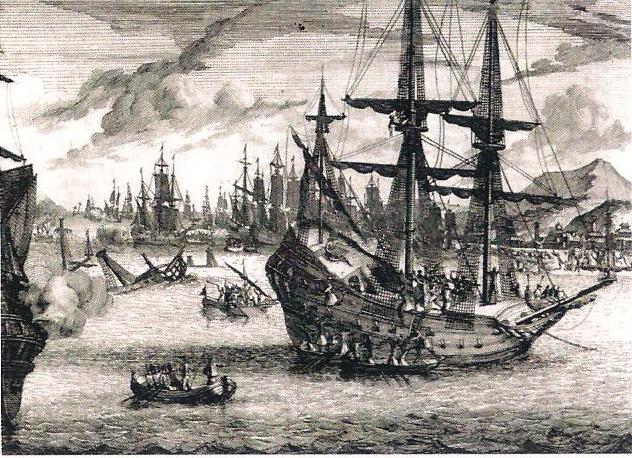


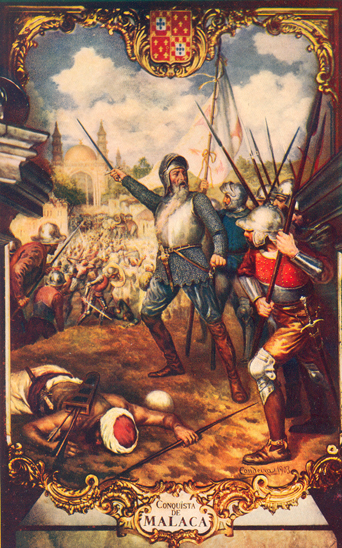


 end all this historical debate once and for all









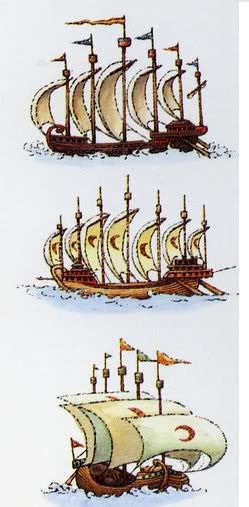





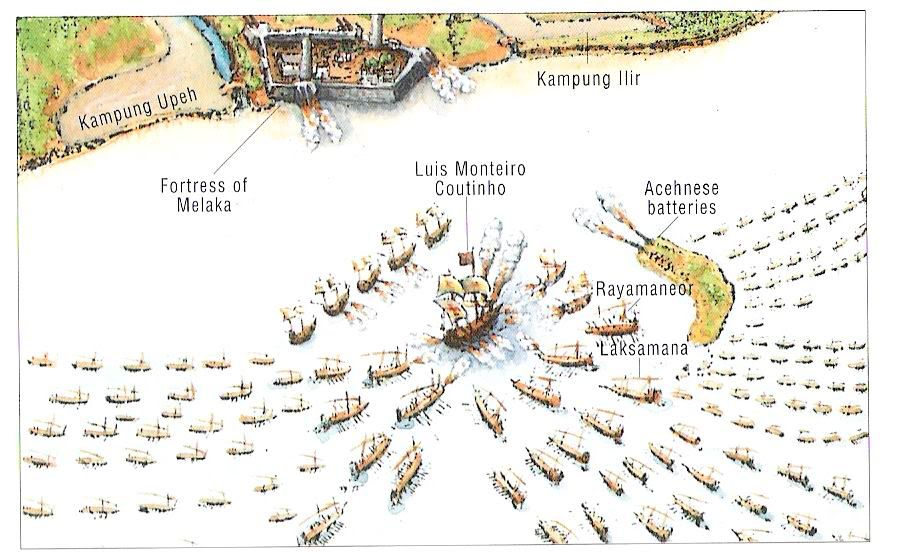
























 0.1431sec
 0.46
0.46
 6 queries
 GZIP Disabled