Welcome Guest ( Log In | Register )

Outline · [ Standard ] · Linear+

> MOE: Portuguese invading Melaka were Crusaders

views
     
HangPC2
post Jul 9 2015, 02:13 PM

Casual
***
Junior Member
408 posts

Joined: Nov 2006
From: LANGKASUKA مليسيا


QUOTE(ohman @ Jul 9 2015, 01:08 PM)
user posted image

KUALA LUMPUR: The Ministry of Education has sought to defend a controversial paragraph in the Form 1 Sejarah (History) textbook currently in use, reports the Malay Mail Online (MMO).

The disputed fact, which was pointed out by local writer Uthaya Sankar SB in his Facebook post on June 30, comes from a paragraph from the 2009 edition of the book published by Dewan Bahasa dan Pustaka which reads –

“Kedatangan orang Portugis ke Timur dikaitkan dengan keinginan mereka meneruskan Perang Salib. Mereka ingin menghancurkan kerajaan Islam yang ada di Timur termasuk kerajaan Melaka yang merupakan pusat perkembangan dan penyebaran agama Islam. Pada masa yang sama, Portugis mahu menyebarkan agama Kristian.”

[Translation: “The arrival of the Portuguese to the East was associated with their desire to continue the Crusades. They aimed to destroy the existing Islamic governments of the East, including the Malacca government, which was then the centre for the expansion and propagation of Islam. At the same time, the Portuguese wanted to spread Christianity.”]

“The fact in that textbook is correct and there is no error and the fact is based on checks and verification by the Quality Control Committee by local history experts appointed by Dewan Bahasa dan Pustaka,” the ministry was quoted by the MMO as saying, adding that the alleged “fact” was already stated when the current edition first went into print in 2002.

MMO named the Quality Control Committee members as Abd Rahman Ali (Chairman), Professor Dr Khoo Kay Kim, Professor Dr Sabihah Osman, Associate Professor Dr Abdul Rahim Abd Rashid, Dr Nabir Abdullah, Dr Abdul Razak Dali, Dr Ahmad Jelani Halimi, Mohd Supian Sabtu, Masariah Mispari, Johara Abdul Wahab, Hasnah Hamzah, Norjah Yusop, Muslimin Fadzil, Ahmad Zainudin Husin and Khairul Azman Suhaimy.

However, University of Malaya’s History Department Associate Professor Dr Sivachandralingam Sundara Raja, who sits on the Education Ministry’s oversight panel on history books, was quoted by MMO as saying that the disputed paragraph was incorrect although he claimed that the error was unintentional.

He said that the primary purpose for which the Portuguese came to Malacca was for spice trade.

He added, however, that other reasons such as spreading Christianity, weakening Islam and attaining glory have been present in local history textbooks since the 1960s.

According to the MMO report, the Committee had reviewed the matter on July 2.
*
user posted image

user posted image

user posted image

HangPC2
post Jul 9 2015, 02:17 PM

Casual
***
Junior Member
408 posts

Joined: Nov 2006
From: LANGKASUKA مليسيا


QUOTE(yuusuke-kun @ Jul 9 2015, 01:10 PM)
Not many know about relationship between Ottoman empire and Malacca sultanate also..

Askar upahan Jawa huehue
*
GABUNGAN TENTERA MELAKA PADA TAHUN 1511


E. Model Perpaduan Dalaman-Luaran Menerusi Peperangan Melaka-Portugis


Mengikut maklumat Rumpun Melayu dan bangsa-bangsa lain serantau yang mempertahankan Melaka daripada serangan tentera-tentera Portugis di dapati dari sebuah manuskrip Portugis kurun ke-17 yang telah diterjemahkan ke Bahasa Inggeris dan diterbitkan oleh Universiti Malaya.

Maklumat ini didapati dari manuskrip Francisco De Sa De Meneses, Malaca Conquistada, terjemahan Inggeris oleh Edgar C. Knowlton, Jr. pada 1970. Ada dua pihak yang mempertahankan Melaka tatkala pada tahun 1511 tersebut, iaitu pahlawan-pahlawan daripada berbagai suku kaum Rumpun Melayu dan pahlawan-pahlawan dari berbagai bangsa serantau yang menyebelahi Melaka.


Senarai Tentera Melaka dari Pelbagai kaum :


Melaka : Ardonio, Argeo/Argeao, Audali, Baturel, Belugano, Damur (ulama/ilmuwan yang baru pulang dari Mekah), Emirem, Eurillo, Guazel/Gazel (penghulu, abang Argeo), Indoraspis (nakhoda), Raju, Rustacao/Rustam/Khan (ketua perang), Sarcamante, Turcaferno
Patani : Ariavo (ketua perang)
Jawa : Tuan/Tuao Colascar (ketua perang)
Borneo/Brunei : Malano (ketua perang)
Mindanao : Ragois (ketua perang)
Daru/Arus/Darus : De Tayde/DeTayde/Deitayde/Detayde/De Taide/Dataide (saudara lelaki Raja Daru dan ketua perang)
Bintao/Bertam/Bintang/Bentan : Ormonte (ketua perang tentera tambahan)
Luchu/Farmosa/Taiwan/Okinawa: Cambir (ketua perang)
Pegu : Eraspe (ketua perang)
Mongol, Khorasan dan Turki : Solimao (ketua perang)
Siam : Batrao (suami Glaura), Mulias
Kemboja : Carol
Gujarati : Abdela/Audela/Abdala/Audala/’Abdullah (orang kaya)


Falsafah Perpaduan Kaum Berdasarkan Data Melayonesia

Oleh Dr. Mohammad Alinor bin Abdul Kadir ASASI, PDP (Penyelidik Bersekutu) dan AKK 13/12/2014

(((Dipetik dan dikongsi dengan keizinan)))


HangPC2
post Jul 9 2015, 02:20 PM

Casual
***
Junior Member
408 posts

Joined: Nov 2006
From: LANGKASUKA مليسيا


QUOTE(Toyoi @ Jul 9 2015, 02:15 PM)
dah mula lah tu dengan koleksi arkib muzium negara nya...
*
user posted image
HangPC2
post Jul 9 2015, 02:22 PM

Casual
***
Junior Member
408 posts

Joined: Nov 2006
From: LANGKASUKA مليسيا


QUOTE(Einjahr @ Jul 9 2015, 02:18 PM)
Christianity was also spread to America
but that itself was no crusade kan?
*
user posted image
HangPC2
post Jul 9 2015, 02:23 PM

Casual
***
Junior Member
408 posts

Joined: Nov 2006
From: LANGKASUKA مليسيا


TUJUAN PORTUGIS MENAKLUK MELAKA


There is nothing more irritating to me than amateur armchair historians distorting history to suit their own agendas.

It is well-documented that the specific orders given to Afonso de Albuquerque by King Manuel I of Portugal in 1505 was to crush Muslim power and trade in the East by capturing Aden, Ormuz and Malacca. de Albuquerque later added the sultanate in Goa to the list.

So this notion that the Portuguese explored the East purely as friendly, peaceful traders is a fantasy. Even a cursory reading of the 'The commentaries of the great Afonso D'alboquerque' or the great 'Os Lusíadas' by de Camões will reveal that the primary goal of Portuguese expansion into the East was the destruction of its Muslim Sultanates and the subjugation of the 'Moros' by conquest - the profits gained by monopolised trade and the looting and acquisition of new territory were just welcome by-products of that policy.

May I suggest Uthaya Sankar SB and his followers do a bit of research first before they open their mouths on this subject and read de Albuquerque's 'Commentaries' at https://archive.org/details/commentariesgre01bircgoog
HangPC2
post Jul 9 2015, 02:29 PM

Casual
***
Junior Member
408 posts

Joined: Nov 2006
From: LANGKASUKA مليسيا


Malacca Musket / Istinggar Melaka / Mosquete Luso-Cingalo-Malaio


Malacca Musket / Istinggar Melaka / Mosquete Luso-Cingalo-Malaio


This matchlock being displayed at the CCCM Museum Lisbon is labelled as either Malaccan or Ceylonese. But it looks too cool to be Ceylonese. Besides, the hammer on ceylonese matchlocks are shaped like heads of animals or heathen gods while Malay gun hammers look more Islamic like on this musket. Since this gun is Malaccan, it definitely was made no later than 1511.


user posted image

user posted image


Sources : Museu do CCCM, Lisboa, inv. 1000


HangPC2
post Jul 9 2015, 02:35 PM

Casual
***
Junior Member
408 posts

Joined: Nov 2006
From: LANGKASUKA مليسيا


QUOTE(TheReaderReads @ Jul 9 2015, 02:32 PM)
This gun is malaccan malay? looks beautiful

Who help them develop it? Is it a gift from the portuguese b4 they attack melaka?
*
Ottoman & Ming
HangPC2
post Jul 9 2015, 02:39 PM

Casual
***
Junior Member
408 posts

Joined: Nov 2006
From: LANGKASUKA مليسيا


Malaccan Mercenaries


Malay, Turk, Persian, Javanese...


user posted image


Malaccan Artillery


user posted image

user posted image


HangPC2
post Jul 9 2015, 02:41 PM

Casual
***
Junior Member
408 posts

Joined: Nov 2006
From: LANGKASUKA مليسيا


Malaccan Malay Jong (Jong Melayu)


user posted image
HangPC2
post Jul 9 2015, 02:47 PM

Casual
***
Junior Member
408 posts

Joined: Nov 2006
From: LANGKASUKA مليسيا


Gambaran Kota Melaka ketika menyambut kedatangan '' Bengali Putih '' iaitu Diego Lopez de Sequeira ke Istana Melaka


user posted image


Sumber : Twee on gelukkige scheeps-togten na oost-indien van Jorge De Mello, in het Jaar 1507 en Jorge D'Aguiar, in het Jaar 1508. Beyde in het Portugys beschreven uyt de egte hand-schriffen der reysigers op ordre des konings van Portugaal dor Joan De Barros Raads-Her en History schrijver van die majesteyt
HangPC2
post Jul 9 2015, 02:49 PM

Casual
***
Junior Member
408 posts

Joined: Nov 2006
From: LANGKASUKA مليسيا


QUOTE(learn2earn8 @ Jul 9 2015, 02:43 PM)
fuyoh, madlock, cannon etc sapork by ottoman and ming tapi apasal kalah?
*
Sebab Pengkhianat
HangPC2
post Jul 9 2015, 02:52 PM

Casual
***
Junior Member
408 posts

Joined: Nov 2006
From: LANGKASUKA مليسيا


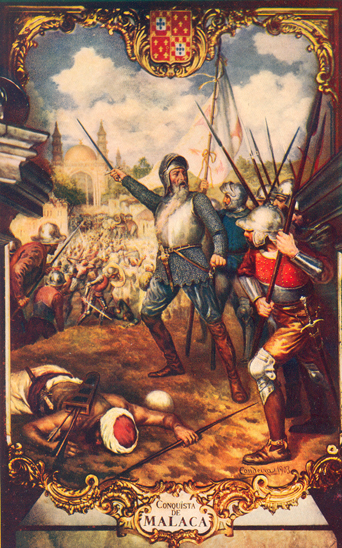
CONQUISTA DE MALACA (1511)


Ini adalah gambar lukisan mural di muzium ketenteraan portugis (Museu Militar Português) di Lisbon, Portugal

Cuba perhatikan gambar tembok kota melaka diperbuat dari batu bata.


user posted image
HangPC2
post Jul 9 2015, 02:58 PM

Casual
***
Junior Member
408 posts

Joined: Nov 2006
From: LANGKASUKA مليسيا


QUOTE(ichi_24 @ Jul 9 2015, 02:48 PM)
WHICH BOOK?

Our school text book is umno propaganda, trash by my standard

Start slowly from hangPC2 sources, which coincide the book i want to explain it to you
*
Malaccan Weapon


The arms which they ordinarily use in warfare are the sword, shield, lance, bows and arrows, and blow-pipes with poisoned darts. At the present day, in consequence of intercourse with us, they use muskets and ordnance.

The sword, a blade measuring 5 palms in length, is called Padan among them: like the Turkish sword, it has a single edge. The dagger, called Cris a blade measuring 2 palms in length, is made of fine steel; it bears a deadly poison; the sheath is of wood., the hilt is of animals' horn, or of rare stone, or of gold and precious gems.


The steel is treated in such a way that every injury is followed by immediate death when the wound draws blood. Iron, being constituted of earthy material, and of a substance which is more malleable than other metals (as Aristotle notes Aleteorologica ch. 6. in 4 Meteorelogica, chapter 6) yields a large quantity of rust and dross. So the natives soak the iron in water and in muddy pools for some time: they then treat it in the fire, refining it till the iron is clean and pure - a method mentioned by Pliny in Book 34 chapter 14.


Then, after polishing the blade of steel, they smear it with a poison so deadly that death soon ensues after any injury which draws blood, wherever inflicted.

So these Malayos use much poison on all their weapons, especially the points of arrows, whether made of iron or wood, or the teeth of animals or fish, or of "nyboes " ('nibong').

Their bows are larger than the bows of Persia.

The lance called "azagaya " is 10 palms in length: these lances are much used as missiles.

There are other lances, as much as 25 palms long: besides a great number of " soligues " made of " nyboes and used as missiles.


Their artillery, as a rule, is not heavy: formerly they used mortars and swivel-guns made of various metals: to-day they employ larger pieces, and battery-cannon, besides many kinds of fire-arms, including small arms and arquebuses. Regarding the employment of artillery amongst the, Malayos, we know that on the conquest of Malaca in the year 1511, Affonco de Alboquerque captured much small artillery, esmerils, falconets, and medium-sized sakers: these could not have come from Meca in Arabia where they use larger pieces of the second order, such as battery-cannon: probably these came from Pegu and Syam, where they had an establishment for casting smaller artillery, of the first order, and a foundry for every other kind of metal-work; this thev had learnt from the Attayos and the Chinas, who first introduced artillery, which was invented after the rebellions against the Empire of Attay or Cattay.


Sources : Manuel Godinho de Erédia (Eredia's Description of Malacca)


user posted image

This post has been edited by HangPC2: Jul 9 2015, 02:59 PM
HangPC2
post Jul 9 2015, 03:01 PM

Casual
***
Junior Member
408 posts

Joined: Nov 2006
From: LANGKASUKA مليسيا


QUOTE(learn2earn8 @ Jul 9 2015, 02:53 PM)
d'alburque bombarded the town and terrified the inhabitants, being the first time it had ever been shelled by heavy artillery  shocking.gif itu rejimen melayu melaka tak buat life fire training ke? apasal mahu jimat bom?

http://www.sabrizain.org/malaya/port1.htm

sultan had 20,000 mercenaries, 20 war elephant, 3000 artillery pieces of small calibre guns with little range and firepower. kenapa takde ask for refund dari ottoman sama ming? itu sultan sudah kena tipu oleh salesgirl lah  doh.gif

sultan forces charged at them with bow and arrow, blowpipe, lances, spear and shield. apa ni?! nampaknya itu cannon sama matchlock is for ceremonial purpose  hmm.gif
*
Selat Melaka kena Blockade... bantuan tak sampai
HangPC2
post Jul 9 2015, 03:06 PM

Casual
***
Junior Member
408 posts

Joined: Nov 2006
From: LANGKASUKA مليسيا


QUOTE(TheReaderReads @ Jul 9 2015, 02:58 PM)
This is the Jong melayu use by Laksamana Hang Tuah?

Nice... I nvr tot melaka got such big boat like this with so many sails
*
Mendam Berahi: The Titan Ship of Malacca Empire.


user posted image

Below is a link to an artist’s impression of a 15th century Malaccan Ship named Mendam Berahi.


In the Malay Annals and Hikayat Hang Tuah, both books described a magnificent ship of Sultan Mansur Shah of Malacca. Built around 1453, the construction was supervised by the Admiral Tun Tuah and the Bendahara. The ship was 180 feet long and had a width of 36 feet. The description of the ship is larger than that of the Portuguese ship, Flor De La Mar. The Mendam Berahi had 2 decks. The front deck was for the “Nahkoda” which had 3 manned cannons. The back deck is the Royal deck. The ship had 3 sails and 100 oars and given its length and size, the ship could carry around 400 soldiers/marines.

Under the command of the famous Laksamana, the Mendam Berahi had gone through several expeditions. Among her journeys were to Majapahit, Ming (China), Sailong (Ceylon), Siam, and Istanbul. It’s a pity the authorities have no interest in rebuilding a replica of Mendam Berahi in Malacca, instead they built a replica of Flor De La Mar.


Written by: Abdul Muati Ahmad


----------------------------


Whether this artist impression is true or not, all I can is walla hu’alam. Because according to the Portuguese, they stated that the Malay Jong or Malay ships were larger than any of their Portuguese ships. A naval engagement between a jong from Aceh and 19 Portuguese ships on their way to attack Malacca in 1511 underscored the difficulties facing any attackers. The Portuguese stated that they had to scale or climb the ship’s side in order to reach deck of the Malay ship.

“Her sides were so high that no one dared board her from any of the Portuguese ships;naos,caravellas and gales and she remained unscathed by the Portuguese fire because she had four layers of sheathing and the largest Portuguese artillery could only penetrate two.At length the governor sent out his own nao the Flor de la Mar. Inspite of this the jong managed to fend of the Portuguese attacks for two days and two nights and only succumbed when the Portuguese succeeded in removing her rudders which she carried outside as on the barges of Ribatejo" - Gaspar Correia 1511

Chinese records stated that the Malay ships that visited the Chinese ports were surprisingly huge and terrifying. At one point, visiting Malay traders were not given permission to dock at the Chinese port as the large size of their ships would cause traffic and disrupt other trading ships that were trying to dock.
In my opinion the artist’s impression below of the Malay Jong is not as large as the ships or Jong that was described by the Chinese and Portuguese. Instead the artist’s impression of the Malay ship below could be that of a “medium sized ship”.

The largest Malay Jong could carry 500 tons worth of goods, carry as many as 1000 people and was longer than 100 metres! Ibnu Battutah stated that the largest Chinese junks are called as “Chuan” , and stated that the Malay Jongs are larger than the “Chuan”. Al Fonso Albuquerque described these large Malay Jongs as “World Shakers”.

A lot of people have asked: “If the Malays were indeed master builders in making these huge jongs, then why was it that these ships were not seen during the British colonial era and the present?”

According to Professor Maguin, by the end of the 16th and 17th century AD, the Malay Jongs and the technology to make these jongs were either gone or extinct. He stated that the disappearance of the Malay Jongs and its technology was very mysterious. But in my opinion, it isn’t much of a mystery. I believe the cause of the Malay Jong’s disappearance was caused by the Western Imperial powers. When Malacca fell into the hands of the Portuguese, the Malays could not live in peace and were in a constant war. The Malay Jongs could no longer be built as it took up a large amount of funds,workforce and time. Other than that, there were hardly any labourers that can build these Jongs . Most of the work force was conscripted to fight the Portuguese Invaders.

The money, labour, energy and time were all spent on the wars and battles to take back Malacca from the Portuguese and to fight off the pirates who controlled the Strait of Malacca. Maybe thousands or even a few hundred thousand Malays had died in these wars. In fact, the Sultanate of Malacca’s successor, the Johor Riau Empire, was constantly involved in wars with other Malay states such as the “Perang Tiga Segi”.

In the end, the work force needed to build these large Jongs died out as the Malay rulers exhausted everything they could to fund their wars.

The era after the fall of Malacca was a time of anarchy and backwardness for the Malays. The trade routes that once gave the Malay people wealth can no longer be used as it was constantly occupied by pirates and European ships. The Malay shipbuilders felt that it was no use to build these large Malay Jongs as it would be too risky: The Malay Jongs would either get scuttled by the Portuguese armada the moment they were spotted or even risk being boarded by pirates.

This would also explain why the Malays were slowly getting backwards in terms of Maritime trade and activities. But what saddens us more is that, the word “Jong” is slowly being forgotten by the Malays. In fact, the saddest part is that some people claim that “Jong” is not a Malay word but rather a Chinese word. It gets more confusing when the Orientalists and Westerners decided to call every Chinese ship they see as “Junk”. Slowly, the word Jong was no longer used to refer to these giant Malay ships. In the end, the word Jong is now lost to the Chinese and Westerners, while we end up borrowing English and Indian words such as bot and Kapal to describe these large ships that were once the pride of the seas.


Written by ~ASJ~
HangPC2
post Jul 9 2015, 03:12 PM

Casual
***
Junior Member
408 posts

Joined: Nov 2006
From: LANGKASUKA مليسيا


user posted image


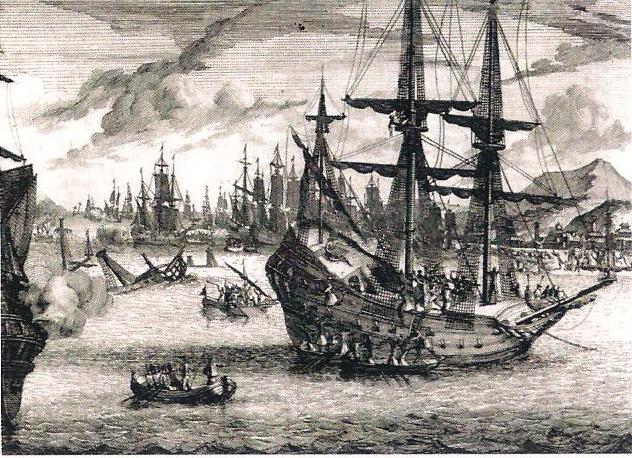
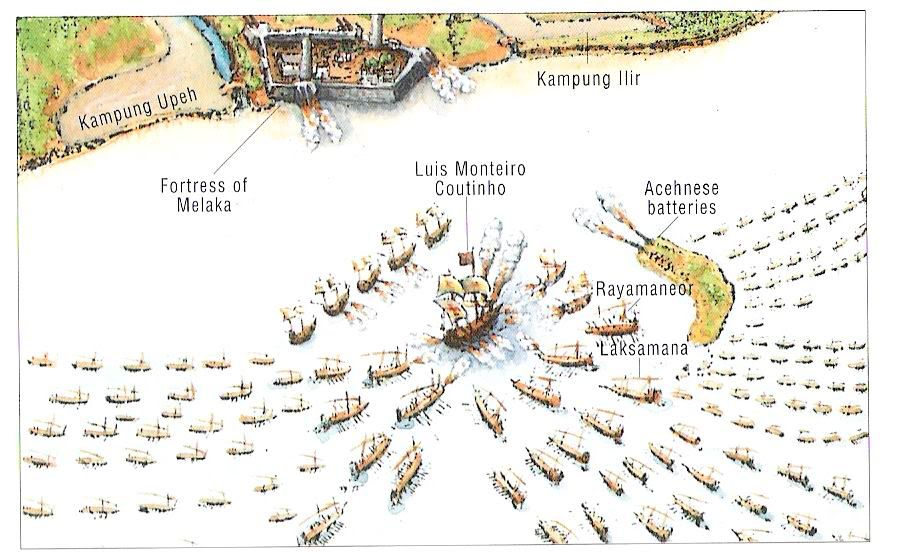
This early 17th century drawing by Godinho de Eredia depicts the siege of Malacca by Aceh.


We can see five small Aceh galleons lining up to trade broadsides with a large Portuguese galleon while another two are firing their stern chasers (rear guns) at the same Portuguese ship.

The Aceh navy was indoctrinated in the Ottoman's style of naval warfare which emphasized the role of large galleys. Galleons were kept small and given secondary roles. Galleons built by Aceh never seemed to exceed 200 tons.The biggest galley therefore has always been the flagship of the Aceh navy.

Since Malay jongs were defenseless against Portuguese naos,they ceased to be built in early 16th century. Malays were forced to build smaller and faster ships. Only Aceh managed to copy European designs due to their close ties with the Ottoman Empire.

By the 17th century, more Malay powers acquired the knowledge to build European style ships.The top tier Malay trading powers were Aceh,Banten,Palembang and Makassar.These kingdoms became extremely wealthy by pepper and spice trading that they were befriended by European powers such as England,France,Denmark,the Ottoman Empire and even Portugal(in Makassar).These European powers may have shared some technical knowledge with their Malay allies in order to counter the strength of the Dutch East Indies Company (VOC).

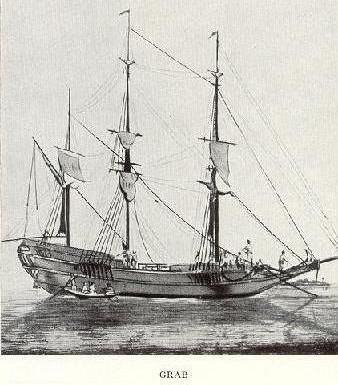
Middle tier Malay powers like Johor and Jambi only had frigate type ships called grabs (ghorabs) as their biggest warships.According to the book History of Johor by RO Winstedt, 17th century Johor had between 100-200 units of two and three masted grabs.


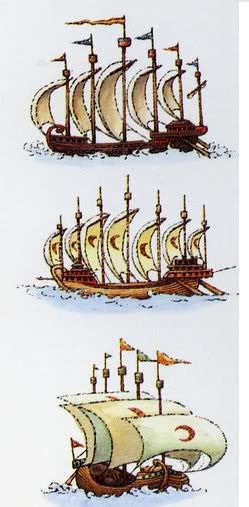
Geliung (Galleon)


user posted image


Grab / Gharab (Frigate)


user posted image


Maritime Southeast Asia to 1500 (1996)


The Chinese also knew these islanders as builders and as the crews of ocean going vessels engaged in long distance over seas trade. The Chinese in fact appear to have learned much from these sailors. The Malays independently invented a sail, made from woven mats reinforced with bamboo, at least several hundreds years B.C.E and by the time of the Han Dynasty (206 CE to 221 CE) the Chinese were using such sails.


Gaspar Correia :


Her sides were so high that no one dared board her from any of the Portuguese ships ; naos,caravellas and gales and she remained unscathed by the Portuguese fire because she had four layers of sheathing and the largest Portuguese artillery could only penetrate two. At length the governor sent out his own nao the Flor de la Mar. Inspite of this the jong managed to fend of the Portuguese attacks for two days and two nights and only succumbed when the Portuguese succeeded in removing her rudders which she carried outside as on the barges of Ribatejo.


The Golden Chersonese And The Way Thither (1879) :


of the remaining Moorish or Malay Kingdoms, Acheen (Aceh), in Sumatra, was the most powerful, so powerful indeed that its king was able to besiege the great stronghold of malacca (Melaka) more than once with a fleet, according to the annalist of more than five hundred sail, one hundred of which were of greater size than any then constructed in Europe and the warriors and mariners that it bore amounted to sixty thousand commanded by the King in person.


Dom Paulo Lima de Pereira (1587) :


No estreito, e nas estancias defronte da cidade se queimarão passante de mil embarcações entre Juncos ballos, e somas, e muitos balões, queimarão mais dous galeões, oito Gales, e algumas fustas, e lancharas,


In the Strait and the anchorage before the city, more than 1,000 vessels were burnt, among these junks, bâlos, sômas and many balões, two more galleons, eight galleys, some foists and lancharas.


Batalhas e Combates Marinha Portuguesa 1580-1603 :


nos esteiros a norte e a sul da cidade foram incendiados cerca de dois mil navios, entre naus, gales, juncos, galeotas, fustas, lancharas, bantins, champanas e outros de menor porte !
O rei de Jor perdeu quatro mil soldados que lhe foram mortos em combate pelos portugueses e outros três mil que lhe foram mortos durante a retirada pelos javos que levava consigo.


In the estuaries north and south of the city, about two thousand ships were burned, among them naus, galleys, junks, galliot, foists, lancharas, bantins, champanas and other lesser crafts !
The king of Jor (Sultanate Johor) lost four thousand soldiers who have been killed in combat by the Portuguese and three thousand who have been killed during the withdrawal by ‘ javos ’ he carried.


R.A Fletcher - Warships & Their Stories :


The Malays are supposed to have invented the outrigger and this conjecture is based on the fact that wherever the Malay influence is traceable there some form of outrigger or double canoe is to be found also.


HangPC2
post Jul 9 2015, 03:16 PM

Casual
***
Junior Member
408 posts

Joined: Nov 2006
From: LANGKASUKA مليسيا


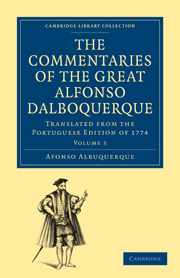
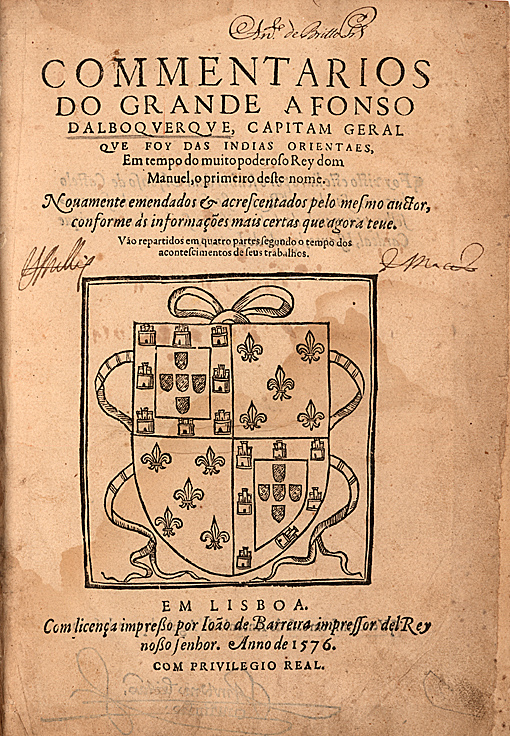
The Commentaries of the Great Afonso De Albuquerque : Second Viceroy of India


user posted image

user posted image


ebook : http://ebooks.cambridge.org/ebook.jsf?bid=CBO9780511697630
HangPC2
post Jul 9 2015, 03:26 PM

Casual
***
Junior Member
408 posts

Joined: Nov 2006
From: LANGKASUKA مليسيا


QUOTE(K.I.T.T @ Jul 9 2015, 03:24 PM)
aku difahamkan ketika Kesultanan Melayu Melaka ada...kesultanan melayu Melaka "berperang" dengan kesultan Kelantan. kerana ketika itu Kelantan di bawah pengaruh Majapahit. dan kerjaaan di Kelantan ketika itu dikenali sebagai Majapahit 2.
*
Pada 1477M, Sultan Melaka ini telah menghantar bala tenteranya untuk menyerang Kelantan. Walau bagaimanapun ia berakhir dengan satu simpulan peristiwa yang menarik, iaitu baginda Sultan Mahmud Shah telah berkahwin dengan Puteri Sultan Mansur yang bernama Onang Kening, yang kemudian menjadi bonda kepada Raja Perak yang pertama, iaitu Sultan Muzaffar Shah (1528M).

Apabila Sultan Mansur Shah mangkat 1526M (928H), maka putera baginda, Raja Gombak ditabalkan menjadi Sultan dengan gelaran "Sultan Gombak". Setelah baginda Raja Gombak mangkat, maka cucunda baginda yang telah dijadikan putera angkat, iaitu Raja Ahmad, ditabal menjadi Sultan Kelantan pada 1584M (992H). Dengan gelaran Sultan Ahmad, Baginda telah berkahwin dengan Cik Banun Puteri Seri Nara DiRaja, iaitu sepupu kepada Raja Hussein di sebelah isteri Lela Wangsa Pahang. Baginda berdua telah dikurniakan seorang puteri dinamakan Cik Siti Wan Kembang.
HangPC2
post Jul 9 2015, 03:53 PM

Casual
***
Junior Member
408 posts

Joined: Nov 2006
From: LANGKASUKA مليسيا


QUOTE(tdzheng @ Jul 9 2015, 03:41 PM)
Actually china destroyed the Portuguese armada in South China Sea, and dealing with the ambassadors brother Simao, ended up whole Portuguese population in China executed.

And already building armada halfway when Ming dynasty have bigger problems up north and civil war, thus the expedition to malacca was cancelled, the Portuguese armadas destruction caused Albuquerque to panic LEL
*
In response to the Portuguese invasion of Malacca, the Chinese Imperial Government imprisoned and executed multiple Portuguese envoys after torturing them in Guangzhou. Since Malacca was a tributary state to China, the Chinese responded with violent force against the Portuguese. The Malaccans had informed the Chinese of the Portuguese seizure of Malacca, to which the Chinese responded with hostility toward the Portuguese. The Malaccans told the Chinese of the deception the Portuguese used, disguising plans for conquering territory as mere trading activities, and told of all the atrocities committed by the Portuguese.Malacca was under Chinese protection and the Portuguese invasion angered the Chinese.


Due to the Malaccan Sultan lodging a complaint against the Portuguese invasion to the Chinese Emperor, the Portuguese were greeted with hostility from the Chinese when they arrived in China.The Sultan's complaint caused "a great deal of trouble" to Portuguese in China.The Chinese were very "unwelcoming" to the Portuguese.The Malaccan Sultan, based in Bintan after fleeing Malacca, sent a message to the Chinese, which combined with Portuguese banditry and violent activity in China, led the Chinese authorities to execute 23 Portuguese and torture the rest of them in jails. After the Portuguese set up posts for trading in China and committed piratical activities and raids in China, the Chinese responded with the complete extermination of the Portuguese in Ningbo and Quanzhou Pires, a Portuguese trade envoy, was among those who died in the Chinese dungeons. The rest of the Portuguese embassy stayed imprisoned for life.
HangPC2
post Jul 9 2015, 04:02 PM

Casual
***
Junior Member
408 posts

Joined: Nov 2006
From: LANGKASUKA مليسيا


QUOTE(aliesterfiend @ Jul 9 2015, 03:59 PM)
tongue.gif I don't read much about that part except those involves the Sengoku Jidai. Might have read that up sometimes. Any good sources ? Online preferably lah.
*
Oda Nobunaga

2 Pages  1 2 >
Bump Topic Add ReplyOptions New Topic
 

Change to:
| Lo-Fi Version
0.0180sec    0.38    7 queries    GZIP Disabled
Time is now: 15th December 2025 - 12:21 AM