QUOTE(MILAN88 @ Aug 21 2011, 11:56 PM)
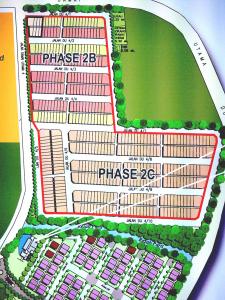
I done the estimate at DU 4/9? Yr unit at the other 2 road? Do you think we hv mislead by the SA?
UFO Taiko, we need advice from u.
My unit is in DU 4/8, i think we would hv similar issues then!!.....

Added on August 22, 2011, 12:03 amGood macro-analysis on malaysia property market:
".....What has changed in the past 10 years that has allowed house price appreciation to outstrip income growth without affecting demand? We suggest six main factors:
Malaysia’s aggressively young demographic profile has and will continue to fuel rising demand for housing. There’s an age pyramid showing a jump in the population in the 20 to 29 years age bracket compared with the 30 to 39 bracket.This means that household formation is set to pick up pace sharply and that sets the stage for a boom in housing demand in the medium term. Our estimates suggest that on a nationwide basis, the rate of household formation implies that the incoming supply can be mostly absorbed. But demographic dynamics do not permit demand to circumvent affordability issues.
Interest rates fell steadily from 1998 highs. From a mean lending rate of 12.1% in 1998, interest rates fell to 5% in 2010. This lowered the monthly interest-only cost of, for example, a RM200,000 loan by 34.5% from RM1,278 to RM837 while nominal incomes rose 20%. Lately, many developers even absorb the holding cost by offering interest-free periods until completion. This enables property speculators to gamble on potential price appreciation by buying, then simply “flipping” a property to the next purchaser before the need to pay any money at all arises.
Loan to value (LTV) or the margin of finance that banks permitted borrowers to take on rose from typical ceilings of about 70% in the early 1990s to as high as 95% to 100% recently. The implication is that house buyers need not spend as many years accumulating cash resources needed as deposit for a purchase. Consequently, it became possible to buy a residential property very early in one’s career. Purchase decisions brought forward easily in this manner fuelled demand for houses.
Loan repayment periods were in the past constrained by the length of one’s working career (up to 55 years of age), effectively limiting anyone who began working immediately after graduation from university to no more than a 32-year loan. But no more. Banks resorted to two-generation loans of 40+ years’ duration at the peak of Malaysia’s 1980s property boom. Malaysian banks have now come full circle to again offer 40-year loans or for periods until the borrowers reach 70 years of age (effectively launching into two-generation loans again). The average life expectancy for Malaysian males is 73 years, meaning that this measure (lengthening repayment periods) has no further room for play.
Multiple home mortgages spread across several financial institutions each still declared as owner-occupied units generate strong demand that is higher than can be inferred from income or demographics. They reduce each bank’s exposure to a given borrower, but mask elevated systemic risks. Generally, owner-occupied residential mortgages find favour with banks because they are thought to spread out risks, and individuals will arguably be loathe to lose the roof over their heads.
Owner-occupied home mortgages also tax the capital base of banks less. They carry 50% risk weight, allowing banks to extend twice the sum in credit on a given capital base.
The rise of property as an international investment asset class. The pooling of investor resources via vehicles like local and regional REITs (real estate investment trusts) has telegraphed the up-until-then limited ability of individual investors to invest in large-scale commercial properties. Some property consultants also attribute the purchase of properties by foreigners as an important demand driver, but other than residential properties in a limited number of enclaves, this may not be a major source of property demand. Applications to take up residence here under the Malaysia My Second Home programme number about 1,500 a year. Some consultants also allude to the repatriation of money by returning expatriate Malaysians. The extent of this inflow and the number of individuals involved is unknown....."
Full link:
http://www.theedgeproperty.com/opinion/803...re-to-come.htmlThis post has been edited by cookies_cai: Aug 22 2011, 12:03 AM 

 Aug 21 2011, 01:08 PM


 Quote
Quote






 0.0332sec
 0.66
0.66
 6 queries
 GZIP Disabled