

Welcome Catholics and whoever is interested in Catholic Christianity.
Since it is the penitential season of Lent, here's a video on the chant to Our Lady for compline during this season (simple tone):
Hope everyone have a holy and blessed Lent!
LYN Catholic Fellowship V01 (Group), For Catholics (Roman or Eastern)
|
|
 Mar 4 2015, 01:07 AM, updated 9y ago Mar 4 2015, 01:07 AM, updated 9y ago
Show posts by this member only | Post
#1
|
 
Senior Member
3,577 posts Joined: Apr 2006  
|
Starting a Catholic thread here as the other Christian forum is too generic and more towards Protestantism.
Welcome Catholics and whoever is interested in Catholic Christianity. Since it is the penitential season of Lent, here's a video on the chant to Our Lady for compline during this season (simple tone): Hope everyone have a holy and blessed Lent! |
|
|
|
|
|
Mar 4 2015, 07:24 AM
Show posts by this member only | Post
#2
|

Junior Member
145 posts Joined: Jan 2008
|
 .... I think Jedi would love it .... I think Jedi would love it  |
|
|
Mar 4 2015, 08:18 AM
Show posts by this member only | Post
#3
|

Senior Member
1,481 posts Joined: Sep 2011
|
Happy Lent. Remember to abstain from meat on friday
|
|
|
Mar 4 2015, 11:36 AM
Show posts by this member only | Post
#4
|

Junior Member
50 posts Joined: May 2007
|
Kyrie, eleison
|
|
|
Mar 4 2015, 12:29 PM
Show posts by this member only | Post
#5
|
|
Senior Member
3,577 posts Joined: Apr 2006
|
Perhaps some introduction and which parish you belong to and which one you frequent. Belonging actually refers to the territorial parish (TP) which you are residing in, which might not be the same one you frequent for Mass (FL - frequent location).
I'll start with myself. yeeck - TP: Our Lady of Guadalupe Puchong. FL: Sacred Heart, KL. pkh - TP/FL : Saint Thomas More, SJ. Most likely can see me during weddings. Have assited over a hundred of them. rayng18 - TP: Our Lady of Guadalupe Puchong. FL: Assumption, PJ. khool - TP/FL : St. Ignatius Church, PJ. Occassionally Kristus Aman Chapel TTDI, Our Lady of Guadalupe Puchong. acam2812 - TP : St. Joseph Sentul. FL: St Joseph Sentul, St. John Cathedral, St. Anthony, St. Ignatius, Holy Rosary, Divine Mercy Shah Alam. solder_joint - TP : St Henry Batu Pahat. FL: St Henry Batu Pahat, Stella Maris Tg Aru, St Joseph Victoria St Singapore. Jared Leto - FL: Church of the Assumption, PJ. Serving as a musician for every Sunday mass. (yet to be baptized) sp6068 - TP/FL: Divine Mercy Shah Alam. isildur88 - TP: Holy Trinity, Tawau. FL: Our Lady of Guadalupe, Puchong. Marcus- TP/FL : St. Francis Xavier, PJ. For Silent Adoration, I often go to St. Thomas More, Subang Jaya. mindslicer81- TP: Immaculate Conception, Pulau Tikus. FL: Immaculate Conception, Assumption, Holy Spirit (Penang) roscha - TP/FL: Sacred Heart Cathedral, Kota Kinabalu This post has been edited by yeeck: Jul 11 2016, 11:58 PM |
|
|
Mar 4 2015, 01:23 PM
Show posts by this member only | Post
#6
|

Junior Member
316 posts Joined: Nov 2005 From: Saya Berjaya
|
Yeeck, good suggestion. Lemme add to the list.
pkh - TP/FL : Saint Thomas More. Most likely can see me during weddings. Have assited over a hundred of them. |
|
|
|
|
|
Mar 4 2015, 08:46 PM
Show posts by this member only | Post
#7
|
|
Senior Member
726 posts Joined: Sep 2014
|
QUOTE(pehkay @ Mar 4 2015, 07:24 AM) .... I think Jedi would love it   QUOTE(rayng18 @ Mar 4 2015, 08:18 AM) Happy Lent. Remember to abstain from meat on friday Why do Catholic abstain from eating meat on Friday? |
|
|
Mar 4 2015, 09:20 PM
Show posts by this member only | Post
#8
|
|
Junior Member
145 posts Joined: Jan 2008
|
QUOTE(tinarhian @ Mar 4 2015, 08:46 PM) Jedi? What Star Wars? Lol. I meant the nick Jedi. He used to frequent our thread. He was catholic. Why do Catholic abstain from eating meat on Friday? |
|
|
Mar 4 2015, 09:23 PM
Show posts by this member only | Post
#9
|
|
Senior Member
726 posts Joined: Sep 2014
|
QUOTE(pehkay @ Mar 4 2015, 09:20 PM) Lol. I meant the nick Jedi. He used to frequent our thread. He was catholic. Oh...You mean he's not Catholic anymore? Is Catholic the predominant denomination in Malaysia? Sorry, I'm a noob. |
|
|
Mar 4 2015, 09:44 PM
|

Senior Member
737 posts Joined: Jul 2010 From: Klang
|
QUOTE(tinarhian @ Mar 4 2015, 09:23 PM) Oh... Catholics is the first Christianity religion after Christ ascended to heaven, With Apostle Simon Peter as the first popeYou mean he's not Catholic anymore? Is Catholic the predominant denomination in Malaysia? Sorry, I'm a noob. while Protestantism is branched out from Catholics with totally different view from Catholics |
|
|
Mar 4 2015, 09:50 PM
|
|
Senior Member
726 posts Joined: Sep 2014
|
QUOTE(De_Luffy @ Mar 4 2015, 09:44 PM) Catholics is the first Christianity religion after Christ ascended to heaven, With Apostle Simon Peter as the first pope Ohhh...But Catholics have extra chapters in their Bible. while Protestantism is branched out from Catholics with totally different view from Catholics Plus why do they pray to the dead and the Saints? I thought Canonized Saints are mostly man made appointment? |
|
|
Mar 4 2015, 09:54 PM
|
|
Senior Member
737 posts Joined: Jul 2010 From: Klang
|
QUOTE(tinarhian @ Mar 4 2015, 09:50 PM) Ohhh...But Catholics have extra chapters in their Bible. i am not sure you have to ask yeeck about it Plus why do they pray to the dead and the Saints? I thought Canonized Saints are mostly man made appointment? |
|
|
Mar 4 2015, 09:58 PM
|
|
Senior Member
726 posts Joined: Sep 2014
|
QUOTE(De_Luffy @ Mar 4 2015, 09:54 PM) i am not sure you have to ask yeeck about it And why do they pray to Mary? |
|
|
|
|
|
Mar 4 2015, 10:06 PM
|
|
Senior Member
737 posts Joined: Jul 2010 From: Klang
|
yeeck mind to answer these questions please?
|
|
|
Mar 4 2015, 10:22 PM
|
|
Senior Member
3,577 posts Joined: Apr 2006
|
The so-called extra books (not chapters) are called the Deuterocanonical books that are used not only in the Catholic Church but also in the Eastern Churches. Too bad most Protestants reject it, because some of it contains or talks about things not believed by Protestants, such as praying for the repose of the dead and Purgatory.
http://en.wikipedia.org/wiki/Deuterocanonical_books We pray to the saints and Mary, because we believe they are spiritually alive and enjoying the beatific vision of God in Heaven, and can intercede for us to God, just like any other humans who prays for us, but even better because the saints are special friends of God Himself. Just to be certain, we do not worship Mary or the saints in the same manner as we worship God, for even worship have varying degrees expressed in the following Greek terms: Latria - the supreme worship due only to God. Dulia - veneration due to the other saints Hyperdulia - veneration due to the Blessed Virgin Mary (thus the addition of hyper because Mary is the most perfect model of all the saints) Hope this helps. |
|
|
Mar 4 2015, 10:27 PM
|
|
Senior Member
3,577 posts Joined: Apr 2006
|
Can't resist in posting this beautiful image of Confession since it is the penitential season of Lent. Remember to make a good and sincere confession, yo!
 |
|
|
Mar 4 2015, 10:33 PM
|
|
Senior Member
3,577 posts Joined: Apr 2006
|
QUOTE(tinarhian @ Mar 4 2015, 08:46 PM) Jedi? What Star Wars? Abstinence (besides fasting) is a form of penance in honor of the death of Jesus Christ on the Cross on the first Good Friday. Why do Catholic abstain from eating meat on Friday? |
|
|
Mar 5 2015, 12:21 AM
|

Junior Member
661 posts Joined: Jul 2008 From: BananaLand 
|
one question ? why do we have idols in catholic church ? just want to hear your view on this.
|
|
|
Mar 5 2015, 12:31 AM
|
|
Senior Member
3,577 posts Joined: Apr 2006
|
QUOTE(bananajoe @ Mar 5 2015, 12:21 AM) one question ? why do we have idols in catholic church ? just want to hear your view on this. We have statues, and images of holy things, but that doesn't make it an idol. They help to remind us about the eternal things. Also to many it helps to focus our prayers. Catholics are not supposed to worship the statues as if the statues have any power in itself. Unlike idols which people of some religions say if broken, it means their god is broken (sic), if a Catholic accidentally breaks a holy statue or image, no big deal, just get another replacement. We don't believe things like bad luck if that happens, because that would be a sin of superstition, against the First Commandment.Many articles have been written to refute this. One of it here: Do Catholics Worship Statues? To many, out of sight is out of mind. Anyway, let the pictures do the talking to show my point:   This post has been edited by yeeck: Mar 5 2015, 12:41 AM |
|
|
Mar 5 2015, 02:59 AM
|
|
Junior Member
661 posts Joined: Jul 2008 From: BananaLand
|
QUOTE(yeeck @ Mar 5 2015, 12:31 AM) We have statues, and images of holy things, but that doesn't make it an idol. They help to remind us about the eternal things. Also to many it helps to focus our prayers. Catholics are not supposed to worship the statues as if the statues have any power in itself. Unlike idols which people of some religions say if broken, it means their god is broken (sic), if a Catholic accidentally breaks a holy statue or image, no big deal, just get another replacement. We don't believe things like bad luck if that happens, because that would be a sin of superstition, against the First Commandment. ThanksMany articles have been written to refute this. One of it here: Do Catholics Worship Statues? To many, out of sight is out of mind. Anyway, let the pictures do the talking to show my point: |
|
|
Mar 5 2015, 07:53 AM
|
|
Senior Member
1,481 posts Joined: Sep 2011
|
Went to Assumption church PJ morning mass nowadays
|
|
|
Mar 5 2015, 07:57 AM
|
|
Senior Member
1,481 posts Joined: Sep 2011
|
QUOTE(yeeck @ Mar 4 2015, 12:29 PM) Perhaps some introduction and which parish you belong to and which one you frequent. Belonging actually refers to the territorial parish (TP) which you are residing in, which might not be the same one you frequent for Mass (FL - frequent location). I did go to Our Lady Of Guadalupe in Puchong which is very near my house but I find the mass is too lenghty so prefer to go further to Assumption PJ morning mass. Previously will go to either Holy Rosary or Our Lady of Fatima in Brickfields (Baptism until confirmation all in Holy Rosary church)I'll start with myself. yeeck - TP: Our Lady of Guadalupe Puchong. FL: Sacred Heart of Jesus S.Buloh. pkh - TP/FL : Saint Thomas More. Most likely can see me during weddings. Have assited over a hundred of them. |
|
|
Mar 5 2015, 08:03 AM
Show posts by this member only | IPv6 | Post
#23
|
|
Junior Member
145 posts Joined: Jan 2008
|
QUOTE(tinarhian @ Mar 4 2015, 09:23 PM) Oh... Nope, he is a staunch catholic. You mean he's not Catholic anymore? Is Catholic the predominant denomination in Malaysia? Sorry, I'm a noob. That was a period of time in V5 .... I think .... there was a debate going on I am just saying that he will have like to have a thread like this Predominant? I am not so sure. It might be Methodist. I could be wrong. |
|
|
Mar 5 2015, 12:05 PM
|
|
Junior Member
316 posts Joined: Nov 2005 From: Saya Berjaya
|
Catholicism ... A faith most oftenly misunderstoood. The whole "praying to Mary" thingy is just like how Christmas is defined by general public. Here's an example:
Kid : Mommy, what's Christmas? Mom : Christmas is for Christians to celebrate Santa Claus and presents. And the kid gew up thinking Christmas is all presents, party and booze. But if you attend a Christmas Vigil mass or Christmas Day mass, there's no sign of Santa Claus. There's no Jingle Bells. Now let's apply the same conversation to Mary: Kid : Mommy, what are Catholics? Mom : Catholics worship Mary Just like how people confuse between WiFi and Internet. |
|
|
Mar 5 2015, 12:07 PM
|
|
Senior Member
3,577 posts Joined: Apr 2006
|
QUOTE(pehkay @ Mar 5 2015, 08:03 AM) Nope, he is a staunch catholic. According to Wikipedia: That was a period of time in V5 .... I think .... there was a debate going on I am just saying that he will have like to have a thread like this Predominant? I am not so sure. It might be Methodist. I could be wrong. As of 2010, there are 1,007,643[4] Catholics in Malaysia - approximately 3.56% of the total population. Roman Catholicism in Malaysia As for Methodists: The Methodist Church in Malaysia is a body within the Methodist tradition in Malaysia. With approximately 200,000 members in more than 1034 congregations (local and preaching points), it is the largest Protestant denomination in the country. Methodist Church in Malaysia |
|
|
Mar 5 2015, 12:23 PM
|
|
Senior Member
3,577 posts Joined: Apr 2006
|
QUOTE(rayng18 @ Mar 5 2015, 07:57 AM) I did go to Our Lady Of Guadalupe in Puchong which is very near my house but I find the mass is too lenghty so prefer to go further to Assumption PJ morning mass. Previously will go to either Holy Rosary or Our Lady of Fatima in Brickfields (Baptism until confirmation all in Holy Rosary church) Sunday Mass at OLG lengthy? Like what? 3 hours? LOL.... |
|
|
Mar 5 2015, 12:38 PM
Show posts by this member only | IPv6 | Post
#27
|
|
Junior Member
145 posts Joined: Jan 2008
|
QUOTE(yeeck @ Mar 5 2015, 12:07 PM) According to Wikipedia: Ah ... I stand corrected. Thanks.As of 2010, there are 1,007,643[4] Catholics in Malaysia - approximately 3.56% of the total population. Roman Catholicism in Malaysia As for Methodists: The Methodist Church in Malaysia is a body within the Methodist tradition in Malaysia. With approximately 200,000 members in more than 1034 congregations (local and preaching points), it is the largest Protestant denomination in the country. Methodist Church in Malaysia |
|
|
Mar 5 2015, 12:45 PM
|
|
Senior Member
1,481 posts Joined: Sep 2011
|
QUOTE(yeeck @ Mar 5 2015, 12:23 PM) Sunday Mass at OLG lengthy? Like what? 3 hours? LOL.... at least 1.5hrs. Normal mass only 1hr, by the time it finishes already almost noon |
|
|
Mar 5 2015, 12:48 PM
|
|
Senior Member
3,577 posts Joined: Apr 2006
|
QUOTE(rayng18 @ Mar 5 2015, 12:45 PM) at least 1.5hrs. Normal mass only 1hr, by the time it finishes already almost noon If it's Sunday I don't mind 1.5 hrs since we are to dedicate Sundays to the Lord. Did you know that an average Divine Liturgy of the Byzantine Rite is between 2-4 hours?  |
|
|
Mar 5 2015, 12:51 PM
|
|
Senior Member
3,577 posts Joined: Apr 2006
|
QUOTE(pkh @ Mar 4 2015, 01:23 PM) Yeeck, good suggestion. Lemme add to the list. pkh - TP/FL : Saint Thomas More. Most likely can see me during weddings. Have assited over a hundred of them.  Are you in charge or flowers or music or serving?? Are you in charge or flowers or music or serving?? |
|
|
Mar 5 2015, 12:58 PM
|
|
Junior Member
316 posts Joined: Nov 2005 From: Saya Berjaya
|
QUOTE(yeeck @ Mar 5 2015, 12:51 PM) Are you in charge or flowers or music or serving?? |
|
|
Mar 5 2015, 01:00 PM
|
|
Senior Member
3,577 posts Joined: Apr 2006
|
QUOTE(pkh @ Mar 5 2015, 12:58 PM) Music. Not choir, but the technical aspects. If in the future, you attend a wedding in STM, look to the front left where the choir area is. If you see a tall skinny guy with glasses and headphones, that's me. Around 70% chance I'll be there unless there's like 3 weddings for that weekend. Fr Simon did ask me "when is my turn". Back then, I replied "after a 100 more weddings". Now my statement is gonna bite me back. IC, I went to STM once several months ago for the Kevin Allen workshop afternoon session. There was a wedding before that and I was observing Kevin conducting a choir singing Gabrieli's Missa Brevis. Beautiful singing. Probably you were there for that wedding...lol. |
|
|
Mar 5 2015, 01:06 PM
|
|
Junior Member
316 posts Joined: Nov 2005 From: Saya Berjaya
|
Ah, Kevin. Yup. Still remember him. The workshop. And the special 'vegetarian' menu. I was involved in the backstage work. Was the one manning the sound system when the group did the mass.
You may have seen me coming in during the early session when they had some kind of laptop problem. A guy walked in, tweaked the settings, snapped his fingers, and went off. |
|
|
Mar 5 2015, 01:11 PM
|
|
Senior Member
3,577 posts Joined: Apr 2006
|
QUOTE(pkh @ Mar 5 2015, 12:05 PM) Catholicism ... A faith most oftenly misunderstoood. The whole "praying to Mary" thingy is just like how Christmas is defined by general public. Here's an example: Similarly, the Chinese words for Christianity 基督教 (jidujiao) is normally used here to refer to Protestant Christianity rather than Christianity as a whole, while Catholicism is called 天主教 (tianzhujiao - literally translated to "Teaching of the Master of Heaven"). By right a Catholic is a Christian and a Christian is a Catholic.Kid : Mommy, what's Christmas? Mom : Christmas is for Christians to celebrate Santa Claus and presents. And the kid gew up thinking Christmas is all presents, party and booze. But if you attend a Christmas Vigil mass or Christmas Day mass, there's no sign of Santa Claus. There's no Jingle Bells. Now let's apply the same conversation to Mary: Kid : Mommy, what are Catholics? Mom : Catholics worship Mary Just like how people confuse between WiFi and Internet. The word catholic (with lowercase c; derived via Late Latin catholicus, from the Greek adjective καθολικός (katholikos), meaning "universal"[1][2]) comes from the Greek phrase καθόλου (katholou), meaning "on the whole", "according to the whole" or "in general", and is a combination of the Greek words κατά meaning "about" and ὅλος meaning "whole".[3][4] The word in English can mean either "including a wide variety of things; all-embracing" or "of the Roman Catholic faith" as "relating to the historic doctrine and practice of the Western Church.".[5] ("Catholicos, the title used for the head of some churches in Eastern Christian traditions, is derived from the same linguistic origin.) The term Catholic (usually written with uppercase C in English) was first used to describe the Christian Church in the early 2nd century to emphasize its universal scope. In the context of Christian ecclesiology, it has a rich history and several usages. The earliest recorded evidence of the use of the term "Catholic Church" is the Letter to the Smyrnaeans that St Ignatius of Antioch wrote in about 107 to Christians in Smyrna. Exhorting Christians to remain closely united with their bishop, he wrote: "Wherever the bishop shall appear, there let the multitude [of the people] also be; even as, wherever Jesus Christ is, there is the Catholic Church." Theodosius I, Emperor from 379 to 395, declared "Catholic" Christianity the official religion of the Roman Empire, declaring in the Edict of Thessalonica of 27 February 380: It is our desire that all the various nations which are subject to our clemency and moderation, should continue the profession of that religion which was delivered to the Romans by the divine Apostle Peter, as it has been preserved by faithful tradition and which is now professed by the Pontiff Damasus and by Peter, Bishop of Alexandria, a man of apostolic holiness. According to the apostolic teaching and the doctrine of the Gospel, let us believe in the one Deity of the Father, Son and Holy Spirit, in equal majesty and in a holy Trinity. We authorize the followers of this law to assume the title Catholic Christians; but as for the others, since in our judgment they are foolish madmen, we decree that they shall be branded with the ignominious name of heretics, and shall not presume to give their conventicles the name of churches. They will suffer in the first place the chastisement of the divine condemnation, and in the second the punishment which our authority, in accordance with the will of heaven, will decide to inflict.[18] Theodosian Code XVI.i.2 Only slightly later, Saint Augustine of Hippo (354–430) also used the term "Catholic" to distinguish the "true" church from heretical groups: In the Catholic Church, there are many other things which most justly keep me in her bosom. The consent of peoples and nations keeps me in the Church; so does her authority, inaugurated by miracles, nourished by hope, enlarged by love, established by age. The succession of priests keeps me, beginning from the very seat of the Apostle Peter, to whom the Lord, after His resurrection, gave it in charge to feed His sheep (Jn 21:15–19), down to the present episcopate. And so, lastly, does the very name of Catholic, which, not without reason, amid so many heresies, the Church has thus retained; so that, though all heretics wish to be called Catholics, yet when a stranger asks where the Catholic Church meets, no heretic will venture to point to his own chapel or house. Such then in number and importance are the precious ties belonging to the Christian name which keep a believer in the Catholic Church, as it is right they should ... With you, where there is none of these things to attract or keep me... No one shall move me from the faith which binds my mind with ties so many and so strong to the Christian religion... For my part, I should not believe the gospel except as moved by the authority of the Catholic Church. —St. Augustine (354–430): Against the Epistle of Manichaeus called Fundamental, chapter 4: Proofs of the Catholic Faith. — St. Augustine (354–430): Against the Epistle of Manichaeus called Fundamental, chapter 4: Proofs of the Catholic Faith.[19] A contemporary of Augustine, St. Vincent of Lerins, wrote in 434 (under the pseudonym Peregrinus) a work known as the Commonitoria ("Memoranda"). While insisting that, like the human body, church doctrine develops while truly keeping its identity (sections 54-59, chapter XXIII),[20] he stated: "In the Catholic Church itself, all possible care must be taken, that we hold that faith which has been believed everywhere, always, by all. For that is truly and in the strictest sense 'catholic,' which, as the name itself and the reason of the thing declare, comprehends all universally. This rule we shall observe if we follow universality, antiquity, consent. We shall follow universality if we confess that one faith to be true, which the whole church throughout the world confesses; antiquity, if we in no wise depart from those interpretations which it is manifest were notoriously held by our holy ancestors and fathers; consent, in like manner, if in antiquity itself we adhere to the consentient definitions and determinations of all, or at the least of almost all priests and doctors" (section 6, end of chapter II).[21] This post has been edited by yeeck: Mar 5 2015, 01:14 PM |
|
|
Mar 5 2015, 01:16 PM
|
|
Senior Member
3,577 posts Joined: Apr 2006
|
QUOTE(pkh @ Mar 5 2015, 01:06 PM) Ah, Kevin. Yup. Still remember him. The workshop. And the special 'vegetarian' menu. I was involved in the backstage work. Was the one manning the sound system when the group did the mass. I only saw their rehearsal, not their actual singing during the Mass itself.You may have seen me coming in during the early session when they had some kind of laptop problem. A guy walked in, tweaked the settings, snapped his fingers, and went off. |
|
|
Mar 5 2015, 03:20 PM
|
|
Senior Member
3,577 posts Joined: Apr 2006
|
QUOTE(De_Luffy @ Mar 4 2015, 09:44 PM) Catholics is the first Christianity religion after Christ ascended to heaven, With Apostle Simon Peter as the first pope Not only branched out but at least 1400+ years late to the scene..lol.while Protestantism is branched out from Catholics with totally different view from Catholics |
|
|
Mar 5 2015, 03:23 PM
|
|
Senior Member
737 posts Joined: Jul 2010 From: Klang
|
QUOTE(yeeck @ Mar 5 2015, 03:20 PM) Not only branched out but at least 1400+ years late to the scene..lol. Yeap correct but no need go until that point lar just keep it simple will do |
|
|
Mar 5 2015, 03:28 PM
|

Junior Member
225 posts Joined: Mar 2008
|
Hi,
Fellow Catholic, khool, reporting in; khool - TP/FL : St. Ignatius Church, PJ - Occassionally KA Chapel - Occassionally Our Lady of Guadalupe, Puchong The Lord be with you Guys!!! |
|
|
Mar 5 2015, 04:21 PM
|
|
Senior Member
3,577 posts Joined: Apr 2006
|
QUOTE(khool @ Mar 5 2015, 03:28 PM) Hi, Interesting, I just noticed that KA Chapel is at a shoplot in TTDI. Never been there before. Is it a rented place?Fellow Catholic, khool, reporting in; khool - TP/FL : St. Ignatius Church, PJ - Occassionally KA Chapel - Occassionally Our Lady of Guadalupe, Puchong The Lord be with you Guys!!! |
|
|
Mar 5 2015, 04:21 PM
|
|
Senior Member
3,577 posts Joined: Apr 2006
|
QUOTE(De_Luffy @ Mar 5 2015, 03:23 PM) Yeap correct but no need go until that point lar just keep it simple will do Are you Catholic? |
|
|
Mar 5 2015, 05:26 PM
|
|
Junior Member
316 posts Joined: Nov 2005 From: Saya Berjaya
|
Whoa! I too didn't know KA is a shoplot in TTDI. Well, back in the old days, CKK used to be a shoplot too. Then converted to badminton court. Then converted to building. Journey worth remembering.
|
|
|
Mar 5 2015, 05:32 PM
|
|
Junior Member
225 posts Joined: Mar 2008
|
QUOTE(yeeck @ Mar 5 2015, 04:21 PM) Interesting, I just noticed that KA Chapel is at a shoplot in TTDI. Never been there before. Is it a rented place? Hi there,Kind of, used to be that they occupied three whole lots, now down to two lots. The one that was given up is the rented one, the other two lots belong to KA parishioners themselves ... I think ... |
|
|
Mar 5 2015, 07:42 PM
|
|
Senior Member
737 posts Joined: Jul 2010 From: Klang
|
QUOTE(yeeck @ Mar 5 2015, 04:21 PM) Are you Catholic? nope i am not but i do know about a little about catholic ethic and way of worship as I've entered a catholic church once during my friend wedding |
|
|
Mar 5 2015, 07:43 PM
|
|
Senior Member
874 posts Joined: Nov 2005
|
QUOTE(yeeck @ Mar 5 2015, 12:48 PM) If it's Sunday I don't mind 1.5 hrs since we are to dedicate Sundays to the Lord. Did you know that an average Divine Liturgy of the Byzantine Rite is between 2-4 hours? Would like to experience one. Do you know any church that celebrates it in Klang Valley (or in Malaysia for that matter) ? |
|
|
Mar 6 2015, 02:04 AM
|
|
Senior Member
3,577 posts Joined: Apr 2006
|
QUOTE(smallbug @ Mar 5 2015, 07:43 PM) Would like to experience one. Do you know any church that celebrates it in Klang Valley (or in Malaysia for that matter) ? I don't know of any in Malaysia since there are no Byzantine Rite eparchies in this region. I do hear there's a Russian Orthodox chapel run either by Russian expats or by the Russian embassy in KL. On the other hand, there are Traditional Latin Masses (TLM or commonly called Tridentine) celebrated by the SSPX in Sg Buloh which uses the Missale Romanum 1962. On average a usual Sunday TLM depending on the length of the sermon could be somewhere between 1.5hrs to 2hrs.This post has been edited by yeeck: Mar 6 2015, 11:20 PM |
|
|
Mar 6 2015, 02:21 AM
|
|
Senior Member
3,577 posts Joined: Apr 2006
|
Window To Heaven (How to Create an Icon)
|
|
|
Mar 6 2015, 02:48 AM
|
|
Senior Member
3,577 posts Joined: Apr 2006
|
For those who have watched Mel Gibson's The Passion of the Christ, here's an appropriate video for this Lenten season which is a meditation on the Holy Sacrifice of the Mass, with scenes from the movie interspersed with scenes from Holy Mass.
This post has been edited by yeeck: Mar 6 2015, 01:44 PM |
|
|
Mar 6 2015, 03:53 PM
|

Senior Member
1,920 posts Joined: Jan 2009
|
QUOTE(pehkay @ Mar 4 2015, 07:24 AM) .... I think Jedi would love it |
|
|
Mar 6 2015, 03:53 PM
|
|
Senior Member
1,920 posts Joined: Jan 2009
|
duplicate
This post has been edited by de1929: Mar 6 2015, 03:53 PM |
|
|
Mar 6 2015, 04:16 PM
|
|
Junior Member
50 posts Joined: May 2007
|
I'm from east malaysia currently staying at Sentul
TP/FL: In KL - St. Joseph Sentul, St. John Cathedral, St. Anthony, St. Ignatius, Church of Holy Rosary, (near to workplace for morning mass) Church of Divine Mercy (Frequent) In Sibu St Mary Church |
|
|
Mar 6 2015, 09:00 PM
|
|
Senior Member
3,577 posts Joined: Apr 2006
|
QUOTE(pehkay @ Mar 5 2015, 12:38 PM) Ah ... I stand corrected. Thanks. But I think the figures might not be correct given the huge megachurches sprouting up (especially of the Charismatic/Evangelical type), some of which I don't even know are affiliated with which particular denomination.This post has been edited by yeeck: Mar 6 2015, 09:27 PM |
|
|
Mar 6 2015, 09:17 PM
|
|
Senior Member
3,577 posts Joined: Apr 2006
|
deleted
This post has been edited by yeeck: Mar 6 2015, 09:18 PM |
|
|
Mar 7 2015, 07:58 AM
Show posts by this member only | IPv6 | Post
#53
|
|
Junior Member
225 posts Joined: Mar 2008
|
QUOTE(yeeck @ Mar 6 2015, 09:00 PM) But I think the figures might not be correct given the huge megachurches sprouting up (especially of the Charismatic/Evangelical type), some of which I don't even know are affiliated with which particular denomination. Those would be the non-denominational type right? |
|
|
Mar 7 2015, 11:16 AM
Show posts by this member only | IPv6 | Post
#54
|

Junior Member
40 posts Joined: Feb 2008 From: Kay Kay
|
Another catholic here.. From Sabah, Stella Maris church Tg.Aru.. currently taking my master degree in batu pahat.. Now I attend mass in St Henry Batu Pahat and once a month in St Joseph Victoria Street, Singapore for Traditional Latin Mass/Extraordinary Form mass
|
|
|
Mar 7 2015, 11:35 PM
|
|
Senior Member
3,577 posts Joined: Apr 2006
|
QUOTE(khool @ Mar 7 2015, 07:58 AM) Those would be the non-denominational type right? Errm I wonder what is non-denominational since they certainly have some creed right? If not affiliated with any of the better known denominations, then that makes them yet another denomination. |
|
|
Mar 7 2015, 11:37 PM
|
|
Senior Member
3,577 posts Joined: Apr 2006
|
QUOTE(solder_joint @ Mar 7 2015, 11:16 AM) Another catholic here.. From Sabah, Stella Maris church Tg.Aru.. currently taking my master degree in batu pahat.. Now I attend mass in St Henry Batu Pahat and once a month in St Joseph Victoria Street, Singapore for Traditional Latin Mass/Extraordinary Form mass Are you Shurl? |
|
|
Mar 8 2015, 08:42 AM
Show posts by this member only | IPv6 | Post
#57
|
|
Junior Member
225 posts Joined: Mar 2008
|
QUOTE(yeeck @ Mar 7 2015, 11:35 PM) Errm I wonder what is non-denominational since they certainly have some creed right? If not affiliated with any of the better known denominations, then that makes them yet another denomination. Yes, precisely ... like you I always wondered what does the term itself mean? I know of one, tNCC. They claim to be non-denom. |
|
|
Mar 8 2015, 10:01 PM
|
|
Senior Member
3,577 posts Joined: Apr 2006
|
QUOTE(Kertajayawardhana @ Mar 8 2015, 02:59 PM) Yeeck, u are a traditional catholic, right?  |
|
|
Mar 9 2015, 03:58 PM
|

Junior Member
402 posts Joined: Jan 2003 
|
does catholic follows what the pope says ? just curious
|
|
|
Mar 9 2015, 04:08 PM
|
|
Senior Member
3,577 posts Joined: Apr 2006
|
QUOTE(subimpact @ Mar 9 2015, 03:58 PM) does catholic follows what the pope says ? just curious Catholics don't believe that the pope is a divine being. However, the teaching of papal infallibility says that the Holy Spirit will protect the Pope from error when defining an article of faith intending to bind all the faithful.For the Holy Spirit was promised to the successors of Peter not so that they might, by his revelation, make known some new doctrine, but that, by his assistance, they might religiously guard and faithfully expound the revelation or deposit of faith transmitted by the apostles. Indeed, their apostolic teaching was embraced by all the venerable fathers and reverenced and followed by all the holy orthodox doctors, for they knew very well that this See of St. Peter always remains unblemished by any error, in accordance with the divine promise of our Lord and Savior to the prince of his disciples: "I have prayed for you that your faith may not fail; and when you have turned again, strengthen your brethren." - Pastor Aeternus. Of course we believe the Pope is human and can make mistakes, but not when he intends to bind all the faithful to believe in an article of faith. For example, Pope John Paul II teaching that the Church has no power to ordain women. Or Pope Pius XII defining the dogma of the Assumption of Mary into Heaven, which is not a new teaching but has always been believed by the Church for ages. This post has been edited by yeeck: Mar 9 2015, 04:10 PM |
|
|
Mar 9 2015, 04:12 PM
|
|
Junior Member
402 posts Joined: Jan 2003
|
QUOTE(yeeck @ Mar 9 2015, 04:08 PM) Catholics don't believe that the pope is a divine being. However, the teaching of papal infallibility says that the Holy Spirit will protect the Pope from error when defining an article of faith intending to bind all the faithful. okay cool thanks... so its just a fore figure for Catholics then ?For the Holy Spirit was promised to the successors of Peter not so that they might, by his revelation, make known some new doctrine, but that, by his assistance, they might religiously guard and faithfully expound the revelation or deposit of faith transmitted by the apostles. Indeed, their apostolic teaching was embraced by all the venerable fathers and reverenced and followed by all the holy orthodox doctors, for they knew very well that this See of St. Peter always remains unblemished by any error, in accordance with the divine promise of our Lord and Savior to the prince of his disciples: "I have prayed for you that your faith may not fail; and when you have turned again, strengthen your brethren." - Pastor Aeternus. Of course we believe the Pope is human and can make mistakes, but not when he intends to bind all the faithful to believe in an article of faith. For example, Pope John Paul II teaching that the Church has no power to ordain women. Or Pope Pius XII defining the dogma of the Assumption of Mary into Heaven, which is not a new teaching but has always been believed by the Church for ages. |
|
|
Mar 9 2015, 04:15 PM
|
|
Senior Member
3,577 posts Joined: Apr 2006
|
QUOTE(subimpact @ Mar 9 2015, 04:12 PM) okay cool thanks... so its just a fore figure for Catholics then ? Not sure what you mean by fore figure. |
|
|
Mar 9 2015, 04:25 PM
|
|
Junior Member
225 posts Joined: Mar 2008
|
QUOTE(yeeck @ Mar 9 2015, 04:08 PM) Catholics don't believe that the pope is a divine being. However, the teaching of papal infallibility says that the Holy Spirit will protect the Pope from error when defining an article of faith intending to bind all the faithful. For the record, the Pope's infallibility only extends to 'ex-Cathedra', i.e. he needs to be sitting in the chair of St. Peter in the Cathedral when pronouncing doctrine. For the Holy Spirit was promised to the successors of Peter not so that they might, by his revelation, make known some new doctrine, but that, by his assistance, they might religiously guard and faithfully expound the revelation or deposit of faith transmitted by the apostles. Indeed, their apostolic teaching was embraced by all the venerable fathers and reverenced and followed by all the holy orthodox doctors, for they knew very well that this See of St. Peter always remains unblemished by any error, in accordance with the divine promise of our Lord and Savior to the prince of his disciples: "I have prayed for you that your faith may not fail; and when you have turned again, strengthen your brethren." - Pastor Aeternus. Of course we believe the Pope is human and can make mistakes, but not when he intends to bind all the faithful to believe in an article of faith. For example, Pope John Paul II teaching that the Church has no power to ordain women. Or Pope Pius XII defining the dogma of the Assumption of Mary into Heaven, which is not a new teaching but has always been believed by the Church for ages. His pronunciations must be based on Church documents, encyclicals, papal bulls, and especially the Catechism of the Catholic Church. In addition, the college of Cardinals and Synods must be held before these pronunciation are made. And always, all these must be related to matters of Christian / Catholic faith. Outside of that circumstance, he can still be subject to human error. |
|
|
Mar 9 2015, 04:28 PM
|
|
Junior Member
225 posts Joined: Mar 2008
|
QUOTE(subimpact @ Mar 9 2015, 04:12 PM) okay cool thanks... so its just a fore figure for Catholics then ? Not just a fore (figure) head, the succession of Popes trace all the way back to St. Peter. He is considered the first, and therefore, Prince of the Apostles of Christ. This is an unbroken lineage.To be appointed Pope today, is akin to being appointed by Christ Himself. Hence the term, "One Holy Catholic and Apostolic Church" ... where the term 'Apostolic' refers to this appointment. This post has been edited by khool: Mar 9 2015, 04:28 PM |
|
|
Mar 9 2015, 04:30 PM
|
|
Senior Member
3,577 posts Joined: Apr 2006
|
QUOTE(khool @ Mar 9 2015, 04:25 PM) For the record, the Pope's infallibility only extends to 'ex-Cathedra', i.e. he needs to be sitting in the chair of St. Peter in the Cathedral when pronouncing doctrine. Ermm....ex-Cathedra is the Latin meaning from the chair, but it doesn't necessarily mean he needs to be actually sitting down on his throne.His pronunciations must be based on Church documents, encyclicals, papal bulls, and especially the Catechism of the Catholic Church. In addition, the college of Cardinals and Synods must be held before these pronunciation are made. And always, all these must be related to matters of Christian / Catholic faith. Outside of that circumstance, he can still be subject to human error. It is not correct to say that he must consult the college of Cardinals and Synods before pronouncing anything infallibly. The power of the Pope is even above that of Ecumenical Councils, Cardinals, Synods. It just needs to be related to matters of faith and morals and in accordance with the the constant Tradition of the Church or Scripture. See The Pope Picture of Pius XII defining the Assumption of Mary: 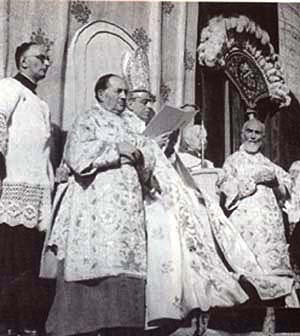 Picture of Pius IX defining the Immaculate Conception: 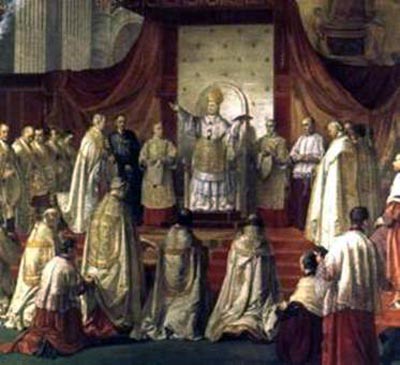 This post has been edited by yeeck: Mar 9 2015, 04:38 PM |
|
|
Mar 9 2015, 04:38 PM
|
|
Junior Member
225 posts Joined: Mar 2008
|
QUOTE(yeeck @ Mar 9 2015, 04:30 PM) Ermm....ex-Cathedra is the Latin meaning from the chair, but it doesn't necessarily mean he needs to be actually sitting down on his throne. That is true, he can make pronunciations solo, that is his right, however if the pope were to announce that tomorrow day is night and night is day, everyone would not be obligated to listen to him.It is not correct to say that he must consult the college of Cardinals and Synods before pronouncing anything infallibly. The power of the Pope is even above that of Ecumenical Councils, Cardinals, Synods. It just needs to be related to matters of faith and morals and in accordance with the the constant Tradition of the Church or Scripture. ... but as a matter of Sacred Tradition, that is Tradition with a capital "T", such pronunciations are made from the Chair, with counsel from the College of Cardinals and Synods. This post has been edited by khool: Mar 9 2015, 04:38 PM |
|
|
Mar 9 2015, 04:39 PM
|
|
Senior Member
3,577 posts Joined: Apr 2006
|
QUOTE(khool @ Mar 9 2015, 04:38 PM) That is true, he can make pronunciations solo, that is his right, however if the pope were to announce that tomorrow day is night and night is day, everyone would not be obligated to listen to him. Yes but if he defines tomorrow day is night and night is day, that is not related to faith and morals.... but as a matter of Sacred Tradition, that is Tradition with a capital "T", such pronunciations are made from the Chair, with counsel from the College of Cardinals and Synods. |
|
|
Mar 9 2015, 04:40 PM
|
|
Junior Member
225 posts Joined: Mar 2008
|
QUOTE(yeeck @ Mar 9 2015, 04:39 PM) Yes but if he defines tomorrow day is night and night is day, that is not related to faith and morals. hence the term, ex-cathedra ... matters only related to Christianity. |
|
|
Mar 9 2015, 04:41 PM
|
|
Junior Member
225 posts Joined: Mar 2008
|
QUOTE(yeeck @ Mar 9 2015, 04:30 PM) Ermm....ex-Cathedra is the Latin meaning from the chair, but it doesn't necessarily mean he needs to be actually sitting down on his throne. Oooh ... I like the second painting ... who is the artist???It is not correct to say that he must consult the college of Cardinals and Synods before pronouncing anything infallibly. The power of the Pope is even above that of Ecumenical Councils, Cardinals, Synods. It just needs to be related to matters of faith and morals and in accordance with the the constant Tradition of the Church or Scripture. See The Pope Picture of Pius XII defining the Assumption of Mary: Picture of Pius IX defining the Immaculate Conception: |
|
|
Mar 9 2015, 04:43 PM
|
|
Senior Member
3,577 posts Joined: Apr 2006
|
QUOTE(khool @ Mar 9 2015, 04:41 PM) Oooh ... I like the second painting ... who is the artist??? No idea, I just grabbed it from Google image lol... |
|
|
Mar 9 2015, 04:45 PM
|
|
Junior Member
225 posts Joined: Mar 2008
|
QUOTE(yeeck @ Mar 9 2015, 04:43 PM) No idea, I just grabbed it from Google image lol... hahaha! no worries ... still cool!   |
|
|
Mar 9 2015, 05:23 PM
|
|
Senior Member
3,577 posts Joined: Apr 2006
|
QUOTE(khool @ Mar 9 2015, 04:45 PM) hahaha! no worries ... still cool! Found it:  by Francesco Podesti. The image is currently in the Vatican Museum. Here's another perspective:  This post has been edited by yeeck: Mar 9 2015, 05:27 PM |
|
|
Mar 9 2015, 05:52 PM
|
|
Junior Member
225 posts Joined: Mar 2008
|
Yeeck ... thanks bro! Much appreciated!
|
|
|
Mar 9 2015, 11:47 PM
|
|
Senior Member
3,577 posts Joined: Apr 2006
|
A well-sung and well-known hymn sung in Catholic churches during Lent.
|
|
|
Mar 10 2015, 10:31 AM
|
|
Senior Member
1,920 posts Joined: Jan 2009
|
QUOTE(yeeck @ Mar 9 2015, 04:08 PM) Catholics don't believe that the pope is a divine being. However, the teaching of papal infallibility says that the Holy Spirit will protect the Pope from error when defining an article of faith intending to bind all the faithful. For the Holy Spirit was promised to the successors of Peter not so that they might, by his revelation, make known some new doctrine, but that, by his assistance, they might religiously guard and faithfully expound the revelation or deposit of faith transmitted by the apostles. Indeed, their apostolic teaching was embraced by all the venerable fathers and reverenced and followed by all the holy orthodox doctors, for they knew very well that this See of St. Peter always remains unblemished by any error, in accordance with the divine promise of our Lord and Savior to the prince of his disciples: "I have prayed for you that your faith may not fail; and when you have turned again, strengthen your brethren." - Pastor Aeternus. Of course we believe the Pope is human and can make mistakes, but not when he intends to bind all the faithful to believe in an article of faith. For example, Pope John Paul II teaching that the Church has no power to ordain women. Or Pope Pius XII defining the dogma of the Assumption of Mary into Heaven, which is not a new teaching but has always been believed by the Church for ages. QUOTE(khool @ Mar 9 2015, 04:25 PM) For the record, the Pope's infallibility only extends to 'ex-Cathedra', i.e. he needs to be sitting in the chair of St. Peter in the Cathedral when pronouncing doctrine. His pronunciations must be based on Church documents, encyclicals, papal bulls, and especially the Catechism of the Catholic Church. In addition, the college of Cardinals and Synods must be held before these pronunciation are made. And always, all these must be related to matters of Christian / Catholic faith. Outside of that circumstance, he can still be subject to human error. QUOTE(yeeck @ Mar 9 2015, 04:30 PM) Ermm....ex-Cathedra is the Latin meaning from the chair, but it doesn't necessarily mean he needs to be actually sitting down on his throne. may i ask It is not correct to say that he must consult the college of Cardinals and Synods before pronouncing anything infallibly. The power of the Pope is even above that of Ecumenical Councils, Cardinals, Synods. It just needs to be related to matters of faith and morals and in accordance with the the constant Tradition of the Church or Scripture. See The Pope Picture of Pius XII defining the Assumption of Mary: Picture of Pius IX defining the Immaculate Conception: ... If Pope declares war against something else (i mean war using guns and tanks)... His decision are considered righteous correct ? |
|
|
Mar 10 2015, 11:25 AM
|
|
Senior Member
3,577 posts Joined: Apr 2006
|
QUOTE(de1929 @ Mar 10 2015, 10:31 AM) may i ask You think the present Pope still have a big territories (Papal States) and army now? LOL....... If Pope declares war against something else (i mean war using guns and tanks)... His decision are considered righteous correct ?If you are referring to the First Crusades preached by Urban II, then it was a response to the Muslim invasion and occupation of Jerusalem and the harassment of pilgrims going to the Holy Places. Also this is not part of faith and morals so his actions would be dependent on whether they are based on just war theory, self defence, etc. Now that you mentioned this topic, I think a Crusade is relevant now to repel ISIS based on what they have been doing so far. But that would be far-fetched considering the international political scene today. |
|
|
Mar 10 2015, 11:53 AM
|
|
Senior Member
1,920 posts Joined: Jan 2009
|
QUOTE(yeeck @ Mar 10 2015, 11:25 AM) You think the present Pope still have a big territories (Papal States) and army now? LOL.... hahaha... i am referring to word papal infallibility.If you are referring to the First Crusades preached by Urban II, then it was a response to the Muslim invasion and occupation of Jerusalem and the harassment of pilgrims going to the Holy Places. Also this is not part of faith and morals so his actions would be dependent on whether they are based on just war theory, self defence, etc. Now that you mentioned this topic, I think a Crusade is relevant now to repel ISIS based on what they have been doing so far. But that would be far-fetched considering the international political scene today. I think when pope has instruction from Holy Spirit to do declare war like my point above, then people should think that under provision of Holy Spirit, there will be a supplies of need and blessing (of course additional tanks n guns ).... why ? cuz it's HS that gives instruction.what do u think ? |
|
|
Mar 10 2015, 12:07 PM
|
|
Senior Member
3,577 posts Joined: Apr 2006
|
QUOTE(de1929 @ Mar 10 2015, 11:53 AM) hahaha... i am referring to word papal infallibility. As mentioned above it has nothing to do with infallibility. It should be considered in the light of Church teaching on just war, self-defence, etc. If someone claims he or she has instructions from the Holy Spirit, etc, then there must be an unmistakable sign to prove that. The Catholic Church is very particular about alleged miracles, signs, prophecies. All these are judged by the Church in light of constant Church teaching, Sacred Tradition, Scripture... to be sure that there are no diabolical forces at work.I think when pope has instruction from Holy Spirit to do declare war like my point above, then people should think that under provision of Holy Spirit, there will be a supplies of need and blessing (of course additional tanks n guns ).... why ? cuz it's HS that gives instruction.what do u think ? |
|
|
Mar 10 2015, 12:50 PM
|
|
Senior Member
1,920 posts Joined: Jan 2009
|
QUOTE(yeeck @ Mar 10 2015, 12:07 PM) As mentioned above it has nothing to do with infallibility. It should be considered in the light of Church teaching on just war, self-defence, etc. If someone claims he or she has instructions from the Holy Spirit, etc, then there must be an unmistakable sign to prove that. The Catholic Church is very particular about alleged miracles, signs, prophecies. All these are judged by the Church in light of constant Church teaching, Sacred Tradition, Scripture... to be sure that there are no diabolical forces at work. so if pope (not someone else), who is with bestowed papal infallibility, got instruction from HS about declaring a war, will the church still consider pope instruction ? |
|
|
Mar 10 2015, 12:52 PM
|
|
Senior Member
3,577 posts Joined: Apr 2006
|
QUOTE(de1929 @ Mar 10 2015, 12:50 PM) so if pope (not someone else), who is with bestowed papal infallibility, got instruction from HS about declaring a war, will the church still consider pope instruction ? How do you know he got instruction from HS? And certainly have to consider based on the principles mentioned earlier.This post has been edited by yeeck: Mar 10 2015, 12:53 PM |
|
|
Mar 10 2015, 12:52 PM
|
|
Senior Member
3,577 posts Joined: Apr 2006
|
Yo Catholic brothers and sisters, today is the beginning of the nine-day novena (up till his feast day on March 18) to Saint Joseph, Patron of the Universal Church, and Protector of the Holy Family.
 Novena to St. Joseph *NOVENA PRAYER *(prayer to be said at the end of each day's devotion) Saint Joseph, I, your unworthy child, greet you. You are the faithful protector and intercessor of all who love and venerate you. You know that I have special confidence in you and that, after Jesus and Mary, I place all my hope of salvation in you, for you are especially powerful with God and will never abandon your faithful servants. Therefore I humbly invoke you and commend myself, with all who are dear to me and all that belong to me, to your intercession. I beg of you, by your love for Jesus and Mary, not to abandon me during life and to assist me at the hour of my death. Glorious Saint Joseph, spouse of the Immaculate Virgin, obtain for me a pure, humble, charitable mind, and perfect resignation to the divine Will. Be my guide, my father, and my model through life that I may merit to die as you did in the arms of Jesus and Mary. Loving Saint Joseph, faithful follower of Jesus Christ, I raise my heart to you to implore your powerful intercession in obtaining from the Divine Heart of Jesus all the graces necessary for my spiritual and temporal welfare, particularly the grace of a happy death, and the special grace I now implore: (Mention your request). Guardian of the Word Incarnate, I feel confident that your prayers in my behalf will be graciously heard before the throne of God. Amen. MEMORARE Remember, most pure spouse of Mary, ever Virgin, my loving protector, Saint Joseph, that no one ever had recourse to your protection or asked for your aid without obtaining relief. Confiding, therefore, in your goodness, I come before you and humbly implore you. Despise not my petitions, foster-father of the Redeemer, but graciously receive them. Amen. Source: EWTN This post has been edited by yeeck: Mar 10 2015, 12:57 PM |
|
|
Mar 10 2015, 02:21 PM
|
|
Senior Member
1,920 posts Joined: Jan 2009
|
QUOTE(yeeck @ Mar 10 2015, 12:52 PM) How do you know he got instruction from HS? And certainly have to consider based on the principles mentioned earlier. Just trust. If we have to consider "principles mentioned earlier".... then it's difficult to trust isn't it ? Who are we to examine pope ? |
|
|
Mar 10 2015, 02:41 PM
|
|
Senior Member
3,577 posts Joined: Apr 2006
|
QUOTE(de1929 @ Mar 10 2015, 02:21 PM) Just trust. If we have to consider "principles mentioned earlier".... then it's difficult to trust isn't it ? God gave you a mind to think reasonably too..lol.Who are we to examine pope ? Let me give an analogy. If a politician tells you to that he intends to table a motion for a particular law in Parliament, certainly he also has to present facts and figures in order to get support. Same goes for your question since the issue at hand is not related to Faith or morals, but to prudential judgement which needs to be determined based on the principles mentioned before. Back to your supposed scenario, if the principles of just war, self-defense etc are fulfilled, then I don't see any reason not to agree. But if I see those principles are not fulfilled, then yes, a Catholic may disagree and still remain a faithful Catholic. A recent case was the invasion of Iraq by the US forces to overthrow Saddam Hussein. President Bush claimed it was due to chemical/nuclear weapons etc, but then Pope John Paul II was very much against the invasion because the principles of just war is just not there. There was no evidence of chemical/nuclear weapons in the aftermath of the invasion and the situation of Iraq just proved that the Pope was right. On the other hand, those who claimed the invasion was justified because of Saddam's 'potential' of having chemical/nuclear weapons cannot be defended because that would be falling into the sin of presumption. Hope this helps. This post has been edited by yeeck: Mar 10 2015, 02:43 PM |
|
|
Mar 10 2015, 03:08 PM
|
|
Senior Member
1,920 posts Joined: Jan 2009
|
QUOTE(yeeck @ Mar 10 2015, 02:41 PM) God gave you a mind to think reasonably too..lol. dude... do you know in a simple political arena... we just let the people know what they need to know... that's the 1st point.Let me give an analogy. If a politician tells you to that he intends to table a motion for a particular law in Parliament, certainly he also has to present facts and figures in order to get support. Same goes for your question since the issue at hand is not related to Faith or morals, but to prudential judgement which needs to be determined based on the principles mentioned before. Back to your supposed scenario, if the principles of just war, self-defense etc are fulfilled, then I don't see any reason not to agree. But if I see those principles are not fulfilled, then yes, a Catholic may disagree and still remain a faithful Catholic. A recent case was the invasion of Iraq by the US forces to overthrow Saddam Hussein. President Bush claimed it was due to chemical/nuclear weapons etc, but then Pope John Paul II was very much against the invasion because the principles of just war is just not there. There was no evidence of chemical/nuclear weapons in the aftermath of the invasion and the situation of Iraq just proved that the Pope was right. On the other hand, those who claimed the invasion was justified because of Saddam's 'potential' of having chemical/nuclear weapons cannot be defended because that would be falling into the sin of presumption. Hope this helps. 2nd point: nobody knows the whole truth except GOD himself. I bet... not all truth is published in google. 3rd point: How do you know that Amazon.com will not reveal another truth tomorrow ? in essence, only GOD possess tomorrow and knows what will happen tomorrow... divine being maaa Therefore i choose to humble, if pope claims himself he got instruction from HS ... then i just obey. |
|
|
Mar 10 2015, 03:15 PM
|
|
Senior Member
3,577 posts Joined: Apr 2006
|
QUOTE(de1929 @ Mar 10 2015, 03:08 PM) dude... do you know in a simple political arena... we just let the people know what they need to know... that's the 1st point. For your 1st point, you assume that there would be no questions? 2nd point: nobody knows the whole truth except GOD himself. I bet... not all truth is published in google. 3rd point: How do you know that Amazon.com will not reveal another truth tomorrow ? in essence, only GOD possess tomorrow and knows what will happen tomorrow... divine being maaa Therefore i choose to humble, if pope claims himself he got instruction from HS ... then i just obey. 2nd point: Yes, but God can choose to reveal the truth to whomever He wants and in the manner that He has said. No contradictions there. I don't understand your 3rd point and how it relates to Amazon.com. I agree that only God knows what will happen tomorrow. But I don't see what you are trying to drive at with what we are talking about. Humility vs. willful ignorance vs. stupidity are vastly different things, you know? This post has been edited by yeeck: Mar 10 2015, 03:17 PM |
|
|
Mar 10 2015, 03:59 PM
|
|
Senior Member
1,920 posts Joined: Jan 2009
|
QUOTE(yeeck @ Mar 10 2015, 03:15 PM) For your 1st point, you assume that there would be no questions? point no 3 is something relates to future, but irrational for today. But if you don't do it today, then the utopia future will not happen.2nd point: Yes, but God can choose to reveal the truth to whomever He wants and in the manner that He has said. No contradictions there. I don't understand your 3rd point and how it relates to Amazon.com. I agree that only God knows what will happen tomorrow. But I don't see what you are trying to drive at with what we are talking about. Humility vs. willful ignorance vs. stupidity are vastly different things, you know? This is where all smart people fails to see, because for "smart people": today is irrational therefore future is out of question. I have been revealed that trust to GOD does look stupid for "smart people". |
|
|
Mar 10 2015, 04:02 PM
|
|
Senior Member
3,577 posts Joined: Apr 2006
|
QUOTE(de1929 @ Mar 10 2015, 03:59 PM) point no 3 is something relates to future, but irrational for today. But if you don't do it today, then the utopia future will not happen. "You have been revealed"? What is that supposed to mean? Are you claiming to be a prophet? Also..it seems you are equating humble people with stupid people. Sheesh.This is where all smart people fails to see, because for "smart people": today is irrational therefore future is out of question. I have been revealed that trust to GOD does look stupid for "smart people". This post has been edited by yeeck: Mar 10 2015, 04:03 PM |
|
|
Mar 10 2015, 04:12 PM
|
|
Junior Member
225 posts Joined: Mar 2008
|
errr ... bro Yeeck, perhaps he means 'It has been revealed ...', might be a typo?
This post has been edited by khool: Mar 10 2015, 04:22 PM |
|
|
Mar 10 2015, 04:45 PM
|
|
Senior Member
1,920 posts Joined: Jan 2009
|
QUOTE(yeeck @ Mar 10 2015, 04:02 PM) "You have been revealed"? What is that supposed to mean? Are you claiming to be a prophet? Also..it seems you are equating humble people with stupid people. Sheesh. oh sorry... i have been revealed meaning i just learned recently. nothing more.claiming to be prophet... definitely no. equating humble people with stupid people... no... actually the other thinking , which is equating "smart people" with stupid people. how come ? because the one that obey GOD (in this context, by listening to pope messages to declare war)... looks stupid but actually these stupid people are the smart people.so i don't equate humble people with stupid people... btw do you mind point out which post i equate humble people with stupid people ? perhaps i overlook something. i will apology if i equate humble people with stupid people. This post has been edited by de1929: Mar 10 2015, 04:47 PM |
|
|
Mar 10 2015, 04:59 PM
|
|
Senior Member
3,577 posts Joined: Apr 2006
|
QUOTE(de1929 @ Mar 10 2015, 04:45 PM) oh sorry... i have been revealed meaning i just learned recently. nothing more. Alright, how can you be sure that GOD revealed it to so and so? It will be the same question I ask every Protestant regarding the founding of their various churches/denominations/sects. claiming to be prophet... definitely no. equating humble people with stupid people... no... actually the other thinking , which is equating "smart people" with stupid people. how come ? because the one that obey GOD (in this context, by listening to pope messages to declare war)... looks stupid but actually these stupid people are the smart people.so i don't equate humble people with stupid people... btw do you mind point out which post i equate humble people with stupid people ? perhaps i overlook something. i will apology if i equate humble people with stupid people. Every Christian ought not to be simply taken for a ride. "Dearly beloved, believe not every spirit, but try the spirits if they be of God: because many false prophets are gone out into the world." 1 John 4:1 "Who said: Take heed you be not seduced; for many will come in my name, saying, I am he; and the time is at hand: go ye not therefore after them. " Luke 21:8 "Behold I send you as sheep in the midst of wolves. Be ye therefore wise as serpents and simple as doves." Matthew 10:16 This post has been edited by yeeck: Mar 10 2015, 05:14 PM |
|
|
Mar 10 2015, 05:41 PM
|
|
Senior Member
1,920 posts Joined: Jan 2009
|
QUOTE(yeeck @ Mar 10 2015, 04:59 PM) Alright, how can you be sure that GOD revealed it to so and so? It will be the same question I ask every Protestant regarding the founding of their various churches/denominations/sects. Well, Protestant does have problems cuz they don't have pope right ? so the term papal infallibility does not apply to them. Every Christian ought not to be simply taken for a ride. "Dearly beloved, believe not every spirit, but try the spirits if they be of God: because many false prophets are gone out into the world." 1 John 4:1 "Who said: Take heed you be not seduced; for many will come in my name, saying, I am he; and the time is at hand: go ye not therefore after them. " Luke 21:8 "Behold I send you as sheep in the midst of wolves. Be ye therefore wise as serpents and simple as doves." Matthew 10:16 what i think, you can count your blessing as chatolic believes that pope can hear to HS. Therefore chatolic can spend time to do other things instead of trying to listen to HS. Outsourcing maaa Do you know how many problems non catholic have because they don't have pope ? therefore because they cannot listen to HS like pope, they have to come out with sooooooooooooooooooooo many rules / ethics code to justify all their action. Pitty isn't it ? |
|
|
Mar 10 2015, 05:45 PM
|
|
Senior Member
3,577 posts Joined: Apr 2006
|
QUOTE(de1929 @ Mar 10 2015, 05:41 PM) Well, Protestant does have problems cuz they don't have pope right ? so the term papal infallibility does not apply to them. LOL...we Catholics don't make the claim that the Holy Spirit only speaks exclusively to the Pope. Again, I hope you get my points above. Test every claim, test every spirit.what i think, you can count your blessing as chatolic believes that pope can hear to HS. Therefore chatolic can spend time to do other things instead of trying to listen to HS. Outsourcing maaa Do you know how many problems non catholic have because they don't have pope ? therefore because they cannot listen to HS like pope, they have to come out with sooooooooooooooooooooo many rules / ethics code to justify all their action. Pitty isn't it ? |
|
|
Mar 10 2015, 06:25 PM
|
|
Senior Member
1,920 posts Joined: Jan 2009
|
QUOTE(yeeck @ Mar 10 2015, 05:45 PM) LOL...we Catholics don't make the claim that the Holy Spirit only speaks exclusively to the Pope. Again, I hope you get my points above. Test every claim, test every spirit. oh i see... i was under impression only Pope can hear from HS. Apparently i was wrong.Test the spirit ? LOL ... ... only GOD can test the spirit on your behalf. The idea is, humans never be the expert of the spirit, therefore you need another spirit to test another spirit. And only HS is available to test the spirit. |
|
|
Mar 10 2015, 10:35 PM
|
|
Senior Member
3,577 posts Joined: Apr 2006
|
QUOTE(de1929 @ Mar 10 2015, 06:25 PM) oh i see... i was under impression only Pope can hear from HS. Apparently i was wrong. Looks like you don't even believe the Bible:Test the spirit ? LOL ... ... only GOD can test the spirit on your behalf. The idea is, humans never be the expert of the spirit, therefore you need another spirit to test another spirit. And only HS is available to test the spirit."Dearly beloved, believe not every spirit, but try the spirits if they be of God: because many false prophets are gone out into the world." 1 John 4:1 |
|
|
Mar 10 2015, 11:29 PM
|
|
Senior Member
726 posts Joined: Sep 2014
|
QUOTE(yeeck @ Mar 10 2015, 10:35 PM) Looks like you don't even believe the Bible: De1929 used to provide us with mindless entertainment in LYN Christian Fellowship on a regular basis."Dearly beloved, believe not every spirit, but try the spirits if they be of God: because many false prophets are gone out into the world." 1 John 4:1 Even willing to kill another person IF God told him so.  Looks like he's going to provide you guys with a dose of brain numbing entertainment.  |
|
|
Mar 10 2015, 11:37 PM
|
|
Senior Member
3,577 posts Joined: Apr 2006
|
QUOTE(tinarhian @ Mar 10 2015, 11:29 PM) De1929 used to provide us with mindless entertainment in LYN Christian Fellowship on a regular basis. Yes, I'm just curious which church he/she belongs to.Even willing to kill another person IF God told him so. Looks like he's going to provide you guys with a dose of brain numbing entertainment. |
|
|
Mar 10 2015, 11:42 PM
|
|
Senior Member
726 posts Joined: Sep 2014
|
QUOTE(yeeck @ Mar 10 2015, 11:37 PM) Yes, I'm just curious which church he/she belongs to. We don't take him serious anymore since he has a screw loose somewhere. |
|
|
Mar 10 2015, 11:51 PM
|
|
Junior Member
82 posts Joined: Jan 2015
|
QUOTE(bananajoe @ Mar 5 2015, 12:21 AM) one question ? why do we have idols in catholic church ? just want to hear your view on this. Roman Catholic. Keyword is "Roman". They're into statues & shit before Christianity took over. If you look at the other side of the schism, Greek Orthodox frown upon statues & images. Also, Jesus turned water into wine. What more can I ask for? |
|
|
Mar 10 2015, 11:58 PM
|
|
Senior Member
3,577 posts Joined: Apr 2006
|
QUOTE(olay biscuit barrel @ Mar 10 2015, 11:51 PM) Roman Catholic. Keyword is "Roman". They're into statues & shit before Christianity took over. If you look at the other side of the schism, Greek Orthodox frown upon statues & images. The Greek Orthodox still have images (icons) but not so much into statues. The reason being that the East was afflicted by the heresy of iconoclasm.Also, Jesus turned water into wine. What more can I ask for? Statues were in existence even before the imperial capital moved from Rome to Constantinople. One early example from the Roman catacombs where early Christians used to hide and pray and bury their dead: 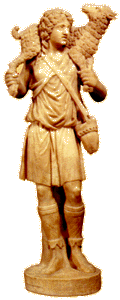 And another statue, dated back to the Byzantine Empire (before the fall of the city):  This post has been edited by yeeck: Mar 11 2015, 12:13 AM |
|
|
Mar 11 2015, 08:22 AM
|
|
Senior Member
1,920 posts Joined: Jan 2009
|
QUOTE(tinarhian @ Mar 9 2015, 11:23 PM) ... But let God be the judge. Not us. QUOTE(tinarhian @ Mar 10 2015, 11:29 PM) De1929 used to provide us with mindless entertainment in LYN Christian Fellowship on a regular basis. And in other thread you say "But let God be the judge. Not us."... but here you say "provide you guys with a dose of brain numbing entertainment"... You are a very gud judge indeed Even willing to kill another person IF God told him so. Looks like he's going to provide you guys with a dose of brain numbing entertainment. This post has been edited by de1929: Mar 11 2015, 03:48 PM |
|
|
Mar 11 2015, 08:28 AM
|
|
Senior Member
1,920 posts Joined: Jan 2009
|
QUOTE(yeeck @ Mar 10 2015, 10:35 PM) Looks like you don't even believe the Bible: Test the spirit is correct. But how ? by reading the bible ? or by asking another spirit."Dearly beloved, believe not every spirit, but try the spirits if they be of God: because many false prophets are gone out into the world." 1 John 4:1 let's assume this: we are both not a car expert nor car mechanics. How we gonna test a work from another mechanics ? by asking another QC from another mechanics or governing bodies or something else right ? Human lives max 120 years... how many years has spirit live ? 1000000 years may i assume ? who can comprehends spirit knowledge ? our bachelor degree ? our googling ? Yes it's true that 1 John 4:1 say like that, but Proverbs 3:5 also say: Trust in the LORD with all your heart and lean not on your own understanding; That summarizes, whatever human do to test the spirit will never be good enough, therefore don't do "human way aka reasearch / study", but Trust in the LORD. |
|
|
Mar 11 2015, 12:22 PM
|
|
Senior Member
3,577 posts Joined: Apr 2006
|
QUOTE(de1929 @ Mar 11 2015, 08:28 AM) Test the spirit is correct. But how ? by reading the bible ? or by asking another spirit. How do you know it's the Lord?let's assume this: we are both not a car expert nor car mechanics. How we gonna test a work from another mechanics ? by asking another QC from another mechanics or governing bodies or something else right ? Human lives max 120 years... how many years has spirit live ? 1000000 years may i assume ? who can comprehends spirit knowledge ? our bachelor degree ? our googling ? Yes it's true that 1 John 4:1 say like that, but Proverbs 3:5 also say: Trust in the LORD with all your heart and lean not on your own understanding; That summarizes, whatever human do to test the spirit will never be good enough, therefore don't do "human way aka reasearch / study", but Trust in the LORD. |
|
|
Mar 11 2015, 12:55 PM
|
|
Senior Member
1,920 posts Joined: Jan 2009
|
QUOTE(yeeck @ Mar 11 2015, 12:22 PM) How do you know it's the Lord? if you ask as a scholar, asking empirical evidence. i don't know.But there is another approach. By faith. Hebrew 11:6 -- And without faith it is impossible to please God, because anyone who comes to him must believe that he exists and that he rewards those who earnestly seek him. and for chatholic: You have pope ...------------------------------------------------------- back to our other topic : Do i believe in bible ? ------------------------------------------------------- I believe in bible 100%. Now becareful, bible does not give you direct answer, nor yes no nor summary about testing every kind of evil spirit. It just give you 1 solution. Ask GOD. One 1 side / or 1 point of view: evil spirit has "expertise" and different spirit has different expertise. there is one good at sexual temptation, there is one good at corruption, there is one good at doing divisive works, there is one doing bad mouthing, there is one doing bad habits, there is one doing killing, etc... And because these spirit lives at least... 10000 years... they are very good at doing their expertise ... no phd able to comprehend their expertise right ?I hope this explain why i say test the spirit by Asking GOD himself. Because we are very limited in everything. Being positive is another things, but realize 1 thing also another thing. -------------------------------------------- |
|
|
Mar 11 2015, 02:04 PM
|
|
Junior Member
225 posts Joined: Mar 2008
|
Anyone fasting during this Season of Lent? How do you feel after the day of fasting is done?
|
|
|
Mar 11 2015, 03:14 PM
|
|
Senior Member
3,577 posts Joined: Apr 2006
|
QUOTE(khool @ Mar 11 2015, 02:04 PM) Anyone fasting during this Season of Lent? How do you feel after the day of fasting is done? The rule for fasting in the Latin Rite is quite easy actually...lol. 1 main meal with 2 smaller meals not equivalent to that 1 main meal. Can drink anytime, but no snacking. Of course one can always do more.This post has been edited by yeeck: Mar 11 2015, 03:32 PM |
|
|
Mar 11 2015, 03:32 PM
|
|
Senior Member
3,577 posts Joined: Apr 2006
|
QUOTE(de1929 @ Mar 11 2015, 12:55 PM) if you ask as a scholar, asking empirical evidence. i don't know. Actually I find it hard to understand what you are trying to say, really. And for Catholics, we don't just have the Pope to rely on, but also Sacred Scripture and Sacred Tradition. All these are encapsulated in catechisms, lives of the saints, the Sacred Liturgy (Holy Mass and the sacraments), etc...basically what I call the Catholic ethos.But there is another approach. By faith. Hebrew 11:6 -- And without faith it is impossible to please God, because anyone who comes to him must believe that he exists and that he rewards those who earnestly seek him. and for chatholic: You have pope ...------------------------------------------------------- back to our other topic : Do i believe in bible ? ------------------------------------------------------- I believe in bible 100%. Now becareful, bible does not give you direct answer, nor yes no nor summary about testing every kind of evil spirit. It just give you 1 solution. Ask GOD. One 1 side / or 1 point of view: evil spirit has "expertise" and different spirit has different expertise. there is one good at sexual temptation, there is one good at corruption, there is one good at doing divisive works, there is one doing bad mouthing, there is one doing bad habits, there is one doing killing, etc... And because these spirit lives at least... 10000 years... they are very good at doing their expertise ... no phd able to comprehend their expertise right ?I hope this explain why i say test the spirit by Asking GOD himself. Because we are very limited in everything. Being positive is another things, but realize 1 thing also another thing. -------------------------------------------- |
|
|
Mar 11 2015, 03:40 PM
|
|
Junior Member
225 posts Joined: Mar 2008
|
QUOTE(yeeck @ Mar 11 2015, 03:14 PM) The rule for fasting in the Latin Rite is quite easy actually...lol. 1 main meal with 2 smaller meals not equivalent to that 1 main meal. Can drink anytime, but no snacking. Of course one can always do more. Yesss ... I try to do more usually, then go for penintential service *CONFESSION!!!!* ... waahahahahahahahaa!!!! |
|
|
Mar 11 2015, 03:41 PM
|
|
Junior Member
225 posts Joined: Mar 2008
|
QUOTE(yeeck @ Mar 11 2015, 03:32 PM) Actually I find it hard to understand what you are trying to say, really. And for Catholics, we don't just have the Pope to rely on, but also Sacred Scripture and Sacred Tradition. All these are encapsulated in catechisms, lives of the saints, the Sacred Liturgy (Holy Mass and the sacraments), etc...basically what I call the Catholic ethos. Sacred Scripture, Sacred Tradition AND Magisterial Teachings ... all of which the Pope still has to adhere to. Pope is not allowed to change any of the three, no authority. |
|
|
Mar 11 2015, 03:44 PM
|
|
Senior Member
1,920 posts Joined: Jan 2009
|
QUOTE(yeeck @ Mar 11 2015, 03:32 PM) Actually I find it hard to understand what you are trying to say, really. And for Catholics, we don't just have the Pope to rely on, but also Sacred Scripture and Sacred Tradition. All these are encapsulated in catechisms, lives of the saints, the Sacred Liturgy (Holy Mass and the sacraments), etc...basically what I call the Catholic ethos. i am improving my ears, to hear GOD... and i don't mind learning from Catholic teachers like you. But if you tell me to read bible to hear GOD then i am sorry, that one i can google easily. no need teachers. |
|
|
Mar 11 2015, 03:46 PM
|
|
Senior Member
1,920 posts Joined: Jan 2009
|
QUOTE(khool @ Mar 11 2015, 03:41 PM) Sacred Scripture, Sacred Tradition AND Magisterial Teachings ... all of which the Pope still has to adhere to. Pope is not allowed to change any of the three, no authority. including you (continuing from my previous reply) |
|
|
Mar 11 2015, 03:50 PM
|
|
Senior Member
3,577 posts Joined: Apr 2006
|
QUOTE(de1929 @ Mar 11 2015, 03:44 PM) i am improving my ears, to hear GOD... and i don't mind learning from Catholic teachers like you. No, Catholics don't believe in "Scripture alone".But if you tell me to read bible to hear GOD then i am sorry, that one i can google easily. no need teachers. |
|
|
Mar 11 2015, 03:53 PM
|

Newbie
2 posts Joined: Nov 2014
|
Jared Leto - FL: Church of the Assumption, PJ. Serving as a musician for every Sunday mass.
I'm a convert and grown up from this church but I have not baptised yet. Still seeking more Knowledge on Christianity before baptism. |
|
|
Mar 11 2015, 04:00 PM
|
|
Senior Member
3,577 posts Joined: Apr 2006
|
QUOTE(Jared Leto @ Mar 11 2015, 03:53 PM) Jared Leto - FL: Church of the Assumption, PJ. Serving as a musician for every Sunday mass. Welcome. Are you in the RCIA programme or seeking instructions? Perhaps share with us what made you interested with Catholicism and background. I always love convert stories.I'm a convert and grown up from this church but I have not baptised yet. Still seeking more Knowledge on Christianity before baptism. This post has been edited by yeeck: Mar 11 2015, 04:01 PM |
|
|
Mar 11 2015, 04:05 PM
|
|
Junior Member
225 posts Joined: Mar 2008
|
QUOTE(yeeck @ Mar 11 2015, 03:50 PM) No, Catholics don't believe in "Scripture alone". Sola Sciptura ... a very limited view ...This post has been edited by khool: Mar 11 2015, 04:06 PM |
|
|
Mar 11 2015, 04:09 PM
|
|
Senior Member
1,920 posts Joined: Jan 2009
|
QUOTE(yeeck @ Mar 11 2015, 03:50 PM) No, Catholics don't believe in "Scripture alone". QUOTE(khool @ Mar 11 2015, 04:05 PM) Sola Sciptura ... a very limited view ... scripture means bible ? or something else ? also i heard there are apocrypha something like that... |
|
|
Mar 11 2015, 04:11 PM
|
|
Senior Member
3,577 posts Joined: Apr 2006
|
QUOTE(de1929 @ Mar 11 2015, 04:09 PM) scripture means bible ? or something else ? also i heard there are apocrypha something like that... Okayy.....so you are not Christian..hmmm. |
|
|
Mar 11 2015, 04:56 PM
|
|
Senior Member
1,920 posts Joined: Jan 2009
|
QUOTE(yeeck @ Mar 11 2015, 04:11 PM) Okayy.....so you are not Christian..hmmm. christian lahh... but still learning to listen to GOD... |
|
|
Mar 11 2015, 05:01 PM
|
|
Senior Member
3,577 posts Joined: Apr 2006
|
QUOTE(de1929 @ Mar 11 2015, 04:56 PM) christian lahh... but still learning to listen to GOD... Which church, if I may ask? |
|
|
Mar 11 2015, 05:08 PM
|
|
Senior Member
1,920 posts Joined: Jan 2009
|
QUOTE(yeeck @ Mar 11 2015, 05:01 PM) Which church, if I may ask? I have my own forum:https://forum.lowyat.net/topic/3484794 My message is clear, malaysia for JESUS: be it from catholic or something else. So my church ? i don't mind bringing ppl to catholic curch, if the person can "click" in catholic church.... not rules, but "click"... ah i don't know how to translate "click" actually... perhaps you can put in better english. |
|
|
Mar 11 2015, 05:17 PM
|
|
Senior Member
3,577 posts Joined: Apr 2006
|
QUOTE(de1929 @ Mar 11 2015, 05:08 PM) I have my own forum: I still find it hard to understand you. LOL.https://forum.lowyat.net/topic/3484794 My message is clear, malaysia for JESUS: be it from catholic or something else. So my church ? i don't mind bringing ppl to catholic curch, if the person can "click" in catholic church.... not rules, but "click"... ah i don't know how to translate "click" actually... perhaps you can put in better english. |
|
|
Mar 11 2015, 05:31 PM
|
|
Senior Member
1,920 posts Joined: Jan 2009
|
QUOTE(yeeck @ Mar 11 2015, 05:17 PM) I still find it hard to understand you. LOL. i want to win soul, and park in catholic church. that's the 1st step. what do u think hahhaa |
|
|
Mar 11 2015, 05:35 PM
|
|
Senior Member
3,577 posts Joined: Apr 2006
|
QUOTE(de1929 @ Mar 11 2015, 05:31 PM) i want to win soul, and park in catholic church. that's the 1st step. what do u think hahhaa Based on what you've said so far, no. Sorry. |
|
|
Mar 11 2015, 05:48 PM
|
|
Senior Member
726 posts Joined: Sep 2014
|
QUOTE(de1929 @ Mar 11 2015, 08:22 AM) And in other thread you say "But let God be the judge. Not us."... but here you say "provide you guys with a dose of brain numbing entertainment"... You are a very gud judge indeed You said that you have improved your English proficiency in the other Christian thread.May I ask, "Do you even understand what I wrote?" Or should I speak in Bahasa Indonesia with you? |
|
|
Mar 11 2015, 06:26 PM
|
|
Senior Member
1,920 posts Joined: Jan 2009
|
QUOTE(yeeck @ Mar 11 2015, 05:35 PM) Based on what you've said so far, no. Sorry. win soul meaning convert to catholic or bring backsliding catholic member to catholic church.... still no ? |
|
|
Mar 11 2015, 07:24 PM
|
|
Junior Member
316 posts Joined: Nov 2005 From: Saya Berjaya
|
Is it me or for the past 1 year, more and more Catholics are attending mass (which is a good thing)? Back then, we have contingency plans for audio and video coverage for celebrations like Easter and Chritmas. But nowadays, even Sunday masses are packed. Same situation for other parishes?
|
|
|
Mar 11 2015, 07:30 PM
|
|
Senior Member
1,920 posts Joined: Jan 2009
|
QUOTE(pkh @ Mar 11 2015, 07:24 PM) Is it me or for the past 1 year, more and more Catholics are attending mass (which is a good thing)? Back then, we have contingency plans for audio and video coverage for celebrations like Easter and Chritmas. But nowadays, even Sunday masses are packed. Same situation for other parishes? looks like a healthy church. glad to hear this |
|
|
Mar 11 2015, 08:56 PM
|
|
Senior Member
737 posts Joined: Jul 2010 From: Klang
|
QUOTE(yeeck @ Mar 11 2015, 05:35 PM) Based on what you've said so far, no. Sorry. you know what yeeck, we at the other forum is trying hard to change him but he is so stubborn like a donkey so we hope you could wash him abit and 'cleanse' him please |
|
|
Mar 11 2015, 09:33 PM
|
|
Senior Member
3,577 posts Joined: Apr 2006
|
Let's just move on and ignore what should be ignored.
5 Myths about 7 Books MARK SHEA Here are the answers to five common arguments Protestants give for rejecting the Deuterocanonical books of the Old Testament. 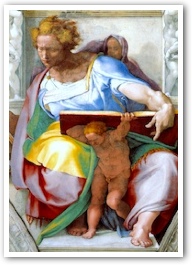 People don't talk much about the deuterocanon these days. The folks who do are mostly Christians, and they usually fall into two general groupings: Catholics — who usually don't know their Bibles very well and, therefore, don't know much about the deuterocanonical books, and Protestants — who may know their Bibles a bit better, though their Bibles don't have the deuterocanonical books in them anyway, so they don't know anything about them either. With the stage thus set for informed ecumenical dialogue, it's no wonder most people think the deuterocanon is some sort of particle weapon recently perfected by the Pentagon. The deuterocanon (ie. "second canon") is a set of seven books — Sirach, Tobit, Wisdom, Judith, 1 and 2 Maccabees, and Baruch, as well as longer versions of Daniel and Esther — that are found in the Old Testament canon used by Catholics, but are not in the Old Testament canon used by Protestants, who typically refer to them by the mildly pejorative term "apocrypha." This group of books is called "deuterocanonical" not (as some imagine) because they are a "second rate" or inferior canon, but because their status as being part of the canon of Scripture was settled later in time than certain books that always and everywhere were regarded as Scripture, such as Genesis, Isaiah, and Psalms. Why are Protestant Bibles missing these books? Protestants offer various explanations to explain why they reject the deuterocanonical books as Scripture. I call these explanations "myths" because they are either incorrect or simply inadequate reasons for rejecting these books of Scripture. Let's explore the five most common of these myths and see how to respond to them. Myth 1 The deuterocanonical books are not found in the Hebrew Bible. They were added by the Catholic Church at the Council of Trent after Luther rejected it. The background to this theory goes like this: Jesus and the Apostles, being Jews, used the same Bible Jews use today. However, after they passed from the scene, muddled hierarchs started adding books to the Bible either out of ignorance or because such books helped back up various wacky Catholic traditions that were added to the gospel. In the 16th century, when the Reformation came along, the first Protestants, finally able to read their Bibles without ecclesial propaganda from Rome, noticed that the Jewish and Catholic Old Testaments differed, recognized this medieval addition for what it was and scraped it off the Word of God like so many barnacles off a diamond. Rome, ever ornery, reacted by officially adding the deuterocanonical books at the Council of Trent (1545-1563) and started telling Catholics "they had always been there." This is a fine theory. The problem is that its basis in history is gossamer thin. As we'll see in a moment, accepting this myth leads to some remarkable dilemmas a little further on. The problems with this theory are first, it relies on the incorrect notion that the modern Jewish Bible is identical to the Bible used by Jesus and the Apostles. This is false. In fact, the Old Testament was still very much in flux in the time of Christ and there was no fixed canon of Scripture in the apostolic period. Some people will tell you that there must have been since, they say, Jesus held people accountable to obey the Scriptures. But this is also untrue. For in fact, Jesus held people accountable to obey their conscience and therefore, to obey Scripture insofar as they were able to grasp what constituted "Scripture." Consider the Sadducees. They only regarded the first five books of the Old Testament as inspired and canonical. The rest of the Old Testament was regarded by them in much the same way the deuterocanon is regarded by Protestant Christians today: nice, but not the inspired Word of God. This was precisely why the Sadducees argued with Jesus against the reality of the resurrection in Matthew 22:23-33: they couldn't see it in the five books of Moses and they did not regard the later books of Scripture which spoke of it explicitly (such as Isaiah and 2 Maccabees) to be inspired and canonical. Does Jesus say to them "You do greatly err, not knowing Isaiah and 2 Maccabees"? Does He bind them to acknowledge these books as canonical? No. He doesn't try to drag the Sadducees kicking and screaming into an expanded Old Testament. He simply holds the Sadducees accountable to take seriously the portion of Scripture they do acknowledge: that is, He argues for the resurrection based on the five books of the Law. But of course, this doesn't mean Jesus commits Himself to the Sadducees' whittled-down canon. When addressing the Pharisees, another Jewish faction of the time, Jesus does the same thing. These Jews seem to have held to a canon resembling the modern Jewish canon, one far larger than that of the Sadducees but not as large as other Jewish collections of Scripture. That's why Christ and the Apostles didn't hesitate to argue with them from the books they acknowledged as Scripture. But as with the Sadducees, this doesn't imply that Christ or the Apostles limited the canon of Scripture only to what the Pharisees acknowledged. When the Lord and His Apostles addressed Greek-speaking Diaspora Jews, they made use of an even bigger collection of Scripture — the Septuagint, a translation of the Hebrew Scriptures into Greek — which many Jews (the vast majority, in fact) regarded as inspired Scripture. In fact, we find that the New Testament is filled with references to the Septuagint (and its particular translation of various Old Testament passages) as Scripture. It's a strange irony that one of the favorite passages used in anti-Catholic polemics over the years is Mark 7:6-8. In this passage Christ condemns "teaching as doctrines human traditions." This verse has formed the basis for countless complaints against the Catholic Church for supposedly "adding" to Scripture man-made traditions, such as the "merely human works" of the deuterocanononical books. But few realize that in Mark 7:6-8 the Lord was quoting the version of Isaiah that is found only in the Septuagint version of the Old Testament. But there's the rub: The Septuagint version of Scripture, from which Christ quoted, includes the Deuterocanonical books, books that were supposedly "added" by Rome in the 16th century. And this is by no means the only citation of the Septuagint in the New Testament. In fact, fully two thirds of the Old Testament passages that are quoted in the New Testament are from the Septuagint. So why aren't the deuterocanonical books in today's Jewish Bible, anyway? Because the Jews who formulated the modern Jewish canon were a) not interested in apostolic teaching and, b) driven by a very different set of concerns from those motivating the apostolic community. In fact, it wasn't until the very end of the apostolic age that the Jews, seeking a new focal point for their religious practice in the wake of the destruction of the Temple, zeroed in with white hot intensity on Scripture and fixed their canon at the rabbinical gathering, known as the "Council of Javneh" (sometimes called "Jamnia"), about A.D. 90. Prior to this point in time there had never been any formal effort among the Jews to "define the canon" of Scripture. In fact, Scripture nowhere indicates that the Jews even had a conscious idea that the canon should be closed at some point. The canon arrived at by the rabbis at Javneh was essentially the mid-sized canon of the Palestinian Pharisees, not the shorter one used by the Sadducees, who had been practically annihilated during the Jewish war with Rome. Nor was this new canon consistent with the Greek Septuagint version, which the rabbis regarded rather xenophobically as "too Gentile-tainted." Remember, these Palestinian rabbis were not in much of a mood for multiculturalism after the catastrophe they had suffered at the hands of Rome. Their people had been slaughtered by foreign invaders, the Temple defiled and destroyed, and the Jewish religion in Palestine was in shambles. So for these rabbis, the Greek Septuagint went by the board and the mid-sized Pharisaic canon was adopted. Eventually this version was adopted by the vast majority of Jews — though not all. Even today Ethiopian Jews still use the Septuagint version, not the shorter Palestinian canon settled upon by the rabbis at Javneh. In other words, the Old Testament canon recognized by Ethiopian Jews is identical to the Catholic Old Testament, including the seven deuterocanonical books (cf. Encyclopedia Judaica, vol. 6, p. 1147). But remember that by the time the Jewish council of Javneh rolled around, the Catholic Church had been in existence and using the Septuagint Scriptures in its teaching, preaching, and worship for nearly 60 years, just as the Apostles themselves had done. So the Church hardly felt the obligation to conform to the wishes of the rabbis in excluding the deuterocanonical books any more than they felt obliged to follow the rabbis in rejecting the New Testament writings. The fact is that after the birth of the Church on the day of Pentecost, the rabbis no longer had authority from God to settle such issues. That authority, including the authority to define the canon of Scripture, had been given to Christ's Church. Thus, Church and synagogue went their separate ways, not in the Middle Ages or the 16th century, but in the 1st century. The Septuagint, complete with the deuterocanononical books, was first embraced, not by the Council of Trent, but by Jesus of Nazareth and his Apostles. Myth 2 Christ and the Apostles frequently quoted Old Testament Scripture as their authority, but they never quoted from the deuterocanonical books, nor did they even mention them. Clearly, if these books were part of Scripture, the Lord would have cited them. This myth rests on two fallacies. The first is the "Quotation Equals Canonicity" myth. It assumes that if a book is quoted or alluded to by the Apostles or Christ, it is ipso facto shown to be part of the Old Testament. Conversely, if a given book is not quoted, it must not be canonical. This argument fails for two reasons. First, numerous non-canonical books are quoted in the New Testament. These include the Book of Enoch and the Assumption of Moses (quoted by St. Jude), the Ascension of Isaiah (alluded to in Hebrews 11:37), and the writings of the pagan poets Epimenides, Aratus, and Menander (quoted by St. Paul in Acts, 1 Corinthians, and Titus). If quotation equals canonicity, then why aren't these writings in the canon of the Old Testament? Second, if quotation equals canonicity, then there are numerous books of the protocanonical Old Testament which would have to be excluded. This would include the Song of Songs, Ecclesiastes, Esther, Obadiah, Zephaniah, Judges, 1 Chronicles, Ezra, Nehemiah, Lamentations and Nahum. Not one of these Old Testament books is ever quoted or alluded to by Christ or the Apostles in the New Testament. The other fallacy behind Myth #2 is that, far from being ignored in the New Testament (like Ecclesiastes, Esther, and 1 Chronicles) the deuterocanonical books are indeed quoted and alluded to in the New Testament. For instance, Wisdom 2:12-20, reads in part, "For if the just one be the son of God, he will defend him and deliver him from the hand of his foes. With revilement and torture let us put him to the test that we may have proof of his gentleness and try his patience. Let us condemn him to a shameful death; for according to his own words, God will take care of him." This passage was clearly in the minds of the Synoptic Gospel writers in their accounts of the Crucifixion: "He saved others; he cannot save himself. So he is the king of Israel! Let him come down from the cross now, and we will believe in him. He trusted in God; let Him deliver him now if he wants him. For he said, ÔI am the Son of God'" (cf. Matthew 27:42-43). Similarly, St. Paul alludes clearly to Wisdom chapters 12 and 13 in Romans 1:19-25. Hebrews 11:35 refers unmistakably to 2 Maccabees 7. And more than once, Christ Himself drew on the text of Sirach 27:6, which reads: "The fruit of a tree shows the care it has had; so too does a man's speech disclose the bent of his mind." Notice too that the Lord and His Apostles observed the Jewish feast of Hanukkah (cf. John 10:22-36). But the divine establishment of this key feast day is recorded only in the deuterocanonical books of 1 and 2 Maccabees. It is nowhere discussed in any other book of the Old Testament. In light of this, consider the importance of Christ's words on the occasion of this feast: "Is it not written in your Law, ÔI have said you are gods'? If he called them Ôgods,' to whom the word of God came — and the Scripture cannot be broken — what about the One Whom the Father set apart as His very own and sent into the world?" Jesus, standing near the Temple during the feast of Hanukkah, speaks of His being "set apart," just as Judas Maccabeus "set apart" (ie. consecrated) the Temple in 1 Maccabees 4:36-59 and 2 Maccabees 10:1-8. In other words, our Lord made a connection that was unmistakable to His Jewish hearers by treating the Feast of Hanukkah and the account of it in the books of the Maccabees as an image or type of His own consecration by the Father. That is, He treats the Feast of Hanukkah from the so-called "apocryphal" books of 1 and 2 Maccabees exactly as He treats accounts of the manna (John 6:32-33; Exodus 16:4), the Bronze Serpent (John 3:14; Numbers 21:4-9), and Jacob's Ladder (John 1:51; Genesis 28:12) — as inspired, prophetic, scriptural images of Himself. We see this pattern throughout the New Testament. There is no distinction made by Christ or the Apostles between the deuterocanonical books and the rest of the Old Testament. Myth 3 The deuterocanonical books contain historical, geographical, and moral errors, so they can't be inspired Scripture. This myth might be raised when it becomes clear that the allegation that the deuterocanonical books were "added" by the Catholic Church is fallacious. This myth is built on another attempt to distinguish between the deuterocanonical books and "true Scripture." Let's examine it. First, from a certain perspective, there are "errors" in the deuterocanonical books. The book of Judith, for example, gets several points of history and geography wrong. Similarly Judith, that glorious daughter of Israel, lies her head off (well, actually, it's wicked King Holofernes' head that comes off). And the Angel Raphael appears under a false name to Tobit. How can Catholics explain that such "divinely inspired" books would endorse lying and get their facts wrong? The same way we deal with other incidents in Scripture where similar incidents of lying or "errors" happen. Let's take the problem of alleged "factual errors" first. The Church teaches that to have an authentic understanding of Scripture we must have in mind what the author was actually trying to assert, the way he was trying to assert it, and what is incidental to that assertion. For example, when Jesus begins the parable of the Prodigal Son saying, "There was once a man with two sons," He is not shown to be a bad historian when it is proven that the man with two sons He describes didn't actually exist. So too, when the prophet Nathan tells King David the story of the "rich man" who stole a "poor man's" ewe lamb and slaughtered it, Nathan is not a liar if he cannot produce the carcass or identify the two men in his story. In strict fact, there was no ewe lamb, no theft, and no rich and poor men. These details were used in a metaphor to rebuke King David for his adultery with Bathsheba. We know what Nathan was trying to say and the way he was trying to say it. Likewise, when the Gospels say the women came to the tomb at sunrise, there is no scientific error here. This is not the assertion of the Ptolemiac theory that the sun revolves around the earth. These and other examples which could be given are not "errors" because they're not truth claims about astronomy or historical events. Similarly, both Judith and Tobit have a number of historical and geographical errors, not because they're presenting bad history and erroneous geography, but because they're first-rate pious stories that don't pretend to be remotely interested with teaching history or geography, any more than the Resurrection narratives in the Gospels are interested in astronomy. Indeed, the author of Tobit goes out of his way to make clear that his hero is fictional. He makes Tobit the uncle of Ahiqar, a figure in ancient Semitic folklore like "Jack the Giant Killer" or "Aladdin." Just as one wouldn't wave a medieval history textbook around and complain about a tale that begins "once upon a time when King Arthur ruled the land," so Catholics are not reading Tobit and Judith to get a history lesson. Very well then, but what of the moral and theological "errors"? Judith lies. Raphael gives a false name. So they do. In the case of Judith lying to King Holofernes in order to save her people, we must recall that she was acting in light of Jewish understanding as it had developed until that time. This meant that she saw her deception as acceptable, even laudable, because she was eliminating a deadly foe of her people. By deceiving Holofernes as to her intentions and by asking the Lord to bless this tactic, she was not doing something alien to Jewish Scripture or Old Testament morality. Another biblical example of this type of lying is when the Hebrew midwives lied to Pharaoh about the birth of Moses. They lied and were justified in lying because Pharaoh did not have a right to the truth — if they told the truth, he would have killed Moses. If the book of Judith is to be excluded from the canon on this basis, so must Exodus. With respect to Raphael, it's much more dubious that the author intended, or that his audience understood him to mean, "Angels lie. So should you." On the contrary, Tobit is a classic example of an "entertaining angels unaware" story (cf. Heb. 13:2). We know who Raphael is all along. When Tobit cried out to God for help, God immediately answered him by sending Raphael. But, as is often the case, God's deliverance was not noticed at first. Raphael introduced himself as "Azariah," which means "Yahweh helps," and then rattles off a string of supposed mutual relations, all with names meaning things like "Yahweh is merciful," "Yahweh gives," and "Yahweh hears." By this device, the author is saying (with a nudge and a wink), "Psst, audience. Get it?" And we, of course, do get it, particularly if we're reading the story in the original Hebrew. Indeed, by using the name "Yahweh helps," Raphael isn't so much "lying" about his real name as he is revealing the deepest truth about who God is and why God sent him to Tobit. It's that truth and not any fluff about history or geography or the fun using an alias that the author of Tobit aims to tell. Myth 4 The deuterocanonical books themselves deny that they are inspired Scripture. Correction: Two of the deuterocanonical books seem to disclaim inspiration, and even that is a dicey proposition. The two in question are Sirach and 2 Maccabees. Sirach opens with a brief preface by the author's grandson saying, in part, that he is translating grandpa's book, that he thinks the book important and that, "You therefore are now invited to read it in a spirit of attentive good will, with indulgence for any apparent failure on our part, despite earnest efforts, in the interpretation of particular passages." Likewise, the editor of 2 Maccabees opens with comments about how tough it was to compose the book and closes with a sort of shrug saying, "I will bring my own story to an end here too. If it is well written and to the point, that is what I wanted; if it is poorly done and mediocre, that is the best I could do." That, and that alone, is the basis for the myth that the deuterocanon (all seven books and not just these two) "denies that it is inspired Scripture." Several things can be said in response to this argument. First, is it reasonable to think that these typically oriental expressions of humility really constitute anything besides a sort of gesture of politeness and the customary downplaying of one's own talents, something common among ancient writers in Middle Eastern cultures? No. For example, one may as well say that St. Paul's declaration of himself as "one born abnormally" or as being the "chief of sinners" (he mentions this in the present, not past tense) necessarily makes his writings worthless. Second, speaking of St. Paul, we are confronted by even stronger and explicit examples of disclaimers regarding inspired status of his writings, yet no Protestant would feel compelled to exclude these Pauline writings from the New Testament canon. Consider his statement in 1 Corinthians 1:16 that he can't remember whom he baptized. Using the "It oughtta sound more like the Holy Spirit talking" criterion of biblical inspiration Protestants apply to the deuterocanonical books, St. Paul would fail the test here. Given this amazing criterion, are we to believe the Holy Spirit "forgot" whom St. Paul baptized, or did He inspire St. Paul to forget (1 Cor. 1:15)? 1 Corinthians 7:40 provides an ambiguous statement that could, according to the principles of this myth, be understood to mean that St. Paul wasn't sure that his teaching was inspired or not. Elsewhere St. Paul makes it clear that certain teachings he's passing along are "not I, but the Lord" speaking (1 Cor. 7:10), whereas in other cases, "I, not the Lord" am speaking (cf. 1 Cor. 7:12). This is a vastly more direct "disclaimer of inspiration" than the oblique deuterocanonical passages cited above, yet nobody argues that St. Paul's writings should be excluded from Scripture, as some say the whole of the deuterocanon should be excluded from the Old Testament, simply on the strength of these modest passages from Sirach and 2 Maccabees. Why not? Because in St. Paul's case people recognize that a writer can be writing under inspiration even when he doesn't realize it and doesn't claim it, and that inspiration is not such a flat-footed affair as "direct dictation" by the Holy Spirit to the author. Indeed, we even recognize that the Spirit can inspire the writers to make true statements about themselves, such as when St. Paul tells the Corinthians he couldn't remember whom he had baptized. To tweak the old proverb, "What's sauce for the apostolic goose is sauce for the deuterocanonical gander." The writers of the deuterocanonical books can tell the truth about themselves — that they think writing is tough, translating is hard, and that they are not sure they've done a terrific job — without such admissions calling into question the inspired status of what they wrote. This myth proves nothing other than the Catholic doctrine that the books of Sacred Scripture really were composed by human beings who remained fully human and free, even as they wrote under the direct inspiration of God. Myth 5 The early Church Fathers, such as St. Athanasius and St. Jerome (who translated the official Bible of the Catholic Church), rejected the deuterocanonical books as Scripture, and the Catholic Church added these books to the canon at the Council of Trent. First, no Church Father is infallible. That charism is reserved uniquely to the pope, in an extraordinary sense and, in an ordinary sense, corporately to all the lawful bishops of the Catholic Church who are in full communion with the pope and are teaching definitively in an ecumenical council. Second, our understanding of doctrine develops. This means that doctrines which may not have been clearly defined sometimes get defined. A classic example of this is the doctrine of the Trinity, which wasn't defined until A.D. 325 at the Council of Nicaea, nearly 300 years after Christ's earthly ministry. In the intervening time, we can find a few Fathers writing before Nicaea who, in good faith, expressed theories about the nature of the Godhead that were rendered inadequate after Nicaea's definition. This doesn't make them heretics. It just means that Michael Jordan misses layups once in awhile. Likewise, the canon of Scripture, though it more or less assumed its present shape — which included the deuterocanonical books — by about A.D. 380, nonetheless wasn't dogmatically defined by the Church for another thousand years. In that thousand years, it was quite on the cards for believers to have some flexibility in how they regarded the canon. And this applies to the handful of Church Fathers and theologians who expressed reservations about the deuterocanon. Their private opinions about the deuterocanon were just that: private opinions. And finally, this myth begins to disintegrate when you point out that the overwhelming majority of Church Fathers and other early Christian writers regarded the deuterocanonical books as having exactly the same inspired, scriptural status as the other Old Testament books. Just a few examples of this acceptance can be found in the Didache, The Epistle of Barnabas, the Council of Rome, the Council of Hippo, the Third Council of Carthage, the African Code, the Apostolic Constitutions, and the writings of Pope St. Clement I (Epistle to the Corinthians), St. Polycarp of Smyrna, St. Irenaeus of Lyons, St. Hippolytus, St. Cyprian of Carthage, , Pope St. Damasus I, the , St. Augustine, and Pope St. Innocent I. But last and most interesting of all in this stellar lineup is a certain Father already mentioned: St. Jerome. In his later years St. Jerome did indeed accept the Deuter-ocanonical books of the Bible. In fact, he wound up strenuously defending their status as inspired Scripture, writing, "What sin have I committed if I followed the judgment of the churches? But he who brings charges against me for relating the objections that the Hebrews are wont to raise against the story of Susanna, the Son of the Three Children, and the story of Bel and the Dragon, which are not found in the Hebrew volume (ie. canon), proves that he is just a foolish sycophant. For I wasn't relating my own personal views, but rather the remarks that they [the Jews] are wont to make against us" (Against Rufinus 11:33 [A.D. 402]). In earlier correspondence with Pope Damasus, Jerome did not call the deuterocanonical books unscriptural, he simply said that Jews he knew did not regard them as canonical. But for himself, he acknowledged the authority of the Church in defining the canon. When Pope Damasus and the Councils of Carthage and Hippo included the deuterocanon in Scripture, that was good enough for St. Jerome. He "followed the judgment of the churches." Martin Luther, however, did not. And this brings us to the "remarkable dilemmas" I referred to at the start of this article of trusting the Protestant Reformers' private opinions about the deuterocanon. The fact is, if we follow Luther in throwing out the deuterocanonical books despite the overwhelming evidence from history showing that we shouldn't (ie. the unbroken tradition of the Church and the teachings of councils and popes), we get much more than we bargained for. For Luther also threw out a goodly chunk of the New Testament. Of James, for example, he said, "I do not regard it as the writing of an Apostle," because he believed it "is flatly against St. Paul and all the rest of Scripture in ascribing justification to works" (Preface to James' Epistle). Likewise, in other writings he underscores this rejection of James from the New Testament, calling it "an epistle full of straw . . . for it has nothing of the nature of the gospel about it" (Preface to the New Testament). But the Epistle of James wasn't the only casualty on Luther's hit list. He also axed from the canon Hebrews, Jude, and Revelation, consigning them to a quasi-canonical status. It was only by an accident of history that these books were not expelled by Protestantism from the New Testament as Sirach, Tobit, 1 and 2 Maccabees and the rest were expelled from the Old. In the same way, it is largely the ignorance of this sad history that drives many to reject the deuterocanonical books. Unless, of course, we reject the myths and come to an awareness of what the canon of Scripture, including the deuterocanonical books, is really based on. The only basis we have for determining the canon of the Scripture is the authority of the Church Christ established, through whom the Scriptures came. As St. Jerome said, it is upon the basis of "the judgment of the churches" and no other that the canon of Scripture is known, since the Scriptures are simply the written portion of the Church's apostolic tradition. And the judgment of the churches is rendered throughout history as it was rendered in Acts 15 by means of a council of bishops in union with St. Peter. The books we have in our Bibles were accepted according to whether they did or did not measure up to standards based entirely on Sacred Tradition and the divinely delegated authority of the Body of Christ in council and in union with Peter. The fact of the matter is that neither the Council of Trent nor the Council of Florence added a thing to the Old Testament canon. Rather, they simply accepted and formally ratified the ancient practice of the Apostles and early Christians by dogmatically defining a collection of Old Testament Scripture (including the deuterocanon) that had been there since before the time of Christ, used by our Lord and his apostles, inherited and assumed by the Fathers, formulated and reiterated by various councils and popes for centuries and read in the liturgy and prayer for 1500 years. When certain people decided to snip some of this canon out in order to suit their theological opinions, the Church moved to prevent it by defining (both at Florence and Trent) that this very same canon was, in fact, the canon of the Church's Old Testament and always had been. Far from adding the books to the authentic canon of Scripture, the Catholic Church simply did its best to keep people from subtracting books that belong there. That's no myth. That's history. Source: Envoy Magazine 2001 |
|
|
Mar 12 2015, 09:43 AM
|
|
Junior Member
225 posts Joined: Mar 2008
|
Tomorrow is third Friday of Lent, anyone abstaining? Or maybe fasting full day?
I will be offering up prayers, petitions and Pope's intention during lunch. If possible will be doing a rosary! *YAY!* ... And is anyone going for stations of the cross? This post has been edited by khool: Mar 12 2015, 09:52 AM |
|
|
Mar 12 2015, 12:52 PM
|
|
Senior Member
3,577 posts Joined: Apr 2006
|
QUOTE(khool @ Mar 12 2015, 09:43 AM) Tomorrow is third Friday of Lent, anyone abstaining? Or maybe fasting full day? Abstinence on Fridays during Lent is a serious obligation unless impeded by serious reasons such as sickness, physical labour, pregnancy. Every Catholic ought to pray the daily rosary as requested by Our Lady. I know many will say "oh I have no time for the Rosary" but it can be said even while driving or commuting to/from work daily. Let us also not forget our morning prayers (after getting up) and evening prayers + daily examination of conscience (before retiring to bed).I will be offering up prayers, petitions and Pope's intention during lunch. If possible will be doing a rosary! *YAY!* ... And is anyone going for stations of the cross? This post has been edited by yeeck: Mar 12 2015, 12:52 PM |
|
|
Mar 12 2015, 01:35 PM
|
|
Senior Member
3,577 posts Joined: Apr 2006
|
Have You Made a Good Confession Lately?
Are you afraid to go to Confession? Do you find yourself going through the motions at times? Have you neglected making a good examination of conscience? Have you made a good Confession this Lent? On Friday, March 13, Pope Francis has once again instituted “24 Hours for the Lord,” in which Churches throughout Rome and the world will be open for 24 hours, (Ed: I'm not sure about 24hrs in Malaysia, perhaps brother khool can chip in here) with priests available to hear Confessions, demonstrating the vital importance of the sacrament to both lapsed and current Catholics. Whether you’ve fallen out of the habit of frequent Confession, or whether it has become routine, resolve to make a good Confession this Lent, and to keep up the practice throughout the year. From Fr. Zuhlsdorf: We don’t know the time and place of our death. Please develop the good practice of examining your conscience every day and going to confession regularly. Please teach your children to examine their consciences and take them to confession, teaching them what to do and why. Fathers, you will be called to account for the souls entrusted to you. Preach about sin, about the Four Last Things, about the Sacrament of Penance. “A subitanea et improvisa morte… From a sudden and unprovided death, spare us O Lord.” A sudden death can be a blessing. A sudden and unprovided death – unprovided in the sense of having no recourse to the sacraments when you are not in the state of grace – is a horrifying prospect. Make plans for, provide for, the needs of both body and soul for yourselves and those in your charge. Finally… GO TO CONFESSION! This post has been edited by yeeck: Mar 13 2015, 01:44 AM |
|
|
Mar 12 2015, 01:53 PM
|
|
Junior Member
225 posts Joined: Mar 2008
|
QUOTE(yeeck @ Mar 12 2015, 01:35 PM) Have You Made a Good Confession Lately? Bro Yeeck,Are you afraid to go to Confession? Do you find yourself going through the motions at times? Have you neglected making a good examination of conscience? Have you made a good Confession this Lent? On Friday, March 13, Pope Francis has once again instituted “24 Hours for the Lord,” in which Churches throughout Rome and the world will be open for 24 hours, (Ed: I'm not sure about 24hrs in Malaysia, perhaps brother CODE khool can chip in here) with priests available to hear Confessions, demonstrating the vital importance of the sacrament to both lapsed and current Catholics.Whether you’ve fallen out of the habit of frequent Confession, or whether it has become routine, resolve to make a good Confession this Lent, and to keep up the practice throughout the year. As far as I know, KL Archdiocese has not made any statement yet. However, since Pope Frankie has instituted this, it will certainly not hurt all us Catholics to join in this prayer session. Indeed, as the good Lord Himself has declared it, where two or three are gathered in my name, there I will be. What more when are are all joined together in this prayer petition across the world ... truly a One, Holy, Catholic and Apostolic Church, the Universal Church. And yes, do go for penitential service and confession, the Triduum and Easter Sunday is coming up soon. Time to face our shortcomings, so I encourage everyone to go. Penitential service for churches in Selangor are as follows: Thu 12 Mar @ 7.30pm: St Ignatius, Petaling Jaya Mon 16 Mar @ 7.30pm: Our Lady of Guadalupe, Puchong Tue 24 Mar @ 7.00pm: St Francis Xavier, Petaling Jaya If anyone can help provide and post penitential service times for your area, please do so! GBU! |
|
|
Mar 12 2015, 02:01 PM
|
|
Junior Member
225 posts Joined: Mar 2008
|
A very good article on fasting ...
Five Biblical Truths About Fasting; http://www.sfx.com.my/thepilgrim/index.php...s-about-fasting This post has been edited by khool: Mar 12 2015, 02:12 PM |
|
|
Mar 12 2015, 02:05 PM
|
|
Senior Member
874 posts Joined: Nov 2005
|
QUOTE(khool @ Mar 12 2015, 09:43 AM) Tomorrow is third Friday of Lent, anyone abstaining? Or maybe fasting full day? Abstaining, for me.I will be offering up prayers, petitions and Pope's intention during lunch. If possible will be doing a rosary! *YAY!* ... And is anyone going for stations of the cross? |
|
|
Mar 12 2015, 02:17 PM
|
|
Junior Member
225 posts Joined: Mar 2008
|
Bro Yeeck,
An article concerning the Pope, quite a good read IMO ... http://www.sfx.com.my/thepilgrim/index.php...pe-be-a-heretic This post has been edited by khool: Mar 12 2015, 02:19 PM |
|
|
Mar 13 2015, 01:41 AM
|
|
Senior Member
3,577 posts Joined: Apr 2006
|
Islamic State Obliterates 10th Century Monastery
The Islamic State (Isis) has blown up a 10th century Chaldean Catholic church north of Mosul and bulldozed a nearby graveyard, according to sources. Nineveh Yakou , Assyrian Archaeologist and Director of Cultural Heritage and Indigenous Affairs at A Demand for Action, exclusively told IBTimes UK that the Mar Gorgis or George (St George or Markourkas) monastery has been "wiped out" by IS militants. The building, located on the Ba'werah neighbourhood on a hill north of Mosul on the other side of the Tigris river, was founded by the Assyrian Church of the East on the 10th century but rebuilt as a seminary by the Chaldean Catholic Church in 1846. 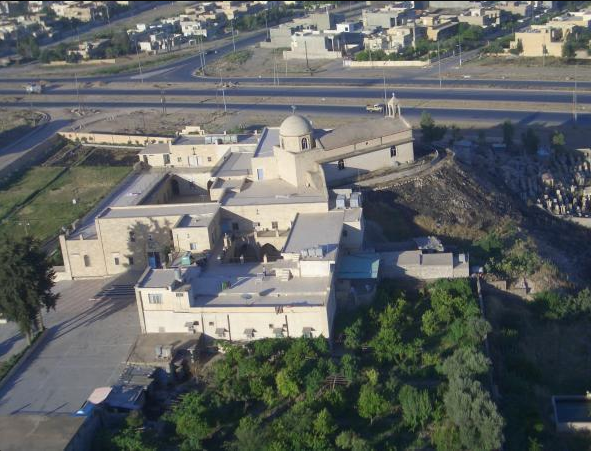 Source: http://www.ibtimes.co.uk/iraq-isis-blows-1...r-mosul-1491281 |
|
|
Mar 13 2015, 01:46 AM
|

Senior Member
4,702 posts Joined: Mar 2012
|
I always like the interiors of a Catholic church because it's very soothing.
The big hall, the statues, the candles, and with birds chirping from the garden outside. |
|
|
Mar 13 2015, 01:48 AM
|
|
Senior Member
3,577 posts Joined: Apr 2006
|
Allegri's Miserere Mei (taken from Psalm 50) 3 Have mercy on me, O God, according to thy great mercy. And according to the multitude of thy tender mercies blot out my iniquity. 4 Wash me yet more from my iniquity, and cleanse me from my sin. 5 For I know my iniquity, and my sin is always before me. 6 To thee only have I sinned, and have done evil before thee: that thou mayst be justified in thy words and mayst overcome when thou art judged. 7 For behold I was conceived in iniquities; and in sins did my mother conceive me. 8 For behold thou hast loved truth: the uncertain and hidden things of thy wisdom thou hast made manifest to me. 9 Thou shalt sprinkle me with hyssop, and I shall be cleansed: thou shalt wash me, and I shall be made whiter than snow. 10 To my hearing thou shalt give joy and gladness: and the bones that have been humbled shall rejoice. 11 Turn away thy face from my sins, and blot out all my iniquities. 12 Create a clean heart in me, O God: and renew a right spirit within my bowels. 13 Cast me not away from thy face; and take not thy holy spirit from me. 14 Restore unto me the joy of thy salvation, and strengthen me with a perfect spirit. 15 I will teach the unjust thy ways: and the wicked shall be converted to thee. 16 Deliver me from blood, O God, thou God of my salvation: and my tongue shall extol thy justice. 17 O Lord, thou wilt open my lips: and my mouth shall declare thy praise. 18 For if thou hadst desired sacrifice, I would indeed have given it: with burnt offerings thou wilt not be delighted. 19 A sacrifice to God is an afflicted spirit: a contrite and humbled heart, O God, thou wilt not despise. 20 Deal favourably, O Lord, in thy good will with Sion; that the walls of Jerusalem may be built up. 21 Then shalt thou accept the sacrifice of justice, oblations and whole burnt offerings: then shall they lay calves upon thy altar. This post has been edited by yeeck: Mar 13 2015, 01:57 AM |
|
|
Mar 13 2015, 02:14 PM
|
|
Senior Member
3,577 posts Joined: Apr 2006
|
This coming Sunday March 15th, 2015 is the Fourth Sunday in Lent traditionally known as Laetare Sunday (based on the first words of the Introit of the Mass - laetare meaning rejoice).
In Roman Catholic churches, there may be flowers on the high altar, the organ may be played as a solo instrument, and priests are given the option to wear rose-coloured vestments (many times mistaken with pink) at Mass held on this day, in place of the violet vestments normally worn during Lent. In the western liturgical system, purple is the colour of Lenten penance, and white is the colour of feast days. Rose-pink is the colour of Laetare as the colour obtained naturally by mixing violet and white. The day is a day of relaxation from normal Lenten rigours; a day of hope with Easter (the Resurrection of Christ) being at last within sight. Traditionally, even weddings (otherwise banned during Lent) could be performed on this day. Will your priest wear violet or rose on this day? Post up some pictures if you can.  Sample of rose vestments: 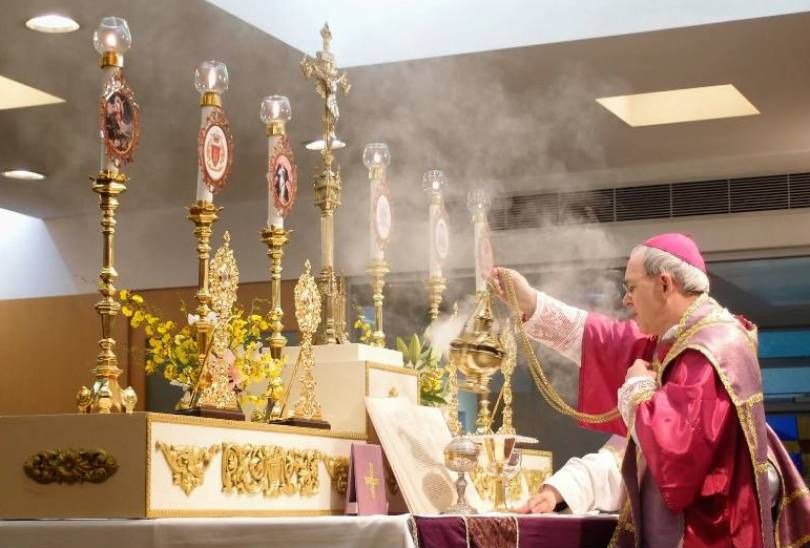   This one looks more like salmon colour...  This post has been edited by yeeck: Mar 13 2015, 02:21 PM |
|
|
Mar 13 2015, 04:16 PM
|
|
Junior Member
225 posts Joined: Mar 2008
|
QUOTE(yeeck @ Mar 13 2015, 02:14 PM) This coming Sunday March 15th, 2015 is the Fourth Sunday in Lent traditionally known as Laetare Sunday (based on the first words of the Introit of the Mass - laetare meaning rejoice). Last one looks very oriental in design ... In Roman Catholic churches, there may be flowers on the high altar, the organ may be played as a solo instrument, and priests are given the option to wear rose-coloured vestments (many times mistaken with pink) at Mass held on this day, in place of the violet vestments normally worn during Lent. In the western liturgical system, purple is the colour of Lenten penance, and white is the colour of feast days. Rose-pink is the colour of Laetare as the colour obtained naturally by mixing violet and white. The day is a day of relaxation from normal Lenten rigours; a day of hope with Easter (the Resurrection of Christ) being at last within sight. Traditionally, even weddings (otherwise banned during Lent) could be performed on this day. Will your priest wear violet or rose on this day? Post up some pictures if you can. Sample of rose vestments: This one looks more like salmon colour... |
|
|
Mar 13 2015, 07:32 PM
|
|
Senior Member
3,577 posts Joined: Apr 2006
|
 The Catholic devotion to Saint Joseph is strong and vital, and it is has been for centuries. You will see the phrase, “Ite ad Joseph” at the Saint Joseph shrine or altar. In fact, over the head of Joseph in this image you see the scroll with just that: Ite ad Joseph. The beloved spouse of Mary, since 1870, has been the Patron of the Church, named so by Pope Pius IX. In biblical typology of the OT Saint Joseph is prefigured by an earlier Joseph who is the protector of Israel. Pope Leo XIII in his 1889 encyclical, Quamquam pluries, speaks of Saint Joseph an “exemplary model of kindness and humility.” Such are the virtues that we expect all Christians to possess and develop: this is especially true for fathers, parents, priests, educators, and the like. As the spouse of Mary and earthly father of Jesus we come to understand Joseph as a “participator in her [Mary’s] sublime dignity.” Leo develops in a new way a theology of Joseph in looking at his chaste spousal relationship to Mary by describing him for us when he says that Joseph was “closer than any” other person. Leo also designated Saint Joseph to be the universal patron of the Church. One aspect of Saint Joseph that’s not well spoken of but was raised by Pope Leo is Joseph as protector, guide, patron of the priesthood of Jesus Christ. Considering biblical typology with regard to Joseph we see the Spouse of Mary as connected with, that is, echoing, Joseph of Egypt found earlier in the OT and as the earthly father of Jesus he is custodian of holiness. This man of righteousness we say exercised significant overseeing of Jesus is the “true bread come down from heaven.” Hence, Joseph’s role as guardian of the Holy Child, it is not unrealistic to consider as crucial to the life of both the ministerial AND lay priesthood. What is seen in Joseph is now seen in the our priestly life. Catholics distinguish the two priesthoods, one serving the other in a unique manner all oriented to salvation in Christ Jesus. Just as Joseph attended to his family and daily work, he also was attentive to life of prayer and sacrifice given to him through the Torah (the Law of Moses). It is fitting to see these things held in creative tension but likely with an accent on prayer. All the things we say that Joseph could have done that would be opposite to having concern for Mary and Jesus were actually fulfilled because the Holy Spirit was such a powerful presence in Joseph. Without this Divine Presence Joseph would have collapsed under the weight of self-absorption. The intense friendship (that is, obedience) with the Divine Majesty allowed for his earthly love to taken on a new dynamism for all of history. One might say, like we ascribe to Mary, that Joseph was the second disciple of Jesus. Yet, he is the first to experience this discipleship in an unrepeatable way as being that close to the dignity of Mother and Son. One last point of salvation history, Joseph is a fitting patron of the priesthood because he was the spouse of Mary, and that the report of Fatima is that he was with Mary then, leading up to these last days in the Lord. Source: http://communio.stblogs.org/index.php/2014...-marys-dignity/ |
|
|
Mar 13 2015, 10:14 PM
|
|
Junior Member
316 posts Joined: Nov 2005 From: Saya Berjaya
|
Sending this 'tweet' from inside the Church Of St Thomas More. Been here since 7pm. Lots of things to do during Lent.
|
|
|
Mar 14 2015, 12:32 AM
|
|
Senior Member
4,702 posts Joined: Mar 2012
|
QUOTE(yeeck @ Mar 13 2015, 02:14 PM) |
|
|
Mar 14 2015, 12:47 AM
|
|
Junior Member
82 posts Joined: Jan 2015
|
QUOTE(Blofeld @ Mar 14 2015, 12:32 AM) I'm always curious what is he carrying with smoke coming out? wiki is your friend.http://en.wikipedia.org/wiki/Thurible [QUOTE]A thurible is a metal censer suspended from chains, in which incense is burned during worship services. It is used in Christian churches including the Roman Catholic, Eastern Orthodox, Oriental Orthodox, and Armenian Apostolic, as well as in some Lutheran, Old Catholic, and Anglican churches (with its use almost universal amongst Anglo Catholic Anglican churches). In Roman Catholic, Lutheran, and Anglican churches, the altar server who carries the thurible is called the thurifer. The practice is rooted in the earlier traditions of Judaism in the time of the Second Jewish Temple.[1] |
|
|
Mar 14 2015, 01:12 AM
|
|
Senior Member
3,577 posts Joined: Apr 2006
|
Psalm 140:1-2 "I have cried to Thee, O Lord, hear me: hearken to my voice, when I cry to Thee. Let my prayer be directed as incense in Thy sight; the lifting up of my hands, as evening sacrifice."
The "sweet savour" of incense was used in Old Testament liturgy as far back as the time of Moses as an offering to God: Exodus 30:34-37 And the Lord said to Moses: Take unto thee spices, stacte, and onycha, galbanum of sweet savour, and the clearest frankincense, all shall be of equal weight. And thou shalt make incense compounded by the work of the perfumer, well tempered together, and pure, and most worthy of sanctification. And when thou hast beaten all into very small powder, thou shalt set of it before the tabernacle of the testimony, in the place where I will appear to thee. Most holy shall this incense be unto you. You shall not make such a composition for your own uses, because it is holy to the Lord. ... and its continued use was predicted, along with the Eucharistic offering, by Malachias: Malachias 1:11 For from the rising of the sun even to the going down, my name is great among the Gentiles, and in every place there is sacrifice, and there is offered to my name a clean oblation: for my name is great among the Gentiles, saith the Lord of hosts. Frankincense as a sign of His Divinity, and myrrh to portend His Passion and Death, were two of the three gifts the Magi brought to Baby Jesus -- Matthew 2:11 And entering into the house, they found the child with Mary his mother, and falling down they adored him: and opening their treasures, they offered him gifts; gold, frankincense, and myrrh. -- and as portended, myrrh, with its analgesic properties, was offered to Him on the Cross and was used, mixed with aloes, to annoint Him after death: Mark 15:22-23 And they bring him into the place called Golgotha, which being interpreted is, The place of Calvary. And they gave him to drink wine mingled with myrrh; but he took it not. John 19:39-40 And Nicodemus also came, (he who at the first came to Jesus by night,) bringing a mixture of myrrh and aloes, about an hundred pound weight. They took therefore the body of Jesus, and bound it in linen cloths, with the spices, as the manner of the Jews is to bury. Even the very angels in Heaven use incense, the smoke of which comes with the prayers of the Saints. Apocalypse 8:3-4 And another angel came and stood before the altar, having a golden censer: and there was given to him much incense, that he should offer of the prayers of all saints, upon the golden altar which is before the throne of God. And the smoke of the incense of the prayers of the saints ascended up before God from the hand of the angel. The Catholic Church still uses incense, of course, in accordance with prophecy of Malachias, the fragrant smoke symbolizing our prayers rising to Heaven and purifying what it touches. The incense is kept in a covered, often boat-shaped liturgical vessel called, unsurprisingly, a "boat," which symbolizes the barque of Peter. The boat, made of bronze or brass and often silver or gold-plated, comes with a spoon for scattering the incense in the bowl-shaped matching burner, called a "thurible" or "censer." The thurible holds burning charcoal (or wood) to ignite the incense and hangs on chains so that it may be swung by the priest when censing things (or people) and so it may be easily carried by the thurifer -- the "Altar server" who assists the priest by carrying the incense. Thurible & Boat Incense is used during the Mass to bless the Altar when the priest first ascends to it, and, during the Offertory, to bless the bread and wine, the Crucifix and Altar (again), and the congregation. Incense is also used during the Benediction of the Blessed Sacrament, during processions, funeral rites and to bless things like relics, bells or the Gospel. Other uses of incense are the 5 grains of incense, symbolizing the 5 wounds of Christ, inserted into the Paschal candle on Easter, and the incense burned on the altar stone of a new Altar during its consecration. Incense is also placed inside the cavity (the "sepulchre") of the Altar along with a relic, to symbolize the prayers of the Saint to whom the relic belongs. Also, frankincense is blessed on the Feast of the Epiphany. The faithful may take some of this home with them for use at their family altars. This post has been edited by yeeck: Mar 14 2015, 01:16 AM |
|
|
Mar 14 2015, 03:02 PM
|
|
Senior Member
3,577 posts Joined: Apr 2006
|
Sermon: Hate the sin, love the sinner
This post has been edited by yeeck: Mar 14 2015, 03:13 PM |
|
|
Mar 14 2015, 03:03 PM
|
|
Senior Member
3,577 posts Joined: Apr 2006
|
Catholicism 101:
A Brief Primer  The Trinity We believe the dogma expressed in the Nicene Creed, which states that God the Father, God, the Son, and the Holy Spirit are Three Persons of the One Almighty God. [Read more about the Trinity]. The Three Persons of the Trinity are equally eternal, equally God, equally uncreated. They are the One God in the One Being Who is Being itself, Who is "I AM." Creation and Fall We believe that God created the universe ex nihilo (out of nothing), starting with the creatures of the praeternatural order (the angels), one of whom -- Satan, the Evil One -- rebelled, taking a legion of angels with him; these evil ones are known as demons. Then God created the Heavens, earth and light on the first day; the firmament on the second day; grass, herbs, and fruit trees on the third day; the sun, moon and stars on the fourth day; the creatures of the water and air on the fifth day; and, on the sixth day, the creatures of the land, and a man named Adam. From Adam, He formed Eve. God created man in His image -- whole, free, and filled with sanctifying grace -- in a paradise known as Eden. But the Evil One tempted Eve to do what God commanded them not to do, and Adam sinned by following suit. Because of the sin of the first man, humankind lost its sanctifying grace and became condemned not only to concupiscence (a propensity to fulfill carnal desires), work, sickness, and death, etc., but to a loss of his likeness to God, and to separateness from God -- a separateness from which we cannot be saved except by the grace of God Himself. This loss of sanctifying grace is known as "original sin." Original sin isn't personal sin (that is, sin resulting from one's choices), but a lack of grace that we cannot overcome on our own. Through Adam and Eve and "the Fall of Man," we are broken and in need of redemption. Man cannot save himself and man-made utopia is not an option (Genesis 11). We believe that the Old Testament tells the story of God's entrusting the Israelites, through Abraham, to be His People, and that the Prophets of this Old Covenant predicted the coming of the Messiah who would be able to reconcile man with God. Incarnation We believe that Second Person of the Trinity took on Flesh, by the Holy Ghost, through the ever-Virgin Mary. Mary is the Ark of the New Covenant, the Theotokos -- the God-Bearer -- in that she brought forth, through the Holy Spirit and her Grace-inspired "YES," the Son of the Living God Whose Name is Jesus and Who is the Messiah Whom the prophets foretold. Mary is not the mother of God the Father or of God the Holy Spirit. She is the Mother of the Divine Person Jesus, Who is God. The Christ's divine and human natures are in complete hypostasis and cannot be separated, and mothers are the mothers of persons, not "natures"; she is the Mother of the Person of Jesus, Who is God. She is, therefore, the mother of God. Though veneration of Mary is only because of her Son's grace, though she is not a "godess" in any way, and though she is not to be worshiped as God, she is to be emulated, loved and admired because she points the way to her Son. All generations will call her blessed! (Luke 1:26-48) We believe that Jesus was crucified for our salvation and that all salvation comes from His sacrifice and only through His sacrifice. This Sacrifice was necessary because God is holy, loving, jealous, and just, but our sins are great and they offend Him. In order for God's honor -- offended by our sins -- to be preserved and for His wrath at our sins to be assuaged, there had to be atonement. In order for His holiness to not be offended and for us to see Heaven (nothing unholy can enter Heaven!), the Second Person of the Trinity Himself took on flesh and was crucified to satisfy the Father for our sins. As Aquinas wrote in his Summa Theologia, III, 49: ...Christ's Passion is in two ways the cause of our reconciliation to God. In the first way, inasmuch as it takes away sin by which men became God's enemies, according to Wisdom 14:9: "To God the wicked and his wickedness are hateful alike"; and Psalm. 5:7: "Thou hatest all the workers of iniquity." In another way, inasmuch as it is a most acceptable sacrifice to God. Now it is the proper effect of sacrifice to appease God: just as man likewise overlooks an offense committed against him on account of some pleasing act of homage shown him. Hence it is written (1 Kings. 26:19): "If the Lord stir thee up against me, let Him accept of sacrifice." And in like fashion Christ's voluntary suffering was such a good act that, because of its being found in human nature, God was appeased for every offense of the human race with regard to those who are made one with the crucified Christ in the aforesaid manner... The Father sent the Son to suffer and die because He loves us and wants us to be with Him, to share in His divine nature -- something we can't do or earn on our own. So holy is He and so poor are we! It is by the Passion and Blood of Jesus that the Father is appeased, that we may be saved, and that the gates of Heaven are opened up to us. By no other Name than Jesus can any man see the Father. We believe that Jesus bodily rose again after His Crucifixion and ascended into Heaven, sending the Holy Ghost after Him to sanctify, guide, and protect His Church. His Resurrection is a sign of His promise to us for our own lives if we believe, repent, are baptized, and obey the will of God as revealed to us in His Sacred Scripture and through the infallible teachings of His Church (i.e., the teachings handed down to us by Christ and the Apostles or explicitly and solemnly defined by the Pope or Church Councils). The Four Last Things: Death, Judgment, Heaven, and Hell We believe that when a person dies, he faces a "particular judgement": he immediately goes to Heaven, to Hell (including the possibility of Limbo for the unbaptized who are innocent of personal sins), or to Purgatory. Purgatory is where those who, by the Blood of Christ, are already saved from the eternal effects of sin but who still have the temporal effects of sins on their souls go to be cleansed ("purged") before they are allowed to see the face of God when they enter Heaven (1 Corinthians 3:13-15, Hebrews 12:14, Hebrews 12:22-23, 1 Peter 4:6, Revelation 21:10-27). [Read more about Purgatory] We believe that at the end of time, there will be a Last Judgement, when the King of Kings, Christ Jesus, will come in glory, to judge the entire world. This will happen after a Great Apostasy (which many traditional Catholics believe we are very possibly seeing now given the state of our hierarchy), a great Tribulation (from which the Church will not be spared via a "Rapture"), and a final Antichrist who will deceive many into believing he is a man of peace and justice. At this Last Judgement, the bodies of the dead will be resurrected and reunited with their souls. The Evil One and his demons will be thrown into the pit of Hell. Those bound for Hell will go to Hell; those who are in Hell will remain in Hell. Those who are bound for Heaven will go to Heaven, and those in Heaven will remain in Heaven, their bodies glorified, to endure in the Presence of Love forever and ever, world without end. [see End Times] The Church We believe that the Mystical Body of Christ -- the nation of priests and kings, Israel, the Church -- is of three parts: the Church Militant: Christians on earth, the "Historical Church"; the Church Suffering: Christians in Purgatory where they are being cleansed before standing before God (also called the "Church Purificatory"); and the Church Triumphant: Christians in Heaven We believe that death does not separate the members of His Church and that we are exhorted to pray for one another and ask others to pray for us. [read more about the Saints and Purgatory] We believe that Jesus Christ is the spiritual Foundation Stone, the High Priest and Head of the Church and that He authorized Peter, as the earthly rock of the Church, to shepherd His sheep (Matthew 16:18-19). The Christ-given authority entrusted to Peter and the other Apostles, with Peter as the Chief Apostle, is passed on by "apostolic succession" through the Bishops, with the Bishop of Rome as their source of unity and earthly king, and Christ Jesus as King of Kings (Acts 1:21-26, 1 Timothy 1:6, 1 Timothy 4:14, 1 Timothy 5:22, and the unanimous agreement of early Christian writings). [read more about Peter] We believe that the gates of Hell will not prevail against the Church, that while scandal may sometimes ensue, while Satan makes his efforts (as he is doing now with great success), the Church's dogma will be kept pure in that nothing against the Faith will be presented as infallible. We believe that the Apostles and their successors were given authority by Christ to teach, to interpret Sacred Scripture, to bind and loose, to exorcise demons, to ordain, to baptize, annoint the sick, and administer the other Sacraments. [read more about the Marks of the Church]. The Church Militant is made of the ritual Churches that are in communion with the Petrine Ministry (the office held by the successors of Peter). The particular churches in the full Catholic Communion use 6 different rites, or traditions concerning how the Sacraments (see below) are to be offered. These ritual churches of the One, True Church are dogmatically the same though their points of theological emphasis (and language for their expression), liturgical and devotional styles, canonical disciplines, martyrology (Saints and martyrs that they honor), sacred art, etc., differ. Members of these particular churches belong to the One, True, Holy, Catholic and Apostolic Church, which is the Catholic Church, the Mystical Body of Christ. The 6 main rites and the ritual Catholic churches of the One Catholic Church are: The Roman Rite (The Mass of St. Gregory the Great): the Latin Church (or the "Roman Church" -- the ritual Church most Westerners think of when they think of "the Catholic Church" and whose Patriarch, the Bishop of Rome, is the Pope, who has primacy over all the particular Churches that make up the Catholic Church). The Byzantine Rite (Liturgy of St. James, St. Basil and Others): Albanian Church; Belarussian/Byelorussian Church; Bulgarian Church; Croatian (Krizevci) Church; Georgian Church; Greek Church; Hungarian Church; Italo-Greek (or Italo-Albanian) Church; Melkite Church; Romanian Church; Russian Church; Ruthenian Church; Serbian Church; Slovak Church; and the Ukrainian Church The Alexandrian Rite (Liturgy of St. Mark): Coptic Church; and the Ethiopian/Abyssinian Church. The languages of these Churches are Coptic (Egyptian) and Ge'ez, respectively. The Antiochian Rite (Liturgy of St. James): Maronite Church; Syrian Church; and the Syro-Malankar Church. The language of these Churches is Aramaic (ancient Syriac). The Chaldean Rite (Derived from Antiochene Rite): Chaldean Church; and the Syro-Malabarese Church. The language of these Churches is Syriac. Armenian Rite (Greek Liturgy of St. Basil) Each Catholic ritual church (known as a Church sui iuris) has its own Patriarch (sometimes called a "Metropolitan" or "pope" -- i.e., "papa") who is in communion with the Roman Pope, the man who holds the office of Peter. The (Roman) Pope has a triple role as Bishop of Rome, Patriarch of the West, and Supreme Pontiff of the entire Catholic Church. Every Catholic, no matter his ritual church 1, believes the same dogma and may receive the Sacraments of the Eucharist, Penance, and Unction from any other ritual Catholic Church; in our union through the Petrine ministry, we are all one as Christ desires [Matthew 12:25, 16:18, John 10:16, John 17:20-23, Acts 4:32, Romans 12:5, Romans 16:17, 1 Corinthians 1:10-13, Corinthians 3:3-4, Corinthians 10:17, Corinthians 11:18-19, Corinthians 12:12-27, Corinthians 14:33, 2 Corinthians 12:20, Ephesians 4:3-6, Philippians 1:27, 2:2-3, 1 Timothy 6:3-5, Titus 3:9-10, James 3:16, 2 Peter 2:1]. The Church has two types of members: living members (those in a state of grace, whether they be in the Church Militant, Suffering or Triumphant) and dead members (those not in a state of grace, i.e., those in mortal sin (I John 5:16-17), who are necessarily of the Church Militant). Dead members cannot be saved unless they are reconciled and returned to a state of grace through the Sacrament of Penance (or a perfect act of contrition if the Sacrament is unavailable). No Salvation Outside of the Church : "Extra Ecclesiam Nulla Salus" There is no salvation outside of Christ, and the Church is the Bride of Christ -- become His Body, one Flesh in marriage. Therefore, there is no salvation outside of the Church and not belonging formally to the Catholic Church is objectively sinful: Matthew 18:17 "If he will not hear the Church, let him be to thee as a heathen and a publican" Luke 10:16 "He that heareth you heareth Me, and he that despiseth you despiseth Me, and he that despiseth Me, despiseth Him that sent Me" Mark 16:16 "He that believeth not will be condemned" John 3:18 "He that believeth not is already judged" Luke 11:23 "He that is not with Me is against Me and he that gathereth not with Me, scattereth" This does not mean, however, that if one is necessarily damned if one is not a formal member of the visible society of God's Kingdom on earth -- the One, Holy, Catholic and Apostolic Church. What it means is that: Christ founded one Church with Peter as His Vicar; that this Church was given the powers of binding and loosing, that this Church exists today; that it is the source of the Gospel and the earthly source of the Sacraments without which, normatively, one cannot be saved. Those who are not formal members might be saved and become associated with the soul of the Church if they: are validly baptized by water and spirit, in the Name of the Father, and of the Son, and of the Holy Ghost (all who are baptized are subject to the Church even if they are not formal members because Baptism belongs to the Church), and have not committed a mortal sin (or who, if they have committed a mortal sin, have made a perfect act of contrition), which means a sin concerning a grave matter committed with full knowledge and consent of the will, and are animated by charity and a supernatural Faith in God's existence, and seek Him, and firmly believe that their religion is the true religion such that there is no conflict or doubt about such in their ill-formed conscience, and are not formally outside of the Church in spite of doubts about the possibility that the Catholic Church is the true Church of Christ (if one believes it is possible that the Catholic Church is the true Church of Christ, one is duty-bound to investigate) In addition, those individuals who, through no fault of their own, have no means to hear of Christ-given Baptism and are invincibly ignorant -- who've never heard the Name Jesus, know nothing of the Church, or misunderstand Church teachings -- but who obey the Natural Law written in all men's hearts and who truly seek God are left to the mercy of Christ Who may save them as He desires. Christ will judge our wills, hearts, intellects, and deeds, and shall have mercy and compassion on whom He will have mercy and compassion (Romans 9:15); those whom He deigns to save He can well give the grace of the Sacraments to in a manner beyond our ken -- perhaps even in their final breath, by illuminating their souls in a supernatural way such that they desire Baptism, even if implicitly, and therefore become associated with the Soul of the Catholic Church, outside of which there is no salvation. This is something we can never presume -- but we can pray for. I note here, too, that there is also the possibility of Limbo -- a state of perfect natural happiness -- for those who die unregenerated (unbaptized) and with the stain of original sin, but who've committed no personal sin. While these people would not enter Heaven as they are not born again of water and Spirit (or the desire for it), they would also experience no subjective sufferings. This teaching is not a part of revelation and is, therefore, not a matter of dogma. There is no consensus among the Church Fathers on the matter; some believed in the existence of Limbo (e.g., most of the Greek Fathers, St. Augustine in his early writings, St. Gregory Nanzianus, St. Ambrose, St. Thomas Aquinas) while others didn't (e.g., St. Augustine in his later writings, St. Anselm). But it is a most definite possibility that can be piously believed given the truths that God is not only merciful but just and, therefore, will not punish someone for that which involves no personal guilt. While believing this proposition, which is the prevalent belief among traditional Catholics, one must never forget how easy it is to sin -- and that most everyone who's reached the age of reason has (in fact, because of the rarity of those who've reached the age of reason and have not committed personal sins, "Limbo" is often referred to as "Children's Limbo.") These possibilities are left to the mercy of God, however, and the presumption of salvation in any sense on the part of anyone who is not a formal member of the the visible Church is a sin against the Holy Spirit. We can pray for such, but we cannot presume such. We cannot presume this association with the Soul of the Church on the part of any particular individual who is not a manifest member the Church; in fact, we are to presume the opposite because they are objectively in sin, even if not culpably so, and we must do all we can to bring them to the Sacraments, which are true media of grace. We are to preach the fullness of the Truth, pray for God's mercy on all who are apart from the Sacraments, and always remember that material heresy is still heresy, no matter the level of culpability a material heretic might possess. While some who are not formal members of the Church might be illumined before death such that they desire Baptism and are then allowed to see Heaven by the Grace of Christ and become, therefore, associated with the Soul of the Church, the non-Catholic elements of other religions do not mediate grace in and of themselves, and it is always God's will that all formally become part of the eternally unified Mystical Body of Christ. The salvation of these souls would be in spite of, not because of, their religion. In this regard, any "ecumenism" that is not false will have as its goal the bringing of all into the Church as formal members, be they Protestant, Jewish, Buddhist, Muslim, Hindu, pagan, or secular. The goal of any true "ecumenism" isn't "unity" because the Church is already unified; His Body is already unified. The return of heretics, schismatics, and apostates to the bosom of the One, Holy, Catholic and Apostolic Catholic Church is the only goal of true ecumenism. The proper attitude to take toward the Truth that those who are not formal members of the Church might be saved if they meet the above criteria is expressed well in this analogy by Harold E. Welitz: Let's say that a father kept a loaded gun in the house. Now, certainly it has occurred since the invention of the revolver that a bullet has failed to fire when the trigger was pulled. Therefore, based on this possibility should the father continually remind his children that if they play with a gun and shoot at each other, it may not go off? Would that be a wise and prudent father, one who truly cares for his children? If the father continually discussed the possibility that the gun may not go off if the trigger were pulled, would he be misleading his children? Yes! Although what he is saying is not false, it is deceptive because it implies that something that is rare is actually likely. The result will be that the children will become more negligent in playing with loaded guns, which most likely will kill one of them. Should the father not say: "Do not play with a loaded gun, whatever you do! If you play with a loaded gun, someone will get killed." A wise and prudent father may realize there are a very slight percentage of bullets that are defective, but he knows it is not wise to continually remind his children of this, lest they become forgetful of the dangers of playing with loaded guns. To carry the metaphor further: Catholics don't let non-Catholics play with guns. When others do play with guns, we can pray and have human hope that they don't get shot, but we can't expect or have a "good hope" that they won't. If, in fact, they are not "shot," we know that they are a part of the Church outside of which there is no salvation. Bottom line: We can't know the subjective states of the souls of manifest heretics, and we can't know how God might or might not illumine the the souls of the invincibly ignorant. But we can and do know what He has revealed about Himself, and we must tell others this Gospel. We can and do know what He told us about His Church, and we must bring people to it. We can and do know what He told us to do, and we must do it. And we must do these things with firmness, boldness, prudence, and great charity, all while begging mercy for sinners, including ourselves. Authority The authority of the Church rests on three pillars: Scripture: The Bible is the inerrant word of God and is to be read as the earliest Christians read it: in the light of Tradition and under the guidance of those ordained to teach. The Books of the Old Testament were put together by the Hebrews in the Septuagint (ca 300 B.C.), which includes the seven Books called "Deuterocanonical" by Catholics and "Apocryphal" by Protestants, and was the Old Testament used by the Apostles. The Books of the New Testament were made canonical over time and were first listed over 300 years after the Resurrection. [see more on the Canon of the Bible and the Septuagint and on Sola Scriptura: The Fallacy of the Bible alone as the Rule of Faith] Tradition: the teachings which the Church has preserved and passed down from Christ, His Apostles, and the unanimous teachings of the early Church Fathers (1 Corinthians 11:2, 2 Thessalonians 2:15, 2 Thessalonians 3:6). (The above two pillars are referred to as "The Deposit of Faith") Magisterium: the teaching authority of the Church under the guidance of the Holy Spirit. The teachings of Catholic hierarchs have three different levels of fallibility: Extraordinary Magisterium: Extraordinary infallible teaching given in the very rare exercise of the Pope alone, only when, in his capacity as Pastor and Doctor of all Christians and by virtue of his supreme Apostolic authority, he defines a dogma concerning faith and morals so as to be held by the whole Church and does so ex cathedra -- i.e., "from the chair" of Peter. Also called the "Solemn Magisterium." Ordinary Magisterium: Ordinary infallible teaching by Pope, Bishop, or anyone with the proper authority to teach which illumines doctrine that has always been believed and accepted by the universal Church. Also called the "Universal Magisterium" or the "Constant Magisterium" and its exercise can be recognized when a teaching is one that is has been held "always and everywhere" by the Church. [Note: some Catholics forget this category of teaching and believe that only if a teaching is solemnly defined ex cathedra is it infallible. These "Catholics," forgetting Tradition, are the "liberals" and "modernists" one always sees on TV] Authentic Magisterium: Teaching by Pope, Bishop, or anyone with the proper authority to teach, that does not fit into the above two categories. All authorized teaching is owed proper, intelligent, prayerful religious assent, but must be resisted if it leads to sin, compromises the Faith and the salvation of souls, or contradicts the above two levels of Magisterium, the Sacred Deposit of Faith, Scripture, and Tradition. [Note: some otherwise wonderful Catholics forget this category of teaching and think everything the Pope does and says is "infallible," an attitude that borders on papolatry. These Catholics are the "neo-conservatives" or "neo-Catholics" who defend the novelties since Vatican II and some of the scandalous behaviors of Bishops and the Holy Father -- e.g., Qu'ran-kissing, ecumenism that leads to indifferentism, etc. -- but while still truly trying to be orthodox.] The Pope is supreme pastor, the "King of Bishops," and he outranks all Bishops, individually or collectively. "The Roman Pontiff has power over the entire Church, can exercise power over all, whether over the whole or over one; he can exercise power without being limited by anyone, neither Pastor nor faithful" (G. Siri, La giovimzza della Chiesa). However, of course, neither the Pope as Pontiff nor any Bishop can lawfully or morally contradict Scripture or Tradition as interpreted and passed down by the universal Church. Any teaching of Pope, Bishop, or Council that attempts to nullify what has always been taught is null and void in se. In other words, magisterium that contradicts former magisterium is not infallible magisterium. From Pastor Aeternus, section De Romani Pontificis Infallibili Magisterio of Vatican I: For the Holy Spirit was promised to the successors of Peter not so that they might, by His revelation, make known some new doctrine, but that, by His assistance, they might religiously guard and faithfully expound the revelation or Deposit of Faith transmitted by the Apostles. Doctrine and dogma may be clarified, explained more fully, and be more explicitly defined, but they cannot be contradicted by anyone, by neither Pope nor Council. The Seven Sacraments or "Holy Mysteries" The Church has 7 Sacraments -- "outward signs of invisible grace" and media of sanctifying grace. The Sacraments were given to us by Christ so that we may receive His grace and become more like Him. The Seven Sacraments are: Baptism: with immersion in water, sprinkling of water, or the pouring of water over the skin of the forehead while the words "I baptize thee in the Name of the Father, and of the Son, and of the Holy Ghost" (or "Holy Spirit") are said by one who intends to initiate the baptized into the Christian life, one is baptized for the remission of all sins, both original sin and personal sins, and their effects. Through Baptism in the Name of the Father, the Son, and the Holy Ghost (Matthew 28:19), we are born again (John 3) of water and of the Spirit and enter into the New Covenant. This is the initial rite of Christian initiation (Acts 2:38-39, Acts 16:32-35, Ephesians 4:3-5, Colossians 2:11-12, Didache ch. 7), and all who are baptized with water and Spirit, using these words, by anyone (layman or priest) who intends to do what the Church does, is validly baptized -- whether they are baptized by Pentecostals, Baptists, Orthodox, etc. -- and cannot be re-baptized. If one desires to formally join the Catholic Church but is unsure about the validity of his baptism, he is conditionally baptized with water and the words, "If thou art not baptized, I baptize thee in the Name of the Father, and of the Son, and of the Holy Ghost." Baptism replaces circumcision (Colossians 2:11–12), and just as children were circumcized at the age of 8 days in the Old Covenant, children, even infants, are welcome in God's Kingdom and are baptized as soon as possible (Matthew 19:14, Luke 18:15–16, Acts 2:39). This is the early practice of the Church, as evident by St. Paul's baptizing of entire households (Acts 16:15, 1 Corinthians 1:16) and the words of Christ and His Apostles (Mark 10:14, Acts 2:38-39). [Read more about Baptism] Aside from the Baptism by water and Spirit, without the graces of which one can't be saved, there are the analogically-named "Baptism of Blood" and the "Baptism of Desire." Baptism of Blood is martyrdom -- that is, dying for the sake of the Faith. Baptism of desire is the vow to receive Baptism by one who has a a living faith and the desire to do all the Lord commands, but who doesn't have the earthly possibility of water baptism (or who dies before receiving it). Baptism of Blood and Baptism of Desire both have the saving effects of water Baptism, by the mercy of Christ. Confirmation ("Chrismation" or the "Sacrament of the Seal"): Confirmation is the laying on of hands by a Bishop or authorized priest and becoming sealed to the Holy Ghost, becoming annointed spiritually and, literally, with sacred oil -- a consecrated olive oil called "chrism" or "oil of gladness." Confirmation is becoming infused with the Holy Ghost, sealed to Him by grace and fortified in becoming true soldiers of Christ (Acts 8:14-17, Acts 19:5-6, 2 Corinthians 1:21-22, Ephesians 1:13, Hebrews 1:9, Hebrews 6:1-6). Eucharist ("Communion"): We believe that at Mass (the "Divine Liturgy") the bread and wine truly become the Body, Blood, Soul and Divinity of Christ glorified and that no one should eat of it unworthily (John 6, Luke 22:19, John 6:52-58, Acts 2:42, 1 Corinthians 10, 1 Cor. 11:27-29, Ignatius of Antioch's Letter to the Smyraeans, Didache ch. 9 ). The Eucharist should only be received by the baptized who are in a state of grace (who have no unconfessed mortal sins on their soul), and after prayer and fasting. The bread used must be made only of wheat and water (nothing else may be added, though leaven is used in Eastern Churches); the wine must be true grape wine. The one offering the Mass at which the bread and wine become Christ must be a validly ordained priest using the proper form. See "Mass/Divine Liturgy" below. (In the Eastern Catholic Churches, the above three Sacraments are received at the same time, even infants.) Penance ("Confession" or "Reconciliation"): We confess our sins to God, in the presence of his priests (through his priests), so that we can be freed from their eternal effects and reconcile with Him and with His Church (Matthew 9:5-8, Matthew 16:18-19, 1 Corinthians 11:27-29, 2 Corinthians 5:18, James 5:14-16, Didache 4:14, 14:1). For there to be a valid confession, one must confess his sins, with a contrite heart and the desire for pardon, to a priest with jurisdiction (ordinary or supplied) who uses the proper form of absolution, which is the words "Ego te absolvo" ("I absolve you"). If no priest is available, one may make an act of perfect contrition, confessing to God directly and begging forgiveness (one must resolve to go to a priest when one is available for a perfect act of contrition to be valid). Confession of sins to other Christians is a sacramental which remits venial sins and is encouraged, but it is not a Sacrament. Holy Matrimony: See Matthew 5:31-33, Matthew 19:8-10, Mark 10:10-12, Luke 16:17-19, 1 Corinthians 7:10-11. The Sacrament of Matrimony is the covenental joining of the validly baptized Bride and Groom as head of their own little domestic "church" and the source of their spirit of self-sacrifice that allows them to put their children first. A valid Sacramental marriage has as its primary purpose the begetting and raising of children; the unitive aspects of marriage are secondary. Marriage, therefore, is open to life if the marital right (the right of each spouse to the other's body, 1 Corinthians 7:4) is exercised. In the rare instance that both spouses mutually consent to not exercise their marital rights and decide to remain sexually continent in imitation of Joseph and Mary and for the sake of the Kingdom, the marriage is termed a "Josephite marriage." "What therefore God hath joined together, let not man put asunder": marriage lasts until the death of one of the spouses (Mark 10:11-12). "Re-marriage" after separation (as in physical separation due to threats of physical danger) in a valid, Sacramental and consummated marriage is impermissible. A declaration of nullity ("annulment") is not a "Catholic divorce" (though, sadly, it is too-often treated as such by many modern hierarchs); it is a Church tribunal's finding that a valid Sacramental marriage never existed in the first place (i.e., God did not join the two in the first place) because, at the time the vows were exchanged, certain conditions were present indicating that one of the couple did not intend for a valid, Sacramental marriage to take place. Some of these conditions are impotence, unwillingness to be open to procreation if the marital right is exercised, unwillingness to commit to fidelity, etc.. For there to be a valid Sacramental marriage, there must be none of the impediments listed above, the two must be validly baptized, and both must mutually consent to marriage. The man and woman act as minister (the priest presides, but does not marry them; they marry each other). Holy Orders ("Ordination"): the integration of men into the order of bishops, presbyters, or deacons which confers a gift of the Holy Ghost that permits the exercise of a sacred power (sacra potestas) which can come only from Christ Himself, through his Church, by the laying on of hands by a true Bishop in the line of Apostolic Succession (Mark 6:7, Luke 10:16, John 13:20, John 15:5, John 20:21, Acts 14:23, Romans 10:15, 2 Corinthians 5:20, 1 Timothy 4:14, 1 Timothy 5:23, the Book of Hebrews). In the Latin Church's discipline, only unmarried men can become ordained. In many of the Eastern Churches, married men can become ordained, though they may not marry after ordination and may not become Bishops. In the early Church, married priests were sexually continent (abstinent); it is this Tradition that lives on only in the sexually continent and celibate (unmarried) priesthood of the Latin Church and in those Eastern Catholic priests who are sexually continent, whether celibate or not. See Canon 33 of the Council of Elvira (A.D. 300-306); Canon 1 of the Council of Neocæsarea (A.D. 315); Canon 3 of the Council of Carthage (A.D. 390); Canon III of the Quinisext Council of Trullo (A.D. 691) which speaks of the Eastern Churches changing their chastity rules while "they of the most holy Roman Church purpose to keep the rule of exact perfection," etc. Women cannot and will never be ordained into the priesthood, though a female diaconate of sorts is part of our Tradition insofar as women, referred to as "deaconesses," sometimes helped minister to other women in the early Church (moreso in the East) when it came to such things as the Baptism of other women by immersion, where modesty was an issue, and caring for the sick. They were not, however, priests, they did not receive the Sacrament of Holy Orders, etc. (see Canon 19 of the First Council of Nicaea, 325 A.D.). Extreme Unction ("Sacrament of the Sick"): See Matthew 10:1, Luke 9:1-2, Luke 9:6, and James 5:13-15. the annointing before death with consecrated olive oil is known as "Last Rites" or "Extreme Unction," and the Eucharist itself that is given at that time is known as "Viaticum" ("food for the journey" from the Latin viaticus meaning "journey". Unction purifies the soul by remitting sins, and heals the body if it is God's will. Sacraments are not magic: while they impart sanctifying grace, in order for those who've reached the age of reason to benefit from them, he must receive them with the proper intention; in other words, they require faith! If one has attained the age of reason, for ex., and does not believe in Christ but is baptized, objectively, true grace is given, but, subjectively, he will receive the fruits of his Baptism only when/if he later believes. The Sacrament of Confession, as an other example, requires true contrition (e.g., one can't knowingly commit a sin, go to Confession without true repentance and while planning on committing that same sin again, and expect to receive Sacramental effects), etc. The Sacraments are also normatively required: for example, if one is in the middle of a desert and no water is available to conduct the rite of Baptism in the proper way, as Christ desires we be baptised, one is still "baptised" by desire if he would be baptized in the proper way if the means were available to him. This does not make the rites less important; it only demonstrates the power of Christ's mercy. One who has no priest available may make a spiritual Communion and receive the fruits of the Eucharist. A perfect act of contrition can give one the fruits of Confession even though no priest is available. And so on. The point: God is not bound by the Sacraments; we are bound by the Sacraments! The Sacraments also are not human works; they are the work of Christ operating through the priest (or other minister, as in some cases of Baptism and in Matrimony), and their effectiveness does not depend on the personal holiness of the minister. The necessary elements are that the priest have proper power and authorization, the proper intention, and that he uses the prescribed matter (e.g. water, oil, bread made of wheat and water, etc.) and form (i.e., the rite must be properly performed). In other words, if these things are followed, the Sacraments give sanctifying grace in a manner known as ex opere operato, or "by the deed done" -- by the very fact of the action. The grace is fruitful depending on the faith of the one who receives the Sacrament (or the faith of his parents, in the case of infant baptism). The Most Sacred Mystery of the Eucharist Christ is our High Priest after the order of Melchizedek -- and in order for a priesthood of any kind to exist, there must be a sacrifice. When we go to Mass (the Divine Liturgy), the Sacrifice of Christ's once and for all, historical Passion and Crucifixion is re-presented; it is not repeated in any sense of Christ "dying again." While the Crucifixion was a specific, finite historical event from our physics-bound point of view, God is transcendent and outside of time, and Christ's offering of Himself is eternal. As one apologist puts it, "One can't 'repeat' what has never ended!" At the Mass, the bread and wine become the sacramental Presence of Jesus Christ. It is not only "symbolic"; it is the real, true bringing-forth of the glorified Body and Blood of our Lord, Who is then offered to appease the Father as a perfect Sacrifice -- a re-presentation of Christ's Historical and perfect, once and for all Sacrifice at Calvary. This offering was predicted (see Malachi 1:10–11) and was believed to be sacrificial and propitiatory in nature by the very earliest Christians (I challenge all who call themselves Christian to research this! Read Ignatius, John Chrystostom, Pope Clement I, Justin Martyr, the Didache -- any of the very earliest Christians' writings!). The reality of the Presence of God in the Eucharist is made clear in the 6th chapter of John, and Luke 22:19-20 minces no words when it says "This IS my Body... This IS my Blood." The Jews in John 6, even some of His followers, walked away from Him out of disgust over this teaching, but Jesus didn't backtrack at all; He maintained that we must eat His Flesh and drink His Blood. The Temple walls fell as Jesus said they would, and those "last days" of the Old Covenant have ended. But the Sacrifice continues with Christ's eternal offering to us the gift of Himself. The New Covenant is here, and we are all invited to enter into it! The tabernacle lamps still burn brightly in Catholic churches... (at least the ones that follow pre-Vatican II rubrics). In our liturgy, Christ's ordained priests offer Christ under the appearances of bread and wine (Genesis 14:18, Psalm 110:1-4, Malachi 1:10–11, John 6:53–58) as a pure sacrificial offering to the Father in order to appease Him; Christ offers Himself to us by His Real Presence in the Eucharist after the Holy Ghost changes these gifts from "bread and wine" into Sacrament; and we, members of the royal priesthood (what Protestants call "the priesthood of believers"), offer ourselves to God, worshipping Him with the angels in Heaven who sing "Holy, Holy, Holy!" without ceasing. (Listen to Real Audio lessons about the Eucharist at the bottom of the Scott Hahn Apologetics page of this site, and listen to how the Book of Revelation (Apocalypse) describes, in part, the Heavenly liturgy) Salvation In the Old Testament, the Israelites upheld their Covenant with God by keeping Moses' Law and, of course, the great Commandments. Christians are freed from The Law (later twisted into Talmudism by the Pharisees) and enter into the New Covenant by Baptism. We are saved by the grace of His Passion and Blood alone, a grace we have to actively cooperate with through metanoia (repentance and a turning of the heart toward Christ), submitting our wills to our Father's, and obedience. When we enter into this Covenant, we literally become His children, His family. God the Father becomes for us Abba and Christ seals us to Him with His own Blood. Our task -- and our reward -- is to "become divinized" (to undergo "theosis"), to "put on Christ" and share in the Divine Energies of God and Christ's Sonship. We become the heirs of God Himself. In this divinization, this theosis, His Chosen will share in God's divine nature (2 Peter 1:4) -- but still as creatures of God and not as God Himself or in any way apart from God. We will forever and always be creatures, "becoming God" by sharing in His divine nature, but never in His divine essence -- and never, ever apart from God, which is the lie Satan first told to Eve. The created can never become Uncreated. We agree entirely with the many Protestants who say one has to "have a personal relationship with Jesus" or "let Jesus into one's heart" if, by that, they mean that we are to pray earnestly, walk the walk, make His Will manifest in our lives, preach the Gospel, etc. We are to turn our hearts toward Christ! We must experience true conversion! We believe, too, that no aspect of our relationsip with Christ can be more intimate and awesome than by prayerfully and humbly receiving Him through the Eucharist and receiving His graces through His other Sacraments! We refute the idea that all one needs to do in order to be saved is to say "The Sinner's Prayer" (though it is a nice prayer, as far as it goes); we believe that we are to work out our salvation in fear and trembling (Philippians 2:12) lest we be cast away (I Corinthians 9:27) -- but always with the knowledge of God's Fatherly Love and Mercy for us, His adopted children. Likewise, we reject the idea that one can work his way into Heaven or that any Christian's works have salvific merit outside of Christ's grace. Neither faith alone, nor works alone, nor faith and works together saves us or puts God into debt to us; He owes us nothing! Neither getting on your knees once and saying the "Sinner's Prayer," no matter how sincerely, nor a lifetime working at soup kitchens, but without faith and the Sacraments, will save you. It is His grace alone that saves -- a grace we accept in faith and by doing His will! Though we believe in predestination (Ephesians 1:11), we see it as an inscrutable Mystery, and we reject any ideas of predestination that deny the free will of man or which make God the Author of sin by seeing Him as also predestining some souls to go to Hell (i.e., as in any idea of "double predestination"). We assert that we are created by God in His image, that He created us freely able to choose Him or to choose sin, and that predestination beyond recognizing His omniscience, would render His divine plan meaningless. We believe that free will exists both before and after justification. In other words, a person who enters the Covenant may freely leave it and lose his salvation (2 Peter 2:20-21). While we do believe that whom God elects, He will save, we don't presume to know who the elect are (I Corinthians 4:4)! This is a Mystery of God that we can't presume to know, let alone base an entire theology and soteriology on. Summary: We are saved by grace alone, through a saving faith (i.e., a faith that works in love, Galatians 5:6), and as a fruit of Christ's having suffered and shed His blood for us. Christianity is both a "head religion" and a "heart religion"; we intellectually assent to the Truths given to us by the Church through Her Scripture and Sacred Tradition, and these Truths affirm that we must give our hearts to Jesus. In other words, we are to love God with all our heart, soul, mind, and strength (Mark 12:30). To focus only on the heart without including the mind (i.e., to forget doctrine and rely on "experience" and "feelings") is to lapse into heresy and subjectivism; to focus on the intellect without including the heart (i.e., to forget humility, repentance, and, above all, charity) is to lapse into a legalistic Pharisaism. To be saved: believe and trust in Jesus, repent of your sins, be baptized, receive the Eucharist, and obey the will of God as taught to us in the Bible and the constant teachings of the Church. Love God with all your heart and mind and soul and strength, and love your neighbor as yourself. Source: Fisheaters This post has been edited by yeeck: Mar 16 2015, 04:23 PM |
|
|
Mar 16 2015, 01:08 AM
|
|
Senior Member
3,577 posts Joined: Apr 2006
|
 |
|
|
Mar 16 2015, 09:38 AM
|
|
Junior Member
225 posts Joined: Mar 2008
|
QUOTE(yeeck @ Mar 16 2015, 01:08 AM) |
|
|
Mar 16 2015, 03:34 PM
|
|
Senior Member
3,577 posts Joined: Apr 2006
|
An interesting article since it was mentioned during Sunday sermon regarding our modern-day Judaizers who comes knocking on your doors once in a while, i.e. Jehovah Witnesses and Seventh Day Adventists.
From: Catholic Encyclopedia Judaizers (From Greek Ioudaizo, to adopt Jewish customs — Esther 8:17; Galatians 2:14). A party of Jewish Christians in the Early Church, who either held that circumcision and the observance of the Mosaic Law were necessary for salvation and in consequence wished to impose them on the Gentile converts, or who at least considered them as still obligatory on the Jewish Christians. Although the Apostles had received the command to announce the Gospel to all the nations, they and their associates addressed themselves at first only to Jews, converts to Judaism, and Samaritans, that is to those who were circumcised and observed the law of Moses. The converts, and the Apostles with them, continued to conform to Jewish customs: they observed the distinction between legally clean and unclean food, refused to eat with Gentiles or to enter their houses, etc. (Acts 10:14, 28; 11:3). At Jerusalem they frequented the Temple and took part in Jewish religious life as of old (Acts 2:46; 3:1; 21:20-26), so that, judged from external appearances, they seemed to be merely a new Jewish sect distinguished by the union and charity existing among its members. The Mosaic ceremonial law was not to be permanent indeed, but the time had not yet come for abolishing its observance. The intense attachment which the Jews had for it, amounting to fanaticism in the case of the Pharisees, would have forbidden such a step, had the Apostles contemplated it, as it would have been tantamount to shutting the door of the Church to the Jews. But sooner or later the Gospel was also to reach the Gentiles, and then the delicate question must immediately arise: What was their position with respect to the Law? Were they bound to observe it? And if not, what conduct should the Jews hold towards them? Should the Jews waive such points of the Law as were a barrier to free relations between Jew and Gentile? To the mind of most Palestinian Jews, and especially of the zealots, only two solutions would present themselves as possible. Either the Gentile converts must accept the Law, or its provisions must be enforced against them as against the other uncircumcised. But national sentiment, as well as love for the Law, would impel them to prefer the first. And yet neither solution was admissible, if the Church was to embrace all nations and not remain a national institution. The Gentiles would never have accepted circumcision with the heavy yoke of Mosaism, nor would they have consented to occupy an inferior position with regard to the Jews, as they necessarily must, if these regarded them as unclean and declined to eat with them or even to enter their houses. Under such conditions it was easy to foresee that the admission of the Gentiles must provoke a crisis, which would clear the situation. When the brethren at Jerusalem, among whom probably were already converts of the sect of the Pharisees, learned that Peter had admitted Cornelius and his household to baptism without subjecting them to circumcision, they loudly expostulated with him (Acts 11:1-3). The cause assigned for their complaints is that he "had gone in to men uncircumcised and had eaten with them", but the underlying reason was that he had dispensed with circumcision. However, as the case was an exceptional one, where the will of God was manifested be miraculous circumstances, Peter found little difficulty in quieting the dissatisfaction (Acts 11:4-18). But new conversions soon gave rise to far more serious trouble, which for a time threatened to produce a schism in the Church. Council of Jerusalem (A.D. 50 or 51) The persecution that broke out at the time of St. Stephen's martyrdom providentially hastened the hour when the Gospel was to be preached also to the Gentiles. Some natives of Cyprus and Cyrene, driven from Jerusalem by the persecution, went to Antioch, and there began to preach not only to the Jews, but also to the Greeks. Their action was probably prompted by the example set by Peter at Caesarea, which their more liberal views as Hellenists would naturally dispose them to follow. With the help of Barnabas, whom the Apostles sent on hearing that a great number of Gentiles were converted to the Lord at Antioch, and of the former persecutor Saul, a flourishing church, largely Gentile, was established there (Acts 11:20 sqq.). Soon after (between A.D. 45-49) Saul, now called Paul, and Barnabas founded the South Galatian churches of Antioch in Pisidia, Iconium, Derbe, and Perge, thus increasing the Gentile converts (Acts 13:13-14:24). Seeing the Gentile element growing so large and threatening the outnumber the Jewish, the zealots of the Law took alarm. Both their national pride and their religious sentiment were shocked. They welcomed the accession of the Gentiles, but the Jewish complexion of the Church must be maintained, the Law and the Gospel must go hand in hand, and the new converts must be Jews as well as Christians. Some went down to Antioch and preached to the Gentile Christians that unless they received circumcision, which as a matter of course would carry with it the observance of the other Mosaic prescriptions, they could not be saved (Acts 15:1). As these men appealed to the authority of the Apostles in support of their views, a delegation, including Paul, Barnabas, and Titus, was sent to Jerusalem to lay the matter before the Apostles, that their decision might set at rest the disquieted minds of the Christians at Antioch (Acts 15:2). In a private interview which Paul had with Peter, James (the brother of the Lord), and John, the Apostles then present at Jerusalem, they approved his teaching and recognized his special mission to the Gentiles (Galatians 2:1-9). But to still the clamours of the converts from Pharisaism who demanded that the Gentile converts "must be circumcised and be commanded to observe the Law of Moses", the matter was discussed in a public meeting. Peter arose and after recalling how Cornelius and his household, though uncircumcised, had received the Holy Ghost as well as they themselves, declared that as salvation is by the grace of the Lord Jesus Christ, the yoke of the Law, which even the Jews found exceedingly heavy, should not be imposed on the Gentile converts. James after him voiced the same sentiment, but asked that the Gentiles should observe these four points, namely "that they refrain themselves from the pollutions of idols, and from fornication, and from things strangled, and from blood". His suggestion was adopted and, with slight change in the wording, incorporated in the decree which "the apostles and ancients, with the whole church" sent to the churches of Syria and Cilicia through two delegates, Judas and Silas, who were to accompany Paul and Barnabas on their return. "Forasmuch as we have heard," so ran the decree, "that some going out from us have troubled you with words, subverting your souls: to whom we gave no commandment;. . .it hath seemed good to the Holy Ghost and to us, to lay no further burden upon you than these necessary things: that you abstain from things sacrificed to idols, and from blood, and from things strangled, and from fornication [by which marriages within certain degrees of kindred are probably meant]; from which things keeping yourselves you shall do well" (Acts 15:5-29). These four prohibitions were imposed for the sake of charity and union. As they forbade practices which were held in special abhorrence by all the Jews, their observance was necessary to avoid shocking the Jewish brethren and to make free intercourse between the two classes of Christians possible. This is the drift of the somewhat obscure reason which St. James adduced in favour of his proposition: "For Moses of old time hath in every city them that preach him in the synagogues, where he is read every sabbath." The four things forbidden are severely prohibited in Lev., xvii, xviii, not only to the Israelites, but also to the Gentiles living among them. Hence the Jewish Christians, who heard these injunctions read in the synagogues, would be scandalized if they were not observed by their Gentile brethren. By the decree of the Apostles the cause of Christian liberty was won against the narrow Judaizers, and the way smoothed for the conversion of the nations. The victory was emphasized by St. Paul's refusal to allow Titus to be circumcised even as a pure concession to the extremists (Galatians 2:2-5). The incident at Antioch The decision of Jerusalem regarded the Gentiles alone, since the only question before the council was whether circumcision and the observance of the Mosaic Law were to be imposed on the Gentiles. Nothing was decided with regard to the observance of the Law by the Jews. Still even they were implicitly and in principle freed from its obligations. For, if the legal observances were not necessary for salvation, the Jew was no more bound by them than the Gentile. Nor was anything explicitly decided as to the relations which were to subsist between the Jews and the Gentiles. Such a decision was not demanded by the circumstances, since at Antioch the two classes lived together in harmony before the arrival of the mischief-makers. The Jews of the Dispersion were less particular than those of Palestine, and very likely some arrangement had been reached by which the Jewish Christians could without scruple eat with their Gentile brethren at the agape. However, the promulgation of the four prohibitions, which were intended to facilitate relations, implied that Jew and Gentile could freely meet. Hence when Peter came to Antioch shortly after the council, he, no less than Paul and Barnabas and the others, "did eat with the Gentiles" (Galatians 2:12). But the absence of any explicit declaration gave the Judaizers an opportunity to begin a new agitation, which, if successful, would have rendered the decree of Jerusalem nugatory. Foiled in their first attempt, they now insisted that the law of not eating with the Gentiles be strictly observed by all Jews. They very likely expected to reach by indirect methods, what they could not obtain directly. Some zealots came from Jerusalem to Antioch. Nothing warrants the assertion that they were sent by St. James to oppose St. Paul, or to enforce the separation of the Jewish from the Gentile Christians, much less to promulgate a modification of the decree of Jerusalem. If they were sent by St. James — pro tou elthein tinas apo Iakobou — probably means simply that they were of James's entourage — they came on some other commission. On their arrival Peter, who up to this had eaten with the Gentiles, "withdrew and separated himself, fearing them who were of the circumcision", and by his example drew with him not only the other Jews, but even Barnabas, Paul's fellow-labourer. Foreseeing the consequences of such conduct, Paul publicly rebuked him, because he "walked not uprightly according to the truth of the Gospel". "If thou being a Jew," he said to him, "livest after the manner of the Gentiles, and not as the Jews do, how dost thou compel the Gentiles to live as do the Jews?" This incident has been made much of by Baur and his school as showing the existence of two primitive forms of Christianity, Petrinism and Paulinism, at war with each other. But anyone, who will look at the facts without preconceived theory, must see that between Peter and Paul there was no difference in principles, but merely a difference as to the practical conduct to be followed under the circumstances. "Conversationis fuit vitium non praedicationis", as Tertullian happily expresses it. That Peter's principles were the same as those of Paul, is shown by his conduct at the time of Cornelius's conversion, by the position he took at the council of Jerusalem, and by his manner of living prior to the arrival of the Judaizers. Paul, on the other hand, not only did not object to the observance of the Mosaic Law, as long as it did not interfere with the liberty of the Gentiles, but he conformed to its prescriptions when occasion required (1 Corinthians 9:20). Thus he shortly after circumcised Timothy (Acts 16:1-3), and he was in the very act of observing the Mosaic ritual when he was arrested at Jerusalem (Acts 21:26 sqq.). The difference between them was that Peter, recently come from Jerusalem, thought only of not wounding the susceptibility of the zealots there, and was thus betrayed into a course of action apparently at variance with his own teaching and calculated to promote the designs the Judaizers; whereas Paul, not preoccupied with such a consideration and with more experience among the Gentiles, took a broader and truer view of the matter. He saw that Peter's example would promote the movement to avoid close relations with the Gentiles, which was only an indirect way of forcing Jewish customs upon them. He saw, too, that if such a policy were pursued, the hope of converting the Gentiles must be abandoned. Hence his bold and energetic action. St. Paul's account of the incident leaves no doubt that St. Peter saw the justice of the rebuke. (In the above account Galatians 2:1-10, is with the large majority of commentators taken to refer to the Council of Jerusalem, and the incident at Antioch is consequently placed after the council. Some few interpreters, however, refer Galatians 2:1-10, to the time of St. Paul's journey mentioned in Acts 11:28-30 [A.D. 44], and place the dispute at Antioch before the council.) The Judaizers in other churches After the foregoing events the Judaizers could do little mischief in Syria. But they could carry their agitation to the distant churches founded by St. Paul, where the facts were less well known; and this they attempted to do. The two Epistles to the Corinthians give good reason to believe that they were at work at Corinth. The party or rather faction of Cephas (1 Corinthians 1:12) very probably consisted of Judaizers. They do not seem, however, to have gone beyond belittling St. Paul's authority and person, and sowing distrust towards him (cf. 1 Corinthians 9:1-5; 2 Corinthians 11:5-12; 12:11-12; 1:17-20; 10:10-13). For while he has much to say in his own defence, he does not attack the views of the Judaizers, as he would certainly have done had they been openly preached. His two letters and his subsequent visit to Corinth put an end to the party's machinations. In the meantime (supposing Galatians to have been written soon after 1 and 2 Corinthians as it very probably was) Judaizing emissaries had penetrated into the Galatian churches, whether North or South Galatian matters little here (see EPISTLE TO THE GALATIANS), and by their skillful maneuvers had almost succeeded in persuading the Galatians, or at any rate many of them, into accepting circumcision. As at Corinth they attacked St. Paul's authority and person. He was only a secondary Apostle, subordinate to the Twelve, from whom he had received his instruction in the Faith and from whom he held his mission. To his teaching they opposed the practice and teaching of the pillars of the Church, of those who had conversed with the Lord (Galatians 2:2 sqq.). He was a time-server, changing his teaching and conduct according to circumstances with the view of ingratiating himself with men (Galatians 1:10; 5:11). They argued that circumcision had been instituted as a sign of an eternal alliance between God and Israel: if the Galatians then wished to have a share in this alliance, with its blessings, if they wished to be in the full sense of the term Christians, they must accept circumcision (Galatians 3:3 sq.; 5:2). They did not however insist, it would seem, in the observance of the whole Law (v, 3). On hearing the news of the threatened defection of the churches which he had founded at such cost to himself, St. Paul hastily indited the vigorous Epistle to the Galatians, in which he meets the accusations and arguments of his opponents step by step, and uses all his powers of persuasion to induce his neophytes to stand fast and not to be held again under the yoke of bondage. The letter, as far as we know, produced the desired effect. In spite of its resemblance to the Epistle to the Galatians, the Epistle to the Romans is not, as has been asserted, a polemical writing directed against the Judaizing party at Rome. The whole tone of the Epistle shows this (cf. in particular i, 5-8, 11-12; xv, 14; xvi, 19). If he refers to the Jewish Christians of Rome, it is only to exhort the Gentiles to bear with these weak brethren and to avoid whatever might scandalize them (xiv, 1-23). He would not have shown such forbearance towards the Judaizers, nor spoken of them in such gentle tones. His purpose in treating of the uselessness of circumcision and legal observances was to forewarn and forearm the Romans against the Judaizing disturbers, should they reach the capital, as he had reason to fear (Romans 16:17-18). After their attempt in Galatia, St. Paul's opponents seem to have relaxed their activity, for in his later letters he rarely alludes to them. In the Epistle to the Philippians he warns against them in very severe terms: "Beware of dogs, beware of evil-workers, beware of the concision" (Philippians 3:2). They do not seem, however, to have been active in that church at the time. Beyond this only two allusions are found — one in 1 Timothy 1:6-7: "From which things some going astray, are turned aside unto vain babbling: desiring to be teachers of the law, understanding neither the things they say, nor whereof they affirm"; the other in Titus 3:9: "Avoid foolish questions, and genealogies, and contentions, and strivings about the law. For they are unprofitable things and vain." Final history With the disappearance of the Jewish-Christian community of Jerusalem at the time of the rebellion (A.D. 67-70), the question about circumcision and the observance of the Law ceased to be of any importance in the Church, and soon became a dead issue. At the beginning of the second century St. Ignatius of Antioch, it is true, still warns against Judaizers (Magnes., x, 3; viii, 1; Philad., vi, 1), but the danger was probably more a memory than a reality. During the rebellion the mass of the Jewish Christians of Palestine retired beyond the Jordan, where they gradually lost touch with the Gentiles and in the course of time split up into several sects. St. Justin (about 140) distinguishes two kinds of Jewish Christians: those who observe the Law of Moses, but do not require its observance of others — with these he would hold communion, though in this all his contemporaries did not agree with him — and those who believe the Mosaic Law to be obligatory on all, whom he considers heretics (Dialogue with Trypho 47). If Justin is describing the Jewish Christians of his day, as he appears to do, they had changed little since Apostolic times. The accounts of later Fathers show them divided into three main sects: (a) the Nazarenes, who, while observing the Mosaic Law, seem to have been orthodox. They admitted the Divinity of Christ and the virginal birth; (b) the Ebionites, who denied the Divinity of Christ and virginal birth, and considered St. Paul as an apostate. It should be noted, however, that though the Fathers restrict the name Ebionite to the heretical Jewish Christians, the name was common to all; © an offshoot of the last infected with Gnosticism (cf. art. EBIONITES). After the middle of the fifth century the Jewish Christians disappear from history. |
|
|
Mar 17 2015, 12:32 AM
|
|
Senior Member
3,577 posts Joined: Apr 2006
|
When I survey the wondrous cross On which the Prince of glory died, My richest gain I count but loss, And pour contempt on all my pride. Forbid it, Lord, that I should boast, Save in the death of Christ my God! All the vain things that charm me most, I sacrifice them to His blood. See from His head, His hands, His feet, Sorrow and love flow mingled down! Did e'er such love and sorrow meet, Or thorns compose so rich a crown? His dying crimson, like a robe, Spreads o'er His body on the tree; Then I am dead to all the globe, And all the globe is dead to me. Were the whole realm of nature mine, That were a present far too small; Love so amazing, so divine, Demands my soul, my life, my all. This post has been edited by yeeck: Mar 17 2015, 11:24 PM |
|
|
Mar 19 2015, 01:10 AM
|
|
Senior Member
3,577 posts Joined: Apr 2006
|
40 hours devotion at the London Oratory...the amount of candles...gulp...
|
|
|
Mar 19 2015, 07:46 AM
Show posts by this member only | IPv6 | Post
#153
|
|
Junior Member
225 posts Joined: Mar 2008
|
Catechism of the Catholic Church
Source: Wikipedia The Catechism of the Catholic Church (or CCC) is a catechism promulgated for the Catholic Church by Pope John Paul II in 1992. Publication history The decision to publish a catechism was taken at the Extraordinary Assembly of the Synod of Bishops that was convened by Pope John Paul II on 25 January 1985 for the 20th anniversary of the close of the Second Vatican Council, and in 1986, put a commission composed of 12 bishops and cardinals in charge of the project. The commission was assisted by a seven-member committee including diocesan bishops and experts in theology and catechesis. The text was approved by John Paul II on 25 June 1992, and promulgated by him on 11 October 1992, the 30th anniversary of the opening of the Second Vatican Council, with his apostolic constitution, Fidei depositum. Cardinal Georges Cottier, Theologian emeritus of the Pontifical Household and now Cardinal-Deacon of Santi Domenico e Sisto the University Church of the Pontifical University of Saint Thomas Aquinas, Angelicum was influential in drafting the encyclical. It was published in the French language in 1992. Later it was then translated into many other languages. In the United States, the English translation was published by the U.S. bishops in 1994, with a note that it was "subject to revision according to the Latin typical edition (editio typica) when it is published." On August 15, 1997—the Solemnity of the Assumption of the Blessed Virgin Mary— John Paul II promulgated the Latin typical edition, with his apostolic letter, Laetamur Magnopere. The Latin text, which became the official text of reference (editio typica), amended the contents of the provisional French text at a few points. One of the changes consisted in the inclusion of the position on death penalty that is defended in John Paul II's encyclical Evangelium Vitae of 1995. As a result, the earlier translations from the French into other languages (including English) had to be amended and re-published as "second editions". Doctrinal value In Fidei depositum, John Paul II declared that the Catechism of the Catholic Church was "a valid and legitimate instrument for ecclesial communion and a sure norm for teaching the faith", and stressed that it "is not intended to replace the local catechisms duly approved by the ecclesiastical authorities, the diocesan Bishops and the Episcopal Conferences". Contents A catechism has been defined as "a summary of principles, often in question-and-answer format". Documents of religious instruction have been written since the beginning of Christianity and the catechism is typically an assemblage of these smaller documents into one large compilation of Church doctrine and teachings. The Catechism of the Catholic Church, for which the usual English-language abbreviation is CCC, is instead a source on which to base such catechisms (e.g. Youcat and the United States Catholic Catechism for Adults) and other expositions of Catholic doctrine, called a "major catechism." It was given, as stated in the Apostolic Constitution Fidei depositum, with which its publication was ordered, "that it may be a sure and authentic reference text for teaching Catholic doctrine and particularly for preparing local catechisms." The CCC is in fact not in question and answer format. CCC is arranged in four principal parts: The Profession of Faith (the Apostle's Creed) The Celebration of the Christian Mystery (the Sacred Liturgy, especially the sacraments) Life in Christ (including The Ten Commandments in Roman Catholic theology) Christian Prayer (including The Lord's Prayer) This scheme is often referred to as the “Four Pillars” of the Faith. The contents are abundantly footnoted with references to sources of the teaching, in particular the Scriptures, the Church Fathers, and the Ecumenical Councils and other authoritative Catholic statements, principally those issued by recent popes. The section on Scripture in the CCC (nos. 101–141) recovers the Patristic tradition of "spiritual exegesis" as further developed through the scholastic doctrine of the "four senses." This return to spiritual exegesis is based on the Second Vatican Council's 1965 "Dei Verbum: Dogmatic Constitution on Divine Revelation", which taught that Scripture should be "read and interpreted in light of the same Spirit by whom it was written" (Dei Verbum 12). The CCC amplifies Dei Verbum by specifying that the necessary spiritual interpretation should be sought through the four senses of Scripture (nos. 111, 113, 115–119),[18] which encompass the literal sense and the three spiritual senses (allegorical, moral, and anagogical). The literal sense (no. 116) pertains to the meaning of the words themselves, including any figurative meanings. The spiritual senses (no. 117) pertain to the significance of the things (persons, places, objects or events) denoted by the words. Of the three spiritual senses, the allegorical sense is foundational. It relates persons, events, and institutions of earlier covenants to those of later covenants, and especially to the New Covenant. Building on the allegorical sense, the moral sense instructs in regard to action, and the anagogical sense points to man's final destiny. The teaching of the CCC on Scripture has encouraged the recent pursuit of covenantal theology, an approach that employs the four senses to structure salvation history via the biblical covenants. Comments American Catholic bishops have stated that, though theological opinion was not intended to be a part of CCC, it in fact "does not distinguish between matters of faith and theological opinion." In 1992, Cardinal Joseph Ratzinger (later Pope Benedict XVI) noted: It clearly show[s] that the problem of what we must do as human beings, of how we should live our lives so that we and the world may become just, is the essential problem of our day, and basically of all ages. After the fall of ideologies, the problem of man—the moral problem—is presented to today's context in a totally new way: What should we do? How does life become just? What can give us and the whole world a future which is worth living? Since the catechism treats these questions, it is a book which interests many people, far beyond purely theological or ecclesial circles. Derived works The Compendium of the Catechism of the Catholic Church was published in 2005, and the first edition in English in 2006. It is a more concise and dialogic version of the CCC. The text of the Compendium is available in fourteen languages on the Vatican website, which also gives the text of the Catechism itself in nine languages. YouCat, a catechism for youth, based on the Catechism of the Catholic Church and its Compendium, was published in 2011. The Vatican has acknowledged that some translations of YouCat contain errors regarding Church teaching on the status of other religions, contraception and euthanasia, whether due to simple error or poor translations. Website proper: CATECHISM OF THE CATHOLIC CHURCH |
|
|
Mar 20 2015, 12:55 AM
|
|
Senior Member
3,577 posts Joined: Apr 2006
|
 Happy belated feast of Saint Joseph, Patron of the Universal Church, Foster Father of our Redeemer. St Joseph, pray for us! |
|
|
Mar 20 2015, 02:13 AM
|
|
Senior Member
3,577 posts Joined: Apr 2006
|
 |
|
|
 Mar 20 2015, 03:47 AM Mar 20 2015, 03:47 AM
|

Junior Member
155 posts Joined: Oct 2013
|
QUOTE(Blofeld @ Mar 14 2015, 12:32 AM) I'm always curious what is he carrying with smoke coming out? yeah, yeah,....reminds me of shisha pipes |
|
|
Mar 20 2015, 11:03 AM
|
|
Senior Member
3,577 posts Joined: Apr 2006
|
QUOTE(14-9-2015 @ Mar 20 2015, 03:47 AM) yeah, yeah,....reminds me of shisha pipes LOL...shisha smoke is of no comparison. |
|
|
Mar 20 2015, 12:08 PM
|
|
Junior Member
225 posts Joined: Mar 2008
|
QUOTE(yeeck @ Mar 20 2015, 11:03 AM) LOL...shisha smoke is of no comparison. Bro Yeeck, the incense burned in the thurible is frankincense yes? |
|
|
Mar 20 2015, 02:01 PM
|
|
Senior Member
3,577 posts Joined: Apr 2006
|
QUOTE(khool @ Mar 20 2015, 12:08 PM) Bro Yeeck, the incense burned in the thurible is frankincense yes? Normally it should be frankincense. Myrrh is also used sometimes, but the smell....let's say frankincense smells way better..lol. |
|
|
Mar 20 2015, 02:02 PM
|
|
Junior Member
225 posts Joined: Mar 2008
|
QUOTE(yeeck @ Mar 20 2015, 02:01 PM) Normally it should be frankincense. Myrrh is also used sometimes, but the smell....let's say frankincense smells way better..lol. Yes, it certainly does! |
|
|
Mar 21 2015, 02:40 AM
|
|
Senior Member
3,577 posts Joined: Apr 2006
|
|
|
|
Mar 21 2015, 02:53 AM
|
|
Senior Member
3,577 posts Joined: Apr 2006
|
Hail, O Queen of Heaven enthroned.
Hail, by angels mistress owned. Root of Jesse, Gate of Morn Whence the world's true light was born: Glorious Virgin, Joy to thee, Loveliest whom in heaven they see; Fairest thou, where all are fair, Plead with Christ our souls to spare. This post has been edited by yeeck: Mar 21 2015, 02:53 AM |
|
|
Mar 21 2015, 11:46 AM
|
|
Junior Member
225 posts Joined: Jan 2009
|
Hi.
Something I received and I feel I should pass on. Message from Pastor Khim Ang, Senior Pastor, River of Life Sanctuary Church, last Wed a French Armenian prophet, Pr. Samuel Organnesyant came all the way to Malaysia for the first time. He warned: 1. The Malaysian churches to WAKE UP! They are too occupied with making money, status, materialism, self interest, lukewarmness etc. 2. There is no gray area but only two choices... Bloodshed or Revival. 3. Malaysia will be islamized with radical Islam and many will be killed. 4. Churches will be destroyed and Christians killed. 5. If Christians will repent and cry to the Lord, fast and pray earnestly, He can intervene and then revival will come. 6. God wants a people of power moving in miracles signs and wonders. Willing to pay the price. Where are they? Where are they? 7. Your prayer meetings and prayer conferences need to be powerful, not talk, talk, talk.! Worship, pray, worship, pray!! Call all to come and pray. Cry out! Get back the fire or else perish.! 8. Go tell the Church in Malaysia. I have come to bring this urgent message to Malaysia from the Lord. Choose - Revival or Bloodshed! 9. God says you must work to get at least 15% of those still in darkness to come to His Kingdom before the land can be transformed. With His empowering you can do it! Not by might, not by power but by My Spirit says the Lord. I am passing this Word that was given last Wed. from this Armenian French prophet. He asked that the churches are to be warned and so I am just doing that. God have mercy on us all. |
|
|
Mar 21 2015, 01:37 PM
|
|
Senior Member
1,920 posts Joined: Jan 2009
|
QUOTE(yeeck @ Mar 20 2015, 02:01 PM) Normally it should be frankincense. Myrrh is also used sometimes, but the smell....let's say frankincense smells way better..lol. hmm... the myrrh /frankincense must be sanctified first right ? |
|
|
Mar 21 2015, 02:09 PM
|
|
Senior Member
3,577 posts Joined: Apr 2006
|
Veiling statues in Lent
April 12, 2014 Question Time by Fr John Flader I recently visited a church at the end of Lent where all the statues and the crucifix were covered by purple veils. Why is the cross hidden from view at the very time when we should be meditating more on the passion of Christ?  Lent, until Holy Saturday was once common but now is much less so. After the Second Vatican Council there were moves to abolish the custom altogether but it has survived. Even more, the Bishops’ Conference of each country can decide whether to make the custom obligatory in its territory. Where the custom is lived the crucifix and all other statues in the church are covered with a purple cloth without ornamentation from First Vespers on Passion Sunday to before the Easter Vigil. The crucifix is unveiled after the Good Friday service, during which the cross is venerated by the faithful. The only images not covered by a veil are those on the Stations of the Cross and any stained glass windows. The statue of St Joseph, if outside the sanctuary, may remain uncovered during the month of March, when his feast occurs and he is specially honoured. What is the origin of the custom? According to Fr Edward McNamara it may have derived from a practice in Germany in the ninth century of extending a large cloth before the altar from the beginning of Lent. This cloth, known as the “Hungertuch” or hunger cloth, hid the altar from the view of the people until the reading of the Passion on Wednesday of Holy Week at the words “the veil of the temple was rent in two.” The veil in the temple of Jerusalem separated the Holy of Holies from the main body of the temple. Some scholars say the custom was a remnant of the ancient practice of ritually expelling public penitents from the church at the beginning of Lent. After the custom of public penance fell into disuse and the entire congregation was symbolically incorporated into the order of penitents through the imposition of ashes on Ash Wednesday, it was no longer possible to expel them from the church and so instead the altar, or “Holy of Holies”, was shielded from view until they were reconciled with God at Easter. Later on in the Middle Ages the images of crosses and saints were also covered from the start of Lent. The custom of limiting this veiling to the last two weeks of Lent, appears in the Ceremonial of Bishops in the seventeenth century. The great nineteenth-century Benedictine liturgist Dom Prosper Gueranger gives a mystical interpretation of the veiling, based on the Gospel of St John, which was formerly read on Passion Sunday. Just as Jesus hid himself from the Jews who wanted to stone him (cf. Jn 8:59), so by the veils he is now hidden from the world in preparation for the mysteries of his passion. The statues of the saints are covered too since, if the Master himself is covered, so should be his servants. Dom Gueranger also explains that while on the two feasts of the Finding and the Exaltation of the Holy Cross the cross is honoured as the throne of Christ’s victory, with its veiling in Lent it speaks to us of his suffering and humiliation. Another spiritual interpretation of the veiling is based on the fact that in Christ’s passion not only was his divinity obscured but so was, in a certain sense, his humanity. He was so disfigured by the blows and scourges that he was hardly recognisable as a human being. We read in the prophet Isaiah’s depiction of the Suffering Servant, which has always been taken to refer to Christ: “As many were astonished at him – his appearance was so marred, beyond human semblance, and his form beyond that of the sons of men – so shall he startle many nations” (Is 52:14). Likewise, we read in the psalm Jesus quoted while he hung on the cross: “But I am a worm, and no man; scorned by men, and despised by the people” (Ps 22:6). So, in a sense, the veil hides Our Lord’s divinity and humanity, as did the wounds suffered in his passion. Regardless of the original meaning of the veiling of the crucifix and statues, it has much to commend it as a way of helping us prepare for Our Lord’s Passover in the last two weeks of Lent. Written by: The Catholic Leader |
|
|
Mar 21 2015, 03:49 PM
|
|
Senior Member
3,577 posts Joined: Apr 2006
|
QUOTE(yaokb @ Mar 21 2015, 11:46 AM) Hi. The process of Islamisation in Malaysia has long started. Don't really need someone from France to tell us that as it has also affected France by their easy immigration for those from the Middle East. When the Muslims are getting more in numbers, they will certainly demand more of their rights to do this and that, including changing the Constitution since they are in the majority. Catholics certainly has a role to play by not using contraception as taught by Pope Paul VI's Humanae Vitae and be more fervent in their Faith.Something I received and I feel I should pass on. Message from Pastor Khim Ang, Senior Pastor, River of Life Sanctuary Church, last Wed a French Armenian prophet, Pr. Samuel Organnesyant came all the way to Malaysia for the first time. He warned: 1. The Malaysian churches to WAKE UP! They are too occupied with making money, status, materialism, self interest, lukewarmness etc. 2. There is no gray area but only two choices... Bloodshed or Revival. 3. Malaysia will be islamized with radical Islam and many will be killed. 4. Churches will be destroyed and Christians killed. 5. If Christians will repent and cry to the Lord, fast and pray earnestly, He can intervene and then revival will come. 6. God wants a people of power moving in miracles signs and wonders. Willing to pay the price. Where are they? Where are they? 7. Your prayer meetings and prayer conferences need to be powerful, not talk, talk, talk.! Worship, pray, worship, pray!! Call all to come and pray. Cry out! Get back the fire or else perish.! 8. Go tell the Church in Malaysia. I have come to bring this urgent message to Malaysia from the Lord. Choose - Revival or Bloodshed! 9. God says you must work to get at least 15% of those still in darkness to come to His Kingdom before the land can be transformed. With His empowering you can do it! Not by might, not by power but by My Spirit says the Lord. I am passing this Word that was given last Wed. from this Armenian French prophet. He asked that the churches are to be warned and so I am just doing that. God have mercy on us all. This post has been edited by yeeck: Mar 21 2015, 03:50 PM |
|
|
Mar 22 2015, 05:24 AM
Show posts by this member only | IPv6 | Post
#167
|
|
Junior Member
225 posts Joined: Mar 2008
|
QUOTE(yeeck @ Mar 21 2015, 03:49 PM) The process of Islamisation in Malaysia has long started. Don't really need someone from France to tell us that as it has also affected France by their easy immigration for those from the Middle East. When the Muslims are getting more in numbers, they will certainly demand more of their rights to do this and that, including changing the Constitution since they are in the majority. Catholics certainly has a role to play by not using contraception as taught by Pope Paul VI's Humanae Vitae and be more fervent in their Faith. Quite right Bro Yeeck, Father OC Lim has been talking about this since forever. "Creeping Islamisation" has been ongoing since the early 80s. If not, earlier. Back then, few heeded. Now more and more already realized the wisdom of his warnings!As far as contraceptives are concerned, the Church encourages the Billings Ovulation method. This is a far more effective method compared to chemical or physical based contraceptives. |
|
|
Mar 22 2015, 10:41 PM
|
|
Senior Member
3,577 posts Joined: Apr 2006
|
QUOTE(khool @ Mar 22 2015, 05:24 AM) Quite right Bro Yeeck, Father OC Lim has been talking about this since forever. "Creeping Islamisation" has been ongoing since the early 80s. If not, earlier. Back then, few heeded. Now more and more already realized the wisdom of his warnings! No, the Church does not encourage any form of contraceptives be they natural or artificial. Only under very serious reasons are NFP tolerated.As far as contraceptives are concerned, the Church encourages the Billings Ovulation method. This is a far more effective method compared to chemical or physical based contraceptives. |
|
|
Mar 23 2015, 05:23 AM
|
|
Junior Member
225 posts Joined: Mar 2008
|
QUOTE(yeeck @ Mar 22 2015, 10:41 PM) No, the Church does not encourage any form of contraceptives be they natural or artificial. Only under very serious reasons are NFP tolerated. NFP based on BOM is taught during CMPC, the only form of contraception allowed.http://www.usccb.org/issues-and-action/mar...amily-planning/ This post has been edited by khool: Mar 23 2015, 05:24 AM |
|
|
Mar 23 2015, 11:17 AM
|
|
Senior Member
3,577 posts Joined: Apr 2006
|
QUOTE(khool @ Mar 23 2015, 05:23 AM) NFP based on BOM is taught during CMPC, the only form of contraception allowed. I. CATHOLIC TEACHING ABOUT MARRIAGE AND THE REGULATION OF BIRTHShttp://www.usccb.org/issues-and-action/mar...amily-planning/ WHAT DOES THE CATHOLIC CHURCH TEACH ABOUT THE RELATIONSHIP OF MARRIAGE? Marriage is a permanent relationship created by God and entered into by the free consent of man and woman. It is a relationship of love and service, and it is a Christian sacrament. "The intimate partnership of married life and love has been established by the Creator and qualified by His laws. It is rooted in the conjugal covenant of irrevocable personal consent.. . "By that human act whereby spouses mutually bestow and accept each other, a relationship arises which by divine will and in the eyes of society too is a lasting one . . . A man and a woman, who by the marriage convenant of conjugal love 'are no longer two, but one flesh' (Mt 19:6), render mutual help and service to each other through an intimate union of their persons and of their actions ... Christian spouses have a special sacrament by which they are fortified and receive a kind of consecration in the duties AND DIGNITY OF THEIR STATE" (GAUDIUM ET SPES, 48).[1] WHAT DOES THE CATHOLIC CHURCH TEACH ABOUT PARENTHOOD? "Marriage and conjugal love are by their nature ordained toward the begetting and educating of children. Children are really the supreme gift of marriage and contribute very substantially to the welfare of their parents. The God Himself who said, 'It is not good for man to be alone' (Gen. 2:18) and 'who made man from the beginning male and female' (Mt. 19:4), wished to share with man a certain special participation in His own creative work. Thus He blessed male and female, saying: 'Increase and multiply' (Gen. 1:28). "Hence, while not making the other purposes of matrimony of less account, the true practice of conjugal love, and the whole meaning of the family life which results from it, have this aim: that the couple be ready with stout hearts to cooperate with the love of the Creator and the Savior, who through them will enlarge and enrich His own family day by day. "Parents should regard as their proper mission the task of transmitting human life and educating those to whom it has been transmitted. They should realize that they are thereby cooperators with the love of God the Creator, and are, so to speak, the interpreters of that love" (Gaudium et Spes, 50). DOES THE CHURCH TEACH THAT A COUPLE MUST HAVE AS MANY CHILDREN AS THEY PHYSICALLY CAN? No. In decisions about family size, the married couple "will thoughtfully take into account both their own welfare and that of their children, those already born and those which may be foreseen. For this accounting they will reckon with both the material and the spiritual conditions of the times as well as of their state in life. Finally, they will consult the interests of the family group, of temporal society, and of the Church itself" (Gaudium et Spes, 50). WHAT DOES THE CHURCH TEACH ABOUT AN IDEAL FAMILY SIZE? The Church has no specific teaching about an ideal family size. As indicated previously, couples may take many factors into consideration. On the other hand, there is a general Christian warning against decision-making based solely on materialistic factors. Life is a gift to be shared, and the Christian couple are called to be generous in the service of life according to their circumstances. For example, Pope John Paul II has noted that "decisions about the number of children and the sacrifices to be made for them must not be taken only with a view to adding comfort and preserving a peaceful existence. Reflecting upon this matter before God, with the graces drawn from the Sacrament, and guided by the teaching of the Church, parents will remind themselves that it is certainly less serious to deny their children certain comforts or material advantages than to deprive them of the presence of brothers or sisters who could help them to grow in humanity and to realize the beauty of life at all ages and in all its variety."[2] WHAT DOES THE CHURCH SAY ABOUT METHODS OF BIRTH CONTROL? "When there is a question of harmonizing conjugal love with the responsible transmission of life, the moral aspect of any procedure does not depend solely on sincere intentions or on an evaluation of motives. It must be determined by objective standards. These, based on the nature of the human person and his acts, preserve the full sense of mutual self-giving and human procreation in the context of true love. Such a goal cannot be achieved unless the virtue of conjugal chastity is sincerely practiced. Relying on these principles, sons of the Church may not undertake methods of regulating procreation which are found blameworthy by the teaching authority of the Church in its unfolding of the divine law" (Gaudium et Spes, 51). Does the Church teach that the unnatural or artificial means of birth control are immoral and blameworthy? Yes. In Humanae Vitae, the first-named form of illicit or unnatural method of birth control is abortion (n. 14).[3] Then, "equally to be excluded, as the teaching authority of the Church has frequently declared, is direct sterilization, whether perpetual or temporary whether of the man or woman" (Humanae Vitae, 14). This condemns tubal ligations, vasectomies, and the Pill. "Similarly excluded is every action which, either in anticipation of the conjugal act, or in its accomplishment, or in the development of its natural consequences, proposes, whether as an end or as a means, to render procreation impossible" (Humanae Vitae, 14). Such unnatural forms include the Pill, the intrauterine device, foams, diaphragms, condoms, withdrawal, mutual or solitary masturbation and sodomistic practices. Are some forms of unnatural birth control worse than others? Yes. Those forms that act after conception has occurred to prevent the continuation of the pregnancy participate in the additional evil of abortion. "From the moment of its conception life must be guarded with greatest care, while abortion and infanticide are unspeakable crimes" (Gaudium et Spes, 51). Surgical abortion is the most obvious but not the only form. The intrauterine device (IUD) acts primarily as an early abortion agent by preventing implantation of the week-old human life. The birth control Pill makes the inner lining of the uterus very hostile to implantation. It is not known how often the Pill acts in this way, but it cannot be denied that the Pill may be acting as an early abortion agent in any given cycle in any given woman.[4] WHAT METHODS OF BIRTH REGULATION ARE MORALLY ACCEPTABLE? "If there are serious reasons to space out births, reasons which derive from the physical or psychological conditions of husband and wife, or from external conditions, the Church teaches that it is morally permissible to take into account the natural rhythms of human fertility and to have coitus only during the infertile times in order to regulate conception without offending the moral principles which have been recalled earlier" (Humanae Vitae, 16). Thus, the same teaching of the Church which condemns the use of the unnatural methods of birth control explicitly approves of the use of Natural Family Planning when there is a sufficient reason to avoid or postpone pregnancy. With its emphasis on the necessity of a serious reason to use even the natural methods, the Church is warning against selfishness in family planning. SINCE BOTH THE NATURAL AND THE UNNATURAL METHODS OF BIRTH CONTROL HAVE THE PURPOSE OF LIMITING FAMILY SIZE, AREN'T THEY MORALLY THE SAME? Not at all. The end does not justify the means; a common purpose does not make morally equal all the possible means of achieving that purpose. "It is not licit, even for the gravest reasons, to do evil so that good may follow therefrom" (Humanae Vitae, 14). A prime purpose of the Ten Commandments is to teach us that we may not act against our created human nature in pursuing some purpose or pleasure. Thus, we may not kill or steal or commit adultery to advance ourselves. The Church affirms that efforts at birth regulation "must be done with respect for the order established by God" (Humanae Vitae, 16). WHY IS THE CATHOLIC CHURCH OPPOSED TO UNNATURAL BIRTH CONTROL? The basic reason for the Church's opposition to any sort of sinful action is that such actions are contrary to the nature God has given us. Jesus said about marriage, "Let no one take apart what God has put together" (Mk 10:9). This can also be applied to the act of sexual intercourse which has been called "the marriage act" for centuries of Christian history. In the natural act of completed marital sexual intercourse, there is a symbolic bodily unity of man and wife. However, in every form of unnatural birth control, there is a positive effort to destroy the procreative potential of an act that God has given us as a unique sign of married love. Looked at in another way, the sex act is meant by God to be a symbolic way in which a couple are called to renew, at least implicitly, their marriage covenant. In this bodily union, they are called to affirm anew their original promises of married love, to take each other for better or for worse, to be as one until death. Unnatural birth control contradicts the symbolic renewal of the marriage covenant. Instead, it says, "I take you for better but not for the imagined worse of parenthood." IS THERE A BIBLICAL BASIS FOR THE CHURCH'S TEACHING AGAINST CONTRACEPTION? Yes. The 38th chapter of Genesis tells the story of Judah, his sons, and Tamar. One of the sons, Onan, practiced the sin of contraception--withdrawal in this case--with Tamar, and the Bible tells us that God slew him because he had done an abominable thing (Gen. 38:10). It is recognized today that Judah, Onan, and another brother were all guilty of violating an ancient Eastern brotherhood law called the law of the Levirate. However, the punishment for violating that law was very mild and is spelled out in Deuteronomy 25:5- 10. Judah himself admitted his guilt (Gen. 38:26). It is therefore clear that the special punishment meted out to Onan was not just for the violation of the Levirate but rather for the way in which only he had sinned--his contraceptive behavior of going through the motions of the covenantal act and then "spilling his seed" (Gen. 38:9). This interpretation is backed up by the only incident in the New Testament where immediate death is the punishment for sin--the deaths of Ananias and Saphira who went through the motions of a giving act but defrauded it of its meaning (Acts 5:1-11). ARE THERE ANY OTHER BIBLICAL REFERENCES TO BIRTH CONTROL? Probably yes. In the New Testament, it is possible that the Greek "pharmakeia" refers to the birth control issue. "Pharmakeia" in general was the mixing of various potions for secret purposes, and it is known that potions were mixed in the first century A.D. to prevent or stop a pregnancy. The typical translation as "sorcery" may not reveal all of the specific practices condemned by the New Testament. In all three of the passages in which it appears, it is in a context condemning sexual immorality; two of the three passages also condemn murder. (Gal. 5:19-26; Rev. 9:21, 21:8). Thus it is very possible that there are three New Testament passages condemning the use of the products of "pharmakeia" for birth control purposes. DOES THE BIBLE HAVE ANYTHING TO SAY ABOUT HUMAN LOVE AND SEXUALITY? Yes. There is simply no doubt that the entire biblical notion of human love points to the fact that man is called to subordinate "eros," erotic love, to "agape," self-giving love. While not referring specifically to the issue of birth control, St. Paul's most famous discourse on love is still applicable to this discussion. It is noteworthy that he begins and ends on the two aspects of love that are needed for the happy practice of natural family planning. "Love is always patient and kind; . . . it is always ready . . . to endure whatever comes" (1 Cor. 13:4, 7). Christian husbands are also told to love their wives as Christ loved the Church and sacrificed himself for her (Eph. 5:25). All Christians were told by Christ on the night before His death to love one another as He loved them, a statement that has obvious overtones about self- giving love (Jn 15:12). St. Paul also tells his listeners that the fruits of the Spirit are "love, joy, peace, patience, kindness, goodness, trustfulness, gentleness, and self-control." He reminds them that they cannot really belong to Christ unless they "crucify all self-indulgent passions and desires" (Gal. 5:22, 24). The above is incomplete but serves one limited purpose. It shows that it is legitimate to state that the religious doctrine of marital non-contraception has a basis in Scripture and that the practice of natural family planning with its necessity of a certain amount of sexual self-control fits well within the Christian biblical tradition. WOULDN'T IT BE HELPFUL IF THE BIBLE CONTAINED CONDEMNATIONS OF CONTRACEPTION THAT WERE MORE EXPLICIT AND MORE FREQUENT? Not really. The lack of multiple references doesn't disturb the person who has a sense of theological realism. Such a person is aware that the Bible could hardly be more explicit in its condemnation of homosexual behavior (e.g. Romans 1:26-32), but those who want to justify homosexual behavior simply dismiss the biblical texts as not relevant to today or interpret St. Paul to mean "promiscuous" sodomy although St. Paul makes no such distinctions. Even if the Bible were filled with explicit condemnations of abortion, sterilization, and contraception, the same approach would be used on such texts by those who wished to justify such behavior as compatible with biblical Christianity. Thus it is the belief of the Roman Catholic faith and of many other Christians that Jesus did not leave us with only a book subject to everyone's personal and sometimes contradictory interpretations but also established His Church as an authoritative teacher guided by the Holy Spirit. The constant teaching by the Church on a matter of faith and morals is called Tradition. IS THE CHRISTIAN DOCTRINE AGAINST UNNATURAL BIRTH CONTROL A NEW TEACHING? No. The question of birth control has been raised many times for 19 centuries of Christian life, and the Church has always responded with a firm and universal negative to abortion, sterilization and all forms of unnatural birth control. The encyclical Humanae Vitae in 1968 simply reaffirmed this universal Tradition. DOES THIS CONSTANT TEACHING HAVE ANY SPECIAL SIGNIFICANCE? Yes. At the Last Supper, Jesus promised repeatedly that the Holy Spirit would lead His Church into the fullness of the truth (Jn, chapters 14-17). When a teaching has been taught with such unanimity and constancy throughout the centuries, those who believe in Christ have every reason to believe that such a teaching is from the Spirit and therefore true. Some theologians believe that this constancy of teaching fulfills all the requirements set forth by Vatican II for an infallible teaching by the universal ordinary teaching of the Church's magisterium.[5] HAVE PROTESTANT CHURCHES SHARED IN THIS TRADITION? Yes. Before 1930, no Protestant Christian church accepted contraception, sterilization or abortion. However, in 1930 the Church of England accepted contraception. Many churches followed that path, but there are still some Protestant churches that reject all forms of unnatural birth control. The Eastern Orthodox churches likewise retain the authentic Christian Tradition against contraception. HAVE CHURCHES THAT ACCEPTED CONTRACEPTION ALSO ACCEPTED ABORTION? Unfortunately, some churches have accepted abortion, using the same type of reasoning that was used to accept contraception. Fortunately, not all have taken this step, and some are rejecting their initial acceptance of abortion. DO NON-CHRISTIAN RELIGIONS HAVE SIMILAR TEACHINGS? Yes, some do. It is difficult to find specific moral teachings in some of the non-Christian world religions. However, there is no doubt that one of the famous Hindus of modern times, Mahatma Gandhi, was completely opposed to unnatural birth control. He called for self-control, and his statements in the 1920s have many similarities to the statements of Humanae Vitae in 1968. WHAT IS THE RELIGIOUS SIGNIFICANCE OF PRIESTS OR THEOLOGIANS WHO APPEAR CONFUSED OR NOT TO BELIEVE THE OFFICIAL TEACHING OF THE CHURCH? The chief significance seems to be that people need to distinguish between the authentic teaching of the Church and that of some theologians. The Canadian bishops responded to this question with a Statement on the "Formation of Conscience." "'To follow one's conscience' and to remain a Catholic, one must take into account first and foremost the teaching of the magisterium. When doubt arises due to a conflict of 'my'' views and those of the magisterium, the presumption of truth lies on the part of the magisterium. (The magisterium is the official teaching of the Church.) ... And this must be carefully distinguished from the teaching of individual theologians or individual priests, however intelligent or persuasive."[6] HAS THERE BEEN SUCH CONFUSION BEFORE? Yes. This is not the place for a history of such things, but special mention might be made of the problems of the 16th and 17th centuries when theologians went wild with moral heresies in both directions, laxism and rigorism. HAS THE TEACHING OF HUMANAE VITAE BEEN BACKED UP BY BISHOPS AROUND THE WORLD? Yes. With the exception of a very small number of hierarchies, every national body of bishops that has commented on Humanae Vitae has supported it. Even where positive support was not offered, there was no real divergence from the doctrine of the encyclical.[7] Pope John Paul II has repeatedly reaffirmed the teaching against contraception, sterilization and abortion.[8] The World Synod of Bishops in 1980 reaffirmed this Tradition, and both the Pope and the Synod have referred to this teaching as a divine precept.[9] In the United States, the Catholic bishops reaffirmed the Tradition immediately after Humanae Vitae[10], again in their specifically moral pastoral[11] and again in documents on religious education.[12] II. NATURAL FAMILY PLANNING: THE SOLUTION HAS GOD PROVIDED ANY MORALLY ACCEPTABLE METHODS OF BIRTH REGULATION BESIDES TOTAL ABSTINENCE? Yes. In His providence, God has provided natural means of birth regulation sufficient for our sociological needs. From the creation of the first family, breast-feeding has provided a certain amount of spacing between babies. More recently, other natural methods have been developed. CAN BREAST-FEEDING REALLY SPACE BABIES? Yes. More pregnancies are postponed throughout the world through breast-feeding than through any of the methods that can be called conscious efforts at birth regulation. However, this is true only of "ecological" breast-feeding in which mothers are constantly with their babies who in turn suckle frequently. This natural form of pregnancy postponement is morally acceptable. (Further documentation may be found in Does Breast-feeding Really Space Babies?[13] The usual spacing of babies with ecological breast-feeding ranges between 18 and 24 months. Thus the Author of Nature seems to have designed Nature so that mothers should be with their babies, nurse, and enjoy a natural spacing between pregnancies. WHAT ABOUT "RHYTHM"? The first type of Natural Family Planning based on periodic abstinence was Calendar Rhythm. This was used during the 1930s. It could be just as effective as the barrier methods then available (condoms, diaphragms) if the woman had regular cycles and if she were properly instructed. However, because of a combination of cycle irregularity and generally inadequate instruction, Calendar Rhythm was unreliable for many couples. It must be emphasized that the modern method, of Natural Family Planning are very different from Calendar Rhythm. WHAT ARE THE MODERN METHODS OF NATURAL FAMILY PLANNING? The two most popular modern methods of Natural Family Planning are the Sympto-Thermal Method and the Ovulation Method. Both of these methods are based on an awareness of a woman's present signs of fertility or infertility. Thus, they are both a far cry from Calendar Rhythm which was based only on past cycle history. The Sympto-Thermal Method makes use of changes in a woman's cervical mucus pattern and changes in her basal temperature pattern, and some women also record physical changes that occur in the cervix. These signs of fertility and infertility are used in a cross-checking way. The Ovulation Method uses only the mucus pattern. HOW DO THESE MODERN METHODS OF NATURAL FAMILY PLANNING WORK? Modern Natural Family Planning (NFP) methods enable a couple to identify the times of fertility and infertility of the wife. Couples seeking to achieve pregnancy have coitus (sexual intercourse) at the most fertile time. Couples seeking to postpone or avoid pregnancy have coitus only during the infertile times and avoid genital contact during the fertile time. DOES NFP REQUIRE EXTENDED PERIODS OF CONTINENCE? Usually not. Some couples may have only a week of abstinence per cycle, and most couples will not have more than the 12 to 14 day period of abstinence that has been practiced by Orthodox Jews for approximately 3,000 years. With the grace of Christ and the power of the Holy Spirit, many couples are finding that the abstinence of NFP is not a drawback but a definite asset for their growth as a married couple. HOW EFFECTIVE ARE THE MODERN METHODS OF NFP? Both are highly effective when properly used, but in comparative studies, experience has shown that the Sympto-Thermal Method (STM) may be easier to teach and to learn than the Ovulation Method and that it has higher overall effectiveness rates. The STM has effectiveness rates in the same range as the Pill and the IUD, and it is more effective than the contraceptive barrier methods. HOW CAN I LEARN TO PRACTICE NFP? The most complete book on the subject is "The Art of Natural Family Planning."[14] The most widespread NFP education service is The Couple to Couple League. For further information about learning NFP or establishing a CCL chapter, contact the League at an address at the end of this pamphlet. III. THE MARITAL EFFECTS HOW DOES THE USE OF UNNATURAL BIRTH CONTROL AFFECT MARRIAGE? In general, it has a negative effect. The growing use of unnatural birth control since 1913 has been accompanied by an almost 500% rise in the divorce rate. Among Catholics, the divorce rate formerly was much lower than the national average, but the divorce rate has risen sharply since the mid-1960s when Catholics began using unnatural birth control at about the same rate as the rest of a culture that is no longer Christian.[15] Even if other factors have contributed to the breakdown of family stability, there are ample indicators that the use of unnatural birth control has been a significant factor. HOW DOES THE USE OF NFP AFFECT MARRIAGE? The general effect is positive. Many couples who have left unnatural methods of birth control have reported an improved marriage relationship with NFP. This has been confirmed by scientific social studies[16][17] and by informal surveys showing an extremely low divorce rate among couples practicing NFP.[18] Improved communication, absence of feelings of being used, development of non-genital courtship, peace of conscience, and no fear of the dangerous effects of some unnatural methods have all been mentioned as contributing to the improved relationship. In addition, the practice of NFP helps to develop the same character strengths that are necessary for marital fidelity and life-long marriage. Summary. God is love and the Author of life and human sexuality. Authentic religion is concerned with sex because sex is concerned with love and with life. God is truth, and it is Catholic belief that the Church is guided by the Holy Spirit in teaching the truth about love--including sexual love. "If you make my word your home you will indeed be my disciples you will learn the truth, and the truth will make you free." Jn 8:31-32 --John F. Kippley Imprimatur: Most Reverend Daniel E. Pilarczyk, V.G. Archdiocese of Cincinnati February 25, 1981 Cincinnati, Ohio ENDNOTES 1. Vatican II, "Pastoral Constitution on the Church in the Modern World." Subsequent references are solely within the text and use the common name of this document derived from the first words of its Latin text, "Gaudium et Spes.' References are to numbered sections in the official text. 2. Pope John Paul II, homily at Mass on the Washington Mall October 7, 1979. 3. Pope Paul VI, encyclical letter titled "Humanae Vitae," July 25 1968. References are to numbered sections within the official text. 4. "The Pill and the IUD: Some Facts for an Informed Choice "(Cincinnati: The Couple to Couple League) 1980. 5. This has been developed by John C. Ford, S.J., and Germain Grisez, "Contraception and the Infallibility of the Ordinary Magisterium," "Theological Studies," 39:2 (June, 1978) 258-312. 6. Canadian Catholic Conference, "Statement on the Formation of Conscience," n. 41, December 12,1973 7. Marcellino Zalba, "The Magisterium of the Pope and of the Episcopal Conferences...," "Natural Family Planning" (Milwaukee, WI.: DeRance, Inc.) 1980, 215-218. 8. Noteworthy affirmations of "Humanae Vitae" by Pope John Paul II include his statement to the bishops of the United States (October 5, 1979) and his "Message to Christian Families," 5th General Assembly, World Synod of Bishops, October 25, 1980 ("Origins" 10, Nov. 6,1980). 9. John Paul II, "Message to Christian Families" op cit Synod of Bishops, "The Message to Christian Families," nn 9-11, October 25,1980. (Origins 10, Nov. 6,1980) 10. National Council of Catholic Bishops, "Human Life in Our Day" November 15, 1968. 11. NCCB, "To Live in Christ Jesus" (Nov. 11 1976) pp. 17-18. 12. NCCB, "Sharing the Light of Faith" (1979) nn 105-B, 131. 13. "Does Breast-feeding Really Space Babies?" (Cincinnati: The Couple to Couple League) 1980. 14. John and Sheila Kippley, "The Art of Natural Family Planning" (Cincinnati: The Couple to Couple League) 1979. 15. For further evidence, see "The Legacy of Contraception: Fornication, Divorce, Abortion" (Cincinnati: The Couple to Couple League) 1980. 16. Mary Peter McCusker, "Couples' Perceptions of the Use of Fertility Awareness Methods of Natural Family Planning on Their Marriage Relationship," (Washington, D.C.: Catholic University of America) A Master's degree thesis, June, 1976. 17. Joseph Tortorici, "Conception Regulation, Self Esteem and Marital Satisfaction among Catholic Couples: Michigan State University Study," "International Review of Natural Family Planning" 3:3 (Fall, 1979) 191-205. 18. One survey showed that less than 1% of responding NFP users had been divorced and remarried. (Nona Aguilar, "No-Pill No- Risk Birth Control" (New York, Rawson Wade) 1980, 104-105) Priests with long experience in Catholic marriage tribunals have said that in almost all cases of divorce it has been preceded by unchastity--either contraception during the marriage or by premarital sex or both. ------------------------------------------------------------------------------------------------- c 1981 The Couple to Couple League International Inc. Further Information For further information about Natural Family Planning (NFP), for referral to Couple to Couple's NFP instruction in your vicinity, or for information on self-instruction contact: The Couple to Couple League P.O. Box 111184 Cincinnati, OH 45211 (513) 661-7612 This information is from a brochure titled "What Does the Catholic Church REALLY Teach about Birth Control?" The brochure and related material may be ordered from Couple to Couple League direct or through CRNET's Catholic MarketPlace. Source: https://www.ewtn.com/library/MARRIAGE/CCLBC.TXT |
|
|
Mar 23 2015, 11:42 AM
|
|
Junior Member
225 posts Joined: Mar 2008
|
Thanks bro, was also looking for that EWTN article ... lucky you managed to find it!
|
|
|
Mar 23 2015, 12:14 PM
|
|
Senior Member
3,577 posts Joined: Apr 2006
|
QUOTE(khool @ Mar 23 2015, 11:42 AM) Thanks bro, was also looking for that EWTN article ... lucky you managed to find it! The point I'm trying is make is that, there are some Catholics who are trying to lower the bar to use NFP when they have no grave reasons to do so. This is not in accordance with the mind of the Church when it tolerates NFP. |
|
|
Mar 23 2015, 02:15 PM
|
|
Junior Member
225 posts Joined: Mar 2008
|
Still, NFP is accepted. So no issue ...
|
|
|
Mar 23 2015, 02:36 PM
|
|
Senior Member
3,577 posts Joined: Apr 2006
|
QUOTE(khool @ Mar 23 2015, 02:15 PM) Still, NFP is accepted. So no issue ... Only under certain grave situations. |
|
|
Mar 23 2015, 04:40 PM
|
|
Junior Member
225 posts Joined: Mar 2008
|
...
This post has been edited by khool: Mar 23 2015, 05:17 PM |
|
|
Mar 23 2015, 06:52 PM
|
|
Senior Member
1,920 posts Joined: Jan 2009
|
QUOTE(lingseng91 @ Mar 23 2015, 06:02 PM) Hello fellow Christian..im Roman Catholic from Sarawak..i wanna know if there any church around Ampang@Taman Dagang ?.. ah here is ur home.Thanks in advance |
|
|
Mar 23 2015, 10:30 PM
|

Senior Member
4,152 posts Joined: May 2005
|
I think I need God
|
|
|
Mar 23 2015, 11:42 PM
|
|
Senior Member
3,577 posts Joined: Apr 2006
|
QUOTE(mumeichan @ Mar 23 2015, 10:30 PM) I think I need God Everyone needs God. Even militant atheists. |
|
|
Mar 24 2015, 12:30 AM
|
|
Senior Member
3,577 posts Joined: Apr 2006
|
The last two weeks of Lent are centered around the death attempts on Jesus life by the Jewish authorities. His betrayal, arrest, mock trials, beatings, the final “Via Doloroso” and crucifixion and death of Jesus on the cross.
  And he shall grow up as a tender plant before him, and as a root out of a thirsty ground: there is no beauty in him, nor comeliness: and we have seen him, and there was no sightliness, that we should be desirous of him: Despised, and the most abject of men, a man of sorrows, and acquainted with infirmity: and his look was as it were hidden and despised, whereupon we esteemed him not. Surely he hath borne our infirmities and carried our sorrows: and we have thought him as it were a leper, and as one struck by God and afflicted. But he was wounded for our iniquities, he was bruised for our sins: the chastisement of our peace was upon him, and by his bruises we are healed. All we like sheep have gone astray, every one hath turned aside into his own way: and the Lord hath laid on him the iniquity of us all. He was offered because it was his own will, and he opened not his mouth: he shall be led as a sheep to the slaughter, and shall be dumb as a lamb before his shearer, and he shall not open his mouth. He was taken away from distress, and from judgment: who shall declare his generation? because he is cut off out of the land of the living: for the wickedness of my people have I struck him. And he shall give the ungodly for his burial, and the rich for his death: because he hath done no iniquity, neither was there deceit in his mouth. And the Lord was pleased to bruise him in infirmity: if he shall lay down his life for sin, he shall see a long-lived seed, and the will of the Lord shall be prosperous in his hand. Because his soul hath laboured, he shall see and be filled: by his knowledge shall this my just servant justify many, and he shall bear their iniquities. Therefore will I distribute to him very many, and he shall divide the spoils of the strong, because he hath delivered his soul unto death, and was reputed with the wicked: and he hath borne the sins of many, and hath prayed for the transgressors. --Isaias 53 |
|
|
Mar 24 2015, 01:31 PM
|
|
Senior Member
3,577 posts Joined: Apr 2006
|
The Greatest Week - Holy Week
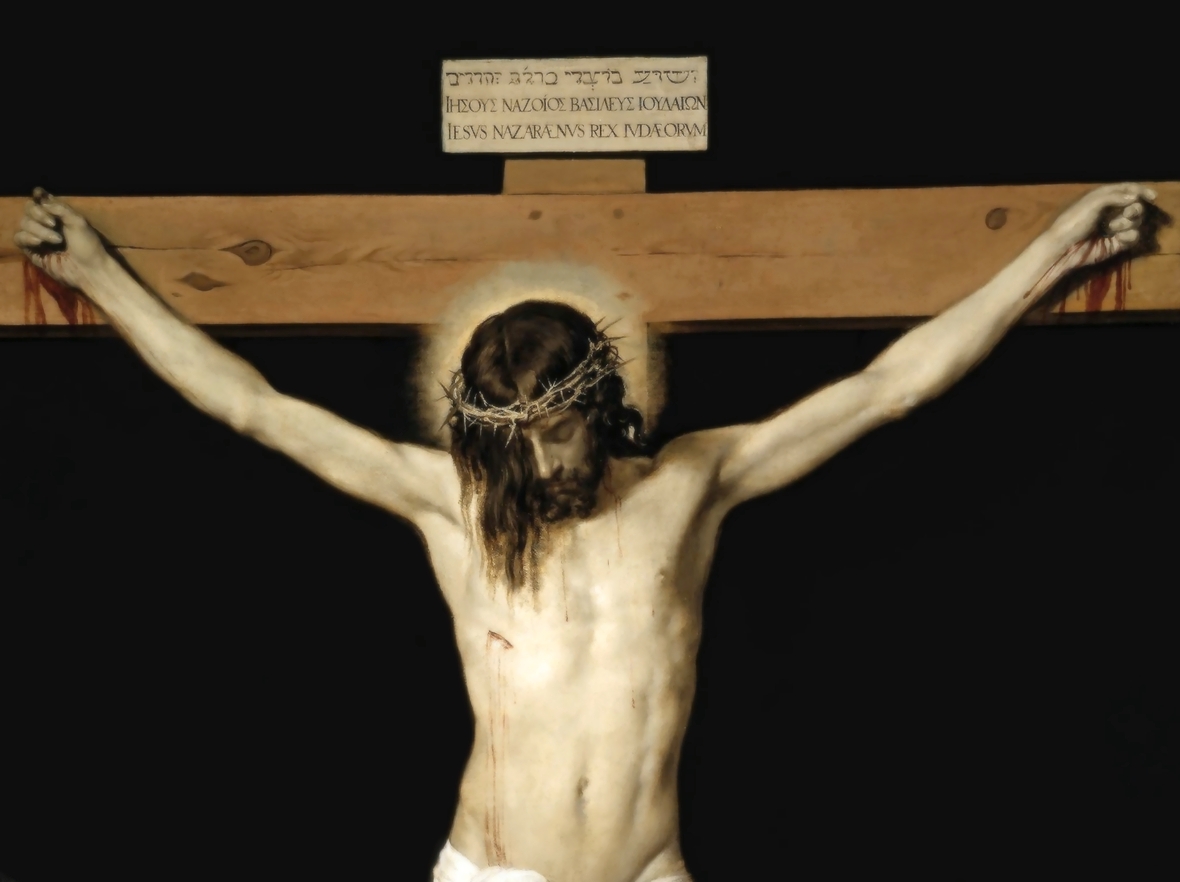 Life would be so nice without suffering. Suffering is the most shocking reality in this world. A glance at the daily news and the amount of suffering people experience everywhere is staggering, sickening. Even as we look around, some of our relatives or friends are confronted with the most dreadful situations accompanied with pain and hardship: physical, emotional, financial... Suffering is so scandalous to modern man that everything is done to escape its grip. That is the reason why drinking, drug addiction, violence are on the rise today. These are means to relieve the unpleasant circumstances. Trying to escape aches and pains do not solve problems though and often make them worse. The only answer to suffering, the only way of understanding its purpose and value, resides in the contemplation of the Passion of Our Lord Jesus Christ. Only the Passion gives us the key to the meaning of suffering which is summarised in one word: Redemption. In itself suffering is absurd and revolting, but seen in the light of the Passion of Our Lord, it becomes a source of joy. Why joy? Because through suffering, Jesus opened to us the door to His Paradise. Because united to the suffering of Our Lord, our pain becomes a source of merit and power. The saints who performed the biggest number of miracles are the saints who suffered the most. Suffering is in no way a curse. It is the occasion to experience the consoling presence of God and his Might. Suffering is a proof of the existence of God as God alone can give the grace and power to bear the most intolerable pain with peace and joy. Behind suffering there is also a secret. The secret of the love of God for us, for me, and the secret of my love for Him... |
|
|
Mar 24 2015, 05:54 PM
|
|
Senior Member
3,577 posts Joined: Apr 2006
|
 A Rule of Life, by Saint John Bosco Here below are five spiritual advices Saint John Bosco gave to his boys which he called “Counsels of the highest import”: “1. Avoid idleness and idle people; work according to your state in life; when you are not busy, you are in great danger to fall into sin. Idleness teaches every kind of vice. 2. Spend your life in the greatest joy so long as you do not sin. 3. Do your utmost not to miss the sermon on feast days. 4. Choose a confessor whom you can trust, receive the sacraments of Confession and Communion. Saint Philip Neri, this great friend of the youth, exhorted young people to confess every eight days and to receive communion even more often depending on your confessor’s advice. 5. My son, you have only one soul; think of saving it. What do you benefit if you gain the whole world but lose your own soul. Blessed is the one who finds himself at the moment of death with a life full of good works. Write, my son, in your heart my saying: the world is a deceiver, the only true friend is God.” Saint John Bosco was writing for teenage boys! How far down have we gone since then as even Catholic adults would find difficult to follow these simple advices today! What a perfect programme for Lent it would have been! About Lent… as it is about to end, it is time to look back and consider what progress we have made since Ash Wednesday. How serious has our Lent been? Have we truly done our best to understand the Will of God better, to fight our defects and deepen our relationship with Our Lord? Do we go to Mass with a greater understanding of the mystery that unfolds before our very eyes: the Son of God dying again on the Cross for me, to blot away all my sins and to save me? Do we realize a bit more that when we go to Mass we are already in Heaven being so close to the Divinity as we even receive it in our hearts and souls through Communion? With the Holy Week approaching let us renew our resolution to belong entirely to Jesus and Mary and participate in the Passion of Our Lord with the greatest fervour possible. This post has been edited by yeeck: Mar 24 2015, 05:54 PM |
|
|
Mar 25 2015, 11:37 AM
|
|
Senior Member
3,577 posts Joined: Apr 2006
|
Happy Feast of the Annunciation.
 The Angelus prayer: Latin ℣. Angelus Domini nuntiavit Mariae, ℟. Et concepit de Spiritu Sancto. Ave Maria, gratia plena, Dominus tecum. Benedicta tu in mulieribus, et benedictus fructus ventris tui, Iesus. * Sancta Maria, Mater Dei, ora pro nobis peccatoribus, nunc et in hora mortis nostrae. Amen. ℣. Ecce ancilla Domini. ℟. Fiat mihi secundum verbum tuum. Ave Maria, gratia plena, Dominus tecum. Benedicta tu in mulieribus, et benedictus fructus ventris tui, Iesus. * Sancta Maria, Mater Dei, ora pro nobis peccatoribus, nunc et in hora mortis nostrae. Amen. ℣. Et Verbum caro factum est. ℟. Et habitavit in nobis. Ave Maria, gratia plena, Dominus tecum. Benedicta tu in mulieribus, et benedictus fructus ventris tui, Iesus. * Sancta Maria, Mater Dei, ora pro nobis peccatoribus, nunc et in hora mortis nostrae. Amen. ℣. Ora pro nobis, Sancta Dei Genetrix. ℟. Ut digni efficiamur promissionibus Christi. Oremus. Gratiam tuam, quaesumus, Domine, mentibus nostris infunde; ut qui, Angelo nuntiante, Christi Filii tui incarnationem cognovimus, per passionem eius et crucem ad resurrectionis gloriam perducamur. Per eundem Christum Dominum nostrum. ℟: Amen. English ℣. The angel of the Lord declared unto Mary, ℟. And she conceived of the Holy Ghost. Hail Mary, full of grace; the Lord is with Thee: blessed art thou amongst women, and blessed is the fruit of thy womb, Jesus.* Holy Mary, Mother of God, pray for us sinners, now and at the hour of our death. ℣. Behold the handmaid of the Lord. ℟. Be it done unto me according to thy word. Hail Mary, full of grace; the Lord is with Thee: blessed art thou amongst women, and blessed is the fruit of thy womb, Jesus.* Holy Mary, Mother of God, pray for us sinners, now and at the hour of our death. ℣. And the Word was made flesh. ℟. And dwelt among us. Hail Mary, full of grace; the Lord is with Thee: blessed art thou amongst women, and blessed is the fruit of thy womb, Jesus.* Holy Mary, Mother of God, pray for us sinners, now and at the hour of our death. ℣. Pray for us, O Holy Mother of God. ℟. That we might be made worthy of the promises of Christ. Let us pray, Pour forth, we beseech Thee, Lord, Thy grace into our hearts; that, we, to whom the Incarnation of Christ, Thy Son, was made known by the message of an angel, may by His Passion and Cross be brought to the glory of His Resurrection. Through the same Christ our Lord. ℟. Amen. |
|
|
Mar 26 2015, 12:47 PM
|
|
Junior Member
316 posts Joined: Nov 2005 From: Saya Berjaya
|
7 more days to Holy Week. Preparations aren't easy. Was doing cabling work until 2am yesterday. Anyway, there's a Youth Rally thingy in STM this Saturday after mass. Heard that Fr Gregory Chan is gonna be there. Something for the young people.
|
|
|
Mar 26 2015, 01:52 PM
|
|
Junior Member
225 posts Joined: Mar 2008
|
QUOTE(pkh @ Mar 26 2015, 12:47 PM) 7 more days to Holy Week. Preparations aren't easy. Was doing cabling work until 2am yesterday. Anyway, there's a Youth Rally thingy in STM this Saturday after mass. Heard that Fr Gregory Chan is gonna be there. Something for the young people. Fr. Gregory is a really vibrant and engaging priest. I always love to hear him speak! |
|
|
Mar 26 2015, 05:53 PM
|
|
Senior Member
3,577 posts Joined: Apr 2006
|
QUOTE(khool @ Mar 26 2015, 01:52 PM) Fr. Gregory is a really vibrant and engaging priest. I always love to hear him speak! I've yet to meet or hear him but others who did have told me they were quite troubled with his gestures and mannerisms..lol.This post has been edited by yeeck: Mar 26 2015, 05:54 PM |
|
|
Mar 27 2015, 11:02 AM
|
|
Junior Member
225 posts Joined: Mar 2008
|
QUOTE(yeeck @ Mar 26 2015, 05:53 PM) I've yet to meet or hear him but others who did have told me they were quite troubled with his gestures and mannerisms..lol. Yes, he is quite expressive and a very passionate speaker. It must be due to his training as a lawyer before he joined the priesthood ...  |
|
|
Mar 27 2015, 02:28 PM
|
|
Senior Member
3,577 posts Joined: Apr 2006
|
Palm Sunday
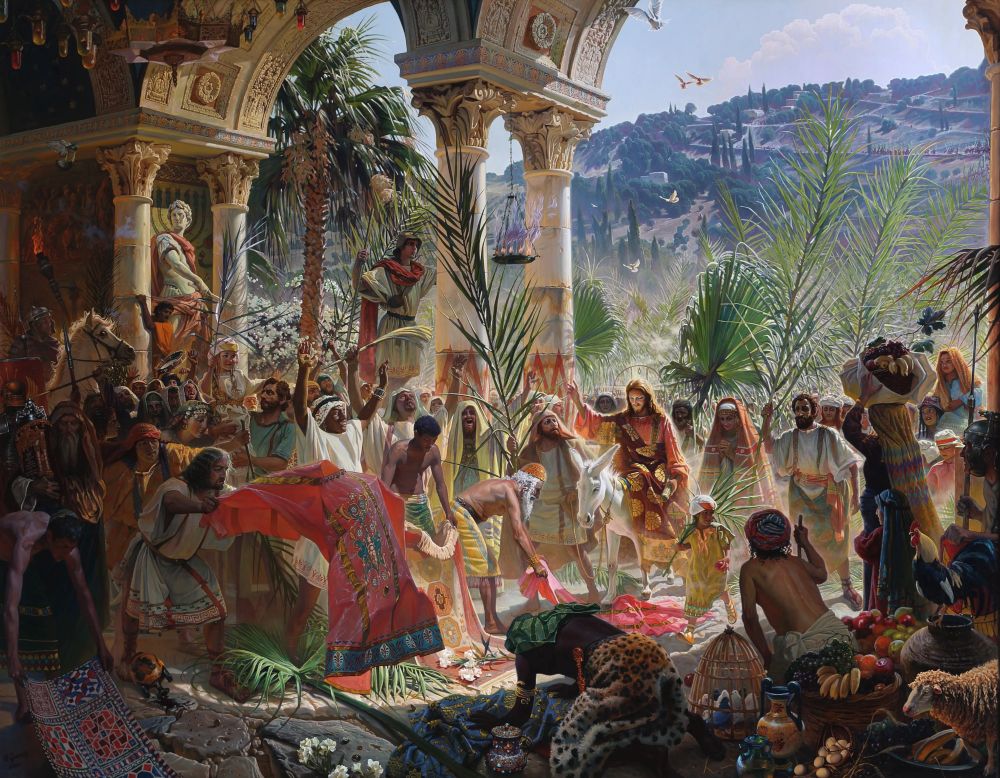 On March 29th 2015 will be the "Second Sunday of the Passion," is the memorial of Christ's "triumphant," but misunderstood, entry into Jerusalem, the day that begins Holy Week. This entry into Jerusalem is seen as the prophetic fulfillment of Zacharias 9:9-10 : Rejoice greatly, O daughter of Sion, shout for joy, O daughter of Jerusalem: BEHOLD THY KING will come to thee, the just and saviour: he is poor, and riding upon an ass, and upon a colt the foal of an ass. And I will destroy the chariot out of Ephraim, and the horse out of Jerusalem, and the bow for war shall be broken: and he shall speak peace to the Gentiles, and his power shall be from sea to sea, and from the rivers even to the end of the earth. Before the Mass is the Blessing of the Palms, which includes an Antiphon, Psalms, and Gospel reading. Then comes the Procession with hymns, when we carry the palms either around the church or outside, weather permitting, and then the Mass, during which there is a very long reading sung in 3 parts by 3 deacons (or priest and deacons such as the case may be) -- a long recitation of the Passion, including Matthew 26:36-75 and Matthew 27:1-60. Prepare for a very long Mass! Carrying palms (or olive or willow branches, etc., if palms aren't available) in procession goes way back into the Old Testament, where it was not only approved but commanded by God at the very foundation of the Old Testament religion. In the fall of the year, after the harvest, when the people gathered for the Feast of Tabernacles God said in Leviticus 23:40:  And you shall take to you on the first day the fruits of the fairest tree, and branches of palm trees, and boughs of thick trees, and willows of the brook: And you shall rejoice before the Lord your God. Again we read of palms in the II Machabees 10:6-8: And they kept eight days with joy, after the manner of the feast of the tabernacles, remembering that not long before they had kept the feast of the tabernacles when they were in the mountains, and in dens like wild beasts. Therefore they now carried boughs and green branches and palms, for him that had given them good success in cleansing his place. And they ordained by a common statute, and decree, that all the nation of the Jews should keep those days every year. And in the 7th chapter of the Apocalypse, we see that those who were "sealed" are seen by John carrying palms: Apocalypse 7:9-10: After this, I saw a great multitude, which no man could number, of all nations and tribes and peoples and tongues, standing before the throne and in sight of the Lamb, clothed with white robes, and palms in their hands. And they cried with a loud voice, saying: Salvation to our God, who sitteth upon the throne and to the Lamb. The palms are blessed before the High Mass today. Vested in red cope and standing at the Epistle side of the Altar, the priest recites a short prayer, and then reads a lesson from the book of Exodus which tells of the children of Israel coming to Elim on their way to the Promised Land, where they found a fountain and seventy palm trees. It was at Elim that God sent them manna.  After a few verses from the New Testament, the priest reads the story of Christ's triumphal entry into Jerusalem the Sunday before His death, and about how the people put palms in the Savior's path and sang hosannas because, ironically, they expected a temporal victory by the One they thought would be the great military leader who would conquer the Romans. Then we pray, begging God that we may in the end go meet Christ, that we may enter with Him into the eternal Jerusalem. The following preface and prayers ask God to bless the palms, that they may be sanctified and may be a means of grace and divine protection to those who carry them and treasure them with faith. The palms are distributed to the people at the Communion rail. The priest will press the palm against your lips so you can kiss it, and then kiss his hand. Alternatively, the palms may be handed out by the altar boys. In any case, Scripture and prayers follow, and then a procession of clergy, servers, and people through the church or outside around the church. Customs When Mass is finished, we take the palms home and hang them over crucifixes or holy pictures (I don't know how universal this is, but an Italian and French custom is to break off a piece of the palm and, while praying to St. Barbara for relief, burn it in times of great storms or natural disasters). Another custom is to shape the palm into Crosses before hanging them. The people of Italy and Mexico shape palms into extremely elaborate and beautiful figures. Also, men in some places will wear a piece of it in their hats or pin it to their lapels, and a piece should also be placed with one's sick call set. Some of these same palm branches are saved and burned the next year to make the ashes for the next Ash Wednesday -- the palms, which symbolize triumph, and the ashes, which sympbolize death and penitence, forming a great symbolic connection between suffering and victory. The next year, when we get new palms, the old palms are burned and their ashes buried. Now, this day has in the past sometimes been called "Fig Sunday" because just after Christ's entry into Jerusalem, He cursed the fig tree: Mark 11:12-14 And the next day when they came out from Bethania, he was hungry. And when he had seen afar off a fig tree having leaves, he came if perhaps he might find any thing on it. And when he was come to it, he found nothing but leaves. For it was not the time for figs. And answering he said to it: May no man hereafter eat fruit of thee any more for ever. (also Matthew 21:18-19) This cursing is undoubtedly a reference to what would happen to those of Israel who rejected the Messias, as revealed in this parable: Luke 13:6-9 He spoke also this parable: A certain man had a fig tree planted in his vineyard, and he came seeking fruit on it, and found none. And he said to the dresser of the vineyard: Behold, for these three years I come seeking fruit on this fig tree, and I find none. Cut it done therefore: why cumbereth it the ground? But he answering, said to him: Lord, let it alone this year also, until I dig about it, and dung it. And if happily it bear fruit: but if not, then after that thou shalt cut it down. Because of the cursing of the fig tree, the eating of figs is customary. The Monday, Tuesday, and Wednesday following Palm Sunday are another traditional time of cleaning. Just as the house is cleaned during Advent in preparation for Christmas, and just as Shrovetide is spent cleaning in preparation for Lent, these days are spent in preparation of the greatest Feast of the Church year: the Feast of Easter. By Wednesday night, the house should be spotless so that the days of the Sacred Triduum (Holy Thursday, Friday, and Saturday) can be devoted to Christ's Passion.  This post has been edited by yeeck: Mar 28 2015, 12:34 AM |
|
|
Mar 28 2015, 01:49 AM
|
|
Senior Member
3,577 posts Joined: Apr 2006
|
"Once saved Always Saved" is a lie. Believing in Jesus is not enough, for even the demons recognized and believed Jesus to be the Son of God.
This post has been edited by yeeck: Mar 28 2015, 01:58 AM |
|
|
Mar 29 2015, 01:47 AM
|
|
Senior Member
3,577 posts Joined: Apr 2006
|
One of the most well-known hymns for Palm Sunday:
All Glory, Laud and Honour Words: Theodulph of Orleans, ca. 820. Music: Melchior Teschner, 1615 Refrain All glory, laud and honor, To Thee, Redeemer, King, To whom the lips of children Made sweet hosannas ring. Thou art the king of Israel, Thou David’s royal Son, Who in the Lord’s name comest, The King and Blessèd One. Refrain The company of angels Are praising Thee on High, And mortal men and all things Created make reply. Refrain The people of the Hebrews With palms before Thee went; Our prayer and praise and anthems Before Thee we present. Refrain To Thee, before Thy passion, They sang their hymns of praise; To Thee, now high exalted, Our melody we raise. Refrain Thou didst accept their praises; Accept the prayers we bring, Who in all good delightest, Thou good and gracious King. Refrain |
|
|
Mar 30 2015, 01:58 PM
|
|
Senior Member
3,577 posts Joined: Apr 2006
|
Does God really exist?
Since ancient times, Humanity has considered the problem of knowing whether a superior being exists. Atheism answers in the negative, the different religions answer in the affirmative, which is it truly? What do we notice in the reality which surrounds us? With the help of our external senses, it is easy for us to note the existence of a universe composed of the most diverse things: mineral, vegetal, animal, etc. Every science has an object specific to itself; astronomy studies the stars, botany studies the plants, zoology examines the animals, medicine tries to care for human beings, psychology seeks to explain mental phenomena, etc. Thanks to each of these sciences, one can easily reach the conclusion that everywhere laws exist which govern the whole universe: a stone once thrown cannot but finally fall; a kind of plant gives naturally the same kind of flower. Of course we do not know all these laws, the scholars and researchers spend all their strength and all their time to discover them. The scientists however note that a certain number of things exist which, repeated regularly, normally produce such and such a result. Everything has a precise place, a special function, an exact objective. Take for example the case of the human body; the heart makes the blood circulate, the legs cause it to move, the eye allows it to see. Without being a doctor, it is easy for us to establish that our body is an organised whole. Nature offers a multitude of examples of the same sort, the entire universe is filled with examples of organisation and precision. Everywhere one can find fine, delicate, complex mechanisms, and these concealed in the tiniest parts of plants, animals and human beings. What is the origin of the order of the universe? In looking at a car or a computer it would never occur to us that it was an ignorant person who had put them in working order. Only men of the standard of Peugeot or Apple engineers could invent or manufacture such things. Even the making of a dress requires the existence of a dressmaker, more or less well trained. The story of Father Christmas, which one tells to children to explain to them why they receive presents on the 25th of December, cannot be of long duration. A time will come when the small child will want to know where did such a thing come from, who made it, what rules did it follow, etc. The entire universe from the planets to the insects, makes us put the same question: where does it come from? Who made it? Only a supreme intelligence could explain the order of the world. Because the more a thing is complex the more it requires the existence of a qualified and capable inventor. As the human being, on its own, could not concern the whole universe; he cannot even understand, at one go, the whole of its mechanisms. From this flows the necessity of admitting the existence of a supreme intelligence to explain the order of the world. Voltaire called it the great Watch-maker, Catholics call it God. First Objection: Evolution and chance are sufficient to explain the order of the universe. Reply: According to this opinion, life appears and perfects itself through an infinite number of favourable circumstances, thanks to a combination of blind forces, but which would coordinate and harmonize themselves to produce in the happiest way the precise movements of the planets or the beings which make up the world would, for example, be produced without a preconceived plan or order. Now it seems paradoxical that chance should be explanatory when it is a sign of disorder: try to explain to a visitor in the Boeing factory that the aeroplanes are built by chance, without the well thought out and organised intervention of innumerable engineers and qualified workers! It would be impossible; nobody would believe such a fairytale. In one word, it would be order achieved through incoherence, contradiction installed everywhere. Now, the universe is composed of mechanisms, all as precise as aeroplanes and this to a clearly greater scale. Moreover, before the creating of the order of the universe, the most infinitesimal of the elements of which it is composed, has its own internal laws proper to itself and which could not exist without the prior intervention of an intelligent organiser: to produce a seed or an embryo is no less marvellous than to produce a tree or a human being. The explanation attempted by evolution or chance is not even yet broached. Second objection: Instead of admitting an intelligence outside of the universe, why not assume an in-dwelling intelligence, spread through all its parts, permitting it to construct itself and to direct itself all alone, and make its own way. Reply: It is true that one can accept that the Divine Intelligence lives in the world in some sort of way by making it function, but It remains distinct from its work. It would be in fact false to accept the existence of a divinity called "Life" which would be an integral part of the whole universe while at the same time having conceived it and ruling it. The study of the natural mechanisms has not proven that human reason itself would be capable of controlling, in a well thought out way, the totality of the organisms of the human body themselves: the heart cannot take personal precaution against a heart attack nor the stomach against an ulcer. The existence of a superior, distinct and exterior intelligence is therefore the only acceptable answer. Third objection: You acknowledge an order in the Universe, but does it really exist when one sees so many biological monsters, cataclysms and misfortunes? Reply: These evils simply indicate the limitations of an order which is, none the less, real and which must be explained, because one cannot speak of disorders except by reference to an order. For example, a person is sick only in relation to the normal state which is health; shadows in a picture are only such in relation to the zones of light. The failing, illness and death are no snags in the laws of nature but, on the contrary, the regular functioning of these laws. A living being does not survive except by feeding itself i.e. by dissolving certain substances in order to incorporate them into itself; it destroys incessantly so as to build; that is its nature, its order, its law. To try to imagine an animal which lives without eating away some plant or without killing one of its kind is an idle fancy. This uninterrupted movement (cycle of assimilation and of disassimilation) is life itself. To stop it would quite simply stop life in the world. In short, the universe was not designed by its creator as an immobile dead system but like a group of forces always in conflict, the good emerging from the evil. God could intervene miraculously to stop certain unfortunate effects but it would suspend the natural order by removing all activity and spontaneity: to save the grass from the tooth of the lamb is to favour the grass at the expense of the lamb. Every change has thus two forces, it is at the same time production and destruction, the advantage of one is the damage of the other. Conclusion: Thus, these objections do not remove anything from the well formed thesis of an Intelligence organising the world. Analysed apart from the current preconceived scientific opinions, one discovers immediately that they are filled with difficulties and contain contradictions. Only one hypothesis can be developed with coherence and clarity: it is that which seeks the explanation of the universe above and beyond it, in a Supreme Spirit. To adopt it makes us therefore true to logic and to reason. |
|
|
Mar 31 2015, 12:20 PM
|
|
Senior Member
3,577 posts Joined: Apr 2006
|
This is a sermon where a priest points out whole litany of reasons why Catholics should never participate in a Seder Meal, which is a Jewish passover meal that many Catholics have taken up as some kind of pious practice in association with this time of year. It’s a very bad idea. One should never get involved in one of these, and if you took part in one in the past in ignorance, I would counsel informing your confessor of the instances when this occurred and the circumstances surrounding those instances. That’s not condemnatory in the slightest, but if you listen I think you’ll understand that these Seder meals are not only obsolete in the New Law but are directly counter to it.
|
|
|
Mar 31 2015, 03:13 PM
|
|
Junior Member
225 posts Joined: Mar 2008
|
QUOTE(yeeck @ Mar 30 2015, 01:58 PM) Does God really exist? Great presentation of real facts ... Fides et Ratio! Since ancient times, Humanity has considered the problem of knowing whether a superior being exists. Atheism answers in the negative, the different religions answer in the affirmative, which is it truly? What do we notice in the reality which surrounds us? With the help of our external senses, it is easy for us to note the existence of a universe composed of the most diverse things: mineral, vegetal, animal, etc. Every science has an object specific to itself; astronomy studies the stars, botany studies the plants, zoology examines the animals, medicine tries to care for human beings, psychology seeks to explain mental phenomena, etc. Thanks to each of these sciences, one can easily reach the conclusion that everywhere laws exist which govern the whole universe: a stone once thrown cannot but finally fall; a kind of plant gives naturally the same kind of flower. Of course we do not know all these laws, the scholars and researchers spend all their strength and all their time to discover them. The scientists however note that a certain number of things exist which, repeated regularly, normally produce such and such a result. Everything has a precise place, a special function, an exact objective. Take for example the case of the human body; the heart makes the blood circulate, the legs cause it to move, the eye allows it to see. Without being a doctor, it is easy for us to establish that our body is an organised whole. Nature offers a multitude of examples of the same sort, the entire universe is filled with examples of organisation and precision. Everywhere one can find fine, delicate, complex mechanisms, and these concealed in the tiniest parts of plants, animals and human beings. What is the origin of the order of the universe? In looking at a car or a computer it would never occur to us that it was an ignorant person who had put them in working order. Only men of the standard of Peugeot or Apple engineers could invent or manufacture such things. Even the making of a dress requires the existence of a dressmaker, more or less well trained. The story of Father Christmas, which one tells to children to explain to them why they receive presents on the 25th of December, cannot be of long duration. A time will come when the small child will want to know where did such a thing come from, who made it, what rules did it follow, etc. The entire universe from the planets to the insects, makes us put the same question: where does it come from? Who made it? Only a supreme intelligence could explain the order of the world. Because the more a thing is complex the more it requires the existence of a qualified and capable inventor. As the human being, on its own, could not concern the whole universe; he cannot even understand, at one go, the whole of its mechanisms. From this flows the necessity of admitting the existence of a supreme intelligence to explain the order of the world. Voltaire called it the great Watch-maker, Catholics call it God. First Objection: Evolution and chance are sufficient to explain the order of the universe. Reply: According to this opinion, life appears and perfects itself through an infinite number of favourable circumstances, thanks to a combination of blind forces, but which would coordinate and harmonize themselves to produce in the happiest way the precise movements of the planets or the beings which make up the world would, for example, be produced without a preconceived plan or order. Now it seems paradoxical that chance should be explanatory when it is a sign of disorder: try to explain to a visitor in the Boeing factory that the aeroplanes are built by chance, without the well thought out and organised intervention of innumerable engineers and qualified workers! It would be impossible; nobody would believe such a fairytale. In one word, it would be order achieved through incoherence, contradiction installed everywhere. Now, the universe is composed of mechanisms, all as precise as aeroplanes and this to a clearly greater scale. Moreover, before the creating of the order of the universe, the most infinitesimal of the elements of which it is composed, has its own internal laws proper to itself and which could not exist without the prior intervention of an intelligent organiser: to produce a seed or an embryo is no less marvellous than to produce a tree or a human being. The explanation attempted by evolution or chance is not even yet broached. Second objection: Instead of admitting an intelligence outside of the universe, why not assume an in-dwelling intelligence, spread through all its parts, permitting it to construct itself and to direct itself all alone, and make its own way. Reply: It is true that one can accept that the Divine Intelligence lives in the world in some sort of way by making it function, but It remains distinct from its work. It would be in fact false to accept the existence of a divinity called "Life" which would be an integral part of the whole universe while at the same time having conceived it and ruling it. The study of the natural mechanisms has not proven that human reason itself would be capable of controlling, in a well thought out way, the totality of the organisms of the human body themselves: the heart cannot take personal precaution against a heart attack nor the stomach against an ulcer. The existence of a superior, distinct and exterior intelligence is therefore the only acceptable answer. Third objection: You acknowledge an order in the Universe, but does it really exist when one sees so many biological monsters, cataclysms and misfortunes? Reply: These evils simply indicate the limitations of an order which is, none the less, real and which must be explained, because one cannot speak of disorders except by reference to an order. For example, a person is sick only in relation to the normal state which is health; shadows in a picture are only such in relation to the zones of light. The failing, illness and death are no snags in the laws of nature but, on the contrary, the regular functioning of these laws. A living being does not survive except by feeding itself i.e. by dissolving certain substances in order to incorporate them into itself; it destroys incessantly so as to build; that is its nature, its order, its law. To try to imagine an animal which lives without eating away some plant or without killing one of its kind is an idle fancy. This uninterrupted movement (cycle of assimilation and of disassimilation) is life itself. To stop it would quite simply stop life in the world. In short, the universe was not designed by its creator as an immobile dead system but like a group of forces always in conflict, the good emerging from the evil. God could intervene miraculously to stop certain unfortunate effects but it would suspend the natural order by removing all activity and spontaneity: to save the grass from the tooth of the lamb is to favour the grass at the expense of the lamb. Every change has thus two forces, it is at the same time production and destruction, the advantage of one is the damage of the other. Conclusion: Thus, these objections do not remove anything from the well formed thesis of an Intelligence organising the world. Analysed apart from the current preconceived scientific opinions, one discovers immediately that they are filled with difficulties and contain contradictions. Only one hypothesis can be developed with coherence and clarity: it is that which seeks the explanation of the universe above and beyond it, in a Supreme Spirit. To adopt it makes us therefore true to logic and to reason.  |
|
|
Apr 3 2015, 08:52 PM
|
|
Senior Member
1,920 posts Joined: Jan 2009
|
QUOTE(uk9089 @ Apr 3 2015, 09:19 AM) Hi, em... Hi Yeeck, kindly advise uk9089 n tqvm Can i know todays mass time at Good Shepherd Catholic Setapak? I can't find in internet |
|
|
Apr 4 2015, 02:13 PM
|

Senior Member
1,111 posts Joined: Nov 2011 From: at Malaysia 
|
god does exist, a small pond without fish suddenly start have small fish then with big fish.
|
|
|
Apr 5 2015, 10:13 AM
|
|
Senior Member
3,577 posts Joined: Apr 2006
|
 Khristos Anesti! Alithos Anesti! Christus resurrexit! Resurrexit vere! Christos Voskrese! Voistinu voskrese! A blessed Easter to everyone! |
|
|
Apr 5 2015, 10:31 AM
|
|
Senior Member
3,577 posts Joined: Apr 2006
|
For your listening pleasure and devotion on this most solemn feast of the Resurrection of Our Lord & Saviour Jesus Christ, here are the Benedictine monks of Fontgombault singing the Easter propers. Absolutely angelic.
|
|
|
Apr 6 2015, 09:11 PM
|
|
Junior Member
316 posts Joined: Nov 2005 From: Saya Berjaya
|
You guys already got the 'priest shuffle' list? Looks like it's gonna be a new dawn for me.
|
|
|
Apr 6 2015, 09:32 PM
Show posts by this member only | IPv6 | Post
#198
|
|
Junior Member
28 posts Joined: Nov 2010
|
This is what I received from WhatsApp. Don't know if it is real or not
New Appointments of Parish Priest: Fr Lexon - cathedral Fr Mitchel - assumption Fr Albet - OLOG Fr Clarence - Kkb Fr William - st Anthony Fr Frederick - Klang Fr George Harison - S'remban Fr Surain - Kajang Fr Christhoper - Setapak Fr Stan - Desa & selayang Fr Gps - Sentul Fr Mic Chua - Kepong Fr Simon - Cdm Fr David - Rawang Fr Raymond Pereira - STM Fr Paulino - St Anne, Pt Klang Fr James G - Banting Fr Patrick B - Kuantan Fr Philip M - Tgganu Fr Augustine Lee - Bentong Fr. James - Banting Fr. John - Cameron Fr. Eugene - Mantin Fr. Clarence - APC + KKB Fr. Patrick Boudville - Kuantan Fr. V A Michael - Mentakab Fr Ferdinand OLF |
|
|
Apr 7 2015, 01:26 PM
|
|
Junior Member
316 posts Joined: Nov 2005 From: Saya Berjaya
|
Wow. Yours is more complete. I have only Klang Valley
|
|
|
Apr 7 2015, 10:57 PM
|
|
Senior Member
3,577 posts Joined: Apr 2006
|
http://www.theamericanconservative.com/dre...igious-liberty/
Persecution is coming soon for those who uphold the Gospel of Our Lord Jesus Christ. "Go and sin no more" will be perverted into "go and sin somemore and you'll still be fine and dandy, Hell does not exists but is only a state of mind...". This post has been edited by yeeck: Apr 7 2015, 11:00 PM |
|
|
Apr 8 2015, 11:30 AM
|
|
Junior Member
225 posts Joined: Mar 2008
|
QUOTE(Xhr0no @ Apr 6 2015, 09:32 PM) This is what I received from WhatsApp. Don't know if it is real or not Oooh ... Fr. Leonard Lexson is going to St. John's? New Appointments of Parish Priest: Fr Lexon - cathedral Fr Mitchel - assumption Fr Albet - OLOG Fr Clarence - Kkb Fr William - st Anthony Fr Frederick - Klang Fr George Harison - S'remban Fr Surain - Kajang Fr Christhoper - Setapak Fr Stan - Desa & selayang Fr Gps - Sentul Fr Mic Chua - Kepong Fr Simon - Cdm Fr David - Rawang Fr Raymond Pereira - STM Fr Paulino - St Anne, Pt Klang Fr James G - Banting Fr Patrick B - Kuantan Fr Philip M - Tgganu Fr Augustine Lee - Bentong Fr. James - Banting Fr. John - Cameron Fr. Eugene - Mantin Fr. Clarence - APC + KKB Fr. Patrick Boudville - Kuantan Fr. V A Michael - Mentakab Fr Ferdinand OLF  ... not surprising though, he IS liturgical director anyways ... ... not surprising though, he IS liturgical director anyways ... |
|
|
Apr 8 2015, 11:31 AM
|
|
Junior Member
225 posts Joined: Mar 2008
|
QUOTE(yeeck @ Apr 7 2015, 10:57 PM) http://www.theamericanconservative.com/dre...igious-liberty/ Excellent article, and right now, it is very obvious ... Indianapolis has shown the true colours of the Liberal "Lib-tard" agenda!Persecution is coming soon for those who uphold the Gospel of Our Lord Jesus Christ. "Go and sin no more" will be perverted into "go and sin somemore and you'll still be fine and dandy, Hell does not exists but is only a state of mind...". This post has been edited by khool: Apr 8 2015, 11:33 AM |
|
|
Apr 9 2015, 12:22 AM
|
|
Senior Member
3,577 posts Joined: Apr 2006
|
"Are You Saved?" If Only!
By: Tim Staples "Do you know you’re saved so that if you were to die right now, heaven would be absolutely certain for you?" This "all-important" question is designed to bait Catholics into an ambush. When I speak at conferences around the country, I often ask the attendees how many have been asked that question by a Fundamentalist or Evangelical: Usually, over half of my Catholic audience raises a hand. If the Catholic responds as any good Catholic would by declaring he cannot—apart from a special revelation from God—have metaphysical (or absolute) certainty concerning his salvation, the Protestant then springs his biblical trap, 1 John 5:13: "I write this to you who believe in the name of the Son of God, that you may know that you have eternal life." Next he tells the Catholic that if he will but "confess with [his] lips that Jesus is Lord and believe in [his] heart that God raised him from the dead, [he] will be saved" (Rom 10:9-10). All we need do is confess Jesus as Lord, and salvation is assured. We can know it with certainty. Salvation is guaranteed regardless of anything we may do or not do in the future. What a deal! The Catholic Two-Step Response Step One: The Greek word for knowledge (Gk. eideitei) in 1 John 5:13 does not necessarily equate to absolute certainty. We use the verb know the same way in English. For example, I may say I know I am going to get an A on my Greek exam tomorrow. Does that mean I have metaphysical certainty of this? Not at all. What I mean and what the verb know can be used to indicate is that I have confidence that I will get an A on my test tomorrow because I have studied the material thoroughly and I know it well. The context of 1 John makes it abundantly clear that this is how "knowledge" is being used in 1 John 5:13. In the next two verses, John draws a parallel between the certainty we have concerning our salvation and the certainty we have when we petition God in prayer: "And this is the confidence which we have in him, that if we ask anything according to his will he hears us. And if we know that he hears us in whatever we ask, we know that we have obtained the requests made of him." Does this mean we have absolute certainty we will receive what we ask for when we make requests of God in prayer? Obviously not! John says we can have "confidence," but not absolute certainty. We cannot always know with strict certainty that our request is truly "according to his will." Moreover, Psalm 66:18 informs us: "If I had cherished iniquity in my heart, the Lord would not have listened." And 1 John 3:22 says, ". . . we receive from him whatever we ask, because we keep his commandments and do what pleases him." Can we always be certain we have not "cherished iniquity" in our hearts, or that we have not done anything that may have displeased the Lord? Step Two: Our salvation is contingent upon many things according to the Bible. This indicates the certainty of our salvation is not absolute. Just a few examples include 1 John 1:8-9: "If we say we have no sin, we deceive ourselves, and the truth is not in us. If we confess our sins, he is faithful and just, and will forgive our sins and cleanse us from all unrighteousness." The text says we will be forgiven if. Thus, the sobering truth is: Unconfessed sin will not be forgiven. And the Bible is very clear that no sin can enter into heaven (see Hb 1:13; Rv 21:8-9, 27). I have heard it said that if is "the biggest little word" in the English dictionary. Well, Scripture has lots of ifs. John, for example, also says: "Let what you heard from the beginning abide in you. If what you heard from the beginning abides in you, then you will abide in the Son and in the Father. And this is what he has promised us, eternal life" (1 Jn 2:24-25). This passage is plain. Our eternal life is contingent upon our choosing to abide in God. Can we choose the opposite? Absolutely! John goes on to explain: "No one who abides in him sins; no one who sins has either seen him or known him. Little children, let no one deceive you. He who does right is righteous, as he is righteous. He who commits sin is of the devil . . . No one born of God commits sin . . ." (1 Jn 3:6-9). On the surface, this text seems odd. We have already heard John say that everyone who is born of God does sin. Indeed, "all" sin. Yet, here he says those who are born of God do not sin. Is John contradicting himself? No: John makes a distinction between mortal and venial sins in this same epistle. In 1 John 5:16-17, John gives us remarkably plain definitions of both mortal and venial sins. "If any one sees his brother committing what is not a mortal sin, he will ask, and God will give him life for those whose sin is not mortal. There is sin which is mortal . . . All wrongdoing is sin, but there is sin which is not mortal." In this context, we can reasonably conclude the one who is born of God does not commit mortal sin. If he were to do so, he would be "cut off" from the body of Christ and would need to be restored via confession to a state of grace (Cf. Gal 5:4, Eph 3:3-6, Jn 20:21-23). Three more texts about the contingency of salvation bolster the argument: 1 Corinthians 15:1-2: Now I would remind you, brethren, in what terms I preached to you the gospel, which you received, in which you stand, by which you are saved, if you hold it fast—unless you believed in vain. (See also Matthew 24:44-51; Luke 12:41-46; Romans 11:22; Hebrews 3:6;14; Revelation 2:10; 25-26; 3:1-5; 22:18-19, for many more "ifs" and contingency clauses.) Colossians 1:21-23: And you, who once were estranged and hostile in mind, doing evil deeds, he has now reconciled in his body of flesh by his death, in order to present you holy and blameless and irreproachable before him, provided that you continue in the faith, stable and steadfast, not shifting from the hope of the gospel which you heard . . . 2 Peter 2:20-22: For if, after they have escaped the defilements of the world through the knowledge of our Lord and Savior Jesus Christ, they are again entangled in them and overpowered, the last state has become worse for them than the first . . . It has happened to them according to the true proverb, the dog turns back to his own vomit, and the sow is washed only to wallow in the mire. The Evangelical Counter In response, the Protestant apologist will sometimes say these texts do not indicate one who was truly saved could actually lose his salvation. The one who, in the end, did not continue with the Lord, never really knew the Lord in the first place. He only knew about the Lord. But this line of reasoning does not hold up under scrutiny. In 2 Peter 2, the Greek word used for knowledge is epignosei. This word means "knowledge," but it denotes an experiential knowledge. This text is very clear that the persons referred to have "escaped the pollutions of the world" through this "experiential knowledge" of Jesus. Only a personal relationship with Jesus can have this effect. Merely knowing about Jesus cannot do that. Moreover, the image Peter uses in verse 22 is of the sow having been washed in water. Water is the symbol Peter uses for baptism in 1 Peter 3:20-21. The connection seems obvious. The sow—female pig—which had been cleansed represents a person cleansed from sin; the sow returning to the mud represents the Christian returning to sin. When seen in the fuller context of 2 Peter, this point becomes unmistakable. In 2 Peter 1:2-4, Peter begins with a description of Christians: May grace and peace be multiplied to you in the knowledge [epignosei, experiential knowledge once again] of God and of Jesus our Lord. His divine power has granted to us all things that pertain to life and godliness, through the knowledge [epignosei] of him who called us to his own glory and excellence, by which he has granted to us his precious and very great promises, that through these you may escape from the corruption that is in the world because of passion, and become partakers of the divine nature. One cannot help but see the parallels between these two texts. The same Greek words, epignosei, apophugentes, "having escaped from," and a form of kosmos or "world," are used to describe what Christians have been freed from, as well as to describe the one who then goes back to his old ways and ends up worse than he was before he ever knew Jesus. These are just a few texts among the scores we could examine, but the bottom line is Scripture is crystal-clear on this point: Once saved does not mean always saved. In Matthew 6:15, Jesus tells us that "if you do not forgive men their trespasses, neither will your Father forgive your trespasses." It does not matter how "born again" one may be or how many experiences one has had, if he does not forgive others, he will not be forgiven, according to the text. And remember—as we have seen—no sin can enter into heaven (cf. Hb 1:13, Rv 21:27). Further, the Bible says we can "fall from grace" (Gal 5:1-5, Heb 12:14-16), be "cut off" from the vine from which we receive divine life (Jn 15:1-6, Rom 11:18-22), have our names removed from the Lamb’s book of life (Rv 22:19), and it assures us over and over again that if we commit certain sins and we do not repent of them, we will not go to heaven (cf. 1 Cor 6:9-11, Gal 5:19, Eph 5:3-5, Rv 21:6-8). Not Once, But Many Times But what about Romans 10:9-10? Doesn’t the Bible say if you believe in your heart and confess Jesus with your mouth you shall be saved? Yes it does, but that doesn’t mean we need only confess faith in Christ one time. The Bible uses the same Greek word for confess, homologeitai, in multiple places and emphasizes we must continue to confess Christ if we are going to be finally saved. For example, in Matthew 10:22, 32 Jesus says, "You will be hated by all because of my name, but it is the one who has endured to the end who will be saved.. . . Therefore everyone who confesses me before men, I will also confess him before my father who is in heaven. . . ." (NAB). The context here is one of holding fast to our confession until death (see also 2 Tm 2:12 and Heb 4:14; 10:23-26). Finally, confessing Christ is done not only in word, but also in deed: "If any one does not provide for his relatives, and especially for his own family, he has disowned the faith and is worse than an unbeliever" (1 Tm 5:8). Notice, the man who neglects his family for selfish pursuits denies Christ in his actions. And as we have seen, the Bible records in many places extensive lists of sins whereby we can deny Christ, such as 1 Corinthians 6:9-10: "Do you not know that the unrighteous will not inherit the kingdom of God? Do not be deceived; neither the immoral, nor idolaters, nor adulterers, nor sexual perverts, nor thieves, nor the greedy, nor drunkards, nor revilers, nor robbers will inherit the kingdom of God." Scripture never says the saved can do these things and still go to heaven. |
|
|
Apr 9 2015, 01:28 AM
|
|
Senior Member
3,577 posts Joined: Apr 2006
|
The untold story of the Titanic’s Catholic priest who went down hearing confessions
Agnes McCoy, one of the survivors, says that as the great ship sank, Fr. Byles “stood on the deck with Catholics, Protestants and Jews kneeling around him.” “Father Byles was saying the rosary and praying for the repose of the souls of those about to perish,” she told the New York Telegram on April 22, 1912. |
|
|
Apr 9 2015, 01:51 AM
|
|
Senior Member
3,577 posts Joined: Apr 2006
|
 |
|
|
Apr 10 2015, 12:49 AM
|
|
Senior Member
3,577 posts Joined: Apr 2006
|
|
|
|
Apr 10 2015, 10:50 AM
|

Senior Member
1,193 posts Joined: Mar 2008
|
Can someone guide me where I can get the best information for iconoclasm controversies (besides wikipedia of course) during nova roma era ?
|
|
|
Apr 10 2015, 01:44 PM
|
|
Senior Member
3,577 posts Joined: Apr 2006
|
QUOTE(aliesterfiend @ Apr 10 2015, 10:50 AM) Can someone guide me where I can get the best information for iconoclasm controversies (besides wikipedia of course) during nova roma era ? What kind of info do you need? |
|
|
Apr 10 2015, 02:41 PM
|
|
Senior Member
1,193 posts Joined: Mar 2008
|
QUOTE(yeeck @ Apr 10 2015, 01:44 PM) What kind of info do you need? Most of the info I can find. How does it start, why does it start, when does it start, how long does it happen. Those sort of things lah. Most readings and conversation I had heard were mainly base on the historical point of view. Would like to hear from maybe spiritual point of view. Maybe some church arguments from various denomination for example and if you got links then I'll take them from there.Thanks. |
|
|
Apr 10 2015, 09:39 PM
|
|
Senior Member
3,577 posts Joined: Apr 2006
|
QUOTE(aliesterfiend @ Apr 10 2015, 02:41 PM) Most of the info I can find. How does it start, why does it start, when does it start, how long does it happen. Those sort of things lah. Most readings and conversation I had heard were mainly base on the historical point of view. Would like to hear from maybe spiritual point of view. Maybe some church arguments from various denomination for example and if you got links then I'll take them from there. Alright looks like you already have most of the information via Google. Actually iconoclasm is still with us today, especially in many Protestant groups (although they have no qualms about having a Christmas manger scene), Islam, modern-day Judaism. From the Catholic and Orthodox perspective, when the Second Person of the Trinity took on flesh, we can already depict God since Jesus is God, and became flesh (human beings can see Him, touch Him, etc).Thanks. The most well-known defender of icons and sacred images during the Iconoclast controversy is Saint John Damascene (aka Saint John of Damascus). You can read more about him via searches and the story regarding the Icon with three hands. 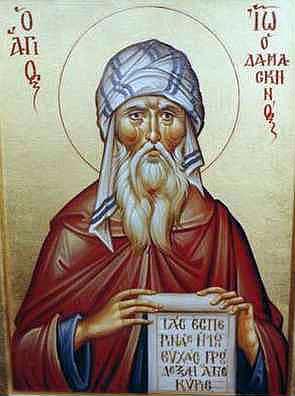 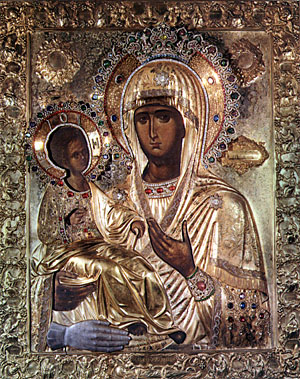 This post has been edited by yeeck: Apr 10 2015, 09:40 PM |
|
|
Apr 10 2015, 10:39 PM
|
|
Senior Member
3,577 posts Joined: Apr 2006
|
The Victory of Christ
Browsing through the Internet for information on Marian devotion one finds oneself inundated with industrial quantities of messages purportedly coming from Our Lady who seems to be spending all her time visiting chosen souls and warning mankind on imminent disasters of cataclysmic magnitude. A close look at some of those so-called apparitions or visions is enough for a person with a minimum of common sense to understand that most if not all of these un-approved manifestations are certainly not from God. 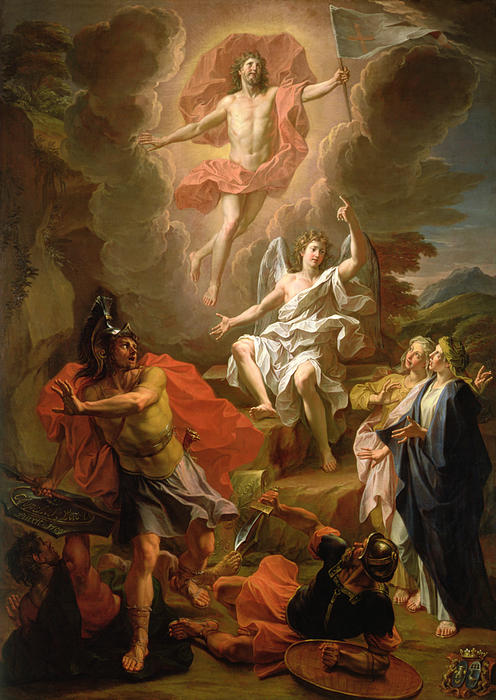 The Church has set up rules of discernment to help us judge if an apparition truly comes from Heaven or not. First, heavenly messages should be short, easy to understand, to the point. They should not contradict Church’s teaching or even contradict each other. Nothing grotesque should surround them and their fruits of holiness should be clear to all. The exemplary life of the seer is also to be taken into account. Applying these wise rules helps us to judge some of the current apparitions like the ones in Naju, Korea, with the ”seer” behaving like a pop-star; or in Achill, Ireland, with the “seer” going to night clubs with her friends, or also in Medjugorje, Bosnia, with the “seers” cashing in (big money!) on their status of privileged ones. The behaviour of these seers is so alien to the humility, poverty and discretion of Saint Bernadette or the seers of Fatima who really saw the Blessed Virgin Mary. Why is there such a craze among some good and honest Catholics for apparitions? Where does this addiction to visions come from? I would venture an explanation. The world is in such a bad shape today that some need to be reassured. They need to know where we are heading to. Since the post-Vatican II Council trained clergy is not willing or not able to give the right answers due to the doctrinal crisis in the Church, anxious souls turn to visionaries for comfort. Running after apparitions and visions, however, has bad consequences. It damages the sense of faith; It creates the need to feel and see in order to believe. Faith is not a feeling, it is a conviction that what God has revealed is true. God makes Himself known to us through faith. The experience of the presence of God comes after the faith; it comes from the love of God. By faith we know, we do not feel. By faith we know that God is almighty, that He is the Ruler of the universe, the Master of time and history. We know that whatever happens He will have the last word. If you need some reassurance about the salvation of mankind other than through the teaching of the Church or the Holy Scripture, at least stick to approved revelations and to the words of saints. Saint John Mary Vianney foretold the conversion of Great Britain and its return to the Catholic fold. Padre Pio said that Russia and the United States will convert. Saint John Bosco prophesied the renewal of the faith in Europe and the triumph of the Catholic Church. Our Lady herself said that in the end her Immaculate Heart will triumph. So, why search for more? 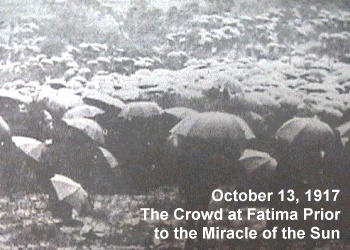 What is the point of trying to guess what will happen in the future; how and when we will die? Only God knows what will happen. Doing our duty of state faithfully for the love of God is what Our Lord expects from us; let us leave the rest to His Holy Will. What matters is to know that Our Lord Jesus Christ has triumphed over death, that He rose again on Easter Sunday, that He is forever glorious in Heaven and that He is closely looking after us at every moment of our daily life. Our Lord has already been victorious over his enemies and He assures us that victory is ours too if we remain united to Him. Why worry about the future, then? May the light of Easter guide our path and give us a boundless trust in Our Lord’s Providence. Fr. FL This post has been edited by yeeck: Apr 10 2015, 10:45 PM |
|
|
Apr 11 2015, 01:55 AM
|
|
Senior Member
3,577 posts Joined: Apr 2006
|
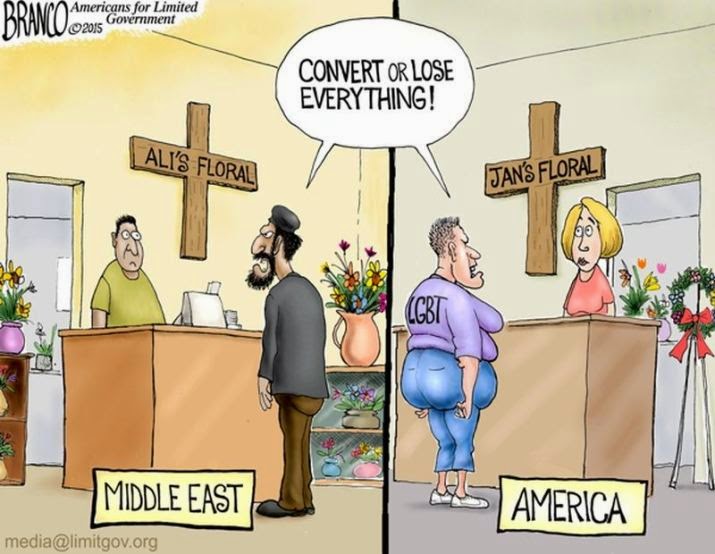 |
|
|
Apr 11 2015, 07:07 AM
|
Senior Member
1,699 posts Joined: Jun 2011 From: Home of Bak Kut Teh! :)
|
Oh wow didn't know there's a denomination branch outside the Christian community thread.
Fellow RC member reporting in |
|
|
Apr 11 2015, 04:08 PM
|
|
Senior Member
3,577 posts Joined: Apr 2006
|
QUOTE(sp6068 @ Apr 11 2015, 07:07 AM) Oh wow didn't know there's a denomination branch outside the Christian community thread. Parish?Fellow RC member reporting in |
|
|
Apr 11 2015, 04:25 PM
|
|
Senior Member
3,577 posts Joined: Apr 2006
|
THE TRUTH ABOUT COMMUNION IN THE HAND WHILE STANDING
Fr Richard Heilman April 8, 2015  In my efforts to restore a sense of the sacred in the liturgy, I have often been accused of being “pre-Vatican II.” I usually correct them by saying I am precisely Vatican II. The Second Vatican Council called for few changes in the liturgy, understanding that there had been a great many changes to the Roman liturgy over the centuries, to be sure, but they had been gradual and organic, and typically imperceptible. However, in all of church history, there was never anything like what happened in the years following this Council, in respect to the liturgy. This weekend we had our first Masses with the new Communion rail. After one of these Masses I was talking with one of the old guard parishioners (great guy), and he loved the rails. He told me that “years ago” (I love that expression), they had a Parish Council meeting, and Fr. X wanted to remove the side altars (along with many other alterations), in this beautiful church. The old guard parishioner said, “It was a hard fought battle that night, but we wore him down and he did only minor alterations.” I said, “My … how times have changed … that priest got criticized for trying to remove sacredness … now I’m getting criticized for trying to bring it back.” Since we were celebrating our new Communion rails, and the Gospel saw Peter, James and John fall prostrate before the presence of God – I deemed it a perfect time to shed some light on one of those post-Vatican II innovations – Communion in the hand while standing. We began with a little history lesson … AN INDULT BORN OUT OF DISOBEDIENCE The practice of receiving Holy Communion in the hand first began to spread in Catholic circles during the early 1960s, primarily in Holland. Shortly after Vatican II, due to the escalating abuses in certain non-English speaking countries (Holland, Belgium, France and Germany), Pope Paul VI took a survey of the world’s bishops to ascertain their opinions on the subject. On May 28, 1969 the Congregation for Divine Worship issued Memoriale Domini, which concluded: “From the responses received, it is thus clear that by far the greater number of bishops feel that the present discipline [i.e., Holy Communion on the tongue] should not be changed at all, indeed that if it were changed, this would be offensive to the sensibility and spiritual appreciation of these bishops and of most of the faithful.” After he had considered the observation and the counsel of the bishops, the Supreme Pontiff judged that the long-received manner of ministering Holy Communion to the faithful should not be changed. The Apostolic See then strongly urged bishops, priests and the laity to zealously observe this law out of concern for the common good of the Church. Despite the vote, in 1969 Pope Paul VI decided to strike a compromise with his disobedient bishops on the continent. Given “the gravity of the matter,” the pope would not authorize Communion in the hand. He was, however, open to bestowing an indult – an exception to the law – under certain conditions: first, an indult could not be given to a country in which Communion in the hand was not an already established practice; second, the bishops in countries where it was established must approve of the practice “by a secret vote and with a two-thirds majority.” Beyond this, the Holy See set down seven regulations concerning communion in the hand; failure to maintain these regulations could result in the loss of the indult. The first three regulations concerned: 1) respecting the laity who continue the traditional practice (of receiving kneeling and on the tongue), 2) maintaining the laity’s proper respect of the Eucharist, and 3) strengthening the laity’s faith in the real presence. CARDINAL BERNARDIN’S CAMPAIGN So how did Communion in the hand come to America? In 1975 and again in 1976, Archbishop Joseph Bernardin, the president of the National Conference of Catholic Bishops (NCCB) attempted in vain to garner two-thirds of the bishops to vote in favor of receiving Communion in the hand. The following year – which coincided with the end of Bernardin’s term as president – brought one final attempt. Bernadin appointed Archbishop Quinn, who became Bernardin’s immediate successor as NCCB president, to be the chief lobbyist for Communion in the hand. During the proceedings a brave bishop requested a survey of the bishops be taken – this survey would ask each bishop whether or not Communion in the hand was widely practiced in his diocese, for without the practice’s current wide-use the first condition of the indult would not be satisfied. *Of course, everyone knew that Communion in the hand was not a previously established practice in the United States. Though his request was seconded and supported in writing by five other bishops, Bernardin had the motion dismissed as “out of order.” The bishops then voted … only to once more fall short of the two-thirds majority. This, however, did not end the matter. Bernardin decided to (unlawfully) begin gathering “absentee votes” from any bishop he could find – including retired bishops who no longer administered any dioceses. Consequently, the number was adjusted to meet the two-thirds majority. POPE PAUL VI’S REGULATIONS – HAVE THEY BEEN MET? So, what about Pope Paul VI’s regulations that could result in the loss of the indult? 1) Respecting the laity who continue the traditional practice (of receiving kneeling and on the tongue) Reports are now widespread of priests refusing Communion to those who wish to receive kneeling and on the tongue. Even reports of priests berating people for this. A friend of mine said he was traveling and attended Mass where he proceeded to kneel and indicate that he wished to receive on the tongue. The minister of Holy Communion refused and ended up walking away from him. He remained. Finally, the priest came over and said, “Get up son, we don’t do it that way here.” My friend said, “So, you are refusing me Communion?” The priest said, “Yes I am.” He got up, walked out and reported him to the chancery. It is a severe infraction against canon law for any priest to do this. 2) Maintaining the laity’s proper respect of the Eucharist While I can relate to many of the following, here is a testimony from a Deacon: I’ve watched a mother receive communion, her toddler in tow, then take it back to the pew and share it with him like a cookie. At least four or five times a year, I have to stop someone who just takes the host and wanders away with it and ask them to consume it on the spot. Once or twice a month I encounter the droppers. Many are well-intentioned folks who somewhere, somehow drop the host or it slides out of their hands and Jesus tumbles to the floor. I’ve found the Eucharist in a hymnal, under a pew, in the bathroom and in the parking lot. The Vatican does not allow communion in the hand … one reason is because tourists were taking the Holy Eucharist home as a souvenir of their trip to Rome. Not too long ago, I was alerted to someone who did not consume the Host. After Mass I confronted the young man, and he pulled it out of his shirt pocket. It seems he wasn’t Catholic and didn’t believe, and so didn’t know what to do. But, I am very worried these days, with the rise of satanic cults who use the Eucharist in their rites. In fact, someone shared this story of his youth, as he admitted these satanic cults are everywhere now … “When I was in junior high I started hanging out and getting high with some of my older brothers’ friends. They would “play around” with ouija boards and tarot cards. They would get dropped off at “youth group” at church – go in the front door and out the back into the woods for sex, drugs, and booze. They would brand each other with pentagram rings and even sacrifice small animals. I never participated in it – cause I was the “little brother” – but they would talk about the Black Mass all the time. There was an older guy – our dealer – in his late twenties who claimed to be a wizard and showed us his pyx (I didn’t know what it was at the time) that he would use, because the priest at the Catholic Church he went to wouldn’t pay much attention, “well, they have a pyx, they must be legit!” He even said he could find hosts after most Masses on the floor or sometimes between hymnal pages, like bookmarks. I remember that, when he opened it to show us, he told us it was Jesus and that we were gonna “have a party” with him … well, I chickened out and went back to “youth” group – a couple nights later…our friend, after the “Jesus party” with the “wizard,” decapitated his sleeping aunt with a samurai sword because he “heard voices” telling him to … she was a regular Mass-attending woman; the only one left in the family. He’s locked up in a mental institution for life. When I started learning about Catholicism, I always remembered that awful time, and couldn’t – can’t – shake the feeling that my friend opened himself up to demonic possession by participating in the Black Mass that night…there were no drugs in his system when they arrested him that night.” 3) Strengthening the laity’s faith in the Real Presence: In 1950, 87% believed in the Real Presence. Today, that number has plummeted to a mere 34%. The abusive and hurried manner in which the practice of Communion in the hand was imposed after Vatican II lead to a widespread lack of reverence for the Eucharist and caused great pain for many in the Church. It disoriented many people, who with real justification — especially in light of the recent and overwhelming loss of faith in the Eucharist as the real presence — feared that the very heart of Catholic belief had been compromised. So, we see that Pope Paul VI’s regulations for maintaining the temporary indult are not even close to being realized. SCHOLARS AND SAINTS SPEAK Why Kneel? Pope Benedict XVI, has noted that kneeling is “an expression of Christian culture, which transforms the existing culture through a new and deeper knowledge and experience of God.” He reminds us that “the word proskynein alone occurs fifty-nine times in the New Testament, twenty-four of which are in the Apocalypse, the book of the heavenly liturgy, which is presented to the Church as the standard for her own liturgy.” In his book The Spirit of the Liturgy, Pope Benedict speaks of a “story that comes from the sayings of the Desert Fathers, according to which the devil was compelled by God to show himself to a certain Abba Apollo. He looked black and ugly, with frightening thin limbs, but, most strikingly, he had no knees. The inability to kneel is seen as the very essence of the diabolical.” WHY RECEIVE ON THE TONGUE? Despite the widespread practice of Communion in the hand, the universal discipline of receiving Holy Communion on the tongue has not changed. A bishop, for example, may forbid the practice of Communion in the hand but not the practice of Communion on the tongue. The Church strongly encourages the latter but not the former. With respect to Communion in the hand, the Church speaks only in a cautionary tone because of the many abuses that often accompany this practice. St. Thomas Aquinas reminds us, with respect to Communion in the hand … that reverence demands that only what has been consecrated should touch the Blessed Sacrament. He writes: “The dispensing of Christ’s body belongs to the priest for three reasons. First, because . . . he consecrates in the person of Christ . . . Secondly, because the priest is the appointed intermediary between God and the people, hence as it belongs to him to offer the people’s gifts to God, so it belongs to him to deliver the consecrated gifts to the people. Thirdly, because out of reverence toward this sacrament nothing touches it but what is consecrated, hence the corporal and the chalice are consecrated, and likewise the priest’s hands, for touching this sacrament. Hence it is not lawful for anyone else to touch it, except from necessity — for instance, if it were to fall upon the ground, or else in some other case of urgency.” In his apostolic letter Dominicae Cenae, Pope John Paul II also states: “How eloquent, therefore, even if not of ancient custom, is the rite of the anointing of the hands in our Latin ordination, as though precisely for these hands a special grace and power of the Holy Spirit is necessary. To touch the sacred species, and to distribute them with their own hands, is a privilege of the ordained, one which indicates an active participation in the ministry of the Eucharist.” Mother Teresa reportedly said, “Wherever I go in the whole world, the thing that makes me the saddest is watching people receive Communion in the hand.” Even the great Pope John Paul II reportedly said: “There is an apostolic letter on the existence of a special valid permission for this [Communion in the hand]. But I tell you that I am not in favor of this practice, nor do I recommend it.” BECOME LESS SO THAT YOU CAN THEN BECOME MORE. Communion on the tongue helps to foster a proper sense of reverence and piety. To step up to a communion rail, and kneel, and receive on the tongue, is an act of utter and unabashed humility. In that posture to receive the Body of Christ, you become less so that you can then become more. It requires a submission of will and clear knowledge of what you are doing, why you are doing it, and what is about to happen to you. Frankly, we should not only be humbled, but intimidated enough to ask ourselves if we are really spiritually ready to partake of the sacrament. Kneeling means you can’t just go up and receive without knowing how it’s properly done. It demands not only a sense of focus and purpose, but also something else, something that has eluded our worship for two generations … It demands a sense of the sacred. Just like Peter, James and John before our Transfigured Lord, it challenges us to kneel before wonder. It insists that we not only fully understand what is happening, but that we fully appreciate the breathtaking generosity behind it. It asks us to be mindful of what “Eucharist” really means: Thanksgiving. (Homily by Fr. Richard Heilman on March 16, 2014) Source: http://www.romancatholicman.com/the-truth-...while-standing/ |
|
|
Apr 11 2015, 04:46 PM
|
|
Senior Member
1,699 posts Joined: Jun 2011 From: Home of Bak Kut Teh! :)
|
QUOTE(yeeck @ Apr 11 2015, 04:08 PM) Parish? Divine Mercy Shah Alam. Feast Day tomorrow too. |
|
|
Apr 11 2015, 11:39 PM
|
|
Senior Member
3,577 posts Joined: Apr 2006
|
Beautifully done e-magazine. http://issuu.com/champion13/docs/spain_10-...631541/12269984
|
|
|
Apr 12 2015, 02:29 PM
|
|
Senior Member
3,577 posts Joined: Apr 2006
|
Why does the Church teach that works can obtain salvation?
Why does the Roman Catholic Church teach the doctrine of "works righteousness," that through good works one can earn salvation? Answer The Catholic Church has never taught such a doctrine and, in fact, has constantly condemned the notion that men can earn or merit salvation. Catholic soteriology (salvation theology) is rooted in apostolic Tradition and Scripture and says that it is only by God's grace--completely unmerited by works--that one is saved. The Church teaches that it's God's grace from beginning to end which justifies, sanctifies, and saves us. As Paul explains in Philippians 2:13, "God is the one, who, for his good purpose, works in you both to desire and to work." Notice that Paul's words presuppose that the faithful Christian is not just desiring to be righteous, but is actively working toward it. This is the second half of the justification equation, and Protestants either miss or ignore it. James 2:17 reminds us that "faith of itself, if it does not have work, is dead." In verse 24 James says, "See how a person is justified by works and not by faith alone." And later: "For just as a body without a spirit is dead, so also faith without works is dead" (2:26). The Council of Trent harmonizes the necessity of grace and works: "If anyone says that man can be justified before God by his own works, whether done by his own natural powers or by the teaching of the Law, without divine grace through Jesus Christ, let him be anathema" (Session 6; can. 1). The Council fathers continued by saying, "If anyone says that the sinner is justified by faith alone, meaning that nothing else is required to cooperate in order to obtain the grace of justification and that it is not in any way necessary that he be prepared and disposed by the action of his own will, let him be anathema" (Session 6: can. 9). By the way, "let him be anathema" means "let him be excommunicated," not "let him be cursed to hell." The phrase was used in conciliar documents in a technical, theological sense, not in the same sense as the word "anathema" is found in Scripture. Don't let "Bible Christians" throw you for a loop on this one. So, far from teaching a doctrine of "works righteousness" (that would be Pelagianism, which was condemned at the Council of Carthage in A.D. 418), the Catholic Church teaches the true, biblical doctrine of justification. Source: Catholic Answers |
|
|
Apr 12 2015, 11:49 PM
|
|
Senior Member
3,577 posts Joined: Apr 2006
|
Misericordiae Vultus
BULL OF INDICTION OF THE EXTRAORDINARY JUBILEE OF MERCY FRANCIS BISHOP OF ROME SERVANT OF THE SERVANTS OF GOD TO ALL WHO READ THIS LETTER GRACE, MERCY, AND PEACE 1. Jesus Christ is the face of the Father’s mercy. These words might well sum up the mystery of the Christian faith. Mercy has become living and visible in Jesus of Nazareth, reaching its culmination in him. The Father, “rich in mercy” (Eph 2:4), after having revealed his name to Moses as “a God merciful and gracious, slow to anger, and abounding in steadfast love and faithfulness” (Ex 34:6), has never ceased to show, in various ways throughout history, his divine nature. In the “fullness of time” (Gal 4:4), when everything had been arranged according to his plan of salvation, he sent his only Son into the world, born of the Virgin Mary, to reveal his love for us in a definitive way. Whoever sees Jesus sees the Father (cf. Jn 14:9). Jesus of Nazareth, by his words, his actions, and his entire person[1] reveals the mercy of God. 2. We need constantly to contemplate the mystery of mercy. It is a wellspring of joy, serenity, and peace. Our salvation depends on it. Mercy: the word reveals the very mystery of the Most Holy Trinity. Mercy: the ultimate and supreme act by which God comes to meet us. Mercy: the fundamental law that dwells in the heart of every person who looks sincerely into the eyes of his brothers and sisters on the path of life. Mercy: the bridge that connects God and man, opening our hearts to a hope of being loved forever despite our sinfulness. 3. At times we are called to gaze even more attentively on mercy so that we may become a more effective sign of the Father’s action in our lives. For this reason I have proclaimed an Extraordinary Jubilee of Mercy as a special time for the Church; a time when the witness of believers might grow stronger and more effective. The Holy Year will open on 8 December 2015, the Solemnity of the Immaculate Conception. This liturgical feast day recalls God’s action from the very beginning of the history of mankind. After the sin of Adam and Eve, God did not wish to leave humanity alone in the throes of evil. So he turned his gaze to Mary, holy and immaculate in love (cf. Eph 1:4), choosing her to be the Mother of man’s Redeemer. When faced with the gravity of sin, God responds with the fullness of mercy. Mercy will always be greater than any sin, and no one can place limits on the love of God who is ever ready to forgive. I will have the joy of opening the Holy Door on the Solemnity of the Immaculate Conception. On that day, the Holy Door will become a Door of Mercy through which anyone who enters will experience the love of God who consoles, pardons, and instils hope. On the following Sunday, the Third Sunday of Advent, the Holy Door of the Cathedral of Rome – that is, the Basilica of Saint John Lateran – will be opened. In the following weeks, the Holy Doors of the other Papal Basilicas will be opened. On the same Sunday, I will announce that in every local Church, at the cathedral – the mother church of the faithful in any particular area – or, alternatively, at the co-cathedral or another church of special significance, a Door of Mercy will be opened for the duration of the Holy Year. At the discretion of the local ordinary, a similar door may be opened at any Shrine frequented by large groups of pilgrims, since visits to these holy sites are so often grace-filled moments, as people discover a path to conversion. Every Particular Church, therefore, will be directly involved in living out this Holy Year as an extraordinary moment of grace and spiritual renewal. Thus the Jubilee will be celebrated both in Rome and in the Particular Churches as a visible sign of the Church’s universal communion. 4. I have chosen the date of 8 December because of its rich meaning in the recent history of the Church. In fact, I will open the Holy Door on the fiftieth anniversary of the closing of the Second Vatican Ecumenical Council. The Church feels a great need to keep this event alive. With the Council, the Church entered a new phase of her history. The Council Fathers strongly perceived, as a true breath of the Holy Spirit, a need to talk about God to men and women of their time in a more accessible way. The walls which too long had made the Church a kind of fortress were torn down and the time had come to proclaim the Gospel in a new way. It was a new phase of the same evangelization that had existed from the beginning. It was a fresh undertaking for all Christians to bear witness to their faith with greater enthusiasm and conviction. The Church sensed a responsibility to be a living sign of the Father’s love in the world. We recall the poignant words of Saint John XXIII when, opening the Council, he indicated the path to follow: “Now the Bride of Christ wishes to use the medicine of mercy rather than taking up arms of severity … The Catholic Church, as she holds high the torch of Catholic truth at this Ecumenical Council, wants to show herself a loving mother to all; patient, kind, moved by compassion and goodness toward her separated children.”[2] Blessed Paul VI spoke in a similar vein at the closing of the Council: “We prefer to point out how charity has been the principal religious feature of this Council … the old story of the Good Samaritan has been the model of the spirituality of the Council … a wave of affection and admiration flowed from the Council over the modern world of humanity. Errors were condemned, indeed, because charity demanded this no less than did truth, but for individuals themselves there was only admonition, respect and love. Instead of depressing diagnoses, encouraging remedies; instead of direful predictions, messages of trust issued from the Council to the present-day world. The modern world’s values were not only respected but honoured, its efforts approved, its aspirations purified and blessed … Another point we must stress is this: all this rich teaching is channeled in one direction, the service of mankind, of every condition, in every weakness and need.”[3] With these sentiments of gratitude for everything the Church has received, and with a sense of responsibility for the task that lies ahead, we shall cross the threshold of the Holy Door fully confident that the strength of the Risen Lord, who constantly supports us on our pilgrim way, will sustain us. May the Holy Spirit, who guides the steps of believers in cooperating with the work of salvation wrought by Christ, lead the way and support the People of God so that they may contemplate the face of mercy.[4] 5. The Jubilee year will close with the liturgical Solemnity of Christ the King on 20 November 2016. On that day, as we seal the Holy Door, we shall be filled, above all, with a sense of gratitude and thanksgiving to the Most Holy Trinity for having granted us an extraordinary time of grace. We will entrust the life of the Church, all humanity, and the entire cosmos to the Lordship of Christ, asking him to pour out his mercy upon us like the morning dew, so that everyone may work together to build a brighter future. How much I desire that the year to come will be steeped in mercy, so that we can go out to every man and woman, bringing the goodness and tenderness of God! May the balm of mercy reach everyone, both believers and those far away, as a sign that the Kingdom of God is already present in our midst! 6. “It is proper to God to exercise mercy, and he manifests his omnipotence particularly in this way.”[5] Saint Thomas Aquinas’ words show that God’s mercy, rather than a sign of weakness, is the mark of his omnipotence. For this reason the liturgy, in one of its most ancient collects, has us pray: “O God, who reveal your power above all in your mercy and forgiveness…”[6] Throughout the history of humanity, God will always be the One who is present, close, provident, holy, and merciful. “Patient and merciful.” These words often go together in the Old Testament to describe God’s nature. His being merciful is concretely demonstrated in his many actions throughout the history of salvation where his goodness prevails over punishment and destruction. In a special way the Psalms bring to the fore the grandeur of his merciful action: “He forgives all your iniquity, he heals all your diseases, he redeems your life from the pit, he crowns you with steadfast love and mercy” (Ps 103:3-4). Another psalm, in an even more explicit way, attests to the concrete signs of his mercy: “He secures justice for the oppressed; he gives food to the hungry. The Lord sets the prisoners free; the Lord opens the eyes of the blind. The Lord lifts up those who are bowed down; the Lord loves the righteous. The Lord watches over the sojourners, he upholds the widow and the fatherless; but the way of the wicked he brings to ruin” (Ps 146:7-9). Here are some other expressions of the Psalmist: “He heals the brokenhearted, and binds up their wounds … The Lord lifts up the downtrodden, he casts the wicked to the ground” (Ps 147:3, 6). In short, the mercy of God is not an abstract idea, but a concrete reality through which he reveals his love as that of a father or a mother, moved to the very depths out of love for their child. It is hardly an exaggeration to say that this is a “visceral” love. It gushes forth from the depths naturally, full of tenderness and compassion, indulgence and mercy. 7. “For his mercy endures forever.” This is the refrain repeated after each verse in Psalm 136 as it narrates the history of God’s revelation. By virtue of mercy, all the events of the Old Testament are replete with profound salvific import. Mercy renders God’s history with Israel a history of salvation. To repeat continually “for his mercy endures forever,” as the psalm does, seems to break through the dimensions of space and time, inserting everything into the eternal mystery of love. It is as if to say that not only in history, but for all eternity man will always be under the merciful gaze of the Father. It is no accident that the people of Israel wanted to include this psalm – the “Great Hallel,” as it is called – in its most important liturgical feast days. Before his Passion, Jesus prayed with this psalm of mercy. Matthew attests to this in his Gospel when he says that, “when they had sung a hymn” (26:30), Jesus and his disciples went out to the Mount of Olives. While he was instituting the Eucharist as an everlasting memorial of himself and his paschal sacrifice, he symbolically placed this supreme act of revelation in the light of his mercy. Within the very same context of mercy, Jesus entered upon his passion and death, conscious of the great mystery of love that he would consummate on the cross. Knowing that Jesus himself prayed this psalm makes it even more important for us as Christians, challenging us to take up the refrain in our daily lives by praying these words of praise: “for his mercy endures forever.” 8. With our eyes fixed on Jesus and his merciful gaze, we experience the love of the Most Holy Trinity. The mission Jesus received from the Father was that of revealing the mystery of divine love in its fullness. “God is love” (1 Jn 4:8,16), John affirms for the first and only time in all of Holy Scripture. This love has now been made visible and tangible in Jesus’ entire life. His person is nothing but love, a love given gratuitously. The relationships he forms with the people who approach him manifest something entirely unique and unrepeatable. The signs he works, especially in the face of sinners, the poor, the marginalized, the sick, and the suffering, are all meant to teach mercy. Everything in him speaks of mercy. Nothing in him is devoid of compassion. Jesus, seeing the crowds of people who followed him, realized that they were tired and exhausted, lost and without a guide, and he felt deep compassion for them (cf. Mt 9:36). On the basis of this compassionate love he healed the sick who were presented to him (cf. Mt 14:14), and with just a few loaves of bread and fish he satisfied the enormous crowd (cf. Mt 15:37). What moved Jesus in all of these situations was nothing other than mercy, with which he read the hearts of those he encountered and responded to their deepest need. When he came upon the widow of Naim taking her son out for burial, he felt great compassion for the immense suffering of this grieving mother, and he gave back her son by raising him from the dead (cf. Lk 7:15). After freeing the demoniac in the country of the Gerasenes, Jesus entrusted him with this mission: “Go home to your friends, and tell them how much the Lord has done for you, and how he has had mercy on you” (Mk 5:19). The calling of Matthew is also presented within the context of mercy. Passing by the tax collector’s booth, Jesus looked intently at Matthew. It was a look full of mercy that forgave the sins of that man, a sinner and a tax collector, whom Jesus chose – against the hesitation of the disciples – to become one of the Twelve. Saint Bede the Venerable, commenting on this Gospel passage, wrote that Jesus looked upon Matthew with merciful love and chose him: miserando atque eligendo.[7] This expression impressed me so much that I chose it for my episcopal motto. 9. In the parables devoted to mercy, Jesus reveals the nature of God as that of a Father who never gives up until he has forgiven the wrong and overcome rejection with compassion and mercy. We know these parables well, three in particular: the lost sheep, the lost coin, and the father with two sons (cf. Lk 15:1-32). In these parables, God is always presented as full of joy, especially when he pardons. In them we find the core of the Gospel and of our faith, because mercy is presented as a force that overcomes everything, filling the heart with love and bringing consolation through pardon. From another parable, we cull an important teaching for our Christian lives. In reply to Peter’s question about how many times it is necessary to forgive, Jesus says: “I do not say seven times, but seventy times seventy times” (Mt 18:22). He then goes on to tell the parable of the “ruthless servant,” who, called by his master to return a huge amount, begs him on his knees for mercy. His master cancels his debt. But he then meets a fellow servant who owes him a few cents and who in turn begs on his knees for mercy, but the first servant refuses his request and throws him into jail. When the master hears of the matter, he becomes infuriated and, summoning the first servant back to him, says, “Should not you have had mercy on your fellow servant, as I had mercy on you?” (Mt 18:33). Jesus concludes, “So also my heavenly Father will do to every one of you, if you do not forgive your brother from your heart” (Mt 18:35). This parable contains a profound teaching for all of us. Jesus affirms that mercy is not only an action of the Father, it becomes a criterion for ascertaining who his true children are. In short, we are called to show mercy because mercy has first been shown to us. Pardoning offences becomes the clearest expression of merciful love, and for us Christians it is an imperative from which we cannot excuse ourselves. At times how hard it seems to forgive! And yet pardon is the instrument placed into our fragile hands to attain serenity of heart. To let go of anger, wrath, violence, and revenge are necessary conditions to living joyfully. Let us therefore heed the Apostle’s exhortation: “Do not let the sun go down on your anger” (Eph 4:26). Above all, let us listen to the words of Jesus who made mercy as an ideal of life and a criterion for the credibility of our faith: “Blessed are the merciful, for they shall obtain mercy” (Mt 5:7): the beatitude to which we should particularly aspire in this Holy Year. As we can see in Sacred Scripture, mercy is a key word that indicates God’s action towards us. He does not limit himself merely to affirming his love, but makes it visible and tangible. Love, after all, can never be just an abstraction. By its very nature, it indicates something concrete: intentions, attitudes, and behaviours that are shown in daily living. The mercy of God is his loving concern for each one of us. He feels responsible; that is, he desires our wellbeing and he wants to see us happy, full of joy, and peaceful. This is the path which the merciful love of Christians must also travel. As the Father loves, so do his children. Just as he is merciful, so we are called to be merciful to each other. 10. Mercy is the very foundation of the Church’s life. All of her pastoral activity should be caught up in the tenderness she makes present to believers; nothing in her preaching and in her witness to the world can be lacking in mercy. The Church’s very credibility is seen in how she shows merciful and compassionate love. The Church “has an endless desire to show mercy.”[8] Perhaps we have long since forgotten how to show and live the way of mercy. The temptation, on the one hand, to focus exclusively on justice made us forget that this is only the first, albeit necessary and indispensable step. But the Church needs to go beyond and strive for a higher and more important goal. On the other hand, sad to say, we must admit that the practice of mercy is waning in the wider culture. It some cases the word seems to have dropped out of use. However, without a witness to mercy, life becomes fruitless and sterile, as if sequestered in a barren desert. The time has come for the Church to take up the joyful call to mercy once more. It is time to return to the basics and to bear the weaknesses and struggles of our brothers and sisters. Mercy is the force that reawakens us to new life and instils in us the courage to look to the future with hope. 11. Let us not forget the great teaching offered by Saint John Paul II in his second Encyclical, Dives in Misericordia, which at the time came unexpectedly, its theme catching many by surprise. There are two passages in particular to which I would like to draw attention. First, Saint John Paul II highlighted the fact that we had forgotten the theme of mercy in today’s cultural milieu: “The present-day mentality, more perhaps than that of people in the past, seems opposed to a God of mercy, and in fact tends to exclude from life and to remove from the human heart the very idea of mercy. The word and the concept of ‘mercy’ seem to cause uneasiness in man, who, thanks to the enormous development of science and technology, never before known in history, has become the master of the earth and has subdued and dominated it (cf. Gen 1:28). This dominion over the earth, sometimes understood in a one-sided and superficial way, seems to have no room for mercy … And this is why, in the situation of the Church and the world today, many individuals and groups guided by a lively sense of faith are turning, I would say almost spontaneously, to the mercy of God.”[9] Furthermore, Saint John Paul II pushed for a more urgent proclamation and witness to mercy in the contemporary world: “It is dictated by love for man, for all that is human and which, according to the intuitions of many of our contemporaries, is threatened by an immense danger. The mystery of Christ … obliges me to proclaim mercy as God’s merciful love, revealed in that same mystery of Christ. It likewise obliges me to have recourse to that mercy and to beg for it at this difficult, critical phase of the history of the Church and of the world.”[10] This teaching is more pertinent than ever and deserves to be taken up once again in this Holy Year. Let us listen to his words once more: “The Church lives an authentic life when she professes and proclaims mercy – the most stupendous attribute of the Creator and of the Redeemer – and when she brings people close to the sources of the Saviour’s mercy, of which she is the trustee and dispenser.”[11] 12. The Church is commissioned to announce the mercy of God, the beating heart of the Gospel, which in its own way must penetrate the heart and mind of every person. The Spouse of Christ must pattern her behaviour after the Son of God who went out to everyone without exception. In the present day, as the Church is charged with the task of the new evangelization, the theme of mercy needs to be proposed again and again with new enthusiasm and renewed pastoral action. It is absolutely essential for the Church and for the credibility of her message that she herself live and testify to mercy. Her language and her gestures must transmit mercy, so as to touch the hearts of all people and inspire them once more to find the road that leads to the Father. The Church’s first truth is the love of Christ. The Church makes herself a servant of this love and mediates it to all people: a love that forgives and expresses itself in the gift of one’s self. Consequently, wherever the Church is present, the mercy of the Father must be evident. In our parishes, communities, associations and movements, in a word, wherever there are Christians, everyone should find an oasis of mercy. 13. We want to live this Jubilee Year in light of the Lord’s words: Merciful like the Father. The Evangelist reminds us of the teaching of Jesus who says, “Be merciful just as your Father is merciful” (Lk 6:36). It is a programme of life as demanding as it is rich with joy and peace. Jesus’s command is directed to anyone willing to listen to his voice (cf. Lk 6:27). In order to be capable of mercy, therefore, we must first of all dispose ourselves to listen to the Word of God. This means rediscovering the value of silence in order to meditate on the Word that comes to us. In this way, it will be possible to contemplate God’s mercy and adopt it as our lifestyle. 14. The practice of pilgrimage has a special place in the Holy Year, because it represents the journey each of us makes in this life. Life itself is a pilgrimage, and the human being is a viator, a pilgrim travelling along the road, making his way to the desired destination. Similarly, to reach the Holy Door in Rome or in any other place in the world, everyone, each according to his or her ability, will have to make a pilgrimage. This will be a sign that mercy is also a goal to reach and requires dedication and sacrifice. May pilgrimage be an impetus to conversion: by crossing the threshold of the Holy Door, we will find the strength to embrace God’s mercy and dedicate ourselves to being merciful with others as the Father has been with us. The Lord Jesus shows us the steps of the pilgrimage to attain our goal: “Judge not, and you will not be judged; condemn not, and you will not be condemned; forgive, and you will be forgiven; give, and it will be given to you; good measure, pressed down, shaken together, running over, will be put into your lap. For the measure you give will be the measure you get back” (Lk 6:37-38). The Lord asks us above all not to judge and not to condemn. If anyone wishes to avoid God’s judgement, he should not make himself the judge of his brother or sister. Human beings, whenever they judge, look no farther than the surface, whereas the Father looks into the very depths of the soul. How much harm words do when they are motivated by feelings of jealousy and envy! To speak ill of others puts them in a bad light, undermines their reputation and leaves them prey to the whims of gossip. To refrain from judgement and condemnation means, in a positive sense, to know how to accept the good in every person and to spare him any suffering that might be caused by our partial judgment and our presumption to know everything about him. But this is still not sufficient to express mercy. Jesus asks us also to forgive and to give. To be instruments of mercy because it was we who first received mercy from God. To be generous with others, knowing that God showers his goodness upon us with immense generosity. Merciful like the Father, therefore, is the “motto” of this Holy Year. In mercy, we find proof of how God loves us. He gives his entire self, always, freely, asking nothing in return. He comes to our aid whenever we call upon him. What a beautiful thing that the Church begins her daily prayer with the words, “O God, come to my assistance. O Lord, make haste to help me” (Ps 70:2)! The assistance we ask for is already the first step of God’s mercy toward us. He comes to assist us in our weakness. And his help consists in helping us accept his presence and closeness to us. Day after day, touched by his compassion, we also can become compassionate towards others. 15. In this Holy Year, we look forward to the experience of opening our hearts to those living on the outermost fringes of society: fringes modern society itself creates. How many uncertain and painful situations there are in the world today! How many are the wounds borne by the flesh of those who have no voice because their cry is muffled and drowned out by the indifference of the rich! During this Jubilee, the Church will be called even more to heal these wounds, to assuage them with the oil of consolation, to bind them with mercy and cure them with solidarity and vigilant care. Let us not fall into humiliating indifference or a monotonous routine that prevents us from discovering what is new! Let us ward off destructive cynicism! Let us open our eyes and see the misery of the world, the wounds of our brothers and sisters who are denied their dignity, and let us recognize that we are compelled to heed their cry for help! May we reach out to them and support them so they can feel the warmth of our presence, our friendship, and our fraternity! May their cry become our own, and together may we break down the barriers of indifference that too often reign supreme and mask our hypocrisy and egoism! It is my burning desire that, during this Jubilee, the Christian people may reflect on the corporal and spiritual works of mercy. It will be a way to reawaken our conscience, too often grown dull in the face of poverty. And let us enter more deeply into the heart of the Gospel where the poor have a special experience of God’s mercy. Jesus introduces us to these works of mercy in his preaching so that we can know whether or not we are living as his disciples. Let us rediscover these corporal works of mercy: to feed the hungry, give drink to the thirsty, clothe the naked, welcome the stranger, heal the sick, visit the imprisoned, and bury the dead. And let us not forget the spiritual works of mercy: to counsel the doubtful, instruct the ignorant, admonish sinners, comfort the afflicted, forgive offences, bear patiently those who do us ill, and pray for the living and the dead. We cannot escape the Lord’s words to us, and they will serve as the criteria upon which we will be judged: whether we have fed the hungry and given drink to the thirsty, welcomed the stranger and clothed the naked, or spent time with the sick and those in prison (cf. Mt 25:31-45). Moreover, we will be asked if we have helped others to escape the doubt that causes them to fall into despair and which is often a source of loneliness; if we have helped to overcome the ignorance in which millions of people live, especially children deprived of the necessary means to free them from the bonds of poverty; if we have been close to the lonely and afflicted; if we have forgiven those who have offended us and have rejected all forms of anger and hate that lead to violence; if we have had the kind of patience God shows, who is so patient with us; and if we have commended our brothers and sisters to the Lord in prayer. In each of these “little ones,” Christ himself is present. His flesh becomes visible in the flesh of the tortured, the crushed, the scourged, the malnourished, and the exiled … to be acknowledged, touched, and cared for by us. Let us not forget the words of Saint John of the Cross: “as we prepare to leave this life, we will be judged on the basis of love.”[12] 16. In the Gospel of Luke, we find another important element that will help us live the Jubilee with faith. Luke writes that Jesus, on the Sabbath, went back to Nazareth and, as was his custom, entered the synagogue. They called upon him to read the Scripture and to comment on it. The passage was from the Book of Isaiah where it is written: “The Spirit of the Lord God is upon me, because the Lord has anointed me to bring good tidings to the afflicted; he has sent me to bind up the brokenhearted, to proclaim liberty to the captives, and freedom to those in captivity; to proclaim the year of the Lord’s favour” (Is 61:1-2). A “year of the Lord’s favour” or “mercy”: this is what the Lord proclaimed and this is what we wish to live now. This Holy Year will bring to the fore the richness of Jesus’ mission echoed in the words of the prophet: to bring a word and gesture of consolation to the poor, to proclaim liberty to those bound by new forms of slavery in modern society, to restore sight to those who can see no more because they are caught up in themselves, to restore dignity to all those from whom it has been robbed. The preaching of Jesus is made visible once more in the response of faith Christians are called to offer by their witness. May the words of the Apostle accompany us: He who does acts of mercy, let him do them with cheerfulness (cf. Rom 12:8). 17. The season of Lent during this Jubilee Year should also be lived more intensely as a privileged moment to celebrate and experience God’s mercy. How many pages of Sacred Scripture are appropriate for meditation during the weeks of Lent to help us rediscover the merciful face of the Father! We can repeat the words of the prophet Micah and make them our own: You, O Lord, are a God who takes away iniquity and pardons sin, who does not hold your anger forever, but are pleased to show mercy. You, Lord, will return to us and have pity on your people. You will trample down our sins and toss them into the depths of the sea (cf. 7:18-19). The pages of the prophet Isaiah can also be meditated upon concretely during this season of prayer, fasting, and works of charity: “Is not this the fast that I choose: to loosen the bonds of wickedness, to undo the thongs of the yoke, to let the oppressed go free, and to break every yoke? Is it not to share your bread with the hungry, and bring the homeless poor into your house; when you see the naked, to cover him, and not to hide yourself from your own flesh? Then shall your light break forth like the dawn, and your healing shall spring up speedily; your righteousness shall go before you, the glory of the Lord shall be your rear guard. Then you shall call, and the Lord will answer; you shall cry, and he will say, here I am. If you take away from the midst of you the yoke, the pointing of the finger, and speaking wickedness, if you pour yourself out for the hungry and satisfy the desire of the afflicted, then shall your light rise in the darkness and your gloom be as the noonday. And the Lord will guide you continually, and satisfy your desire with good things, and make your bones strong; and you shall be like a watered garden, like a spring of water, whose waters fail not” (58:6-11). The initiative of “24 Hours for the Lord,” to be celebrated on the Friday and Saturday preceding the Fourth Week of Lent, should be implemented in every diocese. So many people, including the youth, are returning to the Sacrament of Reconciliation; through this experience they are rediscovering a path back to the Lord, living a moment of intense prayer and finding meaning in their lives. Let us place the Sacrament of Reconciliation at the centre once more in such a way that it will enable people to touch the grandeur of God’s mercy with their own hands. For every penitent, it will be a source of true interior peace. I will never tire of insisting that confessors be authentic signs of the Father’s mercy. We do not become good confessors automatically. We become good confessors when, above all, we allow ourselves to be penitents in search of his mercy. Let us never forget that to be confessors means to participate in the very mission of Jesus to be a concrete sign of the constancy of divine love that pardons and saves. We priests have received the gift of the Holy Spirit for the forgiveness of sins, and we are responsible for this. None of us wields power over this Sacrament; rather, we are faithful servants of God’s mercy through it. Every confessor must accept the faithful as the father in the parable of the prodigal son: a father who runs out to meet his son despite the fact that he has squandered away his inheritance. Confessors are called to embrace the repentant son who comes back home and to express the joy of having him back again. Let us never tire of also going out to the other son who stands outside, incapable of rejoicing, in order to explain to him that his judgment is severe and unjust and meaningless in light of the father’s boundless mercy. May confessors not ask useless questions, but like the father in the parable, interrupt the speech prepared ahead of time by the prodigal son, so that confessors will learn to accept the plea for help and mercy gushing from the heart of every penitent. In short, confessors are called to be a sign of the primacy of mercy always, everywhere, and in every situation, no matter what. 18. During Lent of this Holy Year, I intend to send out Missionaries of Mercy. They will be a sign of the Church’s maternal solicitude for the People of God, enabling them to enter the profound richness of this mystery so fundamental to the faith. There will be priests to whom I will grant the authority to pardon even those sins reserved to the Holy See, so that the breadth of their mandate as confessors will be even clearer. They will be, above all, living signs of the Father’s readiness to welcome those in search of his pardon. They will be missionaries of mercy because they will be facilitators of a truly human encounter, a source of liberation, rich with responsibility for overcoming obstacles and taking up the new life of Baptism again. They will be led in their mission by the words of the Apostle: “For God has consigned all men to disobedience, that he may have mercy upon all” (Rom 11:32). Everyone, in fact, without exception, is called to embrace the call to mercy. May these Missionaries live this call with the assurance that they can fix their eyes on Jesus, “the merciful and faithful high priest in the service of God” (Heb 2:17). I ask my brother Bishops to invite and welcome these Missionaries so that they can be, above all, persuasive preachers of mercy. May individual dioceses organize “missions to the people” in such a way that these Missionaries may be heralds of joy and forgiveness. Bishops are asked to celebrate the Sacrament of Reconciliation with their people so that the time of grace offered by the Jubilee Year will make it possible for many of God’s sons and daughters to take up once again the journey to the Father’s house. May pastors, especially during the liturgical season of Lent, be diligent in calling back the faithful “to the throne of grace, that we may receive mercy and find grace” (Heb 4:16). 19. May the message of mercy reach everyone, and may no one be indifferent to the call to experience mercy. I direct this invitation to conversion even more fervently to those whose behaviour distances them from the grace of God. I particularly have in mind men and women belonging to criminal organizations of any kind. For their own good, I beg them to change their lives. I ask them this in the name of the Son of God who, though rejecting sin, never rejected the sinner. Do not fall into the terrible trap of thinking that life depends on money and that, in comparison with money, anything else is devoid of value or dignity. This is nothing but an illusion! We cannot take money with us into the life beyond. Money does not bring us happiness. Violence inflicted for the sake of amassing riches soaked in blood makes one neither powerful nor immortal. Everyone, sooner or later, will be subject to God’s judgment, from which no one can escape. The same invitation is extended to those who either perpetrate or participate in corruption. This festering wound is a grave sin that cries out to heaven for vengeance, because it threatens the very foundations of personal and social life. Corruption prevents us from looking to the future with hope, because its tyrannical greed shatters the plans of the weak and tramples upon the poorest of the poor. It is an evil that embeds itself into the actions of everyday life and spreads, causing great public scandal. Corruption is a sinful hardening of the heart that replaces God with the illusion that money is a form of power. It is a work of darkness, fed by suspicion and intrigue. Corruptio optimi pessima, Saint Gregory the Great said with good reason, affirming that no one can think himself immune from this temptation. If we want to drive it out from personal and social life, we need prudence, vigilance, loyalty, transparency, together with the courage to denounce any wrongdoing. If it is not combated openly, sooner or later everyone will become an accomplice to it, and it will end up destroying our very existence. This is the opportune moment to change our lives! This is the time to allow our hearts to be touched! When confronted with evil deeds, even in the face of serious crimes, it is the time to listen to the cry of innocent people who are deprived of their property, their dignity, their feelings, and even their very lives. To stick to the way of evil will only leave one deluded and sad. True life is something entirely different. God never tires of reaching out to us. He is always ready to listen, as I am too, along with my brother bishops and priests. All one needs to do is to accept the invitation to conversion and submit oneself to justice during this special time of mercy offered by the Church. 20. It would not be out of place at this point to recall the relationship between justice and mercy. These are not two contradictory realities, but two dimensions of a single reality that unfolds progressively until it culminates in the fullness of love. Justice is a fundamental concept for civil society, which is meant to be governed by the rule of law. Justice is also understood as that which is rightly due to each individual. In the Bible, there are many references to divine justice and to God as “judge”. In these passages, justice is understood as the full observance of the Law and the behaviour of every good Israelite in conformity with God’s commandments. Such a vision, however, has not infrequently led to legalism by distorting the original meaning of justice and obscuring its profound value. To overcome this legalistic perspective, we need to recall that in Sacred Scripture, justice is conceived essentially as the faithful abandonment of oneself to God’s will. For his part, Jesus speaks several times of the importance of faith over and above the observance of the law. It is in this sense that we must understand his words when, reclining at table with Matthew and other tax collectors and sinners, he says to the Pharisees raising objections to him, “Go and learn the meaning of ‘I desire mercy not sacrifice.’ I have come not to call the righteous, but sinners.” (Mt 9:13). Faced with a vision of justice as the mere observance of the law that judges people simply by dividing them into two groups – the just and sinners – Jesus is bent on revealing the great gift of mercy that searches out sinners and offers them pardon and salvation. One can see why, on the basis of such a liberating vision of mercy as a source of new life, Jesus was rejected by the Pharisees and the other teachers of the law. In an attempt to remain faithful to the law, they merely placed burdens on the shoulders of others and undermined the Father’s mercy. The appeal to a faithful observance of the law must not prevent attention from being given to matters that touch upon the dignity of the person. The appeal Jesus makes to the text from the book of the prophet Hosea – “I desire love and not sacrifice” (6:6) – is important in this regard. Jesus affirms that, from that time onward, the rule of life for his disciples must place mercy at the centre, as Jesus himself demonstrated by sharing meals with sinners. Mercy, once again, is revealed as a fundamental aspect of Jesus’ mission. This is truly challenging to his hearers, who would draw the line at a formal respect for the law. Jesus, on the other hand, goes beyond the law; the company he keeps with those the law considers sinners makes us realize the depth of his mercy. The Apostle Paul makes a similar journey. Prior to meeting Jesus on the road to Damascus, he dedicated his life to pursuing the justice of the law with zeal (cf. Phil 3:6). His conversion to Christ led him to turn that vision upside down, to the point that he would write to the Galatians: “We have believed in Christ Jesus, in order to be justified by faith in Christ, and not by works of the law, because by works of the law shall no one be justified” (2:16). Paul’s understanding of justice changes radically. He now places faith first, not justice. Salvation comes not through the observance of the law, but through faith in Jesus Christ, who in his death and resurrection brings salvation together with a mercy that justifies. God’s justice now becomes the liberating force for those oppressed by slavery to sin and its consequences. God’s justice is his mercy (cf. Ps 51:11-16). 21. Mercy is not opposed to justice but rather expresses God’s way of reaching out to the sinner, offering him a new chance to look at himself, convert, and believe. The experience of the prophet Hosea can help us see the way in which mercy surpasses justice. The era in which the prophet lived was one of the most dramatic in the history of the Jewish people. The kingdom was tottering on the edge of destruction; the people had not remained faithful to the covenant; they had wandered from God and lost the faith of their forefathers. According to human logic, it seems reasonable for God to think of rejecting an unfaithful people; they had not observed their pact with God and therefore deserved just punishment: in other words, exile. The prophet’s words attest to this: “They shall not return to the land of Egypt, and Assyria shall be their king, because they have refused to return to me” (Hos 11:5). And yet, after this invocation of justice, the prophet radically changes his speech and reveals the true face of God: “How can I give you up, O Ephraim! How can I hand you over, O Israel! How can I make you like Admah! How can I treat you like Zeboiim! My heart recoils within me, my compassion grows warm and tender. I will not execute my fierce anger, I will not again destroy Ephraim; for I am God and not man, the Holy One in your midst, and I will not come to destroy” (11:8-9). Saint Augustine, almost as if he were commenting on these words of the prophet, says: “It is easier for God to hold back anger than mercy.”[13] And so it is. God’s anger lasts but a moment, his mercy forever. If God limited himself to only justice, he would cease to be God, and would instead be like human beings who ask merely that the law be respected. But mere justice is not enough. Experience shows that an appeal to justice alone will result in its destruction. This is why God goes beyond justice with his mercy and forgiveness. Yet this does not mean that justice should be devalued or rendered superfluous. On the contrary: anyone who makes a mistake must pay the price. However, this is just the beginning of conversion, not its end, because one begins to feel the tenderness and mercy of God. God does not deny justice. He rather envelopes it and surpasses it with an even greater event in which we experience love as the foundation of true justice. We must pay close attention to what Saint Paul says if we want to avoid making the same mistake for which he reproaches the Jews of his time: For, “being ignorant of the righteousness that comes from God, and seeking to establish their own, they did not submit to God’s righteousness. For Christ is the end of the law, that everyone who has faith may be justified” (Rom 10:3-4). God’s justice is his mercy given to everyone as a grace that flows from the death and resurrection of Jesus Christ. Thus the Cross of Christ is God’s judgement on all of us and on the whole world, because through it he offers us the certitude of love and new life. 22. A Jubilee also entails the granting of indulgences. This practice will acquire an even more important meaning in the Holy Year of Mercy. God’s forgiveness knows no bounds. In the death and resurrection of Jesus Christ, God makes even more evident his love and its power to destroy all human sin. Reconciliation with God is made possible through the paschal mystery and the mediation of the Church. Thus God is always ready to forgive, and he never tires of forgiving in ways that are continually new and surprising. Nevertheless, all of us know well the experience of sin. We know that we are called to perfection (cf. Mt 5:48), yet we feel the heavy burden of sin. Though we feel the transforming power of grace, we also feel the effects of sin typical of our fallen state. Despite being forgiven, the conflicting consequences of our sins remain. In the Sacrament of Reconciliation, God forgives our sins, which he truly blots out; and yet sin leaves a negative effect on the way we think and act. But the mercy of God is stronger than even this. It becomes indulgence on the part of the Father who, through the Bride of Christ, his Church, reaches the pardoned sinner and frees him from every residue left by the consequences of sin, enabling him to act with charity, to grow in love rather than to fall back into sin. The Church lives within the communion of the saints. In the Eucharist, this communion, which is a gift from God, becomes a spiritual union binding us to the saints and blessed ones whose number is beyond counting (cf. Rev 7:4). Their holiness comes to the aid of our weakness in a way that enables the Church, with her maternal prayers and her way of life, to fortify the weakness of some with the strength of others. Hence, to live the indulgence of the Holy Year means to approach the Father’s mercy with the certainty that his forgiveness extends to the entire life of the believer. To gain an indulgence is to experience the holiness of the Church, who bestows upon all the fruits of Christ’s redemption, so that God’s love and forgiveness may extend everywhere. Let us live this Jubilee intensely, begging the Father to forgive our sins and to bathe us in His merciful “indulgence.” 23. There is an aspect of mercy that goes beyond the confines of the Church. It relates us to Judaism and Islam, both of which consider mercy to be one of God’s most important attributes. Israel was the first to receive this revelation which continues in history as the source of an inexhaustible richness meant to be shared with all mankind. As we have seen, the pages of the Old Testament are steeped in mercy, because they narrate the works that the Lord performed in favour of his people at the most trying moments of their history. Among the privileged names that Islam attributes to the Creator are “Merciful and Kind.” This invocation is often on the lips of faithful Muslims who feel themselves accompanied and sustained by mercy in their daily weakness. They too believe that no one can place a limit on divine mercy because its doors are always open. I trust that this Jubilee year celebrating the mercy of God will foster an encounter with these religions and with other noble religious traditions; may it open us to even more fervent dialogue so that we might know and understand one another better; may it eliminate every form of closed-mindedness and disrespect, and drive out every form of violence and discrimination. 24. My thoughts now turn to the Mother of Mercy. May the sweetness of her countenance watch over us in this Holy Year, so that all of us may rediscover the joy of God’s tenderness. No one has penetrated the profound mystery of the incarnation like Mary. Her entire life was patterned after the presence of mercy made flesh. The Mother of the Crucified and Risen One has entered the sanctuary of divine mercy because she participated intimately in the mystery of his love. Chosen to be the Mother of the Son of God, Mary, from the outset, was prepared by the love of God to be the Ark of the Covenant between God and man. She treasured divine mercy in her heart in perfect harmony with her Son Jesus. Her hymn of praise, sung at the threshold of the home of Elizabeth, was dedicated to the mercy of God which extends from “generation to generation” (Lk 1:50). We too were included in those prophetic words of the Virgin Mary. This will be a source of comfort and strength to us as we cross the threshold of the Holy Year to experience the fruits of divine mercy. At the foot of the cross, Mary, together with John, the disciple of love, witnessed the words of forgiveness spoken by Jesus. This supreme expression of mercy towards those who crucified him show us the point to which the mercy of God can reach. Mary attests that the mercy of the Son of God knows no bounds and extends to everyone, without exception. Let us address her in the words of the Salve Regina, a prayer ever ancient and new, so that she may never tire of turning her merciful eyes towards us, and make us worthy to contemplate the face of mercy, her Son Jesus. Our prayer also extends to the saints and blessed ones who made divine mercy their mission in life. I am especially thinking of the great apostle of mercy, Saint Faustina Kowalska. May she, who was called to enter the depths of divine mercy, intercede for us and obtain for us the grace of living and walking always according to the mercy of God and with an unwavering trust in his love. 25. I present, therefore, this Extraordinary Jubilee Year dedicated to living out in our daily lives the mercy which the Father constantly extends to all of us. In this Jubilee Year, let us allow God to surprise us. He never tires of throwing open the doors of his heart and repeats that he loves us and wants to share his love with us. The Church feels the urgent need to proclaim God’s mercy. Her life is authentic and credible only when she becomes a convincing herald of mercy. She knows that her primary task, especially at a moment full of great hopes and signs of contradiction, is to introduce everyone to the great mystery of God’s mercy by contemplating the face of Christ. The Church is called above all to be a credible witness to mercy, professing it and living it as the core of the revelation of Jesus Christ. From the heart of the Trinity, from the depths of the mystery of God, the great river of mercy wells up and overflows unceasingly. It is a spring that will never run dry, no matter how many people approach it. Every time someone is in need, he or she can approach it, because the mercy of God never ends. The profundity of the mystery surrounding it is as inexhaustible as the richness which springs up from it. In this Jubilee Year, may the Church echo the word of God that resounds strong and clear as a message and a sign of pardon, strength, aid, and love. May she never tire of extending mercy, and be ever patient in offering compassion and comfort. May the Church become the voice of every man and woman, and repeat confidently without end: “Be mindful of your mercy, O Lord, and your steadfast love, for they have been from of old” (Ps 25:6). Given in Rome, at Saint Peter’s, on 11 April, the Vigil of the Second Sunday of Easter, or Sunday of Divine Mercy, in the year of our Lord 2015, the third of my Pontificate. FRANCISCUS [1] Cf. Second Vatican Ecumenical Council, Dogmatic Constitution on Divine Revelation Dei Verbum, 4. [2] Opening Address of the Second Vatican Ecumenical Council, Gaudet Mater Ecclesia, 11 October 1962, 2-3. [3] Speech at the Final Public Session of the Second Vatican Ecumenical Council, 7 December 1965. [4] Cf. Second Vatican Ecumenical Council, Dogmatic Constitution on the Church Lumen Gentium, 16: Pastoral Constitution on the Church in the Modern World Gaudium et Spes, 15. [5] Saint Thomas Aquinas, Summa Theologiae, II-II, q. 30, a. 4. [6] XXVI Sunday in Ordinary Time. This Collect already appears in the eighth century among the euchological texts of the Gelasian Sacramentary (1198). [7] Cf. Homily 22: CCL, 122, 149-151. [8] Apostolic Exhortation Evangelii Gaudium, 24. [9] No. 2. [10] Saint John Paul II, Encyclical Letter Dives in Misericordia, 15. [11] Ibid., 13. [12] Words of Light and Love, 57. [13] Homilies on the Psalms, 76, 11. |
|
|
Apr 14 2015, 12:55 AM
|
|
Senior Member
3,577 posts Joined: Apr 2006
|
Happy belated Easter to those who celebrate Easter according to the Julian calendar.
|
|
|
Apr 14 2015, 05:36 PM
|
|
Senior Member
1,920 posts Joined: Jan 2009
|
QUOTE(Vorador @ Feb 18 2011, 12:13 PM) eh any Catholic here? I have a question which trilled me for sometimes... For Roman Catholic, are u all 'allowed' to take Holy Communion yourself at home? Or it must be in Church and fed by the priest during Communion? |
|
|
Apr 14 2015, 05:44 PM
|
|
Senior Member
3,577 posts Joined: Apr 2006
|
QUOTE(de1929 @ Apr 14 2015, 05:36 PM) |
|
|
Apr 14 2015, 05:59 PM
|
|
Senior Member
1,920 posts Joined: Jan 2009
|
QUOTE(yeeck @ Apr 14 2015, 05:44 PM) Why are you posting something back from 2011 here? Anyway, the answer is generally no one is allowed to bring Holy Communion home, unless specifically authorized to do so by the parish pastor. no, i just gave some catholic inactive users to your thread, hopefully when the person login, he can look at the notice sign that there is catholic thread now. |
|
|
Apr 14 2015, 11:28 PM
|
|
Senior Member
3,577 posts Joined: Apr 2006
|
The Devil's Tactics
Satan is the most cunning creature ever created by God. He has been studying you and me ever since we were born, and he knows what we have said, what we have done, and what we do when we think no one is looking. He has assigned his best demons to us, choosing them based on our personal weaknesses and their greatest strengths. The purpose of this webpage is to discuss some of lucifer's tactics, based on real life experiences.  First off, the devil uses ridicule and personal attacks from the educated and so-called "intellectual" class to camouflage his existence. Just bring up the subject of "the devil" at a party or at work, and you are bound to hear something like, "Oh, come on. This is the 21rst Century. No one believes in that medieval stuff anymore. The Catholic Church just made up a bogey man to enrich themselves. Only idiots believe in ghosts and demons and such." So be prepared to be ridiculed and made fun of if you bring up the topic of the reality of the devil. The so-called "enlightenment" of the 18th Century which replaced faith in God with faith in science and reason in the material world is still a very strong mind-set to a lot of people. In reality, The Enlightenment is that false light that the Bible says that satan can disguise himself as (2 Corinthians 11:14-15). If the devil isn't real, then the Bible is lying to us, because in the desert, Jesus physically talked to satan, and was even carried by satan to the high point overlooking the world's kingdoms. And Jesus performed exorcisms as well. So if you are confronted with ridicule, then ask the ridiculer why the Bible is lying about the reality of satan, who appeared in the Garden of Eden from day 1. Secondly, the devil will use your own strengths against you, as some of the martial arts do in self defense. For instance, if you like helping down-and-out people, he will send you a member of the opposite sex who really appeals to your physical senses, and who will regale you with tales of personal woe, all in an attempt to win your heart. And because you really do want to help him/her because of your Christianity, you reach out to them. But be forewarned, the goal of this person is to ruin your life, and if you fall for the trap, you will soon be in a state of mortal sin, either through fornication or adultery. This is one of his oldest and best traps, because he will spring it on you when you are at your weakest, say, after a divorce, after the death of a loved one, or after a huge personal loss of some kind, when you feel all alone and unloved. The person satan will send into your life at your weakest point will tempt you with your main weakness, and will confuse you with his/her seeming goodness and his/her very apparent dark side at the same time. The wonderful side is the bait to draw you in; the dark side is the trap that will spring shut after you capitulate. DON'T BE FOOLED. The way to recognize this person is that you will feel very good when he/she is around you, and you will feel very guilty when he/she is not around you. And you will have lots of sleepless nights as a result. Another cunning tactic of the evil one is spiritual pride. This occurs when he sees that he is losing you to Jesus and he knows he can't stop you. So then he goes to Plan B, which is to instill in you the thought that since you know so much more than everyone else about the bible, about the sacraments, about the catechism, etc., then you are somehow better than everyone else who isn't as knowledgeable about God. Being knowledgeable is a wonderful thing, but in no way does it ever make you better than the great unwashed out there in the world who don't take the time to study theology. Pride is the devil's great sin, because he thinks he is equal to God, as do a lot of people today. But satan is only a created creature, like you and me, and he is only opposite to Michael the Archangel and the Blessed Virgin Mary, not God. So don't fall for this trap - we are servants of God, no matter how much we know or don't know. And remember - satan will ALWAYS outwit us with his knowledge, because he has a superior intellect, no matter how smart we think we are. BUT, since satan doesn't have a heart and is full of pride, if our thoughts and actions come from our heart and our humility, we will beat him every time, in Christ Jesus. Mother Mary is the epitome of what we should be, and the more we attach ourselves to her Immaculate Heart, the more satan fears us. One of satan's greatest ploys is the occult. So many people read their daily horoscope, or play with ouija boards, or have their fortunes told at the rundown shacks of "psychics" in town. DON'T DO THESE THINGS! This is akin to playing with fire. These things are NOT harmless fun and games, but demonic gateways for satan and his minions to attach themselves to your soul. The only way to get out of this trap once you get involved with it is to confess it to a priest, and push back against it. Sprinkle any occultic object with holy water and burn it. Your life will be a living hell if you do not. Depression is the devil's compensation for living for him and not for God. He will whisper to you that you are no good, and you might as well end it all now, because God will never forgive you, since you let Him down so much. Of course, before you sin, he will whisper in your ear that you have had a rough life, and you deserve a little pleasure in life. After all, look at all of the rich people who lead sinful lifestyles all the time with sex and money and pleasure, and nothing bad ever happens to them! And besides, God will always forgive you, and you can go to confession this week anyway. So what's the big deal? So many people fall for this depression trap, and commit suicide as a result. DON'T BE FOOLED. God will ALWAYS forgive you if you repent, and the odds of going to heaven after suicide are pretty slim, although even that can happen, if there is enough time for you to repent after you initiate the act. And always remember that satan will show you a great physical time, for a while. He will give you money, sex, power, or whatever, to convince you that you have the secret of life, and that the Mother Teresa's of the world who are God's servants are stupid and dumb. But he will ALWAYS pop your balloon after he has blown it up and puffed you up with pride. He will let you get away with your favorite sin time after time after time, but one day, you will not get away with it. Either you will be devastated in this life because of your sinful lifestyle (death of a loved one, jail time, depression, etc.), or even worse, you will die unexpectedly and go straight to hell. The bible says that it IS IMPOSSIBLE to please God if you live in the flesh (Romans: 8:8). There are many many other tactics of satan, such as allowing you to come in contact with bad influences at work, like the good old boy or the good old girl, who are always joking and kidding around about sex. Another strategy of his is to always upset you, so that you will start to question why God allows these bad things to happen to you. After all, you will start to think, I am a good person, and if God loved me, then He wouldn't let these things happen to me. Well, guess what - none of the saints ever lived perfect and cushy lives either! Read Job chapter 38 if you want the answer to this question! Still another of his demonic methods is to make life so easy and cushy for you with money and good luck, that you will start to question why you need God at all! There are many other ways he can get us, but these methods mentioned above are some of the ones that are apparent. And remember, the more you commit yourself to Christ, the more demons satan will assign to you to trip you up. Prayer, the Rosary, Adoration, helping the less fortunate, performing the corporal and spiritual works of mercy on a regular basis, reading scripture, praising God, Daily Mass, singing hymns of praise in your car, etc., are all ways to drive these demons nuts. They have no power over us UNLESS we give in to their temptations. So always remember that you have 2 choices in life: 1. Either your body can drag your soul to hell; 2. OR, your soul can lift your body to heaven. CHOOSE WISELY!  |
|
|
Apr 14 2015, 11:31 PM
|
|
Senior Member
3,577 posts Joined: Apr 2006
|
Are You Saved?
Are you saved? That question is a loaded one, implying that once you confess that Jesus Christ is your personal Lord and savior, that's it, you're saved. If that were true, then we wouldn't need to go to Confession, nor would we need the Eucharist at each Mass, because we now have a get-out-of-jail-free card; that is, our professed belief in Jesus as our personal Lord and savior. In other words, they ask you that question to get you to leave the Catholic Church and join their protestant church.  A one-time profession of faith in Jesus Christ is a great start, but there is much more to salvation than that. Jesus said that the Eucharist forgives sin (Matthew 26:28), Confession forgives sin (John 20:22-23, and the Last Rites forgive sin (James 5:14-15). This "I am saved" philosophy of many protestants doesn't require any of these methods of forgiveness, because they believe they are already saved and don't need any sacraments. And that begs the question as to why Jesus instituted these sacraments to aid us in our salvation if all we had to do was profess our belief in him one time. What does the Bible say about all of this? Here are some verses that do indicate that salvation occurs in our past: Romans 8:22-24: We know that the whole creation has been groaning in travail together until now; and not only the creation, but we ourselves, who have the first fruits of the Spirit, groan inwardly as we wait for adoption as sons, the redemption of our bodies. For in this hope we were saved. Now hope that is seen is not hope. For who hopes for what he sees? Ephesians 2:4-8: But God, who is rich in mercy, out of the great love with which he loved us, even when we were dead through our trespasses, made us alive together with Christ (by grace you have been saved), and raised us up with him, and made us sit with him in the heavenly places in Christ Jesus, that in the coming ages he might show the immeasurable riches of his grace in kindness toward us in Christ Jesus. For by grace you have been saved through faith; and this is not your own doing, it is the gift of God. But then here are some verses that indicate that salvation is happening now: 2 Corinthians 2:15: For we are the aroma of Christ to God among those who are being saved and among those who are perishing, Phillipians 2:12: Therefore, my beloved, as you have always obeyed, so now, not only as in my presence but much more in my absence, work out your own salvation with fear and trembling; 1 Peter 3:21: Baptism, which corresponds to this, now saves you, not as a removal of dirt from the body but as an appeal to God for a clear conscience, through the resurrection of Jesus Christ, And here are some verses which indicate that salvation occurs in the future: Romans 5:9-10: Since, therefore, we are now justified by his blood, much more shall we be saved by him from the wrath of God. For if while we were enemies we were reconciled to God by the death of his Son, much more, now that we are reconciled, shall we be saved by his life. 1 Corinthians 3:12-15: Now if any one builds on the foundation with gold, silver, precious stones, wood, hay, straw, each man's work will become manifest; for the Day will disclose it, because it will be revealed with fire, and the fire will test what sort of work each one has done. If the work which any man has built on the foundation survives, he will receive a reward. If any man's work is burned up, he will suffer loss, though he himself will be saved, but only as through fire. Matthew 24:13: But he who endures to the end will be saved. So what's the answer? The answer is that I have been saved, I'm being saved, and I have the hope that I will be saved, while I work out my salvation with fear and trembling, like St. Paul. In other words, according to the Bible, "being saved" is not a one time event, but rather, an ongoing process. Think of your salvation journey as an airplane trip- "I have been on the airplane since I first got on (baptism), I am now traveling on the airplane (enduring the sufferings of life for Christ), and I will be on the airplane when it lands at my final destination (death and heaven)!" In the above analogy, keep in mind that the airplane can crash at any time, and you can lose your salvation. This "flies" in the face of what many protestant pastors preach - The doctrine of "once saved, always saved". The Bible does not preach that doctrine; in fact, it even says in 2 Peter 2:20 : "For if, after they have escaped the defilements of the world through the knowledge of our Lord and Savior Jesus Christ, they are again entangled in them and overpowered, the last state has become worse for them than the first." In 1 Corinthians 9:27, Paul says the following about the possibility of even himself losing his salvation: "but I pommel my body and subdue it, lest after preaching to others I myself should be disqualified." In 1 Corinthians 10:12, Paul warns us all about smug overconfidence regarding our salvation: "Therefore let any one who thinks that he stands take heed lest he fall." If "once saved, always saved" was a true biblical doctrine, then why would the Bible say just the opposite? Paul says to "work out your salvation with fear and trembling" in Philippians 2:12, which really implies that no one is truly saved until they die and are safely in God's hands. And one important thing to remember as well- We are forbidden to judge people, from Matthew 7:1, which includes ourselves! When people say "I am saved", they are judging themselves, which is solely the job of Jesus Christ at the final judgment.  |
|
|
Apr 15 2015, 01:44 AM
|
|
Senior Member
3,577 posts Joined: Apr 2006
|
The Bible Alone?
 One of Martin Luther’s invented theories from the 16th century was that “The Bible Alone” is all that is necessary to understand God’s Holy Word – No Pope, no Magesterium, no man, no woman, no university, etc., is necessary to understand what God meant to say in scripture. A scholar, a milkmaid, a janitor, a slave, a freeman, etc., can all grasp the complete meaning of scripture without any other aid or person. Why? Because in Luther’s mind, the Holy Spirit comes to each of us to impart the truth, whether we are scholars or not, whether we understand Latin and Greek or not, or whether we are holy or not. But we all know that this isn’t true. For starters, there is the King James Study Bible, complete with “doctrinal footnotes.” Doctrinal footnotes “explain” the meaning and context of certain parts of the bible that the average reader may not know about. But if “the Bible Alone” is all we need, then why are “Doctrinal footnotes,” which are NOT scriptural, added to scripture to explain it? Is the Holy Spirit asleep or something? Why are man-made footnotes even needed if “The Bible Alone” is all we need? And if “the Bible Alone” is indeed a true philosophy, then why do some Lutheran Churches like the ELCA say that practicing homosexual ministers are OK, and other Lutheran Churches like the Missouri Synod say that they are not? Both Churches are descendants of Martin Luther, and they both use “the Bible Alone” as their method of studying scripture. There are approximately 33,000 different protestant denominations today, all using “the Bible Alone” as their tradition. But they all interpret the bible differently, or they wouldn’t be a different denomination. Is the Holy Spirit divided? Just for fun, let’s use the King James Bible and the tradition of “The Bible Alone,” and see what we come up with. We won’t use any other reference sources, because to do so is to admit that “The Bible Alone” is not true. Numbers 24:8: The Lord brought him out of Egypt; he hath the strength of a UNICORN. -- Using “the Bible Alone” theory, we can conclude that unicorns are real creatures, not imaginary. 2 Thessalonians 2:15: Therefore brethren, hold fast to the traditions ye have been taught, by word or by epistle. -- Using “The Bible Alone” theory, we can conclude that traditions are good, whether they are written or whether they were orally taught. James 2: 20: But will you know, o man, that faith without works is dead? -- Using “the Bible Alone” theory, we can conclude that good works are a necessary component of our faith, and are not “useless.” Romans 2:6: For God will render to every man according to his deeds. -- Using “the Bible Alone” theory, we can conclude that God will judge us according to our deeds. Revelation 20:13: And the sea gave up the dead in it; and death and hell delivered up the dead which were in them: and they were judged every man according to their works. -- Using “the Bible Alone,” we can conclude that the dead will be judged according to their works. Luke 1:5-6: There was in the days of Herod, the king of Judaea, a priest named Zacharias, of the course of Abia: and his wife was Elisabeth. And they were both righteous before God, walking in all the commandments and ordinances of the Lord blameless. -- Using “the Bible Alone,” we can conclude that there are indeed righteous people in the New Testament besides Jesus. Hebrews 10: 26-29: For if we sin willfully after that we have received the knowledge of the truth, there remaineth no more sacrifice for sins, But a certain fearful looking for of judgment and fiery indignation, which shall devour them. He that despised Moses' law died without mercy under two or three witnesses: Of how much worse punishment, suppose ye, shall he be thought worthy, who hath trodden under foot the Son of God, and hath counted the blood of the covenant, wherewith he was sanctified, an unholy thing, and hath done despite unto the Spirit of grace? 2 Peter 2:20-22: For if after they have escaped the pollutions of the world through the knowledge of the Lord Jesus Christ, they are again entangled therein, and overcome, the latter is worse with them than the former. For it had been better for them not to have known the way of righteousness, than, after they have known it, to turn from the holy commandment delivered unto them. But it happened unto them according to the true proverb, The dog returned to his own vomit again; and the sow that was washed to her wallowing in the mire. -- Using “the Bible Alone,” we can conclude that people can indeed lose their salvation after having been “saved,” and the “once saved, always saved” philosophy is unbiblical and a tradition of man. Acts 8: 26-31: And the angel of the Lord spoke to Philip, saying, Arise, and go toward the south unto the way that goeth down from Jerusalem unto Gaza, which is desert. And he arose and went: and, behold, a man of Ethiopia, an eunuch of great authority under Candace queen of the Ethiopians, who was in charge of all her treasure, and had come to Jerusalem for to worship, was returning, and sitting in his chariot read Esaias the prophet. Then the Spirit said unto Philip, Go near, and join thyself to this chariot. And Philip ran to him, and heard him read the prophet Esaias, and said, “Understandest thou what thou readest?” And he said, “How can I, except some man should guide me?” And he desired Philip that he would come up and sit with him. -- Using “the Bible Alone,” we can conclude that scripture is hard to understand, and we need someone from the Church to explain it to us. Romans 11:26: And so all Israel shall be saved: as it is written,” There shall come out of Zion the Deliverer, and He shall turn away ungodliness from Jacob:” -- Using “the Bible Alone,” we can conclude that every Israeli ever born, including Caiaphas and Judas, will be saved. All means all, after all! 1 Corinthians 3:13-15: Every man's work shall be made manifest: for the day shall disclose it, because it shall be revealed by fire; and the fire shall try every man's work of what sort it is. If any man's work abide which he hath built thereupon, he shall receive a reward. If any man's work shall be burned, he shall suffer loss: but he shall be saved; yet so as by fire. -- Using “the Bible Alone,” we can conclude that on our judgment day, some will be saved after undergoing a trial by fire, and some will go directly to heaven with no purifying fire. Acts 7:2: And he said, Men, brethren, and fathers, hearken; The God of glory appeared unto our father Abraham, when he was in Mesopotamia, before he dwelt in Charran, -- Using “the Bible Alone,” we can conclude that it is OK to refer to men as a “father." 2 Corinthians 1:1:Paul, an apostle of Jesus Christ by the will of God, and Timothy our brother, unto the church of God which is at Corinth, with all the saints which are in all Achaia: 2 Corinthians 2:13: I had no rest in my spirit, because I found not Titus my brother: but taking my leave of them, I went from thence into Macedonia. -- Using “the Bible Alone,” we can conclude that Timothy and Titus were the blood brothers of Paul. Hebrews 13:10: We have an altar, that they have no right to eat which serve the tabernacle. -- Using “the Bible Alone,” we can conclude that a church must have an altar and a tabernacle, which provides sacred food that unbelievers do not have a right to eat. 1 Corinthians 10: 16-21: The cup of blessing which we bless, is it not the communion of the blood of Christ? The bread which we break, is it not the communion of the body of Christ? For we being many are one bread, and one body: for we are all partakers of that one bread. Behold Israel after the flesh: are not they which eat of the sacrifices partakers of the alter? What say I then? that the idol is any thing, or that which is offered in sacrifice to idols is any thing? But I say, that the things which the Gentiles sacrifice, they sacrifice to devils, and not to God: and I would not that ye should have fellowship with devils. Ye cannot drink the cup of the Lord, and the cup of devils: ye cannot be partakers of the Lord's table, and of the table of devils. -- Using “the Bible Alone,” we can conclude that the Eucharist is the body and blood of Christ and not symbolic, and it is a sacrifice akin to the altar sacrifices of the Jews and the Gentiles. Otherwise, Paul would not have compared it to them. This is just a sampling of what “the Bible Alone” theory offers. Most protestants will tell you that what YOU have come with using “the Bible Alone” is erroneous, while what they came up with using “the Bible Alone” is of course infallible. But that argument fails on two counts – first, if “the Bible Alone” is true, then whatever one comes up with is true, since the Holy Spirit is guiding that person, and second, if no person is infallible, like they claim about the Pope, then how can what they come up with be infallible?  |
|
|
Apr 15 2015, 11:35 PM
|
|
Senior Member
3,577 posts Joined: Apr 2006
|
Latin: Dum transisset Sabbatum, Maria Magdalene et Maria Jacobi et Salome emerunt aromata ut venientes ungerent Jesum. Alleluia. Et valde mane una sabbatorum veniunt ad monumentum orto iam sole ut venientes ungerent Jesum. Alleluia. Gloria Patri et Filio et Spiritui Sancto. Alleluia. English: And when the Sabbath was past, Mary Magdalene and Mary the mother of James and Salome had brought sweet spices, that they might come and anoint him. Alleluia. And very early in the morning, the first day of the week, they came unto the sepulchre at the rising of the sun that they might come and anoint him. Alleluia. Glory be to the Father, and to the Son, and to the Holy Spirit. Alleluia. Text: from Mark 16:1-2. Source of text: Third response at Matins on Easter Sunday |
|
|
Apr 15 2015, 11:47 PM
|
|
Senior Member
737 posts Joined: Jul 2010 From: Klang
|
QUOTE(yeeck @ Apr 15 2015, 01:44 AM) The Bible Alone? yeeck, when you laid out things or theories please be aware that there are others who is reading this too, athough we protestant and catholics alike have a different view about the doctrine of christianity but never the less we all serve the same Lord which is Triune God.One of Martin Luther’s invented theories from the 16th century was that “The Bible Alone” is all that is necessary to understand God’s Holy Word – No Pope, no Magesterium, no man, no woman, no university, etc., is necessary to understand what God meant to say in scripture. A scholar, a milkmaid, a janitor, a slave, a freeman, etc., can all grasp the complete meaning of scripture without any other aid or person. Why? Because in Luther’s mind, the Holy Spirit comes to each of us to impart the truth, whether we are scholars or not, whether we understand Latin and Greek or not, or whether we are holy or not. But we all know that this isn’t true. For starters, there is the King James Study Bible, complete with “doctrinal footnotes.” Doctrinal footnotes “explain” the meaning and context of certain parts of the bible that the average reader may not know about. But if “the Bible Alone” is all we need, then why are “Doctrinal footnotes,” which are NOT scriptural, added to scripture to explain it? Is the Holy Spirit asleep or something? Why are man-made footnotes even needed if “The Bible Alone” is all we need? And if “the Bible Alone” is indeed a true philosophy, then why do some Lutheran Churches like the ELCA say that practicing homosexual ministers are OK, and other Lutheran Churches like the Missouri Synod say that they are not? Both Churches are descendants of Martin Luther, and they both use “the Bible Alone” as their method of studying scripture. There are approximately 33,000 different protestant denominations today, all using “the Bible Alone” as their tradition. But they all interpret the bible differently, or they wouldn’t be a different denomination. Is the Holy Spirit divided? Just for fun, let’s use the King James Bible and the tradition of “The Bible Alone,” and see what we come up with. We won’t use any other reference sources, because to do so is to admit that “The Bible Alone” is not true. Numbers 24:8: The Lord brought him out of Egypt; he hath the strength of a UNICORN. -- Using “the Bible Alone” theory, we can conclude that unicorns are real creatures, not imaginary. 2 Thessalonians 2:15: Therefore brethren, hold fast to the traditions ye have been taught, by word or by epistle. -- Using “The Bible Alone” theory, we can conclude that traditions are good, whether they are written or whether they were orally taught. James 2: 20: But will you know, o man, that faith without works is dead? -- Using “the Bible Alone” theory, we can conclude that good works are a necessary component of our faith, and are not “useless.” Romans 2:6: For God will render to every man according to his deeds. -- Using “the Bible Alone” theory, we can conclude that God will judge us according to our deeds. Revelation 20:13: And the sea gave up the dead in it; and death and hell delivered up the dead which were in them: and they were judged every man according to their works. -- Using “the Bible Alone,” we can conclude that the dead will be judged according to their works. Luke 1:5-6: There was in the days of Herod, the king of Judaea, a priest named Zacharias, of the course of Abia: and his wife was Elisabeth. And they were both righteous before God, walking in all the commandments and ordinances of the Lord blameless. -- Using “the Bible Alone,” we can conclude that there are indeed righteous people in the New Testament besides Jesus. Hebrews 10: 26-29: For if we sin willfully after that we have received the knowledge of the truth, there remaineth no more sacrifice for sins, But a certain fearful looking for of judgment and fiery indignation, which shall devour them. He that despised Moses' law died without mercy under two or three witnesses: Of how much worse punishment, suppose ye, shall he be thought worthy, who hath trodden under foot the Son of God, and hath counted the blood of the covenant, wherewith he was sanctified, an unholy thing, and hath done despite unto the Spirit of grace? 2 Peter 2:20-22: For if after they have escaped the pollutions of the world through the knowledge of the Lord Jesus Christ, they are again entangled therein, and overcome, the latter is worse with them than the former. For it had been better for them not to have known the way of righteousness, than, after they have known it, to turn from the holy commandment delivered unto them. But it happened unto them according to the true proverb, The dog returned to his own vomit again; and the sow that was washed to her wallowing in the mire. -- Using “the Bible Alone,” we can conclude that people can indeed lose their salvation after having been “saved,” and the “once saved, always saved” philosophy is unbiblical and a tradition of man. Acts 8: 26-31: And the angel of the Lord spoke to Philip, saying, Arise, and go toward the south unto the way that goeth down from Jerusalem unto Gaza, which is desert. And he arose and went: and, behold, a man of Ethiopia, an eunuch of great authority under Candace queen of the Ethiopians, who was in charge of all her treasure, and had come to Jerusalem for to worship, was returning, and sitting in his chariot read Esaias the prophet. Then the Spirit said unto Philip, Go near, and join thyself to this chariot. And Philip ran to him, and heard him read the prophet Esaias, and said, “Understandest thou what thou readest?” And he said, “How can I, except some man should guide me?” And he desired Philip that he would come up and sit with him. -- Using “the Bible Alone,” we can conclude that scripture is hard to understand, and we need someone from the Church to explain it to us. Romans 11:26: And so all Israel shall be saved: as it is written,” There shall come out of Zion the Deliverer, and He shall turn away ungodliness from Jacob:” -- Using “the Bible Alone,” we can conclude that every Israeli ever born, including Caiaphas and Judas, will be saved. All means all, after all! 1 Corinthians 3:13-15: Every man's work shall be made manifest: for the day shall disclose it, because it shall be revealed by fire; and the fire shall try every man's work of what sort it is. If any man's work abide which he hath built thereupon, he shall receive a reward. If any man's work shall be burned, he shall suffer loss: but he shall be saved; yet so as by fire. -- Using “the Bible Alone,” we can conclude that on our judgment day, some will be saved after undergoing a trial by fire, and some will go directly to heaven with no purifying fire. Acts 7:2: And he said, Men, brethren, and fathers, hearken; The God of glory appeared unto our father Abraham, when he was in Mesopotamia, before he dwelt in Charran, -- Using “the Bible Alone,” we can conclude that it is OK to refer to men as a “father." 2 Corinthians 1:1:Paul, an apostle of Jesus Christ by the will of God, and Timothy our brother, unto the church of God which is at Corinth, with all the saints which are in all Achaia: 2 Corinthians 2:13: I had no rest in my spirit, because I found not Titus my brother: but taking my leave of them, I went from thence into Macedonia. -- Using “the Bible Alone,” we can conclude that Timothy and Titus were the blood brothers of Paul. Hebrews 13:10: We have an altar, that they have no right to eat which serve the tabernacle. -- Using “the Bible Alone,” we can conclude that a church must have an altar and a tabernacle, which provides sacred food that unbelievers do not have a right to eat. 1 Corinthians 10: 16-21: The cup of blessing which we bless, is it not the communion of the blood of Christ? The bread which we break, is it not the communion of the body of Christ? For we being many are one bread, and one body: for we are all partakers of that one bread. Behold Israel after the flesh: are not they which eat of the sacrifices partakers of the alter? What say I then? that the idol is any thing, or that which is offered in sacrifice to idols is any thing? But I say, that the things which the Gentiles sacrifice, they sacrifice to devils, and not to God: and I would not that ye should have fellowship with devils. Ye cannot drink the cup of the Lord, and the cup of devils: ye cannot be partakers of the Lord's table, and of the table of devils. -- Using “the Bible Alone,” we can conclude that the Eucharist is the body and blood of Christ and not symbolic, and it is a sacrifice akin to the altar sacrifices of the Jews and the Gentiles. Otherwise, Paul would not have compared it to them. This is just a sampling of what “the Bible Alone” theory offers. Most protestants will tell you that what YOU have come with using “the Bible Alone” is erroneous, while what they came up with using “the Bible Alone” is of course infallible. But that argument fails on two counts – first, if “the Bible Alone” is true, then whatever one comes up with is true, since the Holy Spirit is guiding that person, and second, if no person is infallible, like they claim about the Pope, then how can what they come up with be infallible? by putting up this arcticle u might hurt other peoples feeling indirectly......... |
|
|
Apr 15 2015, 11:54 PM
|
|
Senior Member
3,577 posts Joined: Apr 2006
|
QUOTE(De_Luffy @ Apr 15 2015, 11:47 PM) yeeck, when you laid out things or theories please be aware that there are others who is reading this too, athough we protestant and catholics alike have a different view about the doctrine of christianity but never the less we all serve the same Lord which is Triune God. Those are not theories but facts which are consistent with the teaching of Catholicism which is presented in this thread. If anyone disagrees with the points in the article, by all means, object with valid reasons in a mature way. As Christians we should not be afraid of the truth. In no way is that article against anyone else personally (it didn't even mention Martin Luther's personal life and morals) but only against the false teaching of 'Bible Alone' (Sola Scriptura).by putting up this arcticle u might hurt other peoples feeling indirectly......... |
|
|
Apr 16 2015, 12:19 AM
|
|
Junior Member
110 posts Joined: Sep 2012
|
Hi!
Noobie here. Great thread. I remember reading that our Catholic church now no longer condemns other religions or denominations. Sadly, this used to take place a lot in the past (until quite the recent past in fact). The church recognizes that every religion or denomination has differing levels of truth, and the Catholic church has the highest level (but not yet the complete truth). Some of the church's teachings are doctrines pronounced officially by the pope and these are not changeable. Other teachings may be modified over time. Many from other religions or denominations who seek the full truth do gravitate towards the Catholic teaching over time. However that is not something for Catholics to gloat about, rather to be humbled that we have been chosen at an earlier time. God bless |
|
|
Apr 16 2015, 12:30 AM
|
|
Senior Member
3,577 posts Joined: Apr 2006
|
QUOTE(DRBS @ Apr 16 2015, 12:19 AM) Hi! I don't see any gloating in that article. Just because the Catholic Church is more politically correct nowadays doesn't mean that the Church has to stop teaching its doctrines. The Church is after all the pillar and bulwark of Truth. (1 Tim. 15-16). This is no way denies that there have been bad members in the present and the past, and yes, even bad popes and clergy in her history.Noobie here. Great thread. I remember reading that our Catholic church now no longer condemns other religions or denominations. Sadly, this used to take place a lot in the past (until quite the recent past in fact). The church recognizes that every religion or denomination has differing levels of truth, and the Catholic church has the highest level (but not yet the complete truth). Some of the church's teachings are doctrines pronounced officially by the pope and these are not changeable. Other teachings may be modified over time. Many from other religions or denominations who seek the full truth do gravitate towards the Catholic teaching over time. However that is not something for Catholics to gloat about, rather to be humbled that we have been chosen at an earlier time. God bless |
|
|
Apr 16 2015, 12:40 AM
|
|
Senior Member
3,577 posts Joined: Apr 2006
|
The Blessed Virgin Mary
 The Blessed Virgin Mary is the one woman in the entire Bible who makes the claim, “All generations to come shall call me blessed” (Luke 1:48). And why is that? Well, Catholics believe it is because she was preserved from all time from sin by a special privilege of God. God got to create His own mother on earth. Since original sin (The sin of Adam) is passed down through the womb from one generation to the next, God made Mary free from original sin so that Jesus would also be free from it. This Catholic dogma is called the Immaculate Conception of Mary. This doctrine does not mean that Mary doesn’t need a Savior; in fact, in her Magnificat speech, she says that “her soul rejoices in God my savior” (Luke 1:47). All this means is that she was prevented from falling into the snake pit of sin by the grace of God, rather than being saved from it after sinning, like the rest of us. Catholics believe that this was prefigured in Genesis 3:15, where God told Adam and Eve that He “Will put enmity” between the devil and “THE WOMAN”. Since Eve was in compliance with the devil, and not at enmity, THE WOMAN could not refer to her, but rather a future “WOMAN” who would have enmity (lifelong hatred) with Satan. The entire Genesis 3:15 verse reads as follows from the RSV: “I will put enmity between you and the woman, and between your seed and her seed; he shall bruise your head, and you shall bruise his heel." THE Woman Since women don’t have “seeds”, but eggs, this is very peculiar wording. Most biblical scholars believe that “the seed” is Jesus Christ”, and that He bruised satan’s head at the place of the skull, called Golgotha, at the crucifixion. If that is so, then Catholics believe that “THE WOMAN” could only refer to the Blessed Virgin Mary, who gave birth to Jesus, her “seed”. This is why Jesus always referred to Mary as “Woman”, rather than Mom or Mother. Mary can be viewed as a parallel to the Tabernacle of the Lord, as constructed by Moses in Exodus 40 and Luke Chapter 1. In Exodus 40:34-35, when the Tabernacle was completed, we learn the following: "Then the cloud covered the tent of meeting, and the glory of the LORD filled the tabernacle. And Moses was not able to enter the tent of meeting, because the cloud overshadowed it, and the glory of the LORD filled the tabernacle. " In Luke 1:35, the Bible says: "And the angel said to her, "The Holy Spirit will come upon you,and the power of the Most High will overshadow you;therefore the child to be born will be called holy,the Son of God." In both cases, the word used to "overshadow" is "episkiasei". Catholics also view Mary as the New Testament Ark of the Covenant. The Old Testament Ark of the Covenant contained three items – The Word of God in the form of stone tablets (the 10 Commandments), manna (bread) from Heaven, and the rod of Aaron that resprouted and came back to life (Hebrews 9:4). Just so, the womb of the Blessed Virgin Mary contained Jesus Christ – The living Word of God (John 1:1), the bread of life (John 6:48), and the ruler with a rod of iron who also came back to life (Rev.12:5). At the Annunciation of Mary, Gabriel told her that the power of the most high would “overshadow” her (Luke 1:35). The term “overshadow” is significant, because it was also used to refer to the cherubim “overshadowing” the mercy seat of the Ark of the Covenant (Hebrews 9:5). The Ark was made with pure gold (Exodus 4ff), and was very holy, which parallels the Catholic teaching that Mary is also pure and holy. The Ark of the Covenant was so holy, that no ordinary person could even touch it. Uzzah reached out to steady it, and was instantly struck dead (2 Samuel 6:7). There are many parallels between the mention of the Ark in 2 Samuel 6 and Mary in Luke 1: David heads to the hills of Judah in 2 Samuel 6:2-3; Mary heads to the hills of Judah in Luke 1:39. David dances for joy in front of the Ark (2 Samuel 6:14); the unborn fetus John the Baptist leaps for joy in Elizabeth’s womb at the sound of Mary’s voice (1 Luke 44). David says “How can the Ark come to me”? (2 Samuel 6:9); Elizabeth says, “How is this that the Mother of my Lord has come to me”? (1 Luke 43). David and the Ark stayed for 3 months (2 Samuel 6:11); Mary stayed for 3 months (1 Luke 56). So if Jesus is “The Word Made Flesh”, then Mary is “The Ark Made Flesh”. All of these parallels between the Ark of the Covenant in the Old Testament and the Blessed Virgin Mary in the New Testament is a branch of scripture study known as “typology”. In other words, events and people in the New Testament are prefigured by events and people in the Old Testament. One such typology revolves around Revelation 12 and Genesis 37:9. In Genesis, Joseph says, "Behold, I have dreamed another dream; and behold, the sun, the moon, and eleven stars were bowing down to me." In Revelation 12:1, the scripture reads, “And a great portent appeared in heaven, a woman clothed with the sun, with the moon under her feet, and on her head a crown of twelve stars.” The obvious parallel is that the sun, the moon, and the eleven stars in Joseph’s dream represent his 11 brothers and all of Israel, while THE WOMAN in Revelation is adorned with these symbols of Israel. So who is the “WOMAN”? The first clue is the term “a great portent”. In Isaiah 7:14 in the Old Testament, it says, “Therefore the Lord himself shall give you a sign. Behold a virgin shall conceive, and bear a son and his name shall be called Emmanuel.” The great portent of Revelation and the sign of Isaiah are one and the same – A Virgin who will give birth to the leader of Israel, Jesus Christ. That woman is the Blessed Virgin Mary. The writer of the book of Revelation, St. John the Apostle, was given by Jesus on the cross to Mary as her son, and Mary was given to John as his Mother, in John 19:26-27. This means that John knew Mary better than anyone, except for Jesus, and he is trying to tell us all something about her status in heaven. In the preceding verse, Revelation 11:19, John tells us that he sees the Ark of the Covenant. In the next verse, Revelation 12:1, he describes the Ark for us as “A woman clothed with the sun”, a term that could only mean the immaculately conceived Virgin Mary. The rest of Revelation 12 talks about the enmity prefigured in Genesis 3:15 between the devil and THE WOMAN, and how satan can’t get to her. In Revelation 12:17, it says that we are her children if we follow the commandments and bear testimony to Jesus. Mary is also seen as the new Eve. Whereas Eve listened to the devil Lucifer and obeyed him, bringing sin and damnation into the world, Mary listened to the angel Gabriel and obeyed him, thus bringing grace and salvation into the world in the form of Jesus Christ. Mary and Jesus are forever linked together, just as Adam and Eve are. Eve came forth from the side of Adam; Jesus came forth from the womb of Mary. Eve was created immaculately and sinned; Mary was created immaculately and stayed sinless. Thus Mary and her obedience to God overcame Eve’s disobedience to God. And while Mary's parents, Anna and Joachim, were not immaculately conceived, Mary was, so that she would not pass on original sin (the devil had NO dominion over Jesus, ever) through the womb. How can this be? Well, God is God, and he can create anything from nothing, merely through His Word at any time He so chooses. Eve was the first woman immaculately created and sinned; Mary was the second woman immaculately created and did not sin. 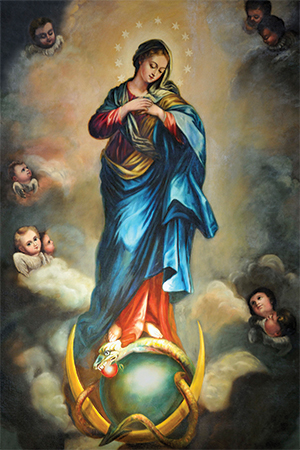 There are many biblical types of Mary in the Old Testament. Mary’s Magnificat in Luke 1 is very similar to Hannah’s canticle in 1 Samuel 2. Judith cutting off the head of the Army General Holofernes in Judith 13:8 to save Israel reminds us that Mary will help to bruise the head of the serpent. The Blessed Virgin Mary is also seen as the Queen Mother. In the Old Testament, the Kings' mother was the queen. The Kings in the Old Testament, like Solomon, had so many wives that it would have been hard to choose one over the other, so the mother of the King became the Queen. Bathsheeba, David's wife, was King Solomon's Queen Mother. In 1 Kings 2, Adonijah approaches the Queen Bathsheeba to ask her to intercede on his behalf with King Solomon. When she asks her son for Adonijah's favor, King Solomon says "Make your request, my mother; for I will not refuse you". This is a parallel to the New Testament, John 2, when Mary intercedes on behalf of the wedding couple to Jesus about the wine that has run out. Solomon didn't refuse his Queen Mother in the Old Testament, and Jesus didn't refuse his Queen Mother in the New Testament. Neither does he refuse her now. Catholics believe that saints in Heaven, and especially the Blessed Virgin Mary, are still active in their roles to assist mankind in spiritual warfare. We know from James 5:16 that the prayers of the righteous are powerful, and we know from Matthew 22:32 that God is not the God of the dead, but of the living. In Revelation 5:8, it says that 24 elders in heaven present our petitions to God in the form of incense, which means that there are intermediaries in heaven who hear and present our prayers to God. If the dead rich man in hell can intercede for his brothers on earth with Abraham (Luke 16:27-28), how much more can Mary in heaven intercede for us here on earth with her son Jesus! Mary said in Luke 1:46 that her soul magnifies (To magnify means to enlarge, to make clearer, and to bring into focus) the Lord (her soul is still very much alive, as are all souls ever created by God). And looking at Jesus through the magnifying glass of Mary's soul is analogous to focusing the sun through a magnifying glass - IT CREATES FIRE, only with Mary and Jesus, it creates the fire of the Holy Spirit on earth. to And since no one on earth was ever closer to Jesus in body, heart, and mind (Jesus got his flesh and blood from Mary), who better to intercede for us on our behalf than Mary? Giving honor and devotion to Mary (not worship) actually magnifies the Lord. To give honor to an artist's greatest creation (Mary) honors the creator (Jesus) ! The prayer, The Hail Mary, combines the words of Gabriel and Elizabeth with a petition at the end to pray for us. “Hail, Full of Grace, the Lord is with thee” are the words of Gabriel. These words indicate that Mary was full of grace BEFORE Jesus was in her womb. And no one can be full of grace and have any room left over for sin; otherwise she wouldn't be “full” of grace (Romans 6:14: For sin will have no dominion over you, since you are not under law but under grace.). And in the bible, the term "Hail!" is term only used for royalty, as in "Hail Caesar" or "Hail King of the Jews!" Since Mary IS the Queen Mother of the King of Kings, it only makes sense that God's messenger, Gabriel, would use a term like that when addressing her. “Blessed art thou among women, and blessed is the fruit of thy womb Jesus” are the words of Elizabeth, the mother of John the Baptist. These words from scripture indicate that Mary is blessed more than any other woman, because Jesus is inside of her. Jesus said that you shall know a tree by its fruit, and since Jesus is the fruit of her womb and is sinless and holy, so must Mary be, since she is the tree which bore the fruit (Jesus), although she certainly is not God. Luke 6:43 says that a bad tree cannot bear good fruit! The last part of the prayer is a petition to Mary to “pray for us sinners, now and at the hour of our death”. Paul says in 1 Timothy 2:1- “First of all, then, I urge that supplications, prayers, intercessions, and thanksgivings be made for all men.” So asking for intercessory prayer is a very biblical thing to do, especially from a holy person like Mary (James 5:16). So how can Mary hear thousands of prayers said to her daily from all over the world? Isn’t she just a human being and not God? Catholics believe we share in God’s divinity when we are in heaven. Why? Because of the words of Peter, in 2 Pet.1:3: "His divine power has granted to us all things that pertain to life and godliness, through the knowledge of him who called us to his own glory and excellence 4: by which he has granted to us his precious and very great promises, that through these you may escape from the corruption that is in the world because of passion, and become partakers of the divine nature." We see from these verses of Peter that saints in heaven are partakers in the divine nature, which includes hearing prayers. Saints in heaven have no power of their own. All of their power comes from Christ Jesus, who shares it with them. We know that they witness for us, because of the words of St. Paul, in Hebrews 12:1: “Therefore, since we are surrounded by so great a cloud of witnesses…” Witnesses testify to a judge on behalf of the accused, and Paul here is saying that the saints in heaven are our witnesses. Notice that Paul didn't say that they were mere spectators; he called them WITNESSES. Asking these witnesses, especially Mary, to help us with our problems is a very good thing to do. Some people make the mistake of thinking that praying to a saint equals worshipping that saint like he/she is a god, but “to pray” simply means “to ask”, not “to worship”. And since all of their power comes from the amazing grace of Jesus Christ, it is not like conjuring up the dead and seeking hidden knowledge, which is expressly forbidden in Deuteronomy 18:10-11. After all, Jesus appeared with the very dead Moses and Elijah during the Transfiguration (Luke 9:30). Since Jesus never sinned, and conjuring up the dead as an occult practice is a sin, we see here that there is a true distinction between praying to saints for their intercession and calling up the dead to seek arcane knowledge. Source: Catholic Bible 101 This post has been edited by yeeck: Apr 16 2015, 12:42 AM |
|
|
Apr 16 2015, 08:55 AM
|
|
Senior Member
1,920 posts Joined: Jan 2009
|
QUOTE(De_Luffy @ Apr 15 2015, 11:47 PM) yeeck, when you laid out things or theories please be aware that there are others who is reading this too, athough we protestant and catholics alike have a different view about the doctrine of christianity but never the less we all serve the same Lord which is Triune God. Bro, there are a lot of Catholics that are backsliding and GOD is using yeeck's influence to bring HIS people back. Give him spaceby putting up this arcticle u might hurt other peoples feeling indirectly......... Neither u nor me can bring those people back to catholic but yeeck can. At what matter in this end time is ... winning soul. but these soul goes to catholic churches, not protestant church right ? of course... according to catholic is winning soul according to protestant is not winning soul. catholic wrong for reason A,B,C,D, protestant is right for reasons A,B,C,D for such A,B,C,D reasons... let me share you that GOD's way and GOD's thinking is not always same with de_luffy thinking ... Since you are protestant: do you know that Martin Luther is guilty for rebellion ? rebellion against church authority ? 1 Samuel 15:23 For rebellion is like the sin of divination, and arrogance like the evil of idolatry. Because you have rejected the word of the LORD, he has rejected you as king." Proverbs 17:11 An evil man seeks only rebellion, and a cruel messenger will be sent against him. Romans 13:1 (NIV) "Everyone must submit himself to the governing authorities, for there is no authority except that which God has established. The authorities that exist have been established by God." -- ah but christian saved by grace... typical protestant excuse ? or joseph prince teaching ?... as i said earlier, and i will put here so to highlight you: Neither u nor me can bring those people back to catholic but yeeck can. At what matter in this end time is ... winning soul. This post has been edited by de1929: Apr 16 2015, 08:57 AM |
|
|
Apr 16 2015, 09:45 AM
|
|
Senior Member
737 posts Joined: Jul 2010 From: Klang
|
QUOTE(de1929 @ Apr 16 2015, 08:55 AM) Bro, there are a lot of Catholics that are backsliding and GOD is using yeeck's influence to bring HIS people back. Give him space I don't need your nonsense talk, all your wordso are irrelevant to me.Neither u nor me can bring those people back to catholic but yeeck can. At what matter in this end time is ... winning soul. but these soul goes to catholic churches, not protestant church right ? of course... according to catholic is winning soul according to protestant is not winning soul. catholic wrong for reason A,B,C,D, protestant is right for reasons A,B,C,D for such A,B,C,D reasons... let me share you that GOD's way and GOD's thinking is not always same with de_luffy thinking ... Since you are protestant: do you know that Martin Luther is guilty for rebellion ? rebellion against church authority ? 1 Samuel 15:23 For rebellion is like the sin of divination, and arrogance like the evil of idolatry. Because you have rejected the word of the LORD, he has rejected you as king." Proverbs 17:11 An evil man seeks only rebellion, and a cruel messenger will be sent against him. Romans 13:1 (NIV) "Everyone must submit himself to the governing authorities, for there is no authority except that which God has established. The authorities that exist have been established by God." -- ah but christian saved by grace... typical protestant excuse ? or joseph prince teaching ?... as i said earlier, and i will put here so to highlight you: Neither u nor me can bring those people back to catholic but yeeck can. At what matter in this end time is ... winning soul. yeeck why are you not mentioning the real truth regarding martin Luther rebel against catholic church? During martin Luther time the corrupted practice of catholic church collecting money from the peoples who wish to see the apostles relics? Isn't it's already corrupted already as stated In the 10 indulgences by Martin Luther? I respect you for what you are trying to do here but however the reason that the protestant existed in the first place was to protest against the corrupted practice of the church priests and the high level officials of the Catholic Church, however that is the past, what catholic church need now is to bring in more new believers or to save more peoples which is the great comission by our Lord Jesus Christ before He was ascended to heaven. We all serve the same God, so let work together and save more peoples that needed to save and wait for the return of Christ Jesus |
|
|
Apr 16 2015, 10:34 AM
|
|
Senior Member
1,920 posts Joined: Jan 2009
|
QUOTE(De_Luffy @ Apr 16 2015, 09:45 AM) I don't need your nonsense talk, all your wordso are irrelevant to me. He already mention in post no 232yeeck why are you not mentioning the real truth regarding martin Luther rebel against catholic church? During martin Luther time the corrupted practice of catholic church collecting money from the peoples who wish to see the apostles relics? Isn't it's already corrupted already as stated In the 10 indulgences by Martin Luther? I respect you for what you are trying to do here but however the reason that the protestant existed in the first place was to protest against the corrupted practice of the church priests and the high level officials of the Catholic Church, however that is the past, what catholic church need now is to bring in more new believers or to save more peoples which is the great comission by our Lord Jesus Christ before He was ascended to heaven. We all serve the same God, so let work together and save more peoples that needed to save and wait for the return of Christ Jesus This is no way denies that there have been bad members in the present and the past, and yes, even bad popes and clergy in her history. Catholic did some mistake, ministry of protestant born Catholic fixed the mistakes, the ministry of protestant should stop You sow rebellion, you reap rebellion... you sow protest, you reap protest. If your spouse cheated you, don't divorce. Rebuke your spouse, don't use bible as reason to divorce. Separated for awhile is fine (1 cor 7:5). But i think protestant has been separated from Catholic for too long. In this thread i have to write protestant should return to catholic. 1 Corinthians 7:5 5 Do not deprive each other except perhaps by mutual consent and for a time, so that you may devote yourselves to prayer. Then come together again so that Satan will not tempt you because of your lack of self-control. |
|
|
Apr 16 2015, 10:36 AM
|
|
Senior Member
3,577 posts Joined: Apr 2006
|
QUOTE(De_Luffy @ Apr 16 2015, 09:45 AM) I don't need your nonsense talk, all your wordso are irrelevant to me. Like I've said before I don't deny that there may have been bad popes and clergy in the past. Luther did protest about abuses regarding indulgences, but he went further and mixed other errors in his protest. Again, that article was about 'Sola Scriptura' (Bible Alone), not regarding Martin Luther himself personally. If you wish, we can now change the topic to focus on Martin Luther himself.yeeck why are you not mentioning the real truth regarding martin Luther rebel against catholic church? During martin Luther time the corrupted practice of catholic church collecting money from the peoples who wish to see the apostles relics? Isn't it's already corrupted already as stated In the 10 indulgences by Martin Luther? I respect you for what you are trying to do here but however the reason that the protestant existed in the first place was to protest against the corrupted practice of the church priests and the high level officials of the Catholic Church, however that is the past, what catholic church need now is to bring in more new believers or to save more peoples which is the great comission by our Lord Jesus Christ before He was ascended to heaven. We all serve the same God, so let work together and save more peoples that needed to save and wait for the return of Christ Jesus |
|
|
Apr 16 2015, 10:44 AM
|
|
Senior Member
3,577 posts Joined: Apr 2006
|
QUOTE(de1929 @ Apr 16 2015, 10:34 AM) He already mention in post no 232 de1929, are you Catholic? If not, why not?This is no way denies that there have been bad members in the present and the past, and yes, even bad popes and clergy in her history. Catholic did some mistake, ministry of protestant born Catholic fixed the mistakes, the ministry of protestant should stop You sow rebellion, you reap rebellion... you sow protest, you reap protest. If your spouse cheated you, don't divorce. Rebuke your spouse, don't use bible as reason to divorce. Separated for awhile is fine (1 cor 7:5). But i think protestant has been separated from Catholic for too long. In this thread i have to write protestant should return to catholic. 1 Corinthians 7:5 5 Do not deprive each other except perhaps by mutual consent and for a time, so that you may devote yourselves to prayer. Then come together again so that Satan will not tempt you because of your lack of self-control. |
|
|
Apr 16 2015, 11:06 AM
|
|
Senior Member
1,920 posts Joined: Jan 2009
|
QUOTE(yeeck @ Apr 16 2015, 10:44 AM) de1929, are you Catholic? If not, why not? i am. i give you more detail in pm. |
|
|
Apr 16 2015, 11:20 AM
|
|
Senior Member
737 posts Joined: Jul 2010 From: Klang
|
QUOTE(yeeck @ Apr 16 2015, 10:44 AM) de1929, are you Catholic? If not, why not? He claimed himself as intermediate between man n god, and saying that holy spirit would ask him to kill anyone he already gone astray from the right path |
|
|
Apr 16 2015, 12:21 PM
|
|
Junior Member
225 posts Joined: Mar 2008
|
QUOTE(de1929 @ Apr 16 2015, 08:55 AM) Bro, there are a lot of Catholics that are backsliding and GOD is using yeeck's influence to bring HIS people back. Give him space de1929 ... if there are lapsed Catholics, then we are called instruct those who have fallen wayside, but it is not our duty to force nor coerce them to return. That is the job of the Holy Spirit, and remember things happen for a reason. The Lord calls all to His supper, but not all will attend. And He knows it. After all, the Hebrews themselves spent 40 years wondering in the desert. Neither u nor me can bring those people back to catholic but yeeck can. At what matter in this end time is ... winning soul. but these soul goes to catholic churches, not protestant church right ? of course... according to catholic is winning soul according to protestant is not winning soul. catholic wrong for reason A,B,C,D, protestant is right for reasons A,B,C,D for such A,B,C,D reasons... let me share you that GOD's way and GOD's thinking is not always same with de_luffy thinking ... Since you are protestant: do you know that Martin Luther is guilty for rebellion ? rebellion against church authority ? 1 Samuel 15:23 For rebellion is like the sin of divination, and arrogance like the evil of idolatry. Because you have rejected the word of the LORD, he has rejected you as king." Proverbs 17:11 An evil man seeks only rebellion, and a cruel messenger will be sent against him. Romans 13:1 (NIV) "Everyone must submit himself to the governing authorities, for there is no authority except that which God has established. The authorities that exist have been established by God." -- ah but christian saved by grace... typical protestant excuse ? or joseph prince teaching ?... as i said earlier, and i will put here so to highlight you: Neither u nor me can bring those people back to catholic but yeeck can. At what matter in this end time is ... winning soul. As for the Proties ... leave them be, if they wanna hero worship Martin Luther, let them. They empowered themselves to do so, all 30,800 denominations. |
|
|
Apr 16 2015, 12:23 PM
|
|
Junior Member
225 posts Joined: Mar 2008
|
QUOTE(yeeck @ Apr 16 2015, 10:36 AM) Like I've said before I don't deny that there may have been bad popes and clergy in the past. Luther did protest about abuses regarding indulgences, but he went further and mixed other errors in his protest. Again, that article was about 'Sola Scriptura' (Bible Alone), not regarding Martin Luther himself personally. If you wish, we can now change the topic to focus on Martin Luther himself. Bro Yeeck, come to think of it, who exactly are the bad popes? Any list? Only one i can think of is Alexander Borgias, thanks to the slanted Protie and Jewish media, but that's about it. |
|
|
Apr 16 2015, 01:00 PM
|
|
Senior Member
3,577 posts Joined: Apr 2006
|
QUOTE(khool @ Apr 16 2015, 12:23 PM) Bro Yeeck, come to think of it, who exactly are the bad popes? Any list? Only one i can think of is Alexander Borgias, thanks to the slanted Protie and Jewish media, but that's about it. There are a few besides Alexander VI. Even Leo X during the time of Martin Luther wasn't exemplary either. However, his response to Luther's 95 theses, the Bull "Exsurge Domine" was spot on. |
|
|
Apr 16 2015, 01:20 PM
|
|
Junior Member
225 posts Joined: Mar 2008
|
QUOTE(yeeck @ Apr 16 2015, 01:00 PM) There are a few besides Alexander VI. Even Leo X during the time of Martin Luther wasn't exemplary either. However, his response to Luther's 95 theses, the Bull "Exsurge Domine" was spot on. My thoughts precisely. The administration of the church was flawed and in great need of reform, but in no way was any of her doctrines flawed. Never in the history of the Church has any Pope sought to change doctrine or Sacred Tradition. Any Pope even thinking such notions has been summarily removed, post haste. |
|
|
Apr 16 2015, 03:18 PM
|
|
Senior Member
1,920 posts Joined: Jan 2009
|
QUOTE(khool @ Apr 16 2015, 12:21 PM) de1929 ... if there are lapsed Catholics, then we are called instruct those who have fallen wayside, but it is not our duty to force nor coerce them to return. That is the job of the Holy Spirit, and remember things happen for a reason. The Lord calls all to His supper, but not all will attend. And He knows it. After all, the Hebrews themselves spent 40 years wondering in the desert. thx khool... i understand how they are thinking... we can appreciate their boldness to rebel against authority... sure, leave them be.As for the Proties ... leave them be, if they wanna hero worship Martin Luther, let them. They empowered themselves to do so, all 30,800 denominations. appreciate little2x ok lah... set it up as a value to live ? Big NO This post has been edited by de1929: Apr 16 2015, 03:26 PM |
|
|
Apr 16 2015, 04:52 PM
|
|
Junior Member
225 posts Joined: Mar 2008
|
QUOTE(de1929 @ Apr 16 2015, 03:18 PM) thx khool... i understand how they are thinking... we can appreciate their boldness to rebel against authority... sure, leave them be. Haha, if your answer is 'Yes', then you can't be a Catholic can you? ... appreciate little2x ok lah... set it up as a value to live ? Big NO |
|
|
Apr 16 2015, 05:45 PM
|
|
Senior Member
1,920 posts Joined: Jan 2009
|
QUOTE(khool @ Apr 16 2015, 04:52 PM) Haha, if your answer is 'Yes', then you can't be a Catholic can you? ... hahaha... i am glad my answer is 'no'... as a Catholic, we strive to help people... just like my tered lah... hope for malaysia... read carefully, hope for malaysia, not complain for malaysia |
|
|
Apr 16 2015, 09:21 PM
|
|
Senior Member
726 posts Joined: Sep 2014
|
De_Luffy, there's no point in having a discussion with Catholics. They are self righteous and view others as unworthy.
As for de1929, he's just a bigot. |
|
|
Apr 16 2015, 09:33 PM
|
|
Senior Member
1,920 posts Joined: Jan 2009
|
Apr 17 2015, 12:38 AM |
|
|
|
|
|
Apr 16 2015, 09:42 PM
|
|
Senior Member
726 posts Joined: Sep 2014
|
Apr 17 2015, 12:40 AM |
|
|
|
|
|
Apr 16 2015, 09:43 PM
|
|
Senior Member
1,920 posts Joined: Jan 2009
|
Apr 17 2015, 12:39 AM |
|
|
|
|
|
Apr 16 2015, 09:53 PM
|
|
Senior Member
737 posts Joined: Jul 2010 From: Klang
|
Apr 17 2015, 12:39 AM |
|
|
|
|
|
Apr 16 2015, 09:55 PM
|
|
Senior Member
1,920 posts Joined: Jan 2009
|
Apr 17 2015, 12:41 AM |
|
|
|
|
|
Apr 16 2015, 10:00 PM
|
|
Senior Member
726 posts Joined: Sep 2014
|
Apr 17 2015, 12:40 AM |
|
|
|
|
|
Apr 16 2015, 10:01 PM
|
|
Senior Member
737 posts Joined: Jul 2010 From: Klang
|
QUOTE(de1929 @ Apr 16 2015, 09:55 PM) Hi yeeck ... can you delete these posts of tinaarhian & de_luffy... Nobody is against catholic here, but we are against your heretical teaching, if you want I can even posted all your previous comments here evidence of your heretical teachingI think they angry because we don't wanna follow their protestant way... lol... |
|
|
Apr 16 2015, 10:03 PM
|
|
Senior Member
1,920 posts Joined: Jan 2009
|
Apr 17 2015, 12:38 AM |
|
|
|
|
|
Apr 16 2015, 10:04 PM
|
|
Senior Member
726 posts Joined: Sep 2014
|
Apr 17 2015, 12:38 AM |
|
|
|
|
|
Apr 16 2015, 10:06 PM
|
|
Senior Member
1,920 posts Joined: Jan 2009
|
Apr 17 2015, 12:38 AM |
|
|
|
|
|
Apr 16 2015, 10:06 PM
|
|
Senior Member
726 posts Joined: Sep 2014
|
Apr 17 2015, 12:38 AM |
|
|
|
|
|
Apr 16 2015, 10:07 PM
|
|
Senior Member
726 posts Joined: Sep 2014
|
Apr 17 2015, 12:38 AM |
|
|
|
|
|
Apr 16 2015, 10:10 PM
|
|
Senior Member
1,920 posts Joined: Jan 2009
|
Apr 17 2015, 12:35 AM |
|
|
|
|
|
Apr 16 2015, 10:11 PM
|
|
Senior Member
726 posts Joined: Sep 2014
|
Apr 17 2015, 12:35 AM |
|
|
|
|
|
Apr 16 2015, 10:12 PM
|
|
Senior Member
1,920 posts Joined: Jan 2009
|
Apr 17 2015, 12:35 AM |
|
|
|
|
|
Apr 16 2015, 10:13 PM
|
|
Senior Member
726 posts Joined: Sep 2014
|
Apr 17 2015, 12:35 AM |
|
|
|
|
|
Apr 16 2015, 10:15 PM
|
|
Senior Member
1,920 posts Joined: Jan 2009
|
Apr 17 2015, 12:35 AM |
|
|
|
|
|
Apr 16 2015, 10:17 PM
|
|
Senior Member
726 posts Joined: Sep 2014
|
Apr 17 2015, 12:35 AM |
|
|
|
|
|
Apr 16 2015, 10:18 PM
|
|
Senior Member
1,920 posts Joined: Jan 2009
|
Apr 17 2015, 12:35 AM |
|
|
|
|
|
Apr 16 2015, 10:21 PM
|
|
Senior Member
726 posts Joined: Sep 2014
|
Apr 17 2015, 12:35 AM |
|
|
|
|
|
Apr 16 2015, 10:23 PM
|
|
Senior Member
1,920 posts Joined: Jan 2009
|
Apr 17 2015, 12:36 AM |
|
|
|
|
|
Apr 16 2015, 10:24 PM
|
Senior Member
774 posts Joined: May 2006 From: Winterfell
|
Hi hi.
Currently going to Our Lady of Guadalupe, Puchong. Hometown - Holy Trinity Church, Tawau |
|
|
Apr 16 2015, 10:26 PM
|
|
Senior Member
726 posts Joined: Sep 2014
|
Apr 17 2015, 12:36 AM |
|
|
|
|
|
Apr 16 2015, 10:28 PM
|
|
Senior Member
1,920 posts Joined: Jan 2009
|
Apr 17 2015, 12:36 AM |
|
|
|
|
|
Apr 16 2015, 10:33 PM
|
|
Senior Member
726 posts Joined: Sep 2014
|
Apr 17 2015, 12:36 AM |
|
|
|
|
|
Apr 16 2015, 10:37 PM
|
|
Senior Member
1,920 posts Joined: Jan 2009
|
Apr 17 2015, 12:36 AM |
|
|
|
|
|
Apr 16 2015, 10:39 PM
|
|
Senior Member
726 posts Joined: Sep 2014
|
Apr 17 2015, 12:36 AM |
|
|
|
|
|
Apr 16 2015, 10:40 PM
|
|
Senior Member
1,920 posts Joined: Jan 2009
|
Apr 17 2015, 12:37 AM |
|
|
|
|
|
Apr 16 2015, 10:45 PM
|
|
Senior Member
726 posts Joined: Sep 2014
|
Apr 17 2015, 12:37 AM |
|
|
|
|
|
Apr 16 2015, 10:47 PM
|
|
Senior Member
1,920 posts Joined: Jan 2009
|
Apr 17 2015, 12:37 AM |
|
|
|
|
|
Apr 16 2015, 10:50 PM
|
|
Senior Member
726 posts Joined: Sep 2014
|
Apr 17 2015, 12:37 AM |
|
|
|
|
|
Apr 16 2015, 10:52 PM
|
|
Senior Member
1,920 posts Joined: Jan 2009
|
Apr 17 2015, 12:37 AM |
|
|
|
|
|
Apr 16 2015, 10:54 PM
|
|
Senior Member
726 posts Joined: Sep 2014
|
Apr 17 2015, 12:34 AM |
|
|
|
|
|
Apr 16 2015, 10:59 PM
|
|
Senior Member
1,920 posts Joined: Jan 2009
|
Apr 17 2015, 12:34 AM |
|
|
|
|
|
Apr 16 2015, 11:02 PM
|
|
Senior Member
726 posts Joined: Sep 2014
|
Apr 17 2015, 12:34 AM |
|
|
|
|
|
Apr 16 2015, 11:05 PM
|
|
Senior Member
1,920 posts Joined: Jan 2009
|
Apr 17 2015, 12:34 AM |
|
|
|
|
|
Apr 16 2015, 11:07 PM
|
|
Senior Member
726 posts Joined: Sep 2014
|
Apr 17 2015, 12:34 AM |
|
|
|
|
|
Apr 16 2015, 11:11 PM
|
|
Senior Member
1,920 posts Joined: Jan 2009
|
Apr 17 2015, 12:34 AM |
|
|
|
|
|
Apr 16 2015, 11:14 PM
|
|
Senior Member
726 posts Joined: Sep 2014
|
Apr 17 2015, 12:34 AM |
|
|
|
|
|
Apr 16 2015, 11:17 PM
|
|
Senior Member
1,920 posts Joined: Jan 2009
|
Apr 17 2015, 12:33 AM |
|
|
|
|
|
Apr 16 2015, 11:23 PM
|
|
Senior Member
726 posts Joined: Sep 2014
|
Apr 17 2015, 12:33 AM |
|
|
|
|
|
Apr 16 2015, 11:26 PM
|
|
Senior Member
1,920 posts Joined: Jan 2009
|
Apr 17 2015, 12:33 AM |
|
|
|
|
|
Apr 16 2015, 11:28 PM
|
|
Senior Member
1,920 posts Joined: Jan 2009
|
Apr 17 2015, 12:33 AM |
|
|
|
|
|
Apr 16 2015, 11:29 PM
|
|
Senior Member
726 posts Joined: Sep 2014
|
Apr 17 2015, 12:33 AM |
|
|
|
|
|
Apr 16 2015, 11:31 PM
|
|
Senior Member
726 posts Joined: Sep 2014
|
Apr 17 2015, 12:33 AM |
|
|
|
|
|
Apr 17 2015, 12:06 AM
|
|
Senior Member
1,920 posts Joined: Jan 2009
|
Apr 17 2015, 12:33 AM |
|
|
|
|
|
Apr 17 2015, 12:46 AM
|
|
Senior Member
3,577 posts Joined: Apr 2006
|
QUOTE(tinarhian @ Apr 16 2015, 09:21 PM) De_Luffy, there's no point in having a discussion with Catholics. They are self righteous and view others as unworthy. tinarhian, if you have something against Catholic doctrine, present your arguments. It seems like you've already decided that all Catholics are self-righteous. I'm still interested to know what's your meat against Catholic doctrine instead of just making a blanket statement.As for de1929, he's just a bigot. I never claimed all Protestants hero-worship Martin Luther. You are still missing the gist of that earlier article. It was against the false teaching of 'Bible Alone'. If I claimed that all Protestants hero-worship Luther, then....they ought to even imitate him in his fervent devotion to the Blessed Virgin Mary, unlike modern-day Protestants. http://en.wikipedia.org/wiki/Luther%27s_Marian_theology As for de1929, it is pretty obvious from his posts that he couldn't be Catholic. Let's just leave it at that. This post has been edited by yeeck: Apr 17 2015, 12:55 AM |
|
|
Apr 17 2015, 01:09 AM
|
|
Senior Member
3,577 posts Joined: Apr 2006
|
On Baptism
 808. Why does not the Catholic Church baptize by immersion? Such a method of Baptism, though valid, is not necessary. From the very beginning Baptism was administered both by immersion and by infusion or pouring water upon the forehead. 809. By relinquishing immersion you lose the significance of the original rite. Immersion was never thought necessary in the Christian Church. After St. Peter's first sermon three thousand people were baptized, and it is most unlikely that it could have been by immersion, above all in the light of recent research into the water supply available in Jerusalem itself at that time. The Didache, or Teaching of the Twelve, written about the year 90, says, "Thus baptize ... If you have not fresh water, baptize in other water. If you cannot do it in cold, use warm. If you have neither, pour out on the head water three times in the name of the Father and of the Son and of the Holy Spirit." Either form then is valid. If immersion were necessary, what would you do with bed-ridden invalids and the dying? Nor is the significance lost by pouring. The true significance is that grace washes the soul as water washes the body. The true sign of washing is retained by any true ablutions. Washing does not always imply the taking of a plunge-bath. Burial with Christ is signified by washing away the death of sin and the resurrection to the new life of grace. In any case Christ left the practical application of such matters to His Church, saying, "Whatsoever you shall bind upon earth shall be bound also in Heaven." Matt. XVIII., 18. And He promised to be with His Church, preserving her from any misuse of this power. 810. The Didache proves nothing. It is evidence of the instructions circulated amongst Christians whilst St. John the Apostle was still living. 811. Scripture nowhere says that infants were baptised. It nowhere says that they were not, and implicitly demands that they should be. 812. Do we not read only of adult baptisms in the New Testament? No. We read of some adult baptisms, but they were not administered precisely because the subjects were adults, but because they happened to be converted as adults. Acts XV. commemorates the reception of two complete households into the Church by St. Paul, and we are not told that the adults only in those households were received. Christ told the Apostles to teach and baptize all nations, and the term all nations certainly includes men, women, and children. Again St. Paul tells us that Baptism is the Circumcision of Christians, and we know that Circumcision was administered to children. Col. 2, II. Or is the New Law to be less perfect than the Old, containing no purifying rite for infants? Your ideas are opposed to the whole tenor of Christianity. Christ is the second Adam. If the children of Adam are born subject to original sin and its penalties, so they can be born again of Christ into the life of grace. Or is Adam to be able to ruin all, yet Christ be unable to save any except adults? "What is of the flesh is flesh; what is of the spirit is spirit." Children by virtue of their natural birth are of the flesh, and Our Lord insists that unless one be born again he cannot enter the Kingdom of God. Do not be misled by the English translation, "Unless a man be born again." The original Greek does not use the word man in this text. It says, "Unless anyone be born again," and a child is someone. 813. Christ Himself teas not baptized in His infancy, but as an adult. Christ was baptized as an adult because only then did He institute this essential rite of the New Law. You could not expect Him to receive it before instituting it. Yet remember that He had received the rite of Circumcision which is figurative of the Baptism to be received by Christian children, and that rite He received in infancy. 814. John told his converts to repent and be baptized. He was speaking to adults, and undoubtedly adults must repent of their personal sins before they can come to God. Yet children who are incapable of personal sin and repentance are born in original sin, to destroy which is the primary purpose of Baptism. 815. The Bible says, "Believe and be baptized." How can children make an act of faith? The command to believe and be baptized was addressed to adult listeners only who, without faith, would not even see the necessity of Baptism. But children belong to their parents, and the parents may certainly give their children to God, professing faith on their behalf and promising to bring them up as Christians. Source: Radio Replies This post has been edited by yeeck: Apr 17 2015, 01:12 AM |
|
|
Apr 17 2015, 07:25 AM
Show posts by this member only | IPv6 | Post
#296
|
|
Junior Member
225 posts Joined: Mar 2008
|
QUOTE(yeeck @ Apr 17 2015, 12:46 AM) tinarhian, if you have something against Catholic doctrine, present your arguments. It seems like you've already decided that all Catholics are self-righteous. I'm still interested to know what's your meat against Catholic doctrine instead of just making a blanket statement. Point of note Bro Yeeck, it was I who made that claim that Proties hero worship Martin Luther. I cannot reproduce this claim as all this is verbal. So mea maxima culpa, and my apologies.I never claimed all Protestants hero-worship Martin Luther. You are still missing the gist of that earlier article. It was against the false teaching of 'Bible Alone'. If I claimed that all Protestants hero-worship Luther, then....they ought to even imitate him in his fervent devotion to the Blessed Virgin Mary, unlike modern-day Protestants. http://en.wikipedia.org/wiki/Luther%27s_Marian_theology As for de1929, it is pretty obvious from his posts that he couldn't be Catholic. Let's just leave it at that. |
|
|
Apr 17 2015, 07:26 AM
Show posts by this member only | IPv6 | Post
#297
|
|
Junior Member
225 posts Joined: Mar 2008
|
QUOTE(isildur88 @ Apr 16 2015, 10:24 PM) Hi hi. Hello Isildur! Welcome!Currently going to Our Lady of Guadalupe, Puchong. Hometown - Holy Trinity Church, Tawau |
|
|
Apr 17 2015, 12:43 PM
|
|
Senior Member
3,577 posts Joined: Apr 2006
|
HAVING A HUMBLE OPINION OF SELF
EVERY man naturally desires knowledge; but what good is knowledge without fear of God? Indeed a humble rustic who serves God is better than a proud intellectual who neglects his soul to study the course of the stars. He who knows himself well becomes mean in his own eyes and is not happy when praised by men. If I knew all things in the world and had not charity, what would it profit me before God Who will judge me by my deeds? Shun too great a desire for knowledge, for in it there is much fretting and delusion. Intellectuals like to appear learned and to be called wise. Yet there are many things the knowledge of which does little or no good to the soul, and he who concerns himself about other things than those which lead to salvation is very unwise. Many words do not satisfy the soul; but a good life eases the mind and a clean conscience inspires great trust in God. The more you know and the better you understand, the more severely will you be judged, unless your life is also the more holy. Do not be proud, therefore, because of your learning or skill. Rather, fear because of the talent given you. If you think you know many things and understand them well enough, realize at the same time that there is much you do not know. Hence, do not affect wisdom, but admit your ignorance. Why prefer yourself to anyone else when many are more learned, more cultured than you? If you wish to learn and appreciate something worth while, then love to be unknown and considered as nothing. Truly to know and despise self is the best and most perfect counsel. To think of oneself as nothing, and always to think well and highly of others is the best and most perfect wisdom. Wherefore, if you see another sin openly or commit a serious crime, do not consider yourself better, for you do not know how long you can remain in good estate. All men are frail, but you must admit that none is more frail than yourself. --The Imitation of Christ Book I:Ch 2 |
|
|
Apr 17 2015, 04:21 PM
|
|
Senior Member
3,577 posts Joined: Apr 2006
|
How to Talk to an Atheist about Christianity
by Jason Anderson and Jennifer Fulwiler Once upon a time, not so long ago, atheism was the belief system that dared not speak its name. Even the most ardent skeptic paid lip service to faith, or at least to the blessings that mankind derived from it. But that's not the case anymore. Atheism is a strong and growing influence in our culture. You can see it everywhere from the bestseller table at your local bookstore to the Darwin-mutated Jesus fish on the car in traffic in front of you. Atheists are comfortable declaring themselves atheists, comfortable promoting atheism, and comfortable decrying religion, which, according to some of the more prominent atheists, resides on the list of mankind's blessings somewhere between diphtheria and Nazism. And now that we're encountering it more often, Christians sometimes find themselves ill-prepared to deal with this kind of muscular atheism. Especially for lifelong Christians, atheist arguments are so foreign that they don't know how to respond, and too often lapse into anger ("How dare you?!") or fear ("What if they're right?!"), neither of which does anyone any good, harming the Christian's witness and leaving the atheist firmly entrenched in his atheism. If we're going to be encountering more atheists (and we are, whether at work or the laundromat or around our own dinner tables), we should be prepared to explain our beliefs in a way that resonates with people outside the faith. As a starting point, what follows is a list of dos and don'ts to keep in mind when you find yourself discussing religion with an atheist: 1. Don't be afraid to admit that you have faith. Christians frequently report that they've been in situations where the topic of why they believe comes up, and all they can say is that they have faith even though they've never done any major investigation. They often seem embarrassed by this defense. If you get caught in a conversation about why you believe and that's all you've got, don't be afraid to go with that. Articulate it as best you can. For example, you might explain that your faith is not just a story you tell yourself to feel good, or talk about what leads you to believe that you have a real relationship with Something outside of the material world. 2. Don't assume that your atheist friends are secretly angry at God or feel like something is missing in their lives. Work from the assumption that this person is an atheist because he or she simply has not seen any evidence that God exists. 3. Don't quote the Bible, but do know the Bible. The Bible is a source of great wisdom, but if you quote it to an atheist as an authority, it will be like your doctor explaining his diagnosis by reading a passage from a Harry Potter book. Don't just cough up Bible verses and expect that to convince anybody. There are reasons why the Bible says the things it says. Know the reasons behind them and be prepared to explain them. 4. Don't feel like you have to have all the answers right then and there. It is far better to simply say, "Great question! I don't know the answer to that, but I'd love to research it and get back to you," than to wade into territory that you're not familiar with. 5. Explain the big picture. Familiarize yourself with the historical case for Christianity, and offer a high-level explanation of what makes this religion's claims compelling -- that Jesus' life and death fulfilled ancient scriptures that all historians agree existed before His time; that almost all the apostles were martyred for their faith; that Christianity spread like wildfire despite horrendous persecution. Study the writings of the earliest Christians, who were defending Christianity in a pagan world that was largely hostile to their beliefs (sound familiar?). 6. Be logical. Don't deny the validity of logical, scientific thought out of hand. It's true that science doesn't have all the answers, but it does have some of them, and if you try to deny that, you risk pushing yourself into crackpot territory. As Pope Benedict XVI is always reminding us, the God in whom we believe is a God of reason. There is a long, learned history of rational arguments for Christianity, and if you can use them, you'll be speaking in terms that your atheist friend can understand. Get to know some of the great Christian philosophers and apologists. If you haven't read C. S. Lewis's Mere Christianity, what are you waiting for? 7. Realize that your only goal is to plant a seed. In these discussions we can sometimes get so focused on the details that we lose sight of the big picture. It's extremely unlikely that the person you're talking to is going to be completely convinced of the truth of Christianity in one conversation. Just defend Christianity the best you can, and remember that conversion is ultimately God's job, not yours. 8. Put yourself in your atheist friends' position. What if, for example, Christianity was false and Greek mythology was actually true? What would it take to convince you of that? 9. Don't use a lot of Christian catchphrases. Christians "give their hearts to Jesus" and "the Holy Spirit indwells us" and we take a "daily walk with Christ" so that we're "in the world but not of the world." All these phrases are meaningful and profound and instantly understandable for almost any Christian, but they don't mean anything to people who are outside the faith. It's hard to avoid them, because we're used to using them as shorthand for some very complex concepts. But you should be able to explain those concepts in plain terms anyway. 10. Pray. Don't make the mistake of relying solely on your own smarts when you have the Holy Spirit at your disposal. Pray for guidance for yourself and for a receptive heart within your atheist friend. You might be surprised at the effectiveness of this technique. It'll be good for you, too. We're not encouraging anyone to go out and pick a fight -- no one ever got harangued into the family of God. But with a little mental preparation, when the time comes, you'll be ready to present the case for faith in terms that are familiar to your non-believing friends and family members. -------------------------------------------------------------------------------- Jason Anderson is a web developer from Birmingham, Alabama, who posts thoughts on religion and culture at The Cynical Christian. Jennifer Fulwiler is a writer from Austin, Texas, who converted to Catholicism from lifelong atheism in 2007. She chronicles her ongoing conversion at ConversionDiary.com. Source: Catholic News Agency |
|
|
Apr 17 2015, 09:43 PM
|
|
Senior Member
726 posts Joined: Sep 2014
|
QUOTE(yeeck @ Apr 17 2015, 12:46 AM) tinarhian, if you have something against Catholic doctrine, present your arguments. It seems like you've already decided that all Catholics are self-righteous. I'm still interested to know what's your meat against Catholic doctrine instead of just making a blanket statement. No, I don't have anything against Catholics. Its just Catholics doctrines are so weird, that's all.I never claimed all Protestants hero-worship Martin Luther. You are still missing the gist of that earlier article. It was against the false teaching of 'Bible Alone'. If I claimed that all Protestants hero-worship Luther, then....they ought to even imitate him in his fervent devotion to the Blessed Virgin Mary, unlike modern-day Protestants. http://en.wikipedia.org/wiki/Luther%27s_Marian_theology As for de1929, it is pretty obvious from his posts that he couldn't be Catholic. Let's just leave it at that. Ok, my bad for making such an assumption. Sorry. Yes, as for de1929...he's pretending to be a Catholic. |
|
|
Apr 18 2015, 12:42 AM
|
|
Senior Member
3,577 posts Joined: Apr 2006
|
QUOTE(tinarhian @ Apr 17 2015, 09:43 PM) No, I don't have anything against Catholics. Its just Catholics doctrines are so weird, that's all. Weird indeed, but Christianity is weird after all... God Himself becoming flesh to die for us. Giving His Body and Blood for us to eat. Asking Abraham to sacrifice his son Isaac as a test. What else is not weird? Ok, my bad for making such an assumption. Sorry. Yes, as for de1929...he's pretending to be a Catholic. For your good, just ignore de1929. |
|
|
Apr 18 2015, 12:48 AM
|
|
Senior Member
3,577 posts Joined: Apr 2006
|
Consecrating Sorrow by Fr. Chad Ripperger
This post has been edited by yeeck: Apr 18 2015, 12:49 AM |
|
|
Apr 18 2015, 02:24 AM
|
|
Senior Member
3,577 posts Joined: Apr 2006
|
Sweet Sacrament Divine
Sweet Sacrament divine, hid in thine earthly home; lo! round thy lowly shrine, with suppliant hearts we come; Jesus, to thee our voice we raise In songs of love and heartfelt praise sweet Sacrament divine. x2 Sweet Sacrament of peace, dear home of every heart, where restless yearnings cease, and sorrows all depart. there in thine ear, all trustfully, we tell our tale of misery, sweet Sacrament of peace. x2 Sweet Sacrament of rest, ark from the ocean's roar, within thy shelter blest soon may we reach the shore; save us, for still the tempest raves, save, lest we sink beneath the waves: sweet Sacrament of rest. x2 Sweet Sacrament divine, earth's light and jubilee, in thy far depths doth shine the Godhead's majesty; sweet light, so shine on us, we pray that earthly joys may fade away: sweet Sacrament divine. x2 |
|
|
Apr 18 2015, 09:02 PM
|
|
Senior Member
3,577 posts Joined: Apr 2006
|
Ten Things Every Catholic Should Know About Marriage
April 15, 2015 by Fr. Dwight Longenecker There is so much confusion about love and marriage in our church. So here are ten things every Catholic should know about marriage. 1. Marriage is something given by God - Marriage is not a social construct or a romantic idea. Marriage is not a sentimental occasion or the chance for a great party. Marriage is not something we made up either as individuals, a tribe or a society. Marriage is given by God. The beginning of the Bible shows man and woman together by God’s design. This was affirmed by Jesus Christ, human society, common sense and the universal experience of the human race. Marriage might have taken slightly different forms in different societies, but the essence of marriage–a man and woman together to complete one another and be united for life is a universal given. 2. A Valid Marriage is Between one Man and one Woman - Marriage is forged from the natural order. Men and women fit together. They fit together to make love and make babies. Two men or two women can love each other and that love can be a good and beautiful thing, but this is called friendship. It’s not marriage. Friends do not have sex together. That’s something husbands and wives–men and women do. Therefore, even if society makes laws that contradict this obvious truth, a marriage cannot take place between two people of the same sex. 3. Marriage is a lifetime commitment - For Catholics, marriage is for life. If you are validly married to a person you are married to that person until one of you dies. If you separate from that person you are still married to him or her. If you obtain a civil divorce, in the church’s eyes, you are still married to that person. If the marriage is valid you are married for life. If you are separated or divorced you cannot marry another person because that would be adultery which is a serious sin. You also cannot make love to another person because that too would be adultery. 4. For a marriage to be valid the man and woman must both be free to marry - You can’t marry someone who is already married. 5. For the marriage to be valid the man and woman must understand the nature of marriage and make their vows with full and willing consent - For all sorts of reasons people get married, but they either do not truly understand what they are doing or they have not made full and willing consent. If there are any circumstances or intentions which limit their ability to make full, mature and willing consent the marriage could be invalid. 6. For a marriage to be valid for a Catholic some other obligations must be fulfilled - A Catholic also has to be married according to the proper “form”. The proper form is that they must marry another Catholic in a Catholic church according to a Catholic ritual and officiated by a Catholic priest or deacon. If you’re a Catholic you can’t be married in a Las Vegas wedding chapel or on the beach or the mountaintop chapel at your local Baptist camp. You can’t be married by the Lutheran pastor or the Episcopal priest. You can’t choose a church according to which is prettiest. However, if there is good reason for a Catholic to be married to a non-Catholic or in some other place by another minister it is possible to ask the bishop for permission to dispense from the proper form. If you are a Catholic and you have not been married according to proper form then the marriage is probably invalid and you could probably receive a decree of nullity. 7. A decree of nullity is not a “Catholic divorce” - A marriage can be declared null or non existent by the competent church authority. After due investigation the authority may decide that a marriage never existed. This could be because of lack of form–the Catholic was not married in a Catholic Church to another Catholic by a Catholic official according to a Catholic rite. It could also be because one of the partners was not free to marry or because for complicated reasons, one of the persons was not able to make a valid marriage. 8. A decree of nullity has nothing to do with the quality of the relationship - You can’t apply for a decree of nullity because your husband has turned out to be a stinker or your wife is unfaithful. You said “for better or for worse” remember? A decree of nullity doesn’t have anything to do with what is happening in the marriage itself. Instead it is a decision based on whether or not a marriage was validly contracted in the first place. The reasons for the problems within a marriage might have existed at the point of marriage and may mean the marriage is invalid, but the actual fact of difficulties within a marriage–even if they are severe–are not the basis on which a nullity is decided. 9. For Catholics Marriage is a Sacrament – Marriage is not just a fairytale romance in which a man and woman fall in love and live happily ever after. In addition to the romance and erotic love, marriage is a sacrament. What is a sacrament? It is a sacred mystery in which the physical aspect of life becomes a channel of divine grace. In other words, through the physical aspects of married life–everything from making love to making breakfast, making money or fighting and making up–can be a connector to the divine life. That’s why we say marriage is given by God and we can’t tinker with the basics of what marriage actually is. 10. Marriage is part of the mystery of Christ and his church - In the Old Testament God said he would come and be the bridegroom of his people. Jesus used nuptial imagery many times in his teaching. He called himself “the bridegroom” and his followers “the bride.” St Paul said husbands should love their wives “as Christ loved the church”. He uses nuptial imagery repeatedly to talk about the church which is “the bride of Christ.” This means that our human marriages connect us with the mystery of Christ and his church. It is through the sacrament of marriage that we learn what God’s love is like. It is through the mystery of marriage that we experience the unity a believer is to have with Jesus Christ himself. This is why the Catholic Church cannot tinker with marriage, because when we change the definition of marriage we change our understanding of our salvation. When we change the definition of marriage we change our understanding of Christ and his church. When we change marriage we therefore change our relationship with God. This is also why the Catholic Church is opposed to anything which hurts or breaks marriage. This is why we are down on adultery, fornication, co habitation, homosexuality, masturbation, prostitution, pornography, divorce, re-marriage, bigamy, sexual abuse, rape, artificial contraception, artificial conception and anything else that breaks the precious and eternal sacrament of marriage. |
|
|
Apr 18 2015, 10:39 PM
|
|
Senior Member
726 posts Joined: Sep 2014
|
QUOTE(yeeck @ Apr 18 2015, 12:42 AM) Weird indeed, but Christianity is weird after all... God Himself becoming flesh to die for us. Giving His Body and Blood for us to eat. Asking Abraham to sacrifice his son Isaac as a test. What else is not weird? I'm not talking about those similarities. I'm talking about differences between R.C. and other denominations. For your good, just ignore de1929. Oh nevermind... |
|
|
Apr 18 2015, 11:18 PM
|
|
Senior Member
3,577 posts Joined: Apr 2006
|
QUOTE(tinarhian @ Apr 18 2015, 10:39 PM) I'm not talking about those similarities. I'm talking about differences between R.C. and other denominations. Can you give some examples? If you are referring to things like Marian devotion, the Eastern Churches (Orthodox and Oriental) are also similar in that matter.Oh nevermind... |
|
|
Apr 19 2015, 10:24 PM
|

Senior Member
5,369 posts Joined: Jan 2003
|
Hmmm.. TS, have u seen this BBC series?
Sex and the Church? |
|
|
Apr 19 2015, 11:31 PM
|
|
Senior Member
3,577 posts Joined: Apr 2006
|
QUOTE(KVReninem @ Apr 19 2015, 10:24 PM) Hmmm.. TS, have u seen this BBC series? No, but are there any questions that you have? I looked at BBC's website on this series and the description was "Professor Diarmaid MacCulloch explores how Christianity has shaped western attitudes to sex, gender and sexuality throughout history". I wonder why is Christianity being picked on, when the same attitude was inherited from Judaism...Sex and the Church? |
|
|
Apr 19 2015, 11:41 PM
|
|
Senior Member
5,369 posts Joined: Jan 2003
|
QUOTE(yeeck @ Apr 19 2015, 01:01 PM) No, but are there any questions that you have? I looked at BBC's website on this series and the description was "Professor Diarmaid MacCulloch explores how Christianity has shaped western attitudes to sex, gender and sexuality throughout history". I wonder why is Christianity being picked on, when the same attitude was inherited from Judaism... u shud have a shot of it..its very interesting indeed. it also got to do with the romans  |
|
|
Apr 19 2015, 11:47 PM
|
|
Senior Member
3,577 posts Joined: Apr 2006
|
This post has been edited by yeeck: Apr 19 2015, 11:54 PM |
|
|
Apr 19 2015, 11:50 PM
|
|
Senior Member
3,577 posts Joined: Apr 2006
|
The Catholic Church explained by Archbishop Fulton Sheen
|
|
|
Apr 20 2015, 12:01 AM
|
|
Senior Member
5,369 posts Joined: Jan 2003
|
QUOTE(yeeck @ Apr 19 2015, 01:20 PM) The Catholic Church explained by Archbishop Fulton Sheen summary pls. Uniflawww lambat. inb4 sedition because of religion |
|
|
Apr 20 2015, 12:16 AM
|
|
Senior Member
3,577 posts Joined: Apr 2006
|
QUOTE(KVReninem @ Apr 20 2015, 12:01 AM) summary pls. Uniflawww lambat. inb4 sedition because of religion You'll have to watch it yourself....Not for muslims in Malaysia because they are too sensitive.. |
|
|
Apr 20 2015, 12:21 AM
|
|
Senior Member
5,369 posts Joined: Jan 2003
|
QUOTE(yeeck @ Apr 19 2015, 01:46 PM) You'll have to watch it yourself....Not for muslims in Malaysia because they are too sensitive.. muslim. catholic, jewish, pagan, buddha, all same same  |
|
|
Apr 20 2015, 11:07 AM
|
|
Senior Member
3,577 posts Joined: Apr 2006
|
QUOTE(KVReninem @ Apr 19 2015, 11:41 PM) u shud have a shot of it.. Is it on Youtube?its very interesting indeed. it also got to do with the romans |
|
|
Apr 20 2015, 12:09 PM
|
|
Senior Member
3,577 posts Joined: Apr 2006
|
High-profile Rome exorcist: 'ISIS is Satan'
ROME, ITALY: In a recent Facebook post, well-known Roman exorcist Father Gabriele Amorth said the Islamic State (ISIS) “is Satan,” and he also questioned the lack of response from Western nations. “ISIS is Satan. Things first happen in the spiritual realms, then they are made concrete on this earth,” he said in an April 8 post on the social media website. Father Amorth continued, “there are only two spiritual realms: The Holy Spirit and the demonic spirit.” He said the demonic enters in “because evil is disguised in various ways: political, religious, cultural, and it has one source of inspiration: the devil. As a Christian I fight the beast spiritually.” “The political world, which today seems to lack a response in face of the massacre of Christians, will also have to fight ISIS and it will do it in a different way. If it advances as it seems to be doing, we ask ourselves what has the West done over the course of the last decades.” The priest, who founded the International Association of Exorcists, explained that Satan “keeps saying that the world is in his power, and what he says is true. Biblically speaking we are in the last days and the beast is working furiously.” ISIS took control of the largest Christian city in Iraq, Qaraqosh, in August last year, causing tens of thousands of people to flee. The terrorist group has persecuted and murdered Christians and other religious minorities in parts of Syria and Iraq. Fr. Amorth, age 90, has performed over 70,000 exorcisms during the past 29 years. The number is so high because carrying out an exorcism can require multiple sessions and each time the rite is administered it is counted as one instance. Fr. Amorth has previously spoken about the danger posed by people no longer believing in the devil, as well as a shortage of exorcists.--CNA |
|
|
Apr 20 2015, 12:30 PM
|
|
Senior Member
3,577 posts Joined: Apr 2006
|
The parish that opted for Solidarity with the Poor
Anil Netto St Anne’s Church in Bukit Mertajam may be better known for being the major Christian pilgrimage centre in the country. Within the parish, there is always plenty to do, the stuff the usual parish is involved in and more. But at the end of 2013, something happened. Parish priest, Fr Henry Rajoo, raised a question during a parish pastoral council meeting, “Do you see any direction we are moving towards?” “We were all ‘blur’,” he recalls. “We were just doing things for the sake of doing them. We were not taking the parish in any direction.” With Pope Francis moving the Church towards the poor, and Henry’s personal conviction drawing him in that direction, the priest asked, “Why don’t we, next year (2014), move towards being in solidarity with the poor? Maybe that will change our whole parish.” And so it came to pass: the parish adopted a theme along those lines. For the Kulim-born Henry, the journey toward this solidarity coincided with his own personal epiphany. The eighth child among nine siblings, his father a taxi-driver and his mother a rubber tapper, Henry was no stranger to poverty. “I know how we suffered when we were young. But I never felt a lack of facilities. Though we went through a hard time, there were no days when we were without anything to eat.” Entering the seminary at the age of 20, and now seated inside comfortable quarters, Henry has come a long way. “I am here now (at St Anne’s). It’s a nice place, isn’t it? It is like living in a bungalow. It’s a huge place...26 acres … a Security Department.” A battery of about a dozen cctv monitors with flickering images from all around the premises hangs on one side of his hall as if emphasising his point. “ I can run my life as I want. It looks like I am king of the kingdom! I realised one thing though: How am I to go on with this? Is it meaningful to live like this?” “There are plenty of poor in BM, and I never really reached out to them.” A visit to the home of one of the church workers, however, changed all that. Henry recalls in vivid detail his trip to the low-cost flats where the family lived. “That’s a terrible place to go. The flats were not properly maintained. These people have no money to pay the maintenance fees. The water tank is leaking because someone had stolen a bronze device that stops the water from overflowing. ” The home was almost bare. The man of the house had run into difficulties with loan sharks after standing as a guarantor. Yet, he also pointed Henry to another home in the next block where someone in a household had committed suicide. The grieving widow, a homemaker, had five children. What would happen to the family? The question haunted Henry. “You see the reality? Well, something told me, what am I going to do with this? There must be a reason why all these things are coming my way.” He decided to visit the Hindu family bringing along some red packet money, which parishoners and pilgrims had handed to him, and some provisions. “I went inside. They were very respectful. I was from St Anne’s Church, living in a bungalow. And they were living in a simple home.” The bread-winner had used a hosepipe and hanged himself inside the bathroom. Why he died, no one seemed to know. While Henry was there, a stranger knocked at the door. “Hari itu, paper kata ada orang mati sini, kan?” he said. “Ada orang cakap, you banyak susah? Saya boleh tengok sekejap?” The stranger came in and looked around, and then asked the widow. “Apa you mahu? You cakap sekarang.” He jotted down what the widow said. Completing his list, he said, “Esok saya bawa.” He left and the next day, brought what she needed. Henry was amazed. “I didn’t know who he was. And I was thinking to myself. “What is charity, man? You come to help those who are struggling. He came in, he saw the need, and he addressed the need.” Thus began Henry’s journey, as he started helping the family. “By then I was telling stories of poor people in Mass and saying these are the real struggling people in our midst.” The money for the poor started flowing in. I told myself, “If I am not accountable, it is dangerous.” He started preparing his own accounts. The widow Henry helped put him in touch with another woman who had fled from domestic violence from her husband. She too had five children. They started putting him in touch with more people in need. Soon others wanted to join in the ministry. “We started buying more and more things. I was already helping 25 families. The group was getting bigger.” A structure was needed and a group was eventually set up, dubbed the Care and Concern Group. Henry decided to park this group within the Parish Human Development Committee headed by Dr Mary Fernandez, so there would be a layer of monitoring and accountability. Eventually, he told those handing him cash for the poor to hand over the money to the parish office, where a clerk would issue them with official reciepts. The accounts would be tabled monthly. The reaction of the parishioners was interesting. “Some of them, we can mould to help the poor; some of them would ask, ‘Why do we have to help the poor?’ Some of them have been ‘hit’ by the poor – perhaps a snatch thief. “I told them we can stand aloof. You can say, ‘I don’t want to help the poor.’” There was a lot of argument in the BECs though many of them cooperated, he recalls. “The participation from the parish is there. And I think people are seeing the difference. I find that people who resisted helping the poor in the beginning are now donating. Something must have touched them. “I realised one thing: the whole feeling when you reach out to the poor, there’s some kind of calmness, some kind of peace inside. I don’t know how to explain this. “ People will start realising how much they have and how much others don’t have. And that itself calms people down from the competitive mentality in society.” Henry then told those interested to bring their children along when they visit the poor. In the process of helping the poor, “have a chat with them and let your children listen. They themselves will learn how blessed they are in all that they have.” “My life has also changed,” says Henry. These days, he feels compelled not to waste and now opts to live a life of simplicity. The youthful-looking priest stresses the importance of personal contact with the poor, visiting their homes, and interacting with them — much like how Matthew 25:25 exhorts us. Motivating them and drawing them out of Poverty Land is key, he realises, though he concedes there are cases of high-dependence, where people are unable to work for various reasons. A realisation dawned. “I have the power to change (things). Today I can walk on the street and see one poor man, he has no money to eat lunch. I can buy lunch for him; I can change his life. Telling him somebody cares for him. I can’t do that for the rich, they don’t need me. But I can do that with the man on the street.” But it is not just a one-way traffic. “I realise also, spending time with (the poor man), communicating with him, it opens my mind, it challenges me to think what he is thinking and also to show him a kind of outlook of life that I want to listen to you, what’s your problem. “I personally feel this is what Christ was doing. He was giving life to the poor, when he was talking to them, when he was relating with them, when he was spending time with them. And I think that’s what Pope Francis has gone into. “If the Church goes into this, I tell you, it will make a big difference in the world. It is already happening...” -------------------------------------- My comment: Overall a very touching article. There's only one thing I disagree with, "I can’t do that for the rich, they don’t need me." The rich have their own set of problems, mostly spiritual problems, while the poor have their material problems but I usually see the poor are content in their life of simplicity. As Our Lord says in Matthew 26:11, the poor you will always have with you. My takeaway of this article is, let us strive to help those who are both materially and spiritually poor. |
|
|
Apr 20 2015, 02:22 PM
|
|
Junior Member
225 posts Joined: Mar 2008
|
QUOTE(yeeck @ Apr 20 2015, 12:30 PM) The parish that opted for Solidarity with the Poor from Catechism of the Catholic ChurchAnil Netto St Anne’s Church in Bukit Mertajam may be better known for being the major Christian pilgrimage centre in the country. Within the parish, there is always plenty to do, the stuff the usual parish is involved in and more. But at the end of 2013, something happened. Parish priest, Fr Henry Rajoo, raised a question during a parish pastoral council meeting, “Do you see any direction we are moving towards?” “We were all ‘blur’,” he recalls. “We were just doing things for the sake of doing them. We were not taking the parish in any direction.” With Pope Francis moving the Church towards the poor, and Henry’s personal conviction drawing him in that direction, the priest asked, “Why don’t we, next year (2014), move towards being in solidarity with the poor? Maybe that will change our whole parish.” And so it came to pass: the parish adopted a theme along those lines. For the Kulim-born Henry, the journey toward this solidarity coincided with his own personal epiphany. The eighth child among nine siblings, his father a taxi-driver and his mother a rubber tapper, Henry was no stranger to poverty. “I know how we suffered when we were young. But I never felt a lack of facilities. Though we went through a hard time, there were no days when we were without anything to eat.” Entering the seminary at the age of 20, and now seated inside comfortable quarters, Henry has come a long way. “I am here now (at St Anne’s). It’s a nice place, isn’t it? It is like living in a bungalow. It’s a huge place...26 acres … a Security Department.” A battery of about a dozen cctv monitors with flickering images from all around the premises hangs on one side of his hall as if emphasising his point. “ I can run my life as I want. It looks like I am king of the kingdom! I realised one thing though: How am I to go on with this? Is it meaningful to live like this?” “There are plenty of poor in BM, and I never really reached out to them.” A visit to the home of one of the church workers, however, changed all that. Henry recalls in vivid detail his trip to the low-cost flats where the family lived. “That’s a terrible place to go. The flats were not properly maintained. These people have no money to pay the maintenance fees. The water tank is leaking because someone had stolen a bronze device that stops the water from overflowing. ” The home was almost bare. The man of the house had run into difficulties with loan sharks after standing as a guarantor. Yet, he also pointed Henry to another home in the next block where someone in a household had committed suicide. The grieving widow, a homemaker, had five children. What would happen to the family? The question haunted Henry. “You see the reality? Well, something told me, what am I going to do with this? There must be a reason why all these things are coming my way.” He decided to visit the Hindu family bringing along some red packet money, which parishoners and pilgrims had handed to him, and some provisions. “I went inside. They were very respectful. I was from St Anne’s Church, living in a bungalow. And they were living in a simple home.” The bread-winner had used a hosepipe and hanged himself inside the bathroom. Why he died, no one seemed to know. While Henry was there, a stranger knocked at the door. “Hari itu, paper kata ada orang mati sini, kan?” he said. “Ada orang cakap, you banyak susah? Saya boleh tengok sekejap?” The stranger came in and looked around, and then asked the widow. “Apa you mahu? You cakap sekarang.” He jotted down what the widow said. Completing his list, he said, “Esok saya bawa.” He left and the next day, brought what she needed. Henry was amazed. “I didn’t know who he was. And I was thinking to myself. “What is charity, man? You come to help those who are struggling. He came in, he saw the need, and he addressed the need.” Thus began Henry’s journey, as he started helping the family. “By then I was telling stories of poor people in Mass and saying these are the real struggling people in our midst.” The money for the poor started flowing in. I told myself, “If I am not accountable, it is dangerous.” He started preparing his own accounts. The widow Henry helped put him in touch with another woman who had fled from domestic violence from her husband. She too had five children. They started putting him in touch with more people in need. Soon others wanted to join in the ministry. “We started buying more and more things. I was already helping 25 families. The group was getting bigger.” A structure was needed and a group was eventually set up, dubbed the Care and Concern Group. Henry decided to park this group within the Parish Human Development Committee headed by Dr Mary Fernandez, so there would be a layer of monitoring and accountability. Eventually, he told those handing him cash for the poor to hand over the money to the parish office, where a clerk would issue them with official reciepts. The accounts would be tabled monthly. The reaction of the parishioners was interesting. “Some of them, we can mould to help the poor; some of them would ask, ‘Why do we have to help the poor?’ Some of them have been ‘hit’ by the poor – perhaps a snatch thief. “I told them we can stand aloof. You can say, ‘I don’t want to help the poor.’” There was a lot of argument in the BECs though many of them cooperated, he recalls. “The participation from the parish is there. And I think people are seeing the difference. I find that people who resisted helping the poor in the beginning are now donating. Something must have touched them. “I realised one thing: the whole feeling when you reach out to the poor, there’s some kind of calmness, some kind of peace inside. I don’t know how to explain this. “ People will start realising how much they have and how much others don’t have. And that itself calms people down from the competitive mentality in society.” Henry then told those interested to bring their children along when they visit the poor. In the process of helping the poor, “have a chat with them and let your children listen. They themselves will learn how blessed they are in all that they have.” “My life has also changed,” says Henry. These days, he feels compelled not to waste and now opts to live a life of simplicity. The youthful-looking priest stresses the importance of personal contact with the poor, visiting their homes, and interacting with them — much like how Matthew 25:25 exhorts us. Motivating them and drawing them out of Poverty Land is key, he realises, though he concedes there are cases of high-dependence, where people are unable to work for various reasons. A realisation dawned. “I have the power to change (things). Today I can walk on the street and see one poor man, he has no money to eat lunch. I can buy lunch for him; I can change his life. Telling him somebody cares for him. I can’t do that for the rich, they don’t need me. But I can do that with the man on the street.” But it is not just a one-way traffic. “I realise also, spending time with (the poor man), communicating with him, it opens my mind, it challenges me to think what he is thinking and also to show him a kind of outlook of life that I want to listen to you, what’s your problem. “I personally feel this is what Christ was doing. He was giving life to the poor, when he was talking to them, when he was relating with them, when he was spending time with them. And I think that’s what Pope Francis has gone into. “If the Church goes into this, I tell you, it will make a big difference in the world. It is already happening...” -------------------------------------- My comment: Overall a very touching article. There's only one thing I disagree with, "I can’t do that for the rich, they don’t need me." The rich have their own set of problems, mostly spiritual problems, while the poor have their material problems but I usually see the poor are content in their life of simplicity. As Our Lord says in Matthew 26:11, the poor you will always have with you. My takeaway of this article is, let us strive to help those who are both materially and spiritually poor. PART THREE LIFE IN CHRIST SECTION TWO THE TEN COMMANDMENTS CHAPTER TWO "YOU SHALL LOVE YOUR NEIGHBOR AS YOURSELF" ARTICLE 7 THE SEVENTH COMMANDMENT You shall not steal.186 I. THE UNIVERSAL DESTINATION AND THE PRIVATE OWNERSHIP OF GOODS CCC 2402 In the beginning God entrusted the earth and its resources to the common stewardship of mankind to take care of them, master them by labor, and enjoy their fruits.187 The goods of creation are destined for the whole human race. However, the earth is divided up among men to assure the security of their lives, endangered by poverty and threatened by violence. The appropriation of property is legitimate for guaranteeing the freedom and dignity of persons and for helping each of them to meet his basic needs and the needs of those in his charge. It should allow for a natural solidarity to develop between men. CCC 2403 The right to private property, acquired or received in a just way, does not do away with the original gift of the earth to the whole of mankind. The universal destination of goods remains primordial, even if the promotion of the common good requires respect for the right to private property and its exercise. CCC 2404 "In his use of things man should regard the external goods he legitimately owns not merely as exclusive to himself but common to others also, in the sense that they can benefit others as well as himself."188 The ownership of any property makes its holder a steward of Providence, with the task of making it fruitful and communicating its benefits to others, first of all his family. CCC 2405 Goods of production - material or immaterial - such as land, factories, practical or artistic skills, oblige their possessors to employ them in ways that will benefit the greatest number. Those who hold goods for use and consumption should use them with moderation, reserving the better part for guests, for the sick and the poor. CCC 2406 Political authority has the right and duty to regulate the legitimate exercise of the right to ownership for the sake of the common good.189 VI. LOVE FOR THE POOR CCC 2447 The works of mercy are charitable actions by which we come to the aid of our neighbor in his spiritual and bodily necessities.242 Instructing, advising, consoling, comforting are spiritual works of mercy, as are forgiving and bearing wrongs patiently. The corporal works of mercy consist especially in feeding the hungry, sheltering the homeless, clothing the naked, visiting the sick and imprisoned, and burying the dead.243 Among all these, giving alms to the poor is one of the chief witnesses to fraternal charity: it is also a work of justice pleasing to God:244 He who has two coats, let him share with him who has none and he who has food must do likewise.245 But give for alms those things which are within; and behold, everything is clean for you.246 If a brother or sister is ill-clad and in lack of daily food, and one of you says to them, "Go in peace, be warmed and filled," without giving them the things needed for the body, what does it profit?247 CCC 2448 "In its various forms - material deprivation, unjust oppression, physical and psychological illness and death - human misery is the obvious sign of the inherited condition of frailty and need for salvation in which man finds himself as a consequence of original sin. This misery elicited the compassion of Christ the Savior, who willingly took it upon himself and identified himself with the least of his brethren. Hence, those who are oppressed by poverty are the object of a preferential love on the part of the Church which, since her origin and in spite of the failings of many of her members, has not ceased to work for their relief, defense, and liberation through numerous works of charity which remain indispensable always and everywhere."248 CCC 2449 Beginning with the Old Testament, all kinds of juridical measures (the jubilee year of forgiveness of debts, prohibition of loans at interest and the keeping of collateral, the obligation to tithe, the daily payment of the day-laborer, the right to glean vines and fields) answer the exhortation of Deuteronomy: "For the poor will never cease out of the land; therefore I command you, 'You shall open wide your hand to your brother, to the needy and to the poor in the land.'"249 Jesus makes these words his own: "The poor you always have with you, but you do not always have me."250 In so doing he does not soften the vehemence of former oracles against "buying the poor for silver and the needy for a pair of sandals . . .," but invites us to recognize his own presence in the poor who are his brethren:251 When her mother reproached her for caring for the poor and the sick at home, St. Rose of Lima said to her: "When we serve the poor and the sick, we serve Jesus. We must not fail to help our neighbors, because in them we serve Jesus.252 Source: www.vatican.va/archive/ccc_css/archive/catechism/p3s2c2a7.htm |
|
|
Apr 20 2015, 09:50 PM
Show posts by this member only | IPv6 | Post
#319
|
 
Elite
4,781 posts Joined: Dec 2004
|
QUOTE(yeeck @ Apr 18 2015, 09:02 PM) Ten Things Every Catholic Should Know About Marriage A bit too dogmatic. Marriage is sacred but point 6 sounds like canon law rather than anything spiritual or faith based. April 15, 2015 by Fr. Dwight Longenecker There is so much confusion about love and marriage in our church. So here are ten things every Catholic should know about marriage. 1. Marriage is something given by God - Marriage is not a social construct or a romantic idea. Marriage is not a sentimental occasion or the chance for a great party. Marriage is not something we made up either as individuals, a tribe or a society. Marriage is given by God. The beginning of the Bible shows man and woman together by God’s design. This was affirmed by Jesus Christ, human society, common sense and the universal experience of the human race. Marriage might have taken slightly different forms in different societies, but the essence of marriage–a man and woman together to complete one another and be united for life is a universal given. 2. A Valid Marriage is Between one Man and one Woman - Marriage is forged from the natural order. Men and women fit together. They fit together to make love and make babies. Two men or two women can love each other and that love can be a good and beautiful thing, but this is called friendship. It’s not marriage. Friends do not have sex together. That’s something husbands and wives–men and women do. Therefore, even if society makes laws that contradict this obvious truth, a marriage cannot take place between two people of the same sex. 3. Marriage is a lifetime commitment - For Catholics, marriage is for life. If you are validly married to a person you are married to that person until one of you dies. If you separate from that person you are still married to him or her. If you obtain a civil divorce, in the church’s eyes, you are still married to that person. If the marriage is valid you are married for life. If you are separated or divorced you cannot marry another person because that would be adultery which is a serious sin. You also cannot make love to another person because that too would be adultery. 4. For a marriage to be valid the man and woman must both be free to marry - You can’t marry someone who is already married. 5. For the marriage to be valid the man and woman must understand the nature of marriage and make their vows with full and willing consent - For all sorts of reasons people get married, but they either do not truly understand what they are doing or they have not made full and willing consent. If there are any circumstances or intentions which limit their ability to make full, mature and willing consent the marriage could be invalid. 6. For a marriage to be valid for a Catholic some other obligations must be fulfilled - A Catholic also has to be married according to the proper “form”. The proper form is that they must marry another Catholic in a Catholic church according to a Catholic ritual and officiated by a Catholic priest or deacon. If you’re a Catholic you can’t be married in a Las Vegas wedding chapel or on the beach or the mountaintop chapel at your local Baptist camp. You can’t be married by the Lutheran pastor or the Episcopal priest. You can’t choose a church according to which is prettiest. However, if there is good reason for a Catholic to be married to a non-Catholic or in some other place by another minister it is possible to ask the bishop for permission to dispense from the proper form. If you are a Catholic and you have not been married according to proper form then the marriage is probably invalid and you could probably receive a decree of nullity. 7. A decree of nullity is not a “Catholic divorce” - A marriage can be declared null or non existent by the competent church authority. After due investigation the authority may decide that a marriage never existed. This could be because of lack of form–the Catholic was not married in a Catholic Church to another Catholic by a Catholic official according to a Catholic rite. It could also be because one of the partners was not free to marry or because for complicated reasons, one of the persons was not able to make a valid marriage. 8. A decree of nullity has nothing to do with the quality of the relationship - You can’t apply for a decree of nullity because your husband has turned out to be a stinker or your wife is unfaithful. You said “for better or for worse” remember? A decree of nullity doesn’t have anything to do with what is happening in the marriage itself. Instead it is a decision based on whether or not a marriage was validly contracted in the first place. The reasons for the problems within a marriage might have existed at the point of marriage and may mean the marriage is invalid, but the actual fact of difficulties within a marriage–even if they are severe–are not the basis on which a nullity is decided. 9. For Catholics Marriage is a Sacrament – Marriage is not just a fairytale romance in which a man and woman fall in love and live happily ever after. In addition to the romance and erotic love, marriage is a sacrament. What is a sacrament? It is a sacred mystery in which the physical aspect of life becomes a channel of divine grace. In other words, through the physical aspects of married life–everything from making love to making breakfast, making money or fighting and making up–can be a connector to the divine life. That’s why we say marriage is given by God and we can’t tinker with the basics of what marriage actually is. 10. Marriage is part of the mystery of Christ and his church - In the Old Testament God said he would come and be the bridegroom of his people. Jesus used nuptial imagery many times in his teaching. He called himself “the bridegroom” and his followers “the bride.” St Paul said husbands should love their wives “as Christ loved the church”. He uses nuptial imagery repeatedly to talk about the church which is “the bride of Christ.” This means that our human marriages connect us with the mystery of Christ and his church. It is through the sacrament of marriage that we learn what God’s love is like. It is through the mystery of marriage that we experience the unity a believer is to have with Jesus Christ himself. This is why the Catholic Church cannot tinker with marriage, because when we change the definition of marriage we change our understanding of our salvation. When we change the definition of marriage we change our understanding of Christ and his church. When we change marriage we therefore change our relationship with God. This is also why the Catholic Church is opposed to anything which hurts or breaks marriage. This is why we are down on adultery, fornication, co habitation, homosexuality, masturbation, prostitution, pornography, divorce, re-marriage, bigamy, sexual abuse, rape, artificial contraception, artificial conception and anything else that breaks the precious and eternal sacrament of marriage. It's like must bow 3 times when you pass the river or it will be null. What? If one take vows in the presence of God, then it should be valid. An episcopal priest also has apostolic succession, so does an orthodox priest not in communion with Rome. The problem with catholic church is sometimes that it has too much laws and regulation that were deduced and inferred from theological and basically neglect and lose sight of what truly matters that is faith in the Lord. This preoccupation has only given ammo to other chrstians communities and atheists to shoot down the catholic church. Why do you think Francis is doing the most simple of things like dining with the homeless than to sit and write a 100 page essay on the nature of the flesh that none of the laity can actually understand? Theology we need but for the masses, it's not theology but the faith in the saving grace of God. This post has been edited by feynman: Apr 20 2015, 09:55 PM |
|
|
Apr 21 2015, 01:24 AM
|
|
Senior Member
3,577 posts Joined: Apr 2006
|
QUOTE(feynman @ Apr 20 2015, 09:50 PM) A bit too dogmatic. Marriage is sacred but point 6 sounds like canon law rather than anything spiritual or faith based. For your information, in general and in principle we do not recognize Episcopal/Anglican clergy as having valid orders (see Apostolicae Curae and the recent application of Anglicanorum caetibus). Indeed point 6 does refer to canon law, so no disagreement with you there. However, I don't see any contradiction between what Pope Francis is doing versus what has been declared previously. Pope Francis is just seen as more concerned for the poor but that doesn't mean the previous popes were not concerned with the poor. Different popes have different charisma but all these are never at the expense of doctrine. Else how you explain the excommunication of dissident priests by Pope Francis himself?It's like must bow 3 times when you pass the river or it will be null. What? If one take vows in the presence of God, then it should be valid. An episcopal priest also has apostolic succession, so does an orthodox priest not in communion with Rome. The problem with catholic church is sometimes that it has too much laws and regulation that were deduced and inferred from theological and basically neglect and lose sight of what truly matters that is faith in the Lord. This preoccupation has only given ammo to other chrstians communities and atheists to shoot down the catholic church. Why do you think Francis is doing the most simple of things like dining with the homeless than to sit and write a 100 page essay on the nature of the flesh that none of the laity can actually understand? Theology we need but for the masses, it's not theology but the faith in the saving grace of God. For point 6 it's also because in the Church, marriage is a sacrament and in the sacrament of marriage, it's actually the closest that human beings can be to God. In the beginning God created man in His image, but male and female He created them. In the union of a man and woman in their marital covenant, mankind displays the image of God and His creative power. It's not something taken lightly. Thus the absolute literal meaning of 'till death do us part'. When 2 Catholics contract marriage, they are actually contracting a covenant. The understanding of marriage in the Church, as something between one man and one woman, that is sacred and covenantal, that is open to life etc has it's fullest expression in the Rite of Marriage said in Church and witnessed by a Catholic minister on behalf of the Church and of God. That's why, because of it's sacred character, it cannot simply happen anywhere and before anyone. Does the Anglican minister represent the Church? Maybe the Church founded by Henry VIII, but not the Church founded by Christ. This post has been edited by yeeck: Apr 23 2015, 12:40 PM |
|
|
Apr 21 2015, 01:35 AM
|
|
Senior Member
3,577 posts Joined: Apr 2006
|
Holy Water
 1335. On entering a Catholic Church I noticed people taking holy water Why is this? Holy water is placed at the doors of Catholic Churches to remind us of the waters of Baptism which once flowed over our foreheads, to signify that we are not worthy to enter into the Presence of Christ without purification, and to forgive us those venial sins for which we are sorry, as well as remitting the temporal punishment due to our sins according to the measure of our regret and contrition. I do not know how you feel, but I know that I am not worthy to enter into the Presence of God in a Catholic Church. When Moses approached the burning bush, God said to him, "Come not hither. Put off the shoes from thy feet, for the place whereon thou standest is holy ground." To Catholics it is a joy to be able to make straight for the holy water font on entering into the Presence of God in the Blessed Sacrament, and to make use of those waters of purification, asking God to make them a little more fit to appear before Him. 1336. What is holy water, and how does it differ from ordinary water? Holy water is ordinary water sanctified by the blessing of the Church. It differs from ordinary water in so far as some salt has been added to it to signify preservation from corruption, and in so far as it conveys the blessing of the Church and of God where ordinary water does not do so. 1337. What can adulterated rain water do? Adulteration supposes corruption. Salt preserves from corruption. Meantime, holy water confers a blessing upon those who use it with sincere dispositions. 1338. No Priest can make water holy. God knows differently. In Numbers, V., 17, we read God's command, "The Priest shall take holy water." In Numbers, VIII., 7, God ordered Moses to purify the Levites as follows, "Take the Levites out of the midst of the children of Israel, and thou shalt purify them according to this rite; let them be sprinkled with the water of purification." God does nothing uselessly, and if you ridicule the practice, you ridicule God. 1339. How could water convey a blessing? In the Gospel of St. John, V., 2-4, you will find that God used the waters of the pool of Probatica or Bethsaida at Jerusalem to heal the diseased. And as He gave temporal blessings to some through these waters, so He can certainly give spiritual blessings through holy water. In any case, if you are a Christian, you must admit that the waters of Baptism certainly convey spiritual graces to the soul. 1340. When did the Catholic Church invent holy water? The Catholic Church did not invent it. Holy water is in accordance with God's ways in the Old Testament, and the Catholic Church has merely kept the Christian practice which has existed from the very beginning of Christianity, and which the Protestant reformers rejected as usual in the 16th century. St. Justin Martyr, who died in the year 163 A.D., tells us that the faithful at Mass were sprinkled with these cleansing waters. A document called the Apostolic Constitutions, which dates from the very earliest ages of the Church, gives us in Bk. VIII., sect. XXIX., the following significant prayer, "Let the Bishop bless the water, and if he be not there, the Priest. And let him say: 0 God, Creator of the waters, sanctify this water through Thy Christ, and grant it power to banish demons, and to disperse all snares through Christ our Hope, through whom be to Thee and to the Holy Ghost, glory forever. Amen." --Radio Replies |
|
|
Apr 21 2015, 10:35 AM
|
|
Senior Member
3,577 posts Joined: Apr 2006
|
Celibacy
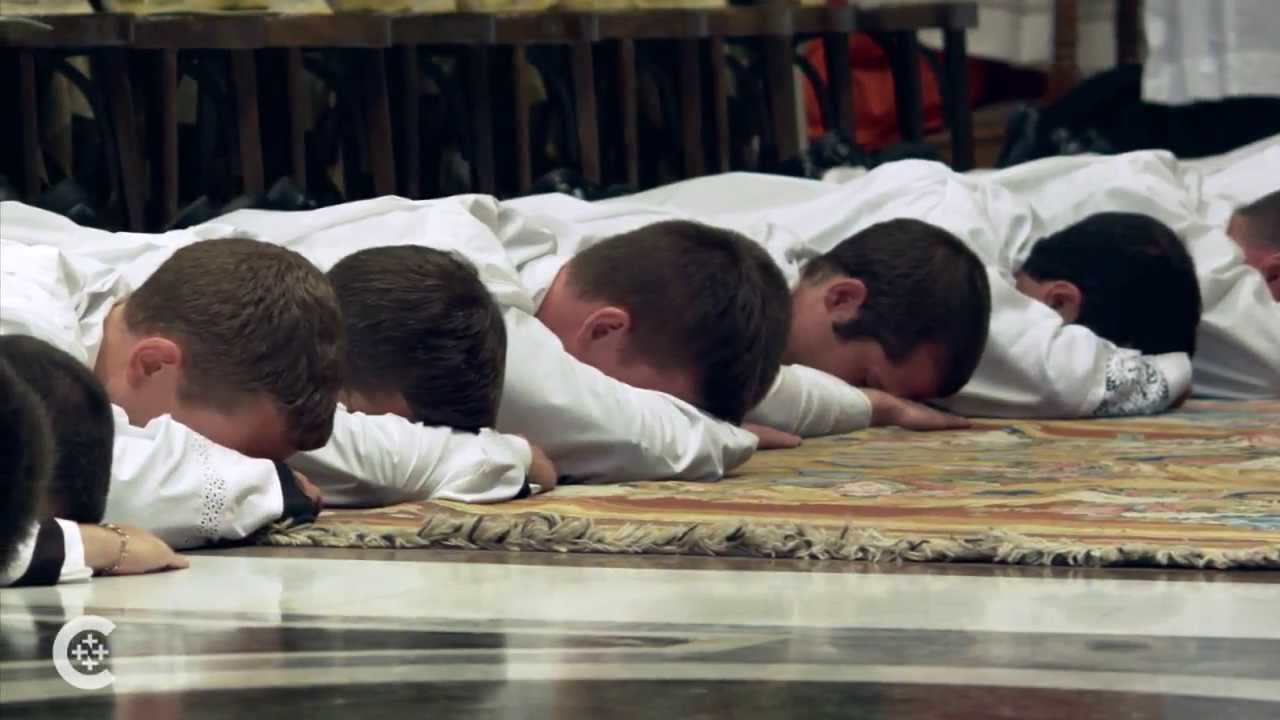 1193. Who made the law of celibacy? The Catholic Church, with God's approval and authority, following the example of Christ and the Apostles. 1194. Did not Pope Gregory VII originate it in the 11th century? No. He merely enforced the already existing law more rigidly in his efforts to correct abuses. Over 300 years before Gregory VII. was Pope, the Greeks met the Latin Bishops at the Council of Trullo, and admitted, "We know that the law of the Roman Church is to demand that married men, from the moment of their ordination, must separate from their wives forever. " St. Jerome, over 300 years before that, wrote, "The Apostolic See accepts married men to be Priests provided they live no longer as husbands to their wives. " Marriage was never allowed after ordination. If a single man were ordained, he had to practice celibacy. If an aspirant were already married, he had to practice celibacy from the day he became a Priest. Pope Siricius, in 385 A.D., said, "All we Priests are obliged by an inviolable law dating from our ordination to be continent and chaste, and thus offer the sacrifice of our bodies to God." This same Pope wrote also, "I have heard that a Priest of Christ has married, defending his action by saying that the Priests of the Old Law married. But the Church, the Spouse of Christ, has always loved chastity. Wherefore any Priest who claims a privilege from the Old Law which is unlawful in the New must know that he is deprived by the authority of the Apostolic See of the ecclesiastical honor he has so misused, nor can he celebrate the divine mysteries. " Pope Siricius was not beginning a new law in the Church, but blaming an individual for not observing a law that had long been in existence. In 314 the Council of Neo-Caesaria had also said, "If a Priest marries, let him be degraded. " The Apostolic Constitutions gave the law, in the 2nd century, "If a Priest or Deacon is not already married, he can never contract marriage." Thus right back to the 2nd century you have explicit testimony that in the Catholic Church once a man became a Priest he had to renounce marriage, and practice celibacy. 1195. Are there not Oriental Churches united to the Catholic Church, yet without the law of celibacy? Yes. They have been exempted from the law obliging all Priests of the Latin Rite. The Church has tolerated the ancient custom of marriage in those Eastern Churches which have sought re-union with her, allowing married men to be ordained amongst them, though marriage subsequent to ordination is forbidden. But in the Western Latin Church the full law must be observed. 1196. God commanded all men to marry when He said "Increase and multiply." That is a general precept for the whole human race, and a general blessing upon marriage. But it does not bind each and every individual. If it did, every single marriageable man in the world is breaking God's commandment and is in a state of sin. Or when would a man begin to sin by not being married? At 18? 19? 20? Or only when he could afford to support a wife? And would you accuse Christ of violating God's will ? Or if you exempt Him because of His divinity, would you blame the Apostles? Was St. John the Baptist so very evil? Or St. Paul, who wrote, "I would that all were as myself . . . unmarried"? 1 Cor. VII., 7. You quote the Bible, and then give a teaching radically opposed to the doctrine of that Bible. 1197. The Bible says that a man must leave father and mother and take a wife. Matt. XIX.9 5. The sense is simply that one who does take a wife has a duty to her and to his children which is so binding that he must leave even his parents in order to fulfill it in his newly adopted state. But Christ gave a special blessing to those who would renounce father and mother, and the prospects of a wife and children also, for His sake. Matt. XIX., 29 says, "And everyone that hath left house, or brethren, or sisters, or father, or mother, or wife, or children, or lands for my name's sake, shall receive an hundredfold, and shall possess life everlasting." 1198. St. Paul says that a Bishop must be the husband of one wife. 1Tim. III., 2. St. Paul does not say that a Bishop must be the husband of a wife, but insists upon the expression "one wife." Had he meant that it was necessary to have a wife, he would have been violating the law himself. In the early Church, owing to the scarcity of single men eligible for the Priesthood, married men who wished to be ordained could be accepted provided they had not been married twice. Those presenting themselves must have been the husband of but one wife. That is all that the text means. Catholic Bishops and Priests do not violate that law. A law forbidding a man to have had more than one wife does not order him to have one; nor is it violated by a man who has never had a wife at all. However, as Christianity grew and vocations became more plentiful, single men only were accepted, and had to remain celibates, according to the advice of St. Paul which I have quoted. 1199. St. Paul says that if a man cannot rule his own house, how shall he take care of the church. 1 Tim. III., 4. That does not suggest that a Bishop must be married, but belongs to the same context as that which you have just quoted. If a man who has been married, but not to more than one wife, be chosen, he must be one who has been faithful and who has ruled well his own house. That discipline was most wise at a time when such a man could be chosen. But such discipline no longer holds. 1200. "Forbidding to marry," is given as one of the signs of false Churches. The Catholic Church does not forbid people to marry. The vast majority of Catholics marry with the blessing of the Church. The text refers to people who declare all marriage evil, as did many early heretics. Marriage is not evil, nor is any Catholic forbidden to marry, as you would suggest. It is true that Priests may not marry. But no one can be obliged to become a Priest; in fact every one who is a Priest could have married instead of devoting his life to an ecclesiastical vocation, had he wished. 1201. Priests are only natural human beings. Why are they forbidden to marry? Because they do not wish to be only natural. They wish to be supernatural. St. Paul was human, but he did not marry. And like St. Paul, Catholic Priests wish to centre their interests in Christ and share their hearts with no one else. Meantime, they are not forbidden to marry as human beings. They are forbidden as Priests. Prior to their choice of the Priesthood, every Priest could have chosen marriage instead had he wished. 1202. Are Priests different from other men? As human beings—no; as called, not to the state of marriage, but to the Priesthood—yes. For this reason, whilst like all others who for one reason or another do not marry, they are obliged to avoid all sins against chastity; they also take upon themselves an additional obligation to do so under pain of sacrilege by vows of chastity offered to God. 1203. It is against nature to suggest that Priests are exempt from ordinary temptations. No one suggests that they are exempt from ordinary temptations. But it is not against nature to rise above these temptations. It is one thing to be tempted; quite another to yield to the temptation. Anybody could avoid sin if never tempted. But the merit and glory of a Christian is to be tempted yet not to give way to the temptation. Priests undertake to resist such temptations with the help of God's grace. 1204. Protestants do not believe in your oath of celibacy. They know that Priests do not live up to it. Upon what do you base that outrageous assertion? 1205. They are ordinary men, and as such cannot resist their natural inclinations. Do you mean that no one with human nature can be pure and chaste? That every young couple entering matrimony can be quite sure that the other has led an evil immoral life up to that moment? If you do not mean that, do you mean that a young man in the world can lead a good life, but suddenly becomes corrupt when he gives himself to a life of closer union with God? Do you think that the devoting of oneself to a life of prayer and to spiritual things makes it much harder to live a good life than it was before? If a man wanted an immoral life he need not become a Priest in order to attain his desire; nor would he dream of taking a solemn vow of chastity for the sheer joy of making himself doubly guilty in breaking it. And do you, a Protestant, include in your indictment all unmarried Protestant ministers and celibate clergymen? 1206. Priests violate a fundamental law of nature ordering production of the race. It is a fundamental law of nature that those who do exercise the functions of marriage should do so for the propagation of the race, and no Church fights against the contraceptionist as does the Catholic Church. But it is not a fundamental law of nature that every individual must marry. Many single people never get the chance. St. Paul also says that a single life for the love of God is the better thing, and the Catholic Church asks the better thing of her Priests so that they can be more free to devote themselves to the cares of all, that they may set a lofty example of self-restraint, and that they may more closely imitate Christ. 1207. You would be much happier if you were married. If that were so, will you blame me for denying myself what you admit to b8 a happiness? However supernatural happiness more than compensates me for the loss of that natural happiness. No word of mine could make you think that I am gloomy or miserable. And I am sure that your estimate of me will make you admit that there is at least some girl in the world the happier for not having had me inflicted upon her as a husband. 1208. Why inflict such a burden upon human nature? If anyone is to complain, let the Priests do the complaining, who have to endure the burden. And believe me, if Priests were left free to marry, very very few would ruin their work and influence by taking upon themselves the duties of married life with its necessary division of their interest from their ecclesiastical vocation. Priests do not want to be free to marry. 1209. Our Protestant ministers do not pretend to be better than other men—they marry. Is not this more honest? Few Protestant ministers would thank you for that remark. There is, however, no need to pretend to be better. There is need to be better. Christ said to His Apostles, "You are the salt of the earth, but if the salt lose its savor! . . . You are the light of the world. So let your light shine before men that they may see your good works, etc." Your ministers may marry—but the Apostles did not, even as their Master did not. Of course it is more honest to marry than to live a life of un-chastity in an unmarried state. But provided one lives a clean and chaste life in in the single state, thus imitating Christ, it is not more honest to marry. 1210. Do you condemn Protestant ministers for marrying? Not for a moment. They break no commandment of their Church. It is true that God commands His Priests to remain single through the legislation of the Catholic Church. But her legislation in this matter has nothing to do with Protestant clergymen. 1211. // it is right for one set of ministers to be celibate^ it must be wrong for others not to be celibate. You might just as well say that, if it is right for me to obey one set of laws in America, it is wrong for another man to follow a totally different custom in China! And the Catholic Church differs much more from other religions than America differs from China. 1212. Priests ought to marry to set a higher example. No one could give a higher moral example than Christ, and a Priest sets a higher moral example by not marrying. When he encourages young people to live pure and chaste lives in a single state he is not telling them to do what he is not obliged to do himself. He is unhampered by domestic cares so that he can go to the poorest mission for the love of God, and can attend those dying of contagious diseases without thought of carrying infection to wife and children. And it is certain that our people have more confidence in their Priests precisely because they are single men, above all in the Confessional. Even in the Greek Orthodox Church, it is a known fact that the people go to confession by preference to single Priests rather than to married Priests. 1213. Why more confidence in a single man as a Confessor than in a married man? Because single men can give undivided attention to their duties, and have more time to study and know the law of God upon which they must base their advice. Then, too, people feel that one who has renounced earthly affections for the love of God has more opportunities of living a disinterested spiritual life, and that his words will be correspondingly more helpful. And last, but not least, a single man is not so likely to share his thoughts and worries with a better-half, or betray a confidence through indiscretion or inadvertence. 1214. How can Priests advise as to the duties of the married state when they have no practical experience of it? "The lips of the Priest shall keep knowledge, and they shall seek the law at his mouth." Mai. II., 7. The married state is not exempt from God's laws, and the Priests must know those laws. Every Priest studies all the possible duties of marriage from a moral point of view during a long course of theology before he enters a Confessional at all. If you say that a Priest cannot explain those laws to people because he himself is not married, will you say that a trained lawyer has no right to explain the law of the land to a plumber concerning that individual's trade because he himself has never so much as soldered a jam-tin? 1215. Priests condemn prevention of life by birth-control yet prevent life by their celibacy! Those who undertake the duties of married life are forbidden deliberate and artificial birth-prevention. Priests called, not to married life, but to a different state altogether, have neither the rights nor duties of the married state. There is a vast difference between preventing children by setting God's natural laws in operation yet frustrating their effects, and simply omitting to have children. No one is obliged to set the natural productive laws in operation. So, too, the obligation to pay bills is not violated by the man who has no bills. I may omit having creditors, but if I have them, I must not prevent them from receiving what is due to Jiem. That should make it clear. Human beings may omit those actions which God intends to result in life, but if they exercise them and then prevent human life, they violate God's law. ..... 1169. Why doesn't the Roman Catholic Church allow its priests to marry like the Protestant ministers? Speaking as a priest I simply say that we do not want to marry like Protestant ministers. Surely you don't suggest that we ought to marry just because they do. If you are moved by pity for us then it should be your consolation that it is we who are the sufferers, and not your Protestant ministers. But now, why does the Catholic Church exact celibacy whilst Protestant Churches do not? It is not because priests believe marriage to be evil. It is that they may be able to devote themselves more completely to the work of Christ, and the welfare of souls. Christ Himself did not marry, and He said clearly that it was good to renounce marriage for the kingdom of heaven's sake. And He added, "Let those who can do so, do so." St. Paul also taught that one who remains single for the sake of complete consecration to God makes a better choice than one who chooses marriage. And he said, "I would that all were like myself-unmarried." And he gives as his reason, "He that is without a wife is solicitous for the things that belong to the Lord, how he may please God. But he that is with a wife, is solicitous for the things of the world, how he may please his wife: and he is divided." As you like Bible, chapter, and verse, you will find that in 1 Cor. VII. verses 7 and 8, and 32 and 33. If celibacy, as the New Testament teaches, is the higher ideal, from whom could the Church expect that higher ideal if not from her priests? There are many practical advantages also in the Catholic law on this subject; but they are secondary. The main point is as to whether celibacy is right or wrong in itself; and, according to the New Testament, it is not only right, but the better choice. 1170. Our ministers get married, and have children. That is true. But, together with many other ideals, the Protestant reformers threw away the ideal of celibacy, and lost all real understanding of the supreme invitation of Christ to renounce all things, even the consolation of wife and children, in order to follow Him. And there is no reason why the Catholic Church should abandon the ideal because the Protestant Churches have done so. The celibacy of the clergy has been the Christian ideal from the very earliest ages of the Church. When the disciples asked our Lord whether He expected men not to marry, our Lord replied, "Not all men will refrain, but those to whom it is given, He that can do so, let him do so." Protestantism abolished the difficult things, and followed the easier path of the senses rather than the higher road of the spirit. But in the Catholic Church the high ideals of Christ remain to this day. Recently a young priest died, and after his death some notes he had written prior to his ordination were found, and they contained these beautiful words, "I am to be a priest, living for Christ only. I must not only renounce marriage. I renounce all the tenderness women can show, and which gives such charm to the life of a man. All such consolations, so dear to the human heart, are excluded by my vow. Once the sacrifice is made, not one of those sweetnesses must ever be desired. The life of a priest must be a solitary one - alone with God." If you object to such ideals, and the Catholic standard of celibacy for the priesthood, I will gladly answer any particular difficulties that occur to you. But the fact that Protestant ministers choose to marry, just as other men who have no desire to rise above ordinary levels of human life, is no reason why the Catholic Church should be contented with the same lower standards. 1171. You seem to canonize virginity. St. Paul himself says that the virgin who marries does well, but the virgin who does not marry does better. The context shows, of course, that he intends the renunciation of marriage for the love of Christ, and the resolution to share one's heart with no one save Him. Though we speak highly of Christian marriage, the dignity of marriage, which plants the tree of life, does not prevent the higher dignity of the single state. Humanity needs not only fruit; it needs flowers. Some are called to live the life of the soul, and to leave the fruits of earth for the flowers of heaven. 1172. The celibacy of priests and nuns seems so useless socially. Whatever you may think of its results, the practice was advised and exemplified by Christ Himself. But the practice is far from being socially useless. It is most useful to marriage itself, which it tends to purify and ennoble in those called to the married state. It keeps an ideal before our Catholic people which inculcates due reserve and rebukes excess. And it is a remarkable thing that the Church which sanctions Convent life, and priestly celibacy, is the one Church which stands most firmly for the sanctity and stability of Christian marriage. Again, the voluntary renunciation of priests and nuns frees them from lower interests, and enables them to devote themselves to higher and more spiritual pursuits. And the more who do this, the greater the social benefit. 1173. Why should a priest shirk family responsibilities, and lack experience of the needs of ordinary people? A priest does not shirk the responsibilities of a family. He gives up the prospect of a personal family, but makes all mankind his family. Had I the obligation to devote myself to a wife and family, I could not give anything like the time I do to all who claim my attention in their spiritual needs. But besides these, and other urgent considerations, the Holy Eucharist and the Mass demand celibacy. Those who have lost the Real Presence of Christ in the Eucharist, and who do not understand the Mass are scarcely likely to appreciate this point. But every Catholic heart understands that such contact with God at the Altar demands reserve, and that virginity is every bit as fitting and suitable to a priest as to Mary, the Mother of Christ. Meantime a priest experiences the needs of the ordinary people, through his spiritual duties towards them, and above all as their adviser and consoler in the Confessional. Few in this world have so wide an experience, and the very abnegation of the priest adds immeasurably to his power. 1174. Did not the Roman Church make the law of celibacy only in the Thirteenth Century? The Apostolic Constitutions, certainly written before the Council of Nice which was held in 325, gives the law that at least no priest could marry after his ordination. A man already married could be ordained-but if a single man were ordained a priest, he must remain single. The first Papal decree on celibacy which we can trace is that of Pope Siricius in 385. The wording of his decree is as follows:"All of us who are priests are bound by a strict law to dedicate both body and heart to sobriety and chastity by virtue of our ordination." He does not pretend to be making a new law, but quotes an already existent law. Five years later, in 390 the second Council of Carthage used these words. "Previous Councils have decreed that bishops, priests and deacons must be continent and perfectly chaste, as becomes ministers of God. Therefore, as the Apostles have taught, and with them the whole of antiquity, let us also observe chastity." Any priest who offended by attempting to marry was to be degraded and expelled from his office. All this is before the close of the fourth century. 1175. Was not St. Peter a married man? Yes, that is correct. He was a married man when our Lord called him to the Apostolate. But he left his wife, with her consent of course, to follow Christ. Thus in St. Math. XIX., 27, "Peter answering said to Him 'Behold we have left all things and have followed Thee.' " And Jesus replied, "Everyone that hath left house or brethren or sisters or father or mother or wife or children or lands for My Name's sake shall receive a hundredfold and possess life everlasting." 1176. Is the ideal of a married clergy as primitive and as Catholic as that of a celibate clergy? There never was, and there is no Catholic ideal of a married clergy. Celibacy is the Catholic ideal, and anything less cannot be the ideal. A married clergy has never been anything more than tolerated, as in cases of necessity when single men who would adopt the ideal were not available. But even here St. Paul gives restrictive legislation, insisting that such married men as were to be chosen, must not have been husbands to more than one wife. 1 Tim. III., 2, 12. Twice-married men were excluded. Aiming always at the ideal, the Church soon ordered such married men as were ordained to practice continency from the day of their ordination; and finally she ruled out a married clergy altogether as far as the Western Church is concerned. Eastern Churches which have sought union with the Catholic Church, and which already had a married clergy, are being led gradually to the ideal of celibacy also. 1177. An Anglican minister told me that the ideal of a married clergy was just as primitive. There must be something in it. There is nothing in it. In fact, it is a self-evident absurdity. A celibate clergy is a non-married clergy. Now when you have two contradictories, married and not-married, one of them will be the ideal, or there's no ideal. If a married clergy is the ideal, then a non-married clergy is not the ideal. If a non-married clergy is the ideal, then a married clergy is not the ideal. Only an Anglican who wants to placate simultaneously High Church advocates of celibacy, and Low Church married ministers could possibly talk nonsense about both being the ideal. I call it nonsense, because if you were asked whether it would be better to go upstairs or downstairs, you would be talking nonsense if you said that it would be better to do both simultaneously. One or the other could be the better thing. But not both. So a married "or" a celibate clergy can be the ideal, but "both" cannot be. It would be better for Anglicans to say straight out that a married clergy is the ideal, and condemn celibacy as a lower standard; or else to say that there is no ideal on this point, and that marriage and celibacy are equally good. But it is suicidal for an Anglican to speak of "the primitive ideal of celibacy," with most of the Anglican clergy married. 1178. Were the English priests celibates at the time of the Norman invasion and before? Yes. The Venerable Bede records the explicit instructions of Pope Gregory the Great when he sent St. Augustine to convert England. The Pope insisted that those who took Sacred Orders must renounce marriage. That law of celibacy existed right through the ages in England until abolished by Parliament under Edward VI when the Church of England accepted Protestant standards from the Continent. Henry VIII of course, despite his break with Rome, still insisted on the celibacy of the clergy in the schismatic Anglican Church he created. 1179. Many people say that the celibacy of the Catholic clergy is opposed to the law of nature, and consequently wrong. How should one reply to them? If they are Christians, it should be enough to quote the example and teaching of Christ. Or, if they insist that He, as God, must be excepted in His personal life, you could quote St. Paul, who advised others to remain as he himself, unmarried. If, however, the objectors are not Christians, you will have to discuss the question from the aspect of purely natural law. You could first ask them, not merely to say that celibacy is opposed to the law of nature, but to prove their position. If you wait for them to do so, the discussion will go no further.But you could go on yourself to show that celibacy is not opposed to the law of nature.Firstly, you could point to all those to whom marriage, from one cause or another, is quite impossible. Are they all to be guilty of violating the law of nature?Secondly, you could analyze the supposed law in itself. Some laws directly concern men in an individual capacity. Others concern them in a social capacity. Now not every individual in society is bound to fulfill general laws of nature for the general welfare of society. For example, it is a law of nature that every living individual must eat if he is to preserve his own life. But the life of the human race is preserved provided sufficient numbers in general marry and beget children. And this general law of nature is not violated by the abstention from marriage by some, whether by necessity, or by voluntary choice. It might be noted that in England there are over two million more women than men. Does the law of nature demand polygamy, or does it sanction the single state in given members of the population? 1180. Does the Roman Catholic Church think its priests and nuns are inhuman? No. You must remember, of course, that no Catholic man or woman can ever be compelled to become a priest or a nun. If Catholics wish to marry, they are quite free to do so. But if they make that choice, they are not free to become priests and nuns. All that the Church says is this. "There is no obligation to become a priest or a nun. That's a matter of free choice. But if you do become a priest or a nun, you must renounce all thought of marriage, and take a vow of purity and chastity for life." All Catholics know that beforehand, and if they choose such conditions, then it is they themselves who have chosen not to marry. Does it follow that the Church thinks priests and nuns to be inhuman? No. It is one thing to be inhuman; it is quite another to rise above normal human tendencies and inclinations, and to live according to supernatural and spiritual ideals. Those who do not think this possible simply ignore the fact that it is done by thousands; and they quite forget the power of divine grace. One can love God, and spiritual things, so much that One has no desire to indulge natural cravings for human love and affection, or to seek those pleasures of the senses afforded by earthly love making. Such a love of God, and of spiritual things, does not make one inhuman. It merely lifts to a higher than a merely human level. 1181. Doctors say that it is not possible for man to live alone and remain normal. As in any other profession, so in the medical profession there are unscrupulous men who have no conscience, and who do not hesitate to violate the truth in order to say what they think their client would like to hear. But all truly great and honorable medical men denounce such quackery and ignorance. Let me quote some of them, and from various countries. Dr. Toth, professor at Budapest University writes, "It is absolutely untrue that a chaste life even in the least degree is injurious to health. Not a single earnest medical work by an author who would be ready to face a challenge to his writings says so. Not a single medical man of good repute would undertake to prove that any sickness was caused by moral purity."Dr. Farel, the distinguished psychiatrist of Zurich writes, "I have never come across a psychosis having its source in a chaste life, but have diagnosed countless cases caused by sexual excesses."Dr. Rossier, a French authority, says, "I assert without reservation that chastity cannot be injurious to health. I warn everyone that other advice by doctors is erroneous and harmful." The Second International Health Congress at Brussels unanimously resolved, "Youth must be taught that not only has chastity no harmful effects on health, but that it is unqualifiedly commendable." The medical faculty of the Norway University gave out the public statement: "That sexual continence is harmful to health is, in our unanimous opinion utterly false and in direct opposition to all our professional experience. We do not know of any impairment of health which could have its source in an absolutely pure and moral life."The Italian physiologist, Dr. Mantagezza, says, "Never yet have I seen a disease which originated in a chaste life. By continency the memory becomes keen and enduring, thought vivid and fertile, the will strong, and the character steeled into energy." Eulenberg, professor of psychiatry in Berlin University says, "No one could fall ill, or become affected by nervous ailments merely because of sexual continence. This often-heard allegation I regard just as empty and nonsensical chatter." And he adds that the belief that continency and celibacy are harmful is accepted with alacrity by men of loose morals, and, alas, tacitly endorsed by dishonorable medical men. And he says that this idea does untold harm, encouraging lawless indulgence, and that "against it no protest can be too loud and too frequent."Max Gruber, professor of medicine at Munich University, writes, "There is not the shadow of evidence that continence is injurious to health. Those doing hard mental or physical work feel at the very fullest exercise of their strength how much continence heightens their ambition and working ability. This was known to the athletes of ancient Greece, and is known to the sportsmen of our day, to research workers, scientists, and creative geniuses." Dr. Paul, of Karlsruhe, says, "No conscientious physician has ever come forward with an opinion that a healthy man should satisfy sexual instinct in order to maintain good health." I have a few dozen more of such quotations from medical authorities. But I have said enough to show that continence and celibacy do not mean abnormality either mentally or physically. And that in any man, whether a Catholic priest or not. 1182. Why are Greek Orthodox priests allowed to marry, and not Roman Catholic priests? Because the Greek Orthodox Church is a schismatical Church which does not accept the legislation of the Catholic Church. Also it is not able to inspire or exact the same ideals of all its clergy. Those Greek Orthodox priests who belong to Greek monasteries must, of course, adopt the higher ideal of celibacy. But the parochial clergy are not obliged in the Greek Church to rise to the same heights. On the other hand, Catholic priests are not allowed to marry because the Catholic Church insists that her priests give their undivided interest to their spiritual work, that they more closely imitate Christ their Master, who certainly never dreamed of marriage, and that they put into practice the ideal expressed by St. Paul, "I would that all were as myself, unmarried." 1183. Has the permission granted by the Synod of Ancyra in 314 A.D. to marry in the East been superseded by any law of the Church since? Does it still operate to allow priests to marry? At various times there have been many modifications of the legislation of Ancyra; modifications undertaken by the various Uniate Churches themselves. These churches are gradually leaning towards the complete acceptance of celibacy, just as it prevails in the Western Church. Though the Holy See has not imposed the discipline of the Latin Church upon them, they are gradually imposing it as an obligation upon themselves. At present, the Uniate Churches do not allow marriage after ordination as deacon or priest. If candidates marry before such ordination, they may be ordained. But if they are single when ordained, they must remain single. In other words, the general law for the Eastern Uniate Churches is that marriage beforehand is not an impediment to ordination as a priest; but ordination as a priest is an impediment to any subsequent marriage. This applies to simple priests only. Bishops must be chosen from the unmarried only, having observed strict celibacy all through their priestly lives. These are the general principles. There are slight variations in different Uniate Churches which space will not allow me to give in detail. Today the great majority of priests in the Uniate Churches do not avail themselves of the right to marry before ordination. They voluntarily choose to remain single, and being ordained as single men, adopt celibacy as the law of their future lives. The time will certainly come when these Eastern Uniate Churches will wish to have the full discipline of the Latin Church in regard to celibacy extended to them also. --Radio Replies |
|
|
Apr 21 2015, 11:19 AM
|
|
Senior Member
3,577 posts Joined: Apr 2006
|
Interesting sharing from a friend today:
Atheists by nature cannot understand marriage. They look on it as merely biological. Hence there's no distinction between human and animal sexuality. It's merely biological. Same goes for gender, merely biological. But for Christians, it's theological. In Creation, of the animals, God says this: And God said, “Let the earth bring forth living creatures according to their kinds: cattle and creeping things and beasts of the earth according to their kinds.” And it was so. 25 And God made the beasts of the earth according to their kinds and the cattle according to their kinds, and everything that creeps upon the ground according to its kind. And God saw that it was good. let the earth bring forth nothing is mentioned of gender. It's created and brought forth as a matter of biological course. But its different concerning man. You see what He says: 26 Then God said, “Let us make man in our image, after our likeness; so, man in made in the image and likeness of God, only man but how? 27 So God created man in his own image, in the image of God he created him; male and female he created them. That's a clue already. Man and woman is not merely biological but human sexuality images God in some way. 28 And God blessed them, and God said to them, “Be fruitful and multiply, and fill the earth and subdue it; in that union between man and woman, it not only images God but it has creative and genitive power We can begat other humans with ratio and free will We can image God in creating other humans This actually comes from an even greater mystery, that of the Blessed Trinity You see, Our Lord revealed God as who? Not as creator, redeemer, sanctifier or whatever God DOES He revealed Him as Father because that's who GOD IS. All the works of God occur in time and space, that's what God does. But who is God? that's why Our Lord said No one can come to the Father except thru Me. Not no one can come to God because it is the Son who reveals the Father. From all eternity, God is Father, because from all eternity, He begats a Son. John Paul II said this: "It has been said, in a beautiful and profound way, that our God in his deepest mystery is not a solitude, but a family, since he has in himself fatherhood, sonship and the essence of the family, which is love." So in the deepest mystery of the Trinity, God is not alone! in humanity, what is a Father? What is a Son? the son images the Father, looks like him, takes on His characteristics and behaviour and demeanor etc but because our fathers are not perfect, and we are not perfect, our imaging is not perfect either but God in His perfection, begats a perfect Son in Whom He is imaged perfectly only in this way can we understand the Trinity and the sayings of Our Lord 30 “I can do nothing on my own authority; as I hear, I judge; and my judgment is just, because I seek not my own will but the will of him who sent me. 19 Jesus said to them, “Truly, truly, I say to you, the Son can do nothing of his own accord, but only what he sees the Father doing; for whatever he does, that the Son does likewise. that's why Arianism and all its later descendants are so wrong cos if there was a time when the Son was not, then there was a time when the Father was not He was not Father that's why the Greek heresy is so bad if the Spirit does not proceed from the Father and the Son in eternity, then the Son does not image the Father This post has been edited by yeeck: Apr 21 2015, 11:21 AM |
|
|
Apr 21 2015, 04:22 PM
|
|
Junior Member
286 posts Joined: Jan 2003 From: Subang Jaya
|
Marcus- TP/FL : St. Francis Xavier, PJ. For Silent Adoration, I often go to St. Thomas More, Subang Jaya.
|
|
|
Apr 22 2015, 12:22 AM
|
|
Senior Member
3,577 posts Joined: Apr 2006
|
Purgatory
 951. I am interested in your dogma concerning purgatory. Must I be a Catholic before I can understand that invention of your Church? No. You must be a non-Catholic to suspect that the Church did invent it. The idea that there is no purgatory is the invention of Protestants. The reformers corrupted the true doctrine, and many good Protestants, realizing this, are returning to the Catholic religion of their forefathers even as I myself have done. Meantime, if I could discover, or you could show me, when and where the Church invented this doctrine, I promise to spend the rest of my life exposing the Catholic Church as a merely human institution making outrageous claims upon men. 952. Why make people afraid of such a horrible place as purgatory, when you know that it does not exist? I know that it does exist. And if you deny it because to you it seems a horrible place, you must deny hell also because it is far more horrible. And if you deny hell, you deny Christianity. And is it not a more horrible thought that there would be no purgatory? In that case you would have but heaven and hell. All not quite fit for heaven could not hope to escape hell. It is a much more pleasant thought that there are people not quite good enough for heaven, yet not bad enough for hell, and that these are sent to purgatory until they are purified sufficiently for heaven. 953. What is the nature of your doctrine on purgatory? It can be summed up very briefly. At death the soul of man, if quite fit, goes at once to heaven; if not quite fit, to purgatory; if quite unfit, to hell. The soul which has repented of all its sins, and has fully expiated them in this life, is quite fit for heaven at once. The soul which departs this life in a state of unrepented mortal sin can never be fitted for heaven, and goes to hell. But a soul which has sincerely repented of its sins, yet has not fully expiated them, secures immunity from hell by repentance, and goes to purgatory until it has expiated all its deficiencies. 954. Does God want to roast you merely because you have the misfortune to be alive? He knows that you had no say in the matter. God does not want to roast me. It is not a misfortune to be alive, though it is blameworthy to have misused one's existence. Nor did I want a say as to whether I should receive the gift of existence. People can leave me a fortune tomorrow without consulting me. But I did have a say in my infidelities to God's grace, and for that I am responsible and do not wish to excuse myself. 955. Have you been so atrociously wicked as to deserve purgatory? There is no need to be atrociously wicked in order to need purification, any more than there is need to be on your death-bed before you need medicine. But there is need to attain to a high standard of purity and holiness before one could be fit to enter the glory of God's presence. 956. Do the souls of Protestants go to purgatory? All souls, whether of Protestants or of Catholics, or of any other religion, will go to purgatory if they are not good enough for heaven at the moment of death, nor bad enough for hell. Non-Catholics may deny purgatory, but that makes no difference to purgatory. 957. Would God destine so good a man as General Booth for purgatory just because he was not a Catholic? Purgatory is not a final destiny. Every soul that goes there is saved, and is ultimately admitted to the very Vision of God. Good Protestants as well as good Catholics will go there if they are not quite perfect at death. There is no dispensation. And where is the man who has not his imperfections? 958. A man has every chance to repent in this life. He has. And if he does not, he will not even go to purgatory if his sins be grave. Purgatory is not a place for repentance, but for purification. If two men repent on their death-beds, one of whom broke one commandment and the other, all the commandments often, both are saved by their repentance. But they are not both equal before God. They will suffer relative purifications in purgatory. 959. This dogma of purgatory was invented by Pope Gregory in 600 A.D., and was made an article of faith by the Council of Florence in 1439. If not invented until 600 A.D. why did St. Monica, in the 4th century, implore her son St. Augustine, as she lay on her dying bed, that he would pray for her soul whenever he went to the Altar to offer the Mass? And how would you account for the inscriptions in the Catacombs recording prayers for the dead offered by the Christians of the first centuries? Or, if you would go back earlier, what will you do with the teaching of Scripture itself? The Council of Florence merely recalled previous definitions. 960. What is your Romish reply to the challenge of Art. XXII. in the Book of Common Prayer? That Article of the Church of England says that the Romish doctrine of purgatory is grounded upon no warranty of Scripture, but is rather repugnant to the Word of God. The reply is that the Article is quite erroneous, and that many Anglicans realize the fact. Thus an Anglican clergyman unsays that Article definitely in his book entitled, "The Catholic Religion—a Manual of instruction for members of the Church of England." He speaks of a place of mercy "provided in the intermediate state, in which evil will be completely purged. When this purification is accomplished, such souls enter into perfect peace," p. 193. On the following page he suggests that, at the Reformation, men were too eager and rejected much that was true—including the intermediate state. In no less than six different places he urges prayer for the dead just as Catholics pray for the dead, and, as he shows from Scripture, both the Jews and St. Paul prayed for the departed. On p. 379, he writes, "Still more desirable is the celebration of the Holy Eucharist for the repose of the soul of the departed." Thus this Anglican clergyman goes back to the Romish doctrine of purgatory. I am not quoting from a book unacceptable to the many. My copy is of the 19th edition, completing 207 thousand. 961. How can an Anglican clergyman, who has sworn to accept the Articles of religion, teach such doctrine? I do not see how he can do so. Romish theologians are simple children compared with the capacity for mental gymnastics manifested by Rev. Vernon Staley, the author of the book, in his efforts to salve his conscience. He says in effect that the doctrine of purgatory is all right, but that Anglicans must not use the word purgatory. He admits the thing, but not its description. He calls it a place or process of cleansing, but he will not call it purgatory, which means the same thing. It is as if we Catholics had invented the word theatre. Then this exponent of Anglicanism would insist upon using the word play-house, and swear that he did not agree with the Catholic Church concerning houses of entertainment. In substance he declares Article XXII. to be false and unscriptural. 962. You speak of Scripture, but the Bible mentions only heaven and hell. It does not. It certainly mentions an intermediate state to which the soul of Christ went after His death on the cross. 1 Pet. III., 19. This state was neither heaven nor hell, but the Limbo of the Fathers of the Old Law. In addition to this, Scripture mentions the purgatorial state. In any case, it would not matter if the Bible did mention but two places. My mentioning only London and New York could not prove the non-existence of Paris. It would be a different matter if Christ had said, "There is no purgatory." But He did not. 963. But the Bible does not mention purgatory. It does not mention the precise word purgatory. But the intermediate state of purification described by that word is there. 964. How do you prove the existence of such a state? In Matt. V., 26, Christ, in condemning sin, speaks of liberation only after expiation. "Thou shalt not go out from thence till thou repay the last farthing." In Matt. XII., 32, He speaks of sin which "shall not be forgiven either in this world or in the world to come." Any remission of the effects of sin in the next world can refer only to purgatory. Above all St. Paul tells us that the day of judgment will try each man's work. That day is after death, when the soul goes to meet its God. What is the result of that judgment? If a man's work will not stand the test St. Paul says that "he shall suffer loss; but he himself shall be saved, yet so as by fire." 1 Cor. III., 15. This cannot refer to eternal loss in hell, for no one is saved there. Nor can it refer to heaven, for there is no suffering in heaven. Purgatory alone can explain this text As a matter of fact, all Christians believed in purgatory until the Reformation, when the reformers began their rejection of Christian doctrines at will. Prayer for the dead was ever the prevailing custom, in accordance with the recommendation of the Bible itself. "It is a holy and wholesome thought to pray for the dead, that they may be loosed from their sins." 2 Mach. XII., 46. Prayer for the dead supposes a soul not in heaven where it does not need the help of prayer, nor in hell where prayer cannot assist it. Some intermediate state of purification and need, where prayer can help, is necessary. And the doctrine is most reasonable. "Nothing defiled shall enter heaven." Rev. XXL, 27. Yet not all defilement should cost man the loss of his soul. Even in this life human justice does not inflict capital punishment for every crime. Small offenses are punished by fines or by temporary imprisonment, after which the delinquent is liberated. Those who deny purgatory teach the harder and more unreasonable doctrine. 965. God would not demand expiation after having forgiven the sin. What you think God would or would not do cannot avail against that which He does do. When David repented of his great sin God sent the prophet Nathan with the message to him, "The Lord hath taken away thy sin. Nevertheless, because thou hast given occasion to the enemies of the Lord to blaspheme, thy child shall surely die." 2 Sam. XII., 14. To forgive the guilt of sin, and purify the spiritual scar and stain, which that disease of the soul leaves, by expiatory suffering, is better than to leave the soul still unpurified and indebted to God's justice. I too could fully forgive a friend his offense should he have robbed me, yet still insist that he make good the damage he has wrought me. 966. What is the punishment of purgatory? When the soul leaves the body, that which can think, remember, love, hate, be happy or miserable, has gone from that body. A corpse cannot do these things. And the soul, with these capabilities, goes into a new state of being as a separated spirit. And my true self, separated from the distractions of this world, will perceive clearly and fully its own unfitness for God's presence, a perception which will mean unspeakable suffering. The exact nature of this suffering we do not know, but it is compared in Scripture to the action of fire afflicting a sensitive body. Although it is not defined as a dogma that there is a real fire of purgatory, it is the general opinion of theologians that there is a real fire somewhat analogous to the fire of hell. However it be explained, the fact that purgatorial suffering awaits the imperfect has been revealed by God. 967. When did God make purgatory? Heaven of course always existed. For where God is, there is heaven. Hell was made when the devil and his followers fell from grace. There was no purgatory for them. Purgatory, then, was made when men began to sin and die with sins repented of, but not fully expiated by the sufferings of this life. Men under the Old Law went to purgatory just as those do who live under the New Law. 968. Where is purgatory? God has not deigned to satisfy our curiosity on that point, and the knowledge is not of practical importance to us. The fact that there is a purgatory has been revealed by God. And when He reveals a fact, we cannot say to Him, "Well, I for one refuse to believe it until You tell me more about it." God proves a thing by saying it, for He is truth itself. We have but to prove that He said it 969. How do you know that there are any souls in purgatory? I know that 100,000 people die daily. I refuse to believe that they all go to hell, and feel quite sure that they are not all fit for immediate entry into heaven. Moreover, you would find far more difficulty in endeavoring to show that there are no souls in purgatory. --Radio Replies |
|
|
Apr 22 2015, 12:31 AM
|
|
Senior Member
3,577 posts Joined: Apr 2006
|
The Sacrament of Confession explained by Archbishop Fulton Sheen
|
|
|
Apr 23 2015, 09:34 AM
|
|
Senior Member
1,920 posts Joined: Jan 2009
|
QUOTE(Jedi @ Jan 26 2013, 04:55 PM) wow Jedi, in case you "awake"... here is a catholic thread fyi... thank you for sharing!call me a rebel, but I believe Holy Spirit guides us and teaches us, through private revelations for us, which brings us DEEPER INTO THE GOSPEL, but Revelations can be private through life experiences of a man, for example of Apostles. Matthew 16:18 - Jesus established and protects His Church Matthew 28:20 - Jesus promises to be with His Church always John 16:13 - The Holy Spirit guides the Church into all truth 1 Timothy 3:15 - The Church is the pillar and foundation of truth Matthew 18:17-18 - If someone refuses to listen to the Church cast him out Matthew 28:18-20 - The Churches authority is Jesus' authority. 1 John 4:6 - Anyone who knows God listens to the Church Luke 10:16 - He who rejects the Church rejects Christ Matthew 16:19 - The Church has power to legislate Acts 15:28 - Decisions of the Church are decisions of the Holy Spirit 60, 000 $$ question. 2 Thessalonians 2:15 and based on life accounts of the apostles, mainly the Preacher to the Gentiles, St Paul, also shows us that we must be obedient. Therefore when we rely on Holy Spirit, we also must remain within the Body, His Bride. We should be humble, and obedient, and open ourselves fully to God. That is what I wanted to share..without discussions intended, bec it is not a general christian topic and I agreed with our bro unknown warrior not to pursue. (however I wish for a unity of denominations and Church) I believe. That is the primary way of getting in touch with God, someone who loves us so much thinking about us every second. Prayer is the oxygen of my soul - St Padre Pio Not only we can give thanks, praise and worship, whatever we ask, if according to His Will, will be given to us, and it always happens. God never disappointed me even once. He loves me, and us, even though we are sinners, and as I am a student, even though I could not preach like a pastor does (yet), even though I have little time to help others, prayer alone, is what God desires and makes us pleasing in His eyes. i.e one of my life experiences: I remember once, He told me, prayer alone suffices, when I prayed for our beloved country Malaysia, esp of the political situations, and that to ask the Lord, look not upon our sins, but at the hunger and cold they suffer, and a voice in my head said: My Child, I will be merciful to them. Know that it is your prayer and the citizens of Malaysia that uphold the world (Malaysia). God desires our prayers, bec our prayers changes the world, unbeknowingly to us, to other people. Without prayers, for example, our political ministers could fare worse, and would be more corrupt in their senses in ways we cannot imagine. That is why I believe, God says 'it is us who uphold the world', He is being merciful, and loving , as His Divinity is, flowing graces upon us, even though Hurtful as it is to Him, flowing off rock to certain people. Therefore, we should encourage each other to pray |
|
|
Apr 23 2015, 09:54 AM
|
|
Senior Member
1,920 posts Joined: Jan 2009
|
QUOTE(Jedi @ Feb 7 2013, 12:03 AM) The source is something you always resent (all the councils of the Church - this is from Vatican II), but very well, yeeck This is jedi opinion about Catechism of Catholic Church. Should be compatible with roman catholic. just delete if it's not compatible from Catechism of Catholic Church The Different Kinds of Sins 1852 There are a great many kinds of sins. Scripture provides several lists of them. the Letter to the Galatians contrasts the works of the flesh with the fruit of the Spirit: "Now the works of the flesh are plain: fornication, impurity, licentiousness, idolatry, sorcery, enmity, strife, jealousy, anger, selfishness, dissension, factions, envy, drunkenness, carousing, and the like. I warn you, as I warned you before, that those who do such things shall not inherit the Kingdom of God."127 1853 Sins can be distinguished according to their objects, as can every human act; or according to the virtues they oppose, by excess or defect; or according to the commandments they violate. They can also be classed according to whether they concern God, neighbor, or oneself; they can be divided into spiritual and carnal sins, or again as sins in thought, word, deed, or omission. the root of sin is in the heart of man, in his free will, according to the teaching of the Lord: "For out of the heart come evil thoughts, murder, adultery, fornication, theft, false witness, slander. These are what defile a man."128 But in the heart also resides charity, the source of the good and pure works, which sin wounds. The Gravity of Sin: Mortal and Venial Sin 1854 Sins are rightly evaluated according to their gravity. the distinction between mortal and venial sin, already evident in Scripture,129 became part of the tradition of the Church. It is corroborated by human experience. 1855 Mortal sin destroys charity in the heart of man by a grave violation of God's law; it turns man away from God, who is his ultimate end and his beatitude, by preferring an inferior good to him. Venial sin allows charity to subsist, even though it offends and wounds it. 1856 Mortal sin, by attacking the vital principle within us - that is, charity - necessitates a new initiative of God's mercy and a conversion of heart which is normally accomplished within the setting of the sacrament of reconciliation: When the will sets itself upon something that is of its nature incompatible with the charity that orients man toward his ultimate end, then the sin is mortal by its very object . . . whether it contradicts the love of God, such as blasphemy or perjury, or the love of neighbor, such as homicide or adultery.... But when the sinner's will is set upon something that of its nature involves a disorder, but is not opposed to the love of God and neighbor, such as thoughtless chatter or immoderate laughter and the like, such sins are venial.130 1857 For a sin to be mortal, three conditions must together be met: "Mortal sin is sin whose object is grave matter and which is also committed with full knowledge and deliberate consent."131 1858 Grave matter is specified by the Ten Commandments, corresponding to the answer of Jesus to the rich young man: "Do not kill, Do not commit adultery, Do not steal, Do not bear false witness, Do not defraud, Honor your father and your mother."132 The gravity of sins is more or less great: murder is graver than theft. One must also take into account who is wronged: violence against parents is in itself graver than violence against a stranger. 1859 Mortal sin requires full knowledge and complete consent. It presupposes knowledge of the sinful character of the act, of its opposition to God's law. It also implies a consent sufficiently deliberate to be a personal choice. Feigned ignorance and hardness of heart133 do not diminish, but rather increase, the voluntary character of a sin. 1860 Unintentional ignorance can diminish or even remove the imputability of a grave offense. But no one is deemed to be ignorant of the principles of the moral law, which are written in the conscience of every man. the promptings of feelings and passions can also diminish the voluntary and free character of the offense, as can external pressures or pathological disorders. Sin committed through malice, by deliberate choice of evil, is the gravest. 1861 Mortal sin is a radical possibility of human freedom, as is love itself. It results in the loss of charity and the privation of sanctifying grace, that is, of the state of grace. If it is not redeemed by repentance and God's forgiveness, it causes exclusion from Christ's kingdom and the eternal death of hell, for our freedom has the power to make choices for ever, with no turning back. However, although we can judge that an act is in itself a grave offense, we must entrust judgment of persons to the justice and mercy of God. 1862 One commits venial sin when, in a less serious matter, he does not observe the standard prescribed by the moral law, or when he disobeys the moral law in a grave matter, but without full knowledge or without complete consent. 1863 Venial sin weakens charity; it manifests a disordered affection for created goods; it impedes the soul's progress in the exercise of the virtues and the practice of the moral good; it merits temporal punishment. Deliberate and unrepented venial sin disposes us little by little to commit mortal sin. However venial sin does not set us in direct opposition to the will and friendship of God; it does not break the covenant with God. With God's grace it is humanly reparable. "Venial sin does not deprive the sinner of sanctifying grace, friendship with God, charity, and consequently eternal happiness."134 While he is in the flesh, man cannot help but have at least some light sins. But do not despise these sins which we call "light": if you take them for light when you weigh them, tremble when you count them. A number of light objects makes a great mass; a number of drops fills a river; a number of grains makes a heap. What then is our hope? Above all, confession.135 1864 "Whoever blasphemes against the Holy Spirit never has forgiveness, but is guilty of an eternal sin."136 There are no limits to the mercy of God, but anyone who deliberately refuses to accept his mercy by repenting, rejects the forgiveness of his sins and the salvation offered by the Holy Spirit.137 Such hardness of heart can lead to final impenitence and eternal loss. In conclusion, for me, Mortal sin = is when I sin consciously and feel guilt Venial sin = is when I sin unconsciously and I dont feel guilt nor even know that I sin Mortal sins separate us from God's grace (temporarily) until we ask forgiveness from God - for protestants, directly, for catholics - we go through priests, and is necessary before we receive Holy Communion Because receiving Eucharist (to us real presence of Body and Blood) with mortal sin brings death. 1 Corinthians 11: Therefore whoever eats the bread or drinks the cup of the Lord unworthily will have to answer for the body and blood of the Lord. …For anyone who eats and drinks without discerning the body, eats and drinks judgment on himself. Where are we told to confess sins to a priest ? (as u understand with which something we cant agree on, which is keeping of apostolic tradition, rejected by pros, but I still would provide biblical source why we go through priests for Mortal Sins, without discussion as it only brings disagreement) 1 John 1 in WHOLE context 1 That which was from the beginning, which we have heard, which we have seen with our eyes, which we have looked upon, and our hands have handled, of the Word of life; 2 (For the life was manifested, and we have seen it, and bear witness, and shew unto you that eternal life, which was with the Father, and was manifested unto us;) 3 That which we have seen and heard declare we unto you, that ye also may have fellowship with us: and truly our fellowship is with the Father, and with his Son Jesus Christ. 4 And these things write we unto you, that your joy may be full. ...... Note in verse 3 You fellowship with us and OUR fellowship is with the Father and Jesus understanding here is important to the role of Persona Christi in forgiving of sins. Lets continue with the rest of the chapter knowing the setting at the beginning ...... 5 This then is the message which we have heard of him, and declare unto you, that God is light, and in him is no darkness at all. 6 If we say that we have fellowship with him, and walk in darkness, we lie, and do not the truth: 7 But if we walk in the light, as he is in the light, we have fellowship one with another, and the blood of Jesus Christ his Son cleanseth us from all sin. 8 If we say that we have no sin, we deceive ourselves, and the truth is not in us. 9 If we confess our sins, he is faithful and just to forgive us our sins, and to cleanse us from all unrighteousness. 10 If we say that we have not sinned, we make him a liar, and his word is not in us. ........ Now we have the confession of sins mentioned in verse 9....But How?....You are already told Felowship with us as we fellowship with The Father and Jesus. as to whether the Apostles were Priests (Bishops as well) Mark 2:26 How he went into the house of God in the days of Abiathar the high priest, and did eat the shewbread, which is not lawful to eat but for the priests, and gave also to them which were with him? Amen very well, lets discuss, my fellow bro defender of Christendom. Now If this is true, I still wonder why many people (and you included) say Catholic err, because many authors have ran through the Scriptures in its Original Form and have agreed on what was written, was inspired by Holy Spirit until 1500s , up came Zwingli Calvin who also claimed to be inspired by Holy Spirit and offered otherwise? Holy Spirit is the Spirit of Truth not Confusion? We are talking about deposit fidei, not what the corrupted men (popes who warmonger, childsexabuse) did, but the Faith of the Church as a whole. 1) why Protestants still reject Hail Mary Full of Grace as Mary conceived without Original Sin. For example, KJV Bible (dictated by men) uses Pleres Charis History of KJV Bible and most English Bibles today who followed: Francis Bacon was in possession of the Bible for a year before it was publicized. It was Bacon who put all of the Shakespearean prose in the KJV. Bacon was a student of John Dee who spent his life conjuring demons and creating practices of willing possession that would later be used by Bacon who started the order of the rosy cross( Rosecrusians). He also studied how spirits can influence inanimate objects. With the help of king James, Bacon started the first Masonic lodges in England. God knows what he done to the Bible.. But the original Bible Scripture was written in Koine Greek, not Plain Greek : Kecharitomene - Ke is Perfect Present Tense, full of grace before conceived. 2) Catholics engage in endless praise of Mary. Luke 11:27-28 And it came to pass, as he spake these things, a certain woman of the company lifted up her voice, and said unto him, Blessed is the womb that bare thee, and the paps which thou hast sucked. But he said, Yea rather, blessed are they that hear the word of God, and keep it. The Woman in the crowd says "Blessed is the womb that carried you and the breasts at which you nursed." The greek word for womb is pronounced koyleeah and the word for breasts mastos. That the woman is blessing Mary's maternity of Jesus is inescapable. So, why does Jesus disagree? 11:28 He replied, "Rather, blessed are those who hear the word of God and observe it." rath•er (rā th 'ər, rä' th ər) adv. i) With more logic, wisdom, or other justification. ii) More readily; preferably: I'd rather go to the movies. iii) More exactly; more accurately: He's my friend, or rather he was my friend. iv) To a certain extent; somewhat: rather cold. v) On the contrary. (rā' th ûr', rä'-) Chiefly British Most certainly. Used as an emphatic affirmative reply. Protestants imply that Jesus is using definition #4, on the contrary, but that is not at all the case. Jesus is actually using a term that denotes agreement with the woman to an extent, but showing emphasis on Mary's obedience rather than her maternity. The exegesis of the word bears this out unmistakably. The word rather, in this passage, is translated from a greek word pronounced menoongeh. This word is a conjunction of the words men (to affirm), oon (accordingly) and gheh (which denotes emphasis). It is very clear that Jesus is not saying "not 'A' but 'B'" but is, in fact, saying, "yes 'A' (men) and (oon), even more than that (gheh) "B". So, to paraphrase.... Woman: Blessed is your mother for carrying you and nursing you. Jesus: Yes, but more blessed are those who hear the word of God and obey...... Huey - the Greek word for "rather" is "menounge." Menounge really means "Yes, but in addition," or "Further." Jesus is saying, yes my mother is blessed indeed, but further blessed are those who hear the word of God and keep it. Jesus is encouraging others to follow Mary's example in order to build up His kingdom. So, Jesus is, in essence, saying "Yes, she is blessed for her motherhood, but most because she heard and obeyed. Of course, what Jesus says of Mary, implicitly, is what Elizabeth says explicitely; Luke 1:45 Blessed are you who believed that what was spoken to you by the Lord would be fulfilled." Mary is praised by both her cousin and her Son. In fact, the Holy Spirit allows Mary to even say of herself "All Generations will call me blessed". If you are not praising Mary, it is Protestants who stepped out with Scripture, not us. It depends on how you view this word 'It is finished' Many Christians lapse back into old life and take the Sinners Prayer and one confession believing they will be saved. Wrong. Baptism is not valid when one , also takes it lightly without understanding or discerning what is that lifetime Sacrament he went through. Please state in the Bible where Christ took upon Himself our sins on the Cross, AND THE PUNISHMENT AND REPARATION DUE FOR THOSE SINS. Christ atones for our sins, true. Fully. Completely. But we now owe our salvation to His Sacrifice, which means we are indebted to Him to avoid sin, or make reparation to Him for sin since He atoned for our sins. We CANNOT assume He both atones and renders satisfaction for the debt due. His atonement is clear. Reparation for the debt of sin is not clear, and I say ABSENT in the Bible. You believe this out of necessity, because you can't be justified by faith alone if reparation (deeds) are due to God for the debt we owe Jesus for His atonement. You also believe this because you reject Sacraments, because, hey, if you are already saved, you don't need Sacraments. It is a logical fallacy of circular logic. so we must live by Christ, and His Grace, and not obstinate in our errors. Faith, hope, LOVE. St Paul reminded us. Jesus COMMANDED us. Pax. |
|
|
Apr 23 2015, 11:36 AM
|
|
Junior Member
145 posts Joined: Jan 2008
|
Why are you resurrecting old threads?
|
|
|
Apr 23 2015, 11:52 AM
|
|
Senior Member
1,920 posts Joined: Jan 2009
|
QUOTE(pehkay @ Apr 23 2015, 11:36 AM) Why are you resurrecting old threads? to bring as many catholic as possible to this tered. |
|
|
Apr 23 2015, 12:39 PM
|
|
Senior Member
3,577 posts Joined: Apr 2006
|
Why We Are Not Bound by Everything in the Old Law
By: Jim Blackburn The Ontario Consultants on Religious Tolerance ask on their Web site (religioustolerance.org), "If we hold to Leviticus’ statements as being a blanket condemnation of homosexuality, do we then also obey the rest of the old law?" They go on to explain with examples: "If a man has recently married, he must not be sent to war or have any other duty laid on him. For one year he is to be free to stay at home and bring happiness to the wife he has married." (Deut. 24:5). Does ANYONE keep this law? Could you manage a whole year without a paycheck? "Do not hate your brother in your heart." (Lev. 19:17). Don’t hate your siblings, even while growing up, or else you have broken the entirety of the law. "Do not cut the hair at the sides of your head or clip off the edges of your beard." (Lev. 19:27). Don’t shave! Ever! It seems that the Ontario Consultants wish to make the following point: Since Christians do not follow to the letter every one of the 613 laws found in the Old Testament, we should not expect those who suffer from same-sex attraction to observe Old Testament laws on homosexuality. Meanwhile . . . On another front, the Eternal Gospel Church in West Palm Beach, Florida (a Seventh-day Adventist group) takes out full-page ads in newspapers around the country condemning Sunday worship in favor of Saturday worship. One such ad reports, "Church officials met . . . to establish Sunday as the official religion throughout all of Christianity, and to excommunicate and persecute those who kept the seventh-day Sabbath." This action is then pitted against Exodus 20:10, which requires keeping holy the Sabbath day—Saturday—not Sunday, the church says. It seems that the Eternal Gospel Church believes that the early Church had no authority to designate Sunday as a Christian day of worship when God so clearly had already set aside Saturday for that purpose. Their stance, in contrast to the Ontario Consultants on Religious Tolerance, apparently, is that at least some Old Testament laws are binding on Christians. With all this confusion what are we to do? Scrap all Old Testament laws? Observe all of them? Pick and choose? Jesus, the Law’s Fulfillment The answer is: none of the above. Old Testament law, as such, is not binding on Christians. It never has been. In fact, it was only ever binding on those to whom it was delivered—the Jews (Israelites). That said, some of that law contains elements of a law that is binding on all people of every place and time. Jesus and Paul provide evidence of this in the New Testament. Matthew’s Gospel enlightens us to Jesus’ teaching concerning Old Testament law: [A Pharisee lawyer] asked him a question, to test him. "Teacher, which is the great commandment in the law?" And he said to him, "You shall love the Lord your God with all your heart, and with all your soul, and with all your mind. This is the great and first commandment. And a second is like it, You shall love your neighbor as yourself. On these two commandments depend all the law and the prophets." (Matt. 22:34-40) In saying this, Jesus declared the breadth of the new law of his new covenant which brings to perfection the old law. He explained further to his disciples: "Think not that I have come to abolish the law and the prophets; I have come not to abolish them but to fulfill them. For truly, I say to you, till heaven and earth pass away, not an iota, not a dot, will pass from the law until all is accomplished. Whoever then relaxes one of the least of these commandments and teaches men so, shall be called least in the kingdom of heaven; but he who does them and teaches them shall be called great in the kingdom of heaven." (Matt. 5:17-19) How could Jesus fulfill the Old Testament law without relaxing it? The Catechism of the Catholic Church states, "The Law has not been abolished, but rather man is invited to rediscover it in the person of his Master who is its perfect fulfillment" (CCC 2053). A Catholic Commentary on Holy Scripture explains, The solemnity of our Lord’s opening pronouncements and his clear intention of inaugurating a new religious movement make it necessary for him to explain his position with regard to the [Old Testament law]. He has not come to abrogate but to bring it to perfection, i.e. to reveal the full intention of the divine legislator. The sense of this "fulfilling" . . . is the total expression of God’s will in the old order . . . Far from dying . . . the old moral order is to rise to a new life, infused with a new spirit. (861) How Jesus Perfects OT Law Old Testament law included many dietary regulations which were instituted as a preparation for his teaching on the moral law. Jesus discussed these laws: "Hear me, all of you, and understand: there is nothing outside a man which by going into him can defile him; but the things which come out of a man are what defile him." And when he had entered the house, and left the people, his disciples asked him about the parable. And he said to them, "Then are you also without understanding? Do you not see that whatever goes into a man from outside cannot defile him, since it enters, not his heart but his stomach, and so passes on?" (Thus he declared all foods clean.) (Mark 7:14-19) The Catechism explains, "Jesus perfects the dietary law, so important in Jewish daily life, by revealing its pedagogical meaning through a divine interpretation . . . What comes out of a man is what defiles a man. For from within, out of the heart of man, come evil thoughts . . ." (CCC 582). Paul taught similarly concerning other Old Testament law: [L]et no one pass judgment on you in questions of food and drink or with regard to a festival or a new moon . . . These are only a shadow of what is to come; but the substance belongs to Christ . . . Why do you submit to regulations, "Do not handle, Do not taste, Do not touch" (referring to things which all perish as they are used), according to human precepts and doctrines? These have indeed an appearance of wisdom in promoting rigor of devotion and self-abasement and severity to the body, but they are of no value in checking the indulgence of the flesh. (Col. 2:16-17; 20-23) In this passage we can see that Paul recognized that much of the Old Testament law was instituted to set the stage for the new law that Christ would usher in. Much of the old law’s value could be viewed in this regard. Jesus’ teaching about the Sabbath indicates similar value in part of the Old Testament regulation of the Sabbath: Jesus went through the grainfields on the Sabbath; his disciples were hungry, and they began to pluck heads of grain and to eat. But when the Pharisees saw it, they said to him, "Look, your disciples are doing what is not lawful to do on the Sabbath." He said to them, "Have you not read what David did, when he was hungry, and those who were with him: how he entered the house of God and ate the bread of the Presence, which it was not lawful for him to eat nor for those who were with him, but only for the priests? Or have you not read in the law how on the Sabbath the priests in the temple profane the Sabbath, and are guiltless? I tell you, something greater than the temple is here. And if you had known what this means, ‘I desire mercy, and not sacrifice,’ you would not have condemned the guiltless. For the Son of man is lord of the Sabbath." (Matt. 12:1-8) Clearly, Jesus indicated that he—not the Old Testament—had authority over the Sabbath, and its regulation was not as rigid as the Pharisees thought. In fact, once Jesus would endow the hierarchy of his Church with his own authority (Matt. 16:19; 18:18), regulation of worship would become the domain of the Church. The Law That’s Rooted in Reason It is important to point our here that the obligation to worship is something all people of every place and time can know simply through the use of reason. It is knowledge built into the human conscience as part of what is called the "natural law." Paul makes note of such law when discussing those of his own time who were never bound by Old Testament law: "When Gentiles who have not the law do by nature what the law requires, they are a law to themselves, even though they do not have the law. They show that what the law requires is written on their hearts . . ." (Rom. 2:14-15a). The Ten Commandments are often cited as examples of the natural law. Christians are obliged to follow the laws cited in the Ten Commandments not because they are cited in the Ten Commandments—part of Old Testament law—but because they are part of the natural law—for the most part. Certainly we can know by reason alone that certain actions are immoral—e.g., to kill the innocent, to take what does not belong to us, to cheat on our spouses, etc. Similarly, we can know by reason alone that we are obliged to worship our Creator. But can we really know in the same way that such worship should take place on Saturday every week? Of course not! That part of the Sabbath commandment is not part of the natural law at all but was simply a law imposed upon the Jews for the discipline of their nation. Other people had the authority to choose for themselves the time they set aside for worship. For Christians now, it makes sense to do this on Sunday. The Catechism of the Catholic Church explains, The celebration of Sunday observes the moral commandment inscribed by nature in the human heart to render to God an outward, visible, public, and regular worship as a sign of his universal beneficence to all. Sunday worship fulfills the moral command of the Old Covenant, taking up its rhythm and spirit in the weekly celebration of the Creator and Redeemer of his people. (CCC 2176) Old Testament law required, as a discipline, that the Jews worship on Saturday. Similarly, the Church obliges Catholics to worship on Sunday, the day of the Lord’s Resurrection. Like the majority of the law found in the Ten Commandments, the Church’s teaching on the immorality of homosexual activity is part of the natural law. People of every time and place can know this through reason alone and are bound by it even without explicit teaching on it. It wasn’t absolutely necessary for God to include such teaching in Old Testament law, nor was it absolutely necessary to include it in the New Testament. Even so, the New Testament contains ample teaching in this regard. (For a fuller treatment of this issue, see "Homosexuality," This Rock, April 2006.) The Law That Binds So, to answer the Ontario Consultants on Religious Tolerance and the Eternal Gospel Church, Christians are bound to the law of Christ which, of course, includes the natural law. Old Testament law contains elements of natural law—e.g., the condemnation of homosexual activity—to which Christians are bound for that reason, not because of their inclusion in the Old Testament. Christians do not have liberty on these issues. Also, Christians are not and have never been bound by Old Testament law for its own sake, and those elements of Old Testament law which are not part of the natural law—e.g., the obligation to worship on Saturday —were only ever binding on the Jews. Christians do have liberty on those issues. |
|
|
Apr 23 2015, 04:30 PM
|
|
Junior Member
225 posts Joined: Mar 2008
|
QUOTE(de1929 @ Apr 23 2015, 09:54 AM) yeeck This is jedi opinion about Catechism of Catholic Church. Should be compatible with roman catholic. just delete if it's not compatible de1929, to put it in church terms, it is nihil obstat (nothing objectionable) as Jedi's post is in complete agreement with the CCC and in doing so, is in communion with Vatican. The CCC is a product of Sacred Tradition, Sacred, Scripture and Magisterial Teachings ... the three pillars of the Roman Catholic faith. |
|
|
Apr 25 2015, 10:51 PM
|
|
Senior Member
3,577 posts Joined: Apr 2006
|
The Greater Litanies
Adapted from The Liturgical Year by Abbot Gueranger  April 25 is honored in the Liturgy by what is sometimes called Saint Mark's Procession. The term, however, is not a correct one, inasmuch as the Procession was a privilege peculiar to April 25 previously to the institution of the Evangelist's Feast, which even as late as the 6th century had no fixed day in the Roman Church. The real name of this Procession is The Greater Litanies. The word Litany means supplication, and is applied to the religious rite of singing certain chants whilst proceeding from place to place in order to propitiate Heaven. The two Greek words Kyrie eleison (Lord, have mercy on us) were also called Litany, as likewise were the invocations which were afterwards added to that cry for mercy, and which now form a liturgical prayer used by the Church on certain solemn occasions. The Greater Litanies (or processions) are so called to distinguish them from the Minor Litanies, that is, processions of less importance as far as the solemnity and concourse of the faithful were concerned. We gather from an expression of St. Gregory the Great that it was an ancient custom in the Roman Church to celebrate, once a year, a Greater Litany, at which all the clergy and people assisted. This holy Pontiff chose April 25 as the fixed day for this Procession, and appointed the Basilica of St. Peter as the Station. The institution of the Greater Litanies even preceded the Processions prescribed by St. Gregory for times of public calamity, such as the one famously held to end in the plague in 591 (see Issue No. 155). It existed long before his time, and all that he did was to fix it on April 25. It is quite independent of the Feast of St. Mark, which was instituted at a much later period. If April 25 occurs during Easter week, the Procession takes place on that day (unless it be Easter Sunday) but the Feast of the Evangelist is not kept till after the Octave. The question naturally presents itself—why did Pope St. Gregory choose April 25 for a Procession and Station in which everything reminds us of compunction and penance, and which would seem so out of keeping with the joyous Season of Easter? Liturgists have shown that in the 5th, and probably even in the 4th century, April 25 was observed at Rome as a day of great solemnity. The faithful went, on that day, to the Basilica of St. Peter, in order to celebrate the anniversary of the first entrance of the Prince of the Apostles into Rome, upon which he thus conferred the inalienable privilege of being the capital of Christendom. It is from that day that we count the 25 years, 2 months and some days that St. Peter reigned as Bishop of Rome. The Sacramentary of St. Leo gives us the Mass of this solemnity, which afterwards ceased to be kept. St. Gregory, to whom we are mainly indebted for the arrangement of the Roman Liturgy, was anxious to perpetuate the memory of a day which gave to Rome her grandest glory. He therefore ordained that the Church of St. Peter should be the Station of the Great Litany, which was always to be celebrated on that auspicious day. April 25 comes so frequently during the Octave of Easter that it could not be kept as a feast, properly so called, in honor of St. Peter's entrance into Rome; St. Gregory, therefore, adopted the only means left of commemorating the great event. But there was a striking contrast resulting from this institution, of which the holy Pontiff was fully aware, but which he could not avoid: it was the contrast between the joys of Paschal Time and the penitential sentiments and Station of the Great Litany. Laden as we are with the manifold graces of this holy Season, and elated with our Paschal joys, we must sober our gladness by reflecting on the motives which led the Church to cast this hour of shadow over our Easter sunshine. After all, we are sinners, with much to regret and much to fear; we have to avert those scourges which are due to the crimes of mankind; we must, by humbling ourselves and invoking the intercession of the Mother of God and the Saints, obtain the health of our bodies and preservation of the fruits of the earth; we have to offer atonement to Divine Justice for our own and the world's pride, sinful indulgences, and insubordination. Let us enter into ourselves, and humbly confess that our own share in exciting God's indignation is great; and our poor prayers, united with those of our Holy Mother the Church, will obtain mercy for the guilty, and for ourselves who are of their number. A day, then, like this, of reparation to God's offended majesty, would naturally suggest the necessity of joining some exterior penance to the interior dispositions of contrition which filled the hearts of Christians. Abstinence from flesh-meat was long observed on this day at Rome; and when the Roman Liturgy was established in the Kingdom of the Franks by King Pepin and St. Karl the Great, the Great Litany of April 25 was, of course, celebrated, and the abstinence kept by the faithful of that country. A council held at Aachen in 836 enjoined the additional obligation of resting from servile work on this day: the same enactment is found in the Capitularia of Charles the Bald. As regards fasting, properly so-called, being contrary to the spirit of Paschal Time, it appears never to have been observed on this day, at least not generally. Amalarius, who lived in the 9th century, asserts that it was not then practiced even in Rome. During the Procession, the Litany of the Saints is sung, followed by several versicles and orations. The Mass of the Station is celebrated according to the Lenten Rite, that is, without the Gloria, and in violet vestments. We take this opportunity of protesting against the negligence of Christians on this subject. For centuries, even many persons who had the reputation of being spiritual thought nothing of being absent from the Litanies said on the Feast of St. Mark and the Rogation Days. One would have thought that when the Holy See took from these days the obligation of abstinence, the faithful would be so much the more earnest to join in the duty left—the duty of prayer. The people's presence at the Litanies is taken for granted; and it is simply absurd that a religious rite of public reparation should be one from which almost all should keep away. We suppose that these Christians will acknowledge the importance of the petitions made in the Litanies; but God is not obliged to hear them in favor of such as ought to make them and yet do not. When St. Charles Borromeo first took possession of the See of Milan, he found this negligence among his people, and that they left the clergy to go through the Litanies of April 25 by themselves. He assisted at them himself, and walked barefooted in the Procession. The people soon followed the saintly pastor's example. |
|
|
Apr 26 2015, 02:39 AM
|
|
Senior Member
3,577 posts Joined: Apr 2006
|
Catholic Mission in Russia
|
|
|
Apr 26 2015, 10:11 PM
|
|
Senior Member
3,577 posts Joined: Apr 2006
|
Stabat Mater (sung on the Feast of the Seven Sorrows of the Blessed Virgin Mary - Friday of Passion Week or Friday before Good Friday or generally on Sept 15)
Stabat Mater dolorosa iuxta crucem lacrimosa, dum pendebat filius. Cuius animam gementem contristatam et dolentem pertransivit gladius. O quam tristis et afflicta fuit illa benedicta Mater unigeniti Quæ mœrebat et dolebat, pia Mater, dum videbat nati pœnas incliti. Quis est homo qui non fleret, Matrem Christi si videret in tanto supplicio? Quis non posset contristari, Christi Matrem contemplari dolentem cum filio? Pro peccatis suæ gentis vidit Iesum in tormentis, et flagellis subditum. Vidit suum dulcem Natum moriendo desolatum, dum emisit spiritum. Eia, Mater, fons amoris, me sentire vim doloris fac, ut tecum lugeam. Fac, ut ardeat cor meum in amando Christum Deum, ut sibi complaceam. Sancta Mater, istud agas, crucifixi fige plagas cordi meo valide. Tui Nati vulnerati, tam dignati pro me pati, pœnas mecum divide. Fac me tecum pie flere, crucifixo condolere, donec ego vixero. Iuxta Crucem tecum stare, et me tibi sociare in planctu desidero. Virgo virginum præclara, mihi iam non sis amara, fac me tecum plangere. Fac ut portem Christi mortem, passionis fac consortem, et plagas recolere. Fac me plagis vulnerari, fac me Cruce inebriari, et cruore Filii. Flammis ne urar succensus, per te, Virgo, sim defensus in die iudicii. Christe, cum sit hinc exire, da per Matrem me venire ad palmam victoriæ. Quando corpus morietur, fac, ut animæ donetur paradisi gloria. Amen. English: At the Cross her station keeping, stood the mournful Mother weeping, close to her Son to the last. Throught her heart, His sorrow sharing, all His bitter anguish bearing, now at length the sword has passed. O how sad and sore distressed was that Mother, highly blest, of the sole-begotten One. Christ above in torment hangs, she beneath beholds the pangs of her dying glorious Son. Is there one who would not weep, whelmed in miseries so deep, Christ's dear Mother to behold? Can the human heart refrain from partaking in her pain, in that Mother's pain untold? For the sins of His own nation, She saw Jesus wracked with torment, all with scourges rent. She beheld her tender Child, saw Him hang in desolation, till his spirit forth He sent. O thou Mother! fount of love! touch my spirit from above, make my heart with thine accord. Make me feel as thou hast felt, make my soul to glow and melt with the love of Christ my Lord. Holy Mother! pierce me through, in my heart each wound renew of my Savior crucified. Let me share with thee His pain, who for all my sins was slain, who for me in torments died. Let me mingle tears with thee, mourning Him who mourned for me, all the days that I may live. By the Cross with thee to stay, there with thee to weep and pray, is all I ask of thee to give. Virgin of all virgins blest!, listen to my fond request, let me share thy grief divine. Let me, to my latest breath, in my body bear the death of that dying Son of thine. Wounded with His every wound, steep my soul till it hath swooned, in His very Blood away. Be to me, O Virgin, nigh, lest in flames I burn and die, in His awful Judgment Day. Christ, when Thou shalt call me hence, be Thy Mother my defense, be Thy Cross my victory. While my body here decays, may my soul Thy goodness praise, safe in Paradise with Thee.Amen. This post has been edited by yeeck: Apr 26 2015, 10:14 PM |
|
|
Apr 27 2015, 12:33 PM
|
|
Senior Member
3,577 posts Joined: Apr 2006
|
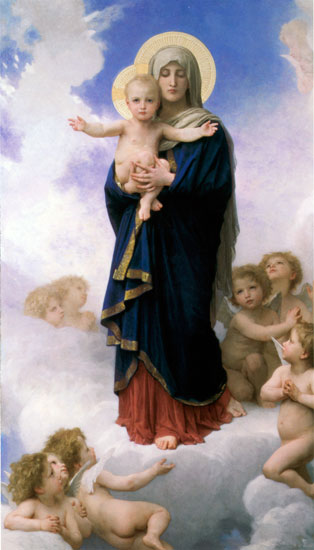 "MARIOLATRY"??? Definition Mariolatry is false and excessive worship of the Virgin Mary; offering to her the divine honor due only to the Creator. The Catholic Church rejects and denounces Mariolatry as a sin against the First Commandment: "Thou shalt have no other gods before Me"! The Triune God alone deserves divine worship, which theologians call latria or adoration. But His saints can receive a lesser honor called dulia. Because God has exalted the Virgin Mary above all other saints, she should receive the highest form of dulia, often called hyperdulia. But hyperdulia is still inferior to latria, the supreme honor and adoration which we owe our Creator, so it does not amount to Mariolatry. How This Teaching Exalts Christ As highly exalted as Mary is, she is still nothing in comparison to her Son and Creator. When we consider Mary's greatness, we remember that God is infinitely greater, and are struck with wonder! Biblical Basis God alone deserves and must receive divine worship: "Thou shalt worship the Lord thy God, and him only shalt thou serve" (Matthew 4:10). Angels cannot receive this worship: "Let no man beguile you of your reward, in a voluntary humility, and worshipping of angels" (Colossians 2:18; see also Revelation 19:10; 22:8-9). Human beings also cannot receive it (Acts 10:25). But the Bible also tells us in regard to creatures to give honor where honor is due (Romans 13:8) such as civil authorities and parents: "Honour thy father and thy mother" (Exodus 20:12; Deuteronomy 5:16). Mary is our heavenly Mother, as discussed in a past article. Since God commanded us to honor our mothers, Mary certainly deserves our honor. Marian devotion began when the Angel Gabriel saluted Mary, saying "Hail, full of grace, the Lord is with thee" (Luke 1:27, Douay); words undoubtably given him by God. The Holy Spirit then inspired Elizabeth to carry on the devotion, by making her cry out "Blessed art thou among women...blessed is she who believed". God inspired the first devotees of Mary; He even inspired Mary herself to prophesy "From henceforth all generations shall call me blessed" (Luke 1:48). God clearly wants all people to call Mary blessed! The Catholic Church fulfills God's will in this matter. Early Christian Witness The Church has never offered Mary divine worship (adoration). St. Epiphanius comments as follows on the Collyridians, a Gnostic sect which worshipped her: "The doctrine of this sect is quite ridicuous and, one might say, an old folk's tale. For which scripture ever taught such a thing? Which of the prophets ever bade us worship a man, to say nothing of a woman? For (Mary) is a chosen vessel, but a woman, and in no way different in nature, highly honored though she is in her will and her senses, as are the bodies of the saints." (Epiphanius, Panarion, 79:5:1-2; 374 AD) St. Ambrose also states the Church's opposition to adoring the Virgin: "It can scarcely be doubted that the Holy Spirit too is to be adored when He that, according to the flesh, was born of the Holy Spirit is to be adored. And let no one divert this to the Virgin Mary: Mary was the temple of God, not the God of the temple. And therefore He alone is to be adored, who was working in the temple." (Ambrose, On the Holy Spirit, 3:11:79; 381 AD) Yet the Church has always offered her a lesser honor, fitting for a creature. One of the oldest catacombs contains a drawing of the Madonna and Child dating back to the second century. The oldest known prayer to Mary, the Sub Tuum Praesidium, dates back to at least 300 AD: We fly to your patronage, O holy Mother of God. Despise not our petitions in our necessities, But deliver us from all dangers, O ever-glorious and Blessed Virgin! More quotes: "For neither did Mary, who is to be honored and praised above all others, marry anyone, nor did she ever become the Mother of anyone else, but even after childbirth she remained always and forever and immaculate virgin."(Didimus the Blind, The Trinity, 3:4; c. 381 AD) Objections You Catholics do commit Mariolatry! How can you deny that fact? The term Mariolatry consists of two Greek words: Mariam, Mary, and latria, divine worship. Latria is a Greek noun which occurs five times in the New Testament (Jn 16:2; Romans 9:4; 12:1; Hebrews 9:1, 6). The last four clearly refer in context to the offering of sacrifice. The verb form, latreuo, is often used to indicate service in the Temple, which involved the offering of animal sacrifice (Hebrews 8:5; 9:9; 10:2; 13:10). So latria clearly connotes the holy service of temple worship, particularly the offering of sacrifices to God. Does the Catholic Church offer latria - sacrificial worship - to Mary? No; the Sacrifice of the Mass is always offered to God alone. Since Catholics do not offer latria to the Mother of Jesus, we cannot be accused of Mariolatry. But you do worship Mary-you pray to her! Prayer and worship are not identical. Prayer is petition and conversation, while worship is the profound adoration and sacrifice offered to the Creator alone. Catholics believe that one can pray to any heavenly being but must worship God alone. A Catholic who prays to Mary knows that she is not God and so does not receive the honor due God in devotion. I can prove the Catholic Church worships Mary from its own writings; here's a quote from an official Catholic prayerbook: "Holiest Virgin, with all my heart I WORSHIP THEE above all the angels and saints in paradise... I consecrate my soul and all its powers...I WORSHIP THEE the spouse of the Holy Ghost..." (quote from Devotions to Our Blessed Lady, All for Jesus: Approved Devotions and Prayers for Church and Home, p 283. Imprimatur: John Cardinal McCloskey, Archbishop of NY, Mar 13, 1884) Interesting that you cite such an old book, obscure enough that hardly anyone could find a copy today to confirm the quotation or read it in context (it might be accompanied by an explanatory footnote). But even assuming that the quote is genuine, it still does not prove that Catholics offer Mary the divine worship of latreia. As the Catholic Answers tract "Saint Worship?" explains: The word "worship" has undergone a change in meaning in English. It comes from the Old English weorthscipe, which means the condition of being worthy of honor, respect, or dignity. To worship in the older, larger sense is to ascribe honor, worth, or excellence to someone, whether a sage, a magistrate, or God. For many centuries, the term worship simply meant showing respect or honor, and an example of this usage survives in contemporary English. British subjects refer to their magistrates as "Your Worship," although Americans would say "Your Honor." This doesn’t mean that British subjects worship their magistrates as gods (in fact, they may even despise a particular magistrate they are addressing). It means they are giving them the honor appropriate to their office, not the honor appropriate to God.1 Also, in the Solemnization of Matrimony ceremony of the Book of Common Prayer, when the groom placed the ring on the bride's finger, he said to her: "With this ring I thee wed, with my body I thee WORSHIP, and with all my worldly goods I thee endow" (emphasis mine). Did he consider his wife a goddess? Was he committing idolatry? No, for he was using the word "worship" in its original sense of "honor". The same goes for that above quote from a Catholic prayerbook. Note that the prayer says "I worship (ie. honor) thee above all the angels and saints in paradise", not "I worship thee above God" or equal to God, or as my God. As we discussed above, Mary should receive a higher honor than any other mere creature, such as angels and saints, but never equal to or greater than the supreme honor given to the Creator of all. Finally, I can't help but point out that the Catholic book containing this prayer is entitled All for Jesus! Anti-Catholics just can't seem to understand that all the honor given to Mary and the saints redounds to the greater honor and praise of their Creator and Savior, Jesus Christ! So the above quote is hardly the "smoking gun" they think it is. I still say your Church teaches you to worship Mary. Official Catholic documents refute that charge. The Roman Catechism, first published in 1566, states: "We do not address God and the Saints in the same manner, for we implore God to grant us blessings or to deliver us from evils; while we ask the saints, since they are friends of God, to take us under their patronage and to obtain for us from God whatever we need...it is strictly incumbent on all not to transfer to any creature the right which belongs exclusively to God" (Part IV). The 1917 Code of Canon Law distinguishes between the types of honor due God, Mary and the Saints: "The worship which is due to the Most Holy Trinity, to each of the Divine Persons, to our Lord Jesus Christ, even under the Sacramental Species, is cultus latriae; that which is due to the Blessed Virgin Mary is cultus hyperduliae; that which is due to others who reign with Christ in heaven is cultus duliae." (c. 1255 paragraph 1) The Baltimore Catechism #3 informs us that "The first commandment does not forbid us to honor the saints in heaven, as long as we do not give them the honor that belongs to God alone" (#214 emphasis mine). It then adds the following explanation: "The veneration paid to the saints in heaven differs essentially from the adoration of God. The saints are creatures and are not to be given the supreme worship due to the Creator alone. The supreme honor given to God only is adoration in the full and strict sense of the word. The veneration given to the Blessed Mother and to the saints is an act of respect and honor of an entirely different nature." (p. 130). The popular "Penny Catechism", published by the Catholic Truth Society, states "It is forbidden to give divine honor or worship to the Angels or Saints, for this belongs to God alone." (q. 184). In 1966, the Second Vatican Council noted that devotion to Mary, "differs essentially from the cult of adoration, which is offered equally to the Incarnate Word and to the Father and the Holy Spirit" (Lumen Gentium 66). The Catechism of the Catholic Church quotes these very words in paragraph 971. So the Church certainly does not teach us to worship Mary! (Notice that these quotes are from official documents of the Catholic Church which are readily available and more authoritative than any devotional work - unlike the above quote from an obscure, long out-of-print prayerbook, which is hardly an authoritive Magesterial statement!) Are you saying that there is no such thing as Mariolatry? No, some people have offered divine worship and sacrifice to Mary, but not with the sanction of the Catholic Church. The Collyridians, a small fourth-century sect in Arabia, used to offer cakes to the Blessed Virgin; a practice most likely copied from-the worship of certain pagan goddesses (Jer 44:18-19). As we saw above, St. Epiphanius strongly condemned this practice in his Panarion, and the Church has always regarded such activity as idolatrous and sinful. Practitioners of certain Afro-Caribbean religions (such as Santeria and Vudun) offer animal sacrifices to "orishas" (African spirits) which they syncretistically identify with certain Catholic saints, including various Madonnas. Since the worshipers primarily offer sacrifice to the orisha, and consider the particular Madonna to be a manifestation of that spirit (a notion which the Church rejects), the Mariolatry here is only secondary. Nonetheless, the Church condemns such practices as a distortion of the Catholic Faith. (See the article, Is Santeria Catholic, for more on this.) Neo-pagan feminists, who have abandoned the One True God in favor of a contrived "goddess", are often conflicted on the image of Mary, but some of them claim that she is a manifestation of "the goddess". Some New Agers, who consider Jesus to be an "Ascended Master", have also labeled Mary an "Ascended Lady Master" and a manifestation of the "Divine Mother". So some neo-pagan feminists may choose to invoke Mary's name during their "rituals" as one of the many names of their "great goddess". Though this is a form of Mariolatry, it is no more Catholic than the New Age concept of the Virgin Mary. The Church denies that she is a goddess and rejects the "divine mother/great goddess" fabricated by twentieth century feminists and New Agers! So while Mariolatry has existed and still does exist in different forms, it is not a Catholic practice. What if there are some Catholics out there who think that Mary should receive equal honor with God? If such people exist, they have not been properly instructed in their faith, and should be taught correct Catholic doctrine. Their misunderstanding, however, does not negate the truth of the Catholic faith. When the woman in the crowd cried out "Blessed is the womb that bore thee and the breasts that nursed thee", Jesus immediately corrected her and so nipped Marian devotion in the bud (Lk 11:27-28). But Catholics later revived it, against Jesus' wishes. Jesus did not condemn Marian devotion here, but defined its proper focus. Mary's greatest virtue is not her childbearing, but her faith and obedience; the fact that she heard the word of God and kept it. This must be the primary reason why we honor her, as it was the primary reason Elizabeth praised her: "Blessed is she who believed" (Luke 1:45). Marian devotion began because early converts to Christianity from paganism could not bear to part with their mother-goddesses, so they "hid" their goddesses behind Mary. So Marian devotion is just a carry-over from pagan goddess cults and the "Mary" honored by Catholics is not the biblical Mother of Jesus but a pagan goddess masquerading as her. A study of the pagan goddess cults will reveal that, apart from a few externals (ie. the goddess may be considered a virgin and/or mother), they have nothing in common with Marian devotion. Catholic devotion to the Virgin is beautiful and wholesome, and cannot compare to the profane, debauched worship once offered to goddesses. Moreover, converts from paganism despised the darkness and superstition of their old faith, and would never have carried its practices over into their new life in Christ. It is unthinkable that the martyrs who gave their lives rather than offer incense to an image of Caesar would worship Isis or Cybele under the guise of Jesus' Mother! As we saw above, Marian devotion existed in the Church even during the centuries of persecution. So devotion to Mary did not originate with pagan goddess worship, but with early Christians who despised paganism and would never have adopted its practices. Incidentally, atheists love to level a similar argument against Christ, claiming that the Christian belief in His saving death and resurrection is derived from pagan myths of the "dying god". Both this notion and the one mentioned above are absurd. I wonder if those who postulate that Marian devotion is "pagan" know that they are using an argument used by infidels. But Catholics do consider Mary to be a goddess, a divine being equal to or greater than God. No, we do not. Mary is not equal to or greater than Her Creator. She is a finite creature, so she is nothing in comparison to the Infinite God. All that Mary is or has she receives from the Most High, and apart from Him she is nothing. True devotion to Mary necessarily leads us to God, who has made her who she is. Even the Hail Mary, which Catholics consider the greatest prayer to her, reveals Mary's utter dependence upon God: "Hail Mary, full of grace" - that is, full of God's life and love, "the Lord is with you" - direct mention of the Lord. "Blessed are you among women" - blessed by God, of course. "and blessed is the fruit of your womb," - honor to Mary leads to honor of her Son. "Jesus" - His holy Name is the centerpiece of this prayer. "Holy Mary," - She is "holy" because God made her so. "Mother of God," - her "claim to fame" is that she bore and raised God made flesh. "pray for us sinners" - pray to God, of course. "Now and at the hour of our death" - So that we may persevere in grace till death and come to enjoy God's glory in heaven forever. Many churches and shrines devoted to Mary are built over places once sacred to pagan goddesses, such as Maria Sopra Minerva in Rome or the Guadalupe Basilica in Mexico. This proves that Mary is a pagan goddess, still worshipped at her old sacred places. In my town there is an Evangelical congregation which, a little over a decade ago, began to outgrow their small church building. So they shopped around for a larger place, and finally purchased the local Masonic temple, which was up for sale. They cleaned it out, moved in and still worship there to this day. Now tell me, are they now worshipping the God of Freemasonry, just because that building was once used for that purpose? Do they no longer worship the same God they did in the other church? Of course not; they are obviously worshipping the same God they always have. The former use of the building is irrelevant, since its former owners are gone. The same thing goes for Catholic churches built over ancient pagan temples. You Catholics often name your parish churches after Mary or another saint; doesn't this prove that you worship them? Does Calvary Chapel worship Mount Calvary? Would an Evangelical congregation named "Bible Christian Fellowship" worship the Bible? Obviously not; just because a church is named in honor of someone or something does not mean that person or thing is an object of worship. Catholics worship God alone in all our churches, regardless of whom they are named after. I once read an old Catholic poem in which Mary is addressed as "Goddess". Poetry is not theology. Many a chivalrous poet has addressed his lady-love as "goddess", but that does not mean that he really believes that his beloved is a female pagan deity. It was simply an example of chivalric flattery. Some religious poets copied this style in their lyrics to the Virgin, even to the point of calling her "goddess", but that does not change the teaching of the One, Holy, Catholic and Apostolic Church that Mary is a woman, not a "divine female". Here's a similar example: sometimes a singer or poet will say that he "adores" his beloved. Now the theological definition of adoration is "divine worship"! Does the singer really mean that he worships his beloved as God? No, it's just poetic hyperbole. And if you were to sing such a song to your spouse, it would not make you guilty of idolatry! That being said, I must add that the practice of calling Mary a "goddess", even in chivalrous terms, is troublesome and most certainly can lead to misunderstandings. I, for one, wish the medieval poets had not done so, but I also realize that they could not have forseen the problem it would cause centuries later. Back then, everyone was Catholic and knew that Mary is not a literal "goddess", so such language would not have been misunderstood. It was clearly poetic exaggeration, all too typical of that genre. It's only the modern Protestant suspicion that Mary is a "Catholic goddess", coupled with lack of appreciation for the idioms of medieval chivalric poetry, which causes problems today. Don't some Catholics say that Mary is the "feminine face of God"? Yes, but just because "some Catholics" say something does not make it official Church teaching. The pope and magesterium have never declared Mary to be the "feminine face of God"; nor will they ever, for this phrase is too vague and open to heretical interpretations. Even those Catholics who use it are speaking poetically, not literally. They do not believe that the One True God has multiple faces and that Mary is one of them, nor do they think that Mary is somehow "part of God". Rather, they mean something to the affect that Mary's maternal love for us is so Spirit-filled and Godlike that it images God's own love for us, which Scripture compares to the love of a mother (Is 49:15; 66:13; Mt 23:37). This does not mean that Mary is God; it means she is godly, which, of course, is the ideal for every Christian. Evangelicals are concerned that others will "see Jesus" in them so that they will have a good testimony before the world and lead others to Christ by their lifestyle. We Catholics "see Jesus" in Mary, but this does not make her God any more than "seeing Jesus" in a good evangelical makes him or her God. So the statement "Mary is the feminine face of God" means that God dwells in Mary's heart and loves us through her, and Mary loves us with a mother-love which is holy and Godlike. Though the phrase is admittedly vague and should probably be avoided, there is nothing objectionable in the belief. If Catholics don't believe that Mary is God or a goddess, then why does Alphonsus de Ligouri call her the "divine Mother" in his book "the Glories of Mary"? Had you read further in that book, you would have found that he denies that Mary is God by nature. You cannot take one expression out of context. The title "divine Mother" can mean a variety of things. First, it may relate to the term "divine Motherhood", which theologians use to refer to Mary's Motherhood of God the Son. Thus divine Mother may be a synonym for Mother of God, which, as we saw above, does not indicate that Mary is deity. Second, divine could indicate "Godlike" rather than "God by nature", as in the saying "to err is human, to forgive is divine". This does not mean that every person who forgives is God by very nature, but that forgiveness is a godly deed. Since Mary is a godly woman, she could in this sense be called "divine". Finally, it could relate to the Biblical truth that all Christians are destined to become "partakers in the divine nature" (II Peter 1:4). This ancient Christian belief does not mean that we become God by nature in a pantheistic, vendantist or even Mormon sense, but that at the resurrection believers shall be glorified, perfectly conformed to the divine image and likeness, filled with the Holy Spirit and will see the Holy Trinity face to face (the Beatific Vision). We shall see God as He is (Jn 3:2) and reflect His glory so perfectly that we would "seem" to be "divine", though in reality we remain human creatures by nature. Mary already enjoys this exalted state in heaven. She so reflects God's glory that she seems to have a divine quality about her, thus we could call her "the divine Mary", while fully recognizing that she is still human and a mere creature by nature. There is nothing objectionable in calling Mary "divine" if we understand it in those terms. I know the Church officially condemns the worship of Mary, but in popular devotion she is often treated like a goddess. What do you mean by "treated like a goddess"? This is a vague charge often made but never explained. (The Collyridians, who offered raisin cakes to Mary, are the only ones I know of who actually "treated Mary like a goddess", and the Church condemned them!) It seems to me that, in this case, worship is "in the eye of the beholder", but not in the heart of the devotee. f a non-Catholic sees Catholics carrying a statue of Mary through the streets, or adorning a shrine or kissing an icon, he or she may think that they are "treating Mary as a goddess", when in fact the Catholics themselves know that they are honoring the Mother of Jesus, not worshiping a female pagan deity. Catholics may not believe that Mary is God or a goddess, but they still give her honor which is due God alone. Therefore they commit Mariology in practice, if not in theory. How do we give her honor due God alone? Do we offer sacrifices to her? No, so we do not give her divine honor. And if we do not intend to worship her, then we do not do so "in practice". Okay, so maybe your Church says you shouldn't worship Mary, but all the exalted titles and prerogatives you attribute to her could tempt people to worship her. Human beings have been known to worship lots of creatures less exalted than Mary. The ancient Egyptians worshipped certain animals, the Druids worshipped plants, some pagans even worshipped rocks. If someone wants to worship a creature he certainly doesn't need lofty concepts to inspire him. In Catholic devotion and teaching, Mary overshadows Christ. Our God and Savior Jesus Christ is not so small that a mere creature can "overshadow" Him! If you think that Mary can take Christ's place, you attribute to her more power than we do! Catholics know that Jesus is God and Mary is not. Therefore our devotion to her does not overshadow her Son. Catholic art usually portrays Mary holding the Baby Jesus. This shows that Catholics consider Mary greater than Jesus, for they always portray Jesus as a helpless infant with her. We portray Mary holding the Christ Child because that is what she did when He was a baby. Most mothers hold their infants. Yet we know that that Babe is not a helpless infant, but our God and King Who sustains all creation, including the woman who holds Him. We do not believe that Mary is greater than Jesus because she is older than Him (in time, that is); she had to be older in order to be His Mother! When you say that Mary is the highest of all creatures you put her above Jesus, for He is the highest of all creatures! No, Jesus is not a creature; He is God Incarnate. Catholics don't refer to Jesus as a creature because it smacks of the Arian heresy (which denies the Deity of Christ). Though His Sacred Humanity is certainly a creature, His Person is God the Word, so Jesus is not a mere creature like you or me...or like Mary! When we say that Mary is the highest of all creatures, we mean that she is the greatest mere creature. Obviously, the Humanity of Christ is greater than her, because it is hypostatically united to God! This is why Catholics sometimes say "Mary is the highest creature after the Sacred Humanity of Jesus". This statement is also correct. You say that Mary is the highest of all creatures, but Jesus said that John the Baptist is the greatest person born of woman (Mt 11:11). You are taking that out of context. Jesus actually said "Among them that are born of women there hath not risen a greater than John the Baptist: notwithstanding he that is least in the kingdom of heaven is greater than he". In context, He was speaking of John's public ministry, saying that it was greater than that of any other prophet (vvs 9-10). But notice He quickly adds that the least in the kingdom will be greater than him, thus opening the possibility that one may surpass John in santicity. Mary made herself the least and lowliest person on earth (Lk 1:48); thus she has been exalted above Saint John the Baptizer. Christianity forbids us to honor anyone other than God. That is not biblical! Scripture tells us to honor our parents (Ex. 20:12), Church leaders (I Ti. 5:17), civil authority and all people (I Peter 2:17)! Paul tells us to "give honor where honor is due" (Romans 13:8). If God did not want creatures to receive honor, why did the Holy Spirit inspire Elizabeth to honor Mary (Lk 1:41-45)? God says He will not give His glory to another (Isaiah 42:6). Isaiah 42:6 refers in context to graven images. God does not want us to offer divine worship to false gods. But Catholics do not offer Mary divine worship (latreia), we offer her a lesser honor called hyperdulia. Although our Creator does not give the glory which belongs to Him alone to any creature, including Mary, He does bestow "grace and glory" upon the upright (Ps 84:11). Mary, being upright, has been glorified by God, and therefore deserves some honor, howbeit inferior to the honor given the Most Holy Trinity. When I stand before the Lord on Judgment Day, I want to be able to say to Him "I honored You alone, Lord, and no one else". What if someone stood before the Lord on the Last Day and said, "I never honored my father or mother because I wanted to honor You alone, Lord, and no one else". Would the Lord be pleased with that person? Or would He more likely reply: "But I commanded you to honor your parents, so you have, in fact, dishonored Me by your disobedience!" If it is not God's will that you honor Him alone, then He will not be pleased with that statement! We should obviously worship Him alone, but as we have seen, we can give honor to creatures without worshipping them. I don't care what you say, you Catholics do worship Mary. You may not think so, your Church may tell you that you don't, you may not even intend to do so, but you still do! If we do not intend to do so then we don't! God looks upon our hearts and sees our intentions (I Samuel 16:7), while you look at the outward appearance and judge us according to your own opinions and prejudices. "Judge not according to the appearance, but judge with righteous judgment" (Jn 7:24). BALTIMORE CATECHISM #3 LESSON 31 - THE FIRST COMMANDMENT (ON THE HONOR & INVOCATION OF THE SAINTS) Q. 1189. Does the first Commandment forbid the honoring of the saints? A. The first Commandment does not forbid the honoring of the saints, but rather approves of it; because by honoring the saints, who are the chosen friends of God, we honor God Himself. Q. 1190. What does "invocation" mean? A. Invocation means calling upon another for help or protection, particularly when we are in need or danger. It is used specially with regard to calling upon God or the saints, and hence it means prayer. Q. 1191. How do we show that by honoring the Saints we honor God Himself? A. We honor the Saints because they honor God. Therefore, it is for His sake that we honor them, and hence by honoring them we honor Him. Q. 1192. Give another reason why we honor God by honoring the Saints. A. Another reason why we honor God by honoring the Saints is this: As we honor our country by honoring its heroes, so do we honor our religion by honoring its Saints. By honoring our religion we honor God, who taught it. Therefore, by honoring the Saints we honor God, for love of whom they became religious heroes in their faith. Q. 1193. Does the first Commandment forbid us to pray to the saints? A. The first Commandment does not forbid us to pray to the saints. Q. 1194. Why does the first commandment not forbid us to pray to the Saints? A. The first commandment does not forbid us to pray to the Saints, because if we are allowed to ask the prayers of our fellow-creatures upon earth we should be allowed also to ask the prayers of our fellow-creatures in heaven. Moreover, the Saints must have an interest in our welfare, because whatever tends to make us good, tends also to the glory of God. Q. 1195. What do we mean by praying to the saints? A. By praying to the saints we mean the asking of their help and prayers. Q. 1196. Do we not slight God Himself by addressing our prayers to saints? A. We do not slight God Himself by addressing our prayers to saints, but, on the contrary, show a greater respect for His majesty and sanctity, acknowledging, by our prayers to the saints, that we are unworthy to address Him for ourselves, and that we, therefore, ask His holy friends to obtain for us what we ourselves are not worthy to ask. Q. 1197. How do we know that the saints hear us? A. We know that the saints hear us, because they are with God, who makes our prayers known to them. Q. 1198. Why do we believe that the saints will help us? A. We believe that the saints will help us because both they and we are members of the same Church, and they love us as their brethren. Q. 1199. How are the saints and we members of the same Church? A. The saints and we are members of the same Church, because the Church in heaven and the Church on earth are one and the same Church, and all its members are in communion with one another. Q. 1200. What is the communion of the members of the Church called? A. The Communion of the members of the Church is called the Communion of Saints. Q. 1201. What does the communion of saints mean? A. The communion of saints means the union which exists between the members of the Church on earth with one another, and with the blessed in Heaven, and with the suffering souls in Purgatory. Q. 1202. What benefits are derived from the communion of saints? A. The following benefits are derived from the communion of saints: the faithful on earth assist one another by their prayers and good works, and they are aided by the intercession of the saints in Heaven, while both the saints in Heaven and the faithful on earth help the souls in Purgatory. Q. 1203. How can we best honor the Saints, and where shall we learn their virtues? A. We can best honor the saints by imitating their virtues, and we shall learn their virtues from the written accounts of their lives. Among the Saints we shall find models for every age, condition or state of life. Q. 1204. Does the first Commandment forbid us to honor relics? A. The first Commandment does not forbid us to honor relics, because relics are the bodies of the saints or objects directly connected with them or with our Lord. Q. 1205. How many kinds or classes of relics are there? A. There are three kinds or classes of relics: 1. The body or part of the body of a saint; 2. Articles, such as clothing or books, used by the saint; 3. Articles that have touched a relic of the body or other relic. Q. 1206. What is there special about a relic of the true cross on which Our Lord Died, and also about the instruments of His Passion? A. The relics of the true Cross and relics of the thorns, nails, etc., used in the Passion are entitled to a very special veneration, and they have certain privileges with regard to their use and the manner of keeping them that other relics have not. A relic of the true Cross is never kept or carried with other relics. Q. 1207. What veneration does the Church permit us to give to relics? A. The Church permits us to give relics a veneration similar to that we give images. We do not venerate the relics for their own sake, but for the sake of the persons they represent. The souls of canonized saints are certainly in heaven, and we are certain that their bodies also will be there. Therefore, we may honor their bodies because they are to be glorified in heaven and were sanctified upon earth. Q. 1208. What care does the Church take in the examination and distribution of relics? A. The Church takes the greatest care in the examination and distribution of relics. 1. The canonization or beatification of the person whose relic we receive must be certain. 2. The relics are sent in sealed packets, that must be opened only by the bishop of the diocese to which the relics are sent, and each relic or packet must be accompanied by a document or written paper proving its genuineness. 3. The relics cannot be exposed for public veneration until the bishop examines them and pronounces them authentic; that is, that they are what they are claimed to be. Q. 1209. What should we be certain of before using any relic or giving it to another? A. Before using any relic or giving it to another we should be certain that all the requirements of the Church concerning it have been fulfilled, and that the relic really is, as far as it is possible for any one to know, what we believe it to be. Q. 1210. Has God Himself honored relics? A. God Himself has frequently honored relics by permitting miracles to be wrought through them. There is an example given in the Bible, in the IV Book of Kings, where it is related that a dead man was restored to life when his body touched the bones, that is, the relics of the holy prophet Eliseus. Q. 1211. Does the first Commandment forbid the making of images? A. The first Commandment does forbid the making of images if they are made to be adored as gods, but it does not forbid the making of them to put us in mind of Jesus Christ, His Blessed Mother, and the saints. Q. 1212 How do we show that it is only the worship and not the making of images that is forbidden by the first commandment? A. We show that it is only the worship and not the making of images that is forbidden by the first commandment: 1. Because no one thinks it sinful to carve statues or make photographs or paintings of relatives or friends; 2. Because God Himself commanded the making of images for the temple after He had given the first commandment, and God never contradicts Himself. Q. 1213. Is it right to show respect to the pictures and images of Christ and His saints? A. It is right to show respect to the pictures and images of Christ and His saints, because they are the representations and memorials of them. Q. 1214. Have we in this country any civil custom similar to that of honoring the pictures and images of saints? A. We have, in this country, a civil custom similar to that of honoring pictures and images of saints, for, on Decoration or Memorial Day, patriotic citizens place flowers, flags, or emblems about the statues of our deceased civil heroes, to honor the persons these statues represent; for just as we can dishonor a man by abusing his image, so we can honor him by treating it with respect and reverence. Q. 1215. Is it allowed to pray to the crucifix or to the images and relics of the saints? A. It is not allowed to pray to the crucifix or images and relics of the saints, for they have no life, nor power to help us, nor sense to hear us. Q. 1216. Why do we pray before the crucifix and the images and relics of the saints? A. We pray before the crucifix and the images and relics of the saints because they enliven our devotion by exciting pious affections and desires, and by reminding us of Christ and of the saints, that we may imitate their virtues. This post has been edited by yeeck: Apr 27 2015, 12:34 PM |
|
|
Apr 27 2015, 10:35 PM
|
|
Senior Member
3,577 posts Joined: Apr 2006
|
Anima Christi
Anima Christi, sanctifica me. Corpus Christi, salva me. Sanguis Christi, inebria me. Aqua lateris Christi, lava me. Passio Christi, conforta me. O bone Jesu, exaudi me. Intra tua vulnera absconde me. Ne permittas me separari a te. Ab hoste maligno defende me. In hora mortis meae voca me. Et iube me venire ad te, Ut cum Sanctis tuis laudem te, In saecula saeculorum. Amen. Soul of Christ, sanctify me Body of Christ, save me Blood of Christ, inebriate me Water from the side of Christ, wash me Passion of Christ, strengthen me O good Jesus, hear me Within Thy wounds hide me Permit me not to be separated from Thee From the malignant enemy defend me In the hour of my death call me And bid me come unto Thee That with thy Saints I may praise Thee Forever and ever Amen. |
|
|
Apr 28 2015, 04:28 PM
|
|
Senior Member
3,577 posts Joined: Apr 2006
|
Conscience
901. I should be grateful if you would define conscience for me. Conscience is simply a judgment of the intelligence applied to moral matters. In mathematics the mind concludes that two and two make four. In music it will judge as to whether the notes harmonize with one another or not. In moral conduct, it judges that good must be done, and evil avoided. And when some particular course of action presents itself, it will decide as to whether that course of action is in harmony with good principles or not. Whence come the principles with which conduct is to be compared? They are part of our very nature, impressed upon us by the Creator Himself. And in this sense conscience is the voice of God within us. Every human being is born with an urge to tend to a perfect development. But this will be possible only if life be well ordered. Hence, the innate conviction that the order of nature itself must be respected. As a creature, man has an innate tendency to respect the rights of the Creator; as social, he has an innate tendency to respect the rights of his fellow men; as intelligent and self-regulating, he tends to respect his own dignity. And conscience manifests itself by interior approval or reproach according to his observance or violation of these natural obligations imposed by the God who made man as he is. 902. I know I can always say, "Follow your conscience. Conscience is the last court of appeal." You cannot say that. Conscience is not the last court of appeal as the guide of conduct, whatever may be its value in relation to one's judgment by God. The last court of appeal, where right or wrong conduct is concerned, is the revealed law of God. The individual conscience can be objectively erroneous through lack of knowledge, or through malice. For example, God says, "Thou shalt not commit adultery." Yet there are people who say that they cannot conscientiously see any wrong in adultery. If they are telling the truth, then their conscience is wrong. They have distorted their conscience. God's law is the standard of right and wrong just as the sun is the standard of time. And conscience is right if it is conformed to God's law, just as a watch is right if it is in harmony with the sun. [Ed: The invention in 1955 of the caesium atomic clock has led to the replacement of older and purely astronomical time standards, for most practical purposes, by newer time standards based wholly or partly on atomic time.] --Radio Replies |
|
|
Apr 29 2015, 01:50 AM
|
|
Senior Member
3,577 posts Joined: Apr 2006
|
God's existence known by reason
1. Please give me evidence that God exists. I have never had any such evidence for I do not accept the Bible. What do you mean by evidence? Some people think that evidence must be seen and touched, as an animal sees a patch of grass and eats it. But men are not mere animals. They have reason, and can appreciate intellectual evidence. For example, the evidence of beauty in music or in painting is perceived by man's mind, not by his senses. An animal could hear the same sounds, or see the same colors, without being impressed by their harmony and proportion. Apart from the Bible altogether, reason can detect sufficient evidence to guarantee the existence of God. 2. What is this evidence for God's existence, apart from the Bible? There are many indications, the chief of which I shall give you very briefly: The first is from causality. The universe, limited in all its details, could not be its own cause. It could no more come together with all its regulating laws than the San Francisco Harbor Bridge could just happen, or a clock could assemble itself and keep perfect time without a clock-maker. On the same principle, if there were no God, there would be no you to dispute His existence. A second indication is drawn from the universal reasoning, or if you wish, intuition of men. The universal judgment of mankind can no more be wrong on this vital point than the intuition of an infant that food must be conveyed to the mouth. The stamp of God\'s handiwork is so clearly impressed upon creation, and, above all, upon man, that all nations instinctively believe that there is a God. The truth is in possession. Men do not have to persuade themselves that there is a God. They have to try to persuade themselves that there is no God. And no one yet, who has attained to such a temporary persuasion, has been able to find a valid reason for it. Men do not grow into the idea of a God; they endeavor to grow out of it. The sense of moral obligation confirms these reasons. In every man there is a sense of right and wrong. A man knows interiorly when he is doing wrong. Something rebukes his conduct. He knows that he is going against an inward voice. It is the voice of conscience, dictating to us a law we did not make, and which no man could have made, for this voice protests whether other men know our conduct or not. This voice is often quite against what we wish to do, warning us beforehand, condemning us after its violation. The law dictated by this voice of conscience supposes a lawgiver who has written his law in our hearts. And as God alone could do this, it is certain that He exists. Finally, justice demands that there be a God. The very sense of justice among men, resulting in law-courts, supposes a just God. We did not give ourselves our sense of justice. It comes from whoever made us, and no one can give what he does not possess himself. Yet justice cannot always be done by men in this world. Here the good often suffer, and the wicked prosper. And, even though human justice does not always succeed in balancing the scales, they will be balanced some day by a just God, who most certainly must exist. 3. You, as a Priest, argue to a clock-maker. I, as a rationalist, ask, "Who created your uncreated clock-maker?" That is not a rational question. I say that the universe is obviously created, and that what is created supposes a Creator who is uncreated, or the problem goes on forever, the whole endless chain of dependent beings as unable to explain itself as each of its links. It is rational to argue to an uncreated clock-maker. It is not rational to ask, "Who created this uncreated clock-maker?" God was not created. If He were, He would be a creature and would have a creator. His creator would then be God, and not He Himself. God always existed. He never began, and will never cease to be. He is eternal. 4. You talk of universal persuasion. Men used to believe that the world was flat! A sufficient reason for that error is evident, viz., lack of data, and the fact that men followed their senses, which seemed to say that the earth was flat. That was not a judgment of the pure reason. The senses supplied no immediate manifestations that there might be a God as they indicated that the world might be flat. The cases are not parallel, and the transition from a judgment based upon the senses to one based upon pure reason is not valid. In any case, the scientific and metaphysical proofs justify belief in God quite independently of this psychological reason. They would be valid supposing that only one man in a million believed in God's existence. This latter supposition, however, will never be verified, for the common rational judgment of the vast majority will always intuitively perceive this truth. 5. There is no need to talk of future balancing of the scales. Virtue is its own reward in this life, even as the wicked endure remorse. That will not do. Consciousness of virtue is not much good to a man about to be wrongfully hanged and who cannot live to enjoy it. Nor does vice always bring proportionate remorse. Many are too hardened to experience deep remorse. There will be a levelling-up some day, after this life, and by God. 6. Joseph McCabe believed in God, but he renounced bigotry and became an Agnostic. There are many men such as Joseph McCabe who have given up their profession of a belief in God. But, they do not give up that belief because Agnosticism offers them a higher and holier life. They find Agnosticism less irksome, whether it be by emancipation from moral laws, or from the restraints of truth and logic. Nor should you talk of bigotry. Many Agnostics have a far worse bias than that which they attribute to believers, garbling facts and distorting evidence without any of the scruples which one who really believes in God would certainly experience. 7. If I sincerely believe that there is no God, and there be a God, would not invincible ignorance save me? Such ignorance is not invincible. You can overcome it. You violated your reason in suppressing its spontaneous concept of God, and by persuading yourself that religion is false. If you took the pressure off your reason and let it swing back to the Supreme Cause of its very being, it would do so as the needle to the pole. Pascal rightly says that there are two types of men, those who are afraid to lose God, and those who are afraid that they might find Him. --Radio Replies |
|
|
Apr 29 2015, 02:14 PM
|
|
Senior Member
3,577 posts Joined: Apr 2006
|
Is God Real? Does Science Answer "Is There a God?"
by Rich Deem Introduction Does God Exist? The reality of God's existence is the most important question, since it has eternal consequences. The evidence for God's existence comes primarily from the design of the universe. It is virtually impossible that all the physical laws would just happen to be tightly constrained by chance in order for stars and galaxies to exist. Rich Deem Part 1 of the introduction for non-believers showed that strong atheism contradicts its own worldview by believing the universe has a natural cause despite the lack of observational evidence for such a belief. However, since there is no direct observational evidence regarding the origin of the universe, why should one believe the equally unobserved hypothesis that God created the universe? Although there is no direct evidence for the cause of the universe, we now have a fair amount of knowledge about the early history of the universe and the laws that govern it, which provide us with indirect evidence that a super-intelligent Agent designed the universe. In order to keep this essay brief, much of the supporting information will not be included. However, you can click the links to the full-length articles for the details. Detecting the non-physical Atheists tend to fall into one of two camps. First, are the atheists who say that science cannot have anything to say about the existence of God. However, recently, the "new atheists" think that they can prove the non-existence of God through science. Although science cannot directly detect God, it can examine His creation. Consider the non-physical concept of love. We all accept that love exists, although it cannot be directly measured by science. However, if we observe those who love each other, we can indirectly measure the affect of love on these individuals' actions. For example, we might notice that they spend a lot of time together, they are constantly helping each other in various ways, and they come to each other's defense when the other is threatened in some way. Although we cannot measure love directly, we can measure the indirect effects of love. Likewise, although we cannot measure God directly, we can examine the universe to detect God's imprint on the physical world. Evidence for design? The best evidence for design can be seen in the nature of the universe and how it came to be. The process of discovery continues, since one of the fundamental properties of the universe, dark energy (or the cosmological constant), was discovered late in the last century. New studies continue to add to our knowledge about the universe and its extremely unlikely makeup. The Big Bang The Big Bang theory states that the universe arose from a singularity of virtually no size, which gave rise to the dimensions of space and time, in addition to all matter and energy. At the beginning of the Big Bang, the four fundamental forces began to separate from each other. Early in its history (10-36 to 10-32 seconds), the universe underwent a period of short, but dramatic, hyper-inflationary expansion. The cause of this inflation is unknown, but was required for life to be possible in the universe. Excess quarks Quarks and antiquarks combined to annihilate each other. Originally, it was expected that the ratio of quarks and antiquarks to be exactly equal to one, since neither would be expected to have been produced in preference to the other. If the ratio were exactly equal to one, the universe would have consisted solely of energy - not very conducive to the existence of life. However, recent research showed that the charge�parity violation could have resulted naturally given the three known masses of quark families.1 However, this just pushes fine tuning a level down to ask why quarks display the masses they have. Those masses must be fine tuned in order to achieve a universe that contains any matter at all. Large, just right-sized universe Even so, the universe is enormous compared to the size of our Solar System. Isn't the immense size of the universe evidence that humans are really insignificant, contradicting the idea that a God concerned with humanity created the universe? It turns out that the universe could not have been much smaller than it is in order for nuclear fusion to have occurred during the first 3 minutes after the Big Bang. Without this brief period of nucleosynthesis, the early universe would have consisted entirely of hydrogen.2 Likewise, the universe could not have been much larger than it is, or life would not have been possible. If the universe were just one part in 1059 larger,3 the universe would have collapsed before life was possible. Since there are only 1080 baryons in the universe, this means that an addition of just 1021 baryons (about the mass of a grain of sand) would have made life impossible. The universe is exactly the size it must be for life to exist at all. Early evolution of the universe Cosmologists assume that the universe could have evolved in any of a number of ways, and that the process is entirely random. Based upon this assumption, nearly all possible universes would consist solely of thermal radiation (no matter). Of the tiny subset of universes that would contain matter, a small subset would be similar to ours. A very small subset of those would have originated through inflationary conditions. Therefore, universes that are conducive to life "are almost always created by fluctuations into the[se] 'miraculous' states," according to atheist cosmologist Dr. L. Dyson.4 Just right laws of physics The laws of physics must have values very close to those observed or the universe does not work "well enough" to support life. What happens when we vary the constants? The strong nuclear force (which holds atoms together) has a value such that when the two hydrogen atoms fuse, 0.7% of the mass is converted into energy. If the value were 0.6% then a proton could not bond to a neutron, and the universe would consist only of hydrogen. If the value were 0.8%, then fusion would happen so readily that no hydrogen would have survived from the Big Bang. Other constants must be fine-tuned to an even more stringent degree. The cosmic microwave background varies by one part in 100,000. If this factor were slightly smaller, the universe would exist only as a collection of diffuse gas, since no stars or galaxies could ever form. If this factor were slightly larger, the universe would consist solely of large black holes. Likewise, the ratio of electrons to protons cannot vary by more than 1 part in 1037 or else electromagnetic interactions would prevent chemical reactions. In addition, if the ratio of the electromagnetic force constant to the gravitational constant were greater by more than 1 part in 1040, then electromagnetism would dominate gravity, preventing the formation of stars and galaxies. If the expansion rate of universe were 1 part in 1055 less than what it is, then the universe would have already collapsed. The most recently discovered physical law, the cosmological constant or dark energy, is the closest to zero of all the physical constants. In fact, a change of only 1 part in 10120 would completely negate the effect. The physical constants required to produce carbon and oxygen in stars is also narrowly fine tuned. A value for Hoyle state 2% higher than the measured value would prevent the formation of carbon.5 A value 2% lower than the measured value would produce lots of carbon, but no oxygen.5 Both are essential atoms for life. Universal probability bounds "Unlikely things happen all the time." This is the mantra of the anti-design movement. However, there is an absolute physical limit for improbable events to happen in our universe. The universe contains only 1080 baryons and has only been around for 13.8 billion years (1018 sec). Since the smallest unit of time is Planck time (10-45 sec),6 the lowest probability event that can ever happen in the history of the universe is: 1/1080 x 1/1018 x 1/1045 =1/10143 Evidence for God: 50 Arguments for Faith from the Bible, History, Philosophy, and Science So, although it would be possible that one or two constants might require unusual fine-tuning by chance, it would be virtually impossible that all of them would require such fine-tuning. Some physicists have indicated that any of a number of different physical laws would be compatible with our present universe. However, it is not just the current state of the universe that must be compatible with the physical laws. Even more stringent are the initial conditions of the universe, since even minor deviations would have completely disrupted the process. For example, adding a grain of sand to the weight of the universe now would have no effect. However, adding even this small amount of weight at the beginning of the universe would have resulted in its collapse early in its history. What do cosmologists say? Even though many atheists would like to dismiss such evidence of design, cosmologists know better, and have made statements such as the following, which reveal the depth of the problem for the atheistic worldview: "This type of universe, however, seems to require a degree of fine-tuning of the initial conditions that is in apparent conflict with 'common wisdom'."7 "Polarization is predicted. It's been detected and it's in line with theoretical predictions. We're stuck with this preposterous universe."8 "In all of these worlds statistically miraculous (but not impossible) events would be necessary to assemble and preserve the fragile nuclei that would ordinarily be destroyed by the higher temperatures. However, although each of the corresponding histories is extremely unlikely, there are so many more of them than those that evolve without "miracles," that they would vastly dominate the livable universes that would be created by Poincare recurrences. We are forced to conclude that in a recurrent world like de Sitter space our universe would be extraordinarily unlikely."9 Speculative "solutions" to the design "problem" The newest "solution" to design in the universe is a belief in the multi-universe theory. This theory requires one to believe that there are more universes in existence than the number of all the subatomic particles that exist in our universe. Our universe just happened to be one of the few that is able to support life. Here is what a recent article from Science says about this hypothetical "multiverse" spinning off an "infinity" of other universes: "Uncomfortable with the idea that physical parameters like lambda [cosmological constant] are simply lucky accidents, some cosmologists, including Hawking, have suggested that there have been an infinity of big bangs going off in a larger 'multiverse,' each with different values for these parameters. Only those values that are compatible with life could be observed by beings such as ourselves."10 What scientific evidence exists to support the multiverse model? None! Not only is there no evidence, the physics of our own universe requires that we will never be able to obtain any evidence about any other universe (even if it does exist). Even secular websites admit that such ideas amount to nothing more than unfalsifiable metaphysics: "Appeals to multiple or "parallel" cosmoses or to an infinite number of cosmic "Big Bang/Crunch" oscillations as essential elements of proposed mechanisms are not acceptable in submissions due to a lack of empirical correlation and testability. Such beliefs are without hard physical evidence and must therefore be considered unfalsifiable, currently outside the methodology of scientific investigation to confirm or disprove, and therefore more mathematically theoretical and metaphysical than scientific in nature. Recent cosmological evidence also suggests insufficient mass for gravity to reverse continuing cosmic expansion. The best cosmological evidence thus far suggests the cosmos is finite rather than infinite in age."11 According to Paul Davies: "Whether it is God, or man, who tosses the dice, turns out to depend on whether multiple universes really exist or not�.If instead, the other universes are relegated to ghost worlds, we must regard our existence as a miracle of such improbability that it is scarcely credible." Theistic solution - measurable design On the other hand, the deist or theist says that God designed the universe with just the right laws of physics. Note that neither the multiverse nor the "God hypothesis" is testable. However, the "God hypothesis" is much simpler. The naturalistic explanation requires the presence of a complicated, unproved super universe that has the capacity to randomly spew out an infinite number of universes with different laws of physics. How does this hypothetical super universe know how to do this? Why would it even want to do this? Ultimately, why should there be any universe at all? None of these questions are logically explained by naturalism. Only an intelligent Being would be motivated and expected to produce any kind of universe such as what we see. If we use Occam's razor, which states that one should use the simplest logical explanation for any phenomenon, we would eliminate the super universe/multi-universe explanation in favor of the simpler God-designed universe model. The evidence for design in the universe and biology is so strong that Antony Flew, a long-time proponent of atheism, renounced his atheism in 2004 and now believes that the existence of a Creator is required to explain the universe and life in it. Likewise, Frank Tipler, Professor of the Department of Mathematics at Tulane University, and a former atheist, not only became a theist, but is now a born-again Christian because of the laws of physics.12 Who created God? A common objection to the "God hypothesis" is the problem of how God came to be. If everything has a cause, why does God get an exception? The problem with such reasoning is that it assumes that time has always existed. In reality, time is a construct of this universe and began at the initiation of the Big Bang.13 A God who exists outside the time constraints of the universe is not subject to cause and effect. So, the idea that God has always existed and is not caused follows logically from the fact that the universe and time itself was created at the Big Bang. The Bible makes these exact claims - that God has always existed14 and that God created time,15 along with the entire universe,16 being described as an expanding universe.17 Why can't the universe be uncaused? Of course, it is possible that the universe is uncaused. However, there is a tremendous amount of evidence that contradicts that idea (see part 1). So, an atheist who claims to live by logic and evidence cannot arbitrarily assign eternity to a universe that is clearly temporal. Conclusion No, God has not left His name etched onto the surface of planets. However, there is abundant evidence that the universe was designed by super intelligent Agent, who purposed that the universe should exist and be capable of supporting advanced life. The design of the universe is just one line of evidence that tells us that God is real and created the universe. The design of the earth and solar system is also quite impressive. Likewise, chemistry and physics preclude the possibility that life evolved on earth. In addition, human beings are remarkably different from every other animal on earth, suggesting a departure from naturalistic processes. This post has been edited by yeeck: Apr 29 2015, 02:14 PM |
|
|
Apr 29 2015, 08:51 PM
|

Senior Member
546 posts Joined: Jul 2010
|
QUOTE(De_Luffy @ Mar 4 2015, 09:44 PM) Catholics is the first Christianity religion after Christ ascended to heaven, With Apostle Simon Peter as the first pope curious, if protestants are off from the catholic church, why do their apostles creed say they believe in the holy catholic church? while Protestantism is branched out from Catholics with totally different view from Catholics all i know is, they branched off from the Roman catholic, due to the ahem stuffs they did back then, which were not biblical. |
|
|
Apr 29 2015, 09:08 PM
|
|
Senior Member
1,920 posts Joined: Jan 2009
|
QUOTE(mobileapps @ Apr 29 2015, 08:51 PM) ... apostle creed was created much much earlier before protestant was born.curious, if protestants are off from the catholic church, why do their apostles creed say they believe in the holy catholic church? ... |
|
|
Apr 29 2015, 10:27 PM
Show posts by this member only | IPv6 | Post
#343
|
|
Junior Member
225 posts Joined: Mar 2008
|
Catholic, is derived from the greek word 'Katolikos', meaning universal / all encompassing.
One, holy, catholic and apostolic ... in Protie terms, it is catholic with a lower case 'c' representing a universal church (according to them) and not the Roman Catholic Church. In the case of the Roman Catholic Church, "One, Holy, Catholic and Apostolic Church" means the marks of the true Church, founded by Jesus Christ Himself ... not by a human. This post has been edited by khool: Apr 29 2015, 10:29 PM |
|
|
Apr 29 2015, 10:33 PM
Show posts by this member only | IPv6 | Post
#344
|
|
Junior Member
225 posts Joined: Mar 2008
|
QUOTE(yeeck @ Apr 29 2015, 02:14 PM) Is God Real? Does Science Answer "Is There a God?" Speaking of the Big Bang Theory, here's a nugget of information ...by Rich Deem Introduction Does God Exist? The reality of God's existence is the most important question, since it has eternal consequences. The evidence for God's existence comes primarily from the design of the universe. It is virtually impossible that all the physical laws would just happen to be tightly constrained by chance in order for stars and galaxies to exist. Rich Deem Part 1 of the introduction for non-believers showed that strong atheism contradicts its own worldview by believing the universe has a natural cause despite the lack of observational evidence for such a belief. However, since there is no direct observational evidence regarding the origin of the universe, why should one believe the equally unobserved hypothesis that God created the universe? Although there is no direct evidence for the cause of the universe, we now have a fair amount of knowledge about the early history of the universe and the laws that govern it, which provide us with indirect evidence that a super-intelligent Agent designed the universe. In order to keep this essay brief, much of the supporting information will not be included. However, you can click the links to the full-length articles for the details. Detecting the non-physical Atheists tend to fall into one of two camps. First, are the atheists who say that science cannot have anything to say about the existence of God. However, recently, the "new atheists" think that they can prove the non-existence of God through science. Although science cannot directly detect God, it can examine His creation. Consider the non-physical concept of love. We all accept that love exists, although it cannot be directly measured by science. However, if we observe those who love each other, we can indirectly measure the affect of love on these individuals' actions. For example, we might notice that they spend a lot of time together, they are constantly helping each other in various ways, and they come to each other's defense when the other is threatened in some way. Although we cannot measure love directly, we can measure the indirect effects of love. Likewise, although we cannot measure God directly, we can examine the universe to detect God's imprint on the physical world. Evidence for design? The best evidence for design can be seen in the nature of the universe and how it came to be. The process of discovery continues, since one of the fundamental properties of the universe, dark energy (or the cosmological constant), was discovered late in the last century. New studies continue to add to our knowledge about the universe and its extremely unlikely makeup. The Big Bang The Big Bang theory states that the universe arose from a singularity of virtually no size, which gave rise to the dimensions of space and time, in addition to all matter and energy. At the beginning of the Big Bang, the four fundamental forces began to separate from each other. Early in its history (10-36 to 10-32 seconds), the universe underwent a period of short, but dramatic, hyper-inflationary expansion. The cause of this inflation is unknown, but was required for life to be possible in the universe. Excess quarks Quarks and antiquarks combined to annihilate each other. Originally, it was expected that the ratio of quarks and antiquarks to be exactly equal to one, since neither would be expected to have been produced in preference to the other. If the ratio were exactly equal to one, the universe would have consisted solely of energy - not very conducive to the existence of life. However, recent research showed that the charge�parity violation could have resulted naturally given the three known masses of quark families.1 However, this just pushes fine tuning a level down to ask why quarks display the masses they have. Those masses must be fine tuned in order to achieve a universe that contains any matter at all. Large, just right-sized universe Even so, the universe is enormous compared to the size of our Solar System. Isn't the immense size of the universe evidence that humans are really insignificant, contradicting the idea that a God concerned with humanity created the universe? It turns out that the universe could not have been much smaller than it is in order for nuclear fusion to have occurred during the first 3 minutes after the Big Bang. Without this brief period of nucleosynthesis, the early universe would have consisted entirely of hydrogen.2 Likewise, the universe could not have been much larger than it is, or life would not have been possible. If the universe were just one part in 1059 larger,3 the universe would have collapsed before life was possible. Since there are only 1080 baryons in the universe, this means that an addition of just 1021 baryons (about the mass of a grain of sand) would have made life impossible. The universe is exactly the size it must be for life to exist at all. Early evolution of the universe Cosmologists assume that the universe could have evolved in any of a number of ways, and that the process is entirely random. Based upon this assumption, nearly all possible universes would consist solely of thermal radiation (no matter). Of the tiny subset of universes that would contain matter, a small subset would be similar to ours. A very small subset of those would have originated through inflationary conditions. Therefore, universes that are conducive to life "are almost always created by fluctuations into the[se] 'miraculous' states," according to atheist cosmologist Dr. L. Dyson.4 Just right laws of physics The laws of physics must have values very close to those observed or the universe does not work "well enough" to support life. What happens when we vary the constants? The strong nuclear force (which holds atoms together) has a value such that when the two hydrogen atoms fuse, 0.7% of the mass is converted into energy. If the value were 0.6% then a proton could not bond to a neutron, and the universe would consist only of hydrogen. If the value were 0.8%, then fusion would happen so readily that no hydrogen would have survived from the Big Bang. Other constants must be fine-tuned to an even more stringent degree. The cosmic microwave background varies by one part in 100,000. If this factor were slightly smaller, the universe would exist only as a collection of diffuse gas, since no stars or galaxies could ever form. If this factor were slightly larger, the universe would consist solely of large black holes. Likewise, the ratio of electrons to protons cannot vary by more than 1 part in 1037 or else electromagnetic interactions would prevent chemical reactions. In addition, if the ratio of the electromagnetic force constant to the gravitational constant were greater by more than 1 part in 1040, then electromagnetism would dominate gravity, preventing the formation of stars and galaxies. If the expansion rate of universe were 1 part in 1055 less than what it is, then the universe would have already collapsed. The most recently discovered physical law, the cosmological constant or dark energy, is the closest to zero of all the physical constants. In fact, a change of only 1 part in 10120 would completely negate the effect. The physical constants required to produce carbon and oxygen in stars is also narrowly fine tuned. A value for Hoyle state 2% higher than the measured value would prevent the formation of carbon.5 A value 2% lower than the measured value would produce lots of carbon, but no oxygen.5 Both are essential atoms for life. Universal probability bounds "Unlikely things happen all the time." This is the mantra of the anti-design movement. However, there is an absolute physical limit for improbable events to happen in our universe. The universe contains only 1080 baryons and has only been around for 13.8 billion years (1018 sec). Since the smallest unit of time is Planck time (10-45 sec),6 the lowest probability event that can ever happen in the history of the universe is: 1/1080 x 1/1018 x 1/1045 =1/10143 Evidence for God: 50 Arguments for Faith from the Bible, History, Philosophy, and Science So, although it would be possible that one or two constants might require unusual fine-tuning by chance, it would be virtually impossible that all of them would require such fine-tuning. Some physicists have indicated that any of a number of different physical laws would be compatible with our present universe. However, it is not just the current state of the universe that must be compatible with the physical laws. Even more stringent are the initial conditions of the universe, since even minor deviations would have completely disrupted the process. For example, adding a grain of sand to the weight of the universe now would have no effect. However, adding even this small amount of weight at the beginning of the universe would have resulted in its collapse early in its history. What do cosmologists say? Even though many atheists would like to dismiss such evidence of design, cosmologists know better, and have made statements such as the following, which reveal the depth of the problem for the atheistic worldview: "This type of universe, however, seems to require a degree of fine-tuning of the initial conditions that is in apparent conflict with 'common wisdom'."7 "Polarization is predicted. It's been detected and it's in line with theoretical predictions. We're stuck with this preposterous universe."8 "In all of these worlds statistically miraculous (but not impossible) events would be necessary to assemble and preserve the fragile nuclei that would ordinarily be destroyed by the higher temperatures. However, although each of the corresponding histories is extremely unlikely, there are so many more of them than those that evolve without "miracles," that they would vastly dominate the livable universes that would be created by Poincare recurrences. We are forced to conclude that in a recurrent world like de Sitter space our universe would be extraordinarily unlikely."9 Speculative "solutions" to the design "problem" The newest "solution" to design in the universe is a belief in the multi-universe theory. This theory requires one to believe that there are more universes in existence than the number of all the subatomic particles that exist in our universe. Our universe just happened to be one of the few that is able to support life. Here is what a recent article from Science says about this hypothetical "multiverse" spinning off an "infinity" of other universes: "Uncomfortable with the idea that physical parameters like lambda [cosmological constant] are simply lucky accidents, some cosmologists, including Hawking, have suggested that there have been an infinity of big bangs going off in a larger 'multiverse,' each with different values for these parameters. Only those values that are compatible with life could be observed by beings such as ourselves."10 What scientific evidence exists to support the multiverse model? None! Not only is there no evidence, the physics of our own universe requires that we will never be able to obtain any evidence about any other universe (even if it does exist). Even secular websites admit that such ideas amount to nothing more than unfalsifiable metaphysics: "Appeals to multiple or "parallel" cosmoses or to an infinite number of cosmic "Big Bang/Crunch" oscillations as essential elements of proposed mechanisms are not acceptable in submissions due to a lack of empirical correlation and testability. Such beliefs are without hard physical evidence and must therefore be considered unfalsifiable, currently outside the methodology of scientific investigation to confirm or disprove, and therefore more mathematically theoretical and metaphysical than scientific in nature. Recent cosmological evidence also suggests insufficient mass for gravity to reverse continuing cosmic expansion. The best cosmological evidence thus far suggests the cosmos is finite rather than infinite in age."11 According to Paul Davies: "Whether it is God, or man, who tosses the dice, turns out to depend on whether multiple universes really exist or not�.If instead, the other universes are relegated to ghost worlds, we must regard our existence as a miracle of such improbability that it is scarcely credible." Theistic solution - measurable design On the other hand, the deist or theist says that God designed the universe with just the right laws of physics. Note that neither the multiverse nor the "God hypothesis" is testable. However, the "God hypothesis" is much simpler. The naturalistic explanation requires the presence of a complicated, unproved super universe that has the capacity to randomly spew out an infinite number of universes with different laws of physics. How does this hypothetical super universe know how to do this? Why would it even want to do this? Ultimately, why should there be any universe at all? None of these questions are logically explained by naturalism. Only an intelligent Being would be motivated and expected to produce any kind of universe such as what we see. If we use Occam's razor, which states that one should use the simplest logical explanation for any phenomenon, we would eliminate the super universe/multi-universe explanation in favor of the simpler God-designed universe model. The evidence for design in the universe and biology is so strong that Antony Flew, a long-time proponent of atheism, renounced his atheism in 2004 and now believes that the existence of a Creator is required to explain the universe and life in it. Likewise, Frank Tipler, Professor of the Department of Mathematics at Tulane University, and a former atheist, not only became a theist, but is now a born-again Christian because of the laws of physics.12 Who created God? A common objection to the "God hypothesis" is the problem of how God came to be. If everything has a cause, why does God get an exception? The problem with such reasoning is that it assumes that time has always existed. In reality, time is a construct of this universe and began at the initiation of the Big Bang.13 A God who exists outside the time constraints of the universe is not subject to cause and effect. So, the idea that God has always existed and is not caused follows logically from the fact that the universe and time itself was created at the Big Bang. The Bible makes these exact claims - that God has always existed14 and that God created time,15 along with the entire universe,16 being described as an expanding universe.17 Why can't the universe be uncaused? Of course, it is possible that the universe is uncaused. However, there is a tremendous amount of evidence that contradicts that idea (see part 1). So, an atheist who claims to live by logic and evidence cannot arbitrarily assign eternity to a universe that is clearly temporal. Conclusion No, God has not left His name etched onto the surface of planets. However, there is abundant evidence that the universe was designed by super intelligent Agent, who purposed that the universe should exist and be capable of supporting advanced life. The design of the universe is just one line of evidence that tells us that God is real and created the universe. The design of the earth and solar system is also quite impressive. Likewise, chemistry and physics preclude the possibility that life evolved on earth. In addition, human beings are remarkably different from every other animal on earth, suggesting a departure from naturalistic processes. Georges Henri Joseph Édouard Lemaître (French: [’ɔ�’ə ləmɛt�] ( listen); 17 July 1894 – 20 June 1966) was a Belgian priest, astronomer and professor of physics at the Catholic University of Leuven.[1] He proposed, independently of Russian physicist Alexander Friedman, who found it in 1922, the theory of the expansion of the universe, widely misattributed to Edwin Hubble.[2][3] He was also the first to derive what is now known as Hubble's law and made the first estimation of what is now called the Hubble constant, which he published in 1927, two years before Hubble's article.[4][5][6][7] Lemaître also proposed what became known as the Big Bang theory of the origin of the Universe, which he called his "hypothesis of the primeval atom" or the "Cosmic Egg".[8] Continue here ... http://en.wikipedia.org/wiki/Georges_Lema%C3%AEtre |
|
|
Apr 29 2015, 10:53 PM
|
|
Senior Member
546 posts Joined: Jul 2010
|
QUOTE(de1929 @ Apr 29 2015, 09:08 PM) apostle creed was created much much earlier before protestant was born. you are not even answering the question, dudeQUOTE(khool @ Apr 29 2015, 10:27 PM) Catholic, is derived from the greek word 'Katolikos', meaning universal / all encompassing. yes, this is what i am looking for. thxOne, holy, catholic and apostolic ... in Protie terms, it is catholic with a lower case 'c' representing a universal church (according to them) and not the Roman Catholic Church. In the case of the Roman Catholic Church, "One, Holy, Catholic and Apostolic Church" means the marks of the true Church, founded by Jesus Christ Himself ... not by a human. |
|
|
Apr 29 2015, 11:48 PM
|
|
Senior Member
3,577 posts Joined: Apr 2006
|
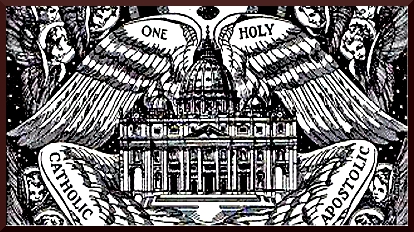 Marks of the True Church The True Church is one, holy, catholic, and apostolic. The Church that possesses all the shining marks which Our Lord gave is the Church of God, the True Church. Any church that lacks even one of these marks is an imitation, a false church, and not the one founded by Our Lord. The True Church must possess all these marks. It is the Church which Christ commanded all to hear and obey. Did Christ establish many Churches? --Christ established only one Church, to continue till the end of time. 1. As God is one, He established one Church, which He commanded all men to obey and to follow in the way of salvation. God is essentially one. He is Truth itself. How can He say to one group of men that there are three Persons in one God, and to another that there is only one Person? How can He say to one body that the Holy Eucharist is Himself, and to another that it is mere bread? God cannot contradict Himself. "He who hears you hears me" (Luke 10:16). "There shall be one fold and one shepherd" (John 10:16). 2. Christ never referred to His Churches, but to His Church. Christ chose only one Head for His Church. Peter could not have been the Head of conflicting churches. Christ said: "And I say to thee, thou art Peter, and upon this rock I will build my Church, and the gates of hell shall not prevail against it" (Matt. 16:18). Christ did not say: "Upon this rock I will build My Churches," it was clearly not His intention to establish various conflicting churches. 3. Christ, even in His prayers, spoke of unity among His followers. There would evidently be no unity if He had founded many churches. Immediately before His passion, He prayed: "Yet not for these only do I pray, but for those also who through their word are to believe in me, that all may be one, even as thou, Father, in me and I in thee; that they also may he one in us, that the world may believe that thou hast sent me" (John 17:20-21). Is there any way by which we can distinguish the Church that Christ founded from all other churches? --We can distinguish the Church founded by Christ from all other churches by the marks or signs that Our Lord gave to it. A mark is a sign by which something may be distinguished from all others of the same kind. By its marks we can recognize the True Church as the one founded by Jesus Christ, distinguishing it from all other churches, however similar. 4. It is important that we know which is the Church established by Christ, in order that we may obey it, as God commands. Then shall we also be certain what to believe and do in order to be saved; the Church, that True Church, will be our guide to heaven. We must distinguish the True Church from false churches, because today there are many imitations of the Church founded by Christ. 5. The True Church must be that which Christ personally founded, and the Apostles propagated. It must have existed continuously since the time of Christ. It must teach in their entirety all the doctrines commanded by the Divine Founder while He was still on earth; and all its members must profess those fundamental doctrines. It must be a visible organization, discernible and discoverable, evidently existing, with clear marks or signs distinguishing it as the True Church. It was through a common bond of faith that the faithful throughout the world were, to be united in one body, the Church, their heritage from the Son of God. Our Lord therefore before His Ascension made the necessary provision so that all men might from thenceforth recognize the Church which He established, and which He commanded all to join. What are the chief marks of the True Church? --The chief marks of the True Church are four: It is one, holy, catholic or universal, and apostolic. 1. Christ intended His Church to be One; therefore the True Church must be One. Its members must be united in doctrine, in worship, and in government. Christ said: "If a kingdom is divided against itself, that kingdom cannot stand" (Mark 3:24). "There shall be one fold and one Shepherd" (John 10:16). 2. Christ intended His Church to be Holy; therefore the True Church must be Holy. It must teach a holy doctrine in faith and morals, because its Founder is holy. It must provide the means for its members to lead a holy life. "Beware of false prophets, who come to you in sheep's clothing, but inwardly are ravenous wolves. By their fruits you will know them. Do men gather grapes from thorns, or figs from thistles? Even so, every good tree bears good fruit, but the bad tree bears bad fruit. ... Therefore, by their fruits you will know them" (Matt. 7:15-17,20). Christ promised His Church the gift of miracles, a sign of holiness: "Amen, amen, I say to you, he who believes in me, the works that I do he also shall do, and greater than these he shall do" (John 14:12). He said: "You therefore are to be perfect, as your heavenly Father is Perfect" (Matt. 5:48). 3. Christ intended His Church to be universal, that is, catholic; and therefore the True Church must be Universal, or Catholic. It must be for all peoples of every nation and for all times and teach the same faith everywhere. Christ commanded His disciples: "Go therefore and make disciples of all nations" (Matt. 28:19). "Go into the whole world. and preach the Gospel to every creature" (Mark 16:15). "You shall be witnesses for me ... even to the very ends of the earth" (Acts 1:8). 4. Christ intended His Church to be propagated by His Apostles; and therefore the True Church must be Apostolic. It must be the Church propagated by the Apostles. Its rulers must derive their office and authority by lawful succession from the Apostles. It must hold intact the doctrine and traditions of the Apostles, to whom Christ gave authority to teach. It was Christ Himself, and no one else, Who chose His Apostles and disciples, and commanded them to teach His doctrines to all the world. St. Paul says: "Even if we or an angel from heaven should preach a Gospel to you other than that which we have preached to you, let him be anathema" (Gal. 1:8). St. Paul himself refers to the Church as "built upon the foundation of the Apostles" (Eph. 2:20). Which Church possesses the marks of the Church established by Christ, and therefore must be the True Church? --The Catholic Church possesses the marks of the Church established by Christ; the Catholic Church is the True Church. The Catholic Church is One, Holy, Catholic, and Apostolic in the way Our Lord Jesus Christ wanted His Church to be One, Holy, Catholic, and Apostolic. --My Catholic Faith This post has been edited by yeeck: Apr 29 2015, 11:51 PM |
|
|
May 1 2015, 02:03 AM
|
|
Senior Member
3,577 posts Joined: Apr 2006
|
Marriage & the Sins of the 6th & 9th commandments
|
|
|
May 2 2015, 12:22 AM
|
|
Senior Member
3,577 posts Joined: Apr 2006
|
This post has been edited by yeeck: May 2 2015, 12:27 AM |
|
|
May 2 2015, 02:32 PM
|
|
Senior Member
3,577 posts Joined: Apr 2006
|
Unless We Believe in Scripture We Can Neither Be Christians Nor Be Saved
|
|
|
May 3 2015, 12:19 PM
Show posts by this member only | IPv6 | Post
#350
|
|
Junior Member
225 posts Joined: Mar 2008
|
Fifth Sunday of Easter
Gospel Reading John 15:1-8 Jesus said to his disciples: “I am the true vine, and my Father is the vine grower. He takes away every branch in me that does not bear fruit, and every one that does he prunes so that it bears more fruit. You are already pruned because of the word that I spoke to you. Remain in me, as I remain in you. Just as a branch cannot bear fruit on its own unless it remains on the vine, so neither can you unless you remain in me. I am the vine, you are the branches. Whoever remains in me and I in him will bear much fruit, because without me you can do nothing. Anyone who does not remain in me will be thrown out like a branch and wither; people will gather them and throw them into a fire and they will be burned. If you remain in me and my words remain in you, ask for whatever you want and it will be done for you. By this is my Father glorified, that you bear much fruit and become my disciples.” |
|
|
May 4 2015, 02:50 PM
|
|
Senior Member
3,577 posts Joined: Apr 2006
|
How the World’s Most Notorious Atheist Changed His Mind
by Dr. Benjamin Wiker EDITOR'S NOTE: For the last half of the twentieth century, Antony Flew (1923-2010) was the world's most famous atheist. Long before Richard Dawkins, Christopher Hitchens, and Sam Harris began taking swipes at religion, Flew was the preeminent spokesman for unbelief. However in 2004, he shocked the world by announcing he had come to believe in God. While never embracing Christianity—Flew only believed in the deistic, Aristotelian conception of God—he became one of the most high-profile and surprising atheist converts. In 2007, he recounted his conversion in a book titled There is a God: How the World's Most Notorious Atheist Changed His Mind. Some critics suggested Flew's mental capacity had declined and therefore we should question the credibility of his conversion. Others hailed Flew's book as a legitimate and landmark publication. A couple months before the book's release, Flew sat down with Strange Notions contributor Dr. Benjamin Wiker for an interview about his book, his conversion, and the reasons that led him to God. Read below and enjoy! Dr. Benjamin Wiker: You say in There is a God, that "it may well be that no one is as surprised as I am that my exploration of the Divine has after all these years turned from denial...to discovery." Everyone else was certainly very surprised as well, perhaps all the more so since on our end, it seemed so sudden. But in There is a God, we find that it was actually a very gradual process—a "two decade migration," as you call it. God was the conclusion of a rather long argument, then. But wasn't there a point in the "argument" where you found yourself suddenly surprised by the realization that "There is a God" after all? So that, in some sense, you really did "hear a Voice that says" in the evidence itself "'Can you hear me now?'" Antony Flew: There were two factors in particular that were decisive. One was my growing empathy with the insight of Einstein and other noted scientists that there had to be an Intelligence behind the integrated complexity of the physical Universe. The second was my own insight that the integrated complexity of life itself—which is far more complex than the physical Universe—can only be explained in terms of an Intelligent Source. I believe that the origin of life and reproduction simply cannot be explained from a biological standpoint despite numerous efforts to do so. With every passing year, the more that was discovered about the richness and inherent intelligence of life, the less it seemed likely that a chemical soup could magically generate the genetic code. The difference between life and non-life, it became apparent to me, was ontological and not chemical. The best confirmation of this radical gulf is Richard Dawkins' comical effort to argue in The God Delusion that the origin of life can be attributed to a "lucky chance." If that's the best argument you have, then the game is over. No, I did not hear a Voice. It was the evidence itself that led me to this conclusion. Wiker: You are famous for arguing for a presumption of atheism, i.e., as far as arguments for and against the existence of God, the burden of proof lies with the theist. Given that you believe that you only followed the evidence where it led, and it led to theism, it would seem that things have now gone the other way, so that the burden of proof lies with the atheist. He must prove that God doesn't exist. What are your thoughts on that? There Is a GodFlew: I note in my book that some philosophers indeed have argued in the past that the burden of proof is on the atheist. I think the origins of the laws of nature and of life and the Universe point clearly to an intelligent Source. The burden of proof is on those who argue to the contrary. Wiker: As for evidence, you cite a lot of the most recent science, yet you remark that your discovery of the Divine did not come through "experiments and equations," but rather, "through an understanding of the structures they unveil and map." Could you explain? Does that mean that the evidence that led you to God is not really, at heart, scientific? Flew: It was empirical evidence, the evidence uncovered by the sciences. But it was a philosophical inference drawn from the evidence. Scientists as scientists cannot make these kinds of philosophical inferences. They have to speak as philosophers when they study the philosophical implications of empirical evidence. Wiker: You are obviously aware of the spate of recent books by such atheists as Richard Dawkins and Christopher Hitchens. They think that those who believe in God are behind the times. But you seem to be politely asserting that they are ones who are behind the times, insofar as the latest scientific evidence tends strongly toward—or perhaps even demonstrates—a theistic conclusion. Is that a fair assessment of your position? Flew: Yes, indeed. I would add that Dawkins is selective to the point of dishonesty when he cites the views of scientists on the philosophical implications of the scientific data. Two noted philosophers, one an agnostic (Anthony Kenny) and the other an atheist (Thomas Nagel), recently pointed out that Dawkins has failed to address three major issues that ground the rational case for God. As it happens, these are the very same issues that had driven me to accept the existence of a God: the laws of nature, life with its teleological organization, and the existence of the Universe. Wiker: You point out that the existence of God and the existence of evil are actually two different issues, which would therefore require two distinct investigations. But in the popular literature—even in much of the philosophical literature—the two issues are regularly conflated. Especially among atheists, the presumption is that the non-existence of God simply follows upon the existence of evil. What is the danger of such conflation? How as a theist do you now respond? Flew: I should clarify that I am a deist. I do not accept any claim of divine revelation though I would be happy to study any such claim (and continue to do so in the case of Christianity). For the deist, the existence of evil does not pose a problem because the deist God does not intervene in the affairs of the world. The religious theist, of course, can turn to the free-will defense (in fact I am the one who first coined the phrase free-will defense). Another relatively recent change in my philosophical views is my affirmation of the freedom of the will. Wiker: According to There is a God, you are not what might be called a "thin theist," that is, the evidence led you not merely to accept that there is a "cause" of nature, but "to accept the existence of a self-existent, immutable, immaterial, omnipotent, and omniscient Being." How far away are you, then, from accepting this Being as a person rather than a set of characteristics, however accurate they may be? (I'm thinking of C. S. Lewis' remark that a big turning point for him, in accepting Christianity, was in realizing that God was not a "place"—a set of characteristics, like a landscape—but a person.) Flew: I accept the God of Aristotle who shares all the attributes you cite. Like Lewis I believe that God is a person but not the sort of person with whom you can have a talk. It is the ultimate being, the Creator of the Universe. Wiker: Do you plan to write a follow-up book to There is a God? Flew: As I said in opening the book, this is my last will and testament. Source: http://www.tothesource.org/10_30_2007/10_30_2007.htm |
|
|
May 4 2015, 08:07 PM
|
|
Senior Member
3,577 posts Joined: Apr 2006
|
In honour of this month dedicated to Our Lady:
|
|
|
May 5 2015, 11:42 PM
|
|
Senior Member
3,577 posts Joined: Apr 2006
|
4 May: St. Monnica
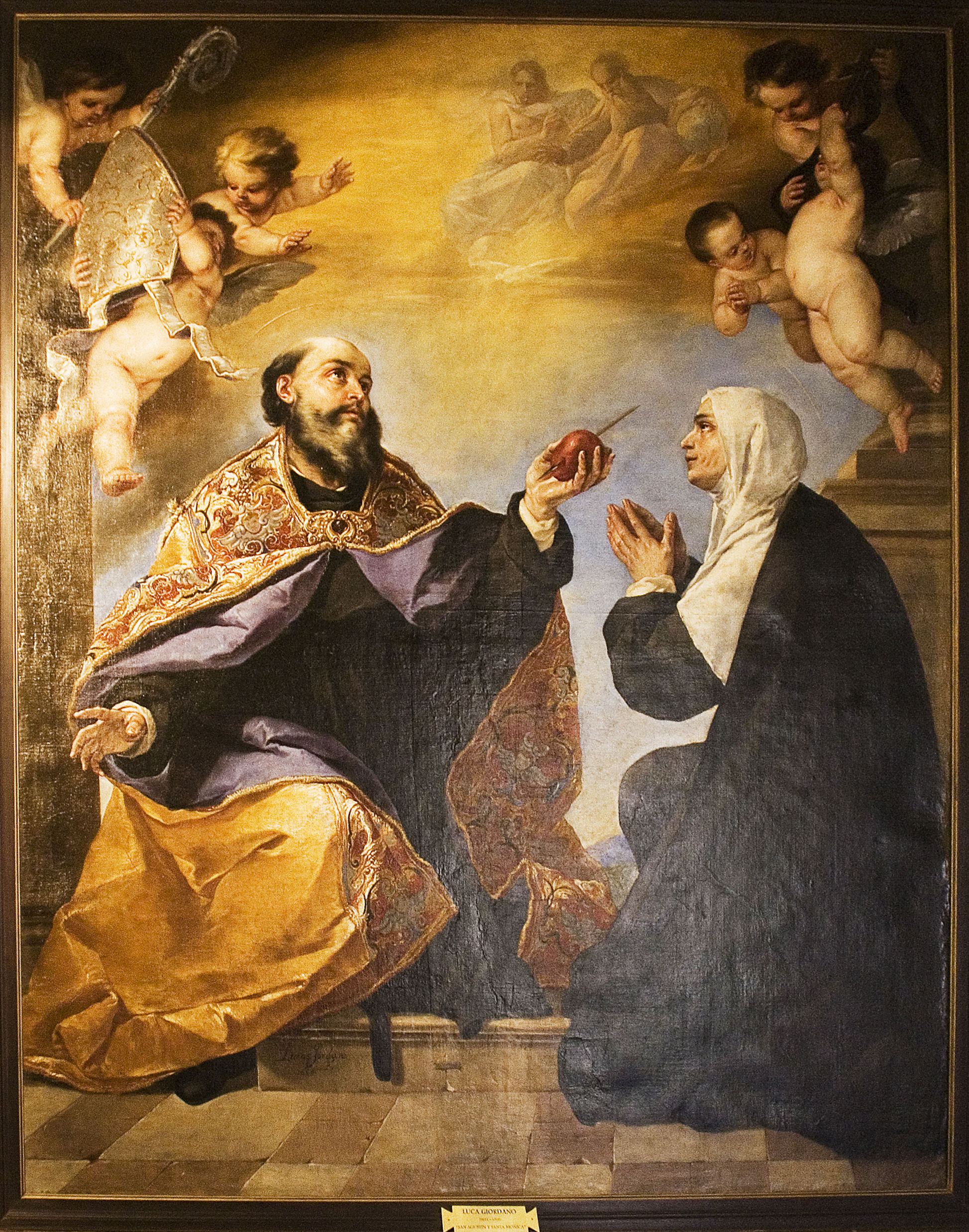 In the older, traditional Roman calendar today is the feast of the mother of St. Augustine, St. Monnica, widow. She died in Ostia (Rome’s port) in 387, when she and her family were heading back to North Africa after Augustine’s conversion and baptism by St. Ambrose. She caught a fever during a blockade of the port. (Yes, you can spell her name “Monnica”, more consistent with her Punic origins.) In the post-Conciliar calendar, her feast was moved to be next to that of her son. As she lay dying in Ostia near Rome, Monnica told Augustine (conf. 9): “Lay this body anywhere, let not the care for it trouble you at all. This only I ask, that you will remember me at the Lord’s altar, wherever you be.” She was buried there in Ostia. Her body was later moved to the Church of St. Augustine in Rome. May she pray for us, for widows and for parents of children who have drifted from the Church. Be sure to pray for the departed. Pray for them! Don’t just remember them. Don’t just think well of them. Don’t just, as the case may be, resent or be angry at them. Pray for them! Prayer for the dead is a spiritual work of mercy. |
|
|
May 5 2015, 11:47 PM
|
|
Senior Member
3,577 posts Joined: Apr 2006
|
Indulgences
994. I have heard Catholics speak of indulgences for the souls in purgatory? What are indulgences? Do not mix up the ecclesiastical term indulgence with the modern idea of self-indulgence. An indulgence is not a permission to indulge in sin, but is a remission of punishment due to sin. Now in the early Christian Church certain sins were punished by long public penance, sometimes for days, at other times for years. But the Church was often indulgent, and loosed or freed Christians from all or part of their public penance, if they showed other good dispositions, or performed certain works of charity. The Church had that power in the name of God as surely as the state has the power in its own name to commute a sentence or even release a criminal altogether under certain circumstances. Christ said to the Church, "Whatsoever you shall loose upon earth shall be loosed also in heaven." Matt. XVIII., 18. That the merits of Christ and of the Martyrs and Saints of the ages are at the disposal of the Church is also a consequence of the doctrine of the Communion of the Saints. And that power of commuting or even of remitting penances and expiations exists in the Church to-day, being exercised by the granting of indulgences. 995. What do you mean by an indulgence, say, of forty days? An indulgence of forty days means that the Church liberates us from that amount of expiation of our sins which would be equal to a forty days' public penance in the early Church. It does not mean forty days less purgatory. Such an indulgence is called a partial indulgence. 996. What is a plenary indulgence? A plenary indulgence remits all the punishment due to our sins. If one gained a plenary indulgence perfectly at the hour of death, he would be exempt from any purification in purgatory. Such an indulgence would not increase one's merit, but would merely free from the penalties due to past sins. The conditions for the gaining of a plenary indulgence are as a rule earnest prayer for the Pope's intentions, and often, Confession and Communion. The Pope's intentions are for the peace of the world, the extension of the Kingdom of Christ, and the conversion of non-Catholics to the true faith. 997. Can indulgences be applied to the souls in purgatory? Yes, but by God alone. We can but ask Him to accept indulgences on their behalf. But we can certainly offer them with a definite conviction of their normal acceptance by God for those we love, even as we can share our goods in this life with more needy friends. This too is implied by the doctrine of the Communion of Saints. 998. If a plenary indulgence be applied to a certain soul in purgatory there would be no more need to pray for that soul. A plenary indulgence, of course, would be able to liberate a soul from purgatory. But we cannot know that we have satisfactorily fulfilled all the conditions necessary for the gaining of a plenary indulgence, and we cannot know for certain that God has actually accepted it, it gained, on behalf of the particular soul we have in mind. We know the general principle that indulgences are beneficial to the souls in purgatory, and we gain and offer them to God, leaving all questions as to their application to Him. 999. Do you deny that indulgences were sold in the middle ages? They were never sold with the sanction of the theology of the Church. If unscrupulous individuals sold indulgences, such traffic in them would no more militate against the Church than would my own conduct did I myself adopt the practice privately. 1000. Pope Leo X. sold indulgences in Germany to get money for St. Peter\\\'s. Do you think it right to sell pardons for sins? An indulgence is not a pardon for sin. It can be gained only by one who is not in a state of sin, and who has previously secured forgiveness of his sins by repentance by long public penance, sometimes for days, at other times for years. But the Church was often indulgent, and loosed or freed Christians from all or part of their public penance, if they showed other good dispositions, or performed certain works of charity. The Church had that power in the name of God as surely as the state has the power in its own name to commute a sentence or even release a criminal altogether under certain circumstances. Christ said to the Church, "Whatsoever you shall loose upon earth shall be loosed also in heaven." Matt. XVIII, 18. That the merits of Christ and of the Martyrs and Saints of the ages are at the disposal of the Church is also a consequence of the doctrine of the Communion of the Saints. And that power of commuting or even of remitting penances and expiations exists in the Church to-day, being exercised by the granting of indulgences. 1001. Are not Papal Bulls and indulgences still sold in Spain, and cannot any crime be committed and an indulgence obtained, if sufficient money be forthcoming? A Papal Bull is simply a Papal document with a leaden seal or bulla attached to it. It need have nothing whatever to do with indulgences. Indulgences have never been for sale as far as the Catholic Church is concerned, and are not sold in Spain or anywhere else. If a man commits mortal sin, not all the indulgences in the world could forgive it. They are not for the forgiveness of sin, but can be gained only after such sins have been forgiven by other means. Since they can be gained only by people in a state of grace they are an inducement not to fall into sin. And they may be obtained, not by money, but by certain good works such as prayer, almsgiving to the poor, etc. --Radio Replies |
|
|
May 5 2015, 11:55 PM
|
|
Senior Member
3,577 posts Joined: Apr 2006
|
"Nothing can come from nothing! There is something, (spiritual and material), we call creation. We experience and interact with souls, (people, devil, angels), and matter everyday. There never was nothing. These things, (spirit and matter that we interact with everyday), could not have brought themselves into existence. Therefore something, or someone else, had to bring them into existence. This something else, or someone else, was not caused by anything else. Otherwise you would have to continually look for the creator that cause the next created reality, and on and on into infinity. This someone or something is called the uncaused cause and the unmoved mover without being created caused all to be created. This person is called God."
|
|
|
May 7 2015, 10:20 AM
|
|
Senior Member
3,577 posts Joined: Apr 2006
|
Please pray often the PRAYER OF THE ANGEL OF FATIMA:
ANGEL'S PRAYER (Given to the three children at Fatima by the Angel who preceded Our Lady's first appearance to them.)  MY GOD, I believe, I adore, I trust, and I love Thee! I ask pardon for those who do not believe, do not adore, do not trust and do not love Thee. MOST Holy Trinity, Father, Son, and Holy Spirit, I adore Thee profoundly. I offer Thee the Most Precious Body, Blood, Soul, and Divinity of Jesus Christ, present in all the tabernacles of the world, in reparation for the outrages, sacrileges, and indifference by which He is offended. And through the infinite merit of His Most Sacred Heart, and the Immaculate Heart of Mary, I beg of Thee the conversion of poor sinners. |
|
|
May 7 2015, 11:37 AM
|
|
Junior Member
225 posts Joined: Mar 2008
|
Why Do We Go To Mass? Four Essential Reasons *Gist of the Article*
1. Adoration Christ Jesus, the Second person of the Holy Trinity, God-become-Man, is physically with us at every Mass. He is real, He is alive, and He stands before us, body, blood, soul and divinity in an unbloody manner, shrouded behind the appearance of bread and wine but substantially present in them. We do not merely commemorate Him. He is with us. We adore His Divine majesty. We fall down in worship before Him. And by joining our hearts and minds with the priest as he offers the Mass, we are participating in the only true gift we can give to God: the adoration of His Son. 2. Thanksgiving Christ’s incarnation, His life, His teachings, His passion and death and resurrection, his establishment of the Church and her sacraments – this series of events is the most important, most essential, most profoundly wonderful and undeserved thing that has ever happened to Mankind. Each of us has been given the chance to participate in the Divine Life of God, to be perfected by grace, and to live forever with Our Creator in Heaven. This opportunity was lost by Adam’s sin; it is gained back through the New Adam, who offers Himself on every Catholic altar. We should stand in awe, overcome with gratitude for what Our Lord has done for us. Each Mass is the perfect opportunity for us to thank Him for what He has done for us. 3. Petition God is not content to merely offer Himself for us to save us from our sins. He truly loves as our Father, and wishes to give us all that we need. As He is present in a special way at each Mass, we come to him with our many needs, temporal and spiritual, and lay them at the foot of the Cross. We beg Him for the graces necessary to become saints; we pray for those who are in most need of His assistance. When we receive Jesus in the Holy Eucharist, the Heavenly Father looks upon us and sees within us, unified with us, His beloved, divine Son. There is no more powerful, no more profound moment in which to ask God for all that we need. He cannot but look upon us with Love, not just as His creatures, but as those who share such intimacy with Jesus as to have physically united with Him through the nourishment we take from His body and blood. 4. Atonement Christ was the victim who surpassed all victims. No longer does God require burnt offerings, or the sacrificing of animals. The Lamb of God has come and offered His blood, “Shed for you and for many unto the remission of sins.” This, truly, is the “mystery of faith.” We have nothing to lay upon the altar but our sinfulness, nothing to give to God that He hasn’t given to us – except our human weakness. We ask Him to take it, to perfect it, to replace it with His grace and to wash away the stain of our sins with His precious, sanctifying blood. It is the Holy Sacrifice of the Mass, connected forever to Calvary, which is the singular act of atonement for all mankind. There is no higher prayer, no greater act of worship. We are absolved of our sins through the sacrament of confession, but it is the offering of the Eucharist — of Christ on the Cross — which has obtained the forgiveness we receive. The Holy Sacrifice of the Mass should cause us to experience reverence and awe. When we are before the altar, we are in the presence of something greater and more wonderful than we can ever fully comprehend. This should inform our manner, our reverence, our mode of dress, and the prayerful silence that we keep in His presence. If we are able to bear in mind these ends of the Mass, we will find that our experience of liturgy changes drastically. At any time, in any place, Christians can come together to share a meal and talk of our love for God. It is only at the Holy Sacrifice of the Mass that we can behold Christ made truly present on the altar, that we can stare across the chasm of time and space to that Good Friday, two millennia ago, and into the infinitely loving eyes of our dying Lord, beaten, scourged, bloodied, and nailed to the cruel instrument of our salvation. Source: http://www.onepeterfive.com/why-do-we-go-t...ential-reasons/ |
|
|
May 8 2015, 01:30 AM
|
|
Senior Member
3,577 posts Joined: Apr 2006
|
From the Benedictine monks of Norcia
|
|
|
May 9 2015, 07:19 PM
|
|
Senior Member
3,577 posts Joined: Apr 2006
|
Can God be proven scientifically?
by Matt Slick Answering the question of whether or not God can be proven scientifically isn’t possible without first looking at what it means for something to be “scientific.” The scientific method is the process of looking at the material world, devising a hypothesis on a particular phenomenon, developing experiments to test the hypothesis, modifying the hypothesis based upon the results of the experiments and then eventually forming a theory that is consistent with the results of experiments so the theory can explain why something happens. Therefore, by definition, the scientific method is restricted to examining the physical realm. This is why it isn’t scientifically possible to prove that God exists. Think about this--God exists outside of the physical universe. He is not part of it. He created it, so He is different from the universe. The scientific method is restricted to that which is within the universe--but God is outside of it. So it would be like someone asking for material evidence of the non-material God. Furthermore, the scientific method deals with repeatable experiments done in the physical realm. How would anybody develop a test to prove that God exists by looking at rocks or heat exchange or quantum physics, etc., that can be repeated in a laboratory? If scientists were to find something that was unexplainable, they might just say they don’t understand it yet. But if they find some “proof” that is repeatable, all they are doing is discovering how the physical universe works. So, it is difficult to even begin to understand how any scientist can develop an experiment by which God can be demonstrated to exist. Furthermore, there is the logical problem of what is called a category mistake, which is mixing categories. It would be like saying that a person will judge the value of a painting by how much it weighs. Aesthetic value is not the same category as physical weight. These are different categories; hence, a category mistake. So, it is a category mistake to look for the physical representation of the non-physical being. It is a category mistake to ask for non-transcendent evidence for a transcendent being. |
|
|
May 10 2015, 12:33 AM
|
|
Senior Member
3,577 posts Joined: Apr 2006
|
Voices From Heaven: Discerning the Spirits About Apparitions
|
|
|
May 10 2015, 04:04 PM
Show posts by this member only | IPv6 | Post
#361
|
|
Junior Member
225 posts Joined: Mar 2008
|
Sixth Sunday of Easter
Gospel reading - Jn 15:9-17 Jesus said to his disciples: “As the Father loves me, so I also love you. Remain in my love. If you keep my commandments, you will remain in my love, just as I have kept my Father’s commandments and remain in his love. “I have told you this so that my joy may be in you and your joy might be complete. This is my commandment: love one another as I love you. No one has greater love than this, to lay down one’s life for one’s friends. You are my friends if you do what I command you. I no longer call you slaves, because a slave does not know what his master is doing. I have called you friends, because I have told you everything I have heard from my Father. It was not you who chose me, but I who chose you and appointed you to go and bear fruit that will remain, so that whatever you ask the Father in my name he may give you. This I command you: love one another.” This post has been edited by khool: May 10 2015, 04:04 PM |
|
|
May 11 2015, 01:26 AM
|
|
Senior Member
3,577 posts Joined: Apr 2006
|
 "Greater love has no man than this, that a man lay down his life for his friends. You are my friends if you do what I command you" – John 15:13f |
|
|
May 12 2015, 05:32 PM
|
|
Senior Member
3,577 posts Joined: Apr 2006
|
Sin
 700. This sin business worries me. Is it possible that mortal man can sin against Almighty God? I can see that he can sin against his fellow mortal men. It is possible precisely because we are mortal men and He is Almighty God. What is sin? Sin is a crime, and crime is a breaking of the law. Now God created us, and He certainly has the right to lay down laws according to which we must conduct ourselves. If men will not obey those laws they sin against God just as those who refuse to obey the state are criminals in the eyes of state law. As a matter of fact, it would be impossible to sin against one's fellow men if one could not sin against God. Every sin supposes the violation of the rights of another. Rights and duties go together. If I have a duty it is because another has a right. But whence come the rights of my fellow men? What is their foundation? Since man did not make himself, he certainly did not make that which is less than himself, his rights. The very foundation of these rights is God the Creator, the Author of all morality. And every sin against your fellow man is a sin against the Author of the law—Almighty God. Without God you have rights with no assignable title and no real sanction, 701. Was the sin of our first parents the eating of an apple, or the committing of adultery? It was not a sin of adultery. Disorder in their passions was subsequent to their first sin. Their higher faculties had perfect control over their lower faculties until they had rebelled against God. Only after that did things lower than themselves, even their own passions, rebel against them. There is far less reason why lesser things should obey man than for man to obey God. Nor were they expelled for eating an apple. Nowhere is an apple mentioned. They disobediently partook of the tree of knowledge of good and evil. The fruit of that tree could not communicate knowledge to them, but where before they had not known the evil of sin, they now had the sad knowledge of what it meant to be at variance with God. Their violation of God's prohibition was an implicit blasphemy, and a denial in practice of God's right to dictate their conduct. 702. How can God blame anyone for doing what he must do? He cannot and does not. But for every free choice in the direction of evil man will have to render an account. Man is free, and no man must do moral evil. 703. Why did not God make their will power strong enough to resist the temptation? He did. They need not have consented to it. God had to choose between giving man freedom of will or not. If man were not free, he would necessarily love and serve God. Man would have to love God. But God did not want a forced love from intelligent creatures. He wished to be freely chosen for His own sake. So He left man free. Yet if man is free, he is free not only to love God, but also to reject God. But God thought so much of man's freely given love that He preferred to risk not being chosen. 704. At least God could have given men a stronger will. What do you mean by stronger will? Do you mean a will with a stronger propensity towards the good? But freedom means freedom from inclinations imposed by any outside agency. It means indifference and personal decision. Any intrinsic strengthening of man's will in one direction means diminishing his freedom in the opposite direction. God gave man the truth; He gave him grace; but always man remained his own master physically, although morally of course he was bound to obey God. 705. God knows all. He knew the pair must fall when He made them. God does know all. He therefore knew that they would be free, and that there was no must fall about it. There was no necessity to fall, and they could have resisted the temptation. You may say, "But they did fall, and God must have known that they would fall." That is correct. But the fact that God knew this did not make them fall, nor place the responsibility upon God. If I find out by some means that you are going to sail for Europe next week, when you have sailed I do not tell everyone that I made you go. Knowledge as such does not cause events. Events are responsible for the knowledge one has of them. 706. Anyway God need not have made a serpent or devil to tempt them. God did not make any devils. He made angels in quite a sinless condition, but also free, even as man. By misuse of their freedom of choice, some angels turned themselves into evil spirits. In his evil will Satan then tempted man. God permitted this, for man had to prove the reality of his devotedness to God. Anybody can serve God if he is never tempted. Man's real glory is to be tempted to abandon God, yet not to consent. 707. You say that man fell. Evolution says that man did not fall, but that he has experienced a steady rise from brutality. History denies this steady rise. It is full of falls, and is, in fact, but a catalogue of ups and downs. Nations rise to a high state of civilization and decay. If evolution wants to maintain a steady uplift, history itself proves it wrong. 708. What do you mean by original sin? Actual sin is a deliberate personal transgression of God's law. But original sin, which is inherited, does not mean that I have personally and maliciously transgressed. We must notice the difference between nature and grace. Nature is our being and all that our condition demands as rational animals. Grace means a gift or quality over and above all that our nature legitimately demands. Now nature is fitted to know God only by deduction from created things. Yet over and above this God's sheer goodness chose to give us what is in no way due to us, the supernatural destiny to see Him face to face in heaven, and the grace to attain this Vision. He promised this to Adam and, provided Adam were faithful, to all his children. And in this supernatural matter He regarded Adam as father of the human family. Adam failed. He and his children were deprived of this supernatural destiny and of the gift of sanctifying grace. This deprivation of grace is called original sin. It is called sin in so far as we lack that quality which renders us pleasing in God's sight as heirs to the Vision of Himself in heaven. 709. Does God create every soul now in a state of sin? No. God's creative activity terminates in good only. But the soul cannot normally be infused into a child of Adam without its contracting the privation of the original gratuitous gifts it was destined to receive had Adam not fallen. I say normally because God did anticipate the merits of Christ in one case, preventing the soul of the Virgin Mary from contracting original sin. Do not imagine, however, that God creates a separated soul and then infuses it. By simultaneous action the soul is created and blended with the body, thus completing a nature in a state of sin. The stain of original sin, also, differs from the stain of personal sin, which is committed, not contracted. Original sin supposes a lack of grace, which would have been present, but it does not suppose a personal and malicious disposition. 710. What proof have you that original sin is inherited? The very best—the word of the God who created us. In Ps. L., 7, we read David's testimony, "In sins did my mother conceive me." The original Hebrew has "in sin," not "in sins." He is speaking, not of his own personal sins, nor of any actual sin of his father or mother. He is speaking of original sin derived from Adam and the first fall, tracing back to the very first beginning of human life a sin handed on with human nature from parent to child. In Jn. IIL, 6, Christ demands that a man be born again of water and the Holy Ghost in Baptism. A birth means a life. Re-birth means the acquiring of some new principle of life not secured by our natural birth. And Baptism gives the principle of supernatural life without which we were born into this world, and the lack of which constitutes the very essence of original sin. St. Paul tells us clearly, "By one man sin entered into this world ... in whom all have sinned." Rom. V., 12. Experience confirms this revealed doctrine. Our very proneness to evil argues to a privation of original rectitude. As Chesterton has well remarked, men may deny original sin, but almost the only thing they know about original innocence is that they haven't got it. 711. To brand me with sin is as unjust as hanging me for a murder I did not commit. Original sin does not brand you with the positive guilt of actual and personal malice. It is a privation of a grace and of a destiny to which no human being has a natural right. God offered that destiny to Adam and to all his children, regarding Adam as head of the human family. Were you a married man with a family, I could certainly agree to grant to you and to each of your children a substantial recompense, provided you fulfilled certain conditions specified by me. If you failed to comply with my conditions, I could certainly cancel that recompense. Nor could your children justly complain later that I had robbed them of anything due to them. Original sin is the deprivation of a right to a happiness which was never due to us. The privation of grace is essentially the privation of something gratuitous. 712. I can understand inheriting the effects of the first sin, hut why the sin itself? If my father is a thief, I share in his disgrace, but my soul is not stained by his sins. Your father was not constituted the head of the whole human race, and is but the intermediate transmitter of an individual human nature. If we inherited original sin as something of positive personal malice, it would be unjust. But we do not. Death in a state of positive and serious personal malice merits hell. But if a child dies with no personal sin, but only original sin, whilst it can never attain to the very Vision of God, and thus suffers the privation of a gratuitous destiny, it will never endure the positive suffering of the lost in hell. It will be rendered happy according to its natural capacity. 713. Why inherit the first sin of Adam, and not his subsequent sins? Only in the matter with which the first sin was connected was Adam constituted the supernatural head of the race. After his sin as head of supernaturally elevated human nature, he sinned as a private individual and independently of God's universal decree for the human race as such. 714. Why was I born without my consent, when I have to inherit original sin? Before you existed your consent could hardly be requested. Also I would not need to be asked if someone offered to invest a few thousand dollars for me before I was able to be consulted. Yet the gift of life with a prospect of eternal happiness is more valuable than any earthly fortune. After all, if God permitted original sin, it was only because He knew that a greater good would eventuate in the Incarnation of His Son for us men and for our salvation. Christ has restored to every man the possibility of attaining the original supernatural destiny first offered us through Adam. --Radio Replies This post has been edited by yeeck: May 12 2015, 05:33 PM |
|
|
May 13 2015, 03:48 PM
|
|
Senior Member
3,577 posts Joined: Apr 2006
|
 Statue of Our Lady of Fatima The Blessed Virgin Mary, the Mother of God, appeared six times to three shepherd children ("The Three Seers") near the town of Fatima, Portugal between May 13 and October 13, 1917. Appearing to the children, the Blessed Virgin told them that She had been sent by God with a message for every man, woman and child living in our century. Coming at a time when civilization was torn asunder by war and bloody violence, She promised that Heaven would grant peace to all the world if Her requests for prayer, repration and consecration were heard and obeyed. "If My requests are granted ... there will be peace"  Our Lady of Fatima explained to the children that war is a punishment for sin and warned that God would further castigate the world for its disobedience to His Will by means of war, hunger and the persecution of the Church, the Holy Father and the Catholic Faithful. God's Mother prophesied that Russia would be God's chosen "instrument of chastisement," spreading the "errors" of atheism and materialism across the earth, fomenting wars, annihilating nations and persecuting the Faithful everywhere. 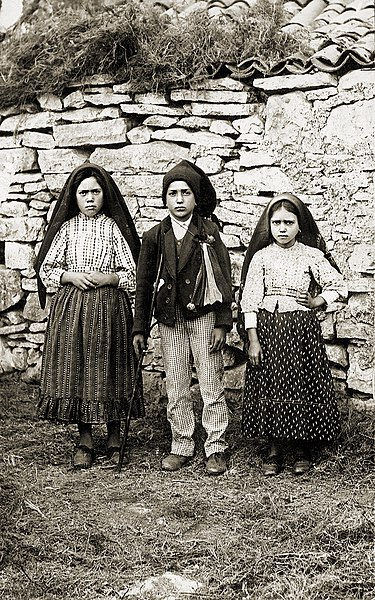 The 3 seers - Jacinta, Francisco, Lucia. "If My requests are not granted, Russia will spread its errors throughout the world, raising up wars and persecutions against the Church. The good will be martryed, the Holy Father will suffer much and various nations will be annihilated." In all Her appearances at Fatima, the Blessed Mother repeatedly emphasized the necessity of praying the Rosary daily, of wearing the Brown Scapular of Mount Carmel and of performing acts of reparation and sacrifice. To prevent the terrible chastisement at the hands of Russia and to convert "that poor nation", Our Lady requested the solemn public Consecration of Russia to Her Immaculate Heart by the Pope and all the Catholic bishops of the world. She also asked that the Faithful practice a new devotion of reparation on the first Saturday of five consecutive months ("The Five First Saturdays")  The heart of Our Lady's Message to the world is contained in what has come to be called the "Secret" which She confided to the three child seers in July 1917. The Secret actually consists of three parts, the first two of which have been publicly revealed. The first part of the Secret was a horrifying Vision of hell "where the souls of poor sinners go" and contained an urgent plea from Our Lady for acts of prayer and sacrifice to save souls. The second part of the Secret specifically prophesied the outbreak of World War II and contained the Mother of God's solemn request for the Consecration of Russia as a condition for world peace. It also predicted the inevitable triumph of Her Immaculate Heart following Russia's consecration and the conversion "of that poor nation" to the Catholic Faith. The Third Secret of Fatima What is generally called the "Third Secret" is, in actuality, the third and final part of the full prophetic Secret which the Blessed Virgin gave to three child seers on July 13, 1917. The other two sections of the Secret (the vision of hell and the rise of Communist Russia) were publicly revealed with the publication of Sister Lucy’s Memoirs in the 1940s, the final part of the revelation remains in the possession of the Vatican and has not yet been disclosed to the world. It was under the direct order of her bishop and, with the assistance of Our Lady, that Sister Lucy dos Santos wrote the third part of the Secret down on January 2, 1944. Speaking to Sister Lucy, the Queen of Heaven told her that it was God’s Will that she commit the Secret to paper and entrust it to her bishop and, through him, to Pope Pius XII. At that time, the Blessed Virgin also indicated that this part of the Secret was to be revealed to the Faithful no later than 1960. Upon learning that her bishop was unwilling to open the envelope containing the Secret, Sister Lucy "made him promise," in the words of Canon Galamba, "that the Third Secret would be opened and read to the world upon her death or in 1960, whichever would happen first." If her bishop died first, it was agreed that the Secret would be confided to the Cardinal Patriarch of Lisbon. Despite this agreement, the Secret was, in fact, delivered to the Vatican where it has remained undisclosed to the public for over fifty years. "Dangers threatening the faith and life of a Christian ... and therefore the world." Since 1960 when, after reading the Secret, Pope John XXIII decided not to reveal the contents publicly, there has been growing speculation concerning what it contains. While in the past, speculation often identified the Secret with all sorts of cataclysms and disasters, more recent scholarship has indicated that it most likely concerns the widespread chaos, confusion and loss of faith that has gripped the Roman Catholic Church over the last three and a half decades. In an interview conducted in November 1984, Cardinal Ratzinger (of the Holy Office) confirmed that, with the Pope’s permission, he had read the Secret and that it concerns, in his words, "a radical call to conversion, the absolute gravity of history, the dangers threatening the Faith and the life of a Christian, and therefore the world. And also the importance of the last times." The Cardinal went on to explain that "if it is not published ... it is to avoid confusing religious prophecy with sensationalism. But the things contained in the Third Secret correspond to what has been announced in Scripture and are confirmed by many other Marian apparitions." 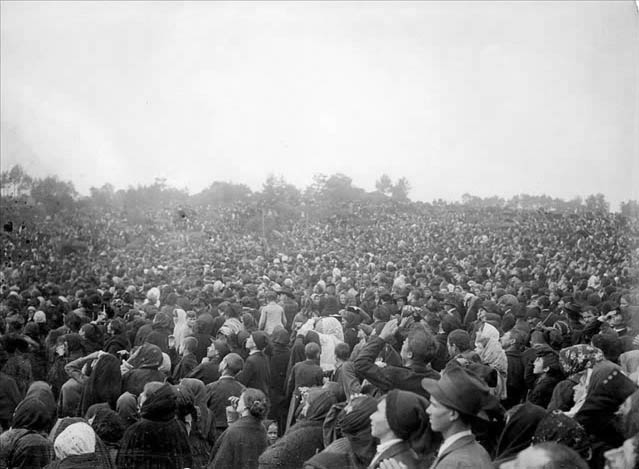 The estimated 70,000 people at the Miracle of the Sun While the precise wording of the Secret remains unknown to the public, the labors of such famous Fatima scholars as Father Joachin Alonso (former official archivist of Fatima) and Frère Michel de la Sainte Trinité have nevertheless provided invaluable insights into its meaning and contents. The latter’s monumental 850-page work, The Third Secret is particularly noteworthy in this regard. "The devil has succeeded in bringing in evil (to the Church) under the guise of good and the blind are beginning to lead others." In his book, Frère Michel reports that, when questioned about the Secret, Sister Lucy said: "It’s in the Gospel and in the Apocalypse, read them!" He notes that she then particularly indicated Chapters VIII through XIII of the Apocalypse (Chapter XIII specifically concerns the rise of the Antichrist). In his study of the Third Secret, Frère Michel builds a powerful and compelling case that the Third Secret is a grave warning of apostasy within the Catholic Faith and a serious indictment of those in the Church hierarchy who have promoted dissent and outright heresy. Although Sister Lucy is not permitted to reveal the final Secret of Our Lady until the Holy Father himself deems the moment opportune, nothing has prevented her from giving her opinion on the crisis in the Church as an individual person. In a series of letters written between 1969 and 1972, Sister Lucy reacted vigorously against modernists and others in the Church, in particular those who seek to minimize the importance of the Rosary. "This disorientation is diabolical," she wrote, and "it is sad that so many people let themselves be dominated by the diabolical wave sweeping over the world! And they are blinded to the point where they are incapable of seeing error! Their principal fault is that they have abandoned prayer." The saddest part of all, according to Sister Lucy, is that so many priests, religious and bishops are swept away in the confusion. "The devil has succeeded in bringing in evil (to the Church) under the guise of good and the blind are beginning to lead others, as the Lord tells us in His Gospel." In the conclusion to his study of the Third Secret, Frère Michel sums up his findings as follows: "Having reached the end of our inquiry, we are able to discern, with near certainty, the essential elements of Our Lady’s final secret: While ‘in Portugal, the dogma of the Faith will always be preserved,’ in many nations, perhaps in almost the entire world, the Faith will be lost. The pastors of the Church will fail gravely in the duties of their office. Through their fault, consecrated souls and the Faithful in great number will let themselves be seduced by pernicious errors spread everywhere. This will be the time of the decisive battle between the Blessed Virgin and the devil. A wave of diabolical disorientation will be hurled over the world. Satan will introduce himself even to the highest summit of the Church. He will blind the minds and harden the hearts of pastors. And God will deliver them to themselves as a chastisement for their refusal to obey the requests of the Immaculate Heart of Mary. This will be the great apostasy predicted for the ‘last times’; ‘the False Lamb’ and ‘False Prophet’ will betray the Church to the profit of ‘the Beast,’ according to the prophecy of the Apocalypse." What you must do It is up to each of us to listen, to read, to learn and to apply this Heavenly message in our own lives, particularly by praying the daily Rosary. To the extent we can, we must also do all we can to see to it that this final warning from Our Heavenly Mother is spread and that its significance is explained to everyone before it is too late. We must not be complacent in the promise of Her eventual triumph because it is still dependent on our co-operation with Gods grace and His plan outlined at Fatima. Our Lady will certainly triumph but we as individual Catholics might fall along the way. This post has been edited by yeeck: May 13 2015, 03:52 PM |
|
|
May 13 2015, 04:07 PM
|
|
Senior Member
3,577 posts Joined: Apr 2006
|
Modernism is Madness
May 12, 2015 by Fr. Dwight Longenecker  Groovy Priests You know the definition of insanity – when you repeat the same action over and over but expect different results. A good example of this is left wing economics. Every experiment in socialism and communism has been a social, economic, human and political disaster of gigantic proportions. Nevertheless, left wingers continue to believe that what is needed is not to get rid of socialism forever, but to have MORE socialism. Another example is universal sex education. The sex educators think that teen pregnancy, STDs and abortion will be reduced if only more young people were educated about contraceptive techniques, safe sex techniques and varied sexual practices. Of course when this happens there are more young people having sex so there are more STDs, teen pregnancies and abortions. The sex educators look at the results, scratch their heads and say, “I guess we need MORE sex education at a younger age.” So they start telling first graders about X rated stuff. This is like putting orange juice in the tank of your car, and then when it doesn’t run you say, “Hey, I guess we didn’t put enough orange juice in the car!” So you open the back window and pour a couple of gallons in the back seat. The same idiocy applies to modernism in the church. The modernists said, “Let’s get rid of that supernatural stuff. Nobody can believe all that junk about Virgin Births, miracles, walking on the water and all that first century superstition. Let’s play all that down and tell everyone the church is about US and our family and our community. Let’s get rid of those dumb old hymns that had doctrine and long words in them. Doctrine is divisive and nobody knows what “consubstantial, co-eternal while unending ages run” really means nowadays. Then let’s tell people it doesn’t matter if they become priests and nuns. They can be holy just where they are. Oh yeah, let’s get everyone involved in peace and justice to make the world a better place because that’s really what its all about isn’t it–”what the world needs now is love sweet love….I want to teach the world to sin in perfect harmony…” So the modernists eviscerated the church and cleansed it of the supernatural. They brought in banal hymns, even more banal sermons about being nice to one another, built flying pancake churches and brought in awful rock bands and polyester vestments and told everyone to just try a little bit harder to be nice folks. And then the churches emptied. People felt if that was church they didn’t really need it, and they were right. They didn’t need that kind of church. If they wanted Protestant they should go Protestant because the Protestants do Protestant better than the Catholics ever will. Then here’s the crunch. When the churches emptied and people voted with their feet the modernists said, “I guess we didn’t have enough modernism. To get people back we need MORE peace and justice stuff, MORE rock bands, MORE do-gooder sermons, MORE vapid homilies, in effect, MORE modernism. And it will continue. They will never learn because that’s also one of the signs of true madness–the self delusion and insanity goes on forever without a cure. Source: http://www.patheos.com/blogs/standingonmyh...nism-is-madness This post has been edited by yeeck: May 13 2015, 04:09 PM |
|
|
May 14 2015, 10:08 AM
|
|
Senior Member
3,577 posts Joined: Apr 2006
|
The liturgical spirit of the Ascension
 Some words about the Feast of the Ascension of Our Lord Jesus Christ into Heaven (Thursday May 14th, 2015 - 40 days after Easter) and associated liturgical and Catholic domestic practices. Through the mystery of the Ascension we, who seemed unworthy of God’s earth, are taken up into Heaven. Our very nature, against which Cherubim guarded the gates of Paradise, is enthroned today high above all Cherubim." Such are the words of St. John Chrysostom which plunge us directly into the mystery of Ascension Thursday. "Christ was lifted up to Heaven to make us sharers of His divinity." Spirit of the Feast Dr. Pius Parsch, in The Church’s Year of Grace, explains thus the meaning of Christ’s Ascension: At the death of a beloved friend, we are filled with sorrow even though we know that his lot has been bettered. With this in mind we might expect the Church to commemorate her Savior’s ascension with at least some expression of sadness. Nothing can be further from the truth. Today Christ triumphs, and is receiving the reward of his well earned merit. He patiently paid the price of our redemption, because He sought to free us from Satan’s power and effect our return home. This work, the object of His love and His life’s blood is now completed. He returns to heaven as a conqueror; Son stands before Father and tells of His mission completed. We can characterize today’s feast as that of Christ’s heavenly enthronement, His coronation as King over heaven and earth." This spirit is perfectly reflected in the hymn of Laud Salutis humanae Sator: Hail, Thou who man’s Redeemer art, Jesus, the joy of every heart, Great Maker of the world’s wide frame And purest love’s delight and flame! Our guide, our way to heavenly rest, Be Thou the aim of every breast; Be Thou the soother of our tears, Our sweet reward above the spheres. Amen" Other names for this feast The various words used by different regions exemplify the richness of this season. The Germans use the term Himmelfahrt (going up to Heaven). The Hungarians have a popular term "Thursday of the Communicants", because it was the traditional day of the annual Easter Communion. Most interesting is the Byzantine name, "Fulfilled Salvation", which St. Gregory of Nyssa explains thus: "The Ascension of Christ is the consummation and fulfillment of all other feasts and the happy conclusion of the earthly sojourn of Jesus Christ." In Rome, the following Sunday is called "Sunday of the Rose", because then, the pope celebrates Mass at the church of Santa Maria Rotonda (the Pantheon, which predates the Christian era), and, in token of the Lord’s promise to send the Paraclete soon, a shower of roses is thrown from the central opening of the church. Procession and folklore From the beginning of its observance, this feast produced a liturgical procession which went outside the city, and usually to the top of a hill, in imitation of Christ’s leading the Apostles "out towards Bethany" (Lk 24:50). In Jerusalem, of course, it was the original path that Christ took to the summit of the Mount of Olives. In Rome, the pope was crowned by the cardinals in his chapel and in solemn procession conducted to the church of the Lateran. From there, after the Pontifical Mass, the procession went to a shrine outside the walls. Ascension Plays became a generalized custom in Central and Western Europe. They enacted the Ascension by hoisting a statue of the Risen Christ aloft until it disappeared through an opening in the ceiling of the church. While the image, suspended on a rope, moved slowly upward, the people rose in the pews and stretched out their arms toward the figure of the Savior, acclaiming the Lord in prayer by singing a hymn such as "Ascendit Deus in altum, Alleluia" ("God rose on high"). Also, it was a widespread custom during the Middle Ages to eat a bird on Ascension Day, because Christ "flew" to Heaven. Pigeons, pheasants, partridges, and even crows, graced the dinner tables. In western Germany bakers gave their customers pieces of pastry made in the shapes of various birds. In England the feast was celebrated with games, dancing and horse races. In Central Europe, it is a traditional day of mountain climbing and picnics on hilltops and high places. |
|
|
May 16 2015, 03:23 PM
|
|
Senior Member
3,577 posts Joined: Apr 2006
|
The Shroud: Not a Painting, Not a Scorch, Not a Photograph
March 27, 2015 “One of my favorite testimonials as to the authenticity of the Shroud,” says Barrie Schwortz, an expert on the Shroud of Turin, “actually came from my Jewish mother.” Jim Graves  People view the Shroud of Turin on display at the Cathedral of St. John the Baptist in Turin, Italy, in this April 26, 2010, file photo. (CNS photo/Paul Haring) This June, Pope Francis will be making a pilgrimage to Turin, Italy, home of the famous Shroud of Turin, which many believe is the 2,000-year-old burial cloth of Jesus Christ. The pope’s June 21-22 visit will include time venerating the Shroud at the Cathedral of Saint John the Baptist. Francis will then visit the tomb of Bl. Pier Giorgio Frassati, buried in a nearby altar. The trip will also include a commemoration of St. John Bosco, founder of the Salesians and patron saint of youth who worked in Turin; this year marks the 200th anniversary of his birth. The papal visit will take advantage of April 19-June 24 exposition of the Shroud, which was last displayed in public in 2010. The Shroud, which is a 14.5’ by 3.5’ linen cloth bearing the image of the front and back of a man who has been scourged and crucified, has been kept in Turin since 1578. Barrie Schwortz is one of the world’s leading experts on the Shroud. In 1978, Schwortz, a technical photographer, was invited to participate in the first ever in-depth scientific examination of the cloth, known as the Shroud of Turin Research Project (STRUP). A non-practicing Jew at the time, he reluctantly agreed to be part of STRUP, fully expecting the team to prove that the Shroud was a painted image from the Middle Ages. But after many years of study and reflection he came to believe in its authenticity. Troubled by frequent inaccurate media reports on the subject, in 1996 Schwortz launched a website to share the true story of the Shroud and scientific research that had been performed on it. Two decades later he still makes Shroud presentations in the media and to a variety of groups, including seminarians in Rome. Schwortz recently spoke with CWR. CWR: What are some of the most compelling arguments that the Shroud is authentic?  Barrie Schwortz (CNS photo/Paul Haring) Barrie Schwortz: Thirty-seven years ago, when I went to Italy with STRUP to examine the Shroud, I assumed it was a fake, some sort of medieval painting. But after 10 minutes studying it, I knew it was not [a painting]. As a professional photographer, I was looking for brush strokes. But there was no paint and no brush strokes. For 17 years I refused to accept that the Shroud was authentic. The last argument holding me back was related to the blood. The blood on the Shroud is reddish, but blood on a cloth, even after just a few hours, should turn brown or black. I had a conversation with Alan Adler, a blood chemist, on the phone and I shared my reservation. He got upset and asked, “Didn’t you read my paper?” He had found a high content of bilirubin on the Shroud, which explains why the blood on the Shroud is red. When a man is beaten and has had no water, he can go into shock and the liver starts pumping out bilirubin. It makes the blood stay red forever. It was the last piece of the puzzle for me. I had nothing left to complain about. Sometimes I wonder why I hadn’t asked Alan Adler that question 17 years before, but I guess I wasn’t ready for the answer back then. Although this was the final evidence that convinced me, it is no one particular piece of evidence that proves the Shroud is authentic. The entirety of evidence indicates that it is. One of my favorite testimonials as to the authenticity of the Shroud actually came from my Jewish mother. She was originally from Poland, and had only a high school education. She heard one of my lectures, and afterwards we were driving home. She was quiet for a long time—you have to worry when a Jewish mother is quiet—so I asked her, “Mom, what did you think?” She said, “Barrie, of course it’s authentic. They wouldn’t have kept it for 2,000 years if it wasn’t.” Now that was an excellent point. According to Jewish law, a blood-soaked shroud would have had to have been kept in the grave. To remove it, in fact, you would have been putting yourself at risk because you were violating the law. The most plausible explanation to me for the Shroud, both because of the science and my own personal background as a Jew, is that it was the cloth that was used to wrap Jesus’ body. CWR: What are some of the common falsehoods about the Shroud? Schwortz: It would take hours to compose such a list. There seems to be a constant cacophony of nonsense being put out about the Shroud. One involves a medieval artist creating it by using three different photographic exposures and his own urine; I call that the “Shroud of Urine” theory. Now why would someone go to all that trouble when they simply could have painted an image? The Shroud is a complex object, and a six-page article or 44-minute documentary—which must be entertaining—can’t do it justice. That’s why I created www.shroud.com so that people can review all the data and come to their own conclusion based on the facts. CWR: What does the Shroud tell us about the physical sufferings of Christ? Schwortz: It is literally a document of the Passion and the torture Jesus suffered. His face was severely beaten, and was particularly swollen around the eyes. I’m a fan of professional boxing; the facial image on the Shroud reminds me of a boxer who’s just lost a match. The man has been severely scourged. Not only do we observe the wounds on the back, but the thongs wrapped around the body and hit the front as well. Forensically speaking, the image on the Shroud is more accurate than common depictions we see in art. He has a spear wound on his side. His legs are not broken, as was typically the case with men who are crucified. His head and scalp are covered in wounds. Again, in art, we often see the Crown of Thorns depicted as a small circle resembling laurel leaves around Christ’s head. But that is not realistic. The soldiers actually took a thorn bush and smashed it down on his head. We see the back of one hand, which indicates that the nails were driven not through the center of the palm, but an inch closer to the wrist. For a Roman soldier crucifying 20 or more people at a time, that makes sense. It’s the perfect place to drive a nail that will hold, and then you can move on to your next victim. Regarding the feet, it’s impossible for us to judge if a single nail held both feet, or if nails were driven in each one. We have the actual remains of two crucifixion victims, and two nails were used in their feet. CWR: Was he stretched out on the cross so that his arms were dislocated? And, had part of his beard been plucked out? Schwortz: The forensic evidence tells us that he could have been stretched so that his arms were dislocated. And, we do observe a V-notch in his beard, indicating that it could have been plucked. In the end, the forensic evidence indicates that the Gospel account is an accurate depiction of what happened during the Passion of Christ. CWR: Some people have seen many other things in the Shroud, such as Roman coins covering Christ’s eyes. Schwortz: Oh, yes. People see coins, flowers, and all kinds of other things that may or may not be there. Regarding the coins, on our STRUP team we had a NASA imaging scientist—a good Catholic, in fact—who indicated that the weave of the linen was too coarse to pick up the inscription of a coin. What we’re certain of is that we see an image of a man, and isn’t that what is important? CWR: From your study of the Shroud, what kind of physical description of Christ can you offer us? Schwortz: He was a well-built man; what we might describe as buff today. He had a strong upper body, a deep chest and good-sized shoulders. This makes sense, as he was a carpenter. At that time you’d have to go out and fell a tree, cut it up and carve it, all things which would require a lot of physical strength. Regarding his height, it’s hard to tell. There is no defined edge of the image. It just fades out. The cloth, too, can be affected by humidity and stretched. That said, our best guess is 5’10” or 5’11”. So, he’d be a taller man for the time, but not so tall that the Gospel writers made note of it. In fact, we have the remains of Jewish men from the era that were over six feet. CWR: Did he have a ponytail? Schwortz: It certainly looks like it. Orthodox Jews of the period wore their hair long. CWR: What can you tell us of the cloth itself? Schwortz: It was a high-quality cloth that a man of high stature would have owned. It was probably made in Syria, and brought to Jerusalem on the back of a camel. Since it was imported, it would have been expensive. This is consistent with the Gospel account, which indicated that Joseph of Arimathea was a wealthy man. He probably owned it and had been planning to use it for himself. Before my own Jewish father died he planned out his entire funeral. It’s reasonable to believe that Joseph of Arimathea did the same. When Christ died he gave him his own shroud, planning to buy another one for himself at some later date. CWR: Your website just celebrated its 19th anniversary. Schwortz: Yes. In 1995, I was talking to a friend, and he said, “You know that Shroud thing you’ve been studying? It was a painting by Leonardo da Vinci.” I asked him where he got that information. He said, “My wife and I were at the grocery store, and we saw it in a tabloid at the check-out.” Now Leonardo da Vinci was a pretty good artist, but we have documentation about the Shroud dating back 100 years before he was born. No one is that good! I remember writing myself a note: “Consider building a website.” I did, and I’ve been overseeing and adding to it ever since. I realized long ago what a great privilege it was to be in that room in Italy with STRUP in 1978. But with that privilege came a responsibility. As I tell my audiences, I wasn’t in that room for me, but for you. I don’t know why God picked me to be there, but what better witness than a skeptic? I had no emotional attachment to or interest in the subject at the time. CWR: What was involved in your time with STRUP in 1978? Schwortz: We arrived a week early with 80 crates of equipment, which was seized for five days by Italian customs. We had a limited time to implement a 67-page test plan, and as we had lost five days of preparation, we weren’t certain we could run all of our tests. The Catholic Church itself had very little involvement. The Church, in fact, didn’t own the Shroud at the time. King Umberto, Duke of Savoy (the former ruling family of Italy), whose family had owned the Shroud for six centuries, gave permission for us to study it. The Church in Turin was merely the custodian of the artifact. We initially asked for 96 hours to study it, but we were allowed to see it about 120 hours. We were there to collect data, not draw conclusions. We were there to answer one simple question: how was the image formed? In the three years following we produced papers that were submitted to peer-reviewed journals. In the end, we could only tell how it did not get there. It was not a painting, it was not a scorch, and it was not a photograph. Our team was composed of experts of a variety of faiths, from Catholics to total skeptics. We had Mormons, Evangelical Christians, and Jews. Our religious belief was not a criterion for being on the team. In fact, as a Jew, I felt uncomfortable being on the team and I tried to quit twice. One of my friends on the STRUP team, Don Lynn, worked for JPL and was a good Catholic. When I told him I wanted to quit because I was Jewish, he asked, “Have you forgotten that Jesus was a Jew?” I told him I didn’t know much about Jesus, but I did know he was a Jew. He asked, “Don’t you think he’d want one of the Chosen People on our team?” He told me to go to Turin and do the best job I could, and not worry about being a Jew. CWR: Are there any other objects in the world that compare to the Shroud? Schwortz: There is nothing like it. CWR: What effect have you seen the Shroud have on people? Schwortz: I’ve observed a broad range of responses. Some have no reaction, but for many others it revives their faltering faith. But, in the end, faith is not based on a piece of cloth, but is a gift of God stirred in the hearts of those who look upon it. Source: http://www.catholicworldreport.com/Item/37...photograph.aspx |
|
|
May 16 2015, 03:59 PM
|
|
Senior Member
3,577 posts Joined: Apr 2006
|
Looking UP: There are EYES in Heaven
Our Lord established a connection between heaven and earth, setting up vertical link... a sort of eye contact. When we make this contact with Him and keep it, we will not easily sin and ultimately we will save our souls! But if the link is cut, we will fail and fall into all sorts of sins and problems. This link is most easily destroyed and obscured by way of violation of the 6th and 9th Commandments, most especially through the eyes... Those who fall into impurity stop praying! And then they start doubting...and it all goes down hill from there. Consecration to Our Lady, the Helpmate of helpmates, prevents this from happening. For more please visit http://www.audiosancto.org & remember to say 3 Hail Marys for the priest |
|
|
May 17 2015, 06:50 AM
Show posts by this member only | IPv6 | Post
#369
|
|
Junior Member
225 posts Joined: Mar 2008
|
Solemnity of the Ascension of the Lord; Seventh Sunday of Easter
Gospel Reading - Mk 16:15-20 Jesus said to his disciples: “Go into the whole world and proclaim the gospel to every creature. Whoever believes and is baptized will be saved; whoever does not believe will be condemned. These signs will accompany those who believe: in my name they will drive out demons, they will speak new languages. They will pick up serpents with their hands, and if they drink any deadly thing, it will not harm them. They will lay hands on the sick, and they will recover.” So then the Lord Jesus, after he spoke to them, was taken up into heaven and took his seat at the right hand of God. But they went forth and preached everywhere, while the Lord worked with them and confirmed the word through accompanying signs. |
|
|
May 17 2015, 06:59 AM
Show posts by this member only | IPv6 | Post
#370
|
|
Junior Member
225 posts Joined: Mar 2008
|
Ascension Day explained with LEGO - For Children ...
:D:D:DCourtesy: Father Roderick Vonhögen ... https://www.facebook.com/roderickvonhogen This post has been edited by khool: May 18 2015, 12:12 PM |
|
|
May 18 2015, 02:42 PM
|
|
Senior Member
3,577 posts Joined: Apr 2006
|
Sorry for posting this late as the novena is supposed to be started right after Ascension Thursday:
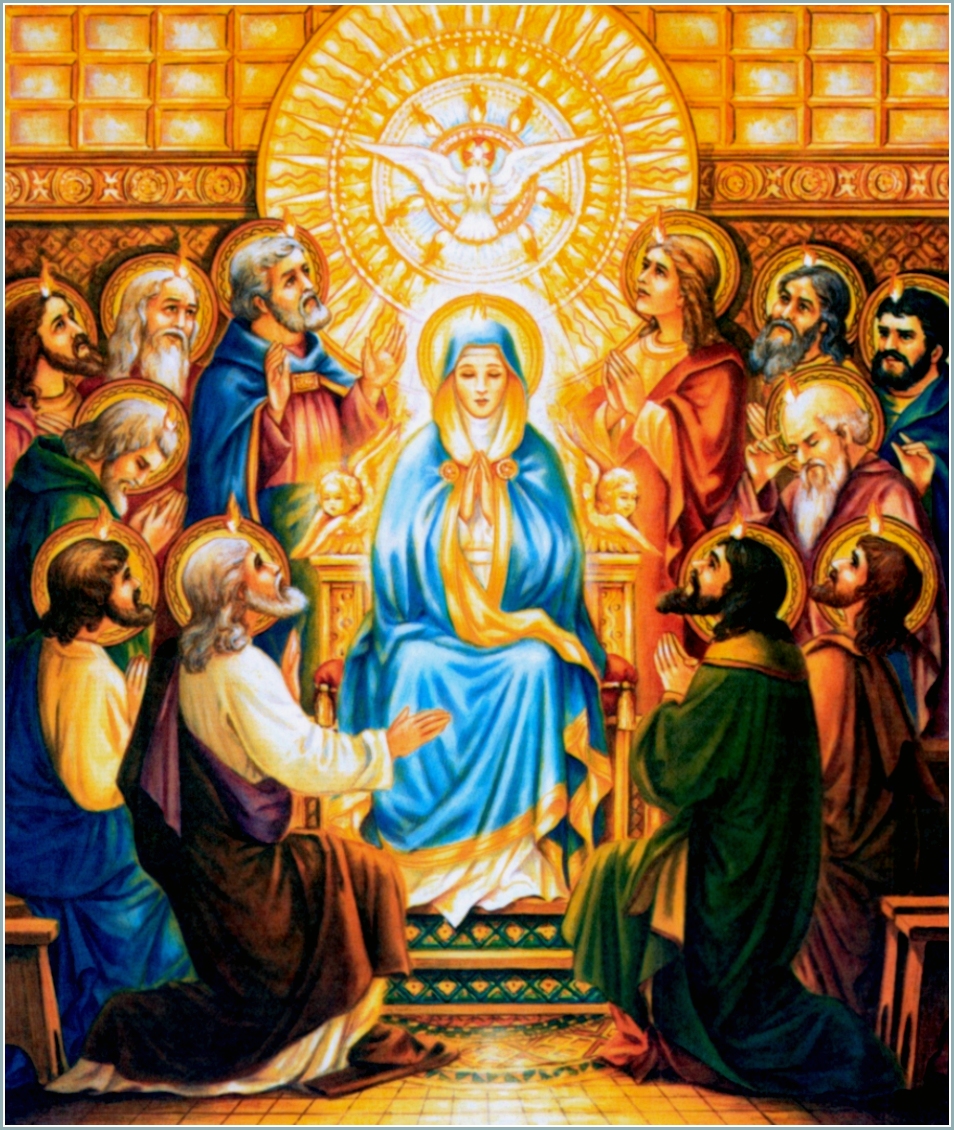 Holy Spirit Novena For the Feast of Pentecost The novena in honor of the Holy Ghost is the oldest of all novenas since it was first made at the direction of Our Lord Himself when He sent His Apostles back to Jerusalem to await the coming of the Holy Ghost on the first Pentecost. Addressed to the Third Person of the Blessed Trinity, it is a powerful plea for the light and strength and love so sorely needed by every Catholic today. To encourage devotion to the Holy Spirit, the Church has granted the following indulgences: "The faithful who devoutly assist at the public novena in honor of the Holy Spirit immediately preceding the Solemn Feast of Pentecost may gain a partial indulgence for themselves or as an offering for the intentions of the faithful departed. Those who make a private novena in honor of the Holy Spirit, either before the Solemn Feast of Pentecost or at any other time in the year, may also gain a partial indulgence for themselves or as an offering for the intentions of the faithful departed." Act of Oblation to the Holy Spirit TO BE RECITED DAILY DURING THE NOVENA ON MY KNEES before the great cloud of heavenly witnesses, I offer myself body and soul to Thee, eternal Spirit of God. I adore the brightness of Thy purity, the unerring keenness of Thy justice and the might of Thy love. Thou art the strength and light of my soul. In Thee I live and move and have my being. I desire never to grieve Thee by unfaithfulness to grace, and I pray with all my heart to be kept from the smallest sin against Thee. Make me faithful in every thought, and grant that I may always listen to Thy voice, watch for Thy light, and follow Thy gracious inspirations. I cling to Thee and give myself to Thee, and I ask Thee by Thy compassion to watch over me in my weakness. Holding the pierced feet of Jesus, looking at His five Wounds, trusting in His Precious Blood and adoring His opened side and stricken Heart, I implore Thee, adorable Spirit, Helper of my infirmity, so to keep me in Thy grace that I may never sin against Thee with the sin which Thou wilt not forgive. Grant to me the grace, O Holy Spirit, Spirit of the Father and of the Son, to say to Thee always and everywhere, "Speak, Lord, for Thy servant hears." Amen. (After a prayer by Cardinal Newman) Prayer for the Seven Gifts of the Holy Ghost TO BE RECITED DAILY DURING THE NOVENA O LORD JESUS CHRIST, Who before ascending into Heaven didst promise to send the Holy Ghost to finish Thy work in the souls of Thine Apostles and Disciples, deign to grant the same Holy Spirit to me, that He may perfect in my soul the work of Thy grace and Thy love. Grant me the Spirit of Wisdom, that I may despise the perishable things of this world and aspire only after the things that are eternal; the Spirit of Understanding, to enlighten my mind with the light of Thy Divine truth; the Spirit of Counsel, that I may ever choose the surest way of pleasing God and gaining Heaven; the Spirit of Fortitude, that I may bear my cross with Thee and that I may overcome with courage all the obstacles that oppose my salvation; the Spirit of Knowledge, that I may know God and know myself and grow perfect in the science of the Saints; the Spirit of Piety, that I may find the service of God sweet and amiable; the Spirit of Fear, that I may be filled with a loving reverence towards God and may dread in any way to displease Him. Mark me, Dear Lord, with the sign of Thy true disciples, and animate me in all things with Thy Spirit. Amen. FIRST DAY O Holy Spirit! Lord of light! From Thy clear celestial height, Thy pure and beaming radiance give! The Holy Ghost Only one thing is important------eternal salvation. Only one thing, therefore, is to be feared------sin. Sin is the result of ignorance, weakness, and indifference. The Holy Ghost is the Spirit of Light, of Strength, and of Love. With His sevenfold gifts He enlightens the mind, strengthens the will, and inflames the heart with love of God. To ensure our salvation we ought to invoke the Divine Spirit daily, for "The Spirit helpeth our infirmity. We know not what we should pray for as we ought. But the Spirit Himself asketh for us." Prayer Almighty and eternal God, Who hast vouchsafed to regenerate us by water and the Holy Ghost, and hast given us forgiveness of all sins, vouchsafe to send forth from Heaven upon us Thy sevenfold Spirit, the Spirit of Wisdom and Understanding, the Spirit of Counsel and Fortitude, the Spirit of Knowledge and Piety, and fill us with the Spirit of Holy Fear. Amen. Our Father and Hail Mary ONCE. Glory be to the Father SEVEN TIMES. Act of Oblation, Prayer for the Seven Gifts. SECOND DAY Come, Thou Father of the poor! Come, with treasures which endure! Come, Thou light of all that live! The Gift of Fear The gift of Fear fills us with a sovereign respect for God, and makes us dread nothing so much as to offend Him by sin. It is a fear that arises, not from the thought of Hell, but from sentiments of reverence and filial submission to our heavenly Father. It is the fear that is the beginning of wisdom, detaching us from worldly pleasures that could in any way separate us from God. "They that fear the Lord will prepare their hearts, and in His sight will sanctify their souls." Prayer Come, O blessed Spirit of Holy Fear, penetrate my inmost heart, that I may set Thee, my Lord and God, before my face forever; help me to shun all things that can offend Thee, and make me worthy to appear before the pure eyes of Thy Divine Majesty in Heaven, where Thou livest and reignest in the unity of the ever Blessed Trinity, God, world without end. Amen. Our Father and Hail Mary ONCE. Glory be to the Father SEVEN TIMES. Act of Oblation, Prayer for the Seven Gifts. THIRD DAY Thou of all Consolers best, Visiting the troubled breast, Dost refreshing peace bestow. The Gift of Piety The gift of Piety begets in our hearts a filial affection for God as our most loving Father. It inspires us to love and respect for His sake persons and things consecrated to Him, as well as those who are vested with His authority, His Blessed Mother and the Saints, the Church and its visible Head, our parents and superiors, our country and its rulers. He who is filled with the gift of Piety finds the practice of his religion, not a burdensome duty, but a delightful service. Where there is love, there is no labor. Prayer Come, O Blessed Spirit of Piety, possess my heart. Enkindle therein such a love for God, that I may find satisfaction only in His service, and for His sake lovingly submit to all legitimate authority. Amen. Our Father and Hail Mary ONCE. Glory be to the Father SEVEN TIMES. Act of Oblation, Prayer for the Seven Gifts. FOURTH DAY Thou in toil art Comfort sweet, Pleasant coolness in the heat, Solace in the midst of woe. The Gift of Fortitude By the gift of Fortitude the soul is strengthened against natural fear, and supported to the end in the performance of duty. Fortitude imparts to the will an impulse and energy which move it to undertake without hesitancy the most arduous tasks, to face dangers, to trample under foot human respect, and to endure without complaint the slow martyrdom of even lifelong tribulation. "He that shall persevere unto the end, he shall be saved." Prayer Come, O Blessed Spirit of Fortitude, uphold my soul in time of trouble and adversity, sustain my efforts after holiness, strengthen my weakness, give me courage against all the assaults of my enemies, that I may never be overcome and separated from Thee, my God and greatest Good. Amen. Our Father and Hail Mary ONCE. Glory be to the Father SEVEN TIMES. Act of Oblation, Prayer for the Seven Gifts. FIFTH DAY Light immortal! Light Divine! Visit Thou these hearts of Thine, And our inmost being fill. The Gift of Knowledge The gift of Knowledge enables the soul to evaluate created things at their true worth-----in their relation to God. Knowledge unmasks the pretense of creatures, reveals their emptiness, and points out their only true purpose as instruments in the service of God. It shows us the loving care of God even in adversity, and directs us to glorify Him in every circumstance of life. Guided by its light, we put first things first, and prize the friendship of God beyond all else. "Knowledge is a fountain of life to him that possesseth it." Prayer Come, O Blessed Spirit of Knowledge, and grant that I may perceive the will of the Father; show me the nothingness of earthly things, that I may realize their vanity and use them only for Thy glory and my own salvation, looking ever beyond them to Thee, and Thy eternal rewards. Amen. Our Father and Hail Mary ONCE. Glory be to the Father SEVEN TIMES. Act of Oblation, Prayer for the Seven Gifts. SIXTH DAY If Thou take Thy grace away, Nothing pure in man will stay; All his good is turned to ill. The Gift of Understanding Understanding, as a gift of the Holy Ghost, helps us to grasp the meaning of the truths of our holy religion. By faith we know them, but by Understanding we learn to appreciate and relish them, It enables us to penetrate the inner meaning of revealed truths and,through them to be quickened to newness of life. Our faith ceases to be sterile and inactive, but inspires a mode of life that bears eloquent testimony to the faith that is in us; we begin to "walk worthy of God in all things pleasing, and increasing in the knowledge of God." Prayer Come, O Spirit of Understanding, and enlighten our minds, that we may know and believe all the mysteries of salvation; and may merit at last to see the eternal light in Thy Light; and in the light of glory to have a clear vision of Thee and the Father and the Son, Amen. Our Father and Hail Mary ONCE. Glory be to the Father SEVEN TIMES. Act of Oblation, Prayer for the Seven Gifts. SEVENTH DAY Heal our wounds, our strength renew; On our dryness, pour Thy dew; Wash the stains of guilt away. The Gift of Counsel The gift of Counsel endows the soul with supernatural prudence, enabling it to judge promptly and rightly what must be done, especially in difficult circumstances. Counsel applies the principles furnished by Knowledge and Understanding to the innumerable concrete cases that confront us in the course of our daily duty as parents, teachers, public servants, and Catholic citizens. Counsel is supernatural common sense, a priceless treasure in the quest of salvation. "Above all these things, pray to the Most High, that He may direct thy way in truth." Prayer Come, O Spirit of Counsel, help and guide me in all my ways, that I may always do Thy holy will. Incline my heart to that which is good; turn it away from all that is evil, and direct me by the straight path of Thy Commandments to that goal of eternal life for which I long. Amen. Our Father and Hail Mary ONCE. Glory be to the Father SEVEN TIMES. Act of Oblation, Prayer for the Seven Gifts. EIGHTH DAY Bend the stubborn heart and will; Melt the frozen, warm the chill; Guide the steps that go astray. The Gift of Wisdom Embodying all the other gifts, as charity embraces all the other virtues, Wisdom is the most perfect of the gifts. Of wisdom it is written "all good things came to me with her, and innumerable riches through her hands." It is the gift of Wisdom that strengthens our faith, fortifies hope, perfects charity, and promotes the practice of virtue in the highest degree. Wisdom enlightens the mind to discern and relish things Divine, in the appreciation of which earthly joys lose their savor, whilst the Cross of Christ yields a Divine sweetness according to the words of the Saviour: "Take up thy cross and follow me, for mM yoke is sweet and My burden light." Prayer Come, O Spirit of Wisdom, and reveal to my soul the mysteries of heavenly things, their exceeding greatness, power and beauty. Teach me to love them above and beyond all the passing joys and satisfactions of earth. Help me to attain them and possess them for ever. Amen. Our Father and Hail Mary ONCE. Glory be to the Father SEVEN TIMES. Act of Oblation, Prayer for the Seven Gifts. NINTH DAY Thou, on those who evermore Thee confess and Thee adore, In Thy sevenfold Gifts descend. Give them comfort when they die; Give them life with Thee on high; Give them joys which never end. Amen. The Fruits of the Holy Ghost The gifts of the Holy Ghost perfect the supernatural virtues by enabling us to practice them with greater docility to Divine inspiration. As we grow in the knowledge and love of God under the direction of the Holy Ghost, our service becomes more sincere and generous, the practice of virtue more perfect. Such acts of virtue leave the heart filled with joy and consolation and are known as Fruits of the Holy Ghost. These Fruits in turn render the practice of virtue more attractive and become a powerful incentive for still greater efforts in the service of God, to serve Whom is to reign. Prayer Come, O Divine Spirit, fill my heart with Thy heavenly fruits, Thy charity, joy, peace, patience, benignity, goodness, faith, mildness, and temperance, that I may never weary in the service of God, but by continued faithful submission to Thy inspiration may merit to be united eternally with Thee in the love of the Father and the Son. Amen. Our Father and Hail Mary ONCE. Glory be to the Father SEVEN TIMES. Act of Oblation, Prayer for the Seven Gifts. |
|
|
May 21 2015, 02:45 PM
|
|
Senior Member
3,577 posts Joined: Apr 2006
|
Antinomianism
(anti, against, and nomos, law)  The heretical doctrine that Christians are exempt from the obligations of moral law. The term first came into use at the Protestant Reformation, when it was employed by Martin Luther to designate the teachings of Johannes Agricola and his sectaries, who, pushing a mistaken and perverted interpretation of the Reformer's doctrine of justification by faith alone to a far-reaching but logical conclusion, asserted that, as good works do not promote salvation, so neither do evil works hinder it; and, as all Christians are necessarily sanctified by their very vocation and profession, so as justified Christians, they are incapable of losing their spiritual holiness, justification, and final salvation by any act of disobedience to, or even by any direct violation of the law of God. This theory — for it was not, and is not necessarily, anything more than a purely theoretical doctrine, and many professors of Antinomianism, as a matter of fact, led, and lead, lives quite as moral as those of their opponents — was not only a more or less natural outgrowth from the distinctively Protestant principle of justification by faith, but probably also the result of an erroneous view taken with regard to the relation between the Jewish and Christian dispensations and the Scriptures of the Old and New Testaments. Doubtless a confused understanding of the Mosaic ceremonial precepts and the fundamental moral law embodied in the Mosaic code was to no small extent operative in allowing the conception of true Christian liberty to grow beyond all reasonable bounds, and to take the form of a theoretical doctrine of unlimited licentiousness. Although the term designating this error came into use only in the sixteenth century, the doctrine itself can be traced in the teaching of the earlier heresies. Certain of the Gnostic sect — possibly, for example, Marcion and his followers, in their antithesis of the Old and New Testament, or the Carpoeratians, in their doctrine of the indifference of good works and their contempt for all human laws — held Antinomian or quasi-Antinomian views. In any case, it is generally understood that Antinomianism was professed by more than one of the Gnostic schools. Several passages of the New Testament writings are quoted in support of the contention that even as early as Apostolic times it was found necessary to single out and combat this heresy in its theoretical or dogmatic as well as in its grosser and practical form. The indignant words of St. Paul in his Epistles to the Romans and to the Ephesians (Romans 3:8, 31; 6:1; Ephesians 5:6), as well as those of St. Peter, the Second Epistle (2 Peter 2:18, 19), seem to lend direct evidence in favour of this view. Forced into a somewhat doubtful prominence by the "slanderers" against whom the Apostle found it necessary to warn the faithful, persisting spasmodically in several of the Gnostic bodies, and possibly also colouring some of the tenets of the Albigenses, Antinomianism reappeared definitely, as a variant of the Protestant doctrine of faith, early in the history of the German Reformation. At this point it is of interest to note the sharp controversy that it provoked between the leader of the reforming movement in Germany and his disciple and fellow townsman, Johannes Agricola. Schitter, or Schneider, sometimes known as the Magister Islebius, was born at Eisleben in 1492, nine years after the birth of Luther. He studied and afterwards, taught, at Wittenberg, whence, in 1525, he went to Frankfort with the intention of teaching and establishing the Protestant religion there. But shortly afterwards, he returned to his native town, where he remained until 1536, teaching in the school of St. Andrew, and drawing considerable attention to himself as a preacher of the new religion by the courses of sermons that he delivered in the Nicolai Church. In 1536 he was recalled to Wittenberg and given a chair at the University. Then the Antinomian controversy, which had really begun some ten years previously, broke out afresh, with renewed vigour and bitterness. Agricola, who was undoubtedly anxious to defend and justify the novel doctrine of his leader upon the subject of grace and justification, and who wished to separate the new Protestant view more clearly and distinctly from the old Catholic doctrine of faith and good works, taught that only the unregenerate were under the obligation of the law, whereas regenerate Christians were entirely absolved and altogether free from any such obligation. Though it is highly probable that he made Agricola responsible for opinions which the latter never really held, Luther attacked him vigorously is six dissertations, showing that "the law gives man the consciousness of sin, and that the fear of the law is both wholesome and necessary for the preservation of morality and of divine, as well as human, institutions"; and on several occasions Agricola found himself obliged to retract or modify his Antinomian teaching. In 1540 Agricola, forced to this step by Luther, who had secured to this end the assistance of the Elector of Brandenburg, definitely recanted. But it was not long before the wearisome controversy was reopened by Poach of Erfurt (1556). This led ultimately to an authoritative and complete statement, on the part of the Lutheran, of the teaching upon the subject by the German Protestant leaders, in the fifth and sixth articles of the "Formula Concordiae". St. Alphonsus Liguori states that after Luther's death Agricola went to Berlin, commenced teaching his blasphemies again, and died there, at the age of seventy-four, without any sign of repentance; also, that Florinundus calls the Antinomians "Atheists who believe in neither God nor the devil." So much for the origin and growth of the Antinomian heresy in the Lutheran body. Among the high Calvinists also the doctrine was to be found in the teaching that the elect do not sin by the commission of actions that in themselves are contrary to the precepts of the moral law, which the Anabaptists of Munster had no scruple in putting these theories into actual practice. From Germany Antinomianism soon travelled to England, where it was publicly taught, and in some cases even acted upon, by many of the sectaries during the Protectorate of Oliver Cromwell. The state of religion in England, as well as in the Colonies, immediately preceding and during this troublesome period of history was an extraordinary one, and when the independents obtained the upper hand there was no limit to the vagaries of the doctrines, imported or invented, that found so congenial a soil in which to take root and spread. Many of the religious controversies that then arose turned naturally upon the doctrines of faith, grace, and justification which occupied so prominent a place in contemporary thought, and in these controversies Antinomianism frequently figured. A large number of works, tracts, and sermons of this period are extant in which the fierce and intolerant doctrines of the sectaries are but thinly veiled under the copious quotation from the Scriptures that lend so peculiar an effect to their general style. In the earlier part of the seventeenth century, Dr. Tobias Crisp, Rector of Brinkwater (b. 1600), was accused, in the company of others, of holding and teaching similar views. His most notable work is "Christ Alone Exalted" (1643). His opinions were controverted with some ability by Dr. Daniel Williams, the founder of the Dissenters' Library. Indeed, to such an extent were extreme Antinomian doctrines held, and even practised, as early as the reign of Charles I, that, after Cudworth's sermon against the Antinomians (on John 2:3-4) was preached before the Commons of England (1647), the Parliament was obliged to pass severe enactments against them (1648). Anyone convicted on the oaths of two witnesses of maintaining that the moral law of the Ten Commandments was no rule for Christians, or that a believer need not repent or pray for pardon of sin, was bound publicly to retract, or, if he refused, be imprisoned until he found sureties that he would no more maintain the same. Shortly before this date, the heresy made its appearance in America, where, at Boston, the Antinomian opinions of Anne Hutchinson were formally condemned by the Newton Synod (1636). Although from the seventeenth century onward Antinomianism does not appear to be an official doctrine of any of the more important Protestant sects, at least it has undoubtedly been held from time to time either by individual members of sections, and taught, both by implication and actually, by the religious leaders of several of these bodies. Certain forms of Calvinism may seem capable of bearing an Antinomian construction. Indeed it has been said that the heresy is in reality nothing more than "Calvinism run to the seed". Mosheim regarded the Antinomians as a rigid kind of Calvinists who, distorting the doctrines of absolute decrees, drew from it conclusions dangerous to religion and morals. Count Zinzendorf (1700-60), the founder of the Herrnhuters, or Moravians, was accused of Antinomianism by Bengal, as was William Huntingdon, who, however, took pains to disclaim the imputation. But possibly the most noteworthy instance is that of the Plymouth Brethren, of whom some are quite frankly Antinomian in their doctrine of justification and sanctification. It is their constant assertion that the law is not the rule or standard of the life of the Christian. Here again, as in the case of Agricola, it is a theoretical and not a practical Antinomianism that in inculcated. Much of the teaching of the members of this sect recalls "the wildest, vagaries of the Antinomian heresy, which at the same time their earnest protests against such a construction being put upon their words, and the evident desire of their writers to enforce a high standard of practical holiness, forbid us to follow out some of their statements to what seems to be their logical conclusion." Indeed, the doctrine generally is held theoretically, where held at all, and has seldom been advocated to be put in practice and acted upon. Except, as has already been noted, in the case of the Anabaptists of Munster and of some of the more fanatical sections of the Commonwealth, as well as in a small number of other isolated and sporadic cases, it is highly doubtful if it has ever been directly put forward as an excuse for licentiousness; although, as can easily be seen, it offers the gravest possible incentive to, and even justification of, both private and public immorality in its worst and most insidious form. As the doctrine of Antinomianism, or legal irresponsibility, is an extreme type of the heretical doctrine of justification by faith alone as taught by the Reformers, it is only natural to find it condemned by the Catholic Church in company with its fundamentally Protestant tenet. The sixth session of the Ecumenical Council of Trent was occupied with this subject and published its famous decree on Justification. The fifteenth chapter of this decree is directly concerned with Antinomian heresy, and condemns it in the following terms: "In opposition also to the cunning wits of certain men who, by good works and fair speeches, deceive the hearts of the innocent, it is to be maintained that the received grace of justification is lost not only by the infidelity, in which even faith itself if lost, but also by any other mortal sin soever, though faith be not lost; thereby defending the doctrine of the Divine law, which excludes from the King of God not only the unbelieving, but also the faithful who are fornicators, adulterers, effeminate, abusers of themselves with mankind, thieves, covetous, drunkards, revilers, extortioners, and all others who commit deadly sins; from which, with the help of Divine grace, they are able to refrain and on account of which they are separate from the grace of Christ" (Cap. xv, cf. also Cap. xii). Also, among the canons anathematizing the various erroneous doctrines advanced by the Reformers as to the meaning and nature of justification are to be found in the following: Canon 19: "If anyone shall say that nothing besides faith is commanded in the Gospel; that other things are indifferent, neither commanded nor prohibited, but free; or that the Ten Commandments in no wise appertain to Christians; let him be anathema." Canon 20: "If anyone shall say that a man who is justified and how perfect soever is not bound to the observance of the commandments of God and the Church, but only to believe; as if forsooth, the Gospel were a bare and absolute promise of eternal life, without the condition of observation of the commandments; let him be anathema." Canon 21: "If anyone shall say that Christ Jesus was given of God unto men as a Redeemer in whom they should trust, and not also as a legislator whom they should obey; let him be an anathema." Canon 27: "If anyone shall say that there is no deadly sin but that of infidelity; or that grace once received is not lost by any other sin, however grievous and enormous, save only by that infidelity; let him be anathema." "If you love me, keep my commandments." - John 14:15 |
|
|
May 21 2015, 03:30 PM
|
|
Junior Member
316 posts Joined: Nov 2005 From: Saya Berjaya
|
Just one more week left before the re-shuffling. Too bad I'll be travelling instate and can't attend the farewells. Sigh ...
|
|
|
May 22 2015, 10:47 AM
|
|
Junior Member
225 posts Joined: Mar 2008
|
QUOTE(pkh @ May 21 2015, 03:30 PM) Just one more week left before the re-shuffling. Too bad I'll be travelling instate and can't attend the farewells. Sigh ... Oh yes, June is almost upon us. I suppose we need to remember that we, as Catholics are called to be pilgrims in this world, not just in the physical sense but in the spiritual also? |
|
|
May 22 2015, 01:57 PM
|
|
Senior Member
3,577 posts Joined: Apr 2006
|
History repeats itself
 Michelangelo's Doni Madonna The artists of the Renaissance have left us some of the greatest masterpieces that human genius has ever created. The perfection reached by painters, sculptors and architects of that era is mindboggling. The two pictures on this page, one from Michelangelo, the other from Botticelli, are illustrations of the mastery of these Renaissance artists whose talents have never really been surpassed.  Boticelli's Madonna of the Magnificat Where does this blossoming of incomparable religious and cultural artefacts originate? It is the result of the brewing of knowledge that took place in the Universities and schools opened by the Catholic Church in the Middle Ages. Remember, until the Protestant revolution of 1517 launched by Martin Luther, Europe was a Catholic continent and all the centres of science were in the hands of the Church run by clerics or Catholic laymen. The Middle Ages were not the times of ignorance that biased modern history books want us to believe. It was a flourishing period of research and studies of the laws of nature and is at the origin of the extraordinary technical progress that took place in the Renaissance and never stop ever since. How is it that the Renaissance with its refined Christian civilisation was immediately followed by the rebellion of half of Europe against the Church in the wake of the revolt of the monk of Wittenberg? Why such a sudden collapse? During the 1400s ( the famous Italian Quattrocento), men impressed by the power of the human mind and amazed by their scientific discoveries became infatuated with themselves like the Narcissus of the Greek Mythology.  Narcissus looking at his image in the water falls in love with himself: a representation of our modern world They saw themselves so great that they started forgetting to whom they owed their gifts. God was gradually put aside. Artists of the Renaissance, without completely forgetting their faith for which they still produced exquisite works, focused on the exaltation of man rather than their Creator. So many paintings and sculptures, even in churches, cannot be looked at without feeling embarrassed at this ostentation of flesh. A glance at the wall of the Sistine Chapel, for instance, won’t help you to raise your soul to God, unfortunately. When man reaches a certain perfection, his pride prevents him from remaining at a high level. He becomes tired of the best. Like Adam and Eve in the Garden, tired of having it too easy, he slips into a kind of nonchalance that leads him to become decadent. This is exactly what we observe nowadays. Christian principles have shaped our modern world and favoured a huge progress in every aspect of human activity - politics, economics, education, health, safety. It has made our life easier than it ever was. Yet, instead of being grateful to what Our Lord Jesus Christ and His Church have given to the world, modern men turn against them, blinded by their own achievements. Again the story of Narcissus. Saint Augustine perfectly summarised what we are experiencing today in his book The City of God: “two cities have been formed by two loves: the earthly by the love of self, even to the contempt of God; the heavenly by the love of God, even to the contempt of self” [The City of God, Book XIV Chap. 28]. Father Fabrice Loschi |
|
|
May 23 2015, 10:40 AM
Show posts by this member only | IPv6 | Post
#376
|
|
Junior Member
225 posts Joined: Mar 2008
|
Pentecost Sunday
Mass during the Day Lectionary: 63 Gospel Jn 20:19-23 On the evening of that first day of the week, when the doors were locked, where the disciples were, for fear of the Jews, Jesus came and stood in their midst and said to them, “Peace be with you.” When he had said this, he showed them his hands and his side. The disciples rejoiced when they saw the Lord. Jesus said to them again, “Peace be with you. As the Father has sent me, so I send you.” And when he had said this, he breathed on them and said to them, “Receive the Holy Spirit. Whose sins you forgive are forgiven them, and whose sins you retain are retained.” Or Jn 15:26-27; 16:12-15 Jesus said to his disciples: “When the Advocate comes whom I will send you from the Father, the Spirit of truth that proceeds from the Father, he will testify to me. And you also testify, because you have been with me from the beginning. “I have much more to tell you, but you cannot bear it now. But when he comes, the Spirit of truth, he will guide you to all truth. He will not speak on his own, but he will speak what he hears, and will declare to you the things that are coming. He will glorify me, because he will take from what is mine and declare it to you. Everything that the Father has is mine; for this reason I told you that he will take from what is mine and declare it to you.” This post has been edited by khool: May 23 2015, 10:48 AM |
|
|
May 23 2015, 10:41 AM
Show posts by this member only | IPv6 | Post
#377
|
|
Junior Member
225 posts Joined: Mar 2008
|
CATECHISM OF THE CATHOLIC CHURCH
PART THREE LIFE IN CHRIST SECTION ONE MAN'S VOCATION LIFE IN THE SPIRIT CHAPTER ONE THE DIGNITY OF THE HUMAN PERSON ARTICLE 8 SIN I. MERCY AND SIN 1846 The Gospel is the revelation in Jesus Christ of God's mercy to sinners.113 The angel announced to Joseph: "You shall call his name Jesus, for he will save his people from their sins."114 The same is true of the Eucharist, the sacrament of redemption: "This is my blood of the covenant, which is poured out for many for the forgiveness of sins."115 1847 "God created us without us: but he did not will to save us without us."116 To receive his mercy, we must admit our faults. "If we say we have no sin, we deceive ourselves, and the truth is not in us. If we confess our sins, he is faithful and just, and will forgive our sins and cleanse us from all unrighteousness."117 1848 As St. Paul affirms, "Where sin increased, grace abounded all the more."118 But to do its work grace must uncover sin so as to convert our hearts and bestow on us "righteousness to eternal life through Jesus Christ our Lord."119 Like a physician who probes the wound before treating it, God, by his Word and by his Spirit, casts a living light on sin: Conversion requires convincing of sin; it includes the interior judgment of conscience, and this, being a proof of the action of the Spirit of truth in man's inmost being, becomes at the same time the start of a new grant of grace and love: "Receive the Holy Spirit." Thus in this "convincing concerning sin" we discover a double gift: the gift of the truth of conscience and the gift of the certainty of redemption. The Spirit of truth is the Consoler.120 II. THE DEFINITION OF SIN 1849 Sin is an offense against reason, truth, and right conscience; it is failure in genuine love for God and neighbor caused by a perverse attachment to certain goods. It wounds the nature of man and injures human solidarity. It has been defined as "an utterance, a deed, or a desire contrary to the eternal law."121 1850 Sin is an offense against God: "Against you, you alone, have I sinned, and done that which is evil in your sight."122 Sin sets itself against God's love for us and turns our hearts away from it. Like the first sin, it is disobedience, a revolt against God through the will to become "like gods,"123 knowing and determining good and evil. Sin is thus "love of oneself even to contempt of God."124 In this proud self- exaltation, sin is diametrically opposed to the obedience of Jesus, which achieves our salvation.125 1851 It is precisely in the Passion, when the mercy of Christ is about to vanquish it, that sin most clearly manifests its violence and its many forms: unbelief, murderous hatred, shunning and mockery by the leaders and the people, Pilate's cowardice and the cruelty of the soldiers, Judas' betrayal - so bitter to Jesus, Peter's denial and the disciples' flight. However, at the very hour of darkness, the hour of the prince of this world,126 the sacrifice of Christ secretly becomes the source from which the forgiveness of our sins will pour forth inexhaustibly. III. THE DIFFERENT KINDS OF SINS 1852 There are a great many kinds of sins. Scripture provides several lists of them. The Letter to the Galatians contrasts the works of the flesh with the fruit of the Spirit: "Now the works of the flesh are plain: fornication, impurity, licentiousness, idolatry, sorcery, enmity, strife, jealousy, anger, selfishness, dissension, factions, envy, drunkenness, carousing, and the like. I warn you, as I warned you before, that those who do such things shall not inherit the Kingdom of God."127 1853 Sins can be distinguished according to their objects, as can every human act; or according to the virtues they oppose, by excess or defect; or according to the commandments they violate. They can also be classed according to whether they concern God, neighbor, or oneself; they can be divided into spiritual and carnal sins, or again as sins in thought, word, deed, or omission. The root of sin is in the heart of man, in his free will, according to the teaching of the Lord: "For out of the heart come evil thoughts, murder, adultery, fornication, theft, false witness, slander. These are what defile a man."128 But in the heart also resides charity, the source of the good and pure works, which sin wounds. IV. THE GRAVITY OF SIN: MORTAL AND VENIAL SIN 1854 Sins are rightly evaluated according to their gravity. The distinction between mortal and venial sin, already evident in Scripture,129 became part of the tradition of the Church. It is corroborated by human experience. 1855 Mortal sin destroys charity in the heart of man by a grave violation of God's law; it turns man away from God, who is his ultimate end and his beatitude, by preferring an inferior good to him. Venial sin allows charity to subsist, even though it offends and wounds it. 1856 Mortal sin, by attacking the vital principle within us - that is, charity - necessitates a new initiative of God's mercy and a conversion of heart which is normally accomplished within the setting of the sacrament of reconciliation: When the will sets itself upon something that is of its nature incompatible with the charity that orients man toward his ultimate end, then the sin is mortal by its very object . . . whether it contradicts the love of God, such as blasphemy or perjury, or the love of neighbor, such as homicide or adultery. . . . But when the sinner's will is set upon something that of its nature involves a disorder, but is not opposed to the love of God and neighbor, such as thoughtless chatter or immoderate laughter and the like, such sins are venial.130 1857 For a sin to be mortal, three conditions must together be met: "Mortal sin is sin whose object is grave matter and which is also committed with full knowledge and deliberate consent."131 1858 Grave matter is specified by the Ten Commandments, corresponding to the answer of Jesus to the rich young man: "Do not kill, Do not commit adultery, Do not steal, Do not bear false witness, Do not defraud, Honor your father and your mother."132 The gravity of sins is more or less great: murder is graver than theft. One must also take into account who is wronged: violence against parents is in itself graver than violence against a stranger. 1859 Mortal sin requires full knowledge and complete consent. It presupposes knowledge of the sinful character of the act, of its opposition to God's law. It also implies a consent sufficiently deliberate to be a personal choice. Feigned ignorance and hardness of heart133 do not diminish, but rather increase, the voluntary character of a sin. 1860 Unintentional ignorance can diminish or even remove the imputability of a grave offense. But no one is deemed to be ignorant of the principles of the moral law, which are written in the conscience of every man. The promptings of feelings and passions can also diminish the voluntary and free character of the offense, as can external pressures or pathological disorders. Sin committed through malice, by deliberate choice of evil, is the gravest. 1861 Mortal sin is a radical possibility of human freedom, as is love itself. It results in the loss of charity and the privation of sanctifying grace, that is, of the state of grace. If it is not redeemed by repentance and God's forgiveness, it causes exclusion from Christ's kingdom and the eternal death of hell, for our freedom has the power to make choices for ever, with no turning back. However, although we can judge that an act is in itself a grave offense, we must entrust judgment of persons to the justice and mercy of God. 1862 One commits venial sin when, in a less serious matter, he does not observe the standard prescribed by the moral law, or when he disobeys the moral law in a grave matter, but without full knowledge or without complete consent. 1863 Venial sin weakens charity; it manifests a disordered affection for created goods; it impedes the soul's progress in the exercise of the virtues and the practice of the moral good; it merits temporal punishment. Deliberate and unrepented venial sin disposes us little by little to commit mortal sin. However venial sin does not break the covenant with God. With God's grace it is humanly reparable. "Venial sin does not deprive the sinner of sanctifying grace, friendship with God, charity, and consequently eternal happiness."134 While he is in the flesh, man cannot help but have at least some light sins. But do not despise these sins which we call "light": if you take them for light when you weigh them, tremble when you count them. A number of light objects makes a great mass; a number of drops fills a river; a number of grains makes a heap. What then is our hope? Above all, confession.135 1864 "Therefore I tell you, every sin and blasphemy will be forgiven men, but the blasphemy against the Spirit will not be forgiven."136 There are no limits to the mercy of God, but anyone who deliberately refuses to accept his mercy by repenting, rejects the forgiveness of his sins and the salvation offered by the Holy Spirit.137 Such hardness of heart can lead to final impenitence and eternal loss. V. THE PROLIFERATION OF SIN 1865 Sin creates a proclivity to sin; it engenders vice by repetition of the same acts. This results in perverse inclinations which cloud conscience and corrupt the concrete judgment of good and evil. Thus sin tends to reproduce itself and reinforce itself, but it cannot destroy the moral sense at its root. 1866 Vices can be classified according to the virtues they oppose, or also be linked to the capital sins which Christian experience has distinguished, following St. John Cassian and St. Gregory the Great. They are called "capital" because they engender other sins, other vices.138 They are pride, avarice, envy, wrath, lust, gluttony, and sloth or acedia. 1867 The catechetical tradition also recalls that there are "sins that cry to heaven": the blood of Abel,139 the sin of the Sodomites,140 the cry of the people oppressed in Egypt,141 the cry of the foreigner, the widow, and the orphan,142 injustice to the wage earner.143 1868 Sin is a personal act. Moreover, we have a responsibility for the sins committed by others when we cooperate in them: - by participating directly and voluntarily in them; - by ordering, advising, praising, or approving them; - by not disclosing or not hindering them when we have an obligation to do so; - by protecting evil-doers. 1869 Thus sin makes men accomplices of one another and causes concupiscence, violence, and injustice to reign among them. Sins give rise to social situations and institutions that are contrary to the divine goodness. "Structures of sin" are the expression and effect of personal sins. They lead their victims to do evil in their turn. In an analogous sense, they constitute a "social sin."144 IN BRIEF 1870 "God has consigned all men to disobedience, that he may have mercy upon all" (Rom 11:32). 1871 Sin is an utterance, a deed, or a desire contrary to the eternal law (St. Augustine, Faust 22:PL 42, 418). It is an offense against God. It rises up against God in a disobedience contrary to the obedience of Christ. 1872 Sin is an act contrary to reason. It wounds man's nature and injures human solidarity. 1873 The root of all sins lies in man's heart. The kinds and the gravity of sins are determined principally by their objects. 1874 To choose deliberately - that is, both knowing it and willing it - something gravely contrary to the divine law and to the ultimate end of man is to commit a mortal sin. This destroys in us the charity without which eternal beatitude is impossible. Unrepented, it brings eternal death. 1875 Venial sin constitutes a moral disorder that is reparable by charity, which it allows to subsist in us. 1876 The repetition of sins - even venial ones - engenders vices, among which are the capital sins. Source: http://www.vatican.va/archive/ccc_css/arch...sm/p3s1c1a8.htm This post has been edited by khool: May 23 2015, 10:47 AM |
|
|
May 23 2015, 10:46 AM
Show posts by this member only | IPv6 | Post
#378
|
|
Junior Member
225 posts Joined: Mar 2008
|
PART THREE
LIFE IN CHRIST SECTION TWO THE TEN COMMANDMENTS "Teacher, what must I do . . .?" 2052 "Teacher, what good deed must I do, to have eternal life?" To the young man who asked this question, Jesus answers first by invoking the necessity to recognize God as the "One there is who is good," as the supreme Good and the source of all good. Then Jesus tells him: "If you would enter life, keep the commandments." And he cites for his questioner the precepts that concern love of neighbor: "You shall not kill, You shall not commit adultery, You shall not steal, You shall not bear false witness, Honor your father and mother." Finally Jesus sums up these commandments positively: "You shall love your neighbor as yourself."1 2053 To this first reply Jesus adds a second: "If you would be perfect, go, sell what you possess and give to the poor, and you will have treasure in heaven; and come, follow me."2 This reply does not do away with the first: following Jesus Christ involves keeping the Commandments. The Law has not been abolished,3 but rather man is invited to rediscover it in the person of his Master who is its perfect fulfillment. In the three synoptic Gospels, Jesus' call to the rich young man to follow him, in the obedience of a disciple and in the observance of the Commandments, is joined to the call to poverty and chastity.4 The evangelical counsels are inseparable from the Commandments. 2054 Jesus acknowledged the Ten Commandments, but he also showed the power of the Spirit at work in their letter. He preached a "righteousness [which] exceeds that of the scribes and Pharisees"5 as well as that of the Gentiles.6 He unfolded all the demands of the Commandments. "You have heard that it was said to the men of old, 'You shall not kill.' . . . But I say to you that every one who is angry with his brother shall be liable to judgment."7 2055 When someone asks him, "Which commandment in the Law is the greatest?"8 Jesus replies: "You shall love the Lord your God with all your heart, and with all your soul, and with all your mind. This is the greatest and first commandment. And a second is like it: You shall love your neighbor as yourself. On these two commandments hang all the Law and the prophets."9 The Decalogue must be interpreted in light of this twofold yet single commandment of love, the fullness of the Law: The commandments: "You shall not commit adultery, You shall not kill, You shall not steal, You shall not covet," and any other commandment, are summed up in this sentence: "You shall love your neighbor as yourself." Love does no wrong to a neighbor; therefore love is the fulfilling of the law.10 The Decalogue in Sacred Scripture 2056 The word "Decalogue" means literally "ten words."11 God revealed these "ten words" to his people on the holy mountain. They were written "with the finger of God,"12 unlike the other commandments written by Moses.13 They are pre-eminently the words of God. They are handed on to us in the books of Exodus14 and Deuteronomy.15 Beginning with the Old Testament, the sacred books refer to the "ten words,"16 but it is in the New Covenant in Jesus Christ that their full meaning will be revealed. 2057 The Decalogue must first be understood in the context of the Exodus, God's great liberating event at the center of the Old Covenant. Whether formulated as negative commandments, prohibitions, or as positive precepts such as: "Honor your father and mother," the "ten words" point out the conditions of a life freed from the slavery of sin. The Decalogue is a path of life: If you love the LORD your God, by walking in his ways, and by keeping his commandments and his statutes and his ordinances, then you shall live and multiply.17 This liberating power of the Decalogue appears, for example, in the commandment about the sabbath rest, directed also to foreigners and slaves: You shall remember that you were a servant in the land of Egypt, and the LORD your God brought you out thence with a mighty hand and an outstretched arm.18 2058 The "ten words" sum up and proclaim God's law: "These words the Lord spoke to all your assembly at the mountain out of the midst of the fire, the cloud, and the thick darkness, with a loud voice; and he added no more. And he wrote them upon two tables of stone, and gave them to me."19 For this reason these two tables are called "the Testimony." In fact, they contain the terms of the covenant concluded between God and his people. These "tables of the Testimony" were to be deposited in "the ark."20 2059 The "ten words" are pronounced by God in the midst of a theophany ("The LORD spoke with you face to face at the mountain, out of the midst of the fire."21). They belong to God's revelation of himself and his glory. The gift of the Commandments is the gift of God himself and his holy will. In making his will known, God reveals himself to his people. 2060 The gift of the commandments and of the Law is part of the covenant God sealed with his own. In Exodus, the revelation of the "ten words" is granted between the proposal of the covenant22 and its conclusion - after the people had committed themselves to "do" all that the Lord had said, and to "obey" it.23 The Decalogue is never handed on without first recalling the covenant ("The LORD our God made a covenant with us in Horeb.").24 2061 The Commandments take on their full meaning within the covenant. According to Scripture, man's moral life has all its meaning in and through the covenant. The first of the "ten words" recalls that God loved his people first: Since there was a passing from the paradise of freedom to the slavery of this world, in punishment for sin, the first phrase of the Decalogue, the first word of God's commandments, bears on freedom "I am the LORD your God, who brought you out of the land of Egypt, out of the house of slavery."25 2062 The Commandments properly so-called come in the second place: they express the implications of belonging to God through the establishment of the covenant. Moral existence is a response to the Lord's loving initiative. It is the acknowledgement and homage given to God and a worship of thanksgiving. It is cooperation with the plan God pursues in history. 2063 The covenant and dialogue between God and man are also attested to by the fact that all the obligations are stated in the first person ("I am the Lord.") and addressed by God to another personal subject ("you"). In all God's commandments, the singular personal pronoun designates the recipient. God makes his will known to each person in particular, at the same time as he makes it known to the whole people: The Lord prescribed love towards God and taught justice towards neighbor, so that man would be neither unjust, nor unworthy of God. Thus, through the Decalogue, God prepared man to become his friend and to live in harmony with his neighbor. . . . The words of the Decalogue remain likewise for us Christians. Far from being abolished, they have received amplification and development from the fact of the coming of the Lord in the flesh.26 The Decalogue in the Church's Tradition 2064 In fidelity to Scripture and in conformity with the example of Jesus, the tradition of the Church has acknowledged the primordial importance and significance of the Decalogue. 2065 Ever since St. Augustine, the Ten Commandments have occupied a predominant place in the catechesis of baptismal candidates and the faithful. In the fifteenth century, the custom arose of expressing the commandments of the Decalogue in rhymed formulae, easy to memorize and in positive form. They are still in use today. The catechisms of the Church have often expounded Christian morality by following the order of the Ten Commandments. 2066 The division and numbering of the Commandments have varied in the course of history. The present catechism follows the division of the Commandments established by St. Augustine, which has become traditional in the Catholic Church. It is also that of the Lutheran confessions. The Greek Fathers worked out a slightly different division, which is found in the Orthodox Churches and Reformed communities. 2067 The Ten Commandments state what is required in the love of God and love of neighbor. The first three concern love of God, and the other seven love of neighbor. As charity comprises the two commandments to which the Lord related the whole Law and the prophets . . . so the Ten Commandments were themselves given on two tablets. Three were written on one tablet and seven on the other.27 2068 The Council of Trent teaches that the Ten Commandments are obligatory for Christians and that the justified man is still bound to keep them;28 the Second Vatican Council confirms: "The bishops, successors of the apostles, receive from the Lord . . . the mission of teaching all peoples, and of preaching the Gospel to every creature, so that all men may attain salvation through faith, Baptism and the observance of the Commandments."29 The unity of the Decalogue 2069 The Decalogue forms a coherent whole. Each "word" refers to each of the others and to all of them; they reciprocally condition one another. The two tables shed light on one another; they form an organic unity. To transgress one commandment is to infringe all the others.30 One cannot honor another person without blessing God his Creator. One cannot adore God without loving all men, his creatures. The Decalogue brings man's religious and social life into unity. The Decalogue and the natural law 2070 The Ten Commandments belong to God's revelation. At the same time they teach us the true humanity of man. They bring to light the essential duties, and therefore, indirectly, the fundamental rights inherent in the nature of the human person. The Decalogue contains a privileged expression of the natural law: From the beginning, God had implanted in the heart of man the precepts of the natural law. Then he was content to remind him of them. This was the Decalogue.31 2071 The commandments of the Decalogue, although accessible to reason alone, have been revealed. To attain a complete and certain understanding of the requirements of the natural law, sinful humanity needed this revelation: A full explanation of the commandments of the Decalogue became necessary in the state of sin because the light of reason was obscured and the will had gone astray.32 We know God's commandments through the divine revelation proposed to us in the Church, and through the voice of moral conscience. The obligation of the Decalogue 2072 Since they express man's fundamental duties towards God and towards his neighbor, the Ten Commandments reveal, in their primordial content, grave obligations. They are fundamentally immutable, and they oblige always and everywhere. No one can dispense from them. The Ten Commandments are engraved by God in the human heart. 2073 Obedience to the Commandments also implies obligations in matter which is, in itself, light. Thus abusive language is forbidden by the fifth commandment, but would be a grave offense only as a result of circumstances or the offender's intention. "Apart from me you can do nothing" 2074 Jesus says: "I am the vine, you are the branches. He who abides in me, and I in him, he it is that bears much fruit, for apart from me you can do nothing."33 The fruit referred to in this saying is the holiness of a life made fruitful by union with Christ. When we believe in Jesus Christ, partake of his mysteries, and keep his commandments, the Savior himself comes to love, in us, his Father and his brethren, our Father and our brethren. His person becomes, through the Spirit, the living and interior rule of our activity. "This is my commandment, that you love one another as I have loved you."34 IN BRIEF 2075 "What good deed must I do, to have eternal life?" - "If you would enter into life, keep the commandments" (Mt 19:16-17). 2076 By his life and by his preaching Jesus attested to the permanent validity of the Decalogue. 2077 The gift of the Decalogue is bestowed from within the covenant concluded by God with his people. God's commandments take on their true meaning in and through this covenant. 2078 In fidelity to Scripture and in conformity with Jesus' example, the tradition of the Church has always acknowledged the primordial importance and significance of the Decalogue. 2079 The Decalogue forms an organic unity in which each "word" or "commandment" refers to all the others taken together. To transgress one commandment is to infringe the whole Law (cf. Jas 2:10-11). 2080 The Decalogue contains a privileged expression of the natural law. It is made known to us by divine revelation and by human reason. 2081 The Ten Commandments, in their fundamental content, state grave obligations. However, obedience to these precepts also implies obligations in matter which is, in itself, light. 2082 What God commands he makes possible by his grace. Source: http://www.vatican.va/archive/ccc_css/arch...echism/p3s2.htm |
|
|
May 23 2015, 10:25 PM
|
|
Senior Member
3,577 posts Joined: Apr 2006
|
Alleluia. Alleluia: Veni Sancte Spiritus, reple tuorum corda fidelium: et tui amoris in eis ignem accende. Alleluia. Alleluia: Come, O Holy Spirit, fill the hearts of Thy faithful: and kindle in them the fire of Thy love. Latin: Veni, Sancte Spiritus, Et emitte coelitus, Lucis tuae radium. Veni pater pauperum, Veni dator munerum, Veni lumen cordium. Consolator optime. Dulcis hospes animae, Dulce refrigerium. In labore requies, In aestu temeries, In fletu solatium. O lux beatissima, Reple cordis intima, Tuorum fidelium. Sine tuo numine, Nihil est in homine, Nihil est innoxium. Lava quod est sordidum, Riga quod est aridum, Sana quod est saucium. Flecte quod est rigidum, Fove quod est frigidum, Rege quod est devium. Da tuis fidelibus, In te confitentibus, Sacrum septenarium. Da virtutis meritum, Da salutis exitum, Da perenne gaudium. Amen. Alleluia. English: Come, Thou Holy Spirit, come, And from Thy celestial home Shed a ray of light devine Come, Thou Father of the poor, Come, Thou source of all our store, Come, within our bosoms shine. Thou of Comforters the best, Thou the soul's delightful guest, Sweet refreshment here below. In our labor rest most sweet, Pleasant coolness in the heat, Solace in the midst of woe. O most blessed Light divine, Shine within these hearts of Thine, And our inmost being fill. Where Thou art not, man hath nought Nothing good in deed or thought, Nothing free from taint of ill. Heal our wounds, our strength renew, On our dryness pour Thy dew, Wash the stains of guilt away. Bend the stubborn heart and will, Melt the frozen, warm the chill, Guide the steps that go astray. On Thy faithful who adore, And confess Thee evermore, In Thy sevenfold gifts descend. Give them virtue's sure reward, Give them Thy salvation, Lord, Give them joys that never end. Amen. Alleluia. This post has been edited by yeeck: May 23 2015, 10:29 PM |
|
|
May 28 2015, 03:27 PM
|
|
Senior Member
3,577 posts Joined: Apr 2006
|
The Holy Trinity
 637. But there are many individual dogmas of the Church which my reason could never accept. Take, for example, your dogma of God. Catholic dogma concerning the existence and nature of God is in perfect harmony with the conclusions of sane philosophy, which have already been discussed. 638. I am referring to the doctrine of the Trinity. You have no sufficient reason for believing in that contradictory doctrine. No contradiction is involved in the doctrine of the Trinity. The reason why we believe it is because God says that it is true, using terms which express it as nearly as possible in human language. As God ought to know His own intimate nature, His describing it is the best of possible reasons for believing in it. 639. Has not the Christian doctrine of the Trinity a mythological origin? No. Christ taught us this doctrine both implicitly and explicitly in giving us His revelation. And He definitely ordered His Apostles to baptize in the one Name of the Father, and of the Son, and of the Holy Ghost 640. But Indian philosophy taught this Trinitarian doctrine long before Christianity. It did not. In the Vedic philosophy there are traces of a trinity, but not of the Trinity. The idea of Father, Son, and Holy Ghost is not to be found in it. That philosophy taught a pantheistic notion, all things being a kind of emanation from God to be reabsorbed into Him. It has no distinction such as ours between the Creator and the creature, and Brahma, Vishnu, and Siva bear no real resemblance whatever to the Christian doctrine of three divine and equal personalities sharing the one divine nature. The Indian notion no more resembles the Christian doctrine than does the hegelian Thesis, Antithesis, and Synthesis. You might just as well try to account for the notion of the Trinity from any notion of triplicity wherever it occurs. 641. The idea of the Trinity was derived from ancient Egyptian mythology. The Oracle of Serapis used to reply, "First God, Oxen the Word, and with them the Holy Spirit. All these are of the same nature and make but one whole, of which the power is eternal." Your only reason for attempting to derive the doctrine from Egyptian mythology is that you do not wish to admit that it is from God. The Egyptians derived their religious notions from their own every-day life. They had a multiplicity of gods, a god for every locality, each associated with some animal as a symbol Later the idea grew that the gods resided in statues combining human figures with animal heads. Legend made the gods marry, sometimes two goddesses to one male god, thus forming a triad. Or again, the number three was derived from the family unit of father, mother, and child. The mother was the counterpart of the father, and that father lived again in his child. Religious idealization attributed these notions to a supreme god, and the Egyptians spoke of Osiris, Isis, and Horus, father, mother and child. But Isis and Horus were both inferior to Osiris, and all three mere myths. Nor does even the mythical notion imply a tri-unity or trinity in anything like the Christian sense of the word, nor any true divinity of infinite perfection.The Oracle of Serapis certainly never used the words you quote. The books of Trismegistus Hermes, or the Hermetic Books, which are the great source of Egyptian mythology are full of Neo-Platonic and post-Christian interpolations and additions, and are unreliable. The attributing of the expressions "Father, Son, and Holy Spirit" to the Oracle of Serapis is but a subterfuge of enemies of Christianity who wish to suggest that the doctrine was never revealed by God. Anyone Can attribute anything to anybody. It is a different matter if you ask for proof of authenticity. Men who will not believe in the doctrines of Christianity with evidence, will swallow oceans of oracles without evidence. Their eagerness not to be credulous when the historical Christ speaks is absurd in the light of their immense credulity when anybody merely mentions the magic words Oracle of Serapis. Their dislike of Christianity at once makes possible any anti-Christian assertion. But this is not rational. 642. Explain fully to us the Trinity, in the Christian sense of the word. No man on earth can explain fully the Trinity. The finite mind cannot fully comprehend an infinite being. Even did God condescend to explain the doctrine fully to you, you would lack the capacity necessary in order to comprehend it. It is a revealed mystery to be accepted as true merely because God teaches it. However, we can explain the doctrine which Christians must believe. There are three divine Personalities in one divine Nature—the Father, the Son, and the Holy Ghost. These three Persons are equal in all things; equally God, equally eternal, powerful, etc. God is an infinitely perfect and purely spiritual Being, active in His knowledge and love. The knowledge God has of Himself is a living Personality called the Son. The idea of intellectual generation is not foreign to us, for we ourselves speak of our own thoughts as concepts and as the offspring of our intelligence. The mutual and reciprocal love between Father and Son is also a living personality—the Holy Spirit. There is no contradiction in this doctrine. We do not speak of one divine nature, yet three divine natures; nor of three divine persons, yet one divine person. We speak of one Divine Nature, yet of three Divine Persons, nature, and personality being quite different aspects of our consideration. It is as if, when dealing with the Persons, we viewed numerical distinction, as in the addition of 1 + 1 + 1 into 3, yet when dealing with the Nature in which all three Persona share, that fusion which results in unity by multiplication of the same three figures— 1X1X1 equals 1. Yet whilst the absence of contradiction is clear, the full significance of the triune nature of God is beyond the limited capacity of the human mind. We know the fact by revelation, and believe it implicitly because God has revealed it. 643. If Christ be the Son of God, there must have been a time when Be did not exist, for no son can be as old as his father. Christ is the name given to the Second Person of the Holy Trinity in His assumed human nature. As the Christ, therefore, He was not eternal, but began in time. But before the Second Person appeared on earth in this human form, he existed as the Eternal Son of God, equal with the Father in all things. But in His divine nature, if He be a son, how can He be as old as His Father? I'm afraid it is impossible to express an eternal fact in terms of time. Time is successive duration. We speak of growing old as time goes by. But in eternity there is no succession of time, and there can be no such thing as age when we speak of God. Father, Son, and Holy Ghost always exist, not existed; and they exist not for a long time, but without time. What we call now is only the indivisible instant which is the last moment of the past and the first moment of the future simultaneously. Our time is based upon the coming and going of movement. But there is no such thing in God. Yet the Second Person of the Holy Trinity is truly a son. A son is a being or person who derives from his father the same human nature possessed by the father. In the one God, the Second Person shares through the First Person exactly the same Divine Nature. And from that point of view He is the Son. But He differs from earthly sons in that He does not receive a numerically distinct nature, nor does He exist subsequently to the Father. He eternally participates in the Divine Nature through the Father. The word son in human language is the nearest inadequate approximation we can find to express the truth by analogy. To say that it completely expressed the reality would be to fall into that anthropomorphism which you would be the first to ridicule. You cannot object to the treating of God as if He were merely a kind of glorified created human being, and then refuse to believe on the score that Catholic theology does not explain Him in terms which would reduce Him to the same level as ourselves, 644. What does the term Holy Ghost mean? It means Holy Spirit. "Ghost" is Anglo-Saxon for spirit, "spiritus" in Latin meaning a breath. Thus the word spirit is associated with human breathing as a kind of intangible impulse. Christ used the term to bring home to us that the Third Person of the Holy Trinity is the impulse of love invisible and intangible between Father and Son. Since love tends to union, and union with and in God is holiness, the Third Person is termed the Holy Spirit. 645. You teach that the Holy Ghost proceeds from the Son, yet is responsible for the birth of that Son. The eternal Son of God, in becoming man, took a human nature from the Virgin Mary. Thus was born a being who was both God and man. As God, this Second Person of the Holy Trinity always existed, and from Him in eternity the Holy Ghost always proceeds, as from the Father also. In this sense the Holy Ghost does not give being to the Son. But the human nature, which began in time, was due to the operation of the Holy Ghost, and was assumed by the Son. There is no inconsistency in this doctrine. 519. Let us turn to your abstract and intangible dogmas; and firstly the doctrine of the Trinity. Though no human mind can fully comprehend the doctrine of the Trinity, yet the concept is not unintelligible. It certainly conveys a definite meaning to Christians. In revealing Himself to us God had to employ terms on our own level which could not but be inadequate to express His infinite perfection. But the terms used are not nevertheless without meaning. We know what a nature is, and we know what a person is. It may be, and in fact must be, that the Divine Nature, and the real character of Personality in God will be mysterious to us. But that does not mean that our ideas are wrong, or that they have nothing in them. It only means that if our ideas are right as far as they go, they do not go far enough to completely exhaust the reality. 520. To the lay mind it seems a hair-splitting of terms which cannot be of supreme importance. I can but assure you that the matter is of supreme importance. For if the doctrine of the Trinity be false, that would be the end of the Christian religion.The very essence of the Christian religion is that the Eternal Son of God became man for our salvation. If there is no Trinity of Persons in God, there would be no Eternal Son to become man at all, and the whole of Christianity would be built on a mere flight of fancy. If I believed the doctrine of the Trinity to be false, or in the least uncertain, I would abandon Christianity altogether. That would be the only logical thing to do. So from the Christian point of view you can see that it is no question of hair-splitting, but a matter of supreme importance. 521. Wherein lies the significance? The doctrine of the Trinity lifts the notion of God, and carries it beyond the most powerful created intelligence, as befits the dignity and majesty of God. By it, God takes life instead of being the great unknown X of the universe. One, He is not solitary. And the multiplicity of the universe is but the shadow of the diversity of God in Himself according to the Trinity of relationships. How conceive of God save as knowing and loving? And how conceive of thought and love in God save as God Himself, yet distinct as operations? How conceive of God as happy without society and reciprocal activity, before the universe; and after its creation, since the universe adds nothing to God Himself? The Trinity gives us a living rather than an abstract God, individualizing Thought and Love in Him, giving interior multiplicity with His eternal unity. If my thought became myself intimately and adequately, and my happiness in myself were essentially identified with myself, I would be a trinity whilst remaining myself. But what is not possible with me is a fact with God; and His living unity is the Trinity. 522. Isn't it merely ways of thinking of God, drawn from Plato? The philosophy of Plato has contributed towards explanations of the subject, as it has contributed much towards many other departments of human thought. But the dogma of the Trinity in no way came from Plato, or from any other merely human source. The Trinity of Persons in God was taught as a fact by Christ to explain His own Person and work. He gave the dogma, and the dogma gave rise to philosophical explanations of it. Nor does the doctrine merely give ways of thinking of God. Aspects of our own thinking would not be Divine Persons. The dogma tells us of God's own intimate life within the Divine Nature. 523. Are the names Father, Son, and Holy Ghost, merely different titles of the one Being? They are not merely three different titles of the one Being as if they were names only and in no sense realities. They are three relative personal aspects of one absolute and substantial Being. One and the same Absolute Being can have relative aspects distinct from one another. In God, of course, we meet with what should not be an unexpected mystery. The three relative aspects of the one Divine Nature are Personal. Our experience of finite and created man is of one nature and one person. But our knowledge of finite and created man cannot give us an adequate knowledge of the Infinite Creator unless we are prepared to work on a very crude and anthropomorphic basis. The fact that in the one Absolute God there are three relative Personalities, distinct in virtue of their relationship to each other, yet identically possessing the Divine Nature, is known to us by revelation alone. And we know the fact without being able to comprehend it fully, not because of any defect in God, but because of the defect in our finite selves. 524. Who first promulgated the doctrine that Christ is equal to the Father in power and glory? That doctrine was first promulgated by Christ Himself, as recorded in the Gospels. Thus Christ said, "I and the Father are one." The doctrine was also clearly taught by St. Paul. Against various heretics in the early Church again and again the Bishops re-declared the truth both implicitly and explicitly. The General Councils of Nicea, and of Ephesus, as well as other Councils, excluded all ambiguity as to what Christ had revealed by their specific definitions and formulas.  525. Can you find one Scripture text containing the word Trinity? No. Nor is there any need to do so. 526. Can we suppose that the doctrine of the Trinity is taught in the Bible, yet no such word is there? There is no question of supposition. The doctrine is clearly given by Christ in His words, "Baptize in the name of the Father and of the Son and of the Holy Ghost." Matt. XXVIII., 19. 527. The recurring genitive indicates a plurality of names, so that we should say, "In the name of the Father, and in the name of the Son, and in the name of the Holy Ghost." In that case the one name does not indicate one Divine Nature. The one name of the Three Persons was certainly meant to indicate the unity of God despite triple Personality. 528. If you discount grammar in the interests of a particular exegesis words lose the power to prove anything. Our exegesis involves no violation of grammar. And all danger of distortion is removed by the use of the usual safeguards of exegesis; namely, the analogy of faith, the interpretations of the Fathers, and the constant tradition of the Catholic Church. No argument based on grammatical form arises where the baptismal formula is concerned; nor can any such considerations rob the words of their trinitarian value. 529. When St. John says, "In the beginning was the word, and the word was with God, and the word was God," God was the subject of attribution where His word was concerned just as your hand is the instrument of your own conduct. The Word of God was personal. My hand is not a person. The Word was with God, because the Second Person of the Trinity is distinct by personality from the Father and the Holy Ghost; yet the Word was God because possessing the same Divine Nature with them. To suggest that the Word of God is no more personal than my hand is quite opposed to the truth. St. John, who declares that the Word was with God, and was God, says also that the Word was made flesh and dwelt amongst us; that in "Him" was life; that "He" was in the world; that "He" dwelt amongst us; that we saw "His" glory, and of "His" fullness we receive grace. The Word was the Eternal Son of God, every bit as personal as the Father. 530. God the Father is explicitly stated. It is also explicitly stated that the Word is "the only-begotten Son who is in the bosom of the Father." God may act in a fatherly way towards us men, but He is a true Father to the only-begotten Son, generated in the same Divine Nature, and equally the uncreated God with the Father and the Holy Spirit. 531. When Christ said, "My God, why hast Thou forsaken me?", whom did He address? Was He speaking to Himself? He was addressing His heavenly Father, and in virtue of the sufferings of His created human nature. 532. What did the expression imply? It did not imply any distinction between Himself and His Father so far as the Divine Nature was concerned. It implied that, in His human nature, He experienced that sense of dereliction by God which man deserved. If man abandons God he deserves to be abandoned by God. Jesus took the place of sinners, and suffered the sense of dereliction deserved by sinners. 533. I certainly do not understand the mystery of the Trinity. Centuries ago St. Augustine replied to a similar complaint with the words, "If you do understand, then that is what God is not." He meant, of course, that no human being can fully comprehend God. We cannot exclude mystery when speaking of God, for if He came within the limits of our finite intelligence He would be finite and not God at all. At the same time, we can understand on our own level what the doctrine of the Trinity means. The idea of personality is not foreign to us, nor is the idea of a given nature. If the Trinity is a mystery it is because both the Nature and the Persons in God transcend all our notions of these things, our ideas giving but a faint and most inadequate reflection of the truth. It is also a mystery because our experience is limited to a single nature with a single personality. A single Divine Nature with a threefold Personality is not on the same plane as any of our ordinary experiences, and is known by revelation alone; and even then only insofar as human words can express the transcendent truth. But the terms are not meaningless, and we do find a profound significance in the doctrine.  This post has been edited by yeeck: May 28 2015, 03:28 PM |
|
|
May 30 2015, 12:55 AM
|
|
Senior Member
3,577 posts Joined: Apr 2006
|
Is 'Charlie Charlie' a harmless game? Exorcist says absolutely not
 Lima, Peru, May 27, 2015 / 04:14 pm (CNA/EWTN News).- A game that purports to invoke a Mexican demon – known as “Charlie, Charlie” and considered to be a simplified version of the Ouija board – has gone viral on social media among young people, prompting one exorcist to warn of its dangers. The game, which has gained significant traction online in recent days, involves a pair of pencils or pens, a sheet of paper, and the invocation of a spirit named “Charlie.” Scores of short video clips, posted mostly by teens, show players shrieking and running out of view when the pencil apparently moves on its own and points to a “yes” or a “no” after they say a phrase inviting the demon. Spanish exorcist Jose Antonio Fortea told CNA that the so-called #CharlieCharlieChallenge involves the very real, occult practice of “calling on spirits.” In an interview May 27, he warned that “some spirits who are at the root of that practice will harass some of those who play the game.” Even though the priest thinks that players “won't be possessed” necessarily, the spirit that has been invoked “will stay around for a while.” Fr. Fortea also warned that playing the game “will result in other spirits beginning to enter into even more frequent communication.” “And so then the person really can suffer much worse consequences from the demons,” he said. Catholic experts have noted that occult activity and the resulting need for exorcisms has reached a critical level worldwide. The International Association of Exorcists (AIE) met for their 12th annual conference in Rome last October. According to AIE spokesperson Dr. Valter Cascioli, an increasing number of bishops and cardinals asked to participate in the conference due to an increase in demonic activity. “It's becoming a pastoral emergency,” Cascioli told CNA. “At the moment the number of disturbances of extraordinary demonic activity is on the rise.” The rise in demonic activity can be attributed to a decreasing faith among individuals, coupled with an increase in curiosity and participation in occult activity such as Ouija boards and seances, Cascioli said. |
|
|
May 30 2015, 04:00 PM
|
|
Senior Member
3,577 posts Joined: Apr 2006
|
Dear Priests: The Top 5 Heresies to Avoid This Trinity Sunday
by Brantly Millegan -  Trinity Sunday is a special day each year when Christians are called to especially dwell on that great mystery of the Christian faith: the Trinity. There is only one God, but that one God has revealed himself to us as eternally existing as three distinct, co-equal, co-eternal persons, the Father, the Son, and the Holy Spirit. The doctrine of the Trinity is arguably the most important doctrine of the Church, since it is regarding the very nature of God. It’s also one of the most confusing and misunderstood. So Trinity Sunday is a great time for priests to clear up misconceptions among their flock. So please don’t add to the confusion by accidentally preaching heresy! I have been disappointed more than once since joining the Catholic Church 5 years ago to hear Trinitarian heresies preached from the pulpit by well-meaning clergy on Trinity Sunday. While there are many ways to go wrong with the Trinity, here are 5 common heresies to make sure you avoid. Heresy #1) Denying the personhood of the Holy Spirit I once heard a clergyman preach that the Trinity was “two whos and a what.” Actually, the Trinity is three whos: the Holy Spirit is a person just as much as the Father and Son. He is not a “force,” and he is not simply “God’s actions in the world.” He is a full and distinct person. This is easy to forget since his name isn’t as personal as “Father” and “Son,” and he is often represented with non-personal things, such as the dove. All the more reason it’s important that priests don’t add to this confusion. Heresy #2) Modalism Modalism is an ancient trinitarian heresy which said that the three persons of the Trinity are just three modes or masks that God switches between. Sometimes God is in Father mode, sometimes he switches to Son mode, and other times he’s in Holy Spirit mode – but he’s only in one mode at a time. This is usually preached accidentally when the teacher compares the Trinity to a person having multiple roles. A man may act as one person’s employee, the teacher says, another person’s husband, and another person’s father. This certainly simplifies things, but it’s also wrong: the orthodox teaching is that all three persons of the Trinity exist eternally and concurrently. The persons are not just different jobs or forms God has. Heresy #3) The God of the Old Testament is just the Father The Son and the Holy Spirit are revealed most clearly in the New Testament, but that doesn’t mean that they weren’t around before that. The three persons of the Trinity, including the Son and the Holy Spirit, exist eternally and act together in perfect harmony. That means that the God revealed in the Old Testament is the same God who was Incarnated in the person of Jesus. The God whose words and actions are recorded in the Old Testament is the same God who, after assuming a human nature, preached the Sermon on the Mount. Heresy #4) Tritheism Just as it’s important to emphasize the three persons, it’s also imperative to make it clear that Catholics only believe there is one God. Indeed, the first line of the Creed is, “We believe in one God…” Be careful in your language. The three persons of the Trinity are divine, but they are not three Gods. Rather, they share the same divine substance (or, as the Creed says about the Father and Son, are “consubstantial”). Three persons, one divine substance. That’s language approved by the Church. Heresy #5) Dropping or altering gendered language Divine revelation never refers to God as “Mother, Daughter, and Spirit.” And while it can be accurate, Scripture also doesn’t give us the formula “Creator, Redeemer, and Sanctifier.” Scripture gives God’s name as “Father, Son and Holy Spirit.” Yes, the first person of the Trinity is named in Scripture (by Jesus no less!) as “Father.” Though motherly language is occasionally used to describe God, he is never given the name “Mother.” The Second person of the Trinity is called “Son,” and in assuming a human nature was a man. Of course, God as God has no gender (though God as a human in Jesus does). But in addition to the fact that these terms were revealed by God himself to describe himself, this language has important theological meaning as well. God is Father in his relationship to creation, since God created the world apart from himself (similar to how a human father is involved in the procreation of his children). The feminine principle, on the other hand, is receptive, and so is identified with creation (“Mother Earth”) and the Church (“Mother Church”). There’s more that could be said here, but suffice it to say that God knew what he was doing when he described himself with male language. So let’s just stick with that. So what should you preach? One of the greatest articulations of the doctrine of the Trinity is the Athanasian Creed. Though named after the great 4th century defender of Trinitarian orthodoxy and hero of the faith St. Athanasius, most scholars today believe the creed was written a few centuries after his death. But regardless of who wrote it, it is a clear and thorough profession of the faith approved and used by the Church for more than a millenium. Here it is: Whosoever will be saved, before all things it is necessary that he hold the Catholic faith. Which faith except every one do keep whole and undefiled; without doubt he shall perish everlastingly. And the Catholic faith is this: That we worship one God in Trinity, and Trinity in Unity; Neither confounding the Persons; nor dividing the Essence. For there is one Person of the Father; another of the Son; and another of the Holy Ghost. But the Godhead of the Father, of the Son, and of the Holy Ghost, is all one; the Glory equal, the Majesty coeternal. Such as the Father is; such is the Son; and such is the Holy Ghost. The Father uncreated; the Son uncreated; and the Holy Ghost uncreated. The Father unlimited; the Son unlimited; and the Holy Ghost unlimited. The Father eternal; the Son eternal; and the Holy Ghost eternal. And yet they are not three eternals; but one eternal. As also there are not three uncreated; nor three infinites, but one uncreated; and one infinite. So likewise the Father is Almighty; the Son Almighty; and the Holy Ghost Almighty. And yet they are not three Almighties; but one Almighty. So the Father is God; the Son is God; and the Holy Ghost is God. And yet they are not three Gods; but one God. So likewise the Father is Lord; the Son Lord; and the Holy Ghost Lord. And yet not three Lords; but one Lord. For like as we are compelled by the Christian verity; to acknowledge every Person by himself to be God and Lord; So are we forbidden by the Catholic religion; to say, There are three Gods, or three Lords. The Father is made of none; neither created, nor begotten. The Son is of the Father alone; not made, nor created; but begotten. The Holy Ghost is of the Father and of the Son; neither made, nor created, nor begotten; but proceeding. So there is one Father, not three Fathers; one Son, not three Sons; one Holy Ghost, not three Holy Ghosts. And in this Trinity none is before, or after another; none is greater, or less than another. But the whole three Persons are coeternal, and coequal. So that in all things, as aforesaid; the Unity in Trinity, and the Trinity in Unity, is to be worshipped. He therefore that will be saved, let him thus think of the Trinity. Furthermore it is necessary to everlasting salvation; that he also believe faithfully the Incarnation of our Lord Jesus Christ. For the right Faith is, that we believe and confess; that our Lord Jesus Christ, the Son of God, is God and Man; God, of the Essence of the Father; begotten before the worlds; and Man, of the Essence of his Mother, born in the world. Perfect God; and perfect Man, of a reasonable soul and human flesh subsisting. Equal to the Father, as touching his Godhead; and inferior to the Father as touching his Manhood. Who although he is God and Man; yet he is not two, but one Christ. One; not by conversion of the Godhead into flesh; but by assumption of the Manhood by God. One altogether; not by confusion of Essence; but by unity of Person. For as the reasonable soul and flesh is one man; so God and Man is one Christ; Who suffered for our salvation; descended into hell; rose again the third day from the dead. He ascended into heaven, he sitteth on the right hand of the God the Father Almighty, from whence he will come to judge the living and the dead. At whose coming all men will rise again with their bodies; And shall give account for their own works. And they that have done good shall go into life everlasting; and they that have done evil, into everlasting fire. This is the Catholic faith; which except a man believe truly and firmly, he cannot be saved. |
|
|
Jun 1 2015, 12:31 AM
|
|
Senior Member
3,577 posts Joined: Apr 2006
|
" "In him we live and move and have our being", St Paul said at the Areopagus of Athens (Acts 17: 28). The strongest proof that we are made in the image of the Trinity is this: love alone makes us happy because we live in a relationship, and we live to love and to be loved. Borrowing an analogy from biology, we could say that imprinted upon his "genome", the human being bears a profound mark of the Trinity, of God as Love" – Pope Benedict XVI.
|
|
|
Jun 4 2015, 04:17 PM
|
|
Senior Member
3,577 posts Joined: Apr 2006
|
Corpus Christi this Sunday. Is your parish having Corpus Christi procession? Benediction of the Blessed Sacrament? Appreciate if you can post pictures from your parish celebration.
|
|
|
Jun 5 2015, 12:31 AM
|
|
Senior Member
3,577 posts Joined: Apr 2006
|
|
|
|
Jun 5 2015, 12:48 AM
|
|
Senior Member
3,577 posts Joined: Apr 2006
|
Sweet Sacrament divine, hid in thine earthly home; lo! round thy lowly shrine, with suppliant hearts we come; Jesus, to thee our voice we raise In songs of love and heartfelt praise sweet Sacrament divine. Sweet Sacrament of peace, dear home of every heart, where restless yearnings cease, and sorrows all depart. there in thine ear, all trustfully, we tell our tale of misery, sweet Sacrament of peace. Sweet Sacrament of rest, ark from the ocean's roar, within thy shelter blest soon may we reach the shore; save us, for still the tempest raves, save, lest we sink beneath the waves: sweet Sacrament of rest. Sweet Sacrament divine, earth's light and jubilee, in thy far depths doth shine the Godhead's majesty; sweet light, so shine on us, we pray that earthly joys may fade away: sweet Sacrament divine. |
|
|
Jun 5 2015, 02:38 PM
|
|
Junior Member
225 posts Joined: Mar 2008
|
Source: http://www.patheos.com/blogs/publiccatholi...s-in-the-world/
The Catholic Patheosi are writing about why we chose to stay in the doomed Catholic Church. I mean, it’s been in all the news lately that the Catholic Church is on the way out. We’re supposed to be over and done for, or at least going down for the count. Catholic teachings are irrelevant to the world today, or so we’re told. So why would anyone stay in the Catholic Church? Is staying Catholic a twisted desire for irrelevance and being out of step with the world? Do we stay because we have nothing better to do with that hour each week? Here, in three sentences, is why I stay. 1. Christ in the Eucharist called me to the Catholic Church. 2. Christ is in the Eucharist. 3. Christ has not told me to leave. That’s it. To the best of my ability, and according to the grace that I am given, I follow Jesus Christ and Him crucified. If you want to find Jesus Christ and Him crucified, go to a Catholic Church. He’s there, on all the altars of all the Catholic Churches in all the world. The priest may ride with Jesse James, and the bishop may be as confused as the priest. The people in the seats around you may be all kinds of sinners. You may be all kinds of sinner yourself. But Jesus Christ the Lord is there — body, blood, soul and divinity — on that altar. And He’s there for you. You can reach out and touch Him. You can partake of Him. You can be blessed, healed and loved by Him in a concrete, direct and completely reliable way, just by going to a Catholic Church and taking communion. You hold out your hands and Christ is laid on your upright palm. You taste the wine and the blood of God Who died for you enters into you. You partake of His Passion, and you share in His triumph. He rose so that you may live forever. He died so that you can enter into God’s great ocean of mercy and forgiveness. He cleansed you with that blood you taste, saved you with the flesh hidden in bread on your palm. I am not leaving the Catholic Church, because Christ in the Eucharist called me to the Church. I am not leaving the Catholic Church, because Christ is in the Eucharist and I partake of Him and His blessings in communion. I stay in the Catholic Church because my Lord and my God put me here and He has not told me to leave. I chose Christ, and He is there on all the altars of all the Catholic Churches in all the world. |
|
|
Jun 6 2015, 09:35 PM
Show posts by this member only | IPv6 | Post
#388
|
|
Junior Member
225 posts Joined: Mar 2008
|
The Solemnity of the Most Holy Body and Blood of Christ (Corpus Christi)
Lectionary: 168 Gospel (Mk 14:12-16, 22-26) On the first day of the Feast of Unleavened Bread, when they sacrificed the Passover lamb, Jesus’ disciples said to him, "Where do you want us to go and prepare for you to eat the Passover?" He sent two of his disciples and said to them, "Go into the city and a man will meet you, carrying a jar of water. Follow him. Wherever he enters, say to the master of the house, 'The Teacher says, "Where is my guest room where I may eat the Passover with my disciples?"' Then he will show you a large upper room furnished and ready. Make the preparations for us there." The disciples then went off, entered the city, and found it just as he had told them; and they prepared the Passover. While they were eating, he took bread, said the blessing, broke it, gave it to them, and said, "Take it; this is my body." Then he took a cup, gave thanks, and gave it to them, and they all drank from it. He said to them, "This is my blood of the covenant, which will be shed for many. Amen, I say to you, I shall not drink again the fruit of the vine until the day when I drink it new in the kingdom of God." Then, after singing a hymn, they went out to the Mount of Olives. |
|
|
Jun 6 2015, 10:27 PM
Show posts by this member only | IPv6 | Post
#389
|
|
Junior Member
225 posts Joined: Mar 2008
|
Have a blessed Sunday fellow Catholics!!!
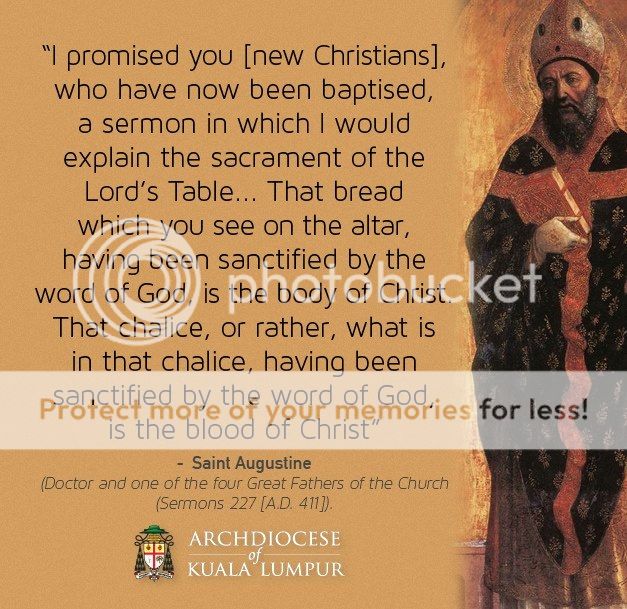 |
|
|
Jun 7 2015, 11:16 PM
|
|
Senior Member
3,577 posts Joined: Apr 2006
|
Corpus Christi at Jesus Caritas Church, Kepong:
       This post has been edited by yeeck: Jun 7 2015, 11:20 PM |
|
|
Jun 7 2015, 11:17 PM
|
|
Senior Member
3,577 posts Joined: Apr 2006
|
From City Parish, Penang:
     This post has been edited by yeeck: Jun 7 2015, 11:17 PM |
|
|
Jun 8 2015, 12:25 AM
|
|
Senior Member
3,577 posts Joined: Apr 2006
|
Does Christ Die Again at Mass?
One of the most unfortunate misunderstandings about the Catholic teaching on the Eucharist is that it consists of sacrificing Jesus Christ again - that at every Mass Christ is continually killed, continually suffering, continually dying, day in and day out. This misconception is partially due to the malice of certain detractors, and partially to an honest confusion over the relation of the Mass to the Sacrifice of the Cross. The Catholic Church does teach that the Eucharist is truly a sacrifice, and that it is truly our Lord Jesus Christ; therefore it is not too much of a stretch for those unfamiliar with Catholic teaching to wrongly assume that we believe our Lord is being killed at every Mass. While it is beyond the scope of this article to give a comprehensive treatment of the theology of the Eucharist, let us at least lay this bugbear to rest by showing that the Church does not and has never taught that Christ is sacrificed again in the Mass, as well as elucidate the true Catholic teaching on this particular point. The Sacrifice of the Mass and Calvary Catholic doctrine holds that Christ is truly present in the Sacrament of the Eucharist; in western tradition, His true presence begins from the time of the consecration and then endures so long as the sacramental species persist. Because it is Christ Himself who is present in the sacrament, the Mass does not simply consist of the worship, praise or offerings of the assembly, but rather of the very offering of Christ Himself to God the Father for the salvation of men. In the Mass, Christ Himself is present, and Christ Himself is offered. He offers Himself by virtue of His high priesthood; He is the offering by virtue of being the "Lamb of God, who takes away the sins of the world" (John 1:29). Thus, the Mass is truly an offering - the offering of Christ Himself. But the only offering that Christ makes to God is of Himself, His whole being without reserve, which He offered for us on the cross. Christ, of course, died only one time upon the cross. This is a plain fact of history, as well as an affirmation of the Sacred Scriptures in multiple places: "Christ also died once for our sins, the just for the unjust: that he might offer us to God, being put to death indeed in the flesh, but enlivened in the spirit" (1 Pet. 3:18). "Knowing that Christ rising again from the dead, dies now no more, death shall no more have dominion over him. For in that he died to sin, he died once; but in that He lives, He lives unto God" (Rom. 6:9-10). "So Christ, having been offered once to bear the sins of many, will appear a second time, not to deal with sin but to save those who are eagerly waiting for him" (Heb. 9:28). It is a plain truth of the faith that Christ died His atoning death but once upon the cross. It is this death upon the cross, this one event in history, that constitutes the formal act of Christ's sacrifice. In time, this act was carried out only once, as the above Scripture passages make clear. It is this sacrifice which makes our reconciliation with God possible. Though Jesus died only once, He is perpetually interceding for us before the throne of God, pleading His blood and the perfection of His offering to God on our behalf. "Christ Jesus, who died, yes, who was raised from the dead, who is at the right hand of God, who indeed intercedes for us" (Rom. 8:34). This heavenly offering is the principle act of the Mass, where the one sacrifice of Christ is offered to God. This is a function of Christ's high priesthood. In the Epistle to the Hebrews, it is stated that because Christ is a perpetual high priest, He is ever offering Himself to God, and by virtue of this He is "able to save those who draw near" to Him. The author of Hebrews states: "The former priests were many in number, because they were prevented by death from continuing in office; but he holds his priesthood permanently, because he continues for ever. Consequently he is able for all time to save those who draw near to God through him, since he always lives to make intercession for them" (Heb. 7:23-25). Christ died on the cross only once; but because He ever lives, and because He is a perpetual high priest, He is always offering this sacrifice to God - and God is perpetually pleased by it because of the perfection of the offering, both in the priest and the victim. This is why, in the Resurrection, Christ still retains His wounds - these wounds are the signs of His sacrifice, which are forever presented to God. Thus, the offering of the cross and the offering of the Mass are both sacrificial, but the manner of the offering is different. The sacrifice of the cross was bloody, the perpetual offering of Christ to the Father in the Mass unbloody - nevertheless, both are sacrifices inasmuch as both flow from the one offering Christ makes of Himself to the Father. We need to make an important distinction here: While the sacrifice of the Mass and the sacrifice of the cross are said to be the same sacrifice, this is meant in a very qualified sense. Well-meaning but poorly informed Catholics often get this point confused; knowing there is a link between the cross and the Mass, they errantly assume that the sacrifice of the cross is the sacrifice of the Mass in the historical sense, which in turn leads to all sorts of absurdities. For example, I keenly recall one woman many years ago explaining that at the Mass we actually "time travel" back to the cross, as if the offering of Christ in the Eucharist was His actual historical death. Her explanation of the Mass to her children was that they were traveling through time. This misunderstanding was due to poor understanding of the relationship between the sacrifice of the cross and the sacrifice of the Mass. The two are the same sacrifice inasmuch as the priest is the same (Christ) and the victim is the same (Christ). Thus, the Mass and the Cross are the same sacrifice in the sense that someone who sees two showings of the same play in two successive nights has seem the same play, inasmuch as the cast and story remain the same. It does not mean, however, that in watching the play on night two one is somehow simultaneously witnessing the play from night one. Night one is night one, and night two is night two, even though they retain a very intimate connection. Similarly, the Mass is grounded in the death of Christ on the cross - it is only because Christ died on the cross that He can eternally present that sacrifice to the Father - but the historical, bloody death of Christ on the cross is logically and theologically distinct from the unbloody presentation of that sacrifice. This is why the traditional formulations in the old catechisms teach that the Mass is the Sacrifice of the New Law in which Christ, through the ministry of the priest, offers Himself to God in an unbloody manner under the appearances of bread and wine. It is the manner of the offering which is distinct. Is Christ offered at every Mass? Yes. Is this offering a true sacrifice? Yes. Is Christ slain at every Mass. No. He died once and dies no more. Historical Development The theology is admittedly intricate, especially for a Protestant or someone without any prior study of sacramental theology. It is sufficient to note that our above discussion should put to rest Protestant objections that we believe Christ is "killed" at every Mass. Still, in order to make the point more clearly, let us turn to history, especially the history of the Middle Ages and the Tridentine period, in order to make it clear that the Church has never taught that Christ dies at every Mass. The idea that Christ is re-sacrificed in every Mass is said to be a perversion of the Gospel introduced during the Middle Ages, which to the opponents of the Church is the age of universal ignorance and superstition. To get a general idea of medieval thought on this issue, we can turn to Peter Lombard. Lombard (1100-1160) was the Bishop of Paris and most renowned theologian of the Middle Ages. Let us examine Peter Lombard's understanding of this question in his famous theological treatise, the Sentences. Remember that Peter Lombard was of such authority in the Middle Ages that all aspiring professors of theology were obliged to compose a commentary on Lombard's work in order to obtain their degree. Lombard can thus be taken as the authoritative exposition of medieval theology. In Book IV of the Sentences, he takes up the question of the nature of the Eucharistic sacrifice. Notice the emphasis on the continual offering of Christ, but with the distinction on the different modes or manners of offering: The question is posed, whether what the priest does is properly called “sacrifice” or “offering” (immolatio), and whether Christ is offered (immoletur) daily, or was offered only once. The answer can be made briefly, that that which is offered and consecrated by the priest is called sacrifice and offering (oblatio), because it is the memory and representation of the true sacrifice and holy offering (immolatio) made on the altar of the Cross. And Christ died once on the Cross, and there was offered (immolatus) in Himself; but daily He is offered in the Sacrament, because in the Sacrament, there takes place the remembrance of what was done once...… what is done on the altar is and is called a sacrifice; and Christ was offered once, and is offered daily, but in one manner then, in another now. [1] The Council of Trent, summoned to clarify the teaching of the Holy Catholic Church on the Mass against the errors of the 'Reformers', reaffirmed the distinctions noted by Peter Lombard. Note its citation of Hebrews 7:25, which we quoted above: "And forasmuch as, in this divine sacrifice which is celebrated in the Mass, that same Christ is contained and immolated in an unbloody manner, who once offered Himself in a bloody manner on the altar of the cross; the holy Synod teaches, that this sacrifice is truly propitiatory and that by means thereof this is effected, that we obtain mercy, and find grace in seasonable aid, if we draw nigh unto God [cf. Heb. 7:25], contrite and penitent, with a sincere heart and upright faith, with fear and reverence. For the Lord, appeased by the oblation thereof, and granting the grace and gift of penitence, forgives even heinous crimes and sins. For the victim is one and the same, the same now offering by the ministry of priests, who then offered Himself on the cross, the manner alone of offering being different." [2] This same teaching and distinctions are found in the writings of the Church Fathers as well. St. Augustine of Hippo teaches that the Mass is a true and proper sacrifice, for the very reason that it has a "real resemblance" to the historical death of Christ upon the Cross: "Was not Christ once for all offered up in His own person as a sacrifice? And yet, is He not likewise offered up in the sacrament as a sacrifice, not only in the special solemnities of Easter, but also daily among our congregations; so that the man who, being questioned, answers that He is offered as a sacrifice in that ordinance, declares what is strictly true? For if sacraments had not some points of real resemblance to the things of which they are the sacraments, they would not be sacraments at all" [3]. In noting the "real resemblance" of the sacraments to that which they signify, he is referring to what has been since called the 'sign value' or 'signification' of the sacrament. In the Eucharist, the wine signifies the pouring out of Christ's blood and the broken bread His broken body upon the cross. This signification via the proper elements actually makes present that reality which is signified; thus, the offering of the Mass with the proper matter and form actually makes present Christ and His one offering, which is why the Mass is truly a sacrifice. This is basic sacramental theology - the Mass is truly the sacrifice of Christ, not because it is identical with the historical sacrifice of the cross or because Christ is dying again, but because of the "real resemblance" between the two manners of offering which bring forth the sacramental realities. It is noteworthy that where Augustine writes “He is sacrificed”, he uses the present infinitive “immolari”, expressing a continual action - the ongoing, perpetual unbloody offering of Christ to the Father. Conclusion There is an intimate link between the sacrifice of the cross and that of the Mass. Both are offerings of Christ the high priest; in both cases, Christ is also the victim. Because of this "real resemblance", it is right and proper to call the Mass a sacrifice in the true and proper sense, understanding that it is nothing else than the sacrifice of Christ to God the Father for the sins of the world. The sacrifice is the same, though the manner in which it is presented is different - one bloody, the other unbloody; one happening once in history, the other perpetually - which means that, while Christ is continually offering Himself to the Father in the sacrifice of the Mass, He is not slain daily. He "dies no more", as St. Paul says in the Epistle to the Romans. In fact, if He were not alive forever more, He could not make this perpetual intercession at the right hand of the Father. Ad majorem Dei gloriam. NOTES [1] Peter Lombard, Sentences, Lib. IV, Dist. 12 [2] Council of Trent, Session 22, Chapter 2 [3] St. Augustine of Hippo, Letter 98:9 Source: http://unamsanctamcatholicam.com/apologeti...in-at-mass.html This post has been edited by yeeck: Jun 8 2015, 12:26 AM |
|
|
Jun 9 2015, 05:28 PM
|
|
Senior Member
3,577 posts Joined: Apr 2006
|
How to Fight the Prosperity Gospel
Leticia Adams  This morning I woke up and read an article about the Osteen Predicament. It was kind of weird because the issue of the prosperity gospel has been coming up a lot lately. I watched the video of Victoria Osteen’s sermon and wondered why anyone would believe that crap. It is so easy to see that her preaching that our happiness is the ultimate goal of following Christ is completely opposite of what Jesus Himself says in the Gospel. My problems with the Osteens and people like them such as TD Jakes, Joyce Meyer and so many mega church pastors are many; mostly the fact that they preach against Catholicism for one reason or another but mostly because they claim that all things Catholic are unbiblical. Well, there is nothing more unbiblical than the idea that if you follow Christ all your wishes will come true and you will never suffer again. Jesus said to pick up our CROSS and follow Him, that whoever wants to keep his life will lose it and that the world will hate us just as it hated Him. So where exactly in the Gospel did Jesus say His number one goal for dying on a cross was so that we would be “happy”? Umm, nowhere. If anything, the idea that Jesus saying He came to give us life abundantly is a twisted way of seeing things through human eyes that see “abundance” in the form of material things. That isn’t what He meant, what He meant was that His death would open up the door of salvation so that we could be saved. That when we finish the race in this life that we will be with God for eternity in the next life in Heaven. Heaven is another thing that people turn into some kind of “wishes come true” place. Heaven is not Disneyland. It is not a place where we are going to go and have all our favorite things because God’s a genie who is going to grant us our every wish. God will not grant us anything that is sinful, not good for us, or in any way stands between us and Him. Not on this earth and not in Heaven. If you love something more than God, then guess what? You are not going get that in Heaven, IF you make it there. All of that is really easy for me to say matter-of-factly. This past Sunday when I heard my priest say that the prosperity gospel is the gospel of Satan, I wanted to stand up and cheer. I wanted to high-five him and I was so happy to smugly sit there and nod my head thinking about how right I’ve been all along to delete all things prosperity gospel from my Facebook newsfeed. And then he said “It’s easy for us to call out the prosperity gospel when others are preaching it, but how about when we are suffering? Do we ask God ‘why me?’” That smacked the smug right out of my sails. Most of the time, when I see some quote by the Osteens or any of the many other “happiness” pushers, I roll my eyes and then ask, “How do these people even suffer?” I mean, how can they suffer? When bad things happen to them, what do they do? How do they hold onto their faith when things fall apart? I usually ask that question with a lot of pride as if I suffer so graciously. Not. Father’s question made me think about how I suffer. I do not suffer well. At the end of his homily he said that if we think we are suffering, then we need to look at the Christians in Iraq or the Holy Land and rethink that idea. On the one hand, suffering is suffering. If I am not a Christian in Iraq being hunted down to be killed, then that is because God knows that I would never, ever make it to Heaven on that path to sainthood, which basically means that He is well aware that I would reject Him and everything to do with Him if that were me. I’m a pansy. God not putting me there is Him saying, “you are not that strong.” True dat. My own suffering is still a cross that I have to embrace and carry, even if it’s washing the dishes and not fearing for my life (yet, that day could easily come this way). That’s just it though; I do not embrace my cross. I drive a really ugly car. Instead of being thankful that the car gets me to point A to point B, I look around at everyone else’s car and wonder why I got stuck driving the humbling death trap. I act as if having to jump my car every time I need to go somewhere is the worst thing that could ever happen to me and that God must hate me to put me through this. Because He is supposed to grant my every wish, like get me a badass Dodge Challenger. It’s really easy for me to point out when someone is preaching the prosperity gospel, but it’s not so easy to look in the mirror and realize that I am living the prosperity gospel. If I don’t have all the things that I want in life, then it must mean God has forgotten me. That could not be further from the truth. Does that mean that He wants me to suffer all the live long day? No. He created all things for our good. He wants us to enjoy life, but that isn’t the same as centering our life around being “happy”. Joy is not the same as happiness. Happiness is fleeting, but joy is always there even in the middle of a storm. Joy is what comes when we center our life around Jesus, Who is the source of life. The last several months (maybe even a year or more) of my life have been full of crosses and I have gone to great lengths to try and avoid carrying them. I have whined, complained, sat down and pouted, begged God to take them away or just plain out yelled at Him for daring to give them to me in the first place. It wasn’t until I realized what a hypocrite that I am for always pointing at the splinter in the eyes of those who love the Osteens messages while living with the plank in my own, that I finally heard the words of Christ to pick up my cross and follow Him. The first step in fighting the prosperity gospel is for me to recognize my own faults, to reject it in my own life and to resolve to change myself. When enough Christians do that, then that false gospel will die on its own. It doesn’t happen by fighting the preachers of it, it happens by fighting it in our own hearts and lives. Source: http://www.catholicstand.com/fight-prosperity-gospel/ This post has been edited by yeeck: Jun 9 2015, 05:30 PM |
|
|
Jun 11 2015, 02:20 PM
|
|
Junior Member
225 posts Joined: Mar 2008
|
Nice article Bro Yeeck! This is helpful in combating the heresy that is the prosperity gospel! thumbs up!
|
|
|
Jun 12 2015, 12:41 PM
|
|
Senior Member
3,577 posts Joined: Apr 2006
|
Happy Feast of the Sacred Heart of Jesus! Oh Jesus, meek and humble of heart, make our hearts like unto Thine!
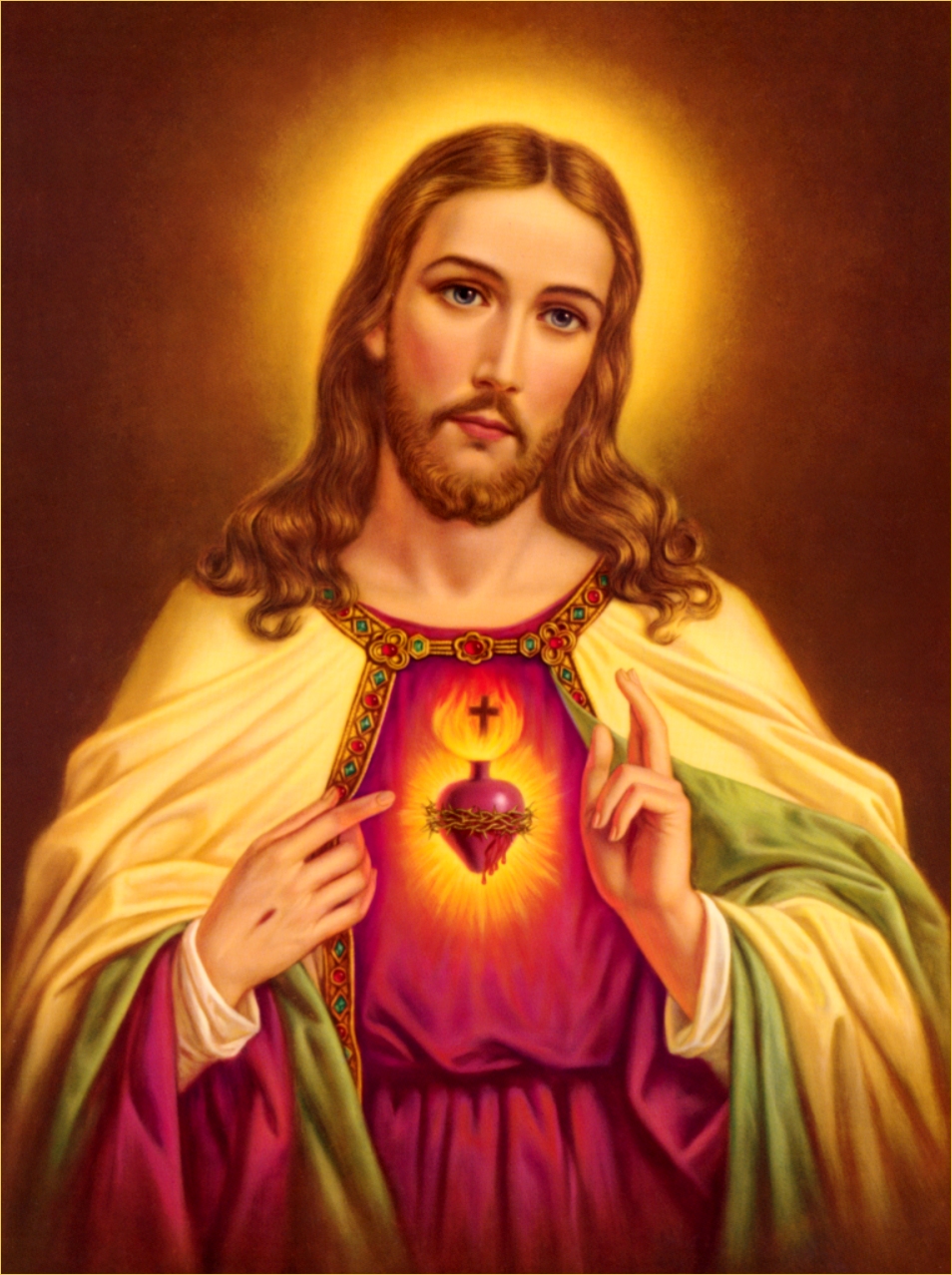 This post has been edited by yeeck: Jun 12 2015, 12:42 PM |
|
|
Jun 12 2015, 01:30 PM
|
|
Senior Member
3,577 posts Joined: Apr 2006
|
Gentlemen: Let’s talk about your self esteem. Get rid of it. Self esteem is garbage. Both low self-esteem and high self-esteem are based on pride and disordered self-love. These are not Biblical or Christian concepts, but worldly ones. We need to die to ourselves, not to feed the beast of pride. Self esteem is pride. The modern cult of self esteem stems from a pop psychology that hates God. How’s this for self esteem: “Lord Jesus Christ, Son of God, have mercy on me, a sinner”?
We are defeated — we are absolutely defeated. Look around you at the grim landscape of society. Where are the Christian men? Men are emasculated. People don’t know what it is to be a man or a woman or a family. Men do not lead their families. We cannot stop abortion; we cannot stop divorce; we cannot stop feminism; we cannot stop pornography; we cannot stop our children leaving the faith or our families falling apart; we cannot stop the militant sodomites — imagine that! We cannot stop effeminates — spiritually mutilated half-men… those perverts who want to force you and your children and grandchildren to embrace and celebrate their filthy depravity that fills God’s nostrils with its stench and their own bodies with disease. We cannot stop it. We are defeated. But we are not really defeated — not if we unite ourselves to the Cross, because that Cross is the hook that has the bait that caught the Devil. We must die to ourselves on the Cross of Christ. Then we accept the truth about ourselves and allow God to put us through a crucifying and purgative humiliation. If you’re not afraid of this purgative humiliation, this harrowing, you will be victorious. In the meantime, don’t lie and tell yourself and others how good you are. You are inadequate. You should feel inadequate. You should “feel bad” about yourself. “But the foolish things of the world hath God chosen, that he may confound the wise; and the weak things of the world hath God chosen, that he may confound the strong. And the base things of the world, and the things that are contemptible, hath God chosen, and things that are not, that he might bring to nought things that are: That no flesh should glory in his sight.” (I Cor. 1:27-29) If God is going to use you, then you must be foolish, weak, base, and contemptible. You have to know that. You have to embrace it. You are inadequate. Do not be afraid of your inadequacy. Only if you acknowledge it will grace begin to operate in you. This is one reason that self knowledge is so important. Do not be afraid for humiliation, either. We achieve humility by humiliations and God exalts the humble. Jesus’ Resurrection and Ascension at the Right Hand of God after His bitter Passion is the greatest example of exalted humility. After that, is Our Lady, whose Magnificat is a “humble boast,” if I might put it that way — which is summarized in the phrase “He hath put down the mighty from their thrones and hath exalted the humble.” The spiritual writers remind us of the necessity of compunction of heart, contrition for sin, and humility. We must seriously cultivate those by acknowledging first our radical dependence on God for all our gifts of nature and of grace, and second, by acknowledging our sinfulness: our deserving of eternal damnation in hell by only one mortal sin (yet how many have we committed?), the countless venial sins that we’ve excused with lame excuses about relief from life’s difficulties, the bad example we’ve given others (including wives and children), our moral cowardice before a world that mocks Christ, and the fact that we don’t seem so swift as to “get it” when these things are pointed out to us. We go to confession, but then, like dogs returned to our vomit, we commit the same sins, we wallow in the same filth: Pornography. Infidelity by unchaste glances at other women. Ruining our own children’s innocence by letting the serpent of sexual impurity into our lives and therefore into our homes. Treating our wives like objects of lust on the one hand and fearing their displeasure on the other should we dare to assert our male patriarchal authority as head of the family. The failures pile up, and I’ve only touched a couple of commandments. We need to crush our pride and disordered self-love, those things that keep us from getting down deep into what really makes us sick inside. When you see the task that’s put before you in talks such as you’ve heard today, you might be tempted to say, “I can’t do it.” GOOD! You can’t. Say yes to the humiliation and yes to the inadequacy, and then God will begin to work in you. Saint Paul said “with Christ I am nailed to the cross. And I live, now not I; but Christ liveth in me” (Gal. 2: 19-20). Gentlemen, ultimately, we must realize that we are not God. We must acknowledge our creatureliness. God is God and we are not. When Satan heard that bad news, he cried out “non serviam” — “I will not serve.” When Saint Michael heard it, he cried out “Who is like God?” Satan angrily screamed, like a troubled adolescent, “God is God and I am not!” Saint Michael joyfully sang “God is God and I am not … blessed be God! Who is like God? I will serve him.” To do what we need to do will take courage, but there are two kinds of courage: One is based on pride and self-love, as in sports, military formation, in the tough-guy movies, and any other place where machismo reigns. This is narcissistic, bent in on itself. The other is true Christian courage, which is a virtue. It is rooted in truth, including the knowledge of our weakness, fatigue, uncertainty, and inadequacy. It is motivated by Christian Charity — love of God and love of neighbor. True courage is the stuff of martyrs, not of bullies. But we can only achieve that if we render ourselves totally vulnerable — taking all the hits they give us — then we are invulnerable because you participate on the Victory of the Cross. The weight of sin will then crush itself. We must endure every humiliation, every loss, every trial for the love of God, and remember that Charity covers a multitude of sins. When you feel bad about yourself, it is a moment of temptation. This bad feeling should be embraced for the love of God, like the publican, like the Syrophoenician woman, like the Good Thief, who said “we deserve this.” Don’t seek to bolster your self-esteem by some crutch — this is when people drink, indulge sexual appetite, or go for any drug. This is the time to go deep within ourselves and find God there, who never leaves us, and beg His grace and mercy. Don’t be afraid to feel bad about yourself, because then you can die to yourself. Then we say with Saint John the Baptist: “I must decrease and He must increase.” - Br. Andre Marie |
|
|
Jun 15 2015, 01:42 AM
|
|
Senior Member
3,577 posts Joined: Apr 2006
|
St. Cyprian, St. Justina, Lust And Devils
This story of the conversion of St. Cyprian is very, very interesting. It also talkes about how the demons are tempting us and how to overcome them.  ‘IN THE REIGN of Decius (249-251) there lived in Antioch (of Pisidia) a certain philosopher and renowned sorcerer whose name was Cyprian, a native of Carthage. Springing from impious parents, in his very childhood he was dedicated by them to the service of the pagan god Apollo. At the age of seven he was given over to magicians for the study of sorcery and demonic wisdom. At the age of ten he was sent by his parents, as a preparation for a sorcerer’s career, to Mount Olympus, which the pagans called the dwelling of the gods. Here there were a numerous multitude of idols, in which demons dwelled. On this mountain Cyprian studied all manner of diabolical arts: he mastered various demonic transformations, learned how to change the nature of the air, to bring up winds, produce thunder and rain, disturb the waves of the sea, cause damage to gardens, vineyards and fields, to send diseases and plagues upon people; and in general he learned a ruinous wisdom and diabolical activity filled with evil. In this place he saw a numberless legion of demons, with the prince of darkness at their head; some stood before him, others served him, still others cried out in praise of their prince, and some were sent into the world in order to corrupt people. Here he likewise saw in their false forms the pagan gods and goddesses, and also diverse phantoms and specters, the invocation of which he learned in a strict forty-day fast. He ate only after the setting of the sun, and not bread or anything else, but only acorns from oak trees. When he was fifteen years old he began to receive lessons from seven great sorcerers; from them he learned many demonic secrets. Then he went to the city of Argos, where, having served the goddess Juno for a time, he learned many practices of deception from her priests. He lived also in Taurapolis (on the island of Icara) in the service of the goddess Diana; and from there he went to Sparta, where he learned how to call forth the dead from the graves and to force them to speak by means of various incantations and spells. At the age of twenty, Cyprian came to Egypt, and in the city of Memphis he learned yet greater charms and incantations. In his thirtieth year he went to the Chaldeans, and having learned astrology there, he finished his studies. After this he returned to Antioch, being perfect in all evil-doing. Thus he became a sorcerer, magician, and destroyer of souls, a great friend and faithful slave of the prince of hell, with whom he conversed face to face, being vouchsafed to receive from him great honor, as he himself testified. “Believe me,” he said; “I have seen the prince of darkness himself, for I propitiated him by sacrifices. I greeted him and spoke with him and his ancients; he liked me, praised my understanding, and before everyone said: ‘Here is a new Jambres, always ready for obedience and worthy of communion with us!’ And he promised to make me a prince after my departure from the body, and for the course of earthly life to help me in everything. And he gave me a legion of demons to serve me. When I departed from him, he addressed me with these words: ‘Take courage, fervent Cyprian; arise and accompany me; let all the demonic ancients marvel at you.’ Consequently, all of his princes also were attentive to me, seeing the honor shown to me. The outward appearance of the prince of darkness was like a flower. His head was crowned by a crown (not an actual, but a phantom one) made of gold and brilliant stones, as a result of which the whole space around him was illuminated; and his clothing was astonishing. When he would turn to one or the other side, that whole place would tremble; a multitude of evil spirits of various degrees stood obediently at his throne. I gave myself over entirely into his service at that time, obeying his every command.” Thus did St. Cyprian relate of himself after his conversion. From this it is evident what kind of man Cyprian was: as a friend of the demons, he performed all their works, causing evil to people and deceiving them. Living in Antioch, he turned many people away to every kind of lawless deed; he killed many with poisons and magic, and slaughtered young men and maidens as sacrifices for the demons. He instructed many in his ruinous sorcery: some he taught to fly in the air, others to sail in boats on the clouds, still others to walk on water. By all the pagans he was revered and glorified as a chief priest and most wise servant of their vile gods. Many turned to him in their needs, and he helped them by means of the demonic power with which he was filled: with some he cooperated in their adulteries, with others in anger, enmity, revenge, jealousy. Already he was entirely in the depths of hell and in the jaws of the devil; he was a son of gehenna, a partaker of the demonic inheritance and of their eternal perdition. But the Lord, who does not desire the death of a sinner, in His unutterable goodness and His mercy which is not conquered by the sins of men, deigned to seek out this lost man, to draw out of the abyss one who was mired in the filth of the depths of hell, and to save him in order to show to all men His mercy; for there is no sin which can conquer His love of mankind. He saved Cyprian from perdition in the following way. THERE LIVED AT THAT TIME in Antioch a certain maiden whose name was Justina. She came from pagan parents; her father was a priest of the idols, Aedesius by name, and her mother was called Cledonia. Once, sitting at the window of her house, this maiden, who had then already reached womanhood, by chance heard the words of salvation out of the mouth of a deacon who was passing by, whose name was Praylius. He spoke of our Lord Jesus Christ’s becoming man, that He had been born of the Most Pure Virgin and, having performed many miracles, had deigned to suffer for the sake of our salvation, had risen from the dead with glory, ascended into the heavens, and sits at the right hand of the Father and reigns eternally. This preaching of the deacon fell on good soil, into the heart of Justina, and began quickly to bring forth fruit, uprooting in her the thorns of unbelief. Justina wished to be instructed in the Faith by this deacon better and more completely, but she did not dare to seek him out, being restrained by a maiden’s modesty. However, she secretly went to the church of Christ, and often hearing the word of God, with the Holy Spirit acting in her heart, she came to believe in Christ. Soon she convinced her mother of this also, and then brought to the faith her aged father as well. Seeing the understanding of his daughter and hearing her wise words, Aedesius reflected within himself thus: “The idols are made by the hands of men and have neither soul nor breath, and therefore how can they be gods?” While he was reflecting on this, once at night he saw during sleep, by Divine consent, a wondrous vision: he saw a great multitude of light-bearing Angels, and in their midst was the Saviour of the world, Christ, Who said to him: “Come to Me, and I will give you the Kingdom of Heaven.” After rising in the morning, Aedesius went with his wife and daughter to the Christian Bishop, whose name was Optatus, begging him to instruct them in the Faith of Christ and to perform upon them holy Baptism. At the same time he informed him of the words of his daughter and of the angelic vision which he had seen himself. Hearing this, the Bishop rejoiced at their conversion, and having instructed them in the Faith of Christ, he baptized Aedesius, his wife Cledonia, and their daughter Justina; and then, having given them communion of the Holy Mysteries, he let them go in peace. When Aedesius had become strengthened in the Faith of Christ, the Bishop, seeing his piety, made him a presbyter. After this, having lived virtuously and in the fear of God for a year and six months, Aedesius in holy faith came to the end of his life. As for Justina, she valiantly struggled in the keeping of the Lord’s commandments, and having come to love her Bridegroom Christ, she served Him with fervent prayers, in virginity and chastity, in fasting and great abstinence. But the enemy, the hater of the human race, seeing such a life, envied her virtues and began to do harm to her, causing various misfortunes and sorrows. AT THAT TIME there lived in Antioch a certain youth named Aglaias, the son of wealthy and renowned parents. He lived luxuriously, giving himself entirely over to the vanity of this world. Once he saw Justina as she was going to church, and he was struck by her beauty. The devil instilled shameful intentions into his heart. Being inflamed with lust, Aglaias by all means strove to gain the good disposition and love of Justina and by means of deception to bring the pure lamb of Christ to the defilement which he planned. He observed all the paths by which the maiden would walk, and, meeting her, would speak to her cunning words, praising her beauty and glorifying her; showing his love for her, he strove to draw her into fornication by a cunningly-woven net of deceptions. The maiden, however, turned away from him and fled from him, despising him and not desiring even to hear his deceptive and cunning speeches. But the youth did not grow cool in his desire of her beauty, and he sent to her the request that she should agree to become his wife. She, however, replied to him: “My Bridegroom is Christ; Him I serve, and for His sake I preserve my purity. He preserves both my soul and my body from every defilement.” Hearing such a reply from the chaste maiden, Aglaias, being instigated by the devil, became yet more inflamed with passion. Not being able to deceive her, he intended to seize her by force. Having gathered to his aid some foolish youths like himself, he waylaid the maiden in the path along which she usually walked to church for prayer; there he met her and, seizing her, began dragging her by force to his house. But she began loudly to scream, beat him in the face, and spat on him. The neighbors, hearing her wails, ran out of their houses and took the immaculate lamb, St. Justina, from the hands of the impious youth as from the jaws of a wolf. The disorderly youths scattered, and Aglaias returned with shame to his house. Not knowing what more to do, he decided, with the increase of impure lust in him, upon a new evil deed: he went to the great sorcerer and magician Cyprian, the priest of the idols, and having informed him of his sorrow, begged his help, promising to give him much gold and silver. Having heard out Aglaias, Cyprian comforted him, promising to fulfill his desire. “I will so manage,” he said, “that the maiden herself will seek your love and will feel passion for you even stronger than that which you have for her.” Having thus consoled the youth, Cyprian let him go, full of hope. Then, taking the books of his secret art, he invoked one of the impious spirits who, he was sure, could soon inflame the heart of Justina with passion for this youth. The demon willingly promised to fulfill this and proudly said: “This deed is not difficult for me, because many times I have shaken cities, crumbled walls, destroyed houses, caused the shedding of blood and patricide, instilled hatred and great anger between brothers and spouses, and have brought to sin many who have given a vow of virginity. In monks who have settled in mountains and were accustomed to strict fasting and have never even thought about the flesh, I have instilled adulterous lust and instructed them to serve fleshly passions; people who have repented and turned away from sin, I have converted back to evil deeds; many chaste people I have thrown into fornication. Will I really be unable to incline this maiden to the love of Aglaias? Indeed, why do I speak? I will swiftly show my powers in very deed. Take this powder” (here he gave him a vessel full of something) “and give it to this youth; let him sprinkle the house of Justina with it, and you will see that what I have said will come to pass.” Having said this, the demon vanished. Cyprian called Aglaias and sent him to sprinkle the house of Justina secretly with the contents of the demon’s vessel. When this had been done, the demon of fornication entered the house with the flaming arrows of fleshly lust in order to wound the heart of the maiden with fornication, and to ignite her flesh with impure lust.  Justina had the custom every night to offer up prayers to the Lord. And behold, when, according to custom, she arose at the third hour of the night and was praying to God, she suddenly felt an agitation in her body, a storm of bodily lust and the flame of the fire of gehenna. In such agitation and inward battle she remained for quite a long time; the youth Aglaias came to her mind, and shameful thoughts arose in her. The maiden marveled and was ashamed of herself, feeling that her blood was boiling as in a kettle; now she thought about that which she had always despised as vile. But in her good sense Justina understood that this battle had arisen in her from the devil; immediately she turned to the weapon of the sign of the cross, hastened to God with fervent prayer, and from the depths of her heart cried out to Christ her Bridegroom: “O Lord, my God, Jesus Christ! Behold how many enemies have risen up against me and have prepared a net in order to catch me and take away my soul. But I have remembered Thy name in the night and have rejoiced, and now when they are close about me I hasten to Thee and have hope that my enemy will not triumph over me. For thou knowest, O Lord my God, that I, Thy slave, have preserved for Thee the purity of my body and have entrusted my soul to Thee. Preserve Thy sheep, O good Shepherd; do not give it over to be eaten by the beast who seeks to devour me; grant me victory over the evil desire of my flesh.” Having prayed long and fervently, the holy virgin put the enemy to shame. Being conquered by her prayer, he fled from her with shame, and again there came a calm in Justina’s body and heart; the flame of desire was quenched, the battle ceased, the boiling blood was stilled. Justina glorified God and sang a song of victory. The demon, on the other hand, returned to Cyprian with the sad news that he had accomplished nothing. Cyprian asked him why he had not been able to conquer the maiden. The demon, even against his will, revealed the truth: “I could not conquer her because I saw on her a certain sign of which I was afraid.” Then Cyprian called a yet more malicious demon and sent film to tempt Justina. He went and did much more than the first one, falling upon the maiden with great rage. But she armed herself with fervent prayer and laid upon herself yet a more powerful labor: she clothed herself in a hair shirt and mortified her flesh with abstinence and fasting, eating only bread and water. Having thus tamed the passions of her flesh, Justina conquered the devil and banished him with shame. And he, like the first one, returned to Cyprian without accomplishing anything. Then Cyprian called one of the princes of the demons, informed him about the weakness of the demons he had sent, who could not conquer a single maiden, and asked help from him. This prince of demons severely reproached the other demons for their lack of skill in this matter and for their inability to arouse passion in the heart of the maiden. Having given hope to Cyprian and promised to seduce the maiden by other means, he took on the appearance of a woman and went to Justina. And he began to converse piously with her, as if desiring to follow the example of her virtuous life and her chastity. Conversing in this way, he asked the maiden what kind of reward there might be for such a strict life and for the preservation of purity. Justina replied that the reward for those who live in chastity is great and beyond words, and that it is very remarkable that people do not in the least concern themselves for such a great treasure as angelic purity. Then the devil, revealing his shamelessness, began with cunning words to tempt her, saying: “But then how could the world exist? How would people be born? After all, if Eve had preserved her purity, how would the human race have increased? In truth marriage is a good thing, being established by God Himself; the Sacred Scripture also praises it, saying: Let marriage be had in honor among all, and the bed undefiled (Heb. 13:4). And many saints of God also did they not enter into marriage, which God gave them as a consolation, so that they might rejoice in their children and praise God?” Hearing these words, Justina recognized the cunning deceiver, the devil, and, more skillful than Eve, conquered him. Without continuing this conversation, she immediately fled to the defense of the Cross of the Lord and placed its honorable sign on her forehead; and her heart she turned to Christ her Bridegroom. And the devil immediately vanished with yet greater shame than the first two demons. In great disturbance, the proud prince of the demons returned to Cyprian, who, finding out that he had not managed to do anything, said to him: “Can it be that even you, a prince powerful and more skillful than others in such matters, could not conquer the maiden? Who then among you can do anything with this unconquerable maiden’s heart? Tell me by what weapon she battles with you, and how she makes powerless your mighty power?” Being conquered by the power of God, the devil unwillingly acknowledged: “We cannot behold the sign of the Cross, but flee from it, because it scorches us like fire and banishes us far away.” Cyprian became angry at the devil because he had put him to shame, and reproaching the demon, he said: “Such is your power that even a weak virgin conquers you!” Then the devil, desiring to console Cyprian, attempted yet another undertaking: he took on the form of Justina and went to Aglaias with the hope that, having taken him for the real Justina, the youth might satisfy his desire, and thus neither would the weakness of the demons be revealed, nor would Cyprian be put to shame. And behold, when the demon went to Aglaias in the form of Justina, the youth leaped up in unspeakable joy, ran to the false maiden, embraced her and began kissing her, saying: “How good it is that you have come to me, fair Justina!” But no sooner had the youth pronounced the word “Justina” than the demon immediately disappeared, being unable to bear even the name of Justina. The youth became greatly afraid and, running to Cyprian, told him what had happened. Then Cyprian by his sorcery gave him the form of a bird and, having enabled him to fly in the air, he sent him to the house of Justina, advising him to fly into her room through the window. Being carried by a demon in the air, Aglaias flew on the roof. At this time Justina happened to look through the window of her room. Seeing her, the demon left Aglaias and fled. At the same time, the phantom appearance of Aglaias also vanished, and the youth, falling down, was all but dashed to pieces. He grasped the edge of the roof with his hands and, holding on to it, hung there; and if he had not been let down to the ground by the prayer of St. Justina, the impious one would have fallen down and been killed. Thus, having achieved nothing, the youth returned to Cyprian and told him of his woe. Seeing himself put to shame, Cyprian was greatly grieved and thought himself of going to Justina, trusting in the power of his sorcery. He turned himself into a woman and into a bird, but he did mpt manage to reach as far as the door of the house of Justina before his false appearances disappeared, and he returned with sorrow. AFTER THIS CYPRIAN began to gain revenge for his shame, and by his sorcery he brought diverse misfortunes on the house of Justina and on the houses of all her relatives, neighbors and friends, as once the devil had done to righteous Job (Job 1:15-19, 2:7). He killed their animals, he struck down their slaves with plagues, and in this way he brought them to extreme grief. Finally, he struck with illness Justina herself, so that she lay in bed and her mother wept over her. Justina, however, comforted her mother with the words of the Prophet David: I shall not die, but live, and I shall tell of the works of the Lord (Psalm 117:17). Not only on Justina and her relatives, but also on the whole city, by God’s allowance, did Cyprian bring misfortune as a result of his untamable rage and his great shame. Plagues appeared in the animals and various diseases among men; and the rumor spread, through the activity of the demons, that the great sorcerer Cyprian was punishing the city for Justina’s opposition to him. Then the most honorable citizens went to Justina and with anger tried to persuade her not to grieve Cyprian any longer, and to become the wife of Aglaias, in order to escape yet greater misfortunes for the whole city because of her. But she calmed them by saying that soon all the misfortunes which had been brought about with the help of Cyprian’s demons would cease. And so it happened. When St. Justina prayed fervently to God, immediately all the demonic attacks ceased; all were healed from the plagues and recovered from their diseases. When such a change occurred, the people glorified Christ and mocked Cyprian and his sorcerer’s cunning, so that from shame he could not show himself among men and he avoided meeting even friends. Having become convinced that nothing could conquer the power of the sign of the cross and the name of Christ, Cyprian came to his senses and said to the devil: “O destroyer and deceiver of all, source of every impurity and defilement! Now I have discovered your infirmity. For if you fear even the shadow of the cross and tremble at the name of Christ, then what will you do when Christ Himself comes to you? If you cannot conquer those who sign themselves with the sign of the cross, then whom will you tear away from the hands of Christ? Now I have understood what a non-entity you are; you are not even able to take revenge! Listening to you, 1, wretched one, have been deceived, and I believed your tricks. Depart from me, accursed one, depart! For I must entreat the Christians that they might have mercy on me. I must appeal to pious people, that they might deliver me from perdition and be concerned over my salvation. Depart, depart from me, lawless one, enemy of truth, adversary and hater of every good thing!” Having heard this, the devil threw himself on Cyprian in order to kill him; attacking him, he began to beat and strangle him. Finding no defense anywhere, and not knowing how to help himself and be delivered from the fierce hands of the demon, Cyprian, already scarcely alive, remembered the sign of the cross, by the power of which Justina had opposed all the demons’ power, and he cried out: “O God of Justina, help me!” Then, raising his hand, he made the sign of the cross, and the devil immediately leaped away from him like an arrow shot from a bow. Gaining courage, Cyprian became bolder, and calling on the name of Christ, he signed himself with the sign of the cross and stubbornly opposed the demon, cursing and reproaching him. As for the devil, standing far away from him and not daring to draw near to him out of fear of the sign of the cross and the name of Christ, he threatened Cyprian in every manner, saying: “Christ will not deliver you out of my hands!” Then, after long and fierce attacks on Cyprian, the demon roared like a lion and went away. THEN CYPRIAN took all his books of magic and went to the Christian Bishop Anthimus. Falling to the feet of the Bishop, he entreated him to have mercy on him and to give him holy Baptism. Knowing that Cyprian was a great sorcerer, feared by all, the Bishop thought that he had come to him with some kind of trick, and therefore he refused him, saying: “You do much evil among the pagans; leave the Christians in peace, lest you speedily perish.” Then Cyprian with tears confessed everything to the Bishop and gave him his books to be burned. Seeing his humility, the Bishop instructed him and taught him the holy faith, and then commanded him to prepare for Baptism; and his books he burned before all the believing citizens. Leaving the Bishop with a contrite heart, Cyprian wept over his sins, sprinkled ashes on his head, and sincerely repented, calling out to the true God for the cleansing of his iniquities. Coming the next day to church, he heard the word of God with joyful emotion, standing among the believers. And when the deacon commanded the catechumens to go out, declaring: “Ye catechumens depart,” and certain ones were already going out, Cyprian did not wish to go out, saying to the deacon: “I am a slave of Christ; do not chase me out of here.” But the deacon said to him: “Since you have not yet been given holy Baptism, you must go out of the church.” To this Cyprian replied: “As Christ my God I liveth, Who has delivered me from the devil, Who has preserved the maiden Justina pure, and has had mercy on me—you will not chase me out of the church until I become a complete Christian.” The deacon related this to the Bishop, and the Bishop, seeing the fervor of Cyprian and his devotion to the faith of Christ, called him up and immediately baptized him in the name of the Father and the Son and the Holy Spirit. Finding out about this, St. Justina gave thanks to God, distributed much alms to the poor, and made an offering in church. And Cyprian, on the eighth day after his Baptism, was made a reader by the Bishop; on the twentieth day he was made subdeacon, and on the thirtieth day a deacon; and in a year he was ordained priest. Cyprian completely changed his life; with every day he increased his struggles, and constantly weeping over his previous evil deeds, he perfected himself and ascended from virtue to virtue. Soon he was made Bishop, and in this rank he led such a holy life that he equaled many great saints. At the same time he zealously took care of the flock of Christ which had been entrusted to him. St. Justina the maiden he made a deaconess, and then entrusted to her a convent, making her abbess over other Christian maidens. By his conduct and instruction he converted many pagans and acquired them for the Church of Christ. Thus, idol worship began to die out in that land, and the glory of Christ increased. Seeing the strict life of St. Cyprian, his concern for the faith of Christ and for the salvation of human souls, the devil ground his teeth against him And inspired the pagans to slander him before the governor of the eastern region, saying that he had put the gods to shame, had converted many people away from them, and was glorifying Christ, Who was hostile to their gods. And so, many impious ones came to the governor Eutolmius, who was then governing those regions, and made slanders against Cyprian and Justina, accusing them ,of being hostile to their gods and to the emperor and to all authorities, saying that they were disturbing the people, deceiving them, and leading them in their footsteps, disposing them to worship the crucified Christ. At the same time they asked the governor to give Cyprian and Justina over to death for this. Having heard their request, Eutolmius commanded that Cyprian and Justina be seized and placed in prison. Then, setting out for Damascus, he took them with him in order to make judgment upon them. And when they had brought the prisoners of Christ, Cyprian and Justina, to him, he asked Cyprian: “Why have you changed your earlier glorious way of life, when you were a renowned servant of the gods and brought many people to them?” St. Cyprian related to the governor how he had found out the infirmity and the deception of the demons and come to understand the power of Christ, which the demons feared and before which they trembled, disappearing from before the sign of the precious cross; and likewise he explained the reason for his conversion to Christ, for Whom he declared his readiness to die. The torturer did not accept the words of Cyprian in his heart, but being unable to reply to them, he commanded that the Saint be hung up and his body scraped, and that St. Justina be beaten on the mouth and eyes. For the whole time of the long torments they ceaselessly confessed Christ and endured everything with thanksgiving. Then the torturer imprisoned them and strove by kind exhortation to return them to idol worship. When he was unable to convince them, he commanded that they be thrown into a cauldron; but the boiling cauldron did not cause them any harm, and they glorified God as if they were in some cool place. Seeing this, one priest of the idols, by name Athanasius, said: “In the name of the god Aesculapius, I also will throw myself into this fire and put to shame those sorcerers.” But hardly had the fire touched him than he immediately died. Seeing this, the torturer became frightened, and not desiring to judge them further, he sent the martyrs to the governor Claudius in Nicomedia, describing all that had happened to them. This governor condemned them to be beheaded with the sword. When they were brought to the place of execution, Cyprian asked a little time for prayer, so that Justina might be executed first; he feared that Justina would become frightened at the sight of his death. But she joyfully bent her head under the sword and departed unto her Bridegroom Christ. Seeing the innocent death of these martyrs, a certain Theoctistus, who was present there, greatly pitied them and, being inflamed in his heart towards God, he fell down to St. Cyprian and, kissing him, declared himself a Christian. Together with Cyprian he also was immediately condemned to be beheaded.  Thus they gave over their souls into the hands of God; their bodies, however, lay for six days unburied. Certain of the strangers who were there secretly took them and brought them to Rome, where they gave them to a certain virtuous and holy woman whose name was Rufina, a relative of Claudius Caesar. She buried with honor the bodies of the holy martyrs of Christ: Cyprian, Justina, and Theoctistus. At their graves many healings occurred for those who came to them with faith. (Their martyrdoms occurred toward the end of the third century—according to some, in about the year 268, but according to others, in 304.) ‘ ‘Lives of Saints’, Moscow 1904 |
|
|
Jun 15 2015, 12:48 PM
|
|
Junior Member
225 posts Joined: Mar 2008
|
"Then Cyprian with tears confessed everything to the Bishop and gave him his books to be burned." ... means Cyprian made a confession to the Bishop, and also performed penance, in the way of giving up his pagan worship yes?
Bro Yeeck, may I know the source for this article? I think this is very useful! Thanks in advance! |
|
|
Jun 15 2015, 01:59 PM
|
|
Senior Member
3,577 posts Joined: Apr 2006
|
QUOTE(khool @ Jun 15 2015, 12:48 PM) "Then Cyprian with tears confessed everything to the Bishop and gave him his books to be burned." ... means Cyprian made a confession to the Bishop, and also performed penance, in the way of giving up his pagan worship yes? Translated from the Russian Lives of Saints, Moscow, 1904.Bro Yeeck, may I know the source for this article? I think this is very useful! Thanks in advance! |
|
|
Jun 15 2015, 02:36 PM
|
|
Senior Member
3,577 posts Joined: Apr 2006
|
Recently I was present at the last rites of a young cancer patient at the General Hospital. Anointing of the eyes, ears, nose, mouth, hands, feet, followed by Apostolic Blessing which carries a plenary indulgence, and reception of Holy Viaticum (communion for the sick/dying). Felt emotional.
 but glad that he was resigned to the Will of God and ready to go. but glad that he was resigned to the Will of God and ready to go.This post has been edited by yeeck: Jun 15 2015, 06:26 PM |
|
|
Jun 15 2015, 05:58 PM
|
|
Junior Member
225 posts Joined: Mar 2008
|
QUOTE(yeeck @ Jun 15 2015, 01:59 PM) Translated from the Russian Lives of Saints, Moscow, 1904. Thanks! |
|
|
Jun 15 2015, 06:01 PM
|
|
Junior Member
225 posts Joined: Mar 2008
|
QUOTE(yeeck @ Jun 15 2015, 02:36 PM) Recently I was present at the last rites of a young cancer patient at the General Hospital. Anointing of the eyes, ears, nose, mouth, legs, followed by Apostolic Blessing which carries a plenary indulgence, and reception of Holy Viaticum (communion for the sick/dying). Felt emotional. Extreme Unction with Last Rites? but glad that he was resigned to the Will of God and ready to go. |
|
|
Jun 15 2015, 06:20 PM
|
|
Senior Member
3,577 posts Joined: Apr 2006
|
QUOTE(khool @ Jun 15 2015, 06:01 PM) Extreme Unction with Last Rites? Yeah, it is indeed a special grace to be able to die fortified with this sacrament. |
|
|
Jun 15 2015, 07:10 PM
|
|
Senior Member
1,920 posts Joined: Jan 2009
|
QUOTE(yeeck @ Jun 15 2015, 06:20 PM) Yeah, it is indeed a special grace to be able to die fortified with this sacrament. yeeck, just curious, do you have any website that we can study more about catholic in structured manner ? structured meaning not magazine nor book nor youtube something similar to christian bachelor of theology university courses. |
|
|
Jun 16 2015, 10:19 AM
|
|
Senior Member
3,577 posts Joined: Apr 2006
|
QUOTE(de1929 @ Jun 15 2015, 07:10 PM) yeeck, just curious, do you have any website that we can study more about catholic in structured manner ? structured meaning not magazine nor book nor youtube You can start with any officially approved catechisms. For something formal, there's always the seminary something similar to christian bachelor of theology university courses. |
|
|
Jun 16 2015, 10:26 AM
|
|
Junior Member
225 posts Joined: Mar 2008
|
QUOTE(de1929 @ Jun 15 2015, 07:10 PM) yeeck, just curious, do you have any website that we can study more about catholic in structured manner ? structured meaning not magazine nor book nor youtube If you are truly curious and would like to find out more, just head down to the nearest Catholic Church and enrol in the RCIA course.something similar to christian bachelor of theology university courses. This post has been edited by khool: Jun 16 2015, 11:22 AM |
|
|
Jun 17 2015, 09:01 PM
|
|
Senior Member
1,920 posts Joined: Jan 2009
|
QUOTE(yeeck @ Jun 16 2015, 10:19 AM) You can start with any officially approved catechisms. For something formal, there's always the seminary seminary is common name lahh brader ... http://www.stssabah.org/ i don't think that seminary is catholic any seminary example approved by vatican ? QUOTE(khool @ Jun 16 2015, 10:26 AM) If you are truly curious and would like to find out more, just head down to the nearest Catholic Church and enrol in the RCIA course. ah... i found online... can check the validity ? http://www.wakingupcatholic.com/waking-up-...-resources.html -- both of u... many thanks |
|
|
Jun 18 2015, 09:42 AM
|
|
Junior Member
225 posts Joined: Mar 2008
|
QUOTE(de1929 @ Jun 17 2015, 09:01 PM) seminary is common name lahh brader Yes, the site for RCIA is valid, however, it is just resources only. It is far better to study with other people, in a group and with guidance from RCIA facilitators. ... http://www.stssabah.org/ i don't think that seminary is catholic any seminary example approved by vatican ? ah... i found online... can check the validity ? http://www.wakingupcatholic.com/waking-up-...-resources.html -- both of u... many thanks |
|
|
Jun 18 2015, 11:34 AM
|
|
Senior Member
1,920 posts Joined: Jan 2009
|
QUOTE(khool @ Jun 18 2015, 09:42 AM) ... RCIA facilitators. you n yeeck lahhh ... i got questions i throw them here |
|
|
Jun 18 2015, 03:44 PM
|
|
Junior Member
225 posts Joined: Mar 2008
|
QUOTE(de1929 @ Jun 18 2015, 11:34 AM) you n yeeck lahhh alright, as you wish. ... i got questions i throw them here |
|
|
Jun 18 2015, 04:18 PM
|
|
Junior Member
225 posts Joined: Mar 2008
|
Source: https://www.facebook.com/roman.catholicity/...0075049/?type=1
10 tips to help you PRAY (not just Say) the Rosary 1. Less Is More – In his book, The Rosary of Our Lady, Msgr. Romano Guardini offers the following advice: “It is not necessary to ramble through the whole Rosary; it is better to say only one or two decades, and to say them right.” Talk about removing the pressure! I’ve always struggled to make sure I complete the entire Rosary, even if it meant that I wasn’t paying attention. Now I realize that quality is more important than quantity. 2. You Are Not Alone – A great proponent of Marian devotion, St. Louis de Montfort urges us to be aware of our company while praying the rosary. In The Secret of the Rosary, Montfort reminds us that, when we pray the Rosary, we should put ourselves in God’s presence and imagine that He (along with the Blessed Mother) is watching us and that our guardian angel is standing to our right. If we say the prayers well, our angel will use them to make crowns for Jesus and Mary. Thinking about this before beginning to pray helps us to realize that we are doing A LOT more than just repeating pious words! 3. Watch What You Say – St. Josemaria Escriva, the founder of Opus Dei, contributes a simple, but often overlooked suggestion. He encourages us to pronounce each Our Father and Hail Mary clearly and without rushing. In doing so, we will better express our love for Mary and Jesus. When praying the Rosary, it’s easy to fall into the trap of mumbling and our rushing through the prayers. Remembering that the Our Father was handed down to us from Jesus and that most of the Hail Mary is taken directly from Scripture should help us to recall that the words DO mean something! 4. Been There, Done That – When we look at Mary’s life, we sometimes overlook her many struggles. Like us, Mary was forced to endure suffering and difficulties, often without a lot of explanation. Being the Mother of God didn’t make her all knowing. The Bible tells us that Mary experienced confusion and had to seek understanding through prayer. In her book, The Splendor of the Rosary, Maisie Ward (Catholic author, publisher and wife of noted apologist Frank Sheed) stated: “In the Rosary we rejoice, sorrow and triumph with Our Lady as she walks the same path we have to walk. But now she has reached the end.” When we pray the Rosary, we should remember that Mary understands our problems and confusion. By meditating on the events in her life and the life of her Son, we can obtain help for our daily struggles from someone who is now in a place where we’d like to someday be! 5. Listen To The Word – In his Apostolic Letter, Rosarium Virginis Mariae (On The Most Holy Rosary), Blessed Pope John Paul II recommends that we supplement our Rosary meditations with Bible reading. After announcing the individual mystery, the late Holy Father encourages us to read an appropriate Bible passage. While this is not always possible (if we are praying while walking or driving, for instance), we can still mentally recall the details of an appropriate Bible story. This underscores the importance of becoming familiar with Sacred Scripture. 6. Savor The Repetition – Sometimes it feels as if praying the Rosary is just “repeating a bunch of words”! In fact, one of the criticisms of the Rosary is that it is nothing more than “vain repetition”. In his book, The World’s First Love: Mary, Mother of God, Venerable Archbishop Fulton Sheen addresses those who consider the rosary to be monotonous. Using the analogy of a husband telling his wife “I love you” or a mother proclaiming “you’re a good boy” to her child, Sheen stresses that the words mean something different at each point in time that they are repeated. In the same way, each time we pray the Rosary, we are saying “I love you” to God, the Trinity, to Jesus and to Mary. With each successive bead (or decade) the meaning shifts as we contemplate a new aspect of Jesus or Mary’s love. 7. Do Whatever He Tells You – Praying the Rosary, no matter how devoutly, is never a substitute for following the commands of Jesus and His Church. The Rosary should spur us on to live the mysteries in our daily life. In his book, The Sermons of St. Francis de Sales on Our Lady, St. Francis de Sales had this to say: “The worldly-minded imagine that devotion to Our Lady usually consists in carrying a rosary in their cincture. It seems to them that it is enough to pray it a number of times without doing anything else. In this they are greatly mistaken. For our dear Mistress wants us to do what her Son commands us (John 2:5) and considers as done to herself the honor we give to her Son by keeping His commandments.” 8. Think – In the preface of Father Peyton’s Rosary Prayer Book: The Family That Prays Together Stays Together, Fr. Patrick Peyton reminds us that the Rosary is more than a series of prayers to be recited. Rather, it is “a series of thoughts to be dwelt on, to be turned over in the mind, to be applied in daily life.” While we are saying the words of the prayers, we should be meditating upon the mysteries. That was a hard concept for me to understand, but it’s the key to unleashing the power of the Rosary. 9. Grow In Virtue – Mother Angelica loves the Rosary. In her book, The Prayers and Personal Devotions of Mother Angelica, she discusses how to use the Rosary to grow in virtue: “If you’re not making progress in one virtue, say your Rosary and meditate on that virtue as Our Lord practiced it. I cannot get over my faults and weaknesses if I don’t substitute those faults and weaknesses for something of God. This is precisely why the life of Jesus and the reading of Scripture and the rosary never seem to change us – why we remain the same: Because to change you need to admire someone other than yourself.” 10. Ask Mary For Help – This one’s so obvious that it’s easy to overlook! This simple, but powerful suggestion comes from a list (Tips On Praying The Rosary More Devoutly) put together by The Association of the Miraculous Medal in Perryville, MO. Before beginning the Rosary, we should ask Our Blessed Mother to help us pray devoutly. Although the Rosary follows a simple pattern, it can be a very challenging prayer to master. Rest assured that many of the Saints struggled with it too. If you find it difficult to pray the Rosary, try out these tips and see what happens. It might take a little time, but eventually your persistence will pay off. The next time you pick up your rosary beads, imagine that you’re holding Mary’s hand and taking a trip to visit Jesus. For when we pray the Rosary, that’s exactly what happens! “The Rosary is the most beautiful and the most rich in graces of all prayers; it is the prayer that touches most the Heart of the Mother of God…and if you wish peace to reign in your homes, recite the family Rosary.” (Pope Saint Pius X) |
|
|
Jun 19 2015, 01:20 AM
|
|
Senior Member
3,577 posts Joined: Apr 2006
|
The Mystery of Human Suffering and Dying ~ Cardinal Burke
|
|
|
Jun 19 2015, 09:32 AM
|
|
Senior Member
1,920 posts Joined: Jan 2009
|
QUOTE(khool @ Jun 18 2015, 03:44 PM) alright, as you wish. hi khool, i have questions. I think i better post 1 by 1what does catholic view on Jesus ? is is still GOD, or only super human who has GOD power ? because i heard marry was somehow "superior" than Jesus so i just need to have a catholic pov (point of view) on this . most of my questions later is about catholic pov, or catholic way to see. christian has a way to see Jesus, catholic sure has a way to see Jesus. I want to learn catholic pov. tqvm |
|
|
Jun 19 2015, 04:40 PM
|
|
Senior Member
3,577 posts Joined: Apr 2006
|
QUOTE(de1929 @ Jun 19 2015, 09:32 AM) hi khool, i have questions. I think i better post 1 by 1 what does catholic view on Jesus ? is is still GOD, or only super human who has GOD power ? =>Jesus is true God and true Man, Second Person of the Blessed Trinity, One God. because i heard marry was somehow "superior" than Jesus so i just need to have a catholic pov (point of view) on this . => This is the common Protestant misconception about the Catholic pov. Mary is still a creature, not the Creator. But the title Mother of God is true because she is the mother of Jesus who is true God and true Man. most of my questions later is about catholic pov, or catholic way to see. christian has a way to see Jesus, catholic sure has a way to see Jesus. I want to learn catholic pov. tqvm |
|
|
Jun 19 2015, 07:28 PM
|
|
Senior Member
1,920 posts Joined: Jan 2009
|
QUOTE(yeeck @ Jun 19 2015, 04:40 PM) next question: concept about cell group / regular meeting not sunday. Is there such thing in catholic, is it endorsed from vatican or only parish level. I mean the necessiry to attend cell groups. I want to know is therre any by-law which is higher than a mere suggestions. |
|
|
Jun 20 2015, 02:52 AM
Show posts by this member only | IPv6 | Post
#416
|
|
Junior Member
225 posts Joined: Mar 2008
|
QUOTE(de1929 @ Jun 19 2015, 07:28 PM) thx Yes, it is called "Basic Ecclesial Community", or BECs in short. Attendance is strongly encouraged (but not compulsory) and is organized mostly along geographical zones, based on Archdiocese of the region. Although recently, the Archdiocese of KL maybe reorganizing into based on interest groups also, however still under study.next question: concept about cell group / regular meeting not sunday. Is there such thing in catholic, is it endorsed from vatican or only parish level. I mean the necessiry to attend cell groups. I want to know is therre any by-law which is higher than a mere suggestions. Some further references: a. Wiki: https://en.wikipedia.org/wiki/Basic_ecclesial_community b. USA: http://www.slideshare.net/becnova/basic-ec...why-and-the-how c. Malaysia: http://www.sfx.com.my/index.php/bec All Church based activities must be registered and approved by the archdiocese, and Vatican before they can be implemented. Catholics must acknowledge the authority of Vatican and the Holy See in Rome. This post has been edited by khool: Jun 20 2015, 02:56 AM |
|
|
Jun 20 2015, 07:03 AM
|
|
Senior Member
1,920 posts Joined: Jan 2009
|
QUOTE(khool @ Jun 20 2015, 02:52 AM) Yes, it is called "Basic Ecclesial Community", or BECs in short. Attendance is strongly encouraged (but not compulsory) and is organized mostly along geographical zones, based on Archdiocese of the region. Although recently, the Archdiocese of KL maybe reorganizing into based on interest groups also, however still under study. ah nice answers. thanksSome further references: a. Wiki: https://en.wikipedia.org/wiki/Basic_ecclesial_community b. USA: http://www.slideshare.net/becnova/basic-ec...why-and-the-how c. Malaysia: http://www.sfx.com.my/index.php/bec All Church based activities must be registered and approved by the archdiocese, and Vatican before they can be implemented. Catholics must acknowledge the authority of Vatican and the Holy See in Rome. for you and yeeck i tell you upfront why i ask these questions in forum, not pm not googling myself. The reason: my questions will be stored in cloud. Cloud is IT terms for wah... kinda difficult to explain basicly, i can't remember the whole conversation, but i remembered important words. These are my keywords for googling later on. perhaps another 2 years, when i want to recall about cell group catholic, i can google: khool yeeck cell group site:forum.lowyat.net the part in blue are actually google search metadata to search information in forum.lowyat.net for keyword khool yeeck cell group. |
|
|
Jun 20 2015, 10:39 PM
|
|
Senior Member
3,577 posts Joined: Apr 2006
|
|
|
|
Jun 21 2015, 09:54 AM
Show posts by this member only | IPv6 | Post
#419
|
|
Junior Member
225 posts Joined: Mar 2008
|
Twelfth Sunday in Ordinary Time
Lectionary: 95 Reading 1 (Jb 38:1, 8-11) The Lord addressed Job out of the storm and said: Who shut within doors the sea, when it burst forth from the womb; when I made the clouds its garment and thick darkness its swaddling bands? When I set limits for it and fastened the bar of its door, and said: Thus far shall you come but no farther, and here shall your proud waves be stilled! Responsorial Psalm (Ps 107:23-24, 25-26, 28-29, 30-31) R. (1b) Give thanks to the Lord, his love is everlasting. or: R. Alleluia. They who sailed the sea in ships, trading on the deep waters, These saw the works of the LORD and his wonders in the abyss. R. Give thanks to the Lord, his love is everlasting. or: R. Alleluia. His command raised up a storm wind which tossed its waves on high. They mounted up to heaven; they sank to the depths; their hearts melted away in their plight. R. Give thanks to the Lord, his love is everlasting. or: R. Alleluia. They cried to the LORD in their distress; from their straits he rescued them, He hushed the storm to a gentle breeze, and the billows of the sea were stilled. R. Give thanks to the Lord, his love is everlasting. or: R. Alleluia. They rejoiced that they were calmed, and he brought them to their desired haven. Let them give thanks to the LORD for his kindness and his wondrous deeds to the children of men. R. Give thanks to the Lord, his love is everlasting. or: R. Alleluia. Reading 2 (2 Cor 5:14-17) Brothers and sisters: The love of Christ impels us, once we have come to the conviction that one died for all; therefore, all have died. He indeed died for all, so that those who live might no longer live for themselves but for him who for their sake died and was raised. Consequently, from now on we regard no one according to the flesh; even if we once knew Christ according to the flesh, yet now we know him so no longer. So whoever is in Christ is a new creation: the old things have passed away; behold, new things have come. Alleluia (Lk 7:16) R. Alleluia, alleluia. A great prophet has risen in our midst, God has visited his people. R. Alleluia, alleluia. Gospel (Mk 4:35-41) On that day, as evening drew on, Jesus said to his disciples: “Let us cross to the other side.” Leaving the crowd, they took Jesus with them in the boat just as he was. And other boats were with him. A violent squall came up and waves were breaking over the boat, so that it was already filling up. Jesus was in the stern, asleep on a cushion. They woke him and said to him, “Teacher, do you not care that we are perishing?” He woke up, rebuked the wind, and said to the sea, “Quiet! Be still!” The wind ceased and there was great calm. Then he asked them, “Why are you terrified? Do you not yet have faith?” They were filled with great awe and said to one another, “Who then is this whom even wind and sea obey?” |
|
|
Jun 22 2015, 01:36 PM
|
|
Junior Member
316 posts Joined: Nov 2005 From: Saya Berjaya
|
Feast of St Thomas More in STM Subang Jaya tonight
|
|
|
Jun 22 2015, 03:05 PM
|
|
Junior Member
225 posts Joined: Mar 2008
|
St. Thomas More, Martyr (Patron of Lawyers)
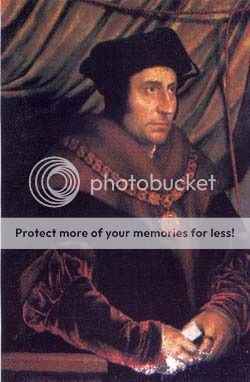 St. Thomas More was born at London in 1478. After a thorough grounding in religion and the classics, he entered Oxford to study law. Upon leaving the university he embarked on a legal career which took him to Parliament. In 1505, he married his beloved Jane Colt who bore him four children, and when she died at a young age, he married a widow, Alice Middleton, to be a mother for his young children. A wit and a reformer, this learned man numbered Bishops and scholars among his friends, and by 1516 wrote his world-famous book "Utopia". He attracted the attention of Henry VIII who appointed him to a succession of high posts and missions, and finally made him Lord Chancellor in 1529. However, he resigned in 1532, at the height of his career and reputation, when Henry persisted in holding his own opinions regarding marriage and the supremacy of the Pope. The rest of his life was spent in writing mostly in defense of the Church. In 1534, with his close friend, St. John Fisher, he refused to render allegiance to the King as the Head of the Church of England and was confined to the Tower. Fifteen months later, and nine days after St. John Fisher's execution, he was tried and convicted of treason. He told the court that he could not go against his conscience and wished his judges that "we may yet hereafter in heaven merrily all meet together to everlasting salvation." And on the scaffold, he told the crowd of spectators that he was dying as "the King's good servant-but God's first." He was beheaded on July 6, 1535. His feast day is June 22nd. Source: http://www.catholic.org/saints/saint.php?saint_id=324 Wiki: https://en.wikipedia.org/?title=Thomas_More |
|
|
Jun 22 2015, 04:18 PM
|
|
Senior Member
1,920 posts Joined: Jan 2009
|
Hi Khool, just curious... what's the background catholic uses word saints for some figures, e.g. saint peter, saint paul... while protestant use apostle peter, apostel paul ?
|
|
|
Jun 22 2015, 04:56 PM
|
|
Junior Member
61 posts Joined: Jan 2003
|
QUOTE(de1929 @ Jun 22 2015, 04:18 PM) Hi Khool, just curious... what's the background catholic uses word saints for some figures, e.g. saint peter, saint paul... while protestant use apostle peter, apostel paul ? Catholics believe that the Catholic Church has the 'keys to the kingdom' of heaven, and whoever is confirmed to be in heaven is considered a saint. It is a title. And the Church has a process to determine if someone is confirmed to be in heaven. Protestants do not typically hold this view, as they typically do not 'confirm' who is in heaven or not. And as such Protestants have a different understanding when it comes to the term saint, and prefer to refer to the apostles, simply as apostles. Which is why any church which has the word 'Saint' in its name is highly likely Catholic (or Anglican) in this country. |
|
|
Jun 22 2015, 04:58 PM
|
|
Senior Member
3,577 posts Joined: Apr 2006
|
QUOTE(de1929 @ Jun 22 2015, 04:18 PM) Hi Khool, just curious... what's the background catholic uses word saints for some figures, e.g. saint peter, saint paul... while protestant use apostle peter, apostel paul ? FYI, Protestants also use the word saint, e.g. St Mary's Anglican Cathedral in KL, St. Andrew's Presbyterian Church, St John's United Methodist Church, etc. I believe only the more rabid, anti-Catholic extremists are against these terms, perhaps thinking that these are Romish terms. LOL. |
|
|
Jun 22 2015, 07:39 PM
|
|
Senior Member
1,920 posts Joined: Jan 2009
|
ok thanks
next question about sunday service. Is is authorized to have a service not in sunday (e.g. midweek service / saturday) to replace sunday. I am not talking about individual, but a corporate decision (church level) replace sunday to other day. case study: because church rent building at certain place, and sunday is not available, only thursday. |
|
|
Jun 22 2015, 08:57 PM
Show posts by this member only | IPv6 | Post
#426
|
|
Junior Member
225 posts Joined: Mar 2008
|
QUOTE(david101 @ Jun 22 2015, 04:56 PM) Catholics believe that the Catholic Church has the 'keys to the kingdom' of heaven, and whoever is confirmed to be in heaven is considered a saint. It is a title. And the Church has a process to determine if someone is confirmed to be in heaven. Protestants do not typically hold this view, as they typically do not 'confirm' who is in heaven or not. And as such Protestants have a different understanding when it comes to the term saint, and prefer to refer to the apostles, simply as apostles. Which is why any church which has the word 'Saint' in its name is highly likely Catholic (or Anglican) in this country. Bro David's above explanation is good, just one more detail which requires slightly more explanation.He mentions that anyone who who has gone through holy sacramental rites of Baptism and Confirmation in the Catholic Church are considered saints, with a lower case 's'. All Catholics are called to live saintly lives that reflect to the rest of the world the love and sacrifices that God has made for us. Christ Himself has mentioned it, "By their fruits you shall know them.", (Matthew 7:16) The saints whom you use as examples like, Saints Peter, Paul, the rest of the apostles, Mary of Magdalene and some of our more contemporary saints like Jose Maria Escriva, Padre Pio and of course John Paul II, are considered 'Saints' with an upper case 'S'. They have been (officially) canonized by the Catholic Church in recognition of their extraordinary service to the Church in living, promoting and preaching the Word of the Living God to the world. This process of canonization can sometimes take a very long time, depending on the circumstances of each individual's lives. This post has been edited by khool: Jun 22 2015, 08:57 PM |
|
|
Jun 22 2015, 09:12 PM
Show posts by this member only | IPv6 | Post
#427
|
|
Junior Member
225 posts Joined: Mar 2008
|
QUOTE(de1929 @ Jun 22 2015, 07:39 PM) ok thanks The long and the short answer to this question is, no. A weekday Mass, what you Protestants will call as a service, cannot be used to replace Sunday Mass. No matter what, Sunday Mass MUST be celebrated, and it is the duty and obligation for all Catholics to participate in it (not just mere attendance) as Jesus Christ is present in His true form during the celebration.next question about sunday service. Is is authorized to have a service not in sunday (e.g. midweek service / saturday) to replace sunday. I am not talking about individual, but a corporate decision (church level) replace sunday to other day. case study: because church rent building at certain place, and sunday is not available, only thursday. This is because Christ rose from the dead on Easter Sunday. As such, we celebrate His resurrection on this day of the week, replacing Saturday as the most holy of days in the week. Christ is now and always the Lord of the Sabbath. During Mass, we celebrate His life, death and resurrection in the form of the sacrament of the Holy Eucharist, where Catholics, eat the flesh and drink the blood of our saviour in the transubstantiated form of unleavened bread and Eucharistic wine which has been consecrated by the priest. Should there be an issue with the premises being unavailable on Sunday, then I can say with great certainty that premises will not be considered for used of worship and celebration. No compromises there. One small addendum ... attending evening sunset Mass on a Saturday fulfills this obligation. This is in keeping with Jewish belief that the next day begins at sunset, and not at the stroke of midnight. This post has been edited by khool: Jun 22 2015, 09:17 PM |
|
|
Jun 22 2015, 09:48 PM
|
|
Senior Member
1,920 posts Joined: Jan 2009
|
oh the Holy Eucharist you did it every single sunday ? sunday mass service ?
|
|
|
Jun 22 2015, 11:37 PM
|
|
Senior Member
3,577 posts Joined: Apr 2006
|
QUOTE(de1929 @ Jun 22 2015, 09:48 PM) oh the Holy Eucharist you did it every single sunday ? sunday mass service ? In most parishes where there are resident priests, usually there will be Mass every single day, not just on Sunday. Participating in Holy Mass on Sundays and other designated Holy Days of Obligation (special feast days which may or may not fall on a Sunday - in Malaysia they are Christmas, Ascension, Assumption, All Saints) is a grave obligation for Catholics, unless one is unable to attend due to sickness, or long distance (general rule of thumb more than 45 miles and physically impossible to attend). If not, one needs to get dispensation from one's pastor. |
|
|
Jun 22 2015, 11:46 PM
|
|
Senior Member
3,577 posts Joined: Apr 2006
|
Speaking about St Thomas More, I'm reminded of one of my favourite movies, A Man for All Seaons, winner of Best Picture in 1966.
|
|
|
Jun 22 2015, 11:54 PM
Show posts by this member only | IPv6 | Post
#431
|
|
Junior Member
225 posts Joined: Mar 2008
|
QUOTE(yeeck @ Jun 22 2015, 11:46 PM) Speaking about St Thomas More, I'm reminded of one of my favourite movies, A Man for All Seaons, winner of Best Picture in 1966. I have that movie, Paul Schofield plays an excellent St. Thomas More ... |
|
|
Jun 23 2015, 12:02 AM
|
|
Senior Member
3,577 posts Joined: Apr 2006
|
QUOTE(khool @ Jun 22 2015, 11:54 PM) I have that movie, Paul Schofield plays an excellent St. Thomas More ... |
|
|
Jun 23 2015, 12:32 PM
|
|
Junior Member
225 posts Joined: Mar 2008
|
QUOTE(yeeck @ Jun 23 2015, 12:02 AM) This post has been edited by khool: Jun 23 2015, 12:58 PM |
|
|
Jun 23 2015, 01:36 PM
|
|
Senior Member
3,577 posts Joined: Apr 2006
|
QUOTE(khool @ Jun 23 2015, 12:32 PM) Thing is, was Henry VIII really that tyrannical? Hard to believe that, as he once almost joined the clergy. He was given the title "Defensor Fidei" by the Pope for writing against Luther. But all it took were his despair for a son and other women to bewitch him.From Wikipedia: "Defender of the Faith" has been one of the subsidiary titles of the English and later British monarchs since it was granted on 11 October, 1521[1] by Pope Leo X to King Henry VIII of England. His wife Catherine of Aragon was also a Defender of the Faith in her own right.[2] The title was conferred in recognition of Henry's book Assertio Septem Sacramentorum (Defence of the Seven Sacraments), which defended the sacramental nature of marriage and the supremacy of the Pope. This was also known as the "Henrician Affirmation" and was seen as an important opposition to the early stages of the Protestant Reformation, especially the ideas of Martin Luther. Following Henry's decision to break with Rome in 1530 and establish himself as head of the Church of England, the title was revoked by Pope Paul III (since Henry's act was regarded as an attack on "the Faith") and Henry was excommunicated. However, in 1544,[citation needed] the Parliament of England conferred the title "Defender of the Faith" on King Henry VIII and his successors, now the defenders of the Anglican faith, of which they (except the Catholic Mary I) remain the Supreme Governors (formally above the Archbishop of Canterbury as Primate). This post has been edited by yeeck: Jun 23 2015, 01:41 PM |
|
|
Jun 23 2015, 03:04 PM
|
|
Junior Member
225 posts Joined: Mar 2008
|
QUOTE(yeeck @ Jun 23 2015, 01:36 PM) He was given the title "Defensor Fidei" by the Pope for writing against Luther. But all it took were his despair for a son and other women to bewitch him. That part I know, but it is amazing how quick he turned on his adviser and friend.From Wikipedia: "Defender of the Faith" has been one of the subsidiary titles of the English and later British monarchs since it was granted on 11 October, 1521[1] by Pope Leo X to King Henry VIII of England. His wife Catherine of Aragon was also a Defender of the Faith in her own right.[2] The title was conferred in recognition of Henry's book Assertio Septem Sacramentorum (Defence of the Seven Sacraments), which defended the sacramental nature of marriage and the supremacy of the Pope. This was also known as the "Henrician Affirmation" and was seen as an important opposition to the early stages of the Protestant Reformation, especially the ideas of Martin Luther. Following Henry's decision to break with Rome in 1530 and establish himself as head of the Church of England, the title was revoked by Pope Paul III (since Henry's act was regarded as an attack on "the Faith") and Henry was excommunicated. However, in 1544,[citation needed] the Parliament of England conferred the title "Defender of the Faith" on King Henry VIII and his successors, now the defenders of the Anglican faith, of which they (except the Catholic Mary I) remain the Supreme Governors (formally above the Archbishop of Canterbury as Primate). |
|
|
Jun 24 2015, 04:29 PM
|
|
Junior Member
225 posts Joined: Mar 2008
|
QUOTE(yeeck @ Jun 15 2015, 06:20 PM) Yeah, it is indeed a special grace to be able to die fortified with this sacrament. Source: http://catholicism.about.com/od/beliefstea...c_Anointing.htmThe Sacrament of the Anointing of the Sick Service of the Sacrament of Holy Unction (Anointing of the Sick), during the Feast of the Dormition of Theotokos. The Holy Oil (Chrism) is blessed by the Holy Spirit, and is used for anointing the faithful for the healing of infirmities of the soul and body. Introduction: Traditionally referred to as Extreme Unction or Last Rites, the Sacrament of the Anointing of the Sick was previously most commonly administered to the dying, for the remission of sins and the provision of spiritual strength and health. In modern times, however, its use has been expanded to all who are gravely ill or are about to undergo a serious operation, and the Church stresses a secondary effect of the sacrament: to help a person recover his health. Like Confession and Holy Communion, to which it is closely linked, the Sacrament of the Anointing of the Sick can be repeated as often as is necessary. Biblical Roots: The modern celebration of the Sacrament of the Anointing of the Sick recalls the early Christian use, going back to biblical times. When Christ sent His disciples out to preach, "they cast out many devils, and anointed with oil many that were sick, and healed them" (Mark 6:13). James 5:14-15 ties physical healing to the forgiveness of sins: Is any man sick among you? Let him bring in the priests of the church, and let them pray over him, anointing him with oil in the name of the Lord. And the prayer of faith shall save the sick man: and the Lord shall raise him up: and if he be in sins, they shall be forgiven him. Who May Receive the Sacrament?: Following this biblical understanding, the Catechism of the Catholic Church (para. 1514) notes that: The Anointing of the Sick "is not a sacrament for those only who are at the point of death. Hence, as soon as anyone of the faithful begins to be in danger of death from sickness or old age, the fitting time for him to receive this sacrament has certainly already arrived." When in doubt, priests should err on the side of caution and provide the sacrament to the faithful who request it. The Form of the Sacrament: The essential rite of the sacrament consists in the priest (or priests, in the case of the Eastern Churches) laying hands on the sick, anointing him with blessed oil (usually olive oil blessed by a bishop, but in an emergency, any vegetable oil will suffice), and praying "Through this holy anointing may the Lord in his love and mercy help you with the grace of the Holy Spirit. May the Lord who frees you from sin save you and raise you up." When circumstances permit, the Church recommends that the sacrament take place during Mass, or at least that it be preceded by Confession and followed by Holy Communion. The Minister of the Sacrament: Only priests (including bishops) can administer the Sacrament of the Anointing of the Sick, since, when the sacrament was instituted during Christ's sending out of His disciples, it was confined to the men who would become the original bishops of the Church. The Effects of the Sacrament: Received in faith and in a state of grace, the Sacrament of the Anointing of the Sick provides the recipient with a number of graces, including the fortitude to resist temptation in the face of death, when he is weakest; a union with the Passion of Christ, which makes his suffering holy; and the grace to prepare for death, so that he may meet God in hope rather than in fear. If the recipient was not able to receive the Sacrament of Confession, Anointing also provides forgiveness of sins. And, if it will aid in the salvation of his soul, Anointing may restore the recipient's health. |
|
|
Jun 24 2015, 04:33 PM
|
|
Junior Member
225 posts Joined: Mar 2008
|
Source: http://catholicism.about.com/od/thesacrame...-Confession.htm
Seven Steps to Making a Better Confession Or, How I Stopped Worrying and Learned to Love the Sacrament (of Reconciliation) Just as daily Communion should be the ideal for Catholics, frequent reception of the Sacrament of Confession is essential in our struggle against sin and our growth in holiness. For too many Catholics, however, Confession is something we do as infrequently as possible, and after the sacrament is finished, we may not feel as we do when we have received the Sacrament of Holy Communion worthily. That's not because of a flaw in the sacrament, but because of a flaw in our approach to Confession. Approached properly, with some basic preparation, we can find ourselves as eager to partake of the Sacrament of Confession as we are to receive the Eucharist. Here are seven steps that will help you make a better Confession, and fully embrace the graces offered by this sacrament. 1. Go to Confession More Often If your experience of Confession has been frustrating or unfulfilling, this may seem like odd advice. It's like the opposite of that old joke: "Doctor, it hurts when I poke myself here. What should I do?" "Quit poking yourself there." On the other hand, as we've all heard, "practice makes perfect," and you're never going to make a better Confession unless you're actually going to Confession. The reasons we often avoid Confession are precisely the reasons why we should be going more often: I can't remember all of my sins; I get nervous when I get in the confessional; I'm afraid I'm going to forget something; I'm not sure what I should or shouldn't confess. The Church requires us to go to Confession once per year, in preparation for doing our Easter Duty; and we must, of course, go to Confession before receiving Communion whenever we're conscious of having committed a grave or mortal sin. But if we want to treat Confession as an instrument of spiritual growth, we need to quit viewing it simply in a negative light—something we do only to cleanse ourselves. Monthly Confession, even if we're only aware of minor or venial sins, can be a great source of graces and can help us to focus our efforts on neglected areas of our spiritual life. And if we're trying to get over a fear of Confession, or struggling with a particular sin (mortal or venial), going to Confession weekly for a while can help greatly. In fact, during the Church's penitential seasons of Lent and Advent, when parishes often offer additional times for Confession, weekly Confession can be a great aid in our spiritual preparation for Easter and Christmas. 2. Take Your Time Too often I've approached the Sacrament of Confession with all of the preparation I might make if I were ordering fast food from a drive-through. In fact, since I get confused and frustrated by the menus at most fast-food joints, I usually make sure that I know well in advance what I want to order. But Confession? I shudder to think of the number of times that I've rushed to make it to the church mere minutes before the time for Confession has ended, uttered a quick prayer to the Holy Spirit to help me recall all of my sins, and then dived into the confessional before even figuring out how long it had been since my last Confession. That's a recipe for leaving the confessional and then remembering a forgotten sin, or even forgetting what penance the priest prescribed, because you were too focused on getting the Confession done, and not focused on what you were actually doing. If you want to make a better Confession, take the time to do it right. Begin your preparation at home (we'll talk about that below), and then arrive early enough so that you won't be rushed. Spend a little time in prayer before the Blessed Sacrament before turning your thoughts to what you will say in Confession. Take your time once you get in the confessional as well. There's no need to rush; when you're waiting in line for Confession, it may seem like the people in front of you are taking a long time, but usually they aren't, and neither will you. If you try to rush, you're more likely to forget things you intended to say, and then you're more likely to be unhappy later when you remember them. When your Confession is over, don't be in a hurry to leave the church. If the priest gave you prayers for your penance, say them there, in the presence of the Blessed Sacrament. If he asked you to think about your actions or to meditate on a particular passage of Scripture, do that then and there. Not only are you much more likely to complete your penance—an important step in the reception of the sacrament—but you'll also be more likely to see the connection between the contrition you expressed in the confessional, the absolution provided by the priest, and the penance you performed. 3. Make a Thorough Examination of Conscience As I mentioned above, your preparation for Confession should be begin at home. You'll need to recall (at least roughly) when your last Confession was, as well as the sins you've committed since then. For most of us most of the time, that recollection of sins probably looks a lot like this: "All right—what did I confess last time, and how many times have I done those things since my last Confession?" There's nothing wrong with that, as far as it goes. In fact, it's a pretty good starting point. But if we want to embrace the Sacrament of Confession fully, then we need to break out of old habits and look at our lives in a critical light. And that's where a thorough examination of conscience comes in. The venerable Baltimore Catechism, in its lesson on the Sacrament of Penance, provides a good, short guide to making an examination of conscience. Reflecting on each of the following, think of the ways in which you have either done what you shouldn't have done, or have failed to do what you should do: The Ten Commandments The Precepts of the Church The Seven Deadly Sins The Duties of Your State in Life The first three are self-explanatory; the last one requires thinking about those aspects of your life that set you apart from everyone else. For instance, in my case, I have certain duties that arise from the fact that I am a son, a husband, a father, a magazine editor, and a writer on matters Catholic. How well have I performed those duties? Are there things I should have done for my parents, wife, or children that I haven't done? Are there things that I shouldn't have done to them that I did do? Have I been diligent in my work and honest in my dealings with my superiors and subordinates? Have I treated with dignity and charity those with whom I've come into contact because of my state in life? A thorough examination of conscience may uncover habits of sin that have become so ingrained that we hardly ever notice or think about them. Perhaps we put undue burdens on our spouse or children, or spend our coffee breaks or lunch hours gossiping with our fellow employees about our boss. Maybe we don't call our parents as often as we should, or encourage our children to pray. These things arise from our particular state in life, and while they are common to many people, the only way we can become aware of them in our own life is to spend some time in reflection on our own particular circumstances. 4. Don't Hold Back All of the reasons that I mentioned why we avoid going to Confession stem from some sort of fear. While going more frequently may help us overcome some of those fears, other fears may rear their ugly head while we're in the confessional. The worst, because it may lead us to make an incomplete Confession, is a fear of what the priest may think when we confess our sins. This, however, is probably the most irrational fear we could have, because unless the priest hearing our Confession is brand-spanking new, there's a very good chance that any sin we could mention is one he's heard many, many times before. And even if he hasn't heard it in a confessional, he's been prepared through his seminary training to handle pretty much anything you could throw at him. Go ahead; try to shock him. It's not going to happen. And that's a good thing, because in order for your Confession to be complete and your absolution to be valid, you need to confess all mortal sins by kind (what you did) and number (how often you did it). You should do that with venial sins as well, but if you forget a venial sin or three, you'll still be absolved of them at the end of Confession. But if you hold back on confessing a grave sin, you're only hurting yourself. God knows what you did, and the priest wants nothing more than to heal the breach between you and God. 5. Go to Your Own Priest I know; I know: You always go to the next parish over, and you choose the visiting priest, if there's one available. For many of us, there's nothing more terrifying than the thought of going to Confession with our own priest. Sure, we always make a private Confession, rather than face-to-face; but if we can recognize Father's voice, he has to be able to recognize ours, too, right? I'm not going to kid you; unless you belong to a very large parish and rarely have any interaction with your pastor, he probably does. But remember what I wrote above: Nothing you can say is going to shock him. And even though this shouldn't be your concern, he's not going to think worse of you because of anything you say in Confession. Think about it: Rather than staying away from the sacrament, you've come to him and confessed your sins. You've asked for God's forgiveness, and your pastor, acting in the person of Christ, has absolved you from those sins. But now you're worried that he is going to deny you what God has granted to you? If that were actually the case, your priest would have bigger problems than you. Instead of avoiding your own priest, use Confession with him to your spiritual advantage. If you're embarrassed to confess certain sins to him, you'll have added incentive to avoid those sins. While ultimately we want to get to the point where we avoid sin because we love God, embarrassment over sin can be the beginning of true contrition and a firm resolve to amend your life, whereas the anonymous Confession at the next parish over, while valid and effective, may make it easier to fall back into the same sin. 6. Ask for Advice If part of the reason you find Confession frustrating or unsatisfying is that you find yourself confessing the same sins over and over again, don't hesitate to ask your confessor for advice. Sometimes, he'll offer it without you asking, especially if the sins you've confessed are ones that are often habitual. But if he doesn't, there's nothing wrong with saying, "Father, I've been struggling with [your particular sin]. What can I do to avoid it?" And when he responds, listen carefully, and don't dismiss his advice out of hand. You may think, for instance, that your prayer life is just fine, so if your confessor suggests that you spend more time in prayer, you might be inclined to regard his advice as well meaning but useless. Don't think that way. Whatever he suggests, do it. The very act of trying to follow your confessor's advice can be a cooperation with grace. You may be surprised at the results. 7. Amend Your Life The two most popular forms of the Act of Contrition end with these lines: I firmly resolve, with the help of Thy grace, to confess my sins, to do penance, and to amend my life. And: I firmly resolve, with the help of Thy grace, to sin no more, and to avoid the near occasion of sin. Reciting the Act of Contrition is the last thing we do in the confessional before receiving absolution from the priest. And yet those final words too often vanish from our minds as soon as we step back through the confessional door. But an essential part of confession is sincere contrition, and that includes not only being sorry for the sins that we have committed in the past, but resolving to do whatever we can to avoid committing those and other sins in the future. When we treat the Sacrament of Confession as merely medicinal—healing the damage we've done—and not as a source of grace and strength to keep us on the right path going forward, we're more likely to find ourselves back in the confessional, reciting those same sins once again. A better Confession doesn't end when we leave the confessional; in a sense, a new phase of Confession begins then. Being aware of the grace we have received in the sacrament, and trying our best to cooperate with that grace by avoiding not only the sins that we confessed but all sins, and indeed even occasions of sin, is the best way to ensure that we've made a good Confession. Final Thoughts While all of these steps can help you make a better Confession, you should not let any of them become excuses for not taking advantage of the sacrament. If you know that you need to go to Confession but you don't have the time to prepare as well as you should or to make a thorough examination of conscience, or if your priest isn't available and you have to go to the next parish over, don't wait. Get to Confession, and resolve to make a better Confession next time. While the Sacrament of Confession, properly understood, is about more than healing the damage of the past, sometimes we have to staunch the wound before we can move on. Never let your desire for making a better Confession keep you from making the one you need to make today. This post has been edited by khool: Jun 24 2015, 04:35 PM |
|
|
Jun 24 2015, 11:20 PM
|
|
Senior Member
3,577 posts Joined: Apr 2006
|
 Often we question God, we doubt, we are discouraged. Saint Therese beautifully tells us that we should not have any other worry but to bloom in the garden of God at the spot where He planted us and leave the care of everything to the Gardener. “I often asked myself why God had preferences”, Saint Therese writes, “why all souls did not receive an equal measure of grace. I was filled with wonder when I saw extraordinary favours showered on great sinners like St. Paul, St. Augustine, St. Mary Magdalen, and many others, whom He forced, so to speak, to receive His grace. In reading the lives of the Saints I was surprised to see that there were certain privileged souls, whom Our Lord favoured from the cradle to the grave, allowing no obstacle in their path which might keep them from mounting towards Him, permitting no sin to soil the spotless brightness of their baptismal robe. And again it puzzled me why so many poor savages should die without having even heard the name of God. Our Lord has deigned to explain this mystery to me. He showed me the book of nature, and I understood that every flower created by Him is beautiful, that the brilliance of the rose and the whiteness of the lily do not lessen the perfume of the violet or the sweet simplicity of the daisy. I understood that if all the lowly flowers wished to be roses, nature would lose its springtide beauty, and the fields would no longer be enamelled with lovely hues. And so it is in the world of souls, Our Lord’s living garden. He has been pleased to create great Saints who may be compared to the lily and the rose, but He has also created lesser ones, who must be content to be daisies or simple violets flowering at His Feet, and whose mission it is to gladden His Divine Eyes when He deigns to look down on them. And the more gladly they do His Will the greater is their perfection.” |
|
|
Jun 26 2015, 02:03 AM
|
|
Senior Member
3,577 posts Joined: Apr 2006
|
10 Ways to Fight Sins Against Purity
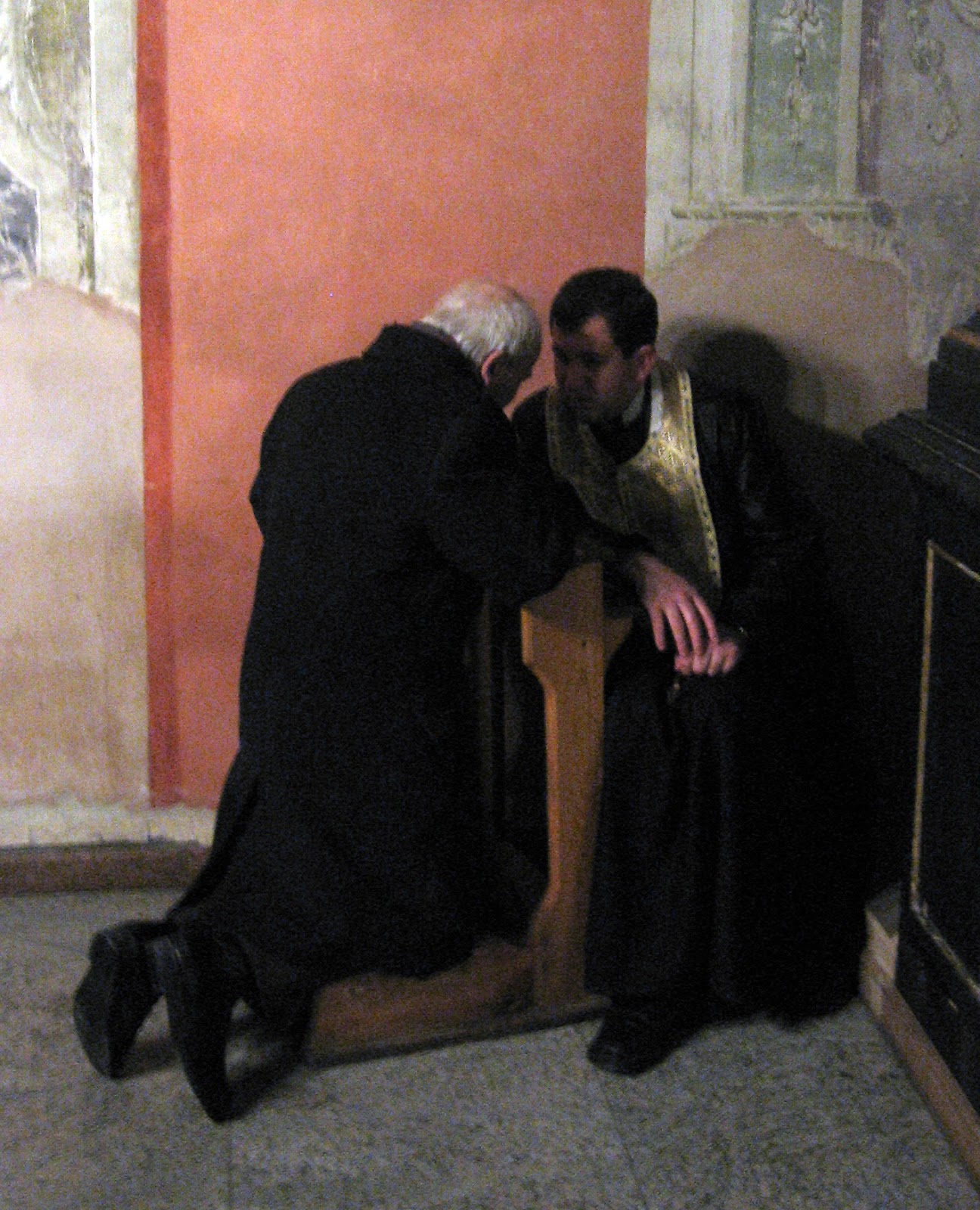 1. Constant prayer. Hence the admonition of the wise King; As I knew that I could not otherwise be continent, except God gave it, I went to the Lord and besought him. (Wisd. 8:21) 2. Mortification of the flesh by fasting and abstinence. Jesus says these impure spirits can in no other way be cast out but by prayer and fasting. (Matt. 17:20) 3. The frequent meditation on the four last things, and on the bitter sufferings of our Lord; for there is, says St. Augustine, no means more powerful and effective against the heat of lust than reflection on the ignominious death of the Redeemer. 4. The quiet consideration of the temporal and eternal evils which follow from this vice, as already described. 5. The love and veneration of the Blessed Virgin who is the mother of beautiful love, the refuge of all sinners, of whom St. Bernard says: "No one has ever invoked her in his necessity without being heard." 6. The careful mortification of the eyes. The pious Job made a covenant with his eyes, that. he would not so much as look upon a virgin. (Job 31:1) 7. The avoidance of evil occasions, especially intercourse with persons of the other sex. "Remember," says St. Jerome, "that a woman drove out the inhabitants of paradise, and that you are not holier than David, stronger than Samson, wiser than Solomon, who all fell by evil intercourse." 8. The avoidance of idleness: for idleness, says the proverb, is the beginning of all evil. 9. The immediate banishing of all bad thoughts by often pronouncing the names of Jesus and Mary, which, as St. Alphonsus Ligouri says, have the special power of driving away impure thoughts. 10. The frequent use of the holy Sacraments of Penance and of the Altar. This last remedy in particular is a certain cure if we make known to our confessor our weaknesses, and use the remedies he prescribes. The Scripture says that frequent Communion is the seed from which virgins spring, and the table which God has prepared against all temptations that annoy us. Source: Fr. Goffine's The Church's Year |
|
|
Jun 27 2015, 02:42 PM
Show posts by this member only | IPv6 | Post
#440
|
|
Junior Member
225 posts Joined: Mar 2008
|
What Does the Legalization of Gay Marriage Mean for the Catholic Church
On June 27, 2015 five out nine Supreme Court Justices redefined the definition of marriage for the entire country. This video discusses the areas in which this decision affects the Catholic Church. This post has been edited by khool: Jun 27 2015, 02:43 PM |
|
|
Jun 27 2015, 02:48 PM
Show posts by this member only | IPv6 | Post
#441
|
|
Junior Member
225 posts Joined: Mar 2008
|
USCCB Statement on Marriage Ruling
Source: http://www.marriageuniqueforareason.org/20...arriage-ruling/  Today Archbishop Kurtz issued a statement about the Supreme Court’s marriage ruling, calling it a “tragic error that harms the common good and most vulnerable among us.” Read the full statement here. Archbishop Kurtz compared the decision to Roe v. Wade and how it doesn’t change the truth- which is “unchanged and unchangeable.” He continues on to say that, “Neither decision is rooted in the truth, and as a result, both will eventually fail. Today the Court is wrong again. It is profoundly immoral and unjust for the government to declare that two people of the same sex can constitute a marriage.” It is a deep truth that the human being is an embodied soul, male and female. The archbishop writes, “The unique meaning of marriage as the union of one man and one woman is inscribed in our bodies as male and female” and notes that this is part of what Pope Francis has described as “integral ecology.” “The law has a duty to support every child’s basic right to be raised, where possible, by his or her married mother and father in a stable home.” The bishops follow Jesus Christ who taught these truths unambiguously, and the president of the USCCB encouraged Catholics to keep speaking for the truth and moving forward with the theological virtues of faith, hope and love. Archbishop Kurtz ended by saying, “I ask all in positions of power and authority to respect the God-given freedom to seek, live by, and bear witness to the truth.” |
|
|
Jun 27 2015, 11:40 PM
Show posts by this member only | IPv6 | Post
#442
|
|
Junior Member
225 posts Joined: Mar 2008
|
Thirteenth Sunday in Ordinary Time
Lectionary: 98 Reading 1 (Wis 1:13-15; 2:23-24) God did not make death, nor does he rejoice in the destruction of the living. For he fashioned all things that they might have being; and the creatures of the world are wholesome, and there is not a destructive drug among them nor any domain of the netherworld on earth, for justice is undying. For God formed man to be imperishable; the image of his own nature he made him. But by the envy of the devil, death entered the world, and they who belong to his company experience it. Responsorial Psalm (Ps 30:2, 4, 5-6, 11, 12, 13) R. (2a) I will praise you, Lord, for you have rescued me. I will extol you, O LORD, for you drew me clear and did not let my enemies rejoice over me. O LORD, you brought me up from the netherworld; you preserved me from among those going down into the pit. R. I will praise you, Lord, for you have rescued me. Sing praise to the LORD, you his faithful ones, and give thanks to his holy name. For his anger lasts but a moment; a lifetime, his good will. At nightfall, weeping enters in, but with the dawn, rejoicing. R. I will praise you, Lord, for you have rescued me. Hear, O LORD, and have pity on me; O LORD, be my helper. You changed my mourning into dancing; O LORD, my God, forever will I give you thanks. R. I will praise you, Lord, for you have rescued me. Reading 2 (2 Cor 8:7, 9, 13-15) Brothers and sisters: As you excel in every respect, in faith, discourse, knowledge, all earnestness, and in the love we have for you, may you excel in this gracious act also. For you know the gracious act of our Lord Jesus Christ, that though he was rich, for your sake he became poor, so that by his poverty you might become rich. Not that others should have relief while you are burdened, but that as a matter of equality your abundance at the present time should supply their needs, so that their abundance may also supply your needs, that there may be equality. As it is written: Whoever had much did not have more, and whoever had little did not have less. Alleluia Cf. (2 Tm 1:10) R. Alleluia, alleluia. Our Savior Jesus Christ destroyed death and brought life to light through the Gospel. R. Alleluia, alleluia. Gospel (Mk 5:21-43) When Jesus had crossed again in the boat to the other side, a large crowd gathered around him, and he stayed close to the sea. One of the synagogue officials, named Jairus, came forward. Seeing him he fell at his feet and pleaded earnestly with him, saying, “My daughter is at the point of death. Please, come lay your hands on her that she may get well and live.” He went off with him, and a large crowd followed him and pressed upon him. There was a woman afflicted with hemorrhages for twelve years. She had suffered greatly at the hands of many doctors and had spent all that she had. Yet she was not helped but only grew worse. She had heard about Jesus and came up behind him in the crowd and touched his cloak. She said, “If I but touch his clothes, I shall be cured.” Immediately her flow of blood dried up. She felt in her body that she was healed of her affliction. Jesus, aware at once that power had gone out from him, turned around in the crowd and asked, “Who has touched my clothes?” But his disciples said to Jesus, “You see how the crowd is pressing upon you, and yet you ask, ‘Who touched me?’” And he looked around to see who had done it. The woman, realizing what had happened to her, approached in fear and trembling. She fell down before Jesus and told him the whole truth. He said to her, “Daughter, your faith has saved you. Go in peace and be cured of your affliction.” While he was still speaking, people from the synagogue official’s house arrived and said, “Your daughter has died; why trouble the teacher any longer?” Disregarding the message that was reported, Jesus said to the synagogue official, “Do not be afraid; just have faith.” He did not allow anyone to accompany him inside except Peter, James, and John, the brother of James. When they arrived at the house of the synagogue official, he caught sight of a commotion, people weeping and wailing loudly. So he went in and said to them, “Why this commotion and weeping? The child is not dead but asleep.” And they ridiculed him. Then he put them all out. He took along the child’s father and mother and those who were with him and entered the room where the child was. He took the child by the hand and said to her, “Talitha koum,” which means, “Little girl, I say to you, arise!” The girl, a child of twelve, arose immediately and walked around. At that they were utterly astounded. He gave strict orders that no one should know this and said that she should be given something to eat. Or (Mk 5:21-24, 35b-43) When Jesus had crossed again in the boat to the other side, a large crowd gathered around him, and he stayed close to the sea. One of the synagogue officials, named Jairus, came forward. Seeing him he fell at his feet and pleaded earnestly with him, saying, “My daughter is at the point of death. Please, come lay your hands on her that she may get well and live.” He went off with him, and a large crowd followed him and pressed upon him. While he was still speaking, people from the synagogue official’s house arrived and said, “Your daughter has died; why trouble the teacher any longer?” Disregarding the message that was reported, Jesus said to the synagogue official, “Do not be afraid; just have faith.” He did not allow anyone to accompany him inside except Peter, James, and John, the brother of James. When they arrived at the house of the synagogue official, he caught sight of a commotion, people weeping and wailing loudly. So he went in and said to them, “Why this commotion and weeping? The child is not dead but asleep.” And they ridiculed him. Then he put them all out. He took along the child’s father and mother and those who were with him and entered the room where the child was. He took the child by the hand and said to her, “Talitha koum,” which means, “Little girl, I say to you, arise!” The girl, a child of twelve, arose immediately and walked around. At that they were utterly astounded. He gave strict orders that no one should know this and said that she should be given something to eat. Have a Blessed Sunday All! |
|
|
Jun 28 2015, 12:24 AM
|
|
Senior Member
3,577 posts Joined: Apr 2006
|
QUOTE(khool @ Jun 27 2015, 02:42 PM) What Does the Legalization of Gay Marriage Mean for the Catholic Church The sad thing is 6 out of the 9 judges are Catholics...well..nominally.On June 27, 2015 five out nine Supreme Court Justices redefined the definition of marriage for the entire country. This video discusses the areas in which this decision affects the Catholic Church. |
|
|
Jun 28 2015, 01:17 AM
|
|
Senior Member
3,577 posts Joined: Apr 2006
|
Pride is the excessive love of one's own excellence. It is ordinarily accounted one of the seven capital sins. St. Thomas, however, endorsing the appreciation of St. Gregory, considers it the queen of all vices, and puts vainglory in its place as one of the deadly sins. In giving it this pre-eminence he takes it in a most formal and complete signification. He understands it to be that frame of mind in which a man, through the love of his own worth, aims to withdraw himself from subjection to Almighty God, and sets at naught the commands of superiors. It is a species of contempt of God and of those who bear his commission. Regarded in this way, it is of course mortal sin of a most heinous sort. Indeed St. Thomas rates it in this sense as one of the blackest of sins. By it the creature refuses to stay within his essential orbit; he turns his back upon God, not through weakness or ignorance, but solely because in his self-exaltation he is minded not to submit. His attitude has something Satanic in it, and is probably not often verified in human beings. - Catholic Encyclopedia
|
|
|
Jun 28 2015, 08:04 AM
Show posts by this member only | IPv6 | Post
#445
|
|
Junior Member
225 posts Joined: Mar 2008
|
QUOTE(yeeck @ Jun 28 2015, 12:24 AM) The sad thing is 6 out of the 9 judges are Catholics...well..nominally. This should come as no surprise. After all, Nancy Pelosi and Joe Biden are also Catholics, and they both unreservedly support abortion, and same sex marriage.Technically speaking, both have already excommunicated themselves. All it needs for the Church in US is to have a very strong and confident USCCB to officially make the announcement. For the most part, IMO, they are following the orders of their higher ups. This is the reason, I personally believe that Catholics should not go into politics, unless one has very firm grounding in their faith ... lest they end up as servants to Mammon instead. This post has been edited by khool: Jun 28 2015, 08:06 AM |
|
|
Jun 28 2015, 08:14 AM
|
|
Senior Member
1,920 posts Joined: Jan 2009
|
QUOTE(khool @ Jun 28 2015, 08:04 AM) This should come as no surprise. After all, Nancy Pelosi and Joe Biden are also Catholics, and they both unreservedly support abortion, and same sex marriage. khool, i think catholics has to go to politics, because number talks maaa... Technically speaking, both have already excommunicated themselves. All it needs for the Church in US is to have a very strong and confident USCCB to officially make the announcement. For the most part, IMO, they are following the orders of their higher ups. This is the reason, I personally believe that Catholics should not go into politics, unless one has very firm grounding in their faith ... lest they end up as servants to Mammon instead. ... more catholic reps can vote more catholic values imo... 1 catholic or 2 like those judges sure cannot fight with a lot of pagans... how about 99999999999999999999999 catholics ? |
|
|
Jun 28 2015, 09:02 AM
Show posts by this member only | IPv6 | Post
#447
|
|
Junior Member
225 posts Joined: Mar 2008
|
SINCE YOU ASKED ..? (Q.210) Father, explain how Catholics read and interpret the Bible?
|
|
|
Jun 28 2015, 09:16 AM
|
|
Junior Member
225 posts Joined: Mar 2008
|
QUOTE(de1929 @ Jun 28 2015, 08:14 AM) khool, i think catholics has to go to politics, because number talks maaa... Good morning de1929, and a blessed Sunday to you.... more catholic reps can vote more catholic values imo... 1 catholic or 2 like those judges sure cannot fight with a lot of pagans... how about 99999999999999999999999 catholics ?Somehow, I knew you might chime in on this. The reason I present my opinion in this matter, i.e. vote in more Catholic values, is because Catholics are not called to force our beliefs on others. We are asked to present our faith and beliefs of the Church to the rest of the world, and let the Holy Spirit do His work, that is all. The only reason the Church puts up defence with this whole LGBT marriage is due to the fact that the Church knows and recognizes that sooner or later, the issue will come knocking at her door in USA, like how it happened Ireland. Better to make take a stand earlier, than to only make one at the eleventh hour. The Church does it because she knows she can take the blows and the criticisms. The Catholic Church does not focus on the temporal, this world, this life but on the promises made to her by Christ before He ascended into heaven. In order to be worthy of His promises, we need to uphold His values. Again, please take note, I said uphold not force. These values are to be upheld by the Church, and she Herself has no authority to change these values and laws, which were given by God Himself. This is why the Church will not accept any revision or redefinition of both abortion and marriage. To God, all life is sacred and good, because He has declared it so as mentioned in Genesis chapter 1. Same goes for marriage, which is considered as a Holy Sacrament, "Therefore what God has joined together, let no one separate.’" (Mark 10:9 NRSV CE) This is not a numbers game, this is our faith and our belief in the God the Father; Jesus Christ His Son, the Living Word of God; and the Holy Spirit, the Lord Giver of Life. Public opinion should matter little, or none at all. And that is why my personal opinion be that Catholics should not involve themselves in politics unless they are properly grounded in their faith first. This post has been edited by khool: Jun 28 2015, 09:23 AM |
|
|
Jun 28 2015, 04:56 PM
|
|
Senior Member
1,920 posts Joined: Jan 2009
|
QUOTE(khool @ Jun 28 2015, 09:16 AM) Good morning de1929, and a blessed Sunday to you. what do you mean "force our belief" ? are you talking receiving JESUS as savior n GOD ? or something else ?Somehow, I knew you might chime in on this. The reason I present my opinion in this matter, i.e. vote in more Catholic values, is because Catholics are not called to force our beliefs on others. We are asked to present our faith and beliefs of the Church to the rest of the world, and let the Holy Spirit do His work, that is all. The only reason the Church puts up defence with this whole LGBT marriage is due to the fact that the Church knows and recognizes that sooner or later, the issue will come knocking at her door in USA, like how it happened Ireland. Better to make take a stand earlier, than to only make one at the eleventh hour. The Church does it because she knows she can take the blows and the criticisms. The Catholic Church does not focus on the temporal, this world, this life but on the promises made to her by Christ before He ascended into heaven. In order to be worthy of His promises, we need to uphold His values. Again, please take note, I said uphold not force. These values are to be upheld by the Church, and she Herself has no authority to change these values and laws, which were given by God Himself. This is why the Church will not accept any revision or redefinition of both abortion and marriage. To God, all life is sacred and good, because He has declared it so as mentioned in Genesis chapter 1. Same goes for marriage, which is considered as a Holy Sacrament, "Therefore what God has joined together, let no one separate.’" (Mark 10:9 NRSV CE) This is not a numbers game, this is our faith and our belief in the God the Father; Jesus Christ His Son, the Living Word of God; and the Holy Spirit, the Lord Giver of Life. Public opinion should matter little, or none at all. And that is why my personal opinion be that Catholics should not involve themselves in politics unless they are properly grounded in their faith first. Church puts up defense ? by putting catholic believer in politics is an acceptable maneuver or not ? maneuver to defense the holy sacrament i mean. Up to a point, a church is consist of catholic believer imo... so to defense the church, is to defense catholic believer values... unless you have other opinion... about grounded in their faith first... not enough holy people in this earth lah... imo e.g. don't have car, motorcycle pon boleh hehehe... still better than no catholic at all... my mentor told me it takes a generation to build a high quality christian (or catholic)... 1 generation is 50 year lah brader... while waiting for 50 years, i think better put any catholic instead of vacuum 100% just discussion lar... don't get offended This post has been edited by de1929: Jun 28 2015, 05:08 PM |
|
|
Jun 28 2015, 08:40 PM
|
|
Senior Member
3,577 posts Joined: Apr 2006
|
QUOTE(khool @ Jun 28 2015, 08:04 AM) This should come as no surprise. After all, Nancy Pelosi and Joe Biden are also Catholics, and they both unreservedly support abortion, and same sex marriage. You can say that again. Even many bishops are spineless.Technically speaking, both have already excommunicated themselves. All it needs for the Church in US is to have a very strong and confident USCCB to officially make the announcement. For the most part, IMO, they are following the orders of their higher ups. This is the reason, I personally believe that Catholics should not go into politics, unless one has very firm grounding in their faith ... lest they end up as servants to Mammon instead. |
|
|
Jun 28 2015, 11:11 PM
Show posts by this member only | IPv6 | Post
#451
|
|
Junior Member
225 posts Joined: Mar 2008
|
QUOTE(de1929 @ Jun 28 2015, 04:56 PM) what do you mean "force our belief" ? are you talking receiving JESUS as savior n GOD ? or something else ? When i say 'force our belief', it means that if someone asks question is asked about our belief, the most we do is answer the question and stop right there. if the person is still interested then we will usually point the person to the nearest parish for proper lessons. that's all. Church puts up defense ? by putting catholic believer in politics is an acceptable maneuver or not ? maneuver to defense the holy sacrament i mean. Up to a point, a church is consist of catholic believer imo... so to defense the church, is to defense catholic believer values... unless you have other opinion... about grounded in their faith first... not enough holy people in this earth lah... imo e.g. don't have car, motorcycle pon boleh hehehe... still better than no catholic at all... my mentor told me it takes a generation to build a high quality christian (or catholic)... 1 generation is 50 year lah brader... while waiting for 50 years, i think better put any catholic instead of vacuum 100% just discussion lar... don't get offended To put this in perspective, in the issue of same sex marriage, in contrary to the MSM hype, the church has been only explaining her stand to all why she does not support or perform gay marriages. She also gives the reasoning and back ground for such a stand, nothing more. There is no condemnation from Church clergy, although some more devout Catholics do go over the edge, but then again, they are only human and are passionate about their beliefs. One cannot fault them for that. To defend the Church is to defend the Body of Christ, Christ is the head and the Church is His body. As Catholics, should there be any differences in opinion, again we will present our case and eave it at that. Really, we cannot do anything more, the rest is up to the Holy Spirit. Being grounded in faith is surprising not as hard as it sounds, keep a regular prayer schedule (if possible) and read the daily Bible verses of the day, make an effort to attend as many classes in bible and theological studies, ask questions, try to live life as a God would have you live, i.e. in the sacraments and most importantly always attend Mass and partake in Holy Communion ever Sunday. The last one is the best I notice, the Lord gave up His life for you, I can certainly spare an hour or two to celebrate His sacrifice with Him. Personally, I am still learning and growing as a Catholic, and I wish I could find more time to attend more classes. It is a joy to learn about our God, every time I go through the verses, something new always pops up. No need to worry about offending anyone here, the Catholic Church is a 2000 year old institution, I think she is able to field a couple of questions here and there. God Bless! And the Lord be with you! |
|
|
Jun 28 2015, 11:15 PM
Show posts by this member only | IPv6 | Post
#452
|
|
Junior Member
225 posts Joined: Mar 2008
|
QUOTE(yeeck @ Jun 28 2015, 08:40 PM) You can say that again. Even many bishops are spineless. Hahahaha! You referring to Dolan? Or Burke? or others? The Lord is truly a cosmic prankster, he stuffs the clergy with a myriad of characters. Makes for a more lively congregation I say. I would much prefer this than a cookie cutter collection of Cardinals. One needs for his faith to be called into question from time to time, else one grows complacent; read 'lukewarm Catholics', and you know what the Lord does with lukewarm Catholics ... |
|
|
Jun 28 2015, 11:59 PM
|
|
Senior Member
3,577 posts Joined: Apr 2006
|
QUOTE(khool @ Jun 28 2015, 11:11 PM) When i say 'force our belief', it means that if someone asks question is asked about our belief, the most we do is answer the question and stop right there. if the person is still interested then we will usually point the person to the nearest parish for proper lessons. that's all. I think something need to be clarified here lest it is misunderstood. I am referring to "There is no condemnation from Church clergy". The Church is duty-bound to condemn sin but offers all possible remedies for the sinner to repent and return to the Lord, i.e. through the Sacraments. Homosexual acts are definitely to be condemned, just like any sin should be, yes..even sins committed by heterosexuals (fornication, adultery, etc...)To put this in perspective, in the issue of same sex marriage, in contrary to the MSM hype, the church has been only explaining her stand to all why she does not support or perform gay marriages. She also gives the reasoning and back ground for such a stand, nothing more. There is no condemnation from Church clergy, although some more devout Catholics do go over the edge, but then again, they are only human and are passionate about their beliefs. One cannot fault them for that. To defend the Church is to defend the Body of Christ, Christ is the head and the Church is His body. As Catholics, should there be any differences in opinion, again we will present our case and eave it at that. Really, we cannot do anything more, the rest is up to the Holy Spirit. Being grounded in faith is surprising not as hard as it sounds, keep a regular prayer schedule (if possible) and read the daily Bible verses of the day, make an effort to attend as many classes in bible and theological studies, ask questions, try to live life as a God would have you live, i.e. in the sacraments and most importantly always attend Mass and partake in Holy Communion ever Sunday. The last one is the best I notice, the Lord gave up His life for you, I can certainly spare an hour or two to celebrate His sacrifice with Him. Personally, I am still learning and growing as a Catholic, and I wish I could find more time to attend more classes. It is a joy to learn about our God, every time I go through the verses, something new always pops up. No need to worry about offending anyone here, the Catholic Church is a 2000 year old institution, I think she is able to field a couple of questions here and there. God Bless! And the Lord be with you! |
|
|
Jun 29 2015, 06:50 AM
Show posts by this member only | IPv6 | Post
#454
|
|
Junior Member
225 posts Joined: Mar 2008
|
QUOTE(yeeck @ Jun 28 2015, 11:59 PM) I think something need to be clarified here lest it is misunderstood. I am referring to "There is no condemnation from Church clergy". The Church is duty-bound to condemn sin but offers all possible remedies for the sinner to repent and return to the Lord, i.e. through the Sacraments. Homosexual acts are definitely to be condemned, just like any sin should be, yes..even sins committed by heterosexuals (fornication, adultery, etc...) Thanks Bro Yeeck, I left that out accidentally. In the eyes of the church, extra marital sex is considered a sin no matter the sexual orientation. Most appreciated. |
|
|
Jun 29 2015, 10:04 PM
|
|
Senior Member
3,577 posts Joined: Apr 2006
|
|
|
|
Jul 1 2015, 01:29 AM
|
|
Senior Member
3,577 posts Joined: Apr 2006
|
Archbishop Julian Leow can be seen at 0.14.
This post has been edited by yeeck: Jul 1 2015, 01:29 AM |
|
|
Jul 1 2015, 03:37 PM
|
|
Junior Member
225 posts Joined: Mar 2008
|
QUOTE(yeeck @ Jul 1 2015, 01:29 AM) Archbishop Julian Leow can be seen at 0.14. Nuts, I watched it live ... might have missed that bit. Small matter though, but the Latin Mass is so beautiful, nothing can come close to comparing with it ... to bad it isn't celebrated in MY churches, is it?This post has been edited by khool: Jul 1 2015, 03:38 PM |
|
|
Jul 1 2015, 05:40 PM
|
|
Senior Member
3,577 posts Joined: Apr 2006
|
QUOTE(khool @ Jul 1 2015, 03:37 PM) Nuts, I watched it live ... might have missed that bit. Small matter though, but the Latin Mass is so beautiful, nothing can come close to comparing with it ... to bad it isn't celebrated in MY churches, is it? It's not the language that matters, but on how reverent the Mass is. I have attended masses in MY which people mistakenly call the Latin Mass just because they sing the Kyrie, Gloria, Credo, Sanctus, Agnus Dei in Latin, but the Mass was still in English. Technically that is still an English Mass.BTW, for the rest who are not aware of the distinction, there is the Latin Mass in the Ordinary Form (Novus Ordo) and then there is the Latin Mass in the traditional 1962 liturgical books (commonly called the Traditional Latin Mass (TLM) or Extraordinary Form). |
|
|
Jul 1 2015, 06:03 PM
|
|
Junior Member
225 posts Joined: Mar 2008
|
QUOTE(yeeck @ Jul 1 2015, 05:40 PM) It's not the language that matters, but on how reverent the Mass is. I have attended masses in MY which people mistakenly call the Latin Mass just because they sing the Kyrie, Gloria, Credo, Sanctus, Agnus Dei in Latin, but the Mass was still in English. Technically that is still an English Mass. Yes bro, that's why I only mentioned Latin Mass ... BTW, for the rest who are not aware of the distinction, there is the Latin Mass in the Ordinary Form (Novus Ordo) and then there is the Latin Mass in the traditional 1962 liturgical books (commonly called the Traditional Latin Mass (TLM) or Extraordinary Form). I don't mind the TLM or the Novus Ordo. I like both. |
|
|
Jul 1 2015, 11:32 PM
|
|
Senior Member
3,577 posts Joined: Apr 2006
|
I was rather horrified by the false teaching regarding abortion on the Christian Fellowship thread.
Here's an article on why abortion is wrong: Abortion The Catholic Church has always condemned abortion as a grave evil. Christian writers from the first-century author of the Didache to Pope John Paul II in his encyclical Evangelium Vitae ("The Gospel of Life") have maintained that the Bible forbids abortion, just as it forbids murder. This tract will provide some examples of this consistent witness from the writings of the Fathers of the Church. As the early Christian writer Tertullian pointed out, the law of Moses ordered strict penalties for causing an abortion. We read, "If men who are fighting hit a pregnant woman and she gives birth prematurely [Hebrew: "so that her child comes out"], but there is no serious injury, the offender must be fined whatever the woman’s husband demands and the court allows. But if there is serious injury, you are to take life for life, eye for eye, tooth for tooth, hand for hand, foot for foot" (Ex. 21:22–24). This applies the lex talionis or "law of retribution" to abortion. The lex talionis establishes the just punishment for an injury (eye for eye, tooth for tooth, life for life, compared to the much greater retributions that had been common before, such as life for eye, life for tooth, lives of the offender’s family for one life). The lex talionis would already have been applied to a woman who was injured in a fight. The distinguishing point in this passage is that a pregnant woman is hurt "so that her child comes out"; the child is the focus of the lex talionis in this passage. Aborted babies must have justice, too. This is because they, like older children, have souls, even though marred by original sin. David tells us, "Surely I was sinful at birth, sinful from the time my mother conceived me" (Ps. 51:5, NIV). Since sinfulness is a spiritual rather than a physical condition, David must have had a spiritual nature from the time of conception. The same is shown in James 2:26, which tells us that "the body without the spirit is dead": The soul is the life-principle of the human body. Since from the time of conception the child’s body is alive (as shown by the fact it is growing), the child’s body must already have its spirit. Thus, in 1995 Pope John Paul II declared that the Church’s teaching on abortion "is unchanged and unchangeable. Therefore, by the authority which Christ conferred upon Peter and his successors . . . I declare that direct abortion, that is, abortion willed as an end or as a means, always constitutes a grave moral disorder, since it is the deliberate killing of an innocent human being. This doctrine is based upon the natural law and upon the written word of God, is transmitted by the Church’s tradition and taught by the ordinary and universal magisterium. No circumstance, no purpose, no law whatsoever can ever make licit an act which is intrinsically illicit, since it is contrary to the law of God which is written in every human heart, knowable by reason itself, and proclaimed by the Church" (Evangelium Vitae 62). The early Church Fathers agreed. Fortunately, abortion, like all sins, is forgivable; and forgiveness is as close as the nearest confessional. The Didache "The second commandment of the teaching: You shall not murder. You shall not commit adultery. You shall not seduce boys. You shall not commit fornication. You shall not steal. You shall not practice magic. You shall not use potions. You shall not procure [an] abortion, nor destroy a newborn child" (Didache 2:1–2 [A.D. 70]). The Letter of Barnabas "The way of light, then, is as follows. If anyone desires to travel to the appointed place, he must be zealous in his works. The knowledge, therefore, which is given to us for the purpose of walking in this way, is the following. . . . Thou shalt not slay the child by procuring abortion; nor, again, shalt thou destroy it after it is born" (Letter of Barnabas 19 [A.D. 74]). The Apocalypse of Peter "And near that place I saw another strait place . . . and there sat women. . . . And over against them many children who were born to them out of due time sat crying. And there came forth from them rays of fire and smote the women in the eyes. And these were the accursed who conceived and caused abortion" (The Apocalypse of Peter 25 [A.D. 137]). Athenagoras "What man of sound mind, therefore, will affirm, while such is our character, that we are murderers? . . . [W]hen we say that those women who use drugs to bring on abortion commit murder, and will have to give an account to God for the abortion, on what principle should we commit murder? For it does not belong to the same person to regard the very fetus in the womb as a created being, and therefore an object of God’s care, and when it has passed into life, to kill it; and not to expose an infant, because those who expose them are chargeable with child-murder, and on the other hand, when it has been reared to destroy it" (A Plea for the Christians 35 [A.D. 177]). Tertullian "In our case, a murder being once for all forbidden, we may not destroy even the fetus in the womb, while as yet the human being derives blood from the other parts of the body for its sustenance. To hinder a birth is merely a speedier man-killing; nor does it matter whether you take away a life that is born, or destroy one that is coming to birth. That is a man which is going to be one; you have the fruit already in its seed" (Apology 9:8 [A.D. 197]). "Among surgeons’ tools there is a certain instrument, which is formed with a nicely-adjusted flexible frame for opening the uterus first of all and keeping it open; it is further furnished with an annular blade, by means of which the limbs [of the child] within the womb are dissected with anxious but unfaltering care; its last appendage being a blunted or covered hook, wherewith the entire fetus is extracted by a violent delivery. "There is also [another instrument in the shape of] a copper needle or spike, by which the actual death is managed in this furtive robbery of life: They give it, from its infanticide function, the name of embruosphaktes, [meaning] "the slayer of the infant," which of course was alive. . . . "[The doctors who performed abortions] all knew well enough that a living being had been conceived, and [they] pitied this most luckless infant state, which had first to be put to death, to escape being tortured alive" (The Soul 25 [A.D. 210]). "Now we allow that life begins with conception because we contend that the soul also begins from conception; life taking its commencement at the same moment and place that the soul does" (ibid., 27). "The law of Moses, indeed, punishes with due penalties the man who shall cause abortion [Ex. 21:22–24]" (ibid., 37). Minucius Felix "There are some [pagan] women who, by drinking medical preparations, extinguish the source of the future man in their very bowels and thus commit a parricide before they bring forth. And these things assuredly come down from the teaching of your [false] gods. . . . To us [Christians] it is not lawful either to see or hear of homicide" (Octavius 30 [A.D. 226]). Hippolytus "Women who were reputed to be believers began to take drugs to render themselves sterile, and to bind themselves tightly so as to expel what was being conceived, since they would not, on account of relatives and excess wealth, want to have a child by a slave or by any insignificant person. See, then, into what great impiety that lawless one has proceeded, by teaching adultery and murder at the same time!" (Refutation of All Heresies [A.D. 228]). Council of Ancyra "Concerning women who commit fornication, and destroy that which they have conceived, or who are employed in making drugs for abortion, a former decree excluded them until the hour of death, and to this some have assented. Nevertheless, being desirous to use somewhat greater lenity, we have ordained that they fulfill ten years [of penance], according to the prescribed degrees" (canon 21 [A.D. 314]). Basil the Great "Let her that procures abortion undergo ten years’ penance, whether the embryo were perfectly formed, or not" (First Canonical Letter, canon 2 [A.D. 374]). "He that kills another with a sword, or hurls an axe at his own wife and kills her, is guilty of willful murder; not he who throws a stone at a dog, and unintentionally kills a man, or who corrects one with a rod, or scourge, in order to reform him, or who kills a man in his own defense, when he only designed to hurt him. But the man, or woman, is a murderer that gives a philtrum, if the man that takes it dies upon it; so are they who take medicines to procure abortion; and so are they who kill on the highway, and rapparees" (ibid., canon 8). John Chrysostom "Wherefore I beseech you, flee fornication. . . . Why sow where the ground makes it its care to destroy the fruit?—where there are many efforts at abortion?—where there is murder before the birth? For even the harlot you do not let continue a mere harlot, but make her a murderess also. You see how drunkenness leads to prostitution, prostitution to adultery, adultery to murder; or rather to a something even worse than murder. For I have no name to give it, since it does not take off the thing born, but prevents its being born. Why then do thou abuse the gift of God, and fight with his laws, and follow after what is a curse as if a blessing, and make the chamber of procreation a chamber for murder, and arm the woman that was given for childbearing unto slaughter? For with a view to drawing more money by being agreeable and an object of longing to her lovers, even this she is not backward to do, so heaping upon thy head a great pile of fire. For even if the daring deed be hers, yet the causing of it is thine" (Homilies on Romans 24 [A.D. 391]). Jerome "I cannot bring myself to speak of the many virgins who daily fall and are lost to the bosom of the Church, their mother. . . . Some go so far as to take potions, that they may insure barrenness, and thus murder human beings almost before their conception. Some, when they find themselves with child through their sin, use drugs to procure abortion, and when, as often happens, they die with their offspring, they enter the lower world laden with the guilt not only of adultery against Christ but also of suicide and child murder" (Letters 22:13 [A.D. 396]). The Apostolic Constitutions "Thou shalt not use magic. Thou shalt not use witchcraft; for he says, ‘You shall not suffer a witch to live’ [Ex. 22:18]. Thou shall not slay thy child by causing abortion, nor kill that which is begotten. . . . [I]f it be slain, [it] shall be avenged, as being unjustly destroyed" (Apostolic Constitutions 7:3 [A.D. 400]). NIHIL OBSTAT: I have concluded that the materials presented in this work are free of doctrinal or moral errors. Bernadeane Carr, STL, Censor Librorum, August 10, 2004 IMPRIMATUR: In accord with 1983 CIC 827 permission to publish this work is hereby granted. +Robert H. Brom, Bishop of San Diego, August 10, 2004 Source: http://www.catholic.com/tracts/abortion This post has been edited by yeeck: Jul 1 2015, 11:33 PM |
|
|
Jul 2 2015, 09:58 AM
|

Senior Member
4,308 posts Joined: Aug 2013
|
Although not Christian (ex) I am also horrified by pro abortion people.
This post has been edited by Chrono-Trigger: Jul 2 2015, 10:00 AM |
|
|
Jul 2 2015, 02:40 PM
|
|
Junior Member
225 posts Joined: Mar 2008
|
QUOTE(Chrono-Trigger @ Jul 2 2015, 09:58 AM) Although not Christian (ex) I am also horrified by pro abortion people. FYI, i think the official term is pro-'choice' ... their proponents would prefer to allude to euphemisms to avoid negative connotations on what they are actually going pro for ... :P:P:P  |
|
|
Jul 2 2015, 04:31 PM
|
|
Senior Member
3,577 posts Joined: Apr 2006
|
"But he that shall scandalize one of these little ones that believe in me, it were better for him that a millstone should be hanged about his neck, and that he should be drowned in the depth of the sea. Woe to the world because of scandals. For it must needs be that scandals come: but nevertheless woe to that man by whom the scandal cometh. And if thy hand, or thy foot scandalize thee, cut it off, and cast it from thee. It is better for thee to go into life maimed or lame, than having two hands or two feet, to be cast into everlasting fire. And if thy eye scandalize thee, pluck it out, and cast it from thee. It is better for thee having one eye to enter into life, than having two eyes to be cast into hell fire. See that you despise not one of these little ones: for I say to you, that their angels in heaven always see the face of my Father who is in heaven." Matthew 18:6-10
|
|
|
Jul 2 2015, 05:34 PM
|
|
Junior Member
225 posts Joined: Mar 2008
|
Strong, very very strong warnings indeed ... a warning from the Almighty against those who would harm the little ones.
|
|
|
Jul 2 2015, 08:28 PM
|
|
Senior Member
1,920 posts Joined: Jan 2009
|
QUOTE(khool @ Jul 2 2015, 05:34 PM) Strong, very very strong warnings indeed ... a warning from the Almighty against those who would harm the little ones. that's why go for politics lah khool.... you can make some changes |
|
|
Jul 3 2015, 12:22 AM
|
|
Senior Member
3,577 posts Joined: Apr 2006
|
All heresies have some truth in them. Nobody would accept them if they were just flat out wrong. Right now the lie going around is the false idea of 'love'. It sounds good and everyone wants to 'love thy neighbor' but are you divorcing God from this 'love'?
This post has been edited by yeeck: Jul 3 2015, 12:22 AM |
|
|
Jul 4 2015, 12:21 AM
|
|
Senior Member
3,577 posts Joined: Apr 2006
|
Since the month of July is traditionally dedicated to the Most Precious Blood of Our Lord Jesus Christ...
|
|
|
Jul 4 2015, 05:10 PM
Show posts by this member only | IPv6 | Post
#468
|
|
Junior Member
225 posts Joined: Mar 2008
|
Fourteenth Sunday in Ordinary Time
Lectionary: 101 Reading 1 (Ez 2:2-5) As the LORD spoke to me, the spirit entered into me and set me on my feet, and I heard the one who was speaking say to me: Son of man, I am sending you to the Israelites, rebels who have rebelled against me; they and their ancestors have revolted against me to this very day. Hard of face and obstinate of heart are they to whom I am sending you. But you shall say to them: Thus says the Lord GOD! And whether they heed or resist—for they are a rebellious house— they shall know that a prophet has been among them. Responsorial Psalm (Ps 123:1-2, 2, 3-4) R. (2cd) Our eyes are fixed on the Lord, pleading for his mercy. To you I lift up my eyes who are enthroned in heaven — As the eyes of servants are on the hands of their masters. R. Our eyes are fixed on the Lord, pleading for his mercy. As the eyes of a maid are on the hands of her mistress, So are our eyes on the LORD, our God, till he have pity on us. R. Our eyes are fixed on the Lord, pleading for his mercy. Have pity on us, O LORD, have pity on us, for we are more than sated with contempt; our souls are more than sated with the mockery of the arrogant, with the contempt of the proud. R. Our eyes are fixed on the Lord, pleading for his mercy. Reading 2 (2 Cor 12:7-10) Brothers and sisters: That I, Paul, might not become too elated, because of the abundance of the revelations, a thorn in the flesh was given to me, an angel of Satan, to beat me, to keep me from being too elated. Three times I begged the Lord about this, that it might leave me, but he said to me, “My grace is sufficient for you, for power is made perfect in weakness.” I will rather boast most gladly of my weaknesses, in order that the power of Christ may dwell with me. Therefore, I am content with weaknesses, insults, hardships, persecutions, and constraints, for the sake of Christ; for when I am weak, then I am strong. Alleluia (Cf. Luke 4:18) R. Alleluia, alleluia. The Spirit of the Lord is upon me, for he sent me to bring glad tidings to the poor. R. Alleluia, alleluia. Gospel (Mk 6:1-6) Jesus departed from there and came to his native place, accompanied by his disciples. When the sabbath came he began to teach in the synagogue, and many who heard him were astonished. They said, “Where did this man get all this? What kind of wisdom has been given him? What mighty deeds are wrought by his hands! Is he not the carpenter, the son of Mary, and the brother of James and Joses and Judas and Simon? And are not his sisters here with us?” And they took offense at him. Jesus said to them, “A prophet is not without honor except in his native place and among his own kin and in his own house.” So he was not able to perform any mighty deed there, apart from curing a few sick people by laying his hands on them. He was amazed at their lack of faith. Have a blessed Sunday! |
|
|
Jul 5 2015, 01:35 PM
|
|
Senior Member
3,577 posts Joined: Apr 2006
|
In your charity, I ask for your prayers for the repose of the soul of the young man who received unction as mentioned previously. He passed on this morning. Requiescat in pace.
The moanings of death have encircled me the sorrows of hell have enclosed me. Come let us praise the Lord with joy: let us joyfully sing to God our saviour. Let us come before his presence with thanksgiving; and make a joyful noise to him with psalms. The moanings of death have encircled me the sorrows of hell have enclosed me. For the Lord is a great God, and a great King above all gods. For the Lord will not cast off his people in his hand are the deep places of the earth: the strength of the hills in his also. the sorrows of hell have enclosed me. The sea is his, and he made it: and his hands formed the dry land. O come, let us worship and bow down: let us kneel before the Lord our maker. For he is our God; and we are the people of his pasture, and the sheep of his hand. The moanings of death have encircled me the sorrows of hell have enclosed me. Today if ye will hear his voice, harden not your heart, as in the provocation, and as in the day of temptation in the wilderness: when your fathers tempted me, proved me, and saw my work. the sorrows of hell have enclosed me. Forty years long was I grieved with this generation, and said, it is a people that do err in their heart, and they have not known my ways: unto whom I sware in my wrath that they should not enter into my rest. The moanings of death have encircled me the sorrows of hell have enclosed me. Eternal rest grant unto them, O Lord, and let perpetual light shine upon them. the sorrows of hell have enclosed me. The moanings of death have encircled me the sorrows of hell have enclosed me. This post has been edited by yeeck: Jul 5 2015, 01:38 PM |
|
|
Jul 5 2015, 01:51 PM
Show posts by this member only | IPv6 | Post
#470
|
|
Junior Member
225 posts Joined: Mar 2008
|
QUOTE(yeeck @ Jul 5 2015, 01:35 PM) In your charity, I ask for your prayers for the repose of the soul of the young man who received unction as mentioned previously. He passed on this morning. Requiescat in pace. Eternal rest grant unto him O Lord, and let the perpetual light shine upon him ... Amen!The moanings of death have encircled me the sorrows of hell have enclosed me. Come let us praise the Lord with joy: let us joyfully sing to God our saviour. Let us come before his presence with thanksgiving; and make a joyful noise to him with psalms. The moanings of death have encircled me the sorrows of hell have enclosed me. For the Lord is a great God, and a great King above all gods. For the Lord will not cast off his people in his hand are the deep places of the earth: the strength of the hills in his also. the sorrows of hell have enclosed me. The sea is his, and he made it: and his hands formed the dry land. O come, let us worship and bow down: let us kneel before the Lord our maker. For he is our God; and we are the people of his pasture, and the sheep of his hand. The moanings of death have encircled me the sorrows of hell have enclosed me. Today if ye will hear his voice, harden not your heart, as in the provocation, and as in the day of temptation in the wilderness: when your fathers tempted me, proved me, and saw my work. the sorrows of hell have enclosed me. Forty years long was I grieved with this generation, and said, it is a people that do err in their heart, and they have not known my ways: unto whom I sware in my wrath that they should not enter into my rest. The moanings of death have encircled me the sorrows of hell have enclosed me. Eternal rest grant unto them, O Lord, and let perpetual light shine upon them. the sorrows of hell have enclosed me. The moanings of death have encircled me the sorrows of hell have enclosed me. |
|
|
Jul 5 2015, 11:28 PM
|
|
Senior Member
3,577 posts Joined: Apr 2006
|
|
|
|
Jul 6 2015, 10:43 AM
|
|
Junior Member
225 posts Joined: Mar 2008
|
QUOTE(yeeck @ Jul 5 2015, 11:28 PM) |
|
|
Jul 6 2015, 10:46 AM
|
|
Junior Member
225 posts Joined: Mar 2008
|
How do we interpret the Bible as Catholics today?
As we seek to read and understand the Bible, we may ask if there is a distinctive Catholic way of doing so. How should we approach God’s Word as we try to understand and live it out in our daily lives? The Bible - The book of the living community of the church When attempting to understand the Bible and interpreting it, we need to remember that “The Bible was written by the People of God for the People of God, under the inspiration of the Holy Spirit.” From this, we must remember that only in communion with the People of God can we truly enter into the heart of the truth that God himself wishes to convey to us. Yes, we might read the Bible individually for our own personal growth, but we must always remember that the Bible grew out of the lived experience of the People of God and we must thus see its message through the eyes of the community guided by the Spirit that gave rise to it and which continues to see it as God’s Word to humanity. The Church interpreted the Jewish Scriptures that we know today as the Old Testament in the light of the Incarnation, Life and Ministry (particularly, the Passion, Death and Resurrection) of the Lord Jesus Christ. Likewise, the Church’s experience of Jesus in his earthly lifetime and, later, after the Ascension, as it grew from its beginnings at Pentecost, gave rise to the books of the New Testament. If the Bible is understood as having come from the Church, then surely, it is with the Church and in harmony with its teachings and under the guidance of the Magisterium (teaching office) that we must interpret its contents and message which God has chosen to communicate. Interpretation methods Various methods have been employed in order to obtain a richer understanding of biblical texts. Recent work in interpreting the Bible has relied much on the indispensible ‘historico- critical’ method, as well as other recently-developed methods of textual analysis which have brought about much benefit. The historico-critical method considers the different types and styles (genres) of writing and also attempts to look at the context of the event at that time itself, before attempting to see its message for our own time. Indeed, serious methods of historical research are essential to a proper understanding of any text. Criteria The Dogmatic Constitution from the Second Vatican Council, Dei Verbum indicates three fundamental criteria for an appreciation of the divine dimension of the Bible: 1) The text must be interpreted with attention to the unity of the whole of Scripture -- Thus we should not attempt to look at a passage in isolation from what the rest of Scripture is saying. 2) Account is to be taken of the living Tradition of the whole Church -- Again, we look at the passage, not in isolation in terms of time, but how it has been seen through the ages from the early Church onwards. 3) Respect must be shown for the analogy of faith -- A passage cannot be seen in opposition to the faith and teaching of the Church. Biblical exegesis and theology History is the arena in which God works. Therefore, it must be interpreted in the light of faith and reason. Biblical Exegesis or Interpretation needs to go hand-in-hand with Theology. In this way, we are able to avoid extreme subjective and arbitrary positions such as fundamentalist positions, wherein reason is ignored, or the tendency can be to spiritualize everything. While we always start looking at a text from the literal sense, we must be open to the message beyond it, allowing the spiritual sense to also emerge and not allow ourselves to be manipulated or led into error. The spiritual sense is “the meaning expressed by the biblical texts when read, under the influence of the Holy Spirit, in the context of the paschal mystery of Christ and of the new life which flows from it.” Hence, interpretation of Sacred Scripture must involve our personal and living faith. Interpretation seeks saving truth for the life of the individual Christian and for the Church. It recognizes the historical value of the biblical tradition and seeks to discover the living meaning of the Sacred Scriptures for the lives of believers today. To this end, our interpretation must pass from letter to spirit. The Word of God can never simply be equated with the letter of the text. An authentic process of interpretation is never purely an intellectual process but also a lived one, requiring full involvement in the life of the Church, which is life “according to the Spirit” (Gal 5:16). Source: http://www.heraldmalaysia.com/newscategory...s-today/24323/5 This post has been edited by khool: Jul 6 2015, 10:47 AM |
|
|
Jul 10 2015, 09:14 AM
|
|
Junior Member
225 posts Joined: Mar 2008
|
The Devil - Venerable Archbishop Fulton Sheen
Have a blessed weekend everyone! |
|
|
Jul 11 2015, 07:04 PM
Show posts by this member only | IPv6 | Post
#475
|
|
Junior Member
225 posts Joined: Mar 2008
|
Fifteenth Sunday in Ordinary Time
Lectionary: 104 Reading 1 (Am 7:12-15) Amaziah, priest of Bethel, said to Amos, “Off with you, visionary, flee to the land of Judah! There earn your bread by prophesying, but never again prophesy in Bethel; for it is the king’s sanctuary and a royal temple.” Amos answered Amaziah, “I was no prophet, nor have I belonged to a company of prophets; I was a shepherd and a dresser of sycamores. The LORD took me from following the flock, and said to me, Go, prophesy to my people Israel.” Responsorial Psalm (Ps 85:9-10, 11-12, 13-14) R. (8) Lord, let us see your kindness, and grant us your salvation. I will hear what God proclaims; the LORD —for he proclaims peace. Near indeed is his salvation to those who fear him, glory dwelling in our land. R. Lord, let us see your kindness, and grant us your salvation. Kindness and truth shall meet; justice and peace shall kiss. Truth shall spring out of the earth, and justice shall look down from heaven. R. Lord, let us see your kindness, and grant us your salvation. The LORD himself will give his benefits; our land shall yield its increase. Justice shall walk before him, and prepare the way of his steps. R. Lord, let us see your kindness, and grant us your salvation. Reading 2 (Eph 1:3-14) Blessed be the God and Father of our Lord Jesus Christ, who has blessed us in Christ with every spiritual blessing in the heavens, as he chose us in him, before the foundation of the world, to be holy and without blemish before him. In love he destined us for adoption to himself through Jesus Christ, in accord with the favor of his will, for the praise of the glory of his grace that he granted us in the beloved. In him we have redemption by his blood, the forgiveness of transgressions, in accord with the riches of his grace that he lavished upon us. In all wisdom and insight, he has made known to us the mystery of his will in accord with his favor that he set forth in him as a plan for the fullness of times, to sum up all things in Christ, in heaven and on earth. In him we were also chosen, destined in accord with the purpose of the One who accomplishes all things according to the intention of his will, so that we might exist for the praise of his glory, we who first hoped in Christ. In him you also, who have heard the word of truth, the gospel of your salvation, and have believed in him, were sealed with the promised holy Spirit, which is the first installment of our inheritance toward redemption as God’s possession, to the praise of his glory. (Or Eph 1:3-10) Blessed be the God and Father of our Lord Jesus Christ, who has blessed us in Christ with every spiritual blessing in the heavens, as he chose us in him, before the foundation of the world, to be holy and without blemish before him. In love he destined us for adoption to himself through Jesus Christ, in accord with the favor of his will, for the praise of the glory of God’s grace that he granted us in the beloved. In him we have redemption by his blood, the forgiveness of transgressions, in accord with the riches of his grace that he lavished upon us. In all wisdom and insight, he has made known to us the mystery of his will in accord with his favor that he set forth in him as a plan for the fullness of times, to sum up all things in Christ, in heaven and on earth. Alleluia Cf. (Eph 1:17-18) R. Alleluia, alleluia. May the Father of our Lord Jesus Christ enlighten the eyes of our hearts, that we may know what is the hope that belongs to our call. R. Alleluia, alleluia. Gospel (Mk 6:7-13) Jesus summoned the Twelve and began to send them out two by two and gave them authority over unclean spirits. He instructed them to take nothing for the journey but a walking stick— no food, no sack, no money in their belts. They were, however, to wear sandals but not a second tunic. He said to them, “Wherever you enter a house, stay there until you leave. Whatever place does not welcome you or listen to you, leave there and shake the dust off your feet in testimony against them.” So they went off and preached repentance. The Twelve drove out many demons, and they anointed with oil many who were sick and cured them. |
|
|
Jul 11 2015, 11:00 PM
|
|
Senior Member
3,577 posts Joined: Apr 2006
|
 |
|
|
Jul 12 2015, 12:09 PM
|
|
Junior Member
225 posts Joined: Mar 2008
|
Ahhh, Bro Yeeck, u beat me to that one ... hahahahaha!!!!
|
|
|
Jul 12 2015, 11:41 PM
|
|
Senior Member
3,577 posts Joined: Apr 2006
|
At that time: Jesus said to His disciples, Beware of false prophets, who come to you in the clothing of sheep, but inwardly they are ravening wolves. By their fruits you shall know them. Do men gather grapes of thorns, or figs of thistles? Even so every good tree bringeth forth good fruit, and the evil tree bringeth forth evil fruit. A good tree cannot bring forth evil fruit, neither can an evil tree bring forth good fruit. Every tree that bringeth not forth good fruit, shall be cut down, and shall be cast into the fire. Wherefore by their fruits you shall know them. Not everyone that saith to Me, Lord, Lord, shall enter into the kingdom of heaven; but he that doeth the will of My Father who is in heaven, he shall enter the kingdom of heaven. - Matthew 7. 15-21
This post has been edited by yeeck: Jul 12 2015, 11:42 PM |
|
|
Jul 15 2015, 02:13 PM
|
|
Junior Member
225 posts Joined: Mar 2008
|
Three Things You Need to Know About Pornography
Matt Fradd - February 7, 2013 1. The reasons pornography is not wrong. Pornography isn’t wrong because sex is bad or the body shameful. It's wrong because sex is good and the body magnificent! As Christians we must never forget whose idea sex was in the first place. It was not thought up by Hugh Hefner or by Cosmopolitan magazine but by God! In fact, God's very first commandment to humanity in the Bible is to “be fruitful and multiply” (Gen 1:28)! And as philosopher Dr. Peter Kreeft noted, “I do not think he meant for us to grow oranges and invent calculators.” Pornography is wrong because it removes sexual intimacy from its natural context, turning it into a commodity to be bought and sold. It has been rightly said that the problem with porn is not that it shows too much but that it shows too little—too little of the human person. Pornography reduces the mystery and beauty of a man or woman to a collection of body parts to be used rather than recognizing them as persons to be loved. It reduces the great mystery and sanctity of human sexuality to a trivial activity that need not be of any real importance. 2. Pornography is not just a man’s issue. While it is certainly true that men have cornered the market on visual pornography, it’s not true that women don’t also struggle. One survey revealed that 34 percent of female subscribers of Today’s Christian Woman online newsletter admitted to intentionally accessing Internet porn. Because pornography is predominantly consumed by men, many women who struggle with pornography feel an even greater sense of shame and isolation. One young woman I know put it this way: " ... For over seven years, I was addicted to hardcore pornography, masturbation, and lust—and I am a woman. Often we hear that women may struggle with fantasy and romance novels, but porn—porn is a guy thing. One of the most shaming statements I ever heard was, "Women just don’t have this problem." I started to lose hope after I heard that. How do you argue with the ‘fact’ that only men struggle with porn? It is sad, because this mindset is causing so much damage to women. It causes many women to question their sexuality and wonder if they are homosexual because they are involved in a sin "only men" get caught up in. It isolates them, silences them, keeps them trapped in this sin and drives them further away from freedom and into the darkness. ..." If you or a woman you know struggles with pornography, be assured that you are not alone. Help is available, and healing is possible. You might begin by visiting the website Beggar's Daughter. 3. Porn stars don’t enjoy what they do. When I inquired of a friend of mine, a former porn star, if this was the case, she said, “Well, there are several reasons why girls get into the porn industry, but a hardcore sex drive isn’t one of them. I know, because that’s what I used to tell people in interviews.” Another former porn star put it this way: " ... Sex-packed porn films featuring freshly dyed blondes whose evocative eyes say ‘I want you’ is quite possibly one of the greatest deceptions of all time. Trust me, I know. I did it all the time, and I did it for the lust of power and the love of money. I never liked sex. I never wanted sex, and in fact I was more apt to spend time with Jack Daniels than some of the studs I was paid to fake it with. That’s right—none of us freshly dyed blondes like doing porn. In fact, we hate it. We hate being touched by strangers who care nothing about us. . . . Some women hate it so much you can hear them vomiting in the bathroom between scenes. Others can be found outside smoking an endless chain of Marlboro Lights. . . . But the porn industry wants YOU to think we porn actresses love sex. They want you to think we enjoy being degraded by all kinds of repulsive acts. ..." Pornography “immerses all who are involved in the illusion of a fantasy world” (CCC 2354 ). One such illusion is that the women in the porn industry enjoy making pornography. While this may be a convenient illusion for those seeking to justify their pornography use, the reality behind the fantasy is another story entirely. Source: http://www.catholic.com/blog/matt-fradd/th...out-pornography |
|
|
Jul 15 2015, 02:28 PM
|
|
Junior Member
225 posts Joined: Mar 2008
|
 |
|
|
Jul 16 2015, 10:49 PM
Show posts by this member only | IPv6 | Post
#481
|
|
Junior Member
225 posts Joined: Mar 2008
|
Amazing Grace
God Bless, have a good weekend!! |
|
|
Jul 17 2015, 12:51 AM
|
|
Senior Member
3,577 posts Joined: Apr 2006
|
"You must kill egoism. If you don't kill it yourself, then the Lord, hammer-blow after hammer-blow, shall send various misfortunes, so as to crush this stone." - Theophan the Recluse
|
|
|
Jul 17 2015, 12:55 AM
|
|
Senior Member
3,577 posts Joined: Apr 2006
|
|
|
|
Jul 18 2015, 07:24 PM
|
|
Senior Member
3,577 posts Joined: Apr 2006
|
"Even before you confess, He already knows you will sin again, yet He still forgives you. How great is the love of Our God, He even forces Himself to forget the future so that He can grant us His forgiveness."- St. John Vianney
|
|
|
Jul 19 2015, 01:19 AM
Show posts by this member only | IPv6 | Post
#485
|
|
Junior Member
225 posts Joined: Mar 2008
|
Sixteenth Sunday in Ordinary Time
Lectionary: 107 Reading 1 (Jer 23:1-6) Woe to the shepherds who mislead and scatter the flock of my pasture, says the LORD. Therefore, thus says the LORD, the God of Israel, against the shepherds who shepherd my people: You have scattered my sheep and driven them away. You have not cared for them, but I will take care to punish your evil deeds. I myself will gather the remnant of my flock from all the lands to which I have driven them and bring them back to their meadow; there they shall increase and multiply. I will appoint shepherds for them who will shepherd them so that they need no longer fear and tremble; and none shall be missing, says the LORD. Behold, the days are coming, says the LORD, when I will raise up a righteous shoot to David; as king he shall reign and govern wisely, he shall do what is just and right in the land. In his days Judah shall be saved, Israel shall dwell in security. This is the name they give him: “The LORD our justice.” Responsorial Psalm (Ps 23:1-3, 3-4, 5, 6) R. (1) The Lord is my shepherd; there is nothing I shall want. The LORD is my shepherd; I shall not want. In verdant pastures he gives me repose; beside restful waters he leads me; he refreshes my soul. R. The Lord is my shepherd; there is nothing I shall want. He guides me in right paths for his name’s sake. Even though I walk in the dark valley I fear no evil; for you are at my side with your rod and your staff that give me courage. R. The Lord is my shepherd; there is nothing I shall want. You spread the table before me in the sight of my foes; you anoint my head with oil; my cup overflows. R. The Lord is my shepherd; there is nothing I shall want. Only goodness and kindness follow me all the days of my life; and I shall dwell in the house of the LORD for years to come. R. The Lord is my shepherd; there is nothing I shall want. Reading 2 (Eph 2:13-18) Brothers and sisters: In Christ Jesus you who once were far off have become near by the blood of Christ. For he is our peace, he who made both one and broke down the dividing wall of enmity, through his flesh, abolishing the law with its commandments and legal claims, that he might create in himself one new person in place of the two, thus establishing peace, and might reconcile both with God, in one body, through the cross, putting that enmity to death by it. He came and preached peace to you who were far off and peace to those who were near, for through him we both have access in one Spirit to the Father. Alleluia (Jn 10:27) R. Alleluia, alleluia. My sheep hear my voice, says the Lord; I know them, and they follow me. R. Alleluia, alleluia. Gospel (Mk 6:30-34) The apostles gathered together with Jesus and reported all they had done and taught. He said to them, “Come away by yourselves to a deserted place and rest a while.” People were coming and going in great numbers, and they had no opportunity even to eat. So they went off in the boat by themselves to a deserted place. People saw them leaving and many came to know about it. They hastened there on foot from all the towns and arrived at the place before them. When he disembarked and saw the vast crowd, his heart was moved with pity for them, for they were like sheep without a shepherd; and he began to teach them many things. Have a Blessed Sunday! |
|
|
Jul 19 2015, 09:47 AM
Show posts by this member only | IPv6 | Post
#486
|
|
Junior Member
225 posts Joined: Mar 2008
|
 Therefore, if you are offering your gift at the altar and there remember that your brother or sister has something against you, leave your gift there in front of the altar. First go and be reconciled to them; then come and offer your gift. "Settle matters quickly with your adversary who is taking you to court. Do it while you are still together on the way, or your adversary may hand you over to the judge, and the judge may hand you over to the officer, and you may be thrown into prison. Truly, I tell you, you will not get out until you have paid the last penny. (Matthew 5: 23-26) Source: https://www.facebook.com/photo.php?fbid=865...04600586&type=1 |
|
|
Jul 20 2015, 11:26 AM
|
|
Junior Member
225 posts Joined: Mar 2008
|
In case anyone is going for the sacrament of reconciliation, here is the Pope's prayer intentions for July 2015.
Universal: POLITICS That political responsibility may be lived at all levels as a high form of charity. Evangelization: THE POOR IN LATIN AMERICA That, amid social inequalities, Latin American Christians may bear witness to love for the poor and contribute to a more fraternal society. I will be posting prayer intentions monthly from now on, God bless! |
|
|
Jul 20 2015, 11:27 AM
|
|
Junior Member
225 posts Joined: Mar 2008
|
In addition; if anyone needs prayers, please do post your requests here ... take care!
|
|
|
Jul 20 2015, 12:15 PM
|
|
Senior Member
3,577 posts Joined: Apr 2006
|
Augustine’s Confessions and the Harmony of Faith and Reason
By: Carl Olson  Pope Benedict XVI dramatically underscored the importance of St. Augustine of Hippo (354-430) recently. In a series of general audiences dedicated to the Church fathers, Benedict devoted one or two audiences to luminaries such as St. Justin Martyr, St. Basil, and St. Jerome, while dedicating five to Augustine. One of the greatest theologians and Doctors of the Church, Augustine’s influence on Pope Benedict is manifest. "When I read Saint Augustine’s writings," the Holy Father stated in the second of those five audiences (January 16, 2008), "I do not get the impression that he is a man who died more or less 1,600 years ago; I feel he is like a man of today: a friend, a contemporary who speaks to me, who speaks to us with his fresh and timely faith." The relationship between faith and reason has a significant place in Augustine’s vast corpus. It has been discussed often by Benedict, who identifies it as a central concern for our time and presents Augustine as a guide to apprehending and appreciating more deeply the nature of the relationship. Augustine’s "entire intellectual and spiritual development," Benedict stated in his third audience on the African Doctor (January 30, 2008), "is also a valid model today in the relationship between faith and reason, a subject not only for believers but for every person who seeks the truth, a central theme for the balance and destiny of all men." This is a key issue and theme in Augustine’s Confessions, his profound and influential account of his search for meaning and conversion to Christianity. Augustine testifies to how reason puts man on the road toward God and how it is faith that informs and elevates reason, taking it beyond its natural limitations while never being tyrannical or confining in any way. He summarized this seemingly paradoxical fact in the famous dictum, "I believe, in order to understand; and I understand, the better to believe" (Sermo 43:9). Falsehoods about Faith There are, as we all know, many distorted and shallow concepts of faith, reason, and the differences between the two. For self-described "brights" and other skeptics, reason is objective, scientific, and verifiable, while faith is subjective, personal, and irrational, even bordering on mania or madness. But if we believe that reason is indeed reasonable, it should be admitted this is a belief in itself, and thus requires some sort of faith. There is a certain step of faith required in putting all of one’s intellectual weight on the pedestal of reason. "Secularism," posits philosopher Edward Feser in The Last Superstition: A Refutation of the New Atheism, can never truly rest on reason, but only "faith," as secularists themselves understand that term (or rather misunderstand it, as we shall see): an unshakeable commitment grounded not in reason but rather in sheer willfulness, a deeply ingrained desire to want things to be a certain way regardless of whether the evidence shows they are that way. (6) For many people today the source of reason and object of faith is their own intellectual power. To look outside, or beyond, themselves for a greater source and object of faith is often dismissed as "irrational" or "superstitious." As the Confessions readily document, Augustine had walked with sheer willfulness (to borrow Feser’s excellent descriptive) down this dark intellectual alleyway in his own life and found it to be a dead end. He discovered that belief is only as worthwhile as its object and as strong as its source. For Augustine—a man who had pursued philosophical arguments with intense fervor—both the object and source of faith is God. "Belief, in fact" the Thomistic philosopher Etienne Gilson remarked in The Christian Philosophy of Saint Augustine, "is simply thought accompanied by assent" (27). There is not and cannot be tension or conflict between reason and faith; they both flow from the same divine source. Reason should and must, therefore, play a central role in a man’s beliefs about ultimate things. In fact, it is by reason that we come to know and understand what faith and belief are. Reason is the vehicle, which, if driven correctly, takes us to the door of faith. As Augustine observed: My greatest certainty was that "the invisible things of thine from the creation of the world are clearly seen, being understood by the things that are made, even thy eternal power and Godhead." For when I inquired how it was that I could appreciate the beauty of bodies, both celestial and terrestrial; and what it was that supported me in making correct judgments about things mutable; and when I concluded, "This ought to be thus; this ought not"—then when I inquired how it was that I could make such judgments (since I did, in fact, make them), I realized that I had found the unchangeable and true eternity of truth above my changeable mind. (Confessions 7:17) Get through the Door However, while reason brings us to the threshold of faith—and even informs us that faith is a coherent and logical option—it cannot take us through the door. Part of the problem is that reason has been wounded by the Fall and dimmed by the effects of sin. Reason is, to some degree or another, distorted, limited, and hindered; it is often pulled off the road by our whims, emotions, and passions. But this is not why natural reason, ultimately, cannot open the door to faith. It is because faith is a gift from the Creator, who is himself inscrutable. In Augustine’s intense quest for God he asked: Can God be understood and known by reason alone? The answer is a clear, "No." "If you understood him," Augustine declares, "it would not be God" (Sermo 52:6, Sermo 117:3). The insufficiency of reason in the face of God and true doctrine is also addressed in the Confessions. Writing of an immature Christian who was ill-informed about doctrine, the bishop of Hippo noted: When I hear of a Christian brother, ignorant of these things, or in error concerning them, I can tolerate his uninformed opinion; and I do not see that any lack of knowledge as to the form or nature of this material creation can do him much harm, as long as he does not hold a belief in anything which is unworthy of thee, O Lord, the Creator of all. But if he thinks that his secular knowledge pertains to the essence of the doctrine of piety, or ventures to assert dogmatic opinions in matters in which he is ignorant—there lies the injury. (Confessions 5:5) Augustine’s high view of reason rested on his belief that God is the author of all truth and reason. The Incarnate God-man, the second Person of the Trinity, appeals to man’s reason and invites him to seek more deeply, to reflect more thoroughly, and to thirst more intensely for the "eternal Truth": Why is this, I ask of thee, O Lord my God? I see it after a fashion, but I do not know how to express it, unless I say that everything that begins to be and then ceases to be begins and ceases when it is known in thy eternal reason that it ought to begin or cease—in thy eternal reason where nothing begins or ceases. And this is thy Word, which is also "the Beginning," because it also speaks to us. Thus, in the gospel, he spoke through the flesh; and this sounded in the outward ears of men so that it might be believed and sought for within, and so that it might be found in the eternal Truth, in which the good and only Master teacheth all his disciples. There, O Lord, I hear thy voice, the voice of one speaking to me, since he who teacheth us speaketh to us. (Confessions 11:8) Another example of Augustine’s high regard for reason and for its central place in his theological convictions is found in his experience with the teachings of Mani. As Augustine learned about the Manichaean view of the physical world, he became increasingly exasperated with its lack of logic and irrational nature. The breaking point came when he was ordered to believe teachings about the heavenly bodies that were in clear contradiction to logic and mathematics: "But still I was ordered to believe, even where the ideas did not correspond with—even when they contradicted—the rational theories established by mathematics and my own eyes, but were very different" (Confessions 5:3). And so Augustine left Manichaeanism in search of a reasonable, intellectually cogent faith. Know the Limits Reason, based in man’s finitude, cannot comprehend the infinite mysteries of faith, even while pointing towards them, however indistinctly. For Augustine this was especially true when it came to understanding Scripture. Early in his life, reading the Bible had frustrated and irritated him; later, graced with the eyes of faith, he was able to comprehend and embrace its riches: Thus, since we are too weak by unaided reason to find out truth, and since, because of this, we need the authority of the holy writings, I had now begun to believe that thou wouldst not, under any circumstances, have given such eminent authority to those Scriptures throughout all lands if it had not been that through them thy will may be believed in and that thou might be sought. For, as to those passages in the Scripture which had heretofore appeared incongruous and offensive to me, now that I had heard several of them expounded reasonably, I could see that they were to be resolved by the mysteries of spiritual interpretation. The authority of Scripture seemed to me all the more revered and worthy of devout belief because, although it was visible for all to read, it reserved the full majesty of its secret wisdom within its spiritual profundity. (Confessions 6:5) The contrast between reading Scripture before and after faith is one Augustine returned to often, for it demonstrated how reason, for all of its goodness and worth, can only comprehend a certain circumscribed amount. While reason is a wonderful and even powerful tool, it is a natural tool providing limited results. Man, the rational animal, is meant for divine communion, and therefore requires an infusion of divine life and aptitude. Grace, the divine life of God, fills man and gifts him with faith, hope, and love. Faith, then, is first and foremost a gift from God. It is not a natural virtue, but a theological virtue. Its goal is theosis —that is, participation in the divine nature (see CCC 460; 2 Pt 1:4). The Christian, reborn as a divinized being, lives by faith and not by sight, a phrase from St. Paul that Augustine repeated: "But even so, we still live by faith and not by sight, for we are saved by hope; but hope that is seen is not hope" (Confessions 13:13). Recognize Rightful Authority Humble receptivity to faith requires recognizing true and rightful authority. "For, just as among the authorities in human society, the greater authority is obeyed before the lesser, so also must God be above all" (Confessions 3:8). What Augustine could not find in Mani, he discovered in the person of Jesus Christ, his Church, and the Church’s teachings. All three are in evidence in the opening chords of the Confessions: But "how shall they call on him in whom they have not believed? Or how shall they believe without a preacher?" Now, "they shall praise the Lord who seek him," for "those who seek shall find him," and, finding him, shall praise him. I will seek thee, O Lord, and call upon thee. I call upon thee, O Lord, in my faith which thou hast given me, which thou hast inspired in me through the humanity of thy Son, and through the ministry of thy preacher. (1:1) For Augustine, there is no conflict between Christ, his Body, and his Word. Christ, through his Body, demonstrates the truthfulness of his Word, as Augustine readily admitted: "But I would not believe in the Gospel, had not the authority of the Catholic Church already moved me" (Contra epistolam Manichaei 5:6; see also Confessions 7:7). Holy Scripture, the Word of God put to paper by men inspired by the Holy Spirit, possesses a certitude and authority coming directly from its divine Author and protected by the Church: Now who but thee, our God, didst make for us that firmament of the authority of thy divine Scripture to be over us? For "the heaven shall be folded up like a scroll"; but now it is stretched over us like a skin. Thy divine Scripture is of more sublime authority now that those mortal men through whom thou didst dispense it to us have departed this life. (Confessions 13:15) Humility and Harmony "The harmony between faith and reason," wrote Benedict XVI in his third audience on Augustine, "means above all that God is not remote; he is not far from our reason and life; he is close to every human being, close to our hearts and to our reason, if we truly set out on the journey." Augustine’s life is a dramatic and inspiring witness to this tremendous truth, and it is why his Confessions continue to challenge and move readers today, 16 centuries after being written. The young Augustine pursued reason, prestige, and pleasure with tremendous energy and refined focus, but could not find peace or satisfaction. It was when he followed reason to the door of faith, humbled himself before God, and gave himself over to Christ that he found Whom he was made by and for. "In its essence," Gilson wrote, "Augustinian faith is both an adherence of the mind to supernatural truth and a humble surrender of the whole man to the grace of Christ" (The Christian Philosophy 31). SIDEBAR The Church Teaches Believing is possible only by grace and the interior helps of the Holy Spirit. But it is no less true that believing is an authentically human act. Trusting in God and cleaving to the truths he has revealed is contrary neither to human freedom nor to human reason. — Catechism of the Catholic Church 154 Carl E. Olson is the editor of Catholic World Report (www.CatholicWorldReport.com) and Ignatius Insight (http://www.ignatiusinsight.com) |
|
|
Jul 20 2015, 01:34 PM
|
|
Junior Member
225 posts Joined: Mar 2008
|
Ahhh goshhh bro yeeck! You beat me again!
|
|
|
Jul 20 2015, 01:41 PM
|
|
Junior Member
225 posts Joined: Mar 2008
|
ENCYCLICAL LETTER
OF THE SUPREME PONTIFF JOHN PAUL II TO THE BISHOPS OF THE CATHOLIC CHURCH ON THE RELATIONSHIP BETWEEN FAITH AND REASON FIDES ET RATIO Source: http://w2.vatican.va/content/john-paul-ii/...s-et-ratio.html INTRODUCTION - “KNOW YOURSELF” 1. In both East and West, we may trace a journey which has led humanity down the centuries to meet and engage truth more and more deeply. It is a journey which has unfolded—as it must—within the horizon of personal self-consciousness: the more human beings know reality and the world, the more they know themselves in their uniqueness, with the question of the meaning of things and of their very existence becoming ever more pressing. This is why all that is the object of our knowledge becomes a part of our life. The admonition Know yourself was carved on the temple portal at Delphi, as testimony to a basic truth to be adopted as a minimal norm by those who seek to set themselves apart from the rest of creation as “human beings”, that is as those who “know themselves”. Moreover, a cursory glance at ancient history shows clearly how in different parts of the world, with their different cultures, there arise at the same time the fundamental questions which pervade human life: Who am I? Where have I come from and where am I going? Why is there evil? What is there after this life? These are the questions which we find in the sacred writings of Israel, as also in the Veda and the Avesta; we find them in the writings of Confucius and Lao-Tze, and in the preaching of Tirthankara and Buddha; they appear in the poetry of Homer and in the tragedies of Euripides and Sophocles, as they do in the philosophical writings of Plato and Aristotle. They are questions which have their common source in the quest for meaning which has always compelled the human heart. In fact, the answer given to these questions decides the direction which people seek to give to their lives. 2. The Church is no stranger to this journey of discovery, nor could she ever be. From the moment when, through the Paschal Mystery, she received the gift of the ultimate truth about human life, the Church has made her pilgrim way along the paths of the world to proclaim that Jesus Christ is “the way, and the truth, and the life” (Jn 14:6). It is her duty to serve humanity in different ways, but one way in particular imposes a responsibility of a quite special kind: the diakonia of the truth.1 This mission on the one hand makes the believing community a partner in humanity's shared struggle to arrive at truth; 2 and on the other hand it obliges the believing community to proclaim the certitudes arrived at, albeit with a sense that every truth attained is but a step towards that fullness of truth which will appear with the final Revelation of God: “For now we see in a mirror dimly, but then face to face. Now I know in part; then I shall understand fully” (1 Cor 13:12). 3. Men and women have at their disposal an array of resources for generating greater knowledge of truth so that their lives may be ever more human. Among these is philosophy, which is directly concerned with asking the question of life's meaning and sketching an answer to it. Philosophy emerges, then, as one of noblest of human tasks. According to its Greek etymology, the term philosophy means “love of wisdom”. Born and nurtured when the human being first asked questions about the reason for things and their purpose, philosophy shows in different modes and forms that the desire for truth is part of human nature itself. It is an innate property of human reason to ask why things are as they are, even though the answers which gradually emerge are set within a horizon which reveals how the different human cultures are complementary. Philosophy's powerful influence on the formation and development of the cultures of the West should not obscure the influence it has also had upon the ways of understanding existence found in the East. Every people has its own native and seminal wisdom which, as a true cultural treasure, tends to find voice and develop in forms which are genuinely philosophical. One example of this is the basic form of philosophical knowledge which is evident to this day in the postulates which inspire national and international legal systems in regulating the life of society. 4. Nonetheless, it is true that a single term conceals a variety of meanings. Hence the need for a preliminary clarification. Driven by the desire to discover the ultimate truth of existence, human beings seek to acquire those universal elements of knowledge which enable them to understand themselves better and to advance in their own self-realization. These fundamental elements of knowledge spring from the wonder awakened in them by the contemplation of creation: human beings are astonished to discover themselves as part of the world, in a relationship with others like them, all sharing a common destiny. Here begins, then, the journey which will lead them to discover ever new frontiers of knowledge. Without wonder, men and women would lapse into deadening routine and little by little would become incapable of a life which is genuinely personal. Through philosophy's work, the ability to speculate which is proper to the human intellect produces a rigorous mode of thought; and then in turn, through the logical coherence of the affirmations made and the organic unity of their content, it produces a systematic body of knowledge. In different cultural contexts and at different times, this process has yielded results which have produced genuine systems of thought. Yet often enough in history this has brought with it the temptation to identify one single stream with the whole of philosophy. In such cases, we are clearly dealing with a “philosophical pride” which seeks to present its own partial and imperfect view as the complete reading of all reality. In effect, every philosophical system, while it should always be respected in its wholeness, without any instrumentalization, must still recognize the primacy of philosophical enquiry, from which it stems and which it ought loyally to serve. Although times change and knowledge increases, it is possible to discern a core of philosophical insight within the history of thought as a whole. Consider, for example, the principles of non-contradiction, finality and causality, as well as the concept of the person as a free and intelligent subject, with the capacity to know God, truth and goodness. Consider as well certain fundamental moral norms which are shared by all. These are among the indications that, beyond different schools of thought, there exists a body of knowledge which may be judged a kind of spiritual heritage of humanity. It is as if we had come upon an implicit philosophy, as a result of which all feel that they possess these principles, albeit in a general and unreflective way. Precisely because it is shared in some measure by all, this knowledge should serve as a kind of reference-point for the different philosophical schools. Once reason successfully intuits and formulates the first universal principles of being and correctly draws from them conclusions which are coherent both logically and ethically, then it may be called right reason or, as the ancients called it, orthós logos, recta ratio. 5. On her part, the Church cannot but set great value upon reason's drive to attain goals which render people's lives ever more worthy. She sees in philosophy the way to come to know fundamental truths about human life. At the same time, the Church considers philosophy an indispensable help for a deeper understanding of faith and for communicating the truth of the Gospel to those who do not yet know it. Therefore, following upon similar initiatives by my Predecessors, I wish to reflect upon this special activity of human reason. I judge it necessary to do so because, at the present time in particular, the search for ultimate truth seems often to be neglected. Modern philosophy clearly has the great merit of focusing attention upon man. From this starting-point, human reason with its many questions has developed further its yearning to know more and to know it ever more deeply. Complex systems of thought have thus been built, yielding results in the different fields of knowledge and fostering the development of culture and history. Anthropology, logic, the natural sciences, history, linguistics and so forth—the whole universe of knowledge has been involved in one way or another. Yet the positive results achieved must not obscure the fact that reason, in its one-sided concern to investigate human subjectivity, seems to have forgotten that men and women are always called to direct their steps towards a truth which transcends them. Sundered from that truth, individuals are at the mercy of caprice, and their state as person ends up being judged by pragmatic criteria based essentially upon experimental data, in the mistaken belief that technology must dominate all. It has happened therefore that reason, rather than voicing the human orientation towards truth, has wilted under the weight of so much knowledge and little by little has lost the capacity to lift its gaze to the heights, not daring to rise to the truth of being. Abandoning the investigation of being, modern philosophical research has concentrated instead upon human knowing. Rather than make use of the human capacity to know the truth, modern philosophy has preferred to accentuate the ways in which this capacity is limited and conditioned. This has given rise to different forms of agnosticism and relativism which have led philosophical research to lose its way in the shifting sands of widespread scepticism. Recent times have seen the rise to prominence of various doctrines which tend to devalue even the truths which had been judged certain. A legitimate plurality of positions has yielded to an undifferentiated pluralism, based upon the assumption that all positions are equally valid, which is one of today's most widespread symptoms of the lack of confidence in truth. Even certain conceptions of life coming from the East betray this lack of confidence, denying truth its exclusive character and assuming that truth reveals itself equally in different doctrines, even if they contradict one another. On this understanding, everything is reduced to opinion; and there is a sense of being adrift. While, on the one hand, philosophical thinking has succeeded in coming closer to the reality of human life and its forms of expression, it has also tended to pursue issues—existential, hermeneutical or linguistic—which ignore the radical question of the truth about personal existence, about being and about God. Hence we see among the men and women of our time, and not just in some philosophers, attitudes of widespread distrust of the human being's great capacity for knowledge. With a false modesty, people rest content with partial and provisional truths, no longer seeking to ask radical questions about the meaning and ultimate foundation of human, personal and social existence. In short, the hope that philosophy might be able to provide definitive answers to these questions has dwindled. 6. Sure of her competence as the bearer of the Revelation of Jesus Christ, the Church reaffirms the need to reflect upon truth. This is why I have decided to address you, my venerable Brother Bishops, with whom I share the mission of “proclaiming the truth openly” (2 Cor 4:2), as also theologians and philosophers whose duty it is to explore the different aspects of truth, and all those who are searching; and I do so in order to offer some reflections on the path which leads to true wisdom, so that those who love truth may take the sure path leading to it and so find rest from their labours and joy for their spirit. I feel impelled to undertake this task above all because of the Second Vatican Council's insistence that the Bishops are “witnesses of divine and catholic truth”.3 To bear witness to the truth is therefore a task entrusted to us Bishops; we cannot renounce this task without failing in the ministry which we have received. In reaffirming the truth of faith, we can both restore to our contemporaries a genuine trust in their capacity to know and challenge philosophy to recover and develop its own full dignity. There is a further reason why I write these reflections. In my Encyclical Letter Veritatis Splendor, I drew attention to “certain fundamental truths of Catholic doctrine which, in the present circumstances, risk being distorted or denied”.4 In the present Letter, I wish to pursue that reflection by concentrating on the theme of truth itself and on its foundation in relation to faith. For it is undeniable that this time of rapid and complex change can leave especially the younger generation, to whom the future belongs and on whom it depends, with a sense that they have no valid points of reference. The need for a foundation for personal and communal life becomes all the more pressing at a time when we are faced with the patent inadequacy of perspectives in which the ephemeral is affirmed as a value and the possibility of discovering the real meaning of life is cast into doubt. This is why many people stumble through life to the very edge of the abyss without knowing where they are going. At times, this happens because those whose vocation it is to give cultural expression to their thinking no longer look to truth, preferring quick success to the toil of patient enquiry into what makes life worth living. With its enduring appeal to the search for truth, philosophy has the great responsibility of forming thought and culture; and now it must strive resolutely to recover its original vocation. This is why I have felt both the need and the duty to address this theme so that, on the threshold of the third millennium of the Christian era, humanity may come to a clearer sense of the great resources with which it has been endowed and may commit itself with renewed courage to implement the plan of salvation of which its history is part. This post has been edited by khool: Jul 20 2015, 01:46 PM |
|
|
Jul 20 2015, 01:44 PM
|
|
Junior Member
225 posts Joined: Mar 2008
|
TO THE BISHOPS
OF THE CATHOLIC CHURCH ON THE RELATIONSHIP BETWEEN FAITH AND REASON FIDES ET RATIO (Continued) Source: http://w2.vatican.va/content/john-paul-ii/...s-et-ratio.html CHAPTER I - THE REVELATION OF GOD'S WISDOM Jesus, revealer of the Father 7. Underlying all the Church's thinking is the awareness that she is the bearer of a message which has its origin in God himself (cf. 2 Cor 4:1-2). The knowledge which the Church offers to man has its origin not in any speculation of her own, however sublime, but in the word of God which she has received in faith (cf. 1 Th 2:13). At the origin of our life of faith there is an encounter, unique in kind, which discloses a mystery hidden for long ages (cf. 1 Cor 2:7; Rom 16:25-26) but which is now revealed: “In his goodness and wisdom, God chose to reveal himself and to make known to us the hidden purpose of his will (cf. Eph 1:9), by which, through Christ, the Word made flesh, man has access to the Father in the Holy Spirit and comes to share in the divine nature”.5 This initiative is utterly gratuitous, moving from God to men and women in order to bring them to salvation. As the source of love, God desires to make himself known; and the knowledge which the human being has of God perfects all that the human mind can know of the meaning of life. 8. Restating almost to the letter the teaching of the First Vatican Council's Constitution Dei Filius, and taking into account the principles set out by the Council of Trent, the Second Vatican Council's Constitution Dei Verbum pursued the age-old journey of understanding faith, reflecting on Revelation in the light of the teaching of Scripture and of the entire Patristic tradition. At the First Vatican Council, the Fathers had stressed the supernatural character of God's Revelation. On the basis of mistaken and very widespread assertions, the rationalist critique of the time attacked faith and denied the possibility of any knowledge which was not the fruit of reason's natural capacities. This obliged the Council to reaffirm emphatically that there exists a knowledge which is peculiar to faith, surpassing the knowledge proper to human reason, which nevertheless by its nature can discover the Creator. This knowledge expresses a truth based upon the very fact of God who reveals himself, a truth which is most certain, since God neither deceives nor wishes to deceive.6 9. The First Vatican Council teaches, then, that the truth attained by philosophy and the truth of Revelation are neither identical nor mutually exclusive: “There exists a twofold order of knowledge, distinct not only as regards their source, but also as regards their object. With regard to the source, because we know in one by natural reason, in the other by divine faith. With regard to the object, because besides those things which natural reason can attain, there are proposed for our belief mysteries hidden in God which, unless they are divinely revealed, cannot be known”.7 Based upon God's testimony and enjoying the supernatural assistance of grace, faith is of an order other than philosophical knowledge which depends upon sense perception and experience and which advances by the light of the intellect alone. Philosophy and the sciences function within the order of natural reason; while faith, enlightened and guided by the Spirit, recognizes in the message of salvation the “fullness of grace and truth” (cf. Jn 1:14) which God has willed to reveal in history and definitively through his Son, Jesus Christ (cf. 1 Jn 5:9; Jn 5:31-32). 10. Contemplating Jesus as revealer, the Fathers of the Second Vatican Council stressed the salvific character of God's Revelation in history, describing it in these terms: “In this Revelation, the invisible God (cf. Col 1:15; 1 Tim 1:17), out of the abundance of his love speaks to men and women as friends (cf. Ex 33:11; Jn 15:14-15) and lives among them (cf. Bar 3:38), so that he may invite and take them into communion with himself. This plan of Revelation is realized by deeds and words having an inner unity: the deeds wrought by God in the history of salvation manifest and confirm the teaching and realities signified by the words, while the words proclaim the deeds and clarify the mystery contained in them. By this Revelation, then, the deepest truth about God and human salvation is made clear to us in Christ, who is the mediator and at the same time the fullness of all Revelation”.8 11. God's Revelation is therefore immersed in time and history. Jesus Christ took flesh in the “fullness of time” (Gal 4:4); and two thousand years later, I feel bound to restate forcefully that “in Christianity time has a fundamental importance”.9 It is within time that the whole work of creation and salvation comes to light; and it emerges clearly above all that, with the Incarnation of the Son of God, our life is even now a foretaste of the fulfilment of time which is to come (cf. Heb 1:2). The truth about himself and his life which God has entrusted to humanity is immersed therefore in time and history; and it was declared once and for all in the mystery of Jesus of Nazareth. The Constitution Dei Verbum puts it eloquently: “After speaking in many places and varied ways through the prophets, God 'last of all in these days has spoken to us by his Son' (Heb 1:1-2). For he sent his Son, the eternal Word who enlightens all people, so that he might dwell among them and tell them the innermost realities about God (cf. Jn 1:1-18). Jesus Christ, the Word made flesh, sent as 'a human being to human beings', 'speaks the words of God' (Jn 3:34), and completes the work of salvation which his Father gave him to do (cf. Jn 5:36; 17:4). To see Jesus is to see his Father (Jn 14:9). For this reason, Jesus perfected Revelation by fulfilling it through his whole work of making himself present and manifesting himself: through his words and deeds, his signs and wonders, but especially though his death and glorious Resurrection from the dead and finally his sending of the Spirit of truth”.10 For the People of God, therefore, history becomes a path to be followed to the end, so that by the unceasing action of the Holy Spirit (cf. Jn 16:13) the contents of revealed truth may find their full expression. This is the teaching of the Constitution Dei Verbum when it states that “as the centuries succeed one another, the Church constantly progresses towards the fullness of divine truth, until the words of God reach their complete fulfilment in her”.11 12. History therefore becomes the arena where we see what God does for humanity. God comes to us in the things we know best and can verify most easily, the things of our everyday life, apart from which we cannot understand ourselves. In the Incarnation of the Son of God we see forged the enduring and definitive synthesis which the human mind of itself could not even have imagined: the Eternal enters time, the Whole lies hidden in the part, God takes on a human face. The truth communicated in Christ's Revelation is therefore no longer confined to a particular place or culture, but is offered to every man and woman who would welcome it as the word which is the absolutely valid source of meaning for human life. Now, in Christ, all have access to the Father, since by his Death and Resurrection Christ has bestowed the divine life which the first Adam had refused (cf. Rom 5:12-15). Through this Revelation, men and women are offered the ultimate truth about their own life and about the goal of history. As the Constitution Gaudium et Spes puts it, “only in the mystery of the incarnate Word does the mystery of man take on light”.12 Seen in any other terms, the mystery of personal existence remains an insoluble riddle. Where might the human being seek the answer to dramatic questions such as pain, the suffering of the innocent and death, if not in the light streaming from the mystery of Christ's Passion, Death and Resurrection? Reason before the mystery 13. It should nonetheless be kept in mind that Revelation remains charged with mystery. It is true that Jesus, with his entire life, revealed the countenance of the Father, for he came to teach the secret things of God.13 But our vision of the face of God is always fragmentary and impaired by the limits of our understanding. Faith alone makes it possible to penetrate the mystery in a way that allows us to understand it coherently. The Council teaches that “the obedience of faith must be given to God who reveals himself”.14 This brief but dense statement points to a fundamental truth of Christianity. Faith is said first to be an obedient response to God. This implies that God be acknowledged in his divinity, transcendence and supreme freedom. By the authority of his absolute transcendence, God who makes himself known is also the source of the credibility of what he reveals. By faith, men and women give their assent to this divine testimony. This means that they acknowledge fully and integrally the truth of what is revealed because it is God himself who is the guarantor of that truth. They can make no claim upon this truth which comes to them as gift and which, set within the context of interpersonal communication, urges reason to be open to it and to embrace its profound meaning. This is why the Church has always considered the act of entrusting oneself to God to be a moment of fundamental decision which engages the whole person. In that act, the intellect and the will display their spiritual nature, enabling the subject to act in a way which realizes personal freedom to the full.15 It is not just that freedom is part of the act of faith: it is absolutely required. Indeed, it is faith that allows individuals to give consummate expression to their own freedom. Put differently, freedom is not realized in decisions made against God. For how could it be an exercise of true freedom to refuse to be open to the very reality which enables our self-realization? Men and women can accomplish no more important act in their lives than the act of faith; it is here that freedom reaches the certainty of truth and chooses to live in that truth. To assist reason in its effort to understand the mystery there are the signs which Revelation itself presents. These serve to lead the search for truth to new depths, enabling the mind in its autonomous exploration to penetrate within the mystery by use of reason's own methods, of which it is rightly jealous. Yet these signs also urge reason to look beyond their status as signs in order to grasp the deeper meaning which they bear. They contain a hidden truth to which the mind is drawn and which it cannot ignore without destroying the very signs which it is given. In a sense, then, we return to the sacramental character of Revelation and especially to the sign of the Eucharist, in which the indissoluble unity between the signifier and signified makes it possible to grasp the depths of the mystery. In the Eucharist, Christ is truly present and alive, working through his Spirit; yet, as Saint Thomas said so well, “what you neither see nor grasp, faith confirms for you, leaving nature far behind; a sign it is that now appears, hiding in mystery realities sublime”.16 He is echoed by the philosopher Pascal: “Just as Jesus Christ went unrecognized among men, so does his truth appear without external difference among common modes of thought. So too does the Eucharist remain among common bread”.17 In short, the knowledge proper to faith does not destroy the mystery; it only reveals it the more, showing how necessary it is for people's lives: Christ the Lord “in revealing the mystery of the Father and his love fully reveals man to himself and makes clear his supreme calling”,18 which is to share in the divine mystery of the life of the Trinity.19 14. From the teaching of the two Vatican Councils there also emerges a genuinely novel consideration for philosophical learning. Revelation has set within history a point of reference which cannot be ignored if the mystery of human life is to be known. Yet this knowledge refers back constantly to the mystery of God which the human mind cannot exhaust but can only receive and embrace in faith. Between these two poles, reason has its own specific field in which it can enquire and understand, restricted only by its finiteness before the infinite mystery of God. Revelation therefore introduces into our history a universal and ultimate truth which stirs the human mind to ceaseless effort; indeed, it impels reason continually to extend the range of its knowledge until it senses that it has done all in its power, leaving no stone unturned. To assist our reflection on this point we have one of the most fruitful and important minds in human history, a point of reference for both philosophy and theology: Saint Anselm. In his Proslogion, the Archbishop of Canterbury puts it this way: “Thinking of this problem frequently and intently, at times it seemed I was ready to grasp what I was seeking; at other times it eluded my thought completely, until finally, despairing of being able to find it, I wanted to abandon the search for something which was impossible to find. I wanted to rid myself of that thought because, by filling my mind, it distracted me from other problems from which I could gain some profit; but it would then present itself with ever greater insistence... Woe is me, one of the poor children of Eve, far from God, what did I set out to do and what have I accomplished? What was I aiming for and how far have I got? What did I aspire to and what did I long for?... O Lord, you are not only that than which nothing greater can be conceived (non solum es quo maius cogitari nequit), but you are greater than all that can be conceived (quiddam maius quam cogitari possit)... If you were not such, something greater than you could be thought, but this is impossible”.20 15. The truth of Christian Revelation, found in Jesus of Nazareth, enables all men and women to embrace the “mystery” of their own life. As absolute truth, it summons human beings to be open to the transcendent, whilst respecting both their autonomy as creatures and their freedom. At this point the relationship between freedom and truth is complete, and we understand the full meaning of the Lord's words: “You will know the truth, and the truth will make you free” (Jn 8:32). Christian Revelation is the true lodestar of men and women as they strive to make their way amid the pressures of an immanentist habit of mind and the constrictions of a technocratic logic. It is the ultimate possibility offered by God for the human being to know in all its fullness the seminal plan of love which began with creation. To those wishing to know the truth, if they can look beyond themselves and their own concerns, there is given the possibility of taking full and harmonious possession of their lives, precisely by following the path of truth. Here the words of the Book of Deuteronomy are pertinent: “This commandment which I command you is not too hard for you, neither is it far off. It is not in heaven that you should say, 'Who will go up for us to heaven, and bring it to us, that we may hear it and do it?' Neither is it beyond the sea, that you should say, 'Who will go over the sea for us, and bring it to us, that we may hear and do it?' But the word is very near you; it is in your mouth and in your heart, that you can do it” (30:11-14). This text finds an echo in the famous dictum of the holy philosopher and theologian Augustine: “Do not wander far and wide but return into yourself. Deep within man there dwells the truth” (Noli foras ire, in te ipsum redi. In interiore homine habitat veritas).21 These considerations prompt a first conclusion: the truth made known to us by Revelation is neither the product nor the consummation of an argument devised by human reason. It appears instead as something gratuitous, which itself stirs thought and seeks acceptance as an expression of love. This revealed truth is set within our history as an anticipation of that ultimate and definitive vision of God which is reserved for those who believe in him and seek him with a sincere heart. The ultimate purpose of personal existence, then, is the theme of philosophy and theology alike. For all their difference of method and content, both disciplines point to that “path of life” (Ps 16:11) which, as faith tells us, leads in the end to the full and lasting joy of the contemplation of the Triune God. |
|
|
Jul 20 2015, 01:49 PM
|
|
Junior Member
225 posts Joined: Mar 2008
|
TO THE BISHOPS
OF THE CATHOLIC CHURCH ON THE RELATIONSHIP BETWEEN FAITH AND REASON FIDES ET RATIO (Continued) Source: http://w2.vatican.va/content/john-paul-ii/...s-et-ratio.html CHAPTER II - CREDO UT INTELLEGAM “Wisdom knows all and understands all” (Wis 9:11) 16. Sacred Scripture indicates with remarkably clear cues how deeply related are the knowledge conferred by faith and the knowledge conferred by reason; and it is in the Wisdom literature that this relationship is addressed most explicitly. What is striking about these biblical texts, if they are read without prejudice, is that they embody not only the faith of Israel, but also the treasury of cultures and civilizations which have long vanished. As if by special design, the voices of Egypt and Mesopotamia sound again and certain features common to the cultures of the ancient Near East come to life in these pages which are so singularly rich in deep intuition. It is no accident that, when the sacred author comes to describe the wise man, he portrays him as one who loves and seeks the truth: “Happy the man who meditates on wisdom and reasons intelligently, who reflects in his heart on her ways and ponders her secrets. He pursues her like a hunter and lies in wait on her paths. He peers through her windows and listens at her doors. He camps near her house and fastens his tent-peg to her walls; he pitches his tent near her and so finds an excellent resting-place; he places his children under her protection and lodges under her boughs; by her he is sheltered from the heat and he dwells in the shade of her glory” (Sir 14:20-27). For the inspired writer, as we see, the desire for knowledge is characteristic of all people. Intelligence enables everyone, believer and non-believer, to reach “the deep waters” of knowledge (cf. Prov 20:5). It is true that ancient Israel did not come to knowledge of the world and its phenomena by way of abstraction, as did the Greek philosopher or the Egyptian sage. Still less did the good Israelite understand knowledge in the way of the modern world which tends more to distinguish different kinds of knowing. Nonetheless, the biblical world has made its own distinctive contribution to the theory of knowledge. What is distinctive in the biblical text is the conviction that there is a profound and indissoluble unity between the knowledge of reason and the knowledge of faith. The world and all that happens within it, including history and the fate of peoples, are realities to be observed, analysed and assessed with all the resources of reason, but without faith ever being foreign to the process. Faith intervenes not to abolish reason's autonomy nor to reduce its scope for action, but solely to bring the human being to understand that in these events it is the God of Israel who acts. Thus the world and the events of history cannot be understood in depth without professing faith in the God who is at work in them. Faith sharpens the inner eye, opening the mind to discover in the flux of events the workings of Providence. Here the words of the Book of Proverbs are pertinent: “The human mind plans the way, but the Lord directs the steps” (16:9). This is to say that with the light of reason human beings can know which path to take, but they can follow that path to its end, quickly and unhindered, only if with a rightly tuned spirit they search for it within the horizon of faith. Therefore, reason and faith cannot be separated without diminishing the capacity of men and women to know themselves, the world and God in an appropriate way. 17. There is thus no reason for competition of any kind between reason and faith: each contains the other, and each has its own scope for action. Again the Book of Proverbs points in this direction when it exclaims: “It is the glory of God to conceal things, but the glory of kings is to search things out” (Prov 25:2). In their respective worlds, God and the human being are set within a unique relationship. In God there lies the origin of all things, in him is found the fullness of the mystery, and in this his glory consists; to men and women there falls the task of exploring truth with their reason, and in this their nobility consists. The Psalmist adds one final piece to this mosaic when he says in prayer: “How deep to me are your thoughts, O God! How vast is the sum of them! If I try to count them, they are more than the sand. If I come to the end, I am still with you” (139:17-18). The desire for knowledge is so great and it works in such a way that the human heart, despite its experience of insurmountable limitation, yearns for the infinite riches which lie beyond, knowing that there is to be found the satisfying answer to every question as yet unanswered. 18. We may say, then, that Israel, with her reflection, was able to open to reason the path that leads to the mystery. With the Revelation of God Israel could plumb the depths of all that she sought in vain to reach by way of reason. On the basis of this deeper form of knowledge, the Chosen People understood that, if reason were to be fully true to itself, then it must respect certain basic rules. The first of these is that reason must realize that human knowledge is a journey which allows no rest; the second stems from the awareness that such a path is not for the proud who think that everything is the fruit of personal conquest; a third rule is grounded in the “fear of God” whose transcendent sovereignty and provident love in the governance of the world reason must recognize. In abandoning these rules, the human being runs the risk of failure and ends up in the condition of “the fool”. For the Bible, in this foolishness there lies a threat to life. The fool thinks that he knows many things, but really he is incapable of fixing his gaze on the things that truly matter. Therefore he can neither order his mind (Prov 1:7) nor assume a correct attitude to himself or to the world around him. And so when he claims that “God does not exist” (cf. Ps 14:1), he shows with absolute clarity just how deficient his knowledge is and just how far he is from the full truth of things, their origin and their destiny. 19. The Book of Wisdom contains several important texts which cast further light on this theme. There the sacred author speaks of God who reveals himself in nature. For the ancients, the study of the natural sciences coincided in large part with philosophical learning. Having affirmed that with their intelligence human beings can “know the structure of the world and the activity of the elements... the cycles of the year and the constellations of the stars, the natures of animals and the tempers of wild beasts” (Wis 7:17, 19-20)—in a word, that he can philosophize—the sacred text takes a significant step forward. Making his own the thought of Greek philosophy, to which he seems to refer in the context, the author affirms that, in reasoning about nature, the human being can rise to God: “From the greatness and beauty of created things comes a corresponding perception of their Creator” (Wis 13:5). This is to recognize as a first stage of divine Revelation the marvellous “book of nature”, which, when read with the proper tools of human reason, can lead to knowledge of the Creator. If human beings with their intelligence fail to recognize God as Creator of all, it is not because they lack the means to do so, but because their free will and their sinfulness place an impediment in the way. 20. Seen in this light, reason is valued without being overvalued. The results of reasoning may in fact be true, but these results acquire their true meaning only if they are set within the larger horizon of faith: “All man's steps are ordered by the Lord: how then can man understand his own ways?” (Prov 20:24). For the Old Testament, then, faith liberates reason in so far as it allows reason to attain correctly what it seeks to know and to place it within the ultimate order of things, in which everything acquires true meaning. In brief, human beings attain truth by way of reason because, enlightened by faith, they discover the deeper meaning of all things and most especially of their own existence. Rightly, therefore, the sacred author identifies the fear of God as the beginning of true knowledge: “The fear of the Lord is the beginning of knowledge” (Prov 1:7; cf. Sir 1:14). “Acquire wisdom, acquire understanding” (Prov 4:5) 21. For the Old Testament, knowledge is not simply a matter of careful observation of the human being, of the world and of history, but supposes as well an indispensable link with faith and with what has been revealed. These are the challenges which the Chosen People had to confront and to which they had to respond. Pondering this as his situation, biblical man discovered that he could understand himself only as “being in relation”—with himself, with people, with the world and with God. This opening to the mystery, which came to him through Revelation, was for him, in the end, the source of true knowledge. It was this which allowed his reason to enter the realm of the infinite where an understanding for which until then he had not dared to hope became a possibility. For the sacred author, the task of searching for the truth was not without the strain which comes once the limits of reason are reached. This is what we find, for example, when the Book of Proverbs notes the weariness which comes from the effort to understand the mysterious designs of God (cf. 30:1-6). Yet, for all the toil involved, believers do not surrender. They can continue on their way to the truth because they are certain that God has created them “explorers” (cf. Qoh 1:13), whose mission it is to leave no stone unturned, though the temptation to doubt is always there. Leaning on God, they continue to reach out, always and everywhere, for all that is beautiful, good and true. 22. In the first chapter of his Letter to the Romans, Saint Paul helps us to appreciate better the depth of insight of the Wisdom literature's reflection. Developing a philosophical argument in popular language, the Apostle declares a profound truth: through all that is created the “eyes of the mind” can come to know God. Through the medium of creatures, God stirs in reason an intuition of his “power” and his “divinity” (cf. Rom 1:20). This is to concede to human reason a capacity which seems almost to surpass its natural limitations. Not only is it not restricted to sensory knowledge, from the moment that it can reflect critically upon the data of the senses, but, by discoursing on the data provided by the senses, reason can reach the cause which lies at the origin of all perceptible reality. In philosophical terms, we could say that this important Pauline text affirms the human capacity for metaphysical enquiry. According to the Apostle, it was part of the original plan of the creation that reason should without difficulty reach beyond the sensory data to the origin of all things: the Creator. But because of the disobedience by which man and woman chose to set themselves in full and absolute autonomy in relation to the One who had created them, this ready access to God the Creator diminished. This is the human condition vividly described by the Book of Genesis when it tells us that God placed the human being in the Garden of Eden, in the middle of which there stood “the tree of knowledge of good and evil” (2:17). The symbol is clear: man was in no position to discern and decide for himself what was good and what was evil, but was constrained to appeal to a higher source. The blindness of pride deceived our first parents into thinking themselves sovereign and autonomous, and into thinking that they could ignore the knowledge which comes from God. All men and women were caught up in this primal disobedience, which so wounded reason that from then on its path to full truth would be strewn with obstacles. From that time onwards the human capacity to know the truth was impaired by an aversion to the One who is the source and origin of truth. It is again the Apostle who reveals just how far human thinking, because of sin, became “empty”, and human reasoning became distorted and inclined to falsehood (cf. Rom 1:21-22). The eyes of the mind were no longer able to see clearly: reason became more and more a prisoner to itself. The coming of Christ was the saving event which redeemed reason from its weakness, setting it free from the shackles in which it had imprisoned itself. 23. This is why the Christian's relationship to philosophy requires thorough-going discernment. In the New Testament, especially in the Letters of Saint Paul, one thing emerges with great clarity: the opposition between “the wisdom of this world” and the wisdom of God revealed in Jesus Christ. The depth of revealed wisdom disrupts the cycle of our habitual patterns of thought, which are in no way able to express that wisdom in its fullness. The beginning of the First Letter to the Corinthians poses the dilemma in a radical way. The crucified Son of God is the historic event upon which every attempt of the mind to construct an adequate explanation of the meaning of existence upon merely human argumentation comes to grief. The true key-point, which challenges every philosophy, is Jesus Christ's death on the Cross. It is here that every attempt to reduce the Father's saving plan to purely human logic is doomed to failure. “Where is the one who is wise? Where is the learned? Where is the debater of this age? Has not God made foolish the wisdom of the world?” (1 Cor 1:20), the Apostle asks emphatically. The wisdom of the wise is no longer enough for what God wants to accomplish; what is required is a decisive step towards welcoming something radically new: “God chose what is foolish in the world to shame the wise...; God chose what is low and despised in the world, things that are not to reduce to nothing things that are” (1 Cor 1:27-28). Human wisdom refuses to see in its own weakness the possibility of its strength; yet Saint Paul is quick to affirm: “When I am weak, then I am strong” (2 Cor 12:10). Man cannot grasp how death could be the source of life and love; yet to reveal the mystery of his saving plan God has chosen precisely that which reason considers “foolishness” and a “scandal”. Adopting the language of the philosophers of his time, Paul comes to the summit of his teaching as he speaks the paradox: “God has chosen in the world... that which is nothing to reduce to nothing things that are” (cf. 1 Cor 1:28). In order to express the gratuitous nature of the love revealed in the Cross of Christ, the Apostle is not afraid to use the most radical language of the philosophers in their thinking about God. Reason cannot eliminate the mystery of love which the Cross represents, while the Cross can give to reason the ultimate answer which it seeks. It is not the wisdom of words, but the Word of Wisdom which Saint Paul offers as the criterion of both truth and salvation. The wisdom of the Cross, therefore, breaks free of all cultural limitations which seek to contain it and insists upon an openness to the universality of the truth which it bears. What a challenge this is to our reason, and how great the gain for reason if it yields to this wisdom! Of itself, philosophy is able to recognize the human being's ceaselessly self-transcendent orientation towards the truth; and, with the assistance of faith, it is capable of accepting the “foolishness” of the Cross as the authentic critique of those who delude themselves that they possess the truth, when in fact they run it aground on the shoals of a system of their own devising. The preaching of Christ crucified and risen is the reef upon which the link between faith and philosophy can break up, but it is also the reef beyond which the two can set forth upon the boundless ocean of truth. Here we see not only the border between reason and faith, but also the space where the two may meet. For the rest, please refer to the full document, link at beginning of all related posts ... God Bless! |
|
|
Jul 20 2015, 02:24 PM
|
|
Senior Member
3,577 posts Joined: Apr 2006
|
I (and many others, I believe) long for the return to the days where encyclicals were more concise and less wordy. Just a rant. The latest one has 184 pages. Gosh.
|
|
|
Jul 20 2015, 03:09 PM
|
|
Junior Member
225 posts Joined: Mar 2008
|
QUOTE(yeeck @ Jul 20 2015, 02:24 PM) I (and many others, I believe) long for the return to the days where encyclicals were more concise and less wordy. Just a rant. The latest one has 184 pages. Gosh. Errr ... u r referring to Laudato Si? |
|
|
Jul 20 2015, 03:14 PM
|
|
Junior Member
225 posts Joined: Mar 2008
|
for the record, I am only 1/3 through Fides et Ratio, and have yet to read the older Dei Verbum.
however, from what i read, it is truly an eye opener. the encyclicals may be long winded, but at least they are thorough and leave very little open to private / individual (mis)intepretation ... although some will still choose to go commando on that point ... hahahahaha!!!!! |
|
|
Jul 20 2015, 04:01 PM
|
|
Senior Member
3,577 posts Joined: Apr 2006
|
QUOTE(khool @ Jul 20 2015, 03:14 PM) for the record, I am only 1/3 through Fides et Ratio, and have yet to read the older Dei Verbum. Fide et Ratio has 131 pages. Laudato Si beats FER with 184 pages. Can't believe that saying something on the environment needs 184 pages...even though that topic is not strictly speaking directly related to faith or morals.however, from what i read, it is truly an eye opener. the encyclicals may be long winded, but at least they are thorough and leave very little open to private / individual (mis)intepretation ... although some will still choose to go commando on that point ... hahahahaha!!!!! |
|
|
Jul 20 2015, 06:00 PM
|
|
Junior Member
225 posts Joined: Mar 2008
|
Laudato Si, does present the relation. after all God made man to be stewards of the Earth correct? So then, God would abhor the defilers of all that He made good, i.e. the Earth and all that live in it, yes?
|
|
|
Jul 20 2015, 06:31 PM
|
|
Senior Member
3,577 posts Joined: Apr 2006
|
The House of God
We have mentioned in the past that God as Spirit is everywhere. Whether man climbs the highest mountains or descends into the deepest seas, or even if he flies to the moon and, beyond that, to the stars, God is there, seeing and hearing everything. For this reason the Psalmist says: In every place of His dominion, bless the Lord, O my soul (Ps. 102:21). Even in prison, a man can communicate with God through the secret transmitter called prayer. Anyone who has read the lives of the martyrs knows that those Christians who were arrested for their beliefs and sentenced to death by idolaters, while in prison, awaiting their execution, prayed more fervently, more sincerely, more beautifully than ever b efore in their lives. Man's body, as well as the entire universe, is, we are taught by Apostle Paul, the temple of God (1 Cor. 3:16). The soul which abides in this temple, which believes in and reveres God, can pray at every moment. It can pray silently, without being heard by anyone. Its prayer ascends into heaven as if it had angelic wings. Perhaps someone listening will say to himself: If I can pray to God anywhere and everywhere, then why do I have to go to church? It s sad that so many people have been so strongly influenced by groups like Jehovah s Witnesses. These people never go to church, and don t even cross themselves when passing by a church or chapel. Our response to them is: Christ, during His ministry on earth, did not preach the abolishment of houses of prayer. Indeed, He did teach us to pray at all times and all places, but He also taught, besides private prayer, the public prayer of many people congregated in one place. He Himself, when He was twelve years old, went to the temple in Jerusalem; He so loved that temple that He stayed there for three days, praying and discussing Mosaic Law with priests and rabbis, eliciting awe and admiration from all who heard Him speak. When His holy Mother, who had lost Him and sought Him for three days, finally discovered Him in the temple, He told her: Didn t you know that I had to be in My Father s house? (Luke 2:49). In another instance, when He was forced to drive the moneylenders from the temple which they had turned into a marketplace, Christ called the temple a house of prayer, and not a den of thieves (Matt. 21:13). It is clear, therefore, that Christ did not abolish the temple as a place of public worship. My fellow Chris tians, you must pray to God wherever you may be, at home or at work, but you must not think this excuses you from attending church every Sunday and holiday, along with all of God s people. The church is a place distinguished from all other places, because it is dedicated solely to prayer. Everything about the church, from the art and architec ture of the building itself to the words said and the actions performed within the building, contributes to an environment of holy contrition, wherein those who attend church services can be mystically elevated to the throne of God. The church houses the sacred vessels, the baptismal font, the censer, the icons, and most importantly the holy altar and tabernacle. On the altar and tabernacle rest the greatest treasure: the Most Blessed Sacrament. And every time the priest officiates and the mystery of the Divine Eucharist is celebrated, the faithful are invited to receive Holy Communion. When the priest of the Most High officiates, the church becomes heaven, and though the people present have their feet on the ground, their souls are in heavenly worlds, worshiping in spirit and in truth the Triune God (John 4:23). As we chant the Church s beautiful hymns, although we are in the temple of His glory, we think that we stand in heaven. And so the sacred churches have been and continue to be the most beloved of places for those souls in love with God. Together with the Psalmist, they say: How beloved are Thy dwellings, O Lord of Hosts; my soul longeth and fainteth for the courts of the Lord (Psalm 8:2_3). |
|
|
Jul 21 2015, 02:12 PM
|
|
Junior Member
225 posts Joined: Mar 2008
|
The Empire and the Early Church
A Tale of Persecution—and Justice By: Christopher Check They refuse to obey an imperial edict to burn incense before the idols of the ancient Roman gods. They are 40 legionaries serving on the Armenian frontier and they are Christians. Christianity recently had been declared legal by Constantine, but his authority is in the west. His counterpart in the east is Licinius, who is resentful of Constantine’s growing power and of his growing interest in Christianity. Licinius ignores the lessons learned by emperors, governors, and prefects of Rome’s past three centuries: Persecution has only increased the resolve and numbers of this troublesome sect. He ignores the words of Tertullian that the blood of the martyrs is the seed of the faith. The local magistrate warns the soldiers of the disgrace that will befall them should they not offer the sacrifice. He offers promotion to any that will. Yet “no threat or bribe will induce them to forsake Jesus Christ” (Giuseppe Riciotti, The Age of Martyrs: Christianity from Diocletian to Constantine, 212). Bound with one chain and confined to a small cell, they write a letter exhorting their fellow Christians to leave aside the things of this world and to fix their hearts on heaven. Knowing they are to be martyred, they urge their fellow Christians not to quarrel over their relics. After weeks in jail, they are sentenced: They are to be stripped of their clothes, marched to the middle of a frozen lake, and exposed to the cold and wind of the Armenian winter until they are dead. Around the lake the local governor has posted guards and set up fires and warm baths to tempt them, but “an insurmountable barrier stands between them and the shore: the unseen Christ, whom they would have to deny to grasp the life that is leaving their bodies moment by moment” (Riciotti , 212). The soldiers pray that none of them will fail, that all 40 will gain the crown of martyrdom. The bitter cold and the darkness of night take their toll. The faith of one falters, and he crawls for the bank, but when he is plunged in a bath the shock of the hot water takes his life. A pagan guard, inspired by the faith of the remaining 39, declares himself a Christian, strips off his clothes and runs onto the ice, restoring their number to 40. By morning they are all dead save the youngest, Meliton, who dies soon after in his mother’s arms. The ordeal of the 40 Martyrs of Sebastia is the last snap of the dragon’s tail. Within three years Licinius will fall to Constantine’s armies. Eusebius casts the war between the two Augusti as a conflict in salvation history, with Constantine the champion of Christianity against Licinius, the last defender of the ancient pagan gods. But there is more to the story. To be sure, it was Constantine who at last brought liberty to the early Church, but his edicts were not without precedent. It is a caricature to describe the first 300 years of the Church as an underground organization constantly persecuted by a hostile Roman state. While there were periods of terrible persecution, there were also lengthy periods of cooperation and convergence that culminated in Constantine’s Edict of Milan. During the first decades of the Church, Christians in Palestine generally enjoyed the protection of Roman justice, which, as we know from the trial of our Lord, reserved to itself capital sentences and attempted not to interfere with the religions of the various peoples of the empire. The stoning of St. Stephen, for example, was one of the “occasional acts of brutal popular justice which were unauthorized but which the Roman authorities could not always prevent” (Marta Sordi, The Christians and the Roman Empire, 12). Protected by Tiberius Tertullian and Justin Martyr record that after the Crucifixion of Jesus Christ, Pontius Pilate reported to the emperor his frustration with the Sanhedrin because they reacted to the growth of Christianity with a series of illegal trials and executions. Tertullian relates that Emperor Tiberius, after reading Pilate’s report, was so taken with the peaceful nature of the Christians that he proposed to the senate that Jesus Christ be added to the Roman pantheon. The Senate, perhaps because Tiberius was unpopular, rejected the proposal and declared Christianity a superstitio illicita, an illegal cult. Tiberius, hoping to free the Christians from the oppression of the Sanhedrin, undercut the law with a veto against any future accusations against Christians. The veracity of the story is debated by historians, but since it is the only written account of how Christianity came to be illegal, there is good reason to believe it. Tiberius then sent an envoy to Judea to sack Caiaphus, the high priest of the Jews, probably for the crime of executing Stephen. The Acts of the Apostles reports that thereafter the “Church had peace throughout all Judea, Galilee, and Samaria” (Acts 9:31), the very three regions under Roman rule. For the next three decades Christians enjoyed the protection of Tiberius’s veto, with two exceptions. First, from 41-44, the Romans surrendered rule of Judea to Herod Agrippa, during whose reign James the Greater became the first apostle to die for Christ. Herod Agrippa, seeing that his execution of James “pleased the Jews” (Acts 12:3), arrested and imprisoned Peter. Second, during a subsequent absence of Roman rule in 62, James the Lesser, first Bishop of Jerusalem, was thrown from the roof of the temple, then stoned, then dealt the death blow to the head with a club. Jewish historian Flavius Josephus reports that the chief priest Ananius and the Sanhedrin were taking advantage of a temporary vacancy in the Roman governor’s seat. Paul’s Treatment It is illustrative to look at the Romans’ treatment of Paul. He was brought before the Roman proconsul (Acts 18) and twice before the Roman procurator in Judea by the Jewish authorities (Acts 21, 23, 25). The Romans refused to intervene in a religious quarrel between Christians and Jews. It is in this atmosphere of something between tolerance and benevolence that Sergius Paulus, Roman proconsul of Cyprus, moved by the preaching of Paul and Barnabas, “learned to believe” (Acts 13:12). Sergius Paulus became a close friend of Paul, and his whole family converted. Things do not turn dark for the Church until the reign of Nero, although not right away, for Paul is acquitted at his first trial, and continues to preach the gospel in the emperor’s household (Phil 1:13) and throughout the praetorium (Phil 4:22). His time there perhaps inspired the whole-armor-of-God imagery in Ephesians. During the reign of Nero, a woman of the senatorial class, Poponia Graecina, a convert to Christianity, was declared innocent in a public trial. Pagan historian Tacitus reports that she continued her austere way of life and passed on her Christianity to her descendants. Other prominent families of the aristocratic classes were Christian: The Pudens family housed and fed Peter, and their home on the Esquiline hill is the site of Santa Pudenziana today. Nero Fiddles When rumors that Nero started the great fire of 64 would not go away, he chose an easy scapegoat: the Christian community in Rome. Christians were not universally liked. Their strict moral code may explain why they were accused of, as Tacitus puts it, “hatred of the human race.” Peter describes pagans slandering Christians for their unwillingness to participate in “lawless disorders” (1 Pt 4:4). Pagan and Jewish enemies spread wild stories of criminal activities. “They will speak ill of you as workers of evil deeds,” writes Peter (1 Pt 2:12). We know from contemporary sources what these evil deeds were: human sacrifice and cannibalism (deliberate misrepresentations of the Eucharist) and incest (a deliberate twisting of the Christian practice of calling one another brother and sister). The Roman historian Lactantius blames Nero’s persecutions on the growing number of Romans who were abandoning the worship of idols for the new religion. The fire may have accelerated persecutions that were already gaining steam. Paul seems to have been martyred before the fire and Peter after. When the storm broke, the first persecution was brutal. Tacitus, no friend of the Christians, reports: " ... Yet no human effort, no princely largess nor offerings to the gods could make that infamous rumor disappear that Nero had somehow ordered the fire. Therefore, in order to abolish that rumor, Nero falsely accused and executed with the most exquisite punishments those people called Christians . . . And perishing, they were additionally made into sports: They were killed by dogs by having the hides of beasts attached to them, or they were nailed to crosses or set aflame, and, when the daylight passed away, they were used as nighttime lamps. . . . [P]eople began to pity these sufferers, because they were consumed not for the public good but on account of the fierceness of one man. (Annals, 44.2-44.5) ... " Nero, by allowing Christians to be accused of superstitio illicita, created a legal precedent that until then had only existed on the books. The first two rulers of the Flavian dynasty, Vespasian and his son Titus, however, rejected emperor-worship and tolerated the growing number of Christians, even in their own households. Vespasian’s brother, Flavius Sabinus, was one. Vespasian had come to know Christianity during his time in Palestine, where he concluded that Christians were not a political threat to the empire. When Vespasian’s second son Domitian (81-96) revived the idea of the emperor as a god, he reignited the persecution of Christians, killing his own cousin, Flavius Clemens, a consul. Domitian’s persecutions coincide with the writing of Revelation, thus: the woman “drunk with the blood of the martyrs of Jesus” (Rv 17:6). Domitian’s successors, from Nerva to Marcus Aurelius (96-161), maintained laws against Christianity, but did not undertake any general campaign of persecution. Pliny’s Plight We get a glimpse into relations between the Church and the empire during the reign of Trajan (98-117). Trajan was a great soldier and hardworking administrator. When troubles broke out in the province of Bithynia, he sent Pliny the Younger to troubleshoot. Their correspondence resulted in the famous document all good Latin students know as Trajan’s Rescript. Pliny explains that Christianity is quite popular among people of all classes and ages, urban and rural, and because so many have converted, the temple-sacrifice business is down. Christians had made enemies of not only pagan priests but also livestock dealers. Because he has “never participated in trials of Christians,” Pliny does not know what “offenses it is the practice to punish or investigate.” Is age a factor? Should pardon be granted for repentance? He asks, “whether the name itself, even without offenses, or only the offenses associated with the name are to be punished.” He outlines the procedure he has been following when accusations are brought before him. He interrogates the accused, and if he or she confesses, he repeats the questioning several times in hopes of gaining repentance. The stubborn were executed, though Roman citizens were transferred to Rome, as Paul had been. Pliny is disdainful of anonymous accusations, and he finds no evidence of actual wrongdoing in Christian ceremonies: " ... They were accustomed to meet on a fixed day before dawn and sing together a hymn to Christ as to a god, and to bind themselves by oath, not to some crime, but not to commit fraud, theft, or adultery, not falsify their trust, nor to refuse to return a trust when called upon to do so. When this was over, it was their custom to depart and to assemble again to partake of food—but ordinary and innocent food. (Letters 10) ... " Trajan responds: " ... You observed proper procedure, my dear Pliny, in sifting the cases of those who had been denounced to you as Christians. For it is not possible to lay down any general rule to serve as a kind of fixed standard. They are not to be sought out (Conquirendi non sunt); if they are denounced and proved guilty, they are to be punished, with this reservation, that whoever denies that he is a Christian and really proves it—that is, by worshiping our gods—even though he was under suspicion in the past, shall obtain pardon through repentance. But anonymously posted accusations ought to have no place in any prosecution. For this is both a dangerous kind of precedent and out of keeping with the spirit of our age. ..." So, from the Roman perspective, the practice of Christianity carried the death penalty, but Trajan does not seek reasons to execute people. No effort was to be made to seek them out and no anonymous accusations could lead to an arrest. This is Roman bureaucracy at its best and at its worst. Trajan and Pliny are dedicated public servants laboring under legal precedents that could lead to the killing of innocent men. Trajan cannot repudiate a law from the reign of Tiberius, but he devises a lenient interpretation for Pliny to follow. During this era a Christian could be ratted out, but informers were thought ill of in Roman society, and they ran the risk of bringing down the full weight of Roman justice on themselves should their accusations go unproved. Thus, persecutions varied by region. In an area with a large Christian population like Bithynia, only a fool would openly denounce a neighbor, so Christians who followed Paul’s injunction not deliberately to seek martyrdom enjoyed relative security. Immigrants Fare Worse In Lyons, however, matters were far worse. There is a correspondence between Emperor Marcus Aurelius and the Roman officials in Lyons similar to Trajan’s rescript, but in this region where the Christian population comprised immigrants from Asia Minor, they were despised by the local Gallic population. The account of the Lyons Martyrs, a contemporary letter copied by Eusebius, describes the horrifying ordeals of the leaders of this Christian community (most famous is Bl. Blandina) including: " ... confinement in the darkest and most foul-smelling cells of the prison . . . in which a great many suffocated . . . the stretching of the feet on the stocks . . . the fixing of red-hot plates of brass to the most delicate parts of the body . . . exposure to wild beasts and roasting over a fire in an iron chair. (Church History V) ... " The next emperor, Commodus, was the depraved adopted son of Marcus Aurelius. But even at his court there were Christians. His concubine, Marcia, who later conspired in his murder, was sympathetic to Christianity. By her intervention, Christian slaves were set free from the mines of Sardinia. Trajan’s rescript remained the law during the reign of Septimius Severus (193-211) who sought to check the growth of Christianity by making conversion a crime. The famous convert martyrs of this period, mentioned in the Canon of the Mass, are Sts. Perpetua and Felicitas of Carthage. Beginning with the reign of Caracalla (211-217), Christians enjoyed peace. There was even a Christian emperor during this period. Philip the Arab has been regarded as one of the empire’s worst emperors, but the opinion may be more the result of subsequent anti-Christian propaganda than an honest account of his administration, which lasted five years, unusually long for this period of unrest. He was murdered by Decius (249-251) who probably killed his reputation as well. Plagued by barbarian invasions, Decius believed that the growth of the Christian sect was bringing down disfavor from the gods, so he issued an edict requiring all Christians to offer sacrifice to the pagan deities. Valerian (253-260) opened an empire-wide series of persecutions, and it is during this age that the patron of altar boys, Tarcisius, gave his life (see “Tarcisius,” page 11). Two decades later, Emperor Aurelian (who built much of the wall surrounding Rome today) tolerated Christianity and even intervened in a dispute over ownership of a Church building in Antioch, ruling in favor of those Christians who were in union with the Bishop of Rome! Though the worst was yet to come under Diocletian, the way was already being cleared for peaceful coexistence. At First, Peace The bloodiest, and best documented, of the great persecutions came under Diocletian (284-305), though this emperor for whom the persecution is remembered was not, at first, its instigator. For most of Diocletian’s reign, Christians enjoyed peace and prosperity. Diocletian was a courageous general. His political innovation, the tetrarchy, which divided rule of the massive Roman Empire between two augusti, one in the east and one in the west, and their caesars, or executive officers, restored order to an empire that had for five decades suffered chaos, rebellious legionaries, praetorians in revolt, and civil war. Of the 28 emperors who had preceded Diocletian, 22 had been murdered. He moved the imperial capital from Rome to Nicomedia, near the Bosporus, on the grounds that the emperor was most needed on the frontier. Under Diocletian, building and public works began again in earnest throughout the empire, including the extraordinary baths named for him in Rome. He brought inflation under control. He even issued an edict promoting the institution of marriage, holding that chastity would draw down the favor of the gods on the empire. At the end of his reign, the old emperor abdicated and went off to his farm to grow cabbages. There were Christians in Diocletian’s household. His wife, Prisca, and his daughter, Valeria, were catechumens. Officers of his court, including two chamberlains appointed by Diocletian himself, Gorgonius and Peter, were openly Christian. What is more, Diocletian had appointed Christians as governors of various provinces. Diocletian’s caesar Galerius, however, was a lesser soldier and a man of lesser character altogether, though a skilled self-promoter. A violent and very large man, he rose from illiterate shepherd to caesar, and eventually to Augustus in the east, following Diocletian’s abdication. Diocleatian gave him his daughter, Valeria, in marriage. It was not Valeria, however, but Galerius’ mother, a Corybantic priestess, who had influence on Galerius. She and other diviners, oracles, and soothsayers had seen—as in Trajan’s day—their businesses suffer as Christianity spread throughout the empire. Galerius also took to heart the work of pagan pamphleteers who argued that Christianity’s explicit rejection of the traditional Roman deities threatened the empire. Galerius viewed Christians serving in the army as a threat to unit cohesion and discipline, though there is no evidence that this was anything more than prejudice. (Many soldiers lost their lives during these persecutions, including St. Sebastian and St. George.) The Worst Begins At first Diocletian was reluctant to open a new round of persecutions. By this stage, Christians were well integrated into all levels of Roman society, and he saw persecution as politically unwise. When at last Galerius prevailed on the old emperor, the result was a series of four edicts beginning in 302, each more severe than the one before. Eusebius reports that this first edict ordered the destruction of churches and the burning of Sacred Scripture. It also required the degrading of men of station who were Christian. The subsequent three edicts ordered the imprisonment of bishops and clergy, then the torture of imprisoned bishops and clergy, and finally the torture and imprisonment of the laity. This persecution was fierce and empire-wide. Martyrs in Egypt, for example, had their legs tied to two young trees bent toward each other and then allowed to snap back, tearing the victim in half. The persecution continued in the east throughout Galerius’ reign and through that of Licinius, under whom the 40 Martyrs of Sebastia were frozen to death. Triumph The triumph of Constantine brought the persecutions to a close with the exception of a brief period half a century later under Julian the Apostate. As we have seen, the common conception that Christians for the first 300 years were outlaws perpetually hounded by a hostile state is not accurate. There were periods of brutal persecution and also periods of peace. Most persecutions were local. Only two were empire-wide, those of Valerian and Diocletian. In the case of Diocletian’s persecutions, Constantius, father of Constantine, did not participate, leaving Britain, Gaul, and much of Spain at peace. With the exception of the persecutions under Nero, the systematic and horrible persecutions took place in the provinces, not in Rome. These facts in no way detract from the heroism of the martyrs whose privations and tortures are good to recall when the inconveniences of daily life move us to self-pity. The charity of the martyrs for their torturers bears reflection when we encounter the periodic jerk. Pope John Paul II puts it more eloquently in Veritatis Splendor: " ... Although martyrdom represents the high point of the witness to moral truth, and one to which relatively few people are called, there is nonetheless a consistent witness which all Christians must daily be ready to make, even at the cost of suffering and grave sacrifice. Indeed, faced with the many difficulties which fidelity to the moral order can demand, even in the most ordinary circumstances, the Christian is called, with the grace of God invoked in prayer, to a sometimes heroic commitment. (93) ... " John Paul emphasizes that martyrs are a witness to moral clarity: " ... By witnessing fully to the good, they are a living reproof to those who transgress the law (cf. Wis 2:12), and they make the words of the prophet echo ever afresh: “Woe to those who call evil good and good evil, who put darkness for light and light for darkness, who put bitter for sweet and sweet for bitter!” (Is 5:20) (VS 93) ... " In this age when tolerance is touted as the highest good, it is well to remember that the early martyrs were not martyrs to the cause of religious tolerance. They were martyrs for the First Commandment. Roman rule was so successful partly because of its ability to reconcile so many beliefs and so many gods—to the satisfaction of most of its citizens. That entrenched syncretism reacted with everything from ridicule to rage to a Christianity that insisted on One God in Three Persons before whom there were no others. No early Christian said to his pagan friend, “You call him Sol Invictus and I call him Jesus Christ, but we basically worship the same God.” Religious tolerance of a practical sort has political value, as more than one Roman official learned, but dogmatic tolerance is a sin against truth, and those who cannot see this distinction cannot defend their faith. A time may be fast approaching, however, when they will be called into circuses the horror of which will rival Nero’s. The difference will be no periods of relief from the order of Roman law. SIDEBARS Tarcisius When the emperor Valerian ordered the execution of bishops, priests, and deacons, Christians attended Mass in basements and in the catacombs outside the city walls. Deacons would take Communion to Christians for whom getting to Mass was too dangerous. On one such occasion, no deacon was available. The priest did not know what he would do until his altar boy, a young Roman boy of 11 named Tarcisius, stepped forward after Mass and said that he would carry Communion to some Christians waiting inside the city walls. The priest admired Tarcisius for his grit, gave him the Sacred Hosts wrapped in silk along with a quick blessing, and sent him toward the city. All was going well until Tarcisius ran into some pagan boys his own age who asked him to come and join their game. Tarcisius thanked them, explained he had an errand to run, but said he would join them later. “Oh! Christian boy!” One of the pagan boys sneered. “Is it that you think you are too good to play with us?” And they circled around Tarcisius. “Not at all,” said Tarcisius. “I have something to deliver and must be on my way.” “Well—show us what it is! What is the big secret, Christian boy?” “It is no business of yours,” said Tarcisius, looking each of the boys squarely in the eye. “Now step aside and make way.” Rather than step aside, the pagan boys closed their circle around Tarcisius, and as they did they picked up heavy sticks and rocks from the ground. One of them shouted, “I bet he's carrying the Christian Mysteries!” “Are you, Christian boy?” demanded another. “Show us!” Tarcisius, clutching his precious cargo to his chest made a dash for what looked like an opening in the circle, but he was not quick enough. The mob of boys closed around him and they began to club him with the stones and heavy sticks. Tarcisius did not cry out, but quietly prayed, ever clutching the Blessed Sacrament to his chest. The pagan boys beat him to death. With bloodied hands, they seized the bruised and broken body of Tarcisius and tried to twist the silk cloth carrying the Eucharist out of his dead arms. Although he had no life left in him, Tarcisius would not let go of our Lord. The boys tried for hours to pry his arms open but they failed and failed again. They left Tarcisius’s body by the side of the road for the vultures to eat. After a time, some Christians went looking for Tarcisius, and when they found his broken and bloody corpse still clinging to the Blessed Sacrament, they guessed what had happened. Carefully lifting the small boy’s body, they gently bore it back to the priest, who by now had grown deeply concerned about his young altar boy. The Christians set the boy’s body at the foot of the priest, who knelt down and quietly brushed Tarcisius’s hair, matted with blood, away from his face and with his thumb made the Sign of the Cross on his forehead. At that moment, Tarcisius’s body unfolded its arms and released the Blessed Sacrament to the priest, and all who witnessed this knew that here was a holy Christian boy who had held Jesus in his arms and who now was being held forever in the arms of Jesus. Reigns of Relevant Roman Emperors Tiberius 14-37 Nero 54-68 Vespasian 69-79 Titus 79-81 Domitian 81-96 Trajan 98-117 Marcus Aurelius 161-180 Commodus 180-192 Septimius Severus 193-211 Caracalla 211-217 Phillip the Arab 244-249 Decius 249-251 Valerian 253-260 Aurelian 270-275 Diocletian 284-305 Licinius 308-324 Constantine 306-337 Julian the Apostate 355-363 Source: http://www.catholic.com/magazine/articles/...he-early-church This post has been edited by khool: Jul 21 2015, 02:13 PM |
|
Topic ClosedOptions
|
| Change to: |  0.2886sec 0.2886sec
 0.36 0.36
 6 queries 6 queries
 GZIP Disabled GZIP Disabled
Time is now: 8th December 2025 - 01:30 PM |
 Quote
Quote