Welcome Guest ( Log In | Register )

Bump Topic Topic Closed RSS Feed
377 Pages « < 276 277 278 279 280 > » Bottom

Outline · [ Standard ] · Linear+

 Digital TV Station Malaysia, How do I tune to digital TV station?

views
     
shaun_kok
post Jan 24 2019, 11:01 PM

Regular
******
Senior Member
1,079 posts

Joined: Dec 2012
QUOTE(joshhd @ Jan 24 2019, 05:44 PM)
You said 2 frequencies for the same channel in each transmitter, you mean it transmits both VHF and UHF (equals 2 frequencies), OR they transmit 2 UHF frequencies from the same transmitter? If possible, show some example of frequencies used. If not sure with the frequency, it's okay. I'm just curious.
Usage of Horizontal antennas only? Hmm, I thought terrestrial TV are supposed to be horizontal polarisation? Yeah, except Brunei which I know that they use Vertical only for digital TV now, and the UHF antenna shall rotate into vertical position to receive.
And, what you mean too much "services" on analogue TV? Err, all I know is last time, analogue TV used to have teletext service, but now no more already... What are the other "services" on analogue TV that the mass public and including myself, are still don't know, other than the usual analogue TV channel?
*
"2 Frequencies" here mean 1 TV frequency for 1 TV programme for 1 transmitter. At least 13 analogue TV frequencies can be received and in many areas within Klang Valley, both sets of frequencies are being received.

Gn Ulu Kali :
VHF 10 /210.25Mhz- TV2 (lower power)
UHF 27 /519.25mhz - 8TV
UHF 29 /535.25mhz- TV3
UHF 37 /599.25mhz - NTV7
UHF 42 /639.25mhz - TV9
UHF 48 /687.25mhz - TV1
UHF 55 /743.25mhz - TV Alhijrah

Menara KL
VHF 5 /175.25mhz - TV1
VHF 8 /196.25mhz - TV2

Bt Sungai Besi
VHF 7 /189.25mhz - NTV7 (lower power)
VHF 12 /224.25mhz - TV3
UHF 33 /567.25mhz - TV9
UHF 58 /767.25mhz- 8TV

myFreeview DTT on all 3 transmitters - UHF 45/666Mhz.

“Too much services” here mean co channel interference between TV transmitters in areas with terrain/too many relay transmitters. Sometimes, the transmitters which are using the same frequency are located too close, hence causing interference. The service is the same usual analogue channels however. Vertical polarisation is exploited, especially in UK for its relay transmitters to provide maximum coverage. This is similar to Digital TV in Netherlands, when vertical is fully used to reduce interference levels from France, Belgium, Germany, and UK, which mainly uses horizontal antennas.
QUOTE(joshhd @ Jan 24 2019, 06:50 PM)
The LATEST frequencies that I know are

>Gunung Ledang, Northern Johor
189.25MHz 7 - TV2
224.25MHz 12 - TV3
527.25MHz 28 - TV1
583.25MHz 35 - NTV7
599.25MHz 37 - TV9
623.25MHz 40 - TV Al Hijrah
687.25MHz 48 - 8TV

682MHz - Digital TV (myFreeview)

>Bukit Batok, Singapore
175.25MHz 5 - Channel 5 Analogue (ceased)
196.25MHz 8- Channel 8 Analogue (ceased)
224.25MHz 12 - Suria Analogue (ceased)
495.25MHz 24 - Vasantham Analogue (ceased)
527.25MHz 28 - Channel U Analogue (ceased)
543.25MHz 30 - okto Analogue (ceased)
559.25MHz 32 - Channel NewsAsia Analogue (ceased)

538MHz - Channel 5 (HD), Suria (HD)
554MHz - Channel 8 (HD), Vasantham (HD)
570MHz - Channel NewsAsia (HD), okto (HD)
586MHz - Channel U (HD)

>Gunung Pulai, Southern Johor
210.25MHz 10- TV2
511.25MHz 26 - TV3
639.25MHz 42 - NTV7
655.25MHz 44 - TV9
671.25MHz 46 - 8TV
743.25MHz 55 - TV1

682MHz - Digital TV (myFreeview)

>Batam, Indonesia
487.25MHz 23 - tvOne
503.25MHz 25- Metro TV
615.25MHz 39 - NET
631.25MHz 41 - MNC
647.25MHz 43 - RCTI
663.25MHz 45 - Trans TV
679.25MHz 47 - SCTV
695.25MHz 49 - Indosiar
711.25MHz 51 - Batam TV
727.25MHz 53 - ANTV
743.25MHz 55 - RTV
759.25MHz 57 - Global TV
775.25MHz 59 - Trans 7
791.25MHz 61 - iNews

Special thanks: https://www.youtube.com/watch?v=-xvXDKyjE3c

If you see any incomplete/inaccurate info, do correct me by replying this post with the correct frequencies and info. Thank you.
*
Ch U (SD) is also carried on Ch 33 (570mhz) alongside its HD availability on Ch 35 (586mhz).
Ch 40 (623.25mhz) is transmitted from Bt Tinggi, Johor, which principally target Mersing area. Could be still receivable by viewers located in Kluang using outdoor antenna alongside the 2 RTM services. (TV1 - Ch 6/182.25mhz, TV2 - Ch 9/203.25mhz) Refer to : https://youtu.be/PIvDiPtefNs
DTT from Gunung Ledang uses Ch30/546mhz and not Ch47/682mhz, the former analogue frequency of okto. The allocated frequency for Bt Tinggi is also the same as Gunung Ledang.

This post has been edited by shaun_kok: Jan 25 2019, 01:10 AM
shaun_kok
post Jan 24 2019, 11:29 PM

Regular
******
Senior Member
1,079 posts

Joined: Dec 2012
QUOTE(joshhd @ Jan 24 2019, 07:45 PM)
Current TV frequency use in Southern Johor

470-483.25MHz - EMPTY?

487.25MHz (483.25-491.25MHz) 23 - tvOne
495.25MHz (491.25-499.25MHz) 24 - Vasantham Analogue (ceased)
503.25MHz (499.25-507.25MHz) 25 - Metro TV
511.25MHz (507.25-515.25MHz) 26 - TV3
519.25MHz (515.25-523.25MHz) 27 – EMPTY for Analogue?
527.25MHz (523.25-531.25MHz) 28 - Channel U Analogue (ceased)
538.00MHz (534.00-542.00MHz) - Channel 5 (HD), Suria (HD)
543.25MHz (539.25-547.25MHz) 30 - okto Analogue (ceased)
546.00MHz (542.00-550.00MHz) – Digital TV myFreeview Gunung Ledang
554.00MHz (550.00-558.00MHz) - Channel 8 (HD), Vasantham (HD)
559.25MHz (555.25-563.25MHz) 32 - Channel NewsAsia Analogue (ceased)
570.00MHz (566.00-574.00MHz)- Channel NewsAsia (HD), okto (HD)
578.00MHz (574.00-582.00MHz) – EMPTY for Digital?
586.00MHz (582.00-590.00MHz) Channel U (HD)

590.00-611.25MHz - EMPTY?

615.25MHz (611.25-619.25MHz) 39 – NET
623.25MHz (619.25-627.25MHz) 40 - EMPTY for Analogue?
631.25MHz (627.25-635.25MHz) 41 - MNC TV
639.25MHz 42 - NTV7
647.25MHz 43 - RCTI
655.25MHz 44 - TV9
663.25MHz 45 - Trans TV
671.25MHz 46 - 8TV
!679.25MHz (675.25-683.25MHz) 47 - SCTV
!682.00MHz (678.00-686.00MHz) Digital TV (myFreeview)
695.25MHz 49 – Indosiar
703.25MHz 50 - EMPTY for Analogue?
711.25MHz 51 - Batam TV
719.25MHz 52 - EMPTY for Analogue?
727.25MHz 53 - ANTV
!743.25MHz (739.25-747.25MHz) 55 - TV1
!743.25MHz (739.25-747.25MHz) 55 - RTV
759.25MHz 57 - Global TV
767.25MHz 58 - EMPTY for Analogue?
775.25MHz 59 - Trans 7
783.25MHz 60 - EMPTY for Analogue?
791.25MHz (787.25-795.25MHz) - 61 – iNews
791.00-821.00MHz LTE Band 20 800MHz
798-803MHz – Yes 4G LTE Uplink frequency in LTE Band 20

Vacant frequency that myFreeview can consider to transmit at Gunung Pulai to prevent interference?
474MHz (470-478MHz)
578MHz (574-582MHz)
594MHz (590-598MHz)
602MHz (598-608MHz)

Empty space, but potential interference when myFreeview uses that frequency:
482MHz (478-487MHz) - Interfered by tvOne
626MHz (622-630MHz) - Will interfere MNC TV

If you see any incomplete/inaccurate info, do correct me by replying this post with the correct frequencies and info. Thank you.
*
I think that very little frequency is left for Malaysian DTT for Southern Johor, unless using exclusive DTT allocation currently allocated to Indonesia (even numbers on Ch 39-54 (618-738mhz) and Ch 21-26 (474-514mhz) shared with Malaysia) or Singapore (between Ch 27-38 (522 - 610mhz) as an interim, which negotiations has to be done. In some cases frequencies higher than Ch 54 must be used, which Malaysia is not interested with. All exclusive frequencies allocated to Malaysia (odd numbers between Ch 39-54 (618-738mhz)) are currently used by Indonesian analogue TV. Only Ch 21/474mhz, Ch 22 /482mhz and Ch 24 /498mhz (soon to be vacated by Vasantham which has cease analogue transmission) can be used without any major problems. Ch 40 /626mhz will cause interference to TV Alhijrah transmitted on Bt Tinggi, especially in Kluang, so not suitable.

This post has been edited by shaun_kok: Jan 25 2019, 01:14 AM
joshhd
post Jan 25 2019, 12:15 AM

Look at all my stars!!
*******
Senior Member
7,799 posts

Joined: Dec 2014
From: Malaysia


QUOTE(shaun_kok @ Jan 24 2019, 11:01 PM)
"2 Frequencies" here mean 1 TV frequency for 1 TV programme for 1 transmitter. At least 13 analogue TV frequencies can be received and in many areas within Klang Valley, both sets of frequencies are being received.

Gn Ulu Kali :
VHF 10 - TV2 (low power)
UHF 27 - 8TV
UHF 29 - TV3
UHF 37 - NTV7
UHF 42 - TV9
UHF 48 - TV1
UHF 55 - TV Alhijrah

Menara KL
VHF 5 - TV1
VHF 8 - TV2

Bt Sungai Besi
VHF 7 - NTV7 (low power)
VHF 12 - TV3
UHF 33 - TV9
UHF 58 - 8TV

myFreeview DTT on all 3 transmitters - UHF 45/666Mhz.

“Too much services” here mean co channel interference between TV transmitters in areas with terrain/too many relay transmitters. Sometimes, the transmitters which are using the same frequency are located too close, hence causing interference. The service is the same usual analogue channels however. Vertical polarisation is exploited, especially in UK for its relay transmitters to provide maximum coverage. This is similar to Digital TV in Netherlands, when vertical is fully used to reduce interference levels from France, Belgium, Germany, and UK, which mainly uses horizontal antennas.

Ch U (SD) is also carried on Ch 33 alongside its HD availability on Ch 35.
Ch 40 is transmitted from Bt Tinggi, Johor, which principally target Mersing area. Could be still receivable by viewers located in Kluang using outdoor antenna alongside the 2 RTM services. (TV1 - Ch 6, TV2 - Ch 9) Refer to : https://youtu.be/PIvDiPtefNs
DTT from Gunung Ledang uses Ch30 and not Ch47, the former analogue frequency of okto. The allocated frequency for Bt Tinggi is also the same as Gunung Ledang.
*
If possible, please state the exact MHz frequency instead of RF channel number... I get very confused as I don't know which frequency is it for the RF channel number.

Why Gunung Ulu Kali's TV2 and Sungai Besi's NTV7 transmits in low power? That's the main transmitter, not a repeater/relay, right? Shouldn't it transmit in high power just like other channels on Ulu Kali? Is it because of VHF? Why?
QUOTE(shaun_kok @ Jan 24 2019, 11:01 PM)
Sometimes, the transmitters which are using the same frequency are located too close, hence causing interference.
For analogue TV, for sure it'll get interference easily. But how about digital TV? Even with the use of SFN, will it still has interference if nearby transmitters or relay towers are too close and/or transmit power too strong to each other?
QUOTE(shaun_kok @ Jan 24 2019, 11:01 PM)
Vertical polarisation is exploited, especially in UK for its relay transmitters to provide maximum coverage
Any idea on what's stopping Malaysia from using Vertical polarisation, either for analogue or digital TV?
QUOTE(shaun_kok @ Jan 24 2019, 11:01 PM)
Ch U (SD) is also carried on Ch 33 alongside its HD availability on Ch 35.
Even after Singapore analogue TV has shut down, the SD version of Channel U on 570MHz are still in transmission? I thought Mediacorp channels are now 100% in HD on DTT platform? hmm.gif The reason they have not cease the SD version of Channel U is because...? For the sake of viewers who still unable to properly receive HD version (586MHz) of Channel U due to some interference, or what?
QUOTE(shaun_kok @ Jan 24 2019, 11:01 PM)
DTT from Gunung Ledang uses Ch30 and not Ch47, the former analogue frequency of okto.
I did a DTT scan in my relative house at Northern Johor last time, and the frequency I get is 546MHz. Erm, the Ch30 and Ch47 you mentioned is what MHz? I'm confused.... confused.gif
joshhd
post Jan 25 2019, 12:52 AM

Look at all my stars!!
*******
Senior Member
7,799 posts

Joined: Dec 2014
From: Malaysia


QUOTE(shaun_kok @ Jan 24 2019, 11:29 PM)
I think that very little frequency is left for Malaysian DTT for Southern Johor, unless using exclusive DTT allocation currently allocated to Indonesia (even numbers on Ch 39-54 (48) and Ch 21-26 shared with Malaysia) or Singapore (between Ch 27-38) as an interim, which negotiations has to be done. In some cases frequencies higher than Ch 54 must be used, which Malaysia is not interested with. All exclusive frequencies allocated to Malaysia (odd numbers between Ch 39-54 (48)) are currently used by Indonesian analogue TV. Only Ch 21, Ch 22 and Ch 24 (soon to be vacated by Vasantham which has cease analogue transmission) can be used without any major problems. Ch 40 will cause interference to TV Alhijrah transmitted on Bt Tinggi, especially in Kluang, so not suitable.
*
I'm so clueless when you mention the channel number. If you don't mind, can you tell me the centre frequency MHz, instead of the channel number?
QUOTE(shaun_kok @ Jan 24 2019, 11:29 PM)
In some cases frequencies higher than Ch 54 must be used, which Malaysia is not interested with.
I'll be referring to this (https://en.wikipedia.org/wiki/Television_channel_frequencies#United_Kingdom,_Ireland,_Hong_Kong,_Macau,_Falkland_Islands_and_Southern_Africa) when you say the channel number. It should be correct for analogue TV, but I don't know for digital TV.
Ch 54 is what MHz?
QUOTE(shaun_kok @ Jan 24 2019, 11:29 PM)
Only Ch 21, Ch 22 and Ch 24 (soon to be vacated by Vasantham which has cease analogue transmission) can be used without any major problems.
Can you, or anyone confirm which date and time where all Singapore analogue channels signal completely shut off, and no longer showing "Analogue TV has ceased" blue colour background message? Cuz I see on Internet, some viewers are seeing the "Analogue TV has ceased" blue colour background message, while some viewers sees complete black picture/no signal on their analogue TV in between 1-2 Jan 2019, where ASO date took place.

Knowing that Singapore has ceased analogue TV and those frequencies are now vacant, is it somewhat "legal" for other country like Malaysia or Indonesia to transmit its analogue TV channel on those vacant Singapore analogue TV frequencies, "without seeking permission" from Singapore? Cuz after all, those frequencies aren't transmitting anything...🤷‍♂ Although yeah I do know that no one will start to transmit new analogue TV channel now, since analogue switch-off is coming soon.
joshhd
post Jan 25 2019, 01:40 AM

Look at all my stars!!
*******
Senior Member
7,799 posts

Joined: Dec 2014
From: Malaysia


Why Singapore's digital TV uses 4 frequencies (538MHz, 554MHz, 570MHz and 586MHz)? Why not just transmit all channels in 1 mux like Malaysia's myFreeview? They could've save some headache on "lack of frequency use" problems. Is it because for them to "reserve" some frequencies for them, for future use?

Hmmm, there's an empty/unused channel in between 570MHz (Channel NewsAsia, okto, Ch U (SD) and 586MHz (Channel U HD), which is 578MHz.
Can Malaysia's myFreeview transmits its channel on that frequency, where it will be like, Malaysia DTT channels "sitting next to each other closely" with Singapore DTT channels. How about the QAM used? Malaysia uses 256QAM, but Singapore uses 64QAM. Will it cause some sort of interference or anyhow affects reception quality in either Malaysia DTT or Singapore DTT because different QAMs are used closely in between adjacent channels?

It is obvious that both TV1 (Malaysia) and RTV (Indonesia) analogue TV channels are in serious interference, as if it's like "taking turns to interfere with each other" like what you can see in this video: https://www.youtube.com/watch?v=aA2fqvNYdT4
Both channels uses the same 743.25MHz. And also, why Malaysia digital TV (MYTV Broadcasting) chooses to transmit on 682MHz for Gunung Pulai which ultimately will interfere SCTV on 679.25MHz (675.25-683.25MHz)? Aren't frequency are "first come first serve basis"? For sure SCTV uses the frequency first since long long ago, and then suddenly 682MHz appears and disrupt each other? Why MYTV want to do that? hmm.gif Did ever Malaysia and/or Indonesia government make noise on all these interference issues? Both parties can't find solutions for that? Wouldn't the viewers from either countries complain this interference issue to MCMC or Kemkominfo (Ministry of Communication and Information Technology Indonesia) since the interference take place? Or, nobody cares anymore because ASO will be done sooner or later anyway?

After Malaysia has done ASO, and both Malaysia and Singapore are going to use 700MHz band for either LTE/5G.
If by any chance, even after some planning like the tower location and transmit power limits being carried out for Malaysia/Singapore telcos deploying 700MHz band especially near or has line-of-sight towards Indonesia, the LTE/5G signals still somehow manage to interfere some Indonesian analogue channels, which are Batam TV, ANTV, RTV, Global TV, Trans 7, and iNews. Does Indonesia has rights to complain for interfering their selected analogue TV channels, even knowing that their ASO will be done sooner or later?

This post has been edited by joshhd: Jan 25 2019, 02:00 AM
shaun_kok
post Jan 25 2019, 02:22 AM

Regular
******
Senior Member
1,079 posts

Joined: Dec 2012
[quote=joshhd,Jan 25 2019, 12:15 AM]
If possible, please state the exact MHz frequency instead of RF channel number... I get very confused as I don't know which frequency is it for the RF channel number.
[/quote]

I had updated to mention the exact mhz frequency numbers.


[quote=joshhd,Jan 25 2019, 12:15 AM]
Why Gunung Ulu Kali's TV2 and Sungai Besi's NTV7 transmits in low power? That's the main transmitter, not a repeater/relay, right? Shouldn't it transmit in high power just like other channels on Ulu Kali? Is it because of VHF? Why?
*

[/quote]
Not sure for TV2's case (maybe there are transmitter issues that cause lower power) but for NTV7 on Bt Sg Besi, it is likely done to avoid interference with TV2 Menara KL on Ch8/196.25mhz.

quote=joshhd,Jan 25 2019, 12:15 AM]
For analogue TV, for sure it'll get interference easily. But how about digital TV? Even with the use of SFN, will it still has interference if nearby transmitters or relay towers are too close and/or transmit power too strong to each other?
[/quote]
Read more on Wikipedia, under DVB-T SFN section : https://en.m.wikipedia.org/wiki/Single-frequency_network

[quote=joshhd,Jan 25 2019, 12:15 AM]
Even after Singapore analogue TV has shut down, the SD version of Channel U on 570MHz are still in transmission? I thought Mediacorp channels are now 100% in HD on DTT platform? hmm.gif The reason they have not cease the SD version of Channel U is because...? For the sake of viewers who still unable to properly receive HD version (586MHz) of Channel U due to some interference, or what?
[/quote]

Yes, All Mediacorp's channels are in HD. The reason why Channel U SD on Ch33/570mhz is still on transmission is largely due to legacy issues. When Mediacorp starts DTT transmission back on 2013, there was only 4 HDTV channels using 2 multiplexes on Ch29/538mhz (Ch5,Suria) and Ch 31/554mhz (Ch8, Vasantham). The remaining 3 channels, CNA, okto and Ch U were initially in SD, which was using Ch27/522mhz (later moved to Ch 33/570mhz). CNA and Okto was upgraded to HDTV on 2015. When Mediacorp wished to upgrade Ch U in HD later on, Mediacorp felt that there is insufficient bandwidth on Ch 33/570mhz to allow all 3 channels transmitting in HDTV, so Ch U continued in SD on Ch 33/570mhz. It wasn't until 28 March 2017 when Ch U was finally upgraded into HDTV format, by using a completely different frequency (Ch 35/586mhz) and the HD service is assigned a different LCN number. Announcements were being done on Ch U on early stages of HD transmissions, suggesting that retune has to be done to receive Ch U in HD, which is transmitted on Ch 35/586mhz. The subtitles/closed caption system was also moved from Ch U SD to Ch U HD. It is retained for sake of viewers who still haven't retuned their set top boxes/TVs (especially for older people who switched early which doesn't know how to retune their boxes/TVs) and there is nothing to do with interference in Northern Johor, which isn't its intended viewing area.

[quote=joshhd,Jan 25 2019, 12:52 AM]
Can you, or anyone confirm which date and time where all Singapore analogue channels signal completely shut off, and no longer showing "Analogue TV has ceased" blue colour background message? Cuz I see on Internet, some viewers are seeing the "Analogue TV has ceased" blue colour background message, while some viewers sees complete black picture/no signal on their analogue TV in between 1-2 Jan 2019, where ASO date took place.

Knowing that Singapore has ceased analogue TV and those frequencies are now vacant, is it somewhat "legal" for other country like Malaysia or Indonesia to transmit its analogue TV channel on those vacant Singapore analogue TV frequencies, "without seeking permission" from Singapore? Cuz after all, those frequencies aren't transmitting anything...🤷‍♂ Although yeah I do know that no one will start to transmit new analogue TV channel now, since analogue switch-off is coming soon.
[/quote]
As on now , Mediacorp's analogue TV transmitter is still up, and still showing the messages regarding the transmission has been ceased. I don't sure that when is the exact date Mediacorp is switching off their transmitters. The notices can be seen only on analogue terrestrial system. Those seeing black screens on analogue channels are connecting their TV using Starhub's cable point. TV1 and Starhub's preview channel transmitting over the cable point also went black screen alongside 7 Mediacorp channels. Negotiations must be done with Singapore to allow the usage of "empty" frequencies as an interim, as those frequency plan for digital TV has been agreed on 3 countries.

This post has been edited by shaun_kok: Jan 25 2019, 02:25 AM
shaun_kok
post Jan 25 2019, 02:51 AM

Regular
******
Senior Member
1,079 posts

Joined: Dec 2012
QUOTE(joshhd @ Jan 25 2019, 01:40 AM)
Why Singapore's digital TV uses 4 frequencies (538MHz, 554MHz, 570MHz and 586MHz)? Why not just transmit all channels in 1 mux like Malaysia's myFreeview? They could've save some headache on "lack of frequency use" problems. Is it because for them to "reserve" some frequencies for them, for future use?

Hmmm, there's an empty/unused channel in between 570MHz (Channel NewsAsia, okto, Ch U (SD) and 586MHz (Channel U HD), which is 578MHz.
Can Malaysia's myFreeview transmits its channel on that frequency, where it will be like, Malaysia DTT channels "sitting next to each other closely" with Singapore DTT channels. How about the QAM used? Malaysia uses 256QAM, but Singapore uses 64QAM. Will it cause some sort of interference or anyhow affects reception quality in either Malaysia DTT or Singapore DTT because different QAMs are used closely in between adjacent channels?

It is obvious that both TV1 (Malaysia) and RTV (Indonesia) analogue TV channels are in serious interference, as if it's like "taking turns to interfere with each other" like what you can see in this video: https://www.youtube.com/watch?v=aA2fqvNYdT4
Both channels uses the same 743.25MHz. And also, why Malaysia digital TV (MYTV Broadcasting) chooses to transmit on 682MHz for Gunung Pulai which ultimately will interfere SCTV on 679.25MHz (675.25-683.25MHz)? Aren't frequency are "first come first serve basis"? For sure SCTV uses the frequency first since long long ago, and then suddenly 682MHz appears and disrupt each other? Why MYTV want to do that? hmm.gif Did ever Malaysia and/or Indonesia government make noise on all these interference issues? Both parties can't find solutions for that? Wouldn't the viewers from either countries complain this interference issue to MCMC or Kemkominfo (Ministry of Communication and Information Technology Indonesia) since the interference take place? Or, nobody cares anymore because ASO will be done sooner or later anyway?

After Malaysia has done ASO, and both Malaysia and Singapore are going to use 700MHz band for either LTE/5G.
If by any chance, even after some planning like the tower location and transmit power limits being carried out for Malaysia/Singapore telcos deploying 700MHz band especially near or has line-of-sight towards Indonesia, the LTE/5G signals still somehow manage to interfere some Indonesian analogue channels, which are Batam TV, ANTV, RTV, Global TV, Trans 7, and iNews. Does Indonesia has rights to complain for interfering their selected analogue TV channels, even knowing that their ASO will be done sooner or later?
*
Singapore is now using 16QAM on Digital TV, which allow easy reception even with usage of indoor antenna. But the reason why 4 multiplexes was used rather than just 1 or 2 multiplex (which can be easily done with higher QAM) is unknown. Mediacorp uses higher video and audio bitrate than Malaysian DTT giving better quality.

Regarding the interference issue between TV1 and RTV (Ch 55/743.25mhz), concerns had been raised during meeting between SKMM and Kominfo Indonesia in the past.However, there was no solution for this.

I do complained regarding the issue about co channel between SCTV (Ch 47/679.25mhz) and also MYTV DTT (Ch 47/682mhz), due to constant freezing and signal drop and I had mentioned regarding co channel interference issues, until MYTV activated their transmitters in Skudai and Pelangi, which partly resolved my reception problem. The quality of the reception is still bad due to this interference. However, MYTV said their transmitters doesn't have any problem and they don't seem to be care about this issue.

Not sure for 700mhz issue but there will be some interference issues between mobile phone from Malaysia/Singapore and analogue TV from Indonesia, if 700mhz mobile services starts. It will potentially delay the activation of 700mhz band for mobile services and this is the reason why Singapore delayed their switch over date from late 2017 to 2 Jan 2019 due to many still doesn't switch over yet and also to avoid potential interference for 700mhz mobile service between Malaysia and Indonesia analogue TV.

This post has been edited by shaun_kok: Jan 25 2019, 06:03 AM
shaun_kok
post Jan 25 2019, 03:57 AM

Regular
******
Senior Member
1,079 posts

Joined: Dec 2012
As happened on Gunung Pulai transmitter :

user posted image
user posted image
user posted image


This post has been edited by shaun_kok: Jan 25 2019, 11:10 AM
nag
post Jan 25 2019, 04:53 PM

Casual
***
Junior Member
336 posts

Joined: Jul 2010
From: Changlun, Kedah
Current DVB-T2 transmitter (Tx) in operation in Thailand

https://dtvservicearea.nbtc.go.th/webpeople/
joshhd
post Jan 25 2019, 11:42 PM

Look at all my stars!!
*******
Senior Member
7,799 posts

Joined: Dec 2014
From: Malaysia


The link you sent to me, about the DVB-T SFN one, It does mention about the distance between transmitters stuff, and I can only understand a little bit of it cuz it's too deep for me to understand lol... But I just want to know is, if the transmit power for 2 nearby transmitters are too strong, and SFN are used for the 2 towers to repeat same frequency, will it cause any reception issues?

You said that seeing black screens on analogue channels are connecting their TV using Starhub's cable point. You mean the analogue cable TV, Starhub Cable Point? Not the Starhub digital cable pay TV service, right? You mean Starhub completely switch off analogue cable TV as well, is it? The black screen is because they transmit black screen (dead air), or it's the TV itself showing black screen due to no signal?
joshhd
post Jan 25 2019, 11:46 PM

Look at all my stars!!
*******
Senior Member
7,799 posts

Joined: Dec 2014
From: Malaysia


So you're saying that Singapore DTT reception is still possible with very poor signals on 16QAM, while reception for 256QAM can become unstable or possibly not able to detect at all when signal is too poor? Why Singapore wants to use 16QAM? Cuz when you say easy reception especially with indoor antenna use those HDB and high rise buildings, another reason that comes my mind is, partly or possibly because they want to allow Northern Johorians to be able to receive Singapore channels easily even the antennas are installed high up like in Muar and the signal is still weak, as they know that they have lots of potential viewers from Johor as well, which ultimately can contribute to their viewership ratings? Well, Malaysian FTA stations now are sucks anyway and Johorians want higher quality programmes and more choices, so many would opt for Singapore channels... hmm.gif

Do you think Singapore DTT would continue transmits in 16QAM even after expected islandwide frequency retune exercise would be carried out after ASO has completed and negotiations on frequency use for all 3 countries? Do you think they would use this opportunity to reduce the use of multiplexes from the current 4 to 2 or 1, by increasing QAM to 64QAM or 256QAM? Cuz you got to take into the account that what if in the future, Mediacorp decided to provide 4K UHD channels via DTT, or even in the long run, transmit simulcast HD/UHD channels on all of their 7 channels? Will they have enough mux and bandwidth by fully utilise (fully "sandwich") all current 4 multiplexes they use now with 16QAM? If they increase the QAM, how does it gonna affect the signal reception in Northern Johor viewers?

How does the activation of Skudai and Pelangi repeaters partly solve Malaysia DTT reception issue for JB viewers? Picture freeze and sudden signal drop issue doesn't occur that often than before? No wonder I saw on Facebook that JB people complains that they can only receive Singapore DTT but Malaysia DTT can't. And duh, we all know that MYTV transmitters has no problem, the problem is the frequency they use... I can't imagine, how can they not care when it is interfering with other's frequency? Or the number of viewers is very little in the affected region till the point that they just don't want to care anymore?
shaun_kok
post Jan 26 2019, 07:55 AM

Regular
******
Senior Member
1,079 posts

Joined: Dec 2012
QUOTE(joshhd @ Jan 25 2019, 11:42 PM)
The link you sent to me, about the DVB-T SFN one, It does mention about the distance between transmitters stuff, and I can only understand a little bit of it cuz it's too deep for me to understand lol... But I just want to know is, if the transmit power for 2 nearby transmitters are too strong, and SFN are used for the 2 towers to repeat same frequency, will it cause any reception issues?

You said that seeing black screens on analogue channels are connecting their TV using Starhub's cable point. You mean the analogue cable TV, Starhub Cable Point? Not the Starhub digital cable pay TV service, right? You mean Starhub completely switch off analogue cable TV as well, is it? The black screen is because they transmit black screen (dead air), or it's the TV itself showing black screen due to no signal?
*
Interference could happen if those transmitters using SFN is not planned well. It could significantly shrink the reception range of the transmitter due to co channel interference. Even with a well planned SFN network, some high power/gap filler transmitters may be needed to added into the network to improve overall reception to avoid some areas losing reception completely.

Those connecting their analogue TV to Starhub's cable point infrastructure are seeing just blank screens (dead air) transmitted by Starhub themselves (all but 2 channels on the system doesn't switch to blank screen, which was the 743.25Mhz Starhub Testcard and also the sport channel which has ended transmission on 28 December 2018, showing information screen regarding closure.) Starhub also plan to discontinue their digital cable TV services on 30 June 2019 as they move their customers off IPTV platforms and to retire their cable network.

QUOTE(joshhd @ Jan 25 2019, 11:46 PM)
So you're saying that Singapore DTT reception is still possible with very poor signals on 16QAM, while reception for 256QAM can become unstable or possibly not able to detect at all when signal is too poor? Why Singapore wants to use 16QAM? Cuz when you say easy reception especially with indoor antenna use those HDB and high rise buildings, another reason that comes my mind is, partly or possibly because they want to allow Northern Johorians to be able to receive Singapore channels easily even the antennas are installed high up like in Muar and the signal is still weak, as they know that they have lots of potential viewers from Johor as well, which ultimately can contribute to their viewership ratings? Well, Malaysian FTA stations now are sucks anyway and Johorians want higher quality programmes and more choices, so many would opt for Singapore channels... hmm.gif

Do you think Singapore DTT would continue transmits in 16QAM even after expected islandwide frequency retune exercise would be carried out after ASO has completed and negotiations on frequency use for all 3 countries? Do you think they would use this opportunity to reduce the use of multiplexes from the current 4 to 2 or 1, by increasing QAM to 64QAM or 256QAM? Cuz you got to take into the account that what if in the future, Mediacorp decided to provide 4K UHD channels via DTT, or even in the long run, transmit simulcast HD/UHD channels on all of their 7 channels? Will they have enough mux and bandwidth by fully utilise (fully "sandwich") all current 4 multiplexes they use now with 16QAM? If they increase the QAM, how does it gonna affect the signal reception in Northern Johor viewers?

How does the activation of Skudai and Pelangi repeaters partly solve Malaysia DTT reception issue for JB viewers? Picture freeze and sudden signal drop issue doesn't occur that often than before? No wonder I saw on Facebook that JB people complains that they can only receive Singapore DTT but Malaysia DTT can't. And duh, we all know that MYTV transmitters has no problem, the problem is the frequency they use... I can't imagine, how can they not care when it is interfering with other's frequency? Or the number of viewers is very little in the affected region till the point that they just don't want to care anymore?
*
Maybe, but back then when Channel U (analogue) was interfered by TV1 Gunung Ledang back on 2010, causing large scale interference to Channel U to many parts in Johor (including areas as far as Pontian and Pekan Nanas), causing viewer complaints to Channel U's Facebook page at that time. Channel U responded as they are a Singapore channel, they will not care about reception issues in Malaysia as it is out of their control. So any reception of Singaporean channels will be an bonus for Johor viewers. However, there were reports at the past describing man installing TV antennas in Muar as Singapore TV channels are quite popular there and some Johor Bahru based businesses (particularly theme parks like Legoland) do advertise on Mediacorp TV channels. Vasantham even organise events on Johor Bahru.

They may continue using 16 QAM modulation for an considerable future, unless they are going to start 4K/UHD transmission in the future. Even if UHD reception is available in the future, it will be niche for considerable time as it was hard to even switch over. This is the same for HD5 channel via DVB-T. Many who doesn't subscribe to pay TV remained using analouge TV, as the analogue channels can be received without any ghosting and snows via the cable point and DVB-T only carried 3 simulcast channels (Ch5 and HD5, Ch8, CNA). This resulted very few viewers are receiving the channels in DVB-T as there were no promotion on digital TV at that time.

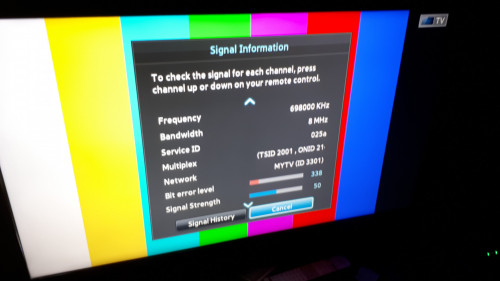
Before the activation of these masts, the DTT transmission were only available from the Gunung Pulai mast only. Although I live in a location when the TV mast could be clearly seen, constant freezing of TV signal was frequently encountered. It wasn't until they activated those 2 masts who partly solve my problems, as those 2 are intended for indoor reception and is strategicly placed so that viewers live in these areas using outdoor antenna (whenever pointed to Gunung Pulai/Bukit Batok SG) could still receive better signal for Malaysia TV. There will be additional interference caused by Indosiar from Batam, as those transmitters has activated Channel 49/698MHz (MYTV MUX 2). Some in JB still can't receive local DTT via antenna (a big issue that must be resolved fast or it would cause negative perception to MYTV when analogue TV switches off), and the problem was caused by co channel issue caused by SCTV, as someone from Batam received stable signals from Malaysia DTT if SCTV happened to have problem on the transmitter.

This post has been edited by shaun_kok: Jan 26 2019, 05:21 PM
Qash-M
post Jan 28 2019, 03:09 PM

#FreePalestine
*******
Senior Member
6,105 posts

Joined: Apr 2009
From: Marang, Terengganu


https://www.bharian.com.my/bisnes/lain-lain...n-lagi-monopoli

Could take awhile before its debut on DTT.
dayojah
post Jan 28 2019, 09:19 PM

Regular
******
Senior Member
1,276 posts

Joined: Sep 2018
From: Ampang
Singapore can easily have four multiplexes because they only need a tiny number of transmitter sites to cover the country, so capital and operational costs are low. Once you have that many, using simpler modulation and getting better building penetration makes sense.
JohnLai
post Jan 28 2019, 09:29 PM

Skeptical Cat
*******
Senior Member
3,669 posts

Joined: Apr 2006
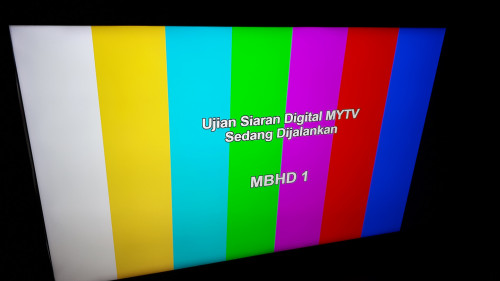
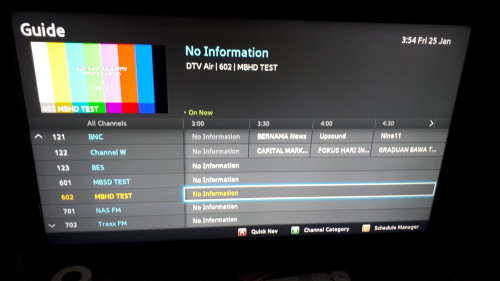
Speaking of which, I don't get any of those MBHD Test channels (second mux) in Sarawak here.

Rescan all DVB-T2 frequency, only one mux exists.
Qash-M
post Jan 28 2019, 09:38 PM

#FreePalestine
*******
Senior Member
6,105 posts

Joined: Apr 2009
From: Marang, Terengganu


QUOTE(JohnLai @ Jan 28 2019, 09:29 PM)
Speaking of which, I don't get any of those MBHD Test channels (second mux) in Sarawak here.

Rescan all DVB-T2 frequency, only one mux exists.
*
Same here. Wait next month lor if there's any improvement.
dayojah
post Jan 29 2019, 09:45 AM

Regular
******
Senior Member
1,276 posts

Joined: Sep 2018
From: Ampang
Are they building the second mux in East Malaysia?
The commercial channels were not very interested in broadcasting there.
soulhunter87
post Jan 29 2019, 10:06 AM

Casual
***
Junior Member
455 posts

Joined: Dec 2007


what antenna u guys use to get digital tv?
Qash-M
post Jan 29 2019, 10:19 AM

#FreePalestine
*******
Senior Member
6,105 posts

Joined: Apr 2009
From: Marang, Terengganu


QUOTE(dayojah @ Jan 29 2019, 09:45 AM)
Are they building the second mux in East Malaysia?
The commercial channels were not very interested in broadcasting there.
*
Most are pending/waiting between now and April, after analogue TV shutdown.
yongtjunkit
post Jan 29 2019, 11:52 AM

Look at all my stars!!
*******
Senior Member
2,516 posts

Joined: Mar 2016
QUOTE(soulhunter87 @ Jan 29 2019, 10:06 AM)
what antenna u guys use to get digital tv?
*
Using existing antenna( that supports UHF) to receive digital tv signal

377 Pages « < 276 277 278 279 280 > » Top
Topic ClosedOptions
 

Change to:
| Lo-Fi Version
0.0267sec    0.86    6 queries    GZIP Disabled
Time is now: 16th December 2025 - 06:14 AM