For a commercial satellite company (not referring to satellite pay TV provider) to have a dedicated satellite beam for a particular
country, basically it will cost higher.
There are several other commercial satellite companies out there, provide satellite bandwidth/service where the coverage "sekali gus"
covers a particular region,
not by specific country or countries like Measat do. This helps to save costs to both satellite company and the client who wants to lease satellite capacity from them.
So that means, if Ansa Broadcast pick a satellite where coverage footprint covers mainly only Malaysia (just like Astro), it will cost higher for them to use that satellite lo. BUT, does that makes this one of an expensive option for Ansa, even if it is a Malaysian company? I don't know. If they find that their "budget" not so much and not want to spend so much on leasing satellite capacity yet, here are the potential choices for Ansa Broadcast to choose which satellite to provide the service:
Satellite dish position: WEST (any satellites that is before 100 °E, satellite dish position will face towards west in Peninsular Malaysia)
A) ABS 2/2A at 75 °E

ABS 2 SEA & South Korea beam

ABS 2A SEA Beam
Source: ABS Satellite
B) Measat 3/3a/3b at 91.5° E

Measat 3b Malaysia beam
This one you know la, same satellite as Astro. No need to explain further.
C) Asiasat 5 at 100.5° E
This satellite beam has been left unused since one of Indonesia satellite TV provider, Viva+ has ceased operations years ago.

Indonesia steerable Ku band beam
You can clearly see that it covers entire Malaysia although it is once meant for Indonesia.
However, Asiasat 5 has 14 Ku band transponders and currently being used for one of India pay TV service (used 4 transponders, according to Lyngsat) as well as satellite broadband services by other countries. I am not sure how many Ku band transponders left in this satellite, but I guess it is not much. If the remaining transponders is not much for this satellite, Ansa may not consider this satellite because they may not have the capacity to offer a lot of channels (especially HD) in the long term.
Source: Asiasat
Satellite dish position: EAST (any satellites that is after 100 °E, satellite dish position will face towards east in Peninsular Malaysia)
D) SES 9 at 108 °E
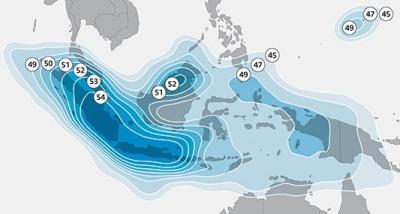
SEA beam
Although the beam seems to mainly focused on West Indonesia, but it is still receivable with strong/adequate signal in Malaysia.
Source: SES
----------------------
These are the satellites that I am not so sure if it is possible cuz I don't have much info about it, which are Chinasat 11 (98 °E) (Steerable beam) and Apstar 9 (142 °E) (Steerable beam).

Chinasat 11 Steerable beam
Source: Satbeams

Apstar 9 Steerable beam
Source: APSTAR
Steerable beam is where the satellite footprint coverage can be relocated to any different region within boundary limit (yeah they can move anytime they like, of course dependant on demand/request, not suka suka move). The ones that are not steerable beam means the footprint coverage are fixed and cannot be relocated, change, or modified.
As you can see, both steerable beam for Chinasat 11 and Apstar 9 seems to cover countries of northern part of South East Asia like Thailand, Laos, Myanmar all those. The thing is, I am not sure if any of those countries mentioned, or even any other countries outside steerable beam area you see on picture may be using it already? So, for that, I have no idea.
Asiasat 5's Indonesia steerable beam also possible that it has been relocated to other place to offer service to the region, that one I am also not sure. But I think, is no la...
So in conclusion, the high chance for Ansa to choose which satellites other than Measat (91.5 °E) would be either ABS 2/2a (75° E), or SES 9 (108 °E).
If Ansa Broadcast tend to "anti-Measat" because of Astro and those commercial satellites mentioned above doesn't seems to satisfy Ansa's needs to provide the service, then launch new satellite oh, which is even more $$$...


 Aug 19 2017, 12:02 AM


 Quote
Quote




 0.0359sec
 0.59
0.59
 6 queries
 GZIP Disabled