


V3. Swiftlet Keeping Discussion, Home of Fuciphagus Domesticus
V3. Swiftlet Keeping Discussion, Home of Fuciphagus Domesticus
|
|
 Aug 18 2010, 11:05 PM Aug 18 2010, 11:05 PM
|
 
Junior Member
75 posts Joined: Dec 2007 
|
Hi, I am from Kota Kinabalu. My family have a BH about 2 years old this october. I'm new to this post and have only started to read the early posting. Just want to say hi to all BH owner.
|
|
|
|
|
|
Aug 19 2010, 08:35 AM
|
|
Junior Member
314 posts Joined: Mar 2006
|
You are most welcome to join us.
|
|
|
Aug 19 2010, 09:06 AM
|
|
Senior Member
663 posts Joined: Oct 2008
|
QUOTE(tuckfook @ Aug 18 2010, 09:44 PM) Unfortunately Rebecca is not a mat salleh ! She's a Malaysian. Father was a planter,,,I think,,, and mother chinese. Sounds like mat salleh from the way she writes. May be half mat salleh. This lady appear to be quite rude in the blog, personal attack first even before introduction. This type of people no need to give in, the more you give in the more they will step on your head. But of course need good guys also to do the pr at the same time. |
|
|
Aug 19 2010, 09:43 AM
|
|
Senior Member
4,256 posts Joined: Jan 2005
|
QUOTE(hackwire @ Aug 18 2010, 05:20 PM) Had anyone export bird nest out to US? Is there any obstacles in govt law in Malaysia n US? Had anyone export bird nest out to US? Is there any obstacles in govt law in Malaysia n US?Got suppliers from chinatown are interested in our bird nest. |
|
|
Aug 19 2010, 07:31 PM
|
|
Junior Member
360 posts Joined: Oct 2008
|
QUOTE(Bobby C @ Aug 19 2010, 09:06 AM) Sounds like mat salleh from the way she writes. May be half mat salleh. This lady appear to be quite rude in the blog, personal attack first even before introduction. This type of people no need to give in, the more you give in the more they will step on your head. But of course need good guys also to do the pr at the same time. Yes I have taken her on as politely as possible, as you can see from the postings/comments. Rebecca was less vociferous at the last forum seeing that we are prepared to stand up to her.In Penang, it is now up to the state officials to decide and finalise on the regulations for swiftlet ranching. |
|
|
Aug 20 2010, 10:39 AM
|
|
Junior Member
71 posts Joined: Jan 2009
|
If you are interested to get good and cheap Bazooka (< RM100), please refer to my blog below
http://yenyen-swiftlet-farming.blogspot.com/ |
|
|
|
|
|
Aug 20 2010, 11:29 AM
|
|
Senior Member
663 posts Joined: Oct 2008
|
Just a few questions to hope to clear the air in Penang:-
1. Claim by the heritage guys that bhs threatening UNESCO listing. How true is this? From the UN or from local chaps trying to find excuses? ii. Are there evidences that swiftlet causing damages to the heritage buildings in Penang as such only modern buildings can house swiftlets? iii. Are there evidences that bh owners causing damages to facade of heritage buildings during reno? If they already complied with the renovation procedures and by-laws for heritage buildings, what else do the heritage guys want? The heads of the owners? iv. Are there evidences that swiftlets chasing away tourists as claim by the heritage guys? Should be the other way round as tourists especially from China will certainly attracted to this unique way of natural 'farming' in shophouses. v. What are the contributions of heritage buildings to tourism industry? Pearl of Orient lost its shine >10yrs ago before bhs came to town. So swiftlet industry shall not be blamed for their down fall. vi. What are the contributions of tourism industry in the nation? Understand foreign tourists spending less than our locals spending in overseas? Believe swiftlet industry contributes more or on par as tourism industry. Both are equally important. Swiftlet industry in fact can help to attract foreign tourists. Again, the above need datas from various departments to crack their heads before formalize any policies for the good of the country overall. p/s:- One small bullet for the heritage guys. Current GDP/capital ~ Usd8000 per pax. What heritage guys can contribute to raise GDP/capital to double by 2020?  |
|
|
Aug 22 2010, 08:37 PM
|
|
Junior Member
360 posts Joined: Oct 2008
|
QUOTE(Bobby C @ Aug 20 2010, 11:29 AM) Just a few questions to hope to clear the air in Penang:- Some of the people in PHT, Badan Warisan, etc. are very highly respected professionals, each an expert in their respective fields. Whatever we post or say must not be easily refuted. Wild challenges unsupported by facts will only bring us more problems. The whole issue must be treated very professionally. Most of that which is said by PHT officially is supported by facts that they will furnish, it is up to us to prove them wrong. It is therefore not wise to challenge them without being able to furnish facts to prove our point. So far all of PHT's presentations have been very professional. They also have the support of the government departments behind them. ASNI has done it's best in presenting the case for Swiftlet Ranching in Georgetown, as professionally as possible and by successfully answering all the accusations raised by PHT. All arguments have been presented by both sides to the city councils of Penang. It is now up to YB Chow Kon Yeow to finalise the Swiftlet Ranching Guidelines for Penang. This is due to be announced very soon. |
|
|
Aug 23 2010, 09:16 AM
|
|
Junior Member
110 posts Joined: Jun 2009
|
Consumers fall for Nest-y scam
BY NG CHENG YEE CHENGYEE@THESTAR.COM.MY PETALING JAYA: “Blood nest” – a much sought after variety of bird’s nest – is actually tainted with dangerous chemicals to deceive consumers into paying double the price for a premium grade. While the normal bird’s nest, which is ivory in colour, can fetch up to RM10,000 a kilo, the reddish “blood nest” fetches up to RM20,000 a kilo. Traders justify the exorbitant price by claiming the “blood nest” is a premium grade of the Chinese delicacy. In exposing this scam on Saturday, Deputy Agriculture and Agro-based Industries Minister Chua Tee Yong said these tainted bird’s nests were dangerous to health and may even be fatal when consumed by humans. He said the nests were either sprayed with iodine or stored at premises where there was high ammonia content to give them a uniform bright-red colour. “Some also use karya gum (from a soft wooded tree) to give the bird’s nest its reddish colour,” he told The Star. Chua advised the public against purchasing bird’s nest from dubious traders and urged the industry to practise self-regulation to ensure the quality and safety of the product. He said that all bird’s nests must have a Veterinary Service Department health certificate before they could be exported. Federation of Bird’s Nest Merchants Asso ciations chairman Datuk Beh Heng Seong said the term “blood nest” was coined by conmen and that there was “no such thing”. “Bird’s nest is made up of the saliva of swiflets and is ivory in colour. It is impossible for bird’s nest to be red in colour. “The so-called blood nests have high levels of nitrates from the artificial red colouring added to it,” Beh said, admitting that many consumers had been deceived into paying a high price for the dangerous product. He said a kilo of bird’s nest costs between RM8,000 and RM10,000 in the market depending on the grade while a kilo of the “blood nest” was between RM15,000 and RM20,000. Beh said Malaysia produced some 240 tonnes of bird’s nest worth RM1bil a year and 90% of it was exported to China. Asked whether the federation, comprising 19 associations and 10,000 members nationwide, had tried to rein in those who were cheating consumers, he said they were looking at educating consumers on bird’s nests and coming up with guidelines for the industry. Meanwhile, Fomca secretary-general Muhd Sha’ani Abdullah urged the Health Ministry to issue guidelines on what a genuine bird’s nest was and to warn consumers of bird’s nests with added colouring. He said so far, they have not received any complaint from consumers on the so-called “blood nest” but added that could be because consumers were unaware of tainted products in the market. He suggested that the Health Ministry issue certificates for untainted products. “Traders should also be responsible by making sure no harmful chemicals are used in their products,” said Muhd Sha’ani. |
|
|
Aug 23 2010, 12:26 PM
|

Junior Member
416 posts Joined: Oct 2009
|
QUOTE(htc @ Aug 23 2010, 09:16 AM) Consumers fall for Nest-y scam Fear mongering to justify the centralised processing for the 5 (maybe more by now) plants already approved. BY NG CHENG YEE CHENGYEE@THESTAR.COM.MY PETALING JAYA: “Blood nest” – a much sought after variety of bird’s nest – is actually tainted with dangerous chemicals to deceive consumers into paying double the price for a premium grade. » Click to show Spoiler - click again to hide... « The timing of this article fit the spin cycle with the date you shared.. about the 1GP by the PM? 26/Aug? ...."high ammonia content to give them a uniform bright-red colour" BH doesn't have high ammonia by it's nature? Blood nest doesn't occur naturally? You be the judge, this shot was taken 2 mths ago in Sabah by a fren hunting for BH locations. The whole flock produces the same non white nests. Maybe Sabah birds eat only fertiliser as both nitrates and ammonia are present in fertiliser  I was told simple folks around here put up nets around their doors and windows of their houses to prevent the birds frm staying there. Lucky people!!! 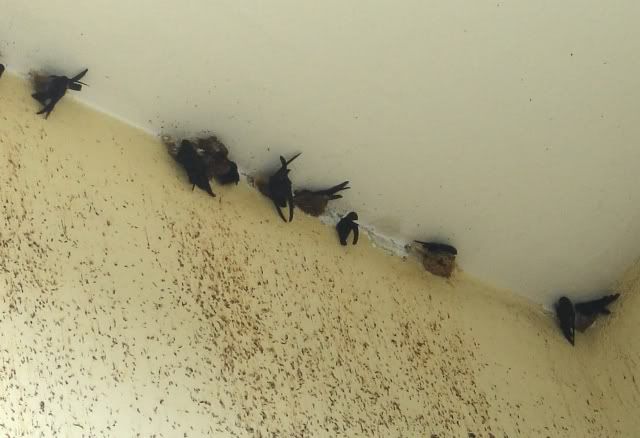 |
|
|
Aug 23 2010, 01:35 PM
|

Senior Member
1,397 posts Joined: Jun 2008 
|
As for some red nests in BH that I saw, could possible due to the mild steel sheet that some place over their ceiling to prevent theft and due to too high the humidity/ leaking of the roof that the metal become wet and oxidation occured, thus bleaching the nest into red in color. The original red nest found in our BH @ town are not fully red as some part of the nest remain brown or lighter red unlike the uniform red nests found in the market.
That's what I believe and most of those Red EBN we saw in China are mainly manufactured Red Nests specialization of the Indo. You can send your brown nest there and in a week, return as red nest by paying a certain processing fee. |
|
|
Aug 23 2010, 02:26 PM
|
|
Junior Member
416 posts Joined: Oct 2009
|
QUOTE(West Wing @ Aug 23 2010, 01:35 PM) As for some red nests in BH that I saw, could possible due to the mild steel sheet that some place over their ceiling to prevent theft and due to too high the humidity/ leaking of the roof that the metal become wet and oxidation occured, thus bleaching the nest into red in color. The original red nest found in our BH @ town are not fully red as some part of the nest remain brown or lighter red unlike the uniform red nests found in the market. Unc WW,That's what I believe and most of those Red EBN we saw in China are mainly manufactured Red Nests specialization of the Indo. You can send your brown nest there and in a week, return as red nest by paying a certain processing fee. The thrust of my comment was that blood nest do occur naturally. I wasn't disputing that the uniformly red ones are may be faked by unscrupulous folks. The original news article imply that there are no natural blood nest and even if you find some they are 'doctored' and bad for health. Instead of educating the public to differentiate the two, it implicitly tell the public to stay away from blood nest. As to your possible explanation...how to you explain the brownish nest in a brick building as in the pics I posted? Maximus? unlikely, I recall Maximus builds white nests with lots of feathers rendering the whole nest black..but you can see the white in between the feathers. I am not relying on any documents or secondary source of info...these shots were received 1st hand and the sender fren didnt even notice the non white nests until I pointed it out. I am convinced, blood nest do occur naturally. If recollection serves me well, there was a write up (dun recall where now) that speculated it's the difference in the food source or the water in their feeding ground. The colour comes from naturally occurring minerals/polymers in their habitat that ended up in the swiftlet food chain. I think arowana (maybe some others too) enthusiast feed their fish with prawns to bring out the colour...maybe I am wrong on this...and recollection is failing me. High levels of chitin? Chitin is present in hard shelled (exoskeleton) insects like grasshoppers and others??? |
|
|
Aug 23 2010, 02:55 PM
|
|
Senior Member
1,397 posts Joined: Jun 2008
|
[quote=Cergau,Aug 23 2010, 02:26 PM]Unc WW,
The thrust of my comment was that blood nest do occur naturally. I wasn't disputing that the uniformly red ones are may be faked by unscrupulous folks. The original news article imply that there are no natural blood nest and even if you find some they are 'doctored' and bad for health. Instead of educating the public to differentiate the two, it implicitly tell the public to stay away from blood nest. As to your possible explanation...how to you explain the brownish nest in a brick building as in the pics I posted? Maximus? unlikely, I recall Maximus builds white nests with lots of feathers rendering the whole nest black..but you can see the white in between the feathers. I am not relying on any documents or secondary source of info...these shots were received 1st hand and the sender fren didnt even notice the non white nests until I pointed it out. I am convinced, blood nest do occur naturally. If recollection serves me well, there was a write up (dun recall where now) that speculated it's the difference in the food source or the water in their feeding ground. The colour comes from naturally occurring minerals/polymers in their habitat that ended up in the swiftlet food chain. I think arowana (maybe some others too) enthusiast feed their fish with prawns to bring out the colour...maybe I am wrong on this...and recollection is failing me. High levels of chitin? Chitin is present in hard shelled (exoskeleton) insects like grasshoppers and others??? [/quote] Bro, no dispute at all as we all know that in nature , there are Red Birdnests but there is none as beautiful and uniform as the nests we saw @ market. Redness could also due to impurities and additives like metal oxidation, or indium that the birds got from eating river insects, maybe. Just afew days ago, one of my friends show me pics. of alot red birdnest saliva base on the wooden plank in his BH. My first assumption is that his BH must be wet recently and that his ceiling must have metal sheets and these have been concurred as his timer has broken down and mist all filled up the BH the last week but he keep insisting that swiftlets that build red nest has migrated to his BH and only time will tell. And I hope that he is right and wish him well. Oh, I forgot to add that he did told me that recently, the shits are also red at the location...........just maybe, from the food that they have taken....my guess only. [/quote] This post has been edited by West Wing: Aug 23 2010, 03:26 PM |
|
|
|
|
|
Aug 23 2010, 05:01 PM
|
|
Junior Member
15 posts Joined: Jul 2010
|
Red nests issue is an excuse to justify more red tapes are needed in this industry, bear in mind all are having a great time fighting for survival and some need some extra money to buy new cars, new houses and etc.
This post has been edited by penpower: Aug 23 2010, 07:33 PM |
|
|
Aug 23 2010, 05:48 PM
|
|
Junior Member
360 posts Joined: Oct 2008
|
The photo quality is not high enough to determine whether the nest are of the Fuciphagus or other swiftlets that produce mud nests. Unless we have higher resolution on the nests I cannot possibly tell. Laterite soil and mud contains iron and mud nests looks almost just like our white nests except they are rounder and have a rougher texture and usually do not posses elongated ends that the AF nest have.
Nests usually become reddish brown because of soluble iron which gets absorbed by the new damp nest and in time oxidises to become brown iron oxide. Thereby giving the nests a reddish colour. In limestone caves, iron dissolves and leaches into the nests which then oxidise to give us blood nests. Many other soluble salts can also produce the red colouring. Iron is good for people suffering from anemia, and therefore good for women especially. How did the ancient chinese know this without knowing chemistry is a wonder. Most fake red nest use food colouring and this will colour the cooking water red. Naturally occurring red nest will not turn the water red. Natural red nests are also never uniformly red. Much of the red colouring used was not permitted food colouring, if permitted food colouring was used and declared there would not have been this problem in China. In any case, the Chinese importers are now colouring the nests themselves to save us the trouble. |
|
|
Aug 23 2010, 05:56 PM
|
|
Senior Member
663 posts Joined: Oct 2008
|
From personal experience, real red nest are more orangery color, color is uneven, some darker some lighter, when kept long for mths or yrs it will turn darker orange.
But those sold in some even premium chinese medical shops noticed were dark red, color evenly distributed, all look the same, as red as liver color. How can, different birds, different nest but all same color tone? Looks quite fake, but price are premium. Give free also dare not eat. |
|
|
Aug 24 2010, 10:18 AM
|
|
Senior Member
1,397 posts Joined: Jun 2008
|
More research should be done on the EBN color and my guess is that the color must be from what they eat and the location conditions. All factors will contribute to the color of the nests. Like if you clean you BH well, you will find that your nest is whiter then before due to lesser ammonia and dust pollution. Low mist is good but too wet if reaches the birds' flight will also cause brownish nest. Dry and clean BH will produce white but crispy thin nests. All conditions and factors play important part in the size and color of the nest. But I haven't seen red shit which my friend told me the other day and wish if someone here can confirmed seeing such red shit.
|
|
|
Aug 24 2010, 09:32 PM
|
|
Junior Member
314 posts Joined: Mar 2006
|
WW,
Maybe AFs got piles too to make red shit. Any Vet here? |
|
|
Aug 25 2010, 03:09 PM
|
|
Junior Member
15 posts Joined: Jul 2010
|
heard from my friend who read the news this morning in chinapress that the new appointed president of selangor bird's nest association had warn all farmers in selangor to register under the association as soon as possible. He said that the dateline to register with the government dept is by this sept 2010 which is next week.
anyone know about this issue? i read from previous posts that Veterinery dept had informed all farmers that they must register by end of the year and they never mentioned about the need to becomes a member of any association previously...why there are two versions of information coming out? is the new president is trying to coax farmers to register in his association? why need to used such dirty tactics to blackmails all farmers to becomes a member of an association? |
|
|
Aug 25 2010, 10:26 PM
|
|
Newbie
2 posts Joined: Aug 2010
|
Hello to all BH owners, I am new to this site and find the information in V1, V2 are very useful. Thanks for those "senior" members who contributed and shared their experience generously.
I have a plot of agri-land at Pahang with successful bird call test. I am thinking of starting up a BH there. Since I have no time to set up my own BH, thus would like to look for any company that provide joint-venture or any successful BH owner who interested to joint venture. Kindly PM me. Thanks |
|
Topic ClosedOptions
|
| Change to: |  0.0256sec 0.0256sec
 0.34 0.34
 6 queries 6 queries
 GZIP Disabled GZIP Disabled
Time is now: 6th December 2025 - 05:35 PM |
 Quote
Quote