Welcome Guest ( Log In | Register )

384 Pages « < 363 364 365 366 367 > » Bottom

Outline · [ Standard ] · Linear+

 Insurance Talk V7!, Your one stop Insurance Discussion

views
     
JIUHWEI
post Jun 11 2025, 01:31 PM

Regular
******
Senior Member
1,322 posts

Joined: Nov 2008
QUOTE(hafizmamak85 @ Jun 11 2025, 11:48 AM)
There is no relationship between the reduction in premium amount and the smart option track other than the expectation the smart option track would help reduce overall claims by hopefully limiting medically unnecessary claims and unreasonable and uncustomary fees/charges.

However, AIA smart option track does not have monopoly on the determination on what is medically necessary and reasonable and customary fees/charges.

The determination of what is medically necessary and reasonable  and customary excludes the AIA smart option track consideration.

The contract underpinning the AIA smart option track is still based on  coverage for medically necessary treatments/procedures based on reasonable/customary fees/charges regardless of who the health service provider is.

It doesn't make any sense to impose an arbitrary and unfair 20% co-pay on non smart option track claims if the claims fulfill the medically necessary and reasonable/customary standards.
*
Then maybe opt out of the SMART Option?
MUM
post Jun 11 2025, 01:34 PM

10k Club
********
All Stars
14,888 posts

Joined: Mar 2015

QUOTE(SticH @ Jun 11 2025, 01:04 PM)
Hello I just received my premium increment notice from Alliance

Currently it is at RM210 per month, and will be increasing 20% every year with RM420 at the end of 5 years.

What are my options right now apart from downgrading the insurance medical plan?
*
While waiting for real sifus to advise.
....I kay poh with my usual kopitiam talk.

If you does not want to downgrade...
Then ,The coverage year may reduce.

To help keep premium lower,
Can try opt of co payment payment or with higher deductible plan,
Can try opt for reimbursement plan instead of cashless admission
hafizmamak85
post Jun 11 2025, 01:45 PM

Casual
***
Junior Member
463 posts

Joined: Nov 2009

QUOTE(SticH @ Jun 11 2025, 01:04 PM)
Hello I just received my premium increment notice from Alliance

Currently it is at RM210 per month, and will be increasing 20% every year with RM420 at the end of 5 years.

What are my options right now apart from downgrading the insurance medical plan?
*
If it's a long term level premium IL policy, you can opt to sue them and also lodge complaints with the financial ombudsman.

QUOTE(hafizmamak85 @ Mar 20 2025, 09:50 PM)
1 & 3) You have every right to insist on the insurers and takaful operators (ITOs) footing the bill as they have not kept up with your reasonable expectation in relation to the original annual premium amount.  The expectation implied in the pricing of the product was for the original annual premium to be sufficient to sustain the policy until the end of term.

If the ITOs weren't comfortable in taking on this risk, they should not have had the authority to set the minimum amount of sustainable annual premium for given insurance policy coverages nor would BNM be able to make it a requirement for the ITOs to price the IL contract such that it was expected to be sustainable until the end of term. There is legal force and value to this expectation. It is not zilch or zero. It has value. The question is , what is the value? And to me, the value implied is a no lapse guarantee if policyholders keep to their original annual premium payments and didn't make any withdrawals. Also, if the ITOs didn't want to take on pricing risk, they should not have allowed for investment returns to be considered in pricing the IL policies nor should they have sold long term products. The moment the ITOs did that, they effectively implied a certain expectation in relation to the investment performance of the IL unit funds as well as the fixed nature of the cost of insurance and other long term charges in the product.

*
QUOTE(hafizmamak85 @ Apr 20 2025, 09:27 PM)
You, the consumers, do have a choice. You are not at their mercy. You can always band together and haul the ITOs to court for contract non-performance and unfair/unreasonable contract practices. The sorry state of affairs in Malaysia means most, if not all, ITOs have such similar unfair/unreasonable practices.

Closing medical pools every three to four years when utilisation gets near to or breaches 10%, and subsequently opening new ones with better coverage (higher annual/lifetime limits, better inner limits coverage), is nothing but a sham excuse to reel 'healthy' consumers like yourself - those who don't make claims - in from older pools and to re-price the IL annual premiums and medical rider coverage cost of insurance charges.

My bet is that the ITOs are doing this to correct for their initial pricing errors (mispricing/underpricing), the ones that occured during the policies' inception, and to maintain their profit margins. That is not to say that there is no legitimate need for higher annual or lifetime limits, or better inner limits, for that matter.

The limits may seem ridiculous, but will come in handy if advanced treatments (e.g. cell, tissue, gene therapy treatments) are covered and utilized. The question is, while most medical insurance/takaful products with high annual limits must cover such medically necessary treatments/procedures, do our ITOs do so in practice or do they employ deny and delay claims tactics???

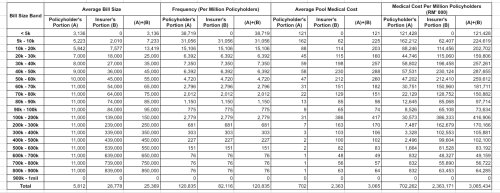
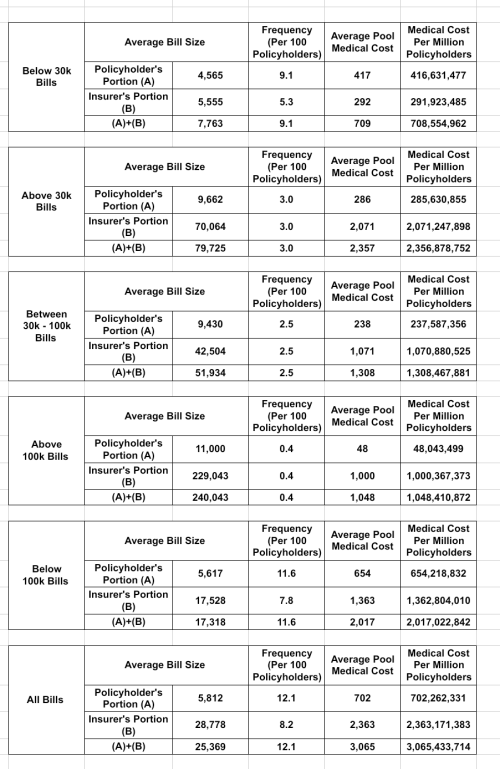
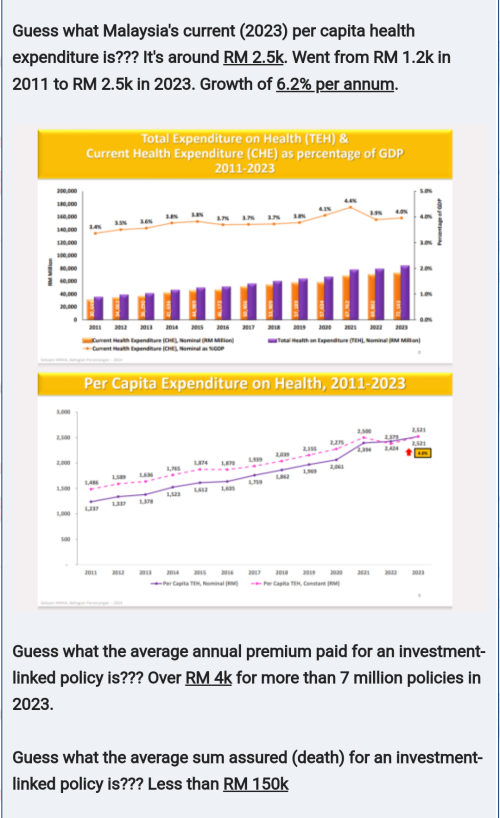
Great Eastern's current average medical pool claims cost per policyholder is less than RM 800 - which I think tallies more or less with the LIAM industry average. Prudential's PruHealth is around RM 1.1k. Malaysia's health expenditure per capita in 2023 was around RM 2.5k and is growing at an annual rate of 6%. Let's assume that around RM 1.7 to 1.8k per capita goes to hospitals/specialists for medically necessary treatments/procedures. That's more than a 100% difference when compared to GE's average pool claims cost. For Pru, it's more than a 60% difference.

How many more re-pricing cycles are Malaysian insurance/takaful consumers expected to endure before the average medical pool claims cost can at least catch up to the per capita health expenditure component for hospitals/specialists???

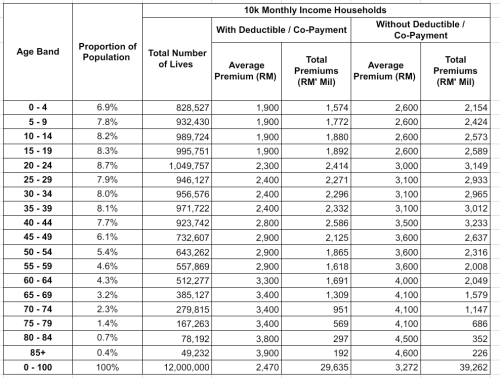
Bear in mind that the current average IL policy annual premium is already above RM 4.4k and there are more than 7 million IL policies paying around RM 29 billion in annual premiums.

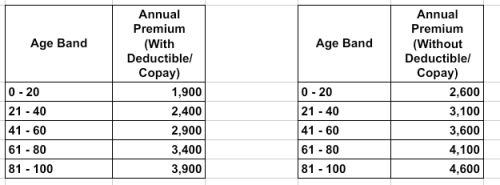
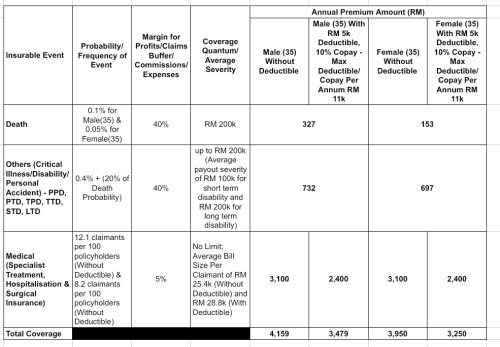
You can easily design and price an insurance/takaful product with RM 200k in death and disability benefits, RM 3.1k in average medical pool claims cost, all for RM 4.2k - has a 40% expense/profit margin for the death and disability components and a 5% expense margin for the medical component. RM 3.1k is almost 4 times as high as GE's average pool claims cost.

» Click to show Spoiler - click again to hide... «


You are right to point out that the ITO only wants you for the sweet spot years of between 25 and 55. Their products are, in my view,  intentionally designed to not be able to meet your reasonable expectations of policy sustainability and meaningful coverage. They basically want policyholders to leave after the age of 55 and have intentionally jacked up the medical coverage cost of insurance charges after that age which, as you are well aware, the annual premiums will find difficultly in sustaining. Another trick is to mostly allow small medical claims to go through while denying/delaying a significant proportion of large claims. Above 60 lives currently only constitute less than 15% of the total population. Even if we assume a 30% proportion of claimants for this cohort, the average proportion of claimants for the total population will still only be less than 12% if we assume those below 60 have an 8% proportion of claimants. And the RM 4.2k policy is good enough to cover 12.1% proportion of claimants with an average bill size of RM 25.4k.

Your expectation as an IL policyholder of annual premium sustainability is legit. It's just natural to expect ITOs to price a long term contract with level premiums such that its sustainability until the end of the contract term is ensured. You're not an expert nor have you any accountability when it comes to premium pricing, determining long term medical inflation or investment returns.

Short of expecting the digital ITOs to collaborate with hospitals/specialists in coming up with better product propositions, your best bet is to sue the ITOs & BNM.

» Click to show Spoiler - click again to hide... «

Fun fact. Malaysian actuaries usually use a slapdash approach when it comes determining 'reasonable estimates' of long term investment returns in pricing IL level premiums. Two key ingredients: past investment return performance and future expectation of investment returns. Past performance is basically a review of the geometric average annual investment return for the 3yr, 5yr, 10yr and 20yr (if available) periods and prior to this, especially for IL pricing, it would be settled based on the 10 yr equity fund or total return equity index geometric average annual return. Since no one in the investment team would have had the chops or gumption to have any long term view or expectation in relation to equity performance, the assessment was basically limited to this review of historical returns. This was how we ended up having IL annual premiums priced assuming 7%, 8%, 9%, 10%, 11% annual returns for policies with terms of over 30 years.

This brings up an interesting question. Why were actuaries comfortable with imputing a certain investment return expectation - why not 0%? - for the entire duration of the contract in pricing IL level premiums, even though they have had an abysmal run at predicting the long term performance of IL equity funds, but were not comfortable with imputing a certain medical inflation expectation for the entire duration of the IL contract, even though the forecasting signal fidelity from the persistent 6% growth in per capita health expenditure could have been argued to be much stronger???

» Click to show Spoiler - click again to hide... «


Could it be because assuming higher investment return performance for the entire policy term meant lower annual premiums while assuming medical inflation for the entire term meant higher annual premiums???

*
MUM
post Jun 11 2025, 02:06 PM

10k Club
********
All Stars
14,888 posts

Joined: Mar 2015

QUOTE(kazekage_09 @ Jun 11 2025, 10:51 AM)
This rules will apply if I opt for SMART option and it will reduce my contribution. If i to choose not going for this option, I will just have to bear the increment cost each year stated by the letter and i believe I can claim 100% the total bills right?

Kinda suck. But no choice need to face it.
*
Usually, ..(my guess),
Most private hospitals bills may not consist of ALL items charged to be as what your insurance company considered as the medical treatment was medically necessary and the fees/charges were reasonable and customary. Thus they may not pay for those billed.
So very high probable you may not be able to claim 100% of your bills....unless the insurance company deemed all the items billed as "medical treatment was medically necessary and the fees/charges were reasonable and customary".

I am more worried of the stated term (as arrowed in red color in the image) than that 20% bill if opt in SMART PLAN but did not follow their SMART route.
For i does not allocate so high emergency cash at hand for that pay first claim later thing

This post has been edited by MUM: Jun 11 2025, 02:08 PM


Attached thumbnail(s)
Attached Image
hafizmamak85
post Jun 11 2025, 02:29 PM

Casual
***
Junior Member
463 posts

Joined: Nov 2009

QUOTE(JIUHWEI @ Jun 11 2025, 01:31 PM)
Then maybe opt out of the SMART Option?
*
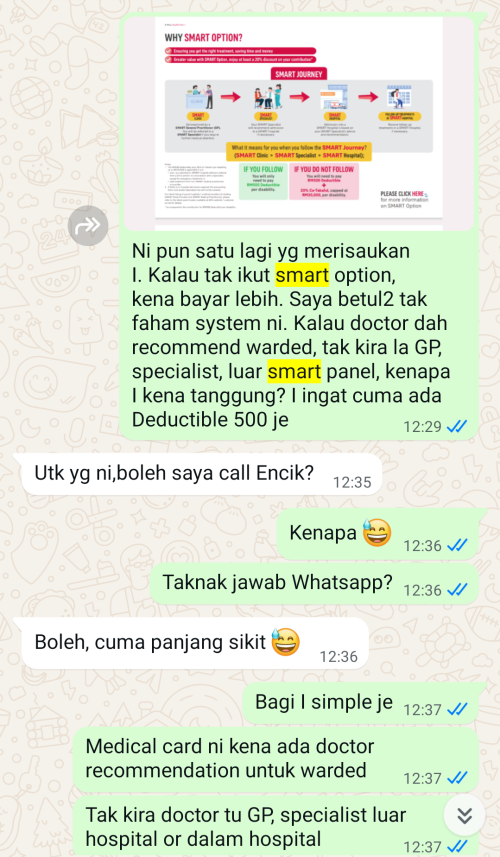
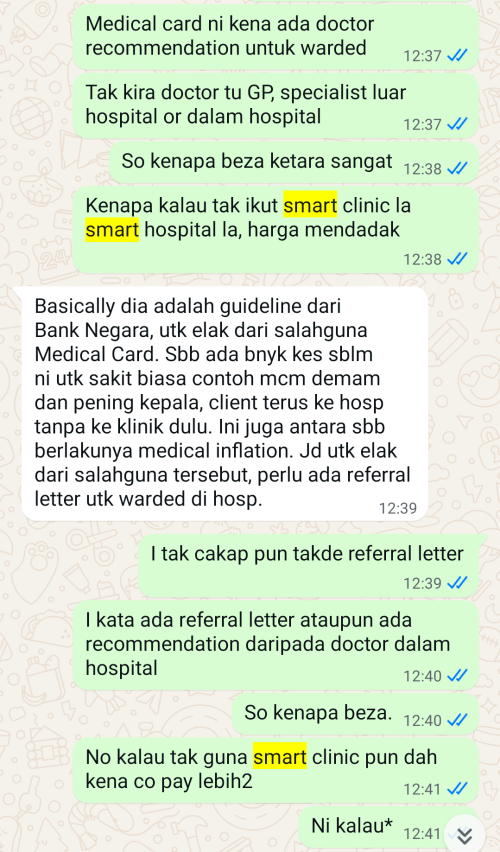
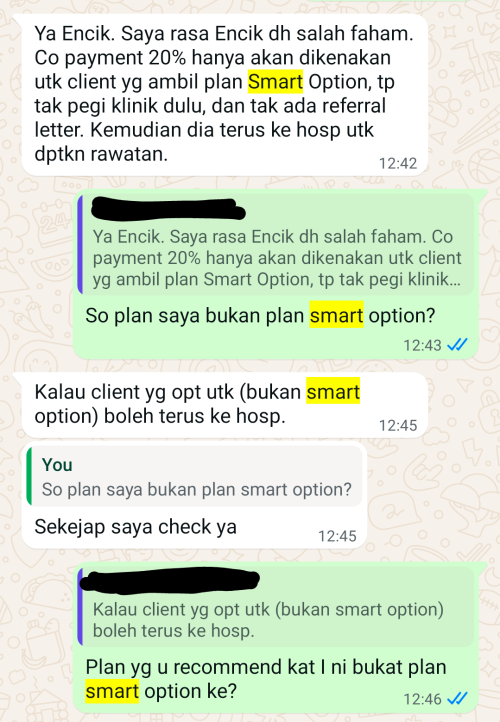
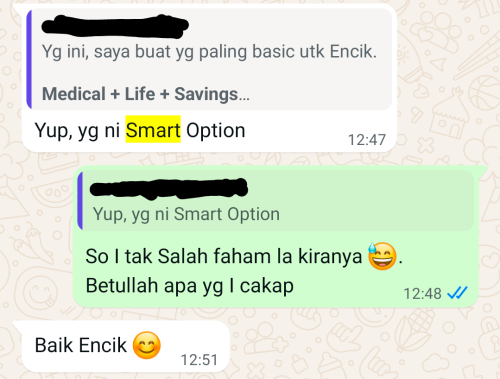
There is a very high chance that consumers don't even know that they are being sold or propositioned a smart option track policy. Agents may push it as a default option on account of it being cheaper.

One agent even gave the impression that the smart option track may have been a result of BNM's push for cost containment measures.

Regardless of the option chosen, whether it's a smart or non-smart option track, the point still stands. There can be no unfair terms in the contract and the 20% co-pay for non smart option track medical treatments/procedures is unfair/arbitrary.

user posted image
user posted image
user posted image
user posted image
JIUHWEI
post Jun 11 2025, 02:43 PM

Regular
******
Senior Member
1,322 posts

Joined: Nov 2008
QUOTE(hafizmamak85 @ Jun 11 2025, 02:29 PM)
There is a very high chance that consumers don't even know that they are being sold or propositioned a smart option track policy. Agents may push it as a default option on account of it being cheaper.

One agent even gave the impression that the smart option track may have been a result of BNM's push for cost containment measures.

Regardless of the option chosen, whether it's a smart or non-smart option track, the point still stands. There can be no unfair terms in the contract and the 20% co-pay for non smart option track medical treatments/procedures is unfair/arbitrary.

user posted image
user posted image
user posted image
user posted image
*
So would that make it the agent's fault or AIA being unfair?
What's stopping you from filing a report on this agent to AIA?
And subsequently, maybe engage with people like me for a better experience?

Since you've made it clear that SMART Option isn't for you, then maybe don't take the SMART Option?
Would that be a better option then?
devilmaycry9
post Jun 11 2025, 04:59 PM

Casual
***
Junior Member
410 posts

Joined: Apr 2017
Does that SMART Option really require going to the panel clinic first? If there's an emergency case like difficulty breathing, I think it’s better to go straight to the hospital
MUM
post Jun 11 2025, 05:23 PM

10k Club
********
All Stars
14,888 posts

Joined: Mar 2015

QUOTE(devilmaycry9 @ Jun 11 2025, 04:59 PM)
Does that SMART Option really require going to the panel clinic first? If there's an emergency case like difficulty breathing, I think it’s better to go straight to the hospital
*
Maybe perhaps, emergency treatment is exception as per image?
But if this so call difficulty breathing emergency turned out to be just a false emergency alarm and discharged after "investigation done", ...then not covered?

Check with the real agent to confirm before opting in.

This post has been edited by MUM: Jun 11 2025, 05:52 PM


Attached thumbnail(s)
Attached Image
JIUHWEI
post Jun 12 2025, 10:55 AM

Regular
******
Senior Member
1,322 posts

Joined: Nov 2008
QUOTE(devilmaycry9 @ Jun 11 2025, 04:59 PM)
Does that SMART Option really require going to the panel clinic first? If there's an emergency case like difficulty breathing, I think it’s better to go straight to the hospital
*
user posted image

Here's the description of "Emergency Treatment" from the policy contract.


This post has been edited by JIUHWEI: Jun 12 2025, 11:12 AM
hafizmamak85
post Jun 12 2025, 07:51 PM

Casual
***
Junior Member
463 posts

Joined: Nov 2009

QUOTE(Ramjade @ May 24 2025, 08:13 PM)
They will in the future down the road (that is where the coverage years is reduce) if you have not sufficient cash balance inside.

Another way to make it as sustainable is be 100% equity. if they have equity with US equity, the largest amount, choose that. Equity will also give more returns Vs bonds over long long term. Yes US market is scary right now but US market have always been easy to make money. Agents will shoot me, but if you know markets you have to face reality.

Unfortunately insurance in Malaysia have very poor overseas exposure as if by design. Most funds are focus locally.
*
You're buying insurance for protection, not for speculation. Plus, a sustainable ILP policy requires fees and charges to be met as and when due. In order for this to happen, the investment asset return profile needs to stable, not volatile.

Wouldn't it be better for a portion of allocated funds to be in short to medium term liquid, safe assets to meet short to medium term fees and charges as and when due and the rest to be in some sort of a balanced fund to meet long term fees and charges?

Wouldn't this require a continuous rebalancing of allocated assets?

Shouldn't ITOs provide continuously rebalanced low to medium risk allocation strategy options - I think quite a number do, but how often do they actually promote them to policyholders?

The default most of the time is the 100% equity option as the premiums are cheaper.

Whether the investment assets should be in the Malaysian, US, Japanese, Asia Ex-Japan etc. or a mix of those markets, what forex, mix of asset class and counterparty risks to take, do you think the average consumer has the knowledge to make such decisions?

Whatever allocation option chosen, the ITO must be accountable for the return rate assumed for sustainability purposes.

If a negative balance arises, the ITO musn't lapse the policy. They have to take on the liability for it.
This post has been edited by hafizmamak85: Jun 12 2025, 07:52 PM
Ramjade
post Jun 13 2025, 09:24 AM

20k VIP Club
*********
All Stars
24,352 posts

Joined: Feb 2011


QUOTE(hafizmamak85 @ Jun 12 2025, 07:51 PM)
You're buying insurance for protection, not for speculation. Plus, a sustainable ILP policy requires fees and charges to be met as and when due. In order for this to happen, the investment asset return profile needs to stable, not volatile.

Wouldn't it be better for a portion of allocated funds to be in short to medium term liquid, safe assets to meet short to medium term fees and charges as and when due and the rest to be in some sort of a balanced fund to meet long term fees and charges?

Wouldn't this require a continuous rebalancing of allocated assets?

Shouldn't ITOs provide continuously rebalanced low to medium risk allocation strategy options - I think quite a number do, but how often do they actually promote them to policyholders?

The default most of the time is the 100% equity option as the premiums are cheaper.

Whether the investment assets should be in the Malaysian, US, Japanese, Asia Ex-Japan etc. or a mix of those markets, what forex, mix of asset class and counterparty risks to take, do you think the average consumer has the knowledge to make such decisions?

Whatever allocation option chosen, the ITO must be accountable for the return rate assumed for sustainability purposes.

If a negative balance arises, the ITO musn't lapse the policy. They have to take on the liability for it.
*
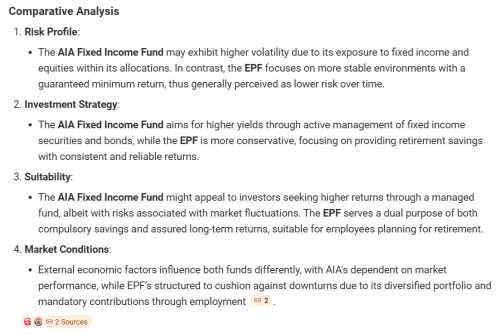
ILP is designed to hopefully pay for your insurance down the road. So you need something that can compound at least at EPF returns over long period of time.

Unfortunately those funds offered by insurance companies are rubbish.

If you buy a mixed fund, the fund manager suppose to rebalance for you. If you buy a fixed income, then the fund can only invest in bonds.

JIUHWEI
post Jun 13 2025, 11:05 AM

Regular
******
Senior Member
1,322 posts

Joined: Nov 2008
QUOTE(Ramjade @ Jun 13 2025, 09:24 AM)
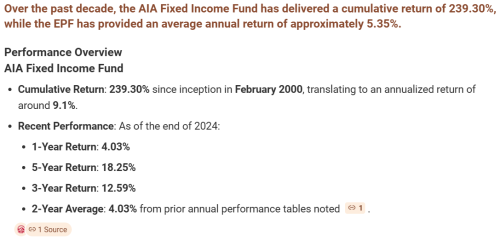
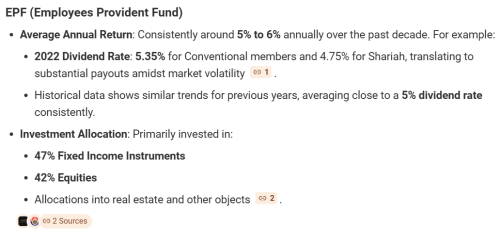
ILP is designed to hopefully pay for your insurance down the road. So you need something that can compound at least at EPF returns over long period of time.

Unfortunately those funds offered by insurance companies are rubbish.

If you buy a mixed fund, the fund manager suppose to rebalance for you. If you buy a fixed income, then the fund can only invest in bonds.
*
user posted image
user posted image
user posted image
user posted image


hafizmamak85
post Jun 13 2025, 12:13 PM

Casual
***
Junior Member
463 posts

Joined: Nov 2009

QUOTE(Ramjade @ Jun 13 2025, 09:24 AM)
ILP is designed to hopefully pay for your insurance down the road. So you need something that can compound at least at EPF returns over long period of time.

Unfortunately those funds offered by insurance companies are rubbish.

If you buy a mixed fund, the fund manager suppose to rebalance for you. If you buy a fixed income, then the fund can only invest in bonds.
*
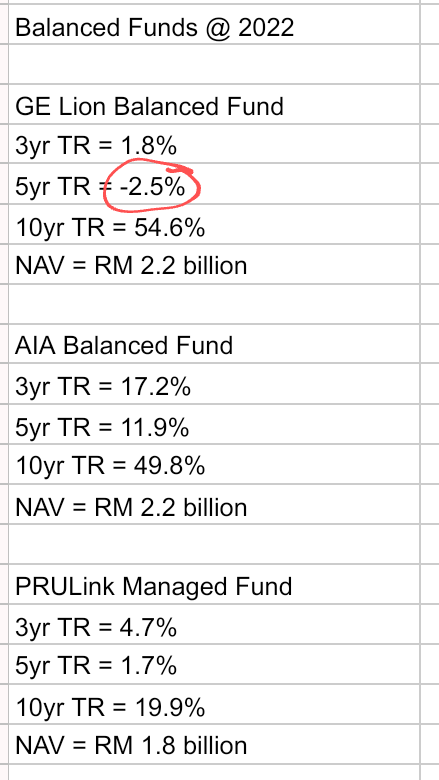
ILP only needs something that compounds at least at EPF return rates because that and higher return rates were implied in the pricing of ILP policies - implied rates at 7% per annum and above.

Point is, if lower returns were implied in the pricing, e.g. 2% per annum, then only 2% per annum needs to be attained to ensure the ILP policy's sustainability.

But, of course, the ITOs are hard up for sales and they know the only way to achieve their incredible sales targets would be by pushing the cheaper 100% equity option, ILP premium packages.

Even during year 1 of an ILP policy, you should expect at least 30% of premiums to be for cost of insurance (COI) deductions.

Is it wise parking a significant portion of allocated funds in even balanced or fixed income funds if there are going to be significant drawdowns in the short to medium term to meet all these COI charges?

Issues haven't really cropped up so far as most IL funds that policyholders crowd are either growing or maintained in size.

What if the major IL funds start dwindling? Do ITOs have in place measures to maintain fund size so that net drawdowns don't affect allocation strategies? Will they purchase units in their own IL funds?

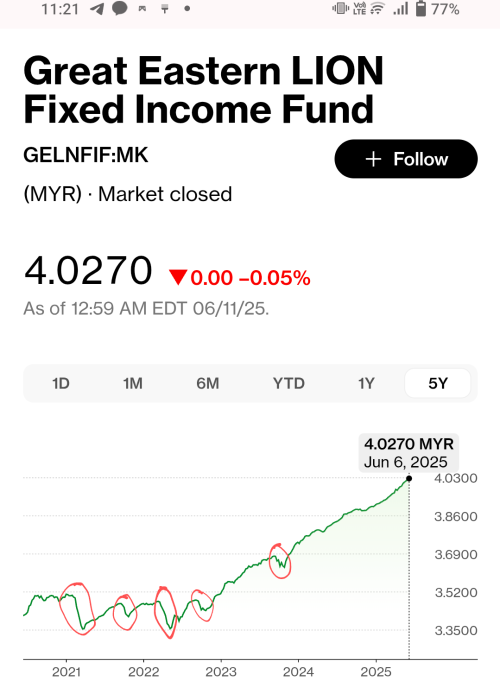
But, even balanced or fixed income funds can go through negative returns during the short to medium term.

user posted image

user posted image

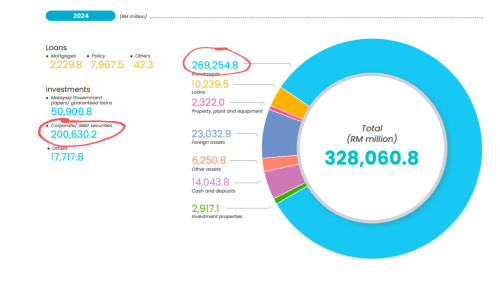
Shouldn't at least 30% of allocated funds (close to 100% of allocated funds during the first 10 years when unallocated premium charges are high, and 30% of allocated funds subsequent to that) be in some sort of cash/money market type instrument fund? Even short to medium term FD/FRNID funds may work.

But, can our local market tampung at least 30% of ILP fund assets in the banking system and money markets when the system wants ITOs to purchase local medium to long term corporate debt?

user posted image

Right now, most assets are still in participating funds but that will change in the next 10 to 20 years.

This post has been edited by hafizmamak85: Jun 13 2025, 04:40 PM
hafizmamak85
post Jun 13 2025, 02:48 PM

Casual
***
Junior Member
463 posts

Joined: Nov 2009

QUOTE(JIUHWEI @ Jun 13 2025, 11:05 AM)
user posted image

*
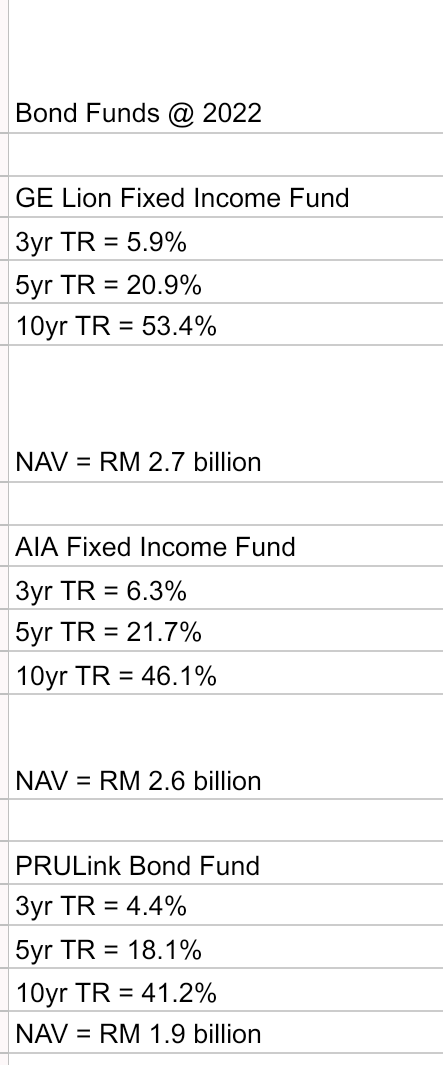
The total return of over 200% (north of 8.5% per annum) between 2000 and present date for AIA or any of the other bond funds is something that is not sustainable and hasn't been true for the past 10 - 15 years.

All the big three (AIA, PRU, GE) bond funds failed to replicate the 2000 - 2010 fund performance during the 2012 - 2022 period.

user posted image

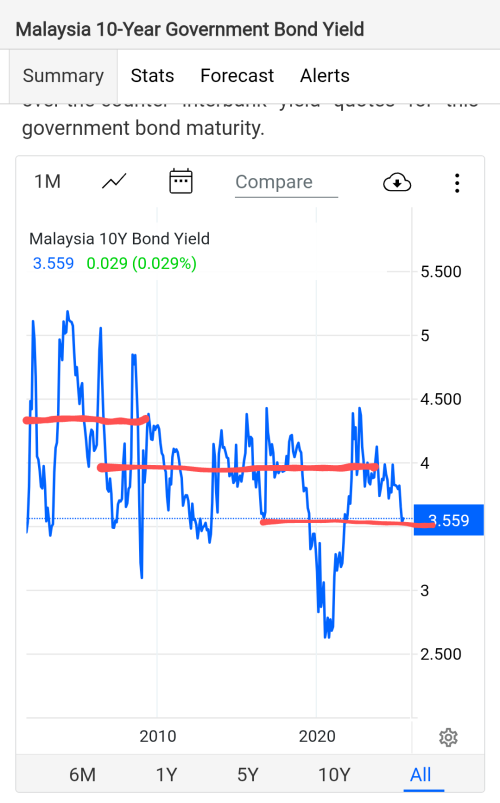
Does it seem like the 10 year mgs yield is going to snap back to 4% or higher?

user posted image
hafizmamak85
post Jun 13 2025, 03:09 PM

Casual
***
Junior Member
463 posts

Joined: Nov 2009

QUOTE(hafizmamak85 @ Apr 22 2025, 11:32 PM)
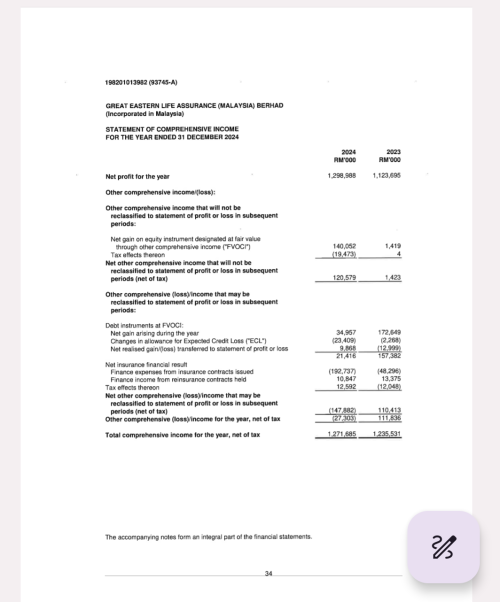
Looks like medical inflation hasn't impacted Great Embarrassment's bottom line at all.

FYE 2024 total comprehensive income of RM 1.27 billion!!!!!!!! - RM 1.24 billion in FYE 2023.

user posted image

Fellow Malaysians, this is where a big chunk of your IL premiums have gone to - be glad for the GE Gods drink full from thy cup, blessings abound for thy health.

A round of applause for GE for getting through unscathed, unharmed by the very debilitating medical inflation epidemic. No bloodthirsty hospital may sink their teeth and harm the Great GE balance sheet. All hail The Great Embarrassment Balance SheetπŸ™ŒπŸΎπŸ™ŒπŸΎπŸ™ŒπŸΎπŸ™ŒπŸΎπŸ™ŒπŸΎ

user posted image

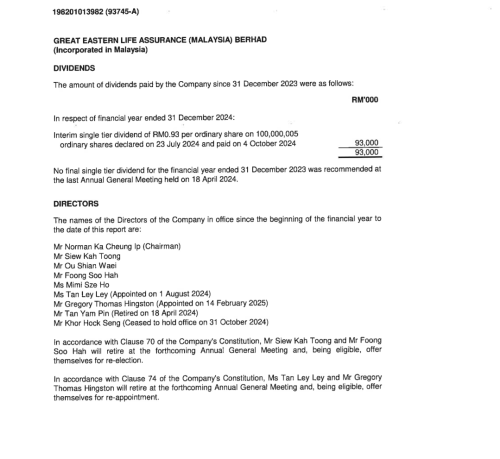
Buggers even dared to pay RM 93 million in dividends. This is even after being exposed for misappropriating RM 2.37 billion from their participating policyholders.
*
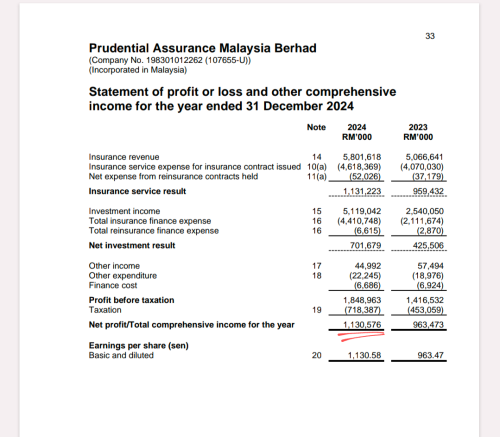
We now have another Teflon champion. Prudential's net profit for the 2024 financial year has risen to RM 1.13 billion from RM 0.96 billion in 2023.

No sign of medical inflation impacting profits.

Very very strange πŸ€”.

Still waiting for AIA to upload their annual report.
user posted image

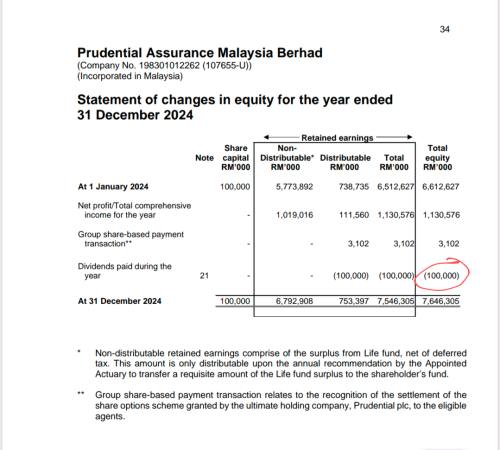
These champions also paid dividends as well. RM 100 million. The new minority owners may or may not be happy. Wasn't as high as previous years πŸ˜‚.

user posted image

Should ban the big three (AIA, PRU, GE) from paying dividends until they've stopped all ILP repricing measures & fully reserved for the negative balance clearance mechanism.

This post has been edited by hafizmamak85: Jun 13 2025, 03:52 PM
Ramjade
post Jun 14 2025, 12:22 PM

20k VIP Club
*********
All Stars
24,352 posts

Joined: Feb 2011


QUOTE(hafizmamak85 @ Jun 13 2025, 03:09 PM)
We now have another Teflon champion. Prudential's net profit for the 2024 financial year has risen to RM 1.13 billion from RM 0.96 billion in 2023.

No sign of medical inflation impacting profits.

Very very strange πŸ€”.

Still waiting for AIA to upload their annual report.
user posted image

These champions also paid dividends as well. RM 100 million. The new minority owners may or may not be happy. Wasn't as high as previous years πŸ˜‚.

user posted image

Should ban the big three (AIA, PRU, GE) from paying dividends until they've stopped all ILP repricing measures & fully reserved for the negative balance clearance mechanism.
*
You are not their shareholder. You are just a lowly customer and you need to milk as much as possible from the customer. It's always shareholder above customers.
kino318
post Jun 15 2025, 09:09 PM

On my way
****
Junior Member
671 posts

Joined: Dec 2011
Hi, anyone joined Gathercare.com?
What is your view?
Thk you
hafizmamak85
post Jun 16 2025, 03:00 AM

Casual
***
Junior Member
463 posts

Joined: Nov 2009

QUOTE(kino318 @ Jun 15 2025, 09:09 PM)
Hi, anyone joined Gathercare.com?
What is your view?
Thk you
*
I'm really surprised Nicholas (actuarial consultant) is part of Gathercare.

I can't believe I'm about to say this but, for whatever medical bill sharing program out there, please, for the love of god, as screwed up as BNM is, it is still better to subscribe to an insurance or takaful model supervised and regulated by them rather than these fluffy, no-substance, gimmicky crowd-sharing alternatives.

Gathercare is not under BNM and they do have some dodgy practices.

These champions are bold enough to even declare:

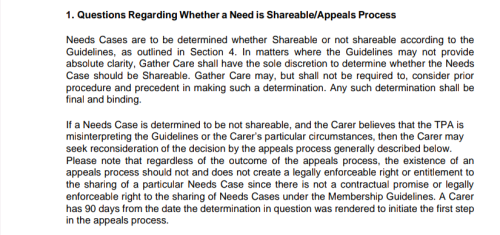
.....(Effectively: there is no) legally enforceable right or entitlement to the sharing of a particular Needs Case since there is not a contractual promise or legally enforceable right to the sharing of Needs Cases under the Membership Guidelines

user posted image

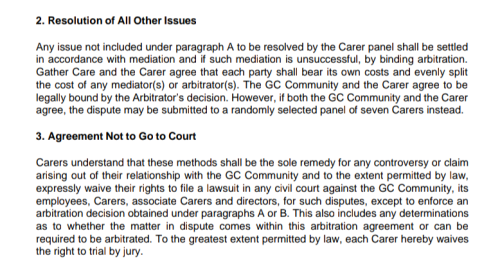
For one, if you have any claim settlement issues with them, you have to agree to their arbitration process and can't take them to court.

user posted image

How in the world is this a fair consumer practice???? The gathercare program is still a consumer contract for healthcare financing - notwithstanding the so-called "membership language & set-up" and high annual limits.

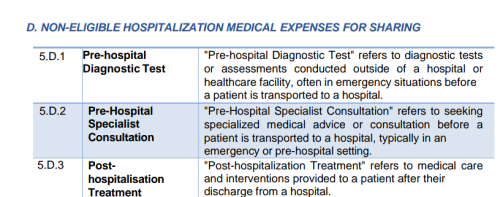
Outpatient treatments are effectively excluded and pre and post hospitalisation claims are not allowed.


user posted image
user posted image

Outpatient kidney dialysis treatment is not allowed

user posted image

Like it or not, insurance/takaful or these so called "sharing programs" will need capital and reputation.

And these guys, to me, they don't seem to have the reputation to begin with, nor the capital.

If you think reputable ITOs are screwed up, these guys are capable of being worse.

They don't want the capital risk.

If they were backed by the major hospital groups themselves - not in a capital sense but more like a healthcare partner - then it would be a different story. But that's not the case here

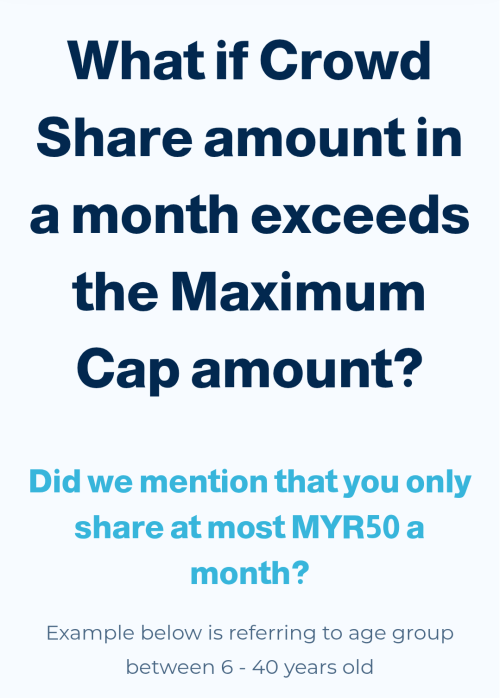
Maximum 600 ringgit per annum in medical bill sharing charges is not going to cut it. It's a fantasy if anyone thinks this is cukup for hospital bills in city areas. Has to be a above RM 1500.

» Click to show Spoiler - click again to hide... «


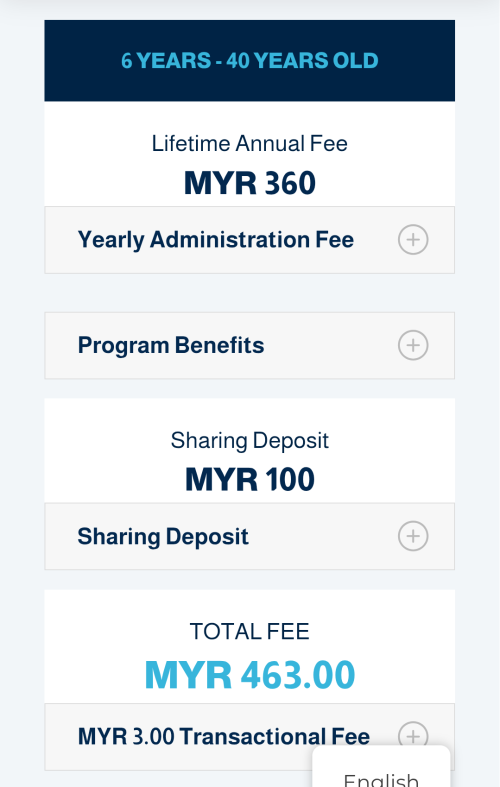
And RM 360 per annum in administration fees is ridiculous to say the least.

» Click to show Spoiler - click again to hide... «


36% in management fees is just too much.

Fantasy price, fantasy coverage.

Stay Away from these champions.

This post has been edited by hafizmamak85: Jun 16 2025, 05:07 PM
hafizmamak85
post Jun 16 2025, 03:01 AM

Casual
***
Junior Member
463 posts

Joined: Nov 2009

QUOTE(hafizmamak85 @ Jun 16 2025, 03:00 AM)
36% in management fees is just too much.

Fantasy price, fantasy coverage.

Stay Away from these champion.
*
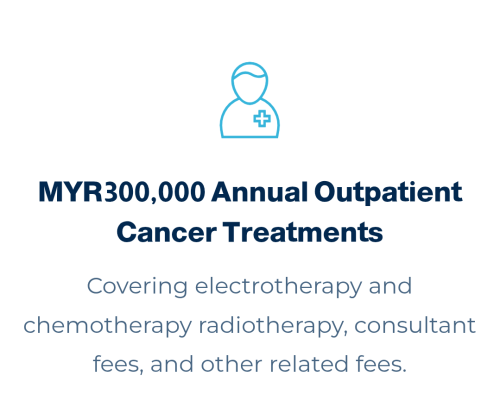
Gathercare won't be covering a lot of these "advanced treatments" as well, such as immunotherapy/hormone therapy. Just their stated cancer care.

» Click to show Spoiler - click again to hide... «


I don't think robotic surgery would be something they would deem reasonable and customary.

Surgical implants are excluded.

» Click to show Spoiler - click again to hide... «

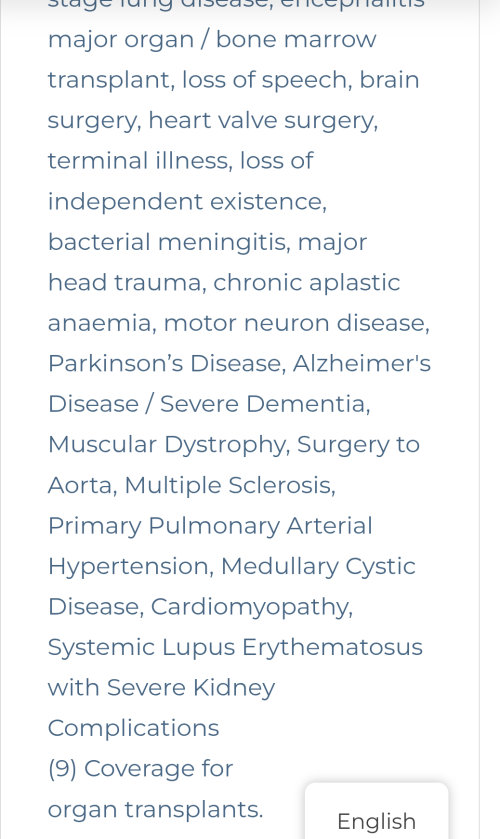
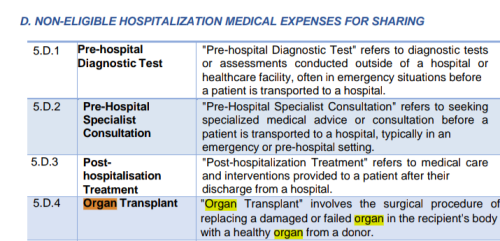
The website says organ transplants are covered but the currently on-website 2023 program guideline says otherwise.

» Click to show Spoiler - click again to hide... «


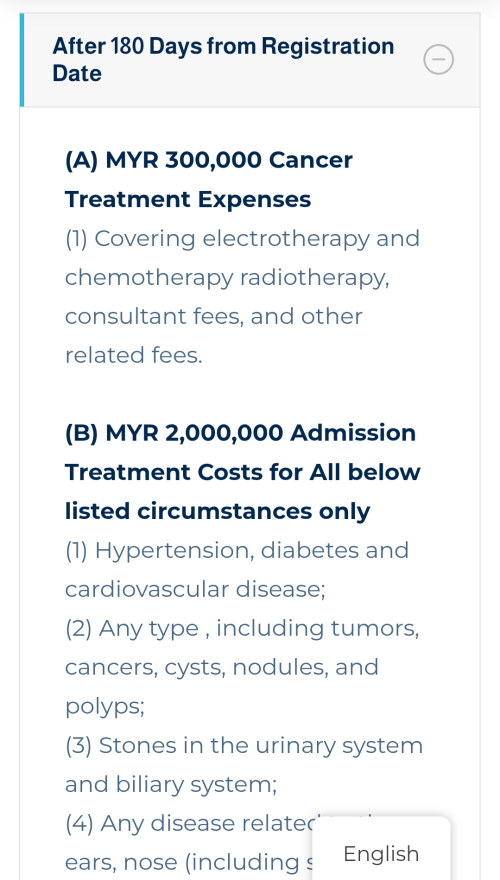
And I don't understand why these guys put up a long list of covered circumstances.

This is where it gets really dodgy.

Does that mean that there are circumstances where treatments are medically necessary that are not on the list and are not covered even after the 180 day waiting period??

» Click to show Spoiler - click again to hide... «


This post has been edited by hafizmamak85: Jun 16 2025, 12:40 PM
JIUHWEI
post Jun 16 2025, 10:19 AM

Regular
******
Senior Member
1,322 posts

Joined: Nov 2008
QUOTE(hafizmamak85 @ Jun 13 2025, 03:09 PM)
We now have another Teflon champion. Prudential's net profit for the 2024 financial year has risen to RM 1.13 billion from RM 0.96 billion in 2023.

No sign of medical inflation impacting profits.

Very very strange πŸ€”.

Still waiting for AIA to upload their annual report.
user posted image

These champions also paid dividends as well. RM 100 million. The new minority owners may or may not be happy. Wasn't as high as previous years πŸ˜‚.

user posted image

Should ban the big three (AIA, PRU, GE) from paying dividends until they've stopped all ILP repricing measures & fully reserved for the negative balance clearance mechanism.
*
So what is stopping you from filing a case against LIAM, BNM, and all 3 insurers named above?
I think you should.

384 Pages « < 363 364 365 366 367 > » Top
 

Change to:
| Lo-Fi Version
0.0209sec    0.90    6 queries    GZIP Disabled
Time is now: 8th December 2025 - 05:40 PM