Welcome Guest ( Log In | Register )

Bump Topic Topic Closed RSS Feed
123 Pages « < 11 12 13 14 15 > » Bottom

Outline · [ Standard ] · Linear+

> Military Thread V25

views
     
WanMB
post Sep 30 2017, 01:41 PM

Getting Started
**
Junior Member
62 posts

Joined: Dec 2010
From: Singapore


QUOTE(azriel @ Sep 30 2017, 07:52 AM)
The same design but with different displcement and armaments.

Egyptian Gowind displacement is 2.500 tons compared to RMN Gowind 3.100 tons.

Egyptian Gowind is equipped with 76mm gun & Exocet missiles compared to RMN Gowind 57mm gun & NSM missiles.
*
Same size or bigger?
cunnilinguist
post Sep 30 2017, 01:42 PM

New Member
*
Newbie
3 posts

Joined: Feb 2014
Sabah
Filipino with links to kidnap group killed in shootout[SIZE=7]
September 30, 2017, Saturday Azmie Lim


QUOTE
KUNAK: A Filipino man believed to be the informer for a kidnap-for-ransom group in southern Philippines was killed in a shootout with a police team in the waters near Pulau Burung, yesterday.

The man, identified as Masurati Insawani or Tarab, in his 50s, was shot dead during Ops Sea Hunter around 2.30am, said Deputy Inspector General of Police, Tan Sri Noor Rashid Ibrahim in a press conference yesterday.

He said the deceased was also actively involved in sea robberies targeting fishermen and sea gypsies or Bajau Laut.

Noor Rashid said the police team led by Kunak police chief Superintendent M. Nasaruddin had intercepted the suspect’s pump boat with a camouflage boat.

As the police team tried to approach the suspect, he opened fire at the police and at the same time tried to flee, he said.

“Our men fired back. After the shoot-out, when the police team reached the boat, they found him dead,” Noor Rashid said, adding that the man died from a gunshot to his chest.

He said the police also found a .38 pistol with four bullets, including one spent shell, as well as a Samurai sword.

Noor Rashid said the suspect was on the police “wanted list” in connection with several robbery cases.

He added that following the successful operation, the police had managed to solve several robbery cases as well as severing the man’s links with the kidnap-for-ransom group.

The Ops Sea Hunter was launched by Kunak Police Headquarters in early 2017 to gather information and intelligence about sea robberies in the district.


http://www.theborneopost.com/2017/09/30/fi...ed-in-shootout/
Fat & Fluffy
post Sep 30 2017, 02:40 PM

Casual
***
Junior Member
397 posts

Joined: Jan 2016
From: Hong Kong


QUOTE(KLboy92 @ Sep 30 2017, 04:08 AM)
Bronco, Viking, Warthog, which the hell is it actually doh.gif
*
QUOTE(azriel @ Sep 30 2017, 09:23 AM)
Viking = BvS 10
Bronco = Warthog
*
QUOTE(DDG_Ross @ Sep 30 2017, 12:37 PM)
the warthogs is exactly that
an up-armored vikings lel laugh.gif
*
diff between bronco and warthog besides armour, electronics and size is the amphibious capability... bronco used in the sg army by both combined arns infantry and the guards unit (aka marine) had to be operated near shore/rougher waters just like the viking by the royal marines... however the warthog was primarily designed for the british army not royal marines therefore its amphibious capability is less, limited to rivers, bogs, swamps, soft land not so much open sea due to increase in weight but remains mobile on land due to wider tracks/lower pressure.. viking cant be just upgrade with more amour without affecting its mobility or major redesign due to narrower tracks

now that the royal marine cant make use of it, preferring the viking for better amphibious capability albeit weaker armor (their are ok as their focus is more on sea-based invasion and commando operations) and the army have other requirements (aka cock bs as bae is trying to push their new/upgraded systems after acquiring Hägglunds in 2005) it is deemed redundant

QUOTE(KLboy92 @ Sep 30 2017, 10:35 AM)
Lol I didn't know... patutlah doh.gif

Viking actually has a great combat record, mainly cause their tracks allowed them to off-road and avoid IEDs where the MRAPs couldn't. Up-armouring them would have been pointless as it would remove that advantage.
*
there's a lot of competition between bae and st recently (US marine acv, aus land 400 program and some marine acquisitions)... st designed the bronco based on knowledge gained from designing the terrex earlier on... winning the job to provide the warthog is a kick to the nuts to uk based bae inc... so what did bae do? hire 'consultants/lobbyist' that are 'deemed independent' to help sell their products... something like what st used to do by partnering thales but less nowadays as thales have been linked to many corruption allegations


Fat & Fluffy
post Sep 30 2017, 02:44 PM

Casual
***
Junior Member
397 posts

Joined: Jan 2016
From: Hong Kong


S’pore is a prized target for ISIS
By Belmont Lay

user posted image

Bilveer Singh, an associate professor and learned man at the National University of Singapore Department of Political Science, has explained in an article in The Diplomat about why Singapore is a legitimate, just and prized target for terrorism.

His June 28, 2017 piece also explains why the most likely perpetrator of a terrorist attack on Singapore is the Islamic State (ISIS) and its network of affiliates in the region.

He wrote this piece months before it was reported that a 39-year-old radicalised Singaporean appeared in an ISIS propaganda video — a reality that has really hit home.

Why is Singapore a prized target?
This point might appear obvious enough, but it could do with some explaining.

Singapore is viewed as a high value target due to a lot of prior history stemming from the conception of modern Singapore and how she conducts herself on the economic and international stage.

According to Bilveer, Malay extremists view Singapore as an illegal creation. The city-state was historically part of Malay land but has been transformed into a Chinese majority country.

Singapore is also perceived to be hostile to Malay-Muslim interests at the regional and global level, especially through its close ties with the West, the United States, and even Israel.

Allies of these countries, such as France, United Kingdom and Belgium, have all been on the receiving end of retributive attacks.

Singapore’s vigilance and vulnerability
Singapore has so far also been terrorism-free.

Making any headway on that front will be a great psychological boost for terrorists internationally, showing that Singapore can be hit despite its resolve.

It will also be seen as a milestone breach, as al-Qaeda and its regional affiliate, mainly the Jemaah Islamiyah, have failed to do anything previously over more than one decade.

Moreover, many arrests have made the ground infertile for ISIS propaganda and support in Singapore, owing to the robust counter-terrorism measures put in place domestically.

Clear and present dangers
In time to come, though, the likely end of the Islamic State in Raqqa, Syria, and Mosul, Iraq, will happen.

And when these territories fall, ISIS fighters overseas will return back to Singapore’s surrounding regions, which will likely raise the security threat here.

And those returning are credible threats as they have been battle-hardened.

But it should be noted that the threat of ISIS has been prevalent since 2014.

Analysts would assess the security situation to have maintained at the same levels, or perhaps, worsened since then.

Via The Diplomat:

Since Abu Bakr al-Baghdadi declared the creation of the so-called Islamic State and caliphate in June 2014, Singapore has been directly and indirectly targeted for attacks. Singapore’s national flag was included in a list of the “enemies,” members of a coalition at war with the Islamic State. A number of targets for attack in Singapore have also been identified, including the Singapore Stock Exchange and its sprawling port. Singapore has also been clearly listed as part of the Islamic State’s Southeast Asian province (or wilayat) under its emir, Isnilon Hapilon.

With Singapore already viewed as the capital of capitalism in the region, the foundations for the ideological battle were long laid.

Bilveer also wrote:

Ideologically, Singapore has been consistently labeled as being part of the “crusader coalition,” being a “disbeliever” and a “thaghut” (enemy) and hence, a legitimate and just target for attack. As Singapore is part of the “Operation Inherent Resolve” coalition that is fighting the Islamic State in Syria and Iraq, a consequence of this has been the call on local, regional and global jihadists to punish Singapore for being at war with the Islamic State.

In practical terms, relying on our bigger neighbours to ensure our security will never be breached is only part of the solution.

Singapore is not in this fight against terrorism alone. It will also be less likely to prevail without regional cooperation.

But it is cold comfort given how one of our own has taken up the fight for the opposite side.
Fat & Fluffy
post Sep 30 2017, 02:54 PM

Casual
***
Junior Member
397 posts

Joined: Jan 2016
From: Hong Kong


TNI Natuna Joint Operation


Defense security news TV weekly navy army air forces industry army military equipment September 2017


Summary September 2017 Episode 2:

- 00:00 Lockheed Martin Sponsor of Defense and Security Web TV news channel F-35 for Belgian air Force
- 00:42 Russia test-fired Topol SS-25 ICBM InterContinental ballistic missile with new warhead
- 01:48 Iran New Heidar-7 Heydar-7 8x8 armoured APC unveiled by Iranian Defense Industry
- 02:49 Kalashnikov from Russia has developed flying bike using drone technology
- 03:28 Open Works Engineering unveils SkyWall 300 turret-mounted drone capture system at DSEI 2017
- 04:50 Iran on Friday, September 22, 2017, successfully test-fired its new ballistic missile,"Khorramshahr"
- 06:00 South Korea's HHI Launched the Final KSS-2 Type 214 Submarine for ROK Navy
- 07:26 Lockheed Martin delivers future USS Little Rock to U.S. Navy
- 09:04 Russian Navy Baltic Fleet Firing with 3K60 Bal Coastal Missile System during Zapad 2017
- 10:47 First Air Warfare Destroyer HMAS Hobart commissioned in to the Royal Australian Navy
- 12:08 Russian Tu-95MS bombers launched 12 Kh-101 cruise missiles in massive airstrike against IS
- 12:48 Germany & Norway join MMF programme with firm order for five A330 MRTTs
- 13:18 Belgian Air Force's NH90 TTHs performing first training flights in Africa
patt_sue
post Sep 30 2017, 11:49 PM

Enthusiast
*****
Senior Member
867 posts

Joined: Feb 2005


From the news, it seems that 2 of the dead sailors we're under detention when it happened.they we're held because of awol
SUSKLboy92
post Oct 1 2017, 10:46 AM

Getting Started
**
Junior Member
189 posts

Joined: Aug 2015
From: Cherasboy
HMAS Adelaide and HMAS Toowoomba OTW to Msia rclxms.gif

Anybody can get pics please post thumbup.gif

HMAS Hobart, Australia's new AEGIS destroyer commissioned

This post has been edited by KLboy92: Oct 1 2017, 10:47 AM
pcboss00
post Oct 1 2017, 10:51 AM

Getting Started
**
Junior Member
177 posts

Joined: Jul 2013
QUOTE(WanMB @ Sep 30 2017, 01:41 PM)
Same size or bigger?
*
longer. if not mistaken in hangar area.
xtemujin
post Oct 1 2017, 01:06 PM

Casual
***
Junior Member
318 posts

Joined: Nov 2009
From: Singapura, Singapore


2017 Aurora Swedish Armed Forces Part 1 "Exhibition"


Fat & Fluffy
post Oct 1 2017, 03:17 PM

Casual
***
Junior Member
397 posts

Joined: Jan 2016
From: Hong Kong


Singapore soldiers on the front line: Flying flag high amid the heat and danger

user posted image

They miss local food, and once a week, they sing the National Anthem. Toh Yong Chuan stayed three days with members of Singapore's medical team supporting the coalition in the fight against ISIS.

Singaporean Megat Shahdan Abdul Samad created a stir online last Sunday when he featured in the latest recruitment video for terror group Islamic State in Iraq and Syria (ISIS).

When news of the video broke, I was in the United States Air Force (USAF) airbase in Kuwait waiting to board a C-130 transport plane that would take me to Iraq.

I was travelling to meet a little-known group of Singaporeans who, like Shahdan, had gone to Iraq. But unlike the militant who had gone to create violence, the men whom I was meeting were there to stop it. They are Singapore Armed Forces (SAF) soldiers who are members of the multinational coalition set up to defeat ISIS.

They have been deployed there since June as part of the medical team, working alongside the Australian Defence Force and New Zealand Defence Force to provide medical support to coalition efforts.

user posted image

To get to the coalition base in Iraq, I had to take a commercial flight to Kuwait City through Dubai, before hopping onto the USAF plane.

My travelling companion was a Ministry of Defence (Mindef) media relations officer.


"Getting you into Iraq is unprecedented," she said, referring to Mindef making an exception to its media restriction policy and allowing The Sunday Times to visit troops on the ground there.

About a dozen US Army soldiers were also in the plane, as was cargo bound for Iraq. The Americans mostly kept to themselves.

The C-130 cargo plane was unlike passenger planes. Its soldier passengers sat in the cargo hold - about the size of a four-room HDB flat - along the sides of the plane, shoulder to shoulder, on webbing seats.

The windows consisted of a few portholes along the fuselage. The four propellers were so noisy that earplugs were given out by the air crew and had to be worn throughout the flight. It was impossible to talk above the noise.

FLARES AND A SHARP LANDING

The last leg of the flight was dramatic.

As the plane prepared to make its landing at an airstrip within the base, I had to don a Kevlar helmet and body armour. It dived sharply towards the airstrip and I heard what sounded like crackers being fired from the sides of the plane.

A senior SAF officer travelling with us explained: "Those are chaffs. It is standard operating procedure for pilots to fire them when they land in hostile zones."

I learnt later that chaffs are flares used to counter heat-seeking surface-to-air missiles.

As the plane came to a halt, two fully armed US Army soldiers fanned out from the rear ramp to form a security perimeter around the plane. They signalled for us to disembark only after they were satisfied the landing zone was safe.

I handed my passport to an Iraqi immigration officer at a booth in a tent at the side of the airstrip. He checked my visa and stamped my passport.

Mindef had asked The Sunday Times not to publish the name of the base or the identities of the Singapore soldiers for their safety. In September last year, the Australian Broadcasting Corporation reported that it was used as a training camp for Australian forces to train Iraqi forces who were fighting to retake their country back from ISIS.

A curfew was in place when I arrived at the base, which meant that the movements of the 2,000 personnel within the compound with high walls were restricted at night. The curfew was imposed after drone activity was detected a day earlier.

"How uncanny," I said to the Mindef media relations officer. Just hours earlier, as we were transiting through Dubai, I told her that I had read in The New York Times that the Pentagon was testing lasers and nets to counter ISIS drones that the newspaper described as a vexing foe.


The commander of the Singapore medical team, doctor "R" who is in his 30s and had met us at the airstrip, said the base has amenities like Wi-Fi, air-conditioned accommodation and hot showers, even though conditions are harsh.

The doctor had arrived in Iraq early last month, taking over command of the medical team after the first batch completed a three-month rotation between June and September.

"This is my first overseas deployment," he said. "It is a heavy responsibility."

Recently engaged, Dr R said his fiancee and family were supportive of his deployment. "They know the risks and support what I am doing."

The doctor's right-hand man in the medical team is paramedic "M", also in his 30s. He is the oldest of the medics in the team and is its sergeant major.

Both Dr R and M were armed with P226 pistols. All the soldiers in the base are required to be armed.

M took me for a tour of the medical centre last Monday, the second day of my visit.

"We are singing Majulah Singapura at 8am, please join us," he said.

As the medical team sang the National Anthem accompanied by a soundtrack from the hissing speakers of a well-worn CD player, they saluted the Singapore flag. It hung amid the flags of Australia, New Zealand, the United Kingdom and the United States - lined up in alphabetical order - in the ambulance bay of the medical centre.

They sang with pride but their tone was a little off-key, the soldiers' voices hoarse from the arid desert air and heat. The temperature soared to furnace-like heat of as high as 42 deg C the day I visited.

"The first rotation started it when they came here in June," M said of the weekly ritual. "We continued the practice after we took over.

"We do it every Monday, at the start of the week, to remind ourselves of home."

Do you miss home, I asked.

"I don't miss home, but I miss the food," he replied without missing a beat.

Cooking overcomes homesickness and helps them make friends with soldiers from other countries, he said. He took out his mobile phone and showed me a photo of a plate of nasi briyani. "We cooked this just two weeks ago," he said. "We have also cooked nasi lemak."

user posted image

CONTAINER PARK

M took me to where the Singapore soldiers stay.

The commander and company sergeant major of the medical company get their own individual containers. The rest of the soldiers are paired up and each pair shares a container about the size of two parking spaces. The containers are laid out in what resembles a container park.

M shares a container with Dr R. The beds are pushed to the two furthest ends of the container while two 2m-high cupboards divide the room into equal halves. The cupboards also act as walls providing some measure of privacy. I asked if I could take a photo of the room. He demurred. I did not press.

For three months, all the personal space the soldiers get is a bed and a cupboard packed into a space about the size of a parking space. I, for one, could not take living for months with so little privacy.

Because of the cramped quarters, the soldiers spend most of their off-duty hours chilling at a "Singapore corner", which is a sheltered space outside two containers, with tables and chairs for about a dozen people. A string of eight napkin-size national flags, coated with desert grime, had been nailed across the top of an opening between two concrete walls that led to the Singapore corner.

user posted image

The days are repetitive and even monotonous.

The medical team works from 8am to 4pm, six days a week, with a rest day on Friday.

The medics typically start and end the day with fitness training. In between, they practise their medical procedures and drills. They also go to the firing range to keep their marksmanship sharp.

The Singapore team is deployed as a trauma team in the medical centre. "We are like an accident and emergency team," M said.

The previous team had seen lacerations, fractures and heat injuries. I asked M how many emergency cases his team had handled.

He replied: "We've not had to handle any emergency in the three weeks we have been here."

Still, they keep up their training.

On the day I visited, the team was practising its drill for a mass casualty situation where all the injured soldiers were rushed to the medical centre. "We practise this almost every week," he said.

"We want to be ready."

'AND THEY LIKE SPICY FOOD'

I had lunch with M and several other medics at the base's central dining hall, called DFAC, which is - unsurprisingly - an abbreviated name for dining facility.

Half-way through lunch, three American soldiers who had finished their meal at the next table walked over to M on their way to return their trays and said: "You guys are doing great!"

"They are the air medics from Oregon," M said, adding: "They fly the helicopters. We have trained with them."

An Australian physiotherapist, who is a member of the medical team, told me that she found the Singaporeans "very professional".

"They tend to be shy, but after I got to know them, they are humorous," she said. "And they like spicy food!"

M noted that it has been easy working with the other servicemen from various countries. "We speak English, although it took some time to understand them, and for them to understand us," he said.

Another medic jested: "I don't know why they have to say 'quarter to one' when it is easier to say '12.45'. I learnt 'quarter to this' and 'half past that' in primary school but we just don't say that in Singapore."

M said that the Singapore soldiers have to learn to slow down as they speak. He added that they have tried to teach their colleagues Singlish, too.

What Singlish, I asked.

Encik is Malay for warrant officer, and agak agak is roughly, they replied.

Tell me something interesting that you have learnt from them, I probed.

They replied, cracking up: "Australian soldiers are called 'diggers', and 'don't be a jack' means don't 'eat snake' or (be) slack."

IN HARM'S WAY

On the third day of my visit, I met Defence Minister Ng Eng Hen, who had just made a whirlwind four-hour visit to the base and to see the Singapore medical team.

"Why did we send soldiers here? Why put them in harm's way?" I asked Dr Ng.

He replied: "It's quite obvious that this is not friendly territory. There are threats all over."

The deployment in Iraq is a long-term one against extremism and terrorism, he said, adding that it is in Singapore's interest to join the international effort against such threats. "When we join others, it is to protect Singapore and Singaporeans."

I posed a similar question to Dr R and M separately: "Do you know why you are here?"

Both gave uncannily similar answers - that Singapore is contributing to the coalition effort against the terror threat.

"But what does it mean to you personally? Do you feel you are making a difference?" I asked.

Dr R replied: "We are ambassadors. Each time we put on the uniform and do our work well, we fly the Singapore flag."

M said, after a long pause: "We are here to play a role. It is an important medical role because the soldiers trust that we will look after them when they are injured.

"We are a small team. But no effort is too small or unimportant.

"What might happen, you never know."

user posted image
James831
post Oct 1 2017, 03:35 PM

Getting Started
**
Junior Member
152 posts

Joined: Mar 2007
From: somewhere in PJ


QUOTE(KLboy92 @ Oct 1 2017, 10:46 AM)
HMAS Adelaide and HMAS Toowoomba OTW to Msia rclxms.gif

Anybody can get pics please post thumbup.gif

HMAS Hobart, Australia's new AEGIS destroyer commissioned
*
Which port in malaysia ?
KK? PORT KLANG? LUMUT?
Fat & Fluffy
post Oct 1 2017, 04:40 PM

Casual
***
Junior Member
397 posts

Joined: Jan 2016
From: Hong Kong


Thailand's military maneuvers to stay on top

Junta tightens its grip on power as army factions jockey for position

MARWAAN MACAN-MARKAR, Asia regional correspondent

user posted image
Gen. Apirat Kongsompong, left, walks with U.S. Army General Robert B. Brown, chief commander of the U.S. Army Pacific, during a visit to the 31st Infantry Regiment, the King's Guard, in central Thailand in June. © Reuters

BANGKOK Shortly after he was appointed chief of Thailand's army last September, Gen. Chalermchai Sitthisad made a point of visiting all the regiments in a force of 335,000 active-duty troops. This helped project the image of an approachable commander, army insiders said at the time. But military analysts read more into Chalermchai's visits: They were intended to establish his authority as a stabilizer in an army known for its divisions between politically powerful factions and military graduating-class loyalties.

The strategy appears to have paid off. Chalermchai, who hails from the smaller, less influential special forces troops, was recently handed another year as commander of the Thai army. His two-year term marks a shift in power within the army -- an important barometer of Thailand's political future since the military regime has shackled all political parties since grabbing power in the May 2014 coup.

user posted image

Chalermchai's reappointment was part of the annual military reshuffle, announced in September, that also included promotions for 990 senior officers in a top-heavy military with an estimated 1,750 generals. The U.S. military, by contrast, has just over 880 flag officers.

The recent reshuffle has added significance: It is the first to be endorsed by Thailand's new monarch, King Maha Vajiralongkorn, who ascended to the throne following his father's death last year. Analysts say it indicates the return of the King's Guard -- the First Infantry Division of the First Army Region, responsible for security in Bangkok -- to the fold of power. The man to watch, these analysts say, is Gen. Apirat Kongsompong, who was commander of the First Army Region and a hawkish King's Guard officer. Having been made assistant army chief in the reshuffle, he is now heavily tipped to be Chalermchai's successor.

King Vajiralongkorn also hails from this one-time source of military authority, which was forced into second place in the military hierarchy over the past 10 years by the Second Infantry Division, or Eastern Tigers, which has the elite 21st Infantry Regiment, also known as the Queen's Guard, in its ranks. All but two army commanders since 2004 -- Chalermchai being one -- have been Eastern Tigers generals. It was this faction that staged the 2014 coup that toppled the elected government and which has since dominated the junta, led by Prime Minister Prayuth Chan-ocha, former army chief and coup leader.

user posted image

"The general trend from the reshuffle seems to show senior positions going to the [King's Guard] army faction, which the new monarch is part of," said Paul Chambers, an expert on Thai national security issues at Naresuan University in northern Thailand. "If Apirat succeeds Chalermchai in 2018, he would be in that post for two years, because he retires in 2020." That would allow him to appoint "many more senior officers from [the King's Guard] to top army posts," Chambers said.

user posted image

This change coincides with the junta's push to establish a new layer of political authority, the National Strategy Committee, dominated by the junta and the top brass of the defense forces, to maintain its grip on the country's future.

In late August, the junta revealed the names of business leaders who will also be members of the 35-member NSC. The body is tasked with ensuring future elected governments are legally bound to implement a 20-year development blueprint for the country for which the generals and their political allies have drafted the broad themes.

HEMMED IN The NSC is not the only political straitjacket the next elected lower house of parliament will have to contend with. The junta has the authority to nominate all 250 members of the Senate, the upper house, which will have a say in choosing the next prime minister -- even someone who may not have stood in the next polls. "They are all maneuvers by the military regime to legitimize its extension," said a diplomatic source.

To some observers, the junta appears to have borrowed a leaf from China's Communist Party with its establishment of the NSC. "This is a new invention, a Thai-style politburo model that is trying to marry Western, parliamentary-style democracy with the Chinese politburo system," said Kan Yuenyong, executive director of Siam Intelligence Unit, a think tank. The move fits into the grand theme of the junta, which has tried to discredit parliamentary politics and reduce the power of politicians, he said. "They want an absolutist system to guide Thai politics."

The higher courts, a bastion of ultraconservative values, have also stepped in with timely rulings to please politically ambitious generals, including one that seemingly authorizes the military's use of deadly force to quell dissent. On Aug. 31, the Supreme Court dismissed criminal charges against a former prime minister and his deputy for ordering troops to mount a deadly crackdown on anti-government protesters in Bangkok in April and May 2010. The court said the case should be heard as an administrative inquiry into officials abusing their positions.

user posted image

During the crackdown, the military deployed 50,000 troops to clear the capital's streets of Red Shirts -- members of a rural, grassroots movement -- who had occupied large swathes of the high-end shopping district during a weeks-long protest against what was then a military-backed coalition government. A total of 98 people were killed, nearly 90 of them civilians, and more than 2,000 people were injured.

Thai researchers later revealed that the military had provided 597,500 live rounds of ammunition, of which 117,923 were used. Military snipers were given 3,000 rounds of ammunition, of which 2,120 were used, they said. At the time, the military said its troops were being fired upon by armed elements from within the protesters, who were dubbed "Black Shirts." To date, no officer or soldier involved in that operation has been brought before the courts to face trial.

Human Rights Watch, a global rights watchdog, slammed the Supreme Court's verdict. It was "an institutionalization of impunity -- that the military can get off the hook, and even policymakers can get off the hook as well," said Sunai Phasuk, the Thailand researcher for HRW. "Government and security forces are likely to operate on the perception that they will not be held accountable for violent crackdowns in the future."

Insiders among Bangkok's political elite see the writing on the wall: The generals want to remain in power by controlling and caging the politicians. "The junta will not give a civilian the post of prime minister," said Kasit Piromya, a former foreign minister and a member of the junta-appointed National Reform Steering Assembly. "It has a strategic program and a reform program, and you don't do that unless you are in charge."

No wonder, in some politically informed circles, Chalermchai's name has surfaced as a potential successor to Prayuth as prime minister. Chalermchai's allies in the Privy Council, a body of royal advisers, may prove handy when the time comes.
Fat & Fluffy
post Oct 1 2017, 11:28 PM

Casual
***
Junior Member
397 posts

Joined: Jan 2016
From: Hong Kong


United States Marine Corps: Power Projection On Global Scale


user posted image
azriel
post Oct 2 2017, 12:52 PM

New Member
*
Newbie
4 posts

Joined: Jan 2012
The Indonesian Armed Forces (TNI) showcases its new military assets during rehearsal for its 72nd Anniversary on October 5th 2017. Credit to ARC.

Medium Tank Prototype:

user posted image

Pandur II 8x8 105mm FSV, Medium Tank Prototype & Pindad Badak:

user posted image

Pandur II 8x8 IFV with ARES UT30MK2 Turret & APC Variant:

user posted image

BTR-4M:

user posted image

Leopard 2RI:

user posted image

M109A4-BE SPH:

user posted image

Pindad Komodo ATLAS (Mistral) & Sherpa MPCV Mistral:

user posted image

Starstreak Missile:

user posted image

user posted image

More pics: http://arcinc.id/2017/10/02/aksi-dan-atrak...r-hut-tni-2017/

This post has been edited by azriel: Oct 2 2017, 04:24 PM
Fat & Fluffy
post Oct 2 2017, 01:25 PM

Casual
***
Junior Member
397 posts

Joined: Jan 2016
From: Hong Kong


South Korea Armed Forces Day Parade 2017


azriel
post Oct 2 2017, 07:26 PM

New Member
*
Newbie
4 posts

Joined: Jan 2012
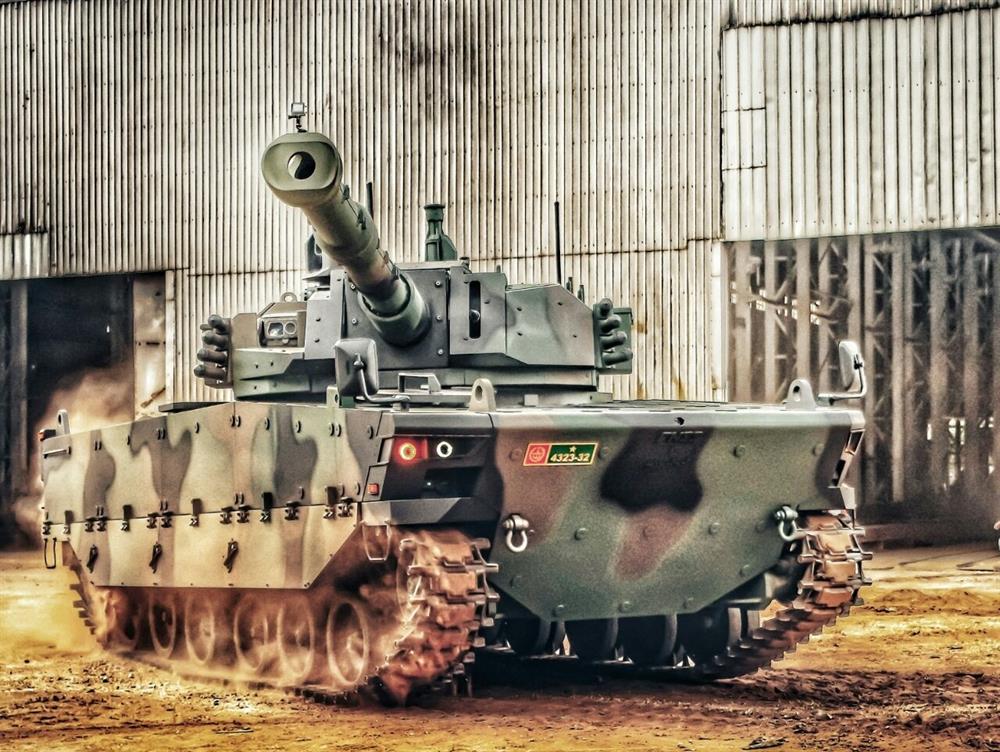
FNSS & PT Pindad Medium Tank (Kaplan MT).


This post has been edited by azriel: Oct 2 2017, 07:27 PM
azriel
post Oct 2 2017, 10:33 PM

New Member
*
Newbie
4 posts

Joined: Jan 2012
FNSS & PT Pindad Medium Tank (Kaplan MT). Credit to Anadolu Ajansi.

user posted image

http://aa.com.tr/tr/ekonomi/kaplan-tanki-z...va-hazir/924627

This post has been edited by azriel: Oct 2 2017, 11:42 PM
KYPMbangi
post Oct 3 2017, 05:01 AM

New Member
*
Junior Member
39 posts

Joined: Jun 2008


2 pilots killed in training jet crash in Tennessee, US Navy says

user posted image

QUOTE
Two pilots were killed when a T-45 training jet crashed in Eastern Tennessee on Sunday, the U.S. Navy confirmed in a statement.

The two pilots, an instructor and a student, did not survive the crash, according to the Navy’s statement. Their names are being withheld until 24 hours after next of kin notification.

An investigation will commence to determine the cause of the crash.

The U.S. Navy had grounded all 197 training jets after an exclusive Fox News report in April that pilots were refusing to fly the jets because they complained of poison in the oxygen system.


[sos]
KYPMbangi
post Oct 3 2017, 05:10 AM

New Member
*
Junior Member
39 posts

Joined: Jun 2008


Military plane crash in Congo kills dozens

user posted image

QUOTE
There were no survivors among the all-Russian crew that was transporting vehicles, weapons and military personnel. Initial reports suggest the plane suffered a faulty take-off.

The wreckage of a Russian-made military cargo plane goes up in flames.

A military plane crashed Saturday morning in the Democratic Republic of Congo, killing everyone on board, according to military and airport officials.

The Russian-made Antonov transport plane went down shortly after take-off in Congo's capital Kinshasa.

"There was a crash of a cargo plane. It's a military plane," George Tabora, the director of Kinshasa's N'djili Airport, said. "It wasn't transporting passengers. The crew did not survive the crash."

This was confirmed by the Defense Minister Crispin Atama Tabe: "All 12 members of the crew died."


[sos]
MilitaryMadness
post Oct 3 2017, 07:54 AM

Regular
******
Senior Member
1,302 posts

Joined: Oct 2010
From: Over your shoulder


QUOTE(azriel @ Oct 2 2017, 10:33 PM)
user posted image
*
Wah, so many exposed flat surfaces. Perfect impact points for anti-tank projectiles.

That frontal armor, in particular, is very disturbing to me.laugh.gif


This post has been edited by MilitaryMadness: Oct 3 2017, 08:03 AM

123 Pages « < 11 12 13 14 15 > » 
Bump Topic Topic ClosedOptions New Topic
 

Change to:
| Lo-Fi Version
0.0319sec    0.43    6 queries    GZIP Disabled
Time is now: 15th December 2025 - 07:23 PM