Germany is quietly absorbing allied military units into the Bundeswehr Czech Minister of Defence Martin Stropnicky, German Minister of Defence Ursula von der Leyen and the Romanian Minister of National Defence Gabriel Les signing the Framework Nations Concept agreement
Far from the headlines, Germany and two of its European allies, the Czech Republic and Romania, quietly took a radical step down a path toward something that looks like an EU army while avoiding the messy politics associated with it: They announced the integration of their armed forces.
In the next several months each country will integrate one brigade into the German armed forces: Romania’s 81st Mechanized Brigade will join the Bundeswehr’s Rapid Response Forces Division, while the Czech 4th Rapid Deployment Brigade, which has served in Afghanistan and Kosovo and is considered the Czech Army’s spearhead force, will become part of the Germans’ 10th Armored Division.
In doing so, they follow in the footsteps of two Dutch brigades, one of which has already joined the Bundeswehr’s Rapid Response Forces Division and another that has been integrated into the Bundeswehr’s 1st Armored Division. According to Carlo Masala, a professor of international politics at the University of the Bundeswehr in Munich, “The German government is showing that it’s willing to proceed with European military integration”
Other multinational concepts have been designed, but under the bland (and appropriately utilitarian) label of the Framework Nations Concept, Germany has been at work on something far more ambitious — the creation of what is essentially a Bundeswehr-led network of European miniarmies. “The initiative came out of the weakness of the Bundeswehr,” said Justyna Gotkowska, a Northern Europe security analyst at Poland’s Centre for Eastern Studies think tank.
“The Germans realized that the Bundeswehr needed to expand and fill gaps in its land forces … in order to gain political and military influence within NATO.” An assist from junior partners may be Germany’s best shot at bulking out its military quickly — and German-led miniarmies may be Europe’s most realistic option if it’s to get serious about joint security. “It’s an attempt to prevent joint European security from completely failing,” Masala said.
The Framework's idea is to share its resources with smaller countries in exchange for the use of their troops. For these smaller countries, the initiative is a way of getting Germany more involved in European security while sidestepping the tricky politics of Germany military expansion. They also get the added bonus of having elements of their armed forces be trained to a higher standard and be equipped with advanced German weapons without actually spending specifically towards it.
The Bundeswehr, in turn, already has a list of potential junior partners in mind, said Robin Allers, a German associate professor at the Norwegian Institute for Defence Studies who has seen the German military’s list. According to them, the Scandinavian countries — which already use a large amount of German-made equipment — would be the best candidates for the Bundeswehr’s next round of integration.
Die Anchluss continues?



 Military Thread V25
  Sep 8 2017, 04:12 PM


 Quote
Quote




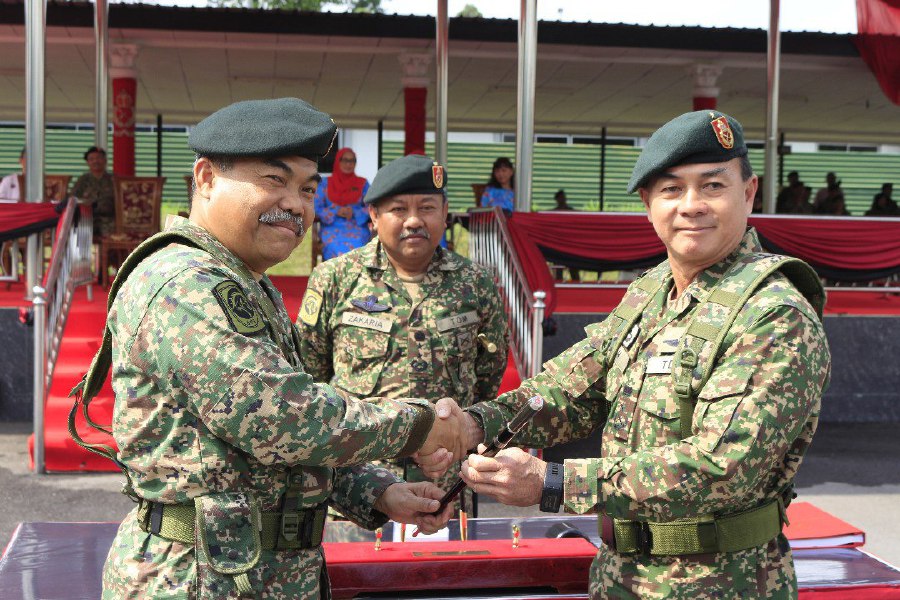
 the rare non bumi.... what's that strap they wear over their shoulders?


 0.1467sec
 0.31
0.31
 7 queries
 GZIP Disabled