Welcome Guest ( Log In | Register )

Outline · [ Standard ] · Linear+

 Venturing into Agriculture & Aquaculture, Co-Ordination & Implementation is KEY

views
     
yongbs
post Feb 23 2013, 09:38 PM

New Member
*
Junior Member
5 posts

Joined: Feb 2013
QUOTE(ParaOpticaL @ Feb 23 2013, 12:14 PM)
505 is the commercial name of a type of insecticide. useful against trunk borer they said and confirmed by Agriculture Officer.
A method to use is to clear the spot by poking and injecting via the syringe and either wait or cover up with earth.

My planting distance is 10 feet.
Hi Yongbs,

welcome to the club like MrFarmer put it.

All are planted with durians ?? Which clone/clones are they ?

please let us have more details of the farm or more pictures will help biggrin.gif
*
Hi,
I have about 150 trees consist of D2, D24, D144, Kuning("wong yoke chai"), D197 and others which I could not identify. The whole 5 arces planted with durians.
I have felled about 20 nos of D144 coz this clones never ripe properly but the color of the flesh is bronze. All the trees is about 15 years old except my D197 about 3 years old.
Will get some pictures of the farm during my next trip next week.
Cheers.
yongbs
post Feb 23 2013, 10:23 PM

New Member
*
Junior Member
5 posts

Joined: Feb 2013
Just for laugh and it is real. My last durian harvest in December where I let a friend collect the harvest and sell to middle man and the profit to be share 50/50. At the end of the harvest, I did not get any money(profit) and what I got from him was he bought me 5 nos of D197(musang wong) the reason was the rain that spoil everything, all the durians was not ripe. Believe it or not.
TSParaOpticaL
post Feb 23 2013, 11:07 PM

Planter - Durian, Jackfruit, Papaya
*******
Senior Member
2,348 posts

Joined: Dec 2004
From: Ch3r@s


Hi Bro,

i have a durian farm also. with multiple types of clones also. my farm is in mantin & pajam

but the prominent one are D28 & Musang King & D144. From experience your D144 could be due to insufficient fertiliser input because for the past 2 season even though there was alot of rain all of my trees were fully ripe.

Would be great if we could see your farm....eye opener for us.

QUOTE(yongbs @ Feb 23 2013, 09:38 PM)
Hi,
I have about 150 trees consist of D2, D24, D144, Kuning("wong yoke chai"), D197 and others which I could not identify. The whole 5 arces planted with durians.
I have felled about 20 nos of D144 coz this clones never ripe properly but the color of the flesh is bronze. All the trees is about 15 years old except my D197 about 3 years old.
Will get some pictures of the farm during my next trip next week.
Cheers.
*
last season which was nov/dec durians, there was an oversupply of durian for the whole of malaysia and also places in N.9 suffered from excess rain thus quite a no of the farms had uneven ripening. so yes too much rain will cause that to happen.

but that is also due to fertilisation apart from weather

QUOTE(yongbs @ Feb 23 2013, 10:23 PM)
Just for laugh and it is real. My last durian harvest in December where I let a friend collect the harvest and sell to middle man and the profit to be share 50/50. At the end of the harvest, I did not get any money(profit) and what I got from him was he bought me 5 nos of D197(musang wong) the reason was the rain that spoil everything, all the durians was not ripe. Believe it or not.
*
yongbs
post Feb 24 2013, 11:45 AM

New Member
*
Junior Member
5 posts

Joined: Feb 2013
QUOTE(ParaOpticaL @ Feb 23 2013, 11:07 PM)
Hi Bro,

i have a durian farm also. with multiple types of clones also. my farm is in mantin & pajam

but the prominent one are D28 & Musang King & D144. From experience your D144 could be due to insufficient fertiliser input because for the past 2 season even though there was alot of rain all of my trees were fully ripe.

Would be great if we could see your farm....eye opener for us.
last season which was nov/dec durians, there was an oversupply of durian for the whole of malaysia and also places in N.9 suffered from excess rain thus quite a no of the farms had uneven ripening. so yes too much rain will cause that to happen.

but that is also due to fertilisation apart from weather
*
Hi Bro,

Since I am not full time at my farm yet I will make arrangement for the visit. Maybe I can also visit your farm.

Cheers whistling.gif
MrFarmer
post Feb 25 2013, 02:04 PM

Casual
***
Junior Member
478 posts

Joined: Mar 2011
From: Sabah


QUOTE(yongbs @ Feb 24 2013, 11:45 AM)
Hi Bro,

Since I am not full time at my farm yet I will make arrangement for the visit. Maybe I can also visit your farm.

Cheers whistling.gif
*
rclxms.gif
Got farm visit. Count me in (if before 6/3).
poks
post Feb 26 2013, 07:38 AM

--[2013 : Going Farming]--
******
Senior Member
1,567 posts

Joined: Nov 2005
From: Ppg, Sbh.


Hi Mr Farmer,

I've actually started planting berangan some 2 years+ back.
I bought about 30+ seedlings from those guys in Tambunan but unfortunately stop doing my farm after my 2nd child came out and I still wonder if i bought the right banana (those bananas ripe green)

I started again with palm oil in kudat (small scale). But now nothing to do since it's harvesting time there. Can't find a soul to open up new area. lol

btw, my farm is in Penampang. just about an acre for me to excercise. Now started clearing and planting ginger.
Gonna do inter-cropping in Kudat as well in between young palm and rubber tree.... ginger also..

hopefully some of you guys can share a thing or two about planting ginger.
i'm planting normal ginger and also the red ginger which i never know it existed until my mother bought some to be planted biggrin.gif

thumbup.gif

This post has been edited by poks: Feb 26 2013, 07:50 AM
MrFarmer
post Feb 26 2013, 01:32 PM

Casual
***
Junior Member
478 posts

Joined: Mar 2011
From: Sabah


QUOTE(poks @ Feb 26 2013, 07:38 AM)
Hi Mr Farmer,

I've actually started planting berangan some 2 years+ back.
I bought about 30+ seedlings from those guys in Tambunan but  unfortunately stop doing my farm after my 2nd child came out and I still wonder if i bought the right banana (those bananas ripe green)

I started again with palm oil in kudat (small scale). But now nothing to do since it's harvesting time there. Can't find a soul to open up new area. lol

btw, my farm is in Penampang. just about an acre for me to excercise. Now started clearing and planting ginger.
Gonna do inter-cropping in Kudat as well in between young palm and rubber tree.... ginger also..

hopefully some of you guys can share a thing or two about planting ginger.
i'm planting normal ginger and also the red ginger which i never know it existed until my mother bought some to be planted  biggrin.gif

thumbup.gif
*
Hey, I bough Cavendish and it ripe green too. I replanted some and my buyer says it Pisang Hotel, and they are not keen. Hence had stopped transplanting them. Those that survived bear fruit after 14 months. This taught me that we need to know what we are planting blush.gif Wasted 14 months of time.

Kudat, nice place. My opinion on palm oil, you'll need a sizable land size and not too high gradient as these elevate your cost. Unlike Peninsular, collection here is difficult due to difficult access (higher transportation & access road cost). There are a couple of options clearing new land, speak with the locals, near your farm, mechanical or manual, time require, budget & etc. Then make your decision. Had just cleared 3/4 acres on 19th, by slashing. Preparing the area to plant soursop. Inter-cropping, don't think it's advisable to do palm & rubber, it's either one only both are big & long term crops. Then you can inter-crop with other smaller / mid or short term crops. I had seen very successful palm & pumpkins.

Penampang it's close to the city. Ginger is planted in big scale in Tambunan. Medium scale in Keningau (highlands). I had tried ginger, did okay in trial but failed when tried it in medium scale. Marketing could also a problem (me, no access to market).

Wishing good success.

user posted image

user posted image


Attached File(s)
Attached File  Panduan_Menanam_Halia.pdf ( 7.95k ) Number of downloads: 23
poks
post Feb 27 2013, 01:06 PM

--[2013 : Going Farming]--
******
Senior Member
1,567 posts

Joined: Nov 2005
From: Ppg, Sbh.


Well, that's a good lesson for us.
anyway, if you manage to get the actual cavendish sucker do share.. my interest is still in.

as for the inter cropping, the palm and rubber trees are still young (around 9 months - 1 year trees) & going to test ginger after paddy harvesting season is over. i'm at the mercy of cost and the only option for me to clear land is by man power only. laugh.gif

yes. kudat is nice. but a lot of undeveloped land due to poverty.
all the young guys move to city but never drop their sweat to grow anything on their big family land
happy.gif
MrFarmer
post Feb 28 2013, 12:39 PM

Casual
***
Junior Member
478 posts

Joined: Mar 2011
From: Sabah


QUOTE(poks @ Feb 27 2013, 01:06 PM)
Well, that's a good lesson for us.
anyway, if you manage to get the actual cavendish sucker do share.. my interest is still in.

as for the inter cropping, the palm and rubber trees are still young (around 9 months - 1 year trees) & going to test ginger after paddy harvesting season is over. i'm at the mercy of cost and the only option for me to clear land is by man power only. laugh.gif

yes. kudat is nice. but a lot of undeveloped land due to poverty.
all the young guys move to city but never drop their sweat to grow anything on their big family land
happy.gif
*
Shall concentrate on the Berangan as the marketing is easier. My buyers isn't familiar with Cavendish and with a bad experience, better stick with the proven varieties.

Land in Kudat I guess is less mountainous. Went there a couple of times, but only to the Tip Of Borneo.
It's the 'norm' for youngster as life in city is glamorous. Agriculture is hard and I feel you shall need a certain land size to be feasible.

Good luck to all of us.
zyper
post Mar 3 2013, 08:21 PM

New Member
*
Newbie
2 posts

Joined: Feb 2013


Hi all

Iam new to agriculture and aquaculture industry. Iam from Singapore and thinking of opening up a farm in Malaysia with some people.

Well actually someone else is looking for a land in Malaysia and he is interested in agriculture industry. He has a farm in Philippines and elsewhere with other people. Iam just starting to learn new things and this guy knows alot of things about planting stuff.

So Iam looking for land for lease, he said he wants to start with kelapa sawit. I have seen some ad online and somewhere else, but I do not know whether to trust them as I have some relatives who have been cheated when they are about to buy house in Johor. So can I get some recommendation from the trustworthy people here to lease land in Malaysia? How much is 1 acre cost?

Thanks
MrFarmer
post Mar 4 2013, 12:00 AM

Casual
***
Junior Member
478 posts

Joined: Mar 2011
From: Sabah


QUOTE(zyper @ Mar 3 2013, 08:21 PM)
Hi all

Iam new to agriculture and aquaculture industry. Iam from Singapore and thinking of opening up a farm in Malaysia with some people.

Well actually someone else is looking for a land in Malaysia and he is interested in agriculture industry. He has a farm in Philippines and elsewhere with other people. Iam just starting to learn new things and this guy knows alot of things about planting stuff.

So Iam looking for land for lease, he said he wants to start with kelapa sawit. I have seen some ad online and somewhere else, but I do not know whether to trust them as I have some relatives who have been cheated when they are about to buy house in Johor. So can I get some recommendation from the trustworthy people here to lease land in Malaysia? How much is 1 acre cost?

Thanks
*
Hi Zyper, welcome to this forum. Welcome to Malaysia.

Investing in whatever business in a different country is always a big challenge. Business and Land code differs between country to country. Please proceed with great caution.

Do do a land search with the Land & Mine department once you had identify the land as this shall provide you with the status of the land, official owner, any caveats & etc. Do go through the proper channel to get things done officially.

Land prices differs greatly from location to location, land condition, size & etc. A good place to gauge shall be @ Mudah.com.

Enjoy your journey.
TSParaOpticaL
post Mar 4 2013, 08:10 AM

Planter - Durian, Jackfruit, Papaya
*******
Senior Member
2,348 posts

Joined: Dec 2004
From: Ch3r@s


Welcome abroad...

careful when you go on buying land.
its more important to source for property agents that cover areas that you are interested to buy rather than simply going online. this is because there had been land scams where the land was sold over and over a few times...

what kind of farming are you planning to do ???

Oil palm is profitable provided you have a big land to do so. if too small it is just uneconomical...
MrFarmer
post Mar 8 2013, 08:15 PM

Casual
***
Junior Member
478 posts

Joined: Mar 2011
From: Sabah


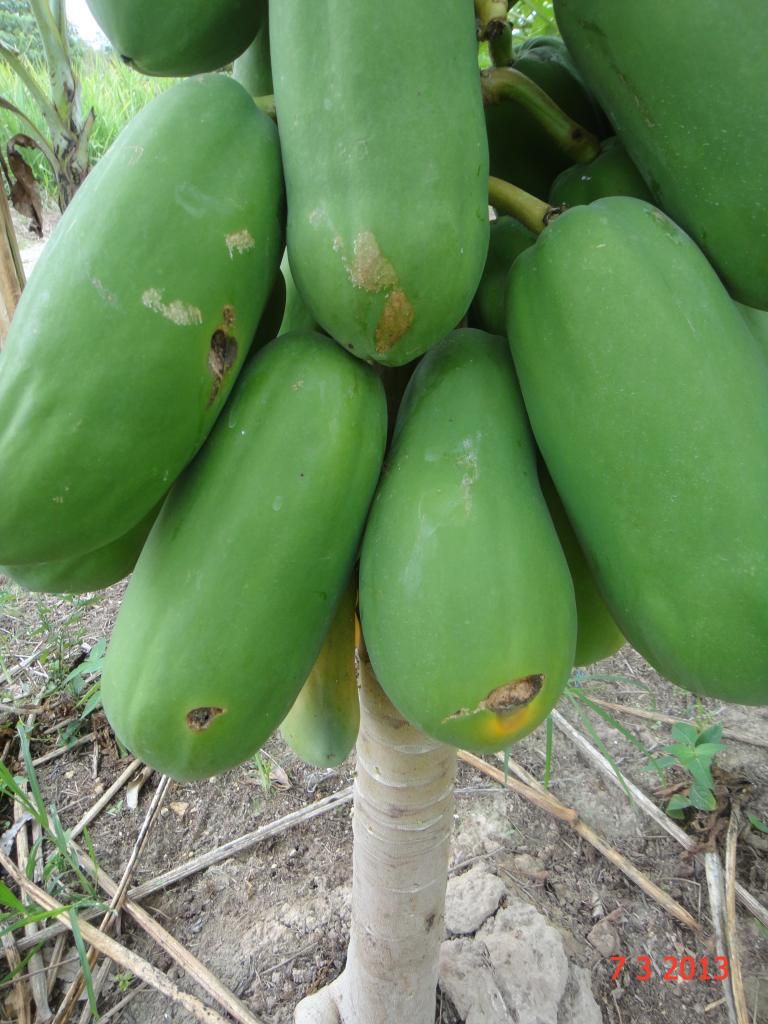
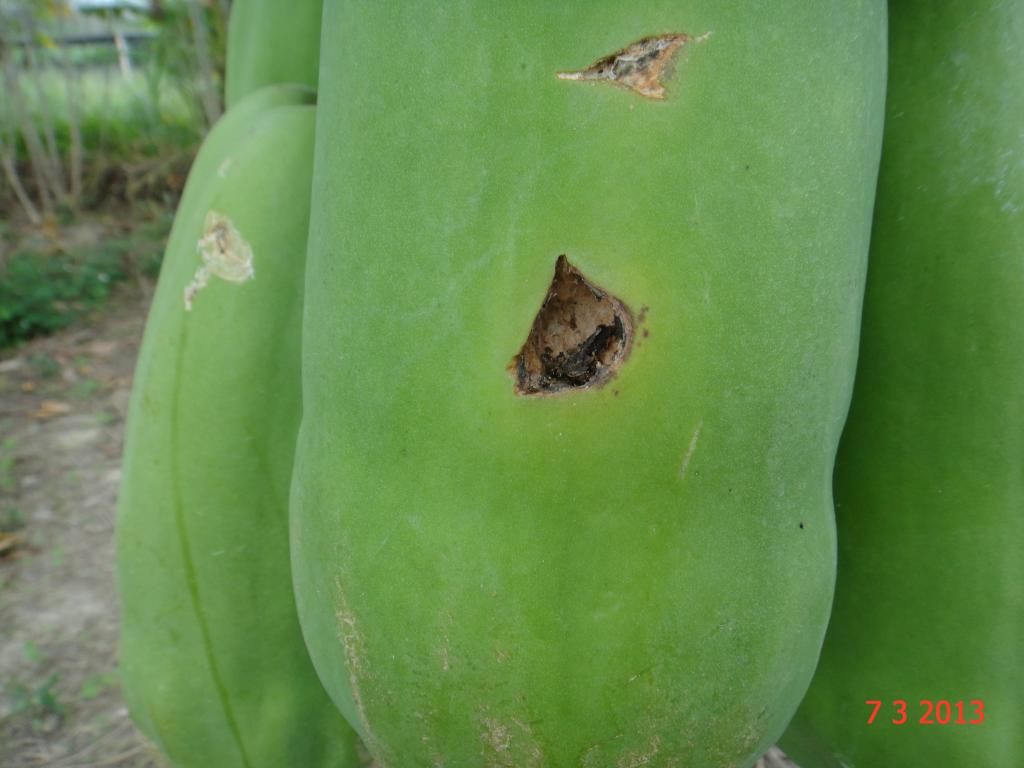
Some problems with my Papaya. Have a couple of trees with this problem. Any idea?

user posted image

user posted image

zyper
post Mar 9 2013, 05:19 PM

New Member
*
Newbie
2 posts

Joined: Feb 2013


QUOTE(ParaOpticaL @ Mar 4 2013, 08:10 AM)
Welcome abroad...

careful when you go on buying land.
its more important to source for property agents that cover areas that you are interested to buy rather than simply going online. this is because there had been land scams where the land was sold over and over a few times...

what kind of farming are you planning to do ???

Oil palm is profitable provided you have a big land to do so. if too small it is just uneconomical...
*
Thanks for the reply MrFarmer & ParaOpticaL biggrin.gif

Iam in IT line so Iam a little bit busy doing some projects and Iam surprise that some of you came from IT or Engineering background.

Well personally I hope that everything will sail smoothly this year and going to loan some land in Philippines to plant padi and corn.

Iam not sure whether foreigners is able to buy agriculture land in Malaysia because I have been told that we can't buy that kind of land, is this true??
I have read about the bumi and non bumi land. The guy that is going to invest in Johor wants to plant kelapa sawit but Iam not sure whether he wants to
plant something else. He wants to lease it but my Malaysian uncle and lecturer told me it is better to buy the land for planting purposes rather than leasing it but Iam not sure whether foreigners can buy the land.

So Iam currently looking for land in Johor but Iam open to elsewhere in Malaysia. Btw you guys did a great job doing the newsletter and maybe I can help with the design of it.


Michael J.
post Mar 15 2013, 02:09 AM

On my way
****
Senior Member
596 posts

Joined: Jan 2006


Sorry for the long absence. I have been busy with my research, and will be MIA intermittently.

Youtube is really and interesting place to look for amusing stuff on agriculture. Look up the link below on Langat Aquatech's high density catfish farming.

http://www.youtube.com/watch?v=EGlIS-8QBgo

The video is old, but still quite impressive. The least dense tank contained 10,000 fishes, with a target weight of around 125g (8 fish per kg). That's a hell lot of fish for such a small tank. Going by the rate above, we're looking at 1,250kg of fish; @ retail value of RM5.00 per kg, that's about RM6,250 sitting there. Now the average growth rate of Clarias catfish to reach 125g is about 3-4 months, so that's about 3 cycles in a year. I believe that about 10 tanks can be house on say half acre space, with generators, shed house, etc. Therefore, 30 harvests of RM6,250 each = RM187,500.

Anyway, back to business.

MrFarmer:

The peck marks? Birds are attacking your papayas. They should be near ripe. The papayas, I mean.

As for Cavendish, yea, lots of process required to market the fella. This variety rarely ever does turn yellow on its own, unless almost rotten. It also doesn't ripe evenly, even after exposure to farnesene or carbide. You will need a cold room to achieve even ripening. But export market is very good. In Australia, they sell for about AUD$3.50 a kg off-peak (roughly RM13.00 here).

zypher:
Foreigners are permitted to purchase land in Malaysia. But I would suggest you get a good lawyer, aside from a good real estate negotiator. This is because not all land are designated for plantation-based agriculture, and there are some which actually specify what kind of crop is permitted (although it is usually ignored by the growers and the authorities). Also, some properties carry with them special clauses (eg. TOL land which is leased land from the government, land of limited statutes of ownership, native customary rights land etc.). You will need a good and honest lawyer to help you through this, especially in dealing with the government.


Anyway, it's been 2.5 months now since I've landed in Sarawak. I must say, Kuching+Samarahan is a pretty flat land. Very heavy clay in the higher elevations, and really swampy peat soils in the lower grounds. But overall, it is actually a pretty fertile land. Just the agronomic aspect need to be given more emphasis; noticed that agronomic practices are almost non-existent.

Also, checked out much of the wet markets around town. Aside from the usual stuff seen in Peninsular, there were a lot more other varieties of vege and fish being sold. It isn't often you find fiery Habanero chili peppers being sold in such abundance in one place, or huge Pacu (piranha) fish being traded eagerly. The variety of fish species, in particular really caught my attention. I believe that Sarawak (well at least Samarahan) has a good potential for freshwater aquaculture, as long as the downstream activities are also equally developed (eg. smoked catfish, pickled fish, etc.).

Sunlight hours in Sarawak is extremely long. I estimated about 6.5 hours of full sunshine hours here; but it may just be due to the time of the year. Weather patterns, however, is very volatile. It can be blistering hot for a moment, and then suddenly a massive thunderstorm will roll in. Might be tied to the lay of the land, and its located to the South China Sea. The mountain ranges fringing Kuching + Samarahan, in my opinion, sort of act as a funnel, channeling in the water vapour and trapping them over the two towns.

I have yet to really sample any local species for agriculture purposes, but I believe I may have found a potential catfish candidate to hybridize with the existing version of the hybrid to create a super hybrid of sorts. The current variety does grow very fast (reaches 1kg in 8-12 months), but apparently does not taste as good. Hopefully, by including more genetics of local species, the new hybrid will have better taste while retaining its high growth rate.

MrFarmer
post Mar 15 2013, 08:17 PM

Casual
***
Junior Member
478 posts

Joined: Mar 2011
From: Sabah


QUOTE(Michael J. @ Mar 15 2013, 02:09 AM)
Sorry for the long absence. I have been busy with my research, and will be MIA intermittently.

Youtube is really and interesting place to look for amusing stuff on agriculture. Look up the link below on Langat Aquatech's high density catfish farming.

http://www.youtube.com/watch?v=EGlIS-8QBgo

The video is old, but still quite impressive. The least dense tank contained 10,000 fishes, with a target weight of around 125g (8 fish per kg). That's a hell lot of fish for such a small tank. Going by the rate above, we're looking at 1,250kg of fish; @ retail value of RM5.00 per kg, that's about RM6,250 sitting there. Now the average growth rate of Clarias catfish to reach 125g is about 3-4 months, so that's about 3 cycles in a year. I believe that about 10 tanks can be house on say half acre space, with generators, shed house, etc. Therefore, 30 harvests of RM6,250 each = RM187,500.

Anyway, back to business.

MrFarmer:

The peck marks? Birds are attacking your papayas. They should be near ripe. The papayas, I mean.

As for Cavendish, yea, lots of process required to market the fella. This variety rarely ever does turn yellow on its own, unless almost rotten. It also doesn't ripe evenly, even after exposure to farnesene or carbide. You will need a cold room to achieve even ripening. But export market is very good. In Australia, they sell for about AUD$3.50 a kg off-peak (roughly RM13.00 here).

zypher:
Foreigners are permitted to purchase land in Malaysia. But I would suggest you get a good lawyer, aside from a good real estate negotiator. This is because not all land are designated for plantation-based agriculture, and there are some which actually specify what kind of crop is permitted (although it is usually ignored by the growers and the authorities). Also, some properties carry with them special clauses (eg. TOL land which is leased land from the government, land of limited statutes of ownership, native customary rights land etc.). You will need a good and honest lawyer to help you through this, especially in dealing with the government.
Anyway, it's been 2.5 months now since I've landed in Sarawak. I must say, Kuching+Samarahan is a pretty flat land. Very heavy clay in the higher elevations, and really swampy peat soils in the lower grounds. But overall, it is actually a pretty fertile land. Just the agronomic aspect need to be given more emphasis; noticed that agronomic practices are almost non-existent.

Also, checked out much of the wet markets around town. Aside from the usual stuff seen in Peninsular, there were a lot more other varieties of vege and fish being sold. It isn't often you find fiery Habanero chili peppers being sold in such abundance in one place, or huge Pacu (piranha) fish being traded eagerly. The variety of fish species, in particular really caught my attention. I believe that Sarawak (well at least Samarahan) has a good potential for freshwater aquaculture, as long as the downstream activities are also equally developed (eg. smoked catfish, pickled fish, etc.).

Sunlight hours in Sarawak is extremely long. I estimated about 6.5 hours of full sunshine hours here; but it may just be due to the time of the year. Weather patterns, however, is very volatile. It can be blistering hot for a moment, and then suddenly a massive thunderstorm will roll in. Might be tied to the lay of the land, and its located to the South China Sea. The mountain ranges fringing Kuching + Samarahan, in my opinion, sort of act as a funnel, channeling in the water vapour and trapping them over the two towns.

I have yet to really sample any local species for agriculture purposes, but I believe I may have found a potential catfish candidate to hybridize with the existing version of the hybrid to create a super hybrid of sorts. The current variety does grow very fast (reaches 1kg in 8-12 months), but apparently does not taste as good. Hopefully, by including more genetics of local species, the new hybrid will have better taste while retaining its high growth rate.
*
Ho Micheal, glad that you're back. Yes, having chicken problems, as neighbors (more than 4 sides) release their chickens, free ranging smile.gif
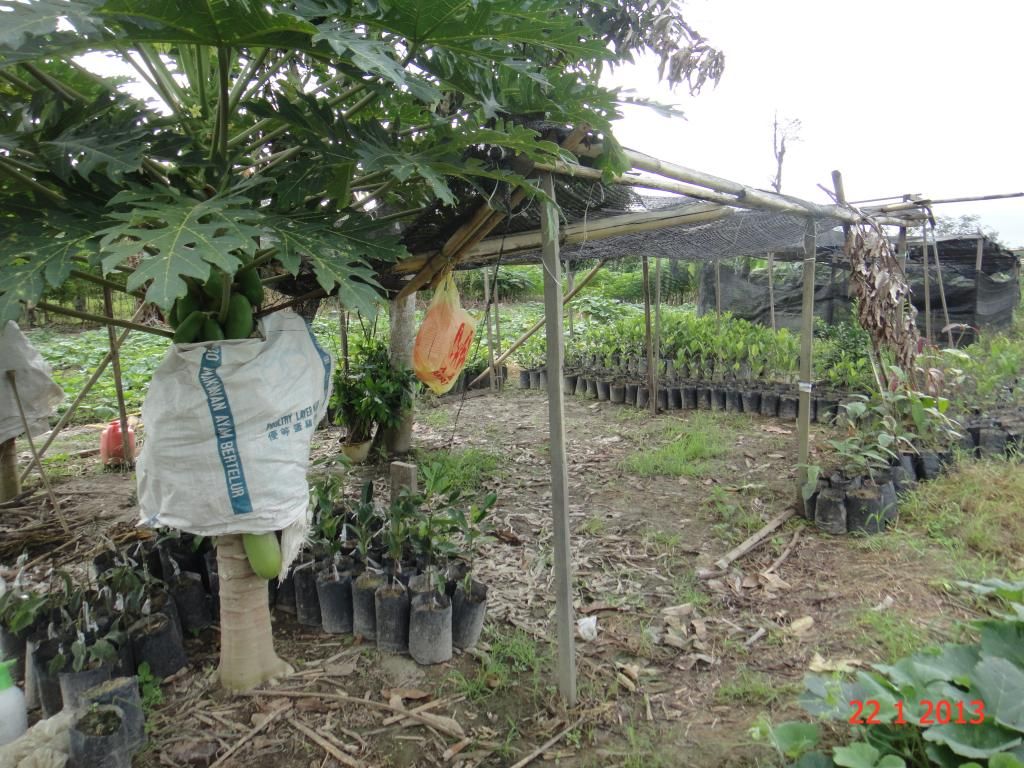
Having lots of chicken pecks on the papaya as these are the solo varieties. Had bought lots of used sacks to cover up, but still having problem. Hope it'll out grow it as the trees grows higher.

Michael J.
post Mar 15 2013, 11:11 PM

On my way
****
Senior Member
596 posts

Joined: Jan 2006


MrFarmer:

Mmmm... maybe you can erect temporary fencing using whatever free materials lying around on your farm? Like short stout sticks inlaid in a conical shape around the trees?


Michael J.
post Mar 15 2013, 11:20 PM

On my way
****
Senior Member
596 posts

Joined: Jan 2006


On a different topic, what is the general opinion about keli aquaculture among forum members?


Now, I do have some thoughts about keli aquaculture. Although most who go into freshwater aquaculture prefer tilapia, I strongly believe that keli has some very good fundamentals that would allow it to overtake tilapia soon.

For one, most keli species (of the genus Clarias) are known for fast growth when using the right feed. It is well documented that they can grow from 2g (1 week old hatchlings about 1" long) to 130g within 90-100 days. Secondly, they can thrive even under extreme densities, and they can breathe air. This means more fish mass per unit area.

The downside, of course, is that most cultured keli species are not very good at converting plant proteins into muscle mass. Most fish feeds today are derived from soy-based proteins, mixed with very little fish meal. Fish that are more herbivorous, such as tilapia will obviously thrive on such feed, and hence the perception that keli does not perform as well as tilapia.

But here's the good news: keli can easily digest and convert insect protein into muscle mass. What more, as insect protein contains very little fat and carbohydrates, the keli is less likely to produce fatty tissue compared to current feed formulations. The question of course then, is who the heck produces insect proteins for fish feed?

Para, correct me if I'm wrong, but at some point before Rexis was talking about large scale production of darkling beetles and larvae for feed protein production. Any idea what came out of his venture?

Aside from insect protein fish feeds, the other aspect is genetic improvement of the keli itself. I have been studying some of the African and Asian walking catfish literatures, and although the largests members of the family (100cm lengths, 6kg average weights) feed primarily on fish, there are also many other members of the family that feed largely on insects, arthropods, etc. and are still able to attain sizes of up to 50cm or more, with weights of 1kg++. I believe that even if the aquaculturist were to domesticate these other lesser known keli without the help of hybridization, it is quite possible to improve catfish productivity while reducing costs. If hybridization is used, the right genetic combination would produce a fish that is not strongly dependent on animal protein, but can metabolize cheap insect protein and even plant proteins.
MrFarmer
post Mar 17 2013, 07:24 PM

Casual
***
Junior Member
478 posts

Joined: Mar 2011
From: Sabah


QUOTE(Michael J. @ Mar 15 2013, 11:11 PM)
MrFarmer:

Mmmm... maybe you can erect temporary fencing using whatever free materials lying around on your farm? Like short stout sticks inlaid in a conical shape around the trees?
*
Are using used bags, which cost $1 each and we most probably need 2 to fully cover the fruits. Problem is that access is difficult, we need to unwrap, check for harvest, disease, do spraying, then wrap it back. Labor intensive, if doing this for a large numbers of trees. Hope this shall be a temporary problem and hopefully as it grows higher, the chicken wouldn't peck.

user posted image
Michael J.
post Mar 17 2013, 09:04 PM

On my way
****
Senior Member
596 posts

Joined: Jan 2006


MrFarmer:

Haaa..... that's pretty darn expensive man....! Well, technically, chickens don't climb trees. But birds like orioles and mynahs can fly. You don't have those birds at your place, right? Even if you do, I don't think it is likely to have dozens or even hundreds of them around; so should be ok.

Mmm.... one solution is to put up nets. It is costly, but if you're in it for the long term, then is works out well.

The other way is to put up noise deterrents. String up tin cans with something like a stone inside, and link them to a miniature windmill like that. As the wind blows, it will jinggle the string of "noisemakers", and hopefully this will scare them chickens/birds away.

Yet another way: Rear lots of territorial birds, like geese. But make sure they are used to you, or they will chase you also. Geese are known to be quite a bully towards other farm animals, especially ducks and chickens, and they are extermely protective of their home territory. Turkeys are also quite aggressive, especially the black ones. In both species, mated pairs are best, as the males are very protective of the female, who is in turn protective of her nesting ground.

119 Pages « < 74 75 76 77 > » Top
 

Change to:
| Lo-Fi Version
0.0234sec    0.93    6 queries    GZIP Disabled
Time is now: 21st December 2025 - 05:08 AM