Read some history...
The reason Rolex holds such mystique among watch afficiandos is because it's the watch that so many of our heroes wore when we were young and I do not mean Hollywood stars and what not.
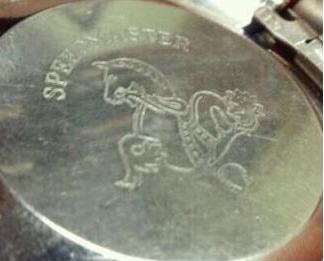
It's a watch built specifically for a purpose and the purpose is to conquer nature at it's worst and come out winning every single battle. It's the first almost everything except maybe going to the moon. Even that the astronauts would still strap a Speedmaster on one wrist and a GMT on the other. The deepest depth of the ocean, the highest peak of the world, timed the great POW escape from a German concentration camp, even credited to play an important part in our fight against the Japanese according to a Force 136 British officer because of it's legibility in our thick jungle.
So what did a PP, AP, VC did other than gracing the wirst of the chi-chi basterds and b****es whose only action that they would go through their entire mechanical life is the "torture" of clapping hands and motion of jerking off. Btw, try playing foosball wearing your IWC 7-days and see what would happen...
Other than Seiko, no one other Swiss maker is more inhouse than Rolex. Credited to be the inventor of the first wristwatch and first full waterproof watch. Without Rolex' "first" and invention.. there would be no more Swiss watch making industry. Not to mention scores of watchmaker graduated from Rolex' school which is funded fully. Rolex is not a company, it's an instituition. There's no marketing ploy unlike PP's "taking care" bullshit.
Interview with Frank Muller
Can you elaborate on how they create the perception of being in-house?
It is something of a paradox and it is for this reason I said that you have to pay attention to the dreams expressed by high Swiss watchmaking. Patek Philippe for example would have you believe that they are a predominately mechanical brand but they are one of the largest producers of quartz movements (for their ladies watches) in Switzerland. Further this isn’t even an in-house quartz movement they buy it from the Swatch Group and modify it.
Another marketing tactic is to make you believe that an in-house manufactured watch is somehow better than the one that uses out sourced parts. But how can a manufacture perfect every single one of the crafts needed to create a watch because there are well over 100 of these. Are they saying they can do each of these crafts better than everyone else? The watch industry was one that from the beginning outsourced parts such as screws, wheels and other components from specialty suppliers.
Is there any other high luxury industry that operates through out sourcing?
It’s a bit like the automobile industry. You may not know this but one of the biggest sites for the automobile manufacturing was located in a place that was previously well known for watchmaking. The big factory of Peugeot is located Montpellier which previously had a specialization in making pendulum clocks. The system of outsourcing that was so strong there made it perfectly suited to set up car manufacturing. The outsourced organization and mentality for cars and clocks was exactly the same. “In house” is uniquely a commercial message. Also it is unrealistic for anyone to be one hundred percent in-house. For example we fabricate parts for A. Lange & Sohne. We make parts for a vast number of different brands.
What do you think of brands that had no tradition in in-house movements now joining the in-house bandwagon such as Panerai?
The problem with Panerai wanting to assert itself as an in-house manufacture and also a haute de gamme manufacture is that it is impossible to elevate your brand beyond its natural limitations. Panerai was not created to be a high watchmaking brand so even if they introduced a tourbillon or an in-house movement they will not be able to move up to the ranks of haute horology. You can certainly move down, but the shift in positioning upwards just doesn’t happen. The DNA of the brand is based on its status as a pragmatic heroic watch and it just doesn’t work as a high watchmaking, technical brand.
How would you explain then that Panerai does manage to sell its high complications?
Well it’s simple. Panerai fans are very loyal and within this group there are unquestionably several who are willing to purchase a very expensive watch like a Panerai tourbillon. But just because there are several willing to buy this watch doesn’t mean Panerai has successfully climbed the ladder doesn’t mean they can communicate the high end dream that makes you believe they have the legitimacy to create high complications.
Why has in-house become such a hot topic today?
The market has become highly competitive and many new brands have emerged and many old ones have re-emerged. It is often a message pushed by brands that don’t have great haute de gamme legitimacy and try to establish this legitimacy by pushing the message that their movements are in-house. If you look at the real haute de gamme brands, Patek Philippe, Vacheron Constantin, Audemars Piguet they have never pushed this message as the criteria for their elevated status. They already have brand equity and so they don’t need to.
A brand like Glashutte Original or Jaeger-LeCoultre that wants this status pushes the in-house message hard. But that is because they don’t have the brand equity and historical status of the haute de gamme brands. I tend to believe that either you are haute de gamme or you aren’t.
Is Jaeger-LeCoultre haute de gamme (high end)?
Jaeger-LeCoultre is an interesting paradox. Because it’s product is naturally high end or haute de gamme. From finish to design to quality their watches are excellent. But because they’ve enlarged their market and produced so many watches they descended to milieu de gamme or mid range. They have descended not because of the quality of their watches which is exceptional but because of the quantity of watches they make relative to demand and correspondingly because their prices are low.
How do you define haute de gamme?
One good benchmark is this. You take away all subjective considerations related to aesthetic etcetera and think about it this way. How many brands do not have a watch that costs less than 5,000 Swiss Francs? In fact there is not that many of them or 5-6 brands. Price is related to quantity. Your collection is on with a price that is high end and you are limited to how many watches you can sell because this price point is prohibitive. But for example if you drop your price of your basic watch to between 4000-5000 Swiss Francs your potential expands enormously. So Jaeger-LeCoultre makes a high end product but lowers the perception of its brand equity because it prices this watch too low.
We (Franck Muller) are by definition haute de gamme because our basic watch starts at a price point 2000 Francs higher than that of Audemars Piguet. We start at 7000 Francs. We don’t do men’s quartz watches. But we did a study and discovered if we lowered the basic price of our mechanical man’s watch to 5000 Francs we could easily sell 100,000 more units per year. But we didn’t do it because it would have negatively impacted our brand equity. It would undermine our image. This is very dangerous. You have to choose which direction you want to go in and stick with it.
Are there brands that make high end products but have successfully gone mass?
A good example is Rolex. Now, a Rolex watch has enormous value relative to its price. It is really excellent value. It is the accessibility of its price that allows Rolex to sell 1 million watches a year. But have you ever looked at a Rolex movement? These are incredibly high end movements. They are high end in the manner they are made, in the way they are decorated in the way that they are designed, and they are in-house. I look at Rolex objectively I would say they are incredible because you have tremendous value. The same thing goes for an Omega Constellation chronograph. You look at the price and then you realize for this relatively low price you are getting a high end movement.
So emotional impact is one of the key components to success?
The perception of a brand’s status is not related simply to how nicely decorated the movement is, or whether it is in-house or out house but how much this brand evokes in you the desire to own it. This is the magic; this is the dream of a true haute de gamme brand. Audemars Piguet has this kind of magic. Patek Philippe has this kind of magic.
What do you think of the huge number of new brands that have emerged in the past few years offering ever more creative products?
When we look at Picasso, everyone thinks “Hey I can also be a Picasso,” but what everyone forgets that Picasso first mastered classical painting before he became inventive. It’s the same with watchmaking if you want to contribute then you need to have a full understanding and respect for horology before you invent.
Today people have computers and they like to play around with imagery to create wild watches, but they often don’t make watches that function – which means they are a bit like false Picassos. One of the people doing great work today is Giulio Papi but you must understand that he is a watchmaker at heart, his father is a watchmakers and he comes from this great tradition. Michel Parmigiani and Philippe Dufour and others like them also come from the culture of watchmaking. The problem is the public sometimes doesn’t distinguish between real watchmaking and trickery. [

Added on November 28, 2011, 5:30 amApparently some people never read.... could you tell me what upgraded/modification that IWC/PAtek did that justifies the whole "cost"? Upsizing, different colours, producing tons of LE and adding thicker spacers does not mean progress.
Go and just look at the past 10 years and look at the evolution of Rolex' calibres. You don;t have to go that far. Open your eyes and READ, DIGEST and UNDERSTAND.
Look at 16750 vs 16710 vs 116710 the timeline is only around 25 years. This is progress. What has PP been doing?
Damn...you must be one CLASSY DUM FUCT


 Nov 27 2011, 11:47 AM


 Quote
Quote






 Write some review la




 0.0294sec
 0.43
0.43
 6 queries
 GZIP Disabled