Welcome Guest ( Log In | Register )

Bump Topic Topic Closed RSS Feed

Outline · [ Standard ] · Linear+

 Fund Investment Corner v2, A to Z about Fund

views
     
wongmunkeong
post Jan 19 2012, 06:30 PM

Barista FIRE
Group Icon
Elite
5,608 posts

Joined: May 2011
From: Here, There, Everywhere


QUOTE(transit @ Jan 19 2012, 05:53 PM)
Thanks for Wong for sharing. If Wong is working in my agency, then most of my UTC will be expert to using those data sharing. I like the way he creates those working methods with data pulling from CAMS & FP Advisor into Excel Spreadsheet. Thanks again...Hope year 2012 is a good ending....unlike year 2011 like a roller coaster trend. (High --> Low --> High)

Wishing all Happy CNY 2012 and more more $$$$$$$$ from your investment portfolio.
*
Paiseh paiseh - most probably if i'm in your agency, Transit, most of your UTCs wont even know i exist coz i seldom join my upline's group for talks/roadshow/etc. Actually, havent even joined once! tongue.gif
Only go for classes and that is just to get the donkey points to keep being an agent laugh.gif
Thus, i'm a bad example of a UTC in such light notworthy.gif

To those celebrating Chinese New Year - Prosperity and REAL WEALTH (always enough $ * great health * great relations) to U & your loved ones. rclxm9.gif


Added on January 19, 2012, 7:05 pmSifus and Guru-jis here, can i pick your brains?
Please do take a look at the attached concepts and shoot/criticize with feedback on how to make better can ar? These are some of the concepts / ideas / opinions i share with my friends and investors (now crystalized on Power Point) - again, not for selling per se, but to build a base of knowledge and understanding, even before thinking of investing.

Any legal-ese advise would be welcomed too - heck, i dont want to get into trouble sharing opinion / concepts / ideas tongue.gif

Danke in advance notworthy.gif
Attached File  To_Share___Simplify.zip ( 299.49k ) Number of downloads: 129


This post has been edited by wongmunkeong: Jan 19 2012, 08:28 PM
jutamind
post Jan 19 2012, 09:45 PM

Look at all my stars!!
*******
Senior Member
2,429 posts

Joined: Jul 2007
QUOTE(wongmunkeong @ Jan 19 2012, 06:30 PM)

Please do take a look at the attached concepts and shoot/criticize with feedback on how to make better can ar? These are some of the concepts / ideas / opinions i share with my friends and investors (now crystalized on Power Point) - again, not for selling per se, but to build a base of knowledge and understanding, even before thinking of investing.
i was looking through your files and one of your criteria for stock selection is share price <= discounted intrinsic value. how do you get the data for discounted intrinsic value?
wongmunkeong
post Jan 19 2012, 09:56 PM

Barista FIRE
Group Icon
Elite
5,608 posts

Joined: May 2011
From: Here, There, Everywhere


QUOTE(jutamind @ Jan 19 2012, 09:45 PM)
i was looking through your files and one of your criteria for stock selection is share price <= discounted intrinsic value. how do you get the data for discounted intrinsic value?
*
Based on calculations using Avg EPS Growth, Avg P/E, Avg Dividends, Total Returns, then discounting it by xx%. The EPS, DPS, etc. are taken from that KLSE book in my notes - lots of historical stats (EPS, DPS, P/Es, DYs, etc) + 3 years ratios.

Heheh - formula based on a book i read. I gotta go dig it out to recall the name - it's either the local book with the title like "Make $ in the Stock Market in Up or Down markets" (or was it the other one.. read 2 good books locally written) or Rule #1 by Phil T. If U really interested in the formula, let me know - i'll go dig out the book and compare to my Excel's formulas, then let U know.

Sorry ar - getting old & foggy, read those books like in 2002 or so, built the Excel 2003 or so - if i recall correctly tongue.gif

This post has been edited by wongmunkeong: Jan 19 2012, 10:05 PM
jutamind
post Jan 20 2012, 12:02 AM

Look at all my stars!!
*******
Senior Member
2,429 posts

Joined: Jul 2007
U mean the book by Ho Kok Mun? I got the book as well.

Once you've filtered through the stocks, how do you determine buy and sell price?

QUOTE(wongmunkeong @ Jan 19 2012, 09:56 PM)
Based on calculations using Avg EPS Growth, Avg P/E, Avg Dividends, Total Returns, then discounting it by xx%. The EPS, DPS, etc. are taken from that KLSE book in my notes - lots of historical stats (EPS, DPS, P/Es, DYs, etc) + 3 years ratios.

Heheh - formula based on a book i read. I gotta go dig it out to recall the name - it's either the local book with the title like "Make $ in the Stock Market in Up or Down markets" (or was it the other one.. read 2 good books locally written) or Rule #1 by Phil T. If U really interested in the formula, let me know - i'll go dig out the book and compare to my Excel's formulas, then let U know.

Sorry ar - getting old & foggy, read those books like in 2002 or so, built the Excel 2003 or so - if i recall correctly  tongue.gif
*
wongmunkeong
post Jan 20 2012, 08:15 AM

Barista FIRE
Group Icon
Elite
5,608 posts

Joined: May 2011
From: Here, There, Everywhere


QUOTE(jutamind @ Jan 20 2012, 12:02 AM)
U mean the book by Ho Kok Mun? I got the book  as well.

Once you've filtered through the stocks, how do you determine buy and sell price?
*
Er.. i think so - i recognize his name biggrin.gif

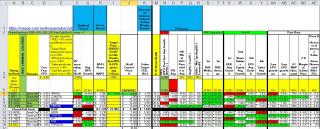
Once filtered for at least 3 years consistency in ROE, D/E, Cashflow, etc
+ Create trigger prices to buy in
eg. MIN(discounted intrinsic value, margin of safety)
OR discounted Price/NAPS
OR Gross DY%
OR discounted P/E

Trigger to sell: Simple Trailing Stop Loss of 10%

Attached Image

Attached Image

oh.. kaka.. sorry ar mods & admin, now only noticed i'm replying in a Funds thread doh.gif
Jutamind - if more Qs, please post at Personal Financial Planning/Mgt (correct thread ar Mods & Admins? more fundamental approach than trading / TA in the Stocks area notworthy.gif )

This post has been edited by wongmunkeong: Jan 20 2012, 08:16 AM
ngaisteve1
post Jan 26 2012, 05:22 PM

Software Engineer
*******
Senior Member
6,779 posts

Joined: Dec 2005
From: Kuala Lumpur


Hi, i just came accross this site, fundsupermart.com. looks not bad as the sales charge looks cheap. i just register online but not yet submit the documents for approval. anyone buy unit trust fund from this site before?
transit
post Jan 26 2012, 06:24 PM

Casual
***
Junior Member
360 posts

Joined: Jul 2007
From: Island of Oriental Pearl

Yes. I did.
jutamind
post Jan 26 2012, 07:37 PM

Look at all my stars!!
*******
Senior Member
2,429 posts

Joined: Jul 2007
assuming that i have a UT fund that has returns of 30% over 3 year period and its sales charge is 5%. what would be the annualized returns of the fund (simple calc will do)?

is it (30% - 5%)/3 or (30%/3) - 5%?
wongmunkeong
post Jan 26 2012, 07:52 PM

Barista FIRE
Group Icon
Elite
5,608 posts

Joined: May 2011
From: Here, There, Everywhere


QUOTE(jutamind @ Jan 26 2012, 07:37 PM)
assuming that i have a UT fund that has returns of 30% over 3 year period and its sales charge is 5%. what would be the annualized returns of the fund (simple calc will do)?

is it (30% - 5%)/3 or (30%/3) - 5%?
*
imho, (30%/3) - 5% would give U a true-er view as the sales charge should be minused from the base

Just a thought - 30% gross returns without taking into consideration of the 5% sales charges? how in the world does that calculation / report happen? Which fund house or investment gives such weird calculations/reports? I'm just curious tongue.gif

Usually, the easiest way for CAGR calc:

CAGR %pa = (Current Value / Cost)^(1/years) -1

Where:
current value = units * NAV (ie. redemption value / sell back value)
Cost = total cost for that transaction

jutamind
post Jan 26 2012, 08:11 PM

Look at all my stars!!
*******
Senior Member
2,429 posts

Joined: Jul 2007
oh...that was my hypothetical returns smile.gif

as for CAGR% calculation, how do u calculate if u have DCA? this will mean the current value & cost will always change every month...

QUOTE(wongmunkeong @ Jan 26 2012, 07:52 PM)
imho, (30%/3) - 5% would give U a true-er view as the sales charge should be minused from the base

Just a thought - 30% gross returns without taking into consideration of the 5% sales charges? how in the world does that calculation / report happen? Which fund house or investment gives such weird calculations/reports? I'm just curious tongue.gif

Usually, the easiest way for CAGR calc:

CAGR %pa = (Current Value / Cost)^(1/years) -1

Where:
current value = units * NAV (ie. redemption value / sell back value)
Cost = total cost for that transaction
*
wongmunkeong
post Jan 26 2012, 08:38 PM

Barista FIRE
Group Icon
Elite
5,608 posts

Joined: May 2011
From: Here, There, Everywhere


QUOTE(jutamind @ Jan 26 2012, 08:11 PM)
oh...that was my hypothetical returns smile.gif

as for CAGR% calculation, how do u calculate if u have DCA? this will mean the current value & cost will always change every month...
*
Sodeska... thought which fund house that crazy trying to confuse its customers tongue.gif

Yup, calculate by per transaction (simple in Excel - copy & paste)
OR
if U have Microsoft Excel, try using the XIRR function for "group / fund" returns calculation.

This post has been edited by wongmunkeong: Jan 26 2012, 08:39 PM
ngaisteve1
post Jan 26 2012, 08:49 PM

Software Engineer
*******
Senior Member
6,779 posts

Joined: Dec 2005
From: Kuala Lumpur


QUOTE(transit @ Jan 26 2012, 07:24 PM)
Yes. I did.
*
how's the sales charge and the website service? okay so far?
jutamind
post Jan 26 2012, 08:59 PM

Look at all my stars!!
*******
Senior Member
2,429 posts

Joined: Jul 2007
QUOTE(ngaisteve1 @ Jan 26 2012, 08:49 PM)
how's the sales charge and the website service? okay so far?
*
i think u just go ahead and subscribe with FSM....no issues so far

transit
post Jan 26 2012, 10:40 PM

Casual
***
Junior Member
360 posts

Joined: Jul 2007
From: Island of Oriental Pearl

QUOTE(ngaisteve1 @ Jan 26 2012, 08:49 PM)
how's the sales charge and the website service? okay so far?
*
Through I am agent for PMB, I still invest in FSM without any issue. No issue on Service Charge at all in FSM. icon_rolleyes.gif laugh.gif

ngaisteve1
post Jan 27 2012, 08:58 AM

Software Engineer
*******
Senior Member
6,779 posts

Joined: Dec 2005
From: Kuala Lumpur


QUOTE(transit @ Jan 26 2012, 11:40 PM)
Through I am agent for PMB, I still invest in FSM without any issue. No issue on Service Charge at all in FSM. icon_rolleyes.gif  laugh.gif
*
that's great because pbmutual sales charge is 5.5% but this FSM only 1%. rclxms.gif
kparam77
post Jan 27 2012, 09:37 AM

Enthusiast
*****
Senior Member
952 posts

Joined: Feb 2011


QUOTE(ngaisteve1 @ Jan 27 2012, 08:58 AM)
that's great because pbmutual sales charge is 5.5% but this FSM only 1%. rclxms.gif
*
ya, PM no exit fee, while FSM got exit fee. tongue.gif
SUSPink Spider
post Jan 27 2012, 09:43 AM

Formerly known as Prince_Hamsap
********
Senior Member
16,872 posts

Joined: Jun 2011


QUOTE(kparam77 @ Jan 27 2012, 09:37 AM)
ya, PM no exit fee, while FSM got exit fee.  tongue.gif
*
only on certain funds, and exit fees is usually only applicable for funds with zero service charge whistling.gif
wongmunkeong
post Jan 27 2012, 09:47 AM

Barista FIRE
Group Icon
Elite
5,608 posts

Joined: May 2011
From: Here, There, Everywhere


QUOTE(ngaisteve1 @ Jan 27 2012, 08:58 AM)
that's great because pbmutual sales charge is 5.5% but this FSM only 1%. rclxms.gif
*
It depends...
IMHO:
IF you're looking at holistic and total costs for the long term (10 yrs and more), say EPF a/c1 funded investments, there is no 1 fund house in FSM that has both "slightly above average" equity funds AND bond funds. FSM has good equity funds & bond funds but IMHO, not within 1 fund house, thus cant do INTRA switching.
Thus, SWITCHING between INTER fund houses in FSM costs about 1% to 2%? Please correct me if i'm mistaken notworthy.gif (i actually hope i am, thus i've got another avenue for investments)

VS

Public Mutual's funds which have "slightly above average" equity funds AND bond funds, which one can switch to/fro for Asset Re-allocation (Tactical or Strategical) / Profit taking / etc.
Mind U, moving $50K, $100K, $200K, etc. several times within 10+ to 20+ years at $0 VS 1% to 2% makes a difference.

Thus, FSM just MAY not be "cheapest" in the long run in this perspective.

BTW, i'm assUme-ing investments via EPF lar, where most working stiff has the $ and doesnt affect "real" cash flow until retirement.
Thus, PM's cost is 3% (if one's one best customer-agent, cost is approximately 1.7%) for equity funds, not 5.5%

Just a thought and hope to be corrected, especially the cost of INTER switching costs for FSM notworthy.gif

This post has been edited by wongmunkeong: Jan 27 2012, 09:49 AM
SUSPink Spider
post Jan 27 2012, 09:55 AM

Formerly known as Prince_Hamsap
********
Senior Member
16,872 posts

Joined: Jun 2011


QUOTE(wongmunkeong @ Jan 27 2012, 09:47 AM)
It depends...
IMHO:
IF you're looking at holistic and total costs for the long term (10 yrs and more), say EPF a/c1 funded investments, there is no 1 fund house in FSM that has both "slightly above average" equity funds AND bond funds. FSM has good equity funds & bond funds but IMHO, not within 1 fund house, thus cant do INTRA switching.
Thus, SWITCHING between INTER fund houses in FSM costs about 1% to 2%? Please correct me if i'm mistaken  notworthy.gif (i actually hope i am, thus i've got another avenue for investments)

VS

Public Mutual's funds which have  "slightly above average" equity funds AND bond funds, which one can switch to/fro for Asset Re-allocation (Tactical or Strategical) / Profit taking / etc.
Mind U, moving $50K, $100K, $200K, etc. several times within 10+ to 20+ years at $0 VS 1% to 2% makes a difference.

Thus, FSM just MAY not be "cheapest" in the long run in this perspective.

BTW, i'm assUme-ing investments via EPF lar, where most working stiff has the $ and doesnt affect "real" cash flow until retirement.
Thus, PM's cost is 3% (if one's one best customer-agent, cost is approximately 1.7%) for equity funds, not 5.5%

Just a thought and hope to be corrected, especially the cost of INTER switching costs for FSM  notworthy.gif
*
yes, INTER switching is a combo of 2 transactions - 1 sell & 1 buy
so, sales charge and/or exit fees applies depending on the fund houses

from my 2-3 years with FSM...

their best MYR Bond funds - AmBond, AmDynamic
MYR Equity - Kenanga Growth
MYR Balanced - OSK-UOB KidSave Trust, RHB Goldenlife 2020 & 2030
MRY Money Market - AmIncome Plus, OSK-UOB Cash Management
Asia Ex-Japan Equity - Prudential Asia Pacific Equity
Global - Alliance Global Equity

but OSK-UOB range of funds are also quite good, not outright winners but most are above average icon_idea.gif

OSK-UOB Cash Mangement is available EXCLUSIVELY thru FSM, the fund invests solely in FDs and money market instruments, with T+1 redemption period thumbup.gif


Added on January 27, 2012, 10:05 amso far the only fund with exit fees that I encountered is AmDynamic Bond, which has 0% sales charge and 1% exit fee

This post has been edited by Pink Spider: Jan 27 2012, 10:05 AM
jutamind
post Jan 27 2012, 12:37 PM

Look at all my stars!!
*******
Senior Member
2,429 posts

Joined: Jul 2007
KLCI Tracker from OSK-UOB also has 1% sales charge and 1% exit fee. this fund is available from FSM

160 Pages « < 92 93 94 95 > » Top
Topic ClosedOptions
 

Change to:
| Lo-Fi Version
0.0240sec    0.34    6 queries    GZIP Disabled
Time is now: 8th December 2025 - 06:52 PM