QUOTE(Michael J. @ Jan 9 2012, 09:22 PM)
Kg_Teratai:
Ok, let's go one by one. In your first picture of post 961, the hole in the frond bract is made by rhinoceros beetles. The adults normally bore holes into the heart of the palm, close to the crown. Usually the rhino beetle's damage on palms are not too serious, but the wound does allow other more terrible pests and diseases to come in to kill the palm. You need to buy cypermethrin, mix according to the instructions, and spray the "spear" of the palms, i.e. the frond that looks like a "tanduk" in the center of the palm, till the whole thing is drenched. This will kill some of the adults, and deter others from coming back in. However, this only lasts for maybe 2 months at most, so you would likely need to do this again when you notice any further damage. As long as the new fronds that come out don't have holes, you know you are doing ok.
The next two pictures in post 961 show frond damage. There are two possibilities: (i) Mechanical damage due to beetle attack (ii) Nutrition-linked diseases due to deficiency in boron.
Although both are show similar symptoms, I would say the former is the case, i.e. beetle damage. Reason being the subsequent young fronds are not showing disease symptoms. This disease, is colloquially called "crinkled-leaf", and is particularly found in planting of inland alluvials.
But that doesn't mean your palms are not suffering from boron deficiency. If you look carefully, you would notice light-white colored stripes along the leaves mid-rib. This is another symptom of boron deficiency, called "white-stripe". One could avert this by applying 1kg of borate per palm per year, divided into 4 applications every 3 months (i.e. 250g each round). Spread the borate evenly about 30cm away from the trunk base, all around. Take care not to clump the borate in lumps or heaps.
However, given that Tangkak area is largely inland alluvials, I suspect there could be some levels of chlorine deficiency also. You might like to introduce a little salt to the palms, either using normal rock salt (NaCl), or magnesium salt (MgCl). The former is very cheap to get, while the latter kills two birds with one stone: It also provides magnesium to the palms, aside from chlorine.
Aside from that, I'm wondering how often do you do fertiliser applications? The palms look very yellow, and stunted for 6-7 year old palms. They are what, 4 feet tall? Unless you got youself some dumpy materials, that is not normal. Most oil palm planting materials in Malaysia grow by 30-40cm a year, so for 6-7 year old palms, you should be seeing something closer to 5 feet (trunk base to crown).
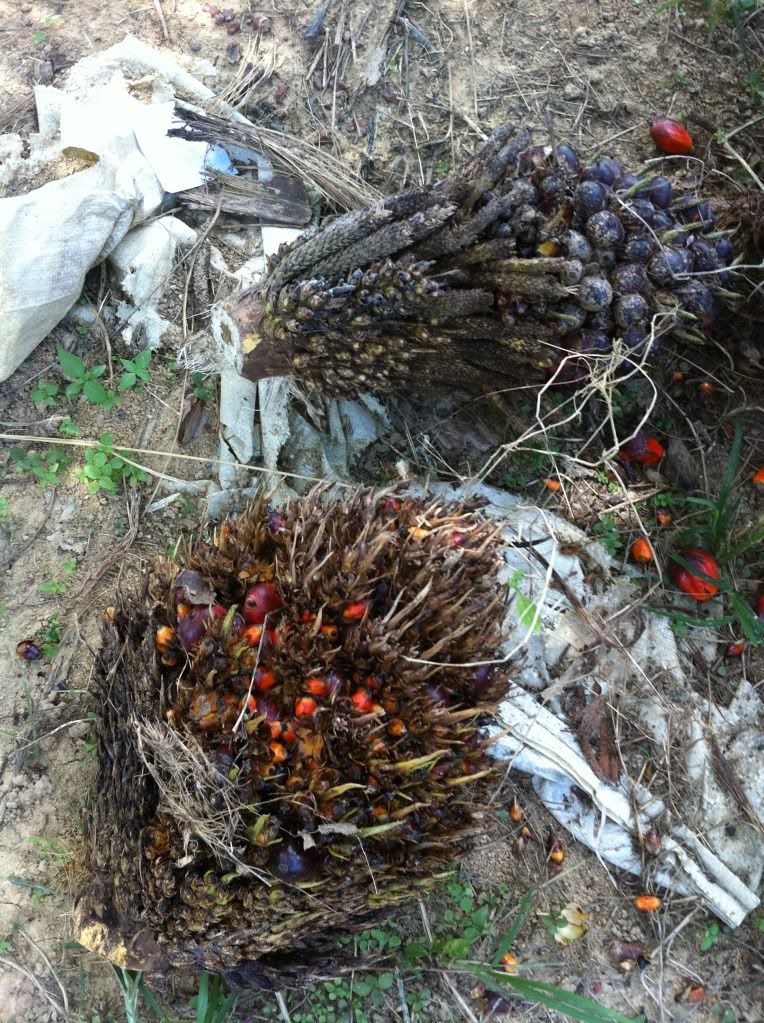
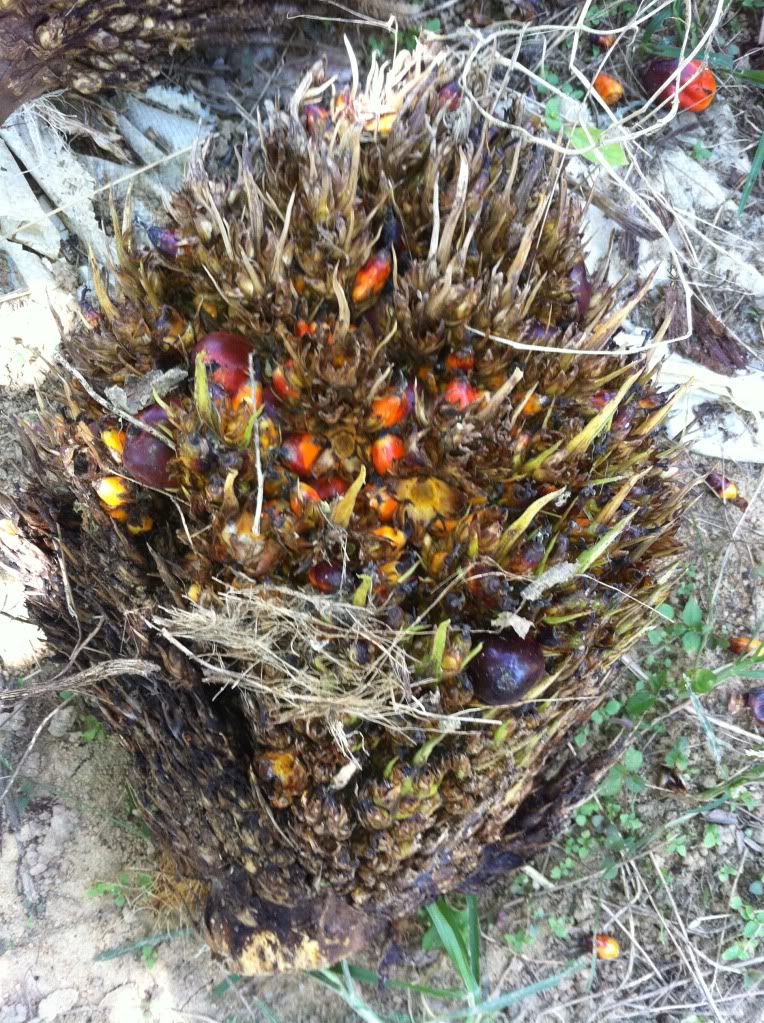
Now going on to post 967. Holy cow! The first picture with the bunch having those long-tassle stuff is a hermaphrodite bunch, i.e. it produces male and female flowers on the same bunch. This is very abnormal. If it is one or two bunches, it could be due to stresses like drought, or lack of nutrients etc.; but if you have whole crop full of these things, then you've got some serious problems with the planting materials.
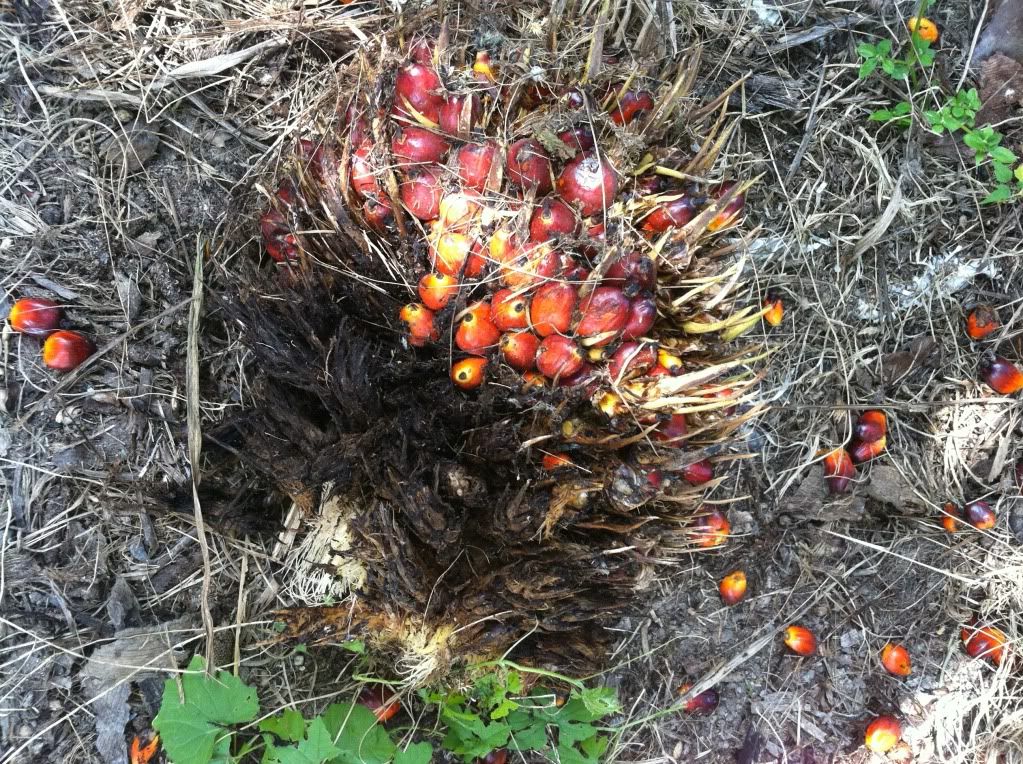
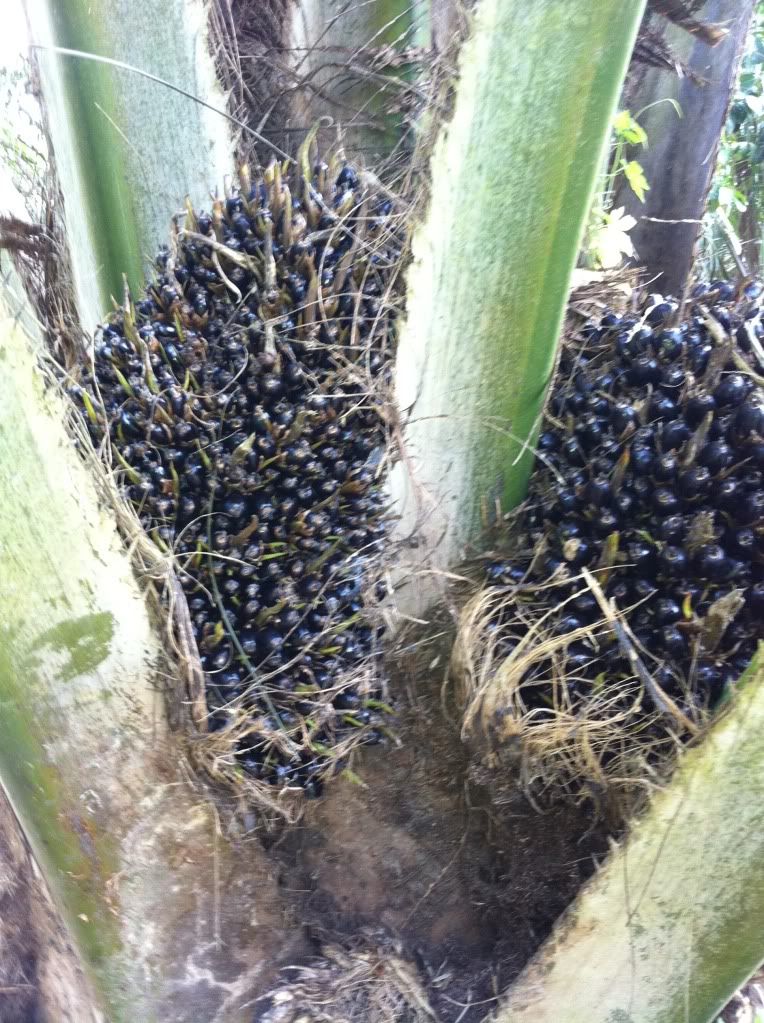
As for the poor fruit set on the other bunches, some of which are abortive or rotting, it is actually two possible things: (i) Poor fruit set due to poor pollination (ii) Insufficient nutrients. My first impression is that you've got a case of insufficient pollination. Reason being that the bunches have too many abortive sockets, but enough formed fruits to rule out the seriousness of other issues. Tell me, do you heavily spray insecticides? Is your field surrounded by older, mature palms? If insecticides are being heavily applied, then it is likely this is killing the pollinating weevils, the wee-little bugs that help make sure pollen is transfered to the female flowers so that fruit set takes place. Secondly, your palms may be putting out insufficient male flowers, and if your field is not surrounded by other older, mature palms, there could be not enough pollen to go around. Do take note that although more female flowers are desired, male flowers are equally needed. Ideally, the ratio should 1 male flower to every 10 female flowers.
I would also like to note that your palms have very acute frond angles. This is not desired, actually, as it hinders the expansion and growth of the bunches, resulting in wedge-shaped bunches with less fruits and lower weights. May not be a problem if pollen supply is sufficient.
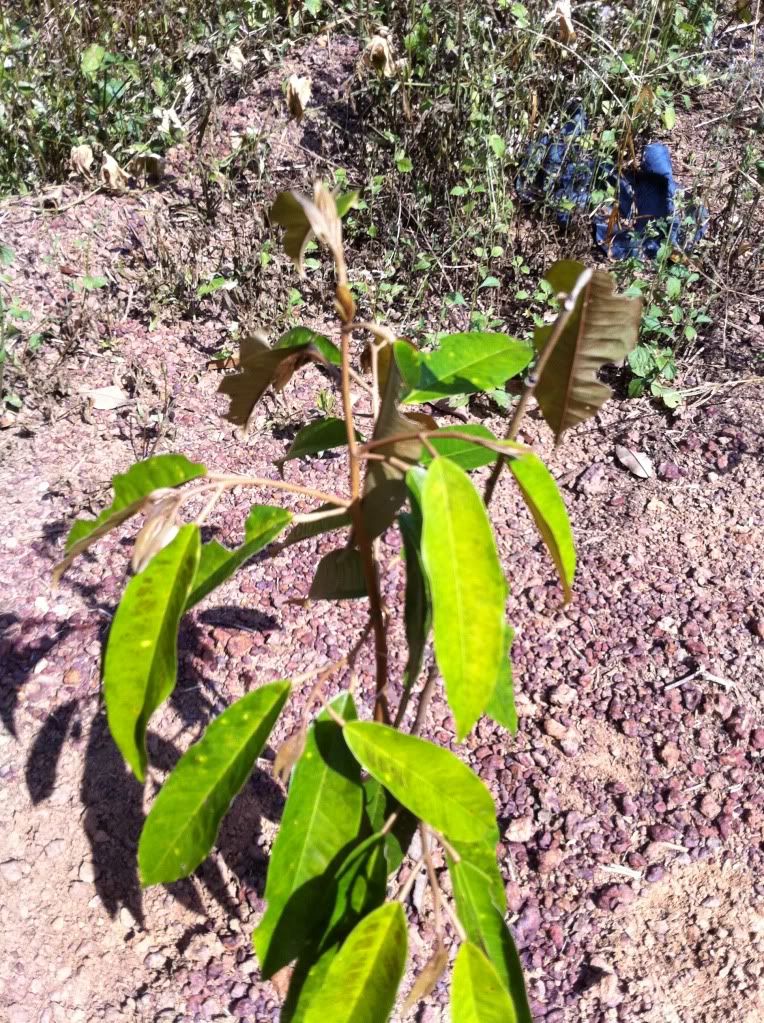
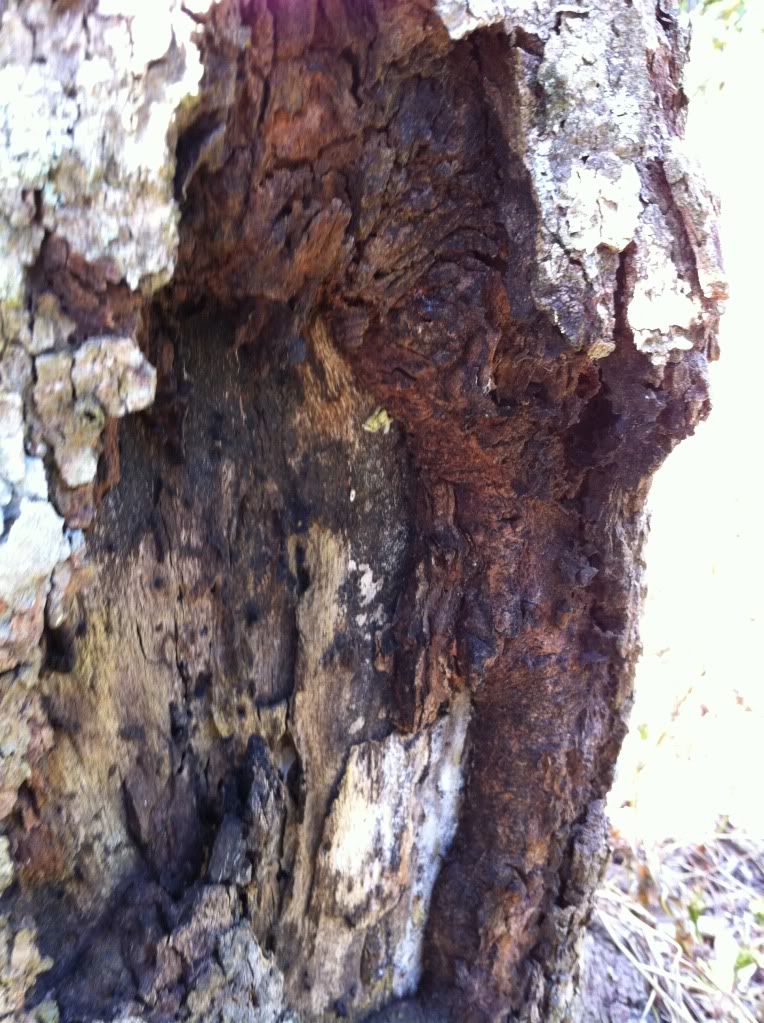
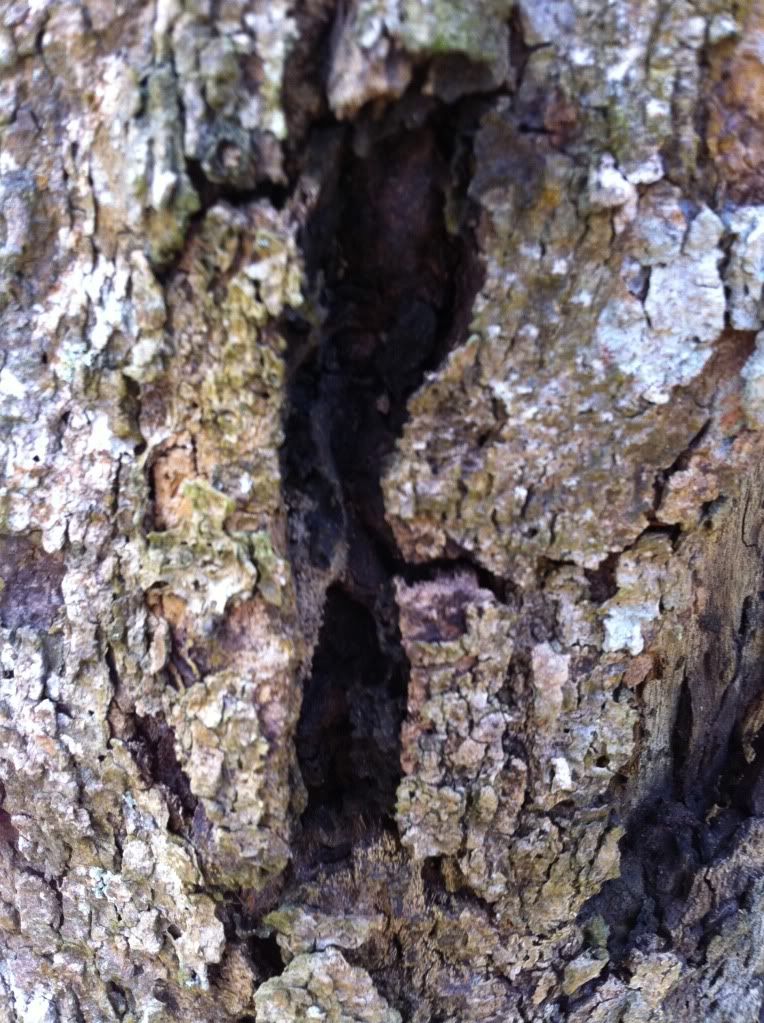
As for your other trees, I can't comment too much. The durians seem to having canker, i.e. bark rot. No real cure for this, as far as I know. The young plant has been attacked by a leaf eating insect, most likely from the grasshopper family. Can't tell without looking closer at the bite marks, but the feeding pattern suggest it could be yellow-thigh grasshopper. They are big fellas, yellowish in color, with reddish wings when in flight. If not too big a population, just use a net to catch them. Otherwise, malathion or cypermethrin will also do the trick.
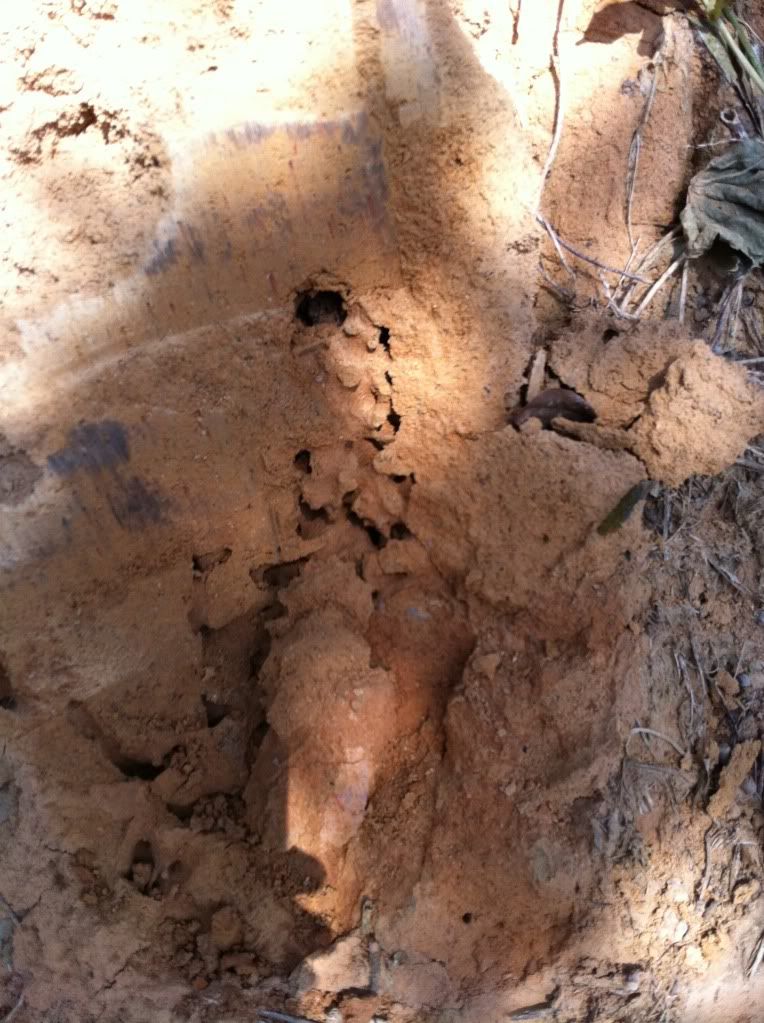
I can't see the termite picture, not sure why. There are a few species, but they usually can be killed and further prevented by using Rogor or Rigour. Just follow the directions on the label. But be careful, as it is also a neurotoxin to humans.


 Jan 9 2012, 05:27 PM


 Quote
Quote





 ) 17th onwards.


 0.0345sec
 0.16
0.16
 6 queries
 GZIP Disabled