Welcome Guest ( Log In | Register )

Outline · [ Standard ] · Linear+

 Venturing into Agriculture & Aquaculture, Co-Ordination & Implementation is KEY

views
     
MrFarmer
post Dec 26 2011, 11:48 AM

Casual
***
Junior Member
478 posts

Joined: Mar 2011
From: Sabah


QUOTE(ParaOpticaL @ Dec 25 2011, 09:52 PM)
My Focus & Strategy for 2012 is as follows :-

12ac :-
Finish planting the below
- Nangka (90% planted)
- Banana (20%)
- Longan (0%)
- Jambu Batu (0%)
- Jambu Air (0%)
- Durian (20%)
- Rear Chicken for Short-Term Cash Flow

6ac :
- Fertilise & Prune the trees
- 6-9 months will see the performance of the trees
- Then MORE Pruning
2.7ac :
- Plant Durians...
- Rear Chicken for Short-Term Cash Flow

Next year is a hectic year and hope by CNY 2013 it will be a fruitful & bountiful harvest....
** For my friends out there, please prepare yourself for heavy rainfall & possible flooding next year **
*
Wow, I love durian, nangka & longan. Do organize a trip to your farm during fruiting season thumbup.gif Must plant some durians so that I have some to eat.

Say Para, how are you managing the weeds? It seems like a loosing battle, I always get over run by weeds.

Are you expecting extremely heavy rain fall for 2012?
TSParaOpticaL
post Dec 26 2011, 04:27 PM

Planter - Durian, Jackfruit, Papaya
*******
Senior Member
2,348 posts

Joined: Dec 2004
From: Ch3r@s


during fruiting season and you happen to be in KL call me biggrin.gif hehe

weeds well its cutting at the moment...and maybe might put up some mulch to control them which saves me time and lets my workers concentrate on $$$ making activities...

looking at the current pattern...next year rainfall should be even more so please be prepared...


QUOTE(MrFarmer @ Dec 26 2011, 11:48 AM)
Wow, I love durian, nangka & longan. Do organize a trip to your farm during fruiting season  thumbup.gif Must plant some durians so that I have some to eat.

Say Para, how are you managing the weeds? It seems like a loosing battle, I always get over run by weeds.

Are you expecting extremely heavy rain fall for 2012?
*
kianwei8
post Dec 26 2011, 10:59 PM

Getting Started
**
Junior Member
163 posts

Joined: Jun 2007


Have you ever wondered what happens to all the pesticides that are sprayed to kill bugs?

http://www.huffingtonpost.com/dr-walter-cr...u_b_546908.html

elmer
post Dec 27 2011, 10:08 AM

Getting Started
**
Junior Member
219 posts

Joined: Jan 2003
I need input from all the sifus here. I have an offer to take over an existing 8 Acres of fish farm. Farm has been running for 2 yrs and has another 8 years on the lease for the land (still renewable after that). Farm has been rearing mainly Tilapias and a bit of Soon Hock. There are a total of 8 ponds there. Owner is selling the whole business for about RM 300 k and he will give everything lock, stock and barrel including the pumps, generators, and everything that he has built for the farm.

Can anyone tell me if Tilapia still have big demands out there? According to him, the demand is more than supply currently. Also let me know if 300k is fair value to take over his business.
Michael J.
post Dec 27 2011, 01:18 PM

On my way
****
Senior Member
596 posts

Joined: Jan 2006


Mr Farmer:

If you don't want to use herbicides, then try mechanical control ie lawnmower/lance slasher. If machinery is not your ideal, then use biological control. Goats are very aggressive grass feeders, and they eat almost anything made from plants, even wood. Hard to control them though, as they are brilliant escape artists. More manageable are geese and guinea fowl (ayam mutiara). Both birds need to graze, and they graze a lot especially geese. Both also control bugs and other creepy crawlies like snakes, and can be very good guard-dogs. Kept both before, quite alright except geese are bloody fierce, while guinea fowls are super noisy, especially the females.

Para:

Looks like a really hectic year coming up soon for you lei... Haaa...

Elmer:

Hmmm... Not to pour cold water, but there are some needed questions to ask first:

(1) Why is the farm up for sale? Is there any underlying problems, like financial difficulties, land dispute, etc.?
(2) Do you know the history of the farm? Eg. disease incidences, previous use of land etc.? One aspect almost always overlooked in aquaculture operations is heavy metal contamination of the soil. Concrete ponds or HDPE ponds are safer.
(3) Does the current owner have an existing stock sale agreement with anyone? I'm guessing from you question about tilapia market, you are not too sure.

Now, going on to your question about tilapia, I would say freshwater fishes are gaining a lot of demand in recent years as marine fisheries are dwindling, and prices are soaring. Freshwater fish prices are still a lot cheaper by comparison. Tilapia and pangasius in particular are getting a lot of attention and demand internationally. I can't say the same about local markets, and my personal perception is that it isn't really so great, unless you can do downstream processing i.e. fillet production for EU and US markets. I know of one Norwegian company farming tilapia in Malaysia, and is very successfully for fillet production.

Don't do Soon Hock unless you are really an expert in aquaculture. The fish is one of the most fickle species. Also, you really must know where to source you fish from; not all tilapia are the same, even if they look alike.


Here, I would like to put in my personal caution. From engagements with numerous local and international aquaculture companies in Malaysia, there is one very obvious pattern: Few, if any, are interested in doing freshwater aquaculture in Malaysia. Reason? Malaysia does not have the right environment (natural and economical) to do intensive freshwater aquaculture sustainably. Most (99%) are into marine aquaculture, some even doing it on land, and species cultivated (by order of magnitude and scale) include: vannamei shrimp, monodon shrimp, Asian seabass, grouper, sea crabs (blue crabs/flower crabs), shellfish species (including cockles, oysters, abalone etc.), and other crustaceans. Mind you, these guys are not small, are involved in contract farming, and market domestically and internationally. According to them, marine aquaculture products will not see a drop in demand in the next 10-15 years.

Also, I would like to share with you the recent troubles in Vietnamese pangasius aquaculture. Prices of pangasius fillets produced over there has been experiencing sharp drops over the recent couple of years, to about US$3 per kg for US and EU graded fillets, and US$1 for Asia graded fillets (ex-factory). Prices used to be about US$4-5 per kg, but with more people cultivating these low-end, easy to cultivate fish species, competition is getting stiffer, and prices offered is also going lower. Right now, our friends are looking into other higher valued species to boost farmers' profits for the longer term.
MrFarmer
post Dec 27 2011, 06:49 PM

Casual
***
Junior Member
478 posts

Joined: Mar 2011
From: Sabah


QUOTE(Michael J. @ Dec 27 2011, 01:18 PM)
Mr Farmer:

If you don't want to use herbicides, then try mechanical control ie lawnmower/lance slasher. If machinery is not your ideal, then use biological control. Goats are very aggressive grass feeders, and they eat almost anything made from plants, even wood. Hard to control them though, as they are brilliant escape artists. More manageable are geese and guinea fowl (ayam mutiara). Both birds need to graze, and they graze a lot especially geese. Both also control bugs and other creepy crawlies like snakes, and can be very good guard-dogs. Kept both before, quite alright except geese are bloody fierce, while guinea fowls are super noisy, especially the females.

Am using herbicides
1) Glyphosate Isopropylamine (41%) Glyso 410 Agr Smart. For slow effect, longer period.
2) Paraquat Dichloride (13%) Halex Paraquat 130. For Quick effect, shorter period.

Am also using Knack Sack grass cutter to trim.

We usually plough land, then have a spray run of herbicides before we plant. Like we are planting pumpkins, the weeds are also growing and can easily catch up with our crops. We can only do manual grass clearing (which is too slow) as it's too tricky to use the grass cutter.

Am experimenting with the planting distance, say 5' X 3', train the veins more towards the 3 initially, and maybe we can do a trim / spray run on the 5 before they mature /flower. Any suggestions?

Can't use biological at the moment as the farm is not fenced and we and our neighbors have other crops that may be eaten too. Oh yes, we use to have geese during my childhood days. They are terrific good guard dogs. We had 3 males and a female, they (the 3 males) are fierce.


Added on December 27, 2011, 7:36 pm
QUOTE(elmer @ Dec 27 2011, 10:08 AM)
I need input from all the sifus here. I have an offer to take over an existing 8 Acres of fish farm. Farm has been running for 2 yrs and has another 8 years on the lease for the land (still renewable after that). Farm has been rearing mainly Tilapias and a bit of Soon Hock. There are a total of 8 ponds there. Owner is selling the whole business for about RM 300 k and he will give everything lock, stock and barrel including the pumps, generators, and everything that he has built for the farm.

Can anyone tell me if Tilapia still have big demands out there? According to him, the demand is more than supply currently. Also let me know if 300k is fair value to take over his business.
*
HI elmer,
At 1 time I was looking into buying a farm, went to see about 10 farms. When I inquire about the reason, most of them give a general "standard" answer, which may or may not be true.

Lease on the land, kindly check properly as the owner can take back prematurely and compensation is usually not much. Lots of fixture can not be moved, like the ponds. I see a lot of these happens to even shop lots.

Are you an experienced agriculturist? If not, then most probably you may not maximize the 8 acres. Like maybe you are just testing with 1 pond, rest is not productive but you are paying for the rental. Labors / workers / helpers?

Conditions of machinery. Machinery maybe be expensive to repair / maintain unless you DIY.

300 K, you are then stuck with his problems. Can you solve those? How much more do you need to dump in before it's profitable? Work out you budget. You farming full time ( budget in your expenses) or part time. Say should you decide to stop, just like the 1st owner, how much can you salvage?

Compare what is the advantage / dis-advantage , saving / higher cost to starting your own farm? Owner can consider just selling off the machinery?

I am sure you would had look into all these. I am one of those who just jump into farming without without much consideration ( mong cha cha). Once into it, work hard, work smart and have great faith, it shall turn out well.

"according to him" Kindly do your own market studies. When I planted eggplant it was $1.80/kg "according to the middleman", when I start producing price is $0.50. When I planted pumpkin, middleman told me $1.00 / kg, 2 weeks ago, fell to $0.30/kg. (farm gate price)

Some good news for you. I see the Tilapia sellers taking orders for live fish, delivery during CNY since October. Here (east Malaysia, interior town) selling @ $12.50 (live, retail). They charge extra for delivery. Live fishes signifies "abundance" for the Chinese during CNY. Wishing you the best. Do keep us update, let us know whether you are "in" or not.


This post has been edited by MrFarmer: Dec 27 2011, 07:36 PM

Michael J.
post Dec 28 2011, 02:20 PM

On my way
****
Senior Member
596 posts

Joined: Jan 2006


Mr Farmer:

Heheh... This may or may be useful for you. I experimented with intercropping pumpkin/winter squash with trees like starfruit, longan and Vietnamese apples. The following are my findings:

(i) The trees shade off the weeds very effectively, thereby controlling their growth. Areas outside of the shade and root zone of the trees tended to be a lot more weedier. This was especially true for the Vietnamese apples and longan. Starfruit not so much, as my trees tended to have less dense foliage.

(ii) Growth of the pumpkin/squash vines were quite good; the one treated with Para's liquid fertilizer mix has been doing exceptionally well. The good growth may be in part due to the trellis line (ie improvised fencing line) about 1.5 feet from the shade zone, which allowed the creeping vine to grow onto, while excluding other weeds from smothering the vines. A similar plant grown to creep on the ground is doing quite poorly, as it had to compete intensely with the weeds. It appears that pumpkin/squash require little sunlight during the initial grow-out stage, but require full sun for flowering and fruiting.

(iii) Raised planting beds were found to be a key ingredient in successful grow-out of the vines. Experiment indicated that vines grown on raised beds managed to establish almost 5x faster than those on flat-ground.

If weeding is a major headache for you, I suggest using silvershine mulch on the immediate growing area of the pumpkin vine. Your planting density looks OK; some growers plant about 14,000 vines per acre.


Added on December 28, 2011, 2:21 pmAnyway, I'm currently experimenting with uncommon aquaculture species. My objective is to find aquatic species that have high tolerance for low dissolved oxygen level, moderate stocking densities, strong nitrate and ammonia tolerance, good FCR, and rapid growth rate. I believe I've found a species that could fit the list, is environmentally sustainable (as it is vegetarian), hits 1.5kg in 6-8 months, has flesh that tastes as good as striped bass or pomfret. Only problem is other than it's native country, the fish is practically banned elsewhere due to the "misunderstood" biology of the species. Just some data to share:

Release date: 18 Dec 2011
Average weight of specimens: 31.185g
Average sizes of specimens: 10.5cm
Diet: Fish pellets @ 30% body weight per week, supplemented by fresh duckweeds, over-ripe fruits with seeds, and water millfoils forthnightly @ 15% body weight.


Added on December 28, 2011, 2:59 pmAm a little restless today, so thought about just sharing some stuff:

Aquaponics in Hawaii

http://youtu.be/6n9hHzax17w


Noted that the polytank there can hold about 100 keli or tilapia, about 500g each. Also noted that some systems are producing about US$4,000 a month in produce, or about RM12,880 monthly. Not too bad for backyard farmers.

This post has been edited by Michael J.: Dec 28 2011, 02:59 PM
MrFarmer
post Dec 28 2011, 10:46 PM

Casual
***
Junior Member
478 posts

Joined: Mar 2011
From: Sabah


QUOTE(Michael J. @ Dec 28 2011, 02:20 PM)
Mr Farmer:

Heheh... This may or may be useful for you. I experimented with intercropping pumpkin/winter squash with trees like starfruit, longan and Vietnamese apples. The following are my findings:

(i) The trees shade off the weeds very effectively, thereby controlling their growth. Areas outside of the shade and root zone of the trees tended to be a lot more weedier. This was especially true for the Vietnamese apples and longan. Starfruit not so much, as my trees tended to have less dense foliage.

(ii) Growth of the pumpkin/squash vines were quite good; the one treated with Para's liquid fertilizer mix has been doing exceptionally well. The good growth may be in part due to the trellis line (ie improvised fencing line) about 1.5 feet from the shade zone, which allowed the creeping vine to grow onto, while excluding other weeds from smothering the vines. A similar plant grown to creep on the ground is doing quite poorly, as it had to compete intensely with the weeds. It appears that pumpkin/squash require little sunlight during the initial grow-out stage, but require full sun for flowering and fruiting.

(iii) Raised planting beds were found to be a key ingredient in successful grow-out of the vines. Experiment indicated that vines grown on raised beds managed to establish almost 5x faster than those on flat-ground.

If weeding is a major headache for you, I suggest using silvershine mulch on the immediate growing area of the pumpkin vine. Your planting density looks OK; some growers plant about 14,000 vines per acre.

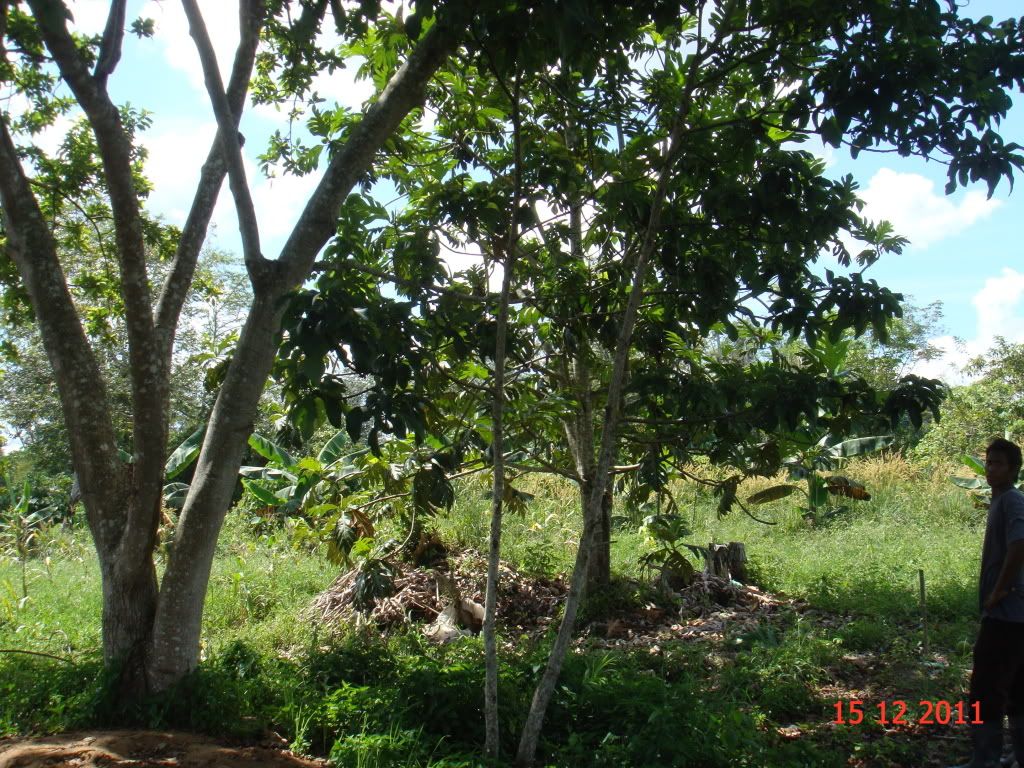
i) Yes, very true. I find it true for the Avocado trees & Buah Sukun (Breadfruit) trees too. The problem is than I can't find plants that can grow well inside the shade too. These trees were already in the land and are planted way too near. Can only use this place to place some compost, take off sucklings from the Buah Sukun, plant-lets from the Avocado and there is a patch of Pisang Emas (corm) at the fringe that keeps on producing sucklings.
user posted image

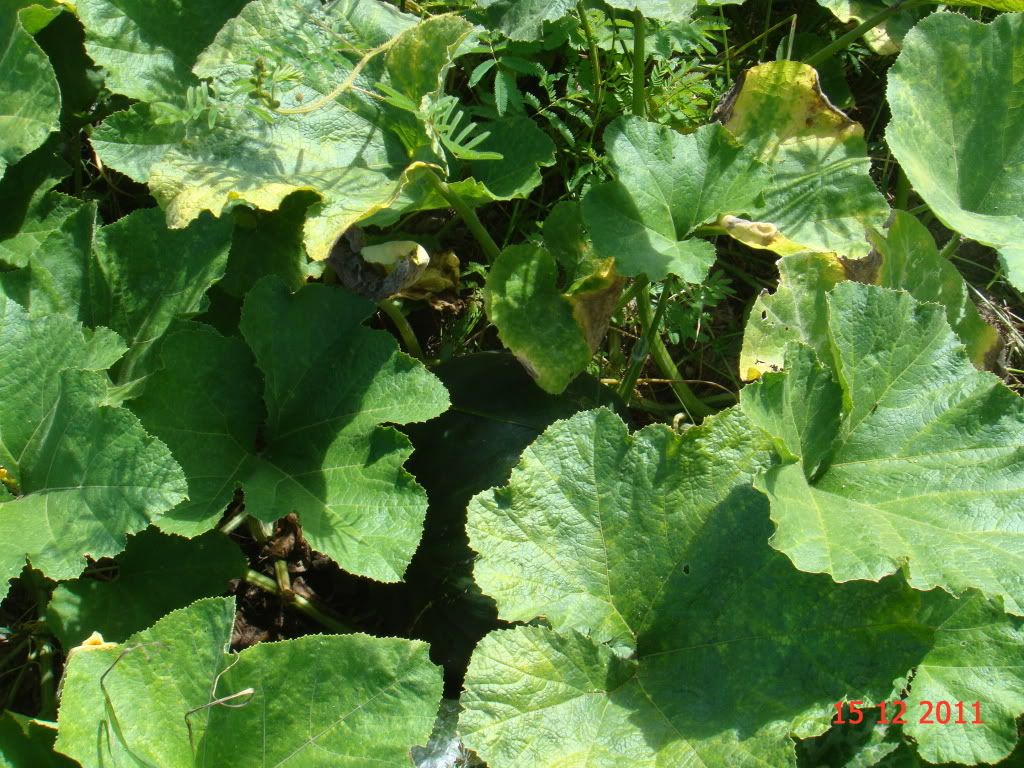
ii)" about 1.5 feet from the shade zone," Is this 1.5' from the ground within the shaded zone, or 1.5' out of the shaded zone? I grow mine under full sun light. Those covered with heavy weeds, don't do well at all. I read in an article that it's better to grow pumpkins on the ground rather than fence as the secondary roots help to produce bigger fruits. I actually wanted to try winter melon / Labu putih on fence, but decided against it. Started some bottle gourd on fence. I think winter melon produce bigger fruits on fence. Using chicken dung, plough into soil before planting, supplemented with Super Green (kenso organic slow release), and Zargro Star Blue (flowering/fruiting).

iii) Yes, my testing so far also indicates this to be true. It produce faster growing plants, thicker vines, bigger leaves and most important bigger fruits. Expecting some big fruits on the way.
user posted image
I think growing pumpkins on raised bed, with the vines touching the soil produce bigger fruits. The secondary roots help supply nutrient? We are doing weeding by hand and arranging the vines to prevent it from "flying" before /during flowering stage.
Shall be trying some on raised ridge/hill (vs bed).

Had not use silvershine because
1 Can not find a supplier here yet
2 Maybe cost is high (here)
3 Secondary roots can not establish
4 Watering disruption (not sure)? As are using rain fed supplemented with water spraying.
5 Am thinking/ planning to use rice straw, maybe a better alternative?, but could not find any yet. Think it's a waste to the rice farmer.

This pumpkins is a very interesting subject. This family is just too wide and many types. In the market they just refer it to be Labu Kuning or Labu Putih only. As we are wholesaling by weight, am also studying if Labu putih has a better weight because of the density ( labu kuning center is empty). Thankfully the farm gate price had risen back slightly. Hope to have a more consistence pumpkin crops next year once we finalize our trail & error test. Maybe can produce a super huge pumpkin thumbup.gif

Another test, we find that pumpkins germinated directly grow faster vs transplanted.
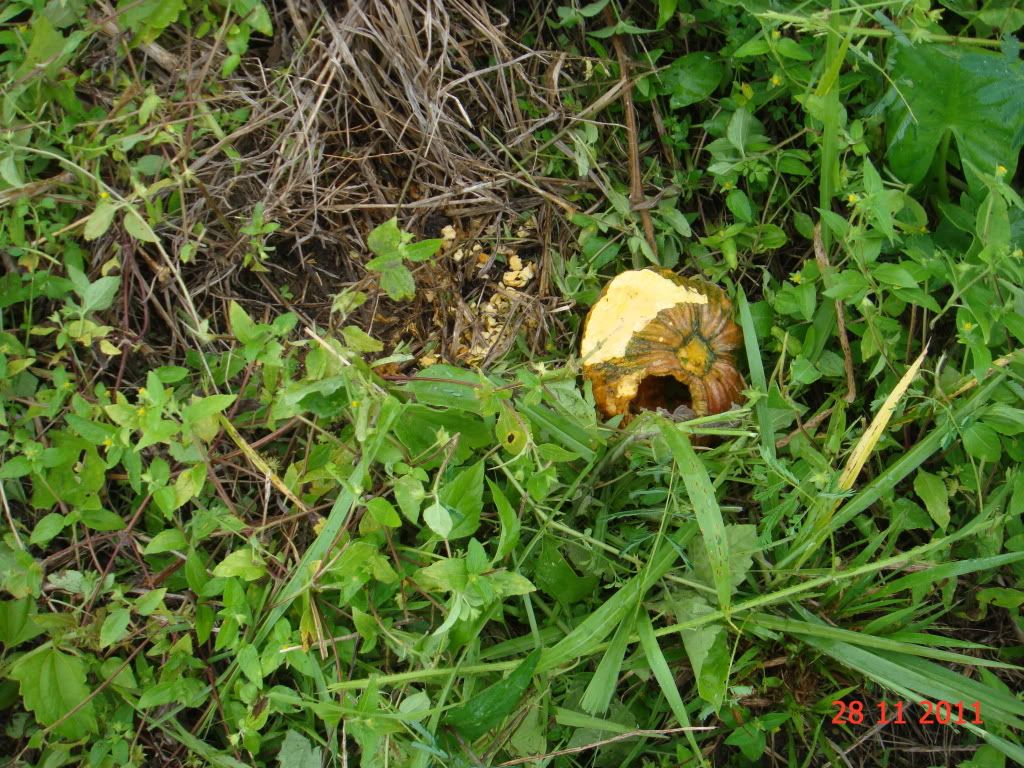
Other problems we had are pest, rodents and even ants & termites converting the pumpkin to nest during the raining season.
user posted image
Michael J.
post Dec 29 2011, 09:18 AM

On my way
****
Senior Member
596 posts

Joined: Jan 2006


Mr Farmer:

(i) My starfruit tree is structured like your trees in the picture, which actually allows a lot of light to enter from the sides. The Vietnamese apples and longan have low branches, which creates denser shades.

(ii) 1.5 feet outside of the shaded zone. And yes, you are quite right about secondary roots feeding the plants with extra nutrients. That's why you allow the vines to trail the ground first, and then allow it to climb on a trellis. Also, to get big fruits, you would want to control the fruiting and vegetative growth also, ie fruit thinning and sucker pinching. My winter squash (butternut and acorn squash) grown on trellies were pollinated only last week, and have grown from about 150g to nearly 400g now. The rooted portion is only about 2.5 feet long.

(iii) Yes, pumpkin and squashes are indeed a very interesting subject. I concur with your finding about direct seeding. Only issue might be with uniform crop yielding. Silvershine is expensive, but if you don't need to pay for labor to do weeding, buy chemicals, use machines, I believe the long term benefits might be greater.


Improved weights really depend on variety. The common pumpkin found in Malaysia (as in your picture) don't grow really big. They taste great though. If you want something which is more "solid", you could try butternut squashes. They are bottle shaped, and the hollow cavity is very small. These are best used for sweet dishes, like candy or pie, or even sweet soup; not too great for savoury dishes.


M_century
post Dec 29 2011, 10:31 AM

Getting Started
**
Junior Member
114 posts

Joined: Dec 2011
Hi, I'm new to this forum. I found this thread to be very interesting, been reading from page 1. I hope I can learn more from all the experience people from here on agriculture.

Anyone here has any experience on chili fertigation?
chinyen
post Dec 29 2011, 11:56 AM

Enthusiast
*****
Senior Member
754 posts

Joined: Jul 2009
anyone has reliable tigerworm supplier contact? finally found a place to rear them..^^
Michael J.
post Dec 30 2011, 05:51 PM

On my way
****
Senior Member
596 posts

Joined: Jan 2006


M_Century & chinyen

You may try asking Para, but at the moment he is very busy. Try sometime mid-January?

MrFarmer
post Dec 30 2011, 07:11 PM

Casual
***
Junior Member
478 posts

Joined: Mar 2011
From: Sabah


QUOTE(M_century @ Dec 29 2011, 10:31 AM)
Hi, I'm new to this forum. I found this thread to be very interesting, been reading from page 1. I hope I can learn more from all the experience people from here on agriculture.

Anyone here has any experience on chili fertigation?
*
Hi M-century, welcome to our community.
Just curious, why chili and why fertigation? Do you have any personal experience / training?

I'm also a newbie, and a mong cha cha 1. Planted some chili, traditional way, on ground.


Added on December 30, 2011, 7:18 pm
QUOTE(chinyen @ Dec 29 2011, 11:56 AM)
anyone has reliable tigerworm supplier contact? finally found a place to rear them..^^
*
HI chinyen, welcome back. Where's your new place? Can visit? biggrin.gif

This post has been edited by MrFarmer: Dec 30 2011, 07:18 PM
TSParaOpticaL
post Dec 31 2011, 07:41 AM

Planter - Durian, Jackfruit, Papaya
*******
Senior Member
2,348 posts

Joined: Dec 2004
From: Ch3r@s


Hi Bro,

welcome to the forum.

if you are interested on the Chili Fertigation, PM me...i can direct you to a place where you can take a course and understand more for yourself.

biggrin.gif

QUOTE(M_century @ Dec 29 2011, 10:31 AM)
Hi, I'm new to this forum. I found this thread to be very interesting, been reading from page 1. I hope I can learn more from all the experience people from here on agriculture.

Anyone here has any experience on chili fertigation?
*
chinyen
post Dec 31 2011, 12:35 PM

Enthusiast
*****
Senior Member
754 posts

Joined: Jul 2009
hehe..mr farmer...i'm trying to rear at nearby unutilised fields in containers...first. then try to think of ways to encourage neighbours to feed the worms with their organic trash..not planning or even capable of going commercially for the moment..

TSParaOpticaL
post Jan 1 2012, 11:01 PM

Planter - Durian, Jackfruit, Papaya
*******
Senior Member
2,348 posts

Joined: Dec 2004
From: Ch3r@s


Hi People,

Happy New Year 2012 and may all your endeavours will be great for the year.

Our January 2012 Issue of the Agri & Aqua Culturing Newsletter

http://www.mediafire.com/?gtqim41n8qz638z


Thank you to all the contributor for your articles.
MrFarmer
post Jan 2 2012, 06:52 PM

Casual
***
Junior Member
478 posts

Joined: Mar 2011
From: Sabah


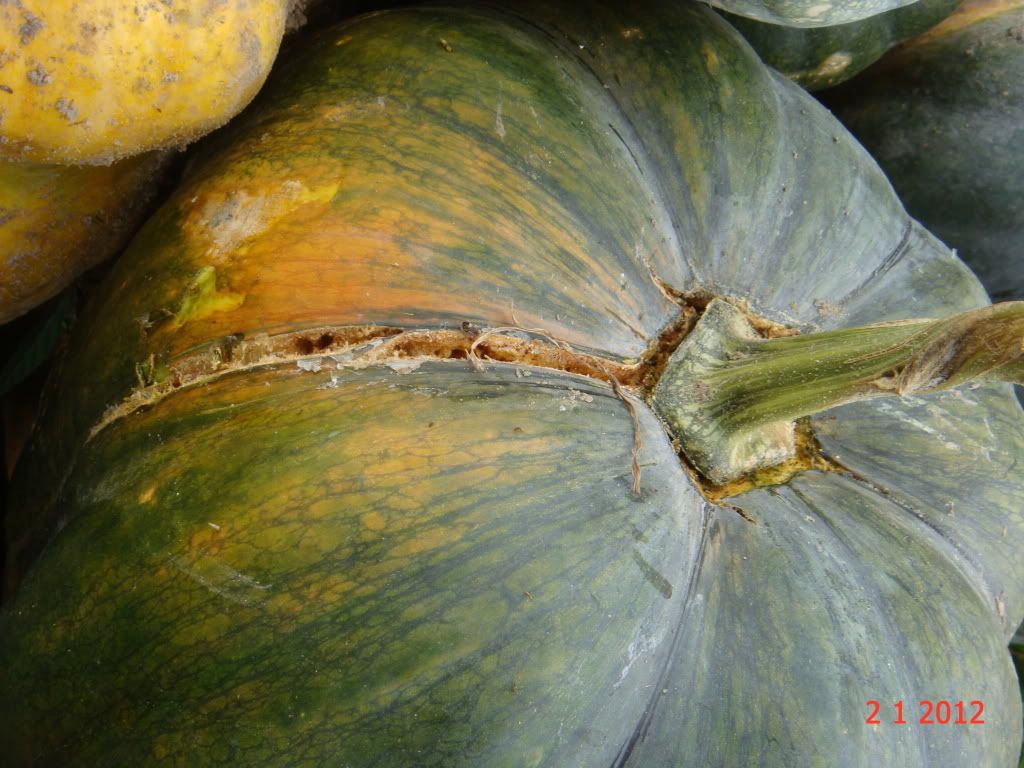
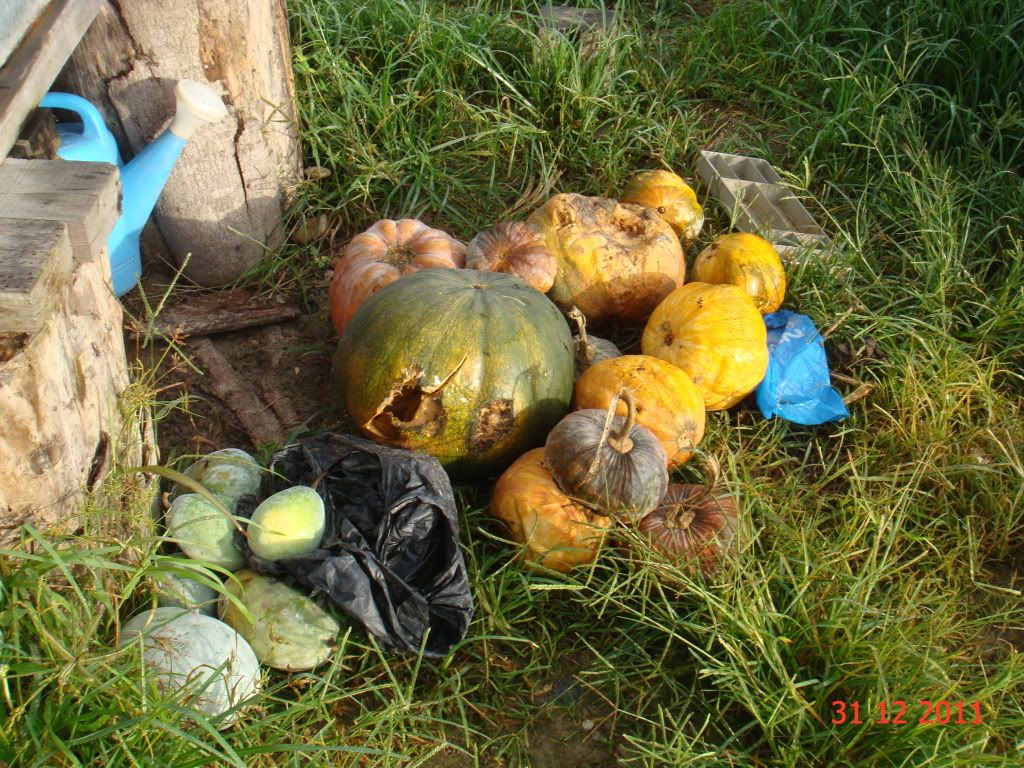
What's wrong with my pumpkin? Too much water?
user posted image
This fruit weights 13kg.

Update on pumpkins.
1) Planting on raised bed is definitely (Irrigated on & off, on dry days) better than flat ground / slope (rain fed).
Fruits sizes 6 to 13.5 kg Vs 0.8 to 5 kg.

Personally, I prefer fruit size of 5 ~ 8 kg as I think it's more marketable. Also it spread out the risk.
Our bad fruits
user posted image

M_century
post Jan 2 2012, 08:42 PM

Getting Started
**
Junior Member
114 posts

Joined: Dec 2011
QUOTE(MrFarmer @ Dec 30 2011, 07:11 PM)
Hi M-century, welcome to our community.
Just curious, why chili and why fertigation? Do you have any personal experience / training?

I'm also a newbie, and a mong cha cha 1. Planted some chili, traditional way, on ground.


Added on December 30, 2011, 7:18 pm
HI chinyen, welcome back. Where's your new place? Can visit?  biggrin.gif
*
Hi MrFarmer,

I don't have any practical experience at all except some research from internet and a visit to putrajaya MOA regarding this information.
Therefore I'm really looking forward to do it practically.
From MOA info, through fertigation has its advantages and disadvantages.

Advantages :
1) They says the crop yield would at least 2-3 times compare planting on ground. Long term ROI will be higher.
2) Reduces the risk of soil-borne diseases and pest.
3) More efficient and systematic irrigation and fertilization control, apparently less wastage and can eliminate irrigation problem.
4) Somehow better control (not really understand about this)
5) Overall it will give less problem.
6) Can also work for other plant like tomato and few others that I can't really remember should no longer want to plant chili

Disadvantages :
1) Very high investment needed to setup the system. MOA quote about RM20k expenditure just to setup 20' x 100'. In 1 acre alone assume land is square, can have 12 x (20' x 100'), which comes to total cost RM20k x 12 = RM240k!!. I have a partner from construction background, so I hope can significantly reduce the cost by at least 50% hopefully counting myself as labor to setup in order to save cost.
2) Such high investment require extreme dedication and real prudence. I do not want to screw up the whole thing and dissapoint my partner.
3) So the pressure is on despite the strong will to make it work.
4) Chili price has to remain high and higher to sustain the expected return on investment.
5) Any natural calamity will wipe out the heavy investment, so must take measure to evaluating risks such as flood, landslide, etc.

Many other information I have acquired from internet and word of mouth from other people as well. So I really need to have a look at the real working chili fertigation system.
quackpack
post Jan 2 2012, 08:45 PM

Casual
***
Junior Member
327 posts

Joined: Nov 2007


QUOTE(Michael J. @ Dec 6 2011, 07:54 AM)
Sure.

For spawn culture:

Mushroom Ambra Biotech Sdn Bhd
07-663 3322

Golden Nature Food Sdn Bhd
03-62751171
*
Just notice you reply, thank you for the info!

Tried culturing myself in 10 cups and only 1 success, will need to review my culturing method.
MrFarmer
post Jan 3 2012, 07:27 PM

Casual
***
Junior Member
478 posts

Joined: Mar 2011
From: Sabah


QUOTE(M_century @ Jan 2 2012, 08:42 PM)
Hi MrFarmer,

I don't have any practical experience at all except some research from internet and a visit to putrajaya MOA regarding this information.
Therefore I'm really looking forward to do it practically.
From MOA info, through fertigation has its advantages and disadvantages.


Advantages :
1) They says the crop yield would at least 2-3 times compare planting on ground. Long term ROI will be higher.
2) Reduces the risk of soil-borne diseases and pest.
3) More efficient and systematic irrigation and fertilization control, apparently less wastage and can eliminate irrigation problem.
4) Somehow better control (not really understand about this)
5) Overall it will give less problem.
6) Can also work for other plant like tomato and few others that I can't really remember should no longer want to plant chili

Disadvantages :
1) Very high investment needed to setup the system. MOA quote about RM20k expenditure just to setup 20' x 100'. In 1 acre alone assume land is square, can have 12 x (20' x 100'), which comes to total cost RM20k x 12 = RM240k!!. I have a partner from construction background, so I hope can significantly reduce the cost by at least 50% hopefully counting myself as labor to setup in order to save cost.
2) Such high investment require extreme dedication and real prudence. I do not want to screw up the whole thing and dissapoint my partner.
3) So the pressure is on despite the strong will to make it work.
4) Chili price has to remain high and higher to sustain the expected return on investment.
5) Any natural calamity will wipe out the heavy investment, so must take measure to evaluating risks such as flood, landslide, etc.

Many other information I have acquired from internet and word of mouth from other people as well. So I really need to have a look at the real working chili fertigation system.
*
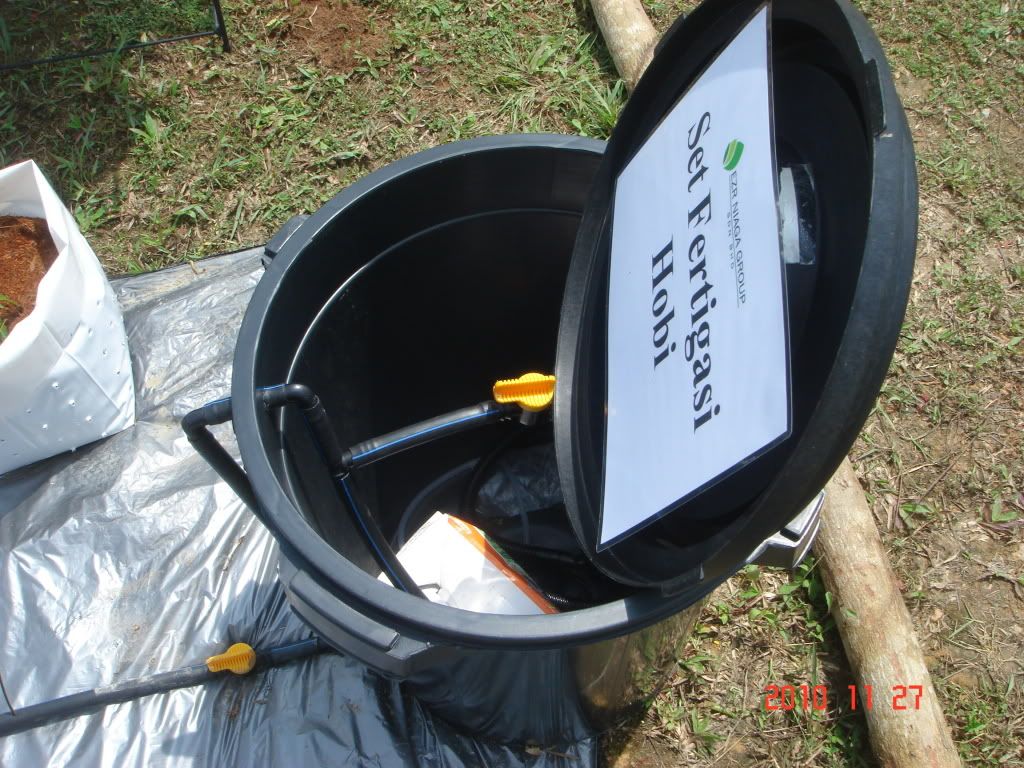
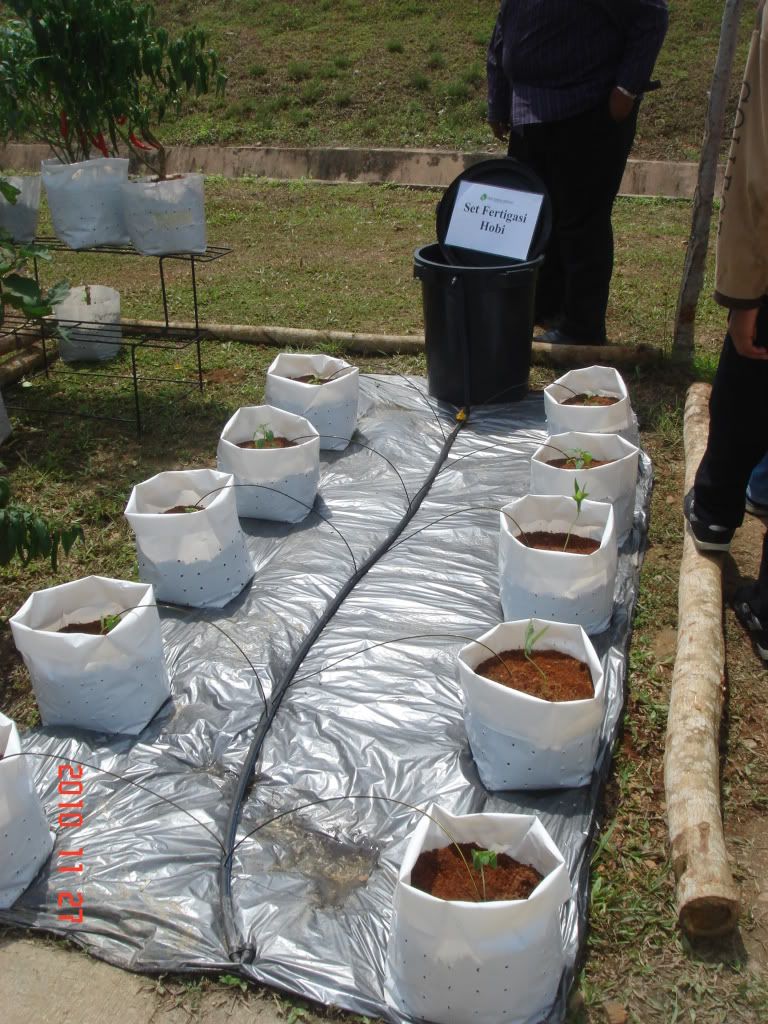
I'm sure you had looked at all the angles. Should you want to start small for trial, there is the fertigation hobby set, which I think is low cost and can be set up in the back yard.
user posted image
user posted image

From my experience on myself, I am not even 1/4 a worker blush.gif Had not been working in the field for a long time. Guess my helpers consider me as a nuisance, disrupting their work.
Yes, do your budget and plan for all eventuality.
Do keep us update on you journey.

119 Pages « < 46 47 48 49 > » Top
 

Change to:
| Lo-Fi Version
0.2192sec    2.29    6 queries    GZIP Disabled
Time is now: 20th December 2025 - 07:22 AM