

 Aug 8 2012, 12:08 PM


QUOTE(Michael J. @ Aug 7 2012, 04:47 PM)
Mr Farmer:
You managed to germinate the Musang King? If so, congrats!
You don't really need a large polybag. I use one with a diameter of about 8.5cm only. You do need to be a little careful when planting the seeds initially though, as durian seeds germinate in a peculiar manner, i.e. it is rooting part will angle itself accutely irregardless how you plant it. The best way is to plant is flat of the soil surface, and let the roots find its own direction down. Or plant the germinating seed three-quarter-ways into the soil, with the root side just peeking out.
Now if after emerging from the soil, the seed gets caught by the side of the bag, don't worry. The seed is not as important as most people think; it only provides initial food for germinate and growth. The more important part in the growing shoot tip, which is "sandwiched" in the center of the seed. Normally, the shoot tip will extricate itself from the seed and be stand-alone quite soon. If not, you could help it along by washing away some of the soil so that the shoot is exposed to light; the shoot will autocorrect itself using light stimulation. This is the part you have to make sure it doesn't get jammed; if it does, it might die, and this could terminate growth of your durian seedling, provided you have clones/ materials that produce multiple shoots. I had one seedling whose cotyledon was so heavy it snaped the shoot off; fortunately it was a multi-shoot variant, so the side shoots grew to replace that main shoot.
Also note that durian seedlings, like some of its other cousins, cannot produce new growth below a certain notch (which is the point at which the seed/cotyledon is attached to the plant). If you accidentally cut/damage the plant below this point, it will never grow back. Anywhere above this notch, the plant could still regenerate new branches/growth points.
Added on August 7, 2012, 4:53 pmSorry, I should also clarify further:
Although you don't need a wide polybag, you will need a deep one. Durian seedling roots are very fast growing and deep, so anything less than 30cm deep is too shallow.
Alternatively, you could initiate germination in smaller polybags about 20cm deep and 8.5cm wide, then transplant them into large polybags (30cm wide by 45cm deep) for growth till 4th month stage. This kind of "two-stage nursery" method is good if you are targeting uniformity; you can select the seedlings which are about the same growth rate in the smaller polybag stage, and transplant them to the larger polybags. In theory, this would ensure that every batch of seedlings you produce will be more or less equal in growth and size.

Thank you. Yes managed to germinate just a few. I think 5 grew out of maybe 40 seeds (5 fruits). I used your suggestion of putting the seeds into a pail with water, line with old news papers. After a few days, it start to germinate. Surprisingly the first thing that grew out is the cotyledon (not the root). I transplanted all seeds (including the non germinated) into small poly bags, maybe 5 X 8 ". My mistake is that I though the cotyledon is the root, and planted it pointing downward. 2nd mistake is that I think I planted those seeds too deep, maybe 2~3" (was thinking that the roots shall hold better and deeper for easier handling when doing grafting. When I check back in a couple of days, the cotyledon was caught at the side of the poly bag, due to turning and the bag being too small diameter. Some died. Other seeds rotted due to air deprivation (I think, due to too deep). You managed to germinate the Musang King? If so, congrats!
You don't really need a large polybag. I use one with a diameter of about 8.5cm only. You do need to be a little careful when planting the seeds initially though, as durian seeds germinate in a peculiar manner, i.e. it is rooting part will angle itself accutely irregardless how you plant it. The best way is to plant is flat of the soil surface, and let the roots find its own direction down. Or plant the germinating seed three-quarter-ways into the soil, with the root side just peeking out.
Now if after emerging from the soil, the seed gets caught by the side of the bag, don't worry. The seed is not as important as most people think; it only provides initial food for germinate and growth. The more important part in the growing shoot tip, which is "sandwiched" in the center of the seed. Normally, the shoot tip will extricate itself from the seed and be stand-alone quite soon. If not, you could help it along by washing away some of the soil so that the shoot is exposed to light; the shoot will autocorrect itself using light stimulation. This is the part you have to make sure it doesn't get jammed; if it does, it might die, and this could terminate growth of your durian seedling, provided you have clones/ materials that produce multiple shoots. I had one seedling whose cotyledon was so heavy it snaped the shoot off; fortunately it was a multi-shoot variant, so the side shoots grew to replace that main shoot.
Also note that durian seedlings, like some of its other cousins, cannot produce new growth below a certain notch (which is the point at which the seed/cotyledon is attached to the plant). If you accidentally cut/damage the plant below this point, it will never grow back. Anywhere above this notch, the plant could still regenerate new branches/growth points.
Added on August 7, 2012, 4:53 pmSorry, I should also clarify further:
Although you don't need a wide polybag, you will need a deep one. Durian seedling roots are very fast growing and deep, so anything less than 30cm deep is too shallow.
Alternatively, you could initiate germination in smaller polybags about 20cm deep and 8.5cm wide, then transplant them into large polybags (30cm wide by 45cm deep) for growth till 4th month stage. This kind of "two-stage nursery" method is good if you are targeting uniformity; you can select the seedlings which are about the same growth rate in the smaller polybag stage, and transplant them to the larger polybags. In theory, this would ensure that every batch of seedlings you produce will be more or less equal in growth and size.
Note my previous pic, on the left, there is a pic of the damaged cotyledon, which I guess may not survive. Am doing your suggestion of tow stage, transplanted some to bigger poly bags maybe 12X20". Hopefully it's large enough.
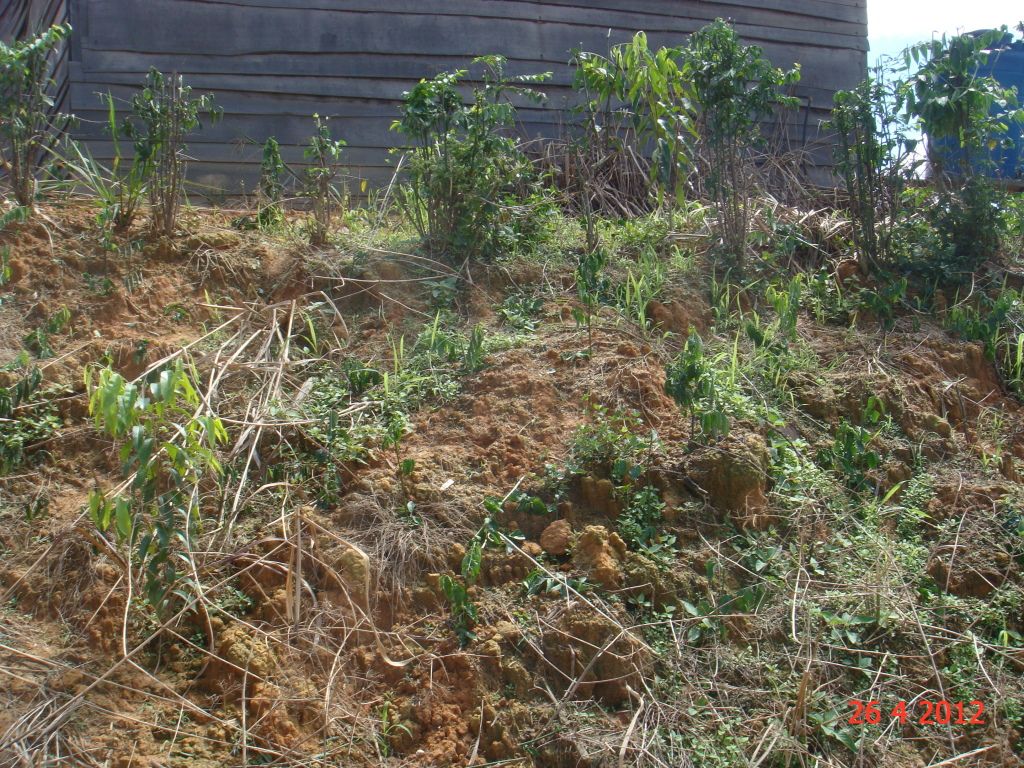
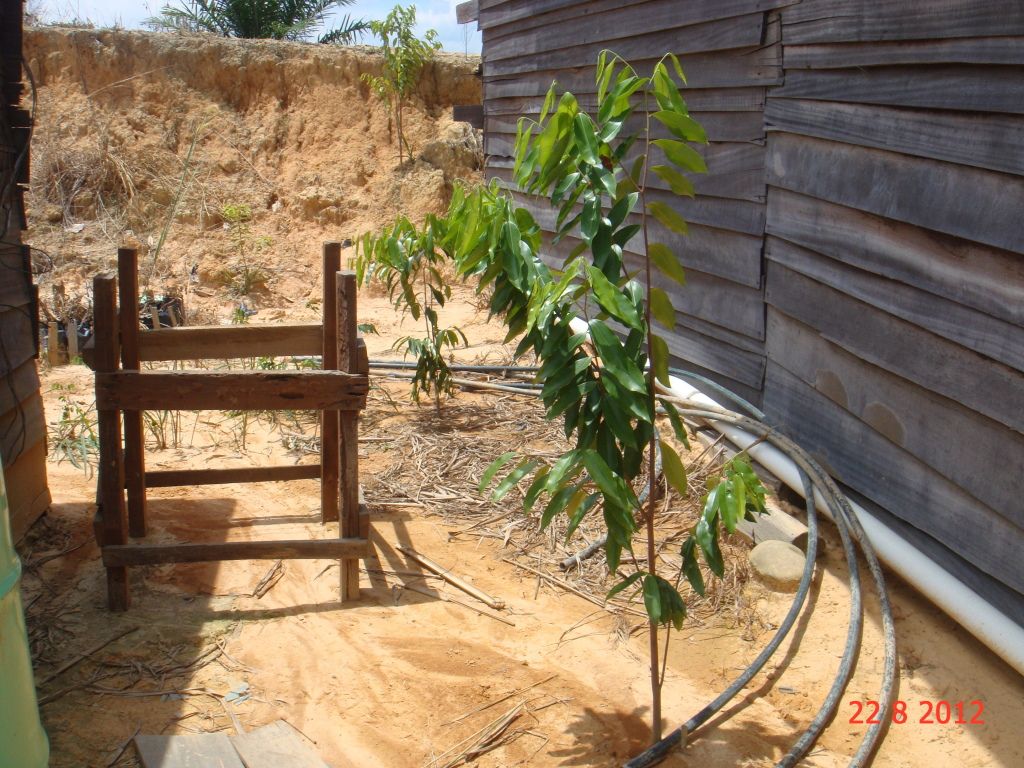
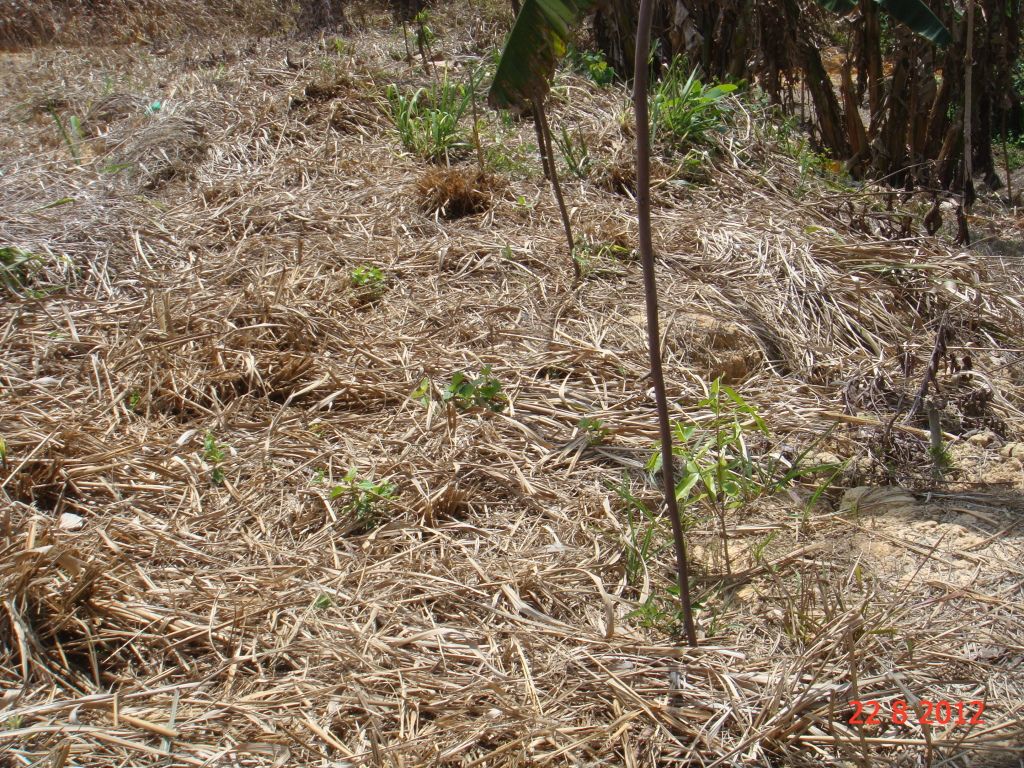
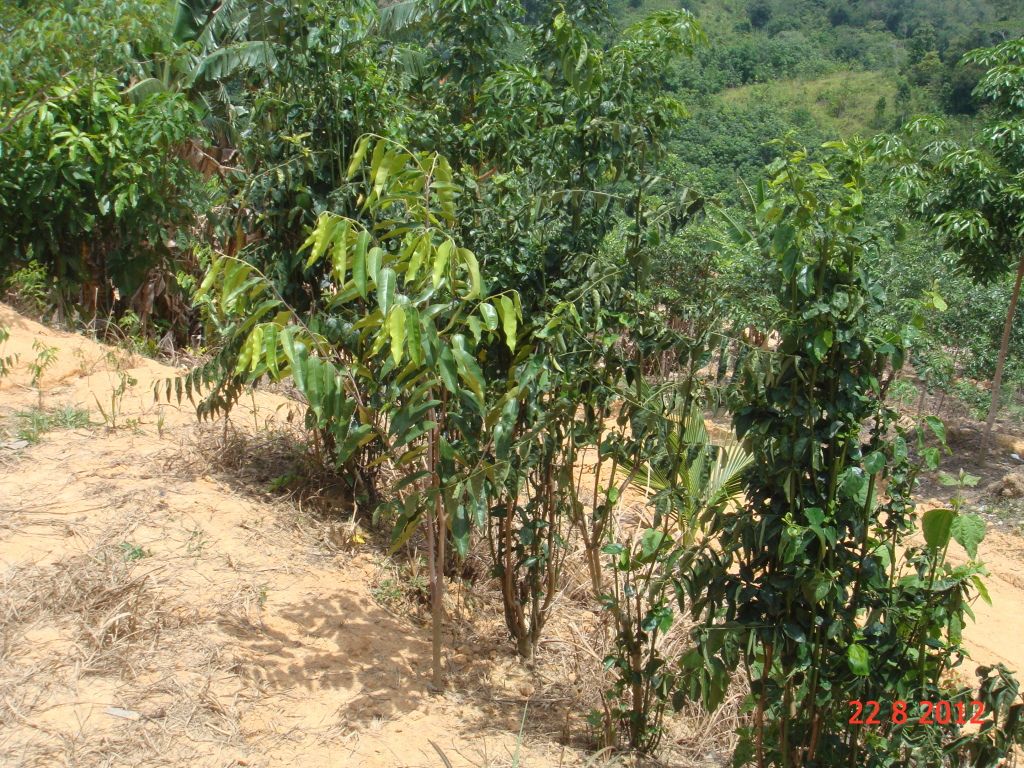
Guess I won't be grafting any durian yet as I don't have any scion source. Maybe just transplant it to the field in a couple of months (erh how long?).
 Quote
Quote





 0.0247sec
 0.82
0.82
 6 queries
 GZIP Disabled