Welcome Guest ( Log In | Register )

119 Pages « < 5 6 7 8 > » Bottom

Outline · [ Standard ] · Linear+

 Venturing into Agriculture & Aquaculture, Co-Ordination & Implementation is KEY

views
     
rexis
post Jun 27 2007, 06:00 PM

*** 7-star status Old Bird ***
*******
Senior Member
3,590 posts

Joined: Apr 2006
From: nowhere


Time to bumb this thread a bit.

Lets talk about some non-conventional crops.

Castor Plant

Castor seed has a high oil content of around 50% of weight ratio therefore castor often planted for the oil. Castor oil is one of the oldest traded goods in human history, evidence discovered that it is traded over 5000 years ago in Egypt as a lamp oil.

Castor oil is a unique kind of oil due to the oil structure, and it is the only vegetable oil that is soluble in alcohol. Its chemical properties make it a very useful industrial raw material in industrials like cosmetic, food, paint, and engine lubricant. The famous Castrol get its name from the plant, castor oil can bond to the metal part evently and very consistance in viciousity over different range of temperature, as well as a very low solidfying point of 15 degree C.

The main producer of castor oil of the world is india and china, mainly export to europe and united states. Castor plants used to be planted in United States as an annual crop but it was stopped somewhere in the 60's for certain reason and nowadays it grew as a fast growing weed along the highways of USA.

Castor plant has been notorious due to their poison ricin, ricin is said to be the most poisonious natural poison, 12000 times more poisonious then king cobra venom and 6000 times then cynide. It is said that it only take one fruit(3 seeds) to kill a child. Due to the poisonious properties ricin has been an option in chemical warfare, assasination, and terrorist activities. Perhaps this is why USA stop planting this crop.

Castor plant grow on well drained and slightly acidic soil, it is drought resistance and fast growing. A larger kind of species can reach over 20 feet in height in only a summer season before the frost come in and kill it. And the smaller species is only about 5 feet. In tropical countries it is often seen growing in wild and cleared land like idle housing land and beside monsoon drain.

Obviously planting a crop you need to secure a market for it, before you ever considering this crop other then decoration plant, you should make sure there is a demand first. Basically it is uncommon to invest this crop in Malaysia.

You can sometimes seen this plant in the wild or near the longkang. Its leaves range from dark green to a beautiful red colour, the young seed pod looks like young rambutan fruit and when it is ripe and dried, the seed inside the pod looks like a miniature rubber tree seed, together with the beautiful stripe on top, therefore extreme caution is needed if for any reason there is a few castor plants near your neighbourhood, especially kids.

Castor oil is also being promoted as a possible source of biofuel due the the high oil content and non ediable oil. The castor oil is very visious even after esterification(ie convert to biodiesel), it is 100 times more vicious then regular diesel, but there is always ways to make it run in a diesel engine.

Just a note, interestingly, castor oil do not contain the ricin poison, as ricin is water soluble and insoluable in oil. So ricin is left in seedcake during oil press process.

To know more, read the following:
Castor Wiki

biggrin.gif
TSParaOpticaL
post Jul 12 2007, 02:59 PM

Planter - Durian, Jackfruit, Papaya
*******
Senior Member
2,348 posts

Joined: Dec 2004
From: Ch3r@s


This herb is 1st grown by the Japanese. Read from a Herb magazine very difficult to be planted here but it had been done before.

-----------------------------

IMMORTALITY HERB


Source : WiKiPeDiA

Gynostemma pentaphyllum, also called jiaogulan (Chinese: 绞股蓝; Pinyin: jiǎogǔlán) is an herbaceous vine of the family Cucurbitaceae (cucumber or gourd family) indigenous to the southern reaches of China, southern Korea and Japan. Jiaogulan is best known as an herbal medicine reputed to have powerful antioxidant and adaptogenic effects that increase longevity.
Contents


Uses

Jiaogulan is used as a natural sweetener in Japan and is known as an adaptogen and antioxidant and has been found to increase superoxide dismutase (SOD) which is a powerful endogenous cellular antioxidant. Studies have found it increases the activities of macrophages, T lymphocytes and natural killer cells and that it acts as a tumor inhibitor. Due to its adaptogenic effects it is frequently referred to as "Southern Ginseng," although it is not closely related to true Panax ginseng. Its adaptogenic constituents include the triterpenoid saponins gypenosides which are closely structurally related to the ginsenosides from the well-known medicinal plant ginseng. It has been shown to lower cholesterol levels in human studies.

The plant is best known for its use as an herbal medicine in traditional Chinese medicine, although its inclusion in Wu Qi-Jun's 1848 botany book Zhi Wu Ming Shi Tu Kao Chang Bian discusses a few medicinal uses and seems to be the earliest known documentation of the herb. Prior to that, Jiaogulan was cited as a survival food in Zu Xio's 1406 book Materia Medica for Famine. Until recently it was a locally known herb used primarily in regions of southern China. It is described by the local inhabitants as the immortality herb, because people within the Guizhou Province, where jiaogulan tea is drunk regularly, have a history of living to a very old age.Most research has been done since the 1960s when the Chinese realized that it might be an inexpensive source for adaptogenic compounds, taking pressure off of ginseng stock.

Adaptogenic herbs are nontoxic in normal doses, produce a nonspecific defensive response to stress, and have a normalizing influence on the body. They normalize the hypothalamic-pituitary-adrenal axis (HPA axis). As defined, adaptogens constitute a new class of natural, homeostatic metabolic regulators. However they are also functional at the level of allostasis which is a more dynamic reaction to long term stress, lacking the fixed reference points of homeostasis. Jiaogulan is a calming adaptogen which is also useful in formula with codonopsis for jet lag and altitude sickness.


Alternate names


Western languages such as English and German commonly refer to the plant as jiaogulan. Other names include:

* Chinese: xiancao (仙草, literally "immortal grass"; more accurately "herb of immortality")
* English: five-leaf ginseng, poor man's ginseng, miracle grass, fairy herb, sweet tea vine, gospel herb
* Japanese: amachazuru (kanji: 甘茶蔓; hiragana: あまちゃずる; literally amacha=sweet, cha=tea, zuru=vine)
* Korean language: dungkulcha (덩굴차) or dolwe (돌외)
* Latin: Gynostemma pentaphyllum or Vitis pentaphyllum
* Thai: jiaogulan (เจียวกู่หลาน)
* Vietnamese: Giảo cổ lam

One U.S.-based company markets jiaogulan under the name "Panta". At least one U.S. company markets jiaogulan under the name "Penta Concentrate" for lowering cholesterol.
rexis
post Jul 23 2007, 01:44 PM

*** 7-star status Old Bird ***
*******
Senior Member
3,590 posts

Joined: Apr 2006
From: nowhere


Home grown vege for everyone

Everybody talk about commercial farming, about some large scale plantation that using machines to do all the works, and actually, we mostly as normal consumers, are the one eating the product, so what are we eating actually? Vitamin sellers will scare you by saying that you are like eating tissue paper, organic sellers will take the opportunities to sell you expensive vege and frighten you with pesticide and fertilizer stories, and we are so paranoid that we scrub and wash every single piece of vege leaves fearing something alien is hidden within...

So, you happened to have a small space with sunlight, or even just an idle window at your apartment, yes, you can do it, you can grow your own vegetable!

There are two ways to go

Garden farming
You have an empty garden, idle soil, and decided to make some use and do some workout, very well! There you go!

Lets start with a little shopping list first, note you might be able to utilize your available garden tools!
- shovel or cangkul(ACE hardware or DIY store)
- support sticks(chop from roadside bushes or buy PVC tubes)
- sun block netting(optional, try ask in DIY store)
- chicken dropping(composted or dried, can buy from those gardening shop)
- organic fertilizer(can use composted chicken sh!t too)
- sowing kit(those square plate we used to take food in Mcdonal, coconut husk, gardening shop)
- last but not least, seeds, off course.(hypermarket, gardening shop, or even seeds vendor)

Grab your cangkul or shovel and start to loosen the soil, and spread the chicken dropping in as base fertilizer, arrange your soil to make a long bed of bumb, and then wait, let the soil and fertilizer settle down a bit. Now go to your 2nd step, sowing(aka nursing).

First use an old cloth and soak it in water then squezz it to half dry, use it to cover the seeds you are going to plant and leave it overnite, this will like wake up the seeds from deep sleep and it will start to grow into seedlings.

Then prepare the plates filled with coconut husk, and also make sure its wet, insert the seeds. Maintain the moisture until young leaves pop out. You can use cardboard to devide the coconut husk into smaller boxes so you can seperate them easier, or use small containers/plastic bags filled with husk, use your creativity here.

A week later, young seedlings should be poping out from the husk, but they wont last long that way, water alone is not enough, the coconut husk do not contain any nutrition, so its time to move them into soil! First discard any seedlings tat looks unhealthy or small, only use the strong one.

After the selection, what you do is simply plant the seedlings into the soil and water them, water them regularily or according to weather(eg, rain means no need water) and apply chicken dropping compost weekly for vigorious growth, do not over fertilized it thou, when the plant looks sick, means something is lacking or too much.

About the supporting stick and sunblock netting, its all according to the choice of vegetable you have, for example bitter gourd will need some supporting sticks to crawl on, and sawi will need sun block netting to advoid sun burn.

This is actually a very simple guide, about how much/how to apply fertilizer, how much water, how many plants in one unit area, when harvest.... this, you will find out in the process of home vegetable growing. Enjoy!

There are a few more tips thou:
- if you garden soil quality is poor, like harden clay or sand, mix organic matter into it, like coconut husk or potting compost, this will improve water retention and air ventilation.
- cover a layer of coconut husk/dried grass on top of your soil to retain moisture.
- you might encounter some other insects trying to share your crop, there is no need to spray shieldtox or use pesticide, simply hand pick them(or use a clip) away since its not a big farm so its a feasible way.
- there are plant suppliment available in store to make your crop grow bigger and better, furthermore they are organic.

Now what i just mentioned is simply growing vege in your own garden, what if you do not have a garden? Or your garden has no soil? Very easy, lets go hydroponic then... tbc.

This post has been edited by rexis: Jul 23 2007, 03:56 PM
TSParaOpticaL
post Aug 1 2007, 03:00 PM

Planter - Durian, Jackfruit, Papaya
*******
Senior Member
2,348 posts

Joined: Dec 2004
From: Ch3r@s


RM1.6b push for industry
http://www.thestar.com.my/news/story.asp?f...4263&sec=nation

KUALA LUMPUR: Another ambitious national plan in the aquaculture industry worth RM1.6bil will be introduced by the end of the year.

It involves 39 projects spread over 25,000ha of land in all states for the farming of prawns, cockles, crabs and other types of marine produce.

"It is a government-initiated programme but driven by the private sector. I am liberal and a bit more flexible on these projects.

"Locals and foreign investors are welcome to participate," Agriculture and Agro-based Industry Minister Tan Sri Muhyiddin Yassin told reporters at the National Fishermen Association (Persatuan Nelayan Kebangsaan, Nekmat) annual general meeting.

He said the Government would invest RM300mil to build the primary infrastructure.

Asked if investors would be subjected to any affirmative-action plan, Muhyiddin stressed that it would be an open project to spur the aquaculture industry and help double production to about 600,000 tonnes a year.

The ministry had enlisted a merchant bank to prepare a prospectus for each of the 39 projects.

The prospectuses, which will list out, among other things, the project viability, marketing and financial analyses, are expected to be ready by the end of the year.

If things go as planned, the projects will start by the middle of next year.

Earlier, Muhyiddin called on fishermen to embrace change and be ready to be "transformed".

"Malay fishermen have this emotional thing about wanting to own boats. As long as they have one, they are happy. But not many fully utilise the boats to catch fish.

"Under the transformation programme, we urge fishermen to form small groups to co-own bigger and better boats. They can venture out into deeper waters to catch fish," he said.
rexis
post Aug 14 2007, 02:54 PM

*** 7-star status Old Bird ***
*******
Senior Member
3,590 posts

Joined: Apr 2006
From: nowhere


ishh ishh, when i google for mushroom growing information, it lead back to here....
kelvintan_mobile
post Aug 18 2007, 07:21 PM

Getting Started
**
Junior Member
221 posts

Joined: Apr 2006
From: Klang Valley, Malacca , MMUs'


Hi i am new here , interested in managing aquaculture / agri also . paraoptical how s the progress of ur farm? n hope u dont mind me asking , are u full time , if not wat is ur job ??
TSParaOpticaL
post Aug 29 2007, 08:25 AM

Planter - Durian, Jackfruit, Papaya
*******
Senior Member
2,348 posts

Joined: Dec 2004
From: Ch3r@s


QUOTE(rexis @ Aug 14 2007, 02:54 PM)
ishh ishh, when i google for mushroom growing information, it lead back to here....
*
yo rexis brother...

there is a mushroom course going on @ Tampin.
saw it in the AgroWorld.

another thing is there is another agri magazine no colour also providing mushroom course, but i dont have the details.


rexis
post Aug 29 2007, 11:05 AM

*** 7-star status Old Bird ***
*******
Senior Member
3,590 posts

Joined: Apr 2006
From: nowhere


No problem bro, i am not worrying about raising mushroom, they are selling those mushroom kit for RM1.20 each, u just need to water it and wait. Besides, most suppliers will teach you how you grow your seeds(make sense to do long term business).

Soon Hock Raising Techniques

(Summarised from AgriWorld Feb 2006)

Soon Hock scientific name is Oxyeleotris Marmoratus, it can grow up to 60cm and 5-6kg, it is a kind of predatoric fish, shade loving, prefer to hide among the rocks and seldom swim around. Compare to other predatoric fish(eg, arowana, piranha) it is quite tame, and usually just stay idle and motionless in water, only when their food(small prawn, fish) get near them, they will be fierce and able to hunt their prey with great agility and speed. It is suitable in water temperature 25-30 degree celcius, PH 7-8.5, salt density 10-15ppt.

There are a lot of prawn farmers raising soon hock in Teluk Jaya, Johor, but due to being a commercial secret, they kept low profile on what they are doing. A prawn farmer from there informed the writer that he actually have farmed soon hock for few years. according to him, for fish seeds of 20-30 fish per kg will take one year to grow up to 800-1000g with >80% survival. Recently the low price of tiger prawn has caused many prawn farmers switched to soon hock.

Soon hock feed on different kind of food in different stage of their life. For 1.5 - 2.5cm size, they feed on Moina or Daphia copepod live culture, when they reach 5cm size, they can feed on small prawns and red worms. When the young soon hocks reach 12-14cm and weight 30-50g each, under farming condition we can start to tame and feed them with man made food, and feed them with fresh chopped fish or sinking fish feed.

Under good water condition,
- 2-2.5cm size will take 1 month to grow to 4-5cm size
- 4-5cm size will take 4-5 months to grow to 12cm/30-50g
- 30-50g size will take 6 months to reach above 600g, which is the marketable size.
- it will take 12-14 months to complete each cycle.

There are two way to farm Soon Hock:

1) net cage, using PE fish net, 30-50g fish seed can be kept in 1.5cm(hole size) of net cage, which 100g fish seed can stay in 2.5cm net cage. Each net cage can use either 3mx4m or 4mx6m with deep 1.2m size, the edge should be 20cm above water surface, which there should be at least more then 20cm from the bottom(of pond). You can place net cage at river, mine lake, or pond. Farming density should be:
- 30-40 fish per meter cube for 30-50g size
- 15-20 fish per meter cube for 80g size
Each net cage should have two feeding baskets(perhaps means you put the feed on top and lower them into water with a rope etc), feed once daily, and check and clean the feeding baskets every morning.

2) pond farming, usually each pond hv 2000-4000 square meters, with depth of 1.2m, fish density 4.5 fish per square meter, place some PVC tube in the pond for the fish to hide. Each pond of similar size can put in 500 river prawn or river fish which can form a food chain. Prawns not only a very good soon hock food, but can help to clean up food residue as well, therefore maintain the water quality.

(the author is from Sepang Today Aquaculture)
(actually the article also mentioned about breeding your own fish seed, bt why not just get them directly from supplier first)

smile.gif

Case Study

Paraopticfarm (our thread starter farm)

Para rented a land with a river passing by, he has laid concrete floor and placed large water tank and prepared to raise fish. He recently got a batch of soon hock fish seed and wondering how to take care of them.

According to the info above, we can get an idea about what is the fish density we should use:
- 30-40 fish per meter cube for 30-50g size
- 15-20 fish per meter cube for 80g size
This is for a pond, so for fish container with all the water processing system/filter, we should try to look at higher density, just try to add 20% more fish then the recommended density and try out, do regular observation and so on, you can try to double the population but you might get lower survival rate.

And we need to make some place for the fish to hide, as recommended above, PVC tube can be a good choice, the article didnt say a thing about do we need to use different PVC size for different fish size so i am assuming one size fits all, use those big PVC tube which usually we use for water drainage, cut them into like 2.5 feet long and tie them in one big bunch like how we tie up a bunch of dynamite then sink them into water. (It really feel like building fish condo now!) Also try not to make the opening facing each other, the purpose of hiding is not to see others, but this is just imho.

You have to make sure the PVC tube do not block the water circulation thou.

Feed the fish as recommended above, about where to get those fish feed:
- try if you can net any tiny fish tadpodes from the river that running thru your land
- get fish discards(fish heads, etc) from fish cake factory daily
- use ready made fish feed, train your soon hock to adapt to them
- once a while, feed your fish with nutricious meal, like redworm, mealworm, etc. Normally not recommended to get them from a petshop thou you can find them there, try get a distributor for bulk ordering. If you have the time, you can even consider breeding your own mealworm colony!

If you considering mixing in fresh water prawns/fish into the tank, i think not, because it is already pretty packed and thurs i dont think the small fish/prawns will stand a change. Perhaps keep them at another tank, keep them healthy so they start multiplying and thurs provide you part of the fish food. Theres another article that a soon hock farmer actually putting adult talapia in his fish pond so the talapia will produce small talapia, and thus soon hock will hv extra fresh food, he is decorating his pond as natural as possible.

(disclaimer: the case study is purely a direct analysis of the information available, I am not a professional fish farmer therefore the above are just IMHO.)

This post has been edited by rexis: Aug 29 2007, 01:32 PM
questnetter
post Aug 30 2007, 10:45 AM

Getting Started
**
Junior Member
79 posts

Joined: Jan 2003
From: Malaysia


Hi ParaOptical,

Glad to hear that u've ventured into aquaculture business. I just noticed this thread today and amazingly saw my previous posting in other threads being quoted here. I am actually a software engineer, currently working in KL. My father owns the fish hatchery and livestock farm in Sandakan, Sabah.

Just to share the latest updates from his farm this month:
1. Successfully produced the largest batch of Tiger Grouper (Kerapu Harimau) so far, totalled around 200k pieces! Sold 130k pieces of 2-3 inches in size to a HongKong company but based in Sandakan. The selling price was rm3.50 per piece and got a potential of selling at rm100 per piece one year later when they export to HongKong during the Olympics period. There's a high demand of sea-water fish in HongKong and China now. So, it's a great opportunities for fish farming.
2. Just sold 60k pieces of Siakap seedlings also 2-3 inches in size to Lawas yesterday.

Too bad you are not breeding sea-water fish, otherwise i can help you to arrange for some stocks from my father. smile.gif Hey, as i know, you may also consider Siakap, since Siakap can be converted into fresh water or sea-water anytime. Trust me, the fish from us will never taste anything like mud because we are rearing it at the sea and not in mud pond.

Heard that u r planning to meet the professor in Sabah University. In fact, he is a friend of my father, and visited our farm a few times. He praised the quality of the baby fish also. The Uni also requested to place a few students to do industrial training at our hatchery farm. Hahaha.

Well, if any of you interested to venture into aquaculture business, you may ask me any question anytime.
TSParaOpticaL
post Sep 3 2007, 11:13 AM

Planter - Durian, Jackfruit, Papaya
*******
Senior Member
2,348 posts

Joined: Dec 2004
From: Ch3r@s


QUOTE(kelvintan_mobile @ Aug 18 2007, 07:21 PM)
Hi  i am new here , interested in managing aquaculture / agri also . paraoptical how s the progress of ur farm? n hope u dont mind me asking , are u full time , if not wat is ur job ??
*
welcome to the thread kelvintan_mobile.

just started re-planting after finding out that my soil too acidic until the plant is cacat
so remedy it with Organic Fertiliser.

now planting some herbs from my house and see how it will be.

my present full time job is not important.

biggrin.gif
TSParaOpticaL
post Sep 5 2007, 09:16 AM

Planter - Durian, Jackfruit, Papaya
*******
Senior Member
2,348 posts

Joined: Dec 2004
From: Ch3r@s


will be going to my farm later in the afternoon.

will update with some pictures for your viewing and some pic of the tanks and herbs that i am growing... biggrin.gif
TSParaOpticaL
post Sep 18 2007, 09:37 AM

Planter - Durian, Jackfruit, Papaya
*******
Senior Member
2,348 posts

Joined: Dec 2004
From: Ch3r@s


hi,

updates as promised.

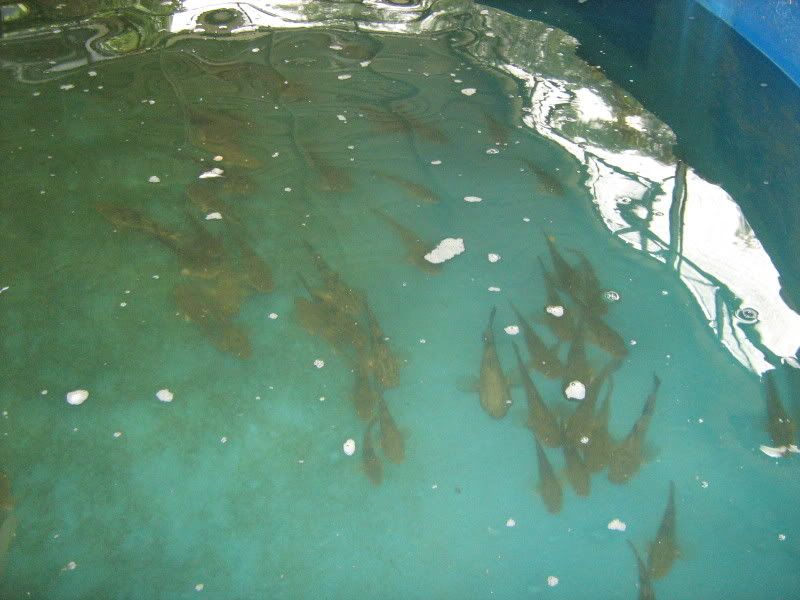
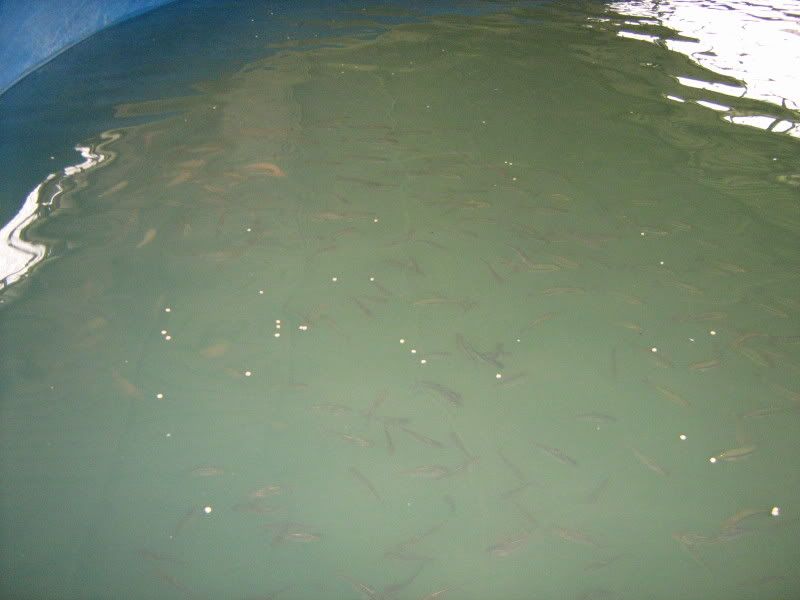
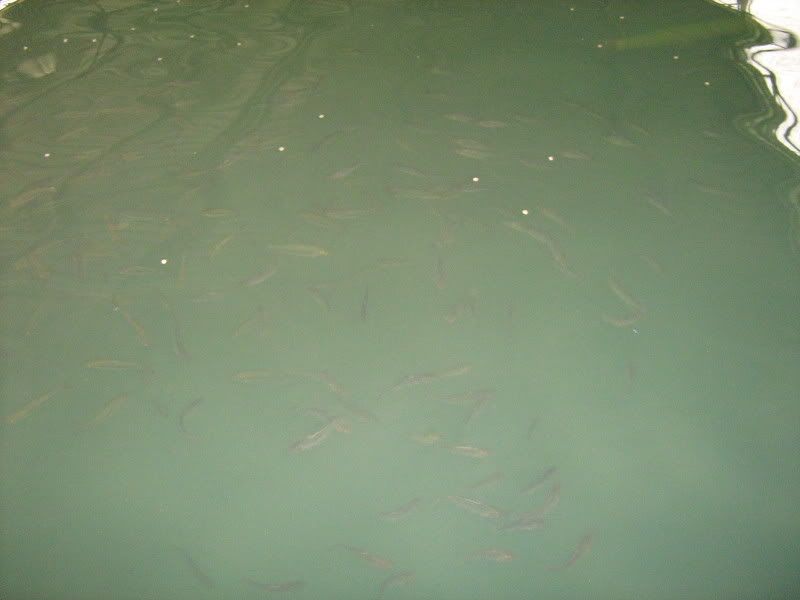
rearing some :-

a) Soon Hock - started 18/8/07
b) Tilapia - started 13/9/07
c) Jelawat - started 13/9/07
d) Patin - started 13/9/07

let's see how things go from here.


1) user posted image

2) user posted image

3) user posted image

4) user posted image

5) user posted image

This post has been edited by ParaOpticaL: Sep 18 2007, 06:21 PM
rexis
post Sep 18 2007, 10:14 AM

*** 7-star status Old Bird ***
*******
Senior Member
3,590 posts

Joined: Apr 2006
From: nowhere


whao your soon hock so big already? I thought u r buying some tiny fish baby.

I read about an article that the fish farmer keeping some mature talapia in his soon hock pool to breed up some baby talapia for the soon hock as snack. Consider that too.

And since u said u hv a river nearby? So water shouldn't be an issue, try change water a lot instead of relying heavily on filter, and also try to figure out a way to harness the river energy to pump your water(water mill, gravity, etc) it is really a good idea to lower your utility bill.

This post has been edited by rexis: Sep 18 2007, 10:17 AM
kelvintan_mobile
post Sep 18 2007, 11:07 AM

Getting Started
**
Junior Member
221 posts

Joined: Apr 2006
From: Klang Valley, Malacca , MMUs'


QUOTE(ParaOpticaL @ Sep 18 2007, 09:37 AM)
hi,

updates as promised.

rearing some :-

a) Soon Hock - started 18/8/07
b) Tilapia - started 13/9/07
c) Jelawat - started 13/9/07
d) Patin - started 13/9/07

let's see how things go from here.
user posted image

user posted image

user posted image

user posted image

user posted image
*
looks interesting!! , pls update us with more pics when they grow bigger . u found buyers ad?


QUOTE(rexis @ Sep 18 2007, 10:14 AM)
whao your soon hock so big already? I thought u r buying some tiny fish baby.

I read about an article that the fish farmer keeping some mature talapia in his soon hock pool to breed up some baby talapia for the soon hock as snack. Consider that too.

And since u said u hv a river nearby? So water shouldn't be an issue, try change water a lot instead of relying heavily on filter, and also try to figure out a way to harness the river energy to pump your water(water mill, gravity, etc) it is really a good idea to lower your utility bill.
*
harnessing the energy ? is there a device to do so in the market ad?? sounds interesting to me as im an 3rd year engineering student who studied energy harnessing. if theres no such device , i would love to create a prototype to make small buck , hehe.
rexis
post Sep 18 2007, 11:46 AM

*** 7-star status Old Bird ***
*******
Senior Member
3,590 posts

Joined: Apr 2006
From: nowhere


QUOTE(kelvintan_mobile @ Sep 18 2007, 11:07 AM)
harnessing the energy ? is there a device to do so in the market ad?? sounds interesting to me as im an 3rd year engineering student who studied energy harnessing. if theres no such device , i would love to create a prototype to make small buck , hehe.
*
Haha, dun imagin a complicated generator with one end dip in the river and another end hook up with power cables. Im just talking about some plain mechanical water mill that use river flow to spin a pump or something, there isnt any commercial design on the market as far as i know. Perhaps you can really work out some design and prototype! Remember, our country is doing lots of agriculture and we are having lots of river too, tats a big market for it.

Its nothing too complicated, serious, i hv seen(book, tv, natgeo) bamboo water pump that able to scoop water and pour them on a higher point to a leading bamboo pipe and lead it to padi field, theres even a fish catcher that able to scoop up salmon from river using the river flow energy.
kelvintan_mobile
post Sep 18 2007, 01:38 PM

Getting Started
**
Junior Member
221 posts

Joined: Apr 2006
From: Klang Valley, Malacca , MMUs'


haha , i c ic .. dint know got simple way , too , thx , will look up on the internet.
TSParaOpticaL
post Sep 18 2007, 03:48 PM

Planter - Durian, Jackfruit, Papaya
*******
Senior Member
2,348 posts

Joined: Dec 2004
From: Ch3r@s


QUOTE(kelvintan_mobile @ Sep 18 2007, 11:07 AM)
looks interesting!! , pls update us with more pics when they grow bigger . u found buyers ad?

harnessing the energy ? is there a device to do so in the market ad?? sounds interesting to me as im an 3rd year engineering student who studied energy harnessing. if theres no such device , i would love to create a prototype to make small buck , hehe.
*
havent found buyers yet. still early. maybe in 3 mths time will start looking...


harnessing the energy he meant was relative. he meant using gravity and nature to get water to the tanks so save on utility.

actually its a good idea. but my pumps and filters are there for different reasons and the tanks do have a pipe.

biggrin.gif
cktwai
post Sep 18 2007, 04:57 PM

NaraPikamaru
****
Senior Member
541 posts

Joined: Sep 2004
QUOTE(ParaOpticaL @ Sep 18 2007, 03:48 PM)
havent found buyers yet. still early. maybe in 3 mths time will start looking...
harnessing the energy he meant was relative. he meant using gravity and nature to get water to the tanks so save on utility.

actually its a good idea. but my pumps and filters are there for different reasons and the tanks do have a pipe.

biggrin.gif
*
dude the water looks a bit cloudy... is it normal to be like that? smile.gif or is it reflecting your roof's colour
TSParaOpticaL
post Sep 18 2007, 06:07 PM

Planter - Durian, Jackfruit, Papaya
*******
Senior Member
2,348 posts

Joined: Dec 2004
From: Ch3r@s


QUOTE(cktwai @ Sep 18 2007, 04:57 PM)
dude the water looks a bit cloudy... is it normal to be like that? smile.gif or is it reflecting your roof's colour
*
which picture are you referring to ?
CityLife
post Sep 18 2007, 06:26 PM

Casual
***
Junior Member
325 posts

Joined: Sep 2007


Certainly is an interesting and nice field to adventure.

119 Pages « < 5 6 7 8 > » Top
 

Change to:
| Lo-Fi Version
0.0218sec    0.69    6 queries    GZIP Disabled
Time is now: 21st December 2025 - 12:25 PM