Abductions at Sea: A 3-Way Security Challenge for Indonesia, Malaysia, and the Philippines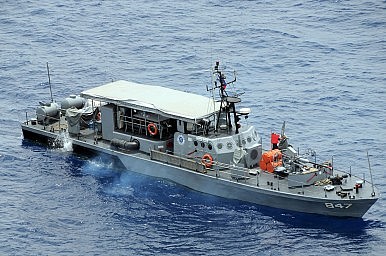
QUOTE
The tri-border area (TBA) in Southeast Asia is comprised of the maritime zones of three states – the Philippines, Indonesia and Malaysia – in the Sulu Sea and the Celebes Sea. Numerous shipping arteries traverse the TBA, presenting an alternative to the overcrowded Straits of Malacca (SOM) and carrying roughly $40 billion worth of cargo each year
QUOTE
However, the recent high-profile abductions of Indonesian and Malaysian sailors by alleged members of the Abu Sayyaf, a militant group from the Philippines, highlight the urgent need to remedy this maritime security gap
QUOTE
The International Maritime Bureau (IMB) Piracy Reporting Center based in Kuala Lumpur, Malaysia, reported only 11 attacks in the TBA in 2015, mostly involving armed robbery against ships in port. The only confirmed incident of ship hijacking involved a tanker that was boarded in the vicinity of Lembeh Island in North Sulawesi, Indonesia. No one was harmed during the attack and the tanker’s crew was set adrift in a life raft
QUOTE
In this regard, it may be useful to consider, as a starting point, the forms and limits of coordination outlined in the Code of Conduct Concerning the Repression of Piracy, Armed Robbery Against Ships, and Illicit Maritime Activity in West and Central Africa (Yaoundé Code of Conduct), and the Code of Conduct Concerning the Repression of Piracy and Armed Robbery Against Ships in the Western Indian Ocean and the Gulf of Aden (Djibouti Code of Conduct). These non-binding Codes have been effective in limiting the number of piracy and armed robbery at sea incidents off the Gulf of Guinea and the Coast of Somalia
QUOTE
One possible course of action is for the three countries to earmark funds from their allocations under the Southeast Asia Maritime Security Initiative (MSI), a regional capacity building effort meant to help some ASEAN member states (including Indonesia, Malaysia, and the Philippines) and Taiwan to establish a shared MDA architecture, specifically for the TBA. Doing so may help re-focus attention on the TBA and channel the resources needed to detect potential threats, facilitate information sharing, and engage in collaborative security measures
QUOTE
The only network applicable to the TBA is the Regional Cooperation Agreement on Combating Piracy and Armed Robbery Against Ships in Asia (ReCAAP), which entered into force on September 4, 2006 and which currently has 20 signatories: Australia, China, Denmark, India, Japan, Korea, the Netherlands, Norway, Sri Lanka, the United Kingdom, the United States, Bangladesh, Brunei Darussalam, Cambodia, Laos, Myanmar, the Philippines, Singapore, Thailand, and Vietnam
QUOTE
Notably, Indonesia and Malaysia are not parties to the ReCAAP. Indonesia refused to join over concerns that the agreement would compromise its sovereignty. On the other hand, Malaysia objected to the fact that the ReCAAP Information Sharing Center (ISC), the facility through which the agreement would be operationalized, would be located in Singapore. It felt that doing so would undermine the IMB Piracy Reporting Center in Kuala Lumpur
http://thediplomat.com/2016/05/abductions-...he-philippines/ 

 Military Thread V20
  May 4 2016, 11:18 PM


 Quote
Quote


 hopefully faster but sighhhh






 0.0297sec
 0.50
0.50
 6 queries
 GZIP Disabled