

 Dec 20 2022, 09:18 PM


QUOTE(jmas @ Dec 20 2022, 09:15 PM)
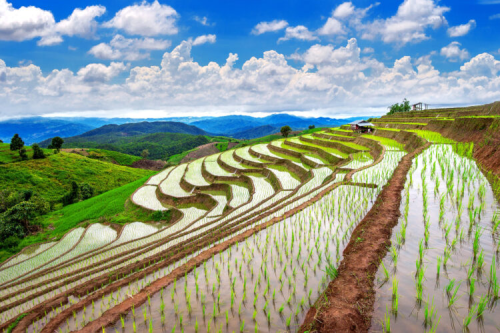
terrace farming used by human over hundreds of years, in many cases it helped in controlling soil erosion rather than causing landslide
and if their word can be believed, its not the cause this time since its on opposite side of the landslide

well, i just leave this hereand if their word can be believed, its not the cause this time since its on opposite side of the landslide
Despite having a long history, mechanisms behind terracing and the overall effects of this technique are still poorly understood. Although terracing-related research has been conducted globally over the last few decades, at a site- or plot-scale, the conclusions from these small-scale studies are inconsistent (Chen et al., 2017). However, several relevant studies have described the drawbacks or possible negative effects of terracing. A number of researchers reported that abandoned and newly-built terraces may cause deterioration of soil conditions (e.g., stability, nutrient, erosion-resistence) (Calsamiglia et al., 2018; Gallart et al., 1994). The reasons for these findings are related to the specific structure, construction material, and vegetation cover of terraced fields, which may differ across ecosystems, resulting in a variation of ecosystem services (Wei et al., 2016). Especially terraced landscapes across the world have degraded significantly in recent decades, as a result of changes in economic and social activities (e.g., rural labor force and population transfer, urban expansion, slumps in agriculture and uncertainty regarding tenure) (Schoenbrodt-Stitt et al., 2013). These degraded landscapes may have negative effects on ecosystems and pose a threat to human wellbeing. In many regions, the abandonment of terraces due to socioeconomic development, has increased water and soil erosion as well as the risk of slope collapse. Thus, the effects of terracing on ecosystems and human welfare are highly complex and it is challenging to draw general conclusions about the effects of terraces while considering the variability in associated plant species, terrace age, spatiotemporal distribution, land use, and topography.
 Quote
Quote





 0.0231sec
 0.79
0.79
 5 queries
 GZIP Disabled