Japan joins ASEAN Defence emergency hotline, first non-ASEAN country to join
Japan has joined the hotline set up to promote swift cooperation between Asean defence ministers in times of emergency, becoming the first non-member nation of the 10-country bloc to do so.
The move comes as China’s military activity grows in the South China Sea and the Japanese government aims to strengthen its ties with Asean nations, Japanese daily Asahi Shimbun reported on Tuesday.
The hotline was set up in 2015 to make it easier for Asean countries to communicate on defence issues.
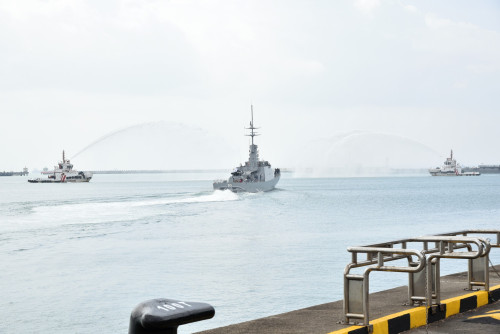
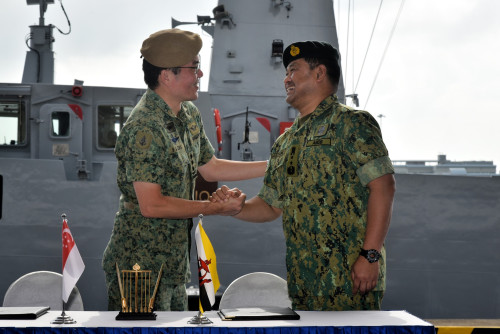
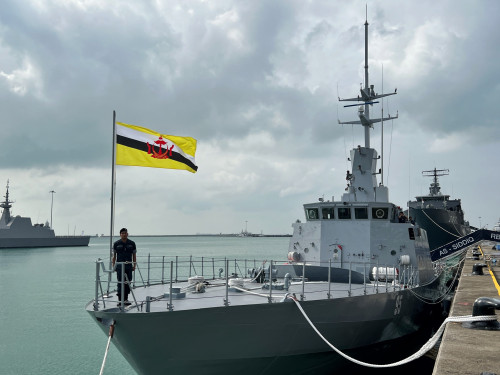
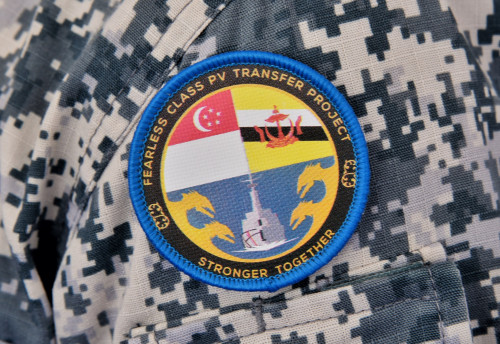
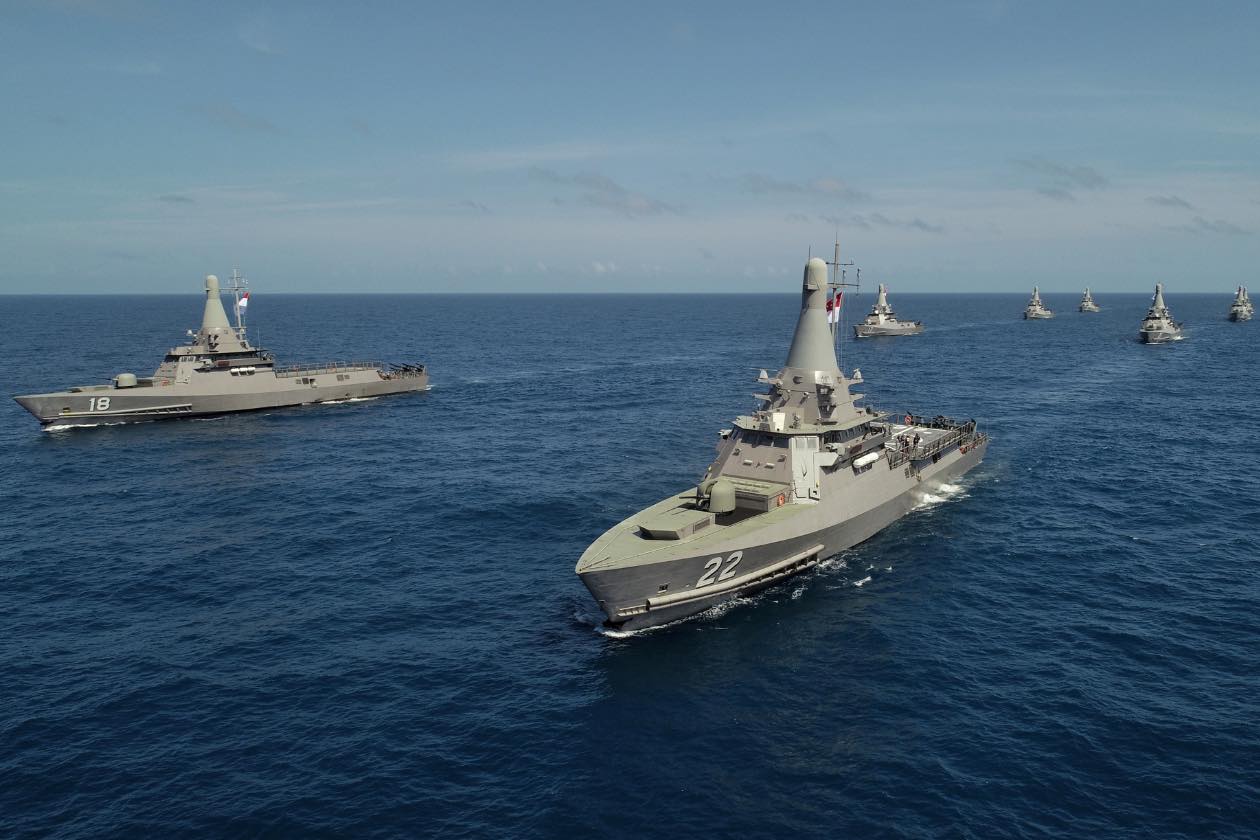
Seriously, these are "youthful" ships at about 20 years old each. Can Sg give some to My pretty pls...4 left after 2 given to Brunei and 4 refitted as maritime security vessels.
Source: RSN
For info: The Fearless class was replaced by the larger Independence class Littoral Mission Vessels:
With most of the equipment of the mast a remove. At best it's a FFBNW OPV.
With most of the equipment of the mast a remove. At best it's a FFBNW OPV.
I want to say Israeli equipment but there's more.
I think the likely explanation is that the Bruneians use different systems and want commonality. Secondly, I don't think you can simply transfer armaments and/or related systems without getting the prior approval of the original vendors and/or countries - you'll probably need to pay $$. So, Sg has to remove them.
This post has been edited by Mai189: Mar 21 2023, 12:59 AM
Sinkieland has donated a fair bit of it's weapons in the past. F-16s to Thailand. SF260 to Indo, even fennecs to Chad air force. Quite a lot of other weapons Malaysia can use eg LG1 guns, APCs, Trucks, Helos, LST/LPDs.
I think the likely explanation is that the Bruneians use different systems and want commonality. Secondly, I don't think you can simply transfer armaments and/or related systems without getting the prior approval of the original vendors and/or countries - you'll probably need to pay $$. So, Sg has to remove them.
On 2nd look Even the Gun are removed Wonder if the sonar are removed as well.
OPV or offshore patrol vessel is a subjective class. Even 1975 us navy class only class patrol boat and defines any vessel above 30m as seagoing. There is no definition of offshore.
Fearless class patrol vessels are smaller than the new Keris class lms so if in RMN would be defined either as an lms or patrol craft, not an opv (agreed).
On 2nd look Even the Gun are removed Wonder if the sonar are removed as well.
It's more of a patrol vessel then OPV or FAC.
It is up to the Bruneians to decide what armaments and sensors they want on board obviously. For e.g. they use the 57mm Bofors so it is possible that theyll fit those in. They can go back to ST for the works or opt for another vendor.
It is up to the Bruneians to decide what armaments and sensors they want on board obviously. For e.g. they use the 57mm Bofors so it is possible that theyll fit those in. They can go back to ST for the works or opt for another vendor.
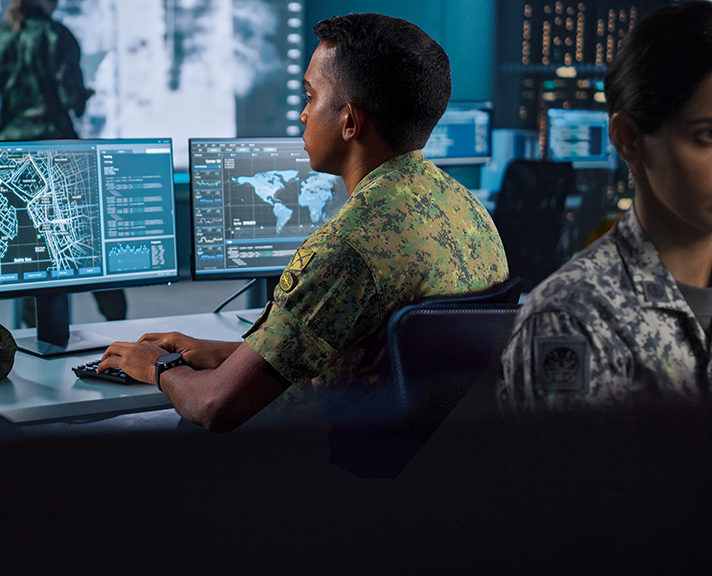
Death toll from a successful full scale cyberwar? Millions from the collapse of modern civilization e.g. drinking water, electricity, medical systems, banking systems, food supply chains, sanitation, port/airspace, and military coordination systems, etc.
A war may well be over even before bullets start flying when a nation is suddenly subjected to a massive cyber and electronic attack.
From the video - up to 90% of US citizens could be dead within a year of a successful massive cyber attack.
This post has been edited by Mai189: Mar 23 2023, 08:47 PM
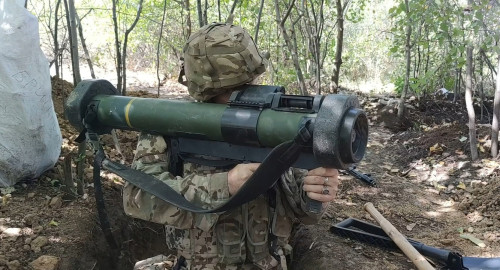
In brief, it is very effective against wall (obstacles) and IFVs and may penetrate main battle tanks (with ERA) - even if there is no penetration, the tank crew will get minced anyhow from the blast impact which achieves a mission kill.
Singapore, Israel and Germany uses the light weight Matador alongside medium/heavier anti tank weapons like the Spike. The beauty of the Matador is that it can be mass produced relatively fast and equipped with as many units as possible so an enemy may well face a rain of Matador munitions. Note: Singapore produces both Matador and Spike missile (which now exists as marine, land and air-to-surface variants) locally.
Mai's note: The MATADOR was developed jointly by the Singapore Armed Forces (SAF) and the Defence Science and Technology Agency (DSTA), in collaboration with Rafael Advanced Defense Systems and Germany's Dynamit Nobel Defence (DND) joint team.
This post has been edited by Mai189: Mar 25 2023, 07:56 PM
RSAF being a smart later buyer will get all of these upgrades. The same upgrades will also be retrofitted into current operational F35s.
Users of US-origin 5th gen aircraft will also be getting most of the new air-to-air weapons the USAF/US Marines are getting - some of which include:
QUOTE
Air-to-Air Missiles AIM-260 Joint Advanced Tactical Missile (JATM). This radar-guided dogfight missile will be about the same size as the 30-year-old AIM-120 AMRAAM, but with considerably longer range. Built by Lockheed Martin it was first revealed in 2019. Little has been revealed since, but USAF has acknowledged that live tests were conducted in 2020 and 2021. The JATM’s enhanced range is greater than China’s PL-15—in many ways, an AMRAAM clone, restoring the “first shot, first kill” advantage to U.S. aircraft. The Navy and Army are said to be collaborating with USAF on JATM.
Long-Range Engagement Weapon (LREW). Another potential AMRAAM successor or JATM complement. Built by Raytheon, the LREW is reportedly a larger missile that can only be carried externally on fighters, and may be intended to shoot down adversary airborne warning systems, tankers, or bombers at great distances.
Modular Advanced Missile (MAM). Possibly a successor to the AIM-9X short-range dogfight missile, the MAM will have stackable propulsion units and interchangeable seekers. Built by Boeing, the MAM contracts also support other company projects, such as the Compact Air-to-Air Missile (CAAM), Extended-Range Air-to-Air Missile (ERAAM), and Long-Range Air-to-Air Missile (LRAAM). The ERAAM/LRAAM may be a competitor to Raytheon’s LREW.
Peregrine. This Raytheon concept would combine the capability of the AMRAAM with longer range in a package only half the size. Raytheon received Air Force Research Laboratory funding to explore Peregrine in December 2022; previously, it was a self-funded program.
CUDA. A Lockheed proposal that AFRL began evaluating in 2019 under the Small Advanced Capabilities Missile project, the CUDA would also be half the size of AMRAAM, steered with a unique system of propulsive bursts from around the rocket body.
Hypersonic Missiles AGM-183A Air-Launched Rapid Response Weapon (ARRW). The ARRW is USAF’s large, quick-and-dirty entrée into hypersonic missiles—those that travel at more than five times the speed of sound. Intended for use against high-value or mobile targets where speed of attack from standoff range is crucial, ARRW accelerates to hypersonic speed with a rocket, detaches, and then maneuvers as it glides to its target. The Lockheed Martin weapon has accumulated several successful flight- tests after a string of failures, but USAF officials are mum on how many it plans to build. Part of Lockheed’s contract is to demonstrate it can be produced affordably. A B-52 can carry four ARRWs on its wing pylons. The B-1B and F-15EX may also be equipped with it.
Hypersonic Attack Cruise Missile (HACM). Raytheon won the HACM competition in September 2022, with an initial operating capability eyed for around 2027. The missile is a ground-attack weapon using an air-breathing, scramjet engine, and will be small enough to be carried on fighter-sized aircraft; the F-15EX has been mentioned as a likely platform. It builds on the Air Force-DARPA Hypersonic Air-breathing Weapon Concept (HAWC).
Ground-Attack Weapons Stand-in Attack Weapon (SiAW). The Air Force awarded competitive SiAW contracts to L3Harris Technologies, Lockheed Martin, and Northrop Grumman in May 2022. The weapon is intended to be a Suppression/Destruction of Enemy Air Defenses successor to the High-speed Anti-Radiation Missile (HARM) in use since the 1980s. Intended as a pathfinder weapon to clear out defensive radars and surface-to-air weapons, SiAW will add ballistic missile launchers and other time-sensitive targets to its target list. The weapon must fit inside the F-35 weapons bay. Once a contractor is selected, a 2026 operational capability is contemplated.
Stand-off Attack Weapon (SoAW). The Air Force formally announced its SoAW competition in September 2022 and specified that it’s looking for multiple vendors to produce the chosen design, which USAF intends to own. The Air Force didn’t disclose its range requirements for SoAW; it may be intended as a lower-cost standoff weapon to fill the niche of the AGM-158 Joint Advanced Surface Standoff Missile–Extended Range (JASSM-ER) and its close kin, the AGM-158C Long Range Anti-Ship Missile (LRASM).
Global Precision Attack Weapon (GPAW). Likely to be the successor to JDAM—USAF’s family of direct-attack, GPS-guided bombs—the GPAW was announced in the fall of 2020. The service wants small, lightweight weapons to strike surface targets as well as hardened or deeply buried targets, yet affordable in large numbers. The weapon is supposed to have advanced sensors and a degree of autonomy. The GPAW is to have an open architecture and be compatible with advanced as well as legacy aircraft, with a “cockpit-selectable warhead effect.”
Mai's note: As many as 8 WVR/BVR Peregrine missiles (with range as long and/or longer then the current Amraams) and as many as 12 or more Cuda missiles can be fitted into the internal weapon bays of the F35s. Or mix of AIM-260 and Peregrine or other missiles.
Countries with their own indigenous combat jets will need to 1) seek clearance and 2) pay of the integration of US weapons and it will not be cheap.
This post has been edited by Mai189: Mar 25 2023, 09:26 PM
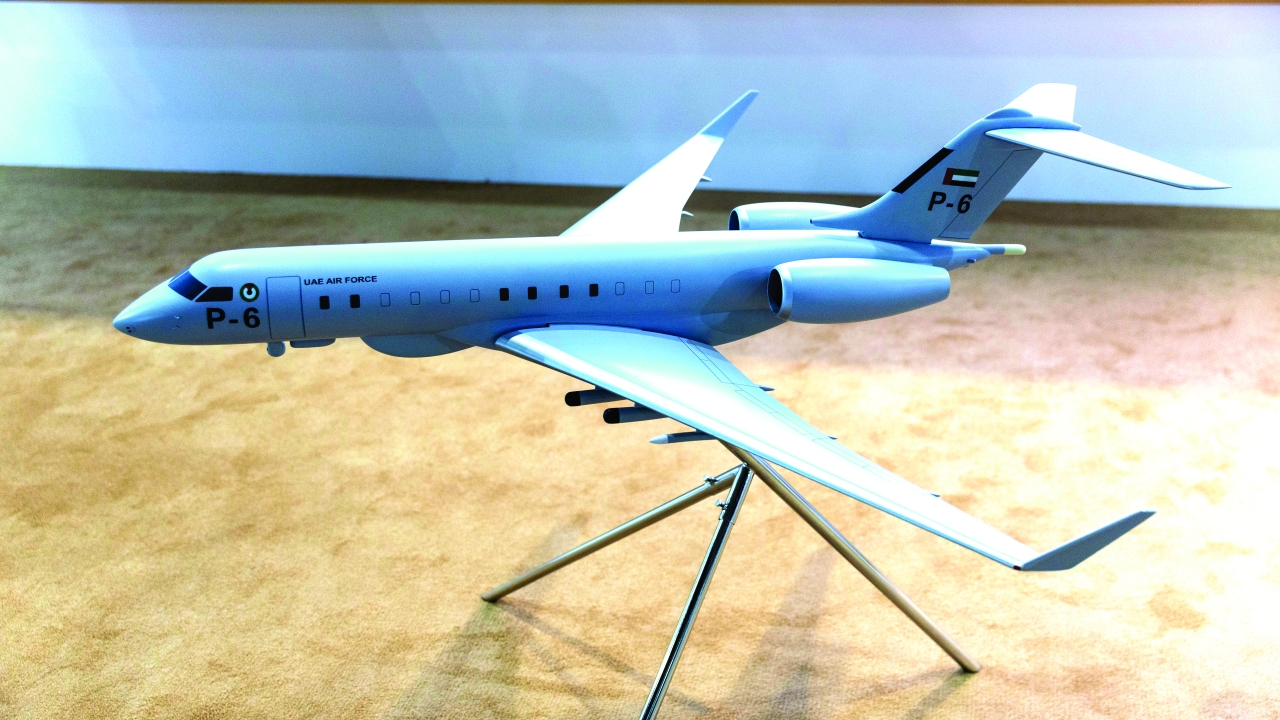
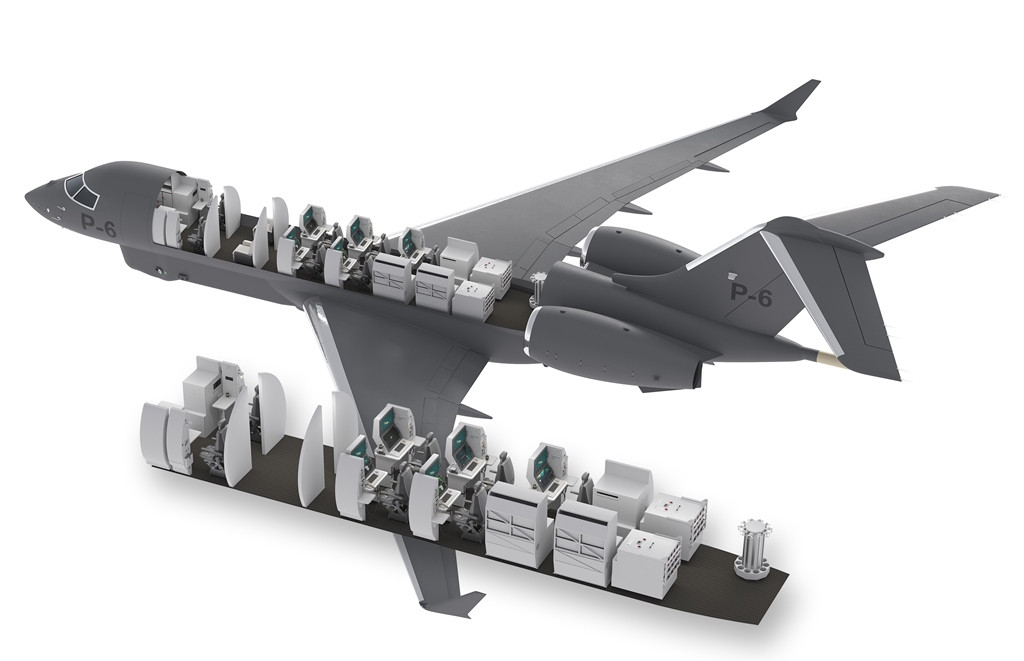
One feature not shown on models of the P-6, but much in evidence in more recent CGI images, is a box-like “flex bay” behind the search radar. This is able to carry torpedoes, anti-ship missiles, or SAR kits, and can be augmented by between two and six underwing stores stations.
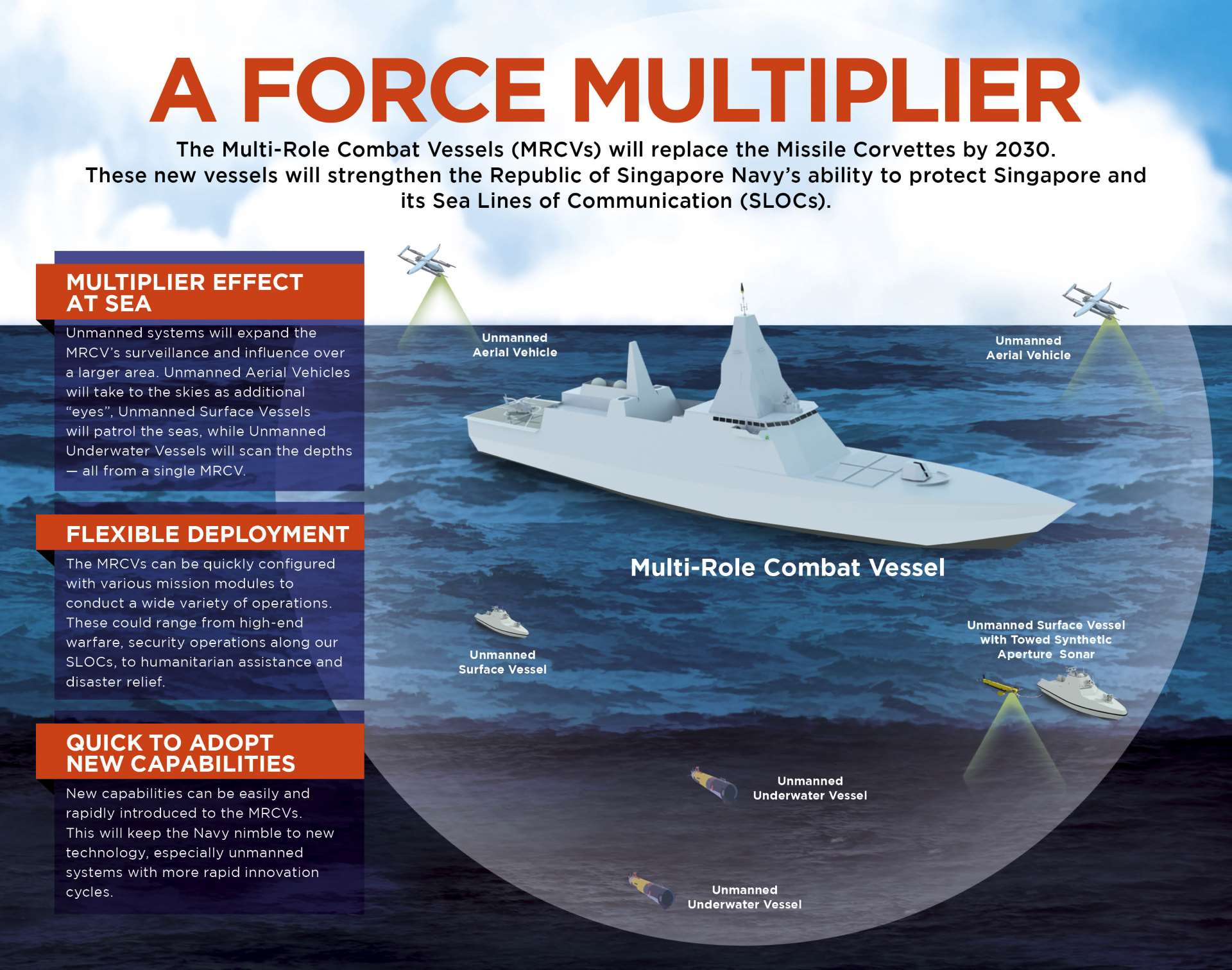
Holy cow! Full load displacement of 10000 tons - standard should be about 9000 tons. I told yer singkies are building destroyers. And at least 6 of such ships. Tonnage wise, these ships can be classified as destroyers.
No. The 17-18m USVs can multitask as they are modular. The LMVs can also carry these USVs. However, they are not full fledged minesweepers. RSN has plans for a new class of minesweepers.
This post has been edited by Mai189: Mar 27 2023, 04:59 PM
Note Type 31/absalon weigh at about 5000-6000+ tons.
The MRCV will be much larger and publicly available line drawings show an entirely different look. However, it is likely that RSN + DSTA + Saab will refer to the modularity of the type 31 and absalon classes as references.


 Mar 19 2023, 05:56 PM


 Quote
Quote













 0.0392sec
 0.57
0.57
 6 queries
 GZIP Disabled