Welcome Guest ( Log In | Register )

119 Pages « < 40 41 42 43 44 > » Bottom

Outline · [ Standard ] · Linear+

 Venturing into Agriculture & Aquaculture, Co-Ordination & Implementation is KEY

views
     
MrFarmer
post Oct 1 2011, 07:54 PM

Casual
***
Junior Member
478 posts

Joined: Mar 2011
From: Sabah


QUOTE(Michael J. @ Sep 30 2011, 08:57 AM)
Mr. Farmer:

Please do check for spider mites. Can't view the image right now, but once I am to access pictures, I will tell you.

Erm... you do know deltamethrin is a neurotoxin right? And it is normally used to kill insects; although it has been indicated as being useful to control arachnids and arthropods, for control of mites, maybe you should consider Mitac (amitraz) instead. It is less hazardous to human health too.

Ah... you used compost... It could be a contributing factor. It is usually due to hot methane gas (from fermentation of organic matter) scalding the leaves. As I understand, it takes quite a lot of the stuff to result in scalding of lower leaves. Had that problem before when planted oil palm on deep peat; we called it "lower frond dessication". However it does not fully explain the deficiency of chlorophyll in the mid-rib section of the ginger leaves, or the light striations along the leaf blades.

You are right, pineapple is grown under full sun. But that is in combination with sufficient nitrogen source for the chloroplasts (the organelles in plant cells that convert sunlight and nutrient into food for the plants) to function properly. If there is a deficiency, the plant's immediate response would be to "kill" the less productive cells or chloroplasts, and divert the resources to those which are more productive, usually those found in the younger leaves. It is just my assumption that the pineapple leaves were supposed to be green, although there are varieties with yellow-green leaves and red/purple fringes, mostly varieties that have the Gandol pineapple as one of its genetic parents.

ps: For the chili peppers, if you do not find spider mites or aphids, and you know there was no TMV outbreak previously, then there is not really too much worry. It could just be a case of growth imbalance. When I was developing my chili breed, I thought my entire breeding population kena TMV virus; turned out the crinkling was because the plant growth hormone affecting leaf expansion was working overtime, while the roots had not grown extensive enough to support the rapid growth. Once the roots were established enough to support leaf growth, the leaves stopped crinkling, and grew to about the size of a man's hand each.

As a general guide, you might like to read this article:

http://www.avrdc.org/LC/pepper/chipep.pdf
*
Thanks Micheal.
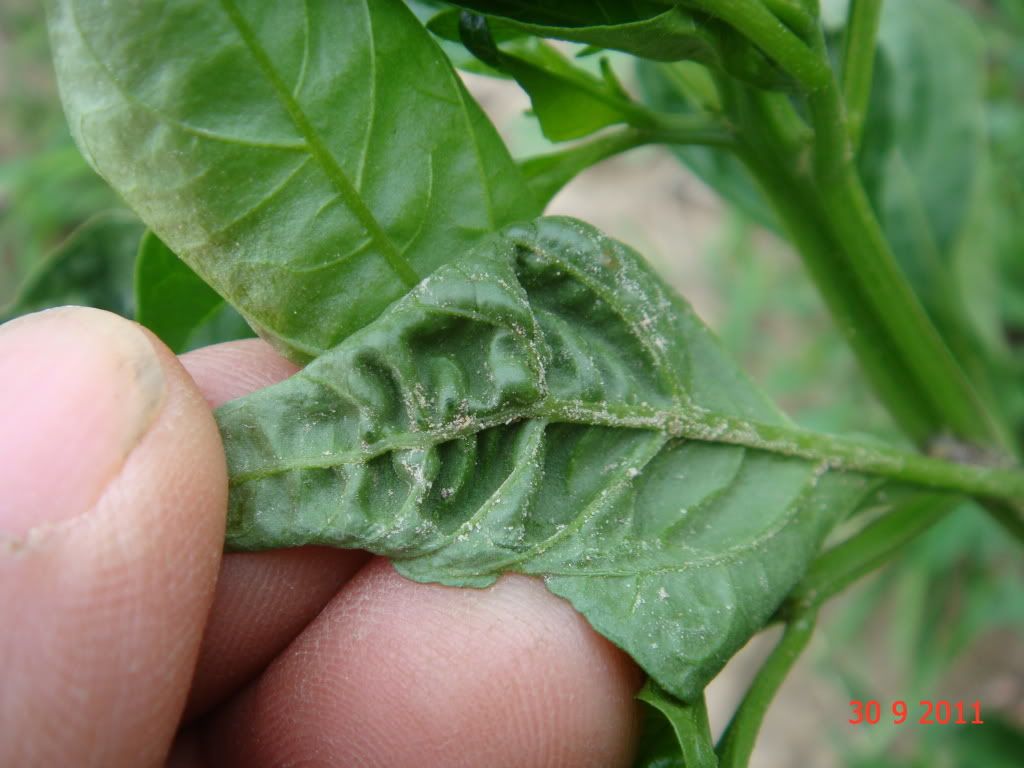
user posted image
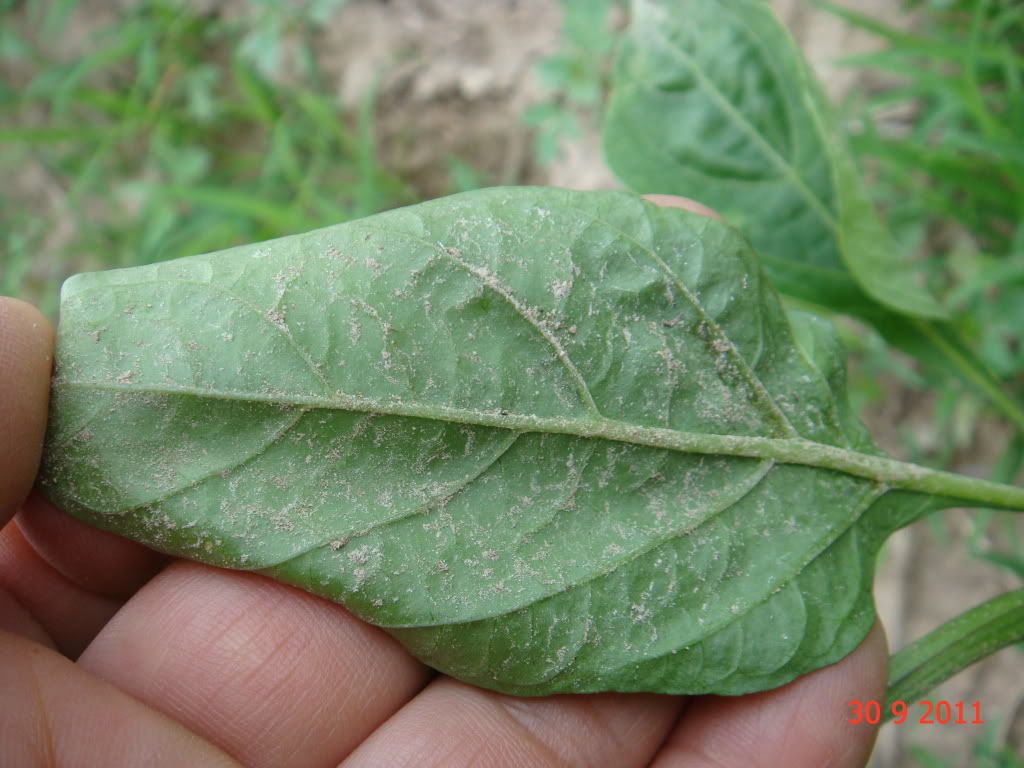
user posted image
user posted image

Don't seems to find any mites.

Oh yes, the deltamethrin, we use to control insects on our eggplant, okra and Vegetables. It's the only stuff we have at the moment, so we taroh oni. blush.gif Anyway, had stopped seedling chillies, plant whatever that had germinated, until we sort this out.
Thanks for the link.

As for the pineapples and ginger, do you think it salvageable / reversible? Or should we plant again?
Michael J.
post Oct 1 2011, 08:59 PM

On my way
****
Senior Member
596 posts

Joined: Jan 2006


Mr. Farmer:

Bro, I have managed to look at the picture. I have to say, those are the largerst aphids I've ever seen. They are red aphids. The weaver ants sort of "farm" them for the sugar-loaded secretion they release from their asses.

http://www.flickr.com/photos/13084997@N03/2900753778/

Ok bro, you've no problem with you chili peppers. It could just be growth hormone imbalance. It should work its self out in a coupe of weeks.

As for your pineapple and ginger, sure, no problem salvaging. Just use the standard recommended fertilizer application to address potassium and nitrogen problem. Just take care not to over do it, and don't apply so close to the plant base, especially nitrogen-based fertilizers. The vapour release can also scorch lower leaves.


Added on October 1, 2011, 9:03 pmps: For effective control of aphids (without use of chemical pesticides), you might choose biological control. Introduce seven-spot ladybugs to the farm. Those bugs will hunt aphids down very effectively.

This post has been edited by Michael J.: Oct 1 2011, 09:03 PM
TSParaOpticaL
post Oct 2 2011, 01:09 PM

Planter - Durian, Jackfruit, Papaya
*******
Senior Member
2,348 posts

Joined: Dec 2004
From: Ch3r@s


this is quite interesting. can we get them from shops or something ?

QUOTE(Michael J. @ Oct 1 2011, 08:59 PM)


Added on October 1, 2011, 9:03 pmps: For effective control of aphids (without use of chemical pesticides), you might choose biological control. Introduce seven-spot ladybugs to the farm. Those bugs will hunt aphids down very effectively.
*
This post has been edited by ParaOpticaL: Oct 2 2011, 01:10 PM
Michael J.
post Oct 3 2011, 08:26 AM

On my way
****
Senior Member
596 posts

Joined: Jan 2006


Para:

I'm not aware of any shops which you can get them from, but apparently there are certain people who do provide the bugs. Not very sure who they are, though they occassionally post their services on Mudah.my or ebay Malaysia. I caught mine myself. You don't really need a whole lot if your area is small. In my case, I only needed 3 breeding pairs to produce enough offspring (which are even more effective than the adults at munching aphids) to cover 50-60 plants.

I need to point out that if you do intend to implement biological control, it would be important to look into the well-being of the beneficial predators. This includes providing shelter, reducing pesticide applications (and herbicide), etc. Ladybugs for instance like sheltering under tree bark, or in places that are warm and damp. They really don't like rain, but are quite appreciative of translocation (i.e. they don't mind being moved from a saturated area to a less saturated area; a good trait, as not all beneficial predators can tolerate human handling). Food source is important, and aside from pests like scale insect, mites, aphids, ladybugs can and do consume some quantities of nectar and pollen. So, do plant some nectar rich flowering plants, like Tunera flowers (9 O'clock morning glory).

You can read more about them here:
http://www.gardeninsects.com/ladybugs.asp

TSParaOpticaL
post Oct 3 2011, 03:17 PM

Planter - Durian, Jackfruit, Papaya
*******
Senior Member
2,348 posts

Joined: Dec 2004
From: Ch3r@s


thanks bro.

will be looking into it as i had BANNED the usage of pesticide & herbicide from the farms by NOT buying them...lolx
and screwing my workers if i find out.

QUOTE(Michael J. @ Oct 3 2011, 08:26 AM)
Para:

I'm not aware of any shops which you can get them from, but apparently there are certain people who do provide the bugs. Not very sure who they are, though they occassionally post their services on Mudah.my or ebay Malaysia. I caught mine myself. You don't really need a whole lot if your area is small. In my case, I only needed 3 breeding pairs to produce enough offspring (which are even more effective than the adults at munching aphids) to cover 50-60 plants.

I need to point out that if you do intend to implement biological control, it would be important to look into the well-being of the beneficial predators. This includes providing shelter, reducing pesticide applications (and herbicide), etc. Ladybugs for instance like sheltering under tree bark, or in places that are warm and damp. They really don't like rain, but are quite appreciative of translocation (i.e. they don't mind being moved from a saturated area to a less saturated area; a good trait, as not all beneficial predators can tolerate human handling). Food source is important, and aside from pests like scale insect, mites, aphids, ladybugs can and do consume some quantities of nectar and pollen. So, do plant some nectar rich flowering plants, like Tunera flowers (9 O'clock morning glory).

You can read more about them here:
http://www.gardeninsects.com/ladybugs.asp
*
harnsheng
post Oct 3 2011, 06:47 PM

Getting Started
**
Junior Member
249 posts

Joined: May 2007
From: Bukit Mertajam, Penang


hey guys,

do u know where can i find Hapa nets? i've been looking for this net to make a holding cages in my ponds. Seems hard to get in Malaysia...
MrFarmer
post Oct 3 2011, 07:33 PM

Casual
***
Junior Member
478 posts

Joined: Mar 2011
From: Sabah


QUOTE(Michael J. @ Oct 3 2011, 08:26 AM)
Para:

I'm not aware of any shops which you can get them from, but apparently there are certain people who do provide the bugs. Not very sure who they are, though they occassionally post their services on Mudah.my or ebay Malaysia. I caught mine myself. You don't really need a whole lot if your area is small. In my case, I only needed 3 breeding pairs to produce enough offspring (which are even more effective than the adults at munching aphids) to cover 50-60 plants.

I need to point out that if you do intend to implement biological control, it would be important to look into the well-being of the beneficial predators. This includes providing shelter, reducing pesticide applications (and herbicide), etc. Ladybugs for instance like sheltering under tree bark, or in places that are warm and damp. They really don't like rain, but are quite appreciative of translocation (i.e. they don't mind being moved from a saturated area to a less saturated area; a good trait, as not all beneficial predators can tolerate human handling). Food source is important, and aside from pests like scale insect, mites, aphids, ladybugs can and do consume some quantities of nectar and pollen. So, do plant some nectar rich flowering plants, like Tunera flowers (9 O'clock morning glory).

You can read more about them here:
http://www.gardeninsects.com/ladybugs.asp
*
I believe that there are some ladybugs in our farm, just not sure if it's seven-spotted. biggrin.gif
Michael J.
post Oct 3 2011, 09:49 PM

On my way
****
Senior Member
596 posts

Joined: Jan 2006


Mr Farmer:

It need not be seven-spotted. Even two-spot and ten-spot ladybugs eat aphids. It is just that seven-spotted ladybugs are less easily mistaken compared to the other types, which have non-related beetles that look very similar, but are actually pest species.
TSParaOpticaL
post Oct 4 2011, 08:27 AM

Planter - Durian, Jackfruit, Papaya
*******
Senior Member
2,348 posts

Joined: Dec 2004
From: Ch3r@s


then i shall need a mini landscape at the farm to 'invite' them in biggrin.gif
MrFarmer
post Oct 5 2011, 06:57 PM

Casual
***
Junior Member
478 posts

Joined: Mar 2011
From: Sabah


QUOTE(ParaOpticaL @ Oct 4 2011, 08:27 AM)
then i shall need a mini landscape at the farm to 'invite' them in biggrin.gif
*
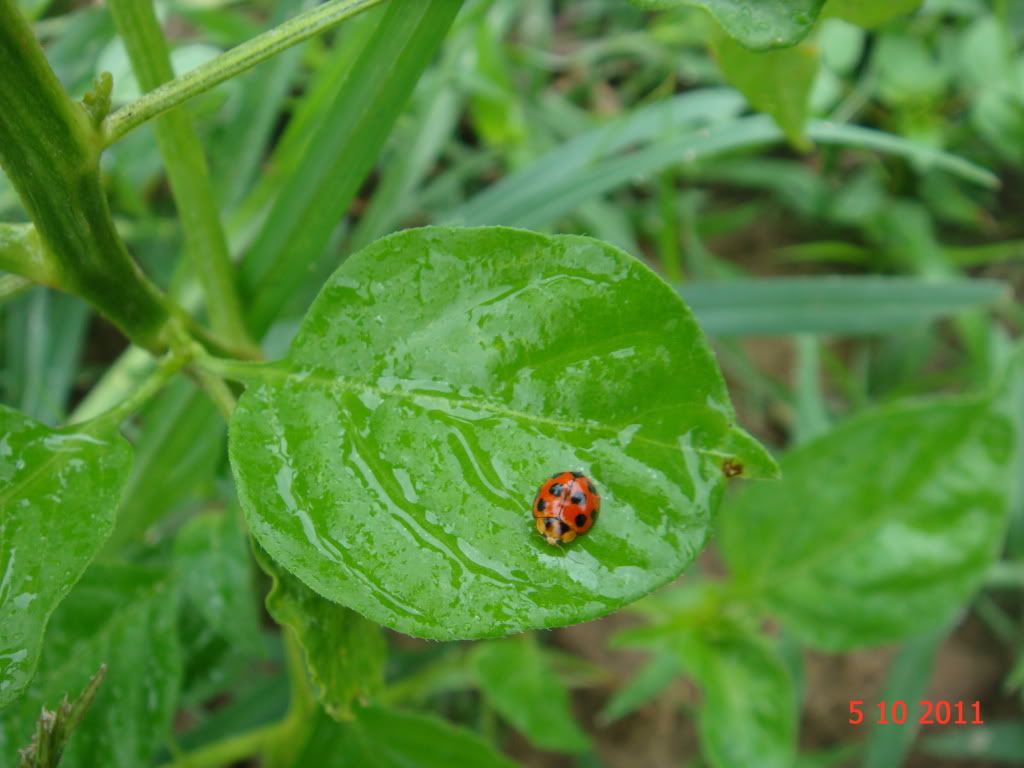
user posted image
user posted image
user posted image
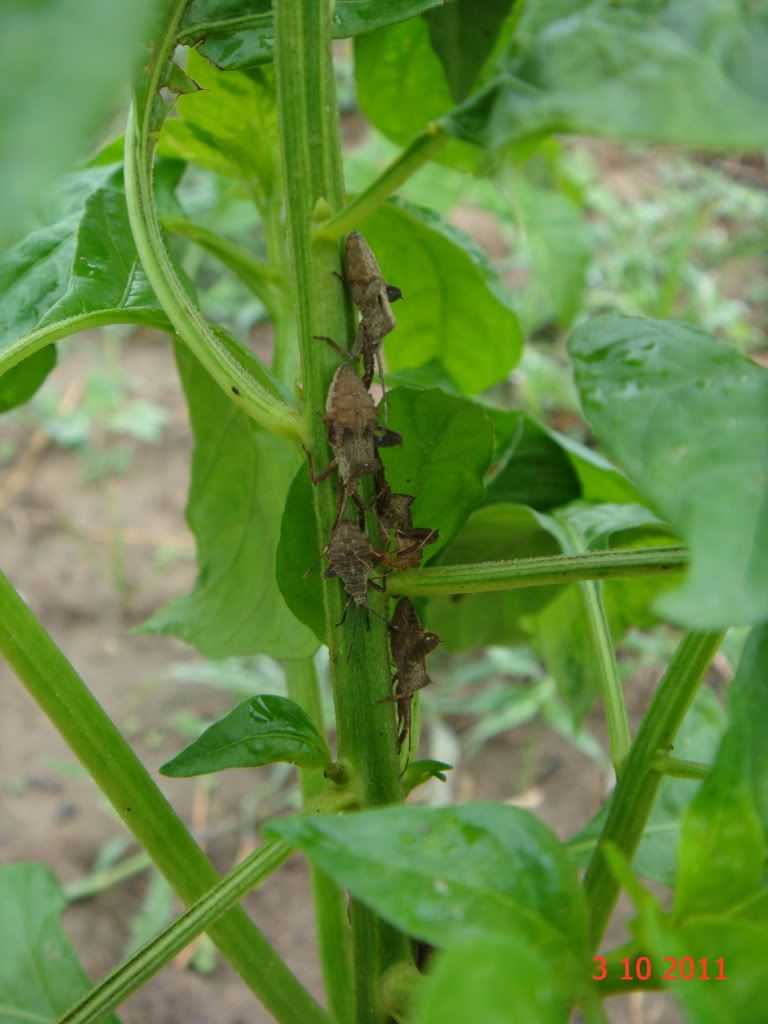
user posted image

Yes, we have some of these guys around, and more.
Michael J.
post Oct 5 2011, 10:00 PM

On my way
****
Senior Member
596 posts

Joined: Jan 2006


Mr Farmer:

The first three pictures are ladybugs, the last one is Mictis, or sapsucking stink bug.
Iceman74
post Oct 6 2011, 12:10 PM

Regular
******
Senior Member
1,407 posts

Joined: May 2010


hi guys,

hope you guys can help/point me out on few of the questions below

1. I'm going to try out aquaculture in a hobbyist mode first. What the smallest size tank using RAS can go with? Fiberglass or Canvas tank, which 1 better?

2. Where do i buy those commercial fish feed? what do i look for in the Ingredient? Current me look at reeling "Jade Perch"

3. Any others important things or idea thats cannot be skip?

the reason i'll doing this is to guage the cost & gain some experiences b4 doing it in more commercialize manner.

btw i'm in puchong selangor

This post has been edited by Iceman74: Oct 6 2011, 12:23 PM
MrFarmer
post Oct 6 2011, 08:22 PM

Casual
***
Junior Member
478 posts

Joined: Mar 2011
From: Sabah


QUOTE(Michael J. @ Oct 5 2011, 10:00 PM)
Mr Farmer:

The first three pictures are ladybugs, the last one is Mictis, or sapsucking stink bug.
*
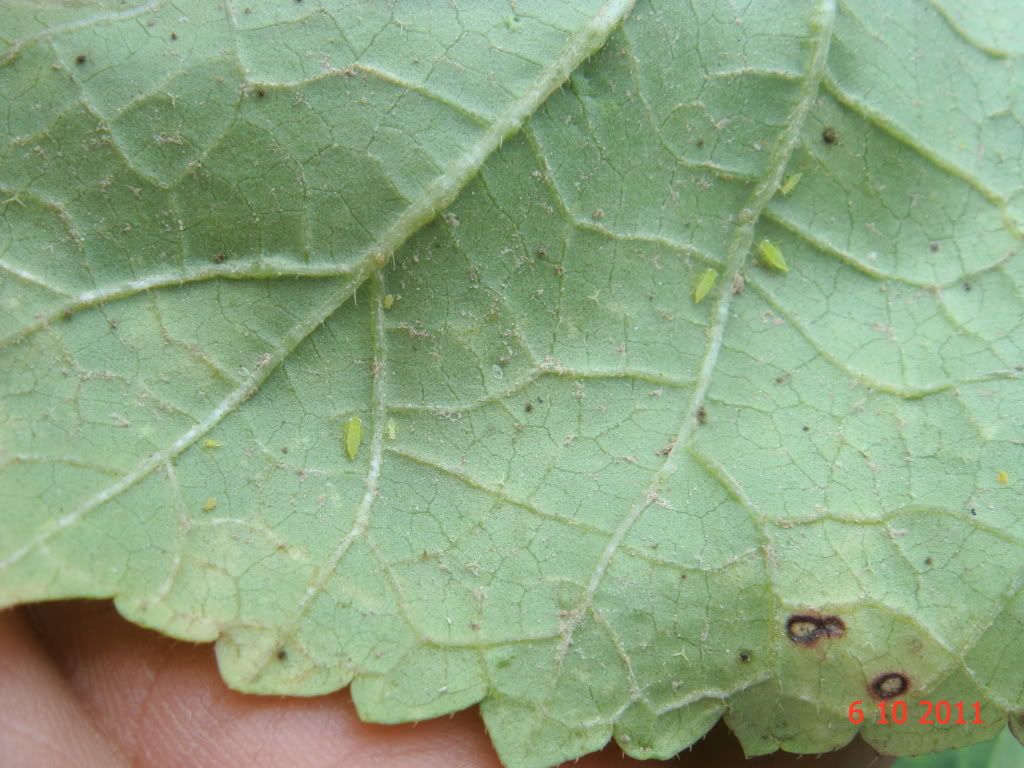
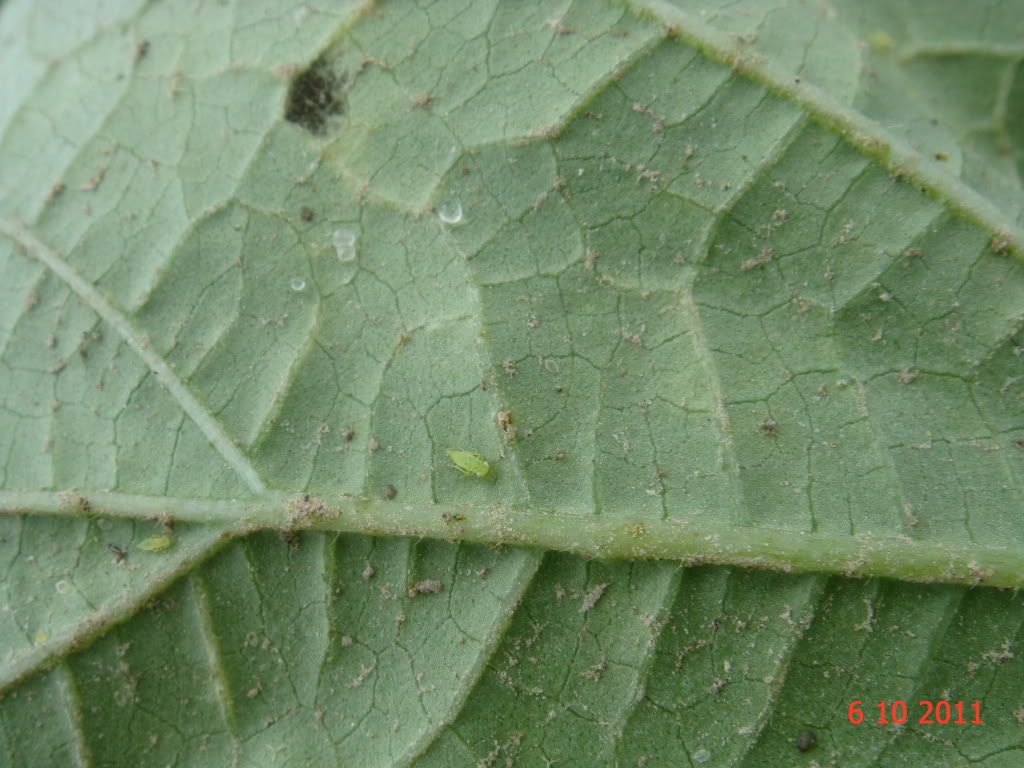
Oh yes, found the mites, Aphids. They had migrated to infest our Lady's Finger & Eggplant. It seems that our neighbors (surrounding us) is spraying Dimethoate, hence all of them seek refuge at our farm.
user posted image
user posted image

Michael J.
post Oct 7 2011, 09:05 AM

On my way
****
Senior Member
596 posts

Joined: Jan 2006


Mr Farmer:

Once again, apology for not being able to see the photos.

One good method of drawing out aphids and mites from your crop plants is to plant marigold at regular intervals along your planting row. For some reason, aphids and mites love marigold. Personally, I've found this method only about 70%-80% effective, but for an organic farmer (or one who is trying to save on farm costs) this might be good enough.

MrFarmer
post Oct 7 2011, 09:52 PM

Casual
***
Junior Member
478 posts

Joined: Mar 2011
From: Sabah


QUOTE(Michael J. @ Oct 7 2011, 09:05 AM)
Mr Farmer:

Once again, apology for not being able to see the photos.

One good method of drawing out aphids and mites from your crop plants is to plant marigold at regular intervals along your planting row. For some reason, aphids and mites love marigold. Personally, I've found this method only about 70%-80% effective, but for an organic farmer (or one who is trying to save on farm costs) this might be good enough.
*
Yes, read about it last night, but those plants that they mentioned sound alien to me. Thanks for pointing our Marigold. We have those around some where, shall give it a try.

Other methods I found over the net, includes dish washing detergent (shall be trying this), mixture of garlic & hot pepper (chilli). We had just acquired dimethoate and abamectin B1 into our arsenal. The Mitac (amitraz) by Bayer is rather very high, $96 here, so maybe shall try this the next time.

Did a test spray this morning on a few rows of Lady's Finger & Brinjals, shall monitor tomorrow. Did some trimming of some leaves and tips, am thinking that with less leaves, it might be easier to spray on the underside. Found some tips dying off, think it could be some type of bore worm. Snipping off the tip, down enough so that there are no more bore.
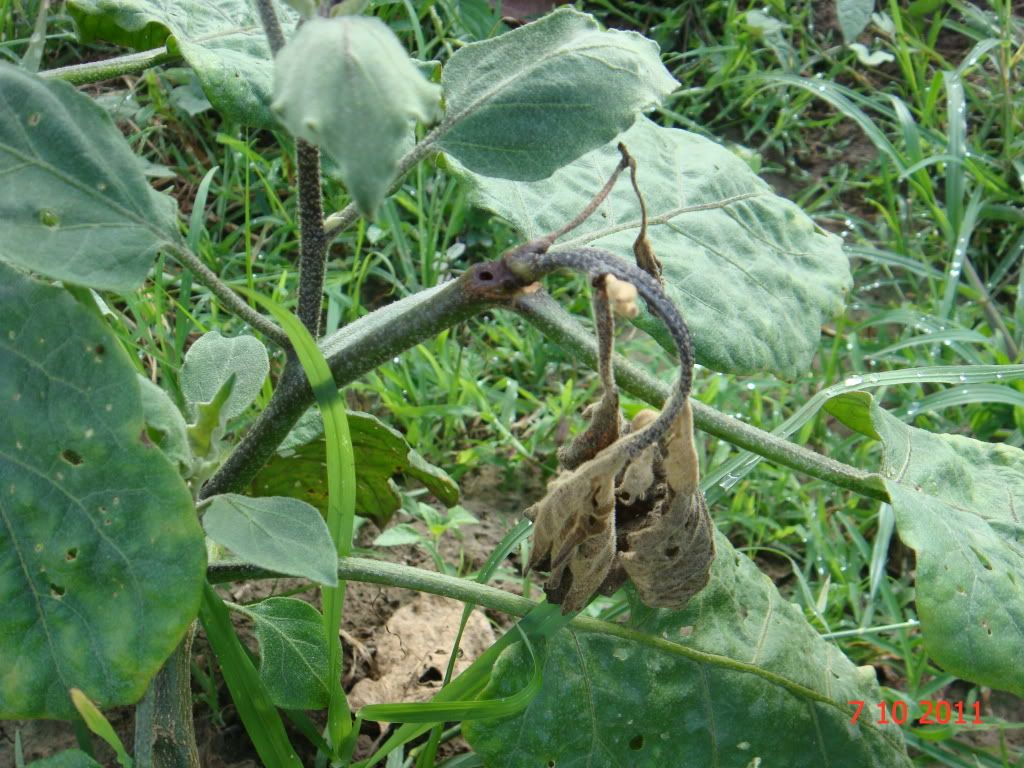
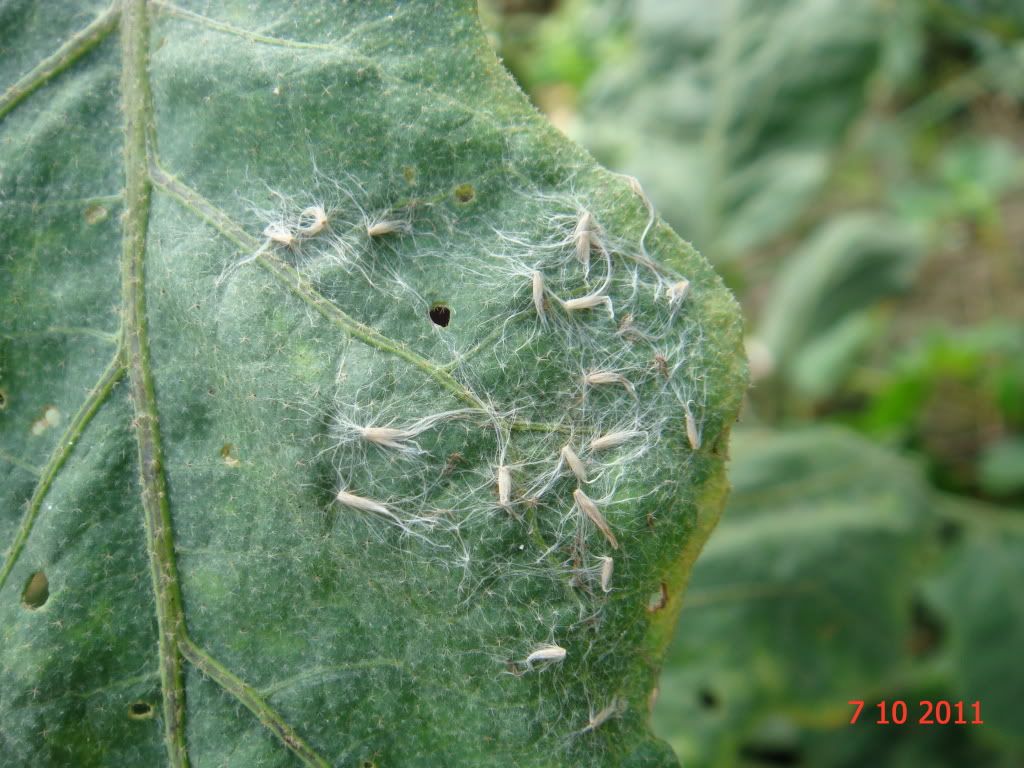
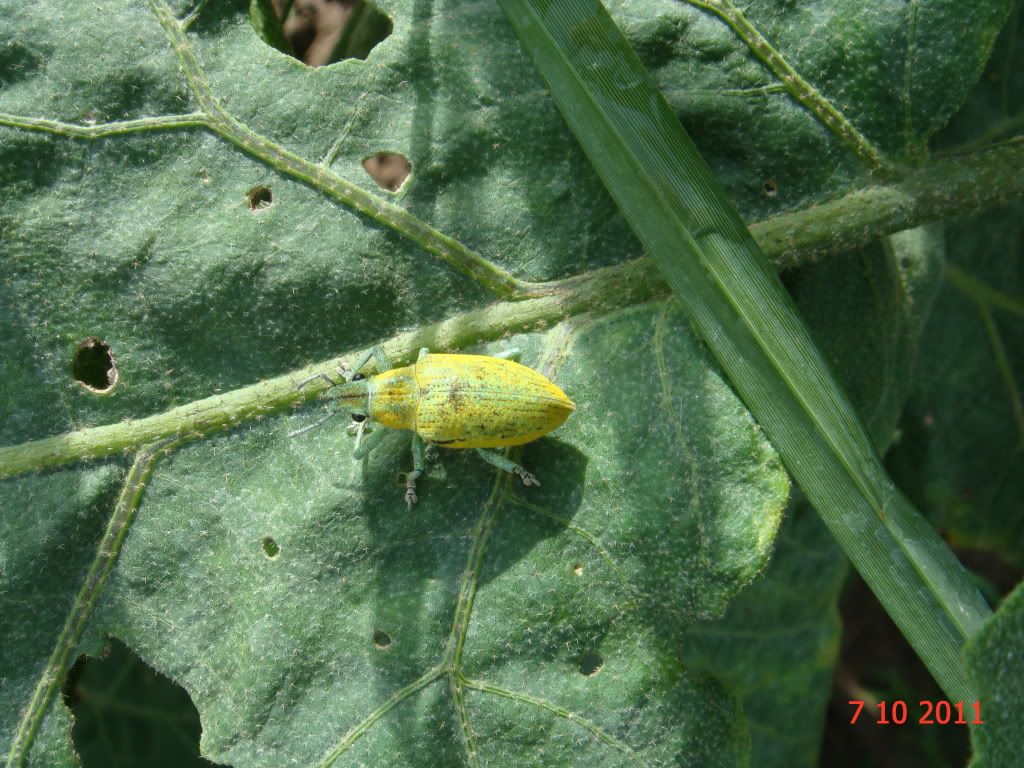
user posted image
user posted image
Some kinds of insects?
user posted image
Must be a bad bug.
user posted image
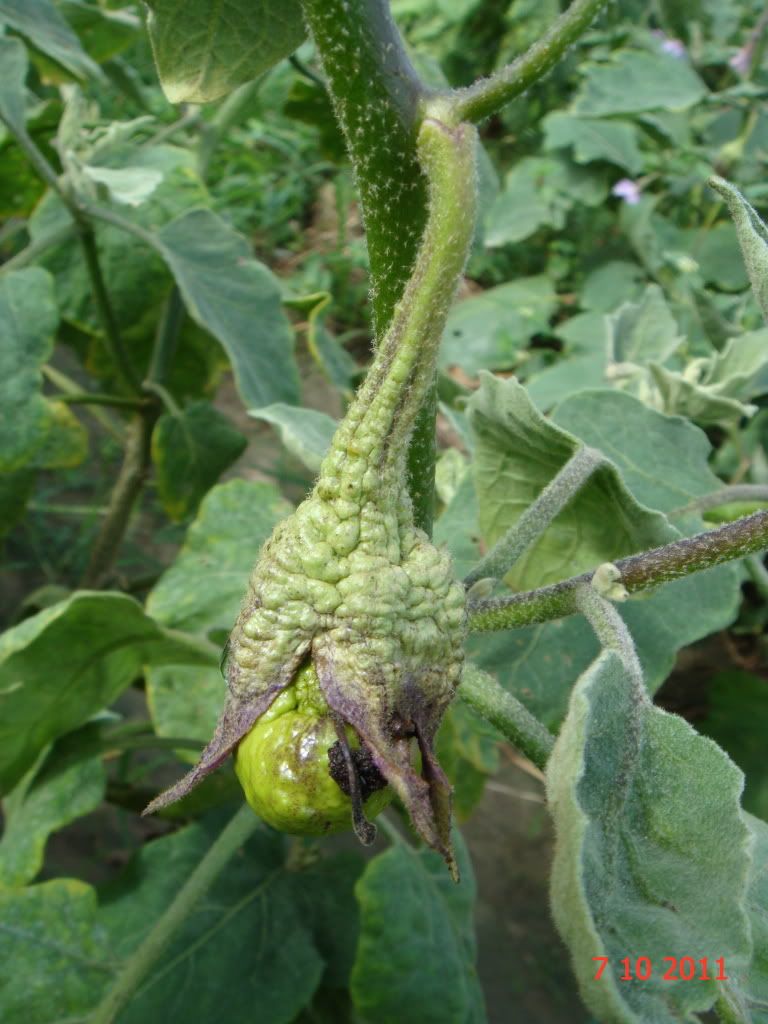
Not sure why is the crown crumbled.
user posted image
Crown crumbled, due to mites?
Thanks for all the help Micheal notworthy.gif


Added on October 7, 2011, 9:58 pm
QUOTE(Iceman74 @ Oct 6 2011, 12:10 PM)
hi guys,

hope you guys can help/point me out on few of the questions below

1. I'm going to try out aquaculture in a hobbyist mode first. What the smallest size tank using RAS can go with? Fiberglass or Canvas tank, which 1 better?

2. Where do i buy those commercial fish feed? what do i look for in the Ingredient? Current me look at reeling "Jade Perch"

3. Any others important things or idea thats cannot be skip?

the reason i'll doing this is to guage the cost & gain some experiences b4 doing it in more commercialize manner.

btw i'm in puchong selangor
*
HI Iceman, welcome aboard.
Maybe Para can help, as he had done aqua-culture before.
2) Here the agriculture supplies shop do sell Feed for all live-stock including fish. Say maybe you can visit the Live-stock exhibition.


Added on October 7, 2011, 10:01 pm
QUOTE(teteret @ Sep 24 2011, 11:21 PM)
Depends mr farmer. I've paid as low as 100 per kg to as high as 100k per kilo. But I see no harm in planting your trees bro low maintenance cost.
*
Just planted about 30 plant-lets. Hope they all grow well. See you in six year's time. tongue.gif

This post has been edited by MrFarmer: Oct 7 2011, 10:01 PM
Michael J.
post Oct 8 2011, 07:13 AM

On my way
****
Senior Member
596 posts

Joined: Jan 2006


Mr Farmer:

Yep, those are them bad bugs. You got the self-replicating versions (i.e. they produce offspring via parthenogenesis, aka virgin birth). BTW, aphids are one of few insect species that can do this. According to one study, in her lifetime, a single female aphid can produce enough young via parthenogenesis to line them up from Earth to the Moon, and back.

Scary thought, huh?

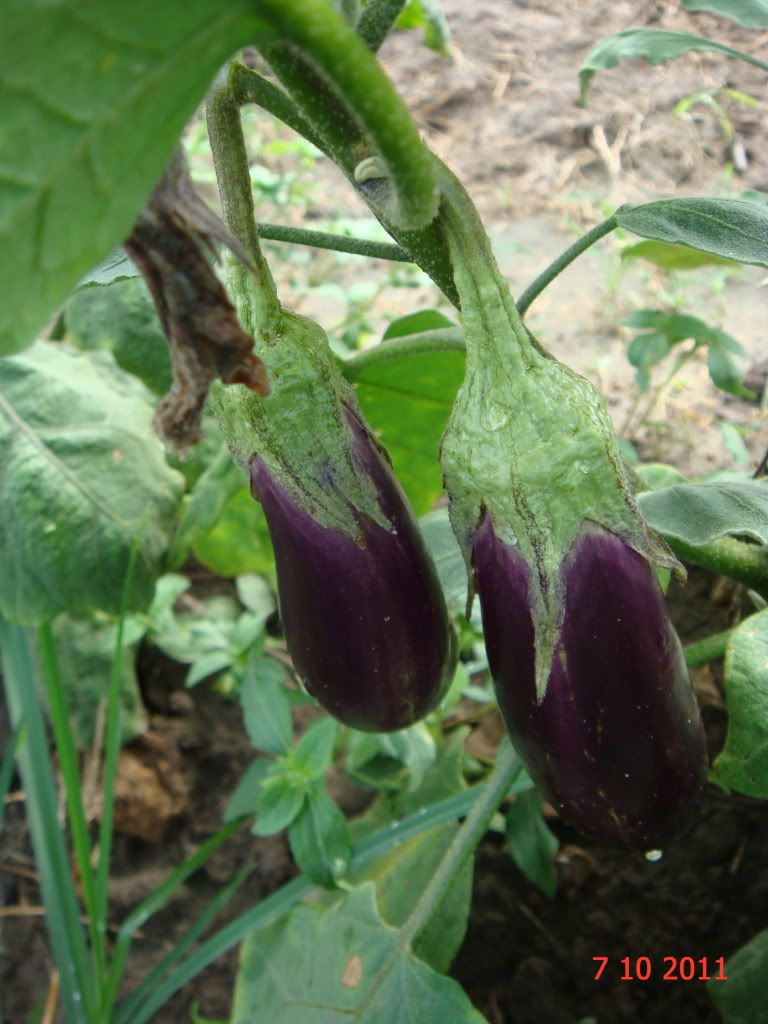
As for the brinjals, as long as the crowning does not hurt/result in deformed final products, don't worry. To me, they look normal. Are you using heirloom seeds?

But you do have a stem borer problem. You could cut/trim the parts with bore holes. A better strategy would be to use Bt spores, but those, like Mitac, are quite pricey. They are less harmful to human and environment though.

The beetle is a specie of orchid beetle. And yes, it is a pretty nasty bug as it primarily feeds on flowers and flower buds. And interesting thing about them critters is that they tend to feed on flowers bearing the same color as their exoskeleton. This yellow fellow probably feeds on cream or yellow colored flowers. If you do collect beetles, you might like to collect them and preserve, as I understand they could fetch pretty good prices on ebay.

The white tufts look like plant seeds to me. Dandelion seeds. I've seen bugs that produce silk like that, mostly whiteflies. But I can't see the body structure of insects on these things.
MrFarmer
post Oct 10 2011, 01:23 PM

Casual
***
Junior Member
478 posts

Joined: Mar 2011
From: Sabah


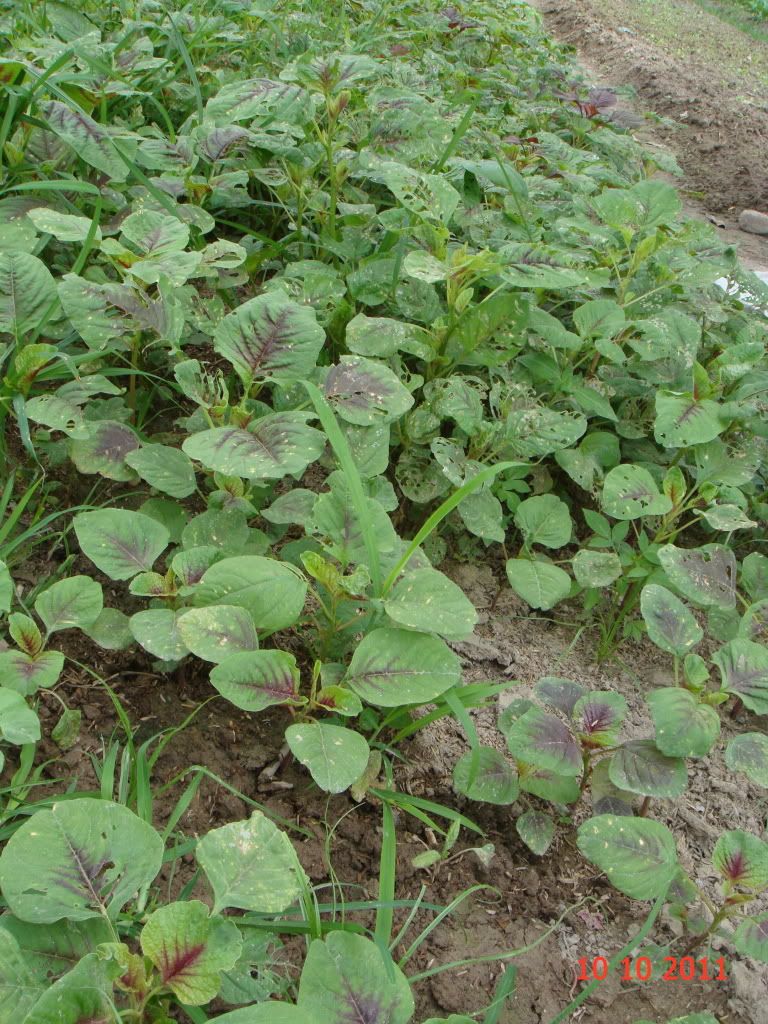
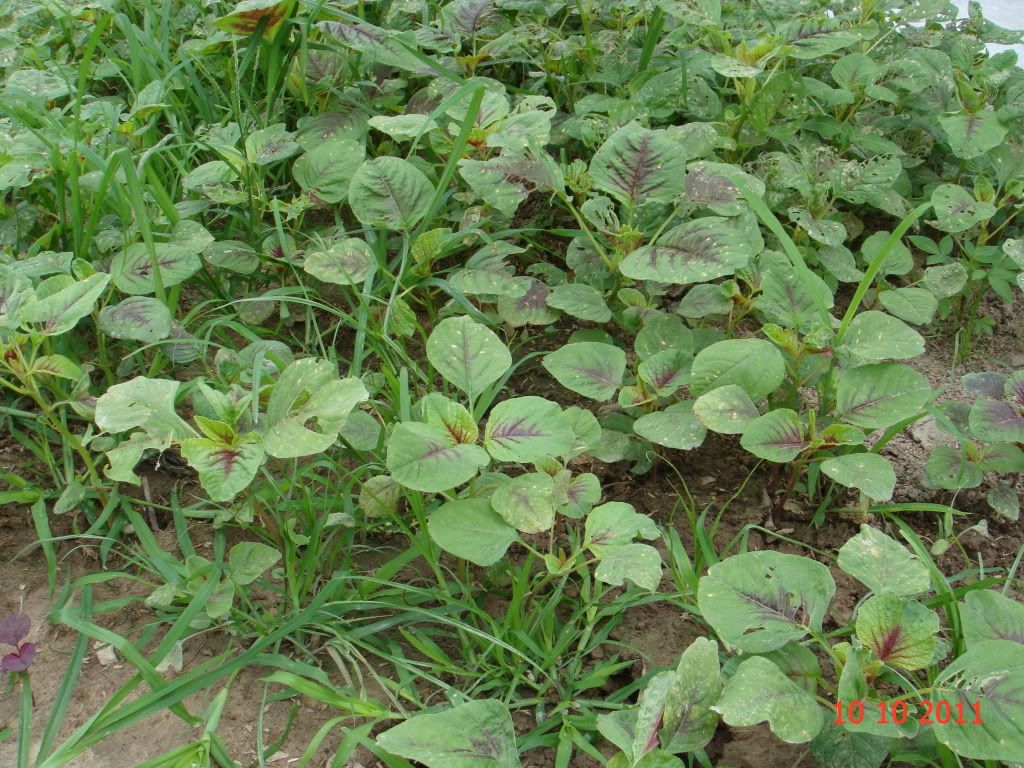
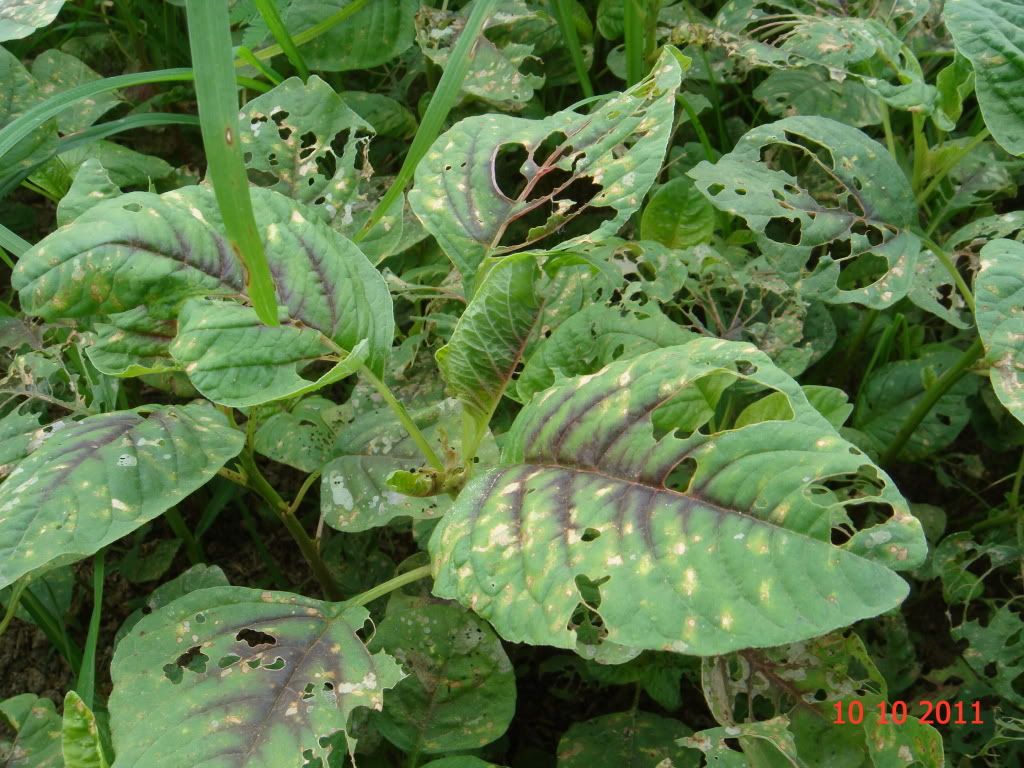
One of our Bayam patch, suddenly turned this 3 days ago and I think it's spreading. I guess this started after we starting to spray the Okura & eggplants with dimethoate. I could not see any aphids here.

user posted image
user posted image
user posted image
Michael J.
post Oct 10 2011, 03:25 PM

On my way
****
Senior Member
596 posts

Joined: Jan 2006


Mr Farmer:

I won't be able to comment much until I able to access the pictures tonight. Could you maybe describe how they look like, so I have a rough idea what's the problem?

Just a question: Why did you opt for organophosphate contact pesticide? The stuff is normally only used if you have a severe outbreak of insect pests. And on top of that, it is a really dangerous chemical as it attacks the central nervous system of living organisms, vertebrates and invertebrates alike.

Since you mentioned that you can't find aphids, I'm assuming you are refering to symptoms similar to aphid infestation. Here's a check list of things to rule out first:

(i) Is the chemical authentic (i.e. not cheap rip-offs)?
(ii) Was the spray canister used only for pesticides, i.e. it did not once contain other chemicals eg. herbicides, prior to the current application?
(iii) Was the canister thoroughly soaked, washed down with soap, and rinsed before each use?
(iv) Was the chemical diluted to the recommended concentration as indicated on the packaging?
(v) When was the chemical applied, i.e. early morning, afternoon, evening?

If the answer is "No" for any one of the above (except question 5), then that could be one of the contributing problems. For question 5, application of any chemicals is normally done in the early morning just as the dew dries off. Late evenings rarely, and afternoon almost zero unless the concentration is very low (to avoid scorching).

If your leaves are crinkling or distorted, it is possible that 2,4-D amine poisoning had taken place. If leaves are curling downwards, then it could be glyphosate poisoning. If none of these had been applied by you, or your neighbours (could be carried over by wind), then it might be bacterial root wilt. However that only occurs when the soil is excessively wet till it chokes the roots.


Added on October 10, 2011, 3:32 pmps: Forgot to add that you also have some potato leafhoppers. Unless you find the nymph (juvenile version of adults) in great abundance on the underside of leaves, they are quite manageable.

This post has been edited by Michael J.: Oct 10 2011, 03:32 PM
MrFarmer
post Oct 10 2011, 08:39 PM

Casual
***
Junior Member
478 posts

Joined: Mar 2011
From: Sabah


QUOTE(Michael J. @ Oct 10 2011, 03:25 PM)
Mr Farmer:

I won't be able to comment much until I able to access the pictures tonight. Could you maybe describe how they look like, so I have a rough idea what's the problem?

Just a question: Why did you opt for organophosphate contact pesticide? The stuff is normally only used if you have a severe outbreak of insect pests. And on top of that, it is a really dangerous chemical as it attacks the central nervous system of living organisms, vertebrates and invertebrates alike.

Since you mentioned that you can't find aphids, I'm assuming you are refering to symptoms similar to aphid infestation. Here's a check list of things to rule out first:

(i) Is the chemical authentic (i.e. not cheap rip-offs)?
(ii) Was the spray canister used only for pesticides, i.e. it did not once contain other chemicals eg. herbicides, prior to the current application?
(iii) Was the canister thoroughly soaked, washed down with soap, and rinsed before each use?
(iv) Was the chemical diluted to the recommended concentration as indicated on the packaging?
(v) When was the chemical applied, i.e. early morning, afternoon, evening?

If the answer is "No" for any one of the above (except question 5), then that could be one of the contributing problems. For question 5, application of any chemicals is normally done  in the early morning just as the dew dries off. Late evenings rarely, and afternoon almost zero unless the concentration is very low (to avoid scorching).

If your leaves are crinkling or distorted, it is possible that 2,4-D amine poisoning had taken place. If leaves are curling downwards, then it could be glyphosate poisoning. If none of these had been applied by you, or your neighbours (could be carried over by wind), then it might be bacterial root wilt. However that only occurs when the soil is excessively wet till it chokes the roots.


Added on October 10, 2011, 3:32 pmps: Forgot to add that you also have some potato leafhoppers. Unless you find the nymph (juvenile version of adults) in great abundance on the underside of leaves, they are quite manageable.
*
Hi Micheal,
There are no specific reasons that we choose dimethoate, just that we our neighbor (left & right) is using it. Anyway, I don't think it's effective on the aphids, as it's labelled that it kills them off systematically (means slow?). Check with my neighbors, they still have aphids even after using this dimethoate, just that it's lesser.
Sorry to have mislead you, we did not spray any dimethoate, on the Bayam, The egg plant & Okura (that we sprayed) is quite a distant away, separated by other Veges like younger (real small) Bayam, Pak choi (small) & KangKong (small). I don't think the chemical was carried by the wind, as the grass looks okay.

Just to answer your questions
1) It's from Halex, and bought from our regular agri shop.
2) We share our Knack pack spraying for Insecticide & Fiolar Fertilizer Spray, but I don't think we did any spraying on the Bayam, need to check with my helper as I was away for the last 2 days. Revert tomorrow.
3) We normally just rinse our Knack pack sprayer after every application, the shared Knack pack sprayer (for insecticide and fertilizer only). We have another 2 specific for weed killer only.
4) Yes, as labelled. The Okura & Eggplant is okay so far.
5) We did a 1st testing in the morning, 2nd testing (different plant) in the evening. All looks okay.

The leaves looks okay, normal, except for the yellow patches and holes (bitten) in between the leave veins.
Shall check for Leaf Hoppers tomorrow.

Thanks Micheal
Michael J.
post Oct 11 2011, 08:26 AM

On my way
****
Senior Member
596 posts

Joined: Jan 2006


Mr Farmer:

It's ok. I've not had the chance to look at the photos yet anyway.

From what you have described, you are doing everything by the book, so nothing to fear. You are really very well informed and well prepared.

Now that you've mentioned yellow patches and predation holes on the leaves and between leaf veins, then I can tell you that you are not dealing with a sap sucking insect like aphids or leafhoppers. You should be looking at tissue consuming ones, like night flying beetles, potato leaf beetles, or even grasshoppers. To confirm this, you need to observe the bite holes for clearly defined edges, could be slightly serrated. If it is not well defined, and excessively smooth, then it could leaf blight/spot or soft rot. You might like to read the attached document as guidance:

http://www.seedalliance.org/uploads/pdf/SpinachDiseases.pdf

If you have identified that it is none of the above, then it would be insect predation. From the feeding pattern (i.e. between leaf veins, serrated edges), it is likely night flying beetles, Apogonia. Check for blackish-brown frass (insect poop) on the underside of the leaves or surrounding leaves. If you find those, then you are most likely having those feeding on your bayams. Other possible pest could be slugs and snails.

I can't give you a definite answer just yet as I'm away from my computer. This computer I'm using now kind of sucks.

Dimethoate, like I said previously, is actually a contact poison, meaning it kills upon contact with the insect via absorbtion through the insect breathing pores. It can act as a systemic, but that is only because the poison is absorbed by the plant itself, making the plant poisonous. BTW, systemic does not necessarily mean slow; it only defines the mode of delivering the poison. Systemic poisons are meant to be delivered into the "body" or "system" of the targeted organism and kill them from inside. Contact poisons are meant to cause death upon touch or inhalation (by killing lung cells leading to suffocation). Think of systemic poisons as lethal injections, and contact poisons as electric chairs.

Personally, I really wouldn't use dimethoate because of the very high risks involved (it has been known to attack human nervous system, leading to symptoms similar to Parkinson's Disease or stroke). Instead, I would use cypermethrin; although it is also dangerous, the risks are less compared to dimethoate.

119 Pages « < 40 41 42 43 44 > » Top
 

Change to:
| Lo-Fi Version
0.0311sec    0.90    6 queries    GZIP Disabled
Time is now: 19th December 2025 - 01:09 AM