Welcome Guest ( Log In | Register )

119 Pages « < 39 40 41 42 43 > » Bottom

Outline · [ Standard ] · Linear+

 Venturing into Agriculture & Aquaculture, Co-Ordination & Implementation is KEY

views
     
TSParaOpticaL
post Sep 16 2011, 04:53 PM

Planter - Durian, Jackfruit, Papaya
*******
Senior Member
2,348 posts

Joined: Dec 2004
From: Ch3r@s


am beginning work on another land.

its water-logged whenever it rains. need to find a solution to this

and doing the below :-

1) am planting a few varieties of passion fruit
2) place for fertigation trial
3) vege plot
4) herb plot
teteret
post Sep 17 2011, 12:59 AM

New Member
*
Junior Member
27 posts

Joined: Jan 2007
Paraoptical, you doing crop rotation? Banana trees seem to do well in places with excessive water (from observation not sure if it's proven)
TSParaOpticaL
post Sep 17 2011, 10:12 AM

Planter - Durian, Jackfruit, Papaya
*******
Senior Member
2,348 posts

Joined: Dec 2004
From: Ch3r@s


teteret,

not at the moment. still trying out on diff plants

but my main would be fertigation & corn & fruit trees

havent any plans for banana yet as my boss needs to build a bridge across the land because the front plot is divided by a river...lolx


QUOTE(teteret @ Sep 17 2011, 12:59 AM)
Paraoptical, you doing crop rotation? Banana trees seem to do well in places with excessive water (from observation not sure if it's proven)
*
RUI
post Sep 18 2011, 12:33 AM

Enthusiast
*****
Junior Member
722 posts

Joined: Jan 2005
I'm interested in venturing vercompost...may I get contact of ppl that sells red worms (Eisenia fetida) and let me know price per kg?
Michael J.
post Sep 19 2011, 08:16 AM

On my way
****
Senior Member
596 posts

Joined: Jan 2006


Para:

Check your water table and soil type. You mentioned it is near a river. Chances are the land is made up of largely heavy clay soil, and the water table could be relatively higher. It will be a costly affair, but building scupper drains and doing cambering on the planting rows could help you manage the water-logging and cropping a little better.


Added on September 19, 2011, 8:31 amteteret:

Although banana plants require a lot of water, the rhizome will suffocate and die (rot) in soil that is saturated in water. However, I think it is more of a soil management problem, correct me if I'm wrong Para.

Para:

If the surface run-off is not very bad, you could do light cambering. The land would then be more useful for fertigation. However if you are going to plant corn, I would be rather cautious, especially if the land is perpetually water-logged. For this, you might need to do quite extensive cambering plus build scupper drains parallel to the planting rows to carry off excess water. Again, if your land is really heavy clay soil, then you need to consider ways of ensuring the root zone of your plants is adequately aerated.

This post has been edited by Michael J.: Sep 19 2011, 08:31 AM
MrFarmer
post Sep 20 2011, 09:44 PM

Casual
***
Junior Member
478 posts

Joined: Mar 2011
From: Sabah


QUOTE(teteret @ Sep 14 2011, 09:24 PM)
I do have gaharu trees. But what I can tell you is that planting gaharu is not as lucrative as many of us are led to believe. Wild agarwood is still better. I'm an agarwood wholesaler actually and I would welcome any buy/sell inquiries
*
Hi Teteret,
what sort or pricing are we looking at now. The cost for "injection" is also high. I have about 200 small seedlings plant-lets in poly bags with me, am still undecided about planting those. What the pro / con?


Added on September 20, 2011, 9:53 pm
QUOTE(Michael J. @ Sep 19 2011, 08:16 AM)
Para:

Check your water table and soil type. You mentioned it is near a river. Chances are the land is made up of largely heavy clay soil, and the water table could be relatively higher. It will be a costly affair, but building scupper drains and doing cambering on the planting rows could help you manage the water-logging and cropping a little better.


Added on September 19, 2011, 8:31 amteteret:

Although banana plants require a lot of water, the rhizome will suffocate and die (rot) in soil that is saturated in water. However, I think it is more of a soil management problem, correct me if I'm wrong Para.

Para:

If the surface run-off is not very bad, you could do light cambering. The land would then be more useful for fertigation. However if you are going to plant corn, I would be rather cautious, especially if the land is perpetually water-logged. For this, you might need to do quite extensive cambering plus build scupper drains parallel to the planting rows to carry off excess water. Again, if your land is really heavy clay soil, then you need to consider ways of ensuring the root zone of your plants is adequately aerated.
*
From my experience, Banana & Corn die in water logged land, root rot.
We have Yam growing well in water logged/creek side. Other plants are water Kang Kong & Sai Yong Choi (sorry, can think of the English name at the moment)

This post has been edited by MrFarmer: Sep 20 2011, 09:53 PM
TSParaOpticaL
post Sep 20 2011, 10:10 PM

Planter - Durian, Jackfruit, Papaya
*******
Senior Member
2,348 posts

Joined: Dec 2004
From: Ch3r@s


Corn confirmed die in water logged places. just a few died yesterday when i checked...haha

sai yong choi = Water Cress

i love the Water Cress Soup....

=================================


MichaelJ.

i need to google on scupper drain and cambering and if i cant find any then i need to call or email you to check biggrin.gif

thanks


QUOTE(MrFarmer @ Sep 20 2011, 09:44 PM)
Hi Teteret,
what sort or pricing are we looking at now. The cost for "injection" is also high. I have about 200 small seedlings plant-lets in poly bags with me, am still undecided about planting those. What the pro / con?


Added on September 20, 2011, 9:53 pm
From my experience, Banana & Corn die in water logged land, root rot.
We have Yam growing well in water logged/creek side. Other plants are water Kang Kong & Sai Yong Choi (sorry, can think of the English name at the moment)
*
Michael J.
post Sep 21 2011, 08:21 AM

On my way
****
Senior Member
596 posts

Joined: Jan 2006


Para:

No problem. I have some write up on this, but I've kept all my notes in my library in Sepang. Tell me if you need some info, and I will see how I can access the information later this month.
chinyen
post Sep 21 2011, 11:40 AM

Enthusiast
*****
Senior Member
754 posts

Joined: Jul 2009
QUOTE(RUI @ Sep 18 2011, 12:33 AM)
I'm interested in venturing vercompost...may I get contact of ppl that sells red worms (Eisenia fetida) and let me know price per kg?
*
which area are you in? how big scale are you running? depends on the type and season, the worms cost from rm70 to 150 per kg..try surfing alibaba. but it's better if you can buy and collect from the farm itself..there's a lot of scam on vermicompost here.

pm-ed you this reply too

This post has been edited by chinyen: Sep 21 2011, 11:40 AM
teteret
post Sep 21 2011, 11:06 PM

New Member
*
Junior Member
27 posts

Joined: Jan 2007
Pros of agarwood is of course potential for very high value wood. But no returns for at least 6 years. Inoculation may cost up to 1000 per tree.
MrFarmer
post Sep 22 2011, 08:21 PM

Casual
***
Junior Member
478 posts

Joined: Mar 2011
From: Sabah


QUOTE(teteret @ Sep 21 2011, 11:06 PM)
Pros of agarwood is of course potential for very high value wood. But no returns for at least 6 years. Inoculation may cost up to 1000 per tree.
*
So do you collect in cubic meters or tonnage? What is the current market price? I think the cost of inoculation, as well as the plant-lets had gone down. We have people here selling at $4.00 each.

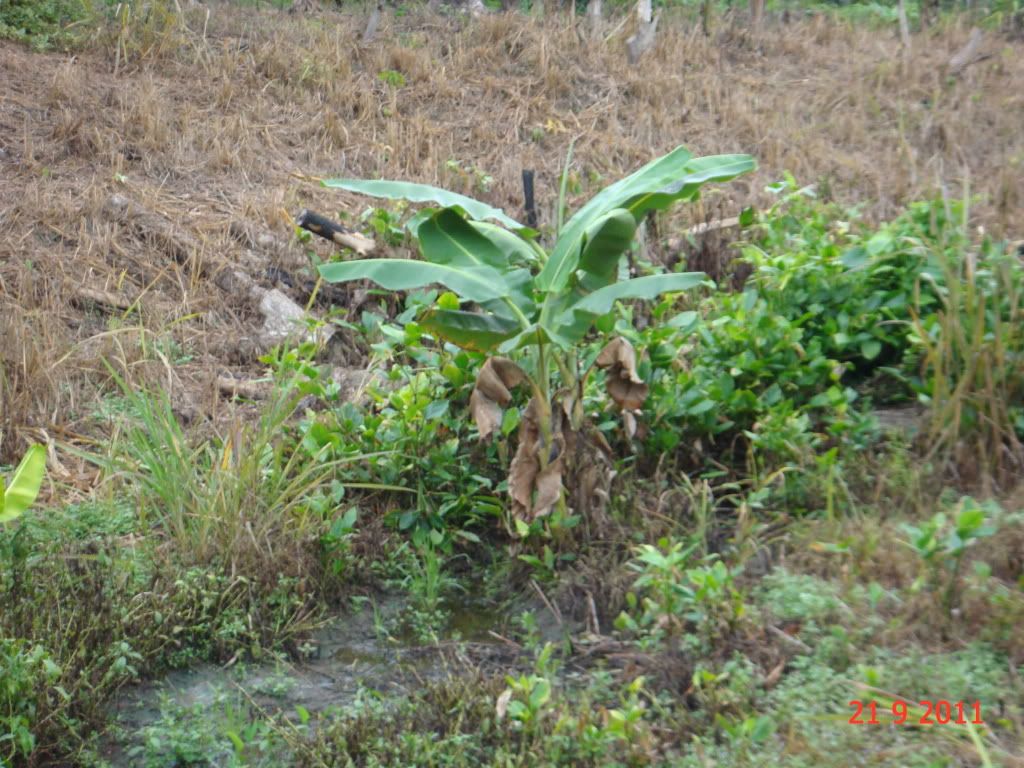
Banana can grow practically next to water, but never below the water table.
user posted image
Wild bananas which we are trying to clear.
user posted image
teteret
post Sep 22 2011, 10:45 PM

New Member
*
Junior Member
27 posts

Joined: Jan 2007
Mr farmer, we use neither! biggrin.gif agarwood is one of the only wood varieties which are commonly traded in kgs. End users, usually buy In grams. Kynam, the most valuable of agarwood which hails from Vietnam, goes for as much as USD$1000 per GRAM. But that's for natural not inoculated so I can't tell you much abt inoculated variety.
MrFarmer
post Sep 23 2011, 08:05 PM

Casual
***
Junior Member
478 posts

Joined: Mar 2011
From: Sabah


QUOTE(teteret @ Sep 22 2011, 10:45 PM)
Mr farmer, we use neither!  biggrin.gif agarwood is one of the only wood varieties which are commonly traded in kgs. End users, usually buy In grams. Kynam, the most valuable of agarwood which hails from Vietnam, goes for as much as USD$1000 per GRAM.  But that's for natural not inoculated so I can't tell you much abt inoculated variety.
*
So how much are you currently paying for normal grade (collection price), not inoculated. I'm just trying to decide if I should go ahead to plant the 200 plant-lets that I have. Kindly PM me if it's inconvenient to reveal you price here?

teteret
post Sep 24 2011, 11:21 PM

New Member
*
Junior Member
27 posts

Joined: Jan 2007
Depends mr farmer. I've paid as low as 100 per kg to as high as 100k per kilo. But I see no harm in planting your trees bro low maintenance cost.
MrFarmer
post Sep 25 2011, 07:58 PM

Casual
***
Junior Member
478 posts

Joined: Mar 2011
From: Sabah


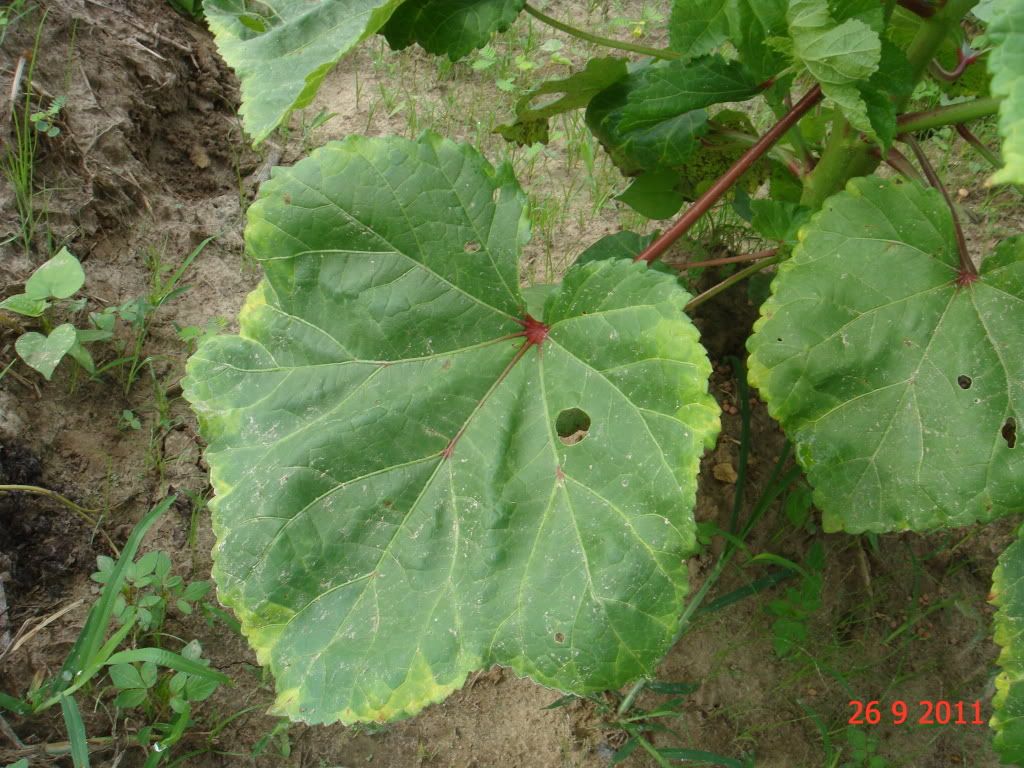
user posted image
user posted image

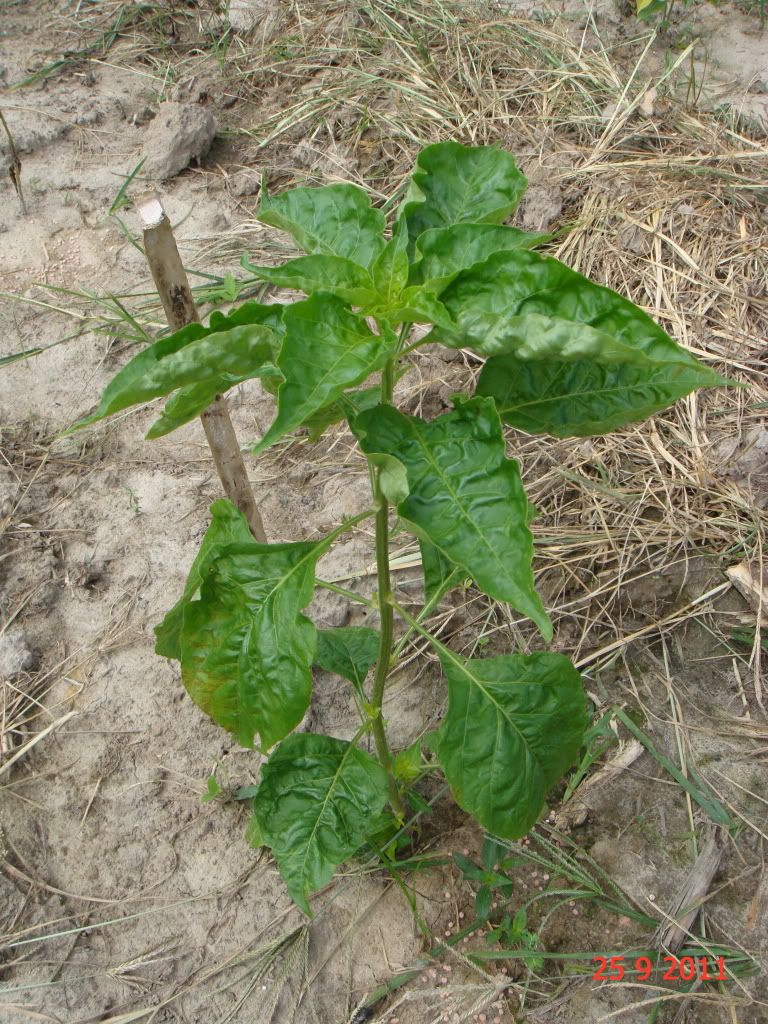
Disease or nutrient deficiency?


Added on September 26, 2011, 11:31 pmuser posted image
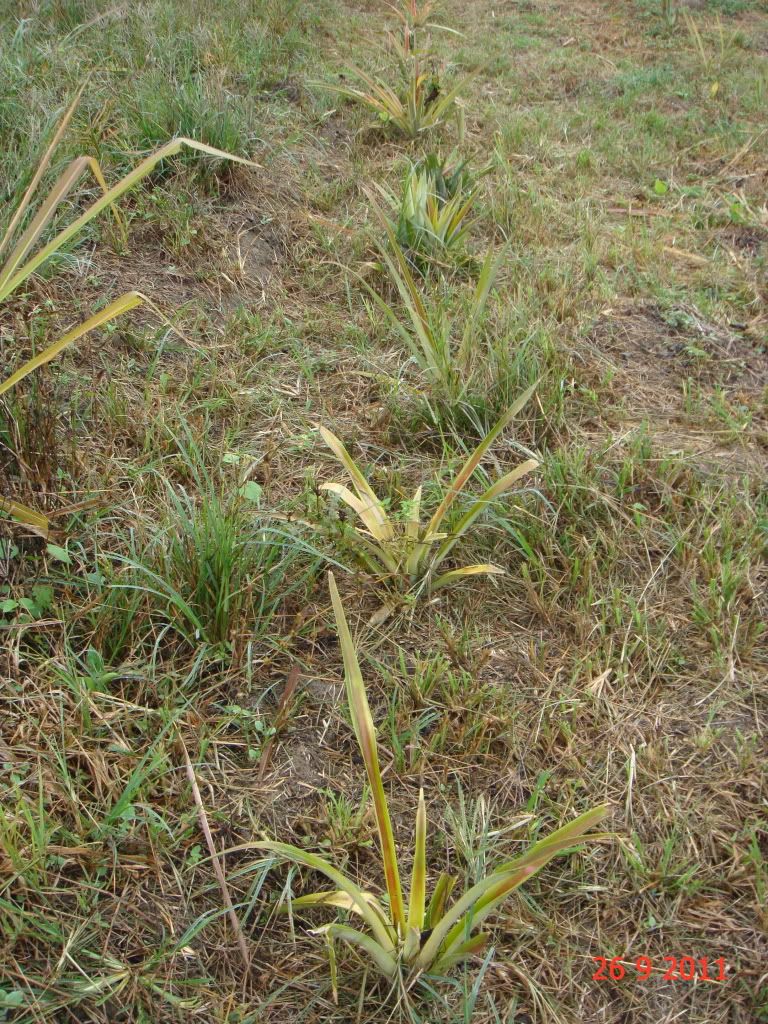
N deficiency?
Trying with SOA (N21%)


Added on September 26, 2011, 11:50 pmuser posted image
K deficiency? Try with multi-K
All of these are in the same farm.

user posted image
Hmmh, no idea
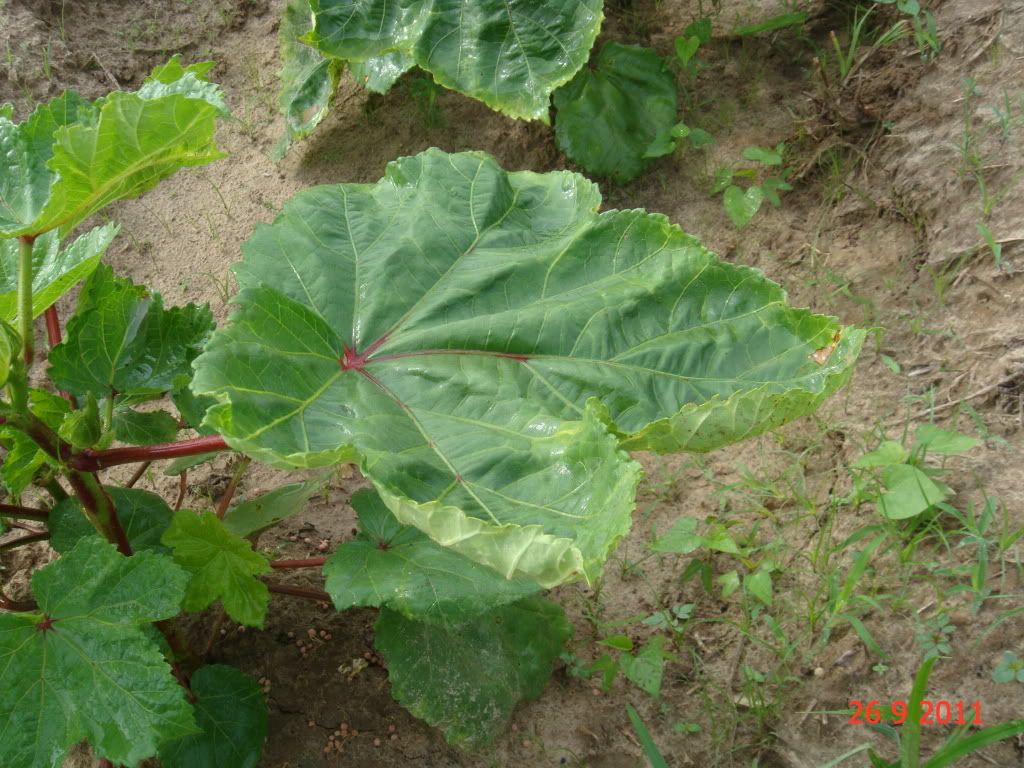
user posted image
Lady's finger

This post has been edited by MrFarmer: Sep 26 2011, 11:50 PM
teteret
post Sep 28 2011, 07:52 AM

New Member
*
Junior Member
27 posts

Joined: Jan 2007
The soil looks rather barren
MrFarmer
post Sep 28 2011, 07:10 PM

Casual
***
Junior Member
478 posts

Joined: Mar 2011
From: Sabah


QUOTE(teteret @ Sep 28 2011, 07:52 AM)
The soil looks rather barren
*
Oh yes, the land owner was playing with him mini tractor "toy", trying to level the land to a lower gradient. The top soil had been pushed to the creek in the middle of the land. Also the land had been exhausted by the previous planter planting tobacco.
Michael J.
post Sep 29 2011, 12:01 AM

On my way
****
Senior Member
596 posts

Joined: Jan 2006


Mr Farmer:

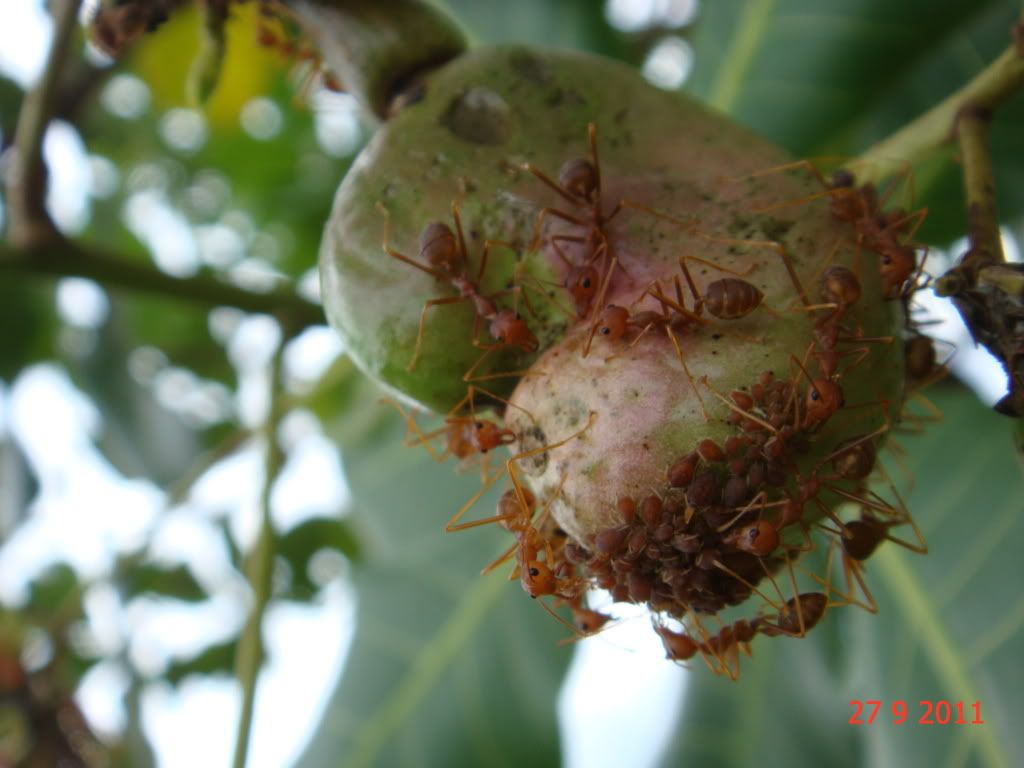
Oh shit bro.... Did you check why the previous operator abondoned tobacco planting? Was there a disease outbreak? Don't want to scare you, but it could be Tobacco Mosaic Virus infecting your chili peppers and okra. Even cigarette butts containing some infected tobacco leaves pieces can lead to widescale infection. But to rule it out, first check for aphids or red spider mites. Aphids are easy to see, usually black or green little bugs, wont move much and about the side of a (*). Red spider mites would appear reddish black, and normally found on the underside of the leaves. If you are able to verify that there was no previous outbreak of TMV, and there are a lot of aphids/spider mites, then your crops might be safe.

As for the ginger, you've likely got a nutrient problem, caused by deficiency in potassium (K), and possibly magnesium. Apply the usual potassium fertilizer, but also include some Kieserite (MgO). Just want to verify, which pineapple variety are you using? Because I saw some look like Josapine, some like N36. Not very familiar with pineapple, but the slight yellowing appears to be due to nitrogen deficiency and heavy exposure to sunlight.

You might find the following document useful for pineapple.

https://www.ippc.int/file_uploaded/11152816...t_pineapple.pdf

Hope this helps.
MrFarmer
post Sep 29 2011, 07:58 PM

Casual
***
Junior Member
478 posts

Joined: Mar 2011
From: Sabah


QUOTE(Michael J. @ Sep 29 2011, 12:01 AM)
Mr Farmer:

Oh shit bro.... Did you check why the previous operator abondoned tobacco planting? Was there a disease outbreak? Don't want to scare you, but it could be Tobacco Mosaic Virus infecting your chili peppers and okra. Even cigarette butts containing some infected tobacco leaves pieces can lead to widescale infection. But to rule it out, first check for aphids or red spider mites. Aphids are easy to see, usually black or green little bugs, wont move much and about the side of a (*). Red spider mites would appear reddish black, and normally found on the underside of the leaves. If you are able to verify that there was no previous outbreak of TMV, and there are a lot of aphids/spider mites, then your crops might be safe.

As for the ginger, you've likely got a nutrient problem, caused by deficiency in potassium (K), and possibly magnesium. Apply the usual potassium fertilizer, but also include some Kieserite (MgO). Just want to verify, which pineapple variety are you using? Because I saw some look like Josapine, some like N36. Not very familiar with pineapple, but the slight yellowing appears to be due to nitrogen deficiency and heavy exposure to sunlight.

You might find the following document useful for pineapple.

https://www.ippc.int/file_uploaded/11152816...t_pineapple.pdf

Hope this helps.
*
sweat.gif The abandoning of tobacco was due to the closure of all the buying agent. Heard that our government was no longer promoting it ans some incentives were removed. Those outfits moved to Indonesia.
Shall check on the mites, but we had just made a spraying of Decis (deltamethrin), so not sure if I'll find any.
user posted image
Red spider mites?
Ginger I think could be due to us adding the not fully compost rice husk too much & close to the stem. I think it's kind of "hot" and burn out the ginger, sweet potatoes. It is useful for green leafs vegetables (in small amount).
Pineapples, not sure of the varieties. It was given to us by different people. Heavy exposure? Pineapples should be able to grow well in full sun light.
Michael J.
post Sep 30 2011, 08:57 AM

On my way
****
Senior Member
596 posts

Joined: Jan 2006


Mr. Farmer:

Please do check for spider mites. Can't view the image right now, but once I am to access pictures, I will tell you.

Erm... you do know deltamethrin is a neurotoxin right? And it is normally used to kill insects; although it has been indicated as being useful to control arachnids and arthropods, for control of mites, maybe you should consider Mitac (amitraz) instead. It is less hazardous to human health too.

Ah... you used compost... It could be a contributing factor. It is usually due to hot methane gas (from fermentation of organic matter) scalding the leaves. As I understand, it takes quite a lot of the stuff to result in scalding of lower leaves. Had that problem before when planted oil palm on deep peat; we called it "lower frond dessication". However it does not fully explain the deficiency of chlorophyll in the mid-rib section of the ginger leaves, or the light striations along the leaf blades.

You are right, pineapple is grown under full sun. But that is in combination with sufficient nitrogen source for the chloroplasts (the organelles in plant cells that convert sunlight and nutrient into food for the plants) to function properly. If there is a deficiency, the plant's immediate response would be to "kill" the less productive cells or chloroplasts, and divert the resources to those which are more productive, usually those found in the younger leaves. It is just my assumption that the pineapple leaves were supposed to be green, although there are varieties with yellow-green leaves and red/purple fringes, mostly varieties that have the Gandol pineapple as one of its genetic parents.

ps: For the chili peppers, if you do not find spider mites or aphids, and you know there was no TMV outbreak previously, then there is not really too much worry. It could just be a case of growth imbalance. When I was developing my chili breed, I thought my entire breeding population kena TMV virus; turned out the crinkling was because the plant growth hormone affecting leaf expansion was working overtime, while the roots had not grown extensive enough to support the rapid growth. Once the roots were established enough to support leaf growth, the leaves stopped crinkling, and grew to about the size of a man's hand each.

As a general guide, you might like to read this article:

http://www.avrdc.org/LC/pepper/chipep.pdf

119 Pages « < 39 40 41 42 43 > » Top
 

Change to:
| Lo-Fi Version
0.0308sec    0.91    6 queries    GZIP Disabled
Time is now: 18th December 2025 - 05:12 PM