Welcome Guest ( Log In | Register )

119 Pages « < 37 38 39 40 41 > » Bottom

Outline · [ Standard ] · Linear+

 Venturing into Agriculture & Aquaculture, Co-Ordination & Implementation is KEY

views
     
Michael J.
post Aug 18 2011, 04:25 PM

On my way
****
Senior Member
596 posts

Joined: Jan 2006


QUOTE(ParaOpticaL @ Aug 18 2011, 03:48 PM)
Trial Farm

JackFruit Farm @ Batang Benar.
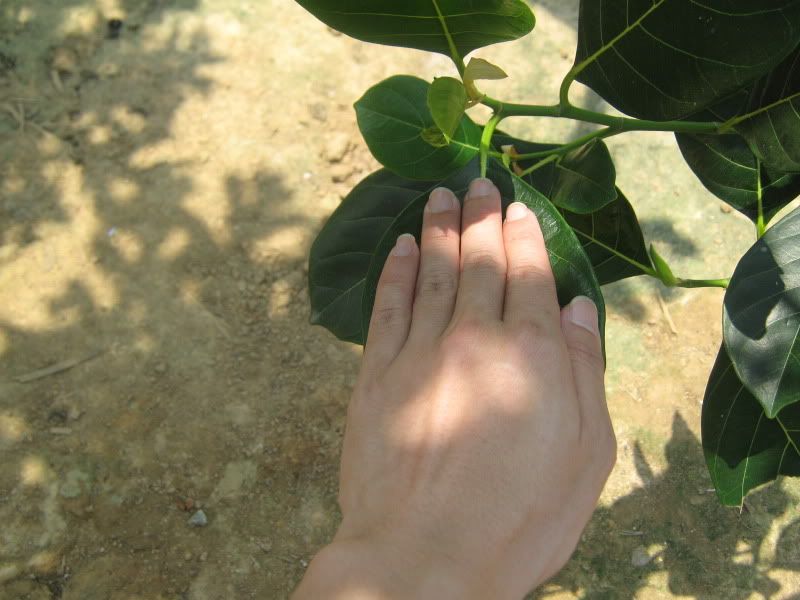
New leaf size are bigger as compared to the older leaves as vouched by the caretaker and the Jab. Pertanian Officer
user posted image
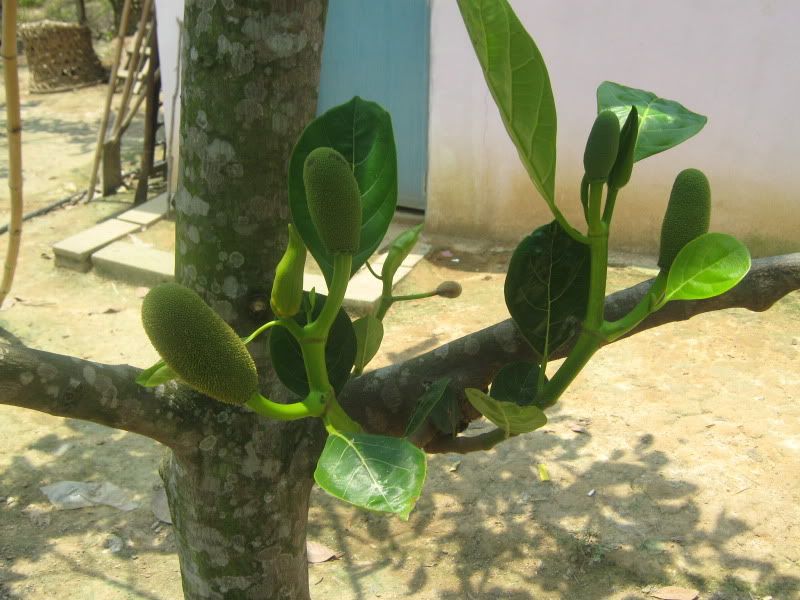
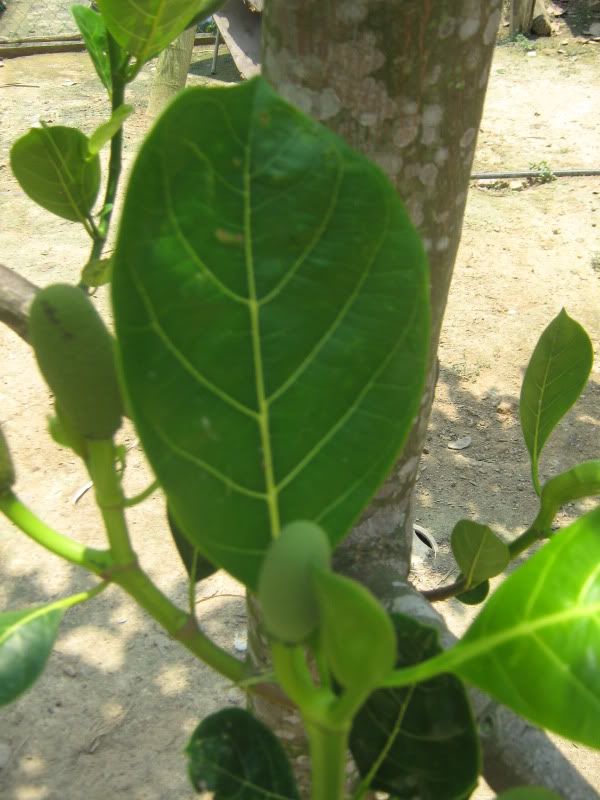
The 'tangkai' of the new fruits are thicker on this tree when compared to those that were not using the product
user posted image
user posted image
*
Can't really see the picture using this network, but once I get my laptop back, will definitely have a look.

Say Para, just realized you have pearl corn for sale. Still for sale? Also, I would like to test the stuff from your company on some materials I have. Could you quote me a price for one standard packaging of each? Exclude the feed additive for now, just interested in the R,S and N.
TSParaOpticaL
post Aug 18 2011, 04:57 PM

Planter - Durian, Jackfruit, Papaya
*******
Senior Member
2,348 posts

Joined: Dec 2004
From: Ch3r@s


just emailed you some questions
MrFarmer
post Aug 18 2011, 08:41 PM

Casual
***
Junior Member
478 posts

Joined: Mar 2011
From: Sabah


QUOTE(ParaOpticaL @ Aug 18 2011, 04:57 PM)
just emailed you some questions
*
Hi Para,
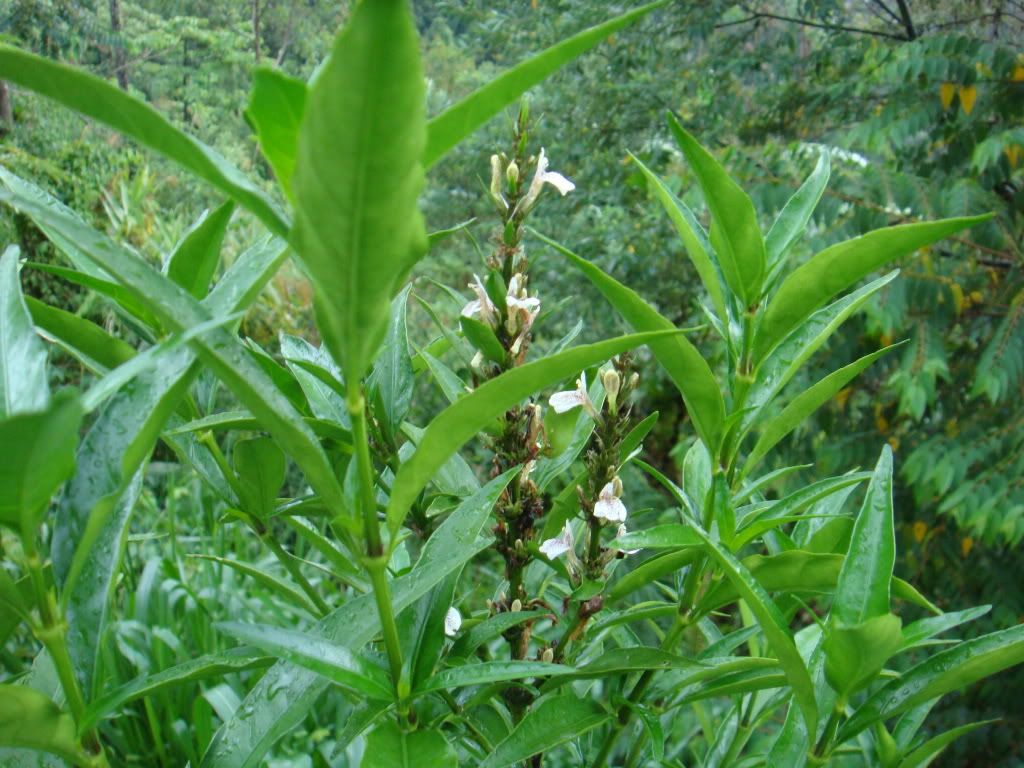
do you by any chance has this Clinathanus (Belalai Gajah / Gendis) in your Herbs patch? Have friends requesting for it.

Please help all forumer.

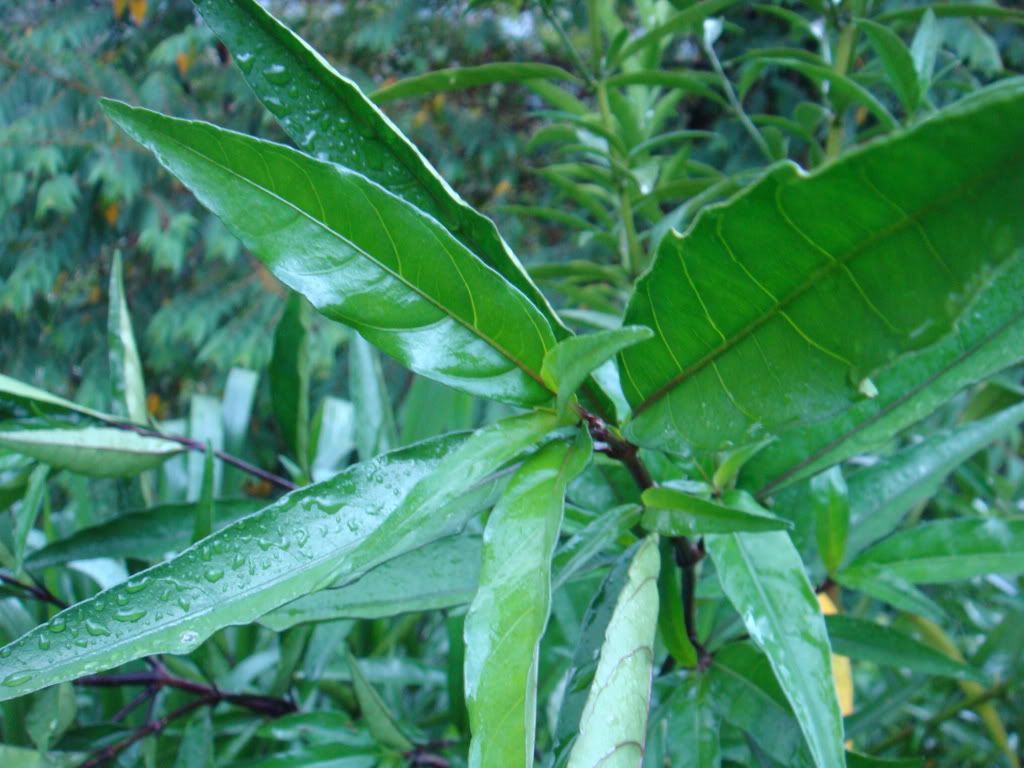
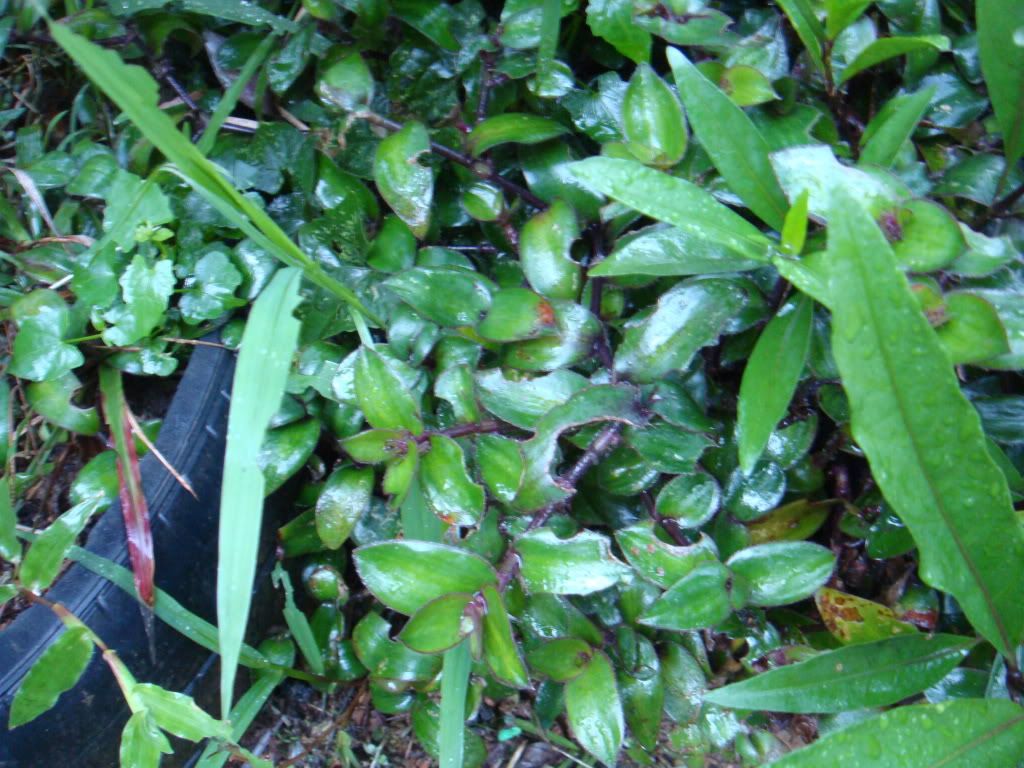
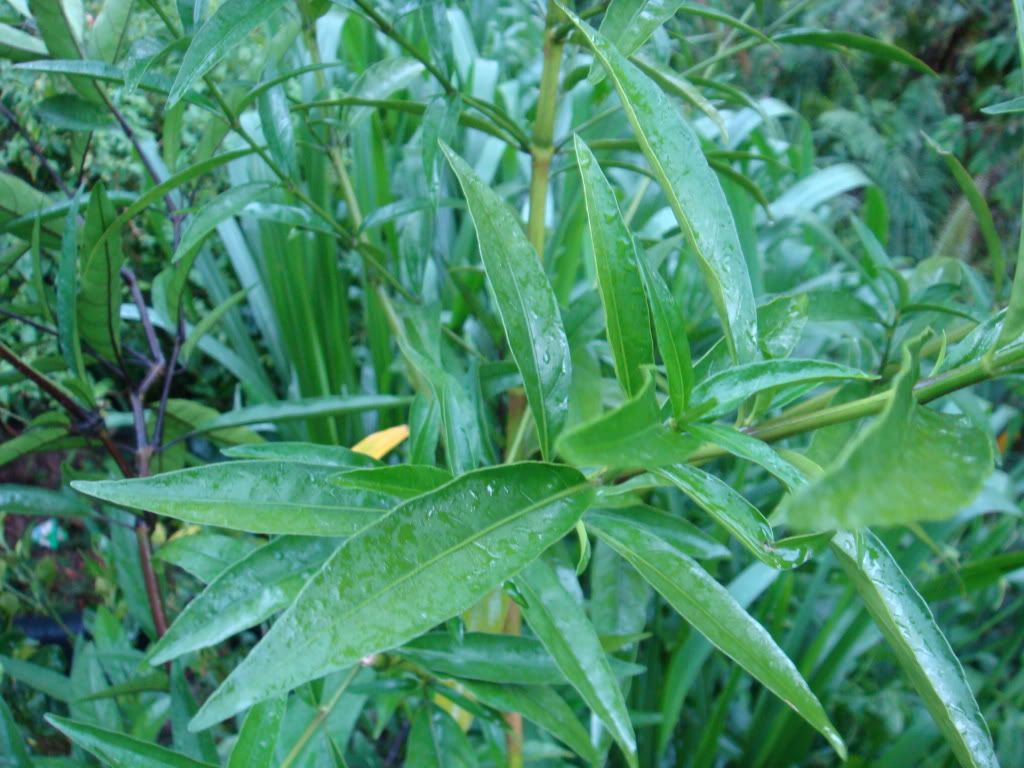
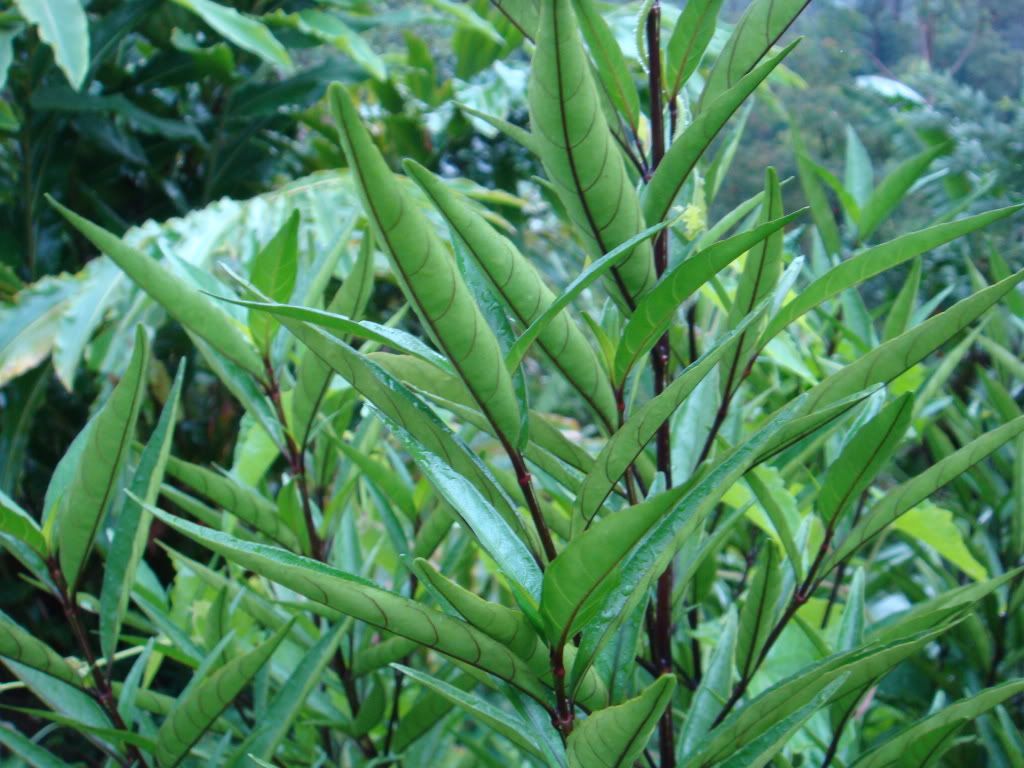
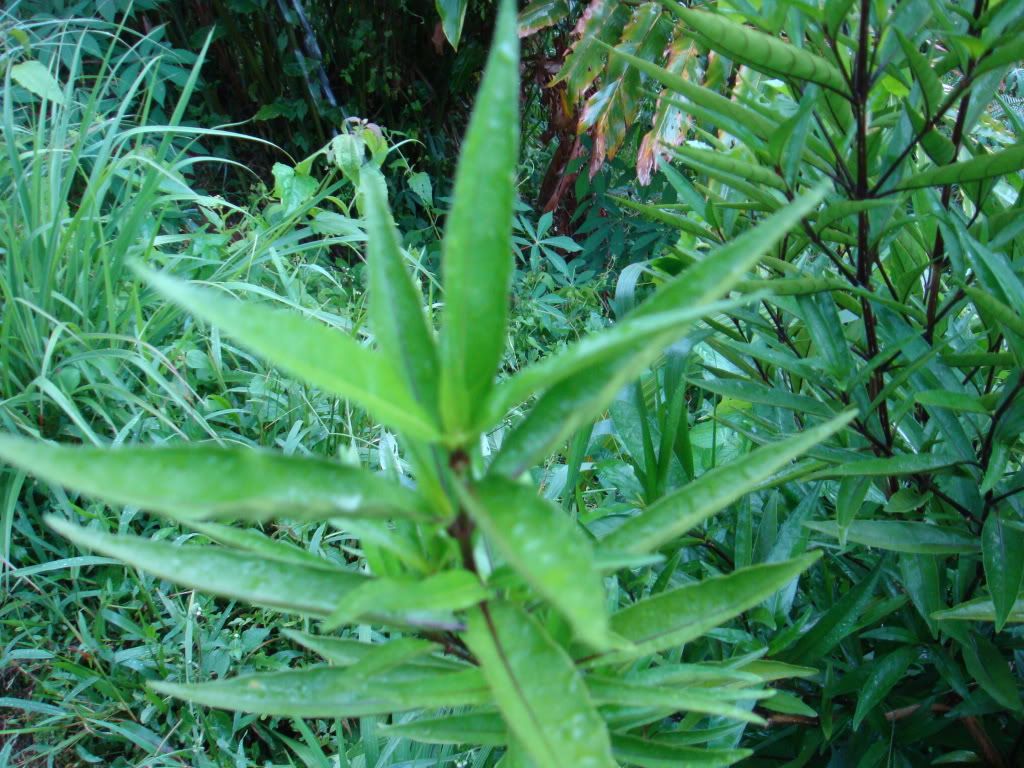
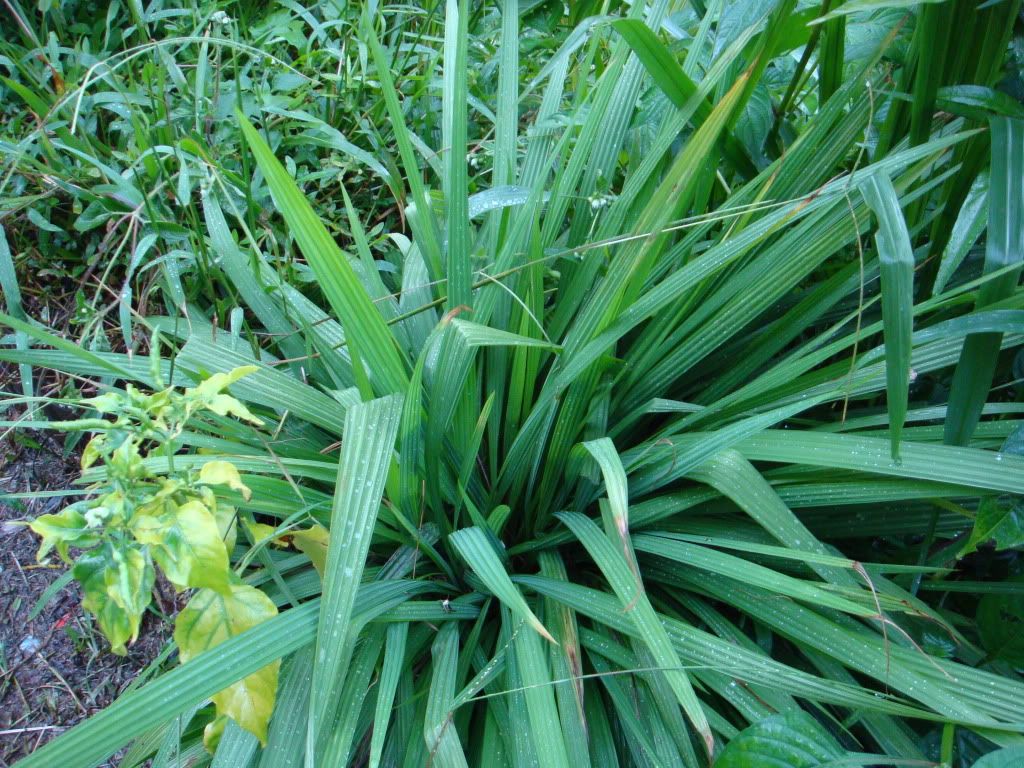
Anyone good at identifying herbs? Was shown some, but don't know what it is. It's used by locals as traditional medicine.
user posted image
user posted image
user posted image
user posted image
user posted image
user posted image
user posted image
was told that there are different types of Serai, there are for cooking and this one is for oilmen
user posted image
TSParaOpticaL
post Aug 19 2011, 09:10 AM

Planter - Durian, Jackfruit, Papaya
*******
Senior Member
2,348 posts

Joined: Dec 2004
From: Ch3r@s


Hi Bro,

Clinathanus = SABAH SNAKE GRASS, which had been superbly famous these few months because of it ingredient in healing some cancer.

Your friend is in luck as i have the plant but they are still young and not yet ready for leaf picking because one needs 300 pieces of leaf everyday to drink. Maybe in 1 month's time should be getting something

What is looking at ??

I will list other herbs that i have later when i get the list from my herb sifu.


As for your pictures will let know you when i get the feedback from my sifu biggrin.gif

ParaOptical biggrin.gif

PS : you got email Mr Farmer.


QUOTE(MrFarmer @ Aug 18 2011, 08:41 PM)
Hi Para,
do you by any chance has this Clinathanus (Belalai Gajah / Gendis) in your Herbs patch? Have friends requesting for it.

Please help all forumer.

Anyone good at identifying herbs? Was shown some, but don't know what it is. It's used by locals as traditional medicine.
» Click to show Spoiler - click again to hide... «

*
MrFarmer
post Aug 19 2011, 10:17 PM

Casual
***
Junior Member
478 posts

Joined: Mar 2011
From: Sabah


QUOTE(ParaOpticaL @ Aug 19 2011, 09:10 AM)
Hi Bro,

Clinathanus = SABAH SNAKE GRASS, which had been superbly famous these few months because of it ingredient in healing some cancer.

Your friend is in luck as i have the plant but they are still young and not yet ready for leaf picking because one needs 300 pieces of leaf everyday to drink. Maybe in 1 month's time should be getting something

What is looking at ??

I will list other herbs that i have later when i get the list from my herb sifu.
As for your pictures will let know you when i get the feedback from my sifu biggrin.gif

ParaOptical biggrin.gif

PS : you got email Mr Farmer.
*
Yes, I received an email from a friend and was told that it's easily available in Sabah. As I know the required leaves are quite plenty and also it needs to be fresh, so we were thinking of sending the seeds / plant-lets to those that needs it and let them plant it for themselves. (Not for sale, just to help people in need)
Now my 2 problems
1) How to identify it
2) How to ship it to other states (Peninsular) as I think it needs to go thru the Quarantine Period.
Any help / assistance greatly welcome and appreciated. nod.gif

Para; email replied.
TSParaOpticaL
post Aug 20 2011, 01:15 PM

Planter - Durian, Jackfruit, Papaya
*******
Senior Member
2,348 posts

Joined: Dec 2004
From: Ch3r@s


Hi Bro,

1) identify what you are referring to ?

2) the problem with shipping these plant-lets are they can die easily

they who are interested really have to travel down to get it themselves...
i dont really think shipping will do any good.

just my 2 cents

QUOTE(MrFarmer @ Aug 19 2011, 10:17 PM)
Yes, I received an email from a friend and was told that it's easily available in Sabah. As I know the required leaves are quite plenty and also it needs to be fresh, so we were thinking of sending the seeds / plant-lets to those that needs it and let them plant it for themselves. (Not for sale, just to help people in need)
Now my 2 problems
1) How to identify it
2) How to ship it to other states (Peninsular) as I think it needs to go thru the Quarantine Period.
Any help / assistance greatly welcome and appreciated.  nod.gif

Para; email replied.
*
MrFarmer
post Aug 22 2011, 08:52 PM

Casual
***
Junior Member
478 posts

Joined: Mar 2011
From: Sabah


Hi Guys, anyone doing Castor Seeds farming. Have people here promoting this and their calculation shows marvelous fast returns. Care to share? Company based in Kuching, Sarawak.
TSParaOpticaL
post Aug 24 2011, 06:30 PM

Planter - Durian, Jackfruit, Papaya
*******
Senior Member
2,348 posts

Joined: Dec 2004
From: Ch3r@s


Mr Farmer :

i need you to take pictures of each plant again. take the pictures of the whole plant instead on zooming in.

its difficult to identify

tq bro

ParaOptical
MrFarmer
post Aug 25 2011, 07:40 AM

Casual
***
Junior Member
478 posts

Joined: Mar 2011
From: Sabah


QUOTE(ParaOpticaL @ Aug 24 2011, 06:30 PM)
Mr Farmer :

i need you to take pictures of each plant again. take the pictures of the whole plant instead on zooming in.

its difficult to identify

tq bro

ParaOptical
*
Will do, but away from farm at the moment.


Added on August 25, 2011, 7:45 am
QUOTE(MrFarmer @ Aug 25 2011, 07:40 AM)
Will do, but away from farm at the moment.
*
http://www.livestockasia.com/pdf/lv11su_1.pdf
http://www.livestockasia.com/pdf/lv11su_2.pdf

Hi Guys, just sharing
Livestock Asia 2011LIVESTOCK ASIA 2011
Happy visiting

This post has been edited by MrFarmer: Aug 25 2011, 07:45 AM
Michael J.
post Aug 25 2011, 08:16 AM

On my way
****
Senior Member
596 posts

Joined: Jan 2006


MrFarmer:

Castor plant.... Did you know the toxin ricin was developed from the plant?

Anyway, castor for biofuel production has been a long-drawn story. Incidentally, castor is also used for edible oil extracts and industrial purposes. I won't comment much on the latter, as it is quite established. But I will say that the former has had mixed results.

Questions to ask:
(i) Who buys up all the crop? As with jatropha, if there isn't a guaranteed buy-back, then susah, as the crop has practically no other use in its raw/unrefined form, not even as animal feed.
(ii) Who is the end buyer of your buyer (middleman)? If the middleman cannot secure buyback, then everything down the line hangs on a thread as well.
(iii) Variety. This is important, as there are many varieties available, and not all are suitable for cultivation. Some are merely ornamentals, while others are meant for only certain environments. Yet others are considerably dangerous (eg. "Hale" variety, which has very high levels of ricin in the plant). Also do note the disease tolerance of those plants, as fusarium is a really big problem. As a general detection method, if the guy promoting the crop knows nuts about the husbandry and pedigree of the crop, chances are they are cheats, out to make a quick buck off people's enthusiasm.

And finally, as with all other forms of investment, if it is really that wonderful, why aren't there more people prospering through the plant? Projections will always remain as such, mere projections. Without real results, any figures given will just be conjecture and assumptions. As a rule of thumb, always discount a minimum of 30% off any figures thrown around, and then determine for oneself if that figure is acceptable.
TSParaOpticaL
post Aug 25 2011, 04:09 PM

Planter - Durian, Jackfruit, Papaya
*******
Senior Member
2,348 posts

Joined: Dec 2004
From: Ch3r@s


if you are back in KL, give me a call. i sent you my contact
we could meet up on monday ?

i registered for the event already...am waiting for the live stock show biggrin.gif

QUOTE(MrFarmer @ Aug 25 2011, 07:40 AM)
Will do, but away from farm at the moment.


Added on August 25, 2011, 7:45 am
http://www.livestockasia.com/pdf/lv11su_1.pdf
http://www.livestockasia.com/pdf/lv11su_2.pdf

Hi Guys, just sharing
Livestock Asia 2011LIVESTOCK ASIA 2011
Happy visiting
*
MrFarmer
post Aug 26 2011, 08:26 AM

Casual
***
Junior Member
478 posts

Joined: Mar 2011
From: Sabah


QUOTE(Michael J. @ Aug 25 2011, 08:16 AM)
MrFarmer:

Castor plant.... Did you know the toxin ricin was developed from the plant?

Anyway, castor for biofuel production has been a long-drawn story. Incidentally, castor is also used for edible oil extracts and industrial purposes. I won't comment much on the latter, as it is quite established. But I will say that the former has had mixed results.

Questions to ask:
(i) Who buys up all the crop? As with jatropha, if there isn't a guaranteed buy-back, then susah, as the crop has practically no other use in its raw/unrefined form, not even as animal feed.
(ii) Who is the end buyer of your buyer (middleman)? If the middleman cannot secure buyback, then everything down the line hangs on a thread as well.
(iii) Variety. This is important, as there are many varieties available, and not all are suitable for cultivation. Some are merely ornamentals, while others are meant for only certain environments. Yet others are considerably dangerous (eg. "Hale" variety, which has very high levels of ricin in the plant). Also do note the disease tolerance of those plants, as fusarium is a really big problem. As a general detection method, if the guy promoting the crop knows nuts about the husbandry and pedigree of the crop, chances are they are cheats, out to make a quick buck off people's enthusiasm.

And finally, as with all other forms of investment, if it is really that wonderful, why aren't there more people prospering through the plant? Projections will always remain as such, mere projections. Without real results, any figures given will just be conjecture and assumptions. As a rule of thumb, always discount a minimum of 30% off any figures thrown around, and then determine for oneself if that figure is acceptable.
*
As with all presentation, everything looks great. Most of these guys have most things cornered with "lucrative" figures to show. Just to share my though,

Yes, understand about the toxin ricin, it's in the seeds, leaves and stem. As we have free range chickens around, it could be a problem? I was also thinking that with a density of 4,000 plants per acre, the ricin level might reach an acceptable level. There is no regulation / ban against this at the moment in Malaysia. Might post a problem to the health of our helpers?

As usual, big buyers are from developed countries, China. Requirement is so great that there is no problem to sell, etc. etc. Statistic provided. MOU signed to supply Chinese counter parts witha minimum of 50,000 mTon per month.

The promoter had sett up demo farm, couple of contract farming, couple of independent farming, is setting up Oil processing mill in Johor & Kuching, converting the coconut oil processing mill to castor oil mill. The promoter is also looking for 'dealers' to set up collection center/ service center all over the country to promote this activity. Buy back guarantee is fixed at RM$900/ton of De-shelled seeds. Claiming that the lowest statistic is RM$1,200 (past 20 years record) (not verified yet). Trading / pricing follows the Indian commodities board which list castor as a commodity (not verified yet).

Variety, the promoter has different hybrid for different environment / soil condition. These hybrid has a production of 8 tons per acres per anum and oil content of more than 50% from the seeds. Harvesting can start from 120 days.

Even with 30% discount on the figures provided, it still looks lucrative. As it is also promoted as a cash crops planted in between rubber / pal oil trees.

My personal opinion is that there are no data of people planting castor with either rubber or palm oil. Should we be able to plant these, then we could create positive cash flow while waiting for harvesting of latex. Do you think Castor & rubber is a good / possible mix? If it's feasible to to a trial?
Am keeping this aside, collect more data and wait for more developments. In the mean time we'll stick with conventional crops. Banana, Sweet Potatoes, Serai, Groundnuts, Pumpkin, Corns and etc.


Added on August 26, 2011, 8:36 am
QUOTE(ParaOpticaL @ Aug 25 2011, 04:09 PM)
if you are back in KL, give me a call. i sent you my contact
we could meet up on monday ?

i registered for the event already...am waiting for the live stock show biggrin.gif
*
Sure see you on Monday. Shall sms you my phone latter.
Attending Livestock 2011 too for a look see. We can also meet up there.

Say, anybody else going? Maybe we can also organize a mini meet up? Para, sufficient time to do that?

People attending Livestock 2011
1) ParaOptical
2)Mr Farmer

Cheers

FYI / Just sharing
RE: LIVESTOCK ASIA EXPO & FORUM 2011 ONLINE PRE-REGISTRATION
Thank you for registering for LIVESTOCK ASIA EXPO & FORUM 2011. Your form has been successfully sent to us.

You will receive a confirmation email with a unique pre-registration number. Please present a printed copy of the confirmation email with your unique pre-registration number together with your business card at the registration counter to collect your admission badge.

The badges are non-transferable due to security reasons. You may be asked by the security personnel to present proof of identification before entering the exhibitions.

LIVESTOCK ASIA EXPO & FORUM 2011 is strictly open for trade professionals, buyers and business visitors involved in Asia's International Feed, Livestock & Meat Industry Show. Visitors who do not hold complimentary ticket or pre-registration letters will have to pay a fee of USD 5 / RM 20 for admission to the expo.

The organizer reserves the right of refusal if the registrant is not a valid trade visitor.

Thank you.

LIVESTOCK ASIA EXPO & FORUM 2011 SHOW TEAM

This post has been edited by MrFarmer: Aug 26 2011, 08:39 AM
Michael J.
post Aug 26 2011, 10:47 AM

On my way
****
Senior Member
596 posts

Joined: Jan 2006


Mr Farmer:

From their description of things, they do appear to be very knowledgeable about the business. As I recall, Sarawak did make headlines about castor oil for fuel some years back.

Anyway, some reading materials:

http://www.commodityonline.com/commodities...s/casteroil.php

http://www.castoroil.in/

http://finance.indiamart.com/markets/commo...castor_oil.html

Just so you know, the price per kg of castor oil on the world market is about US$1.18 or RM3.53 per kg (March contract). The minimum buyback is about 25% of the crusher price, typical for most plant oils, so it sounds genuine.

As for inter-cropping with rubber, I might have misunderstood what you meant. If you meant planting between the rubber or oil palm before they begin producing crop, then maybe alright. I would be very concerned with competition effect on the main crop-plants, as although castor can be grown on marginal soil and requires low input, like all other arid climate plants, once it is placed in areas of high fertility, the tendency to sap nutrient is high.

I am also concerned about once the fronds/branches start interlocking, there won't be enough sunlight for the castor to produce the starch necessary to convert into oil. Do take note that for optimum production, castor need full sunlight exposure. For a trial, it might be worth exploring.

For a better understanding, you could refer to this write-up:

http://www.dovebiotech.com/pdf/CASTOR%20BE...20BIODIESEL.pdf

The only thing I have a real problem with is the productivity quoted. 8 tonnes per acre is bloody high. The current average is about 30-40 bushels per acre, or about 653kg - 871kg per acre. Even counting a three-round cycle at 120 days per cycle (although the figure above is total production per acre per year), it would only amount to about 2-3 metric tonnes. Arguably, Dove Biotech is located in India where perennial drought could influence yields; nonetheless, similar productivity reports are found around the world, so I don't know how they came up with that figure of 8 tonnes per acre.

You might like to read this article:

http://www.crida.ernet.in/naip/pub/Castor%...%20Brochure.pdf

Give particular attention to the last table, as it gives the 2010 profit margin of castor planting in India (left side of table is for hybrid seed production, right side is normal seed production (for oil extraction)).


Added on August 26, 2011, 10:55 amSorry, missed the part about livestock feeding on castor plants.

If you're into free-ranging, that it would unavoidable if some of your animals ingest plant materials from castor. It might be a good idea to fence in the area, especially when dealing with very young animals. The plant does taste bad, but animal taste buds are quite different from human taste buds.

This post has been edited by Michael J.: Aug 26 2011, 10:55 AM
MrFarmer
post Aug 29 2011, 12:01 PM

Casual
***
Junior Member
478 posts

Joined: Mar 2011
From: Sabah


QUOTE(Michael J. @ Aug 26 2011, 10:47 AM)

The only thing I have a real problem with is the productivity quoted. 8 tonnes per acre is bloody high. The current average is about 30-40 bushels per acre, or about 653kg - 871kg per acre. Even counting a three-round cycle at 120 days per cycle (although the figure above is total production per acre per year), it would only amount to about 2-3 metric tonnes. Arguably, Dove Biotech is located in India where perennial drought could influence yields; nonetheless, similar productivity reports are found around the world, so I don't know how they came up with that figure of 8 tonnes per acre.

*
Did some search, and found that the yield quoted by Indian website is very low, compared to those quoted by Chinese (China) website. In China it is quoted as XXXX kg/hm2, wondering what does kg/hm2 means and how is it compared to kg/acre?
http://www.castorchina.com/

Manage to find out that a farm in Batu Gajah, Perak, planted January. 4 acres @ ex-mining land. 1st harvest in April yield 730 kg of seeds. 2nd harvest in September and they expect twice the yield, reason is that once the seeds are harvested/snip off, more branch (spikes) shall grow, hence more seeds. Am trying to contact them to find out the 2nd yield.


Added on August 30, 2011, 7:02 amSelamat Hari Raya Aidilfitri to all our Muslim Friends, Brothers & Sisters. May peace be upon you, good health and prosperity follows.

This post has been edited by MrFarmer: Aug 30 2011, 07:02 AM
Michael J.
post Aug 30 2011, 05:11 PM

On my way
****
Senior Member
596 posts

Joined: Jan 2006


Mr Farmer:

Erm... Don't want to burst any bubbles, but maybe it would be good if I explained some of those terms used.

hm2 is known as square hectometer, otherwise known as hectare. So 1 hectometer is equivalent to 1 hectare. And 1 hectare (ha) is about equivalent to 2.5 acres (ac). 1 metric ton is about 1000kg.

The Chinese website noted their hybrid produces about 4000kg/hm2 to 6000kg/hm2, which means their crop produces about 4 metric tons to 6 metric tons per hectare, or about 1.6 tons per acre to 2.4 tons per acre.

As for the figures from India, like I noted, India has perennial drought issues, so it does affect yield. But very similar figures are also reported from less drought prone areas in US, Brazil etc. Ok lar, we could assume that those guys are not using the latest hybrid seeds, but even among plant breeders, we know that heterosis (which causes the incremental improvement in plant productivity) from hybridization only achieves about 30%-40% improvement maximum per breeding cycle, so 1.6 metric tons per acre is about right lor. And again, assuming one can manage the cropping within 120 days, then 365 days a year, it is possible to plant 3 crops, and get about 4.8 metric tons per acre. Still far below the 8 tons claimed by our friends. Even at the very highest potential of 2.4 metric tons per acre (which in plantation science is impossible to max out the full potential of any crop species), then you might arguably get 7.2 metric tons in one year.

I am not saying it is completely impossible to attain 8 tons per acre, but I would imagine with current breeds, it will take another 3-5 breeding cycles to reach that level of productivity. And I would like to caution any farmer when dealing with any seed salesman that quotes only potential figures, because potential crop production is usually tested out in controlled environments where things like drought, pest, diseases, poor management skills etc. are well managed and not a major problem, where in a real farm setting, a lot of things can go wrong, so always ask for real production figures endorse by actual farmers. Just for comparison sake, the potential oil productivity of oil palm is 14 metric tons of crude palm oil per hectare (as quoted by world's best oil palm scientists Dr. C.W.S Hartley and Dr. H. Corley), but do we hear such things even in the very best oil palm plantations in the world? No right? The very best I know of is about 10 metric tons per hectare.

As for the farm at Batu Gajah, their yield is consistent with global figures at 730kg per harvest (120 days I assume?). But I would like to clarify that more branches and more seeds does not mean more yield per se. Just like management of fruit trees in orchards, why do growers prune off extra flowers and fruit? More flowers mean more fruit mar? More fruit mean more yield mar? Right? As it turns out, not true. More flowers mean more competition for nutrients, more competition for nutrients mean smaller fruits. So the "qualitative" aspect drops although the "quantitative" aspect increases. At the end of the day, the grower has to decide if he/she want to sell less crop but all AAA grades, or more crops but mostly C grades.

This post has been edited by Michael J.: Aug 30 2011, 05:42 PM
TSParaOpticaL
post Aug 30 2011, 09:29 PM

Planter - Durian, Jackfruit, Papaya
*******
Senior Member
2,348 posts

Joined: Dec 2004
From: Ch3r@s


bro, out of curiosity is castor seed same as the jatropha seeds ?

3-4 years back i went to Johor to check out some farm doing jatropha. they were looking for investor and promoting it as bio-fuel. but havent heard from them since.

Joel, they are as what you said, Only Promoting The Potential Yield and $$$ return.

This post has been edited by ParaOpticaL: Aug 30 2011, 09:36 PM
MrFarmer
post Aug 31 2011, 09:04 AM

Casual
***
Junior Member
478 posts

Joined: Mar 2011
From: Sabah


The Star
http://thestar.com.my/news/story.asp?file=...2609&sec=nation

Wednesday August 31, 2011
Doc: Papaya leaves can cure dengue

KUALA LUMPUR: Papaya leaves and pegaga (centella asiatica) juice are a possible cure for dengue fever, a recent study revealed.

It has been reported that many people consume papaya leaves or pegaga juice to increase their platelet count after they contract dengue fever.

A recent study, conducted by a group of researchers from local and foreign universities, indicated that the powder from papaya leaves has substances responsible for the release and/or production of thrombocytes (platelets).

The study was initiated and led by Dr S. Kathiresan of AIMST University.

Dr Kathiresan said the leaves of papaya fruit were high in complex vitamins that might help bone marrow to rapidly increase blood platelet production.

“Dengue fever continues to be a major health threat to Malaysia after its first reported outbreak in 1902.

“The dengue virus’ main effect is on platelet production. Nor­mally, a platelet in our body lasts for about five to 10 days and the body replenishes them when required,” he told Bernama.

“This virus destroys the body’s capacity to produce new platelets (during the period the virus is effective). The platelet count for a normal person varies from 150,000 to 250,000 per micro litre of blood. On becoming infected, a patient’s platelet count starts falling.

“A platelet count below 100,000 per microlitre is alarming – immediate medical attention is required. A platelet count below 50,000 can be fatal,” he added.

A fall in the platelet count prevents formation of clots and this leads to haemorrhaging, which results in both internal and external bleeding.

Once such bleeding starts, the situation is almost irreversible, he said.

Dr Kathiresan noted that interest in the papaya began with a simple experiment with papaya leaves which were ground and administered to mice.

The platelet counts before, and 72 hours after dosing, revealed they were significantly higher.

The six-month study, titled Thrombocyte counts in mice after the administration of papaya leaf suspension, published in October 2009, was funded by AIMST University and Universiti Sains Malaysia.

Dr Kathiresan was assisted in the study by Dr Surash Rama­nathan, Dr Sharif M. Mansor and Dr Mas Rosemal M.H. Haris of Universiti Sains Malaysia, Penang, and Walther H. Wernsdorfer of Medical University of Vienna, Austria. — Bernama


Added on August 31, 2011, 9:27 am
QUOTE(Michael J. @ Aug 30 2011, 05:11 PM)
Mr Farmer:

Erm... Don't want to burst any bubbles, but maybe it would be good if I explained some of those terms used.

hm2 is known as square hectometer, otherwise known as hectare. So 1 hectometer is equivalent to 1 hectare. And 1 hectare (ha) is about equivalent to 2.5 acres (ac). 1 metric ton is about 1000kg.

The Chinese website noted their hybrid produces about 4000kg/hm2 to 6000kg/hm2, which means their crop produces about 4 metric tons to 6 metric tons per hectare, or about 1.6 tons per acre to 2.4 tons per acre.

As for the figures from India, like I noted, India has perennial drought issues, so it does affect yield. But very similar figures are also reported from less drought prone areas in US, Brazil etc. Ok lar, we could assume that those guys are not using the latest hybrid seeds, but even among plant breeders, we know that heterosis (which causes the incremental improvement in plant productivity) from hybridization only achieves about 30%-40% improvement maximum per breeding cycle, so 1.6 metric tons per acre is about right lor. And again, assuming one can manage the cropping within 120 days, then 365 days a year, it is possible to plant 3 crops, and get about 4.8 metric tons per acre. Still far below the 8 tons claimed by our friends. Even at the very highest potential of 2.4 metric tons per acre (which in plantation science is impossible to max out the full potential of any crop species), then you might arguably get 7.2 metric tons in one year.

I am not saying it is completely impossible to attain 8 tons per acre, but I would imagine with current breeds, it will take another 3-5 breeding cycles to reach that level of productivity. And I would like to caution any farmer when dealing with any seed salesman that quotes only potential figures, because potential crop production is usually tested out in controlled environments where things like drought, pest, diseases, poor management skills etc. are well managed and not a major problem, where in a real farm setting, a lot of things can go wrong, so always ask for real production figures endorse by actual farmers. Just for comparison sake, the potential oil productivity of oil palm is 14 metric tons of crude palm oil per hectare (as quoted by world's best oil palm scientists Dr. C.W.S Hartley and Dr. H. Corley), but do we hear such things even in the very best oil palm plantations in the world? No right? The very best I know of is about 10 metric tons per hectare.

As for the farm at Batu Gajah, their yield is consistent with global figures at 730kg per harvest (120 days I assume?). But I would like to clarify that more branches and more seeds does not mean more yield per se. Just like management of fruit trees in orchards, why do growers prune off extra flowers and fruit? More flowers mean more fruit mar? More fruit mean more yield mar? Right? As it turns out, not true. More flowers mean more competition for nutrients, more competition for nutrients mean smaller fruits. So the "qualitative" aspect drops although the "quantitative" aspect increases. At the end of the day, the grower has to decide if he/she want to sell less crop but all AAA grades, or more crops but mostly C grades.
*
Thank you Micheal.
I agree that most of the Chinese website do over claim due to the non regulation. From the data gathered, aiming for 8 tons/acre/year form a new farm with no experience in Castor might not be do able.
From the result on the Bt Gajah farm, 1st yield 730 kg for 1st harvest, I think it's not feasible to plant this as a main crop. More data needed. Shall try to find more data.
I totally agreed with the "qualitative", as with my sweet corn. The 1st planting, we got uneven harvest, was thinking that we would get more yield with 3 corns per plant. Was thinking that the quantity (in volume, big & small) would bring up the yield (in $). It did not turn out well. As lots of the corn did not developed fully. Lesson learned. Now with my 2nd planting (back to doing trial, very small plot), we had just harvested the lower corn as vegetable (baby corn). As it was a small plot, these headed for our cooking pots. Shall be accessing the value of baby corn versus sweet corn. Leaving some with 1 and 2 corns, we shall see the results in a couple of weeks. Sorry, another story.

This post has been edited by MrFarmer: Aug 31 2011, 09:27 AM

Michael J.
post Aug 31 2011, 09:41 AM

On my way
****
Senior Member
596 posts

Joined: Jan 2006


Para:

Nope, different plants altogether. Castor looks a little bit like tapioca plant, some come in colors of purple, and has leaves with 5 very deep lobes; jatropha almost always in green, and is thick stemmed, with leaves also of 5 lobes, but very shallow compared to castor.

Castor plant: http://tamika-chan.blogspot.com/2011/01/castor-oil.html
Jatropha: http://www.carboncapture.us/docs/Jatropha_Curcas_080424.htm


Mr. Farmer:

Thank you for the posting. It is an interesting piece. I remember another public uni had published something similar 5 years ago, but don't recall seeing such depth of study. Don't remember if it was USM or UPM. Anyway, herbs of Malaysia really do have amazing effects. You guys might have heard of Dukung Anak (Phyllanthus niruri). There's this local phytopharma company that has successfully tested the herb and made capsules of standardized extracts. Their clinical studies have shown the fella is able to attack hepatitis virus A,B, and C. One component of the extract has also been identified to help in quickening liver function recovery in people with hardened liver. You might check up Nova Laboratories Sdn Bhd. They have a website, and is located in Sepang.
MrFarmer
post Aug 31 2011, 09:42 AM

Casual
***
Junior Member
478 posts

Joined: Mar 2011
From: Sabah


QUOTE(ParaOpticaL @ Aug 30 2011, 09:29 PM)
bro, out of curiosity is castor seed same as the jatropha seeds ?

3-4 years back i went to Johor to check out some farm doing jatropha. they were looking for investor and promoting it as bio-fuel. but havent heard from them since.

Joel, they are as what you said, Only Promoting The Potential Yield and $$$ return.
*
Jatropha is a different plant from Castor. Both are planted for their oil producing seeds. Perhaps Michael can explain better.
As with all new crops, it takes times to take off even if it's successful. Without the supporting industries in place, such as millers, collection centers & etc I don't think it did well. Now with our new bio-diesel in place and increased in world demand, I think these "oil seeds" have "more potential" compared to 4 years ago.

Could you contact them again to see how the performed after 4 years? It'll be nice to know.

Personally am adopting a "wait & see" attitude as most of the supporting industries are not in place, especially in remote areas like our farm. Am still collecting data to access the feasibility. Also trying to see if Castor can grow well on hilly land with steep gradient. In the mean time, sticking to traditional crops.

P/s One of the website suggested that planting these Castor (weeds) is better (more lucrative, basing on their projection) than planting Vegetables. This staement I think is an over claim, otherwise all vegetable farmers would had been converted.

I think these Castor might make a good crop on infertile waste land such as ex-mining land.
Michael J.
post Aug 31 2011, 10:12 AM

On my way
****
Senior Member
596 posts

Joined: Jan 2006


Hmmm.... I won't be so quick on the biofuel trigger.

It is very true that without the supporting industries in place, it is very difficult for a new crop to take off. But again, without the crop, the supporting industry cannot take place. Chicken and egg story.

Malaysia's new biodiesel policy isn't exactly new. It was discussed since 1998, almost went through in 2001 but got stalled, and after 13 years, finally something now. Although we could say it is a start, still that 200,000++ mt is a joke. Think about it, 56 licences were issued, and yet only 40 are still active. Out of that, only 10 or so are actually producing biofuel commercially. Out of a potential 6.8 million mt of biofuel, we only produce 0.2 million mt each year. Other countries like Philippines, a decidedly Tier 3 country, is already considering moving up to B40. Heck, even their companies are buying out Malaysia assets! (San Miguel Corp. recently announced their buyout of Esso Malaysia).

The problem with Malaysia, is we lack focus. We want to get into every damn thing, without considering out absolute advantage (areas we cannot be copied, or have difficulty in being copied). In a globalized world, no one can stay top forever, unless they have something really special and wanted. China is strong because it has a huge population, has strong reserves of natural resources etc. Singapore, our "diminutive" neighbor, is so strong in economics, technology and port control, that despite its lack of land and other natural resources, is able to beat Malaysia a hundred times over.

Sorry for my ranting... A little frustrating dealing with certain high-level people. Despite the proof of our effective strategies and plans, we are a target for an "aggressive" management change.

119 Pages « < 37 38 39 40 41 > » Top
 

Change to:
| Lo-Fi Version
0.0264sec    0.91    6 queries    GZIP Disabled
Time is now: 18th December 2025 - 05:12 PM