


Venturing into Agriculture & Aquaculture, Co-Ordination & Implementation is KEY
Venturing into Agriculture & Aquaculture, Co-Ordination & Implementation is KEY
|
|
 Jun 25 2011, 09:30 AM Jun 25 2011, 09:30 AM
|
 
Junior Member
200 posts Joined: Mar 2005  
|
happy to see the thread still alive
|
|
|
|
|
|
Jun 25 2011, 08:59 PM
|

Junior Member
478 posts Joined: Mar 2011 From: Sabah
|
QUOTE(jason1986 @ Jun 24 2011, 06:55 PM) Hi Mr Farmer, legal field does not pay well. that's one of the misconceptions. Yes, Sabah is a nice place Responsibilities are super high, workloads are heavy and yet the pecuniary remuneration and personal satisfaction is not there. I'm keen on agro based business as I see that it is the future. Food prices are already sky rocketing and will definitely continue to rise. I'm thinking of going to Sabah to start off, but much planning is needed and definitely a bumpy road ahead.   . Land below the wind. Bumpy road it is, but do share your planning with us. We can discuss and maybe help fine tune your plan. You locate / from Sabah? . Land below the wind. Bumpy road it is, but do share your planning with us. We can discuss and maybe help fine tune your plan. You locate / from Sabah?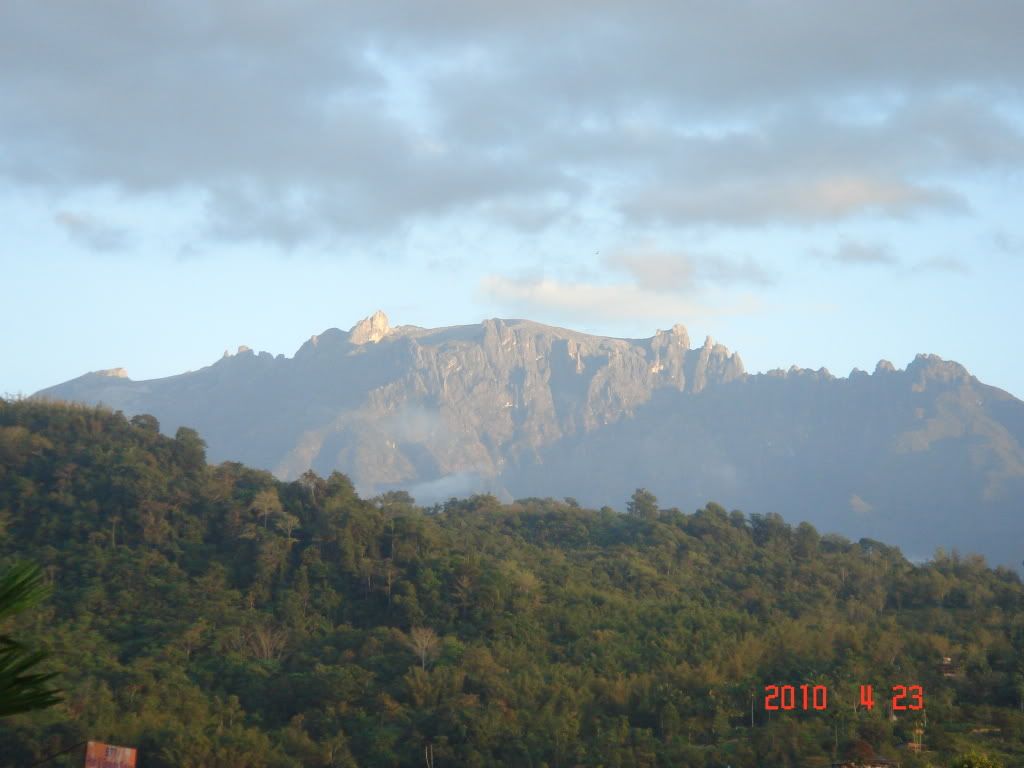 Added on June 25, 2011, 9:09 pm QUOTE(draggy @ Jun 25 2011, 09:30 AM) happy to see the thread still alive This thread is a bit slow recently. Maybe most are busy (except me  ) Let's spice it up a little. ) Let's spice it up a little.Cashew nuts anyone? 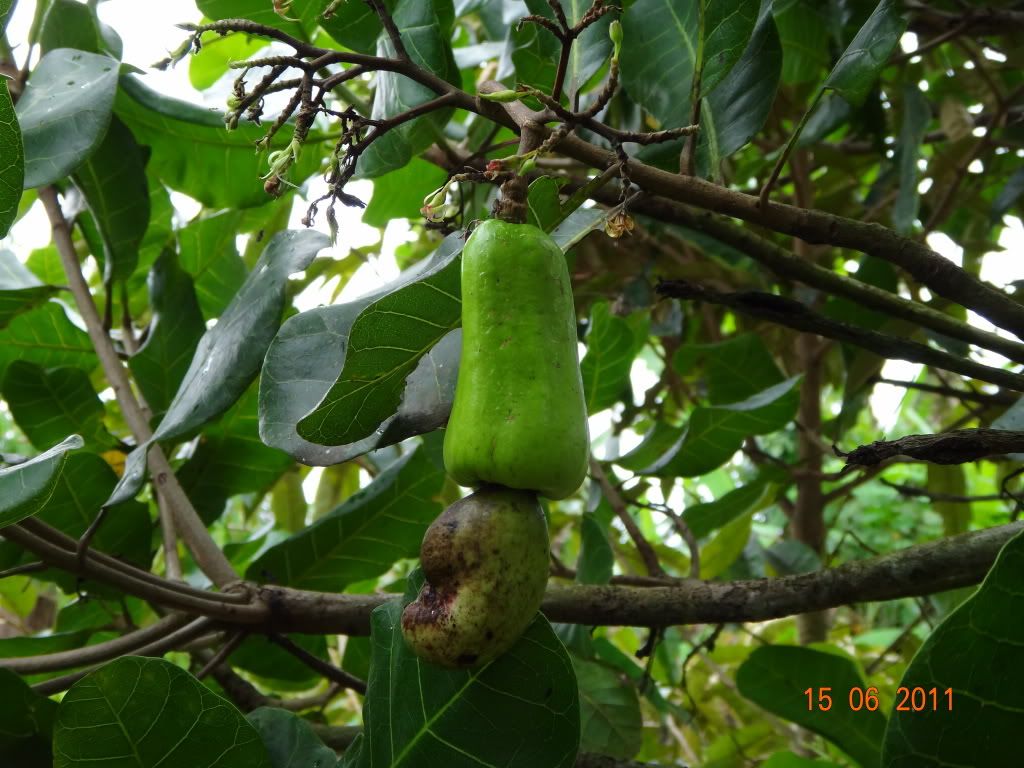 Building up my Ayam Kampung colony. It's not 19 chicken strong. See out fierce looking rooster. 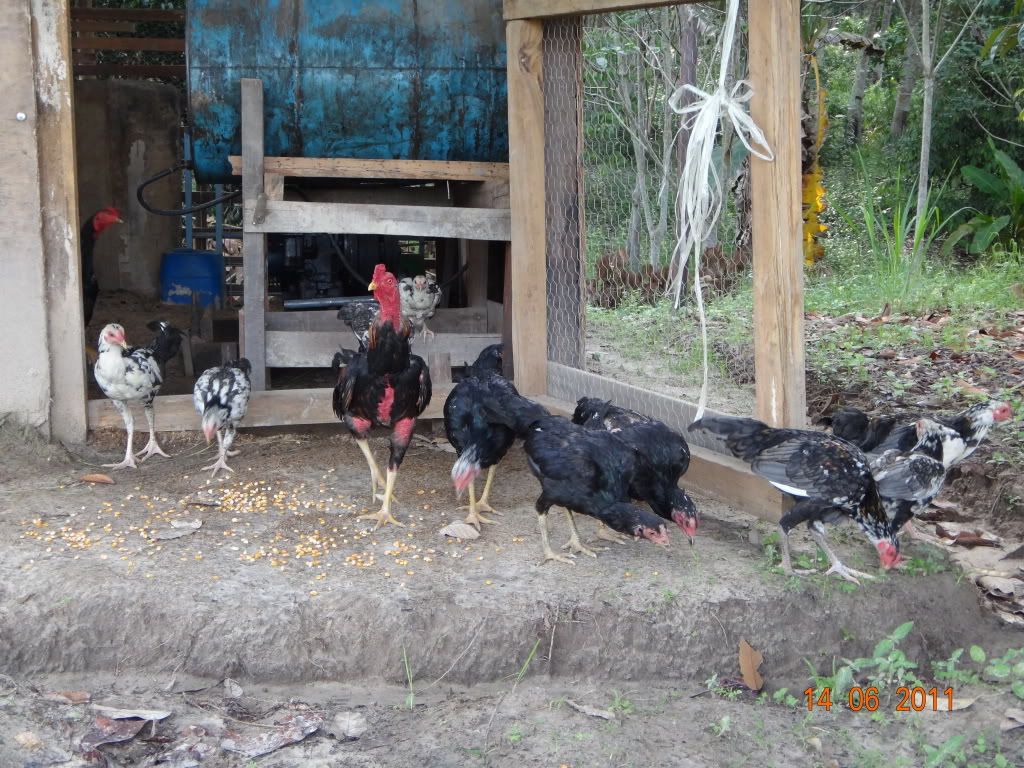 This post has been edited by MrFarmer: Jun 25 2011, 09:10 PM |
|
|
Jun 25 2011, 11:27 PM
|

Senior Member
4,283 posts Joined: Nov 2009 From: Vietnam 
|
guys... i heard there's some program about rearing cattle in oil palm estates... any idea?
|
|
|
Jun 27 2011, 08:44 AM
|

Senior Member
596 posts Joined: Jan 2006
|
QUOTE(alaskanbunny @ Jun 25 2011, 11:27 PM) guys... i heard there's some program about rearing cattle in oil palm estates... any idea? Yes, it is under the NKEA, under EPP 5. The custodian of the project is MPOB, and the companies involved are mostly GLCs, eg. Sime Darby, FELDA, SPAD, etc.Personally, I would caution individuals about entering this, but not because it is not money-making. There have been some... problems.. relating to the ecosystem and framework of the project. If one does want to go into the business, please do a very thorough study, from the breed that should be selected for Malaysia's hot and humid climate, to the veterinary services available, and eventual marketing network of the meat. Also bear in mind, unlike what our "friends" in the various ministries keep drilling, cattle do not gain weight by simply eating any old weeds available in plantations. Yes, cattle would most likely eat any weeds found in plantations, but not all weeds have the right nutritional requirement and balance for healthy muscle growth; worse still, some weeds may have detrimental effects instead. In the long run, if Malaysia's cattle farming industry wants to be profitable AND desirable, we need to emulate the Korean cattle farming community and do premium beef, not "chaplang" beef, kononnya "free range". As for funding, there's supposed to be about RM143million in public funding available. Check with MPOB or Agrobank. |
|
|
Jul 4 2011, 04:51 PM
|
|
Junior Member
8 posts Joined: Jul 2011
|
Hi fellow forumers. I'm new here and I do not have any experience whatsoever but what interest me is rearing free range chickens. Dealing with nasty people in the working world gets to me. I'm thinking if I'm able to I would like to get some advice or maybe some of you might be able to show me first hand what I'm up against. Whether it's feasible and the time it takes the chicks to reach marketable size. I did some read up on the net but I'm not convince as what we sometimes read are not always true. Are these free range chickens prone to sickness? Apart from picking up bugs from mother nature what other feeds that needs to be fed to them? I hope some of you may be able to answer some of my questions. Thanks.
|
|
|
Jul 4 2011, 08:49 PM
|
|
Junior Member
478 posts Joined: Mar 2011 From: Sabah
|
QUOTE(freerangechicks @ Jul 4 2011, 04:51 PM) Hi fellow forumers. I'm new here and I do not have any experience whatsoever but what interest me is rearing free range chickens. Dealing with nasty people in the working world gets to me. I'm thinking if I'm able to I would like to get some advice or maybe some of you might be able to show me first hand what I'm up against. Whether it's feasible and the time it takes the chicks to reach marketable size. I did some read up on the net but I'm not convince as what we sometimes read are not always true. Are these free range chickens prone to sickness? Apart from picking up bugs from mother nature what other feeds that needs to be fed to them? I hope some of you may be able to answer some of my questions. Thanks. Welcome to Venturing into Agriculture & Aquaculture freerangechicks.What you are up against is yourself. Just because "dealing with nasty people in the working world gets to me" is not a very strong reason to go into chicken farming. Sort this out before you proceed ( to whatever your next step is). See, you even have to deal with nasty people like me in this forum  Free Range Chicken actually means My Webpagefree-range livestock are permitted to roam without being fenced in. Can you afford to do this in the first place (plenty issues). Please check with your local authority if you need any permits. You'll need to do a feasibility study. Firstly, you'll need to find out where is your targeted market, then the retail price, wholesale price. Now, back to your costing, land, fixture, feeds, operating cost, transportation, etc. Depending what you meant by Free Range and or you targeted market, it's about 40+ to 60 days. Yes, do not believe what you read on the internet,  This posting might not be true. Do you own verification. If you are in Malaysia, there is always our Veterinary Department. This posting might not be true. Do you own verification. If you are in Malaysia, there is always our Veterinary Department. Chicken are prone to sickness as with any other animals, plants and even humans. Since it's "free range", you'll have more headaches like predators, theft & etc. Chicken are not fussy, then eat almost anything, house hold left over (not oily), Corn, bugs, insect, fruits, plants. I had one instant that one chicken even went to dink the old engine oil that we drain off the generator. After the first sip, it tries to clean it's beak by rubbing it to the floor.  Of course we shall need to let them have a balance diet. Of course we shall need to let them have a balance diet.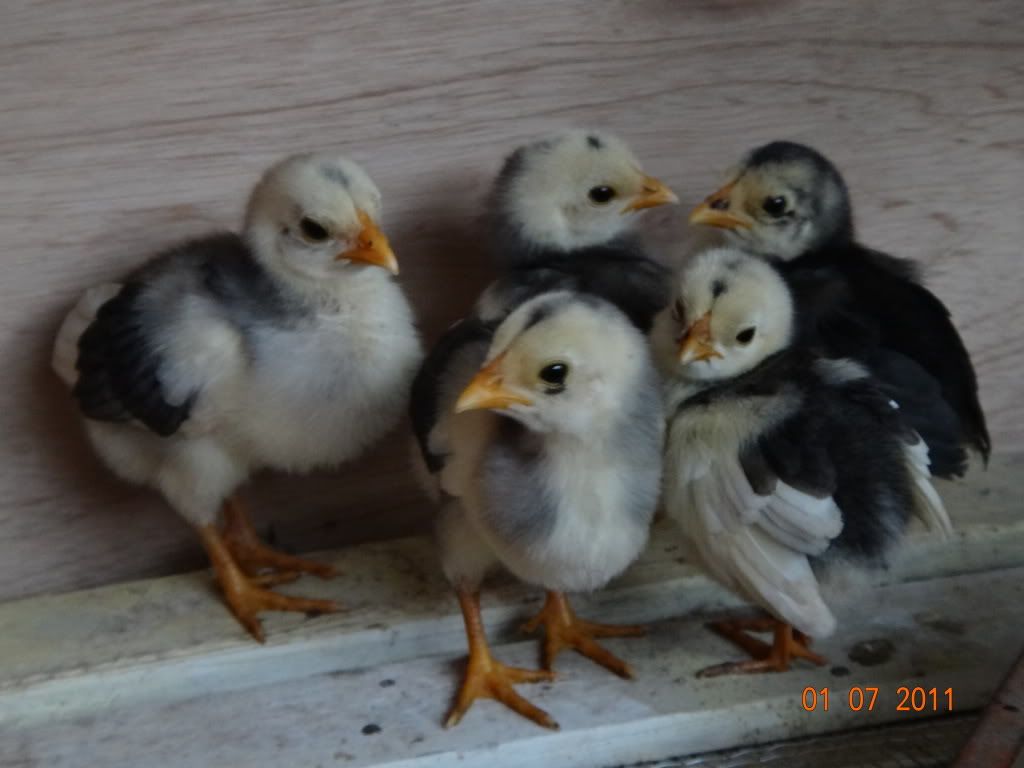 Do let us know your plan, we shall be able to add more for you to think about. Final advise, do not get attached to your live-stock. It'll break your heart when you need to send them off to the market  Happy Chicken Farming  |
|
|
|
|
|
Jul 4 2011, 09:59 PM
|
|
Junior Member
8 posts Joined: Jul 2011
|
Hi MrFarmer,
You are nasty are you? Lol! I'm in Malaysia also by the way and yea I mean I can deal with nasty people but just dislike it. Makes me wanna land one on their face but got to control myself. Not that I'm a violent kind of guy but it's just I don't do it to people so I expect the same. Anyway back to the topic. Funding should not be a problem but I believe experience dealing with predator and diseases are an issue for me. I know to make sure the bottom of the fencing should be reinforced so that predator do not burrow to get to the chicks or chickens. Do our veterinary department hold courses for rearing free range chickens? Do I need a permit say if in area of Selangor? Oh ya another thing, very noob questions. Please bear with me. Is kampung chicken and free range chicken the same? |
|
|
Jul 5 2011, 08:15 AM
|
|
Senior Member
4,283 posts Joined: Nov 2009 From: Vietnam
|
who is the guy selling the palm supergene seedling er?
|
|
|
Jul 5 2011, 11:09 AM
|
|
Senior Member
596 posts Joined: Jan 2006
|
QUOTE(alaskanbunny @ Jul 5 2011, 08:15 AM) who is the guy selling the palm supergene seedling er? Personally, I think anyone who is interested to know more about oil palm planting material should go visit and get good information from the 10 or 12 established seed producers in Malaysia first, before listening to anyone selling "supergene oil palm" seedlings. Once you have seen the performance of existing materials, you would realise that at fraction of the price, the "supergene" planting materials are not very much "superior" to the elite planting materials offered by those companies.Some things one should note when reading the brochures/leaflets of their marketing agents is that they always use the term "up to". In other words, they are saying the palm may "potentially give such and such performance, IF so and so conditions are met". Nothing critically wrong about stating such, just not properly indicated and hence potentially misleading. Also, they use very bombastic terms like "introgressed", which in plain language means "back-breeding", and give misleading impression that oil palms bear fruit at 2 years old and above (in actual fact, oil palm seedlings in polybags of 1 year age can and do bear fruit bunches), or that existing materials reach maturity slower etc. In addition, they keep harping on the words "F1 Hybrid", where in fact, almost all oil palm seedlings commercially produced are F1 tenera hybrids (DxP). Also, although OER is most often quoted and probably more important to growers and millers, the real gauge for oil bearing capabilities is the Soxhlet Extraction Rate, which will give the real total oil bearing of the oil palm fruit,. This can then be calculated to the oil extraction index of the specific mill, something our friends seemingly failed to note clearly. Furthermore, some of the information is also contradictory; higher palm kernel extraction rate means the palm nuts are larger, and hence heavier in comparison to the overall weight of the fruits, but then they claim the nuts are smaller. The only way there could be a smaller nut with heavier weight is if the nuts have higher densities, which although isn't impossible to develop, would in turn make Palm Kernel Oil extraction difficult at existing mills. As a former oil palm breeder, there are other things that I can see from the palms themselves, but it wouldn't be appropriate for me to divulge here. All I can say is that the elite planting materials from top-tier Malaysian plantation companies are more than capable of reaching those yields stated by "supergene" agents, and oil extraction rates of 25% and above can be achieved quite easily with improved milling practices and equipment. |
|
|
Jul 5 2011, 12:12 PM
|

Senior Member
2,348 posts Joined: Dec 2004 From: Ch3r@s 
|
Hi Bro,
yes the Vet department holds courses to rear chicken. you have to check with the respective dept if you are in Selangor as i assume from your posting just go to the Selangor State Dept to get your info and they are willing to help. I went to the N9 State Vet Dept and got quite a lot of information for me to market my Animal Feed Premix/Supplement to those rearing Broiler & Layer chickens  QUOTE(freerangechicks @ Jul 4 2011, 09:59 PM) Hi MrFarmer, You are nasty are you? Lol! I'm in Malaysia also by the way and yea I mean I can deal with nasty people but just dislike it. Makes me wanna land one on their face but got to control myself. Not that I'm a violent kind of guy but it's just I don't do it to people so I expect the same. Anyway back to the topic. Funding should not be a problem but I believe experience dealing with predator and diseases are an issue for me. I know to make sure the bottom of the fencing should be reinforced so that predator do not burrow to get to the chicks or chickens. Do our veterinary department hold courses for rearing free range chickens? Do I need a permit say if in area of Selangor? Oh ya another thing, very noob questions. Please bear with me. Is kampung chicken and free range chicken the same? |
|
|
Jul 5 2011, 04:26 PM
|
|
Junior Member
8 posts Joined: Jul 2011
|
Thanks Paraoptical,
Will drop by some department to check. Do they also divulge who we can supply the chickens too? |
|
|
Jul 5 2011, 04:29 PM
|
|
Senior Member
2,348 posts Joined: Dec 2004 From: Ch3r@s
|
lolx divulge. no worries it open secret on who supplies those chicks.
just ask the Vet Dept. they would be willing to help QUOTE(freerangechicks @ Jul 5 2011, 04:26 PM) Thanks Paraoptical, Will drop by some department to check. Do they also divulge who we can supply the chickens too? |
|
|
Jul 5 2011, 08:39 PM
|
|
Junior Member
478 posts Joined: Mar 2011 From: Sabah
|
QUOTE(freerangechicks @ Jul 4 2011, 09:59 PM) Hi MrFarmer, Hi Freerangechicks, You are nasty are you? Lol! I'm in Malaysia also by the way and yea I mean I can deal with nasty people but just dislike it. Makes me wanna land one on their face but got to control myself. Not that I'm a violent kind of guy but it's just I don't do it to people so I expect the same. Anyway back to the topic. Funding should not be a problem but I believe experience dealing with predator and diseases are an issue for me. I know to make sure the bottom of the fencing should be reinforced so that predator do not burrow to get to the chicks or chickens. Do our veterinary department hold courses for rearing free range chickens? Do I need a permit say if in area of Selangor? Oh ya another thing, very noob questions. Please bear with me. Is kampung chicken and free range chicken the same? No I'm not the nasty type. Just trying to show a point. The world are getting smaller due to Globalization, you'll meet nasty people everywhere you go. Also we'll need to share the world with everyone else. If funding is not a problem, you can also consider 'Ayam Aircon' (KFC contract chicken farming). Would suggest you identify your area first, then talk to the local people who is in this field about the 'local' problems / issue. They may have most probably solved all the problems, otherwise they would had closed shop. Suggest you visit Veterinary Depart of Selangor ( If Selangor is your targeted area). There is an office in Jalan Cheras. If it's big scale, you'll most probably need a permit. There are also some organic farms in Selangor & Negeri Sembilan that rears Free Range Chicken, and they do have farm visits. Kampung Chicken is a breed of chicken. Free range chicken is a method of raising (not confining) the chicken. 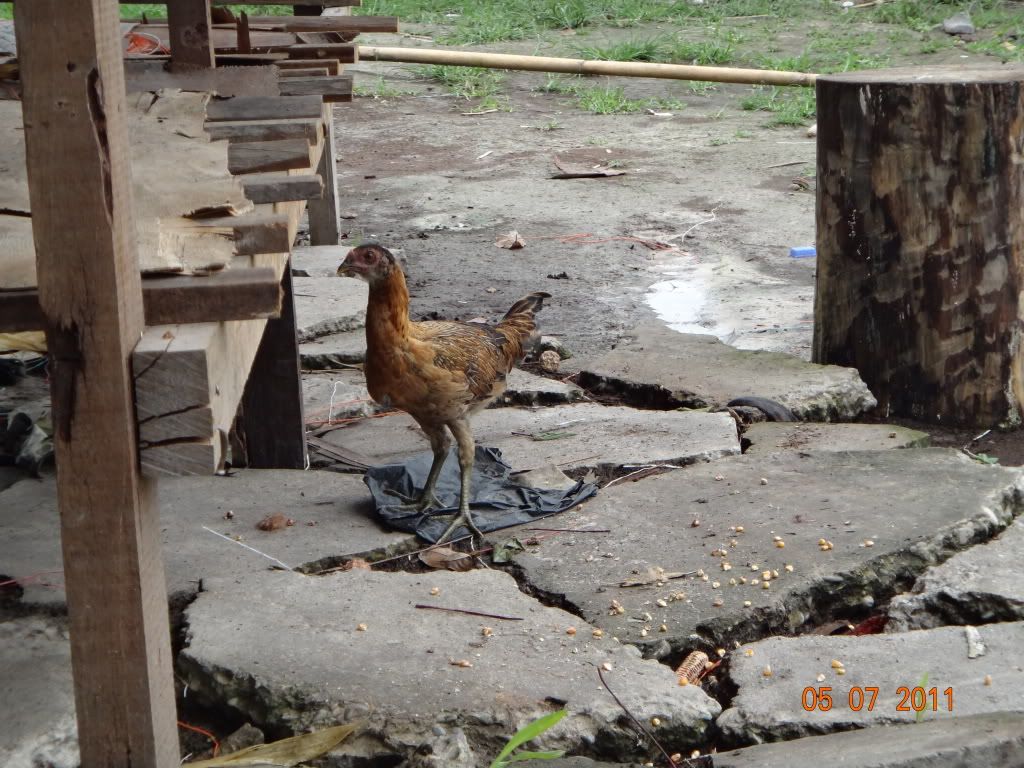 This is a Ayam Kampung. Was trying to catch it and integrate it to my colony. See the corns on the floor. Not successful today, try again tomorrow. Added on July 5, 2011, 8:50 pm QUOTE(Michael J. @ Jul 5 2011, 11:09 AM) Personally, I think anyone who is interested to know more about oil palm planting material should go visit and get good information from the 10 or 12 established seed producers in Malaysia first, before listening to anyone selling "supergene oil palm" seedlings. Once you have seen the performance of existing materials, you would realise that at fraction of the price, the "supergene" planting materials are not very much "superior" to the elite planting materials offered by those companies. Spoke to a couple of planters before. Was told 2 1/2 to 3 1/2 years after planting, also it depends on lots of condition, types of clones, location, temperature, fertility & etc. Peak production shall only comes gradually.Some things one should note when reading the brochures/leaflets of their marketing agents is that they always use the term "up to". In other words, they are saying the palm may "potentially give such and such performance, IF so and so conditions are met". Nothing critically wrong about stating such, just not properly indicated and hence potentially misleading. Also, they use very bombastic terms like "introgressed", which in plain language means "back-breeding", and give misleading impression that oil palms bear fruit at 2 years old and above (in actual fact, oil palm seedlings in polybags of 1 year age can and do bear fruit bunches), or that existing materials reach maturity slower etc. In addition, they keep harping on the words "F1 Hybrid", where in fact, almost all oil palm seedlings commercially produced are F1 tenera hybrids (DxP). Also, although OER is most often quoted and probably more important to growers and millers, the real gauge for oil bearing capabilities is the Soxhlet Extraction Rate, which will give the real total oil bearing of the oil palm fruit,. This can then be calculated to the oil extraction index of the specific mill, something our friends seemingly failed to note clearly. Furthermore, some of the information is also contradictory; higher palm kernel extraction rate means the palm nuts are larger, and hence heavier in comparison to the overall weight of the fruits, but then they claim the nuts are smaller. The only way there could be a smaller nut with heavier weight is if the nuts have higher densities, which although isn't impossible to develop, would in turn make Palm Kernel Oil extraction difficult at existing mills. As a former oil palm breeder, there are other things that I can see from the palms themselves, but it wouldn't be appropriate for me to divulge here. All I can say is that the elite planting materials from top-tier Malaysian plantation companies are more than capable of reaching those yields stated by "supergene" agents, and oil extraction rates of 25% and above can be achieved quite easily with improved milling practices and equipment. Anyone has details or pointers for Rubber trees. Lembagah Getah Sabah has temporary stop selling clones to individual for the time being, until they clear the backlog of government linked projects. I'm trying to source for good rubber tree clones. This post has been edited by MrFarmer: Jul 5 2011, 08:50 PM |
|
|
|
|
|
Jul 5 2011, 09:57 PM
|
|
Junior Member
8 posts Joined: Jul 2011
|
Thanks for the valuable info. You guys are such a wonderful lot. I will probably try small scale first to see the outcome. Which should be my target choice? Ayam kampung or free range chicken?
Paraoptical, what I meant was when my chickens reach maturity who can I supply it to? Like Mrfarmer mention ayam aircon is contract to kfc. If say I'm the new guy in the market will I need to approach a middleman or I can supply direct. But since they are already taking from someone else is it difficult to convince them for me to supply them chickens? Mrfarmer, that ayam kampung does not belong to anyone? Lol! Just slightly out of topic, does ayam hutan taste better than ayam kampung? |
|
|
Jul 6 2011, 08:43 AM
|
|
Senior Member
596 posts Joined: Jan 2006
|
MrFarmer:
Yes, you are right about oil palms cultivated in a plantation setting taking up to 3.5 years before commercial harvesting. However in their wild/semi-wild condition, oil palms actually begin to develop fruit bunches a year after germinating from seed. In a plantation setting, good agriculture practices would dictate that any inflorescence or new bunches formed on young palms should be ablated for the first 24 months, and harvesting can only begin on the 30th month. Some plantations are attempting to bring that earlier, so that first harvest begins on the 24th month instead. Ablation would ensure that the young palms would gain sufficient girth in order to support better productivity in later years. For rubber trees, although this might be a more tedious process, how about trying to collect free-fall rubber seeds, germinate them, and do bud grafting using bud-wood from planted clones? LGM Sabah should have a list of rubber growers, and you could try asking them for the list. Meet growers who are scheduled to do their first round of pruning on 2-year old saplings, and collect the pruned bud-wood for your own grafting. Just a suggestion though; we do this often when propagating cocoa planting materials. |
|
|
Jul 6 2011, 08:38 PM
|
|
Junior Member
478 posts Joined: Mar 2011 From: Sabah
|
QUOTE(freerangechicks @ Jul 5 2011, 09:57 PM) Thanks for the valuable info. You guys are such a wonderful lot. I will probably try small scale first to see the outcome. Which should be my target choice? Ayam kampung or free range chicken? Since it's small scale, you can try whatever you feel like it. Me, I'm doing Day Range Ayam Kampung (very small scale la).Paraoptical, what I meant was when my chickens reach maturity who can I supply it to? Like Mrfarmer mention ayam aircon is contract to kfc. If say I'm the new guy in the market will I need to approach a middleman or I can supply direct. But since they are already taking from someone else is it difficult to convince them for me to supply them chickens? Mrfarmer, that ayam kampung does not belong to anyone? Lol! Just slightly out of topic, does ayam hutan taste better than ayam kampung? There is another non-meat sector, chicken as pets. Wild Pheasant, Ayam Serramas & etc... Even ostrich.. Marketing, brand building, product differentiation. Depending what scale you're in. Middleman takes big quantity. Supply direct gives higher profit. There is a big difference in Farm Gate Price, Middleman Price, Retail Price. Of course everyone has to earn their keeps. I'm not a Chicken Thief, the chicken belongs to my helper who has just resign and left. By the way, I did not manage to catch that chicken today, but I got the other one (there is two of them). Farming is fun, adventurous and gives you lots of exercise. It's a very healthy life style. Blue sky, white clouds, plenty of sunshine & fresh air.Added on July 6, 2011, 8:51 pm QUOTE(Michael J. @ Jul 6 2011, 08:43 AM) MrFarmer: Previously, LGM Sabah only give reference/ direct us to others LGM centers, but since it's state wise, maybe I'll check with them (main office) again. Have some contact on (small) suppliers, but I still can not/have not verify their clones. Yes, you are right about oil palms cultivated in a plantation setting taking up to 3.5 years before commercial harvesting. However in their wild/semi-wild condition, oil palms actually begin to develop fruit bunches a year after germinating from seed. In a plantation setting, good agriculture practices would dictate that any inflorescence or new bunches formed on young palms should be ablated for the first 24 months, and harvesting can only begin on the 30th month. Some plantations are attempting to bring that earlier, so that first harvest begins on the 24th month instead. Ablation would ensure that the young palms would gain sufficient girth in order to support better productivity in later years. For rubber trees, although this might be a more tedious process, how about trying to collect free-fall rubber seeds, germinate them, and do bud grafting using bud-wood from planted clones? LGM Sabah should have a list of rubber growers, and you could try asking them for the list. Meet growers who are scheduled to do their first round of pruning on 2-year old saplings, and collect the pruned bud-wood for your own grafting. Just a suggestion though; we do this often when propagating cocoa planting materials. Say Micheal, any easy way of verifying the clone at site? Had not though on doing grafting as my requirement is small. This post has been edited by MrFarmer: Jul 6 2011, 08:51 PM |
|
|
Jul 6 2011, 09:31 PM
|

Junior Member
98 posts Joined: Feb 2009
|
Mr. Farmer is it you have your own land or rental land??i think the tough is to have a piece of land. Buy seem costly. What is your advice for new comers for this industry??
|
|
|
Jul 7 2011, 09:00 AM
|
|
Senior Member
596 posts Joined: Jan 2006
|
Mr Farmer:
The easiest way, is of course by proper book-keeping. This is a component of GAP, but usually only maintained by larger plantations. Short of that, the next best thing (with accuracy) is via DNA profiling. Over in Peninsular, fresh leaf samples are usually sent to UPM for DNA verification. I do know UPM has a campus in Bintulu, but I'm not sure if they share the same DNA library or not. Charges range quite a bit; the facility at Bangi and Serdang usually charge something like RM30 to RM100 per sample, depending on certain conditions lar. If cost is a problem, then the very last thing one could do is to engage an extension officer from LGM Sabah, best to get the breeder. The breeder would be able to identify the clones via physical attributes, and some of the qualitative aspects. You could do your own prelim evaluation, using the LGM clonal guidebook as a basis. For instance, some of the clones are prone to wind damage as they are top heavy (heavy branching), or some clones produce striated seeds etc. But whatever the case, at least get the breeder to verify and endorse those clones. Just out of curiousity, what is your requirement? Grafting is costly and labor intensive, I admit. But it works for large and small quantities. |
|
|
Jul 7 2011, 10:01 AM
|
|
Junior Member
8 posts Joined: Jul 2011
|
MrFarmer, what you meant about day range means let the chickens roam in the day and back tot heir coup at night? Can I know where is your farm? Not to steal
but to visit if given the opportunity. Yup I like the freedom and away from the hustle and bustle of the city. So stressful.This post has been edited by freerangechicks: Jul 7 2011, 10:02 AM |
|
|
Jul 8 2011, 08:39 PM
|
|
Junior Member
478 posts Joined: Mar 2011 From: Sabah
|
QUOTE(leoleo584 @ Jul 6 2011, 09:31 PM) Mr. Farmer is it you have your own land or rental land??i think the tough is to have a piece of land. Buy seem costly. What is your advice for new comers for this industry?? Hi Leoleo584, No I don't own any land. Even my house is an apartment . I'm not qualify to give any advise as I'm also very new in farming, as it's only my 1st year. I can share with you my experience.Personally I feel that if you just buy a piece of land and just go into farming, it's gonna take a very long time in return of investment. I have rented farm as well as on JV/Smart Partnership. There are lots of land owners who is leaving their land idle  Added on July 8, 2011, 8:55 pm QUOTE(Michael J. @ Jul 7 2011, 09:00 AM) Mr Farmer: Thanks Micheal.The easiest way, is of course by proper book-keeping. This is a component of GAP, but usually only maintained by larger plantations. Short of that, the next best thing (with accuracy) is via DNA profiling. Over in Peninsular, fresh leaf samples are usually sent to UPM for DNA verification. I do know UPM has a campus in Bintulu, but I'm not sure if they share the same DNA library or not. Charges range quite a bit; the facility at Bangi and Serdang usually charge something like RM30 to RM100 per sample, depending on certain conditions lar. If cost is a problem, then the very last thing one could do is to engage an extension officer from LGM Sabah, best to get the breeder. The breeder would be able to identify the clones via physical attributes, and some of the qualitative aspects. You could do your own prelim evaluation, using the LGM clonal guidebook as a basis. For instance, some of the clones are prone to wind damage as they are top heavy (heavy branching), or some clones produce striated seeds etc. But whatever the case, at least get the breeder to verify and endorse those clones. Just out of curiousity, what is your requirement? Grafting is costly and labor intensive, I admit. But it works for large and small quantities.  I guess I'll work on your second suggestion. I guess I'll work on your second suggestion.I don't have the budget, expertise, labor and time for producing my own clones. Also had never even gave it a though Come to think of it, it does hold agood potential. I see lots of nursery doing for Palm Oil, but very little for rubber trees. The requirement for my next project is only about 1200 plant-lets for an area of 8 acres of hilly terrain. Time is also a factor as I planned to get it done up starting August and finishing by December. With the changing weather, I'm keeping my finger crossed as it close to impossible to clear / terrace the land during rainy season. Wish me luck.Added on July 8, 2011, 9:14 pm QUOTE(freerangechicks @ Jul 7 2011, 10:01 AM) MrFarmer, what you meant about day range means let the chickens roam in the day and back tot heir coup at night? Can I know where is your farm? Not to steal Hi Freerangechicks. but to visit if given the opportunity. Yup I like the freedom and away from the hustle and bustle of the city. So stressful.Yes, you're right. It's in The Land Beneath The Wind, Sabah, near Keningau. You are welcome to visit, but only at your own risk I just had 2 visitors (husband & wife) recently. Came to Sabah for a 6 day trip. He worked on the farm for 3 days. I worked as his driver / unlicensed tour guide for 3 days.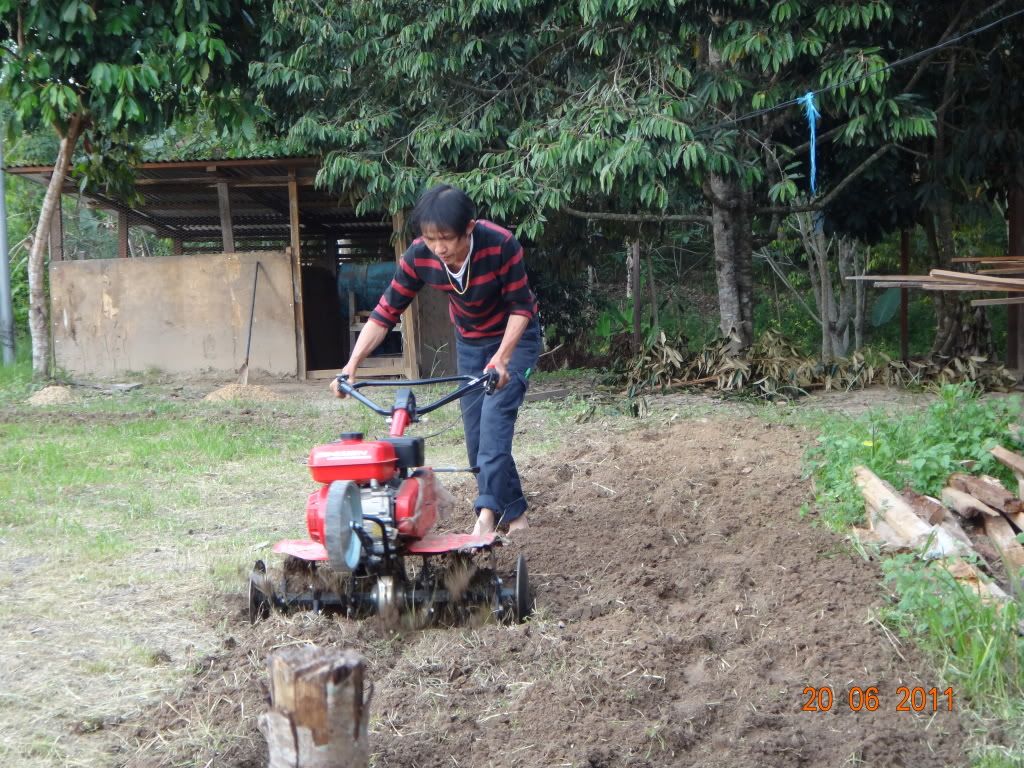 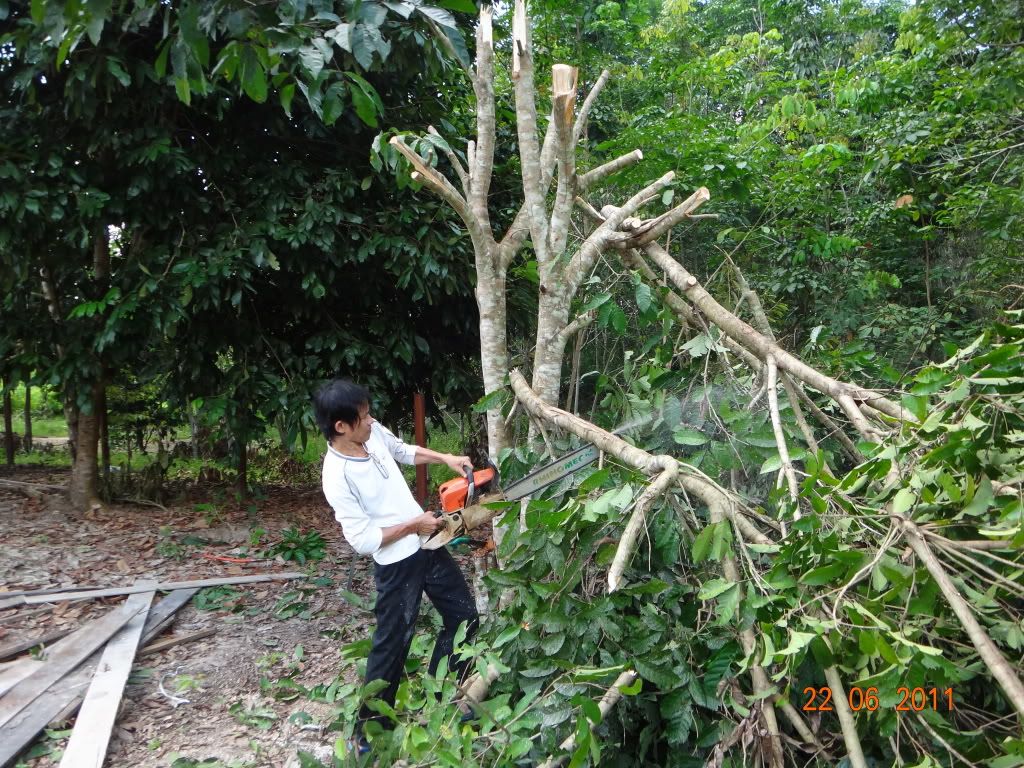 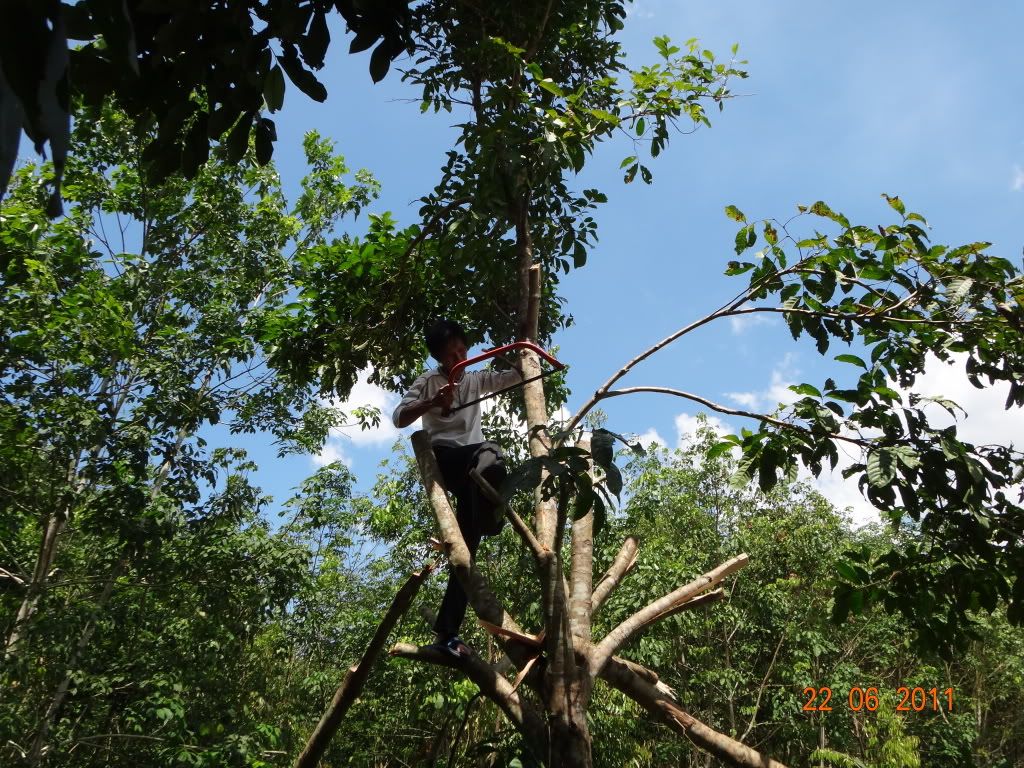 He was re-living his childhood, His father was a farmer. He had so much fun using the some of the equipment such as grass cutter, chainsaw and evn the mini plougher. This post has been edited by MrFarmer: Jul 8 2011, 09:14 PM |
| Change to: |  0.0245sec 0.0245sec
 0.74 0.74
 6 queries 6 queries
 GZIP Disabled GZIP Disabled
Time is now: 22nd December 2025 - 08:19 AM |
 Quote
Quote