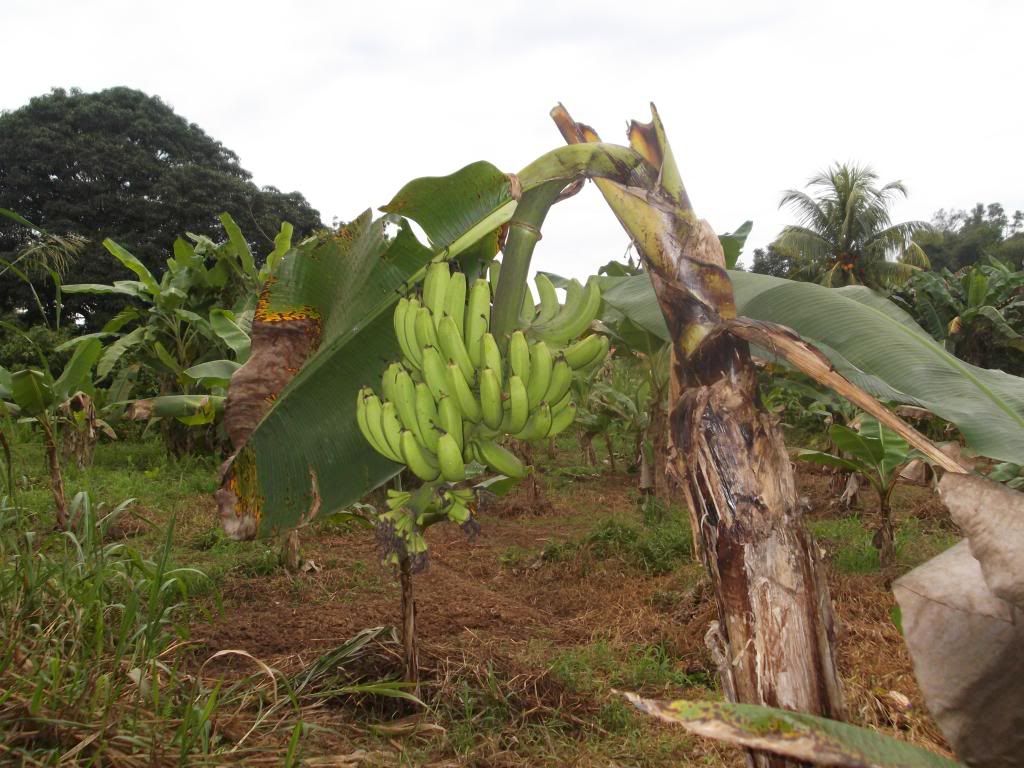
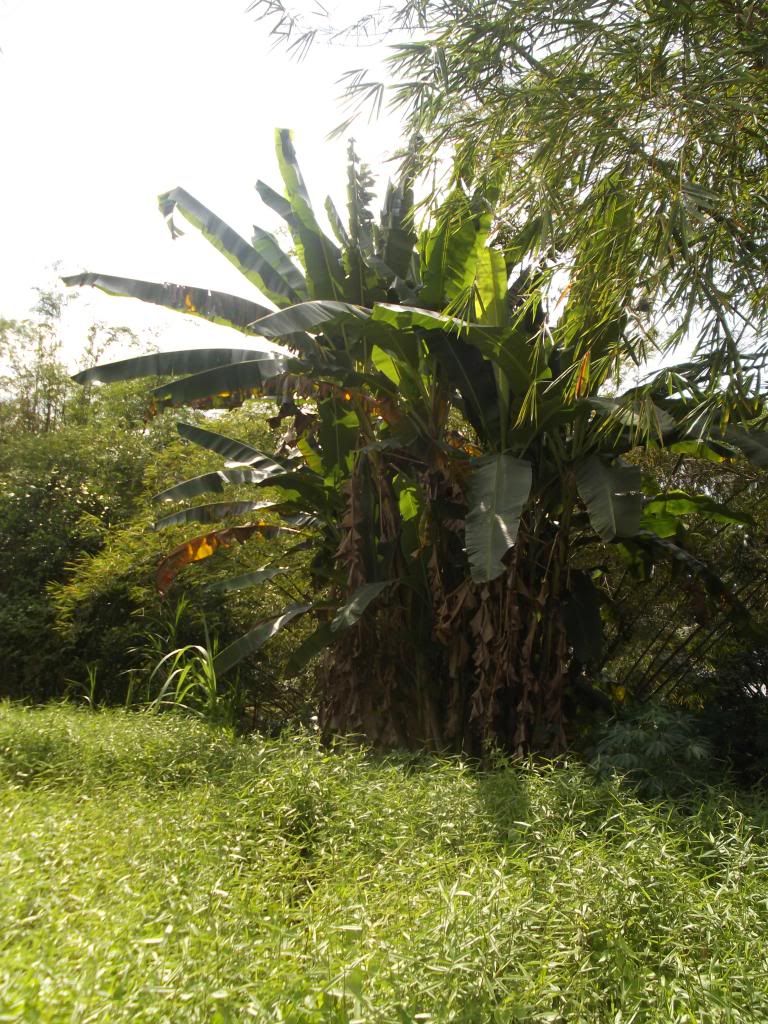
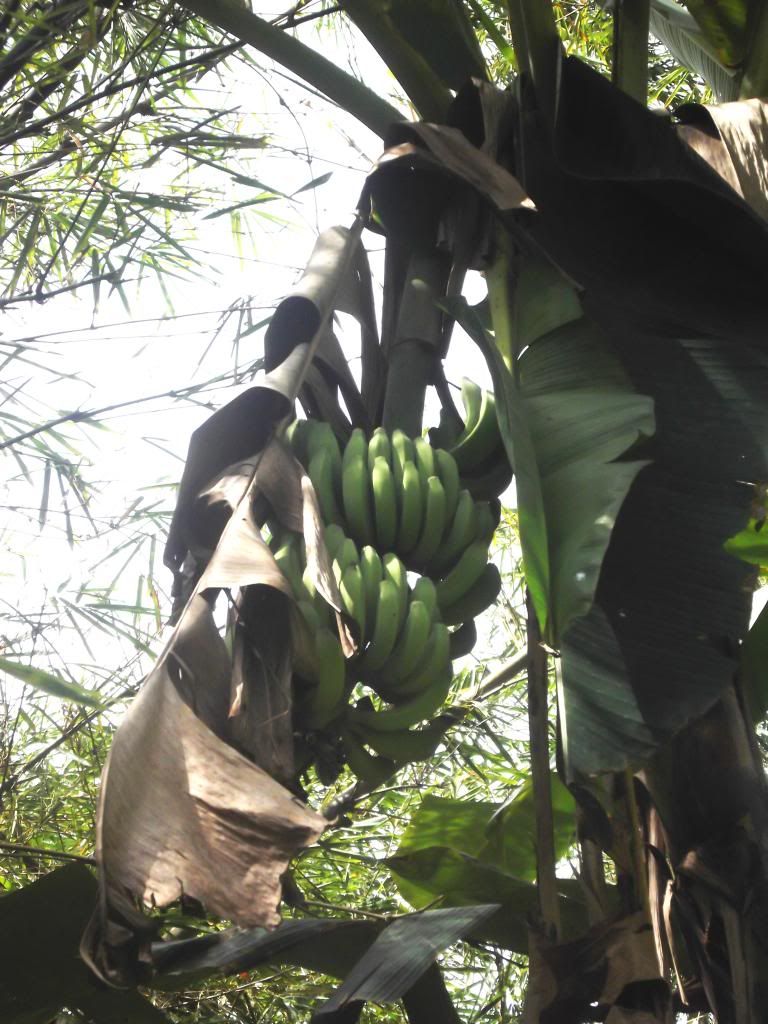
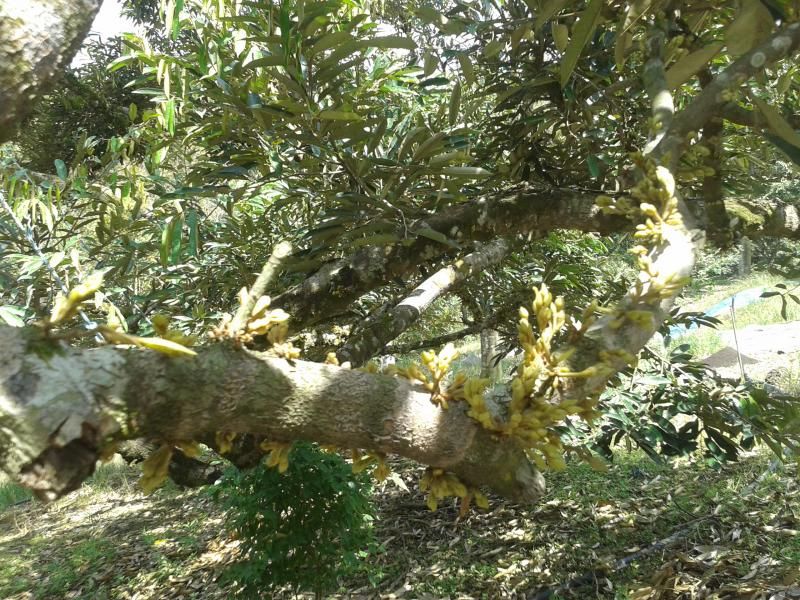
Reporting here from Raub about the durian farmers where they are getting RM 24.00/kg for Musang King and D24 at RM 9.00/kg
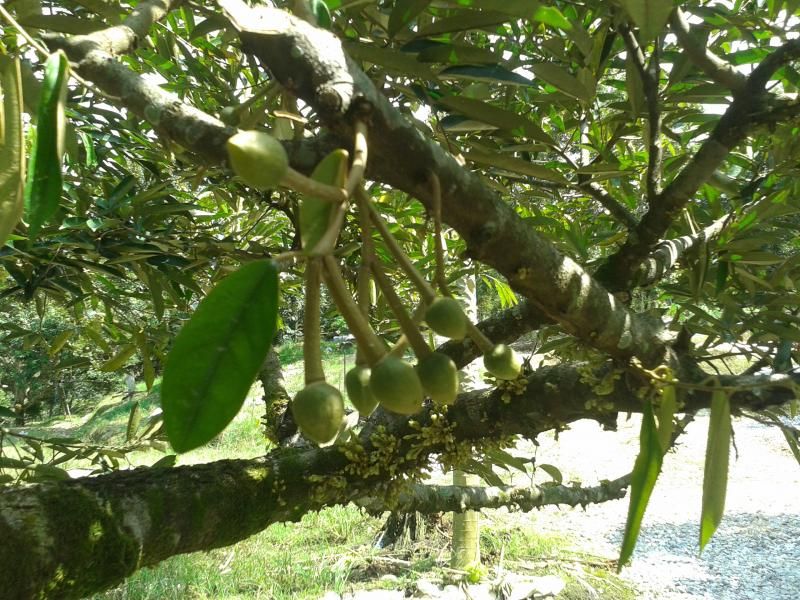
The pictures below can show those old farmers that it is possible to have 3-4 different stages of flowering within a tree.
Venturing into Agriculture & Aquaculture, Co-Ordination & Implementation is KEY
|
|
 Mar 20 2013, 10:24 PM Mar 20 2013, 10:24 PM
|
 
Senior Member
2,348 posts Joined: Dec 2004 From: Ch3r@s   
|
Hi fellow agri & aqua culturist...
Reporting here from Raub about the durian farmers where they are getting RM 24.00/kg for Musang King and D24 at RM 9.00/kg The pictures below can show those old farmers that it is possible to have 3-4 different stages of flowering within a tree. |
|
|
|
|
|
Mar 21 2013, 08:43 AM
|

Senior Member
596 posts Joined: Jan 2006
|
MrFarmer:
Your crop looks great! You might like to prop them up though... Just in case. arnage: Yes, it is a common practice in keli farming. But as I've mentioned earlier, it produces fish that are high in fatty tissue, and low firmness in flesh. The fish do grow very fast, but quality-wise..... It is just the same with other farmed animals. Compare free-range chickens with those battery-farmed broilers. Battery-farmed chooks fed exclusively on processed corn/soy bean meal, even when not cooped up in tiny cages, produce soft "lembik" meat which lack mouth-feel when eaten, taste bland, is high in fatty tissue, and is extremely cheap (RM7/kg here in Sarawak). Whereas free-ranged chooks, or at least those allowed to feed on "normal" food chickens eat (i.e. wild food/semi processed, not synthesized), have firm meat, real "chicken" taste, lower fat content but richer coloration, and is pretty expensive (RM15/kg lowest price seen). But I am not demonizing producers who use chicken guts, fish guts etc., as long as they are ethical about it. People still got to eat, and with prices of everything going up, cheap proteins are a necessity. But I will boycott those who use dead diseased animals as feed for their catfish. This is very disgusting and a real health hazard, and if we are really what we eat, then imagine what "bangkai" is going into our system if this is really happening. (Roadkill different story; the animals were healthy, just unfortunate to cross the road at the wrong time). By the by, RM1.33/kg is still considered expensive. A similar FCR can be achieved by using trash fish, which sells for RM30-RM50/barrel of around 50kg, without the issue of producing fatty fish. Problem is hard to get trash fish unless you get to the ports early, or know the fishermen. This post has been edited by Michael J.: Mar 21 2013, 08:48 AM |
|
|
Mar 24 2013, 11:53 PM
|

Senior Member
1,567 posts Joined: Nov 2005 From: Ppg, Sbh.
|
Again, thank you Michael. i've been reading and found out that you can actually use apple as ripening agent. will do experiment next as that is the only option atm. btw, this is one of the Cavendish i manage to save after 2 years holiday. not as good as mr Farmer's. » Click to show Spoiler - click again to hide... «
|
|
|
Mar 25 2013, 12:32 AM
|
|
Senior Member
1,567 posts Joined: Nov 2005 From: Ppg, Sbh.
|
btw, i appreciate it if anyone can identify this banana. i was debating with my mom on ripening agent for cavendish when she mentioned bout this banana. i went to the place and took some suckers for transplanting in my farm. it is way taller than 'pisang rebus' but the fruit arrangement is as of cavendish's. anyway, it's the tallest banana i've ever saw. my mom said, on a very good tree there are a lot of fruit bunches and the fruit is bigger than the cavendish. she called 'pisang berangan' and it's that tall. for sure it's at least 12 feet or more high. hope someone can give some idea to this poor farmer » Click to show Spoiler - click again to hide... «
|
|
|
Mar 27 2013, 10:52 AM
|

Senior Member
5,170 posts Joined: Jul 2006 From: /k//k/, /k/undasang
|
I want to ask what is the best bank to apply loan for my duck farm?
I already have enough money to run my venture from my investors, but I need to build my track record as being a good borrower so I cant borrow huge amount of loan for rapid expansion. some of the financial institution that I can think of are 1) Agrobank funds for food (3F) - low interest at 3.75%, no guarantor needed for under RM20k loan, but need collateral, need guarantor for above RM20k loan. 2), TEKUN - low interest rate at 4% and some charges I dont really understand, no guarantor, no collateral needed but can only loan RM10k for first timer, 2nd loan RM30k max, 3rd loan RM50k max. 3), SME bank - not yet research 4) MARA - not yet research 5), any other suggestion?? |
|
|
Mar 28 2013, 05:53 PM
|

Junior Member
48 posts Joined: Oct 2007
|
ParaOpticaL : am new here for marble goby as my dad plans to venture as a side business. mind giving some readouts on this fish? thanks
|
|
|
|
|
|
Mar 28 2013, 08:06 PM
|

Junior Member
478 posts Joined: Mar 2011 From: Sabah
|
QUOTE(poks @ Mar 25 2013, 12:32 AM) btw, i appreciate it if anyone can identify this banana.
i was debating with my mom on ripening agent for cavendish when she mentioned bout this banana. i went to the place and took some suckers for transplanting in my farm. it is way taller than 'pisang rebus' but the fruit arrangement is as of cavendish's. anyway, it's the tallest banana i've ever saw. my mom said, on a very good tree there are a lot of fruit bunches and the fruit is bigger than the cavendish. she called 'pisang berangan' and it's that tall. for sure it's at least 12 feet or more high. hope someone can give some idea to this poor farmer » Click to show Spoiler - click again to hide... « Hmmh looks very tall, more than 12 ft? I don't have any banana that is that tall except for the pisang rebus / goreng ( it's called Pisang Saba), As for my Berangan, my trunk has wider diameter. The fruits could be Berangan? Raja? Cavendish? not sure. |
|
|
Mar 28 2013, 09:15 PM
|
|
Junior Member
478 posts Joined: Mar 2011 From: Sabah
|
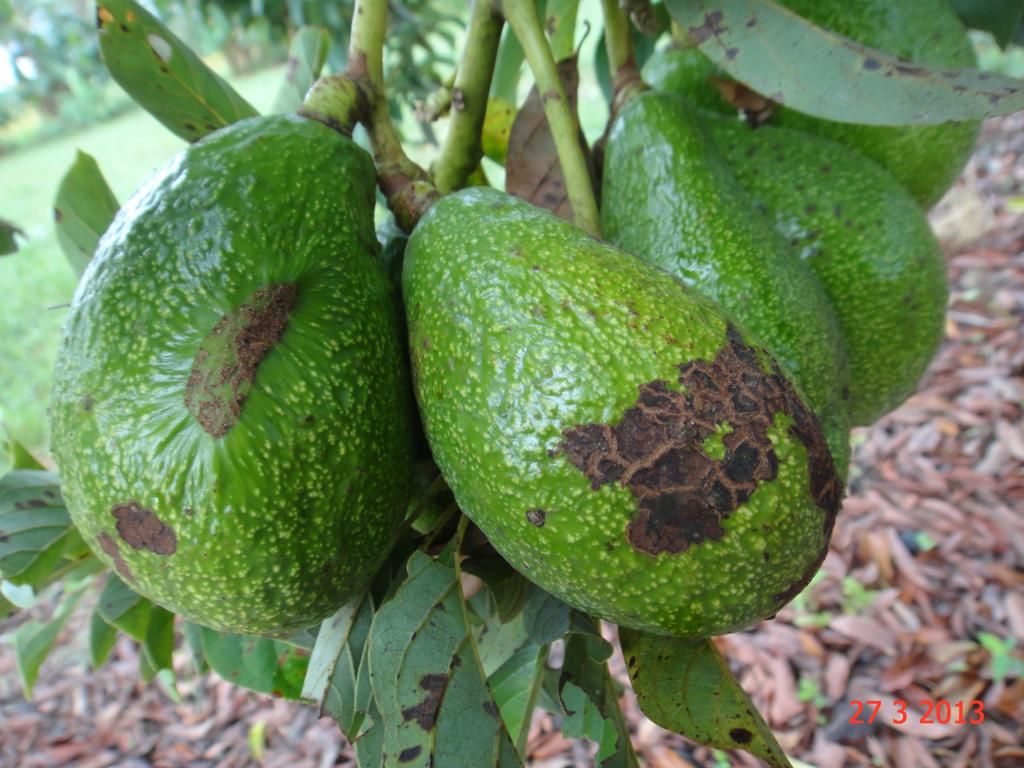
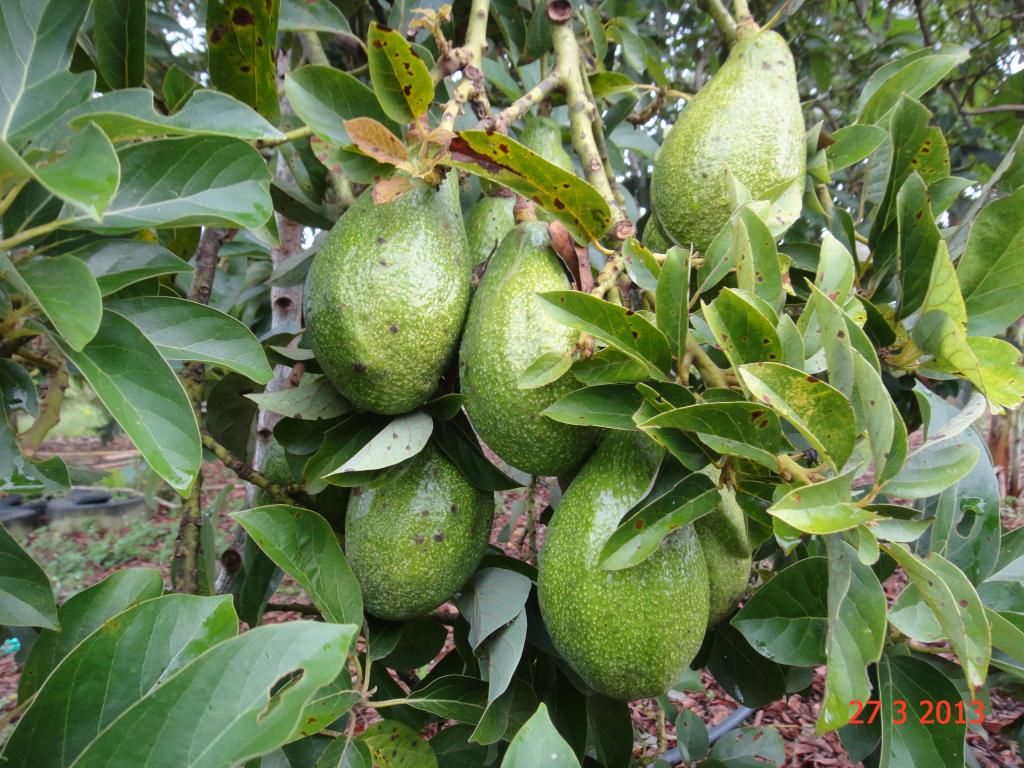
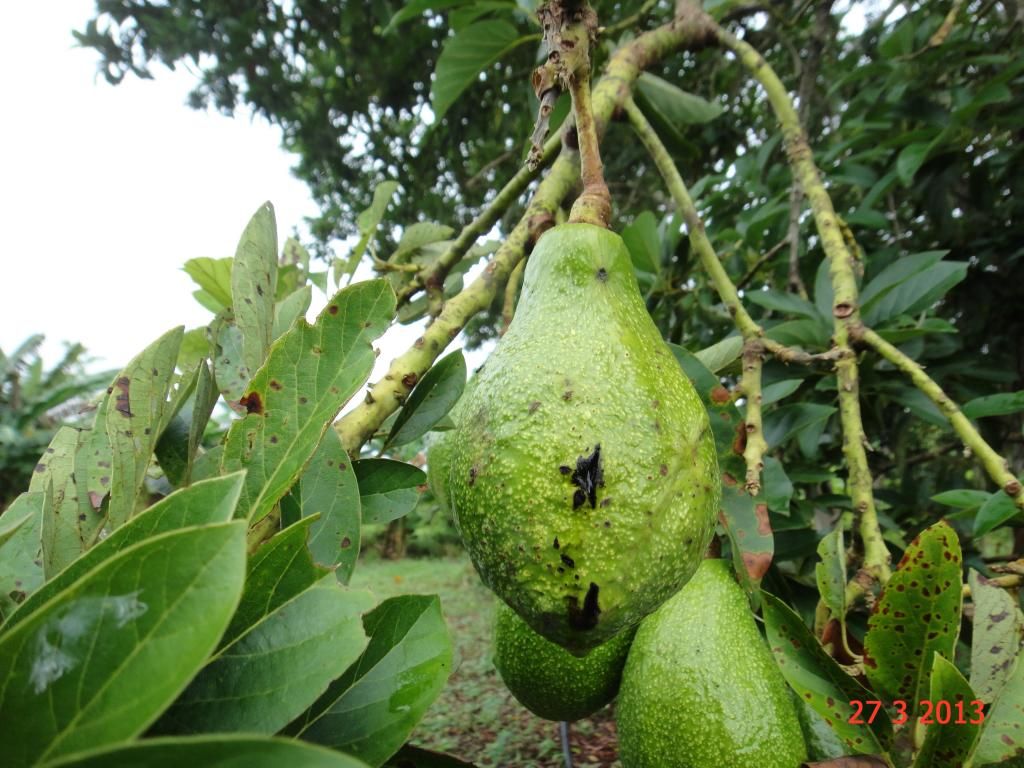
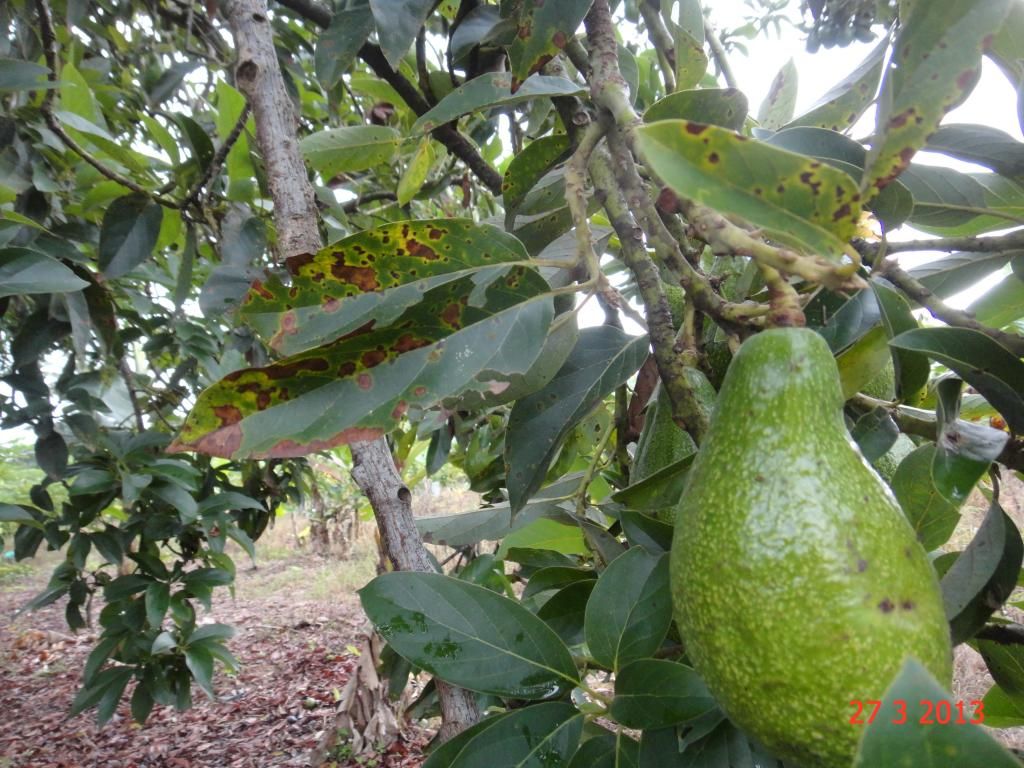
Having problems with Avocado.
    |
|
|
Mar 29 2013, 08:51 AM
|
|
Senior Member
596 posts Joined: Jan 2006
|
A very good Good Friday to all.
poks: Definitely not Berangan. Berangan has a rounded point. This one has squared points. It could be Pisang Nangka, a cooking variety. For this, it should have a more tapered point, which I can't really see that clearly. The other possibility is Pisang Ambon/Embun, also known as the Gros Michel. It is now very rare due to susceptibility to diseases, and does taste somewhat like the Berangan. Incidentally, Gros Michel can grow much taller than 12 feet. This may interest some to know: One of the most popular variety of Gros Michel actually originated from Malaysia. This was the primary eating variety around the world, till Panama Disease wiped out large-scale planting in the early 20th century. The modern Cavendish varieties were then used to replace the Gros Michel. If indeed this is a Gros Michel, then you are one lucky fella, poks. A lot of people are looking for this banana variety: http://dokmaidogma.wordpress.com/2012/03/15/grandpas-banana/ As for ripening of bananas, ripe red apples produce farnescene. The concentration, however, varies greatly. When apples used to be allowed to ripen on the tree (to at least 75% ripeness), they were quite effective in ripening bananas. But nowadays most apples are forced-ripened while still hard and green. My friend did an experiment as part of her food science project, and tried ripening green Cavendish bananas placed into sealed plastic bags using ripe red apples. The banana took nearly 2 weeks to turn yellow. ah_suknat: Have you tried the Microfinancing packages? There are quite a few banks that provide this. BSN is one of them, along with SME Bank, Bank Rakyat, and if not mistaken, Bank Islam. Their maximum loan is for RM50,000 though. For BSN, try asking also about their TemaNiaga package. You may or may not need collateral depending on how you present your business loan (tips: depending on the mood of the bank officer, you could get away by presenting it as a food production enterprise, eg. duck egg production or salted egg production, with the agriculture component as a supportive role). Mr Farmer: Aside from anthracnose leaf blight, your avacado looks mostly ok. Maybe a few fruit fly stings here and there. That scaly brown patch is caused by the fungal infection, leading to what is called a "Hard Black Spot" (yea, cheesy name). Has your area been having high humidity? The ones with the hard scales are those that managed to recover from the infection; but that doesn't make them any easier to market. Consumers typically prefer clean skins. You could try opening up the canopy a little more, allow better air-flow; alternatively, you could use a preventive fungicide like Benomyl or Mancozeb. I would choose canopy forming first; you can talk to Para about this, as he does it for his durian trees. This post has been edited by Michael J.: Mar 29 2013, 09:13 AM |
|
|
Mar 29 2013, 06:59 PM
|
|
Senior Member
1,567 posts Joined: Nov 2005 From: Ppg, Sbh.
|
QUOTE(Michael J. @ Mar 29 2013, 08:51 AM) A very good Good Friday to all. i've been reading a lot about this banana.. hopefully it is gros michel.poks: This may interest some to know: One of the most popular variety of Gros Michel actually originated from Malaysia. This was the primary eating variety around the world, till Panama Disease wiped out large-scale planting in the early 20th century. The modern Cavendish varieties were then used to replace the Gros Michel. If indeed this is a Gros Michel, then you are one lucky fella, poks. A lot of people are looking for this banana variety:  From what others said, the banana fruit sure match of those gros michel but i have not seen one. tommorow i'll be going to hunt another place where they said such banana exist (just beside my kampung) and hopefully will find a better brunch. btw, any other method to ripen cavendish naturally/for small scale production? tq |
|
|
Mar 29 2013, 08:11 PM
|
|
Junior Member
478 posts Joined: Mar 2011 From: Sabah
|
QUOTE(Michael J. @ Mar 29 2013, 08:51 AM) A very good Good Friday to all. Thanks Michael.Mr Farmer: Aside from anthracnose leaf blight, your avacado looks mostly ok. Maybe a few fruit fly stings here and there. That scaly brown patch is caused by the fungal infection, leading to what is called a "Hard Black Spot" (yea, cheesy name). Has your area been having high humidity? The ones with the hard scales are those that managed to recover from the infection; but that doesn't make them any easier to market. Consumers typically prefer clean skins. You could try opening up the canopy a little more, allow better air-flow; alternatively, you could use a preventive fungicide like Benomyl or Mancozeb. I would choose canopy forming first; you can talk to Para about this, as he does it for his durian trees. Had been scratching my head on how to do a spray on such a tall tree, easily 30 ~ 40 feet. Am thinking of getting a knack pack high pressure sprayer or a knack pack blower...wondering if it can reach such height. |
|
|
Mar 30 2013, 09:01 PM
|
|
Junior Member
478 posts Joined: Mar 2011 From: Sabah
|
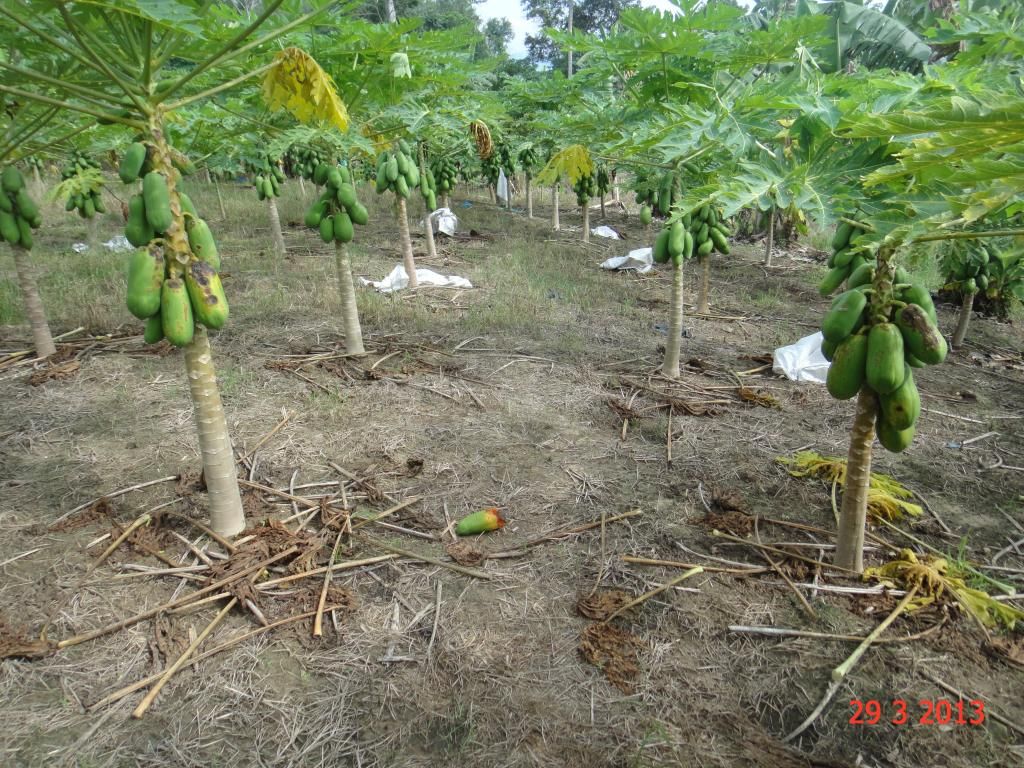
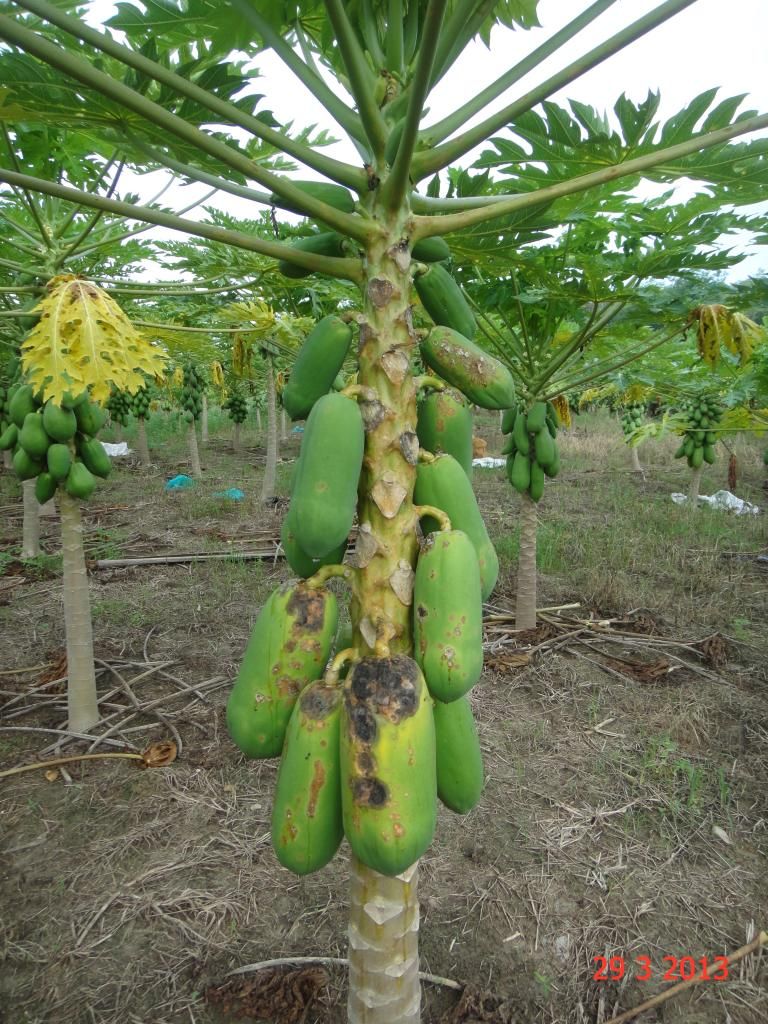
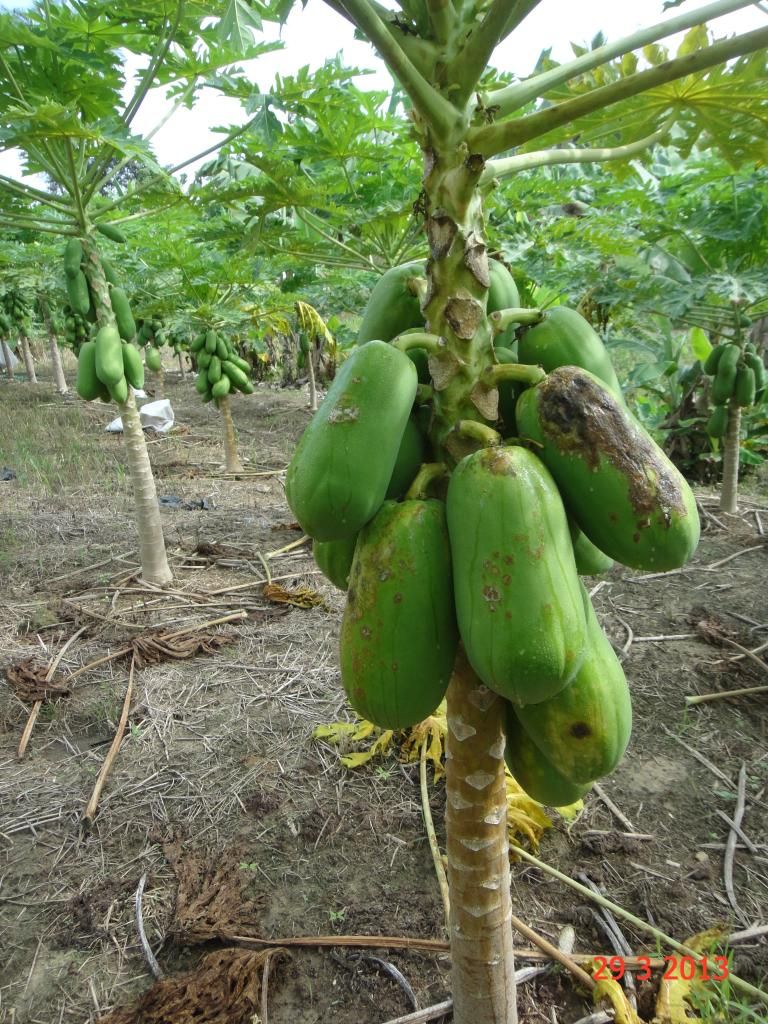
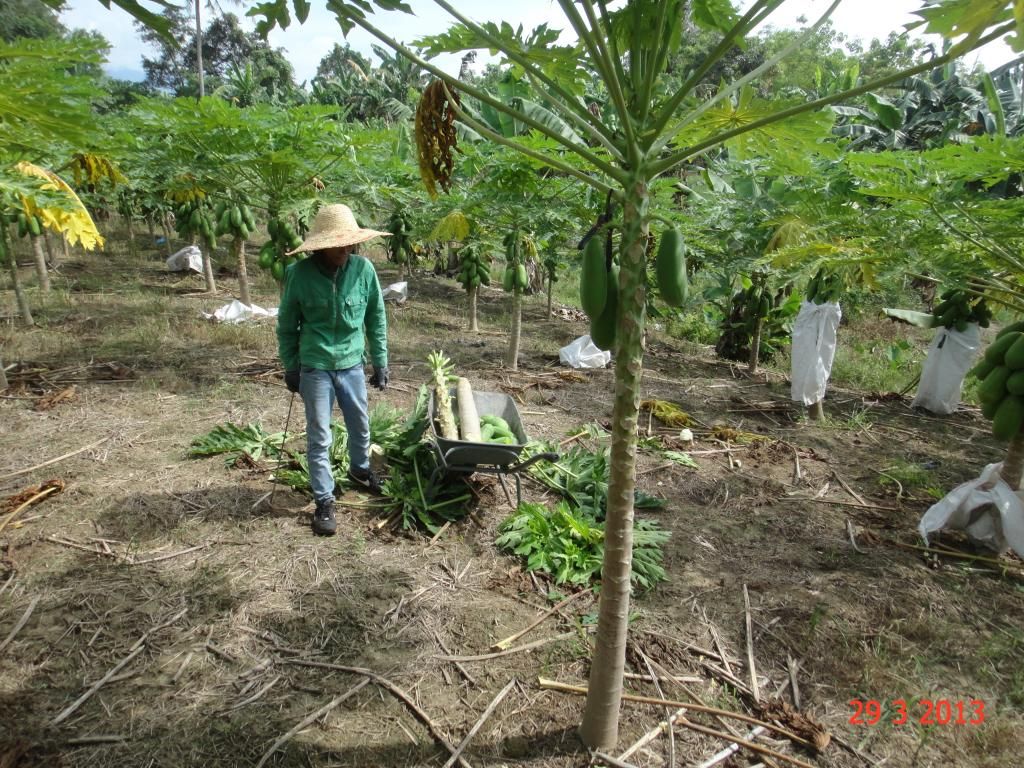
Problem with my Papayas. Noticed that 2 trees had some brownish spots. A few days later, it turned even worst. Had it culled as I don't know what's wrong with them and am afraid it could spread? After cutting off the trunk at the bottom, the trunk looks good. Fungus infection?
    |
|
|
Mar 31 2013, 10:37 AM
|
|
Senior Member
596 posts Joined: Jan 2006
|
poks:
Mmm..... the only natural method I'm aware of is the use of ripened fruits, like apples or oranges. You could also try pineapples. A less natural method is the use of ethylene gas (trade name Ethephon). This gas is very similar in activity to gasses released by ripening fruits. Mr Farmer: Oh my.... I hate to break it to you, but your trees are fine. This is just a case of fruit blight or wet rot. Very common in papaya and other soft fruits like tomatoes, strawberries etc. You could have just removed the damaged fruits, and treat the tree with a blanket spray of preventive fungicide. I would recommend Benomyl. You could use others, depending on your budget, and how immediate and effect you want. A cheaper alternative (but with varied results) is Captan or Thiram. Or use any fungicide that contains copper. Just to note, wet fruit rot in papaya has dozens and more causal agents, largely fungal. The large black concentric rings here indicate anthracnose. They start off as small brownish sunken spots, but quickly progress to the large spots, especially in wet weather. |
|
|
|
|
|
Mar 31 2013, 10:44 AM
|
|
Senior Member
596 posts Joined: Jan 2006
|
But whatever it is, Mr Farmer, you still did what was considered the right thing at the time. Prevention is still better than cure. Anthracnose can spread easily from tree to tree, especially under wet weather, and by water droplets.
But do take to fungicide treatment when the weather permits. And treat the immediate tree neighbouring the infected ones as well. You will want to ensure the the plants 2-3 trees away stay safe. |
|
|
Mar 31 2013, 11:47 AM
|
|
Senior Member
2,348 posts Joined: Dec 2004 From: Ch3r@s
|
Hi MrFarmer,
i would suggest you start pruning down your tree and open up the canopy. the ideal height should be 10-15 feet Max. then you wouldnt have much problem with spraying or bagging or harvesting QUOTE(MrFarmer @ Mar 29 2013, 08:11 PM) Thanks Michael. MrFarmer,Had been scratching my head on how to do a spray on such a tall tree, easily 30 ~ 40 feet. Am thinking of getting a knack pack high pressure sprayer or a knack pack blower...wondering if it can reach such height. from the picture i see that you roots are on the ground. i would also suggest you make a small "mountain" mound like the one i showed you at my farm so when it rains there would not be water logged situation and can prevent root rot. that's my idea for you  QUOTE(MrFarmer @ Mar 30 2013, 09:01 PM) Problem with my Papayas. Noticed that 2 trees had some brownish spots. A few days later, it turned even worst. Had it culled as I don't know what's wrong with them and am afraid it could spread? After cutting off the trunk at the bottom, the trunk looks good. Fungus infection? QUOTE(Michael J. @ Mar 31 2013, 10:37 AM) Mr Farmer: Oh my.... I hate to break it to you, but your trees are fine. This is just a case of fruit blight or wet rot. Very common in papaya and other soft fruits like tomatoes, strawberries etc. You could have just removed the damaged fruits, and treat the tree with a blanket spray of preventive fungicide. I would recommend Benomyl. You could use others, depending on your budget, and how immediate and effect you want. A cheaper alternative (but with varied results) is Captan or Thiram. Or use any fungicide that contains copper. Just to note, wet fruit rot in papaya has dozens and more causal agents, largely fungal. The large black concentric rings here indicate anthracnose. They start off as small brownish sunken spots, but quickly progress to the large spots, especially in wet weather. |
|
|
Mar 31 2013, 03:52 PM
|

Junior Member
6 posts Joined: Apr 2010
|
Hi all,
I have been a lurker on this thread for over a year and found quite an interesting assortment of experiences here. I am making my 1st post here in the hope of getting some pointers as where I can obtain the 'stuff' professional pest control use for termite bait stations. I have identified the most wide-action active ingredient to be hexaflumuron or a less potent one diflubenzuron (aka DIMILIN). I am aware that it's only available to these pest control firms locally ...in theory anyway as I know DIMILIN is used in Koi (fish) disease treatment. I have a 3 acre plot in Selangor purchased for a purpose that was still born. So I now have 40 old durian trees of unknown heritage. Over 2 years hardly a decent harvest (few and uneven ripening) and the last one was VERY FEW in nos and ALL suffered uneven ripening. I have used a rotation of commercial 'organic' and chemical fertilisers. No weed killer was used the last 2 years and only cow grass mechanically trimmed. I am seeking pointers to the local availability of 1)hexaflumuron or 2)diflubenzuron (aka DIMILIN) as almost all has termite tracks up their trunks and I want to avoid any mass soil application or spraying. Hoping to eliminate termite as 1 of many causes for poor fruits in both quality and quantity. Excuse my asking for help on my 1st posting. |
|
|
Mar 31 2013, 04:21 PM
|

Senior Member
2,851 posts Joined: Jun 2006
|
QUOTE(Ramlan @ Mar 31 2013, 03:52 PM) I am seeking pointers to the local availability of 1)hexaflumuron or 2)diflubenzuron (aka DIMILIN) as almost all has termite tracks up their trunks and I want to avoid any mass soil application or spraying. Hoping to eliminate termite as 1 of many causes for poor fruits in both quality and quantity. Excuse my asking for help on my 1st posting. #2 u can call farmcochem they probably have |
|
|
Mar 31 2013, 08:08 PM
|
|
Junior Member
478 posts Joined: Mar 2011 From: Sabah
|
QUOTE(Michael J. @ Mar 31 2013, 10:44 AM) But whatever it is, Mr Farmer, you still did what was considered the right thing at the time. Prevention is still better than cure. Anthracnose can spread easily from tree to tree, especially under wet weather, and by water droplets. But do take to fungicide treatment when the weather permits. And treat the immediate tree neighbouring the infected ones as well. You will want to ensure the the plants 2-3 trees away stay safe.  Yes, my initial thoughts was just to cull the affected fruits, but after looking at the speed of spreading and it's even on the trunk, the panic alarm rang. Hence made the drastic decision. Yes, my initial thoughts was just to cull the affected fruits, but after looking at the speed of spreading and it's even on the trunk, the panic alarm rang. Hence made the drastic decision.Had been using mencozeb & thiram to control Anthranose. I usually only gets it on the fruits. This is the 1st time that I'd seen it on the trunk. Was doing the fungus spread when I notice these 2 trees. Anyway, new plant-lets had been replanted. Yes, the weather was temperamental recently, dry spell for 3 weeks, then sudden pour for a couple of days. |
|
|
Mar 31 2013, 08:20 PM
|
|
Junior Member
478 posts Joined: Mar 2011 From: Sabah
|
QUOTE(ParaOpticaL @ Mar 31 2013, 11:47 AM) Hi MrFarmer, Hi Para, can't prune not as the Avocado are fruiting. Just did the 1st harvest for this year. Shall do it after the fruiting season.i would suggest you start pruning down your tree and open up the canopy. the ideal height should be 10-15 feet Max. then you wouldnt have much problem with spraying or bagging or harvesting MrFarmer, from the picture i see that you roots are on the ground. i would also suggest you make a small "mountain" mound like the one i showed you at my farm so when it rains there would not be water logged situation and can prevent root rot. that's my idea for you Yes, I went to the Agriculture Park, near here. They are pruning the Jackfruits trees to 10 ~ 15 feet, small canopy, still the fruits are big & plenty. Experimenting with our Jackfruit trees. Shall give it a go. The papaya is on a gradient slope, maybe about 10 degrees, slanting to the right where the small creeks runs. Hence I didn't do any 'hill'. Also when papaya had grown, the roots are all over the place and any hoeing shall break the roots. This farm, it's slightly sloped, both ends slopping to the middle, where the small creek runs. Say, out of curiosity, how does a 'hill' perform during dry / extremely dry season? Am thinking of doing this for my banana to prevent toppling. Hey your papaya harvesting already? |
|
|
Mar 31 2013, 09:04 PM
|
|
Junior Member
6 posts Joined: Apr 2010
|
QUOTE(vey99 @ Mar 31 2013, 04:21 PM) #1 is DOW punye tks vey99,#2 u can call farmcochem they probably have I checked #2 on their site, they do carry the stuff. Will call them 2moro if they will sell me some or at least direct me to a local reseller. |
| Change to: |  0.0347sec 0.0347sec
 0.60 0.60
 6 queries 6 queries
 GZIP Disabled GZIP Disabled
Time is now: 15th December 2025 - 10:50 AM |
 Quote
Quote