Welcome Guest ( Log In | Register )

23 Pages « < 5 6 7 8 9 > » Bottom

Outline · [ Standard ] · Linear+

 Venturing into Agriculture & Aquaculture, Co-Ordination & Implementation is KEY

views
     
MrFarmer
post Mar 2 2012, 06:54 PM

Casual
***
Junior Member
478 posts

Joined: Mar 2011
From: Sabah


http://switchup.tv/View.aspx?vid=8038&cid=20
*

[/quote]
Wow good life for that Mr Wong! Unfortunately over here the collection center don't pay cash. Payment once a month. Flat land some more, easy access road, makes me drool. Here, from no access road to ex-timber road. Need a 4x4 Farm tractor and 4x4 dumper to collect harvest. Still, lots of people are planting palm oil.
Was wondering, what's the minimum acreage to have a profitable Palm Oil Plantation (economy of scale that is).
MrFarmer
post Mar 2 2012, 10:22 PM

Casual
***
Junior Member
478 posts

Joined: Mar 2011
From: Sabah


QUOTE(Michael J. @ Mar 2 2012, 07:07 PM)
Mr Farmer:

Depends on what you mean by "profitable". Make RM1 profit also technically considered profitable lei... heheh...

But let's just say you're looking at RM3,000 monthly income generation. Assuming your monthly cost is about RM2,500 (for 1 harvester and 1 collector, plus quarterly weeding and fertilizer application), then you would need at least 3.5 hectares (about 9 acres). This is being conservative lar. If don't need to do much weeding, and can get better price for fertilizer, then maybe need lesser lor. Also, this is based on just 25 tons FFB a year; if your yield get 30 tons or more, that all considered bonus already lor.

But like Mr. Wong said, oil palm is lazyman's crop. Don't really need much care, and will still give acceptable yield.
*
Lol, good for Mr Wong. As he has more than 10 years' planting experience, he can term it as lazy man's crop. For newbie like me, am just starting to learn planting tapioca and sweet potatoes doh.gif

Michael, for the above that is to generate an income of 3K. What if you cost in initial investment like land cost, developmental (land preparation & planting) and transportation (higher over East Malaysia as access road is not as good), then what sort of acreage should we be looking at?

This post has been edited by MrFarmer: Mar 2 2012, 10:23 PM
MrFarmer
post Mar 3 2012, 10:42 PM

Casual
***
Junior Member
478 posts

Joined: Mar 2011
From: Sabah


QUOTE(ytkwong @ Mar 3 2012, 07:18 PM)

So, I'm trying to figure what I should be doing with the land? Please recommend.

Thanks!

Sincerely,
Wilson
*
Welcome to the club ytkwong.

Just thinking out loud, assuming that the land is agriculture land, maybe can convert it to commercial/industrial or residential?
In the mean time, either set up a simple agriculture program with the least capital investment of a JV with a partner to manage the farm/plantation.

My personal opinion is that a land costing 80~100k per acre, does not justify to do agriculture as the ROI is not sufficient to cover it (?). I guess looking into capital gain (Land) is more feasible.

Let's share some ideas?
MrFarmer
post Mar 7 2012, 10:06 PM

Casual
***
Junior Member
478 posts

Joined: Mar 2011
From: Sabah


QUOTE(chinyen @ Mar 7 2012, 04:30 PM)
hi, long time no c...just wondering, apart from slow growth level, y dun ppl here rear turkeys commercially? they're actually healthier than chicken, right?
*
Maybe marketability?
MrFarmer
post Mar 8 2012, 09:13 AM

Casual
***
Junior Member
478 posts

Joined: Mar 2011
From: Sabah


QUOTE(ParaOpticaL @ Mar 7 2012, 10:19 PM)
for thanksgiving and Christmas....if not mistaken
*
Did some comparison on the market some time ago last year (Sabah). Chicken vs Duck. I think Chicken wins in terms of market share. I'm sure (here) the market for Chicken is much bigger. Turkey, it didn't cross my mind at that moment.

chinyen, want to share your information on Turkey?

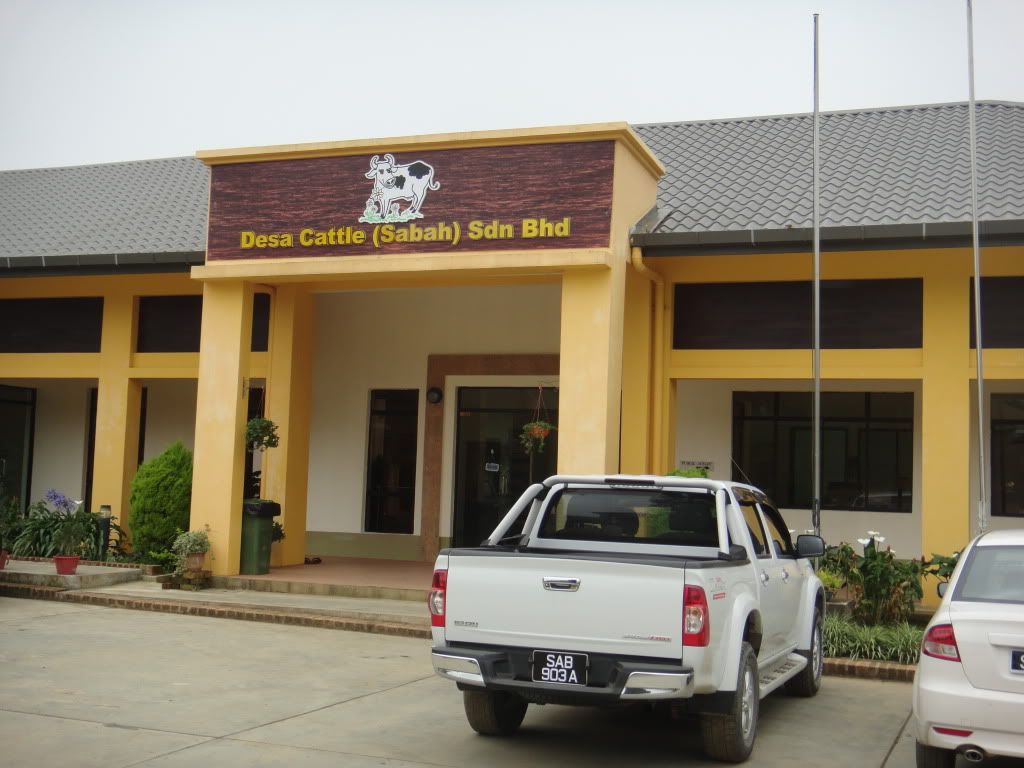
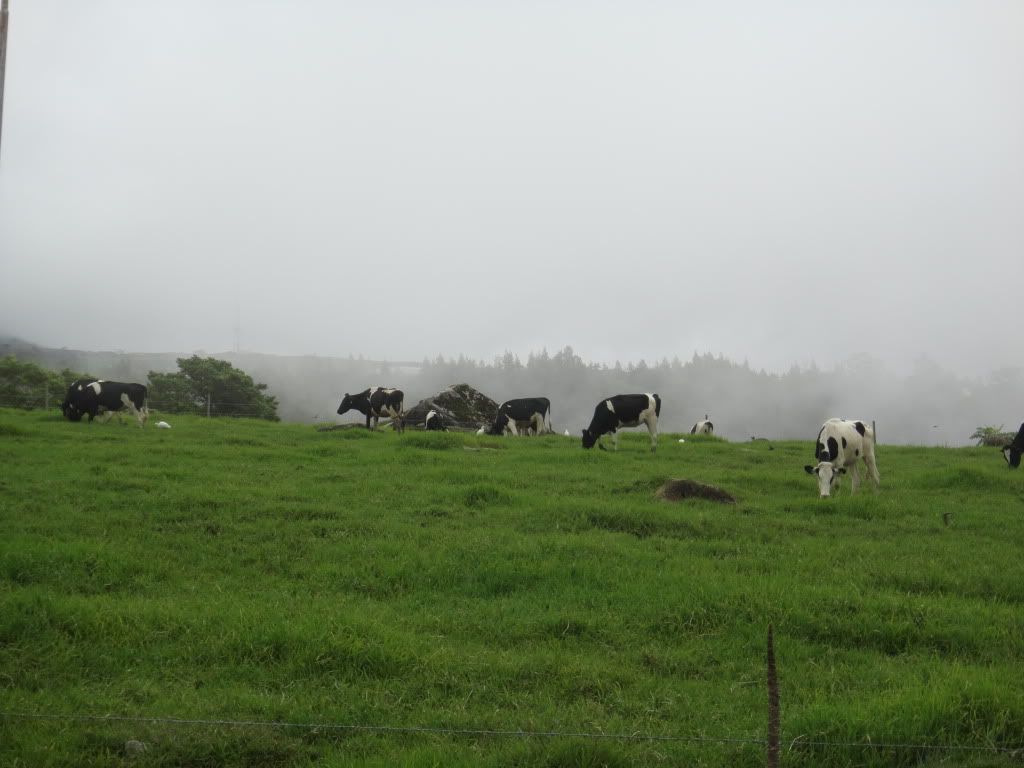
Just visited Desa Cattle Farm.
user posted image
user posted image
MrFarmer
post Mar 9 2012, 10:34 AM

Casual
***
Junior Member
478 posts

Joined: Mar 2011
From: Sabah


QUOTE(Michael J. @ Mar 4 2012, 02:17 AM)
Mr Farmer:

Land cost really depends on where you are located. Some land may be really cheap in Sabah or Sarawak, but the access roads and other logistics will literally kill you. More pricey land often has better access roads. I know Sabah Development Corporation is planning on clearing up massive tracks of land around the Ranau region, apparently they are also building access roads to the area. Maybe you could check with them on the Ranau area, or anywhere else they are currently targeting?

Exclusing land cost, according to some of the larger plantations in Sabah and Sarawak, their cost of development is something like RM18,000 + RM10,000 + RM10,000 for the first three years of land preparation and development, including planting cost, creating access roads etc. I can't name those companies, but they are really big, listed companies.

And as far as I can tell you, since Sabah and Sarawak don't have unions for plantations like we do here (I believe there are some push for this though), companies there are not "forced" to pay the wages in accordance to the MAPA-NUPW agreements. However, I believe the government-instilled minimum wage policy will also include plantation companies in Sabah and Sarawak. And on top of that, transportation costs is a lot more higher, and mills are far between, so I would say your minimum acreage should be at least double that in Peninsular. According to the same companies above, it normally takes them to begin earning clean profits after the 12th year of planting, compared to the 8 years in Peninsular (do bear in mind, this includes the cost of buying over the land).
Hi MJ, going back to my farm (back to the hills) this afternoon, sent off my guests last night.

I am only familiar on the western side of Sabah (inclusive of Ranau). I "heard" there are development in most major area towards agriculture in Sabah. The figures quoted above is acres/hectors? I remember reading from Lembaga Getah (Sabah) that their developmental cost is about $14,800 / hect. Land clearing, access road (within the land), and planting for rubber trees.
I guess we could do it at a much lower cost on a small holder basis (where the owner/partner is involve to minimize cost).

Sooner or later, the union thing / minimum wages shall take effect in Sabah too. At least I think it's easier to source for foreign labor here than in Penisular. Just applied for 5 person on my own, am still waiting for the final approval on 15th March. Applying the permit on our own saves a lot of $. Levi for plantation workers is only $510 per head.

Transport cost is definitely higher here, but over the western coast, the mills are quite close and lots of collection centers. The Only problem is they collect on credit, payment once a month. Most of the lands that I had seen, already have ex-timber trials, hence not too bad. Just need to maintain it. Just need to worry about the roads within your land.
I had been estimating that a minimum acreage of 70 acres (in 1 location) to be feasible commercially.
Shall try to find out more on Rubber Vs Palm Oil, maybe there is an opportunity in knocking.

MrFarmer
post Mar 10 2012, 07:01 PM

Casual
***
Junior Member
478 posts

Joined: Mar 2011
From: Sabah


QUOTE(Michael J. @ Mar 9 2012, 03:01 PM)
Mr Farmer:

The figure is on per hectare basis. Thanks for pointing that out. It is too ingrained in me that I often forget others are not aware which unit I am using... Haa...

Is the RM14,800 total costs or yearly cost? Is definitely plausible that rubber development costs less that oil palm, as the seedling cost of oil palm alone is pretty darn high. But also keep in mind that oil palm does not require intensive labor, processing, or costly maintenance. Get it right from the start, and just maintain standards along the way is enough. In addition, the land that was being developed was moderate peat soil, so a lot more extra money needed to prepare the land.

I'm not too familiar with rubber pricing for smallholders, but I believe latex is now about RM7-RM8 per kg farmgate? So 1 hectare with about 2 tons of yield per year should bring in about RM16,000 or so, whereas for oil palm, 25 tons at RM640 per ton FFB will also give RM16,000.

The difference, however, is in the biology and harvesting of the crop. Rubber takes almost 4-6 years before first harvest, and harvesting requires almost daily tapping before sunrise. Although it does mean work is normally done before lunchtime, and the farmer can do other things later in the day, it is still requires daily work. For oil palm, first significant harvest is usually after 2-3 years of cultivation, and harvesting is only done about twice a month with each round of harvest likely taking not more than 3 days of work.

Sure, I believe we should try to find out more about this, but maybe give more focus on rubber. I believe there are already too many threads on oil palm.

ps: I think I should clarify some things about rubber tapping - the frequency of tapping is actually dependent on three things:- (a) Type of clone and normal internal pressure of rubber trees (b) Application (or not) of ethylene (c ) Type of cut (tapping system).

There are a few types of clones which allows for almost daily rubber tappings, but I don't believe they are available here in Malaysia. Furthermore, those clones tend to be selected to adapt to higher rainfall and ground water retention, i.e. the quality of latex is more watery compared to RRIM clones which have thicker and higher quality latex. For most RRIM clones, tapping is done about 2-3 times a week.

The tapping duration is also dependent on the skill of the tapper. Very experienced tappers can complete tapping a tree in about 20 seconds, so in about 3 hours, 500 trees (a standard hectare) can be cleared. In Malaysia, some of our clones can be planted at about 700 trees per hectare, but even then, tapping is normally completed before 9am, plus 2-4 hours for the latex to run, with collection and delivery of latex normally finished before lunchtime. Cup lumps and tree lace are collected either in the evenings, or the next day.

Talking about opportunities in rubber, do you guys know that rubber is listed as one of the NKEAs under agriculture? Just a short news article for your reading pleasure:

http://www.theborneopost.com/2012/02/26/hi...er-to-the-fore/

http://thestar.com.my/metro/story.asp?sec=...arawak/10051787
*
Thanks for the links MJ.
14.8K is the total (average) cost.
Base on the data that I've collected, my estimate for Palm Oil & Rubber should be about the same (depending on market fluctuation).
Was thinking that due to local condition, high transportation cost, Rubber may have an edge over Palm oil due to lower weight & easier logistic. Also Rubber get paid cash here, but Palm Oil is on credit, monthly account.
Saplings are cheaper for Rubber, range from $3.50 to $5.50
End of the day, I guess it's the experience that counts, whether the planter is more comfortable with Rubber or Palm Oil.
MrFarmer
post Mar 12 2012, 07:03 PM

Casual
***
Junior Member
478 posts

Joined: Mar 2011
From: Sabah


QUOTE(Michael J. @ Mar 11 2012, 03:28 PM)


Added on March 12, 2012, 11:23 amfyi: http://truesunray.com/gallery1.html

In case anyone trying to get rubber seedlings.
*
Thanks MJ, for the link. Didn't know that there a nursery there @ Bongawan. Am looking at the RRIM3001 which they claim they have.
Am also thinking of starting a small nursery, but don't have any grafting experience. Wonder if it's difficult. Had "thrown" about 40 rubber seeds on to ground last week. Waiting for it to germinate, then transfer to poly bag. Shall use these to try our hands on budding.

If it works, then shall get some certified clones and use it to harvest bud stick. Start a nursery, then plant some rubber trees.
MrFarmer
post Mar 13 2012, 07:48 PM

Casual
***
Junior Member
478 posts

Joined: Mar 2011
From: Sabah


QUOTE(Michael J. @ Mar 13 2012, 08:25 AM)
Mr Farmer:

That's a good way to begin. I'm doing something similar now, but it is more for fun and self education. The seeds I'm using are from feral populations in Penang, the remnants of the very early rubber clones. High variability within the grove, which is very good news for "plant breeders". Heheh.

Grafting isn't difficult, actually. Once you get the hang of things, it's a breeze. It is the maintaining part that is more challenging.
Speaking of variability, I would like to share a little bit on an experiment I did using domesticated guppies. The aim of the experiment was to develop an alternative breeding method with the same advantages to the commonly used line breeding technique, but without the drawbacks. FYI, line breeding is a very powerful breeding method that is very selective, resulting in the creation of many unique lines of animals, plants etc. The selectively bred lines have the advantage of being very stable (i.e. it doesn't change form easily), and when used to create hybrids, produces very strong hybrids with great vigour. However, the main drawbacks are that such lines carry with them many genetic diseases, are usually less prolific (low reproductive ability), and take up a lot of space during the selection process.


*
I'm getting seeds from unknown source (simply picked). I always though the the characteristic of the clone is base on the tree where we harvest the bud. How important a role is the seed? I see even LGM and independent nursery is doing the same (seeds from unknown source). Any advantages or disadvantages on using seeds from grafted trees of old seed planted trees?

Maintenance again I though it's suppose to be simple, watering daily and apply fertilizer. Can elaborate the maintaining part? Getting worried now.

Sorry, your experiment on hybrid breeding of guppy is too complicated for a newbie like me rclxub.gif Shall check back with you when I reached a higher level.

Speaking of Hybrid. Planted some F1 hybrid Ash gourd. Grew very vigorously with good harvest. Left 3 big gourd and waited for these to ripe and tried to use it for the next season. Planted these seeds a week ago, none germinated. Any reasons? Is it possible for the supplier to make the hybrid seeds infertile? Shall try again with the last fruit.


Added on March 13, 2012, 7:54 pm
QUOTE(Michael J. @ Mar 13 2012, 05:28 PM)
Kg Teratai:

Nope. The biology of oil palm is a little different from short term annual crops. The nutrients are first stored in the trunk, before being released to other parts of the palm. That's why in the past, when fertilizer costs was very high, some planters thought it was "smart" to disregard the advice of agronomists, and drop fertilizer input altogether. Their reasoning: "The soil sure got some nutrients one mar... And oil palm yield still no difference after 6 months, means right decision lor". That is, until the yield of their palms drop drastically (almost 50%) the same time next year.

It is always preferable to reduce fertilizer input rather than completely cut it out.
*
Had an experience with sweet corn (hybrid 45 days), the process is very slow that even when I try to correct the deficiency, it did not work during the life span of the crops.

Say I notice that some Palm Oil planters here are converting to spraying liquid fertilizer, both on the trees and ground. Am looking at the advantage & disadvantage.


Added on March 13, 2012, 7:58 pm
QUOTE(Kg Teratai @ Mar 13 2012, 12:06 PM)

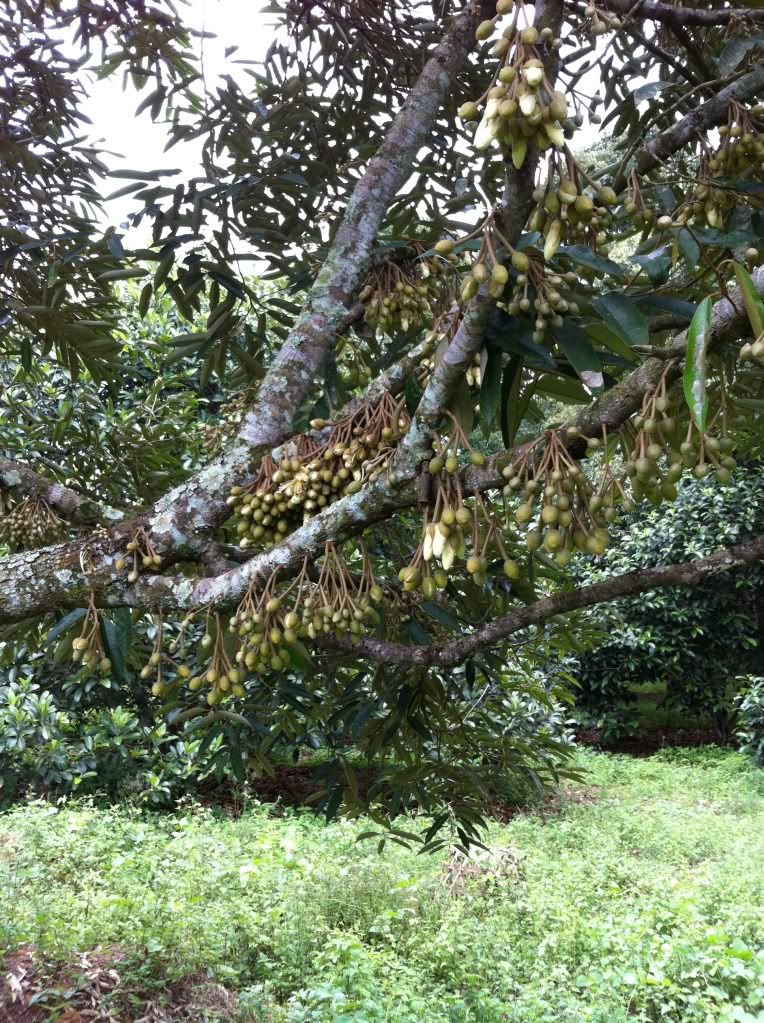
In the durian farm.

The durian session will start June or July.  biggrin.gif

user posted image
*
Say, any method of minimizing flower drops? Wishing to have a durian plantation......

This post has been edited by MrFarmer: Mar 13 2012, 07:58 PM
MrFarmer
post Mar 14 2012, 08:37 PM

Casual
***
Junior Member
478 posts

Joined: Mar 2011
From: Sabah


QUOTE(Michael J. @ Mar 14 2012, 11:05 AM)
MrFarmer:
I'll leave the durian question to the right person to answer. From an agronomic point of view, you really don't want too many flowers/fruits on a tree. Having "just enough" is better than over production and stressing the tree, which could kill it in the long run. Also, although more flowers does equal more fruits, but more fruits equal smaller sized fruits, and smaller sized fruits equal lower grade, which in turn means less income per unit.
*
Spoke with a friend doing "Red Prawn". He limits it to 25~30 fruits per tree. He says he get big fruits.
Me, experimenting with Banana, limiting it to 7~8 combs. Good fruit size. Just had a Berangan, but we were late in wrapping it. Black dots had appeared.
MrFarmer
post Mar 15 2012, 06:20 PM

Casual
***
Junior Member
478 posts

Joined: Mar 2011
From: Sabah


QUOTE(Michael J. @ Mar 15 2012, 09:33 AM)
Para:

some newer varieties which can bear up to 12 combs of minimum grade B.
*
Would sure like to lay my hands on these !


Added on March 15, 2012, 6:26 pm
QUOTE(Kg Teratai @ Mar 15 2012, 03:34 PM)
Hi Michael J,

Hi Mr Farmer,

As I know, there is no way to prevent minimizing the flower drops from downfall. If any forumer know the tactics, please share.

I never have a chance to taste the real "Red Prawn" from Penang. Is your friend's farm in Penang? Really wanna try the Red Prawn and Black Thorn from Penang. If the tree only carry 25-30 fruits, then the fruit should be big. It is also depends the tree's age. Most of the planters I know in Johor and Pahang will keep as maximum number of durian fruit as possible if the tree can carry. Only very few planters will cut the fruit off the tree in order to make sure the fruit grow bigger.
*
Friend farm is in Sabah, about 100 Km from mine. Was told that they initially ship the Red Prawn from Peninsular, bit by bit via courier (long story). Anyway, his farm is along the trunk road linking Sabah with Brunei & Sarawak. He get very good price selling his produce himself (retail) along the road side. The taste is beyond words.

This post has been edited by MrFarmer: Mar 15 2012, 06:26 PM
MrFarmer
post Mar 17 2012, 11:09 AM

Casual
***
Junior Member
478 posts

Joined: Mar 2011
From: Sabah


QUOTE(ParaOpticaL @ Mar 16 2012, 06:50 PM)
just now got a call from the N.Sembilan Dept of Agriculture telling me i was selected for the course titled

Amalan Pertanian Bersepadu(IPM)

excited to attend it next tuesday & wednesday
*
Congratulation.
Please share course material / experience after attending. Am sure we can benefit too.

Just came back from the clinic again, on 2nd day MC. Doc says too much stress. Stay away from your farm he says.

Taking a short break next week.
MrFarmer
post Mar 26 2012, 04:42 PM

Casual
***
Junior Member
478 posts

Joined: Mar 2011
From: Sabah


Hi Guys, found this interesting Fertigation for Oil Palm while doing some search on irrigation / fertigation. Just to share with you.

http://www.autopot.com.au/content/document...%20-%20pfda.pdf

I am thinking of a low cost (running/set up) irrigation (that can be upgraded to fertigation) for use in my farm (no electricity).
My project, I'm thinking of building a rig to raise up a water tank (say 8 ~ 10 feet from ground level), to create a gravity drop to run the fertigation / irrigation line. But then again, I still need energy / power to raise the water to the tank.

Alternatively, I can use a small solar panel to run a small (fish tank) pump to pressurize the fertigation line. I saw this set up at Sin Seng Huat running about 500 macro drippers by just using a small fish tank pump). The solar panel could be costly and the might be a risk of being stolen from the farm.

Any suggestion? Would like to do a trial on small scale.
MrFarmer
post Mar 27 2012, 07:28 PM

Casual
***
Junior Member
478 posts

Joined: Mar 2011
From: Sabah


QUOTE(Michael J. @ Mar 27 2012, 02:23 PM)
Para:

The Archimedes Screw is also not something difficult to build. And it can be built in a way that it is attached to either a 2T or 4T motorcycle engine, or a waterwhee powered by a flowing riverl.

But most people would prefer using a pump instead, since it is usually faster and less bulky.
*
Thanks for the suggestions guys.
I had did some research on the screw pumps before. The screw pump is good for large displacement of water, the problem is the it does not provide good "pump head" (raising the water to a height, creating pressure). Hence good for irrigating flat / undulating land.

I already have a pump in my farm, small 5 hp petrol driven pump. I find it quite expensive to run it for a long period. Had also experimented with sprinkle system, but these need to run on a long period and need labor intervention. Short of hands at the moment. When we were planting greens vegetables, we run the pump 1 1/2 hours in the morning and 1 1/2 hours in the evening daily (except when it rained). Had stopped planting green vegetables at the moment.

Am moving on to fruit trees. Hence am thinking about dripping system and how to make it low cost, mobile, less labor intensive. Am testing this system to help in transplanting of saplings. The first 2 weeks after transplanting is critical for many plants. My first experiment is on 6 papaya saplings. 3 was just transplant without any aid. 3 was transplanted with a shade of banana leaves. The banana leaves dried off after 3 days and were affecting the saplings. I took 3 soft drink bottles, punch a very small hole at the bottom and created a very simple drip system. I fill up the bottle every alternative day for a week. Now the papaya plant is growing on its own.

The 3 sapling without aids, dried off after the fifth day.

Am going back to my farm tomorrow and armed with about 200 seeds of Mas Solo papaya. Has to have this is place before transplanting. My search on the net, we can actually hang a drip bag ( a big version that they use in the hospital) to create a drip. Have a rough sketch in my mind, maybe use those 5 kg cooking oil bottle or whatever big bottle to create a drip. from my earlier experiment and search on the net, am quite sure this shall work. Now my problem is that to fill up say 150 bottles on alternative days is quite labor intensive.

And to create a permanent dripping system, is quite expensive (interior), no experience and am not ready (me). Alternatively I could assign a hand to water these saplings daily by running the pump.

If I could successfully develop this, I can use it during the first 2 weeks of transplanting and adapt it to feed liquid fertilizer. What do you guys think? rclxub.gif
MrFarmer
post Mar 28 2012, 09:30 PM

Casual
***
Junior Member
478 posts

Joined: Mar 2011
From: Sabah


QUOTE(elmer @ Mar 28 2012, 11:02 AM)
My partner and I are looking into venturing into the aquaculture industry. We have identified an 8 acre land that is currently farming red tilapia. We are planning to acquire the farm and take over the existing business. There are currently 8 ponds. 6 big pond which the owner says can rear anything from 20000 - 40000 tilapia and another 2 ponds that we can use to rear fingerlings.

I need to know how profitable this business is and whether its a good venture to get into. Both me and my partner will be managing the farm full time. The running cost of the farm currently is about RM 60k/ mth and 90% of that cost comes from feed (about 1000 bags/ mth). We are hoping to harvest at least 15 tons of fish each month.

My questions are:
1. Is tilapia prices stable? We have an agreement from the feed supplier that if we take the feed from them, they will buy our fish but I'm not too sure if the price is stable.
2. What are the risk when venturing into this business?
3. Is demand for tilapia now more than supply?

I would greatly appreciate any feedbacks from forummers here. Would also be interested to visit existing Tilapia farms out there.

Thanks in advance
*
Hi Elmer,
Looking at your questions, I am wondering if you have any hands-on experience in running a fish farm (or such a big scale). Not trying to "pour cold water", but do consider an exit plan just in case things don't goes according to your plan. It's very easy to "buy into" a venture, but very difficult to exit, especially if it is not doing well.

Am sure you would have work out your budgeting and funding for your project, since you mentioned 60K/ mth = 720K/year. Your rolling capital, mean time to harvest, etc.

Also it might be interesting to verify the reasons for the sale of the farm.
Standard reasons are most probably getting old, retiring, sickness, no children wants to take over, migrating...blah, blah....

Personally, I do not have any experience in agriculture/aquaculture.
Was in Ipoh a few months back, there is this guy that deliver Red Tilapia to Ipoh. Story is that their boss got a permit to rear these fishes at a dam in upper Perak and under their "agreement" certain % is for export and certain % needs to to sold off locally. He is doing the local sales, frozen Tilapia both wholesale & retail.
Good luck. Would sure like to visit your new farm.


Added on March 28, 2012, 9:54 pm
QUOTE(Michael J. @ Mar 28 2012, 10:29 AM)
Mr Farmer:

You are right to say there's a limit to how high a traditional Archimedes screw can lift water. But with a little more imagination, you can still use Archimedes screws to lift water to very high levels (8-10 feet) into a central storage tank and create the necessary pressure for gravity feeding. Or am I the only one considering a tiered system of Archimedes screws for lifting water....? Mmm.... As I know it, a modern variant of the Archimedes screw, aka screw conveyors are commonly used in grain processing factories to lift grains like wheat and corn kernels up to silos about 10-15 feet high at least.

If you have a flowing river nearby, even better, can use the kinetic energy of the flowing river to power the whole thing, using an undershot water wheel. No need bicycle or motorcycle engine.

http://en.wikipedia.org/wiki/Water_wheel
http://en.wikipedia.org/wiki/Poncelet_wheel

In addition, the use of a Venturi pipe would help maintain stable pressure on the outflowing water from the water tank.

Actually, come to think of it, if you have a river with strong enough current, you could just build a water turbine. Not sure if you guys remember primary school science project involving construction of a dynamo, but the principle is pretty much the same. Generate your own electricity.

http://www.enotes.com/topic/Water_turbine

Just think of water turbines as an inverted wind turbine powered by water flow instead of wind.
Your idea is good, and in fact quite widely used also. As you've pointed out quite correctly, it is a chore to refill all those bottles every alternate day. I have a crazy idea, which involves the use of rain collection troughs, lots of stilts, and lots of floatation plugs. If you know how fuel gauges work in cars, then you might get what I'm thinking about. The main shortfall of this is that the troughs are only of certain lengths and strengths, so each plot has to be of a certain size only, and multiple water tanks are needed.
*
Thanks for your suggestion MJ, unfortunately there is only a small creek at my farm, where I had widen it to a pool at a certain section. There is practically no water current and water level is below the land about 10 to 15 feet (depending on the season).
Wind turbine/ Solar panel is not an option as it's quite costly, need continuous wind current, theft & etc.

I think I may be able to grasp your idea. But then rain collection troughs interfere/compete with sunlight. Hope to have this system working especially during drought season. And mobility.

So far, I am thinking of using a standard 25 liter tank (from discarded herbicide) attach a 4 mm tube to a micro drip. As I had not find out about the flow rate /pressure of the micro drips, rough guess a 25 liter could last for 4 ~ 6 days before refilling. Could use a wheelbarrow or a truck to drive to the pool, refill , then distribute the tanks. Or run the pump, use hose to fill up all tanks. What do you think?

This post has been edited by MrFarmer: Mar 28 2012, 09:54 PM

MrFarmer
post Mar 29 2012, 09:22 PM

Casual
***
Junior Member
478 posts

Joined: Mar 2011
From: Sabah


[quote=Michael J.,Mar 29 2012, 09:01 AM]MrFarmer:

Whoa! That is really low water level. I thought I recalled that flooding used to be an issue. Maybe I've confused you with someone else.

As I said, your idea is good, just laborious. Why not just test it and see? Never try, never know, and it will always just remain an idea on paper. But please do clean the herbicide barrels thoroughly, including soaking with soapy water for a few days. Herbicide residue can still be dangerous for crops.
*

[/quote]
Thanks for the reminder on the cleaning of the herbicide barrel.
My farm do not have flood problem, 1) just a small patch of land where the water can not drain off. Had solved this by digging a drainage trough. 2) Side of the creek floods during the rainy season, and subside when no rain. Had not sort this as there are still lots of overgrown and short of labor at the moment.
Yes, am definitely testing this out.


Added on March 29, 2012, 9:43 pm

Added on March 29, 2012, 5:33 pmHi Mr. Farmer,

My partner and I definitely do not have hands-on experience in running a fish farm. I'm from the IT background and he is from manufacturing. We both have keen interest in aquaculture but our experience goes as far as rearing ornamental fish. I do not know how else to get hands-on experience in a fish farm unless I go and work in one which I doubt will happen. We plan to attend a few trainings and basically get our hands dirty immediately.

I have closed friends who have experience in aquaculture so they would be able to help out. Moreover, the farm is already being operated by 3 Indons and they basically do everything from changing water to harvesting the fish. The owner of the farm has also agreed to guide us for a couple of weeks to get ourselves familiar in managing the fund.

We have done cashflow projections for 3 years so basically we will know how long our capital can last.

We definitely won't know the real reason the owner is selling the farm but he claims he is retiring.... so can't really say much about that.
*

[/quote]
Hi Elmer, sorry, I'm just playing the antagonistic role, but I really meant well and wish you to have success on your first try.

Any possibility of roping in the most experience friend as a junior partner? This may greatly reduce your risk on the production side.

As for the 3 Indons, do check when is their permit expiring and how long have they been in Malaysia. Their work permit can only be renewed up to 3 years, after that, they shall need to leave the country. Please be prepared as most probably 3 of them falls on the same date.

I went into agriculture on a rclxub.gif way, and hope others shall be more prepared. I got my hand dirtied gradually for the past 20 months, but the last 7 months was very intensive as my partner left. Just hurt my back 2 weeks back, now was referred to an Orthopedic and today got a cut while sharpening my parang doh.gif Not that I'm regretting it, but I feel that you shall fare much better if you are more prepared.


Added on March 29, 2012, 9:48 pm[quote=jwai85,Mar 29 2012, 03:25 PM]
Hi guys... i was randomly reading about hydroponics, then aeroponics, then it brought me to fertigation, that led me to Cili Fertigasi and then it led me here after a stop by the autopot site...lolz...

was planning on starting small with a mini fertigation "farm" behind my house to just try it out before things get serious. any opinion on this business you can share?
*

[/quote]
Hi Jwai85, welcome.
You may want to visit Sin Seng Huat Seeds, http://www.greeneagle.com.my/main.htm
They sell seeds and supplies for fertigation. They have set up their fertigation at their office and looks quite easy enough. They can even show you how to do it. Was there last week, didn't bring my camera.

This post has been edited by MrFarmer: Mar 29 2012, 09:48 PM
MrFarmer
post Apr 9 2012, 09:02 PM

Casual
***
Junior Member
478 posts

Joined: Mar 2011
From: Sabah


Bought some Bentong Ginger last year, took these to my farm (Sabah) and planted these. Harvested and used as seedlings. Managed to plant about 6 raised beds.

Question: Can I still claim these as Bentong Ginger when I market these? As I understand Bentong Ginger is a variety. blush.gif
MrFarmer
post Apr 15 2012, 07:48 PM

Casual
***
Junior Member
478 posts

Joined: Mar 2011
From: Sabah


Looking for Vitato Sweet Potato cutting/tuber. Want to test out planting these. Anyone can help?

http://www.mardi.my/c/document_library/get...2&groupId=10138

Something interesting to share
Enhancing Food Processing by Normah Binti Omar, Food Technology Research Center, MARDI
http://www.fama.gov.my/html/themes/fama/do...NORMAH_OMAR.pdf
MrFarmer
post Apr 22 2012, 06:56 PM

Casual
***
Junior Member
478 posts

Joined: Mar 2011
From: Sabah


QUOTE(ParaOpticaL @ Apr 22 2012, 03:53 PM)
Some photos of my Banana Plants


need to start chopping off the suckers...
*
Berangan? Tissue cultured? How long since you planted it?
Wish I'm close to your farm, and can collect the suckers from you biggrin.gif
Noticed that there is a poly pipe running across. These banana on dripping irrigation?

Received your PM, shall check it out.

user posted image

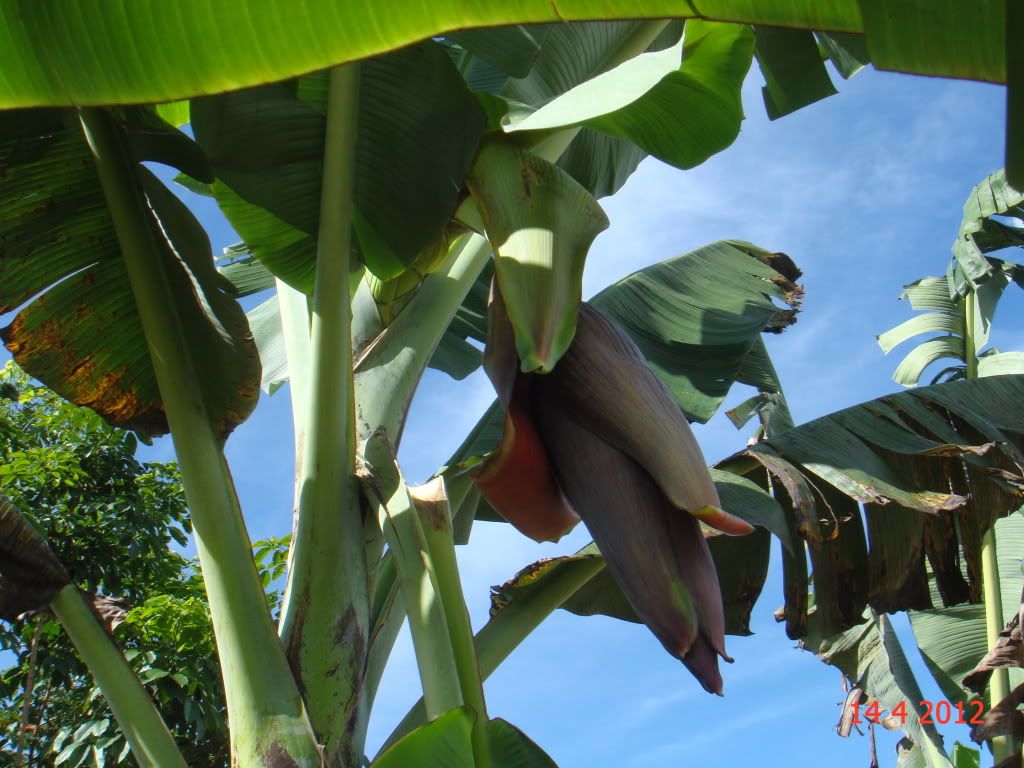
Have this Banana on my farm, not sure what type it is, the petals of the flower is very huge, don't think it's Berangan as normally it's not that big. Could it be Cavendish? or we have a gigantic Banana here.

This post has been edited by MrFarmer: Apr 22 2012, 06:58 PM
MrFarmer
post Apr 23 2012, 07:18 PM

Casual
***
Junior Member
478 posts

Joined: Mar 2011
From: Sabah


QUOTE(jason1986 @ Apr 22 2012, 07:54 PM)
Hi guys, if not mistaken some of the active members here are from sabah right?

Would be much obliged if those in sabah could give me a rough idea of the price of land in sabah in particular those in Kg Kelawat. I'm assuming it is Kg Kelawat as he tells me it is stated as mukim kelawat in the title.

My friend got a piece of land in Kg Kelawat (district of tuaran, mukim kelawat), for sale. Would like to know in general how much is the price of land in that area? He is asking for RM20,000.00 per acre which according to him is a very good price.

A search on mudah shows that most land near tamparuli is asking for RM30,000.00 per acre.

It is accessible by car and is near to tamparuli town (15 mins). It is a CL title for 99 years starting from 1963, non bumi. He says it is a bit hilly and is suitable for rubber plantation and totaling 21.45 acres.

Any of you have any idea as to the price? Would hiring a valuer to value the land before i buy be a good idea? And roughly how much will it cost?

Any input is much appreciated and is preceded with a million thanks.
*
Hi Jason, I operate a small farm in Sabah. Sorry, am not familiar with that area at the present.

Acquiring land, (my personal opinion) is an art (like courting biggrin.gif ). Would suggest you do a preliminary visit first. Check out the land and surrounding area. Talk with the locals. Get as much information as possible. Spend some time there.

If you have a "feel" then only go for an in-depth assessment.

Jason, you a Sabahan? In Sabah? Maybe we can meet up 1 day to Yam Chai (drinks). I have very keen interest in Rubbers Trees too.

23 Pages « < 5 6 7 8 9 > » Top
 

Change to:
| Lo-Fi Version
0.0559sec    1.20    7 queries    GZIP Disabled
Time is now: 17th December 2025 - 11:11 AM