

was searching for MAHA 2012, date and venue as I need to plan my schedule. No luck till now. Anyone knows? It's one of those must visit exhibition in Agriculture.

Venturing into Agriculture & Aquaculture, Co-Ordination & Implementation is KEY
|
|
 Jun 17 2012, 12:44 PM Jun 17 2012, 12:44 PM
Return to original view | Post
#161
|
 
Junior Member
478 posts Joined: Mar 2011 From: Sabah  
|
Hi People,
was searching for MAHA 2012, date and venue as I need to plan my schedule. No luck till now. Anyone knows? It's one of those must visit exhibition in Agriculture. |
|
|
|
|
|
Jun 17 2012, 04:06 PM
Return to original view | Post
#162
|
|
Junior Member
478 posts Joined: Mar 2011 From: Sabah
|
Am looking for the one that that was held at Serdang, 2010, was suppose to be held once in 2 years and the biggest in SEA https://www.facebook.com/MahaExpo2010 |
|
|
Jun 19 2012, 07:55 PM
Return to original view | Post
#163
|
|
Junior Member
478 posts Joined: Mar 2011 From: Sabah
|
Hi People,
Am looking for quality Papaya Seeds, such as Eksotica 1, 2 or 3. Any ideas where to get these from? Musang King (Mau San Wong). Thinking of germinating these from the seeds, but the seed of these clone looks pretty small, wondering if these can germinate.  Got about 30 of these, after finishing our durian feast. Got about 30 of these, after finishing our durian feast.Added on June 19, 2012, 8:08 pm QUOTE(kabyss87 @ Jun 19 2012, 04:05 PM) Yeap... As far as i observe, shroom wasnt really a popular popular food in mly.. Mainly for export only.. So i was wondering do i need to back it up by growing crops like chilli or etc etc to get the cash coming in first for current sustainability? Banana, corns, Long beans, Okra, pumpkins, tapioca, sweet potatoes, papaya, green veges (Kangkong, Bayam etc). These are pretty quick, easy and marketable.What would you guys do/plant as your first venture to agri?   Bitter gourd, brinjals & Chilli, no success so far. This post has been edited by MrFarmer: Jun 19 2012, 08:08 PM |
|
|
Jun 20 2012, 08:58 PM
Return to original view | Post
#164
|
|
Junior Member
478 posts Joined: Mar 2011 From: Sabah
|
Thanks Guys,
The main reason that am attempting planting with seeds is that I do not have the source for budstick at the moment. Also it's just an experiment. Maybe I'm better off just getting some grafted trees from the nearby nursery. Say for fruit trees, can we use the grafted (but not fruiting yet) trees for source of budstick? I see some nursery is doing this for rubber trees. Not sure if this works for fruit trees. Shall try the local Mardi office here for the Eksotica. Have some Mau San Wong and assorted seeds with me and shall plant them in the next few days. Shall keep you guys informed if they do germinate. Yes, the seeds of the Mau San Wong looks very small, I think the germination shall be very poor. From my experience on the Avocado seeds, the bigger the seeds, the better the germination. 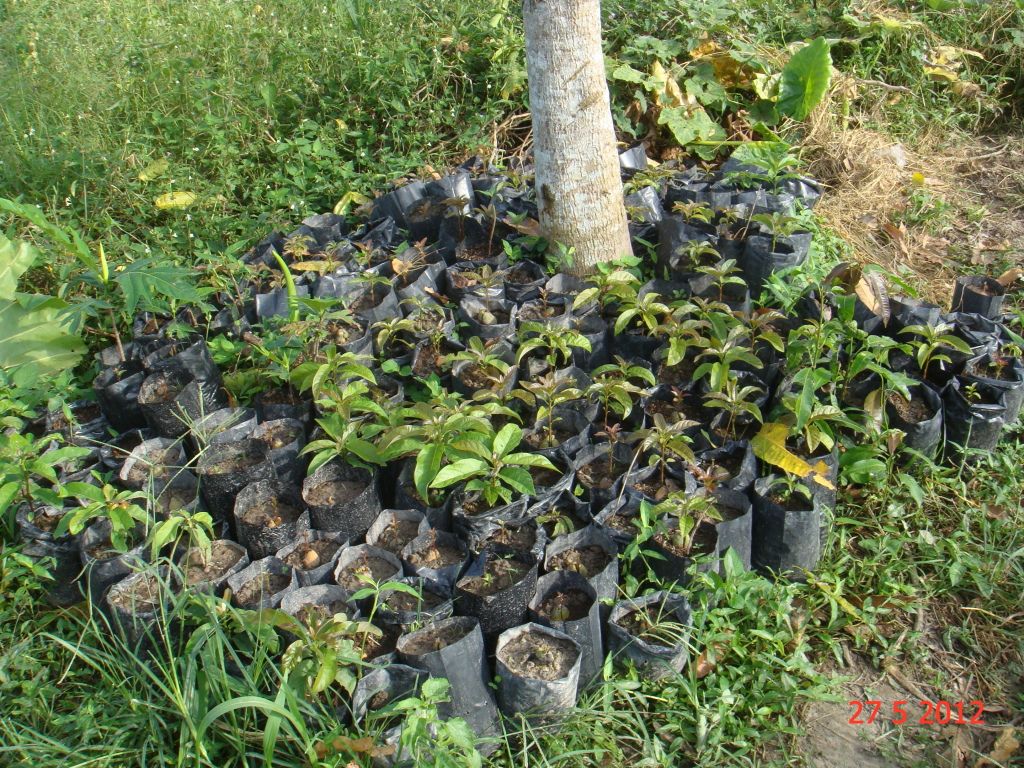 About 120 plants of Avocado. Should be ready soon for me to try grafting soon. Problem is that I do not have a good source of budstick. I am thinking of just getting the budstick from the 4 fruiting trees in our farm. Don't even know what variety it is (maybe West Indian?). Say any tips on doing grafting? Had been watching lots of grafting from youtube Added on June 20, 2012, 9:12 pm QUOTE(Michael J. @ Jun 20 2012, 08:37 PM) Para: Yes, was storing the washed seeds in the fridge, with double bags. Outer one heat sealed. Don't want the smell coming out to foul the plane. May get kicked off the plane for this Durian seed need to sow soon after taking it out from the fruit, i.e. within a few hours. If you can't sow it so soon, then wash it clean, keep it in a container with some water, and keep it in a dark damp place. I keep durian seeds I want to germinate in my bathroom. You may keep it is the fridge, provided it is not too cold. To germinate, I prefer starting them in a shallow dish of water in a dark place (i.e. my bathroom). Once the roots peep out about 2-3 cm, then I will sow them in bags of damp soil. These I will keep in a shaded area in my garden, and make sure to dampen the bags every other day if it isn't too hot. When initially growing, they can drink a lot of water. Bro, the Eksotika, like all hybrid materials, will not grow true-to-type lar.... Meaning, the plant are a mixture of different varieties, so the genetics is mixed up. If you take the seeds from this mixed-up variety and plant, then you will get mixed up seedlings as well. Some may turn out better, but most will be perform worse. It is a different story if you don't mind chapalang kind of plants. Actually, it is a good thing if you look at it differently; at least from whatever that grows, you can choose which one you like the most, pollinate those, and save those seeds. Then the few next cycles, you would probably get more uniform type of plant lor. Just make sure the seeds you save from hybrids are not Plant Variety Protected (PVP) seeds; otherwise, if the seed company finds out, they can sue you kow kow (eg. like what Monsanto has been doing to INDIVIDUAL FARMERS). Passed thru' without any incident. Reached my farm in the evening. Was thinking of just planting it in polybags. Now, I shall try out your method. My present batch of papaya, I too took the seeds from the fruits that I tasted good (and from strong plant of our trial batch). Even though, it's Chapalang, was thinking that it suits the local climate & condition. Here the market do not accept yellow/orange flesh papaya. I wonder why. I tasted some that is very sweet and aromatic. This post has been edited by MrFarmer: Jun 20 2012, 09:12 PM |
|
|
Jun 23 2012, 10:34 PM
Return to original view | Post
#165
|
|
Junior Member
478 posts Joined: Mar 2011 From: Sabah
|
These dry spell is getting worse, it's been more than 2 weeks without rain here. River, creek and pond is drying up. Was checking on my plant-lets in my nursery. Just found that couple of plants had developed these problem.
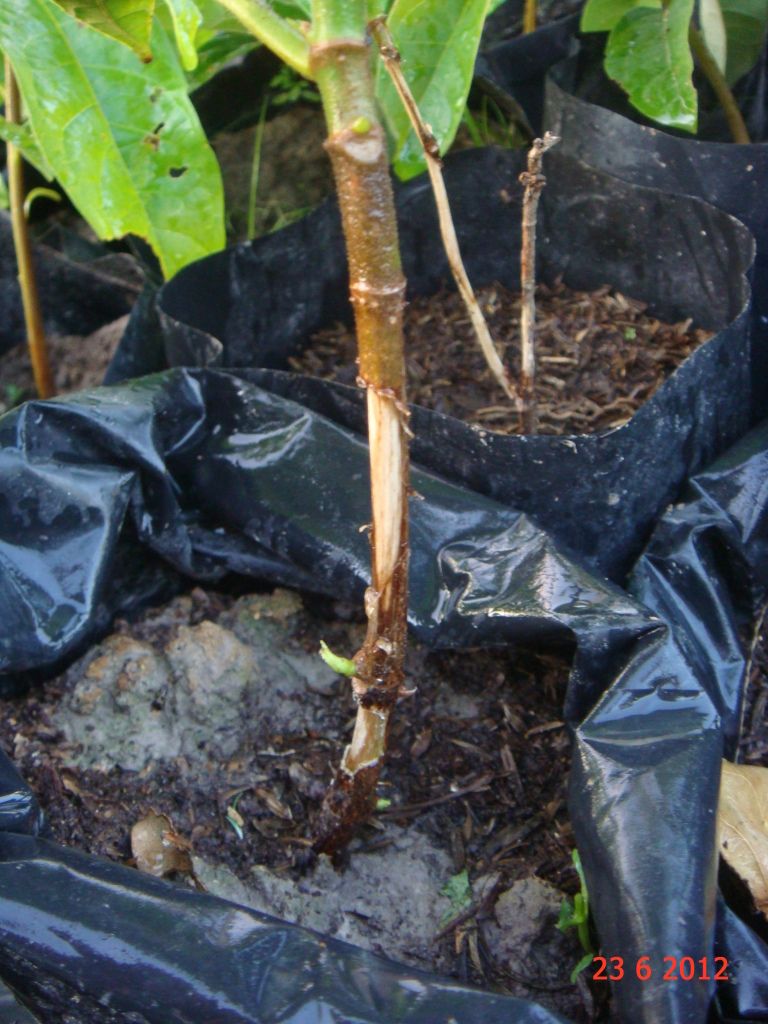 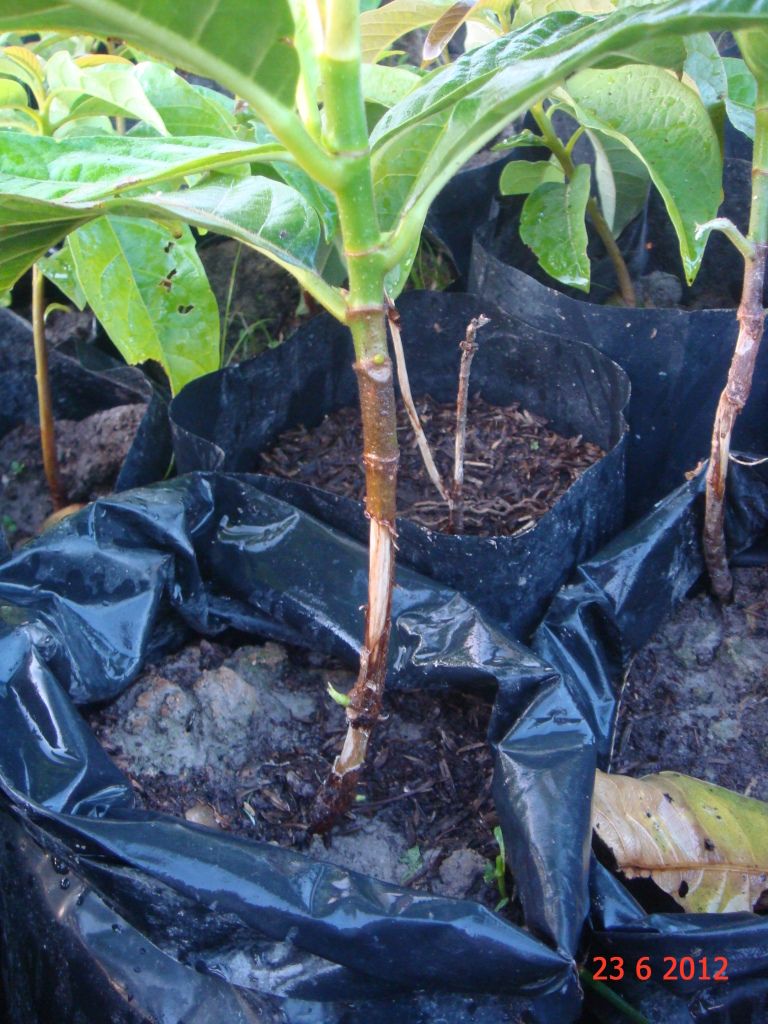 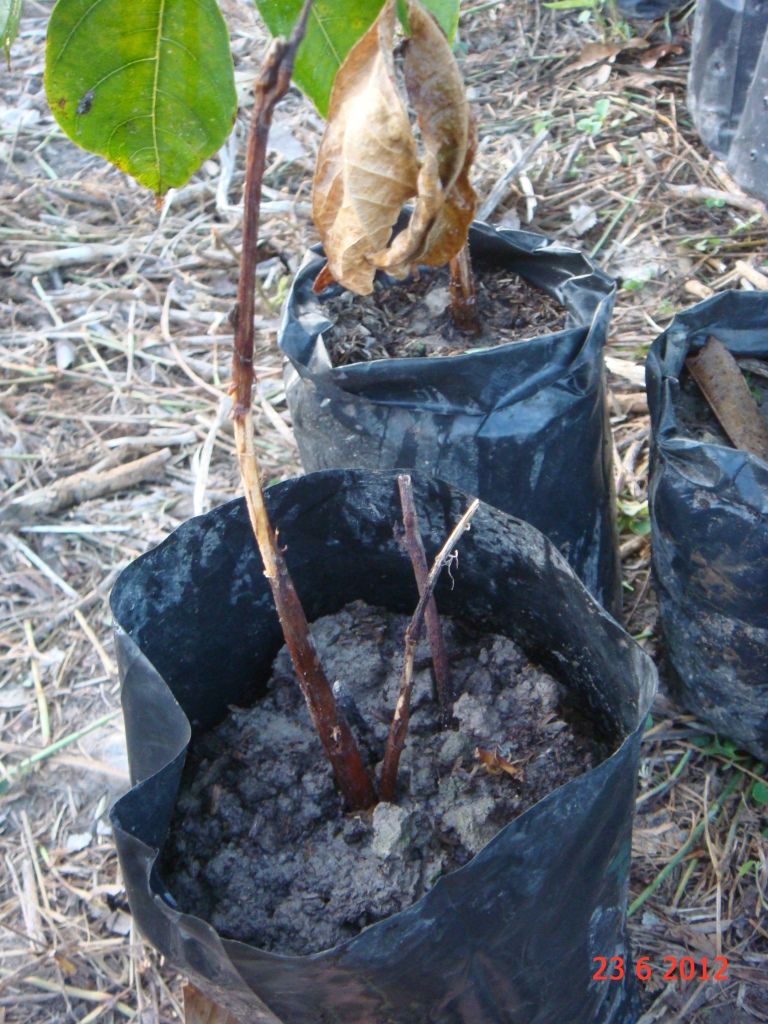 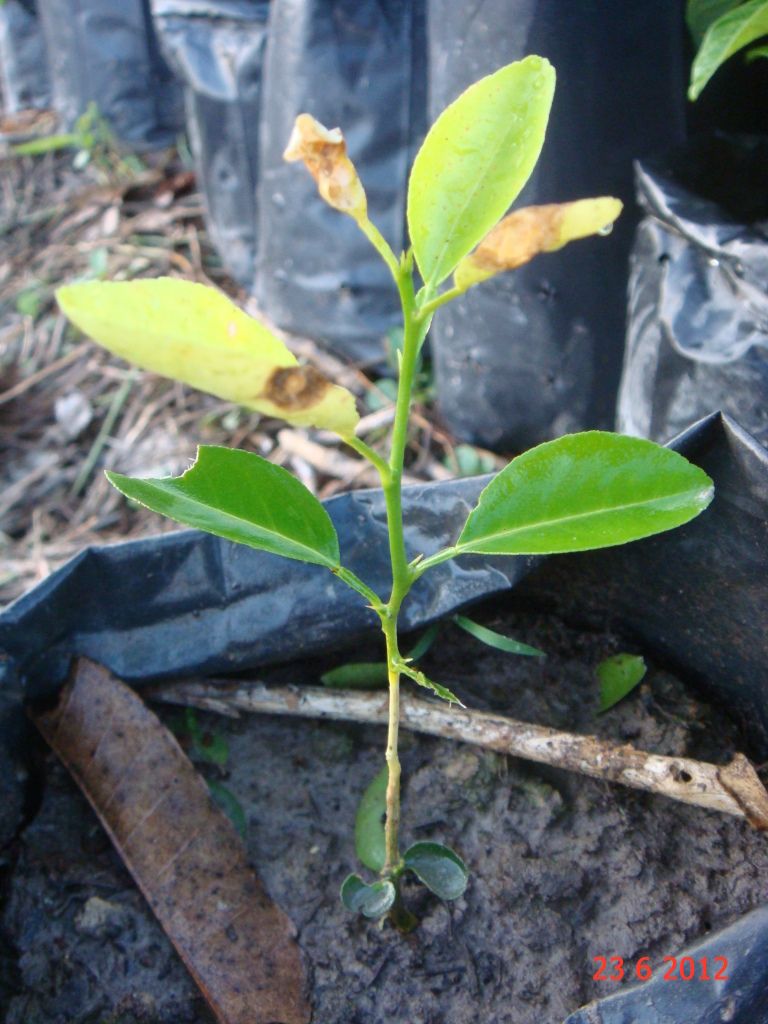 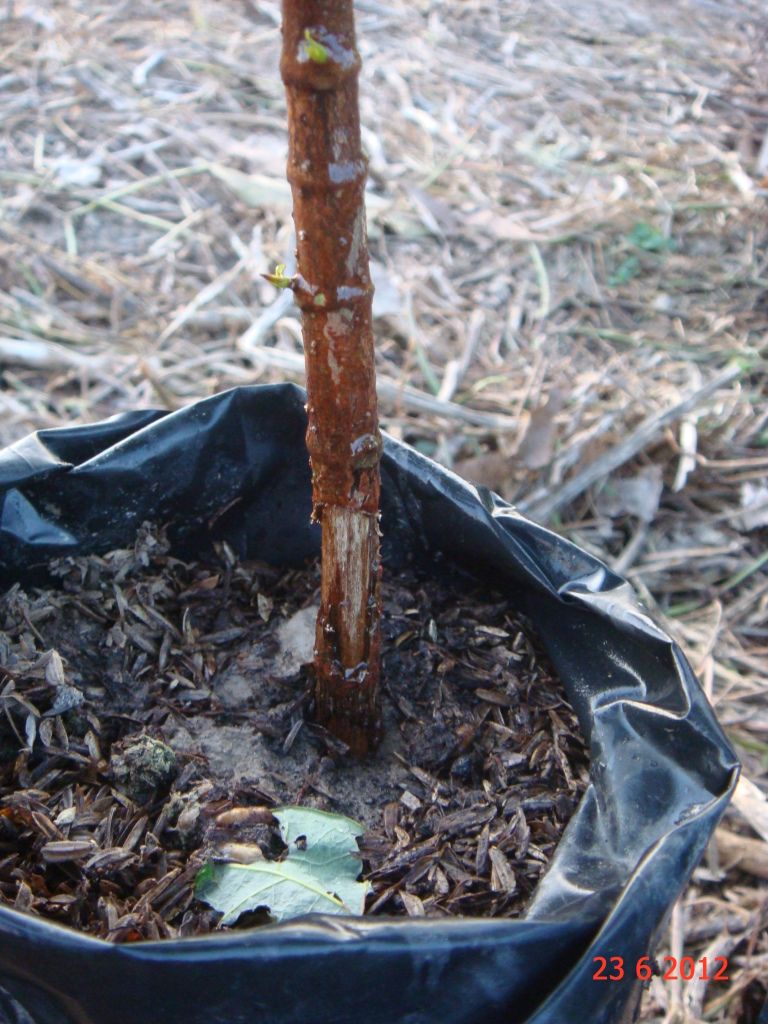 It's causing the bark to peel off and wooden-ing of the stem. It's affecting all of the Breadfruit plants (6) and 2 had died off. It's also affect the lime (1 out of 5). Am sure it's not due to the hot spell. Fungus, Bacteria or virus? Soil or water borne? I don't think it's affecting the Avocados. Or over watering and caused stem rots like the papaya? |
|
|
Jun 26 2012, 06:51 PM
Return to original view | Post
#166
|
|
Junior Member
478 posts Joined: Mar 2011 From: Sabah
|
QUOTE(Michael J. @ Jun 25 2012, 12:53 PM) Mr Farmer: Hmmm...... Sorry I can't see the pictures from here. But based on your description, it sounds to be due to sun scalding, followed by infection by phytophtora fungus. Tell me, do you water early in the evenings, about 4-5pm? Or earlier, shortly after mid-day? Although literature on sun scalding will show it to be something more of a problem in temperate regions, the fact is sun scalding happens to plants wherever there are drastic shifts in temperature. In the tropics, what happens is that in the daytime, temperatures are excessively high, followed by sharp drops in temperature during evenings or night time. In Malaysia, the normal daytime temperature is anywhere between 28C to 33C or maybe 1-2 degrees higher; night temperatures in most cases are also still quite high, around 26C-28C in the lowlands, which is about 2-5 degrees shifts. This isn't a very drastic change, and plant cells can adapt quite well to this, usually through the uptake of water and other metabolites. However, problem comes when temperatures soar till around 35C, and then plummet to 26C. The nearly 10C change in temperature will shock the plant, causing the cells to keep "drinking" water without restraint, leading to "bursting" barks and splitting along the trunk. The same condition can occur even under normal temperature ranges, whereby cool water is applied to plants on a hot day, leading to sharp shifts in soil and bark temperatures, thereby stimulating the plant to go into thermal regulation mode. That's why most growers and gardeners will tell you, "Don't water plants during the afternoon sun!". They don't normally explain why, but this is part of the reasoning. Now once a wound is created, it will allow easy access to plant pathogens and other nasty stuff. Disease causing fungi like phytophtora are commonly present in tropical soil, especially those with very high amount of woody/organic matter. Not all species of phytophtora are habitual plant-killers, but when given the chance, they can kill. It is hard to determine the severity of the infection at this stage (as I can't view the photos). But if the bark area has some black or dark appearance, the chances are the disease is already in an advance stage, and saving the plant would be difficult. If it isn't a rare or expensive plant, you might want to consider getting replacements. 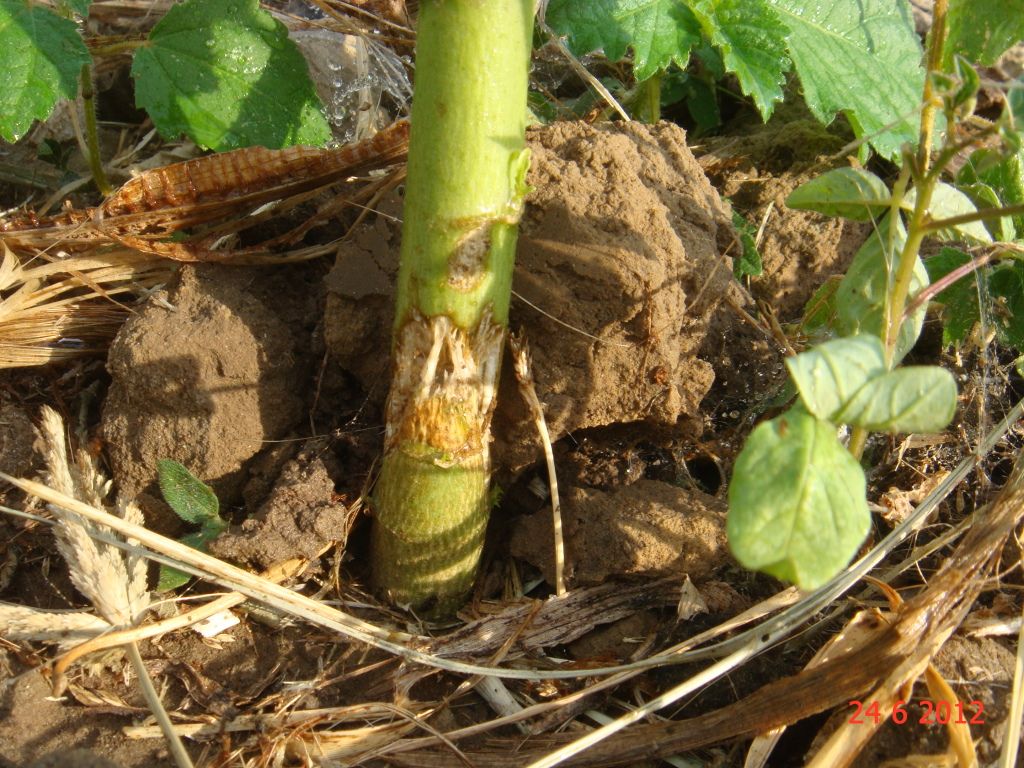 MJ, yeas, you were right, was watering these plants during hot afternoon, as due to this hot drought weather, it's already killing most of my new plants. Wondering how long shall this weather last. Rivers, creeks and our pond is drying up. |
|
|
|
|
|
Jun 27 2012, 07:57 PM
Return to original view | Post
#167
|
|
Junior Member
478 posts Joined: Mar 2011 From: Sabah
|
QUOTE(Michael J. @ Jun 26 2012, 06:51 PM) Mr Farmer: Hmmh, not that I know of in this farm. Only lots of chickens (neighbor's, 4 sides).I've finally managed to have a good long look at the photos you've posted here. Added on June 26, 2012, 6:53 pmBut I have to ask you a question: Do you have squirrel problems as well? |
|
|
Jul 3 2012, 08:54 PM
Return to original view | Post
#168
|
|
Junior Member
478 posts Joined: Mar 2011 From: Sabah
|
QUOTE(Michael J. @ Jul 2 2012, 12:36 PM) This is a general statement, aimed at most of us: Do know your land before committing to any agri venture. Just because your neighbours are planting or growing something, it does not mean your land is well suited for it. One should aim to cultivate whatever that is most suited to the land and excel in it, rather than cultivate what seems like the biggest money-maker but fare moderately (or poorly) in its cultivation. Eg: Musang King may earn you RM20-RM30 per kg, but if your tree only yield 20 fruits a year, how much better would that be compared to cultivating a D101 which brings on RM9 per kg, but 100 fruit per year? For a commercial venture, we still need to convert the harvest into cash. Initially I was thinking of replacing all of the Saba Bananas to higher value type, like Berangan, Emas and others. Now I know that, they have different characteristic, the lower value ones are most probably easier to handle. |
|
|
Jul 4 2012, 07:04 PM
Return to original view | Post
#169
|
|
Junior Member
478 posts Joined: Mar 2011 From: Sabah
|
QUOTE(Michael J. @ Jul 4 2012, 10:32 AM) Mr Farmer: MJ, it's always so inspiring chatting with you.Thank you. You are very right about knowing one's capabilities. Agriculture is a very engaging affair, and your crops are very finicky "lovers", so to speak; show them a little less attention and care, and there's a high chance of them running out on you. One thing I've learnt from small-holdings elsewhere (not Malaysia), is the importance of adding value. Sometimes even small added value could make a whole difference towards the final sell. What I mean by value adding are things as seemingly insignificant as bunching your produce together, or pre-packaging them, to more elaborate methods such as cooking them up into ready-to eat meal to take home from the Pasar Tani. And seriously, the value the small holder can gain is quite stark. Eg., a sweet potato farmer regularly harvests rogue leaves and stems and sells them for RM1 per fistfull bunch. He often sells up to RM200 of the leaves and stems at the weekly farmer's market. If he had sold by weight, he would probably get about 3/4 only. Similarly, his wife grills up fresh sweet potatoes, and sells them about RM2.50 - RM3.00 each (around 400g-500g weight). That's about double the average retail value for fresh tubers. Obviously, a small holder would not be able to value add everything he/she has cultivated and sell them like the above. But if you can target to have about 30% or maybe 50% of your crop value added, you would be doing pretty well; i.e. sell all your grade A/B produce at the best prices, value add your slightly lower grade produce and sell it for immediate consumption. Now don't go all "aiyoh, sell low grade stuff to people.."; low grade in this instance does not mean spoilt produce, but rather good quality, yet not meeting the size/weight mark, eg. grade C tilapia weight around 400g = still tasty, but fetches very low prices. Speaking of sweet potatoes, my sweet potatoes patch had dried up due to the long dry spell. Don't think I can do any harvest for this Raya.  Yes, value added & break bulk is a good strategy. 2 months back bought wholesale 1 1/2 ton of ginger, prices tumbled due to bumper harvest. After we graded the ginger, the A sold to market wholesaler & retailer, B sold to Restaurant and C sold off as seeds (kept half for our new planting). Even rejects (not spoiled products) can be sold. Reject like even shapes, slight insect bites & etc, can be sold to village market (of course like MJ mentioned, low price). Rejects can also be used as animal feed. Added on July 4, 2012, 7:46 pm QUOTE(jameslionhart @ Jul 4 2012, 04:02 PM) A guy with 0% knowledge in agriculture here! My friend have two parcel of 5 acre land in Seremban. We are planning to venture into agriculture but don't know how and what to do about it. It was his family land anyway. 5 years was given for trials. Welcome jameslionhart.I too was at 0% 2 years back. Now I'm at maybe 3% No worries, you shall get by if you put effort into it. Anyway, you have your friend to help too. Two heads are always better than 1. Also lots of forumer here with vast experience. Would suggest you get to know the land first. Check out the land, check and confirm the boundary (get a copy of the land title and location map) with land office. While surveying the land, if it's no cleared land, do note all the wild plants /trees in the land. Check out the access roads. You mentioned two parcel, check out the location between them (logistic). Then sit down with your friend to have a long discussion about your plans, target , expectation, responsibility etc. Do pen down the final discussion. Most importantly, knows what you both are getting into. You may also want to devise a back up exit plan, just in case you need to cut lost. Also you are lucky to have 5 years as trial. When I took over the farm (my ex-partner resigned with 3 day's notice), I only gave it a 5 months period (Oct 2011 till Feb 2012) to see if we (helper & me) have the potential to arrest the negative cash flow. But then if it is on a non commercial basis, then things are much simpler, just clear land and plant as your heart wishes. Good luck. Do keep us updated on your progress. Clearing land, high gradient. 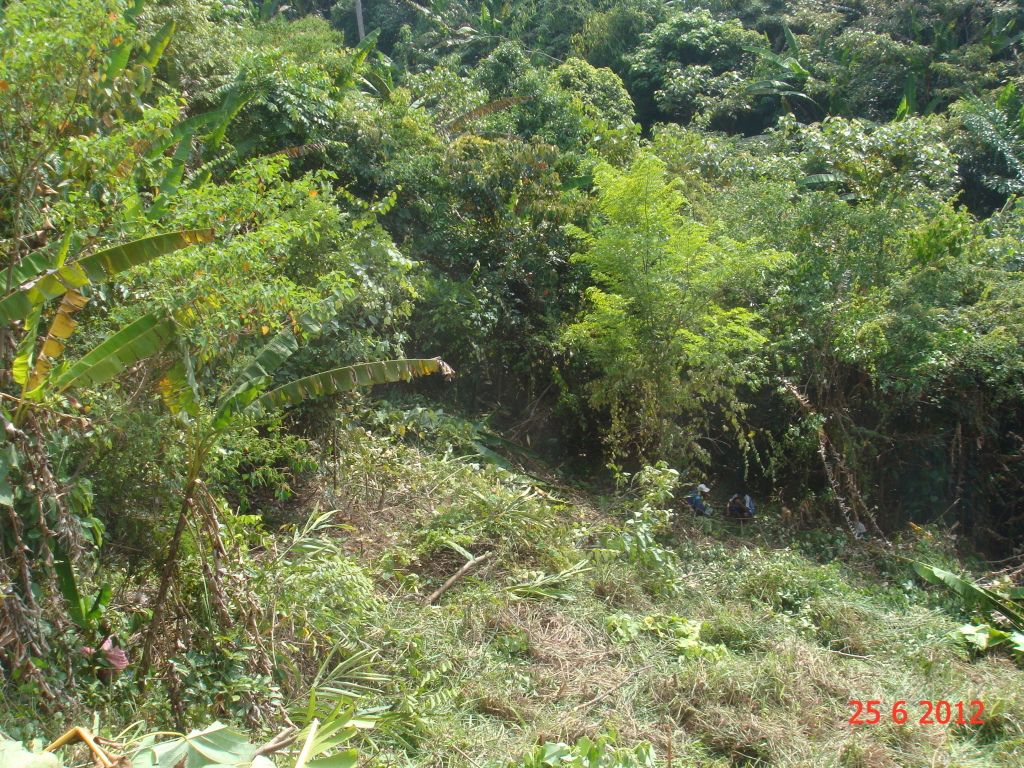 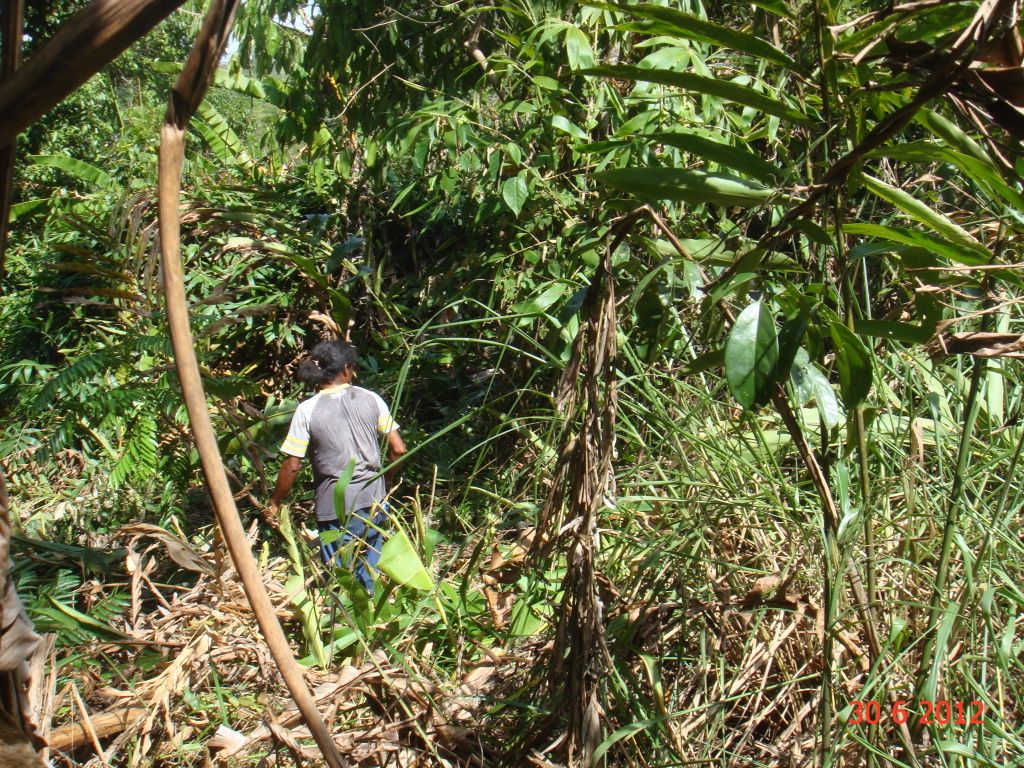 This post has been edited by MrFarmer: Jul 4 2012, 07:46 PM |
|
|
Jul 5 2012, 08:44 PM
Return to original view | Post
#170
|
|
Junior Member
478 posts Joined: Mar 2011 From: Sabah
|
|
|
|
Jul 9 2012, 08:20 PM
Return to original view | Post
#171
|
|
Junior Member
478 posts Joined: Mar 2011 From: Sabah
|
I think integrating chicken with the farm should be encouraged as this can be started independently from the plants. Low start-up capital. Turn around time is also not that long. Feeding cost is minimal as we can feed them with the rejects. It shall create some supplement income while waiting for farm to mature. It helps fertilizing the plants. This can also be continued even after plants had matured as it is not affected by the canopy. Had just restart my stalled chicken project after much consideration. Have 1 cock & 7 hens at the moment. It'll take a long time before hitting 800 . Anyway just targeting 50 in the short term. Problem with these Malay Village Chicken, they are very violent & territorial. I think these could be from the fighting breed. Already had 2 dead (1 cock & 1 hen) within the first week. Planning to build mini colony of maybe 50 to 100 strong each. Another problem is that they wonder quite a distance from their coop, hence limiting the number of colonies. Anyway, shall try to sort this at a later stage. Good news is that they are already laying eggs. Am thinking of ways to improve their coop, to make it more pleasing to them. Happy chickens breed faster. One thing I've learned in farming, don't even count your chicks, even after they had hatched  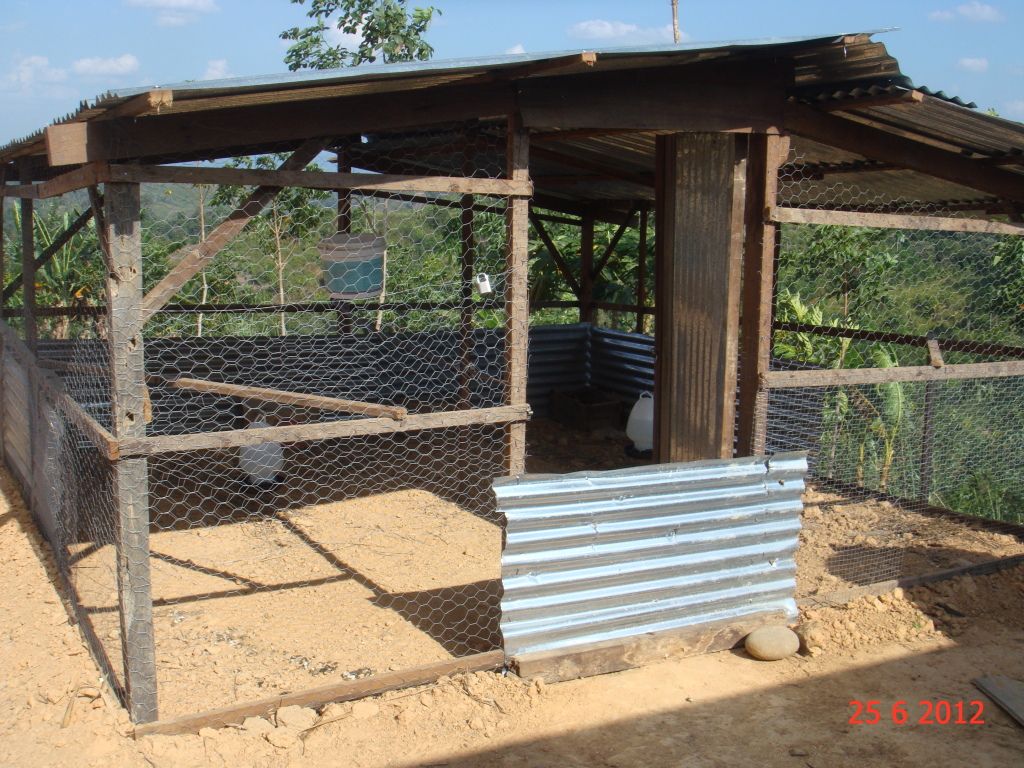 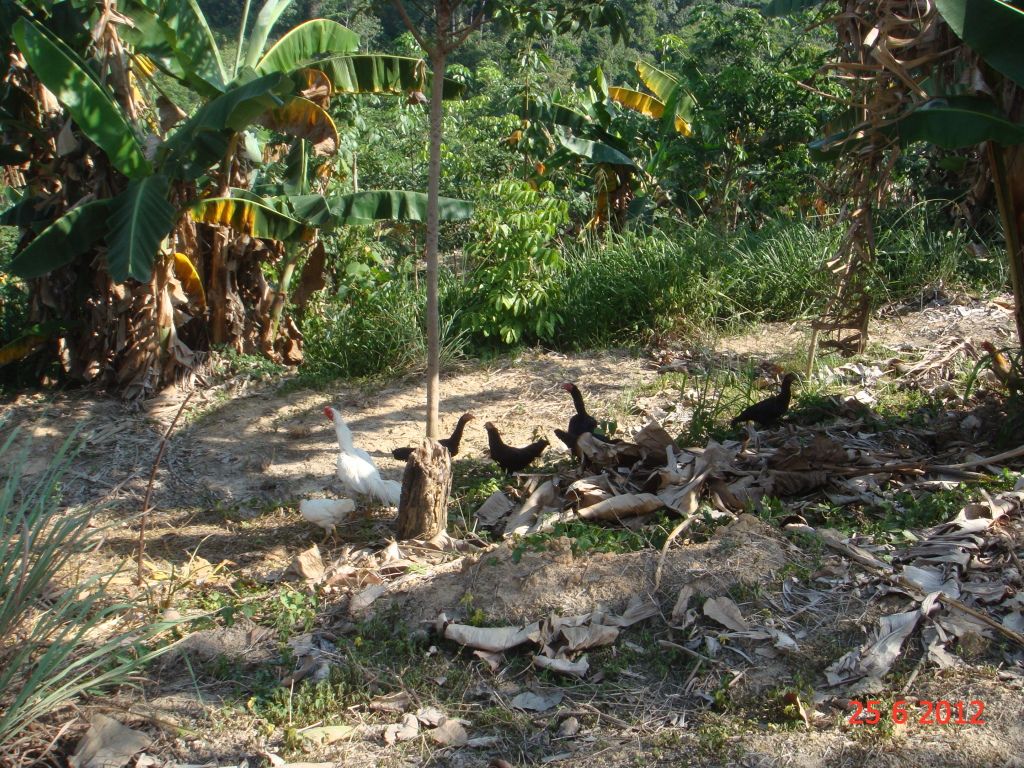 |
|
|
Jul 10 2012, 10:13 PM
Return to original view | Post
#172
|
|
Junior Member
478 posts Joined: Mar 2011 From: Sabah
|
QUOTE(Michael J. @ Jul 10 2012, 09:15 AM) Mr Farmer: Oh no, most of our chickens are what you've described. The cock is definitely, 4 (out of 7) of the hens are also. I don't think they'll attack humans (not yet anyway). They seems to response to "call" (we make the same sound during feeding). They always come to our shed especially during lunch break as they are always bits of food.As always (sigh) I can't view pictures from my present location. But if it is those chickens with long neck, short combs, and stilt-like legs, then you have fighter breeds. The males are particularly vicious, and may even attack people. Females are less vicious, but still very aggressive. Actually, if you do have a large enough population of chooks, you could selectively breed the good ones. "Good" in this instance does not just mean weight or egg-laying abilities, but also character. A gentle, docile, submissive and calm character is almost always at the top of of my animal breeding programs. Even roosters that hadn't been castrated were developed to be non-aggressive. If you are intent on breeding chooks, and don't want to get pecked and scratched whenever you enter your farm, you could try Holland/Rhode Island Red. Males are a lot less aggressive, more submissive, but not necessarily more docile. Holland/Rhode Island Red females are extremely good egg layers (1 egg/bird each day), and very fecund. The females may be squabblish, but having a rooster present would help minimise such incidences. They love human presence, and if particularly fond of a person, will follow him/her everywhere. They grow a lot more slowly, takes about 2.5-3 months to reach full maturity and weight (~1.5-2kg), and have glorious, flavoursome reddish-yellow meat when cooked. Free-ranging them would help develop the meat flavor more, but as they are a more active bird, the meat can become a little too firm for most people accustomed to factory-farmed chicken. They love soft grass and leafy vegetables)!), and will go after slugs and bugs with passion. The females will need a regular supply of calcium once they start egg laying. In the marketplace, this breed often fetches about RM15/kg or more when free ranged, and old hens also fetch good prices once they've stop laying eggs. Ideally, you should have 1 male to every 8 females, but for a group of 50, you may only need 5 mature males to stimulate egg-laying; at most, 50% of the group should be males, otherwise fights could become serious. Or you could castrate the non-breeding males to produce capons. The Holland/Rhode Island are the broiler type of chicken? Maybe I can buy some chicks and mix them with the hopefully soon to come chicks. Wonder how the "Mum" shall take in the foster chicks. Let's see how they fare in the next couples of months. |
|
|
Jul 19 2012, 08:30 PM
Return to original view | Post
#173
|
|
Junior Member
478 posts Joined: Mar 2011 From: Sabah
|
QUOTE(Kg Teratai @ Jul 19 2012, 05:13 PM) Hi MJ, Wow, speaking on right timing, am also looking at grafting.Thank you. I will try it out this weekend. I will share the picture once I have done. From my research, certain type of grafting works better on certain plants and things like size of stock & scion, experience level & etc. Had not done any grating yet as my new plants are still too tender. Looking into grafting of Avocado Durian Jack fruits Rubber trees at the moment. Looking forward to your pics Having problem with one of my weakest Mas Solo Papaya. It was growing well until recently, the leafs start to wither. Have not figure out what wrong. 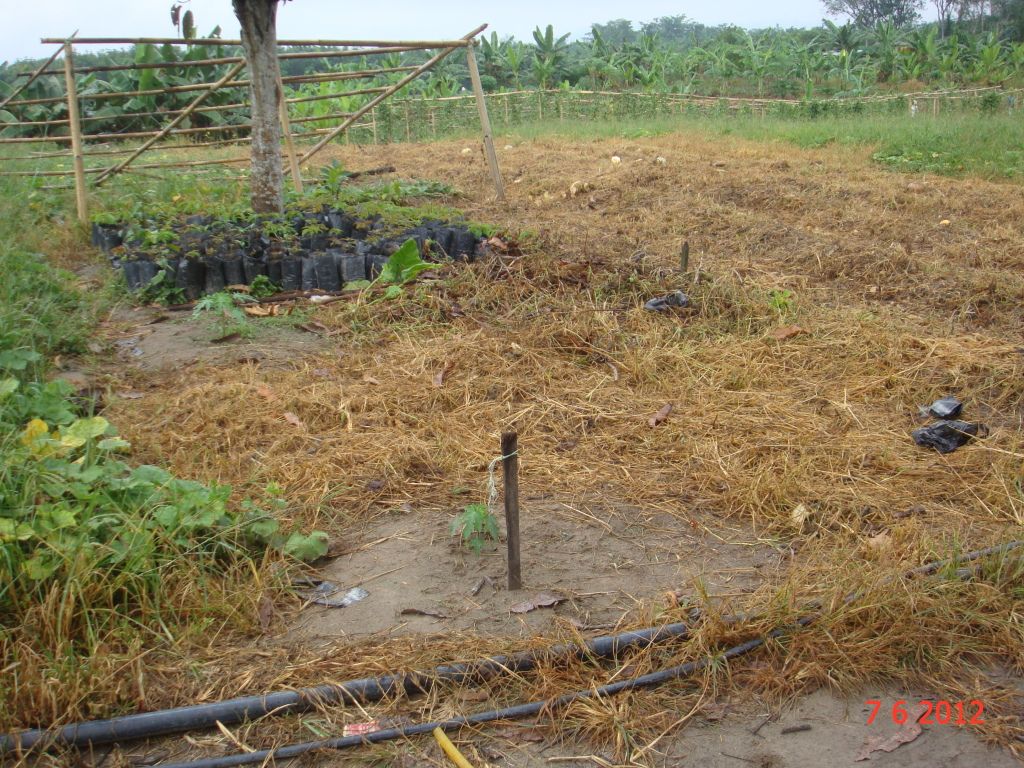 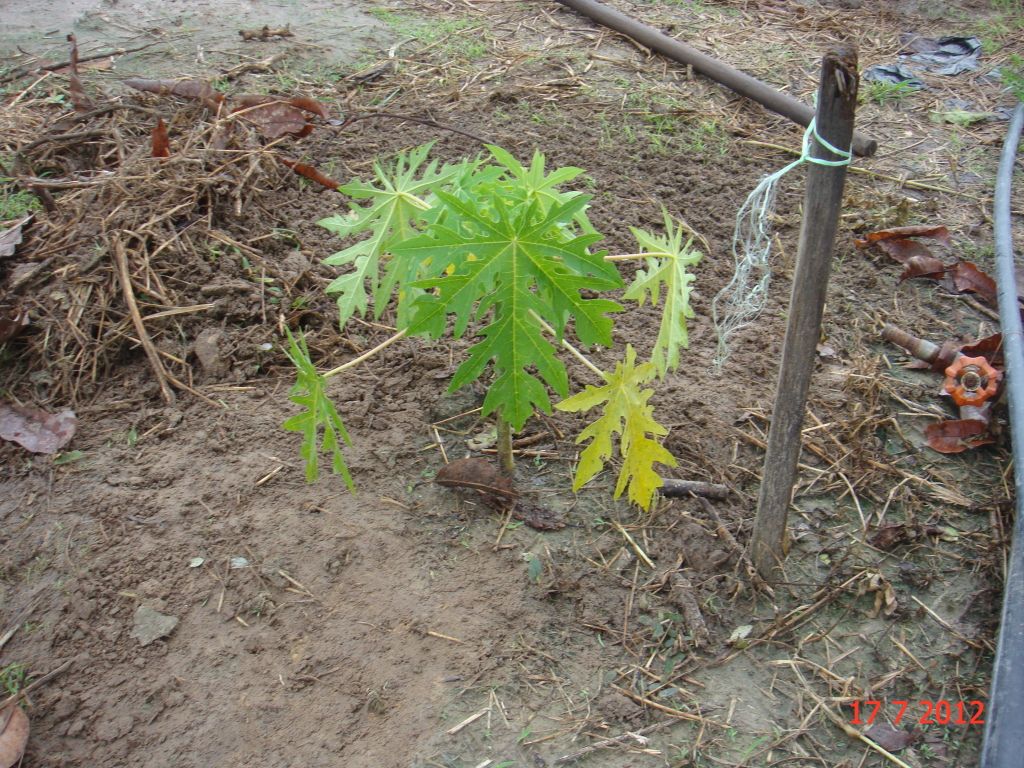 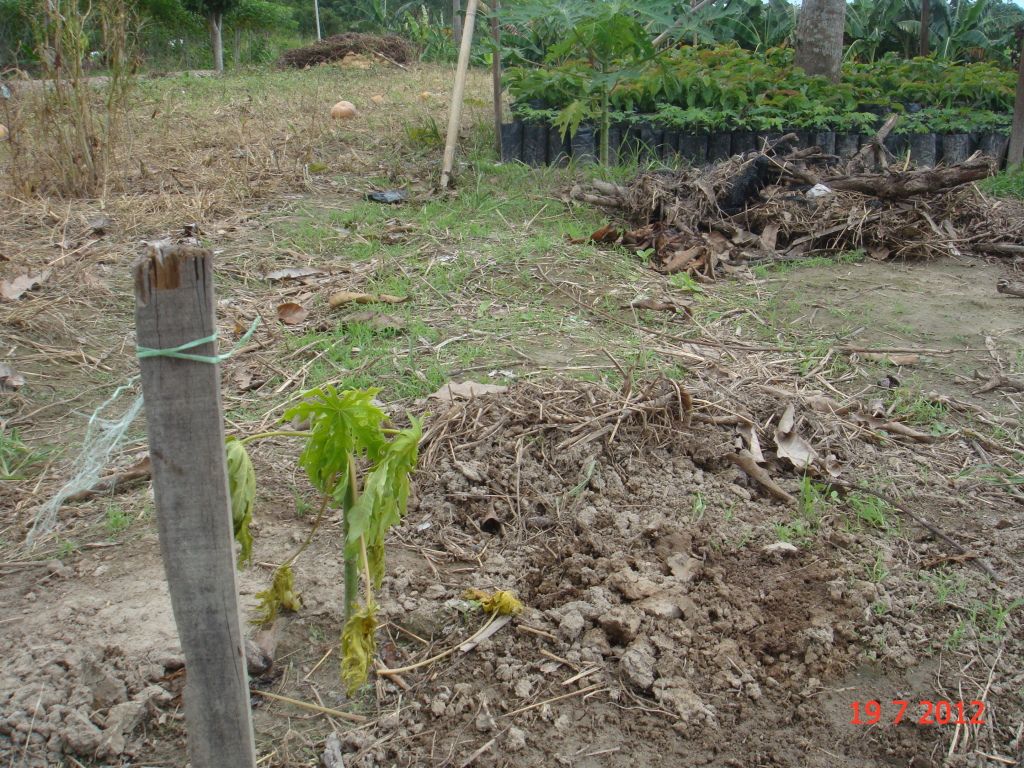 |
|
|
|
|
|
Jul 20 2012, 08:38 PM
Return to original view | Post
#174
|
|
Junior Member
478 posts Joined: Mar 2011 From: Sabah
|
QUOTE(Kg Teratai @ Jul 20 2012, 10:04 AM) My parents were good at grafting durian, jackfruit, and rubber tree. Too bad that i never really have chance to learn from them, i was too young that time to see them doing these thing. Hi Kg Teratai,This may interest you. Expert System For Oil Palm Disease Diagnosis http://eprints.uthm.edu.my/1833/1/EXPERT_S...AZHAR_RAMLI.pdf |
|
|
Jul 21 2012, 09:26 PM
Return to original view | Post
#175
|
|
Junior Member
478 posts Joined: Mar 2011 From: Sabah
|
QUOTE(ParaOpticaL @ Jul 21 2012, 08:28 AM) Hey People... Thank you ParaMAHA 2012 is Officially ON ... 23 November - 2 December 2012.... https://www.facebook.com/mahaexpo2012 http://www.maha.gov.my/2012/home.html But not cheap air fare from AirAsia |
|
|
Jul 30 2012, 09:36 PM
Return to original view | Post
#176
|
|
Junior Member
478 posts Joined: Mar 2011 From: Sabah
|
Wah so many post, was away just for a week. Taking friends on a tour of Sabah, including my farm of course
Just to share, we can keep the scion/bud/shoot fresh by keeping them in a cooler box/ fridge or insulated Styrofoam box with ice. Even seeds can be kept fresh by keeping them in the fridge. Those seeds (durians) that I kept, while in KL, I clean and washed them, then wrapped with newspaper, double heat sealed plastic bag (don't want the smell to come out, otherwise can't board the plane). Some of them had germinated. Seedling price is so much higher here. Pandan Coconut @ $15 each from Pertanian D197 @ $28 independent Nursery Lime (Limau kapas) @ $18 independent Nursery |
|
|
Aug 7 2012, 02:17 PM
Return to original view | Post
#177
|
|
Junior Member
478 posts Joined: Mar 2011 From: Sabah
|
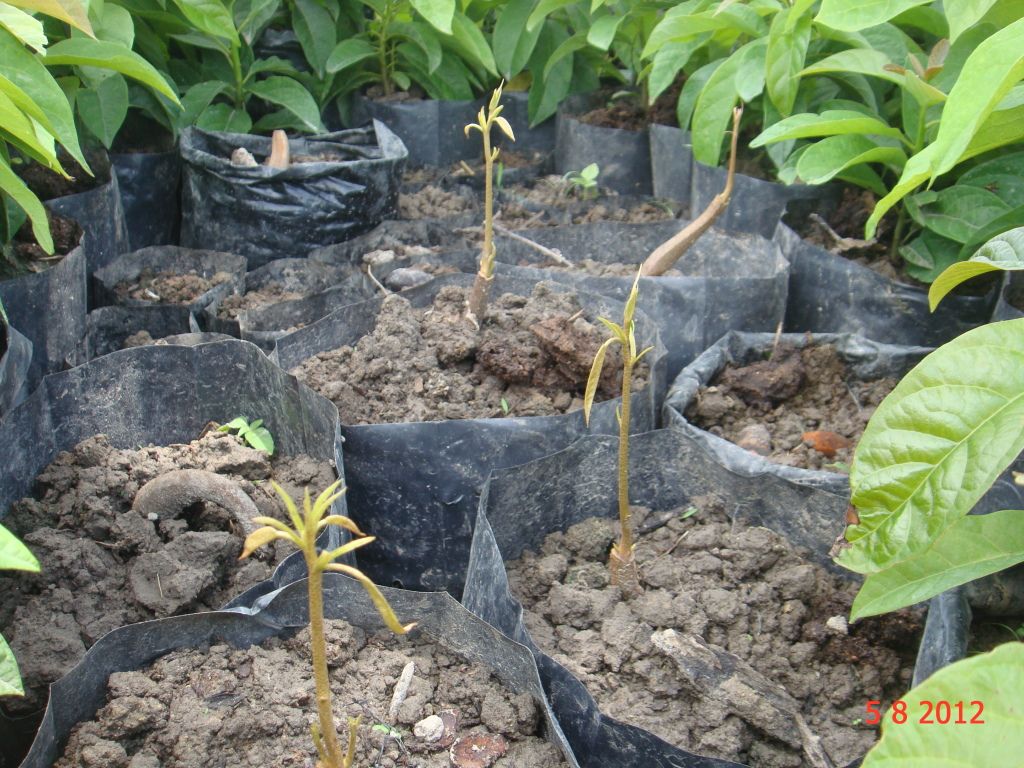 Say what size of poly bag are you using for the Durian? I think my bags are too small initially as when the seed germinate and wants to flip up, it got stuck to the side. Transplanted some to bigger bags. |
|
|
Aug 8 2012, 12:08 PM
Return to original view | Post
#178
|
|
Junior Member
478 posts Joined: Mar 2011 From: Sabah
|
QUOTE(Michael J. @ Aug 7 2012, 04:47 PM) Mr Farmer: Thank you. Yes managed to germinate just a few. I think 5 grew out of maybe 40 seeds (5 fruits). I used your suggestion of putting the seeds into a pail with water, line with old news papers. After a few days, it start to germinate. Surprisingly the first thing that grew out is the cotyledon (not the root). I transplanted all seeds (including the non germinated) into small poly bags, maybe 5 X 8 ". My mistake is that I though the cotyledon is the root, and planted it pointing downward. 2nd mistake is that I think I planted those seeds too deep, maybe 2~3" (was thinking that the roots shall hold better and deeper for easier handling when doing grafting. When I check back in a couple of days, the cotyledon was caught at the side of the poly bag, due to turning and the bag being too small diameter. Some died. Other seeds rotted due to air deprivation (I think, due to too deep). You managed to germinate the Musang King? If so, congrats! You don't really need a large polybag. I use one with a diameter of about 8.5cm only. You do need to be a little careful when planting the seeds initially though, as durian seeds germinate in a peculiar manner, i.e. it is rooting part will angle itself accutely irregardless how you plant it. The best way is to plant is flat of the soil surface, and let the roots find its own direction down. Or plant the germinating seed three-quarter-ways into the soil, with the root side just peeking out. Now if after emerging from the soil, the seed gets caught by the side of the bag, don't worry. The seed is not as important as most people think; it only provides initial food for germinate and growth. The more important part in the growing shoot tip, which is "sandwiched" in the center of the seed. Normally, the shoot tip will extricate itself from the seed and be stand-alone quite soon. If not, you could help it along by washing away some of the soil so that the shoot is exposed to light; the shoot will autocorrect itself using light stimulation. This is the part you have to make sure it doesn't get jammed; if it does, it might die, and this could terminate growth of your durian seedling, provided you have clones/ materials that produce multiple shoots. I had one seedling whose cotyledon was so heavy it snaped the shoot off; fortunately it was a multi-shoot variant, so the side shoots grew to replace that main shoot. Also note that durian seedlings, like some of its other cousins, cannot produce new growth below a certain notch (which is the point at which the seed/cotyledon is attached to the plant). If you accidentally cut/damage the plant below this point, it will never grow back. Anywhere above this notch, the plant could still regenerate new branches/growth points. Added on August 7, 2012, 4:53 pmSorry, I should also clarify further: Although you don't need a wide polybag, you will need a deep one. Durian seedling roots are very fast growing and deep, so anything less than 30cm deep is too shallow. Alternatively, you could initiate germination in smaller polybags about 20cm deep and 8.5cm wide, then transplant them into large polybags (30cm wide by 45cm deep) for growth till 4th month stage. This kind of "two-stage nursery" method is good if you are targeting uniformity; you can select the seedlings which are about the same growth rate in the smaller polybag stage, and transplant them to the larger polybags. In theory, this would ensure that every batch of seedlings you produce will be more or less equal in growth and size. Note my previous pic, on the left, there is a pic of the damaged cotyledon, which I guess may not survive. Am doing your suggestion of tow stage, transplanted some to bigger poly bags maybe 12X20". Hopefully it's large enough. Guess I won't be grafting any durian yet as I don't have any scion source. Maybe just transplant it to the field in a couple of months (erh how long?). |
|
|
Aug 17 2012, 12:39 AM
Return to original view | Post
#179
|
|
Junior Member
478 posts Joined: Mar 2011 From: Sabah
|
QUOTE(insearching @ Aug 16 2012, 08:56 PM) Hello Sifu, Oh Yes, of course there is. You may want to try opium Mind I ask is there any crop that provide good returns within 1 - 2 years? like 1 kg of that particular crop which enable me to sell it for around few thousand ringgit? |
|
|
Aug 20 2012, 04:24 PM
Return to original view | Post
#180
|
|
Junior Member
478 posts Joined: Mar 2011 From: Sabah
|
Gaharu, Agarwood, Eaglewood.
Was doing some search on Gaharu and came across this Cost & Benefits Analysis of Aquilara Species on Plantation for Agarwood Production in Malaysia Am feeling that Malaysia lags very far behind in this filed, compare to our neighbors. Also read up on the Gaharu thread on LY, not active. It was started back in Oct 2007. Hope that they are Millionaires by now. Planted some Agarwood on the slope. 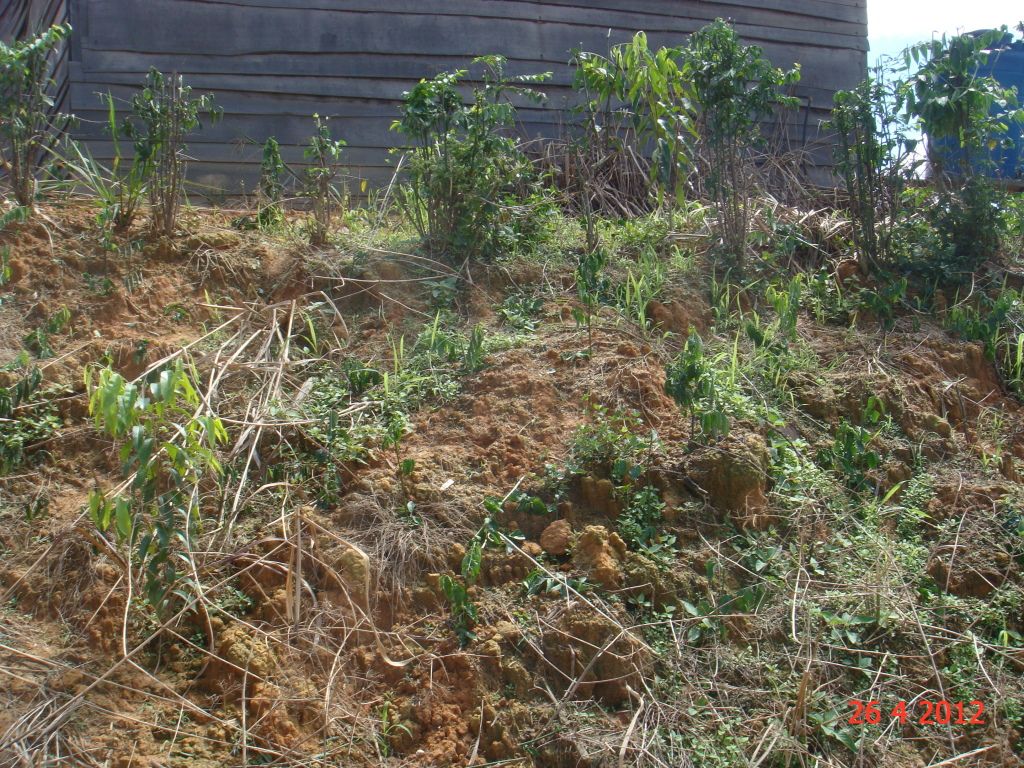 Attached File(s)  GaharuCostAna.pdf ( 185.67k )
Number of downloads: 19
GaharuCostAna.pdf ( 185.67k )
Number of downloads: 19 |
| Change to: |  0.0202sec 0.0202sec
 1.35 1.35
 7 queries 7 queries
 GZIP Disabled GZIP Disabled
Time is now: 17th December 2025 - 02:00 PM |
 Quote
Quote