The Syrian Civil War and the End of Turkey’s Liberal Dream
QUOTE
Once it became clear to Ankara that Syria would enter a civil war, the Kemalist reflex would have been to seal the border immediately. That was not an option for the AK Party leadership. Erdogan felt that Assad — whom he saw as his junior — had disrespected him
QUOTE
This led Turkey to enter a proxy war across its border. It was the country’s first such war in its Republican history — and it showed
QUOTE
After more than five years of war, the Assad regime is weakened, but will live. The self-proclaimed Islamic State spreads its tentacles across the region, including into Turkey itself. And Turkey now has a border with a de facto Kurdish state governed by the PYD, a Syrian offshoot of the separatist PKK
QUOTE
Turkey now has a border with a de facto Kurdish state governed by the PYD, a Syrian offshoot of the separatist PKK. The Islamist rebels supported by Turkey are weak and divided, while the PYD enjoys Western backing and appears more united than ever before. Meanwhile, Iran and Russia are propping up Assad both in the field and in diplomatic negotiations with the West. It is safe to say that the war has not gone well for Turkey
QUOTE
The Free Syrian Army (FSA) is a loose conglomeration of rebel groups, and is far from posing a real threat to Damascus or Raqqa. Ahrar ash-Sham, a Salafist outfit, is a moderately effective fighting force, but is hardly under Turkey’s control, and considering its cooperation with al Qaeda affiliate Jabhat al-Nusra, too radical to be included in peace talks
QUOTE
Iran and Russia have meanwhile propped up the Assad regime against the battery of rebel groups. Iranian-backed militias across Syria have been supporting Shia groups against rebels and since the early years of the war. More recently, the Russians have been fielding crucial hardware such as tanks and anti-air systems, and since September have used the Latakia air base to bomb their client’s enemies into submission
QUOTE
As the war gained pace, Turkey maintained a laundry list of things it requested from its allies, including warships with Aegis missile defense systems in the Eastern Mediterranean, PATRIOT anti-missile systems, AWACS radar planes, detailed air defense plans, and other capabilities. Many of these were granted, albeit halfheartedly. Ankara became frustrated in late 2015 when the United States withdrew its PATRIOT missile defense systems deployed along Turkey’s border with Syria for “critical modernization upgrades.”
QUOTE
Early on in the Syrian civil war, Ankara maintained regular contact with PYD leadership and tacitly agreed to allow U.S. support to the group, which was widely regarded as the most effective fighting force against the Islamic State. To circumvent its own anti-terror laws, the Obama administration made a distinction between the PKK, which it defines as a terrorist organization, and the PYD in Syria
QUOTE
Jeffery Goldberg writes that “Obama now considers [Erdogan] a failure and an authoritarian, one who refuses to use his enormous army to bring stability to Syria.” The claim here is that Turkey’s
QUOTE
There were several times when a Turkish ground invasion was discussed, most recently when the regime forces cut off Turkey’s access to Aleppo. Yet the military stayed put. Again and again, the AK Party government mulled an invasion, but chose to continue supporting the rebelssecurity establishment was capable of bringing stability to Syria, but was held back by Erdogan
QUOTE
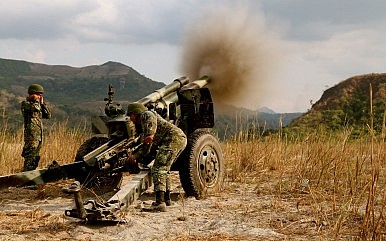
The Turkish Armed Forces (TAF) participated in the war primarily through shelling and aerial bombardment. Airpower was Turkey’s primary mode of deterring movement of the People’s Protection Units (YPG), but entering Syrian airspace has been out of the question ever since Turkey shot down a Russian airplane in November of 2015
QUOTE
On the strategic level, Turkey has had to police an 822-kilometer border with Syria. If Turkey did directly intervene in Syria, it would not be hard to imagine the violence spilling across to the Turkish side, given the length of the border.
QUOTE
The PKK, on the other hand, had entrenched itself during the long truce with the government, with explosives buried beneath cement roads and well-trained snipers in key positions. To regain the advantage, the TAF relied heavily on artillery, practically blowing up whole neighborhoods . Overwhelming force here indicated weakness, rather than strength
QUOTE
Third, manpower became a significant problem with possible ramifications on Turkey’s Syria strategy. In January, an estimated 2,000 security officials were engaged in battling around 200 PKK fighters in the district of Sur alone. According to one official, the vast majority of Gendarmerie Special Operations Battalions (JÖH) were at one point deployed in the southeast, along with many special operations forces. If Turkey were to invade Syria during this time, it would have suffered from a significant shortage of special forces. This was a major strategic problem for the TAF
QUOTE
The Turkish institution that that conversely found itself thrust into Syria was the Milli İstihbarat Teşkilatı (MIT), Turkey’s main spy agency
QUOTE
Considering the nature of intelligence work, this would have taken years, if not decades. Yet when the Syrian Civil War erupted, MIT slammed into emergency mode
http://warontherocks.com/2016/04/the-syria...-liberal-dream/ 

 Military Thread V20
  Apr 4 2016, 06:47 PM


 Quote
Quote







 0.0257sec
 0.47
0.47
 6 queries
 GZIP Disabled