How The U.S. Can Defeat Putin’s Shadow War

QUOTE
Recently, one of my students asked me: Why doesn’t the U.S. stop Vladimir Putin?
QUOTE
He is not alone. Many wonder how Putin gets away with it again and again and again. In the past few years, Russia blitzed the country of Georgia, cyber-crushed Estonia, claimed much of the Artic as “theirs,” invaded eastern Ukraine, stole Crimea, mucked around in Syria, increased submarine patrols to Cold War levels, and is worrying eastern Europe
QUOTE
The Bear is back
QUOTE
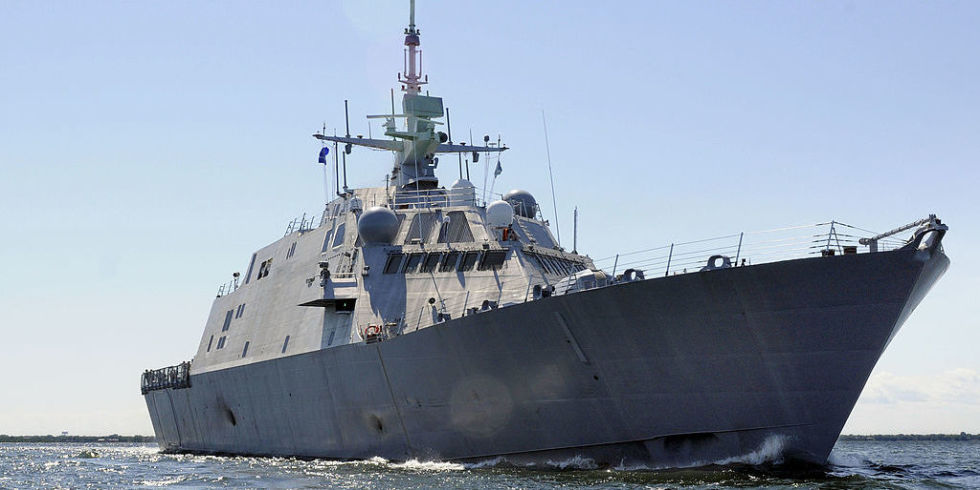
Last month, a Russian fighter jet did practice attack runs on an American destroyer in the Black Sea, flying so low it left a wake in the water, while in a separate incident another fighter did barrel rolls around a US RC-135 spy plane
QUOTE
It’s as if Putin was saying to NATO, “Hey, the Americans won’t even defend themselves. You really think they’ll defend you?”
QUOTE
His objective is simple: Get the U.S. out of NATO, then extend Russia’s sphere of influence to the Atlantic. If Trump is elected, I think it could happen
QUOTE
I’m a former private military contractor—mercenary to some—and I’m not steeped in the Pentagon mindset. I know Putin and the type of war he’s waging, and it’s not found in the textbooks of the war colleges. It’s found in fiction, which can reveal truths sometimes obscured by reality
QUOTE
Shadow War centers around Tom Locke, a likable albeit damaged guy. He’s a high end mercenary, working a multi-billion-dollar private military company that does things the U.S. government won’t do, or the corporate world can’t do
QUOTE
Shadow War is based on actual events. It pulls back the curtain on messy conflicts like the Ukraine, and explains why Putin continues to outmaneuver the West. It’s important because it won’t end with Ukraine. Putin has bigger plans
QUOTE
Putin wins because he’s waging a shadow war, while we are not. If we want to stop him, we need to understand how shadow wars work. Here’s what you need to know:
10 Characteristics of Shadow Wars
1. States matter less. Today’s “great powers” aren’t just countries, they’re multinational corporations as well as the super-rich. The Fortune 500 are more powerful than most countries, most of which are fragile or failed states. Although Shadow War is an international thriller, few of the “great powers” are states. Corporations are involved in conflicts like Ukraine.
2. Mercenaries are back. This industry was dormant for centuries, and then resurrected by the U.S. in Iraq and Afghanistan, where half of America’s military personnel were contractors. Now Russia, Nigeria, the Emirates and corporations use mercenaries. Locke discovers that mercenaries are fighting on all sides of the Ukraine war, drawing out the war for profit.
3. Deep States exist. Deep States are networks of elites who can sometimes rule behind governments, across sectors, and beyond borders for their own benefit. Shadow War reveals some of the connections between Wall Street and K Street, and how national interests can be manipulated for shareholder profit. Some deny this, but it’s not new.
4. Warriors are masked, and may not fight for states. Shadow War takes you to the frontlines of the Ukraine war. Soldiers are rare. Militias, mercenaries, criminals, spooks, and refugees litter the landscape. Sometimes it’s unclear who the enemy is.
5. Economics can be weaponized. Shadow wars utilize all instruments of national power, not just military ones. Economics is a favorite cudgel of Putin. Forget World War II bombers. Putin turns off the gas to Europe when he doesn’t get his way, plunging the Europe into an energy crisis. What’s being fought for in Shadow War isn’t terrain, it’s energy and industry.
6. Clandestine operations are key. In the information age, plausible deniability is more powerful than tank divisions. The Russian military could invade Ukraine outright yet Putin chooses to use mercenaries, proxy militia, and “Little Green Men“ (Russian soldiers without Russian insignia on their fatigues). How can you rally the world to fight a war that may not exist? You can’t. It’s a brilliant strategic defense by Putin.
7. Hearts and minds don’t matter. Forget the failed counterinsurgency strategies of Iraq and Afghanistan. Sadly, shadow wars aren’t about “the people.” The fight in Ukraine isn’t a continuation of the Orange Revolution. It’s about dueling oligarchs and other things.
8. Lie, a lot. Some of the best weapons do not fire bullets. Putin understands the power of propaganda and the fickleness of the news cycle. Even when his proxies blew up a civilian airliner, the world quickly moved on, thanks to an army of cyber trolls who misdirected, reframed, and denied the obvious.
9. “Winning” has changed. You do not have to conquer in the traditional sense. Super technologies and battlefield triumphs guarantee nothing in a shadow war. Cunning and boldness are decisive. Tom Locke’s greatest asset is not the firepower at his fingertips (and he has a lot), but his brain.
10. People still matter most. While in the field, I learned quickly that trust between people is the difference between success and failure. But betrayal is a touchstone of shadow wars, too. What happens to Tom Locke in Shadow War is a very good introduction to the ways modern warriors must navigate in this frightening new world.
QUOTE
The solution? It’s time for America to fight back—but do it in the shadows. The U.S. did this during the Cold War. Now that a new Cold War may be resurgent, it’s time to fight back
http://www.thedailybeast.com/articles/2016...shadow-war.html 

 Military Thread V20
  May 13 2016, 03:32 PM


 Quote
Quote







.JPG/800px-INS_Kamorta_(3).JPG)


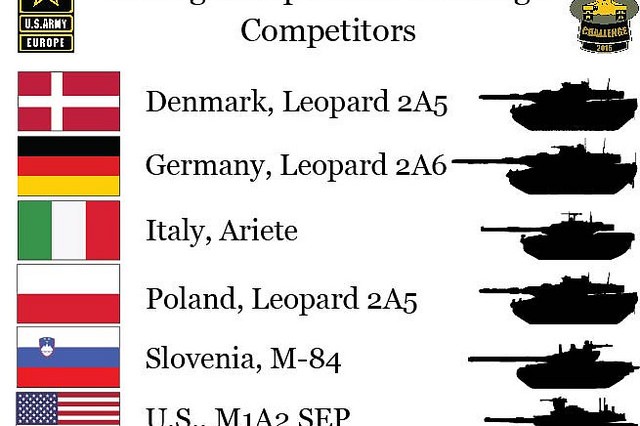
 with only 200+ frankly aged CR2s, might be they have problems preparing for the games and supplying operational needs.





 0.0258sec
 0.10
0.10
 7 queries
 GZIP Disabled