Joined: Feb 2014
From: Somewhere in the pacific, or indian ocean
QUOTE(thpace @ Jan 18 2016, 11:06 PM)
most likely not HSE goyang kaki most worker dont bother aboyt HSE, oily glove just throw one side. Some even smoke HSE canot be babysitting 24/7
then a more stringent enforcement must take place, thats the only solution sorry got used to the safety standard applied in OnG which small fire can lead to whole tanker blew up sky high
France soldiers killed in Alps avalanche near Valfrejus
QUOTE
Five French soldiers have been killed in an avalanche while on a training exercise in the Alps.
The avalanche came down close to Valfrejus, not far from the Italian border, where some 50 soldiers were training off-piste.
Search dogs and helicopters immediately began looking for the soldiers.
Last week, two school pupils and a Ukrainian tourist were killed by an avalanche in Les Deux Alpes, 124km (80 miles) away.
A teacher is now under investigation for manslaughter after he apparently led his pupils on to a closed ski run shortly before the avalanche.
Heavy snow has fallen in the region recently.
About 10 of the military team were immediately found by rescuers and four were described as lightly hurt. But the five who died went into cardiac arrest.
The ROBO-PARACHUTES that could save thousands of lives: US Army reveals drone chutes that can land anywhere without needing a GPS
QUOTE
The improved JPADS software, by Draper, autonomously flies a cargo-carrying parafoil to a precise location. It applies position, navigation, and timing algorithms to be highly accurate, and adapt to real-time environmental conditions.
In recent tests in Arizona, JPADS were dropped from planes, and immediately determined their location using optical sensors to compare local terrain with commercial satellite imagery.
The new JPADS also works with little knowledge of the aircraft's location at the point of being dropped.
INTERNATIONAL MILITARY REVIEW – SYRIA, JAN. 18, 2016
The Islamic State of Iraq and Al-Sham (ISIS) attempted to launch counter-offensive in the Al-Bab Plateau in the province of Aleppo last weekend. However, the militants weren’t able to break the Syrian Arab Army (SAA) defensive positions.
Heavy clashes also were observed in the area of Ayn Al-Bayda where Liwaa Suqour Al-Sahra and the SAA repeal another offensive attempt of the militants. After the fall of Salma, the pro-government forces are continuing to gain momentum in the Latakia province. Recently, the Syrian forces took control of the villages of Kadin, Duwayrikah, Mrouniyat, Kurt Fawqani and the areas of Kurt Tahtani, Kuzbar Mount, Sundian Mount, Alkndisih and Beit Afeefah. Thus, the SAA and its allies are advancing in the direction of the strategic town of Jisr al-Shughour located at the M4 highway.
The SAA and the NDF advanced on the concentration centers of the militant groups in the Sheikh Meskeen region of the Dara’a province. Also, the pro-government forces attacked the militants positions in al-Balad. Southwest of Gharz Prison in the Southern part of Dara’a city was also the scene of fierce clashes. Pro-Syrian sources report that the militants suffered heavy casualties. On Jan.16 the Russian army launched humanitarian operations in Syria. The first humanitarian aid consignment has been delivered by Russian aircrafts to the city of Deir ez-Zor.
According to the Russian Defense Ministry, some international non-governmental organizations have been already delivering humanitarian aid to Syria. However, this aid is mostly being delivered to the areas controlled by militants where most of this aid gets into the hands of extremists and is used for terrorist formations’ supplies.
On Jan.17, Jordanian Minister of State for Media Affairs and Communications Mohammad Momani stated that supporters of ISIS are among Syrian refugees in the camps near the Syrian-Jordanian border. About 12,000 Syrian refugees are in these camps. There is nothing new in the fact that terrorist groups including ISIS use refugee camps especially in Turkey as rear bases for operations in Syria. However, this statement could mark a shift in the Jordanian strategy in this situation. It’s hard to believe that militants were able to successfully use refugee camps at the border without unofficial support of the Jourdanian special services.
SouthFront: Analysis & Intelligence remembers, last week, Russia set up a joint war room with Jordan to coordinate anti-ISIS military operations in Syria.
According to defense researcher Joseph Bermudez, North Korea acquired its first unmanned aerial vehicles (UAVs) from China between 1988 and 1990.
QUOTE
By late 1993, North Korea is said to have begun producing its own analogues of the Chinese Xian ASN-104 UAV, initially called the Panghyon ("Fender"). A later model based on the more advanced ASN-105, presumably called Panghyon-2 is also believed to be produced.
QUOTE
By 1994 North Korea gained access to the Syrian military's Tu-143 Reys reconnaissance UAVs, which are powered by a turbojet engine. North Korea is alleged to have weaponized the drone, making it capable of carrying nuclear or biological weapons.
QUOTE
The same year, North Korea bought 10 export variant Pchela-1T ("Bee") drones from Russia's Kulon Scientific Research Institute.
QUOTE
At around the same time, the institute developed the Pchela-1IK, which had infrared controls, making it capable of flying at night.
QUOTE
In 2005, South Korean intelligence came to possess a detailed North Korean plan of action in case of war. The plans showed that North Korea would direct its military from deep underground bunkers, making decisions based on intelligence from spy satellites and UAVs.
QUOTE
South Korea first learned of UAV use by the North in 2010, when it detected an unidentified UAV on the border over the Yellow Sea.
QUOTE
In February 2012, a military source told Yonhap News that North Korea was developing a strike drone based on the US-made MQM-107 Streaker drone
In 2013, stills on North Korean television showed the drones being used in a military exercise:
QUOTE
South Korea only rang the alarm bells in April 2014, when three "mini-UAVs" were found in South Korea, apparently sent in from North Korea. The UAVs were programmed with GPS coordinates to take photographs of strategic installations in South Korea
QUOTE
Examination of the drones showed them to be modifications of Chinese-made Sky-09 and UV10 drones, the use of which by North Korea was previously unknown to South Korean intelligence.
QUOTE
The finding led South Korean officials to assume that multiple successful drone flights were already made over South Korea without being noticed.
QUOTE
South Korea deployed a radar system to detect low-flying drones after the discovery, believed to be operational in late 2015.
QUOTE
The South Korean forces were more effective in deterring the drone in the latest incident on January 13. Ground troops fired warning shots with small arms, while audio systems sounded a warning to the other side of the DMZ, leading the drone to retreat back to North Korean territory.
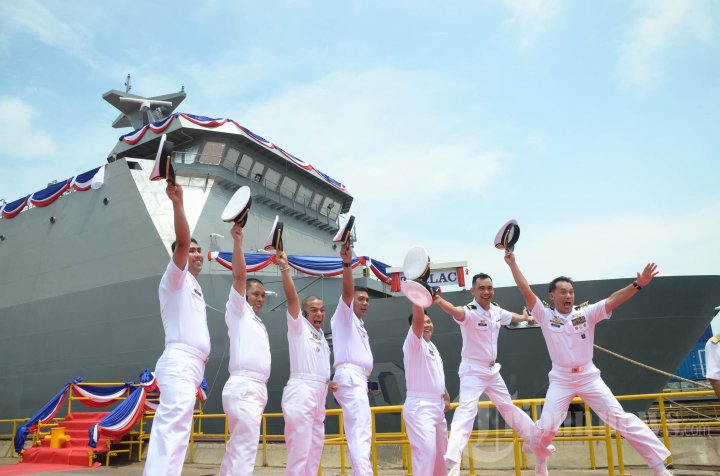
Indonesian Navy’s first SIGMA 10514 PKR launched at PT Pal Surabaya Shipyard
18 January 2016
Damen frigate modularly constructed in the Netherlands and Indonesia in collaborative construction project
PT PAL has launched the first of two SIGMA 10514 Perusak Kawal Rudal (PKR) guided-missile frigates designated for the Indonesian Navy (TNI AL). PT PAL built these ships in collaboration with Damen Schelde Naval Shipbuilding (DSNS). The ceremony was attended by the Guests of Honour, namely the Indonesian Minister of Defense, Ryamizard Rycudu along with Coordinating Minister of Maritime Affairs, Rizal Ramli; ambassadors from neighboring countries; the Governor of East Java, Soekarwo and Chief of the Navy Admiral Ade Supandi.
Coordinating Minister for Maritime Affairs, Rizal Ramli said: “The Launching of PKR1 is a great momentum for the development of the Indonesian Shipbuilding and Maritime Industry. This has shown that Indonesia has the human resources and skills to develop naval vessels. However, we must still improve our technology and knowledge in order to compete internationally. Certainly, this is what we hope to achieve from our partner DSNS.”
Mr. Firmansyah Arifin, President Director of PT Pal: “The launching of the first PKR went very smoothly. We are confident that the installation of the remaining technical parts of the vessel will be carried out in due time, so that the delivery phase can be achieved on or ahead of schedule.”
The SIGMA 10514 PKR frigate was a project initiated in August 2010 by the Indonesian Ministry of Defence. The Ministry awarded a contract to Damen for the construction of the first SIGMA 10514 PKR in December of that year. The first steel was cut by the former Minister of Defence, Mr. Purnomo Yusgiantoro in January 2014 and the keel was laid in April 2014 at PT PAL shipyard in Surabaya. The PKRs are designed and built to endure various missions.
Purpose
Primarily, the vessel will be operated for Anti-Air Warfare, Anti-Surface Warfare, and Anti-submarine Warfare. However, it is also compatible with Maritime Security, Search and Rescue, Patrol, and Humanitarian Support tasks. TNI-Al will be strongly empowered by this state-of-the-art maritime capacity.
Modular construction
The SIGMA 10514 PKR has a proven design and is uniquely built using a modular approach. SIGMA stands for Ship Integrated Geometrical Modularity Approach. In essence, the PKRs are divided into 6 modules of which 4 were built in PT PAL’s shipyards while the other two modules were built and fully tested at DSNS in the Netherlands. The modular building enables greater flexibility, is more cost effective and allows for building in various locations worldwide. Essentially, it provides a large portion of technological transfer. When the 6 modules were complete, PT PAL had the responsibility of integrating them into one sole vessel.
Main characteristics
Technically, the PKR has a length of 105.11 metres, a beam of 14.2 metres and a displacement of 2,365 tons. The vessel features a fully air-conditioned accommodation for up to 122 persons. The helicopter deck is suitable to host a medium sized helicopter hanger with a weight of max 10 tons. The vessel is also equipped with two rigid hull inflatable boats (RHIBs) for rescue and patrol operations. The frigate has a speed of 28 knots, and can sail up to 5,000nm at 14 knots. The endurance is at least 20 days at sea.
The propulsion system of the PKR vessel utilises a combined diesel or electric (CODOE) which consists of two 10,000kW maximum continuous rating (MCR) diesel engines, two 1,300kW electric motors, two double input gearboxes and two 3.65 metre controllable pitch propellers. The vessel is equipped with a sophisticated platform management system that enables operating, control and monitoring of the ship’s auxiliary systems. The vessel will naturally be equipped with a complete, state-of-the-art sensor and weapon package to counter air, surface and sub-surface threats. For self-defence, the vessel is also equipped with comprehensive electronic warfare systems.
The sensory aspect of the SIGMA is equipped with 3-D surveillance radar with a range of 250 km. Furthermore, there is a target indication radar which also has an electro optical fire control system. The sensor array also comprises a Friend or Foe Identification (IFF) system and a hull mounted sonar.
Sharing expertise
Naturally, this strategic project between PT PAL and DSNS also led to a flow of knowledge transfer from Damen to its Indonesian counterpart. In fact, more than 300 people from PT PAL benefitted from the extensive sharing of shipbuilding expertise. PT PAL shipyards also ameliorated its infrastructure as part of the project. Mr. Arifin: “The partnership between PAL and Damen is undoubtedly a great opportunity. In particular, PT PAL has extensively benefitted from a transfer of knowledge and technology. For instance, we have improved our yard standards and trained our workers. Certainly, we would highly recommend the continuation of this strategic partnership for the future.”
Royal Malaysian Navy denies training ship caught fire
By FAISAL ASYRAF - 19 January 2016 @ 1:04 AM
KUALA LUMPUR: Royal Malaysian Navy refuted claims that the engine of the Teguh Samudera training ship was caught on fire.
Navy Chief Admiral Datuk Seri Ahmad Kamarulzaman Ahmad Badaruddin, in a statement, said that in the small incident which occurred at 9.50am yesterday was actually the canvas of the engine cover in the main engine room which was caught on fire.
"There was no casualty involving the Navy personnel. The fire was put down by Sitiawan Fire and Rescue Department in half an hour," he said.
Ahmad Kamarulzaman also stated that the Royal Malaysian Navy would not be held responsible for the incident as the training ship was under maintenance by Limbungan Grade One Marine Services Sdn Bhd at Kampung Acheh in Sitiawan, Perak.
Gareth Jennings, London - IHS Jane's Defence Weekly 18 January 2016
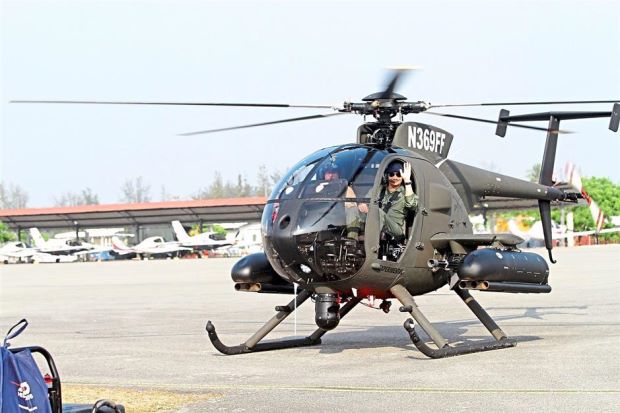
MD Helicopters Inc (MDHI) has signed up a launch customer for its MD 530G armed reconnaissance and light attack platform, which it expects to announce 'imminently', and is in discussions with potential customers for a new armed variant of its MD 900/902 Explorer helicopter also, IHS Jane's was told on 18 January.
Speaking at the IQPC International Military Helicopter conference in London, Andrew Pillado, vice-president business development, said that the company is in the very final stages of negotiations with an Association of Southeast Asian Nations (ASEAN) customer for a number of its single-engined MD 530G platforms, with a contract expected to be announced in the coming days.
The CIA’s program, launched in 2013, initially was conceived as a way of strengthening moderate rebels fighting Bashar al-Assad’s regime
QUOTE
officials have explained that the CIA-backed groups were capturing new territory by “fighting alongside more extremist factions
QUOTE
CIA-backed groups collaborated with Jaysh al-Fateh, an Islamist coalition in which Jabhat al-Nusra—al-Qaeda’s official Syrian affiliate—is a leading player
QUOTE
April 2015 showcased the symmetries between CIA-backed forces and Nusra when he attributed the rebels’ successes to suicide bombers (frequently deployed by Nusra and other jihadists) and “American anti-tank TOW missiles.”
QUOTE
a rebel group that received TOW missiles through CIA channels, explained that “there is something misunderstood by world powers: We have to work with Nusra Front and other groups to fight” both Assad’s regime and the Islamic State.
QUOTE
The fact that CIA-backed groups collaborate with Nusra does not necessarily prove that they harbor jihadist sympathies
QUOTE
Because of Nusra’s strength, CIA-backed factions have entered what has been called a “marriage of necessity” with the jihadist group
QUOTE
Nusra had allowed CIA-backed groups to retain physical control of the missiles so as to maintain the veneer of autonomy, thus allowing them to sustain their relationship with the CIA. In short, Nusra has at times gamed the system.
QUOTE
CIA decided to drastically increase lethal support to vetted rebel factions following the Russian intervention into Syria in late September
Jakarta attack suicide bomber Sunakim gunned down by off-duty police
JAKARTA - Sunakim, alias Afif, the most recognisable of the four militants who mounted the attack in downtown Jakarta last Thursday (Jan 14), was gunned down by an off-duty police officer just as he was about to detonate a bomb he was carrying in a backpack.
Lieutenant-Colonel Untung Sangaji told reporters during a press conference on Monday (Jan 18) at the Indonesian National Police Headquarters that he fired at the militant at close range, emptying his three ammunition magazines in the process.
He did this after he saw Sunakim putting his hand on what appeared to be a switch, and feared that he was about to blow himself up before firing.
Lt-Col Untung, who is an instructor at the Maritime Police Training Centre, was in the Starbucks cafe along Jalan M. H. Thamrin having coffee with a colleague just minutes before the attack. They had left to smoke at another coffeeshop nearby, because smoking was not allowed at Starbucks.
Lieutenant Colonel Untung Sangaji. ST PHOTO: WAHYUDI SOERIAATMADJA After hearing explosions, he rushed out of the coffeeshop only to see the police post at the nearby traffic junction in smoke.
"When I got to the police post, I heard someone from inside shouting: 'Help, help, a police officer is injured."
He added that a crowd had already gathered at the scene - not to help but to take photos with their cellphones. "Seconds later there was a sound, 'bang-bang', and one of the people who was taking a selfie fell over. I saw his feet shaking."
The photos and closed-circuit television footage of Sunakim - who was wearing a baseball cap, T-shirt and jeans - shooting into the crowd and gunning down policemen on Jalan Thamrin are among the defining images of the attack that have stunned Indonesians.
He and his three accomplices died during the siege on the Starbucks cafe and police post, less than a hundred metres from the popular Sarinah Mall.
Related Story Jakarta attacks shooter identified as ex-terror convict
Police previously said Sunakim, 34. was one of two militants in the group who had served time in jail for terror-related offences
Sunakim had also taken part in training at a paramilitary camp in Aceh province. The camp, set up by Jemaah Islamiah (JI) founder Abu Bakar Bashir, was shut down after it was raided by police.
The other three militants killed during the attack are Dian Joni Kurniadi, 25; Ahmad Muhazin, 25; and Muhammad Ali, 39.
Embarrassment for Germany as it emerges the Tornado jets it sent to Syria for spying missions can't fly at night... because the lights in the cockpit are too bright
QUOTE
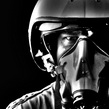
German Tornado jets deployed to Syria for spying missions can't fly at night because the cockpit lights blind the pilots
QUOTE
The six aircraft sent to Syria are fitted with surveillance technology and had been touted as being capable of taking high-resolution photos and infrared images, even at night and in bad weather.
QUOTE
night flights were impossible as pilots are blinded by the cockpit light which is far too bright.
QUOTE
'It is possible that the night goggles worn by pilots result in reflections,'
Embarrassment for Germany as it emerges the Tornado jets it sent to Syria for spying missions can't fly at night... because the lights in the cockpit are too bright
I saw where the F-35 gets one of its most classified features, and it’s fascinating
QUOTE
After the jet is assembled and before it can take flight, three laser-guided robots apply the Radar-Absorbing Material (RAM) to each of Lockheed Martin’s F-35 Lightning II variant aircraft.
QUOTE
First, each F-35 variant is assembled in Lockheed Martin’s mile-long production facility.
Once an F-35 is ready to leave the production line, it is carefully rolled …
… into the windowless, multistory, 226,000-square-foot Aircraft Final Finishes (AFF) complex.
The jet is placed in one of two paint bays where three laser-guided robots are programmed to spray RAM on all surfaces except the tails and various parts that are coated at a separate area called the Robotic Component Finishing System.
According to an SAE International report, the first coating process was completed on a F-35B in 2008 and took three days.
Lockheed Martin’s AFF facility services seven planes a month and is expected to increase to 17 jets by 2020.
Embarrassment for Germany as it emerges the Tornado jets it sent to Syria for spying missions can't fly at night... because the lights in the cockpit are too bright


 Military Thread V19
  Jan 18 2016, 11:54 PM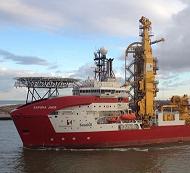


 Quote
Quote









 0.6743sec
 0.53
0.53
 6 queries
 GZIP Disabled