Yes, Really, Destroy ISIS With Turboprop Light Attack Aircraft
Michael W. Pietrucha December 9, 2015
The Obama administration is searching for options in Syria. The conflict, which has raged for four years, shows no signs of abating. The Russian entry into the war on behalf of the Syrian regime is an unwelcome development that will serve to increase civilian casualties.
For the United States and NATO, there are few good policy options available, and Western governments have long since lost the illusion that they can exert any sort of control over events in Syria. The conflict has become a battleground for long-deferred grievances, policy agendas and power struggles throughout the region.
At this stage, U.S. strategy options arguably revolve around containing the conflict within Iraq and Syria while trying to mitigate the effects on vulnerable populations in the conflict zone. Air power offers tactical options to support containment while remaining at a distance and minimizing the involvement of U.S. ground forces. There are geographical challenges inherent with supporting the fast-jet fighter and bomber force, and there are emerging options for introducing a light attack capability that America hasn’t employed since Vietnam.
If the United States is planning on increasing the presence of ground forces in support of Iraqi and Kurdish ground elements, we should bring along a little local air power and reintroduce light attack aircraft.
QUOTE
Light attack
It doesn’t have to be this way. It’s possible to base combat aircraft inside Iraq. More accurately, it would be possible if the Air Force had any.
In Vietnam, the Air Force relied heavily on the Korean War vintage A-1E Skyraider for close air support and escort for rescue aircraft. The Pentagon transferred those aircraft to the South Vietnamese Air Force in 1973, and the U.S. Air Force transitioned to the A-7 Corsair II and the A-37B Dragonfly.
By 1991, the Dragonflies had been retired and the United States was out of the light attack business.
Turboprop light attack aircraft like the AT-6 Coyote or A-29 Super Tucano require a less constrained basing structure and much less logistical support than their fast jet counterparts. Fully armed, they carry the same bombload as an F-16 with three external fuel tanks, while gaining roughly twice the unrefeueled endurance.
They can operate from rough fields and are comparative fuel-sippers. The engines are highly reliable and resistant to foreign object damage.
Importantly, they use the same weapons and tactics as modern fighter/attack aircraft, capable of aerial gunnery, rocket employment and release of a variety of precision bombs. Today, every Air Force and Navy pilot receives flight training in the T-6 Texan II, making them familiar with low wing turboprops in this class.
The AT-6 and A-29 are off-the-shelf aircraft. The AT-6C is a fencer, benefiting from commonality with the A-10C Thunderbolt II and T-6 Texan II — and possesses a very robust communications and data array. The A-29 is a bruiser, with a higher, heavier airframe and a slightly heavier stores load. They each use the PT-6A-68 turboprop delivering 1,600 shaft horsepower, making them some of the most powerful single-engine turboprop aircraft in the world.
Both aircraft, combat loaded, are comparable in power-to-weight ratio and wing loading to a similarly configured P-47D Thunderbolt of World War II fame.
SHAH ALAM: DASSAULT Aviation has teamed up with the Weststar Group to offer the Rafale for the MRCA programme, industry sources have revealed to Malaysian Defence. It was probably this industrial collaboration – led by Weststar – that led to various stories coming out from France that claimed the deal for the Rafale was imminent.
Unfortunately for them, it was another defence deal that Weststar’s subsidiary, Global Komited Sdn Bhd, signed for recently. The deal. Apart from this contract, Global Komited has also won contracts to supply the various types of 4X4s to the Army and recently the IAG Jaws APC to the police.
Malaysian Defence contacted Weststar for comments for this story, however, no comments were forthcoming.
Industry sources told Malaysian Defence that among others, if the Rafale was selected, at least 15 of the aircraft will be locally assembled by Weststar, which is also expected to lead the ISS for the fighters.
Apart from the local assembly, the Rafale team -according to the industry sources – is also offering the Alenia Aermacchi M346 advanced trainer aircraft as part of the deal. Details surrounding this part of the deal is limited however.
So what is the likely deal on offer? Most likely that the M346 will replaced the six MB339CMs LIFT in service with Pulatibang 3 at the Kuantan Airbase.
As the M346s will replace the CMs, the former’s FMS is expected to be part of the deal replacing the latter which is operational at the Kuantan airbase.
But wouldnt adding another aircraft will increased the cost of the Rafale offer then? Technically, no, as the trainer jets will be “FOC” as part of the package deal. We will have to pay for the cost of support and maintenance of course.
Like the British, the French are aware that their aircraft (Rafale) is quite pricey. By offering the Master as part of a package deal, it hoped to kill two birds at the same time. Fulfilled the MRCA requirement with some economic justification while at the same time solved the looming LIFT gap as no upgrades are slated for the two jet trainers in RMAF in the near future.
As the Master is also capable conducting similar roles as the Hawks, it would also be the obvious candidate for the mission – extra ones – when the time come to retire them (Hawks). Anyhow, if the Typhoon is chosen instead, Alenia will still benefit from it. And it could still offer the M346 separately to RMAF for the LIFT and light strike missions.
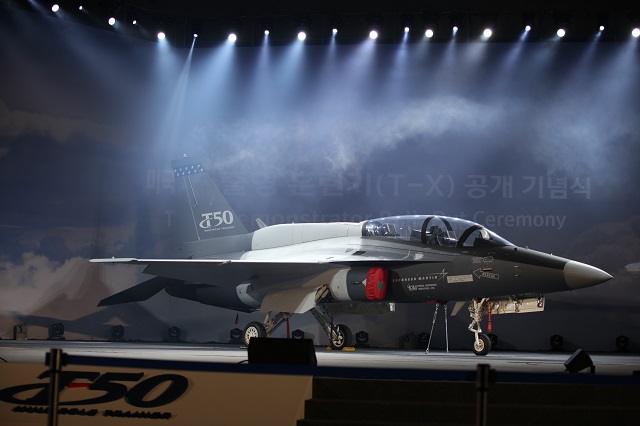
Before anyone say T50, do note that, yes, I am aware that the plane is cheaper and more popular, than either the Hawk AJT and M346. However as the F16 or for that matter the F35 have not been selected for the MRCA programme, it is unlikely that the T50 will offered as part of a package. Honestly I don’t think Boeing is that desperate to offer the T50, bearing in mind the TX programme of the USAF.
That said I stand to be corrected.
Personally I think RMAF should get out of the LIFT and light strike role completely and send its trainee fast jet pilots to train overseas. It will be much cheaper than operating several LIFT and light strike squadrons.
What about the light strike role then? Well what is the use of the MRCAs if its not used for this type of missions? Its not like we are going to run into low intensity conflict that often. The Hornets were used during Lahad Datu so its not that the MRCA – which ever aircraft chosen – cannot do the same thing.
Yes, using a light strike aircraft in a permissive environment is cheaper but having three or four different type of fast jets are considerably more expensive. It is time for RMAF to cut down its aircraft inventory to reflect its budgetary realities. Which is why the MRCA programme is the best chance for it to do so though I admit the initial investment costs is simply staggering.
Jokowi Commends DI for Building N219 Aircraft Independently
TEMPO.CO, Bandung - President Joko Widodo (Jokowi) said the N219 national transport airplane prototype, displayed in the hangar of state-owned aircraft maker, PT Dirgantara Indonesia (PT DI) in Bandung, West Java, on Thursday, has been built independently in Indonesia.
"I welcome the development of the N219 aircraft by the aviation industry at home. N219 is born in Indonesia for Indonesia," Jokowi said in his written address, read out by Coordinating Minister for Political, Legal and Security Affairs, Luhut Pandjaitan, at the first display of the aeroplane's prototype.
The N219 will head to head with some type in its class, namely Canadian DHC6 Twin Otter and formerly Spanish built CASA C-212 Aviocar.
Initially, the event was expected to be attended by Jokowi, who was planned to give the aircraft a name. But due to certain reasons, he asked Pandjaitan to represent him at the historic event for the Indonesian national aviation industry.
In his written address, Jokowi expressed hope that the national aircraft transport industry will expedite connectivity among remote areas and will be able to compete and penetrate the world market. He said the new aircraft is expected to speed up connectivity in the archipelago.
The aeroplane will also reinforce the country's vision in the face of aviation competition.
The multi-function N219 plane, which has been built indigenously, has been adjusted to counter the conditions of airports in the eastern regions of Indonesia. It is hoped to link isolated areas in Indonesia efficiently and at a competitive price.
Therefore, the President called on all parties to extend their support to the country's N219 aircraft. The government and PT DI continue to gather data and coordinate in order to boost PTDI to continue producing good and secure aircraft.
On the occasion, PT DI also displayed other products, namely the CN-235, N250 and N212 aircraft.
The rollout of the N219 indicated that the design and structure of the prototype of the plane has been finished and is ready to be introduced to the public.
The N219 is a 19-seat capacity passenger aircraft. The plane was built following cooperation between PTDI and the National Aviation and Space Agency (LAPAN).
LAPAN Head, Prof Dr Thomas Djamaluddin, said the maiden display and the naming of the plane has two main objectives. It aims to build independence in the national aviation industry and become part of the awakening of the national aviation industry after Indonesia launched its N250 aircraft in 1995. It also marks the beginning of a national awakening.
Thomas explained that the N219 aircraft has been built by strong human resources, who have mastered aviation technology, beginning from design, certification process to production.
"The main objective is to build independence in the development of the aviation industry," he said.
The aeroplane is categorically small, but it has a simple design and low complexity. The N219 can serve a lesson for Lapan and PT DI engineers so that they are able to produce aircraft build in Indonesia.
"The plane is designed in accordance with the conditions of isolated areas in Indonesia," Djamaluddin said.
The N219 can land on a short runway and fly over hilly topographic conditions, such as those found in Medan, North Sumatra, and Papua. A plane of this type can deal with such conditions, he added.
He also pointed out that it is able to take off from a 800-meter runway and maneuver hilly areas.
The design for the aircraft has been solely produced by Indonesian engineers.
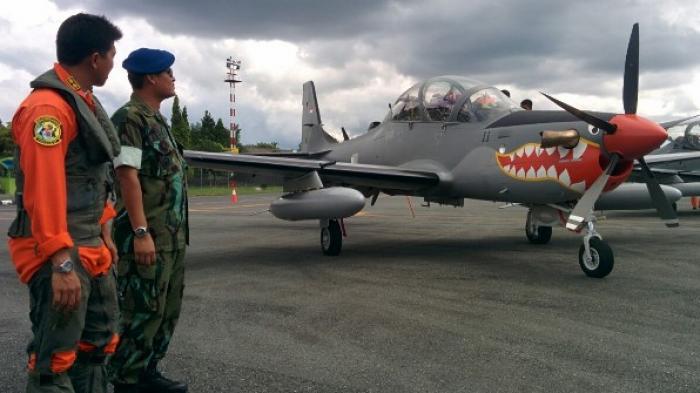
Indonesian Air Force received delivery of four more Super Tucano. With this delivery the Indonesian Air Force has now received a total of 12 from 16 units ordered. (Photo by banjarmasinpost.co.id/rahmadhani)
Why is Indonesia not in the Saudi-led Sunni coalition against terror?
Surely Indonesia, with a Sunni population of 200 million, would have an interest in joining
Robert Fisk 10 hours ago
The Saudis love coalitions. The Sunni monarchy had the Americans, the British, the French and sundry other oil importers on their side to drive Saddam’s legions out of Kuwait in 1991. Earlier this year, the Saudi military – for which read the youngest defence minister in the world and the ambitious Deputy Prime Minister, Mohamed bin Salman al-Saud – struck at the Kingdom’s Shia Houthi enemies in Yemen in yet another coalition. This included not only Saudi fighter-bombers but jets from Qatar, the Emirates, Kuwait, Bahrain, Egypt, Jordan, Morocco and Sudan.
But now – with all the drama of a new Hollywood franchise – the Saudis have announced their new multinational military epic against the “disease” of Islamic “terror”, starring more Muslim and would-be Muslim states than ever before assembled since the time of the Prophet. Once more, as in the Yemen adventure (already plagued by humanitarian catastrophe and credible accounts of the slaughter of civilians under Saudi air attacks), Prince Mohamed, aged 31, is leading his country.
In all seriousness, he announced that the battle of this latest “coalition” – which includes countries as mythical as “Palestine”, as corrupt as Afghanistan and as powerless as Lebanon, with bankrupt Chad and the Islamic Republic of the Comoros thrown in for good measure – would require “a very strong effort to fight”. Few spotted, however, the curious absence from the 34-strong “coalition” of Indonesia, which has the world’s largest Muslim population.
This is very strange, since the 2002 Bali bombings, which killed 202 mostly foreign civilians, brought al-Qaeda into Indonesia’s own “war against terror”. Surely Indonesia, with a Sunni population of more than 200 million, would have an interest in joining their fellow Sunni Muslims in this unprecedented “coalition”? Or could it be that with more than 30 Indonesian maids on Saudi Arabia’s death row after grotesquely unfair trials, the country wants an end to this injustice before committing its army to the Kingdom?
Pakistan is an interesting addition because the last time it was asked to fight for the Saudis, in the present disastrous Yemen civil war, the parliament in Islamabad rejected Saudi Arabia’s request after the Saudis insisted that only Sunni Muslim soldiers in the Pakistani army would be allowed to participate.
All in all, then, a pretty vast “coalition” – most of whom are saddled with massive international debt and face constant economic collapse. So the real figures behind this extraordinary military force is not how many countries plan to participate, but how many millions – or billions – of dollars Saudi Arabia plans to pay them for their fraternal military assistance.
Along with the obvious question: just which strain of the “terror disease” does young Prince Mohamed intend to destroy? The Isis version – albeit spiritually founded on the same Sunni Wahabi purist doctrines which govern the Saudi state? The Nusrah version, which is espoused by the very same Qatar which is now part of this weird “coalition”? The Shia Houthis of Yemen, who are regarded as pro-Iranian terrorists by the Sunni Yemeni President whom the Saudis support? And what kind of relationship do the Saudis envision with the Iranians who are fighting in both Iraq and Syria against the same Isis “terror” which our favourite Saudi prince identifies as part of the “disease”? Neither Shia Iran nor Shia Iraq, needless to say, is part of the new international Muslim army.
So we know there’s a “coalition”. But who will it fight? How much will it be paid? And why is this a largely Sunni Muslim force rather than just a Muslim “coalition”?
Jon Grevatt, Bangkok - IHS Jane's Defence Weekly 14 December 2015
Indonesia's land systems specialist PT Pindad aims to secure in 2016 a production contract for its under-development 6x6 Badak 90 mm direct fire vehicle (DFV), the state-owned company revealed on 14 December.
PT Pindad said in a press release that it oversaw trials of the vehicle earlier this month with the support of the Ministry of Defence (MoD) and that the exercises were part of the certification process required to support a sale to the Indonesian Army.
Silmy Karim, chief executive officer of PT Pindad, said that with "good co-operation [between the company and the MoD] the Badak will strengthen the ranks of the army next year".
Navy to choose submarines from among three vendors
Nani Afrida The Jakarta Post, Jakarta | December 16 2015 | 5:09 PM
The Navy is yet to make a decision on what type of submarines it will purchase to complete its weapons system procurement in the next five-year strategic plan.
Navy Chief of Staff, Admiral Ade Supandi said it would be some time before a decision could be made.
“The Navy and the military headquarters are still conducting a strategic review of the matter. The procurement takes time because it must go through several phases,” Ade said in Jakarta on Tuesday.
According to Ade, the first phase would be drawing up the submarines’ specifications, the second phase would be planning the budget and the last phase would be building the vessels.
The Navy is currently reviewing three types of submarine from three countries; the Russian Kilo class, the South Korean Chang Bogo and a German design.
“We are still conducting reviews, but we expect to buy a diesel-electric type, [from one of those vendors]” he said.
Previously, Navy spokesperson Comr. Muhammad Zainuddin told The Jakarta Post that the force had opted to procure Kilo-class submarines from Russia as part of the 2015-2019 strategic plan.
“There are many types of Kilo-class submarines, we have yet to decide which type we will purchase,” Zainuddin said.
The Russian Kilo-class 636 submarines are mainly intended for anti-ship and anti-submarine operations in shallow waters.
The type is also resilient in a variety of weather conditions. Countries that operate the Kilo class include Algeria, China, India, Romania and Vietnam.
Indonesia has a long history of procuring submarines from Russia and the former Soviet Union. In 1967, it acquired 12 Whiskey-class submarines
Indonesia also procured three Chang Bogo-class submarines from South Korea in 2011. Two of the boats would be built in South Korea, while the last would be built in Indonesia.
Defense Minister Ryamizard Ryacudu said the first two boats were now more than 50 percent completed.
Submarines, with their stealth capacity, are regarded as effective deterrents and Zainuddin said that Indonesia needed at least 12 such vessels to protect its territory.
The Navy currently operates two German-made submarines, the KRI Cakra (401) and KRI Nenggala (402), which were built in the 1980s. The boats are due to be decommissioned in 2020.
According to Ade, the Navy will make its decision regarding which submarines to purchase based on the current state budget situation.
The Navy is currently busy preparing a joint exercise, code-named “Komodo” with foreign navies from 32 countries to be staged in April 2016.
Ade said the exercise would take place off Padang, West Sumatra, and would focus on disaster mitigation.
“We’ve selected Padang, because the area is a disaster-prone area. We also want to introduce them to the area and our rich country,” Ade said.
He expected that the joint exercise would serve as a conduit for a transfer of knowledge and boost relations between neighboring countries.
Japan has agreed with Indonesia to start negotiations on the transfer of defence equipment and technology to the Southeast Asian country, as they aimed to forge stronger ties amid China’s muscle-flexing in the South China Sea.
Japanese Foreign Minister Fumio Kishida made the announcement during a joint press conference with his Indonesian counterpart as well as the Japanese and Indonesian defence ministers, following their first “two-plus-two” security talks in Tokyo.
The agreement was reached during the first such talks between Japan and a member of the Association of Southeast Asian Nations (Asean).
Japan has been trying to boost security ties with the 10-country Asean amid China’s muscle-flexing in the South China Sea.
Japanese Defence Minister Gen Nakatani said dialogue is the key to settle disputes in the South China Sea. Some Asean members are embroiled in overlapping territorial claims in that sea with Beijing.
Retno Marsudi, Indonesia’s foreign minister, meanwhile, said her country and Japan also agreed to set up a hotline between their countries’ foreign and defence ministers, and to regularly hold two-plus-two talks.
The ministers said they also discussed counterterrorism measures, with Indonesian Defence Minister Ryamizard Ryacudu expressing hope for bilateral cooperation to fight terrorism.
While Japan and Indonesia do not have overlapping territorial claims with China in the South China Sea, unlike Brunei, Vietnam, Malaysia and the Philippines among Asean members and Taiwan, both countries see the importance of upholding international law and freedom of navigation regarding the sea, Japanese officials said.
Experts in Asean affairs noted the strategic importance for Japan to forge a two-plus-two framework with Indonesia given its clout in Asean and Tokyo’s need to demonstrate even stronger ties with the regional bloc amid a severe security environment in Asia.
“Indonesia is a leader in Asean and has a major influence in Southeast Asia’s international politics. It has a big say on how Asean is moving forward,” said Mie Oba, a professor of international relations at the Tokyo University of Science.
“For Japan, setting up and launching a two-plus-two framework with regional-power Indonesia is significant in boosting Japan’s relations with Asean,” Oba said.
Indonesian Navy Sigma PKR 10514 with the Oto Melara 76mm Super Rapid Gun Stealth Cupola installed. Looks like next armament to be install would be the Millenium Gun CIWS in front of the bridge.


 Military Thread V19
  Dec 10 2015, 07:46 AM


 Quote
Quote







 0.0458sec
 0.45
0.45
 7 queries
 GZIP Disabled