Welcome Guest ( Log In | Register )

Bump Topic Topic Closed RSS Feed
134 Pages « < 16 17 18 19 20 > » Bottom

Outline · [ Standard ] · Linear+

 LYN Catholic Fellowship V01 (Group), For Catholics (Roman or Eastern)

views
     
mobileapps
post Apr 29 2015, 08:51 PM

On my way
****
Senior Member
546 posts

Joined: Jul 2010
QUOTE(De_Luffy @ Mar 4 2015, 09:44 PM)
Catholics is the first Christianity religion after Christ ascended to heaven, With Apostle Simon Peter as the first pope

while Protestantism is branched out from Catholics with totally different view from Catholics
*
curious, if protestants are off from the catholic church, why do their apostles creed say they believe in the holy catholic church? hmm.gif

all i know is, they branched off from the Roman catholic, due to the ahem stuffs they did back then, which were not biblical.


de1929
post Apr 29 2015, 09:08 PM

Regular
******
Senior Member
1,920 posts

Joined: Jan 2009


QUOTE(mobileapps @ Apr 29 2015, 08:51 PM)
...
curious, if protestants are off from the catholic church, why do their apostles creed say they believe in the holy catholic church?  hmm.gif
...
*
apostle creed was created much much earlier before protestant was born.
khool
post Apr 29 2015, 10:27 PM

Getting Started
**
Junior Member
225 posts

Joined: Mar 2008


Catholic, is derived from the greek word 'Katolikos', meaning universal / all encompassing.

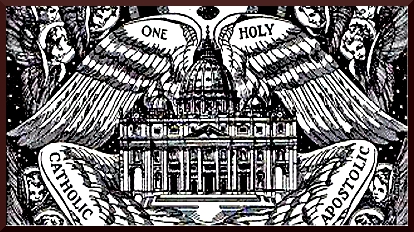
One, holy, catholic and apostolic ... in Protie terms, it is catholic with a lower case 'c' representing a universal church (according to them) and not the Roman Catholic Church.

In the case of the Roman Catholic Church, "One, Holy, Catholic and Apostolic Church" means the marks of the true Church, founded by Jesus Christ Himself ... not by a human.

This post has been edited by khool: Apr 29 2015, 10:29 PM
khool
post Apr 29 2015, 10:33 PM

Getting Started
**
Junior Member
225 posts

Joined: Mar 2008


QUOTE(yeeck @ Apr 29 2015, 02:14 PM)
Is God Real? Does Science Answer "Is There a God?"
by Rich Deem 

Introduction
Does God Exist?
The reality of God's existence is the most important question, since it has eternal consequences. The evidence for God's existence comes primarily from the design of the universe. It is virtually impossible that all the physical laws would just happen to be tightly constrained by chance in order for stars and galaxies to exist.

Rich Deem

Part 1 of the introduction for non-believers showed that strong atheism contradicts its own worldview by believing the universe has a natural cause despite the lack of observational evidence for such a belief. However, since there is no direct observational evidence regarding the origin of the universe, why should one believe the equally unobserved hypothesis that God created the universe? Although there is no direct evidence for the cause of the universe, we now have a fair amount of knowledge about the early history of the universe and the laws that govern it, which provide us with indirect evidence that a super-intelligent Agent designed the universe. In order to keep this essay brief, much of the supporting information will not be included. However, you can click the links to the full-length articles for the details.

Detecting the non-physical
Atheists tend to fall into one of two camps. First, are the atheists who say that science cannot have anything to say about the existence of God. However, recently, the "new atheists" think that they can prove the non-existence of God through science. Although science cannot directly detect God, it can examine His creation. Consider the non-physical concept of love. We all accept that love exists, although it cannot be directly measured by science. However, if we observe those who love each other, we can indirectly measure the affect of love on these individuals' actions. For example, we might notice that they spend a lot of time together, they are constantly helping each other in various ways, and they come to each other's defense when the other is threatened in some way. Although we cannot measure love directly, we can measure the indirect effects of love. Likewise, although we cannot measure God directly, we can examine the universe to detect God's imprint on the physical world.

Evidence for design?

The best evidence for design can be seen in the nature of the universe and how it came to be. The process of discovery continues, since one of the fundamental properties of the universe, dark energy (or the cosmological constant), was discovered late in the last century. New studies continue to add to our knowledge about the universe and its extremely unlikely makeup.

The Big Bang
The Big Bang theory states that the universe arose from a singularity of virtually no size, which gave rise to the dimensions of space and time, in addition to all matter and energy. At the beginning of the Big Bang, the four fundamental forces began to separate from each other. Early in its history (10-36 to 10-32 seconds), the universe underwent a period of short, but dramatic, hyper-inflationary expansion. The cause of this inflation is unknown, but was required for life to be possible in the universe.

Excess quarks
Quarks and antiquarks combined to annihilate each other. Originally, it was expected that the ratio of quarks and antiquarks to be exactly equal to one, since neither would be expected to have been produced in preference to the other. If the ratio were exactly equal to one, the universe would have consisted solely of energy - not very conducive to the existence of life. However, recent research showed that the charge�parity violation could have resulted naturally given the three known masses of quark families.1 However, this just pushes fine tuning a level down to ask why quarks display the masses they have. Those masses must be fine tuned in order to achieve a universe that contains any matter at all.

Large, just right-sized universe
Even so, the universe is enormous compared to the size of our Solar System. Isn't the immense size of the universe evidence that humans are really insignificant, contradicting the idea that a God concerned with humanity created the universe? It turns out that the universe could not have been much smaller than it is in order for nuclear fusion to have occurred during the first 3 minutes after the Big Bang. Without this brief period of nucleosynthesis, the early universe would have consisted entirely of hydrogen.2 Likewise, the universe could not have been much larger than it is, or life would not have been possible. If the universe were just one part in 1059 larger,3 the universe would have collapsed before life was possible. Since there are only 1080 baryons in the universe, this means that an addition of just 1021 baryons (about the mass of a grain of sand) would have made life impossible. The universe is exactly the size it must be for life to exist at all.

Early evolution of the universe
Cosmologists assume that the universe could have evolved in any of a number of ways, and that the process is entirely random. Based upon this assumption, nearly all possible universes would consist solely of thermal radiation (no matter). Of the tiny subset of universes that would contain matter, a small subset would be similar to ours. A very small subset of those would have originated through inflationary conditions. Therefore, universes that are conducive to life "are almost always created by fluctuations into the[se] 'miraculous' states," according to atheist cosmologist Dr. L. Dyson.4

Just right laws of physics
The laws of physics must have values very close to those observed or the universe does not work "well enough" to support life. What happens when we vary the constants? The strong nuclear force (which holds atoms together) has a value such that when the two hydrogen atoms fuse, 0.7% of the mass is converted into energy. If the value were 0.6% then a proton could not bond to a neutron, and the universe would consist only of hydrogen. If the value were 0.8%, then fusion would happen so readily that no hydrogen would have survived from the Big Bang. Other constants must be fine-tuned to an even more stringent degree. The cosmic microwave background varies by one part in 100,000. If this factor were slightly smaller, the universe would exist only as a collection of diffuse gas, since no stars or galaxies could ever form. If this factor were slightly larger, the universe would consist solely of large black holes. Likewise, the ratio of electrons to protons cannot vary by more than 1 part in 1037 or else electromagnetic interactions would prevent chemical reactions. In addition, if the ratio of the electromagnetic force constant to the gravitational constant were greater by more than 1 part in 1040, then electromagnetism would dominate gravity, preventing the formation of stars and galaxies. If the expansion rate of universe were 1 part in 1055 less than what it is, then the universe would have already collapsed. The most recently discovered physical law, the cosmological constant or dark energy, is the closest to zero of all the physical constants. In fact, a change of only 1 part in 10120 would completely negate the effect. The physical constants required to produce carbon and oxygen in stars is also narrowly fine tuned. A value for Hoyle state 2% higher than the measured value would prevent the formation of carbon.5 A value 2% lower than the measured value would produce lots of carbon, but no oxygen.5 Both are essential atoms for life.

Universal probability bounds
"Unlikely things happen all the time." This is the mantra of the anti-design movement. However, there is an absolute physical limit for improbable events to happen in our universe. The universe contains only 1080 baryons and has only been around for 13.8 billion years (1018 sec). Since the smallest unit of time is Planck time (10-45 sec),6 the lowest probability event that can ever happen in the history of the universe is:

1/1080 x 1/1018 x 1/1045 =1/10143

Evidence for God: 50 Arguments for Faith from the Bible, History, Philosophy, and Science So, although it would be possible that one or two constants might require unusual fine-tuning by chance, it would be virtually impossible that all of them would require such fine-tuning. Some physicists have indicated that any of a number of different physical laws would be compatible with our present universe. However, it is not just the current state of the universe that must be compatible with the physical laws. Even more stringent are the initial conditions of the universe, since even minor deviations would have completely disrupted the process. For example, adding a grain of sand to the weight of the universe now would have no effect. However, adding even this small amount of weight at the beginning of the universe would have resulted in its collapse early in its history.

What do cosmologists say?
Even though many atheists would like to dismiss such evidence of design, cosmologists know better, and have made statements such as the following, which reveal the depth of the problem for the atheistic worldview:

"This type of universe, however, seems to require a degree of fine-tuning of the initial conditions that is in apparent conflict with 'common wisdom'."7
"Polarization is predicted. It's been detected and it's in line with theoretical predictions. We're stuck with this preposterous universe."8
"In all of these worlds statistically miraculous (but not impossible) events would be necessary to assemble and preserve the fragile nuclei that would ordinarily be destroyed by the higher temperatures. However, although each of the corresponding histories is extremely unlikely, there are so many more of them than those that evolve without "miracles," that they would vastly dominate the livable universes that would be created by Poincare recurrences. We are forced to conclude that in a recurrent world like de Sitter space our universe would be extraordinarily unlikely."9
Speculative "solutions" to the design "problem"
The newest "solution" to design in the universe is a belief in the multi-universe theory. This theory requires one to believe that there are more universes in existence than the number of all the subatomic particles that exist in our universe. Our universe just happened to be one of the few that is able to support life. Here is what a recent article from Science says about this hypothetical "multiverse" spinning off an "infinity" of other universes:

"Uncomfortable with the idea that physical parameters like lambda [cosmological constant] are simply lucky accidents, some cosmologists, including Hawking, have suggested that there have been an infinity of big bangs going off in a larger 'multiverse,' each with different values for these parameters. Only those values that are compatible with life could be observed by beings such as ourselves."10

What scientific evidence exists to support the multiverse model? None! Not only is there no evidence, the physics of our own universe requires that we will never be able to obtain any evidence about any other universe (even if it does exist). Even secular websites admit that such ideas amount to nothing more than unfalsifiable metaphysics:

"Appeals to multiple or "parallel" cosmoses or to an infinite number of cosmic "Big Bang/Crunch" oscillations as essential elements of proposed mechanisms are not acceptable in submissions due to a lack of empirical correlation and testability. Such beliefs are without hard physical evidence and must therefore be considered unfalsifiable, currently outside the methodology of scientific investigation to confirm or disprove, and therefore more mathematically theoretical and metaphysical than scientific in nature. Recent cosmological evidence also suggests insufficient mass for gravity to reverse continuing cosmic expansion. The best cosmological evidence thus far suggests the cosmos is finite rather than infinite in age."11

According to Paul Davies:

"Whether it is God, or man, who tosses the dice, turns out to depend on whether multiple universes really exist or not�.If instead, the other universes are relegated to ghost worlds, we must regard our existence as a miracle of such improbability that it is scarcely credible."

Theistic solution - measurable design
On the other hand, the deist or theist says that God designed the universe with just the right laws of physics. Note that neither the multiverse nor the "God hypothesis" is testable. However, the "God hypothesis" is much simpler. The naturalistic explanation requires the presence of a complicated, unproved super universe that has the capacity to randomly spew out an infinite number of universes with different laws of physics. How does this hypothetical super universe know how to do this? Why would it even want to do this? Ultimately, why should there be any universe at all? None of these questions are logically explained by naturalism. Only an intelligent Being would be motivated and expected to produce any kind of universe such as what we see. If we use Occam's razor, which states that one should use the simplest logical explanation for any phenomenon, we would eliminate the super universe/multi-universe explanation in favor of the simpler God-designed universe model. The evidence for design in the universe and biology is so strong that Antony Flew, a long-time proponent of atheism, renounced his atheism in 2004 and now believes that the existence of a Creator is required to explain the universe and life in it. Likewise, Frank Tipler, Professor of the Department of Mathematics at Tulane University, and a former atheist, not only became a theist, but is now a born-again Christian because of the laws of physics.12

Who created God?
A common objection to the "God hypothesis" is the problem of how God came to be. If everything has a cause, why does God get an exception? The problem with such reasoning is that it assumes that time has always existed. In reality, time is a construct of this universe and began at the initiation of the Big Bang.13 A God who exists outside the time constraints of the universe is not subject to cause and effect. So, the idea that God has always existed and is not caused follows logically from the fact that the universe and time itself was created at the Big Bang. The Bible makes these exact claims - that God has always existed14 and that God created time,15 along with the entire universe,16 being described as an expanding universe.17 Why can't the universe be uncaused? Of course, it is possible that the universe is uncaused. However, there is a tremendous amount of evidence that contradicts that idea (see part 1). So, an atheist who claims to live by logic and evidence cannot arbitrarily assign eternity to a universe that is clearly temporal.

Conclusion
No, God has not left His name etched onto the surface of planets. However, there is abundant evidence that the universe was designed by super intelligent Agent, who purposed that the universe should exist and be capable of supporting advanced life. The design of the universe is just one line of evidence that tells us that God is real and created the universe. The design of the earth and solar system is also quite impressive. Likewise, chemistry and physics preclude the possibility that life evolved on earth. In addition, human beings are remarkably different from every other animal on earth, suggesting a departure from naturalistic processes.
*
Speaking of the Big Bang Theory, here's a nugget of information ...

Georges Henri Joseph Édouard Lemaître (French: [ɔə ləmɛt] ( listen); 17 July 1894 – 20 June 1966) was a Belgian priest, astronomer and professor of physics at the Catholic University of Leuven.[1] He proposed, independently of Russian physicist Alexander Friedman, who found it in 1922, the theory of the expansion of the universe, widely misattributed to Edwin Hubble.[2][3] He was also the first to derive what is now known as Hubble's law and made the first estimation of what is now called the Hubble constant, which he published in 1927, two years before Hubble's article.[4][5][6][7] Lemaître also proposed what became known as the Big Bang theory of the origin of the Universe, which he called his "hypothesis of the primeval atom" or the "Cosmic Egg".[8]

Continue here ... http://en.wikipedia.org/wiki/Georges_Lema%C3%AEtre

mobileapps
post Apr 29 2015, 10:53 PM

On my way
****
Senior Member
546 posts

Joined: Jul 2010
QUOTE(de1929 @ Apr 29 2015, 09:08 PM)
apostle creed was created much much earlier before protestant was born.
*
you are not even answering the question, dude

QUOTE(khool @ Apr 29 2015, 10:27 PM)
Catholic, is derived from the greek word 'Katolikos', meaning universal / all encompassing.

One, holy, catholic and apostolic ... in Protie terms, it is catholic with a lower case 'c' representing a universal church (according to them) and not the Roman Catholic Church.

In the case of the Roman Catholic Church, "One, Holy, Catholic and Apostolic Church" means the marks of the true Church, founded by Jesus Christ Himself ... not by a human.
*
yes, this is what i am looking for. thx


TSyeeck
post Apr 29 2015, 11:48 PM

Look at all my stars!!
*******
Senior Member
3,574 posts

Joined: Apr 2006


user posted image

Marks of the True Church

The True Church is one, holy, catholic, and apostolic. The Church that possesses all the shining marks which Our Lord gave is
the Church of God, the True Church. Any church that lacks even one of these marks is an imitation, a false church, and not the
one founded by Our Lord. The True Church must possess all these marks. It is the Church which Christ commanded all to hear
and obey.

Did Christ establish many Churches? --Christ established only one Church, to continue till the end of time.

1. As God is one, He established one Church, which He commanded all men to obey and to follow in the way of salvation.
God is essentially one. He is Truth itself. How can He say to one group of men that there are three Persons in one God, and to
another that there is only one Person? How can He say to one body that the Holy Eucharist is Himself, and to another that it is mere
bread? God cannot contradict Himself. "He who hears you hears me" (Luke 10:16). "There shall be one fold and one shepherd"
(John 10:16).

2. Christ never referred to His Churches, but to His Church. Christ chose only one Head for His Church. Peter could not have been the
Head of conflicting churches.
Christ said: "And I say to thee, thou art Peter, and upon this rock I will build my Church, and the gates of hell shall not prevail
against it" (Matt. 16:18). Christ did not say: "Upon this rock I will build My Churches," it was clearly not His intention to establish
various conflicting churches.

3. Christ, even in His prayers, spoke of unity among His followers. There would evidently be no unity if He had founded many
churches.
Immediately before His passion, He prayed: "Yet not for these only do I pray, but for those also who through their word are to
believe in me, that all may be one, even as thou, Father, in me and I in thee; that they also may he one in us, that the world may
believe that thou hast sent me" (John 17:20-21).
Is there any way by which we can distinguish the Church that Christ founded from all other churches? --We can distinguish
the Church founded by Christ from all other churches by the marks or signs that Our Lord gave to it.
A mark is a sign by which something may be distinguished from all others of the same kind. By its marks we can recognize the
True Church as the one founded by Jesus Christ, distinguishing it from all other churches, however similar.

4. It is important that we know which is the Church established by Christ, in order that we may obey it, as God commands. Then shall
we also be certain what to believe and do in order to be saved; the Church, that True Church, will be our guide to heaven.
We must distinguish the True Church from false churches, because today there are many imitations of the Church founded by
Christ.

5. The True Church must be that which Christ personally founded, and the Apostles propagated. It must have existed continuously
since the time of Christ. It must teach in their entirety all the doctrines commanded by the Divine Founder while He was still on
earth; and all its members must profess those fundamental doctrines. It must be a visible organization, discernible and discoverable,
evidently existing, with clear marks or signs distinguishing it as the True Church.
It was through a common bond of faith that the faithful throughout the world were, to be united in one body, the Church, their
heritage from the Son of God. Our Lord therefore before His Ascension made the necessary provision so that all men might from
thenceforth recognize the Church which He established, and which He commanded all to join.
What are the chief marks of the True Church? --The chief marks of the True Church are four: It is one, holy, catholic or
universal, and apostolic.

1. Christ intended His Church to be One; therefore the True Church must be One. Its members must be united in doctrine, in worship,
and in government. Christ said:
"If a kingdom is divided against itself, that kingdom cannot stand" (Mark 3:24). "There shall be one fold and one Shepherd" (John
10:16).
2. Christ intended His Church to be Holy; therefore the True Church must be Holy. It must teach a holy doctrine in faith and morals,
because its Founder is holy. It must provide the means for its members to lead a holy life.
"Beware of false prophets, who come to you in sheep's clothing, but inwardly are ravenous wolves. By their fruits you will know
them. Do men gather grapes from thorns, or figs from thistles? Even so, every good tree bears good fruit, but the bad tree bears bad
fruit. ... Therefore, by their fruits you will know them" (Matt. 7:15-17,20).
Christ promised His Church the gift of miracles, a sign of holiness: "Amen, amen, I say to you, he who believes in me, the works
that I do he also shall do, and greater than these he shall do" (John 14:12). He said: "You therefore are to be perfect, as your
heavenly Father is Perfect" (Matt. 5:48).
3. Christ intended His Church to be universal, that is, catholic; and therefore the True Church must be Universal, or Catholic. It must
be for all peoples of every nation and for all times and teach the same faith everywhere. Christ commanded His disciples:
"Go therefore and make disciples of all nations" (Matt. 28:19). "Go into the whole world. and preach the Gospel to every creature"
(Mark 16:15). "You shall be witnesses for me ... even to the very ends of the earth" (Acts 1:8).
4. Christ intended His Church to be propagated by His Apostles; and therefore the True Church must be Apostolic. It must be the
Church propagated by the Apostles. Its rulers must derive their office and authority by lawful succession from the Apostles. It must
hold intact the doctrine and traditions of the Apostles, to whom Christ gave authority to teach.
It was Christ Himself, and no one else, Who chose His Apostles and disciples, and commanded them to teach His doctrines to all
the world. St. Paul says: "Even if we or an angel from heaven should preach a Gospel to you other than that which we have
preached to you, let him be anathema" (Gal. 1:8). St. Paul himself refers to the Church as "built upon the foundation of the
Apostles" (Eph. 2:20).

Which Church possesses the marks of the Church established by Christ, and therefore must be the True Church? --The
Catholic Church possesses the marks of the Church established by Christ; the Catholic Church is the True Church.
The Catholic Church is One, Holy, Catholic, and Apostolic in the way Our Lord Jesus Christ wanted His Church to be One, Holy,
Catholic, and Apostolic.

--My Catholic Faith

This post has been edited by yeeck: Apr 29 2015, 11:51 PM

TSyeeck
post May 1 2015, 02:03 AM

Look at all my stars!!
*******
Senior Member
3,574 posts

Joined: Apr 2006


Marriage & the Sins of the 6th & 9th commandments


TSyeeck
post May 2 2015, 12:22 AM

Look at all my stars!!
*******
Senior Member
3,574 posts

Joined: Apr 2006


This post has been edited by yeeck: May 2 2015, 12:27 AM
TSyeeck
post May 2 2015, 02:32 PM

Look at all my stars!!
*******
Senior Member
3,574 posts

Joined: Apr 2006


Unless We Believe in Scripture We Can Neither Be Christians Nor Be Saved

khool
post May 3 2015, 12:19 PM

Getting Started
**
Junior Member
225 posts

Joined: Mar 2008


Fifth Sunday of Easter

Gospel Reading

John 15:1-8

Jesus said to his disciples:
“I am the true vine, and my Father is the vine grower.
He takes away every branch in me that does not bear fruit,
and every one that does he prunes so that it bears more fruit.
You are already pruned because of the word that I spoke to you.
Remain in me, as I remain in you.
Just as a branch cannot bear fruit on its own
unless it remains on the vine,
so neither can you unless you remain in me.
I am the vine, you are the branches.
Whoever remains in me and I in him will bear much fruit,
because without me you can do nothing.
Anyone who does not remain in me
will be thrown out like a branch and wither;
people will gather them and throw them into a fire
and they will be burned.
If you remain in me and my words remain in you,
ask for whatever you want and it will be done for you.
By this is my Father glorified,
that you bear much fruit and become my disciples.”

TSyeeck
post May 4 2015, 02:50 PM

Look at all my stars!!
*******
Senior Member
3,574 posts

Joined: Apr 2006


How the World’s Most Notorious Atheist Changed His Mind
by Dr. Benjamin Wiker

EDITOR'S NOTE: For the last half of the twentieth century, Antony Flew (1923-2010) was the world's most famous atheist. Long before Richard Dawkins, Christopher Hitchens, and Sam Harris began taking swipes at religion, Flew was the preeminent spokesman for unbelief.
However in 2004, he shocked the world by announcing he had come to believe in God. While never embracing Christianity—Flew only believed in the deistic, Aristotelian conception of God—he became one of the most high-profile and surprising atheist converts. In 2007, he recounted his conversion in a book titled There is a God: How the World's Most Notorious Atheist Changed His Mind. Some critics suggested Flew's mental capacity had declined and therefore we should question the credibility of his conversion. Others hailed Flew's book as a legitimate and landmark publication.
A couple months before the book's release, Flew sat down with Strange Notions contributor Dr. Benjamin Wiker for an interview about his book, his conversion, and the reasons that led him to God. Read below and enjoy!


Dr. Benjamin Wiker: You say in There is a God, that "it may well be that no one is as surprised as I am that my exploration of the Divine has after all these years turned from denial...to discovery." Everyone else was certainly very surprised as well, perhaps all the more so since on our end, it seemed so sudden. But in There is a God, we find that it was actually a very gradual process—a "two decade migration," as you call it. God was the conclusion of a rather long argument, then. But wasn't there a point in the "argument" where you found yourself suddenly surprised by the realization that "There is a God" after all? So that, in some sense, you really did "hear a Voice that says" in the evidence itself "'Can you hear me now?'"
Antony Flew: There were two factors in particular that were decisive. One was my growing empathy with the insight of Einstein and other noted scientists that there had to be an Intelligence behind the integrated complexity of the physical Universe. The second was my own insight that the integrated complexity of life itself—which is far more complex than the physical Universe—can only be explained in terms of an Intelligent Source. I believe that the origin of life and reproduction simply cannot be explained from a biological standpoint despite numerous efforts to do so. With every passing year, the more that was discovered about the richness and inherent intelligence of life, the less it seemed likely that a chemical soup could magically generate the genetic code. The difference between life and non-life, it became apparent to me, was ontological and not chemical. The best confirmation of this radical gulf is Richard Dawkins' comical effort to argue in The God Delusion that the origin of life can be attributed to a "lucky chance." If that's the best argument you have, then the game is over. No, I did not hear a Voice. It was the evidence itself that led me to this conclusion.
Wiker: You are famous for arguing for a presumption of atheism, i.e., as far as arguments for and against the existence of God, the burden of proof lies with the theist. Given that you believe that you only followed the evidence where it led, and it led to theism, it would seem that things have now gone the other way, so that the burden of proof lies with the atheist. He must prove that God doesn't exist. What are your thoughts on that?
There Is a GodFlew: I note in my book that some philosophers indeed have argued in the past that the burden of proof is on the atheist. I think the origins of the laws of nature and of life and the Universe point clearly to an intelligent Source. The burden of proof is on those who argue to the contrary.
Wiker: As for evidence, you cite a lot of the most recent science, yet you remark that your discovery of the Divine did not come through "experiments and equations," but rather, "through an understanding of the structures they unveil and map." Could you explain? Does that mean that the evidence that led you to God is not really, at heart, scientific?
Flew: It was empirical evidence, the evidence uncovered by the sciences. But it was a philosophical inference drawn from the evidence. Scientists as scientists cannot make these kinds of philosophical inferences. They have to speak as philosophers when they study the philosophical implications of empirical evidence.
Wiker: You are obviously aware of the spate of recent books by such atheists as Richard Dawkins and Christopher Hitchens. They think that those who believe in God are behind the times. But you seem to be politely asserting that they are ones who are behind the times, insofar as the latest scientific evidence tends strongly toward—or perhaps even demonstrates—a theistic conclusion. Is that a fair assessment of your position?
Flew: Yes, indeed. I would add that Dawkins is selective to the point of dishonesty when he cites the views of scientists on the philosophical implications of the scientific data.
Two noted philosophers, one an agnostic (Anthony Kenny) and the other an atheist (Thomas Nagel), recently pointed out that Dawkins has failed to address three major issues that ground the rational case for God. As it happens, these are the very same issues that had driven me to accept the existence of a God: the laws of nature, life with its teleological organization, and the existence of the Universe.
Wiker: You point out that the existence of God and the existence of evil are actually two different issues, which would therefore require two distinct investigations. But in the popular literature—even in much of the philosophical literature—the two issues are regularly conflated. Especially among atheists, the presumption is that the non-existence of God simply follows upon the existence of evil. What is the danger of such conflation? How as a theist do you now respond?
Flew: I should clarify that I am a deist. I do not accept any claim of divine revelation though I would be happy to study any such claim (and continue to do so in the case of Christianity). For the deist, the existence of evil does not pose a problem because the deist God does not intervene in the affairs of the world. The religious theist, of course, can turn to the free-will defense (in fact I am the one who first coined the phrase free-will defense). Another relatively recent change in my philosophical views is my affirmation of the freedom of the will.
Wiker: According to There is a God, you are not what might be called a "thin theist," that is, the evidence led you not merely to accept that there is a "cause" of nature, but "to accept the existence of a self-existent, immutable, immaterial, omnipotent, and omniscient Being." How far away are you, then, from accepting this Being as a person rather than a set of characteristics, however accurate they may be? (I'm thinking of C. S. Lewis' remark that a big turning point for him, in accepting Christianity, was in realizing that God was not a "place"—a set of characteristics, like a landscape—but a person.)
Flew: I accept the God of Aristotle who shares all the attributes you cite. Like Lewis I believe that God is a person but not the sort of person with whom you can have a talk. It is the ultimate being, the Creator of the Universe.
Wiker: Do you plan to write a follow-up book to There is a God?
Flew: As I said in opening the book, this is my last will and testament.

Source: http://www.tothesource.org/10_30_2007/10_30_2007.htm
TSyeeck
post May 4 2015, 08:07 PM

Look at all my stars!!
*******
Senior Member
3,574 posts

Joined: Apr 2006


In honour of this month dedicated to Our Lady:


TSyeeck
post May 5 2015, 11:42 PM

Look at all my stars!!
*******
Senior Member
3,574 posts

Joined: Apr 2006


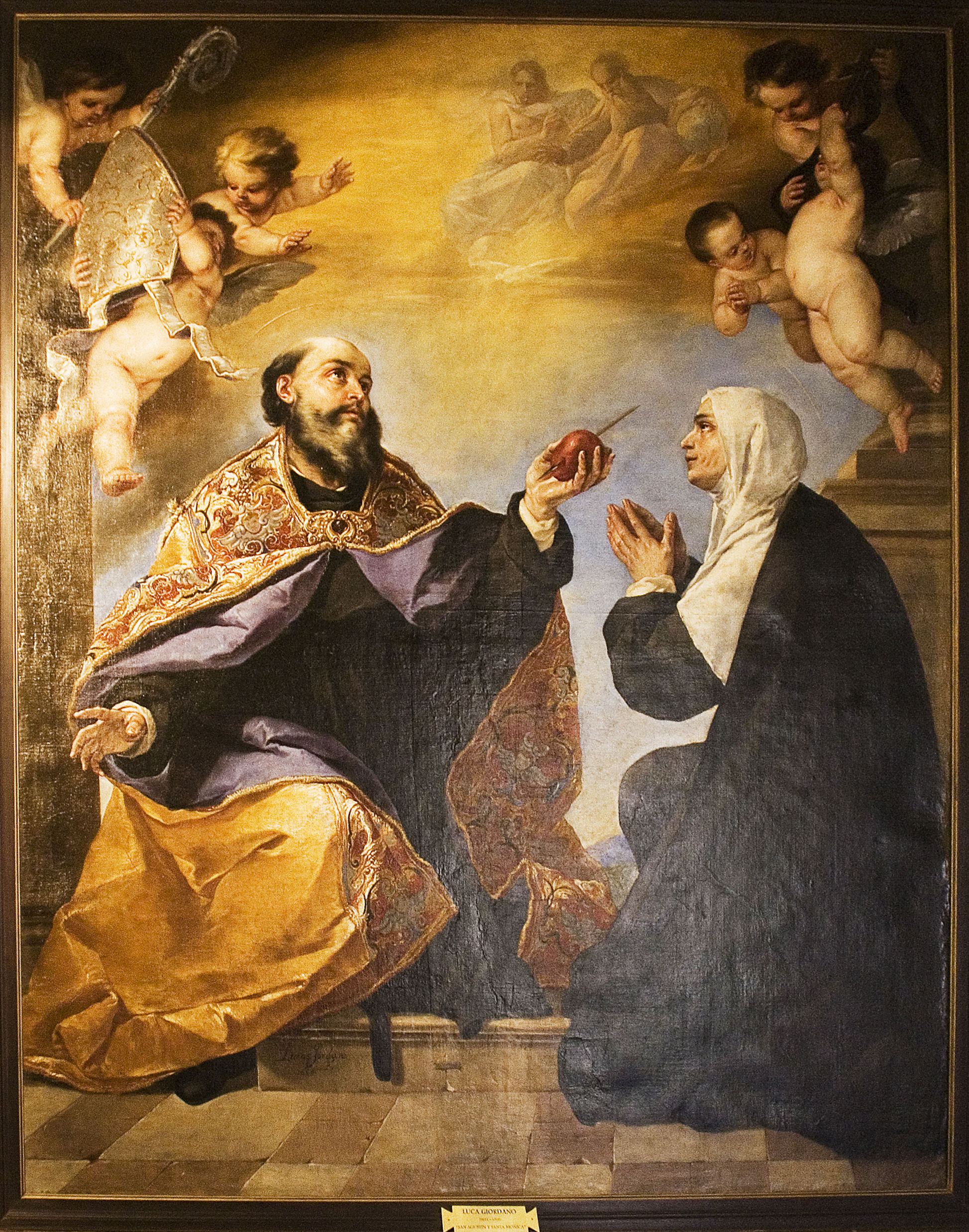
4 May: St. Monnica
user posted image
In the older, traditional Roman calendar today is the feast of the mother of St. Augustine, St. Monnica, widow. She died in Ostia (Rome’s port) in 387, when she and her family were heading back to North Africa after Augustine’s conversion and baptism by St. Ambrose. She caught a fever during a blockade of the port.

(Yes, you can spell her name “Monnica”, more consistent with her Punic origins.)

In the post-Conciliar calendar, her feast was moved to be next to that of her son.

As she lay dying in Ostia near Rome, Monnica told Augustine (conf. 9):

“Lay this body anywhere, let not the care for it trouble you at all. This only I ask, that you will remember me at the Lord’s altar, wherever you be.”

She was buried there in Ostia. Her body was later moved to the Church of St. Augustine in Rome.

May she pray for us, for widows and for parents of children who have drifted from the Church.

Be sure to pray for the departed. Pray for them! Don’t just remember them. Don’t just think well of them. Don’t just, as the case may be, resent or be angry at them. Pray for them!

Prayer for the dead is a spiritual work of mercy.
TSyeeck
post May 5 2015, 11:47 PM

Look at all my stars!!
*******
Senior Member
3,574 posts

Joined: Apr 2006


Indulgences

994. I have heard Catholics speak of indulgences for the souls in purgatory? What are indulgences?

Do not mix up the ecclesiastical term indulgence with the modern idea of self-indulgence. An indulgence is not a permission to indulge in sin, but is a remission of punishment due to sin. Now in the early Christian Church certain sins were punished by long public penance, sometimes for days, at other times for years. But the Church was often indulgent, and loosed or freed Christians from all or part of their public penance, if they showed other good dispositions, or performed certain works of charity. The Church had that power in the name of God as surely as the state has the power in its own name to commute a sentence or even release a criminal altogether under certain circumstances. Christ said to the Church, "Whatsoever you shall loose upon earth shall be loosed also in heaven." Matt. XVIII., 18. That the merits of Christ and of the Martyrs and Saints of the ages are at the disposal of the Church is also a consequence of the doctrine of the Communion of the Saints. And that power of commuting or even of remitting penances and expiations exists in the Church to-day, being exercised by the granting of indulgences.

995. What do you mean by an indulgence, say, of forty days?

An indulgence of forty days means that the Church liberates us from that amount of expiation of our sins which would be equal to a forty days' public penance in the early Church. It does not mean forty days less purgatory. Such an indulgence is called a partial indulgence.

996. What is a plenary indulgence?

A plenary indulgence remits all the punishment due to our sins. If one gained a plenary indulgence perfectly at the hour of death, he would be exempt from any purification in purgatory. Such an indulgence would not increase one's merit, but would merely free from the penalties due to past sins. The conditions for the gaining of a plenary indulgence are as a rule earnest prayer for the Pope's intentions, and often, Confession and Communion. The Pope's intentions are for the peace of the world, the extension of the Kingdom of Christ, and the conversion of non-Catholics to the true faith.

997. Can indulgences be applied to the souls in purgatory?

Yes, but by God alone. We can but ask Him to accept indulgences on their behalf. But we can certainly offer them with a definite conviction of their normal acceptance by God for those we love, even as we can share our goods in this life with more needy friends. This too is implied by the doctrine of the Communion of Saints.

998. If a plenary indulgence be applied to a certain soul in purgatory there would be no more need to pray for that soul.

A plenary indulgence, of course, would be able to liberate a soul from purgatory. But we cannot know that we have satisfactorily fulfilled all the conditions necessary for the gaining of a plenary indulgence, and we cannot know for certain that God has actually accepted it, it gained, on behalf of the particular soul we have in mind. We know the general principle that indulgences are beneficial to the souls in purgatory, and we gain and offer them to God, leaving all questions as to their application to Him.

999. Do you deny that indulgences were sold in the middle ages?

They were never sold with the sanction of the theology of the Church. If unscrupulous individuals sold indulgences, such traffic in them would no more militate against the Church than would my own conduct did I myself adopt the practice privately.

1000. Pope Leo X. sold indulgences in Germany to get money for St. Peter\\\'s. Do you think it right to sell pardons for sins?

An indulgence is not a pardon for sin. It can be gained only by one who is not in a state of sin, and who has previously secured forgiveness of his sins by repentance by long public penance, sometimes for days, at other times for years. But the Church was often indulgent, and loosed or freed Christians from all or part of their public penance, if they showed other good dispositions, or performed certain works of charity. The Church had that power in the name of God as surely as the state has the power in its own name to commute a sentence or even release a criminal altogether under certain circumstances. Christ said to the Church, "Whatsoever you shall loose upon earth shall be loosed also in heaven." Matt. XVIII, 18. That the merits of Christ and of the Martyrs and Saints of the ages are at the disposal of the Church is also a consequence of the doctrine of the Communion of the Saints. And that power of commuting or even of remitting penances and expiations exists in the Church to-day, being exercised by the granting of indulgences.

1001. Are not Papal Bulls and indulgences still sold in Spain, and cannot any crime be committed and an indulgence obtained, if sufficient money be forthcoming?

A Papal Bull is simply a Papal document with a leaden seal or bulla attached to it. It need have nothing whatever to do with indulgences. Indulgences have never been for sale as far as the Catholic Church is concerned, and are not sold in Spain or anywhere else. If a man commits mortal sin, not all the indulgences in the world could forgive it. They are not for the forgiveness of sin, but can be gained only after such sins have been forgiven by other means. Since they can be gained only by people in a state of grace they are an inducement not to fall into sin. And they may be obtained, not by money, but by certain good works such as prayer, almsgiving to the poor, etc.

--Radio Replies
TSyeeck
post May 5 2015, 11:55 PM

Look at all my stars!!
*******
Senior Member
3,574 posts

Joined: Apr 2006


"Nothing can come from nothing! There is something, (spiritual and material), we call creation. We experience and interact with souls, (people, devil, angels), and matter everyday. There never was nothing. These things, (spirit and matter that we interact with everyday), could not have brought themselves into existence. Therefore something, or someone else, had to bring them into existence. This something else, or someone else, was not caused by anything else. Otherwise you would have to continually look for the creator that cause the next created reality, and on and on into infinity. This someone or something is called the uncaused cause and the unmoved mover without being created caused all to be created. This person is called God."
TSyeeck
post May 7 2015, 10:20 AM

Look at all my stars!!
*******
Senior Member
3,574 posts

Joined: Apr 2006


Please pray often the PRAYER OF THE ANGEL OF FATIMA:

ANGEL'S PRAYER (Given to the three children at Fatima by the Angel who preceded Our Lady's first appearance to them.)

user posted image

MY GOD, I believe, I adore, I trust, and I love Thee!
I ask pardon for those who do not believe,
do not adore, do not trust and do not love Thee.
MOST Holy Trinity, Father, Son, and Holy Spirit, I adore Thee profoundly.
I offer Thee the Most Precious Body, Blood, Soul, and Divinity
of Jesus Christ, present in all the tabernacles of the world,
in reparation for the outrages, sacrileges, and indifference
by which He is offended. And through the infinite merit
of His Most Sacred Heart, and the Immaculate Heart of Mary,
I beg of Thee the conversion of poor sinners.
khool
post May 7 2015, 11:37 AM

Getting Started
**
Junior Member
225 posts

Joined: Mar 2008


Why Do We Go To Mass? Four Essential Reasons *Gist of the Article*

1. Adoration

Christ Jesus, the Second person of the Holy Trinity, God-become-Man, is physically with us at every Mass. He is real, He is alive, and He stands before us, body, blood, soul and divinity in an unbloody manner, shrouded behind the appearance of bread and wine but substantially present in them. We do not merely commemorate Him. He is with us. We adore His Divine majesty. We fall down in worship before Him. And by joining our hearts and minds with the priest as he offers the Mass, we are participating in the only true gift we can give to God: the adoration of His Son.

2. Thanksgiving

Christ’s incarnation, His life, His teachings, His passion and death and resurrection, his establishment of the Church and her sacraments – this series of events is the most important, most essential, most profoundly wonderful and undeserved thing that has ever happened to Mankind. Each of us has been given the chance to participate in the Divine Life of God, to be perfected by grace, and to live forever with Our Creator in Heaven. This opportunity was lost by Adam’s sin; it is gained back through the New Adam, who offers Himself on every Catholic altar. We should stand in awe, overcome with gratitude for what Our Lord has done for us. Each Mass is the perfect opportunity for us to thank Him for what He has done for us.

3. Petition

God is not content to merely offer Himself for us to save us from our sins. He truly loves as our Father, and wishes to give us all that we need. As He is present in a special way at each Mass, we come to him with our many needs, temporal and spiritual, and lay them at the foot of the Cross. We beg Him for the graces necessary to become saints; we pray for those who are in most need of His assistance. When we receive Jesus in the Holy Eucharist, the Heavenly Father looks upon us and sees within us, unified with us, His beloved, divine Son. There is no more powerful, no more profound moment in which to ask God for all that we need. He cannot but look upon us with Love, not just as His creatures, but as those who share such intimacy with Jesus as to have physically united with Him through the nourishment we take from His body and blood.

4. Atonement

Christ was the victim who surpassed all victims. No longer does God require burnt offerings, or the sacrificing of animals. The Lamb of God has come and offered His blood, “Shed for you and for many unto the remission of sins.” This, truly, is the “mystery of faith.” We have nothing to lay upon the altar but our sinfulness, nothing to give to God that He hasn’t given to us – except our human weakness. We ask Him to take it, to perfect it, to replace it with His grace and to wash away the stain of our sins with His precious, sanctifying blood. It is the Holy Sacrifice of the Mass, connected forever to Calvary, which is the singular act of atonement for all mankind. There is no higher prayer, no greater act of worship. We are absolved of our sins through the sacrament of confession, but it is the offering of the Eucharist — of Christ on the Cross — which has obtained the forgiveness we receive.

The Holy Sacrifice of the Mass should cause us to experience reverence and awe. When we are before the altar, we are in the presence of something greater and more wonderful than we can ever fully comprehend. This should inform our manner, our reverence, our mode of dress, and the prayerful silence that we keep in His presence.

If we are able to bear in mind these ends of the Mass, we will find that our experience of liturgy changes drastically. At any time, in any place, Christians can come together to share a meal and talk of our love for God. It is only at the Holy Sacrifice of the Mass that we can behold Christ made truly present on the altar, that we can stare across the chasm of time and space to that Good Friday, two millennia ago, and into the infinitely loving eyes of our dying Lord, beaten, scourged, bloodied, and nailed to the cruel instrument of our salvation.

Source: http://www.onepeterfive.com/why-do-we-go-t...ential-reasons/


TSyeeck
post May 8 2015, 01:30 AM

Look at all my stars!!
*******
Senior Member
3,574 posts

Joined: Apr 2006


From the Benedictine monks of Norcia


TSyeeck
post May 9 2015, 07:19 PM

Look at all my stars!!
*******
Senior Member
3,574 posts

Joined: Apr 2006


Can God be proven scientifically?
by Matt Slick

Answering the question of whether or not God can be proven scientifically isn’t possible without first looking at what it means for something to be “scientific.” The scientific method is the process of looking at the material world, devising a hypothesis on a particular phenomenon, developing experiments to test the hypothesis, modifying the hypothesis based upon the results of the experiments and then eventually forming a theory that is consistent with the results of experiments so the theory can explain why something happens. Therefore, by definition, the scientific method is restricted to examining the physical realm. This is why it isn’t scientifically possible to prove that God exists.

Think about this--God exists outside of the physical universe. He is not part of it. He created it, so He is different from the universe. The scientific method is restricted to that which is within the universe--but God is outside of it. So it would be like someone asking for material evidence of the non-material God.

Furthermore, the scientific method deals with repeatable experiments done in the physical realm. How would anybody develop a test to prove that God exists by looking at rocks or heat exchange or quantum physics, etc., that can be repeated in a laboratory? If scientists were to find something that was unexplainable, they might just say they don’t understand it yet. But if they find some “proof” that is repeatable, all they are doing is discovering how the physical universe works. So, it is difficult to even begin to understand how any scientist can develop an experiment by which God can be demonstrated to exist.

Furthermore, there is the logical problem of what is called a category mistake, which is mixing categories. It would be like saying that a person will judge the value of a painting by how much it weighs. Aesthetic value is not the same category as physical weight. These are different categories; hence, a category mistake. So, it is a category mistake to look for the physical representation of the non-physical being. It is a category mistake to ask for non-transcendent evidence for a transcendent being.
TSyeeck
post May 10 2015, 12:33 AM

Look at all my stars!!
*******
Senior Member
3,574 posts

Joined: Apr 2006


Voices From Heaven: Discerning the Spirits About Apparitions


134 Pages « < 16 17 18 19 20 > » Top
Topic ClosedOptions
 

Change to:
| Lo-Fi Version
0.0370sec    0.52    6 queries    GZIP Disabled
Time is now: 4th December 2025 - 05:48 AM