Welcome Guest ( Log In | Register )

Bump Topic Topic Closed RSS Feed
134 Pages « < 15 16 17 18 19 > » Bottom

Outline · [ Standard ] · Linear+

 LYN Catholic Fellowship V01 (Group), For Catholics (Roman or Eastern)

views
     
TSyeeck
post Apr 21 2015, 01:35 AM

Look at all my stars!!
*******
Senior Member
3,574 posts

Joined: Apr 2006


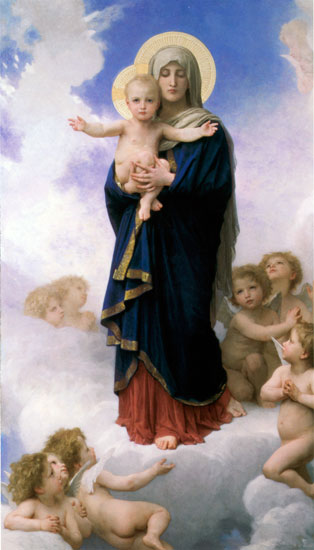
Holy Water

user posted image

1335. On entering a Catholic Church I noticed people taking holy water Why is this?

Holy water is placed at the doors of Catholic Churches to remind us of the waters of Baptism which once flowed over our foreheads, to signify that we are not worthy to enter into the Presence of Christ without purification, and to forgive us those venial sins for which we are sorry, as well as remitting the temporal punishment due to our sins according to the measure of our regret and contrition. I do not know how you feel, but I know that I am not worthy to enter into the Presence of God in a Catholic Church. When Moses approached the burning bush, God said to him, "Come not hither. Put off the shoes from thy feet, for the place whereon thou standest is holy ground." To Catholics it is a joy to be able to make straight for the holy water font on entering into the Presence of God in the Blessed Sacrament, and to make use of those waters of purification, asking God to make them a little more fit to appear before Him.

1336. What is holy water, and how does it differ from ordinary water?

Holy water is ordinary water sanctified by the blessing of the Church. It differs from ordinary water in so far as some salt has been added to it to signify preservation from corruption, and in so far as it conveys the blessing of the Church and of God where ordinary water does not do so.

1337. What can adulterated rain water do?

Adulteration supposes corruption. Salt preserves from corruption. Meantime, holy water confers a blessing upon those who use it with sincere dispositions.

1338. No Priest can make water holy.

God knows differently. In Numbers, V., 17, we read God's command, "The Priest shall take holy water." In Numbers, VIII., 7, God ordered Moses to purify the Levites as follows, "Take the Levites out of the midst of the children of Israel, and thou shalt purify them according to this rite; let them be sprinkled with the water of purification." God does nothing uselessly, and if you ridicule the practice, you ridicule God.

1339. How could water convey a blessing?

In the Gospel of St. John, V., 2-4, you will find that God used the waters of the pool of Probatica or Bethsaida at Jerusalem to heal the diseased. And as He gave temporal blessings to some through these waters, so He can certainly give spiritual blessings through holy water. In any case, if you are a Christian, you must admit that the waters of Baptism certainly convey spiritual graces to the soul.

1340. When did the Catholic Church invent holy water?

The Catholic Church did not invent it. Holy water is in accordance with God's ways in the Old Testament, and the Catholic Church has merely kept the Christian practice which has existed from the very beginning of Christianity, and which the Protestant reformers rejected as usual in the 16th century. St. Justin Martyr, who died in the year 163 A.D., tells us that the faithful at Mass were sprinkled with these cleansing waters. A document called the Apostolic Constitutions, which dates from the very earliest ages of the Church, gives us in Bk. VIII., sect. XXIX., the following significant prayer, "Let the Bishop bless the water, and if he be not there, the Priest. And let him say: 0 God, Creator of the waters, sanctify this water through Thy Christ, and grant it power to banish demons, and to disperse all snares through Christ our Hope, through whom be to Thee and to the Holy Ghost, glory forever. Amen."

--Radio Replies
TSyeeck
post Apr 21 2015, 10:35 AM

Look at all my stars!!
*******
Senior Member
3,574 posts

Joined: Apr 2006


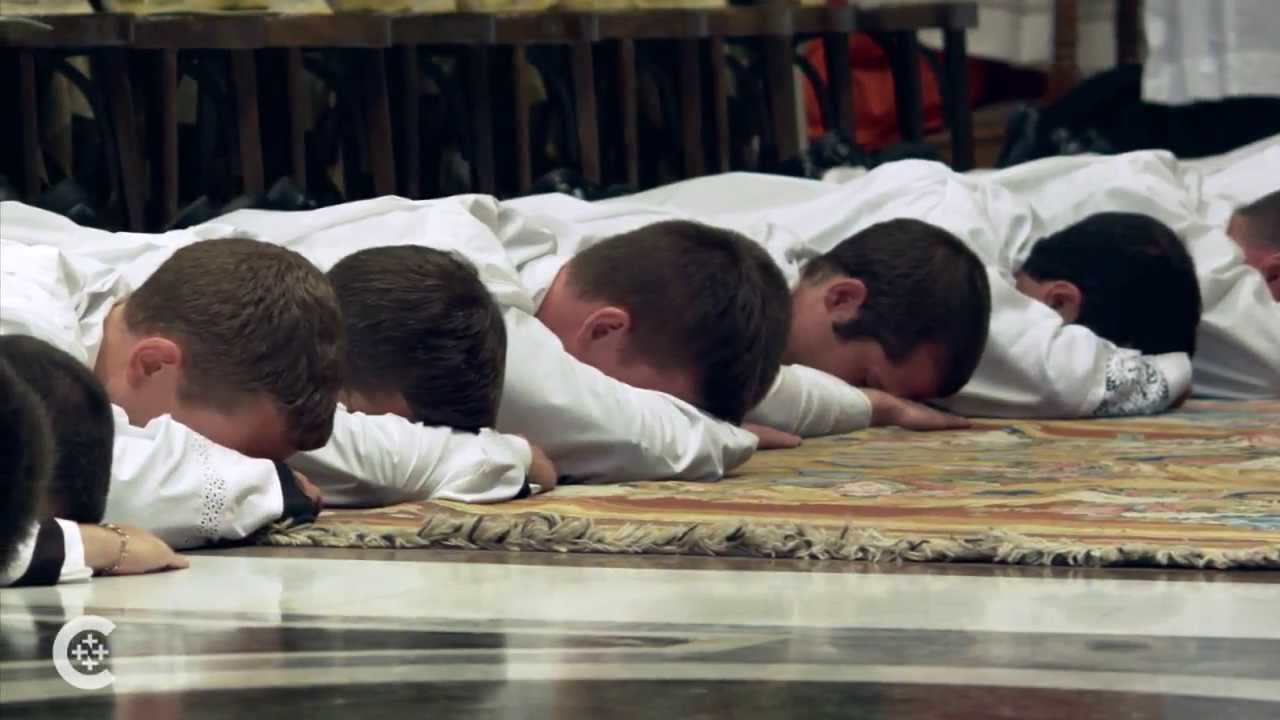
Celibacy

user posted image

1193. Who made the law of celibacy?

The Catholic Church, with God's approval and authority, following the example of Christ and the Apostles.

1194. Did not Pope Gregory VII originate it in the 11th century?

No. He merely enforced the already existing law more rigidly in his efforts to correct abuses. Over 300 years before Gregory VII. was Pope, the Greeks met the Latin Bishops at the Council of Trullo, and admitted, "We know that the law of the Roman Church is to demand that married men, from the moment of their ordination, must separate from their wives forever. " St. Jerome, over 300 years before that, wrote, "The Apostolic See accepts married men to be Priests provided they live no longer as husbands to their wives. " Marriage was never allowed after ordination. If a single man were ordained, he had to practice celibacy. If an aspirant were already married, he had to practice celibacy from the day he became a Priest. Pope Siricius, in 385 A.D., said, "All we Priests are obliged by an inviolable law dating from our ordination to be continent and chaste, and thus offer the sacrifice of our bodies to God." This same Pope wrote also, "I have heard that a Priest of Christ has married, defending his action by saying that the Priests of the Old Law married. But the Church, the Spouse of Christ, has always loved chastity. Wherefore any Priest who claims a privilege from the Old Law which is unlawful in the New must know that he is deprived by the authority of the Apostolic See of the ecclesiastical honor he has so misused, nor can he celebrate the divine mysteries. " Pope Siricius was not beginning a new law in the Church, but blaming an individual for not observing a law that had long been in existence. In 314 the Council of Neo-Caesaria had also said, "If a Priest marries, let him be degraded. " The Apostolic Constitutions gave the law, in the 2nd century, "If a Priest or Deacon is not already married, he can never contract marriage." Thus right back to the 2nd century you have explicit testimony that in the Catholic Church once a man became a Priest he had to renounce marriage, and practice celibacy.

1195. Are there not Oriental Churches united to the Catholic Church, yet without the law of celibacy?

Yes. They have been exempted from the law obliging all Priests of the Latin Rite. The Church has tolerated the ancient custom of marriage in those Eastern Churches which have sought re-union with her, allowing married men to be ordained amongst them, though marriage subsequent to ordination is forbidden. But in the Western Latin Church the full law must be observed.

1196. God commanded all men to marry when He said "Increase and multiply."

That is a general precept for the whole human race, and a general blessing upon marriage. But it does not bind each and every individual. If it did, every single marriageable man in the world is breaking God's commandment and is in a state of sin. Or when would a man begin to sin by not being married? At 18? 19? 20? Or only when he could afford to support a wife? And would you accuse Christ of violating God's will ? Or if you exempt Him because of His divinity, would you blame the Apostles? Was St. John the Baptist so very evil? Or St. Paul, who wrote, "I would that all were as myself . . . unmarried"? 1 Cor. VII., 7. You quote the Bible, and then give a teaching radically opposed to the doctrine of that Bible.

1197. The Bible says that a man must leave father and mother and take a wife. Matt. XIX.9 5.

The sense is simply that one who does take a wife has a duty to her and to his children which is so binding that he must leave even his parents in order to fulfill it in his newly adopted state. But Christ gave a special blessing to those who would renounce father and mother, and the prospects of a wife and children also, for His sake. Matt. XIX., 29 says, "And everyone that hath left house, or brethren, or sisters, or father, or mother, or wife, or children, or lands for my name's sake, shall receive an hundredfold, and shall possess life everlasting."

1198. St. Paul says that a Bishop must be the husband of one wife. 1Tim. III., 2.

St. Paul does not say that a Bishop must be the husband of a wife, but insists upon the expression "one wife." Had he meant that it was necessary to have a wife, he would have been violating the law himself. In the early Church, owing to the scarcity of single men eligible for the Priesthood, married men who wished to be ordained could be accepted provided they had not been married twice. Those presenting themselves must have been the husband of but one wife. That is all that the text means. Catholic Bishops and Priests do not violate that law. A law forbidding a man to have had more than one wife does not order him to have one; nor is it violated by a man who has never had a wife at all. However, as Christianity grew and vocations became more plentiful, single men only were accepted, and had to remain celibates, according to the advice of St. Paul which I have quoted.

1199. St. Paul says that if a man cannot rule his own house, how shall he take care of the church. 1 Tim. III., 4.

That does not suggest that a Bishop must be married, but belongs to the same context as that which you have just quoted. If a man who has been married, but not to more than one wife, be chosen, he must be one who has been faithful and who has ruled well his own house. That discipline was most wise at a time when such a man could be chosen. But such discipline no longer holds.

1200. "Forbidding to marry," is given as one of the signs of false Churches.

The Catholic Church does not forbid people to marry. The vast majority of Catholics marry with the blessing of the Church. The text refers to people who declare all marriage evil, as did many early heretics. Marriage is not evil, nor is any Catholic forbidden to marry, as you would suggest. It is true that Priests may not marry. But no one can be obliged to become a Priest; in fact every one who is a Priest could have married instead of devoting his life to an ecclesiastical vocation, had he wished.

1201. Priests are only natural human beings. Why are they forbidden to marry?

Because they do not wish to be only natural. They wish to be supernatural. St. Paul was human, but he did not marry. And like St. Paul, Catholic Priests wish to centre their interests in Christ and share their hearts with no one else. Meantime, they are not forbidden to marry as human beings. They are forbidden as Priests. Prior to their choice of the Priesthood, every Priest could have chosen marriage instead had he wished.

1202. Are Priests different from other men?

As human beings—no; as called, not to the state of marriage, but to the Priesthood—yes. For this reason, whilst like all others who for one reason or another do not marry, they are obliged to avoid all sins against chastity; they also take upon themselves an additional obligation to do so under pain of sacrilege by vows of chastity offered to God.

1203. It is against nature to suggest that Priests are exempt from ordinary temptations.

No one suggests that they are exempt from ordinary temptations. But it is not against nature to rise above these temptations. It is one thing to be tempted; quite another to yield to the temptation. Anybody could avoid sin if never tempted. But the merit and glory of a Christian is to be tempted yet not to give way to the temptation. Priests undertake to resist such temptations with the help of God's grace.

1204. Protestants do not believe in your oath of celibacy. They know that Priests do not live up to it.

Upon what do you base that outrageous assertion?

1205. They are ordinary men, and as such cannot resist their natural inclinations.

Do you mean that no one with human nature can be pure and chaste? That every young couple entering matrimony can be quite sure that the other has led an evil immoral life up to that moment? If you do not mean that, do you mean that a young man in the world can lead a good life, but suddenly becomes corrupt when he gives himself to a life of closer union with God? Do you think that the devoting of oneself to a life of prayer and to spiritual things makes it much harder to live a good life than it was before? If a man wanted an immoral life he need not become a Priest in order to attain his desire; nor would he dream of taking a solemn vow of chastity for the sheer joy of making himself doubly guilty in breaking it. And do you, a Protestant, include in your indictment all unmarried Protestant ministers and celibate clergymen?

1206. Priests violate a fundamental law of nature ordering production of the race.

It is a fundamental law of nature that those who do exercise the functions of marriage should do so for the propagation of the race, and no Church fights against the contraceptionist as does the Catholic Church. But it is not a fundamental law of nature that every individual must marry. Many single people never get the chance. St. Paul also says that a single life for the love of God is the better thing, and the Catholic Church asks the better thing of her Priests so that they can be more free to devote themselves to the cares of all, that they may set a lofty example of self-restraint, and that they may more closely imitate Christ.

1207. You would be much happier if you were married.

If that were so, will you blame me for denying myself what you admit to b8 a happiness? However supernatural happiness more than compensates me for the loss of that natural happiness. No word of mine could make you think that I am gloomy or miserable. And I am sure that your estimate of me will make you admit that there is at least some girl in the world the happier for not having had me inflicted upon her as a husband.

1208. Why inflict such a burden upon human nature?

If anyone is to complain, let the Priests do the complaining, who have to endure the burden. And believe me, if Priests were left free to marry, very very few would ruin their work and influence by taking upon themselves the duties of married life with its necessary division of their interest from their ecclesiastical vocation. Priests do not want to be free to marry.

1209. Our Protestant ministers do not pretend to be better than other men—they marry. Is not this more honest?

Few Protestant ministers would thank you for that remark. There is, however, no need to pretend to be better. There is need to be better. Christ said to His Apostles, "You are the salt of the earth, but if the salt lose its savor! . . . You are the light of the world. So let your light shine before men that they may see your good works, etc." Your ministers may marry—but the Apostles did not, even as their Master did not. Of course it is more honest to marry than to live a life of un-chastity in an unmarried state. But provided one lives a clean and chaste life in in the single state, thus imitating Christ, it is not more honest to marry.

1210. Do you condemn Protestant ministers for marrying?

Not for a moment. They break no commandment of their Church. It is true that God commands His Priests to remain single through the legislation of the Catholic Church. But her legislation in this matter has nothing to do with Protestant clergymen.

1211. // it is right for one set of ministers to be celibate^ it must be wrong for others not to be celibate.

You might just as well say that, if it is right for me to obey one set of laws in America, it is wrong for another man to follow a totally different custom in China! And the Catholic Church differs much more from other religions than America differs from China.

1212. Priests ought to marry to set a higher example.

No one could give a higher moral example than Christ, and a Priest sets a higher moral example by not marrying. When he encourages young people to live pure and chaste lives in a single state he is not telling them to do what he is not obliged to do himself. He is unhampered by domestic cares so that he can go to the poorest mission for the love of God, and can attend those dying of contagious diseases without thought of carrying infection to wife and children. And it is certain that our people have more confidence in their Priests precisely because they are single men, above all in the Confessional. Even in the Greek Orthodox Church, it is a known fact that the people go to confession by preference to single Priests rather than to married Priests.

1213. Why more confidence in a single man as a Confessor than in a married man?

Because single men can give undivided attention to their duties, and have more time to study and know the law of God upon which they must base their advice. Then, too, people feel that one who has renounced earthly affections for the love of God has more opportunities of living a disinterested spiritual life, and that his words will be correspondingly more helpful. And last, but not least, a single man is not so likely to share his thoughts and worries with a better-half, or betray a confidence through indiscretion or inadvertence.

1214. How can Priests advise as to the duties of the married state when they have no practical experience of it?

"The lips of the Priest shall keep knowledge, and they shall seek the law at his mouth." Mai. II., 7. The married state is not exempt from God's laws, and the Priests must know those laws. Every Priest studies all the possible duties of marriage from a moral point of view during a long course of theology before he enters a Confessional at all. If you say that a Priest cannot explain those laws to people because he himself is not married, will you say that a trained lawyer has no right to explain the law of the land to a plumber concerning that individual's trade because he himself has never so much as soldered a jam-tin?

1215. Priests condemn prevention of life by birth-control yet prevent life by their celibacy!

Those who undertake the duties of married life are forbidden deliberate and artificial birth-prevention. Priests called, not to married life, but to a different state altogether, have neither the rights nor duties of the married state. There is a vast difference between preventing children by setting God's natural laws in operation yet frustrating their effects, and simply omitting to have children. No one is obliged to set the natural productive laws in operation. So, too, the obligation to pay bills is not violated by the man who has no bills. I may omit having creditors, but if I have them, I must not prevent them from receiving what is due to Jiem. That should make it clear. Human beings may omit those actions which God intends to result in life, but if they exercise them and then prevent human life, they violate God's law.

.....

1169. Why doesn't the Roman Catholic Church allow its priests to marry like the Protestant ministers?

Speaking as a priest I simply say that we do not want to marry like Protestant ministers. Surely you don't suggest that we ought to marry just because they do. If you are moved by pity for us then it should be your consolation that it is we who are the sufferers, and not your Protestant ministers. But now, why does the Catholic Church exact celibacy whilst Protestant Churches do not? It is not because priests believe marriage to be evil. It is that they may be able to devote themselves more completely to the work of Christ, and the welfare of souls. Christ Himself did not marry, and He said clearly that it was good to renounce marriage for the kingdom of heaven's sake. And He added, "Let those who can do so, do so." St. Paul also taught that one who remains single for the sake of complete consecration to God makes a better choice than one who chooses marriage. And he said, "I would that all were like myself-unmarried." And he gives as his reason, "He that is without a wife is solicitous for the things that belong to the Lord, how he may please God. But he that is with a wife, is solicitous for the things of the world, how he may please his wife: and he is divided." As you like Bible, chapter, and verse, you will find that in 1 Cor. VII. verses 7 and 8, and 32 and 33. If celibacy, as the New Testament teaches, is the higher ideal, from whom could the Church expect that higher ideal if not from her priests? There are many practical advantages also in the Catholic law on this subject; but they are secondary. The main point is as to whether celibacy is right or wrong in itself; and, according to the New Testament, it is not only right, but the better choice.

1170. Our ministers get married, and have children.

That is true. But, together with many other ideals, the Protestant reformers threw away the ideal of celibacy, and lost all real understanding of the supreme invitation of Christ to renounce all things, even the consolation of wife and children, in order to follow Him. And there is no reason why the Catholic Church should abandon the ideal because the Protestant Churches have done so. The celibacy of the clergy has been the Christian ideal from the very earliest ages of the Church. When the disciples asked our Lord whether He expected men not to marry, our Lord replied, "Not all men will refrain, but those to whom it is given, He that can do so, let him do so." Protestantism abolished the difficult things, and followed the easier path of the senses rather than the higher road of the spirit. But in the Catholic Church the high ideals of Christ remain to this day. Recently a young priest died, and after his death some notes he had written prior to his ordination were found, and they contained these beautiful words, "I am to be a priest, living for Christ only. I must not only renounce marriage. I renounce all the tenderness women can show, and which gives such charm to the life of a man. All such consolations, so dear to the human heart, are excluded by my vow. Once the sacrifice is made, not one of those sweetnesses must ever be desired. The life of a priest must be a solitary one - alone with God." If you object to such ideals, and the Catholic standard of celibacy for the priesthood, I will gladly answer any particular difficulties that occur to you. But the fact that Protestant ministers choose to marry, just as other men who have no desire to rise above ordinary levels of human life, is no reason why the Catholic Church should be contented with the same lower standards.

1171. You seem to canonize virginity.

St. Paul himself says that the virgin who marries does well, but the virgin who does not marry does better. The context shows, of course, that he intends the renunciation of marriage for the love of Christ, and the resolution to share one's heart with no one save Him. Though we speak highly of Christian marriage, the dignity of marriage, which plants the tree of life, does not prevent the higher dignity of the single state. Humanity needs not only fruit; it needs flowers. Some are called to live the life of the soul, and to leave the fruits of earth for the flowers of heaven.

1172. The celibacy of priests and nuns seems so useless socially.

Whatever you may think of its results, the practice was advised and exemplified by Christ Himself. But the practice is far from being socially useless. It is most useful to marriage itself, which it tends to purify and ennoble in those called to the married state. It keeps an ideal before our Catholic people which inculcates due reserve and rebukes excess. And it is a remarkable thing that the Church which sanctions Convent life, and priestly celibacy, is the one Church which stands most firmly for the sanctity and stability of Christian marriage. Again, the voluntary renunciation of priests and nuns frees them from lower interests, and enables them to devote themselves to higher and more spiritual pursuits. And the more who do this, the greater the social benefit.

1173. Why should a priest shirk family responsibilities, and lack experience of the needs of ordinary people?

A priest does not shirk the responsibilities of a family. He gives up the prospect of a personal family, but makes all mankind his family. Had I the obligation to devote myself to a wife and family, I could not give anything like the time I do to all who claim my attention in their spiritual needs. But besides these, and other urgent considerations, the Holy Eucharist and the Mass demand celibacy. Those who have lost the Real Presence of Christ in the Eucharist, and who do not understand the Mass are scarcely likely to appreciate this point. But every Catholic heart understands that such contact with God at the Altar demands reserve, and that virginity is every bit as fitting and suitable to a priest as to Mary, the Mother of Christ. Meantime a priest experiences the needs of the ordinary people, through his spiritual duties towards them, and above all as their adviser and consoler in the Confessional. Few in this world have so wide an experience, and the very abnegation of the priest adds immeasurably to his power.

1174. Did not the Roman Church make the law of celibacy only in the Thirteenth Century?

The Apostolic Constitutions, certainly written before the Council of Nice which was held in 325, gives the law that at least no priest could marry after his ordination. A man already married could be ordained-but if a single man were ordained a priest, he must remain single. The first Papal decree on celibacy which we can trace is that of Pope Siricius in 385. The wording of his decree is as follows:"All of us who are priests are bound by a strict law to dedicate both body and heart to sobriety and chastity by virtue of our ordination." He does not pretend to be making a new law, but quotes an already existent law. Five years later, in 390 the second Council of Carthage used these words. "Previous Councils have decreed that bishops, priests and deacons must be continent and perfectly chaste, as becomes ministers of God. Therefore, as the Apostles have taught, and with them the whole of antiquity, let us also observe chastity." Any priest who offended by attempting to marry was to be degraded and expelled from his office. All this is before the close of the fourth century.

1175. Was not St. Peter a married man?

Yes, that is correct. He was a married man when our Lord called him to the Apostolate. But he left his wife, with her consent of course, to follow Christ. Thus in St. Math. XIX., 27, "Peter answering said to Him 'Behold we have left all things and have followed Thee.' " And Jesus replied, "Everyone that hath left house or brethren or sisters or father or mother or wife or children or lands for My Name's sake shall receive a hundredfold and possess life everlasting."

1176. Is the ideal of a married clergy as primitive and as Catholic as that of a celibate clergy?

There never was, and there is no Catholic ideal of a married clergy. Celibacy is the Catholic ideal, and anything less cannot be the ideal. A married clergy has never been anything more than tolerated, as in cases of necessity when single men who would adopt the ideal were not available. But even here St. Paul gives restrictive legislation, insisting that such married men as were to be chosen, must not have been husbands to more than one wife. 1 Tim. III., 2, 12. Twice-married men were excluded. Aiming always at the ideal, the Church soon ordered such married men as were ordained to practice continency from the day of their ordination; and finally she ruled out a married clergy altogether as far as the Western Church is concerned. Eastern Churches which have sought union with the Catholic Church, and which already had a married clergy, are being led gradually to the ideal of celibacy also.

1177. An Anglican minister told me that the ideal of a married clergy was just as primitive. There must be something in it.

There is nothing in it. In fact, it is a self-evident absurdity. A celibate clergy is a non-married clergy. Now when you have two contradictories, married and not-married, one of them will be the ideal, or there's no ideal. If a married clergy is the ideal, then a non-married clergy is not the ideal. If a non-married clergy is the ideal, then a married clergy is not the ideal. Only an Anglican who wants to placate simultaneously High Church advocates of celibacy, and Low Church married ministers could possibly talk nonsense about both being the ideal. I call it nonsense, because if you were asked whether it would be better to go upstairs or downstairs, you would be talking nonsense if you said that it would be better to do both simultaneously. One or the other could be the better thing. But not both. So a married "or" a celibate clergy can be the ideal, but "both" cannot be. It would be better for Anglicans to say straight out that a married clergy is the ideal, and condemn celibacy as a lower standard; or else to say that there is no ideal on this point, and that marriage and celibacy are equally good. But it is suicidal for an Anglican to speak of "the primitive ideal of celibacy," with most of the Anglican clergy married.

1178. Were the English priests celibates at the time of the Norman invasion and before?

Yes. The Venerable Bede records the explicit instructions of Pope Gregory the Great when he sent St. Augustine to convert England. The Pope insisted that those who took Sacred Orders must renounce marriage. That law of celibacy existed right through the ages in England until abolished by Parliament under Edward VI when the Church of England accepted Protestant standards from the Continent. Henry VIII of course, despite his break with Rome, still insisted on the celibacy of the clergy in the schismatic Anglican Church he created.

1179. Many people say that the celibacy of the Catholic clergy is opposed to the law of nature, and consequently wrong. How should one reply to them?

If they are Christians, it should be enough to quote the example and teaching of Christ. Or, if they insist that He, as God, must be excepted in His personal life, you could quote St. Paul, who advised others to remain as he himself, unmarried. If, however, the objectors are not Christians, you will have to discuss the question from the aspect of purely natural law. You could first ask them, not merely to say that celibacy is opposed to the law of nature, but to prove their position. If you wait for them to do so, the discussion will go no further.But you could go on yourself to show that celibacy is not opposed to the law of nature.Firstly, you could point to all those to whom marriage, from one cause or another, is quite impossible. Are they all to be guilty of violating the law of nature?Secondly, you could analyze the supposed law in itself. Some laws directly concern men in an individual capacity. Others concern them in a social capacity. Now not every individual in society is bound to fulfill general laws of nature for the general welfare of society. For example, it is a law of nature that every living individual must eat if he is to preserve his own life. But the life of the human race is preserved provided sufficient numbers in general marry and beget children. And this general law of nature is not violated by the abstention from marriage by some, whether by necessity, or by voluntary choice. It might be noted that in England there are over two million more women than men. Does the law of nature demand polygamy, or does it sanction the single state in given members of the population?

1180. Does the Roman Catholic Church think its priests and nuns are inhuman?

No. You must remember, of course, that no Catholic man or woman can ever be compelled to become a priest or a nun. If Catholics wish to marry, they are quite free to do so. But if they make that choice, they are not free to become priests and nuns. All that the Church says is this. "There is no obligation to become a priest or a nun. That's a matter of free choice. But if you do become a priest or a nun, you must renounce all thought of marriage, and take a vow of purity and chastity for life." All Catholics know that beforehand, and if they choose such conditions, then it is they themselves who have chosen not to marry. Does it follow that the Church thinks priests and nuns to be inhuman? No. It is one thing to be inhuman; it is quite another to rise above normal human tendencies and inclinations, and to live according to supernatural and spiritual ideals. Those who do not think this possible simply ignore the fact that it is done by thousands; and they quite forget the power of divine grace. One can love God, and spiritual things, so much that One has no desire to indulge natural cravings for human love and affection, or to seek those pleasures of the senses afforded by earthly love making. Such a love of God, and of spiritual things, does not make one inhuman. It merely lifts to a higher than a merely human level.

1181. Doctors say that it is not possible for man to live alone and remain normal.

As in any other profession, so in the medical profession there are unscrupulous men who have no conscience, and who do not hesitate to violate the truth in order to say what they think their client would like to hear. But all truly great and honorable medical men denounce such quackery and ignorance. Let me quote some of them, and from various countries. Dr. Toth, professor at Budapest University writes, "It is absolutely untrue that a chaste life even in the least degree is injurious to health. Not a single earnest medical work by an author who would be ready to face a challenge to his writings says so. Not a single medical man of good repute would undertake to prove that any sickness was caused by moral purity."Dr. Farel, the distinguished psychiatrist of Zurich writes, "I have never come across a psychosis having its source in a chaste life, but have diagnosed countless cases caused by sexual excesses."Dr. Rossier, a French authority, says, "I assert without reservation that chastity cannot be injurious to health. I warn everyone that other advice by doctors is erroneous and harmful." The Second International Health Congress at Brussels unanimously resolved, "Youth must be taught that not only has chastity no harmful effects on health, but that it is unqualifiedly commendable." The medical faculty of the Norway University gave out the public statement: "That sexual continence is harmful to health is, in our unanimous opinion utterly false and in direct opposition to all our professional experience. We do not know of any impairment of health which could have its source in an absolutely pure and moral life."The Italian physiologist, Dr. Mantagezza, says, "Never yet have I seen a disease which originated in a chaste life. By continency the memory becomes keen and enduring, thought vivid and fertile, the will strong, and the character steeled into energy." Eulenberg, professor of psychiatry in Berlin University says, "No one could fall ill, or become affected by nervous ailments merely because of sexual continence. This often-heard allegation I regard just as empty and nonsensical chatter." And he adds that the belief that continency and celibacy are harmful is accepted with alacrity by men of loose morals, and, alas, tacitly endorsed by dishonorable medical men. And he says that this idea does untold harm, encouraging lawless indulgence, and that "against it no protest can be too loud and too frequent."Max Gruber, professor of medicine at Munich University, writes, "There is not the shadow of evidence that continence is injurious to health. Those doing hard mental or physical work feel at the very fullest exercise of their strength how much continence heightens their ambition and working ability. This was known to the athletes of ancient Greece, and is known to the sportsmen of our day, to research workers, scientists, and creative geniuses." Dr. Paul, of Karlsruhe, says, "No conscientious physician has ever come forward with an opinion that a healthy man should satisfy sexual instinct in order to maintain good health." I have a few dozen more of such quotations from medical authorities. But I have said enough to show that continence and celibacy do not mean abnormality either mentally or physically. And that in any man, whether a Catholic priest or not.

1182. Why are Greek Orthodox priests allowed to marry, and not Roman Catholic priests?

Because the Greek Orthodox Church is a schismatical Church which does not accept the legislation of the Catholic Church. Also it is not able to inspire or exact the same ideals of all its clergy. Those Greek Orthodox priests who belong to Greek monasteries must, of course, adopt the higher ideal of celibacy. But the parochial clergy are not obliged in the Greek Church to rise to the same heights. On the other hand, Catholic priests are not allowed to marry because the Catholic Church insists that her priests give their undivided interest to their spiritual work, that they more closely imitate Christ their Master, who certainly never dreamed of marriage, and that they put into practice the ideal expressed by St. Paul, "I would that all were as myself, unmarried."

1183. Has the permission granted by the Synod of Ancyra in 314 A.D. to marry in the East been superseded by any law of the Church since? Does it still operate to allow priests to marry?

At various times there have been many modifications of the legislation of Ancyra; modifications undertaken by the various Uniate Churches themselves. These churches are gradually leaning towards the complete acceptance of celibacy, just as it prevails in the Western Church. Though the Holy See has not imposed the discipline of the Latin Church upon them, they are gradually imposing it as an obligation upon themselves. At present, the Uniate Churches do not allow marriage after ordination as deacon or priest. If candidates marry before such ordination, they may be ordained. But if they are single when ordained, they must remain single. In other words, the general law for the Eastern Uniate Churches is that marriage beforehand is not an impediment to ordination as a priest; but ordination as a priest is an impediment to any subsequent marriage. This applies to simple priests only. Bishops must be chosen from the unmarried only, having observed strict celibacy all through their priestly lives. These are the general principles. There are slight variations in different Uniate Churches which space will not allow me to give in detail. Today the great majority of priests in the Uniate Churches do not avail themselves of the right to marry before ordination. They voluntarily choose to remain single, and being ordained as single men, adopt celibacy as the law of their future lives. The time will certainly come when these Eastern Uniate Churches will wish to have the full discipline of the Latin Church in regard to celibacy extended to them also.

--Radio Replies
TSyeeck
post Apr 21 2015, 11:19 AM

Look at all my stars!!
*******
Senior Member
3,574 posts

Joined: Apr 2006


Interesting sharing from a friend today:

Atheists by nature cannot understand marriage. They look on it as merely biological. Hence there's no distinction between human and animal sexuality.
It's merely biological. Same goes for gender, merely biological.

But for Christians, it's theological.
In Creation, of the animals, God says this:

And God said, “Let the earth bring forth living creatures according to their kinds: cattle and creeping things and beasts of the earth according to their kinds.” And it was so. 25 And God made the beasts of the earth according to their kinds and the cattle according to their kinds, and everything that creeps upon the ground according to its kind. And God saw that it was good.
let the earth bring forth
nothing is mentioned of gender. It's created and brought forth as a matter of biological course.

But its different concerning man. You see what He says:

26 Then God said, “Let us make man in our image, after our likeness;
so, man in made in the image and likeness of God, only man
but how?
27 So God created man in his own image, in the image of God he created him; male and female he created them.

That's a clue already. Man and woman is not merely biological but human sexuality images God in some way.

28 And God blessed them, and God said to them, “Be fruitful and multiply, and fill the earth and subdue it;
in that union between man and woman, it not only images God but it has creative and genitive power

We can begat other humans with ratio and free will
We can image God in creating other humans

This actually comes from an even greater mystery, that of the Blessed Trinity
You see, Our Lord revealed God as who? Not as creator, redeemer, sanctifier or whatever God DOES
He revealed Him as Father because that's who GOD IS.

All the works of God occur in time and space, that's what God does. But who is God?
that's why Our Lord said No one can come to the Father except thru Me. Not no one can come to God because it is the Son who reveals the Father. From all eternity, God is Father, because from all eternity, He begats a Son.

John Paul II said this: "It has been said, in a beautiful and profound way, that our God in his deepest mystery is not a solitude, but a family, since he has in himself fatherhood, sonship and the essence of the family, which is love."
So in the deepest mystery of the Trinity, God is not alone!
in humanity, what is a Father? What is a Son?
the son images the Father, looks like him, takes on His characteristics and behaviour and demeanor etc
but because our fathers are not perfect, and we are not perfect, our imaging is not perfect either
but God in His perfection, begats a perfect Son
in Whom He is imaged perfectly
only in this way can we understand the Trinity and the sayings of Our Lord
30 “I can do nothing on my own authority; as I hear, I judge; and my judgment is just, because I seek not my own will but the will of him who sent me.
19 Jesus said to them, “Truly, truly, I say to you, the Son can do nothing of his own accord, but only what he sees the Father doing; for whatever he does, that the Son does likewise.
that's why Arianism and all its later descendants are so wrong
cos if there was a time when the Son was not, then there was a time when the Father was not
He was not Father
that's why the Greek heresy is so bad
if the Spirit does not proceed from the Father and the Son in eternity, then the Son does not image the Father

This post has been edited by yeeck: Apr 21 2015, 11:21 AM
Marcus
post Apr 21 2015, 04:22 PM

Getting Started
**
Junior Member
286 posts

Joined: Jan 2003
From: Subang Jaya


Marcus- TP/FL : St. Francis Xavier, PJ. For Silent Adoration, I often go to St. Thomas More, Subang Jaya.

smile.gif
TSyeeck
post Apr 22 2015, 12:22 AM

Look at all my stars!!
*******
Senior Member
3,574 posts

Joined: Apr 2006


Purgatory

user posted image

951. I am interested in your dogma concerning purgatory. Must I be a Catholic before I can understand that invention of your Church?

No. You must be a non-Catholic to suspect that the Church did invent it. The idea that there is no purgatory is the invention of Protestants. The reformers corrupted the true doctrine, and many good Protestants, realizing this, are returning to the Catholic religion of their forefathers even as I myself have done. Meantime, if I could discover, or you could show me, when and where the Church invented this doctrine, I promise to spend the rest of my life exposing the Catholic Church as a merely human institution making outrageous claims upon men.

952. Why make people afraid of such a horrible place as purgatory, when you know that it does not exist?

I know that it does exist. And if you deny it because to you it seems a horrible place, you must deny hell also because it is far more horrible. And if you deny hell, you deny Christianity. And is it not a more horrible thought that there would be no purgatory? In that case you would have but heaven and hell. All not quite fit for heaven could not hope to escape hell. It is a much more pleasant thought that there are people not quite good enough for heaven, yet not bad enough for hell, and that these are sent to purgatory until they are purified sufficiently for heaven.

953. What is the nature of your doctrine on purgatory?

It can be summed up very briefly. At death the soul of man, if quite fit, goes at once to heaven; if not quite fit, to purgatory; if quite unfit, to hell. The soul which has repented of all its sins, and has fully expiated them in this life, is quite fit for heaven at once. The soul which departs this life in a state of unrepented mortal sin can never be fitted for heaven, and goes to hell. But a soul which has sincerely repented of its sins, yet has not fully expiated them, secures immunity from hell by repentance, and goes to purgatory until it has expiated all its deficiencies.

954. Does God want to roast you merely because you have the misfortune to be alive? He knows that you had no say in the matter.

God does not want to roast me. It is not a misfortune to be alive, though it is blameworthy to have misused one's existence. Nor did I want a say as to whether I should receive the gift of existence. People can leave me a fortune tomorrow without consulting me. But I did have a say in my infidelities to God's grace, and for that I am responsible and do not wish to excuse myself.

955. Have you been so atrociously wicked as to deserve purgatory?

There is no need to be atrociously wicked in order to need purification, any more than there is need to be on your death-bed before you need medicine. But there is need to attain to a high standard of purity and holiness before one could be fit to enter the glory of God's presence.

956. Do the souls of Protestants go to purgatory?

All souls, whether of Protestants or of Catholics, or of any other religion, will go to purgatory if they are not good enough for heaven at the moment of death, nor bad enough for hell. Non-Catholics may deny purgatory, but that makes no difference to purgatory.

957. Would God destine so good a man as General Booth for purgatory just because he was not a Catholic?

Purgatory is not a final destiny. Every soul that goes there is saved, and is ultimately admitted to the very Vision of God. Good Protestants as well as good Catholics will go there if they are not quite perfect at death. There is no dispensation. And where is the man who has not his imperfections?

958. A man has every chance to repent in this life.

He has. And if he does not, he will not even go to purgatory if his sins be grave. Purgatory is not a place for repentance, but for purification. If two men repent on their death-beds, one of whom broke one commandment and the other, all the commandments often, both are saved by their repentance. But they are not both equal before God. They will suffer relative purifications in purgatory.

959. This dogma of purgatory was invented by Pope Gregory in 600 A.D., and was made an article of faith by the Council of Florence in 1439.

If not invented until 600 A.D. why did St. Monica, in the 4th century, implore her son St. Augustine, as she lay on her dying bed, that he would pray for her soul whenever he went to the Altar to offer the Mass? And how would you account for the inscriptions in the Catacombs recording prayers for the dead offered by the Christians of the first centuries? Or, if you would go back earlier, what will you do with the teaching of Scripture itself? The Council of Florence merely recalled previous definitions.

960. What is your Romish reply to the challenge of Art. XXII. in the Book of Common Prayer?

That Article of the Church of England says that the Romish doctrine of purgatory is grounded upon no warranty of Scripture, but is rather repugnant to the Word of God. The reply is that the Article is quite erroneous, and that many Anglicans realize the fact. Thus an Anglican clergyman unsays that Article definitely in his book entitled, "The Catholic Religion—a Manual of instruction for members of the Church of England." He speaks of a place of mercy "provided in the intermediate state, in which evil will be completely purged. When this purification is accomplished, such souls enter into perfect peace," p. 193. On the following page he suggests that, at the Reformation, men were too eager and rejected much that was true—including the intermediate state. In no less than six different places he urges prayer for the dead just as Catholics pray for the dead, and, as he shows from Scripture, both the Jews and St. Paul prayed for the departed. On p. 379, he writes, "Still more desirable is the celebration of the Holy Eucharist for the repose of the soul of the departed." Thus this Anglican clergyman goes back to the Romish doctrine of purgatory. I am not quoting from a book unacceptable to the many. My copy is of the 19th edition, completing 207 thousand.

961. How can an Anglican clergyman, who has sworn to accept the Articles of religion, teach such doctrine?

I do not see how he can do so. Romish theologians are simple children compared with the capacity for mental gymnastics manifested by Rev. Vernon Staley, the author of the book, in his efforts to salve his conscience. He says in effect that the doctrine of purgatory is all right, but that Anglicans must not use the word purgatory. He admits the thing, but not its description. He calls it a place or process of cleansing, but he will not call it purgatory, which means the same thing. It is as if we Catholics had invented the word theatre. Then this exponent of Anglicanism would insist upon using the word play-house, and swear that he did not agree with the Catholic Church concerning houses of entertainment. In substance he declares Article XXII. to be false and unscriptural.

962. You speak of Scripture, but the Bible mentions only heaven and hell.

It does not. It certainly mentions an intermediate state to which the soul of Christ went after His death on the cross. 1 Pet. III., 19. This state was neither heaven nor hell, but the Limbo of the Fathers of the Old Law. In addition to this, Scripture mentions the purgatorial state. In any case, it would not matter if the Bible did mention but two places. My mentioning only London and New York could not prove the non-existence of Paris. It would be a different matter if Christ had said, "There is no purgatory." But He did not.

963. But the Bible does not mention purgatory.

It does not mention the precise word purgatory. But the intermediate state of purification described by that word is there.

964. How do you prove the existence of such a state?

In Matt. V., 26, Christ, in condemning sin, speaks of liberation only after expiation. "Thou shalt not go out from thence till thou repay the last farthing." In Matt. XII., 32, He speaks of sin which "shall not be forgiven either in this world or in the world to come." Any remission of the effects of sin in the next world can refer only to purgatory. Above all St. Paul tells us that the day of judgment will try each man's work. That day is after death, when the soul goes to meet its God. What is the result of that judgment? If a man's work will not stand the test St. Paul says that "he shall suffer loss; but he himself shall be saved, yet so as by fire." 1 Cor. III., 15. This cannot refer to eternal loss in hell, for no one is saved there. Nor can it refer to heaven, for there is no suffering in heaven. Purgatory alone can explain this text As a matter of fact, all Christians believed in purgatory until the Reformation, when the reformers began their rejection of Christian doctrines at will. Prayer for the dead was ever the prevailing custom, in accordance with the recommendation of the Bible itself. "It is a holy and wholesome thought to pray for the dead, that they may be loosed from their sins." 2 Mach. XII., 46. Prayer for the dead supposes a soul not in heaven where it does not need the help of prayer, nor in hell where prayer cannot assist it. Some intermediate state of purification and need, where prayer can help, is necessary. And the doctrine is most reasonable. "Nothing defiled shall enter heaven." Rev. XXL, 27. Yet not all defilement should cost man the loss of his soul. Even in this life human justice does not inflict capital punishment for every crime. Small offenses are punished by fines or by temporary imprisonment, after which the delinquent is liberated. Those who deny purgatory teach the harder and more unreasonable doctrine.

965. God would not demand expiation after having forgiven the sin.

What you think God would or would not do cannot avail against that which He does do. When David repented of his great sin God sent the prophet Nathan with the message to him, "The Lord hath taken away thy sin. Nevertheless, because thou hast given occasion to the enemies of the Lord to blaspheme, thy child shall surely die." 2 Sam. XII., 14. To forgive the guilt of sin, and purify the spiritual scar and stain, which that disease of the soul leaves, by expiatory suffering, is better than to leave the soul still unpurified and indebted to God's justice. I too could fully forgive a friend his offense should he have robbed me, yet still insist that he make good the damage he has wrought me.

966. What is the punishment of purgatory?

When the soul leaves the body, that which can think, remember, love, hate, be happy or miserable, has gone from that body. A corpse cannot do these things. And the soul, with these capabilities, goes into a new state of being as a separated spirit. And my true self, separated from the distractions of this world, will perceive clearly and fully its own unfitness for God's presence, a perception which will mean unspeakable suffering. The exact nature of this suffering we do not know, but it is compared in Scripture to the action of fire afflicting a sensitive body. Although it is not defined as a dogma that there is a real fire of purgatory, it is the general opinion of theologians that there is a real fire somewhat analogous to the fire of hell. However it be explained, the fact that purgatorial suffering awaits the imperfect has been revealed by God.

967. When did God make purgatory?

Heaven of course always existed. For where God is, there is heaven. Hell was made when the devil and his followers fell from grace. There was no purgatory for them. Purgatory, then, was made when men began to sin and die with sins repented of, but not fully expiated by the sufferings of this life. Men under the Old Law went to purgatory just as those do who live under the New Law.

968. Where is purgatory?

God has not deigned to satisfy our curiosity on that point, and the knowledge is not of practical importance to us. The fact that there is a purgatory has been revealed by God. And when He reveals a fact, we cannot say to Him, "Well, I for one refuse to believe it until You tell me more about it." God proves a thing by saying it, for He is truth itself. We have but to prove that He said it

969. How do you know that there are any souls in purgatory?

I know that 100,000 people die daily. I refuse to believe that they all go to hell, and feel quite sure that they are not all fit for immediate entry into heaven. Moreover, you would find far more difficulty in endeavoring to show that there are no souls in purgatory.

--Radio Replies
TSyeeck
post Apr 22 2015, 12:31 AM

Look at all my stars!!
*******
Senior Member
3,574 posts

Joined: Apr 2006


The Sacrament of Confession explained by Archbishop Fulton Sheen


de1929
post Apr 23 2015, 09:34 AM

Regular
******
Senior Member
1,920 posts

Joined: Jan 2009


QUOTE(Jedi @ Jan 26 2013, 04:55 PM)
wow  thumbup.gif  thank you for sharing!
call me a rebel, but
I believe Holy Spirit guides us and teaches us, through private revelations for us, which brings us DEEPER INTO THE GOSPEL, but Revelations can be private through life experiences of a man, for example of Apostles.

Matthew 16:18 - Jesus established and protects His Church

Matthew 28:20 - Jesus promises to be with His Church always

John 16:13 - The Holy Spirit guides the Church into all truth

1 Timothy 3:15 - The Church is the pillar and foundation of truth

Matthew 18:17-18 - If someone refuses to listen to the Church cast him out

Matthew 28:18-20 - The Churches authority is Jesus' authority.

1 John 4:6 - Anyone who knows God listens to the Church

Luke 10:16 - He who rejects the Church rejects Christ

Matthew 16:19 - The Church has power to legislate

Acts 15:28 - Decisions of the Church are decisions of the Holy Spirit

60, 000 $$ question. 2 Thessalonians 2:15 and based on life accounts of the apostles, mainly the Preacher to the Gentiles, St Paul, also shows us that we must be obedient. Therefore when we rely on Holy Spirit, we also must remain within the Body, His Bride.

We should be humble, and obedient, and open ourselves fully to God. That is what I wanted to share..without discussions intended, bec it is not a general christian topic and I agreed with our bro unknown warrior not to pursue. (however I wish for a unity of denominations and Church)
I believe.

That is the primary way of getting in touch with God, someone who loves us so much thinking about us every second.

Prayer is the oxygen of my soul - St Padre Pio

Not only we can give thanks, praise and worship, whatever we ask, if according to His Will, will be given to us, and it always happens. God never disappointed me even once. He loves me, and us, even though we are sinners, and as I am a student, even though I could not preach like a pastor does (yet), even though I have little time to help others, prayer alone, is what God desires and makes us pleasing in His eyes.

i.e one of my life experiences: I remember once, He told me, prayer alone suffices, when I prayed for our beloved country Malaysia, esp of the political situations, and that to ask the Lord, look not upon our sins, but at the hunger and cold they suffer, and a voice in my head said: My Child, I will be merciful to them. Know that it is your prayer and the citizens of Malaysia that uphold the world (Malaysia).

God desires our prayers, bec our prayers changes the world, unbeknowingly to us, to other people. Without prayers, for example, our political ministers could fare worse, and would be more corrupt in their senses in ways we cannot imagine. That is why I believe, God says 'it is us who uphold the world', He is being merciful, and loving , as His Divinity is, flowing graces upon us, even though Hurtful as it is to Him, flowing off rock to certain people. Therefore, we should encourage each other to pray  smile.gif
*
Jedi, in case you "awake"... here is a catholic thread fyi...

de1929
post Apr 23 2015, 09:54 AM

Regular
******
Senior Member
1,920 posts

Joined: Jan 2009


QUOTE(Jedi @ Feb 7 2013, 12:03 AM)
The source is something you always resent (all the councils of the Church - this is from Vatican II), but very well,
from Catechism of Catholic Church

The Different Kinds of Sins

1852 There are a great many kinds of sins. Scripture provides several lists of them. the Letter to the Galatians contrasts the works of the flesh with the fruit of the Spirit: "Now the works of the flesh are plain: fornication, impurity, licentiousness, idolatry, sorcery, enmity, strife, jealousy, anger, selfishness, dissension, factions, envy, drunkenness, carousing, and the like. I warn you, as I warned you before, that those who do such things shall not inherit the Kingdom of God."127

1853 Sins can be distinguished according to their objects, as can every human act; or according to the virtues they oppose, by excess or defect; or according to the commandments they violate. They can also be classed according to whether they concern God, neighbor, or oneself; they can be divided into spiritual and carnal sins, or again as sins in thought, word, deed, or omission. the root of sin is in the heart of man, in his free will, according to the teaching of the Lord: "For out of the heart come evil thoughts, murder, adultery, fornication, theft, false witness, slander. These are what defile a man."128 But in the heart also resides charity, the source of the good and pure works, which sin wounds.
The Gravity of Sin: Mortal and Venial Sin

1854 Sins are rightly evaluated according to their gravity. the distinction between mortal and venial sin, already evident in Scripture,129 became part of the tradition of the Church. It is corroborated by human experience.

1855 Mortal sin destroys charity in the heart of man by a grave violation of God's law; it turns man away from God, who is his ultimate end and his beatitude, by preferring an inferior good to him.
Venial sin allows charity to subsist, even though it offends and wounds it.

1856 Mortal sin, by attacking the vital principle within us - that is, charity - necessitates a new initiative of God's mercy and a conversion of heart which is normally accomplished within the setting of the sacrament of reconciliation:

When the will sets itself upon something that is of its nature incompatible with the charity that orients man toward his ultimate end, then the sin is mortal by its very object . . . whether it contradicts the love of God, such as blasphemy or perjury, or the love of neighbor, such as homicide or adultery.... But when the sinner's will is set upon something that of its nature involves a disorder, but is not opposed to the love of God and neighbor, such as thoughtless chatter or immoderate laughter and the like, such sins are venial.130

1857 For a sin to be mortal, three conditions must together be met: "Mortal sin is sin whose object is grave matter and which is also committed with full knowledge and deliberate consent."131

1858 Grave matter is specified by the Ten Commandments, corresponding to the answer of Jesus to the rich young man: "Do not kill, Do not commit adultery, Do not steal, Do not bear false witness, Do not defraud, Honor your father and your mother."132 The gravity of sins is more or less great: murder is graver than theft. One must also take into account who is wronged: violence against parents is in itself graver than violence against a stranger.

1859 Mortal sin requires full knowledge and complete consent. It presupposes knowledge of the sinful character of the act, of its opposition to God's law. It also implies a consent sufficiently deliberate to be a personal choice. Feigned ignorance and hardness of heart133 do not diminish, but rather increase, the voluntary character of a sin.

1860 Unintentional ignorance can diminish or even remove the imputability of a grave offense. But no one is deemed to be ignorant of the principles of the moral law, which are written in the conscience of every man. the promptings of feelings and passions can also diminish the voluntary and free character of the offense, as can external pressures or pathological disorders. Sin committed through malice, by deliberate choice of evil, is the gravest.

1861 Mortal sin is a radical possibility of human freedom, as is love itself. It results in the loss of charity and the privation of sanctifying grace, that is, of the state of grace. If it is not redeemed by repentance and God's forgiveness, it causes exclusion from Christ's kingdom and the eternal death of hell, for our freedom has the power to make choices for ever, with no turning back. However, although we can judge that an act is in itself a grave offense, we must entrust judgment of persons to the justice and mercy of God.

1862 One commits venial sin when, in a less serious matter, he does not observe the standard prescribed by the moral law, or when he disobeys the moral law in a grave matter, but without full knowledge or without complete consent.

1863 Venial sin weakens charity; it manifests a disordered affection for created goods; it impedes the soul's progress in the exercise of the virtues and the practice of the moral good; it merits temporal punishment. Deliberate and unrepented venial sin disposes us little by little to commit mortal sin. However venial sin does not set us in direct opposition to the will and friendship of God; it does not break the covenant with God. With God's grace it is humanly reparable. "Venial sin does not deprive the sinner of sanctifying grace, friendship with God, charity, and consequently eternal happiness."134

While he is in the flesh, man cannot help but have at least some light sins. But do not despise these sins which we call "light": if you take them for light when you weigh them, tremble when you count them. A number of light objects makes a great mass; a number of drops fills a river; a number of grains makes a heap. What then is our hope? Above all, confession.135

1864 "Whoever blasphemes against the Holy Spirit never has forgiveness, but is guilty of an eternal sin."136 There are no limits to the mercy of God, but anyone who deliberately refuses to accept his mercy by repenting, rejects the forgiveness of his sins and the salvation offered by the Holy Spirit.137 Such hardness of heart can lead to final impenitence and eternal loss.

In conclusion, for me,

Mortal sin = is when I sin consciously and feel guilt

Venial sin = is when I sin unconsciously and I dont feel guilt nor even know that I sin

Mortal sins separate us from God's grace (temporarily) until we ask forgiveness from God  - for protestants, directly, for catholics - we go through priests, and is necessary before we receive Holy Communion

Because receiving Eucharist (to us real presence of Body and Blood) with mortal sin brings death.
1 Corinthians 11:
Therefore whoever eats the bread or drinks the cup of the Lord unworthily will have to answer for the body and blood of the Lord. …For anyone who eats and drinks without discerning the body, eats and drinks judgment on himself.
Where are we told to confess sins to a priest ?
(as u understand with which something we cant agree on, which is keeping of apostolic tradition, rejected by pros, but I still would provide biblical source why we go through priests for Mortal Sins, without discussion as it only brings disagreement)

1 John 1 in WHOLE context

1 That which was from the beginning, which we have heard, which we have seen with our eyes, which we have looked upon, and our hands have handled, of the Word of life;

2 (For the life was manifested, and we have seen it, and bear witness, and shew unto you that eternal life, which was with the Father, and was manifested unto us;)

3 That which we have seen and heard declare we unto you, that ye also may have fellowship with us: and truly our fellowship is with the Father, and with his Son Jesus Christ.

4 And these things write we unto you, that your joy may be full.

......

Note in verse 3 You fellowship with us and OUR fellowship is with the Father and Jesus

understanding here is important to the role of Persona Christi in forgiving of sins. Lets continue with the rest of the chapter knowing the setting at the beginning

......

5 This then is the message which we have heard of him, and declare unto you, that God is light, and in him is no darkness at all.

6 If we say that we have fellowship with him, and walk in darkness, we lie, and do not the truth:

7 But if we walk in the light, as he is in the light, we have fellowship one with another, and the blood of Jesus Christ his Son cleanseth us from all sin.

8 If we say that we have no sin, we deceive ourselves, and the truth is not in us.

9 If we confess our sins, he is faithful and just to forgive us our sins, and to cleanse us from all unrighteousness.

10 If we say that we have not sinned, we make him a liar, and his word is not in us.

........

Now we have the confession of sins mentioned in verse 9....But How?....You are already told Felowship with us as we fellowship with The Father and Jesus.

as to whether the Apostles were Priests (Bishops as well)

Mark 2:26
How he went into the house of God in the days of Abiathar the high priest, and did eat the shewbread, which is not lawful to eat but for the priests, and gave also to them which were with him?
Amen smile.gif
very well, lets discuss, my fellow bro defender of Christendom.

Now If this is true, I still wonder why many people (and you included) say Catholic err, because many authors have ran through the Scriptures in its Original Form and have agreed on what was written, was inspired by Holy Spirit until 1500s , up came Zwingli Calvin who also claimed to be inspired by Holy Spirit and offered otherwise?

Holy Spirit is the Spirit of Truth not Confusion? We are talking about deposit fidei, not what the corrupted men (popes who warmonger, childsexabuse) did, but the Faith of the Church as a whole.

1) why Protestants still reject Hail Mary Full of Grace as Mary conceived without Original Sin.

For example, KJV Bible (dictated by men) uses Pleres Charis

History of KJV Bible and most English Bibles today who followed:
Francis Bacon was in possession of the Bible for a year before it was publicized. It was Bacon who put all of the Shakespearean prose in the KJV. Bacon was a student of John Dee who spent his life conjuring demons and creating practices of willing possession that would later be used by Bacon who started the order of the rosy cross( Rosecrusians).
He also studied how spirits can influence inanimate objects. With the help of king James, Bacon started the first Masonic lodges in England.
God knows what he done to the Bible..
But the original Bible Scripture was written in Koine Greek, not Plain Greek : Kecharitomene - Ke is Perfect Present Tense, full of grace before conceived.

2) Catholics engage in endless praise of Mary.
Luke 11:27-28
And it came to pass, as he spake these things, a certain woman of the company lifted up her voice, and said unto him, Blessed is the womb that bare thee, and the paps which thou hast sucked. But he said, Yea rather, blessed are they that hear the word of God, and keep it.

The Woman in the crowd says "Blessed is the womb that carried you and the breasts at which you nursed." The greek word for womb is pronounced koyleeah and the word for breasts mastos. That the woman is blessing Mary's maternity of Jesus is inescapable.

So, why does Jesus disagree?
11:28 He replied, "Rather, blessed are those who hear the word of God and observe it."

rath•er
(rā th 'ər, rä' th ər)

adv.

i) With more logic, wisdom, or other justification.
ii) More readily; preferably: I'd rather go to the movies.
iii) More exactly; more accurately: He's my friend, or rather he was my friend.
iv) To a certain extent; somewhat: rather cold.
v) On the contrary.
(rā' th ûr', rä'-) Chiefly British Most certainly. Used as an emphatic affirmative reply.

Protestants imply that Jesus is using definition #4, on the contrary, but that is not at all the case. Jesus is actually using a term that denotes agreement with the woman to an extent, but showing emphasis on Mary's obedience rather than her maternity.

The exegesis of the word bears this out unmistakably.

The word rather, in this passage, is translated from a greek word pronounced menoongeh. This word is a conjunction of the words men (to affirm), oon (accordingly) and gheh (which denotes emphasis).

It is very clear that Jesus is not saying "not 'A' but 'B'" but is, in fact, saying, "yes 'A' (men) and (oon), even more than that (gheh) "B".

So, to paraphrase....

Woman: Blessed is your mother for carrying you and nursing you.
Jesus: Yes, but more blessed are those who hear the word of God and obey......

Huey - the Greek word for "rather" is "menounge." Menounge really means "Yes, but in addition," or "Further." Jesus is saying, yes my mother is blessed indeed, but further blessed are those who hear the word of God and keep it. Jesus is encouraging others to follow Mary's example in order to build up His kingdom.

So, Jesus is, in essence, saying "Yes, she is blessed for her motherhood, but most because she heard and obeyed.

Of course, what Jesus says of Mary, implicitly, is what Elizabeth says explicitely;

Luke 1:45 Blessed are you who believed that what was spoken to you by the Lord would be fulfilled."

Mary is praised by both her cousin and her Son. In fact, the Holy Spirit allows Mary to even say of herself "All Generations will call me blessed". If you are not praising Mary, it is Protestants who stepped out with Scripture, not us.
It depends on how you view this word 'It is finished'

Many Christians lapse back into old life and take the Sinners Prayer and one confession believing they will be saved.

Wrong. Baptism is not valid when one , also takes it lightly without understanding or discerning what is that lifetime Sacrament he went through.

Please state in the Bible where Christ took upon Himself our sins on the Cross, AND THE PUNISHMENT AND REPARATION DUE FOR THOSE SINS.

Christ atones for our sins, true. Fully. Completely.

But we now owe our salvation to His Sacrifice, which means we are indebted to Him to avoid sin, or make reparation to Him for sin since He atoned for our sins.

We CANNOT assume He both atones and renders satisfaction for the debt due. His atonement is clear. Reparation for the debt of sin is not clear, and I say ABSENT in the Bible. You believe this out of necessity, because you can't be justified by faith alone if reparation (deeds) are due to God for the debt we owe Jesus for His atonement. You also believe this because you reject Sacraments, because, hey, if you are already saved, you don't need Sacraments. It is a logical fallacy of circular logic.

so we must live by Christ, and His Grace, and not obstinate in our errors.

Faith, hope, LOVE. St Paul reminded us. Jesus COMMANDED us.

Pax.
*
yeeck This is jedi opinion about Catechism of Catholic Church. Should be compatible with roman catholic. just delete if it's not compatible biggrin.gif
pehkay
post Apr 23 2015, 11:36 AM

Getting Started
**
Junior Member
145 posts

Joined: Jan 2008


Why are you resurrecting old threads?
de1929
post Apr 23 2015, 11:52 AM

Regular
******
Senior Member
1,920 posts

Joined: Jan 2009


QUOTE(pehkay @ Apr 23 2015, 11:36 AM)
Why are you resurrecting old threads?
*
to bring as many catholic as possible to this tered.
TSyeeck
post Apr 23 2015, 12:39 PM

Look at all my stars!!
*******
Senior Member
3,574 posts

Joined: Apr 2006


Why We Are Not Bound by Everything in the Old Law
By: Jim Blackburn

The Ontario Consultants on Religious Tolerance ask on their Web site (religioustolerance.org), "If we hold to Leviticus’ statements as being a blanket condemnation of homosexuality, do we then also obey the rest of the old law?"

They go on to explain with examples:

"If a man has recently married, he must not be sent to war or have any other duty laid on him. For one year he is to be free to stay at home and bring happiness to the wife he has married." (Deut. 24:5). Does ANYONE keep this law? Could you manage a whole year without a paycheck?
"Do not hate your brother in your heart." (Lev. 19:17). Don’t hate your siblings, even while growing up, or else you have broken the entirety of the law.
"Do not cut the hair at the sides of your head or clip off the edges of your beard." (Lev. 19:27). Don’t shave! Ever!
It seems that the Ontario Consultants wish to make the following point: Since Christians do not follow to the letter every one of the 613 laws found in the Old Testament, we should not expect those who suffer from same-sex attraction to observe Old Testament laws on homosexuality.

Meanwhile . . .

On another front, the Eternal Gospel Church in West Palm Beach, Florida (a Seventh-day Adventist group) takes out full-page ads in newspapers around the country condemning Sunday worship in favor of Saturday worship. One such ad reports, "Church officials met . . . to establish Sunday as the official religion throughout all of Christianity, and to excommunicate and persecute those who kept the seventh-day Sabbath."

This action is then pitted against Exodus 20:10, which requires keeping holy the Sabbath day—Saturday—not Sunday, the church says.

It seems that the Eternal Gospel Church believes that the early Church had no authority to designate Sunday as a Christian day of worship when God so clearly had already set aside Saturday for that purpose. Their stance, in contrast to the Ontario Consultants on Religious Tolerance, apparently, is that at least some Old Testament laws are binding on Christians.

With all this confusion what are we to do? Scrap all Old Testament laws? Observe all of them? Pick and choose?

Jesus, the Law’s Fulfillment

The answer is: none of the above. Old Testament law, as such, is not binding on Christians. It never has been. In fact, it was only ever binding on those to whom it was delivered—the Jews (Israelites). That said, some of that law contains elements of a law that is binding on all people of every place and time. Jesus and Paul provide evidence of this in the New Testament.

Matthew’s Gospel enlightens us to Jesus’ teaching concerning Old Testament law:

[A Pharisee lawyer] asked him a question, to test him. "Teacher, which is the great commandment in the law?" And he said to him, "You shall love the Lord your God with all your heart, and with all your soul, and with all your mind. This is the great and first commandment. And a second is like it, You shall love your neighbor as yourself. On these two commandments depend all the law and the prophets." (Matt. 22:34-40)

In saying this, Jesus declared the breadth of the new law of his new covenant which brings to perfection the old law. He explained further to his disciples:

"Think not that I have come to abolish the law and the prophets; I have come not to abolish them but to fulfill them. For truly, I say to you, till heaven and earth pass away, not an iota, not a dot, will pass from the law until all is accomplished. Whoever then relaxes one of the least of these commandments and teaches men so, shall be called least in the kingdom of heaven; but he who does them and teaches them shall be called great in the kingdom of heaven." (Matt. 5:17-19)

How could Jesus fulfill the Old Testament law without relaxing it? The Catechism of the Catholic Church states, "The Law has not been abolished, but rather man is invited to rediscover it in the person of his Master who is its perfect fulfillment" (CCC 2053).

A Catholic Commentary on Holy Scripture explains,

The solemnity of our Lord’s opening pronouncements and his clear intention of inaugurating a new religious movement make it necessary for him to explain his position with regard to the [Old Testament law]. He has not come to abrogate but to bring it to perfection, i.e. to reveal the full intention of the divine legislator. The sense of this "fulfilling" . . . is the total expression of God’s will in the old order . . . Far from dying . . . the old moral order is to rise to a new life, infused with a new spirit. (861)

How Jesus Perfects OT Law

Old Testament law included many dietary regulations which were instituted as a preparation for his teaching on the moral law. Jesus discussed these laws:

"Hear me, all of you, and understand: there is nothing outside a man which by going into him can defile him; but the things which come out of a man are what defile him." And when he had entered the house, and left the people, his disciples asked him about the parable. And he said to them, "Then are you also without understanding? Do you not see that whatever goes into a man from outside cannot defile him, since it enters, not his heart but his stomach, and so passes on?" (Thus he declared all foods clean.) (Mark 7:14-19)

The Catechism explains, "Jesus perfects the dietary law, so important in Jewish daily life, by revealing its pedagogical meaning through a divine interpretation . . . What comes out of a man is what defiles a man. For from within, out of the heart of man, come evil thoughts . . ." (CCC 582). Paul taught similarly concerning other Old Testament law:

[L]et no one pass judgment on you in questions of food and drink or with regard to a festival or a new moon . . . These are only a shadow of what is to come; but the substance belongs to Christ . . . Why do you submit to regulations, "Do not handle, Do not taste, Do not touch" (referring to things which all perish as they are used), according to human precepts and doctrines? These have indeed an appearance of wisdom in promoting rigor of devotion and self-abasement and severity to the body, but they are of no value in checking the indulgence of the flesh. (Col. 2:16-17; 20-23)

In this passage we can see that Paul recognized that much of the Old Testament law was instituted to set the stage for the new law that Christ would usher in. Much of the old law’s value could be viewed in this regard.

Jesus’ teaching about the Sabbath indicates similar value in part of the Old Testament regulation of the Sabbath:

Jesus went through the grainfields on the Sabbath; his disciples were hungry, and they began to pluck heads of grain and to eat. But when the Pharisees saw it, they said to him, "Look, your disciples are doing what is not lawful to do on the Sabbath." He said to them, "Have you not read what David did, when he was hungry, and those who were with him: how he entered the house of God and ate the bread of the Presence, which it was not lawful for him to eat nor for those who were with him, but only for the priests? Or have you not read in the law how on the Sabbath the priests in the temple profane the Sabbath, and are guiltless? I tell you, something greater than the temple is here. And if you had known what this means, ‘I desire mercy, and not sacrifice,’ you would not have condemned the guiltless. For the Son of man is lord of the Sabbath." (Matt. 12:1-8)

Clearly, Jesus indicated that he—not the Old Testament—had authority over the Sabbath, and its regulation was not as rigid as the Pharisees thought. In fact, once Jesus would endow the hierarchy of his Church with his own authority (Matt. 16:19; 18:18), regulation of worship would become the domain of the Church.

The Law That’s Rooted in Reason

It is important to point our here that the obligation to worship is something all people of every place and time can know simply through the use of reason. It is knowledge built into the human conscience as part of what is called the "natural law." Paul makes note of such law when discussing those of his own time who were never bound by Old Testament law: "When Gentiles who have not the law do by nature what the law requires, they are a law to themselves, even though they do not have the law. They show that what the law requires is written on their hearts . . ." (Rom. 2:14-15a).

The Ten Commandments are often cited as examples of the natural law. Christians are obliged to follow the laws cited in the Ten Commandments not because they are cited in the Ten Commandments—part of Old Testament law—but because they are part of the natural law—for the most part.

Certainly we can know by reason alone that certain actions are immoral—e.g., to kill the innocent, to take what does not belong to us, to cheat on our spouses, etc.

Similarly, we can know by reason alone that we are obliged to worship our Creator. But can we really know in the same way that such worship should take place on Saturday every week? Of course not! That part of the Sabbath commandment is not part of the natural law at all but was simply a law imposed upon the Jews for the discipline of their nation. Other people had the authority to choose for themselves the time they set aside for worship. For Christians now, it makes sense to do this on Sunday.

The Catechism of the Catholic Church explains,

The celebration of Sunday observes the moral commandment inscribed by nature in the human heart to render to God an outward, visible, public, and regular worship as a sign of his universal beneficence to all. Sunday worship fulfills the moral command of the Old Covenant, taking up its rhythm and spirit in the weekly celebration of the Creator and Redeemer of his people. (CCC 2176)

Old Testament law required, as a discipline, that the Jews worship on Saturday. Similarly, the Church obliges Catholics to worship on Sunday, the day of the Lord’s Resurrection.

Like the majority of the law found in the Ten Commandments, the Church’s teaching on the immorality of homosexual activity is part of the natural law. People of every time and place can know this through reason alone and are bound by it even without explicit teaching on it. It wasn’t absolutely necessary for God to include such teaching in Old Testament law, nor was it absolutely necessary to include it in the New Testament. Even so, the New Testament contains ample teaching in this regard. (For a fuller treatment of this issue, see "Homosexuality," This Rock, April 2006.)

The Law That Binds

So, to answer the Ontario Consultants on Religious Tolerance and the Eternal Gospel Church, Christians are bound to the law of Christ which, of course, includes the natural law.

Old Testament law contains elements of natural law—e.g., the condemnation of homosexual activity—to which Christians are bound for that reason, not because of their inclusion in the Old Testament. Christians do not have liberty on these issues.

Also, Christians are not and have never been bound by Old Testament law for its own sake, and those elements of Old Testament law which are not part of the natural law—e.g., the obligation to worship on Saturday —were only ever binding on the Jews. Christians do have liberty on those issues.
khool
post Apr 23 2015, 04:30 PM

Getting Started
**
Junior Member
225 posts

Joined: Mar 2008


QUOTE(de1929 @ Apr 23 2015, 09:54 AM)
yeeck This is jedi opinion about Catechism of Catholic Church. Should be compatible with roman catholic. just delete if it's not compatible biggrin.gif
*
de1929, to put it in church terms, it is nihil obstat (nothing objectionable) as Jedi's post is in complete agreement with the CCC and in doing so, is in communion with Vatican. The CCC is a product of Sacred Tradition, Sacred, Scripture and Magisterial Teachings ... the three pillars of the Roman Catholic faith.
TSyeeck
post Apr 25 2015, 10:51 PM

Look at all my stars!!
*******
Senior Member
3,574 posts

Joined: Apr 2006


The Greater Litanies
Adapted from The Liturgical Year by Abbot Gueranger

user posted image

April 25 is honored in the Liturgy by what is sometimes called Saint Mark's Procession. The term, however, is not a correct one, inasmuch as the Procession was a privilege peculiar to April 25 previously to the institution of the Evangelist's Feast, which even as late as the 6th century had no fixed day in the Roman Church. The real name of this Procession is The Greater Litanies. The word Litany means supplication, and is applied to the religious rite of singing certain chants whilst proceeding from place to place in order to propitiate Heaven. The two Greek words Kyrie eleison (Lord, have mercy on us) were also called Litany, as likewise were the invocations which were afterwards added to that cry for mercy, and which now form a liturgical prayer used by the Church on certain solemn occasions.

The Greater Litanies (or processions) are so called to distinguish them from the Minor Litanies, that is, processions of less importance as far as the solemnity and concourse of the faithful were concerned. We gather from an expression of St. Gregory the Great that it was an ancient custom in the Roman Church to celebrate, once a year, a Greater Litany, at which all the clergy and people assisted. This holy Pontiff chose April 25 as the fixed day for this Procession, and appointed the Basilica of St. Peter as the Station.

The institution of the Greater Litanies even preceded the Processions prescribed by St. Gregory for times of public calamity, such as the one famously held to end in the plague in 591 (see Issue No. 155). It existed long before his time, and all that he did was to fix it on April 25. It is quite independent of the Feast of St. Mark, which was instituted at a much later period. If April 25 occurs during Easter week, the Procession takes place on that day (unless it be Easter Sunday) but the Feast of the Evangelist is not kept till after the Octave.

The question naturally presents itself—why did Pope St. Gregory choose April 25 for a Procession and Station in which everything reminds us of compunction and penance, and which would seem so out of keeping with the joyous Season of Easter? Liturgists have shown that in the 5th, and probably even in the 4th century, April 25 was observed at Rome as a day of great solemnity. The faithful went, on that day, to the Basilica of St. Peter, in order to celebrate the anniversary of the first entrance of the Prince of the Apostles into Rome, upon which he thus conferred the inalienable privilege of being the capital of Christendom. It is from that day that we count the 25 years, 2 months and some days that St. Peter reigned as Bishop of Rome. The Sacramentary of St. Leo gives us the Mass of this solemnity, which afterwards ceased to be kept. St. Gregory, to whom we are mainly indebted for the arrangement of the Roman Liturgy, was anxious to perpetuate the memory of a day which gave to Rome her grandest glory. He therefore ordained that the Church of St. Peter should be the Station of the Great Litany, which was always to be celebrated on that auspicious day. April 25 comes so frequently during the Octave of Easter that it could not be kept as a feast, properly so called, in honor of St. Peter's entrance into Rome; St. Gregory, therefore, adopted the only means left of commemorating the great event.

But there was a striking contrast resulting from this institution, of which the holy Pontiff was fully aware, but which he could not avoid: it was the contrast between the joys of Paschal Time and the penitential sentiments and Station of the Great Litany. Laden as we are with the manifold graces of this holy Season, and elated with our Paschal joys, we must sober our gladness by reflecting on the motives which led the Church to cast this hour of shadow over our Easter sunshine. After all, we are sinners, with much to regret and much to fear; we have to avert those scourges which are due to the crimes of mankind; we must, by humbling ourselves and invoking the intercession of the Mother of God and the Saints, obtain the health of our bodies and preservation of the fruits of the earth; we have to offer atonement to Divine Justice for our own and the world's pride, sinful indulgences, and insubordination. Let us enter into ourselves, and humbly confess that our own share in exciting God's indignation is great; and our poor prayers, united with those of our Holy Mother the Church, will obtain mercy for the guilty, and for ourselves who are of their number.

A day, then, like this, of reparation to God's offended majesty, would naturally suggest the necessity of joining some exterior penance to the interior dispositions of contrition which filled the hearts of Christians. Abstinence from flesh-meat was long observed on this day at Rome; and when the Roman Liturgy was established in the Kingdom of the Franks by King Pepin and St. Karl the Great, the Great Litany of April 25 was, of course, celebrated, and the abstinence kept by the faithful of that country. A council held at Aachen in 836 enjoined the additional obligation of resting from servile work on this day: the same enactment is found in the Capitularia of Charles the Bald. As regards fasting, properly so-called, being contrary to the spirit of Paschal Time, it appears never to have been observed on this day, at least not generally. Amalarius, who lived in the 9th century, asserts that it was not then practiced even in Rome.

During the Procession, the Litany of the Saints is sung, followed by several versicles and orations. The Mass of the Station is celebrated according to the Lenten Rite, that is, without the Gloria, and in violet vestments.

We take this opportunity of protesting against the negligence of Christians on this subject. For centuries, even many persons who had the reputation of being spiritual thought nothing of being absent from the Litanies said on the Feast of St. Mark and the Rogation Days. One would have thought that when the Holy See took from these days the obligation of abstinence, the faithful would be so much the more earnest to join in the duty left—the duty of prayer. The people's presence at the Litanies is taken for granted; and it is simply absurd that a religious rite of public reparation should be one from which almost all should keep away. We suppose that these Christians will acknowledge the importance of the petitions made in the Litanies; but God is not obliged to hear them in favor of such as ought to make them and yet do not. When St. Charles Borromeo first took possession of the See of Milan, he found this negligence among his people, and that they left the clergy to go through the Litanies of April 25 by themselves. He assisted at them himself, and walked barefooted in the Procession. The people soon followed the saintly pastor's example.
TSyeeck
post Apr 26 2015, 02:39 AM

Look at all my stars!!
*******
Senior Member
3,574 posts

Joined: Apr 2006


Catholic Mission in Russia

TSyeeck
post Apr 26 2015, 10:11 PM

Look at all my stars!!
*******
Senior Member
3,574 posts

Joined: Apr 2006


Stabat Mater (sung on the Feast of the Seven Sorrows of the Blessed Virgin Mary - Friday of Passion Week or Friday before Good Friday or generally on Sept 15)


Stabat Mater dolorosa
iuxta crucem lacrimosa,
dum pendebat filius.

Cuius animam gementem
contristatam et dolentem
pertransivit gladius.

O quam tristis et afflicta
fuit illa benedicta
Mater unigeniti

Quæ mœrebat et dolebat,
pia Mater, dum videbat
nati pœnas incliti.

Quis est homo qui non fleret,
Matrem Christi si videret
in tanto supplicio?

Quis non posset contristari,
Christi Matrem contemplari
dolentem cum filio?

Pro peccatis suæ gentis
vidit Iesum in tormentis,
et flagellis subditum.

Vidit suum dulcem Natum
moriendo desolatum,
dum emisit spiritum.

Eia, Mater, fons amoris,
me sentire vim doloris
fac, ut tecum lugeam.

Fac, ut ardeat cor meum
in amando Christum Deum,
ut sibi complaceam.

Sancta Mater, istud agas,
crucifixi fige plagas
cordi meo valide.

Tui Nati vulnerati,
tam dignati pro me pati,
pœnas mecum divide.

Fac me tecum pie flere,
crucifixo condolere,
donec ego vixero.

Iuxta Crucem tecum stare,
et me tibi sociare
in planctu desidero.

Virgo virginum præclara,
mihi iam non sis amara,
fac me tecum plangere.

Fac ut portem Christi mortem,
passionis fac consortem,
et plagas recolere.

Fac me plagis vulnerari,
fac me Cruce inebriari,
et cruore Filii.

Flammis ne urar succensus,
per te, Virgo, sim defensus
in die iudicii.

Christe, cum sit hinc exire,
da per Matrem me venire
ad palmam victoriæ.

Quando corpus morietur,
fac, ut animæ donetur
paradisi gloria.
Amen.

English:

At the Cross her station keeping, stood the mournful Mother weeping, close to her Son to the last.
Throught her heart, His sorrow sharing, all His bitter anguish bearing, now at length the sword has passed.
O how sad and sore distressed was that Mother, highly blest, of the sole-begotten One.
Christ above in torment hangs, she beneath beholds the pangs of her dying glorious Son.
Is there one who would not weep, whelmed in miseries so deep, Christ's dear Mother to behold?
Can the human heart refrain from partaking in her pain, in that Mother's pain untold?
For the sins of His own nation, She saw Jesus wracked with torment, all with scourges rent.
She beheld her tender Child, saw Him hang in desolation, till his spirit forth He sent.
O thou Mother! fount of love! touch my spirit from above, make my heart with thine accord.
Make me feel as thou hast felt, make my soul to glow and melt with the love of Christ my Lord.
Holy Mother! pierce me through, in my heart each wound renew of my Savior crucified.
Let me share with thee His pain, who for all my sins was slain, who for me in torments died.
Let me mingle tears with thee, mourning Him who mourned for me, all the days that I may live.
By the Cross with thee to stay, there with thee to weep and pray, is all I ask of thee to give.
Virgin of all virgins blest!, listen to my fond request, let me share thy grief divine.
Let me, to my latest breath, in my body bear the death of that dying Son of thine.
Wounded with His every wound, steep my soul till it hath swooned, in His very Blood away.
Be to me, O Virgin, nigh, lest in flames I burn and die, in His awful Judgment Day.
Christ, when Thou shalt call me hence, be Thy Mother my defense, be Thy Cross my victory.
While my body here decays, may my soul Thy goodness praise, safe in Paradise with Thee.Amen.

This post has been edited by yeeck: Apr 26 2015, 10:14 PM
TSyeeck
post Apr 27 2015, 12:33 PM

Look at all my stars!!
*******
Senior Member
3,574 posts

Joined: Apr 2006


user posted image

"MARIOLATRY"???

Definition

Mariolatry is false and excessive worship of the Virgin Mary; offering to her the divine honor due only to the Creator. The Catholic Church rejects and denounces Mariolatry as a sin against the First Commandment: "Thou shalt have no other gods before Me"! The Triune God alone deserves divine worship, which theologians call latria or adoration.

But His saints can receive a lesser honor called dulia. Because God has exalted the Virgin Mary above all other saints, she should receive the highest form of dulia, often called hyperdulia. But hyperdulia is still inferior to latria, the supreme honor and adoration which we owe our Creator, so it does not amount to Mariolatry.

How This Teaching Exalts Christ

As highly exalted as Mary is, she is still nothing in comparison to her Son and Creator. When we consider Mary's greatness, we remember that God is infinitely greater, and are struck with wonder!

Biblical Basis

God alone deserves and must receive divine worship: "Thou shalt worship the Lord thy God, and him only shalt thou serve" (Matthew 4:10). Angels cannot receive this worship: "Let no man beguile you of your reward, in a voluntary humility, and worshipping of angels" (Colossians 2:18; see also Revelation 19:10; 22:8-9). Human beings also cannot receive it (Acts 10:25). But the Bible also tells us in regard to creatures to give honor where honor is due (Romans 13:8) such as civil authorities and parents: "Honour thy father and thy mother" (Exodus 20:12; Deuteronomy 5:16).

Mary is our heavenly Mother, as discussed in a past article. Since God commanded us to honor our mothers, Mary certainly deserves our honor.

Marian devotion began when the Angel Gabriel saluted Mary, saying "Hail, full of grace, the Lord is with thee" (Luke 1:27, Douay); words undoubtably given him by God. The Holy Spirit then inspired Elizabeth to carry on the devotion, by making her cry out "Blessed art thou among women...blessed is she who believed". God inspired the first devotees of Mary; He even inspired Mary herself to prophesy "From henceforth all generations shall call me blessed" (Luke 1:48). God clearly wants all people to call Mary blessed! The Catholic Church fulfills God's will in this matter.

Early Christian Witness

The Church has never offered Mary divine worship (adoration). St. Epiphanius comments as follows on the Collyridians, a Gnostic sect which worshipped her:

"The doctrine of this sect is quite ridicuous and, one might say, an old folk's tale. For which scripture ever taught such a thing? Which of the prophets ever bade us worship a man, to say nothing of a woman? For (Mary) is a chosen vessel, but a woman, and in no way different in nature, highly honored though she is in her will and her senses, as are the bodies of the saints." (Epiphanius, Panarion, 79:5:1-2; 374 AD)

St. Ambrose also states the Church's opposition to adoring the Virgin:
"It can scarcely be doubted that the Holy Spirit too is to be adored when He that, according to the flesh, was born of the Holy Spirit is to be adored. And let no one divert this to the Virgin Mary: Mary was the temple of God, not the God of the temple. And therefore He alone is to be adored, who was working in the temple." (Ambrose, On the Holy Spirit, 3:11:79; 381 AD)

Yet the Church has always offered her a lesser honor, fitting for a creature. One of the oldest catacombs contains a drawing of the Madonna and Child dating back to the second century. The oldest known prayer to Mary, the Sub Tuum Praesidium, dates back to at least 300 AD:

We fly to your patronage, O holy Mother of God.
Despise not our petitions in our necessities,
But deliver us from all dangers,
O ever-glorious and Blessed Virgin!


More quotes:
"For neither did Mary, who is to be honored and praised above all others, marry anyone, nor did she ever become the Mother of anyone else, but even after childbirth she remained always and forever and immaculate virgin."(Didimus the Blind, The Trinity, 3:4; c. 381 AD)

Objections

You Catholics do commit Mariolatry! How can you deny that fact?
The term Mariolatry consists of two Greek words: Mariam, Mary, and latria, divine worship. Latria is a Greek noun which occurs five times in the New Testament (Jn 16:2; Romans 9:4; 12:1; Hebrews 9:1, 6). The last four clearly refer in context to the offering of sacrifice. The verb form, latreuo, is often used to indicate service in the Temple, which involved the offering of animal sacrifice (Hebrews 8:5; 9:9; 10:2; 13:10). So latria clearly connotes the holy service of temple worship, particularly the offering of sacrifices to God.

Does the Catholic Church offer latria - sacrificial worship - to Mary? No; the Sacrifice of the Mass is always offered to God alone. Since Catholics do not offer latria to the Mother of Jesus, we cannot be accused of Mariolatry.

But you do worship Mary-you pray to her!
Prayer and worship are not identical. Prayer is petition and conversation, while worship is the profound adoration and sacrifice offered to the Creator alone. Catholics believe that one can pray to any heavenly being but must worship God alone. A Catholic who prays to Mary knows that she is not God and so does not receive the honor due God in devotion.

I can prove the Catholic Church worships Mary from its own writings; here's a quote from an official Catholic prayerbook:
"Holiest Virgin, with all my heart I WORSHIP THEE above all the angels and saints in paradise... I consecrate my soul and all its powers...I WORSHIP THEE the spouse of the Holy Ghost..." (quote from Devotions to Our Blessed Lady, All for Jesus: Approved Devotions and Prayers for Church and Home, p 283. Imprimatur: John Cardinal McCloskey, Archbishop of NY, Mar 13, 1884)

Interesting that you cite such an old book, obscure enough that hardly anyone could find a copy today to confirm the quotation or read it in context (it might be accompanied by an explanatory footnote). But even assuming that the quote is genuine, it still does not prove that Catholics offer Mary the divine worship of latreia. As the Catholic Answers tract "Saint Worship?" explains:
The word "worship" has undergone a change in meaning in English. It comes from the Old English weorthscipe, which means the condition of being worthy of honor, respect, or dignity. To worship in the older, larger sense is to ascribe honor, worth, or excellence to someone, whether a sage, a magistrate, or God.
For many centuries, the term worship simply meant showing respect or honor, and an example of this usage survives in contemporary English. British subjects refer to their magistrates as "Your Worship," although Americans would say "Your Honor." This doesn’t mean that British subjects worship their magistrates as gods (in fact, they may even despise a particular magistrate they are addressing). It means they are giving them the honor appropriate to their office, not the honor appropriate to God.1

Also, in the Solemnization of Matrimony ceremony of the Book of Common Prayer, when the groom placed the ring on the bride's finger, he said to her: "With this ring I thee wed, with my body I thee WORSHIP, and with all my worldly goods I thee endow" (emphasis mine). Did he consider his wife a goddess? Was he committing idolatry? No, for he was using the word "worship" in its original sense of "honor". The same goes for that above quote from a Catholic prayerbook.
Note that the prayer says "I worship (ie. honor) thee above all the angels and saints in paradise", not "I worship thee above God" or equal to God, or as my God. As we discussed above, Mary should receive a higher honor than any other mere creature, such as angels and saints, but never equal to or greater than the supreme honor given to the Creator of all.

Finally, I can't help but point out that the Catholic book containing this prayer is entitled All for Jesus! Anti-Catholics just can't seem to understand that all the honor given to Mary and the saints redounds to the greater honor and praise of their Creator and Savior, Jesus Christ! So the above quote is hardly the "smoking gun" they think it is.

I still say your Church teaches you to worship Mary.
Official Catholic documents refute that charge. The Roman Catechism, first published in 1566, states:

"We do not address God and the Saints in the same manner, for we implore God to grant us blessings or to deliver us from evils; while we ask the saints, since they are friends of God, to take us under their patronage and to obtain for us from God whatever we need...it is strictly incumbent on all not to transfer to any creature the right which belongs exclusively to God" (Part IV).
The 1917 Code of Canon Law distinguishes between the types of honor due God, Mary and the Saints:
"The worship which is due to the Most Holy Trinity, to each of the Divine Persons, to our Lord Jesus Christ, even under the Sacramental Species, is cultus latriae; that which is due to the Blessed Virgin Mary is cultus hyperduliae; that which is due to others who reign with Christ in heaven is cultus duliae." (c. 1255 paragraph 1)
The Baltimore Catechism #3 informs us that "The first commandment does not forbid us to honor the saints in heaven, as long as we do not give them the honor that belongs to God alone" (#214 emphasis mine). It then adds the following explanation:
"The veneration paid to the saints in heaven differs essentially from the adoration of God. The saints are creatures and are not to be given the supreme worship due to the Creator alone. The supreme honor given to God only is adoration in the full and strict sense of the word. The veneration given to the Blessed Mother and to the saints is an act of respect and honor of an entirely different nature." (p. 130).
The popular "Penny Catechism", published by the Catholic Truth Society, states "It is forbidden to give divine honor or worship to the Angels or Saints, for this belongs to God alone." (q. 184).
In 1966, the Second Vatican Council noted that devotion to Mary, "differs essentially from the cult of adoration, which is offered equally to the Incarnate Word and to the Father and the Holy Spirit" (Lumen Gentium 66). The Catechism of the Catholic Church quotes these very words in paragraph 971.

So the Church certainly does not teach us to worship Mary!

(Notice that these quotes are from official documents of the Catholic Church which are readily available and more authoritative than any devotional work - unlike the above quote from an obscure, long out-of-print prayerbook, which is hardly an authoritive Magesterial statement!)

Are you saying that there is no such thing as Mariolatry?
No, some people have offered divine worship and sacrifice to Mary, but not with the sanction of the Catholic Church.

The Collyridians, a small fourth-century sect in Arabia, used to offer cakes to the Blessed Virgin; a practice most likely copied from-the worship of certain pagan goddesses (Jer 44:18-19). As we saw above, St. Epiphanius strongly condemned this practice in his Panarion, and the Church has always regarded such activity as idolatrous and sinful.

Practitioners of certain Afro-Caribbean religions (such as Santeria and Vudun) offer animal sacrifices to "orishas" (African spirits) which they syncretistically identify with certain Catholic saints, including various Madonnas. Since the worshipers primarily offer sacrifice to the orisha, and consider the particular Madonna to be a manifestation of that spirit (a notion which the Church rejects), the Mariolatry here is only secondary. Nonetheless, the Church condemns such practices as a distortion of the Catholic Faith. (See the article, Is Santeria Catholic, for more on this.)

Neo-pagan feminists, who have abandoned the One True God in favor of a contrived "goddess", are often conflicted on the image of Mary, but some of them claim that she is a manifestation of "the goddess". Some New Agers, who consider Jesus to be an "Ascended Master", have also labeled Mary an "Ascended Lady Master" and a manifestation of the "Divine Mother". So some neo-pagan feminists may choose to invoke Mary's name during their "rituals" as one of the many names of their "great goddess". Though this is a form of Mariolatry, it is no more Catholic than the New Age concept of the Virgin Mary. The Church denies that she is a goddess and rejects the "divine mother/great goddess" fabricated by twentieth century feminists and New Agers!

So while Mariolatry has existed and still does exist in different forms, it is not a Catholic practice.

What if there are some Catholics out there who think that Mary should receive equal honor with God?
If such people exist, they have not been properly instructed in their faith, and should be taught correct Catholic doctrine. Their misunderstanding, however, does not negate the truth of the Catholic faith.


When the woman in the crowd cried out "Blessed is the womb that bore thee and the breasts that nursed thee", Jesus immediately corrected her and so nipped Marian devotion in the bud (Lk 11:27-28). But Catholics later revived it, against Jesus' wishes.
Jesus did not condemn Marian devotion here, but defined its proper focus. Mary's greatest virtue is not her childbearing, but her faith and obedience; the fact that she heard the word of God and kept it. This must be the primary reason why we honor her, as it was the primary reason Elizabeth praised her: "Blessed is she who believed" (Luke 1:45).


Marian devotion began because early converts to Christianity from paganism could not bear to part with their mother-goddesses, so they "hid" their goddesses behind Mary. So Marian devotion is just a carry-over from pagan goddess cults and the "Mary" honored by Catholics is not the biblical Mother of Jesus but a pagan goddess masquerading as her.
A study of the pagan goddess cults will reveal that, apart from a few externals (ie. the goddess may be considered a virgin and/or mother), they have nothing in common with Marian devotion. Catholic devotion to the Virgin is beautiful and wholesome, and cannot compare to the profane, debauched worship once offered to goddesses.

Moreover, converts from paganism despised the darkness and superstition of their old faith, and would never have carried its practices over into their new life in Christ. It is unthinkable that the martyrs who gave their lives rather than offer incense to an image of Caesar would worship Isis or Cybele under the guise of Jesus' Mother! As we saw above, Marian devotion existed in the Church even during the centuries of persecution. So devotion to Mary did not originate with pagan goddess worship, but with early Christians who despised paganism and would never have adopted its practices.

Incidentally, atheists love to level a similar argument against Christ, claiming that the Christian belief in His saving death and resurrection is derived from pagan myths of the "dying god". Both this notion and the one mentioned above are absurd. I wonder if those who postulate that Marian devotion is "pagan" know that they are using an argument used by infidels.

But Catholics do consider Mary to be a goddess, a divine being equal to or greater than God.
No, we do not. Mary is not equal to or greater than Her Creator. She is a finite creature, so she is nothing in comparison to the Infinite God. All that Mary is or has she receives from the Most High, and apart from Him she is nothing.

True devotion to Mary necessarily leads us to God, who has made her who she is. Even the Hail Mary, which Catholics consider the greatest prayer to her, reveals Mary's utter dependence upon God:

"Hail Mary, full of grace" - that is, full of God's life and love,
"the Lord is with you" - direct mention of the Lord.
"Blessed are you among women" - blessed by God, of course.
"and blessed is the fruit of your womb," - honor to Mary leads to honor of her Son.
"Jesus" - His holy Name is the centerpiece of this prayer.
"Holy Mary," - She is "holy" because God made her so.
"Mother of God," - her "claim to fame" is that she bore and raised God made flesh.
"pray for us sinners" - pray to God, of course.
"Now and at the hour of our death" - So that we may persevere in grace till death and come to enjoy God's glory in heaven forever.

Many churches and shrines devoted to Mary are built over places once sacred to pagan goddesses, such as Maria Sopra Minerva in Rome or the Guadalupe Basilica in Mexico. This proves that Mary is a pagan goddess, still worshipped at her old sacred places.
In my town there is an Evangelical congregation which, a little over a decade ago, began to outgrow their small church building. So they shopped around for a larger place, and finally purchased the local Masonic temple, which was up for sale. They cleaned it out, moved in and still worship there to this day.

Now tell me, are they now worshipping the God of Freemasonry, just because that building was once used for that purpose? Do they no longer worship the same God they did in the other church? Of course not; they are obviously worshipping the same God they always have. The former use of the building is irrelevant, since its former owners are gone. The same thing goes for Catholic churches built over ancient pagan temples.

You Catholics often name your parish churches after Mary or another saint; doesn't this prove that you worship them?
Does Calvary Chapel worship Mount Calvary? Would an Evangelical congregation named "Bible Christian Fellowship" worship the Bible? Obviously not; just because a church is named in honor of someone or something does not mean that person or thing is an object of worship. Catholics worship God alone in all our churches, regardless of whom they are named after.

I once read an old Catholic poem in which Mary is addressed as "Goddess".
Poetry is not theology. Many a chivalrous poet has addressed his lady-love as "goddess", but that does not mean that he really believes that his beloved is a female pagan deity. It was simply an example of chivalric flattery. Some religious poets copied this style in their lyrics to the Virgin, even to the point of calling her "goddess", but that does not change the teaching of the One, Holy, Catholic and Apostolic Church that Mary is a woman, not a "divine female".

Here's a similar example: sometimes a singer or poet will say that he "adores" his beloved. Now the theological definition of adoration is "divine worship"! Does the singer really mean that he worships his beloved as God? No, it's just poetic hyperbole. And if you were to sing such a song to your spouse, it would not make you guilty of idolatry!

That being said, I must add that the practice of calling Mary a "goddess", even in chivalrous terms, is troublesome and most certainly can lead to misunderstandings. I, for one, wish the medieval poets had not done so, but I also realize that they could not have forseen the problem it would cause centuries later. Back then, everyone was Catholic and knew that Mary is not a literal "goddess", so such language would not have been misunderstood. It was clearly poetic exaggeration, all too typical of that genre. It's only the modern Protestant suspicion that Mary is a "Catholic goddess", coupled with lack of appreciation for the idioms of medieval chivalric poetry, which causes problems today.

Don't some Catholics say that Mary is the "feminine face of God"?
Yes, but just because "some Catholics" say something does not make it official Church teaching. The pope and magesterium have never declared Mary to be the "feminine face of God"; nor will they ever, for this phrase is too vague and open to heretical interpretations.

Even those Catholics who use it are speaking poetically, not literally. They do not believe that the One True God has multiple faces and that Mary is one of them, nor do they think that Mary is somehow "part of God". Rather, they mean something to the affect that Mary's maternal love for us is so Spirit-filled and Godlike that it images God's own love for us, which Scripture compares to the love of a mother (Is 49:15; 66:13; Mt 23:37).

This does not mean that Mary is God; it means she is godly, which, of course, is the ideal for every Christian. Evangelicals are concerned that others will "see Jesus" in them so that they will have a good testimony before the world and lead others to Christ by their lifestyle. We Catholics "see Jesus" in Mary, but this does not make her God any more than "seeing Jesus" in a good evangelical makes him or her God.

So the statement "Mary is the feminine face of God" means that God dwells in Mary's heart and loves us through her, and Mary loves us with a mother-love which is holy and Godlike. Though the phrase is admittedly vague and should probably be avoided, there is nothing objectionable in the belief.

If Catholics don't believe that Mary is God or a goddess, then why does Alphonsus de Ligouri call her the "divine Mother" in his book "the Glories of Mary"?
Had you read further in that book, you would have found that he denies that Mary is God by nature. You cannot take one expression out of context.

The title "divine Mother" can mean a variety of things. First, it may relate to the term "divine Motherhood", which theologians use to refer to Mary's Motherhood of God the Son. Thus divine Mother may be a synonym for Mother of God, which, as we saw above, does not indicate that Mary is deity.

Second, divine could indicate "Godlike" rather than "God by nature", as in the saying "to err is human, to forgive is divine". This does not mean that every person who forgives is God by very nature, but that forgiveness is a godly deed. Since Mary is a godly woman, she could in this sense be called "divine".

Finally, it could relate to the Biblical truth that all Christians are destined to become "partakers in the divine nature" (II Peter 1:4). This ancient Christian belief does not mean that we become God by nature in a pantheistic, vendantist or even Mormon sense, but that at the resurrection believers shall be glorified, perfectly conformed to the divine image and likeness, filled with the Holy Spirit and will see the Holy Trinity face to face (the Beatific Vision). We shall see God as He is (Jn 3:2) and reflect His glory so perfectly that we would "seem" to be "divine", though in reality we remain human creatures by nature.

Mary already enjoys this exalted state in heaven. She so reflects God's glory that she seems to have a divine quality about her, thus we could call her "the divine Mary", while fully recognizing that she is still human and a mere creature by nature. There is nothing objectionable in calling Mary "divine" if we understand it in those terms.

I know the Church officially condemns the worship of Mary, but in popular devotion she is often treated like a goddess.
What do you mean by "treated like a goddess"? This is a vague charge often made but never explained. (The Collyridians, who offered raisin cakes to Mary, are the only ones I know of who actually "treated Mary like a goddess", and the Church condemned them!)

It seems to me that, in this case, worship is "in the eye of the beholder", but not in the heart of the devotee. f a non-Catholic sees Catholics carrying a statue of Mary through the streets, or adorning a shrine or kissing an icon, he or she may think that they are "treating Mary as a goddess", when in fact the Catholics themselves know that they are honoring the Mother of Jesus, not worshiping a female pagan deity.

Catholics may not believe that Mary is God or a goddess, but they still give her honor which is due God alone. Therefore they commit Mariology in practice, if not in theory.
How do we give her honor due God alone? Do we offer sacrifices to her? No, so we do not give her divine honor. And if we do not intend to worship her, then we do not do so "in practice".

Okay, so maybe your Church says you shouldn't worship Mary, but all the exalted titles and prerogatives you attribute to her could tempt people to worship her.
Human beings have been known to worship lots of creatures less exalted than Mary. The ancient Egyptians worshipped certain animals, the Druids worshipped plants, some pagans even worshipped rocks. If someone wants to worship a creature he certainly doesn't need lofty concepts to inspire him.

In Catholic devotion and teaching, Mary overshadows Christ.
Our God and Savior Jesus Christ is not so small that a mere creature can "overshadow" Him! If you think that Mary can take Christ's place, you attribute to her more power than we do!

Catholics know that Jesus is God and Mary is not. Therefore our devotion to her does not overshadow her Son.

Catholic art usually portrays Mary holding the Baby Jesus. This shows that Catholics consider Mary greater than Jesus, for they always portray Jesus as a helpless infant with her.
We portray Mary holding the Christ Child because that is what she did when He was a baby. Most mothers hold their infants. Yet we know that that Babe is not a helpless infant, but our God and King Who sustains all creation, including the woman who holds Him. We do not believe that Mary is greater than Jesus because she is older than Him (in time, that is); she had to be older in order to be His Mother!

When you say that Mary is the highest of all creatures you put her above Jesus, for He is the highest of all creatures!
No, Jesus is not a creature; He is God Incarnate. Catholics don't refer to Jesus as a creature because it smacks of the Arian heresy (which denies the Deity of Christ). Though His Sacred Humanity is certainly a creature, His Person is God the Word, so Jesus is not a mere creature like you or me...or like Mary!

When we say that Mary is the highest of all creatures, we mean that she is the greatest mere creature. Obviously, the Humanity of Christ is greater than her, because it is hypostatically united to God! This is why Catholics sometimes say "Mary is the highest creature after the Sacred Humanity of Jesus". This statement is also correct.

You say that Mary is the highest of all creatures, but Jesus said that John the Baptist is the greatest person born of woman (Mt 11:11).
You are taking that out of context. Jesus actually said "Among them that are born of women there hath not risen a greater than John the Baptist: notwithstanding he that is least in the kingdom of heaven is greater than he". In context, He was speaking of John's public ministry, saying that it was greater than that of any other prophet (vvs 9-10). But notice He quickly adds that the least in the kingdom will be greater than him, thus opening the possibility that one may surpass John in santicity.

Mary made herself the least and lowliest person on earth (Lk 1:48); thus she has been exalted above Saint John the Baptizer.

Christianity forbids us to honor anyone other than God.
That is not biblical! Scripture tells us to honor our parents (Ex. 20:12), Church leaders (I Ti. 5:17), civil authority and all people (I Peter 2:17)! Paul tells us to "give honor where honor is due" (Romans 13:8).

If God did not want creatures to receive honor, why did the Holy Spirit inspire Elizabeth to honor Mary (Lk 1:41-45)?

God says He will not give His glory to another (Isaiah 42:6).
Isaiah 42:6 refers in context to graven images. God does not want us to offer divine worship to false gods. But Catholics do not offer Mary divine worship (latreia), we offer her a lesser honor called hyperdulia.

Although our Creator does not give the glory which belongs to Him alone to any creature, including Mary, He does bestow "grace and glory" upon the upright (Ps 84:11). Mary, being upright, has been glorified by God, and therefore deserves some honor, howbeit inferior to the honor given the Most Holy Trinity.

When I stand before the Lord on Judgment Day, I want to be able to say to Him "I honored You alone, Lord, and no one else".
What if someone stood before the Lord on the Last Day and said, "I never honored my father or mother because I wanted to honor You alone, Lord, and no one else". Would the Lord be pleased with that person? Or would He more likely reply: "But I commanded you to honor your parents, so you have, in fact, dishonored Me by your disobedience!"

If it is not God's will that you honor Him alone, then He will not be pleased with that statement! We should obviously worship Him alone, but as we have seen, we can give honor to creatures without worshipping them.

I don't care what you say, you Catholics do worship Mary. You may not think so, your Church may tell you that you don't, you may not even intend to do so, but you still do!
If we do not intend to do so then we don't! God looks upon our hearts and sees our intentions (I Samuel 16:7), while you look at the outward appearance and judge us according to your own opinions and prejudices. "Judge not according to the appearance, but judge with righteous judgment" (Jn 7:24).

BALTIMORE CATECHISM #3
LESSON 31 - THE FIRST COMMANDMENT
(ON THE HONOR & INVOCATION OF THE SAINTS)


Q. 1189. Does the first Commandment forbid the honoring of the saints?

A. The first Commandment does not forbid the honoring of the saints, but rather approves of it; because by honoring the saints, who are the chosen friends of God, we honor God Himself.

Q. 1190. What does "invocation" mean?

A. Invocation means calling upon another for help or protection, particularly when we are in need or danger. It is used specially with regard to calling upon God or the saints, and hence it means prayer.

Q. 1191. How do we show that by honoring the Saints we honor God Himself?

A. We honor the Saints because they honor God. Therefore, it is for His sake that we honor them, and hence by honoring them we honor Him.

Q. 1192. Give another reason why we honor God by honoring the Saints.

A. Another reason why we honor God by honoring the Saints is this: As we honor our country by honoring its heroes, so do we honor our religion by honoring its Saints. By honoring our religion we honor God, who taught it. Therefore, by honoring the Saints we honor God, for love of whom they became religious heroes in their faith.

Q. 1193. Does the first Commandment forbid us to pray to the saints?

A. The first Commandment does not forbid us to pray to the saints.

Q. 1194. Why does the first commandment not forbid us to pray to the Saints?

A. The first commandment does not forbid us to pray to the Saints, because if we are allowed to ask the prayers of our fellow-creatures upon earth we should be allowed also to ask the prayers of our fellow-creatures in heaven. Moreover, the Saints must have an interest in our welfare, because whatever tends to make us good, tends also to the glory of God.

Q. 1195. What do we mean by praying to the saints?

A. By praying to the saints we mean the asking of their help and prayers.

Q. 1196. Do we not slight God Himself by addressing our prayers to saints?

A. We do not slight God Himself by addressing our prayers to saints, but, on the contrary, show a greater respect for His majesty and sanctity, acknowledging, by our prayers to the saints, that we are unworthy to address Him for ourselves, and that we, therefore, ask His holy friends to obtain for us what we ourselves are not worthy to ask.

Q. 1197. How do we know that the saints hear us?

A. We know that the saints hear us, because they are with God, who makes our prayers known to them.

Q. 1198. Why do we believe that the saints will help us?

A. We believe that the saints will help us because both they and we are members of the same Church, and they love us as their brethren.

Q. 1199. How are the saints and we members of the same Church?

A. The saints and we are members of the same Church, because the Church in heaven and the Church on earth are one and the same Church, and all its members are in communion with one another.

Q. 1200. What is the communion of the members of the Church called?

A. The Communion of the members of the Church is called the Communion of Saints.

Q. 1201. What does the communion of saints mean?

A. The communion of saints means the union which exists between the members of the Church on earth with one another, and with the blessed in Heaven, and with the suffering souls in Purgatory.

Q. 1202. What benefits are derived from the communion of saints?

A. The following benefits are derived from the communion of saints: the faithful on earth assist one another by their prayers and good works, and they are aided by the intercession of the saints in Heaven, while both the saints in Heaven and the faithful on earth help the souls in Purgatory.

Q. 1203. How can we best honor the Saints, and where shall we learn their virtues?

A. We can best honor the saints by imitating their virtues, and we shall learn their virtues from the written accounts of their lives. Among the Saints we shall find models for every age, condition or state of life.

Q. 1204. Does the first Commandment forbid us to honor relics?

A. The first Commandment does not forbid us to honor relics, because relics are the bodies of the saints or objects directly connected with them or with our Lord.

Q. 1205. How many kinds or classes of relics are there?

A. There are three kinds or classes of relics:
1. The body or part of the body of a saint;
2. Articles, such as clothing or books, used by the saint;
3. Articles that have touched a relic of the body or other relic.

Q. 1206. What is there special about a relic of the true cross on which Our Lord Died, and also about the instruments of His Passion?

A. The relics of the true Cross and relics of the thorns, nails, etc., used in the Passion are entitled to a very special veneration, and they have certain privileges with regard to their use and the manner of keeping them that other relics have not. A relic of the true Cross is never kept or carried with other relics.

Q. 1207. What veneration does the Church permit us to give to relics?

A. The Church permits us to give relics a veneration similar to that we give images. We do not venerate the relics for their own sake, but for the sake of the persons they represent. The souls of canonized saints are certainly in heaven, and we are certain that their bodies also will be there. Therefore, we may honor their bodies because they are to be glorified in heaven and were sanctified upon earth.

Q. 1208. What care does the Church take in the examination and distribution of relics?

A. The Church takes the greatest care in the examination and distribution of relics.
1. The canonization or beatification of the person whose relic we receive must be certain.
2. The relics are sent in sealed packets, that must be opened only by the bishop of the diocese to which the relics are sent, and each relic or packet must be accompanied by a document or written paper proving its genuineness.
3. The relics cannot be exposed for public veneration until the bishop examines them and pronounces them authentic; that is, that they are what they are claimed to be.

Q. 1209. What should we be certain of before using any relic or giving it to another?

A. Before using any relic or giving it to another we should be certain that all the requirements of the Church concerning it have been fulfilled, and that the relic really is, as far as it is possible for any one to know, what we believe it to be.

Q. 1210. Has God Himself honored relics?

A. God Himself has frequently honored relics by permitting miracles to be wrought through them. There is an example given in the Bible, in the IV Book of Kings, where it is related that a dead man was restored to life when his body touched the bones, that is, the relics of the holy prophet Eliseus.

Q. 1211. Does the first Commandment forbid the making of images?

A. The first Commandment does forbid the making of images if they are made to be adored as gods, but it does not forbid the making of them to put us in mind of Jesus Christ, His Blessed Mother, and the saints.

Q. 1212 How do we show that it is only the worship and not the making of images that is forbidden by the first commandment?

A. We show that it is only the worship and not the making of images that is forbidden by the first commandment:
1. Because no one thinks it sinful to carve statues or make photographs or paintings of relatives or friends;
2. Because God Himself commanded the making of images for the temple after He had given the first commandment, and God never contradicts Himself.

Q. 1213. Is it right to show respect to the pictures and images of Christ and His saints?

A. It is right to show respect to the pictures and images of Christ and His saints, because they are the representations and memorials of them.

Q. 1214. Have we in this country any civil custom similar to that of honoring the pictures and images of saints?

A. We have, in this country, a civil custom similar to that of honoring pictures and images of saints, for, on Decoration or Memorial Day, patriotic citizens place flowers, flags, or emblems about the statues of our deceased civil heroes, to honor the persons these statues represent; for just as we can dishonor a man by abusing his image, so we can honor him by treating it with respect and reverence.

Q. 1215. Is it allowed to pray to the crucifix or to the images and relics of the saints?

A. It is not allowed to pray to the crucifix or images and relics of the saints, for they have no life, nor power to help us, nor sense to hear us.

Q. 1216. Why do we pray before the crucifix and the images and relics of the saints?

A. We pray before the crucifix and the images and relics of the saints because they enliven our devotion by exciting pious affections and desires, and by reminding us of Christ and of the saints, that we may imitate their virtues.

This post has been edited by yeeck: Apr 27 2015, 12:34 PM

TSyeeck
post Apr 27 2015, 10:35 PM

Look at all my stars!!
*******
Senior Member
3,574 posts

Joined: Apr 2006


Anima Christi


Anima Christi, sanctifica me.
Corpus Christi, salva me.
Sanguis Christi, inebria me.
Aqua lateris Christi, lava me.
Passio Christi, conforta me.
O bone Jesu, exaudi me.
Intra tua vulnera absconde me.
Ne permittas me separari a te.
Ab hoste maligno defende me.
In hora mortis meae voca me.
Et iube me venire ad te,
Ut cum Sanctis tuis laudem te,
In saecula saeculorum.
Amen.

Soul of Christ, sanctify me
Body of Christ, save me
Blood of Christ, inebriate me
Water from the side of Christ, wash me
Passion of Christ, strengthen me
O good Jesus, hear me
Within Thy wounds hide me
Permit me not to be separated from Thee
From the malignant enemy defend me
In the hour of my death call me
And bid me come unto Thee
That with thy Saints I may praise Thee
Forever and ever
Amen.
TSyeeck
post Apr 28 2015, 04:28 PM

Look at all my stars!!
*******
Senior Member
3,574 posts

Joined: Apr 2006


Conscience

901. I should be grateful if you would define conscience for me.

Conscience is simply a judgment of the intelligence applied to moral matters. In mathematics the mind concludes that two and two make four. In music it will judge as to whether the notes harmonize with one another or not. In moral conduct, it judges that good must be done, and evil avoided. And when some particular course of action presents itself, it will decide as to whether that course of action is in harmony with good principles or not. Whence come the principles with which conduct is to be compared? They are part of our very nature, impressed upon us by the Creator Himself. And in this sense conscience is the voice of God within us. Every human being is born with an urge to tend to a perfect development. But this will be possible only if life be well ordered. Hence, the innate conviction that the order of nature itself must be respected. As a creature, man has an innate tendency to respect the rights of the Creator; as social, he has an innate tendency to respect the rights of his fellow men; as intelligent and self-regulating, he tends to respect his own dignity. And conscience manifests itself by interior approval or reproach according to his observance or violation of these natural obligations imposed by the God who made man as he is.

902. I know I can always say, "Follow your conscience. Conscience is the last court of appeal."

You cannot say that. Conscience is not the last court of appeal as the guide of conduct, whatever may be its value in relation to one's judgment by God. The last court of appeal, where right or wrong conduct is concerned, is the revealed law of God. The individual conscience can be objectively erroneous through lack of knowledge, or through malice. For example, God says, "Thou shalt not commit adultery." Yet there are people who say that they cannot conscientiously see any wrong in adultery. If they are telling the truth, then their conscience is wrong. They have distorted their conscience. God's law is the standard of right and wrong just as the sun is the standard of time. And conscience is right if it is conformed to God's law, just as a watch is right if it is in harmony with the sun. [Ed: The invention in 1955 of the caesium atomic clock has led to the replacement of older and purely astronomical time standards, for most practical purposes, by newer time standards based wholly or partly on atomic time.]
--Radio Replies
TSyeeck
post Apr 29 2015, 01:50 AM

Look at all my stars!!
*******
Senior Member
3,574 posts

Joined: Apr 2006


God's existence known by reason

1. Please give me evidence that God exists. I have never had any such evidence for I do not accept the Bible.

What do you mean by evidence? Some people think that evidence must be seen and touched, as an animal sees a patch of grass and eats it. But men are not mere animals. They have reason, and can appreciate intellectual evidence. For example, the evidence of beauty in music or in painting is perceived by man's mind, not by his senses. An animal could hear the same sounds, or see the same colors, without being impressed by their harmony and proportion. Apart from the Bible altogether, reason can detect sufficient evidence to guarantee the existence of God.

2. What is this evidence for God's existence, apart from the Bible?

There are many indications, the chief of which I shall give you very briefly:

The first is from causality. The universe, limited in all its details, could not be its own cause. It could no more come together with all its regulating laws than the San Francisco Harbor Bridge could just happen, or a clock could assemble itself and keep perfect time without a clock-maker. On the same principle, if there were no God, there would be no you to dispute His existence.
A second indication is drawn from the universal reasoning, or if you wish, intuition of men. The universal judgment of mankind can no more be wrong on this vital point than the intuition of an infant that food must be conveyed to the mouth. The stamp of God\'s handiwork is so clearly impressed upon creation, and, above all, upon man, that all nations instinctively believe that there is a God. The truth is in possession. Men do not have to persuade themselves that there is a God. They have to try to persuade themselves that there is no God. And no one yet, who has attained to such a temporary persuasion, has been able to find a valid reason for it. Men do not grow into the idea of a God; they endeavor to grow out of it.
The sense of moral obligation confirms these reasons. In every man there is a sense of right and wrong. A man knows interiorly when he is doing wrong. Something rebukes his conduct. He knows that he is going against an inward voice. It is the voice of conscience, dictating to us a law we did not make, and which no man could have made, for this voice protests whether other men know our conduct or not. This voice is often quite against what we wish to do, warning us beforehand, condemning us after its violation. The law dictated by this voice of conscience supposes a lawgiver who has written his law in our hearts. And as God alone could do this, it is certain that He exists.
Finally, justice demands that there be a God. The very sense of justice among men, resulting in law-courts, supposes a just God. We did not give ourselves our sense of justice. It comes from whoever made us, and no one can give what he does not possess himself. Yet justice cannot always be done by men in this world. Here the good often suffer, and the wicked prosper. And, even though human justice does not always succeed in balancing the scales, they will be balanced some day by a just God, who most certainly must exist.
3. You, as a Priest, argue to a clock-maker. I, as a rationalist, ask, "Who created your uncreated clock-maker?"

That is not a rational question. I say that the universe is obviously created, and that what is created supposes a Creator who is uncreated, or the problem goes on forever, the whole endless chain of dependent beings as unable to explain itself as each of its links. It is rational to argue to an uncreated clock-maker. It is not rational to ask, "Who created this uncreated clock-maker?" God was not created. If He were, He would be a creature and would have a creator. His creator would then be God, and not He Himself. God always existed. He never began, and will never cease to be. He is eternal.

4. You talk of universal persuasion. Men used to believe that the world was flat!

A sufficient reason for that error is evident, viz., lack of data, and the fact that men followed their senses, which seemed to say that the earth was flat. That was not a judgment of the pure reason. The senses supplied no immediate manifestations that there might be a God as they indicated that the world might be flat. The cases are not parallel, and the transition from a judgment based upon the senses to one based upon pure reason is not valid. In any case, the scientific and metaphysical proofs justify belief in God quite independently of this psychological reason. They would be valid supposing that only one man in a million believed in God's existence. This latter supposition, however, will never be verified, for the common rational judgment of the vast majority will always intuitively perceive this truth.

5. There is no need to talk of future balancing of the scales. Virtue is its own reward in this life, even as the wicked endure remorse.

That will not do. Consciousness of virtue is not much good to a man about to be wrongfully hanged and who cannot live to enjoy it. Nor does vice always bring proportionate remorse. Many are too hardened to experience deep remorse. There will be a levelling-up some day, after this life, and by God.

6. Joseph McCabe believed in God, but he renounced bigotry and became an Agnostic.

There are many men such as Joseph McCabe who have given up their profession of a belief in God. But, they do not give up that belief because Agnosticism offers them a higher and holier life. They find Agnosticism less irksome, whether it be by emancipation from moral laws, or from the restraints of truth and logic. Nor should you talk of bigotry. Many Agnostics have a far worse bias than that which they attribute to believers, garbling facts and distorting evidence without any of the scruples which one who really believes in God would certainly experience.

7. If I sincerely believe that there is no God, and there be a God, would not invincible ignorance save me?

Such ignorance is not invincible. You can overcome it. You violated your reason in suppressing its spontaneous concept of God, and by persuading yourself that religion is false. If you took the pressure off your reason and let it swing back to the Supreme Cause of its very being, it would do so as the needle to the pole. Pascal rightly says that there are two types of men, those who are afraid to lose God, and those who are afraid that they might find Him.

--Radio Replies
TSyeeck
post Apr 29 2015, 02:14 PM

Look at all my stars!!
*******
Senior Member
3,574 posts

Joined: Apr 2006


Is God Real? Does Science Answer "Is There a God?"
by Rich Deem

Introduction
Does God Exist?
The reality of God's existence is the most important question, since it has eternal consequences. The evidence for God's existence comes primarily from the design of the universe. It is virtually impossible that all the physical laws would just happen to be tightly constrained by chance in order for stars and galaxies to exist.

Rich Deem

Part 1 of the introduction for non-believers showed that strong atheism contradicts its own worldview by believing the universe has a natural cause despite the lack of observational evidence for such a belief. However, since there is no direct observational evidence regarding the origin of the universe, why should one believe the equally unobserved hypothesis that God created the universe? Although there is no direct evidence for the cause of the universe, we now have a fair amount of knowledge about the early history of the universe and the laws that govern it, which provide us with indirect evidence that a super-intelligent Agent designed the universe. In order to keep this essay brief, much of the supporting information will not be included. However, you can click the links to the full-length articles for the details.

Detecting the non-physical
Atheists tend to fall into one of two camps. First, are the atheists who say that science cannot have anything to say about the existence of God. However, recently, the "new atheists" think that they can prove the non-existence of God through science. Although science cannot directly detect God, it can examine His creation. Consider the non-physical concept of love. We all accept that love exists, although it cannot be directly measured by science. However, if we observe those who love each other, we can indirectly measure the affect of love on these individuals' actions. For example, we might notice that they spend a lot of time together, they are constantly helping each other in various ways, and they come to each other's defense when the other is threatened in some way. Although we cannot measure love directly, we can measure the indirect effects of love. Likewise, although we cannot measure God directly, we can examine the universe to detect God's imprint on the physical world.

Evidence for design?

The best evidence for design can be seen in the nature of the universe and how it came to be. The process of discovery continues, since one of the fundamental properties of the universe, dark energy (or the cosmological constant), was discovered late in the last century. New studies continue to add to our knowledge about the universe and its extremely unlikely makeup.

The Big Bang
The Big Bang theory states that the universe arose from a singularity of virtually no size, which gave rise to the dimensions of space and time, in addition to all matter and energy. At the beginning of the Big Bang, the four fundamental forces began to separate from each other. Early in its history (10-36 to 10-32 seconds), the universe underwent a period of short, but dramatic, hyper-inflationary expansion. The cause of this inflation is unknown, but was required for life to be possible in the universe.

Excess quarks
Quarks and antiquarks combined to annihilate each other. Originally, it was expected that the ratio of quarks and antiquarks to be exactly equal to one, since neither would be expected to have been produced in preference to the other. If the ratio were exactly equal to one, the universe would have consisted solely of energy - not very conducive to the existence of life. However, recent research showed that the charge�parity violation could have resulted naturally given the three known masses of quark families.1 However, this just pushes fine tuning a level down to ask why quarks display the masses they have. Those masses must be fine tuned in order to achieve a universe that contains any matter at all.

Large, just right-sized universe
Even so, the universe is enormous compared to the size of our Solar System. Isn't the immense size of the universe evidence that humans are really insignificant, contradicting the idea that a God concerned with humanity created the universe? It turns out that the universe could not have been much smaller than it is in order for nuclear fusion to have occurred during the first 3 minutes after the Big Bang. Without this brief period of nucleosynthesis, the early universe would have consisted entirely of hydrogen.2 Likewise, the universe could not have been much larger than it is, or life would not have been possible. If the universe were just one part in 1059 larger,3 the universe would have collapsed before life was possible. Since there are only 1080 baryons in the universe, this means that an addition of just 1021 baryons (about the mass of a grain of sand) would have made life impossible. The universe is exactly the size it must be for life to exist at all.

Early evolution of the universe
Cosmologists assume that the universe could have evolved in any of a number of ways, and that the process is entirely random. Based upon this assumption, nearly all possible universes would consist solely of thermal radiation (no matter). Of the tiny subset of universes that would contain matter, a small subset would be similar to ours. A very small subset of those would have originated through inflationary conditions. Therefore, universes that are conducive to life "are almost always created by fluctuations into the[se] 'miraculous' states," according to atheist cosmologist Dr. L. Dyson.4

Just right laws of physics
The laws of physics must have values very close to those observed or the universe does not work "well enough" to support life. What happens when we vary the constants? The strong nuclear force (which holds atoms together) has a value such that when the two hydrogen atoms fuse, 0.7% of the mass is converted into energy. If the value were 0.6% then a proton could not bond to a neutron, and the universe would consist only of hydrogen. If the value were 0.8%, then fusion would happen so readily that no hydrogen would have survived from the Big Bang. Other constants must be fine-tuned to an even more stringent degree. The cosmic microwave background varies by one part in 100,000. If this factor were slightly smaller, the universe would exist only as a collection of diffuse gas, since no stars or galaxies could ever form. If this factor were slightly larger, the universe would consist solely of large black holes. Likewise, the ratio of electrons to protons cannot vary by more than 1 part in 1037 or else electromagnetic interactions would prevent chemical reactions. In addition, if the ratio of the electromagnetic force constant to the gravitational constant were greater by more than 1 part in 1040, then electromagnetism would dominate gravity, preventing the formation of stars and galaxies. If the expansion rate of universe were 1 part in 1055 less than what it is, then the universe would have already collapsed. The most recently discovered physical law, the cosmological constant or dark energy, is the closest to zero of all the physical constants. In fact, a change of only 1 part in 10120 would completely negate the effect. The physical constants required to produce carbon and oxygen in stars is also narrowly fine tuned. A value for Hoyle state 2% higher than the measured value would prevent the formation of carbon.5 A value 2% lower than the measured value would produce lots of carbon, but no oxygen.5 Both are essential atoms for life.

Universal probability bounds
"Unlikely things happen all the time." This is the mantra of the anti-design movement. However, there is an absolute physical limit for improbable events to happen in our universe. The universe contains only 1080 baryons and has only been around for 13.8 billion years (1018 sec). Since the smallest unit of time is Planck time (10-45 sec),6 the lowest probability event that can ever happen in the history of the universe is:

1/1080 x 1/1018 x 1/1045 =1/10143

Evidence for God: 50 Arguments for Faith from the Bible, History, Philosophy, and Science So, although it would be possible that one or two constants might require unusual fine-tuning by chance, it would be virtually impossible that all of them would require such fine-tuning. Some physicists have indicated that any of a number of different physical laws would be compatible with our present universe. However, it is not just the current state of the universe that must be compatible with the physical laws. Even more stringent are the initial conditions of the universe, since even minor deviations would have completely disrupted the process. For example, adding a grain of sand to the weight of the universe now would have no effect. However, adding even this small amount of weight at the beginning of the universe would have resulted in its collapse early in its history.

What do cosmologists say?
Even though many atheists would like to dismiss such evidence of design, cosmologists know better, and have made statements such as the following, which reveal the depth of the problem for the atheistic worldview:

"This type of universe, however, seems to require a degree of fine-tuning of the initial conditions that is in apparent conflict with 'common wisdom'."7
"Polarization is predicted. It's been detected and it's in line with theoretical predictions. We're stuck with this preposterous universe."8
"In all of these worlds statistically miraculous (but not impossible) events would be necessary to assemble and preserve the fragile nuclei that would ordinarily be destroyed by the higher temperatures. However, although each of the corresponding histories is extremely unlikely, there are so many more of them than those that evolve without "miracles," that they would vastly dominate the livable universes that would be created by Poincare recurrences. We are forced to conclude that in a recurrent world like de Sitter space our universe would be extraordinarily unlikely."9
Speculative "solutions" to the design "problem"
The newest "solution" to design in the universe is a belief in the multi-universe theory. This theory requires one to believe that there are more universes in existence than the number of all the subatomic particles that exist in our universe. Our universe just happened to be one of the few that is able to support life. Here is what a recent article from Science says about this hypothetical "multiverse" spinning off an "infinity" of other universes:

"Uncomfortable with the idea that physical parameters like lambda [cosmological constant] are simply lucky accidents, some cosmologists, including Hawking, have suggested that there have been an infinity of big bangs going off in a larger 'multiverse,' each with different values for these parameters. Only those values that are compatible with life could be observed by beings such as ourselves."10

What scientific evidence exists to support the multiverse model? None! Not only is there no evidence, the physics of our own universe requires that we will never be able to obtain any evidence about any other universe (even if it does exist). Even secular websites admit that such ideas amount to nothing more than unfalsifiable metaphysics:

"Appeals to multiple or "parallel" cosmoses or to an infinite number of cosmic "Big Bang/Crunch" oscillations as essential elements of proposed mechanisms are not acceptable in submissions due to a lack of empirical correlation and testability. Such beliefs are without hard physical evidence and must therefore be considered unfalsifiable, currently outside the methodology of scientific investigation to confirm or disprove, and therefore more mathematically theoretical and metaphysical than scientific in nature. Recent cosmological evidence also suggests insufficient mass for gravity to reverse continuing cosmic expansion. The best cosmological evidence thus far suggests the cosmos is finite rather than infinite in age."11

According to Paul Davies:

"Whether it is God, or man, who tosses the dice, turns out to depend on whether multiple universes really exist or not�.If instead, the other universes are relegated to ghost worlds, we must regard our existence as a miracle of such improbability that it is scarcely credible."

Theistic solution - measurable design
On the other hand, the deist or theist says that God designed the universe with just the right laws of physics. Note that neither the multiverse nor the "God hypothesis" is testable. However, the "God hypothesis" is much simpler. The naturalistic explanation requires the presence of a complicated, unproved super universe that has the capacity to randomly spew out an infinite number of universes with different laws of physics. How does this hypothetical super universe know how to do this? Why would it even want to do this? Ultimately, why should there be any universe at all? None of these questions are logically explained by naturalism. Only an intelligent Being would be motivated and expected to produce any kind of universe such as what we see. If we use Occam's razor, which states that one should use the simplest logical explanation for any phenomenon, we would eliminate the super universe/multi-universe explanation in favor of the simpler God-designed universe model. The evidence for design in the universe and biology is so strong that Antony Flew, a long-time proponent of atheism, renounced his atheism in 2004 and now believes that the existence of a Creator is required to explain the universe and life in it. Likewise, Frank Tipler, Professor of the Department of Mathematics at Tulane University, and a former atheist, not only became a theist, but is now a born-again Christian because of the laws of physics.12

Who created God?
A common objection to the "God hypothesis" is the problem of how God came to be. If everything has a cause, why does God get an exception? The problem with such reasoning is that it assumes that time has always existed. In reality, time is a construct of this universe and began at the initiation of the Big Bang.13 A God who exists outside the time constraints of the universe is not subject to cause and effect. So, the idea that God has always existed and is not caused follows logically from the fact that the universe and time itself was created at the Big Bang. The Bible makes these exact claims - that God has always existed14 and that God created time,15 along with the entire universe,16 being described as an expanding universe.17 Why can't the universe be uncaused? Of course, it is possible that the universe is uncaused. However, there is a tremendous amount of evidence that contradicts that idea (see part 1). So, an atheist who claims to live by logic and evidence cannot arbitrarily assign eternity to a universe that is clearly temporal.

Conclusion
No, God has not left His name etched onto the surface of planets. However, there is abundant evidence that the universe was designed by super intelligent Agent, who purposed that the universe should exist and be capable of supporting advanced life. The design of the universe is just one line of evidence that tells us that God is real and created the universe. The design of the earth and solar system is also quite impressive. Likewise, chemistry and physics preclude the possibility that life evolved on earth. In addition, human beings are remarkably different from every other animal on earth, suggesting a departure from naturalistic processes.

This post has been edited by yeeck: Apr 29 2015, 02:14 PM

134 Pages « < 15 16 17 18 19 > » Top
Topic ClosedOptions
 

Change to:
| Lo-Fi Version
0.0479sec    0.42    6 queries    GZIP Disabled
Time is now: 4th December 2025 - 03:00 AM