

 Jun 9 2007, 08:57 PM


indeed... from this line gotten from wiki, I suggest you treat M-particles as fictional gimmick
 But it's nice bullshit compared to the unexplained super POWAHZ of Strike Freedom.... anything you have, I have it too, and bigger and better... Twin rifles? no problem... combining guns, I've got 'em too. Plasma cannon? Yup it's there... WoL? Mine has more bling than yours !!
QUOTE
The Minovsky-Ionesco reactor was named after its fictional inventor. This reactor was "radical" due to the fact that it was the first "clean" nuclear reactor, emitting zero neutron radiation. The nuclear equation was:
{}^3_2\mathrm{He} + {}^2_1\mathrm H \to {}^4_2\mathrm{He} + \mathrm p (energy released: 18.35 MeV)
The reactant used a rare isotope of helium known as helium-3 (i.e., 2 protons and 1 neutron in the nucleus). A helium-3 atom is fused with a deuterium atom (heavy hydrogen) to form the stable helium-4 and a single proton. Since the proton is positively charged, it can easily be trapped within a magnetic field. The main practical problem with this reaction is that helium-3 is extremely rare; there are few deposits on Earth, mainly found in uranium mines, and these are mostly depleted. The Gundam world's fusion reactors rely on a constant supply of helium-3 imported from the outer solar system planet Jupiter, thus necessitating the beginning of the Jupiter Energy Fleet. The JEF would travel from Earth to Jupiter, which has a high level of helium-3 in its atmosphere, and then come back to Earth with the gas fuel. It should be noted that in real physics, helium-3-deuterium fusion produces neutrons due to inevitable deuterium-deuterium reactions. Also, significant quantities of helium-3 were recently discovered on the moon, although there is certainly much more on Jupiter.
According to the official guide of Mobile Suit Gundam, Gundam Century and Gundam Officials, the Minovsky Physics Society, while working on the reactor, encountered a strange electromagnetic wave effect in U.C.0065 within the Minovsky-Ionesco reactor that could not be explained by conventional physics.Within the next few years, they identified the cause: a new elementary particle generated by the helium-3 reaction on the inner wall of the reactor, which was named the Minovsky particle or "M" particle. The Minovsky particle has near-zero rest mass - though, like any particle, its mass increases to reflect its potential or kinetic energy - and can carry either a positive or negative electrical charge. When scattered in open space or in the air, the repulsive forces between charged Minovsky particles cause them to spontaneously align into a regular cubic lattice structure called an I-field. An I-field lattice will slowly expand and scatter into space, however, after dense interference it will take approximately 29 days before the region can support normal electromagnetic communication again.
{}^3_2\mathrm{He} + {}^2_1\mathrm H \to {}^4_2\mathrm{He} + \mathrm p (energy released: 18.35 MeV)
The reactant used a rare isotope of helium known as helium-3 (i.e., 2 protons and 1 neutron in the nucleus). A helium-3 atom is fused with a deuterium atom (heavy hydrogen) to form the stable helium-4 and a single proton. Since the proton is positively charged, it can easily be trapped within a magnetic field. The main practical problem with this reaction is that helium-3 is extremely rare; there are few deposits on Earth, mainly found in uranium mines, and these are mostly depleted. The Gundam world's fusion reactors rely on a constant supply of helium-3 imported from the outer solar system planet Jupiter, thus necessitating the beginning of the Jupiter Energy Fleet. The JEF would travel from Earth to Jupiter, which has a high level of helium-3 in its atmosphere, and then come back to Earth with the gas fuel. It should be noted that in real physics, helium-3-deuterium fusion produces neutrons due to inevitable deuterium-deuterium reactions. Also, significant quantities of helium-3 were recently discovered on the moon, although there is certainly much more on Jupiter.
According to the official guide of Mobile Suit Gundam, Gundam Century and Gundam Officials, the Minovsky Physics Society, while working on the reactor, encountered a strange electromagnetic wave effect in U.C.0065 within the Minovsky-Ionesco reactor that could not be explained by conventional physics.Within the next few years, they identified the cause: a new elementary particle generated by the helium-3 reaction on the inner wall of the reactor, which was named the Minovsky particle or "M" particle. The Minovsky particle has near-zero rest mass - though, like any particle, its mass increases to reflect its potential or kinetic energy - and can carry either a positive or negative electrical charge. When scattered in open space or in the air, the repulsive forces between charged Minovsky particles cause them to spontaneously align into a regular cubic lattice structure called an I-field. An I-field lattice will slowly expand and scatter into space, however, after dense interference it will take approximately 29 days before the region can support normal electromagnetic communication again.
 Quote
Quote


 Good stuff.


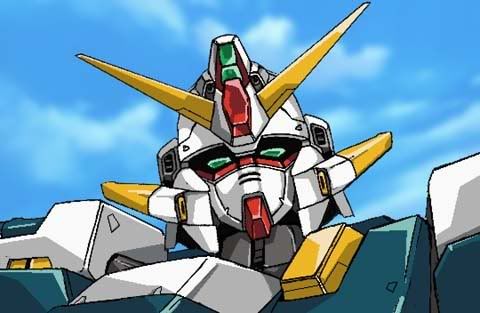

 Not everyone can make the impossible, possible.









 0.0626sec
 0.45
0.45
 7 queries
 GZIP Disabled