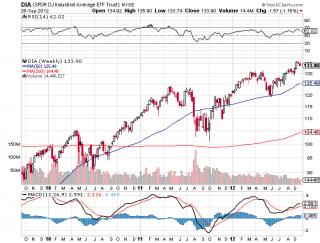
some pull back is necessary la, but if the future is bleak, y the dow jones close to new high & not at new low?

 http://sports.williamhill.com/bet/en-gb/be...S-Election.html
Barack Obama 1/5
Mitt Romney 10/3
http://www.paddypower.com/bet/politics/oth..._grp_ids=482041Barack Obama 1/5
Mitt Romney 7/2
http://www.bloomberg.com/markets/stocks/futures/shouldn't it be down a few hundred points with so much negative news?
if the americans r gonna reelect him, then I will sell and start to short

see where is his leadership when iran threaten to bomb israel
china, taiwan & japan having water fight over a few island
us ambassador to libya killed and no marines to guard such a dangeous area
obama no time for any leaders during un summit recently but got time for reality shows

”Leading From Behind: The Reluctant President and the Advisors Who Decide for Him,“
 http://www.blogrunner.com/snapshot/D/4/3/o...es_report_says/
Top U.S. executives have less confidence in the business outlook now than at any time in the past three years - and a key reason is fear of gridlock in Washington over the fiscal deficit and tax policy.
The uncertainty, coupled with slowing demand in Asia and Europe, is forcing corporate leaders to postpone decisions on major investments and hiring, and hurting sales of everything from textbooks to telephone lines.
"If we don't deal with the fiscal cliff and don't deal with predictability on taxes for both citizens and business, with the rest of the world in a struggling state, this is really bad for us," John Chambers, CEO of network equipment maker Cisco Systems Inc (CSCO), told Reuters on Tuesday.
Some 34 percent of U.S. CEOs plan to cut jobs in the United States over the next six months, up from 20 percent a quarter ago, according to a Business Roundtable survey released on Wednesday. Only 30 percent plan to raise capital spending, compared with 43 percent previously.
Another survey, by Deloitte, found that chief financial officers' view of business prospects had also darkened in the current quarter. Some 80 percent of U.S. CFOs surveyed by the consultancy said the economy had stalled or was about to stall.
Executives warn that failure to compromise on the budget could undermine an unsteady world economy, which is also coping with Europe's debt crisis and slowing China growth.
"No recovery next year in the U.S. or in Europe (is) now forecast," Greg Hayes, chief financial officer of United Technologies Corp (UTX), told investors last week. "That assumes we don't fall off this fiscal cliff, which could be devastating to the U.S. economy, probably the world economy."
At the same time, most of the companies have accelerated their cost-cutting efforts, closing facilities, laying off workers and pressuring their suppliers to lower component costs.
A TRILLION DOLLARS ON THE SIDELINES
Businesses have responded to the risks posed by the fiscal cliff in much the way they have reacted to all worries since the 2008-2009 financial crisis: by hoarding cash.
The companies that make up the broad Standard & Poor's 1500 index (.15GSPC) had $1 trillion in cash and equivalent assets on their books at the end of the second quarter, according to Thomson Reuters I/B/E/S data. That is a hefty sum in comparison to total U.S. gross domestic product, which last year came to $15 trillion.
The reserves reflect unease across corporate America, evidenced in both slow hiring and tepid pace of takeovers.
"Buyers remain reluctant to pull the trigger; continued economic and geopolitical uncertainty in the world are keeping companies from making big, bold bets," said Stefan Selig, executive vice chairman of Global Corporate and Investment Banking at Bank of America Merrill Lynch, who said the fiscal cliff is just one of several factors inhibiting deal making.
The irony of this problem is that corporations' unwillingness to spend is holding back the pace of growth.
"Companies have a lot of cash," Dave Cote, CEO of Honeywell, told investors. "There is an opportunity here to really unleash a big wave of investment ... But everybody is just cautious right now because you just don't know what democracies are going to do. And you look at whether it is the U.S., Europe, Japan, India, democracies are in gridlock."
http://finance.yahoo.com/news/analysis-cor...-005806537.html 

 Sep 26 2012, 01:37 PM


 Quote
Quote


 u guys r in here for the long haul or the day haul


 0.0336sec
 0.63
0.63
 6 queries
 GZIP Disabled