Tuesday evening spent some time around some forest edge in some rich housing estate. Another sort of adhoc scouting cuz i was visiting my sister who was sick and she stay near that area. Again, tough luck looking for jumpers. Despite scouting around some thick foliage at prime time around 5pm, I failed to spot any interesting jumper. Definately no fs. Well, jumper or none i still enjoy hanging around the greens and breathing in the cool fresh forest air.
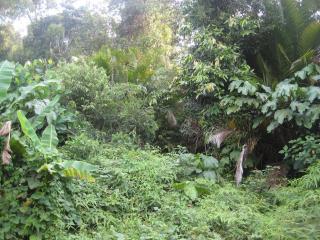

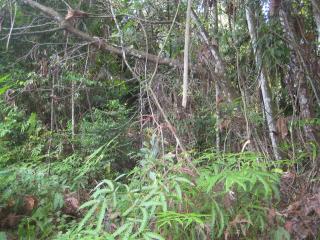
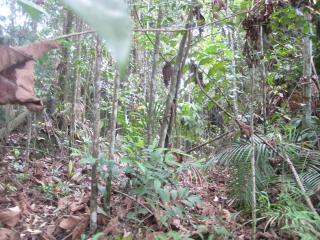
Heavy leaf litter.

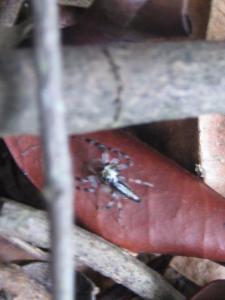
Did manage to find one juvenile pancorius. It was happily eating another type of red spider before it got disturbed by me. With the white marking running down the middle of its head, it looks like a female.
Later in the evening, I moved to another spot where there was a population of fs to be found in these big leaves plant, both juveniles and adults. It was interesting that i just lift one of them leaves and there sits a male. 3 males i spotted but i took home only one, the biggest one. But it is only M size. Yet to test it against the first king i'm having. It is interesting to note how fs populations tend to be concentrated in one area, for further up or down the road even in the same plant types i found not one fs, not even a juvenile.
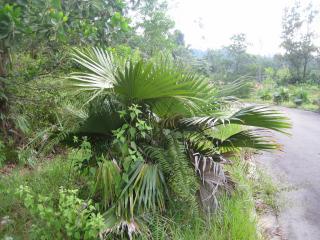
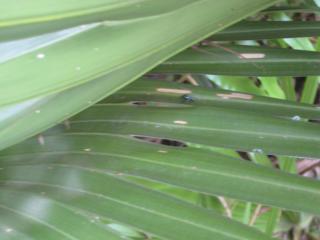
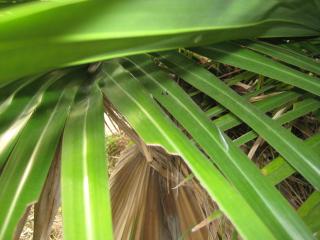
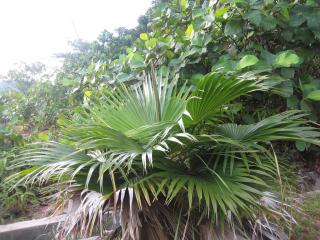
I also lurked around some cb plants and manage to find a small bavia female with eggs inside a dried up cb leaf.
I have gotten this small species before. At first i thought they were juvenile slings to the huge one i once had. But I think they may be a different species considering the female are able to lay eggs at such a small size, even smaller than a normal fs male. This finding is the second female with eggs i have seen.
Looking carefully, u can see the slings have banded abdomen pretty much like some cartoon bubblebee.


On a side note, my hyllus semi slings are doing pretty well, around 20 of them moulted into 2nd instar and not one dead. The 1st instar turn out to be pretty big, being equivalent to 3rd instar fs slings. The genus hyllus slings are pretty awesome, easily taking prey similar or even slightly larger than their own size even at first instar. Here's one tackling a pinhead cricket.
 This post has been edited by mindstorm: Sep 16 2010, 03:12 AM

 Sep 13 2010, 02:49 PM


 Quote
Quote


 to you guys for the persistency in the fs spot. Sad to say I've been MIA for quite sometimes and hopefully I could join you guys for one of the weekends hunt

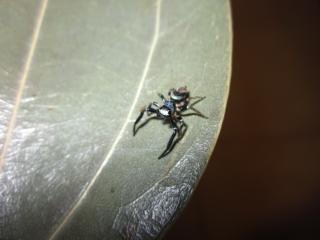
 just like what we have seen, the T.Blue female can be so huge(refer to earlier post #141), so why not the male, since this subadult i named him Charlotte, can become a normal male.




 0.0331sec
 0.55
0.55
 6 queries
 GZIP Disabled