

 Oct 4 2008, 01:07 AM


QUOTE(justblair @ Oct 4 2008, 01:59 AM)
Well a low pass works in a similar fasion, but this time the cap is connected to ground. As the higher frequencies pass through the cap, they are discharged to ground and removed from the signal path. The lower are sheparded on to the amplifier.
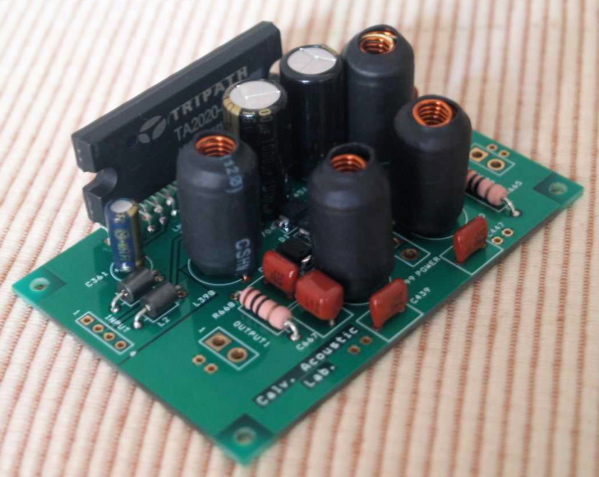
The Sure boards I have, had this arrangement in place, but unfortunately the caps they used were large enough to pass some audible frequency through as well.
Removing them returned the highest of the audio frequencies and improved the top end sound. You can also use a coil here, as inductors prevent high frequenies from passing. Thats because they use a magnetic field to filter.
If you dont have a low pass filter, your amp is reproducing the high frequenices outside of the audible frequency spectrum. (HF noise from other components for instance).
Some amps dont like doing this and it can make them oscillate, but the tripaths are stable at the higher frequencies. Of course with instrumentation you can detect the amplified high frequences (or "noise") and without the low pass filters the amps measure worse for Signal to Noise Ratio (SNR). Humans though cant hear this noise, so some audio equipment with apparently high SNR sound better when you think they should sound terribel looking at the figures.... Non-oversampling DACs for instance produce high SNR yet are loved by their owners! (ie me!)
A commercial manufacturer would on the other hand find this high SNR bad, but thats more for commercial reasons, SNR has for a long time been banded around as an indication of high quality... Its not as simple as that, the frequency of the noise is just as if not more important.

Thanks Blair for the explanation.....but if the lo frequency grounded....will it make worse. Too bright with no bass.....then how to recover back the balance in the signal ???The Sure boards I have, had this arrangement in place, but unfortunately the caps they used were large enough to pass some audible frequency through as well.
Removing them returned the highest of the audio frequencies and improved the top end sound. You can also use a coil here, as inductors prevent high frequenies from passing. Thats because they use a magnetic field to filter.
If you dont have a low pass filter, your amp is reproducing the high frequenices outside of the audible frequency spectrum. (HF noise from other components for instance).
Some amps dont like doing this and it can make them oscillate, but the tripaths are stable at the higher frequencies. Of course with instrumentation you can detect the amplified high frequences (or "noise") and without the low pass filters the amps measure worse for Signal to Noise Ratio (SNR). Humans though cant hear this noise, so some audio equipment with apparently high SNR sound better when you think they should sound terribel looking at the figures.... Non-oversampling DACs for instance produce high SNR yet are loved by their owners! (ie me!)
A commercial manufacturer would on the other hand find this high SNR bad, but thats more for commercial reasons, SNR has for a long time been banded around as an indication of high quality... Its not as simple as that, the frequency of the noise is just as if not more important.
 Quote
Quote


 only I am NOT free this weekend ler.. next weekend better chance. Anyhow, Y.C. is yet to complete the mods/upgrade. So we'll let our first host be ready




 0.0668sec
 0.65
0.65
 7 queries
 GZIP Disabled