Federal Court rejects man’s bid to stay anonymous while challenging Selangor Shariah law on unnatural sexSource:
https://www.malaymail.com/news/malaysia/202...elangor/1910104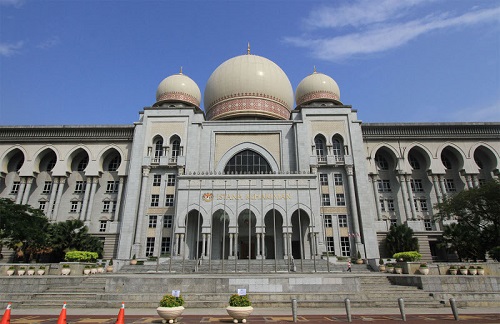
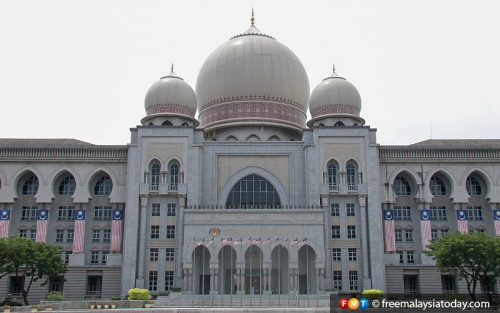
PUTRAJAYA, Oct 6 —
The Federal Court today dismissed a Malaysian man’s
bid to remain anonymous and not be named
in public reports of his constitutional
challenge in court over a Selangor state law that makes it a
Shariah offence to have unnatural sex.Chief Judge of Sabah and Sarawak Datuk Abang Iskandar Abang Hashim said that he found that there was
no cogent reason presented to him to justify the application to keep the man’s identity confidential.
The judge also noted that
almost all the news reports by the media on this case previously had
withheld the man’s identity.“So on the balance, I
will not invoke my jurisdiction to allow this enclosure. It is therefore
dismissed with costs of RM1,000 to each respondent — Selangor and Mais. No costs awarded to Maiwp,” he said when delivering his decision.
Today was the Federal Court’s hearing of the man’s application for his
name, address, photograph, video or any details that could lead to his
identification to not be published and for him to be referred to as
“ABC”.Lawyer Surendra Ananth, who represented the 35-year-old man, had earlier
argued that the Federal Court has
inherent jurisdiction to give an order to keep his client’s name anonymous.
Surendra
highlighted the risk of infringement of his client’s private life if his identity was to be publicly disclosed, pointing out that the
right to privacy has been legally
recognised in Malaysia.Surendra highlighted that
two of the applicants in a previous case to challenge a Negri Sembilan state law that
criminalised cross-dressing had filed
affidavits to support his client’s application for anonymity, and that they had
shared with the Federal Court their experience of being
heavily harassed.He noted that two of the
applicants in the Negri Sembilan case had faced a lot of
harassment after their names were published in news reports on their case, with one of them
shunned by the family and who had to
resort to moving to different states due to the daily harassment faced, and with this individual also
losing employment and subsequently suffering from m
ental health issues and needing
medical help due to the harassment.
“All this harassment only started
once their identities were published,” he said.
While noting that the
main objection by other parties to this case was that his client
has yet to face harassment, Surendra said this
underlined the necessity for the anonymity order for
preventive purposes: “My test is, is there a risk? If I wait for harassment, then it
defeats the purpose for me to apply. I’m applying to prevent harassment.
“I think there’s
sufficient material to grant this order, and my learned friends have not been able to point to any prejudice that would be suffered if My Lord grants this order,” Surendra said, highlighting that
the media’s withholding of his client’s name
indicates that the media themselves recognised there is no need to report his name.
Siti Fatimah Talib,
the Selangor state assistant legal adviser representing the Selangor government, then
voiced her objection to the request for anonymity, arguing that the man had
not shown that he was threatened and that there were no special circumstances to justify his name being withheld.
She also argued that he was
not a minor or a child that needs special protection, but was an adult.
Siti Fatimah also argued that the man should have
filed the application for anonymity from the start when he had filed his court challenge, instead of only asking for anonymity at this point which she said appears to be an
“afterthought”.Lawyer Halimatunsa’diah Abu Ahmad, who represented the Selangor Islamic Religious Council
(Mais) who is intervening in this case, meanwhile argued that court orders to withhold identity are usually granted when it involves the protection of children and highlighted that this man is not a child.
She also argued that this man
does not fall under the categories listed in
Section 15 of the Courts of Judicature Act, which provides that the court may order that the name, address, photograph of a court witness and other details that may lead to the identification of the witness to not be published.
She also said that the man
should rely on Article 8 of the Federal Constitution for equal protection of the law
if he were to face threats as a result of this court challenge, and questioned why he was seeking to have different treatment from others by asking for his identity to be anonymous.
“And if at all the petitioner is being affected or pressured by any other party, he should be protected under Article 8 — equality applicable to all Malaysians — then he can always report to authorities and have protection just like any other person, just like us. And all the affidavits have not shown any evidence or proof of him being threatened or about to be threatened,” she said, further noting that
two online postings cited by the man
did not name him and that this man had only said he may face risk or be threatened.
Lawyer Abdul Rahim Sinwan, who represented the Federal Territories Islamic Religious Council
(Maiwp) as amicus curiae, meanwhile argued that it was
only an assumption of danger to the man or that his safety would be under threat and that it was not a real issue.
In responding to all these arguments,
Surendra said that they had all
failed to show or indicate how publishing the man’s name would be
critical or important for the public or for public interest, pointing out that this
challenge is based purely on legal issues instead of facts.
“In criminal trials, I accept the name and
identity of the person is important because it goes into facts, but here we are
not concerned with the facts. I ask Your Lordship to consider that his name is not important for publication,” he said, further highlighting that his client was only asking for his name to not be published and not asking for other parts of the proceedings to not be published.
While acknowledging that it is difficult to quantify what harassment is and what would happen in the future, Surendra said the
court will have to weigh the risk, noting that Selangor and Mais which objected to the anonymity order had not shown why it was important to publicise his client’s name and that his client on the other hand faces risk of harassment and does not need to wait for harassment to happen first.
“As to the point when we should have filed this, at the outset, when we first filed the writ, we didn’t go to the press. It was only
once the case was taken up by the press and statements made by public figures, then
our client felt the need for a protection order. So I don’t think it can be held against us for not filing from the start,” he said.
Surendra also highlighted that the
Federal Court had previously recognised that it has the
powers to issue a gag order on an entire trial in the case of Datuk Seri Najib Razak’s SRC International Sdn Bhd case, noting that he was only seeking for a
much milder version to withhold his client’s name. The Federal Court had previously rejected Najib’s bid to impose a gag order on his SRC trial.
When met outside the courtroom, Surendra said that the judge formed the view that on balance there is no risk of harassment, based on evidence that was produced before the court.
“Because most of the
media did not report the petitioner’s name, I think that was
a factor the judge considered to say there is no risk of harassment, so there is
insufficient material before him to form the view that there is risk of harassment,” he explained to reporters.
S. Thilaga, founder of human rights group
Justice For Sisters which is monitoring the case and supporting the applicant in this case, pointed out the
problems that could arise if the man’s identity is published.
“Because our concern is if the name is out, one can be vulnerable to
online doxxing for non-consensual disclosure of information, other online threats and even termination of jobs,” she told reporters here.
“We
thank the media for practising such
high standards of ethics and in protecting the person’s privacy and we hope that this will continue.
“We hope the media will
continue not to publish the name, the media has already practised high standards of privacy, and anonymised the name from the beginning so I think it’s okay to continue that, because the practice by the media led to the lack of harassment. So I think that should be continued in the interest of the privacy and wellbeing of the petitioner,” she added.
Earlier today, the judge
allowed Mais’ application to be an intervener as he found that it has a direct interest in the case.
The judge today however
disallowed Maiwp’s application to be an intervener as he found that it did not have a direct interest in the case, but allowed it to be an
amicus curiae.The Federal Court today also fixed
December 14 for the hearing of the
man’s court challenge.His court challenge is specifically on
whether the Selangor state legislative assembly has the
powers to enact the Selangor state law — that makes it a crime to have unnatural sex —
in the first place.Under Section 28 of the Shariah Criminal Offences (Selangor) Enactment 1995, it is
an offence for any person to perform “sexual intercourse against the order of nature” with any man, woman or animal, which is
punishable by a maximum
RM5,000 fine or maximum
three-year jail term or maximum six strokes of whipping, or any combination of the penalties.
Added on It's unfortunate that the application for gag order was rejected by the court. The media can now publish the name of the man challenging the Syariah Law but due to ethics and request from the lawyer, they're not gonna do it. So proud of the local media.


 Sep 25 2020, 09:58 AM


 Quote
Quote









 0.0348sec
 1.17
1.17
 5 queries
 GZIP Disabled