QUOTE(leinnz @ Dec 26 2018, 03:13 PM)
Night mode uses the monochrome sensor.
As explain
here» Click to show Spoiler - click again to hide... «
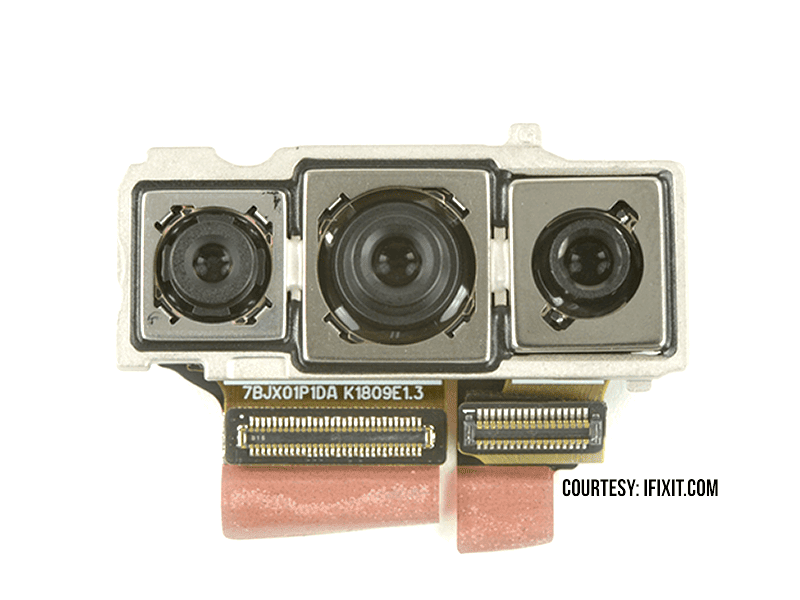
What about the third camera, the 20 MP black & white one? Well, that one does not have a Bayer filter at all – no need to record color – so it gets more light. You see, the filter removes much of the light so less of it reaches the pixels. A B&W camera handles better in the dark, but most people want color images. There’s a workaround to that.
Recall that both the 40 MP camera and the B&W one have the same focal length, 27mm (equiv.). This means they see roughly the same image – not just overlapping images like the tele/40 MP cameras, but actually the same image from left to right, top to bottom (aside from a small shift in perspective).
This allows the P20 Pro to combine the low-light shooting advantages of the B&W camera with color information from the 40 MP sensor into one bright and colorful nighttime shot. We suspect that Huawei uses the B&W camera even during the day, the phone will complain if it’s covered up (even in broad daylight).
i could be wrong but when i look at the P20 Pro triple cameras physical hardware.... lenses are fixed to sensors... if u cover the B&W lens then i doubt how the sensor will get the image.... u can try that in modes like photo or portrait and try to cover telephoto or B&W lens with finger; the phone will give u warning "Please do not cover the lenses"..
try to cover B&W lenses in night mode and no warning given...
it also explain here that the night superiority is due the unusual large main sensor...
DxOmark
Thanks to an unusually large (by smartphone standards) 1/1.73″ sensor in its main camera, the Huawei P20 Pro delivers class-leading low levels of noise, making it the smartphone of choice for any kind of photo and video shooting in low light and indoor conditions. In the night shot comparison below, you can see that the Huawei sample shows better detail and significantly lower noise levels than the competition from Apple and Google.
forbes
Elsewhere, the P20 Pro drew particular praise for its low-light performance with and without flash. This is due, in part, to its unusually large main sensor which allows more of the available light to be captured at any given aperture size. Although the P20 Pro’s main aperture of f/1.8 might seem less bright than the f/1.5 of the Galaxy S9+, the larger sensor size more than makes up for this. Remember f-stops are mathematically linked to the size of the image circle they produce, so you can’t just compare one f-number against another without taking sensor size into account.


 Dec 24 2018, 09:05 PM


 Quote
Quote





 0.0178sec
 0.65
0.65
 6 queries
 GZIP Disabled