Welcome Guest ( Log In | Register )

65 Pages « < 46 47 48 49 50 > » Bottom

Outline · [ Standard ] · Linear+

 LYN Catholic Fellowship V02 (Group), For Catholics (Roman or Eastern)

views
     
TSyeeck
post Feb 27 2019, 02:02 PM

Look at all my stars!!
*******
Senior Member
3,573 posts

Joined: Apr 2006


QUOTE(unknown warrior @ Feb 27 2019, 10:16 AM)
Nobody is asking to disdain them but we don't have to pray to any saints or angels or even kiss whatever statues that represents them imo, it is not scriptural imo.

If he was still under the old covenant, that makes it worse Yeeck, think about it, how do you atone for your sins in the Old Covenant? Did the thief do anything as per Old Covenant requirement? What he did seem to apply more under the New Covenant so much so that Christ grants him to paradise......"FAITH". <-----
*
I've mentioned about prayer to the saints before, but if you forget, I'll be happy to repeat it here. See Revelation 5:8, where John depicts the saints in heaven offering our prayers to God under the form of "golden bowls full of incense, which are the prayers of the saints." But if the saints in heaven are offering our prayers to God, then they must be aware of our prayers. They are aware of our petitions and present them to God by interceding for us. Asking one person to pray for you in no way violates Christ’s mediatorship, as can be seen from considering the way in which Christ is a mediator. First, Christ is a unique mediator between man and God because he is the only person who is both God and man. He is the only bridge between the two, the only God-man. But that role as mediator is not compromised in the least by the fact that others intercede for us.

As for kissing statues of the saints, that is merely a sign of affection to love and honour those we regard as friends of God. It doesn't mean we equate them to God.

As for the good thief, Christ promised him paradise and forgave his sins there and then just as He forgave the sins of others. But Christ only ascended into Heaven 40 days after His resurrection, so how could the thief enter Heaven first? The only other explanation would be for him to go into the limbo of the Fathers of the Old Covenant, aka "Abraham's bosom" who were all also liberated by Christ to enter into eternal bliss.

This post has been edited by yeeck: Feb 28 2019, 10:53 AM
TSyeeck
post Feb 27 2019, 02:09 PM

Look at all my stars!!
*******
Senior Member
3,573 posts

Joined: Apr 2006


QUOTE(Hades76 @ Feb 27 2019, 10:21 AM)
Sexual abuse is wrong regardless of religion. If found guilty, send him to jail for punishment.
*
Agreed. But unlike the McCarrick and other cases, Pell's case seems like a miscarriage of justice.
unknown warrior
post Feb 27 2019, 02:20 PM

/k/ Legend
*******
Senior Member
6,240 posts

Joined: Jul 2005
QUOTE(yeeck @ Feb 27 2019, 02:02 PM)
I've mentioned about prayer to the saints before, but if you forget, I'll be happy to repeat it here. See Revelation 5:8, where John depicts the saints in heaven offering our prayers to God under the form of "golden bowls full of incense, which are the prayers of the saints." But if the saints in heaven are offering our prayers to God, then they must be aware of our prayers. They are aware of our petitions and present them to God by interceding for us. Asking one person to pray for you in no way violates Christ’s mediatorship, as can be seen from considering the way in which Christ is a mediator. First, Christ is a unique mediator between man and God because he is the only person who is both God and man. He is the only bridge between the two, the only God-man. But that role as mediator is not compromised in the least by the fact that others intercede for us.

As for kissing statues of the saints, that is merely a sign of affection to love and honour those we regard as friends of God. It doesn't mean we equate them to God.
*
Bible never mention those are the prayers of saints in heaven in that verse per say. how did you conclude it is? What is there to stop me from saying, it's the prayer of saints on earth?

QUOTE(yeeck @ Feb 27 2019, 02:02 PM)
As for kissing statues of the saints, that is merely a sign of affection to love and honour those we regard as friends of God. It doesn't mean we equate them to God.
*
They're statues dude. You're kissing statues.....I don't know if this isn't obvious to you?

This post has been edited by unknown warrior: Feb 27 2019, 02:26 PM
TSyeeck
post Feb 27 2019, 02:38 PM

Look at all my stars!!
*******
Senior Member
3,573 posts

Joined: Apr 2006


QUOTE(unknown warrior @ Feb 27 2019, 02:20 PM)
Bible never mention those are the prayers of saints in heaven in that verse per say. how did you conclude it is? What is there to stop me from saying, it's the prayer of saints on earth?
They're statues dude. You're kissing statues.....I don't know if this isn't obvious to you?
*
For us the saints can mean the saints here on earth or those in Heaven, or those in purgatory, what we call the doctrine of the Communion of Saints. No difference be they in heaven or on earth. Saints can and do intercede for us.

So what if it's statues? What if it's a photo? Does it make any difference? The statues are just the representations. Same like how the country's flag represents the country, or a photo of my mum represents my mum.

This post has been edited by yeeck: Feb 28 2019, 10:24 AM
unknown warrior
post Feb 27 2019, 02:46 PM

/k/ Legend
*******
Senior Member
6,240 posts

Joined: Jul 2005
QUOTE(yeeck @ Feb 27 2019, 02:38 PM)
For us the saints can mean the saints here on earth or those in Heaven, or those in purgatory, what we call the doctrine of the Communion of Saints. No difference be they in heaven or on earth. Saints can and do intercede for us.

So what if it's statues? What is it's a photo? Does it make any difference? The statues are just the representations. Same like how the country's flag represents the country, or a photo of my mum represents my mum.
*
Why ask and pray to the saints to intervene for you when you can directly pray to God? I don't really understand this. biggrin.gif

Do you know, you have as much influence with God as with any saints? This to me, teaches lack of faith.


QUOTE(yeeck @ Feb 27 2019, 02:38 PM)
So what if it's statues? What is it's a photo? Does it make any difference? The statues are just the representations. Same like how the country's flag represents the country, or a photo of my mum represents my mum.
*
A lot of differences, it's a kind of veneration that is unhealthy to me. Why? because we are not to put faith in the saints. When you adore as such, it can be a distraction away from God...people now look to the saints, rather than complete focus (100%) on God.


This post has been edited by unknown warrior: Feb 27 2019, 02:48 PM
TSyeeck
post Feb 27 2019, 03:23 PM

Look at all my stars!!
*******
Senior Member
3,573 posts

Joined: Apr 2006


QUOTE(unknown warrior @ Feb 27 2019, 02:46 PM)
Why ask and pray to the saints to intervene for you when you can directly pray to God? I don't really understand this.  biggrin.gif

Do you know, you have as much influence with God as with any saints? This to me, teaches lack of faith.
A lot of differences, it's a kind of veneration that is unhealthy to me. Why? because we are not to put faith in the saints. When you adore as such, it can be a distraction away from God...people now look to the saints, rather than complete focus (100%) on God.
*
You are not the first to object. These are classic objections from Protestants.

James 5:14-18 King James Version (KJV)
14 Is any sick among you? let him call for the elders of the church; and let them pray over him, anointing him with oil in the name of the Lord:

15 And the prayer of faith shall save the sick, and the Lord shall raise him up; and if he have committed sins, they shall be forgiven him.

16 Confess your faults one to another, and pray one for another, that ye may be healed. The effectual fervent prayer of a righteous man availeth much.

17 Elias was a man subject to like passions as we are, and he prayed earnestly that it might not rain: and it rained not on the earth by the space of three years and six months.

18 And he prayed again, and the heaven gave rain, and the earth brought forth her fruit.

Note here that the Bible itself recommends asking someone else to pray: “the elders” of the Church, who, like other Church leaders (1 Tim 3:1-13; Titus 1:7), are supposed to be of exemplary character, and “worthy of double honor” (1 Tim 5:17). They have more power, due to their ordination.

In Revelation 5:8, the “twenty-four elders” (usually regarded by commentators as dead human beings) “fell down before the Lamb . . . with golden bowls full of incense, which are the prayers of the saints.” They appear to have other people's prayers, to present to God. So the obvious question is: what are they doing with them? Why does Revelation present dead saints presenting the prayers of other saints to God?

If they have them, it stands to reason as a rather straightforward deduction, that they heard the initial prayers as well, or at least were granted knowledge of them in some fashion: ultimately through the power of God. Revelation 8:3-4 is even more explicit. Rather than equating incense and prayers, it actually distinguishes between them, and presents the scenario that the prayers and incense are presented together:

And another angel came and stood at the altar with a golden censer; and he was given much incense to mingle with the prayers of all the saints upon the golden altar before the throne; [4] and the smoke of the incense rose with the prayers of the saints from the hand of the angel before God.

It seems clear that they have heard the prayers of men, and are involved as intercessors. Angels are extremely intelligent beings. We know that they rejoice when a sinner repents. They have knowledge in ways that we do not; above our comprehension.

This is biblical proof that physically dead saints and angels both somehow know about our prayers and present them to God. They are acting as intercessors and intermediaries. How do they hear our prayers? God gives them the power to do so because they are in heaven and therefore, outside of time. They are aware of earthly events. We know that from Hebrews 12:1 (“we are surrounded by so great a cloud of witnesses”) and from Revelation 6:9-10, where dead saints are praying for those on the earth.

This is our entire rationale for asking saints to pray to God for us: all in perfect harmony with the Bible:

1) Holy men and women's prayers have great power.

2) Physically dead saints are perfected in holiness and are still part of the Body of Christ.

3) The Blessed Virgin Mary in particular is exceptionally holy (Immaculate Conception) and as the Mother of God, her prayers have more power and effect than that of any other creature: all by God's grace.

4) We know that they are aware (or are made aware) of earthly events.

5) We know that they exercise much charity and pray for us.

Of course Catholics also pray directly to God, no one but the most extreme anti-Catholics denies that. Question is why can't we do both? To say that we have as much influence with God as with any saints in heaven shows pride, because it assumes that we are perfect, holy, and sinless already (unless one is so sure he or she is always in a state of grace), which is a deadly error -> the sin of presumption. For your information, all Catholic masses (Mass is the highest form of public worship in the Catholic Church) are offered to God and God alone.
unknown warrior
post Feb 27 2019, 04:02 PM

/k/ Legend
*******
Senior Member
6,240 posts

Joined: Jul 2005
QUOTE(yeeck @ Feb 27 2019, 03:23 PM)
You are not the first to object. These are classic objections from Protestants.

James 5:14-18 King James Version (KJV)
14 Is any sick among you? let him call for the elders of the church; and let them pray over him, anointing him with oil in the name of the Lord:

15 And the prayer of faith shall save the sick, and the Lord shall raise him up; and if he have committed sins, they shall be forgiven him.

16 Confess your faults one to another, and pray one for another, that ye may be healed. The effectual fervent prayer of a righteous man availeth much.

17 Elias was a man subject to like passions as we are, and he prayed earnestly that it might not rain: and it rained not on the earth by the space of three years and six months.

18 And he prayed again, and the heaven gave rain, and the earth brought forth her fruit.

Note here that the Bible itself recommends asking someone else to pray: “the elders” of the Church, who, like other Church leaders (1 Tim 3:1-13; Titus 1:7), are supposed to be of exemplary character, and “worthy of double honor” (1 Tim 5:17). They have more power, due to their ordination.

In Revelation 5:8, the “twenty-four elders” (usually regarded by commentators as dead human beings) “fell down before the Lamb . . . with golden bowls full of incense, which are the prayers of the saints.” They appear to have other people's prayers, to present to God. So the obvious question is: what are they doing with them? Why does Revelation present dead saints presenting the prayers of other saints to God?

If they have them, it stands to reason as a rather straightforward deduction, that they heard the initial prayers as well, or at least were granted knowledge of them in some fashion:  ultimately through the power of God. Revelation 8:3-4 is even more explicit. Rather than equating incense and prayers, it actually distinguishes between them, and presents the scenario that the prayers and incense are presented together:

And another angel came and stood at the altar with a golden censer; and he was given much incense to mingle with the prayers of all the saints upon the golden altar before the throne; [4] and the smoke of the incense rose with the prayers of the saints from the hand of the angel before God.

It seems clear that they have heard the prayers of men, and are involved as intercessors. Angels are extremely intelligent beings. We know that they rejoice when a sinner repents. They have knowledge in ways that we do not; above our comprehension.

This is biblical proof that physically dead saints and angels both somehow know about our prayers and present them to God. They are acting as intercessors and intermediaries. How do they hear our prayers? God gives them the power to do so because they are in heaven and therefore, outside of time. They are aware of earthly events. We know that from Hebrews 12:1 (“we are surrounded by so great a cloud of witnesses”) and from Revelation 6:9-10, where dead saints are praying for those on the earth.

This is our entire rationale for asking saints to pray to God for us: all in perfect harmony with the Bible:

1) Holy men and women's prayers have great power.

2) Physically dead saints are perfected in holiness and are still part of the Body of Christ.

3) The Blessed Virgin Mary in particular is exceptionally holy (Immaculate Conception) and as the Mother of God, her prayers have more power and effect than that of any other creature: all by God's grace.

4) We know that they are aware (or are made aware) of earthly events.

5) We know that they exercise much charity and pray for us.

Of course Catholics also pray directly to God, no one but the most extreme anti-Catholics denies that. Question is why can't we do both? To say that we have as much influence with God as with any saints in heaven shows pride, because it assumes that we are perfect, holy, and sinless already (unless one is so sure he or she is always in a state of grace), which is a deadly error -> the sin of presumption. For your information, all Catholic masses (Mass is the highest form of public worship in the Catholic Church) are offered to God and God alone.
*
I'm sorry but I think only God has "the" power. Holy Man or Woman for that matter do not have whatever powers. Elders of the Church are offices of responsibility, no where in the Bible are they attributed to have more power in prayers or Mary for that matter....

3) The Blessed Virgin Mary in particular is exceptionally holy (Immaculate Conception) and as the Mother of God, her prayers have more power and effect than that of any other creature: all by God's grace.

Where in scripture is this explained?

This post has been edited by unknown warrior: Feb 27 2019, 04:11 PM
TSyeeck
post Feb 27 2019, 04:21 PM

Look at all my stars!!
*******
Senior Member
3,573 posts

Joined: Apr 2006


QUOTE(unknown warrior @ Feb 27 2019, 04:02 PM)
I'm sorry but I think only God has "the" power. Holy Man or Woman for that matter do not have whatever powers. Elders of the Church are offices of responsibility, no where in the Bible are they attributed to have more power in prayers or Mary for that matter....

3) The Blessed Virgin Mary in particular is exceptionally holy (Immaculate Conception) and as the Mother of God, her prayers have more power and effect than that of any other creature: all by God's grace.

Where in scripture is this explained?
*
Ultimately all the power comes from God. God may choose to let these be dispensed by anyone according to His Will. Elders of the Church have the authority to give the sacraments instituted by Christ (forgive sins, annointing of the sick).

As for the Immaculate Conception, I think I have posted enough on the other thread.
unknown warrior
post Feb 27 2019, 04:27 PM

/k/ Legend
*******
Senior Member
6,240 posts

Joined: Jul 2005
QUOTE(yeeck @ Feb 27 2019, 04:21 PM)
Ultimately all the power comes from God. God may choose to let these be dispensed by anyone according to His Will. Elders of the Church have the authority to give the sacraments instituted by Christ (forgive sins, annointing of the sick).

As for the Immaculate Conception, I think I have posted enough on the other thread.
*
no, I mean where in scripture that explains whatever saints or mary has more power in prayer?
TSyeeck
post Feb 27 2019, 05:25 PM

Look at all my stars!!
*******
Senior Member
3,573 posts

Joined: Apr 2006


QUOTE(unknown warrior @ Feb 27 2019, 04:27 PM)
no, I mean where in scripture that explains whatever saints or mary has more power in prayer?
*
Aiyo, see my reply above lah https://forum.lowyat.net/index.php?showtopi...post&p=91945663

"The effectual fervent prayer of a righteous man availeth much."

This post has been edited by yeeck: Feb 27 2019, 05:26 PM
unknown warrior
post Feb 27 2019, 09:10 PM

/k/ Legend
*******
Senior Member
6,240 posts

Joined: Jul 2005
QUOTE(yeeck @ Feb 27 2019, 05:25 PM)
Aiyo, see my reply above lah https://forum.lowyat.net/index.php?showtopi...post&p=91945663

"The effectual fervent prayer of a righteous man availeth much."
*
But do you know what is righteousness under the New Covenant?
TSyeeck
post Mar 4 2019, 09:42 AM

Look at all my stars!!
*******
Senior Member
3,573 posts

Joined: Apr 2006


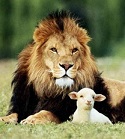
user posted image
khool
post Mar 6 2019, 10:18 AM

Getting Started
**
Junior Member
225 posts

Joined: Mar 2008


Today is Ash Wednesday, please attend Mass ... God Bless! biggrin.gif


prophetjul
post Mar 8 2019, 08:55 AM

10k Club
********
All Stars
12,268 posts

Joined: Oct 2010

QUOTE(yeeck @ Mar 7 2019, 01:56 PM)
Reading more is better than reading less. LOL. Anything material is graven. The Temple and the Ark also contains graven images. Do you exist in spirit only?
*
QUOTE
Now therefore hearken, O Israel, unto the statutes and unto the judgments, which I teach you, for to do them, that ye may live, and go in and possess the land which the Lord God of your fathers giveth you.
2 Ye shall not add unto the word which I command you, neither shall ye diminish ought from it, that ye may keep the commandments of the Lord your God which I command you.


QUOTE
For I testify unto every man that heareth the words of the prophecy of this book, If any man shall add unto these things, God shall add unto him the plagues that are written in this book:


So adding to scriptures is better for you. Even those which are disobedience to His word?

The Temple and Ark are instructions from God. They did not worship those constructions.
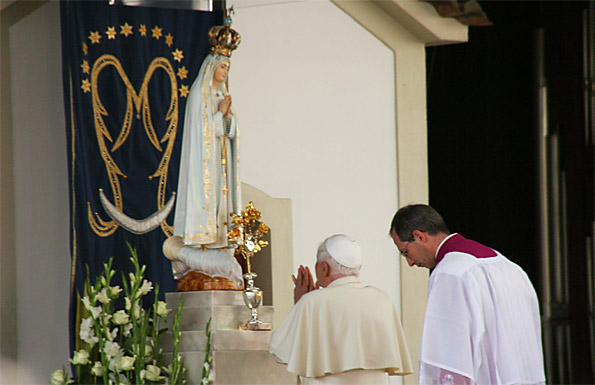
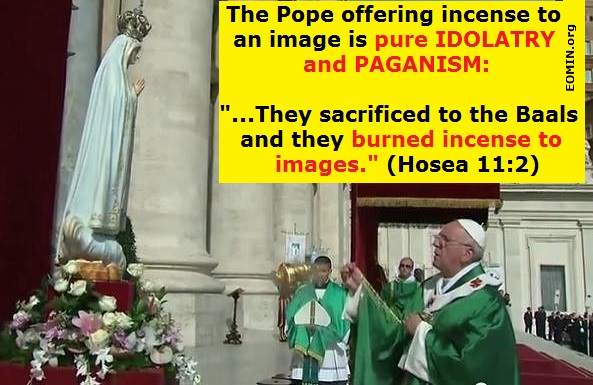
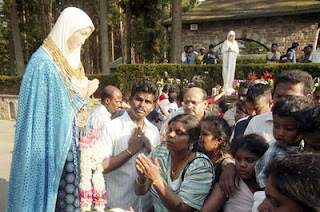
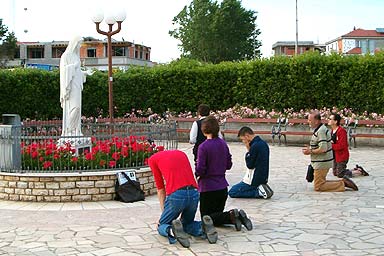
Whereas your popes and people are worshipping and bowing down before graven statues. And you laugh?

user posted image

user posted image

user posted image

QUOTE
Thou shalt not make unto thee any graven image, or any likeness of any thing that is in heaven above, or that is in the earth beneath, or that is in the water under the earth.
5 Thou shalt not bow down thyself to them, nor serve them: for I the Lord thy God am a jealous God, visiting the iniquity of the fathers upon the children unto the third and fourth generation of them that hate me

TSyeeck
post Mar 8 2019, 01:52 PM

Look at all my stars!!
*******
Senior Member
3,573 posts

Joined: Apr 2006


QUOTE(prophetjul @ Mar 8 2019, 08:55 AM)
So adding to scriptures is better for you. Even those which are disobedience to His word?

The Temple and Ark are instructions from God. They did not worship those constructions.
Whereas your popes and people are worshipping and bowing down before graven statues. And you laugh?
*
Well you make God contradict Himself then based on your interpretation of scripture. But Catholics do not worship the statues in itself. We honour and venerate the persons representated by the images be it statues, icons, paintings or photographs. And we have distinctions in worship. Do read back from the beginning of the Catholic thread v1 and v2 for more details.
prophetjul
post Mar 8 2019, 02:44 PM

10k Club
********
All Stars
12,268 posts

Joined: Oct 2010

QUOTE(yeeck @ Mar 8 2019, 01:52 PM)
Well you make God contradict Himself then based on your interpretation of scripture. But Catholics do not worship the statues in itself. We honour and venerate the persons representated by the images be it statues, icons, paintings or photographs. And we have distinctions in worship. Do read back from the beginning of the Catholic thread v1 and v2 for more details.
*
Yeah right.

Did God set Himself up as a statue to be worshipped? Nope. RCCs are the ones setting God up as contradicting Himself , where He should forbid graven images and yet commanded the construction of the temple and ark, which YOU interpret as graven images. laugh.gif

Yeah Right

Kissing the statues is 'venerate'. laugh.gif Not worship. Carrying the statues on their shoulders is 'venerate', not worship. laugh.gif


Pagan.


user posted image


user posted image


user posted image

This post has been edited by prophetjul: Mar 8 2019, 02:54 PM
TSyeeck
post Mar 8 2019, 03:36 PM

Look at all my stars!!
*******
Senior Member
3,573 posts

Joined: Apr 2006


QUOTE(prophetjul @ Mar 8 2019, 02:44 PM)
Yeah right.

Did God set Himself up as a statue to be worshipped?  Nope.  RCCs are the ones setting God up as contradicting Himself , where He should forbid graven images and yet commanded the construction of the temple and ark, which YOU interpret as graven images.  laugh.gif 

Yeah Right

Kissing the statues is 'venerate'.  laugh.gif    Not worship. Carrying the statues on their shoulders is 'venerate', not worship.  laugh.gif
Pagan.
*
He did even better than what you think He forbade. He came in the flesh, allowing people to see and touch Him!

“The Word was made Flesh and dwelt amongst us.”

Your iconoclasm (an ancient heresy that has been dealt with by the Church), is an attack on the Incarnation.

Iconoclasm was a frontal assault on that seeable, touchable, and holdable attribute of the Church. Iconoclasm and the Iconoclasts would have eradicated that visible notion of the Church and made her the invisible entity, the “mere Christianity,” that she has become today in the minds of many. By seeking to suppress the very visible representations of Our Lord Jesus Christ, His Mother, and the Communion of Saints in Heaven, the Iconoclasts attempted to de-Incarnationalize Christianity and replace it with an immaterial and ethereal contemplation of God. To de-Incarnationalize Christianity is to remove the visible essence of the Church and her moral authority from the mind, to eradicate the priestly hierarchy, and to break down the distinction between the sacred and the profane. Once the Church and her visible essence have been removed from the mind, the other Authority — the State — soon fills the vacuum, and its “civil” religion replaces that of the True Faith. There are many examples of this in history, including the Protestant Revolt. Wherever Protestantism took hold (often accompanied by Iconoclasm), the end product was the consolidation of power — both civil and religious — in the hands of the State.

Iconoclasm comes from the Greek Eikonoclasmos , which is literally “image breaking.” Eradication of the visible representations, in any form, be it statues or paintings of Christ, His Mother, or the Saints, was the end to which Iconoclasts strove. The rise of Iconoclasm can be traced to a variety of causes, all coming together at that particular time in history. As is the case with all heresy, we are dealing not only with a doctrinal error, but also with historical circumstances which form its particular character.

The Iconoclast position de-Incarnationalizes religion and turns it into a form of Manichaeism, where flesh is evil and the corporate body of the Church is replaced by the individual’s immaterial contemplation of a God who is no longer “the Word made Flesh.”

Carried to its extreme, Iconoclasm becomes Docetism, where God merely appears to use a body of flesh. Docetism is very much alive in many modern Christian heresies.

“Of old, God the incorporeal and uncircumscribed was never depicted. Now, however, when God is seen clothed in flesh, and conversing with men (Bar. 3:38), I make an image of the God whom I see. I do not worship matter, I worship the God of matter, who became matter for my sake, and deigned to inhabit matter, who worked out my salvation through matter. I will not cease from honoring that matter which works my salvation. I venerate it, though not as God. How could God be born out of lifeless things? And if God’s body is God by union, it is immutable. The nature of God remains the same as before, the flesh created in time is quickened by a logical and reasoning soul. I honor all matter besides, and venerate it. Through it, filled, as it were, with a divine power and grace, my salvation has come to me. Was not the thrice happy and thrice blessed wood of the Cross matter? Was not the sacred and holy mountain of Calvary matter? What of the life-giving rock, the Holy Sepulchre, the source of our resurrection: was it not matter? Is not the most holy book of the Gospels matter? Is not the blessed table matter which gives us the Bread of Life? Are not the gold and silver matter, out of which crosses and altar-plate and chalices are made? And before all these things, is not the Body and Blood of Our Lord matter? Either do away with the veneration and worship due to all these things, or submit to the tradition of the Church in the worship of images, honoring God and His friends, and following in this the grace of the Holy Spirit. Do not despise matter, for it is not despicable.”

-- St John Damascene

Regarding the use of incense, it is merely to symbolise the prayers of the faithful rising to heaven and also used even in the Old Testament as a purification ritual.
prophetjul
post Mar 8 2019, 04:01 PM

10k Club
********
All Stars
12,268 posts

Joined: Oct 2010

QUOTE(yeeck @ Mar 8 2019, 03:36 PM)
He did even better than what you think He forbade. He came in the flesh, allowing people to see and touch Him!

“The Word was made Flesh and dwelt amongst us.”

Your iconoclasm (an ancient heresy that has been dealt with by the Church), is an attack on the Incarnation.

Iconoclasm was a frontal assault on that seeable, touchable, and holdable attribute of the Church. Iconoclasm and the Iconoclasts would have eradicated that visible notion of the Church and made her the invisible entity, the “mere Christianity,” that she has become today in the minds of many. By seeking to suppress the very visible representations of Our Lord Jesus Christ, His Mother, and the Communion of Saints in Heaven, the Iconoclasts attempted to de-Incarnationalize Christianity and replace it with an immaterial and ethereal contemplation of God. To de-Incarnationalize Christianity is to remove the visible essence of the Church and her moral authority from the mind, to eradicate the priestly hierarchy, and to break down the distinction between the sacred and the profane. Once the Church and her visible essence have been removed from the mind, the other Authority — the State — soon fills the vacuum, and its “civil” religion replaces that of the True Faith. There are many examples of this in history, including the Protestant Revolt. Wherever Protestantism took hold (often accompanied by Iconoclasm), the end product was the consolidation of power — both civil and religious — in the hands of the State.

Iconoclasm comes from the Greek Eikonoclasmos , which is literally “image breaking.” Eradication of the visible representations, in any form, be it statues or paintings of Christ, His Mother, or the Saints, was the end to which Iconoclasts strove. The rise of Iconoclasm can be traced to a variety of causes, all coming together at that particular time in history. As is the case with all heresy, we are dealing not only with a doctrinal error, but also with historical circumstances which form its particular character.

The Iconoclast position de-Incarnationalizes religion and turns it into a form of Manichaeism, where flesh is evil and the corporate body of the Church is replaced by the individual’s immaterial contemplation of a God who is no longer “the Word made Flesh.”

Carried to its extreme, Iconoclasm becomes Docetism, where God merely appears to use a body of flesh. Docetism is very much alive in many modern Christian heresies.

“Of old, God the incorporeal and uncircumscribed was never depicted. Now, however, when God is seen clothed in flesh, and conversing with men (Bar. 3:38), I make an image of the God whom I see. I do not worship matter, I worship the God of matter, who became matter for my sake, and deigned to inhabit matter, who worked out my salvation through matter. I will not cease from honoring that matter which works my salvation. I venerate it, though not as God. How could God be born out of lifeless things? And if God’s body is God by union, it is immutable. The nature of God remains the same as before, the flesh created in time is quickened by a logical and reasoning soul. I honor all matter besides, and venerate it. Through it, filled, as it were, with a divine power and grace, my salvation has come to me. Was not the thrice happy and thrice blessed wood of the Cross matter? Was not the sacred and holy mountain of Calvary matter? What of the life-giving rock, the Holy Sepulchre, the source of our resurrection: was it not matter? Is not the most holy book of the Gospels matter? Is not the blessed table matter which gives us the Bread of Life? Are not the gold and silver matter, out of which crosses and altar-plate and chalices are made? And before all these things, is not the Body and Blood of Our Lord matter? Either do away with the veneration and worship due to all these things, or submit to the tradition of the Church in the worship of images, honoring God and His friends, and following in this the grace of the Holy Spirit. Do not despise matter, for it is not despicable.”

-- St John Damascene

Regarding the use of incense, it is merely to symbolise the prayers of the faithful rising to heaven and also used even in the Old Testament as a purification ritual.
*
Old RCC pagan declarations. No Jewish apostle would do that. Your old John does not represent the church.
Pagan way of understanding God.

QUOTE
Thou shalt not make unto thee any graven image, or any likeness of any thing that is in heaven above, or that is in the earth beneath, or that is in the water under the earth.
5 Thou shalt not bow down thyself to them, nor serve them: for I the Lord thy God am a jealous God, visiting the iniquity of the fathers upon the children unto the third and fourth generation of them that hate me


I did not understand that FLESH was GRAVEN??????????? laugh.gif

You have a obnoxious way of interpreting scriptures! laugh.gif
TSyeeck
post Mar 8 2019, 04:27 PM

Look at all my stars!!
*******
Senior Member
3,573 posts

Joined: Apr 2006


QUOTE(prophetjul @ Mar 8 2019, 04:01 PM)
Old RCC pagan declarations. No Jewish apostle would do that. Your old John does not represent the church.
Pagan way of understanding God.
I did not understand that FLESH was GRAVEN???????????  laugh.gif

You have a obnoxious way of interpreting scriptures!    laugh.gif
*
In Exodus 20:3-6 God forbids making graven images for the purpose of idolatry but does not forbid the making of graven images per se. Elsewhere he commands that statues and other graven images be carved for religious purposes. The Catholic Church permits statues because they remind us of unseen things, but it condemns the idolatry of statue worship. Simple as that.
prophetjul
post Mar 8 2019, 04:34 PM

10k Club
********
All Stars
12,268 posts

Joined: Oct 2010

QUOTE(yeeck @ Mar 8 2019, 04:27 PM)
In Exodus 20:3-6 God forbids making graven images for the purpose of idolatry but does not forbid the making of graven images per se. Elsewhere he commands that statues and other graven images be carved for religious purposes. The Catholic Church permits statues because they remind us of unseen things, but it condemns the idolatry of statue worship. Simple as that.
*
What your RCC permits is disobedience and idolatry.
God incarnate is not DUMB as a graven idol.


THESE are your graven idols:


QUOTE
18 What profiteth the graven image that the maker thereof hath graven it; the molten image, and a teacher of lies, that the maker of his work trusteth therein, to make dumb idols?
19 Woe unto him that saith to the wood, Awake; to the dumb stone, Arise, it shall teach! Behold, it is laid over with gold and silver, and there is no breath at all in the midst of it.


QUOTE
2 Ye know that ye were Gentiles, carried away unto these dumb idols, even as ye were led.


PAGAN

This post has been edited by prophetjul: Mar 8 2019, 04:37 PM

65 Pages « < 46 47 48 49 50 > » Top
 

Change to:
| Lo-Fi Version
0.0379sec    0.94    6 queries    GZIP Disabled
Time is now: 3rd December 2025 - 12:58 PM