

QUOTE(judehow @ Jul 24 2018, 06:38 PM)
May I know what kinda prays for healing?

Healing of soul => ConfessionHealing of body => Anointing of the sick / Extreme Unction
LYN Catholic Fellowship V02 (Group), For Catholics (Roman or Eastern)
|
|
 Aug 7 2018, 06:21 PM Aug 7 2018, 06:21 PM
|
 
Senior Member
3,576 posts Joined: Apr 2006  
|
QUOTE(judehow @ Jul 24 2018, 06:38 PM) May I know what kinda prays for healing? Healing of soul => ConfessionHealing of body => Anointing of the sick / Extreme Unction |
|
|
|
|
|
Aug 8 2018, 09:27 AM
Show posts by this member only | IPv6 | Post
#882
|

Senior Member
2,245 posts Joined: Apr 2005
|
QUOTE(lokideangelus @ Aug 7 2018, 04:46 PM) i'm trying to get this movie any one know where to down load ? same |
|
|
Aug 8 2018, 10:05 AM
|

Junior Member
225 posts Joined: Mar 2008
|
QUOTE(lokideangelus @ Aug 7 2018, 04:46 PM) i'm trying to get this movie any one know where to down load ? hi bro, same here, but I don't think it is available for download. Maybe can purchase on hard copy though, because SIC screened the movie last year during his feast day. |
|
|
Aug 8 2018, 11:20 AM
|

Senior Member
6,775 posts Joined: Aug 2011 From: Malaysia Darul Harapan
|
QUOTE(lokideangelus @ Aug 7 2018, 04:46 PM) i'm trying to get this movie any one know where to down load ? Try this link:http://www.jomovies.com/movies/694145-ignacio-de-loyola Actually you can get most movies on youtube if you know how to look for it. If they put the actual title, they will get deleted in hours, many use just acronyms to make it undetectable, for this movie it will be like: IDL. If i were not in the office, I could have tried locating it at youtube. This post has been edited by zamorin: Aug 8 2018, 11:23 AM |
|
|
Aug 12 2018, 09:18 AM
|
|
Junior Member
225 posts Joined: Mar 2008
|
 |
|
|
Aug 15 2018, 03:37 PM
|
|
Junior Member
225 posts Joined: Mar 2008
|
 |
|
|
|
|
|
Aug 16 2018, 10:30 AM
|
|
Senior Member
3,576 posts Joined: Apr 2006
|
 |
|
|
Aug 16 2018, 05:25 PM
|
|
Senior Member
3,576 posts Joined: Apr 2006
|
Lessons to Learn from Clerical Scandals
It is not my custom to write about the latest scandal. There are good reasons for this. The world is fallen and scandals abound, even in the best of times. To dwell on them risks losing sight of the good we should be doing. Here, I will deliberately consider the recent clerical scandals for the purpose of deriving a lesson from them — a lesson from which we all, I hope, might profit. Archbishop McCarrick. Lincoln. Boston. Pennsylvania. Honduras. Chile. Maynooth. The list and the links could go on and on. What lessons do they teach us? Among the most superficial: “Don’t be a pervert” and “Don’t let sodomites and other moral degenerates into the seminary.” Really! For all their common sense, those superficial and immediate reactions are too controversial, too direct. In a effeminized clerical culture that generally shuns controversy, prefers indirection, and often brutally kills the messenger (sometimes not figuratively), such virile good sense is inadmissible. Almost exclusively, bureaucratic solutions — often expensive and rarely effective — are implemented to correct moral problems. The result is, predictably, more of the same. But that is just the tip of the iceberg of the lessons that need to be learned. There is so much more. Certainly moral lessons of all sorts are there, and should be profited from, but so are more foundational doctrinal lessons that involve the very nature of the Church, of the priesthood, and of human nature as vitiated by the fall and healed by grace. Here I would like to reflect on some of those lessons with the following concepts clearly in mind: the world, the Church, and modern errors that blur the distinction between the two. Long before Vatican II, Father Feeney used to say (it is a paraphrase, but I know the gist of it is right): “Once the doctrine no salvation outside the Church is denied, many terrible problems will beset the Church. People will not think to trace these problems back to the denial of this doctrine; they will not see it, but this is the cause.” I believe that the scandals above mentioned are among the terrible things Father Feeney foresaw. This will no doubt be difficult for many to accept, so I ask the reader’s forbearance as I attempt an apologia. In Catholic ascetical and mystical literature, beginning with Holy Scripture itself, “the world” is spoken of in the most disparaging of terms. As an example, here is Dom Guéranger, whose full explanation of what the world is and why we must shun it is worthy of attentive reading: The fundamental rule of Christian life is, as almost every page of the Gospel tells us, that we should live out of the world, separate ourselves from the world, hate the world. The world is that ungodly land which Abraham, our sublime model, is commanded by God to quit. It is that Babylon of our exile and captivity, where we are beset with dangers. The beloved disciple cries out to us: ‘Love not the world, nor the things which are in the world. If any man love the world, the charity of the Father is not in him’ (I John ii, 15). Our most merciful Jesus, at the very time when He was about to offer Himself as a sacrifice for all men, spoke these awful words: ‘I pray not for the world’ (John xvii, 9). When we were baptized, and were signed with the glorious and indelible character of Christians, the condition required of us, and accepted, was that we should renounce the works and pomps of the world (which we expressed under the name of Satan); and this solemn baptismal promise we have often renewed. We are not Manicheans; the world that was created by God was and is good. But, as the learned Abbot goes on to explain, “the world,” in the pejorative sense is the collective of all men who resist grace and are therefore unregenerate: “Men were called after the object of their love. They shut their eyes to the light; they became darkness; God calls them ‘the world.’” (Emphasis mine.) Thus a Christian who adheres to non-Christian standards of thought and morality is called “worldly.” “The world” is not only fallen; it is evil. This follows immediately from the definition of “the world” as unregenerate humanity that rejects God. Out of this world, God calls His Church (the Greek word for Church, ekklésia ἐκκλησία, means “called out”). Here, therefore, we have two cities: The City of Man, and the City of God, to use Saint Augustine’s figure. Or, if you prefer Saint Ignatius of Loyola’s: the Two Standards under which humanity marches, the banner of Lucifer, and the banner of Christ. After Vatican II, with its three-fold “Counter-Syllabus” of Gaudium et Spes, Dignatitis Humanae, and Nostra Aetate, there was incessant chatter in the Church about “dialogue with the world,” one of whose eventual effects was the dissolution of this traditional notion of “the world.” Distinctions were blurred and, in the conciliar and post-conciliar milieu of “openness to the world,” unvarnished worldliness invaded the sanctuary of the Church — quite literally in the matter of liturgy, and figuratively in moral theology, the religious life, the clerical life, and Catholic living in general. How much of all this was justified by the actual texts of Vatican II is, of course, a subject of furious debate, but the fact of its occurrence is beyond dispute. In this same theological atmosphere of the Council and post-Council, we also find a new and particular emphasis on “human dignity.” The Vatican II document that has those words in its title is devoted to discovering previously unimagined rights of those professing objective religious error. (The opening sentence begins with a quote from John XXIII: “A sense of the dignity of the human person has been impressing itself more and more deeply on the consciousness of contemporary man….”) Non-Catholics have a “right” not only to believe a false religion, but to practice it publicly, and to propagate it — and that right is founded on their human dignity. This is the new conception of “religious liberty,” and it is founded upon the personalist and novel conception of man’s dignity. Thus was the stage set decades ago for the latest pseudo-doctrinal development regarding capital punishment, the explanation of which appeals to “human dignity” (the word “dignity” appears ten times in Cardinal Ladaria Ferrer’s ten-paragraph letter explaining the new doctrine). These new doctrines imply that religious error and sin (e.g., the capital crime of murder) do not vitiate man’s dignity. Instead of situating man amid the backdrop of a Catholic cosmology and the great mysteries of creation, the fall, redemption, and grace (as scholasticism did), the new doctrine considers all reality through the prism of the human person, informed, as it is, by philosophical personalism (like the “Lublin Existential Personalism” of Karol Józef Wojtyła). The traditional doctrine, as taught by Saint Thomas, has it that man’s dignity comes from his being created to God’s image — and that, in three ways: as a being endowed with intellect and will, as possessing sanctifying grace in this life, and as possessing glory in heaven. Unbelief and sin destroy or at least tarnish God’s image in man in all three of those ways. In considering human dignity, we are not free to do so without reference to the truths of the fall, original sin and its effects, actual sin and its effects, redemption, grace, and man’s supernatural finality — the “why” of his creation: “to know, love, and serve God in this life and be happy with him forever in the next.” Even naturally speaking, man has an objective dignity that is equal in all men because it follows from the possession of human nature, as well as a subjective dignity, which is unequal, and which comes from his being virtuous or vicious. This simple distinction is all too overlooked in all this talk of human dignity. If we absolutize human dignity as the new doctrine does, it becomes a mega-heresy (e.g., it attempts to erase Hell), just as if we blur the distinction between the Church and the world, this too becomes a mega-heresy. The weakening of the doctrine of no salvation outside the Church (via the heresy of indifferentism) helped to blur the distinction between the Church and the world, thus paving the way for the novel doctrines and praxis of religious liberty, ecumenism (whereby “unity” is not achieved by conversion, but by cordial relations between “the churches” and “the religions”), and an abstract, absolute notion of “human dignity” irrespective of man’s subjective dignity as virtuous or vicious, and irrespective of his correspondence to grace. The Church that is supposed to unite all nations into Her unity and bosom, has, instead, become a dialogue partner with the world. But this is not the charge from Our Lord. This is why Brother Francis said, “The prime effect of the heresy of Liberalism is the destruction of the apostolicity of the Church.” Some would argue that the moral revolution in the Church was rather caused by what happened in the very same decade as Vatican II, the sexual revolution, and that the flood of vile impurity in which Europe and America are currently still drowning is really to blame for the clerical scandals. I do not negate the effects of the sexual revolution on the scandals, but I would argue that there is a causality that we cannot ignore at work here. Let me recall again that the world is fallen humanity that rejects redemption and the Church is regenerated humanity that forms one Mystical Body with Jesus Christ. When we blur the clear distinction between the Church and the world, we do not sanctify the world; we rather facilitate the secularization of the Church. In other words, that force that should keep the evils of the world at bay has yielded to it. And perforce the darkness gets darker as the light wanes under a bushel basket. Evil makes progress, therefore the salt of the world loses its savor, becoming worthy of nothing but to be trodden under foot. This is necessarily so because the world, the flesh, and the devil are always at hand to fill the void left by the absence of an authentic Catholic spiritual life. We are called the Church militant for a reason. We are in a spiritual combat, and we have real enemies. Putting down one’s Catholic arms does not make for peace; it makes for defeat. Hence, the loss of the priestly identity. The priest is called out from among men to stand in persona Christi, that he might offer sacrifice to the true God, forgive sin, and sanctify the faithful with the sacraments, calling them out of the world and to greater holiness in union with Christ. When such a noble office is compromised by the novel doctrines considered here, the identity of the priest is more or less seriously mutated. Further, when his priestly formation has been compromised by poor spirituality, a lack of ascetical discipline, a relativizing progressivist moral theology, and harebrained psychology (alla Freud, Jung, Reich, Rogers, etc.), all the necessary ingredients for perversion are there. Some might argue that the scandals of the Lincoln Diocese are proof against my contentions here, since Lincoln’s seminary was a bastion of orthodoxy. My response is that nothing short of a return to tradition is needed; neo-orthodoxy is not enough. If those who love the Church in all her supernatural splendor do not derive the right lessons from these moral cataclysms, victory will go to the loud-mouthed liberals, who never let a crisis pass without profiting from it. They will continue to shriek for an end to priestly celibacy, to screech about the suppression of “toxic masculinity,” and to demand an end to the patriarchal power structures of the Church — all of which will only serve to make the status quo worse. What we need are orthodox, holy, benevolent, virile, and apostolic fathers to save the day. May God send us those! In the Immaculate Heart of Mary, Brother André Marie, M.I.C.M. |
|
|
Aug 27 2018, 01:29 PM
|
|
Senior Member
3,576 posts Joined: Apr 2006
|
 |
|
|
Aug 29 2018, 10:31 AM
|
|
Junior Member
225 posts Joined: Mar 2008
|
QUOTE(yeeck @ Aug 27 2018, 01:29 PM)  |
|
|
Aug 29 2018, 01:47 PM
|
|
Senior Member
3,576 posts Joined: Apr 2006
|
QUOTE(khool @ Aug 29 2018, 10:31 AM) eh? not calling for Frankie's resignation? For once he got nothing to say on that on the plane...Anyway, no one can canonically force the Pope to resign, only the Pope himself can do that on his own, or for God to remove him from office. This post has been edited by yeeck: Aug 29 2018, 01:56 PM |
|
|
Aug 29 2018, 02:37 PM
|
|
Junior Member
225 posts Joined: Mar 2008
|
QUOTE(yeeck @ Aug 29 2018, 01:47 PM) For once he got nothing to say on that on the plane... Frankie was basically flipping the press then, and asking them to go do actual work, i.e. investigative journalism rather than being an echo chamber for some left libtard group.Anyway, no one can canonically force the Pope to resign, only the Pope himself can do that on his own, or for God to remove him from office. And yes, you are spot on ... no one can call for the removal of the pontiff from office, except the Almighty Himself. Peace brother! |
|
|
Aug 29 2018, 02:41 PM
|
|
Senior Member
3,576 posts Joined: Apr 2006
|
QUOTE(khool @ Aug 29 2018, 02:37 PM) Frankie was basically flipping the press then, and asking them to go do actual work, i.e. investigative journalism rather than being an echo chamber for some left libtard group. Note the distinction, anyone can ask for the Pope to resign, but they can't force him to do so. And yes, you are spot on ... no one can call for the removal of the pontiff from office, except the Almighty Himself. Peace brother!  |
|
|
|
|
|
Aug 29 2018, 02:50 PM
|
|
Junior Member
225 posts Joined: Mar 2008
|
QUOTE(yeeck @ Aug 29 2018, 02:41 PM) Note the distinction, anyone can ask for the Pope to resign, but they can't force him to do so. yes, i stand corrected ... meant to type "no one can force" ... mea culpa |
|
|
Sep 7 2018, 11:26 AM
|
|
Senior Member
3,576 posts Joined: Apr 2006
|
“May Thy continual mercy, O Lord, cleanse and defend Thy Church”
 Sermon for the Fifteenth Sunday after Pentecost Rev. Canon Aaron B. Huberfeld Institute of Christ the King Sovereign Priest May Thy continual mercy, O Lord, cleanse and defend Thy Church. It is always a joy to speak to you after the General Chapter of the Institute, when we priests have been filled with valuable counsels and words of encouragement from our superiors as we begin another year of priestly ministry. Those words could not be more timely, as are the divinely inspired lessons we receive from today’s Mass. Like you, dear faithful, all loyal priests of Christ are tempted at this moment to be discouraged, despondent, angry and ashamed. We have all had enough of false mercy, of this criminal abuse of so holy a word. True mercy does not turn its back on sin; does not cover up sin; does not say sin is not sin. The Church today is a weeping widow! The widow of whom the Gospel speaks today is not a woman mourning the death of her husband. No, apart from Good Friday, the Church does not weep for her Divine Spouse, for He has risen and can die no more. No! Holy Mother Church today weeps for her sons, lying in the death of mortal sin! The Gentle Healer is at hand, ready to restore them to life, if only they have the humility to accept the need for healing. As the prayer of today’s Mass tells us, the true mercy of Christ cleanses and defends. To the ailing son who begs of Christ this true mercy, He whispers to him, be of good courage; thy sins are forgiven thee; be made clean – and, go and sin no more. Of the twelve apostles, we note that one betrayed, one denied, nine slipped away, and one stood by at the Cross. That is a terrifying statistic indeed for the Church hierarchy – roughly eight percent traitors, eight percent shameful cowards, seventy-five percent careful cowards, and eight percent courageous and faithful. But remember that all the cowards returned to Christ and died the holy death of martyrs! The answer to those who seem to be standing in the sidelines is not bitterness and harsh judgment, but prayer and encouragement. To those of you who are angry, I say, good, be angry. Know that I and countless other priests are angry right along with you, and we hunger and thirst for justice. We know the Lord is not mocked, and so we cry out, Arise, Lord, and judge Thy cause! But let us not forget the importance of true mercy. Let us heed the words of the Apostle which we hear today: If a brother is in any fault, correct him in a spirit of gentleness, taking heed lest you also be tempted. Think about all the faithful priests you know, around the world or right here in this diocese. I am thinking right now of all my generous and zealous fellow priests in the Institute of Christ the King, and the young and cheerful faces of all our seminarians in formation. You cannot look into their eyes and honestly think that the Catholic Church is finished. Thank the bishops who are standing up for what is right, and don’t hesitate to write to others and gently remind them that you’re counting on them to do likewise. A word to all you young men considering the priesthood: do not be afraid to answer the call! The real men are still here, and we’re waiting for you. You are joining the greatest army that marches upon this earth: the priesthood of Jesus Christ. Be thankful that He is calling you to such an honor. Like so many other priests, I take courage in this hour when I see your faith. You continue to come to Mass, request Masses, flood the confessional line, call priests to your hospital beds, raise your children in the true Faith and teach them to believe in the priesthood of Christ, the only religion that brings salvation. And so, let us be patient with one another, encourage one another. Bear one another’s burdens, and so you shall fulfill the law of Christ. Let us do good to all men, but especially to those who are of the household of the faith. Each one shall bear his own burden – each one shall have his own dread moment before the judgment seat of Christ. But if we have sown in the spirit – if we have placed ourselves before the true mercy of Christ which cleanses and defends us, then we shall not despair of seeing the triumph of Holy Mother Church, and reap life everlasting. Amen. |
|
|
Sep 27 2018, 03:57 PM
|
|
Senior Member
3,576 posts Joined: Apr 2006
|
Weathering Sodom’s Brimstone Storm
THE news keeps coming fast and furious. Some recent samples: While a prominent and highly favored pro-homosexual Jesuit attacks faithful Catholics as “unorthodox” for opposing the sodomite agenda, a priest who opposes that same agenda is hounded by his Archbishop for his “psychiatric” problems. Ireland’s sole surviving seminary is revealed to be a “homosexual cesspool,” while good priests have bogus psych evaluations weaponized against them. Not a day goes by without some disturbing new thing coming to light about the clerical sodomite mafia’s decades-long attack upon the Bride of Christ. Weather the storm, Catholics! In God’s ineffable providence, you were brought into the Church at this very time and in these very circumstances. Deal with it. Recognize that the will of God is your sanctification here and now. What we are beholding is the very beginning of the hail of brimstone that the ecclesiastical Sodom will have falling on its head. It’s good; it will be painful, but purgative. Meanwhile, the loyal Catholics must keep our heads on, remain vigilant, stay faithful, and keep certain things as matters of conviction throughout this whole mess. Here are a few of those matters of conviction: I. When you deny the necessity of the Church for salvation, when you say that God’s one true Church is not necessary for all the poor exiled children of Eve, then you deny that the light of Christ is necessary to dispel the darkness of sin and unbelief. Institutionally (and I speak here of her external structures and her human element only), this is the very reason that the Church has lost her sense of purpose and, to a large extent, her very identity. Sometimes, only a violent chastisement, a persecution, a plague, etc., can wake up lethargic Christians in such times. Preachers in every age have used such occasions to convey that very message: Wake up, Christians! Cast off indifferentism and embrace Catholic truth! II. We were warned. Various approved apparitions and holy people warned of this kind of thing. Brian Kelly has an article on this very subject on our website. Father Feeney, who is only one of those mentioned in that article, warned that the jettisoning of unpopular doctrines and the heresy of indifferentism would produce horrible corruption inside the Church. He was right, in spades. III. When churchmen and Catholics in general become slothful and indifferent to their God-given mission to evangelize, embracing instead the man-made and humanist plan of ecumenism, inter-religious dialogue, secular progressivist activism, and globalism, they invite a curse upon themselves. God does not bless these endeavors that He never authorized. He did authorize evangelism of all nations, of all peoples. In fact, He commanded it. This dereliction of duty includes the constant repetition for decades now of the lie that the Church has no mission to evangelize the Jewish people. This is a mandate of Jesus Christ Himself, included in the universal mandate to preach to all nations and all creatures, a mandate even the “Doctor of the Gentiles” took quite seriously. The Church is a leaven for the world; it is the salt that lends savor to humanity. But what does the Savior Himself say of salt that loses its savor? “It is good for nothing any more but to be cast out, and to be trodden on by men” (Matt. 5:13). It’s treading time. Let us have charity for Jews and Gentiles, the Christian charity that seeks their salvation. IV. The Homosexual infection of the priesthood is a multifaceted problem. From one angle, the “homoheresy” is the most perfect instrument to undermine Catholic teaching on faith and morals. (For a detailed answer to why that is so, read my brief, “Why Ecclesiastical Homosexualism is Such an Issue.”) From another angle, this crisis is a highly-effective binary weapon: As the homosexuals inside the Church undermined the faith and the priesthood for decades, the anti-Catholic media (the ideological allies of the homosexualists in the Church) use the scandals perpetrated by pervert priests to attack the institution directly from outside. And let us keep repeating it over and over again, this problem is a problem of homosexuals in the clergy. While pedophilia has occurred, it represents a small percentage of the abuse cases, the vast majority of which are cases of homosexual predation pure and simple. V. Beware of false solutions to a real problem! Priests have long been sent for “counseling” or “therapy” to the purveyors of ineffective and dangerous treatments. Many of these so-called “mental health professionals” are responsible for the pastoral recirculation of abusive perverts in the first place. The point was made above that psychology and psychiatry have been weaponized against good priests. This has been going on for decades, precisely the same decades that witnessed the miserable failure of these therapists and MD’s who advised our bishops to put the priests they healed back in the parishes. Only the priests weren’t healed; they continued their predatory ways. Considering their ineffectiveness in remedying the clerical abuse problems, their serious iatrogenic dangers, and their manipulative use as weapons against good priests, we need to be wary of the psychological and psychiatric fields in general. My two-part interview with Dr. G.C. Dilsaver (part one, part two) is very revealing here about the dangers of the mainstream mental health profession and what the genuine alternative to it is. VI. The problem is diabolically inspired, no doubt. The genius of the “binary weapon” referred to above is sufficient to indicate the intelligence of fallen angels at work here. However, to affirm the diabolical character of the crisis is not to deny the complete moral responsibility of those guilty of sin: especially the pervert priests themselves. Incredibly, when I have referred to this crisis as “diabolical,” I have had Catholics lecture me about denying moral responsibility. We live in an irrational age when such false dichotomies come so easy to the faithful who should know better. VII. The answers to the problem are spiritual. Prayer, fasting, penance, the restoration of authentic Catholic doctrine. In other words, tradition is the answer. None of this rules out prudent action within the duties of our state in life. The cardinal virtue of prudence is, after all, necessary for the life of Christian virtue. VIII. Turn to Our Lady. She is the hammer of heretics and the refuge of sinners! She gave us the spiritual weapons for our times at Fatima. Use them! In the Immaculate Heart of Mary, Brother André Marie, M.I.C.M. |
|
|
Oct 2 2018, 06:04 PM
|
|
Junior Member
225 posts Joined: Mar 2008
|
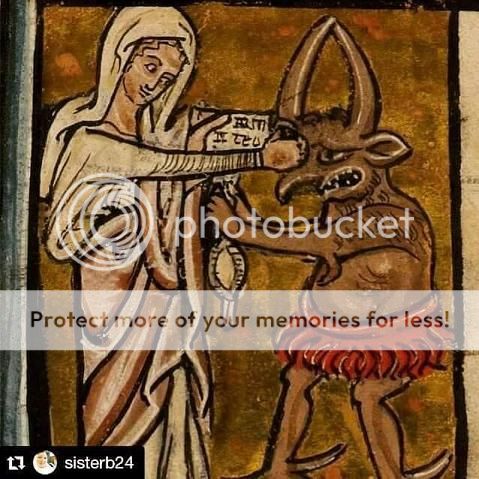
Hail Mary, full of grace, punch the devil ... in the face!
 |
|
|
Oct 3 2018, 12:51 PM
|
|
Junior Member
225 posts Joined: Mar 2008
|
 |
|
|
Oct 10 2018, 11:00 AM
|
|
Junior Member
225 posts Joined: Mar 2008
|
 |
|
|
Oct 12 2018, 01:05 PM
|
|
Senior Member
3,576 posts Joined: Apr 2006
|
Divine Providence: A Doctrinal Overview
THE Holy Trinity, in total and sovereign freedom, created the entire universe out of nothing. That is to say, the Creator was without any necessity or compulsion in His act of creation. God’s sole motive in creating was His own benevolence, that is, His goodness and love. The ultimate purpose of Creation is God’s own Glory. (So far, each of these sentences constitutes an article of faith that is de fide definita.) Secondarily and subordinated to His own glory, God created for the beatification or happiness of His rational creatures, that is, for man. This truth is clearly taught in scripture and the fathers. It is de fide catholica. But man’s beatitude itself is directed to God’s glory, so these two ends — one primary and essential, the other secondary and subordinate — are really of a piece with one another. So what is divine providence? According to Blessed Severinus Boethius, who is quoted by Saint Thomas in the Summa, “Providence is the divine plan itself, seated in the Supreme Ruler, which disposes all things.” According to Saint John Damascene, providence is “the will of God by which all things are ruled according to right reason.” Providence is primarily and in a more restricted sense the plan that exists in the Divine Intellect by which creation will achieve its end, namely (as we already said), His glory. Secondarily, and in a looser sense, Providence is God’s actual implementation of that plan. This secondary sense is more properly called God’s “governance” of creation. The Dictionary of Catholic Theology by Parente, Piolanti, and Garofalo, gives us this nutshell definition: providence, divine (Lat. providere or praevidere — “to see in advance”). The plan conceived in the mind of God, according to which He directs all creatures to their proper end. It is a part of prudence and refers mainly to the means to be chosen with reference to the end; it resides in the intellect, but presupposes the willing of the end; it precedes the government of things, which is the practical execution of providence. Against the materialists, fatalists, pessimists, and deists of the eighteenth century, the Church defends divine providence (Vatican Council, DB, 1784), which shines out in the pages of Holy Scripture (cf. Wisd. 14, Matt. 6), and in the writings of the Fathers (…). Reasons: (a) There is in the world an order and a tendency to the end; but this order, like all cosmic reality, must pre-exist intentionally in the mind of the First Cause. (b) God is not only the Efficient Cause, but also the Final Cause of all things, and as such must have conceived the means of directing back to Himself as to their supreme End, all created things. [Explain this sentence…] No creature escapes this providential order, since providence is bound up with the divine causality and, like it, is universal. Therefore, free will also is subordinate to divine providence (Matt. 6:30), which does not disturb the order of nature, but conserves and directs it, using necessary causes to produce necessary effects and contingent causes, as human wills are, to obtain contingent and free effects. Physical and moral evil, which we see in the world, is not opposed to divine providence, if we consider: (1) that it is permitted, not caused directly by God; (2) that it depends on the deficiency of finite being; (3) that it is to be examined not in an isolated and particular way but in the framework of the universal order, which may demand the sacrifice of this or that particular thing. Some of these ideas will be further explained as we proceed. In 1208, the Waldensian heretics were given a profession of faith with contained the following: “By the heart we believe and by the mouth we confess that the Father also and the Son and the Holy Spirit, one God, concerning whom we are speaking, is the creator, the maker, the ruler, and the dispenser of all things corporal and spiritual, visible and invisible. …” (Denz. 421) The Council of Trent (on Justification) CANON VI, also teaches us about Divine Providence, under the aspect of God’s permissive will and evil: “If any one saith, that it is not in man’s power to make his ways evil, but that the works that are evil God worketh as well as those that are good, not permissively only, but properly, and of Himself, in such wise that the treason of Judas is no less His own proper work than the vocation of Paul; let him be anathema.” [Break down.] Here we see the idea of God’s permissive will whereby He allows evil to exist without positively willing it. Vatican I teaches us about the sweep of Divine Providence: “God protects and governs by His Providence all things which He hath made, ‘reaching from end to end mightily, and ordering all things sweetly’ [Wisdom 8:1]. For ‘all things are bare and open to His eyes,’ even those which are yet to be by the free action of creatures” (Denz. 1784). According to Saint Thomas, all things are subject to God’s providence. He cites as supporting text for this, the same passage from book of Wisdom we just saw used by Vatican I; that passage says of Wisdom, “She reacheth therefore from end to end mightily, and ordereth all things sweetly” (8:1) What Saint Thomas says in this connection regarding the presence of evil in the universe is worth quoting. It expands on what the author of the Dictionary of Theology wrote: Since God, then, provides universally for all being, it belongs to His providence to permit certain defects in particular effects, that the perfect good of the universe may not be hindered, for if all evil were prevented, much good would be absent from the universe. A lion would cease to live, if there were no slaying of animals; and there would be no patience of martyrs if there were no tyrannical persecution. Thus Augustine says (Enchiridion 2): “Almighty God would in no wise permit evil to exist in His works, unless He were so almighty and so good as to produce good even from evil.” While God does not wish even physical evil in itself and directly, he does will it to procure some greater good, such as the punishment or conversion of a sinner. Moral evil he does not will at all, either as an end or as a means to an end. He permits it passively only in consideration of man’s freedom. As Ludwig Ott puts it, “In the final end, moral evil will serve the supreme aim of the world, the glorification of God, in as much as it reveals His mercy in forgiving and His justice in punishing.” According to Saint Thomas, God has immediate providence over all things. This means, in the words of Msgr. Glenn that, “Since all positive being is from God, everything has a place in God’s providence. And this in no mere general way, but in particular, in individual, down to the last and least detail of being and activity.” Yet, we are not robots or pre-programmed androids, as divine providence does not impose necessity on all things that God infallibly foresees. Some things He foresees as necessary, but others, as contingent. Thanks to this distinction of necessary and contingent things, human liberty is preserved, for human acts are all contingent on man’s free will. God’s Providence is fixed. It is a plan (that is, a type or schema) that has existed in God’s mind from eternity and is therefore immutable, or unchangeable. Upon learning of this, some people ask why we should pray, or attempt in any other way to change things for the better. The answer to this is what we just said: that God foreknows all, some things as necessary (which He has positively willed to be so), and some as contingent (including things contingent upon the free will of rational agents). For us not to pray because God foreknows what will happen is like not walking because God knows we will get there eventually or not eating because God knows we will not starve to death. God, in his Wisdom, foresees both the ends and the means — and many of those means are acts of our free will. So when we work in the apostolate, or do anything for God’s glory and the salvation of souls, we are freely cooperating with God’s eternally fixed plan for disposing all things for His glory. Theologians distinguish between three gradations of providence based upon their object: “general providence” which extends to all creatures, even inanimate ones, followed by “special providence” which applies to rational creatures, followed lastly by God’s “most special providence,” which applies to the elect. In these last two categories, the doctrine of grace enters into the question, as directing man to his last end entails the supernatural end of the Beatific Vision, for which grace is necessary. Because of this, Dominicans and Jesuits have fought tooth-and-nail over the particulars of the doctrine. But we do not have the leisure to enter into that historical controversy here. For Saint Thomas, the way that the rational creature is directed to his end is by law. So, both the natural law and the supernaturally revealed law of the Old and New Testaments were given to man by the heavenly law-giver so that man could achieve his end, which, as Saint Thomas explicitly says, is happiness or beatitude. This fits in perfectly with the purpose of all creation from eternity: giving glory to God. A Psalm verse comes to mind here: “The Lord is sweet and righteous: therefore he will give a law to sinners in the way” (Ps. 24:8). In the Immaculate Heart of Mary, Brother André Marie, M.I.C.M. |
| Change to: |  0.0353sec 0.0353sec
 0.49 0.49
 6 queries 6 queries
 GZIP Disabled GZIP Disabled
Time is now: 4th December 2025 - 05:34 PM |
 Quote
Quote