

 Feb 17 2017, 04:00 PM


QUOTE
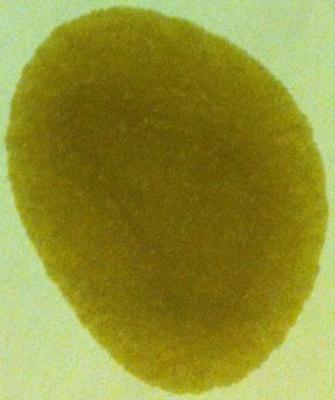
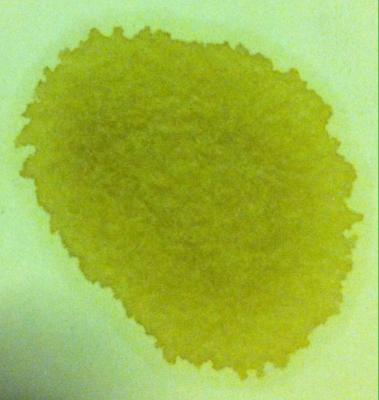
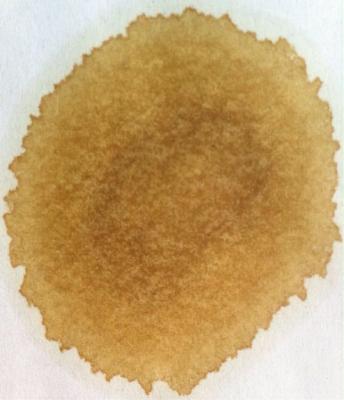
I would rate Zeng's spot photo as very good. The oil spot is more or less uniform so my guess is this oil has not massively oxidised which after just 6500 miles is sort of what I'd expect. There are no signs of the infamous inner 'black spot' which says your oil is beyond simply oxidising and is now actively condensing/polymerisating and dumping out insolube sludge.
QUOTE
Do be aware that you might need to wait a long time for a proper 'black spot' and if you do get to that point, you will wish that you hadn't. Oil oxidation, especially 'in-engine' oxidation is very chemically complex. I don't profess to understand it and I would be very wary of anyone from the industry that said they did. However there are certain phases that you can point to..
1) the additive depletion phase. In this phase the oxidation is inhibited. TBN is depleted and the other AOs in the oil are mopping up free-radicals. The oil will darken but not all of this darkening is due to oxidation. The oil is picking up wear metals and black gunk from partially burnt fuel (and any oil that's gone through the PCV system and has been burnt). During this phase, the oil's viscosity will be relatively unchanged.
2) the uncontrolled TAN rise phase. Although not strictly correct, you can imagine this phase starting when most of the detergent related TBN has gone. Base oils are oxidising into carboxylic acids. You might also see more take up of wear metals into the oil during this phase. In this phase the rate of oxidation is still essentially being held back by the supplementary AO's in the oil. The viscosity of the oil in starting very slowly to increase as these supplementary AO's deplete but is still reasonable.
3) the horrible phase! This is the phase where everything very quickly goes to cock. TBN is virtually zero, TAN is heading past 10. The oil is now getting very black. Viscosity is increasing exponentially as various bits of the oil start polymerising and taking part in condensation reactions to make very big molecules. Once these hit the solubility limits of the oil, they start plopping out of solution as sludge. This is when you get 'black spot' on the blotter test. Oh and you'll start seeing very bad metal attack.
My guess is that your Quartz oil is in Phase 1. As often as not, oil is thrown away in Phase 1. The oil can be very happy in Phase 2 and the phase can last a long time especially if you're driving gently for long trips. The big problem is Phase 3 is very difficult to predict and it can all go from okay-ish to dire very quickly which is why it's best to err on the side of caution for OCI's.
1) the additive depletion phase. In this phase the oxidation is inhibited. TBN is depleted and the other AOs in the oil are mopping up free-radicals. The oil will darken but not all of this darkening is due to oxidation. The oil is picking up wear metals and black gunk from partially burnt fuel (and any oil that's gone through the PCV system and has been burnt). During this phase, the oil's viscosity will be relatively unchanged.
2) the uncontrolled TAN rise phase. Although not strictly correct, you can imagine this phase starting when most of the detergent related TBN has gone. Base oils are oxidising into carboxylic acids. You might also see more take up of wear metals into the oil during this phase. In this phase the rate of oxidation is still essentially being held back by the supplementary AO's in the oil. The viscosity of the oil in starting very slowly to increase as these supplementary AO's deplete but is still reasonable.
3) the horrible phase! This is the phase where everything very quickly goes to cock. TBN is virtually zero, TAN is heading past 10. The oil is now getting very black. Viscosity is increasing exponentially as various bits of the oil start polymerising and taking part in condensation reactions to make very big molecules. Once these hit the solubility limits of the oil, they start plopping out of solution as sludge. This is when you get 'black spot' on the blotter test. Oh and you'll start seeing very bad metal attack.
My guess is that your Quartz oil is in Phase 1. As often as not, oil is thrown away in Phase 1. The oil can be very happy in Phase 2 and the phase can last a long time especially if you're driving gently for long trips. The big problem is Phase 3 is very difficult to predict and it can all go from okay-ish to dire very quickly which is why it's best to err on the side of caution for OCI's.
https://bobistheoilguy.com/forums/ubbthread...ang#Post4325795
What's the credentials of poster SonofJoe ???
........... read on in Bitog!
Note: AO=Anti Oxidants ..... an additive in (engine) oils.
This post has been edited by zeng: Feb 17 2017, 04:12 PM
 Quote
Quote


 .
. 




 0.0164sec
 0.48
0.48
 6 queries
 GZIP Disabled