Malaysia property market highlights in 2020 & outlook for 2021
The COVID-19 pandemic has wreaked havoc in the already muted real estate market.
We summarise roundups for 2020 and what market trends to expect in 2021.
Expect a very subdued year in the office and retail property sectors in Malaysia for 2021.
2020 will go down as an unprecedented year as countries around the world are faced with a global pandemic. Malaysia is no different as the Movement Control Order (MCO) and travel restrictions have adversely affected an already dampened market.
According to the
National Property and Information Centre (NAPIC), the property market contracted sharply in March and April due to the implementation of the MCO before picking up again in May as restrictions were eased during the Conditional Movement Control Order (CMCO) period.
Here are the highlights for 2020:
#1:. Steep decline in the volume of property transaction across the board
Picture
Major property markets like
Kuala Lumpur, Selangor, Johor and Penang will be severely impacted.
NAPIC’s
first half of 2020 data showed that the volume of property transaction
declined 27.9% with 115,476 units in the first of the year compared to
160,165 units during the same period last year.
Out of this, 75,318 units were those in the residential property sector which recorded a decline of 24.6%.
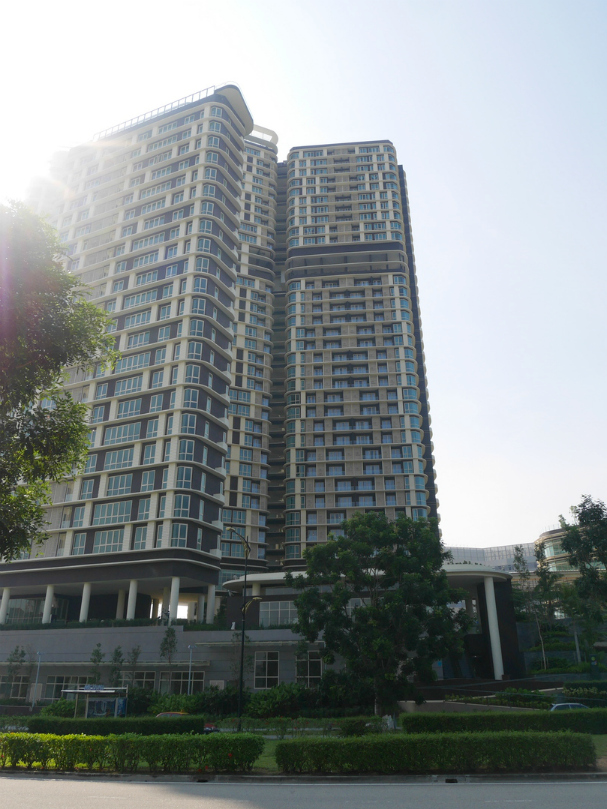
The steepest decline was recorded in the commercial property sector which saw a 37.4% drop followed by the industrial, agricultural and development land and others at 36.9%t, 32.8 per cent and 28.6% respectively.
It is hardly surprising that the Bank Negara Malaysia revised the Overnight Policy Rate (OPR)
4 times in 2020 itself to bring down interest rates in order to encourage consumer spending and to facilitate the application of new loans.

#2: Residential overhang continued to increase
The COVID-19 pandemic has seen the oversupply situation in the residential property sector worsening.
According to data from NAPIC, there was a 3.3% (31,661 units) increase in the overhang in residential properties. Out of this, 31.7% are priced below RM300,000. 53.2% comprises high-rise units followed by landed terraced homes (29%), semi-detached & detached (12.4%), low-cost housing (1.6%) and others (3.8%).
High rise units within the price range of RM500,000 to RM700,000 form the bulk of the unsold inventory at 4,144 units.
Johor had the highest overhang at 19.5% followed by Selangor at 16.4%.Meanwhile,
serviced apartments (which is classified as commercial property by NAPIC) recorded a 26.5% or 21,683 units increase in overhang.
61.8% are priced above RM700,000.
A whopping 73.7% are located in Johor followed by 11.6% in Kuala Lumpur.


#3: Majority of new launches were in the mass market segment
Despite the muted property market, developers continued to launch projects, particularly in the mass market segment.
NAPIC’s data showed that
13,294 units of new launches were recorded in the first half of 2020.
Of this, 50.1% are priced below RM300,000 while 33.7% are priced between RM300,000 to RM500,000.
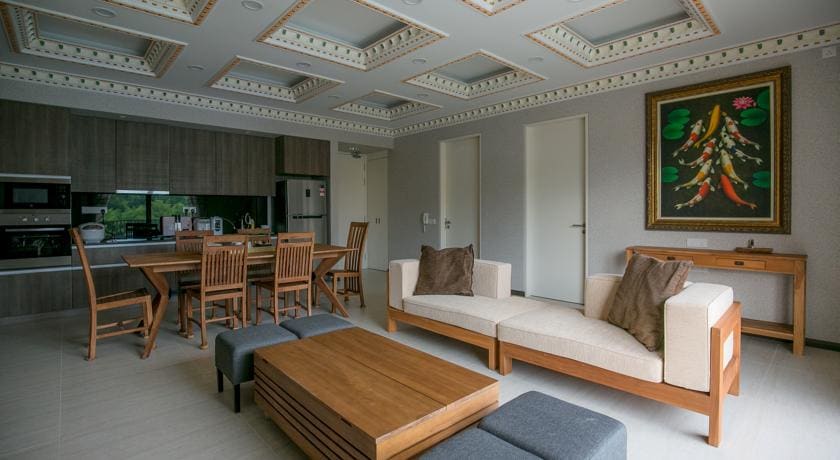
Landed properties dominate new launches making up 69.7% of the figure while the remaining 30.3% are stratified properties.
Negeri Sembilan recorded the most launches in the entire country during the period with 2,797 units. This was not surprising as properties that are located away from Kuala Lumpur and Greater Kuala Lumpur are more affordably priced for local home buyers.
Overall, the economy is expected to improve in 2021
and the property market will follow suit, but the
recovery is expected to be gradual and bumpy as
we acclimatise to a post-COVID reality.
The situation is likely to improve significantly in the
second half of 2021, especially with the promise of a
vaccine on the horizon, which will likely have a
pronounced impact on consumer sentiment and
buying behaviour.
In an improved economic and public health climate,
strong existing demand for homeownership will
likely be unlocked and we will see healthy growth in
property transactional activity.
“The outlook for the property market in 2021 remains neutral, given prevailing cautious sentiment following the rise in Covid-19 cases across the country.
It is likely that market recovery would take place in the second half of 2021.CAN?Due to loan moratorium and extension, those working in banks expect poorperly npl to rise from q3/21.


 Nov 28 2020, 07:12 PM


 Quote
Quote






 0.0486sec
 0.53
0.53
 6 queries
 GZIP Disabled