Welcome Guest ( Log In | Register )

23 Pages « < 2 3 4 5 6 > » Bottom

Outline · [ Standard ] · Linear+

 Venturing into Agriculture & Aquaculture, Co-Ordination & Implementation is KEY

views
     
MrFarmer
post Oct 7 2011, 09:52 PM

Casual
***
Junior Member
478 posts

Joined: Mar 2011
From: Sabah


QUOTE(Michael J. @ Oct 7 2011, 09:05 AM)
Mr Farmer:

Once again, apology for not being able to see the photos.

One good method of drawing out aphids and mites from your crop plants is to plant marigold at regular intervals along your planting row. For some reason, aphids and mites love marigold. Personally, I've found this method only about 70%-80% effective, but for an organic farmer (or one who is trying to save on farm costs) this might be good enough.
*
Yes, read about it last night, but those plants that they mentioned sound alien to me. Thanks for pointing our Marigold. We have those around some where, shall give it a try.

Other methods I found over the net, includes dish washing detergent (shall be trying this), mixture of garlic & hot pepper (chilli). We had just acquired dimethoate and abamectin B1 into our arsenal. The Mitac (amitraz) by Bayer is rather very high, $96 here, so maybe shall try this the next time.

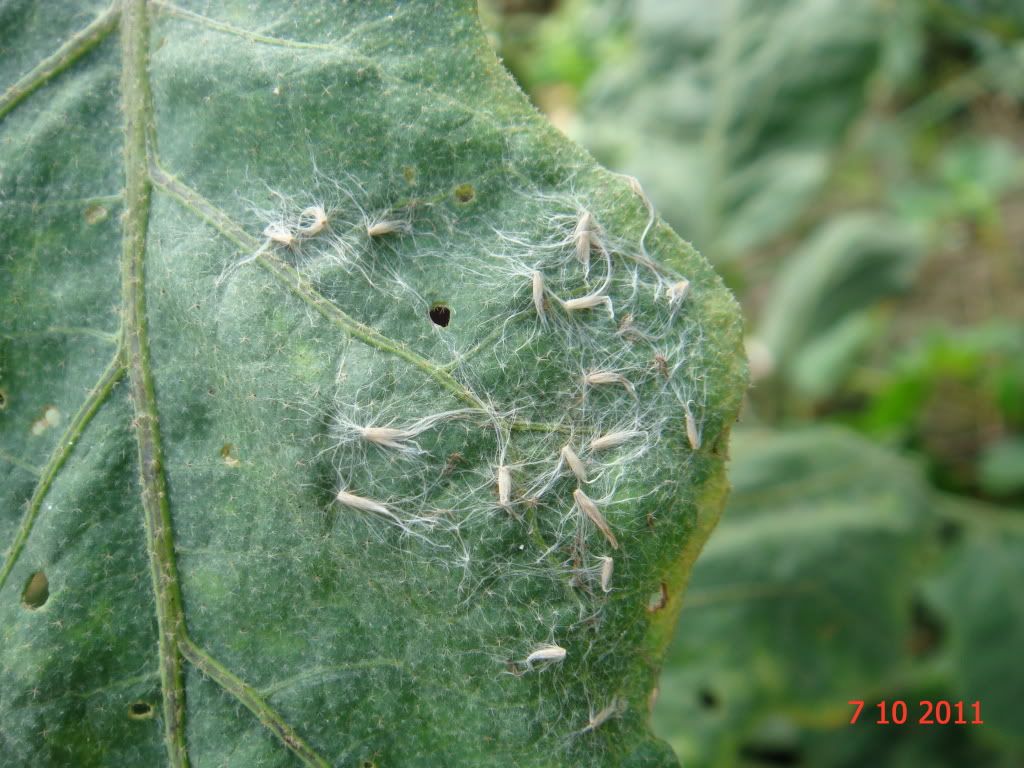
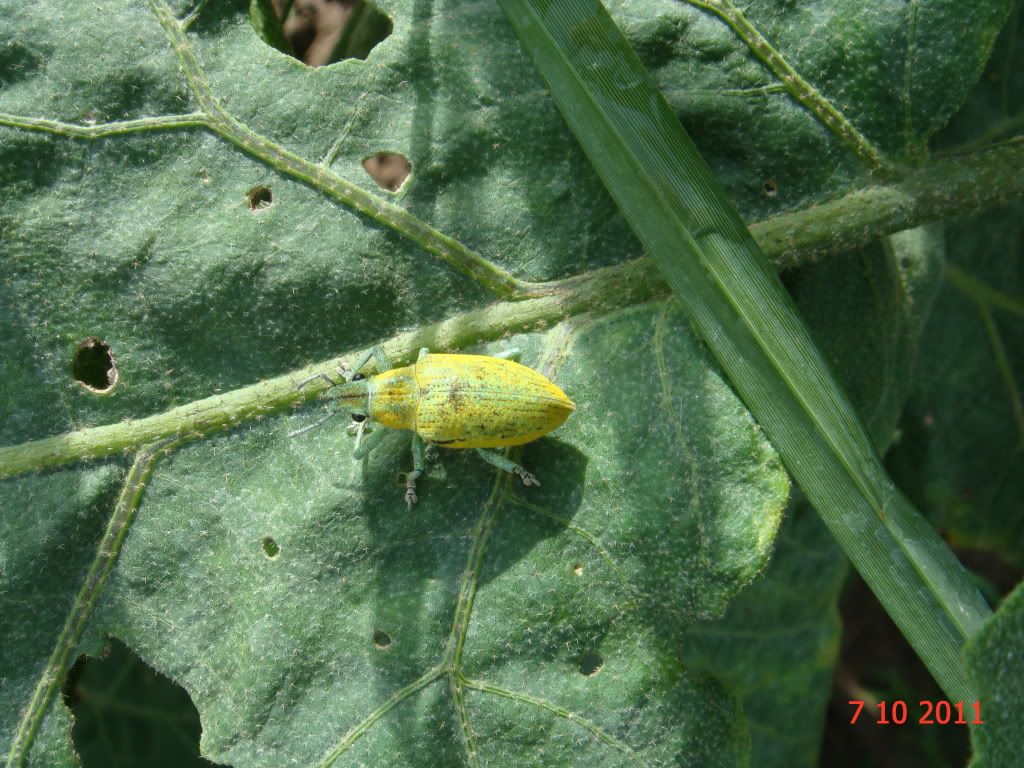
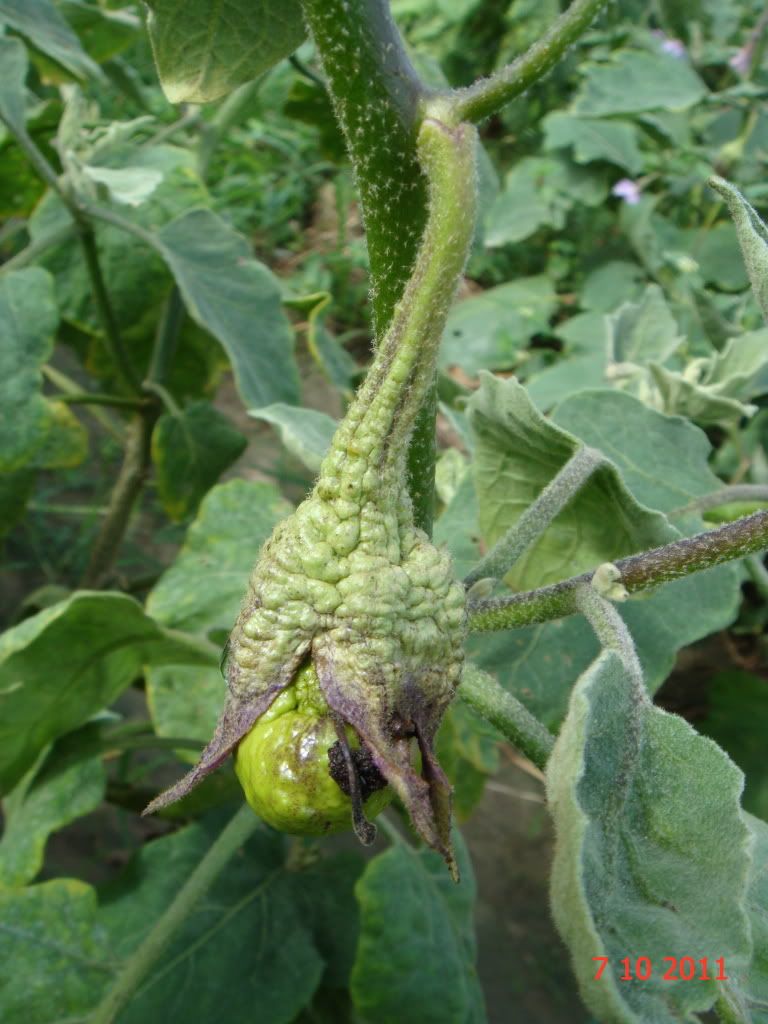
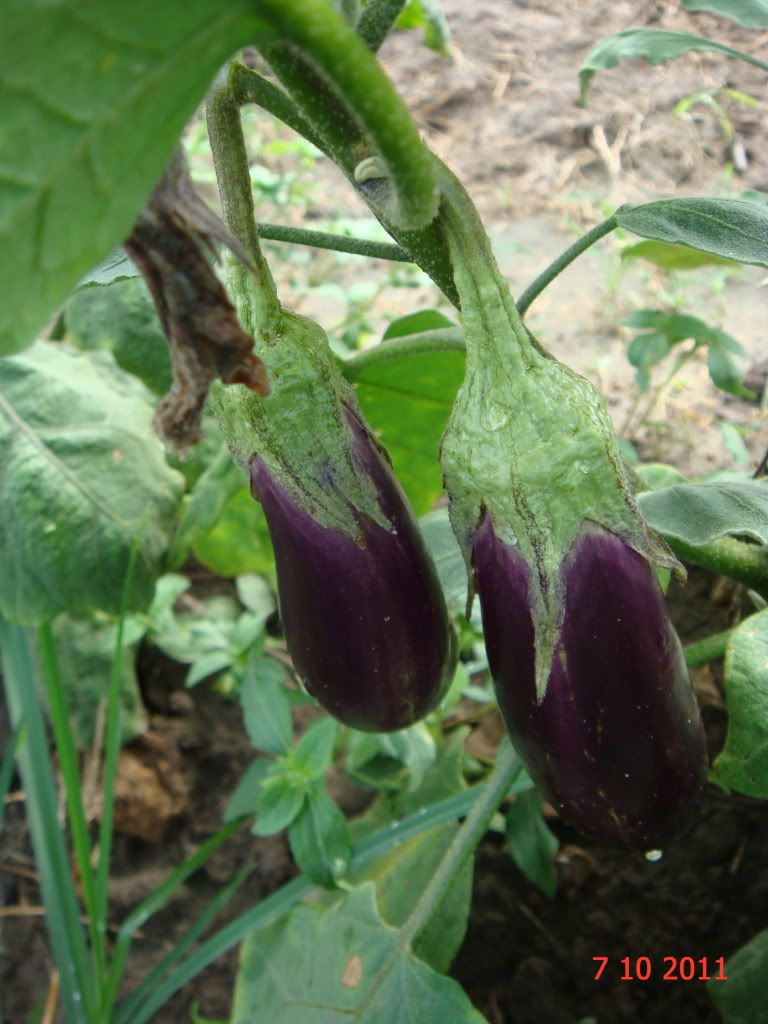
Did a test spray this morning on a few rows of Lady's Finger & Brinjals, shall monitor tomorrow. Did some trimming of some leaves and tips, am thinking that with less leaves, it might be easier to spray on the underside. Found some tips dying off, think it could be some type of bore worm. Snipping off the tip, down enough so that there are no more bore.
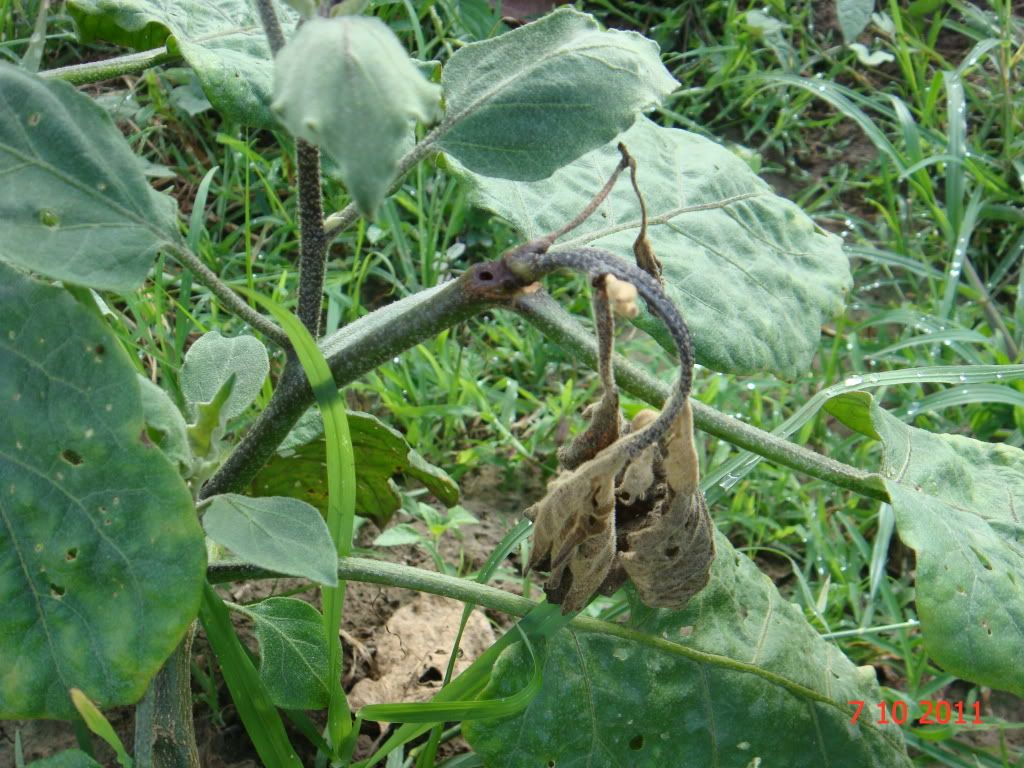
user posted image
user posted image
Some kinds of insects?
user posted image
Must be a bad bug.
user posted image
Not sure why is the crown crumbled.
user posted image
Crown crumbled, due to mites?
Thanks for all the help Micheal notworthy.gif


Added on October 7, 2011, 9:58 pm
QUOTE(Iceman74 @ Oct 6 2011, 12:10 PM)
hi guys,

hope you guys can help/point me out on few of the questions below

1. I'm going to try out aquaculture in a hobbyist mode first. What the smallest size tank using RAS can go with? Fiberglass or Canvas tank, which 1 better?

2. Where do i buy those commercial fish feed? what do i look for in the Ingredient? Current me look at reeling "Jade Perch"

3. Any others important things or idea thats cannot be skip?

the reason i'll doing this is to guage the cost & gain some experiences b4 doing it in more commercialize manner.

btw i'm in puchong selangor
*
HI Iceman, welcome aboard.
Maybe Para can help, as he had done aqua-culture before.
2) Here the agriculture supplies shop do sell Feed for all live-stock including fish. Say maybe you can visit the Live-stock exhibition.


Added on October 7, 2011, 10:01 pm
QUOTE(teteret @ Sep 24 2011, 11:21 PM)
Depends mr farmer. I've paid as low as 100 per kg to as high as 100k per kilo. But I see no harm in planting your trees bro low maintenance cost.
*
Just planted about 30 plant-lets. Hope they all grow well. See you in six year's time. tongue.gif

This post has been edited by MrFarmer: Oct 7 2011, 10:01 PM
MrFarmer
post Oct 10 2011, 01:23 PM

Casual
***
Junior Member
478 posts

Joined: Mar 2011
From: Sabah


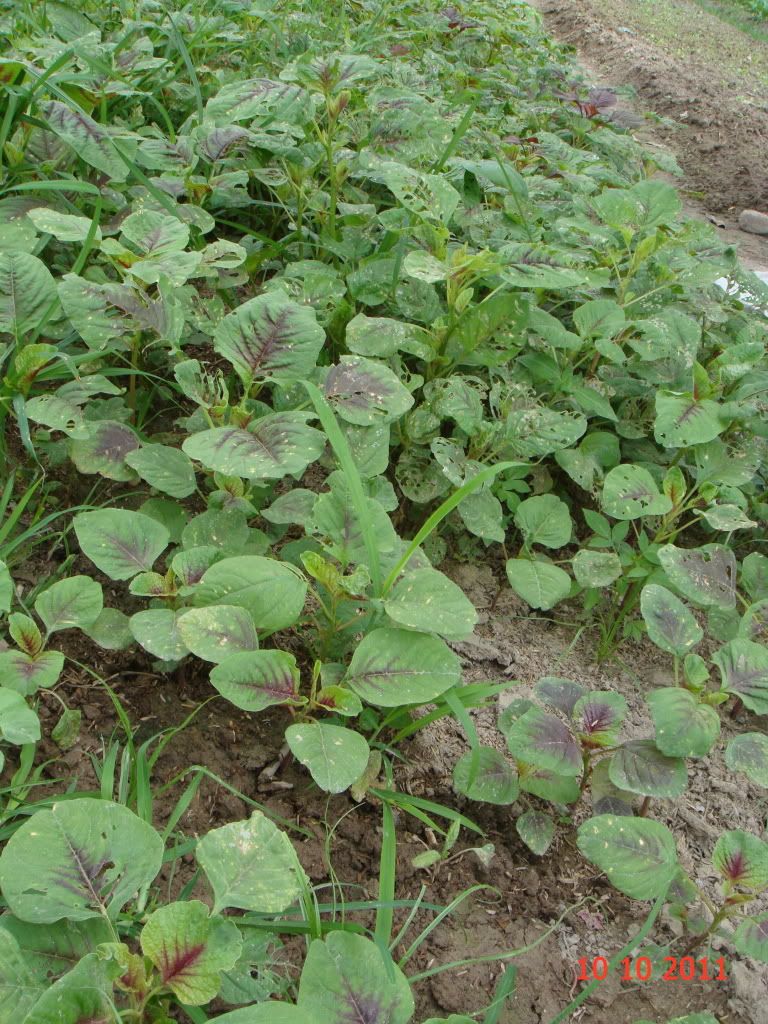
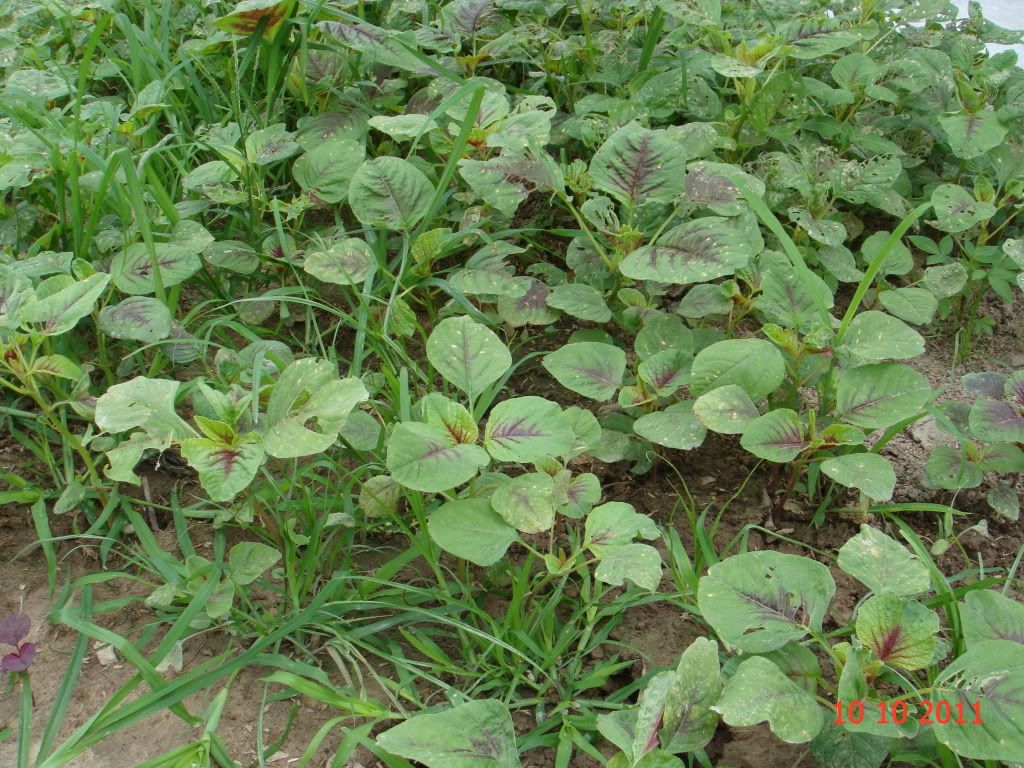
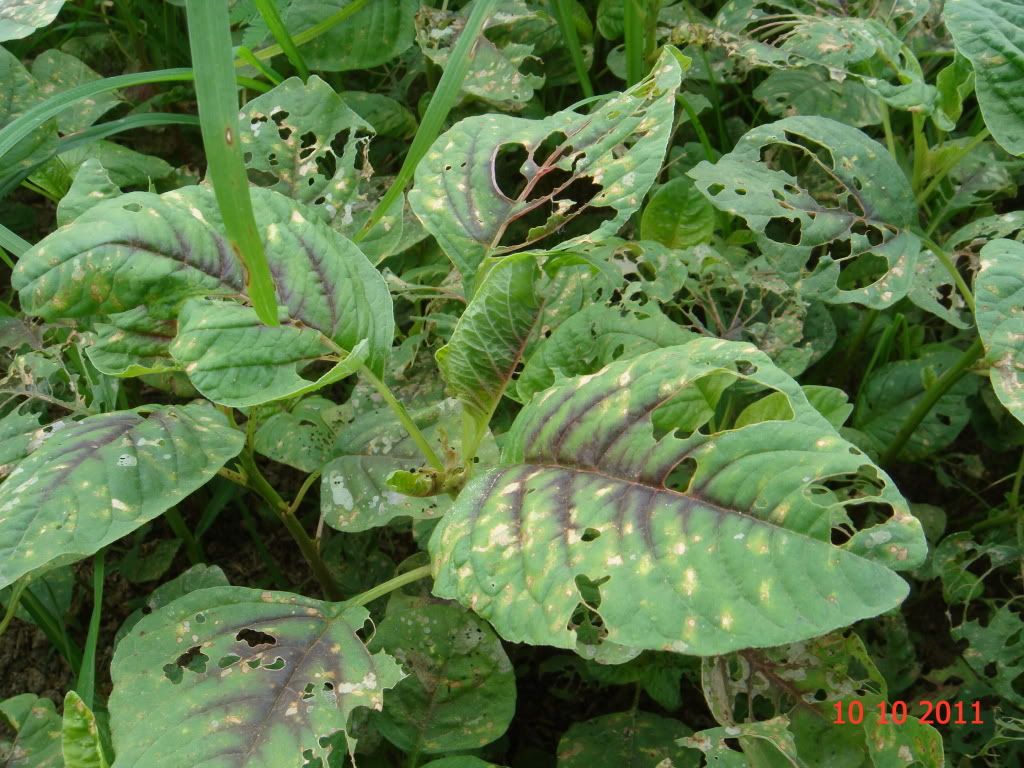
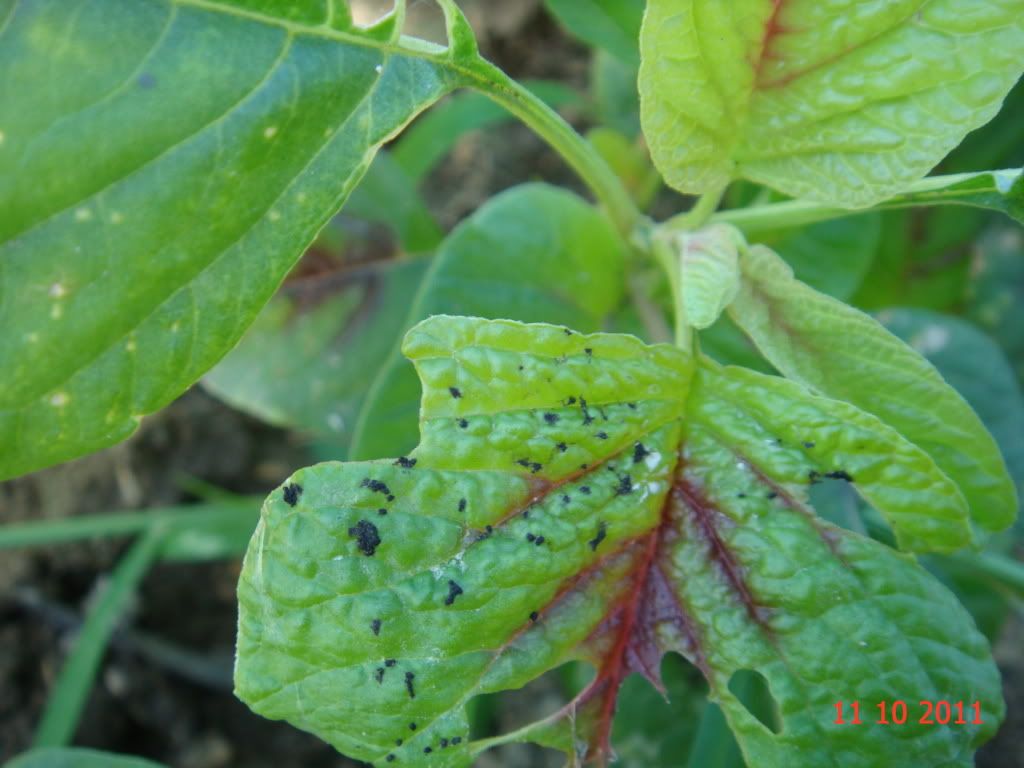
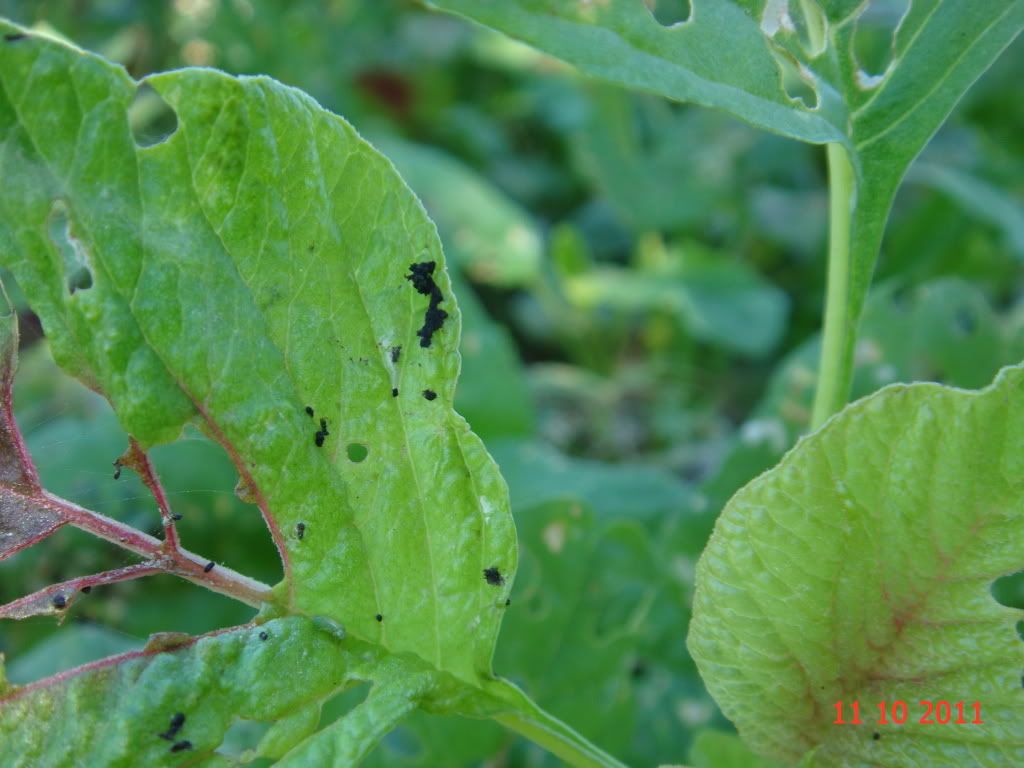
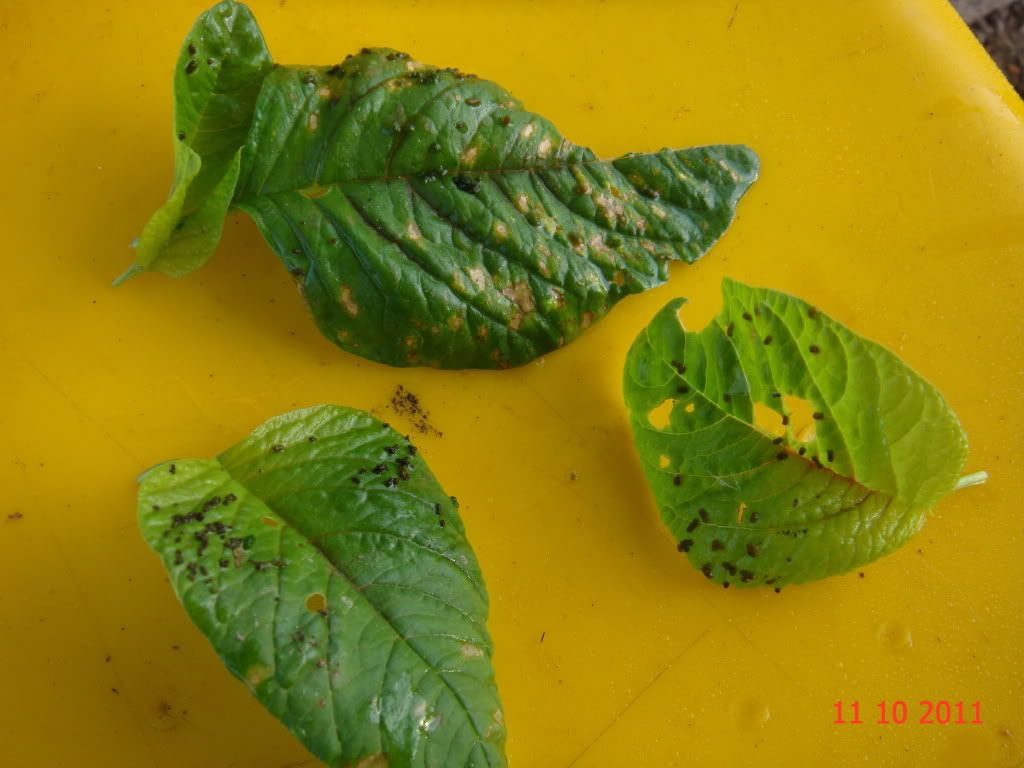
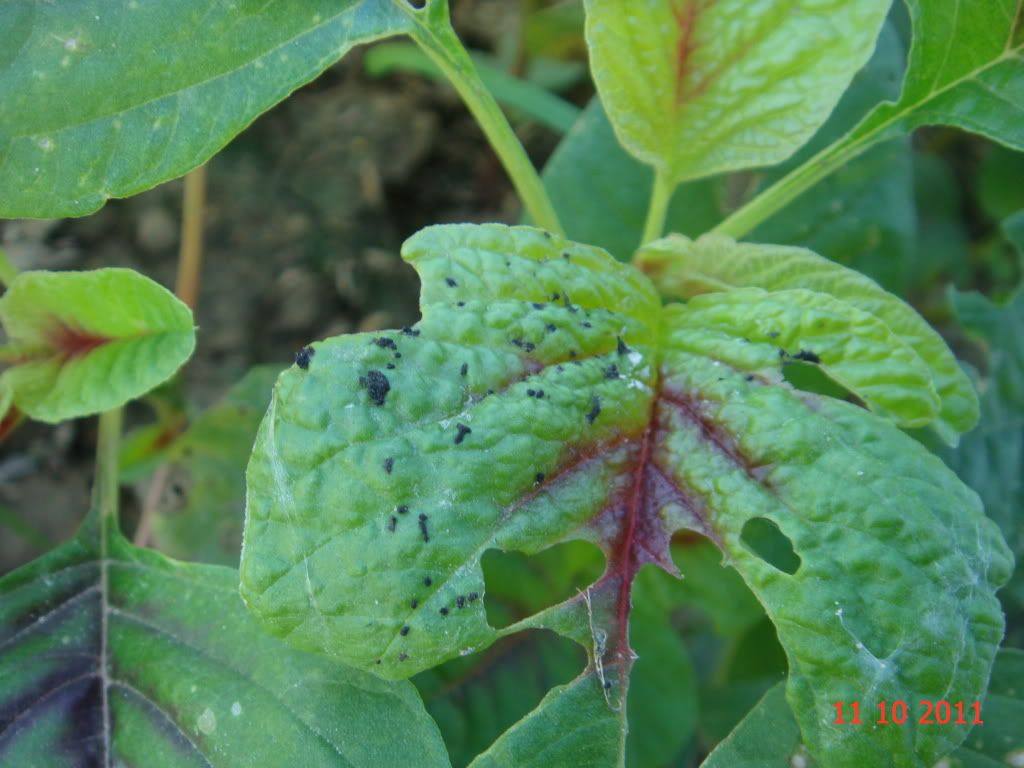
One of our Bayam patch, suddenly turned this 3 days ago and I think it's spreading. I guess this started after we starting to spray the Okura & eggplants with dimethoate. I could not see any aphids here.

user posted image
user posted image
user posted image
MrFarmer
post Oct 10 2011, 08:39 PM

Casual
***
Junior Member
478 posts

Joined: Mar 2011
From: Sabah


QUOTE(Michael J. @ Oct 10 2011, 03:25 PM)
Mr Farmer:

I won't be able to comment much until I able to access the pictures tonight. Could you maybe describe how they look like, so I have a rough idea what's the problem?

Just a question: Why did you opt for organophosphate contact pesticide? The stuff is normally only used if you have a severe outbreak of insect pests. And on top of that, it is a really dangerous chemical as it attacks the central nervous system of living organisms, vertebrates and invertebrates alike.

Since you mentioned that you can't find aphids, I'm assuming you are refering to symptoms similar to aphid infestation. Here's a check list of things to rule out first:

(i) Is the chemical authentic (i.e. not cheap rip-offs)?
(ii) Was the spray canister used only for pesticides, i.e. it did not once contain other chemicals eg. herbicides, prior to the current application?
(iii) Was the canister thoroughly soaked, washed down with soap, and rinsed before each use?
(iv) Was the chemical diluted to the recommended concentration as indicated on the packaging?
(v) When was the chemical applied, i.e. early morning, afternoon, evening?

If the answer is "No" for any one of the above (except question 5), then that could be one of the contributing problems. For question 5, application of any chemicals is normally done  in the early morning just as the dew dries off. Late evenings rarely, and afternoon almost zero unless the concentration is very low (to avoid scorching).

If your leaves are crinkling or distorted, it is possible that 2,4-D amine poisoning had taken place. If leaves are curling downwards, then it could be glyphosate poisoning. If none of these had been applied by you, or your neighbours (could be carried over by wind), then it might be bacterial root wilt. However that only occurs when the soil is excessively wet till it chokes the roots.


Added on October 10, 2011, 3:32 pmps: Forgot to add that you also have some potato leafhoppers. Unless you find the nymph (juvenile version of adults) in great abundance on the underside of leaves, they are quite manageable.
*
Hi Micheal,
There are no specific reasons that we choose dimethoate, just that we our neighbor (left & right) is using it. Anyway, I don't think it's effective on the aphids, as it's labelled that it kills them off systematically (means slow?). Check with my neighbors, they still have aphids even after using this dimethoate, just that it's lesser.
Sorry to have mislead you, we did not spray any dimethoate, on the Bayam, The egg plant & Okura (that we sprayed) is quite a distant away, separated by other Veges like younger (real small) Bayam, Pak choi (small) & KangKong (small). I don't think the chemical was carried by the wind, as the grass looks okay.

Just to answer your questions
1) It's from Halex, and bought from our regular agri shop.
2) We share our Knack pack spraying for Insecticide & Fiolar Fertilizer Spray, but I don't think we did any spraying on the Bayam, need to check with my helper as I was away for the last 2 days. Revert tomorrow.
3) We normally just rinse our Knack pack sprayer after every application, the shared Knack pack sprayer (for insecticide and fertilizer only). We have another 2 specific for weed killer only.
4) Yes, as labelled. The Okura & Eggplant is okay so far.
5) We did a 1st testing in the morning, 2nd testing (different plant) in the evening. All looks okay.

The leaves looks okay, normal, except for the yellow patches and holes (bitten) in between the leave veins.
Shall check for Leaf Hoppers tomorrow.

Thanks Micheal
MrFarmer
post Oct 11 2011, 12:18 PM

Casual
***
Junior Member
478 posts

Joined: Mar 2011
From: Sabah


QUOTE(Michael J. @ Oct 11 2011, 08:26 AM)
Mr Farmer:

It's ok. I've not had the chance to look at the photos yet anyway.

From what you have described, you are doing everything by the book, so nothing to fear. You are really very well informed and well prepared.

Now that you've mentioned yellow patches and predation holes on the leaves and between leaf veins, then I can tell you that you are not dealing with a sap sucking insect like aphids or leafhoppers. You should be looking at tissue consuming ones, like night flying beetles, potato leaf beetles, or even grasshoppers. To confirm this, you need to observe the bite holes for clearly defined edges, could be slightly serrated. If it is not well defined, and excessively smooth, then it could leaf blight/spot or soft rot. You might like to read the attached document as guidance:

http://www.seedalliance.org/uploads/pdf/SpinachDiseases.pdf

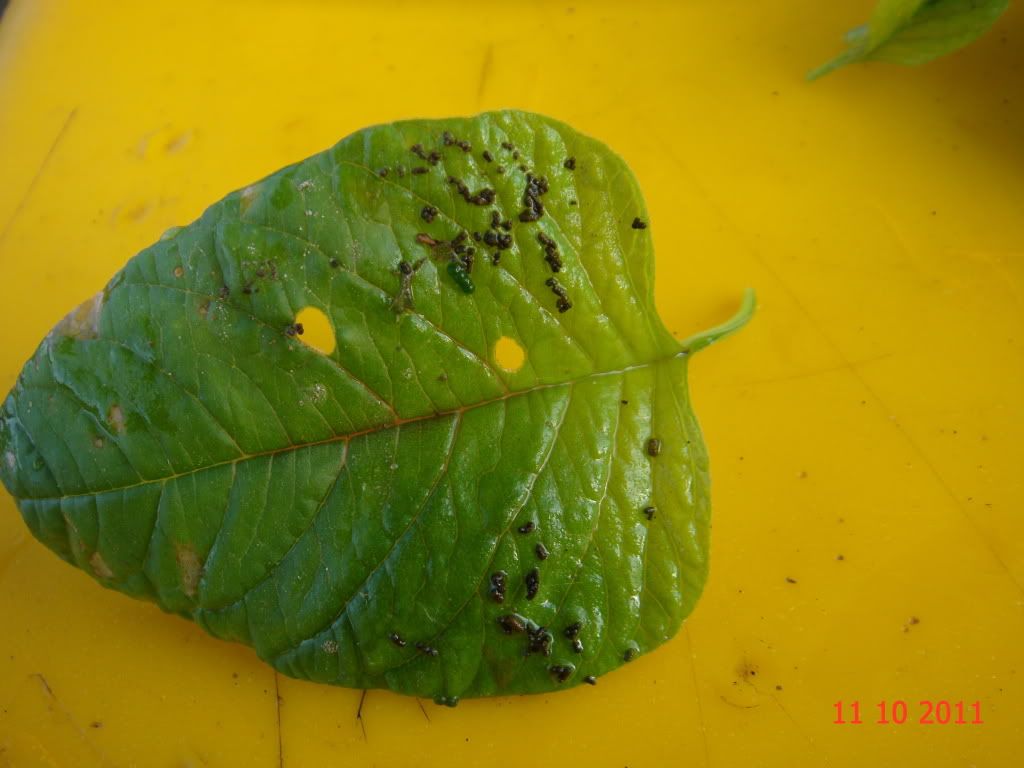
If you have identified that it is none of the above, then it would be insect predation. From the feeding pattern (i.e. between leaf veins, serrated edges), it is likely night flying beetles, Apogonia. Check for blackish-brown frass (insect poop) on the underside of the leaves or surrounding leaves. If you find those, then you are most likely having those feeding on your bayams. Other possible pest could be slugs and snails.

I can't give you a definite answer just yet as I'm away from my computer. This computer I'm using now kind of sucks.

Dimethoate, like I said previously, is actually a contact poison, meaning it kills upon contact with the insect via absorbtion through the insect breathing pores. It can act as a systemic, but that is only because the poison is absorbed by the plant itself, making the plant poisonous. BTW, systemic does not necessarily mean slow; it only defines the mode of delivering the poison. Systemic poisons are meant to be delivered into the "body" or "system" of the targeted organism and kill them from inside. Contact poisons are meant to cause death upon touch or inhalation (by killing lung cells leading to suffocation). Think of systemic poisons as lethal injections, and contact poisons as electric chairs.
Personally, I really wouldn't use dimethoate because of the very high risks involved (it has been known to attack human nervous system, leading to symptoms similar to Parkinson's Disease or stroke). Instead, I would use cypermethrin; although it is also dangerous, the risks are less compared to dimethoate.
*
I think could be predation insects. Had checked, no snail, no slugs, no insects during day time, but found some poop/excretion here and there.
user posted image
user posted image
Also there seems to be some "silk" threads on the bitten holes.
user posted image
user posted image
user posted image

laugh.gif Think of systemic poisons as lethal injections, and contact poisons as electric chairs.
Shall look into cypermethrin, as I would no want my helpers or I to end up having a stroke or Parkinson's Disease.
MrFarmer
post Oct 11 2011, 12:58 PM

Casual
***
Junior Member
478 posts

Joined: Mar 2011
From: Sabah


Castor, while doing some research on Castor plant and seeds:
It's listed as The World’s Most Poisonous Plant.
http://scienceray.com/biology/the-worlds-m...oisonous-plant/

"India, Brazil and China are the major crop producers and the workers often suffer many harmful side effects from working with these plants. India is a leading producer and political problems in that country further threaten an already unstable castor supply.

As a result of these issues the supply of castor is unsteady and price fluctuations are extreme. Yet even with these problems the chemical industry uses an average of 600-800 million lbs. of oil each year. This is a true testament to the value of castor oil."
http://www.linnaeus.net/problem_with_castor.htm

No wonder the spot price (10th Oct) is about RM$ 2,718.58 /ton in India
MrFarmer
post Oct 13 2011, 08:52 PM

Casual
***
Junior Member
478 posts

Joined: Mar 2011
From: Sabah


Added on October 12, 2011, 11:57 pmMr Farmer:

I've managed to view the pics, and you've got Apogonia, and maybe a mild case of bagworms. Do look into cyper as a chemical control.
*

[/quote]
Thank a lot Micheal. Shall look into Cypermethrin.

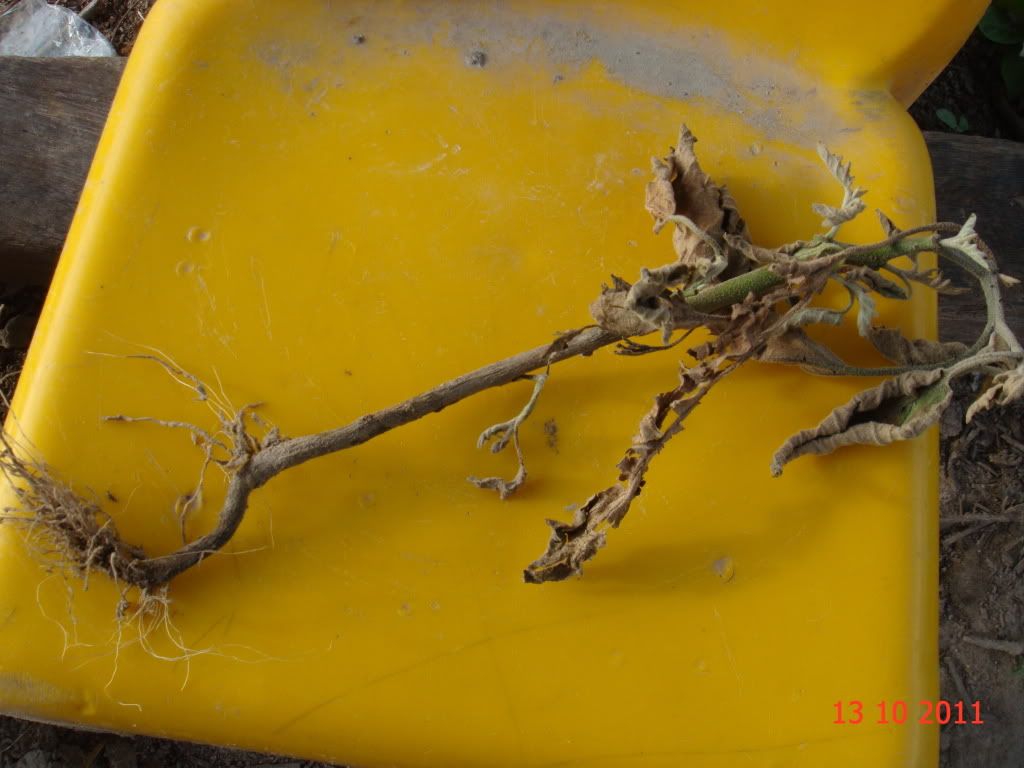
Got some problems with our eggplants. Some of these died after being transplanted (fine initially). This is happening to me and my neighbors.
user posted image
user posted image
user posted image
user posted image

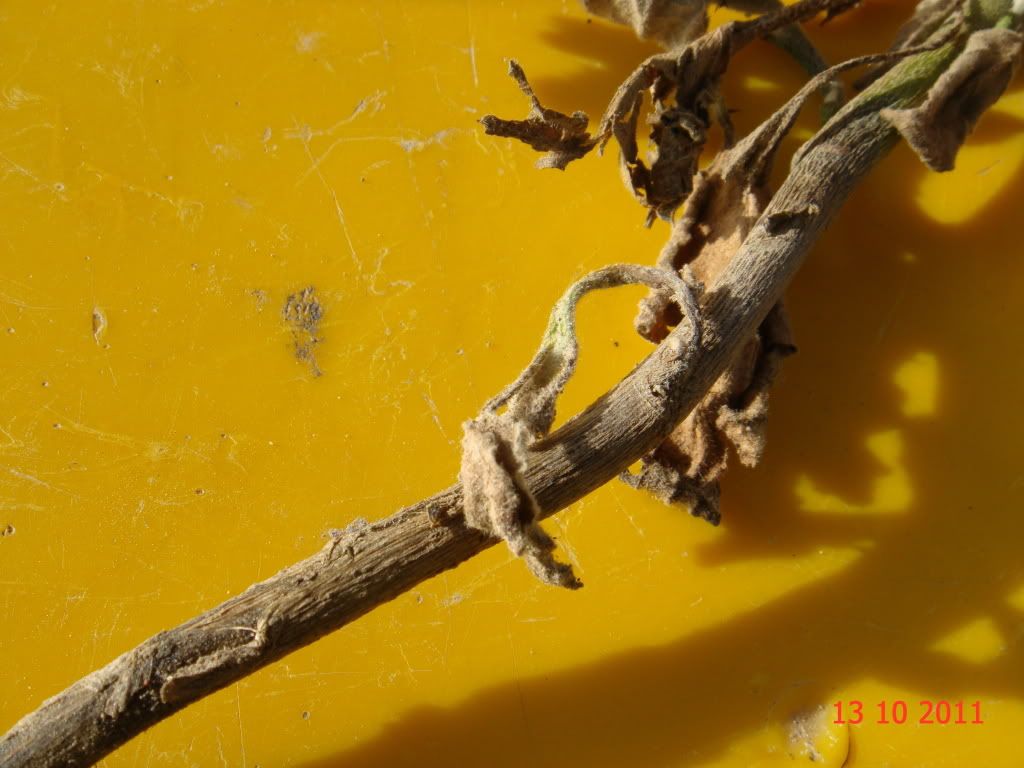
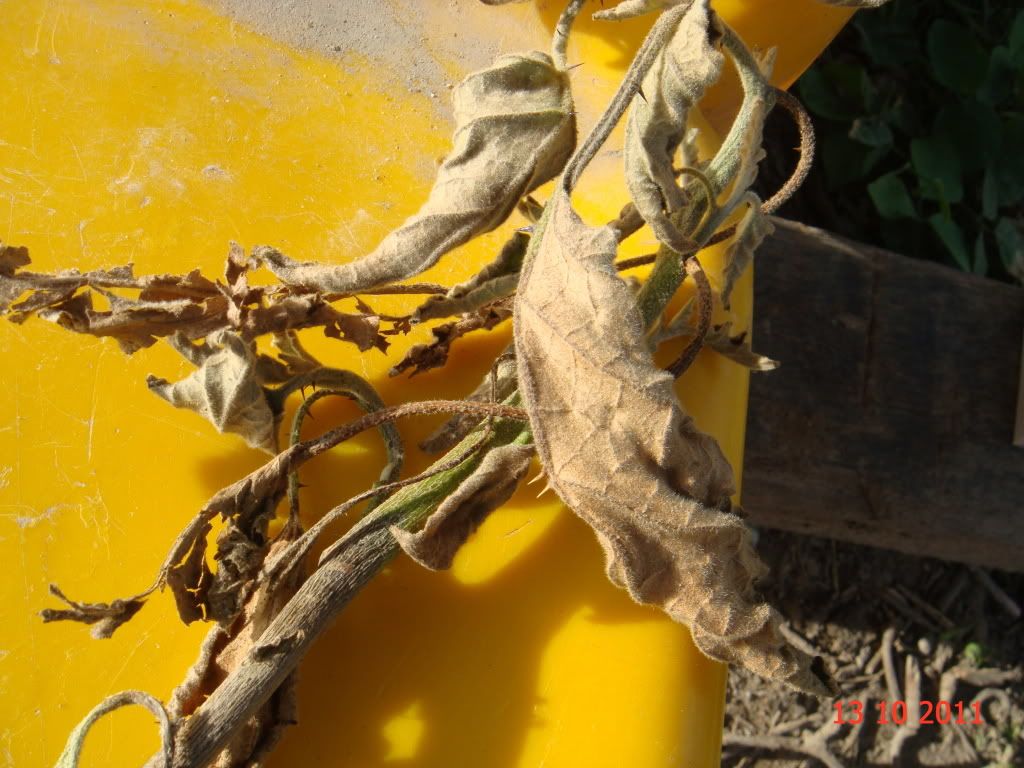
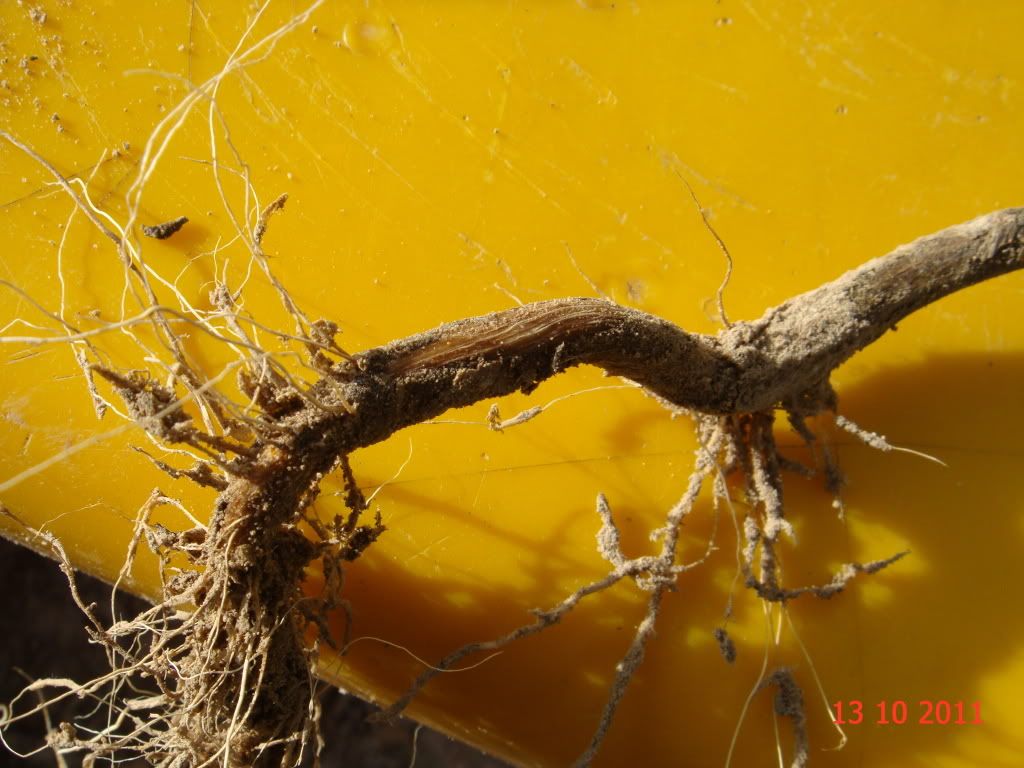
These plants died off from the stems (root side). The stem gets woody (harden) and leaves dried off. I pull off one that is almost dead, the root looks ok, but the stem looks rotten, scrap off the decaying matter, it expose the stem that had turned woody.

Are we looking at rotten roots (poor drainage), infection (roots disease) or fertilizer too close to the stem?
MrFarmer
post Oct 14 2011, 06:35 PM

Casual
***
Junior Member
478 posts

Joined: Mar 2011
From: Sabah


QUOTE(Michael J. @ Oct 13 2011, 11:10 PM)
Mr Farmer:

Looks like you've got phytophtora root wilt, aka damping off. It has to do with high soil wetness (not just damp, but soaking wet), allowing phytophtora to proliferate. Nothing much can do, except cultural control, i.e. raised beds, drainage etc., and crop rotation. Or, you could try using fungicides like Benlate (active ingredient benomyl) before you do your planting. I wouldn't normally advice doing prophylactic spraying of fungicides, but it does help. Just alternate between benlate, and something else, like Kencozeb or Mancozeb.

You might want to avoid plants from the nightshade family, including eggplants, chilies, tomatoes etc. Legumes should be alright. But keep nightshade family crops out for at least 1 year before attempting to plant again.
*
cry.gif Looks like me got a serious problem here.
Do you think by extracting the affected plants, burn it off. Dig up a hole on the affected spot, spread the soil and let it dry under the hot sun for a couple of days (hi UV). Then maybe spray the area with Hydrogen Peroxide (Clorox) 10 ~ 20% concentration. Will this help? As we are having this in isolated spot here & there, not the whole farm

Shall look into the fungicides.

Thanks Micheal
MrFarmer
post Oct 16 2011, 01:48 PM

Casual
***
Junior Member
478 posts

Joined: Mar 2011
From: Sabah


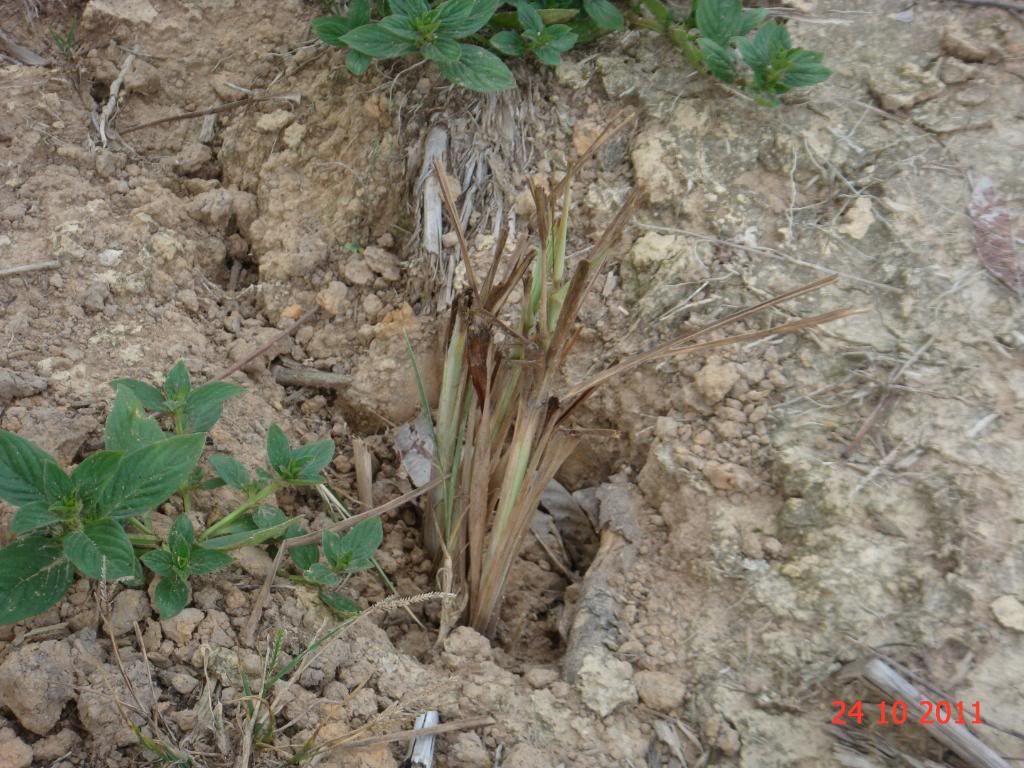
Serai (Lemon Grass)
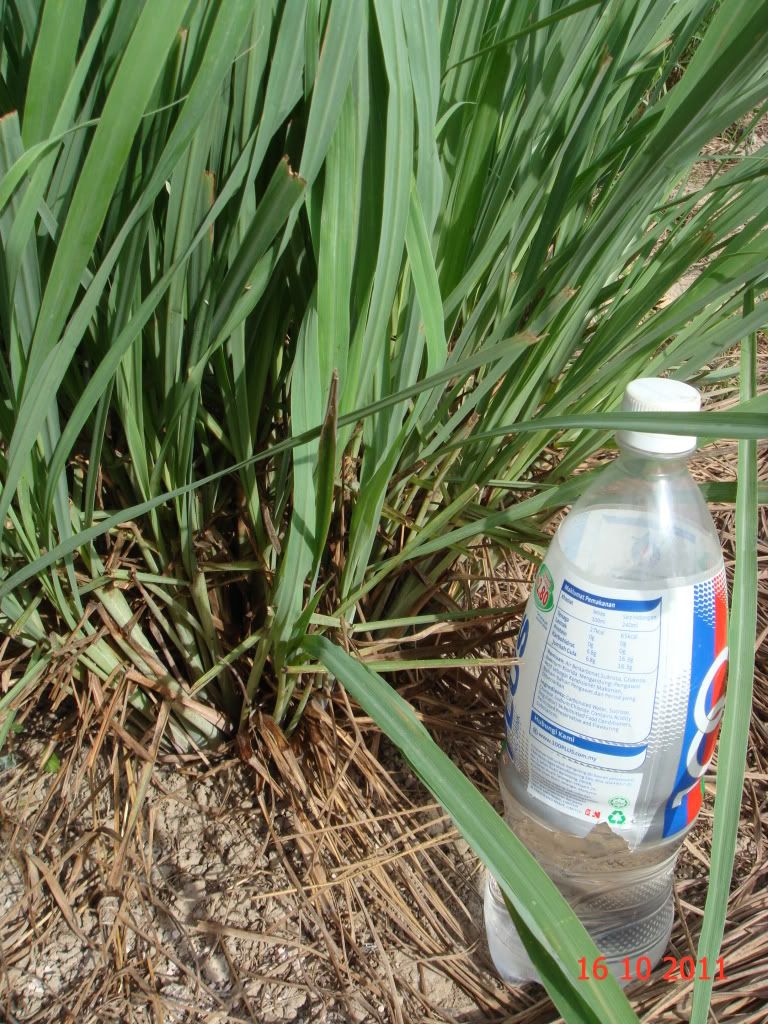
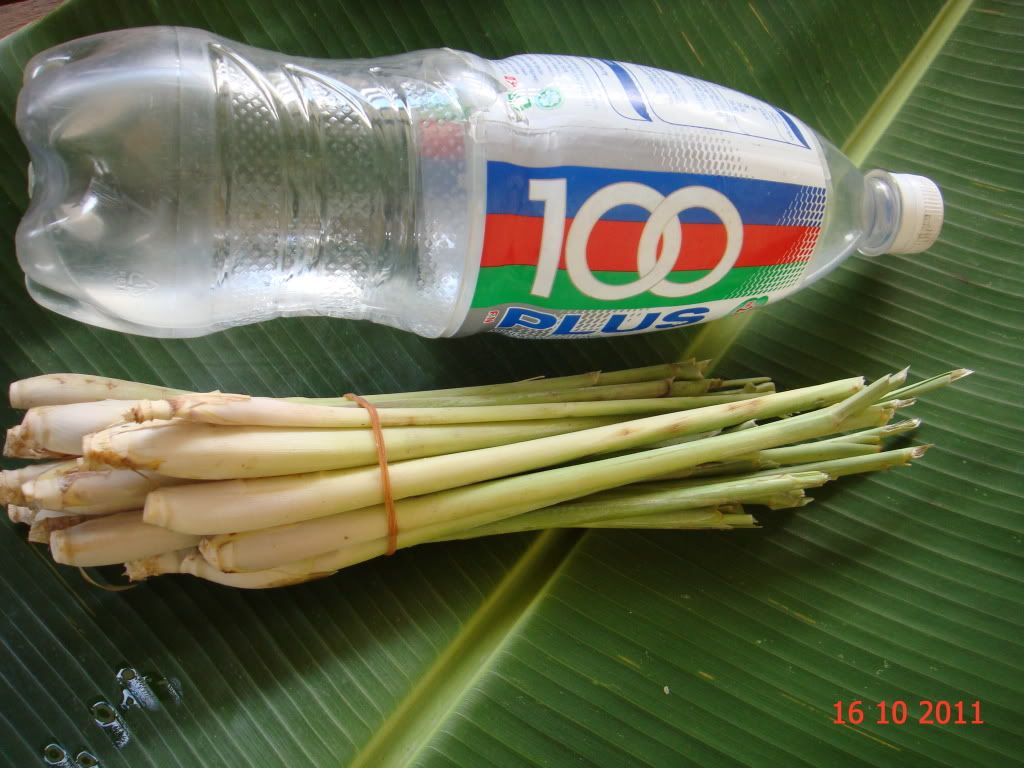
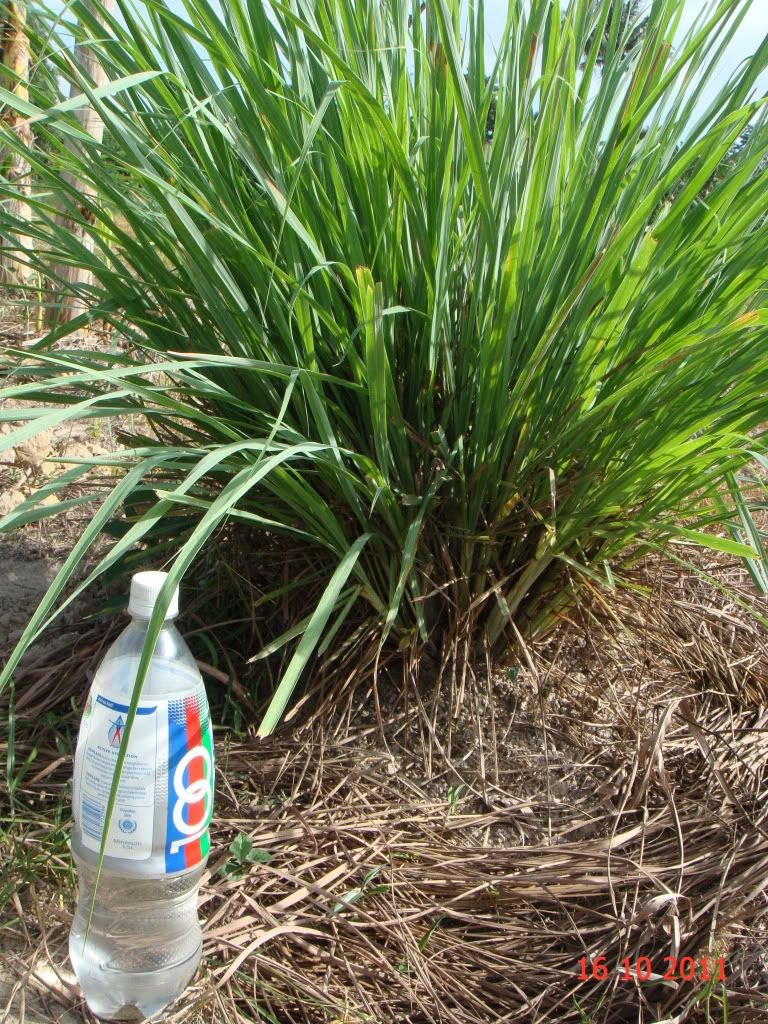
Went to the market today to try to sell my Serai. There were no takers. Was told that our Serai is too small / skinny. If I understand correctly, there are 2 types of Serai, 1 for cooking, another for making oil? Cooking type is small while the oil type is large?

Or are my Serai too skinny? How to fatten it up? blush.gif

user posted image
user posted image
user posted image
MrFarmer
post Oct 18 2011, 12:59 PM

Casual
***
Junior Member
478 posts

Joined: Mar 2011
From: Sabah


Added on October 17, 2011, 8:34 pmBro, I see nothing wrong with your serai lar. At least over here, they look normal.

Maybe you should try looking for serai wangi to plant instead. See what the locals prefer.
*

[/quote]
Yes, it looks "normal" to me too. Shall try see if we can fatten it up a bit, as replanting takes some time, let alone have to source for Serai Wangi.

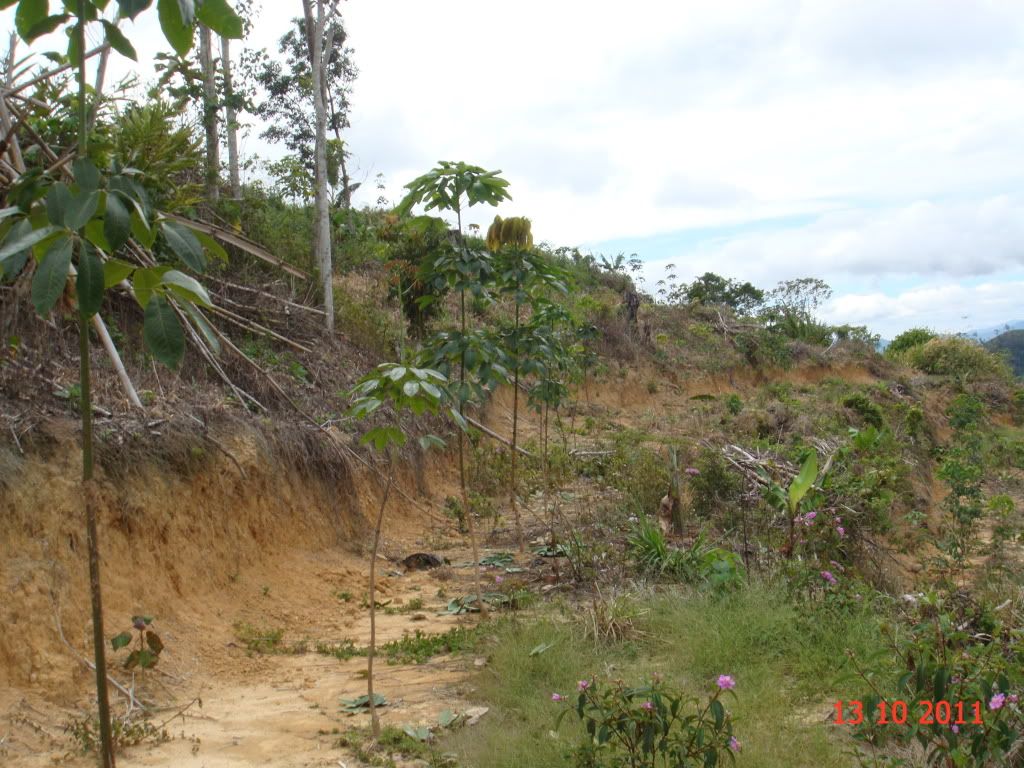
Cash Crops for Rubber plantation.
Was visiting a rubber plantation the other day and notice the vast land available in-between the terrace. Am think of a crop to plant. Needs to be drought resistance (hi slope, hi hill, only dependent on rain water), low maintenance, short/mid term, reasonable commercial value, ease of harvest (whereby we can have time to harvest in bulk, unlike banana need to harvest when ripe, otherwise it's over ripped, as the said land is quite a distant from town).
Traditionally had been planting Banana.
Was thinking crops like Serai, Groundnut, Sweet potato. Otherwise may continue with Banana tongue.gif
user posted image
MrFarmer
post Oct 18 2011, 07:33 PM

Casual
***
Junior Member
478 posts

Joined: Mar 2011
From: Sabah


QUOTE(Michael J. @ Oct 18 2011, 02:28 PM)
Mr Farmer:

Hahaha.... Banana by far is easier. You don't have to harvest banana when it begins to ripen, unless you have a thing against using carbide or ripe apples to speed up ripening of green bunches lar. Only that with hilly land, the yield potential drops quite a lot.

However, isn't the light intensity of rubber inter-rows (even on terraces) very low? Or do you mean something else?
*
blush.gif Haha, no , got nothing against carbide. Had actually bought some, but need to experiment on the usage (never used it before). With carbide, guess we can kind of harvest "more" and reduce the collection trips to make it more feasible.

No too worried about the light intensity, as the rubber tress are only between 6 ~ 9 months old, and I guess we should have 2 ~ 2 1/2 years to go. As for the banana trees, it's not blocking (light intensity) the rubber trees as we trim and transplant the sucklings quite regularly. Also moving to higher value Bananas, like Pisang Emas, Berangan and some Cavendish.

As the area is quite large, and we are trying to maximize the sloppy area, was thinking of what other crops that we can go for. All suggestion are welcomed notworthy.gif
MrFarmer
post Oct 19 2011, 12:58 PM

Casual
***
Junior Member
478 posts

Joined: Mar 2011
From: Sabah


[quote=MrFarmer,Oct 18 2011, 12:59 PM]

Added on October 17, 2011, 8:34 pmBro, I see nothing wrong with your serai lar. At least over here, they look normal.

Maybe you should try looking for serai wangi to plant instead. See what the locals prefer.
*

[/quote]
Yes, it looks "normal" to me too. Shall try see if we can fatten it up a bit, as replanting takes some time, let alone have to source for Serai Wangi.

Cash Crops for Rubber plantation.
Was visiting a rubber plantation the other day and notice the vast land available in-between the terrace. Am think of a crop to plant. Needs to be drought resistance (hi slope, hi hill, only dependent on rain water), low maintenance, short/mid term, reasonable commercial value, ease of harvest (whereby we can have time to harvest in bulk, unlike banana need to harvest when ripe, otherwise it's over ripped, as the said land is quite a distant from town).
Traditionally had been planting Banana.
Was thinking crops like Serai, Groundnut, Sweet potato. Otherwise may continue with Banana tongue.gif
user posted image
*

[/quote]
hmm.gif Maybe Groundnuts fits the bill?
Groundnuts
Climatic conditions, soil and water management
Groundnuts are grown in the warm tropics and subtropics below 1500 m above sea level, and in temperate humid regions with sufficiently long warm summers. Optimum mean daily temperature to grow is 30°C and growth ceases at 15°C. Cool temperatures delay flowering. Groundnuts cannot stand frost. Between 500 and 600 mm of water reasonably well distributed through the growing season allows a good production. Nevertheless, groundnuts are a drought-tolerant species and can withstand severe lack of water, but yield is generally reduced. If harvesting conditions are wet, aflatoxins (severe poison produced by some fungi such as Aspergillus spp.) may develop on the nuts. Aflatoxin contamination is a major hazard to human and animal health.
Because pods develop underground and must be recovered at harvest, crumbly, well-drained soils are preferred, but plants grow and develop adequately on heavier clay soils. For optimum growth, soil pH should be in the range 5.5 to 6.5, though Spanish types tolerate more acid conditions (pH 4.5) and some cultivars grow well in alkaline soils up to pH 8.5.
Worthwhile to do a test run?
MrFarmer
post Oct 20 2011, 07:43 PM

Casual
***
Junior Member
478 posts

Joined: Mar 2011
From: Sabah


[quote=teteret,Oct 20 2011, 10:04 AM]
[
Added on October 7, 2011, 10:01 pm
Just planted about 30 plant-lets. Hope they all grow well. See you in six year's time. tongue.gif
*

[/quote]

Haha bro you should plant more than 30. Btw which species did u plant? While not native to Malaysia i believe u can get Crassna variety from sellers. The trees will be ready for inoculation in 2-3 years. But i recommend that u wait a further 2 to 3 years after inoculation before harvesting to get better results.
*

[/quote]
blush.gif don't know what species wor. These were given to me. Shall get some pictures, maybe you can help me identify? I still have about 50 more, and am still looking for empty space to plant. Say how difficult to inoculate & harvest? Maybe I can plant these at the sloppy gradient (steep) land, since we don't need to visit it much. What says you? hmm.gif
MrFarmer
post Oct 24 2011, 09:29 PM

Casual
***
Junior Member
478 posts

Joined: Mar 2011
From: Sabah


[quote=teteret,Oct 20 2011, 10:04 AM]
[
Added on October 7, 2011, 10:01 pm
Just planted about 30 plant-lets. Hope they all grow well. See you in six year's time. tongue.gif
*

[/quote]

Haha bro you should plant more than 30. Btw which species did u plant? While not native to Malaysia i believe u can get Crassna variety from sellers. The trees will be ready for inoculation in 2-3 years. But i recommend that u wait a further 2 to 3 years after inoculation before harvesting to get better results.
*

[/quote]
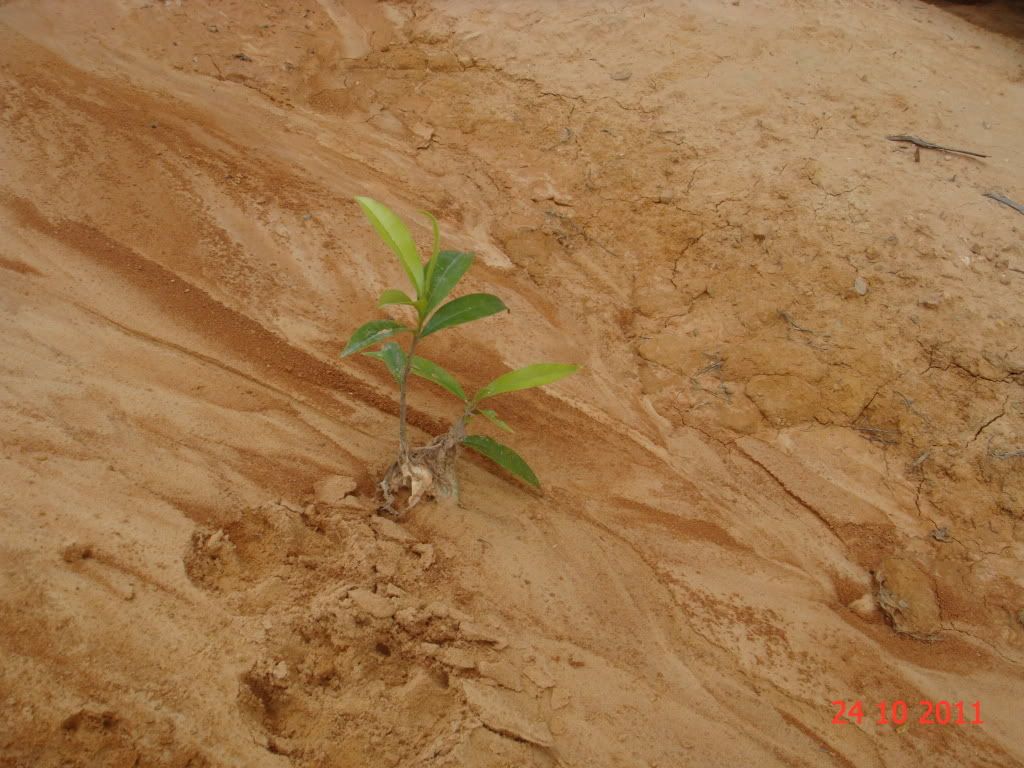
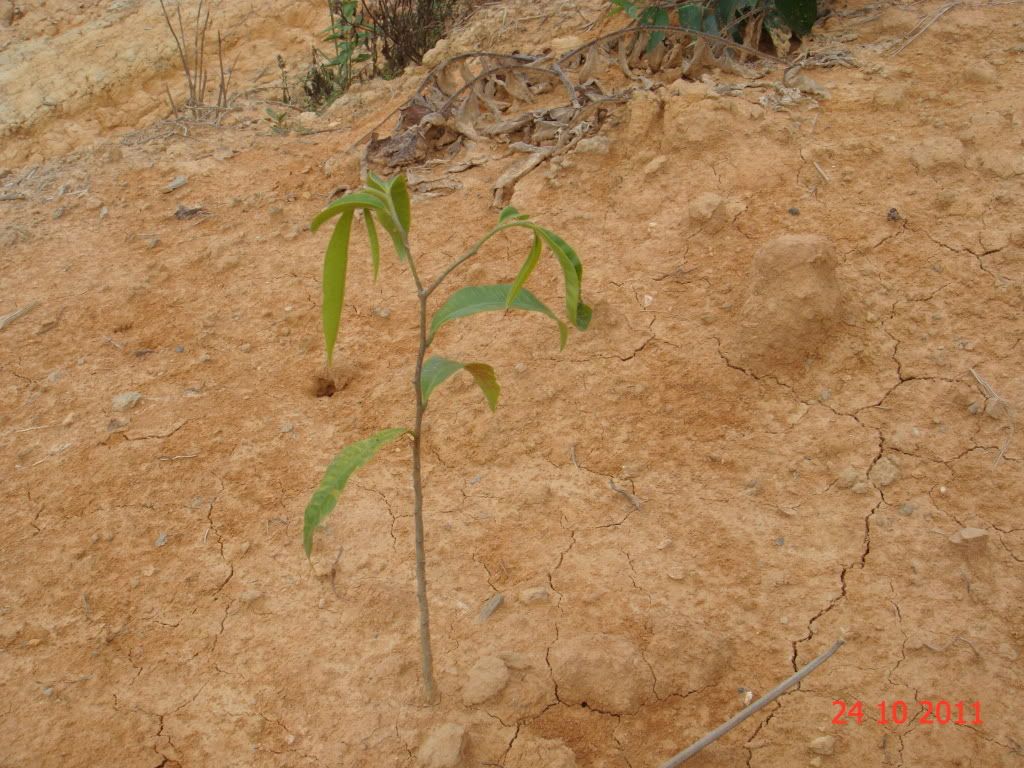
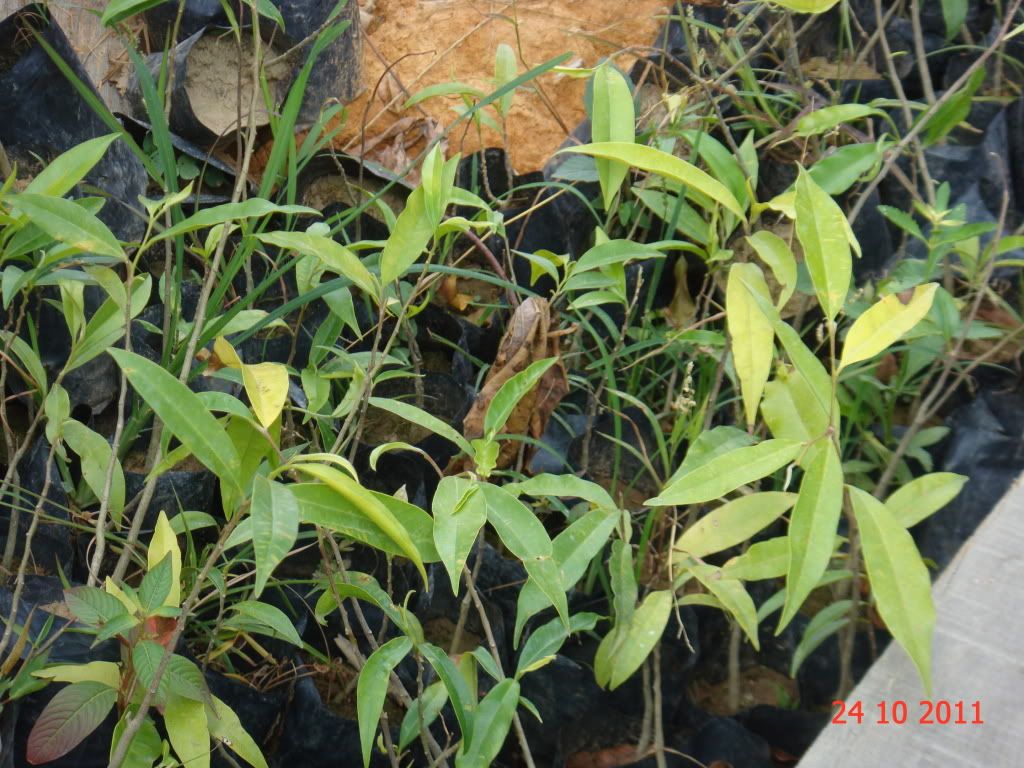
Hi Teteret,
Care to help me identify what spices this is?
user posted image
user posted image
user posted image
Hope these are the top species brows.gif
MrFarmer
post Oct 24 2011, 10:03 PM

Casual
***
Junior Member
478 posts

Joined: Mar 2011
From: Sabah


QUOTE(Michael J. @ Oct 19 2011, 02:29 PM)
Mr Farmer:

Before you go into Cavendish, please get more information on the crop. As I know, for export purposes, Cavendish need chill room treatment. And fingers ripen at different rates, very uneven. Prices are good though, at about RM5 for 5 fingers in many retail outlets.

Bro, groundnuts need sandier soils. Bris series soils are suitable. You could try planting, no harm trying.

The reason I recommended banana is because it generates more income compared to other crops without the need for much value adding. If you're not too particular, you could try planting legumes, like Azuki or mung beans. They can help in nitrogen fixing, i.e. add nitrogen from air into soil, so it might be a good choice. Returns are not great though, about RM1,635 per acre if yields are around 15 cwt/acre. Some Australian growers I know actually intercrop mung beans or peas with corn, both to add nutrient to the soil, and also as a secondary crop to corn since the beans or peas are climbers.
*
These are some of the plants that are showing potential growth. We shall still need a couple of months analyze to the yield. Yes, had planted lots of banana trees, harvesting the first batch. Still had not started on the Cavendish, as out of the 60 tissue cultured plants-lest that we bought, only 8 survived till now, but this is due to mismanagement. How about the Berangan type?
user posted image
user posted image
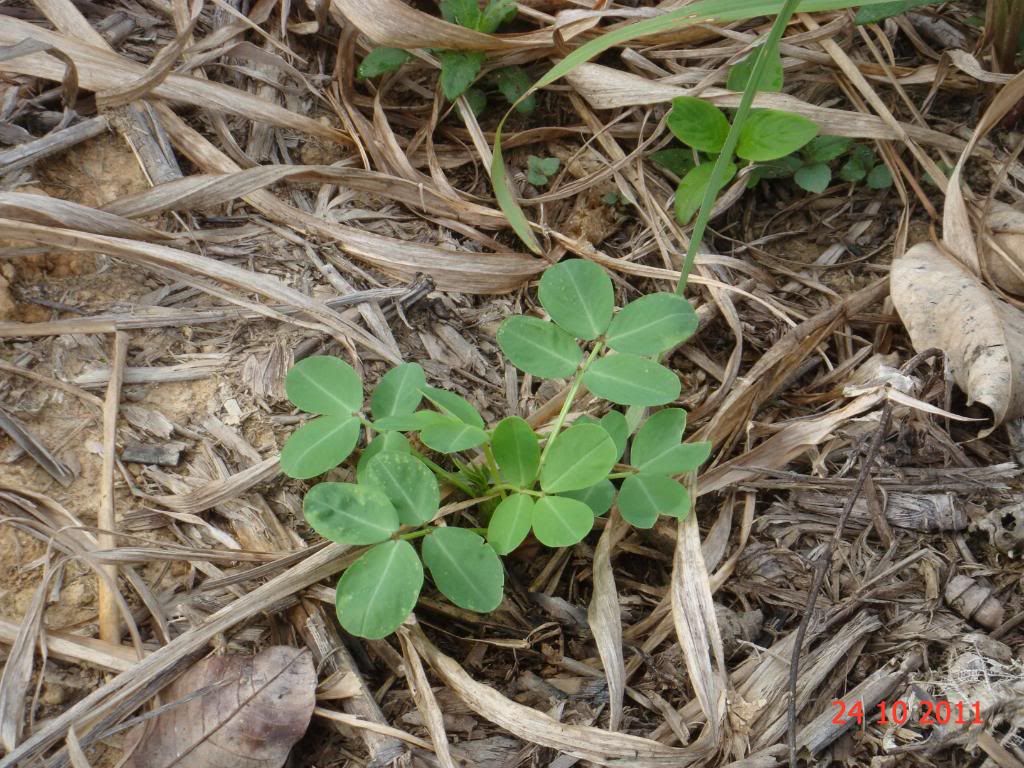
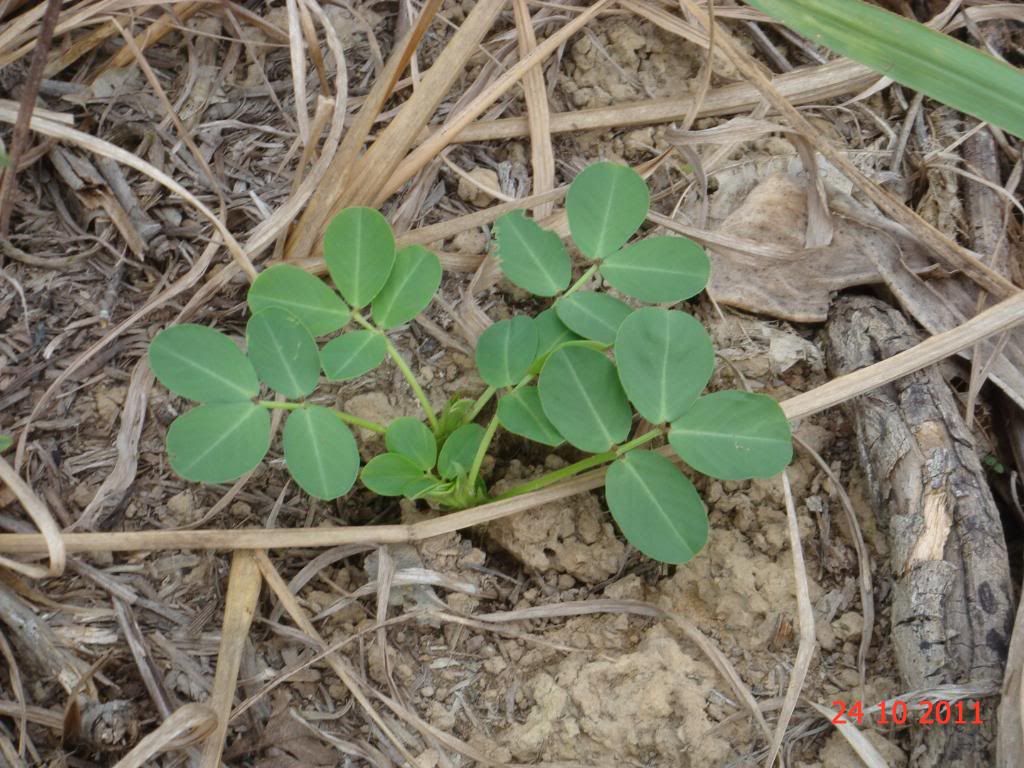
Groundnuts are sprouting. Shall be planting more.
user posted image
user posted image
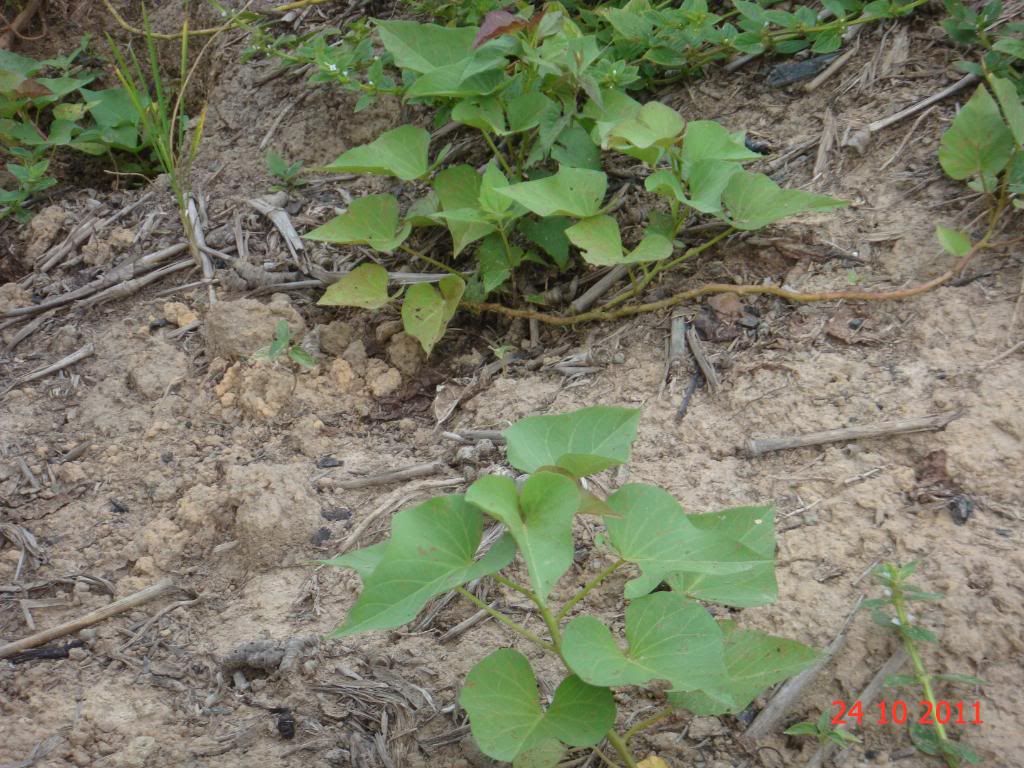
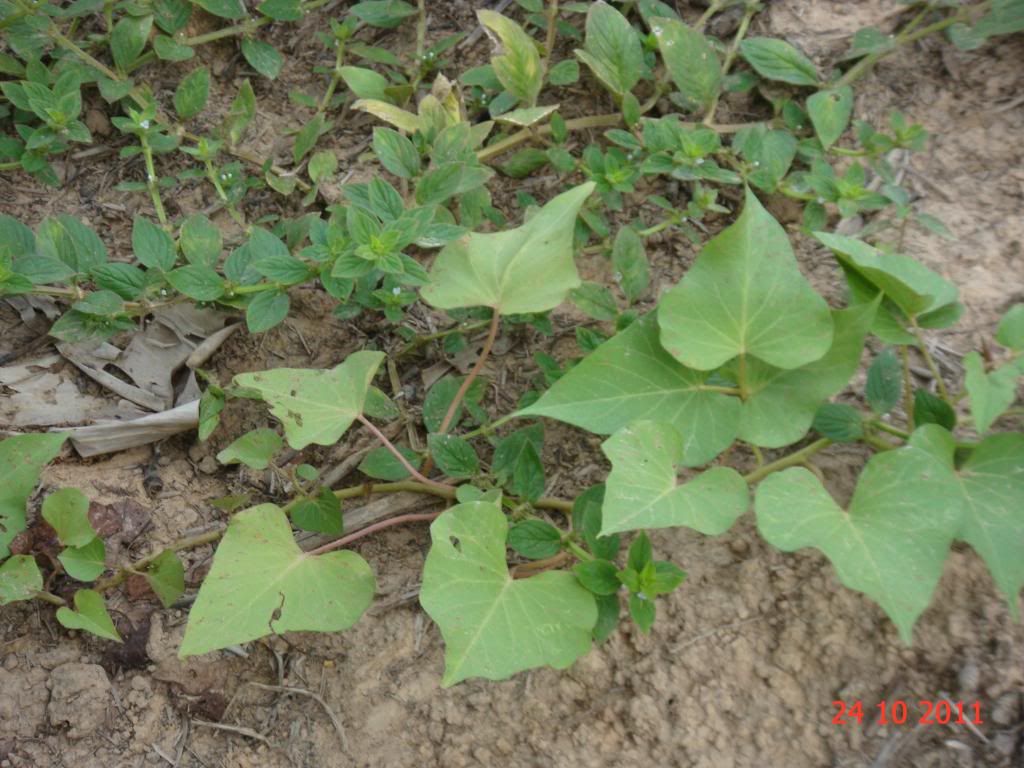
Sweet potatoes, propagated by stem cutting, are showing signs of growth. Shall expand more.
user posted image
user posted image
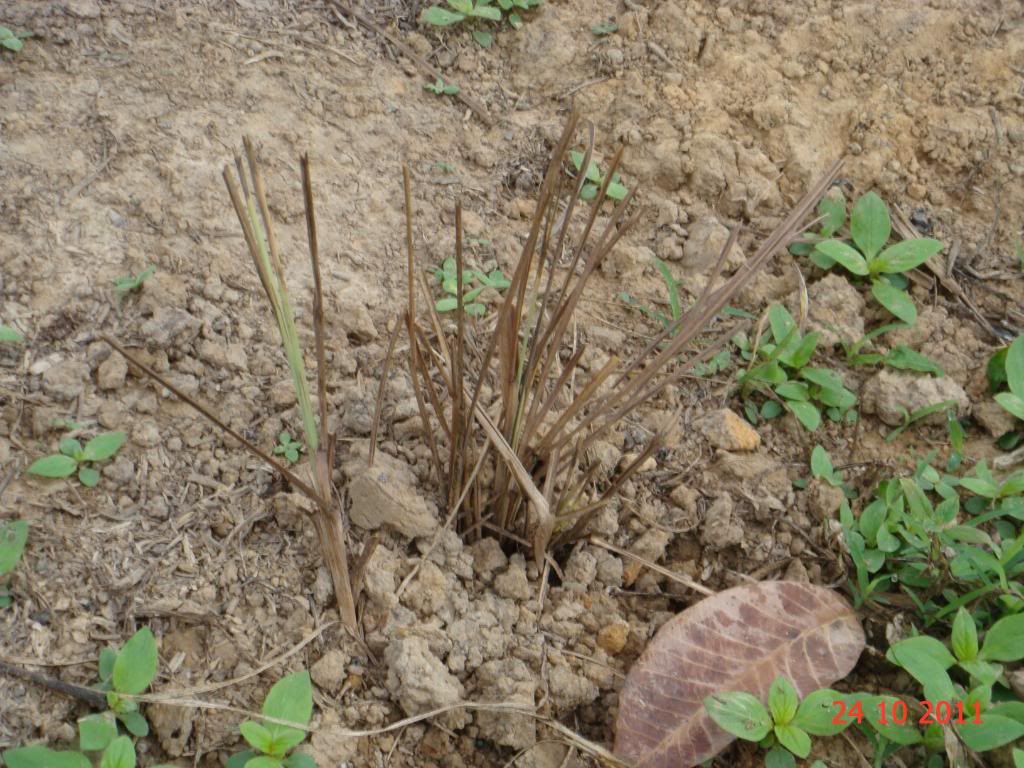
The Serai is showing signs of growth, hopefully we can fatten it this time smile.gif
We can't really plant a single crop on too large a scale as the market here is limited.
MrFarmer
post Oct 26 2011, 06:29 PM

Casual
***
Junior Member
478 posts

Joined: Mar 2011
From: Sabah


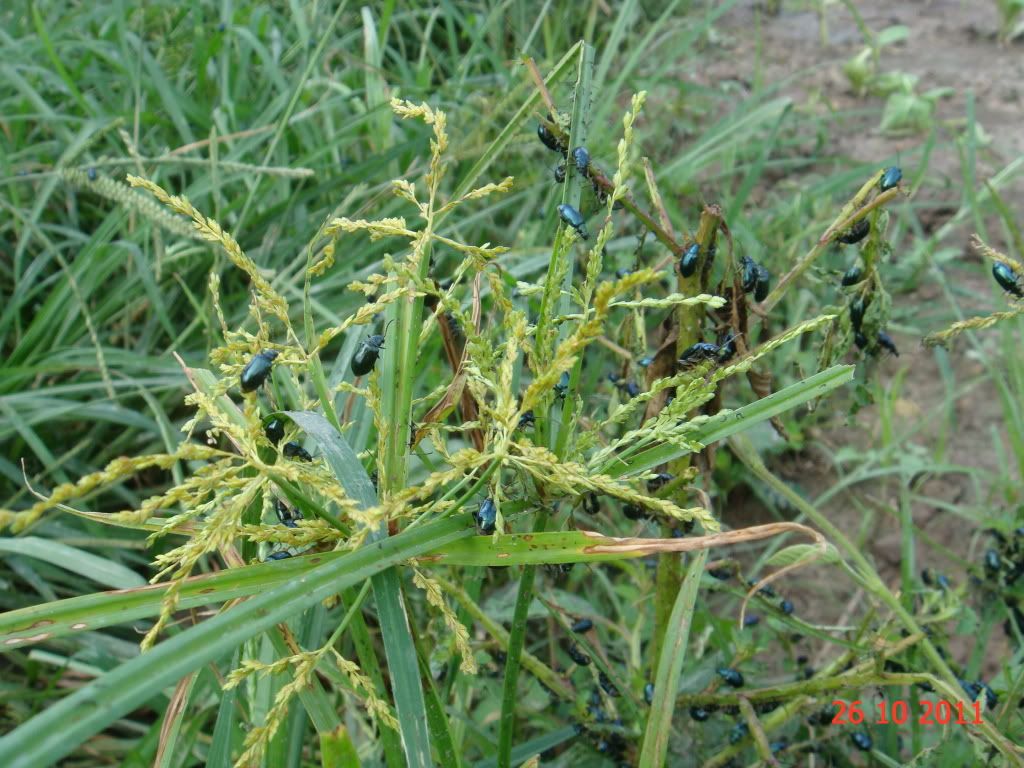
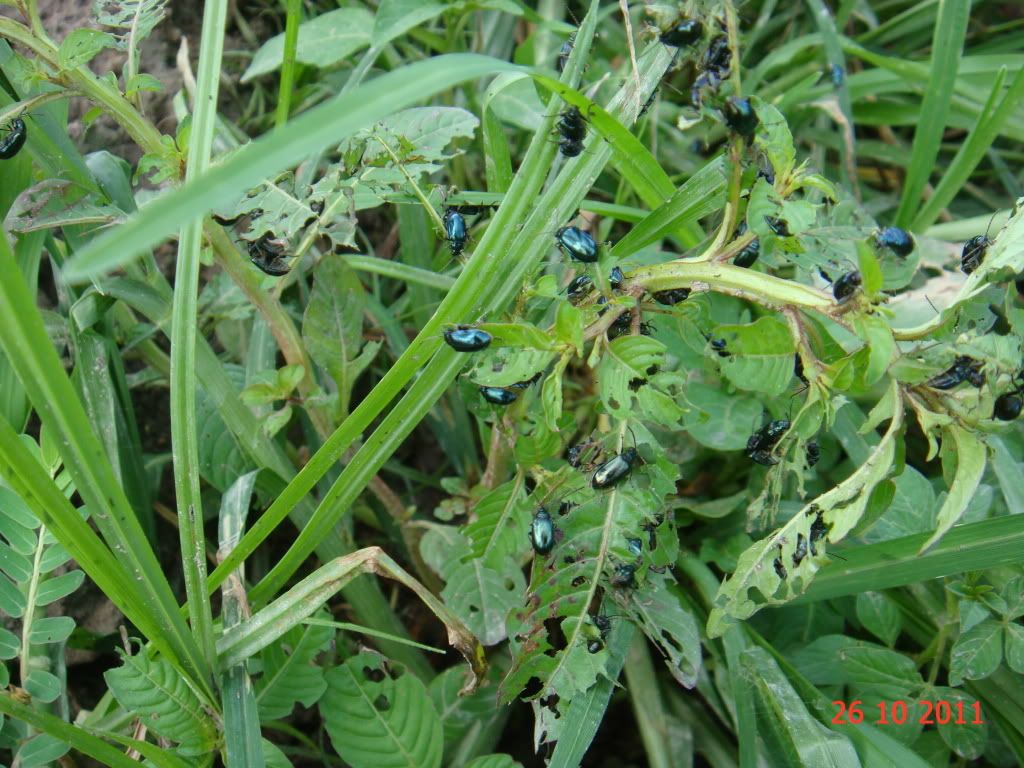
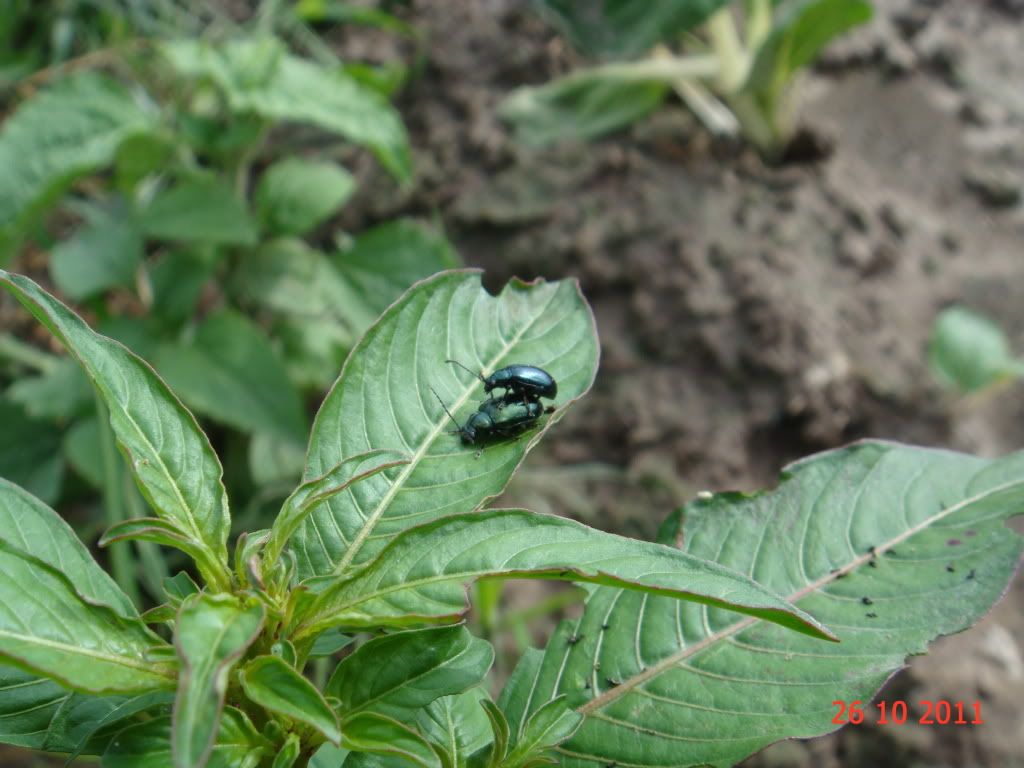
Found those guys that were eating off our Bayam. It had just rained in the evening, and I was resting by the tree. I though why were they so much flies? I tried to shoo them away, but they wouldn't Bug.
user posted image
There were so many of them.
user posted image
It's an invasion.
user posted image
Even caught them doing their 'thing'.
MrFarmer
post Oct 30 2011, 01:52 PM

Casual
***
Junior Member
478 posts

Joined: Mar 2011
From: Sabah


Gaharu / Agarwood.
Read this article, just to share,
[URL=http://www.squidoo.com/agarwood]Production and marketing of cultivated agarwood
I guess locally this Gaharu Technologies Malaysia is doing well. It's located in Gopeng, Perak.
http://www.gaharu.com.my/index.html
Checked on my 30 odd Gaharus, couple died due to dehydration. Shall plant up the rest soon. Contacted Gaharu Technologies Malaysia as I read from their interview, Gaharu is not supposed to be planted with rubber / oil palm & other trees, I wonder why.


MrFarmer
post Oct 31 2011, 02:02 PM

Casual
***
Junior Member
478 posts

Joined: Mar 2011
From: Sabah


QUOTE(teteret @ Oct 31 2011, 10:51 AM)
becasue apparently gaharu doesnt do well with fertiliziers!
*
Ooophs, I just put some fertilizer (immature rubber 15, 15, 16 + 4 Mgo) on the 30 odds Gaharu doh.gif
Any tips on how to care for the trees?
MrFarmer
post Oct 31 2011, 02:12 PM

Casual
***
Junior Member
478 posts

Joined: Mar 2011
From: Sabah


QUOTE(Materazzi @ Oct 30 2011, 06:28 PM)
hi wanna ask, how about rubber plantation. It seems rubber will have bigger ROI than palm oil?
*
I guess there are more factors to consider, rather than ROI.
Just like choosing a wife, beautiful or not? Big or small drool.gif
Would suggest you look at
1 Land size
2 Soil type
3 Accessibility
4 Collection center
5 Expertise / experience
6 Targeted harvest time
7 Investment budget
8 Helpers
etc.....
Agriculture is a mid to long term investment.


MrFarmer
post Oct 31 2011, 02:16 PM

Casual
***
Junior Member
478 posts

Joined: Mar 2011
From: Sabah


QUOTE(ParaOpticaL @ Oct 31 2011, 11:00 AM)
Hello People,

we are proud to inform that a bunch of us (you guys know who you are) had just finished publishing an Agri & Aqua Culturing Newsletter.

its available for download for FREE

Download Our Newsletter Here !!!

We hope this will be the First Issue of Many More to Come biggrin.gif

Cheers and Download away.

Thanks

ParaOptical aka Johnny
*
rclxms.gif Great publication. Kindly give support.
MrFarmer
post Oct 31 2011, 02:20 PM

Casual
***
Junior Member
478 posts

Joined: Mar 2011
From: Sabah


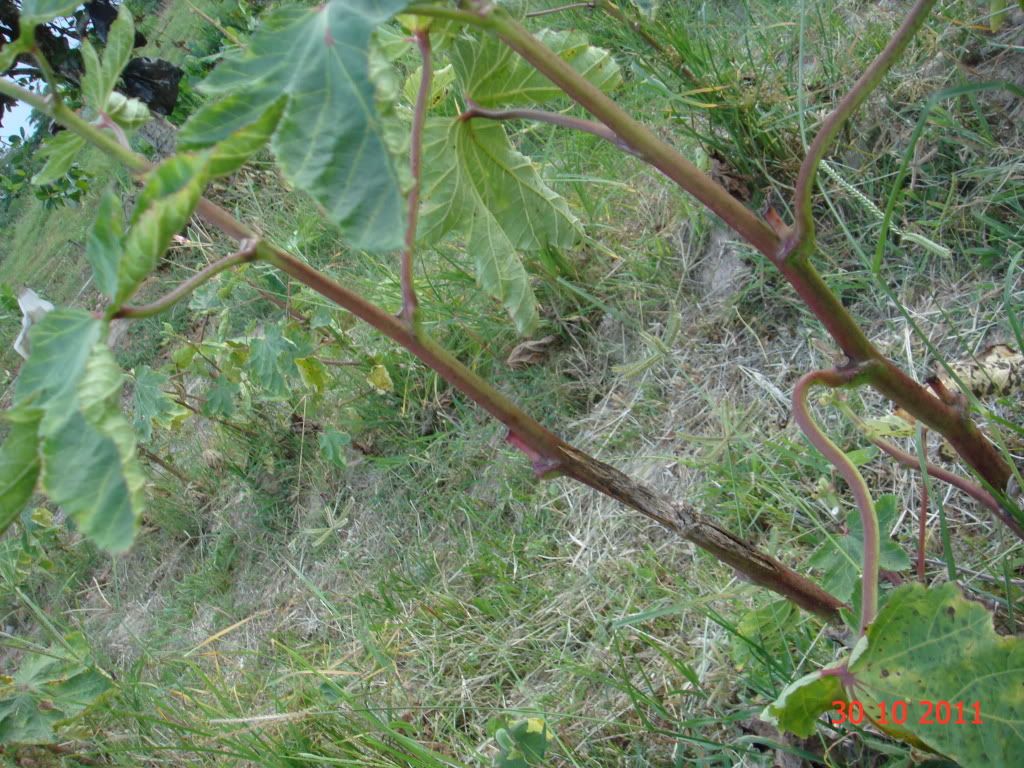
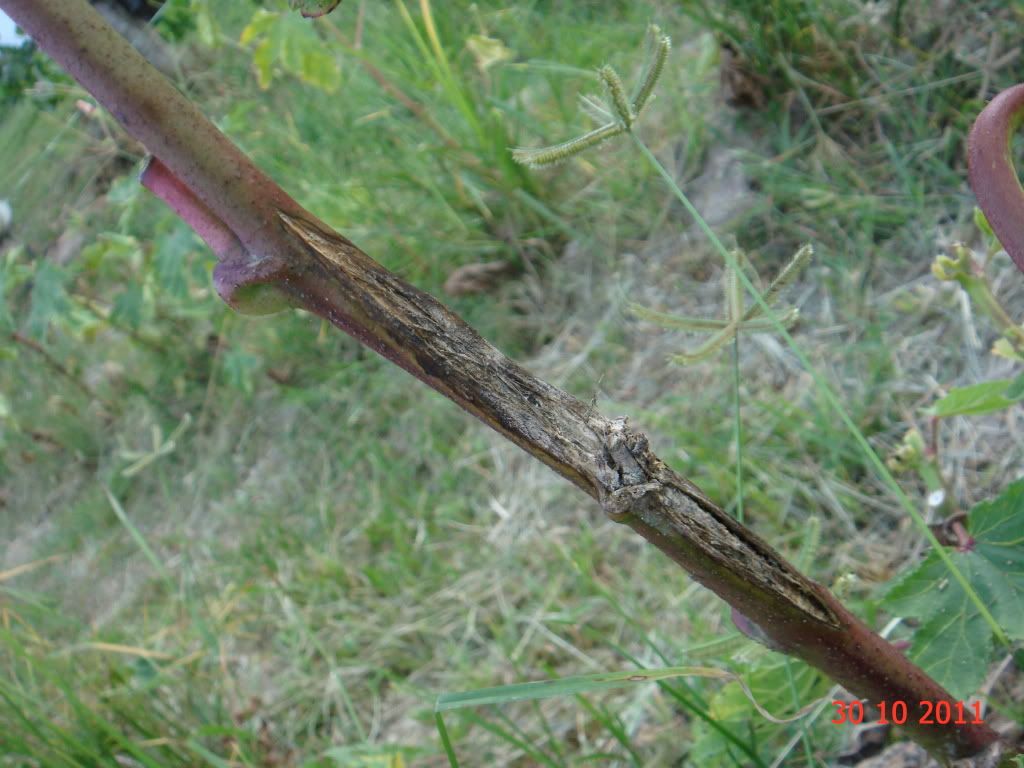
Having a problem with just one of my Lady's Finger. Trying to find out what's wrong.
user posted image
user posted image
Some sort of bark disease?

23 Pages « < 2 3 4 5 6 > » Top
 

Change to:
| Lo-Fi Version
0.0670sec    0.91    7 queries    GZIP Disabled
Time is now: 18th December 2025 - 12:38 PM