

QUOTE(ParaOpticaL @ Mar 12 2008, 10:09 AM)
8 module for RM 2 million.
how much is the production per module ?

5-6mT/month/modulehow much is the production per module ?
Venturing into Agriculture & Aquaculture, Co-Ordination & Implementation is KEY
|
|
 Mar 16 2008, 12:41 AM Mar 16 2008, 12:41 AM
|
 
Junior Member
11 posts Joined: Feb 2008 
|
QUOTE(ParaOpticaL @ Mar 12 2008, 10:09 AM) 8 module for RM 2 million. 5-6mT/month/modulehow much is the production per module ? |
|
|
|
|
|
Mar 16 2008, 08:54 AM
|

Senior Member
2,348 posts Joined: Dec 2004 From: Ch3r@s  
|
hi daniel,
why dont you come to our meet up on the 29th March @ Nando Mid Valley.  QUOTE(daniel_ng @ Mar 16 2008, 12:34 AM) i am new here, and would like some update on the soon hock. I am very interested. I have my own land. Aqua farmer could you furnish me with your contact details so that i can pay you a visit asap.  Added on March 16, 2008, 12:41 amAbout Jatropha Curcas. This plant is now widely planted in India. It has 33% of oil produced. I come to know about this 4 years back but i drop it last 1 1/2 years due do many reason in malaysia MPOB as biodiesel is currently using palm oil.  |
|
|
Mar 17 2008, 12:01 PM
|

Senior Member
3,590 posts Joined: Apr 2006 From: nowhere
|
MJ,
ICIC, no prob, so how? Everything done already? Coming liao? Ah, so thats the purpose of GAP, proper control of weeds is always crucial for any sensible harvest. We have been terrified by stories of heavily pesticided crops causing sickness and cancer(especially by direct sellers selling vitamins - eat vege also no uses so eat my pills, WTF) and this is how people promote the organic way too. Agriculture is actually working *against* the nature so there is no 100% "natural" way to do it, the nature is always attempting to turn your farmland back to forest and weeds is one of the proof. You need to put weeds down to knees by properly control it, either chemically or manually. Theres an interesting idea i read about to make use of geese in weeds control(they are vegetarian), that is raise a batch of young geese with types of particular weeds so that they are used to eating the mentioned plant. When they grow up, release them in the farm and they will clear out all the weeds for you full time. But, i guess it wont take too long for the geese to discover that chilies pods or seedlings etc are delicious as well! - - - Welcome daniel_ng, perhaps you can share with us a bit about your background? |
|
|
Mar 17 2008, 03:04 PM
|

Senior Member
2,586 posts Joined: Jan 2008 From: got la sumwhere
|
Hi guys, quick question: is there an existing thread discussing dairy farming or cultivating livestock such as goats or cows?
|
|
|
Mar 17 2008, 03:49 PM
|
|
Senior Member
2,348 posts Joined: Dec 2004 From: Ch3r@s
|
QUOTE(pleasuresaurus @ Mar 17 2008, 03:04 PM) Hi guys, quick question: is there an existing thread discussing dairy farming or cultivating livestock such as goats or cows? nope not at the momentplease feel free to contribute |
|
|
Mar 17 2008, 05:12 PM
|
|
Senior Member
3,590 posts Joined: Apr 2006 From: nowhere
|
Guess MJ will have a very good understand about this one but its an open topic.
What method we can use to extract oil content? From fruit, seed, etc. Pressure - using screw press to squeeze out the oil content with high pressure, can involve heavy equipment that can process tons of ingredients per hour to a hand operated screw press with 1-2 kg per hour. Water seperation - something like how they extract olive oil? Chemical - use a chemical solvent to wash out the oil content, high tech stuff. --- Lets say I happened to have some oil seeds here, what is the best way to extract it? I have been thinking about using a car hydraulic lift to press the content thru a wire mesh. But it seem a little complicated and messy. So I am now looking at the olive oil way, I am going to blend/beat the seeds into pulp, then pour the goo into boiling water and let the oil float naturally, then i scoop them up. QUOTE(pleasuresaurus @ Mar 17 2008, 03:04 PM) Hi guys, quick question: is there an existing thread discussing dairy farming or cultivating livestock such as goats or cows? Hmm, did i posted any Jamnapari information before? But i did mentioned it before somewhere in this forum.Feel free to ask here, I will see what I can find. Even better if you feel like contribute. |
|
|
|
|
|
Mar 17 2008, 08:29 PM
|

Senior Member
596 posts Joined: Jan 2006
|
bro rexis,
Haha... Not yet settle lar... Everyone in the committee busy with Good Friday and Easter lei.... Easter Sunday we will convene and settle the issues lor... I'll give my final word 3-4 days before the 29th? Hmm... in Sepang, I used to rear a lot of fowls. Ducks and geese.... despite quite good at controlling weeds, they make a mess of the soil lei.. I kept Muscovy Whites, and those typical brown geese you see in kampungs. Before keeping the ducks and geese, i had kept Guinea Fowls, which are these very beautiful ground birds from Africa. Also good in controlling weeds, slugs, snails, and snakes. Only downside is that they are crazy noisemakers, especially the females. I only had one female who was quiet and very tame; i hand picked her as a juvenile. Oh, and one other thing is that although they seem flightless and prefer to run about on the ground, they are very good flyers. Meaning to say, they can fly very far distances, even on top of a two storey house roof. mmm.... Funny you mentioned about oil extraction... here at the RD, we also extract tea tree oil, along with a number of other plant based essential oils. Just as a research interest, although for tea tree oil, we are one the largest exporter of pure oil to the European market. I can't show you or tell you how the extractor we works, but let me just give you a key word: steam. Added on March 17, 2008, 8:32 pmoh ya... ps: before you go off using steam or hot water etc to extract oil from crushed seed, please do note that heating cost is very VERY expensive... just had a look at my Heat Chamber electricity bill.... almost fainted... Hahaha.... This post has been edited by Michael J.: Mar 17 2008, 08:32 PM |
|
|
Mar 18 2008, 09:36 AM
|
|
Junior Member
163 posts Joined: Jun 2007
|
haha, thank
Just discuss abt Potential Crop v Prof yesterday inc: Jatropha,Valina, Seaweed,..... RExis- abt jatropha may google it, ya, actually my Veg cant b "organic' coz the ppl be4 use chemical ,so the land was contaminate, however , i was learn form Australia Organic farm yaya,clear the land v machine, later show u pic ParaOpticaL- yaya, tat one is Silver shine @ plastic mulch, use to maintain soil moisture n temperature, control weed UPM hv goats and Cow farm and training course for mushroom,fish seed , etc just less ppl know abt it Added on March 18, 2008, 9:49 amHEy,Every one Jatropha seed was available for sale , may PM me This post has been edited by kianwei8: Mar 18 2008, 09:49 AM |
|
|
Mar 18 2008, 12:13 PM
|
|
Senior Member
2,348 posts Joined: Dec 2004 From: Ch3r@s
|
kianwei : if there is any fish related courses please let us know.. thanks
------------------------ am planning to postpone the meet up from 29th March to 5th April 2008. would it be ok for most ? |
|
|
Mar 18 2008, 10:03 PM
|
|
Junior Member
163 posts Joined: Jun 2007
|
okok , will inform u ppl if vh fish related courses yaya, prefer5th April 2008 |
|
|
Mar 19 2008, 09:07 AM
|
|
Senior Member
3,590 posts Joined: Apr 2006 From: nowhere
|
QUOTE(kianwei8 @ Mar 18 2008, 10:03 PM) okok , will inform u ppl if vh fish related courses Dont forget about my vegetable/crop related courses too! Basically, if possible, all agri related course yaya, prefer5th April 2008 |
|
|
Mar 19 2008, 09:44 PM
|
|
Senior Member
596 posts Joined: Jan 2006
|
5th April ah...? Yor.... maybe if i leave early morning can make it lor... 4th April night i've got Church Council meeting lei.... But i'm keen to come; need to get a present for my sweets ler... XD...!
Hey, i've some soil media results to share from my chili growth trial. Let me just list it out simply: Exp - Optimum structural matrix of soil for nursery and pot cultivation of Capsicum annum var. Tabasco (New Mexico) Obj - To determine the optimum soil composition and structural matrix for best growth and establishment of Tabasco chili peppers Test - i. Common nursery premix of 3:2:1 ratio consisting of burnt soil, peat soil, and high organic clay loam (inland alluvial soil) ii. Self mixing of 1:1 ratio consisting burnt laterite and high organic clay loam (low acid sulphate soil) iii. Natural occuring inland alluvial soil, of clay loam consistency iv. Natural occuring marine alluvial soil, of clay loam consistency Pre - i. All seedlings used are of comparable size and vigour, with no clear advantage against each other, each one at the four leaf stage during transplanting ii. Each 20cm D x 30cm H pot was planted with 3 seedlings each at equilateral triangle (equal distance) to even out competition among seedlings iii. Soon after transplanting into respective media, all seedlings were given equal treatment of rooting hormone and plant growth regulator to reduce transplanting shock, at a rate of 1:500 ratio hormone powder + growth regulator per seedling Obsv - Although the balanced nursery premix was hypothesized to give the best results, observation showed otherwise. Of the 4 treatments, it was found that the self-mix gave rise to the best growth of seedlings, followed by natural inland alluvial, natural marine alluvial, and lastly the nursery premix. On closer observation, it was found that soil compaction had occured extensively in the nursery premix, possibly brought about by higher watering regime during the drought period between January - February period. Extensive compaction of soil matrix had also occured in inland alluvial soil and marine alluvial soil, although it was observed that despite soil compaction, seedlings planted had managed to develop far more superiorly than seedlings in nursey premix. Seedlings in both inland and marine alluvial had managed to reach 10 leaf stage within 2.5 weeks since transplanting. The most alarming yet gratifying observation was made with the self-mix, as seedlings transplanted were far more superior in growth and development than seedlings in other soils. Seedlings planted in 1:1 self-mix had achieved 10 leaf stage within 1.5 weeks, and at sampling point on 3rd week since transplant had already acheived 15 leaf stage. First branching is expected to take place within the 4 week. Leaf area of seedlings in self-mix were observed to be 5 times that of seedlings planted in inland and marine alluvials, while leaf area against nursery premix was 7 times greater. It was observed that the water holding capacity of each soil class differed greatly. The self-mix had the best drainage, with loosely packed soil grains. The nursery premix had the second best drainage, although soil compaction was extensive and water penetration was far slower than self-mix. This was followed by the marine alluvial soil. The inland alluvial was found to have the worst drainage. It is therefore inferred that optimal soil structure for chili cultivation would be one with high porosity, easily friable structure, but with moderate ion holding capacity (makes a weak doughnut shape when mixed with water, sandy loam consistency, low compaction risk). It is therefore postulated that riverine alluvials, which are characterized with high sediment content, sandy loam consistency, and generally good drainage ability to be most suitable for chili cultivation. Nonetheless, due to its porous nature, higher input of fertilizers are required, either organic or inorganic. I'm still keeping this test moving as i would like to see how far the seedlings can develop before having problems, especially those planted in my self-mix. Will be getting a fertigation hobby kit this Friday, possibly getting it up and running latest this Sunday. I will be using my self-mix to test the system.. Don't really trust cocopeat as media. |
|
|
Mar 23 2008, 05:16 PM
|
|
Junior Member
163 posts Joined: Jun 2007
|


Visit to United Platation Kuala Bernam Estate,Perak,with Estate Manager on Feb Attached thumbnail(s) 
|
|
|
|
|
|
Mar 23 2008, 05:31 PM
|
|
Junior Member
163 posts Joined: Jun 2007
|


This post has been edited by kianwei8: Mar 23 2008, 05:32 PM |
|
|
Mar 23 2008, 08:34 PM
|
|
Senior Member
596 posts Joined: Jan 2006
|
Haha... That's En. Ridzuan...! Kuala Bernam is one of my coconut trial areas. You probably would have seen some of my research materials there.... i mean apart from the Pandan...
|
|
|
Mar 23 2008, 10:40 PM
|
|
Senior Member
2,348 posts Joined: Dec 2004 From: Ch3r@s
|
There's money in worm waste
http://www.nst.com.my/Current_News/NST/Tue...2189402/Article PASIR MAS: There's money to be made in worms and one savvy businessman is having the last laugh over those who doubted it. Zakaria Adam, a 48-year-old entrepreneur from Kota Baru, has hit the jackpot producing vermicompost. Vermicompost is a natural fertiliser formed by the breakdown of organic matter by a species of earthworm, also known as composting worms. Zakaria first came across the commercial potential of vermicompost when he was sourcing for business opportunities overseas. "I went to India, Australia and the Philippines and found that it was a thriving business in those countries. I decided to try it here as it is something new for Malaysians," he said. Zakaria started Agro Bio-Tani (Kelantan) Sdn Bhd in 2006 with a capital of RM300,000 and has not looked back. His 1.2ha Vermicompost farm in Kampung Bukit Tuku here, the biggest in the country, has seven workers and is capable of producing 40 tonnes of fertiliser a month. The father of five said he started the business by importing 100kg of the "African nightcrawler" worms from the three countries he had visited. To produce the fertiliser, a windrow comprising bedding material is used for the earthworms to live. Organic matter, including animal dung and padi husks, is then added. "When I first started the venture, not many people thought that it was a viable idea but it has been growing very well," he said. So well indeed that today, Zakaria's earthworms have multiplied to 400kg. His clients now include government departments, farmers' organisations and agricultural companies. The compost, packed in packets of 2kg to 50kg, is sold at RM3 per kg. He also sells the worms, which measures about 25cm to 30cm in length, for RM450 to RM500 per kg. There was also demand from neighbouring countries like Singapore and Brunei. He regularly conducts courses for those interested in following in his footsteps. |
|
|
Mar 23 2008, 11:44 PM
|
|
Junior Member
163 posts Joined: Jun 2007
|
Produce the fertilizer and pesticide was Big business today,Price was Record high
|
|
|
Mar 24 2008, 11:38 AM
|
|
Senior Member
3,590 posts Joined: Apr 2006 From: nowhere
|
Indeed fertilizer and pesticide industry is a very rewarding business. Nowadays everything is record high... perhaps except cement due to many mega projects left their future undecided.
Do we really need RM300k to start up a composting business? Perhaps start big goes big too, but what if for a fairly new field like vermicompost? Its considered a bit risky isn't it? How popular is vermicompost? Yup i can see some vermicompost in ACE hardware or occasionally in hypermarket, but i would rather pay that price for a organic plant supplement spray. RM3 per kg is a little too pricy, cost is the main factor that prevented vermicompost from being popular, as for RM3000 per ton, you can get a decent imported inorganic fertilizer with immediate result. Most farmers would opt for the latter choice. And for plant based organic compost, you can get for like half of the price. Is it a must for vermicompost being so expensive? Why is it so expensive? No way to reduce the production cost? (update: most likely this is influenced by marketing strategy, price of worm compost in KL can go up to RM5-6) Vermicompost cost factor, the raw materials(organic waste) are virtually free, the main workers(earthworms) only required some starting cost for the firsts batch, and they will multiply. So the main cost lies on: - collecting and sorting - transportation - containers if you using worm bin You see, if one can make a RM3 per kg vermicompost and sell to garderner and household, compare to one who can make a RM1 per kg vermicompost and sell to commercial plantation. Vermiculture - Wikipedia Compost Worm - JourneytoForever.org Cheap and easy worm bin This post has been edited by rexis: Mar 25 2008, 02:35 PM |
|
|
Mar 25 2008, 09:35 AM
|
|
Senior Member
2,348 posts Joined: Dec 2004 From: Ch3r@s
|
Date : 5th April 2008
Venue : NANDO's, Mid Valley Kuala Lumpur Time : 7.30pm SHARP Attendees :- 1) ParaOptical 2) rexis 3) kianwei8 4) locke 5) MichealJ. (might) 6) mIssfROGY 7) mgengan at the moment these are the attendees. anymore to come ? ---------------------------------------- Agenda a) Intro about yourself b) About Agriculture c) About Aquaculture d) Q&A + Potential This post has been edited by ParaOpticaL: Mar 25 2008, 09:53 AM |
|
|
Mar 26 2008, 04:32 PM
|
|
Junior Member
163 posts Joined: Jun 2007
|
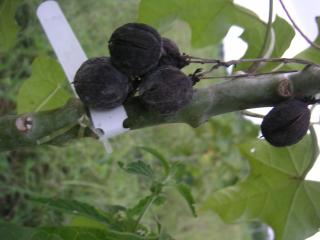
Photo Update




|
| Change to: |  0.0228sec 0.0228sec
 0.14 0.14
 6 queries 6 queries
 GZIP Disabled GZIP Disabled
Time is now: 20th December 2025 - 04:00 AM |
 Quote
Quote