

» Click to show Spoiler - click again to hide... «
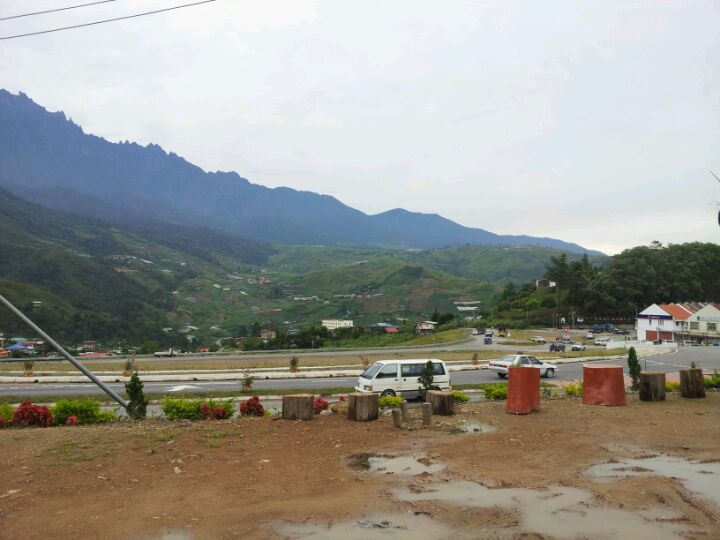
the view at kelawat eco farm.
Venturing into Agriculture & Aquaculture, Co-Ordination & Implementation is KEY
|
|
 Apr 24 2012, 03:29 PM Apr 24 2012, 03:29 PM
|
 
Junior Member
137 posts Joined: Apr 2012 From: Forensic Department 
|
» Click to show Spoiler - click again to hide... « the view at kelawat eco farm. |
|
|
|
|
|
Apr 24 2012, 03:29 PM
|

Senior Member
695 posts Joined: Apr 2010 
|
Para, thanks. Will see what i can do.
Added on April 24, 2012, 3:32 pmWah,, kissan, you familiar with that place? looks nice eh. abit hilly though. Seems like the weather will be cool. This post has been edited by jason1986: Apr 24 2012, 03:32 PM |
|
|
Apr 24 2012, 05:25 PM
|

Senior Member
2,348 posts Joined: Dec 2004 From: Ch3r@s 
|
Yup bro all Berangan...tissue cultured.
the age ranges from 4 months to 2 months nope i am NOT using drip irrigation but sprinkler as the banana is a supplement crop while my main is the jackfruit thanks for helping me out on the PM...appreciate it. QUOTE(MrFarmer @ Apr 22 2012, 06:56 PM) Berangan? Tissue cultured? How long since you planted it? jason : it could be mini-cameron highlandsWish I'm close to your farm, and can collect the suckers from you  Noticed that there is a poly pipe running across. These banana on dripping irrigation? Received your PM, shall check it out.  |
|
|
Apr 24 2012, 07:46 PM
|

Junior Member
478 posts Joined: Mar 2011 From: Sabah
|
QUOTE(Kissan @ Apr 24 2012, 03:29 PM) » Click to show Spoiler - click again to hide... « the view at kelawat eco farm. Added on April 24, 2012, 8:03 pm QUOTE(jason1986 @ Apr 24 2012, 03:29 PM) Para, thanks. Will see what i can do. The co-ordinate for Kg Kelawat is approximately 6.1120508N 116.3693338EAdded on April 24, 2012, 3:32 pmWah,, kissan, you familiar with that place? looks nice eh. a bit hilly though. Seems like the weather will be cool. It's between 700~800M above sea level. Your friend has also put up at advert for the said land. For the special price you mentioned, off hand I would say it could be worthwhile to check it out. Maybe I can plant on your land, if you decide to buy  If you are flying in to check the land and if you need company, just PM me. Shall be here till mid June. This post has been edited by MrFarmer: Apr 24 2012, 08:03 PM |
|
|
Apr 24 2012, 10:07 PM
|
|
Junior Member
137 posts Joined: Apr 2012 From: Forensic Department
|
@jason: Not familiar.Haha
@MrFarmer: Ohh my mistake.I grabbed this pic from people's fb. He write kelawat eco farm.  Rubber latex is still at high price these past 2 years. Rubber latex is still at high price these past 2 years. |
|
|
Apr 25 2012, 05:02 PM
|
|
Senior Member
695 posts Joined: Apr 2010
|
Hi Mr Farmer,
i'm seriously thinking of going over to view the land. apparently he has got some interested buyers even at 18k per acre. hmmm... decisions decisions. thanks for the kind gesture. will keep you posted. Guys, i've google map the place. there is two kg kelawat on the map. one by A1 one by A4. which one issit a? must be someone tag it wrongly. This post has been edited by jason1986: Apr 25 2012, 05:13 PM |
|
|
|
|
|
Apr 25 2012, 06:05 PM
|
|
Senior Member
2,348 posts Joined: Dec 2004 From: Ch3r@s
|
bro just a friendly reminder. NEVER rush into buying a land just because there is another interested buyer. you ALWAYS have to see it first hand.
or your decision can force you to overpay when you can get it cheaper... QUOTE(jason1986 @ Apr 25 2012, 05:02 PM) Hi Mr Farmer, i'm seriously thinking of going over to view the land. apparently he has got some interested buyers even at 18k per acre. hmmm... decisions decisions. |
|
|
Apr 25 2012, 07:11 PM
|
|
Senior Member
695 posts Joined: Apr 2010
|
Hi bro Para, thanks for the heads up. Will do my due dilligence.
|
|
|
Apr 25 2012, 11:09 PM
|
|
Junior Member
137 posts Joined: Apr 2012 From: Forensic Department
|
QUOTE(jason1986 @ Apr 25 2012, 05:02 PM) Guys, i've google map the place. there is two kg kelawat on the map. one by A1 one by A4. which one issit a? must be someone tag it wrongly. A4. Remember take some photos and share with us. Good luck with your new adventure. |
|
|
Apr 26 2012, 07:52 AM
|
|
Senior Member
695 posts Joined: Apr 2010
|
thanks kissan. Will keep you guys posted.
|
|
|
Apr 26 2012, 11:33 AM
|
|
Senior Member
754 posts Joined: Jul 2009
|
hi..long time no c...here's for those interested in vermicomposting...
WWW.NSSAGRO.COM |
|
|
Apr 26 2012, 12:26 PM
|
|
Junior Member
7 posts Joined: Jan 2012
|
Hi All,
I would like to setup a small business to rear Tilapia. I have done some research and am interested to use tank culture to rear them on land. Using some sort of a self improvised RAS system. i would like to seek your advice on this venture and what are the things that I need to take note of. At the same time, I would like to know the current market price for the fish. Appreciate all your advise |
|
|
Apr 26 2012, 01:12 PM
|

Senior Member
596 posts Joined: Jan 2006
|
Razkyo:
Disease, feeding and costs, the biology of the fish, market movements. Although tilapia are inherently tolerant to diseases, there are still some diseases that can be an issue, such as vibrio infection. Diseases are associated with aquaculture practices, such as water quality and sanitation, worker sanitation, cross-contamination controls etc. Feeding and costs is just that: what to feed, how much to feed, and how to balance the costs of feeding with how much to feed. Not all feed is the same, I'm sure you know. Some results in better feed conversion, possibly due to feed additives such as enzymes that pre-break down the food for better absorption, or there might be other additives such as prebiotics or probiotics, which enhances overall growth and development. Good knowledge of feed material can often make or break an aquaculture venture. Eg. 5kg of standard feed would cost about RM25-RM30, and for every 1kg tilapia target weight, you need at least 1.3-1.5kg of feed. So for 4000kg of fish, you will need to fork out RM26,000 to feed the fish. If you average it out, you'd find that it amounts to RM6.50 cost per kg fish. And what's the price you're going to sell at? RM8? RM10? How about other fixed costs, like water and electricity? Fish biology. Seriously, this is critical. If you don't know the fish, don't try to keep it. If you don't have much experience about it, go for training courses. There are a dime a dozen out there, and one will find them if serious enough. Why is this important? Some examples: (i) Unlike most other fish, female catfish actually grows faster and bigger than males. If you didn't know this, you'd probably keep male catfish instead, as the general understanding about most organisms is that males grow bigger and faster than females. (ii) Tilapias will begin breeding when they are about 8cm in size, especially if the population density isn't high enough. Often, their growth rate drastically slows down once they start breeding. That's part of the reason why many culturist prefer monosex tilapias. (iii) Keeping tilapias in ponds will damage your pond, especially if the density is not high enough to discourage breeding instincts. Why? Male tilapias, when mature/large enough will start to build "bower" nests at the bottom of the pond. This erodes the pond, making the pond shallow over time. So you can see, why understanding the biology of the species is critical for success. Market movements is a no brainer. Knowing where the market demand is will help you get better prices, and gain better market access. It will also help to do a very thorough planning of your business, as RAS systems are overall more costly to install AND operate. Eg. 1 kilowatt hour of electricity is RM0.43 (commercial). Not alot right? But considering that the common RAS equipment uses 2.2kwh of electricity, 24 hours a day, for 210 days = RM4767.84 per unit. And that's just for water circulation and waste removal, not equipment cost. How many fish can that unit culture? 4000kg? 5000kg? At present, the price of tilapia wholesale for grade B is RM8/kg, grade A is RM10 and above. Live fish can fetch around RM13-RM15 per kg. Added on April 26, 2012, 1:17 pmJust a small addition to the above. Not to sound condescending, but I'm sure you know that RAS systems are not economical when done small scale. The last I checked, the minimum equilibrium capacity for tilapia is about 96,000kg of fish. If cost of production is roughly 70%-80% of the selling price of the fish, you can see that it will be costing hundreds of thousands of dollars just to run the system each cycle. This post has been edited by Michael J.: Apr 26 2012, 01:18 PM |
|
|
|
|
|
Apr 26 2012, 03:06 PM
|
|
Junior Member
7 posts Joined: Jan 2012
|
Dear Michael J.,
Thanks for the valuable input. So would you suggest to rear them in ponds instead of tanks? As for training courses, I am currently looking out for suitable courses to attend. Interestingly, I am also looking at the pallets that they are feeding on as I know that it will affect the quality and overall cost of the fish. However, there are not much information with regards to the pallets that are being sold in Malaysia. Do you happen to know about the pallets that are generally used in Malaysia for farming Tilapia? |
|
|
Apr 26 2012, 04:33 PM
|
|
Senior Member
596 posts Joined: Jan 2006
|
Razkyo:
This is a dilemma, actually. Tilapia cultured in ponds are cheaper to produce, but has less long term sustainability and market access. The latter is only relevant if you want to enter US or EU markets. Personally, I would prefer to culture them in tanks. There is more control on the quality aspect, especially when it comes to disease control, sizing/grading, harvesting etc. It is also easier to plan your production so you are consistently producing crop month after month. However, tank culture can only be economical if one has large enough capital. If capital is an issue, then pond culture is the next best thing. On training courses, you can try Sepang Today Aquaculture (STAC). Their courses are a little bit more technical, but it is quite thorough. Otherwise, you can check up Marble Goby Enterprise also. For tilapia pellets, you can approach Asia Aquaculture or Star Mills (both under CP Group). Other feeds, I would suggest you do your own coating and feed additive blending. For this, you might like to talk to our forumer, Para, about these materials. His company carries a product that apparently has been shown to improve feed conversion rates. Do note that most aquaculture feeds in Malaysia are imported, either from China or elsewhere, and consists mainly of soy bean meal, ash, and lesser amounts of fish meals and fish oils. Generally, the crude protein content for tilapia should be around 35%. Higher protein contents may be beneficial, but it will be a lot more costlier. |
|
|
Apr 26 2012, 05:07 PM
|
|
Junior Member
137 posts Joined: Apr 2012 From: Forensic Department
|
@Michael J. & Razkyo
 is RAS system just aquaculture or aquaponics ? is RAS system just aquaculture or aquaponics ?RAS Aquaponic maybe you can follow the system in above link. |
|
|
Apr 26 2012, 05:32 PM
|
|
Senior Member
596 posts Joined: Jan 2006
|
Kissan:
The system of recirculating water is very established, and used in culture practices ranging from hydroponics, to fertigation, and aquaculture. It is even used in industrial processes. Aquaponics is merely a hybrid of hydroponics and aquaculture. The cost is still about the same, no real difference. Just difference in crop out put and productivity. Honestly, RAS (recirculating aquaculture system) is just a fancy name given to what's essentially an expanded version of the common aquarium filteration system. The principles are the same, just the application is made bigger. |
|
|
Apr 26 2012, 05:36 PM
|
|
Senior Member
2,348 posts Joined: Dec 2004 From: Ch3r@s
|
the IDEAL situation to rear fishes are in tanks rather than pond culture as per what MichaelJ. said advantages. and also weather control.
rearing fish is usually about CONTROL : access control, disease control, size control, harvesting control & Quality Control...haha you can also apply to DOF for courses depending on your location This post has been edited by ParaOpticaL: Apr 26 2012, 05:38 PM |
|
|
Apr 27 2012, 09:04 AM
|
|
Junior Member
7 posts Joined: Jan 2012
|
Dear Michael J.,
Many thanks for the information. I have linked up with Marble Goby Enterprise to do a cost evaluation of setting up a small time tank culture tilapia farming. Just awaiting some results. The reason why my partner and I are doing it on a small scale is because this is a new industry that we are venturing into and we do not know anything about rearing fishes. All we did was to read up on the various methods and essential points to rear fishes. We are also very worried about the marketing of the fishes in the local market if we produce such large quantity. Since we do not have much contacts locally, we feel that it would be wise to start it up small to test the market. We are also looking at value adding by processing the fishes but our general idea is to start it up first to do a sample of the market size before deciding which plan should we adopt to move the business forward. After researching on the various methods, I agree that tank culture if done on a large scale will really be more value for money. However, as I mentioned above, I am just afraid that our contacts locally are not sufficient enough to take in large loads. |
|
|
Apr 27 2012, 03:31 PM
|
|
Senior Member
596 posts Joined: Jan 2006
|
Razkyo:
It is good that you are approaching this more conservatively. Yes, marketing is a key component in any business. Certain fish species have higher demand than supply, and literally "fly" off the shelves. At this moment, species such as tilapia are experiencing growth in culture by about 10%-20% each year in most regions, except Oceania. In Southeast Asia, the growth rate is closer to 40%. In terms of demand, cumulative demand is growing at about 20%-30% each year, especially for processed fish products. From this, it is easy to draw the conclusion that demand is outpacing supply. Personally, my analysis of the situation is opposite to the gungho sentiment harboured by most. I believe that tilapia culture will have good running for another 5-10 years before reaching a plateau. Thereafter, there could be sharp price readjustments, maybe even price wars between different producing countries. This is certainly evident with what happened to pangasius catfish, and African catfish (keli). In addition, I have concern about Malaysia's lackadaisical attitude towards gaining EU and US certification for our fish products. For me, my thoughts are like this: There are literally hundreds of white fish species in the world; you never know which species will be the next "tilapia" or "pangasius". With the tremendous success some Western countries are having with hybrid bass and other marine white fish, it is very possible that these species could overshadow Asian white fish species in the near future. The only aquaculture species I can have very good confidence, even to the extent of it having "guaranteed" market, is prawns/shrimp. There aren't too many species of prawns/shrimp that can be cultured easily. In fact, 80% of farmed shrimp are from two species: P. vannamei (white) and P. monodon (tiger). Smaller cultures consists of P. japonica (Kuruma), P. stylirostris (Western Blue), P. chinensis (Chinese White), P. indicus (Indian White), and P. merguiensis (Banana). Do note that all these latter species are cultured in very small quantities, due to past diseases wiping out entire populations and farms, or due to limited/restricted growing zones. Also, from a pure capitalist POV, the price of shrimp/prawns are consistently high, and even moving higher. This is simply because shrimp/prawns are sensitive to disease pressures, and very few other species of prawns are really worth culturing. If disease knocks out one population, there won't be another to replace it quickly, thereby "guaranteeing" demand in the marketplace. If I'm in possession of a technology that helps me ward off disease pressure on aquatic species, then my first target species would be shrimp, not fish. This post has been edited by Michael J.: Apr 27 2012, 03:33 PM |
| Change to: |  0.0367sec 0.0367sec
 0.83 0.83
 6 queries 6 queries
 GZIP Disabled GZIP Disabled
Time is now: 21st December 2025 - 04:09 AM |
 Quote
Quote