Kerajaan Persekutuan memberikan peruntukan khas RM23 juta bagi tujuan pembelian segera pelbagai aset terutama bot yang sangat diperlukan oleh Kawasan Keselamatan Khas Timur Sabah , ESSCOM, bagi menghadapi ancaman jenayah rentas sempadan khususnya penculikan di Zon Selamat Timur Sabah (ESSZONE). Peruntukan itu adalah tambahan kepada RM660 juta diberikan kepada ESSCOM yang diumum oleh Perdana Menteri ketika membentangkan Bajet 2O15 di Dewan Rakyat Tahun lepas. Kerajaan bersetuju untuk mempercepatkan pembelian dan penghantaran aset kepada ESSZONE bagi memantapkan kawalan keselamatan di Esszone kata Ketua Setiausaha Negara Tan Sri Dr Ali Hamsa
The ship also has two AK-630 ship-borne artillery systems with 4,000 shells each, which can fire 4,000-5,000 rounds per minute at a range of 4-5 kilometers, and an AK-176M automatic gun with a range of 15 kilometers for sea and land targets and 11 kilometers for air targets.
Kerajaan Persekutuan memberikan peruntukan khas RM23 juta bagi tujuan pembelian segera pelbagai aset terutama bot yang sangat diperlukan oleh Kawasan Keselamatan Khas Timur Sabah , ESSCOM, bagi menghadapi ancaman jenayah rentas sempadan khususnya penculikan di Zon Selamat Timur Sabah (ESSZONE). Peruntukan itu adalah tambahan kepada RM660 juta diberikan kepada ESSCOM yang diumum oleh Perdana Menteri ketika membentangkan Bajet 2O15 di Dewan Rakyat Tahun lepas. Kerajaan bersetuju untuk mempercepatkan pembelian dan penghantaran aset kepada ESSZONE bagi memantapkan kawalan keselamatan di Esszone kata Ketua Setiausaha Negara Tan Sri Dr Ali Hamsa Source
Thai Aircraft carrier: No Harrier, ends up tied at dock, become useless=white elephant
Potential Malaysian Mistral: potentially too much cost for malaysia, potentially ends up tied at dock, potentially become useless=potential white elephant
No difference there.
why malaysia wanted an lhd initially.. I was told it because it will be a tri-service usage. So both airforce, navy and army will land their heli on the flat deck and operating them would be the navy. The annual operation would be taken from the armed forces budget rather than the navy though the navy will be the one running the ship
It not much of the amphibious capability or power projection malaysia wanted but rather the transport and command role. U can bet u will be seeing the mistral assuming if we take it moving between west and east malaysia frequently
why not opts for a LDP instead i you ask? The requirement may have been tweaked now but back then they wanted to get heli as close to the area of focus, may it be suluk landing spot or example like kelantan flood. the lhd will be parked just at the coast and transport. A flat deck allows for more heli operations simple as that. Amphibious is just an added bonus is have
It is a matter of budget and our current budget wont be enough for it. if we wanted to operates it, the government must at least add usd1bil into the annual budget for operation cost.
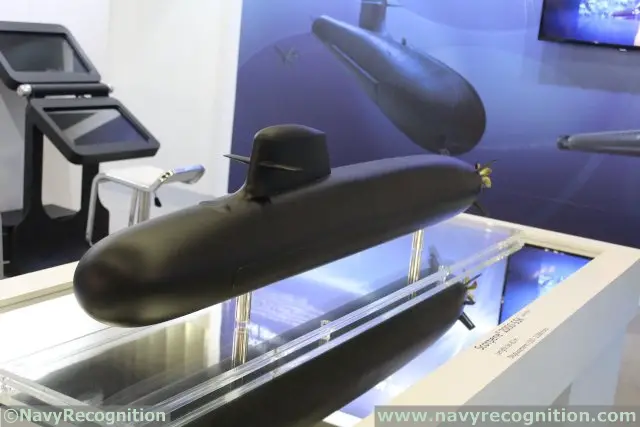
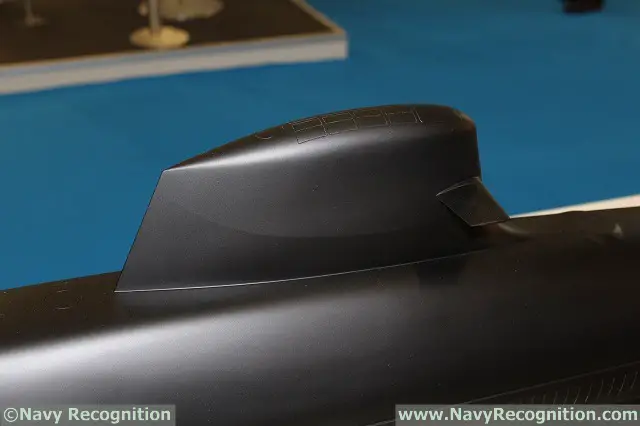
At UDT 2015 the Undersea Defence Technology exhibition and conference currently taking place in Rotterdam, DCNS unveiled an evolution of its Scorpene 2000 diesel-electric submarines (SSK).
Xavier Mesnet, Submarine Marketing Director, told Navy Recognition during UDT 2015 that this evolution of the Scorpene 2000 design shows how DCNS integrates the latest technologies unveiled at Euronaval last year (such as the second-generation fuel-cell AIP, UUV deployment and recovery, Vipere multifunction buoy...) as well as industrial challenges and customer requirements.
The new Scorpene 2000 evolution model unveiled for the first time at UDT 2015 shows a redesigned sail and stern. According to Marie Nicod, submarine naval architect at DCNS, the only part left unchanged on the model shown at UDT 2015 is the bow. Up to 8 masts may now fit in the new sail because of its larger design. The stern is fitted with an X-rudder for better maneuvrability as well as pre-swirl stators: They reduce the rotational losses incurred by the propeller and further increase the performance of the screw.
DCNS can adapt the Scorpene 2000 series to specific customer requirements including its size and shape. Finally we were told that this evolution of the Scorpene 2000 may deploy the full spectrum of weapons: Torpedoes, Anti-ship missiles, Surface to air Missile, Cruise missiles plus special forces and UUVs.
bila mau beli lagi~ I always dream of a squadron of 10 scorpene..
1 Russian military jet lost in crash, another damaged
QUOTE
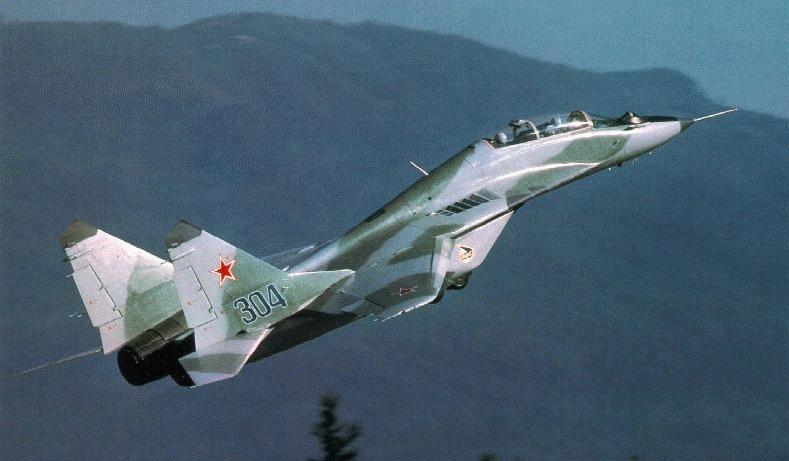
MOSCOW (AP) — A Russian air force jet crashed in the south Thursday and both crewmen bailed out safely, while another combat plane overturned after landing in a separate accident, hurting no one, the Defense Ministry said.
The MiG-29 fighter jet went down Thursday while on a training mission near the Ashuluk shooting range in the Astrakhan region, about 1,100 kilometers (nearly 700 miles) south of Moscow. The two crew members have been hospitalized, and one is in serious condition, according to health officials.
There is no damage on the ground.
The Defense Ministry said in a statement carried by Russian news agencies that the air force has grounded its MiG-29 fleet pending the outcome of an official probe.
The twin-engine MiG-29 has been a mainstay of the Soviet and Russian air force since the 1980s and has been widely exported.
In a separate accident in the southwestern Voronezh region, a Su-34 bomber ran off the runway upon landing and overturned. The plane's two crewmembers weren't hurt, the Defense Ministry said.
It said the incident was caused by a failure of the plane's braking parachute.
Tom Waldwyn: East Asian procurement – recent aerospace and maritime activity
Date: 04 June 2015
By Tom Waldwyn, Assistant Research Analyst for Maritime Forces and Defence Industry
The past six months have seen notable developments in the procurement programmes of East Asian countries, as well as requests to the United States for the sale of military equipment. These developments have been chiefly in the maritime and aerospace domains.
Maritime
Submarines
East Asian countries have continued to place a priority on improving their submarine capabilities with modern and often indigenously built boats. In November 2014, Korean shipbuilder DSME finally cut the steel of the first KSS-III hunter-killer submarine (SSK). This programme has suffered from significant delays and the first boat is due to enter service after 2020. The KS-II (German design Type-214, but locally built) SSK programme is ongoing and the sixth of class was launched in May 2015.
Japan has also continued to modernise its own capabilities and commissioned its sixth Soryu-class SSK, Kokuryu, in March 2015. The continued success of this programme will support Japan’s efforts to win Australia’s submarine competition. Japan’s National Security Council has now approved participation in the bidding process and some analysts have described the Japanese entrant as the favourite.
Principal Surface Combatants
China’s impressive rate of commissioning major surface vessels stands out amongst East Asian countries, as discussed in a previous Military Balance blog post, as it seeks to modernise its naval forces. Most recently, the seventeenth Type-54A frigate, Huanggang, was commissioned, as were additional Type-56 and Type-56A (anti-submarine-warfare variant) corvettes. However, Australia and the Republic of Korea have also taken significant steps to improve their navies. In October 2014, STX Offshore & Shipbuilding launched the fifth Incheon-class frigate for South Korea and in May 2015 the AWD Alliance launched the first Hobart-class Air-Warfare Destroyer for Australia.
Amphibious Vessels
Both South Korea and Australia have also moved to enhance their strategic lift capabilities with the commissioning in late 2014 of the first Canberra-class landing helicopter dock and the November 2014 delivery of the first Cheonwangbong-class amphibious landing ship for Australia and South Korea respectively. However, it was the commissioning of Japan’s Izumo-class helicopter carrier in the same month that grabbed the headlines.
Aerospace Transport Aircraft and UAVs
South Korea has given a boost to its aerospace sector by naming KAI as the preferred bidder in the KF-X project. This programme will develop a new multi-role fighter aircraft for both South Korea and Indonesia. The former is expected to buy 120 and the latter 50 aircraft as part of the deal. The project is estimated to be worth US$7.7 billion and shows the continuing ambition of South Korea’s indigenous military aerospace industry, following on from the T-50 Golden Eagle.
In March 2015 Malaysia became the fifth country to receive the Airbus A400M heavy transport. This was the first aircraft from an order for four placed in 2006 and represents a significant improvement in the country’s airlift capability.
In December 2014, South Korea placed an order for four RQ-4B Block 30 Global Hawk ISR UAVs for US$657.4 million. Seoul already operates the Night Intruder and the Searcher but the Global Hawk would be by far the country’s most capable UAV. The order is expected to be completed by the end of June 2019.
Helicopters
In March 2015 a significant deal, potentially worth as much as US$10bn, was signed by Airbus and KAI. The two companies will work together to produce a civil and military version of the H155 for South Korea and produce around 100 and 200 of each type, respectively. On the other side of the continent, Indonesia finally signed a long-anticipated US$295.8m deal with Boeing for eight AH-64E Apache attack helicopters. The AH-64E is the latest variant and represents a significant upgrade of the army’s rotary capability from the Soviet-era Mi-35Ps currently in service.
Missiles and Air Defence
In recent months, the US State Department has accepted requests by several East Asian countries for missiles, as these states seek to modernise their stockpiles.
Jakarta - The Ministry of Defence (Ministry of Defense) plans to purchase Chinook helicopter combat types from the United States aircraft manufacturer, Boeing.
Said Salim a military observers said that it is a reasonable decision. "If we have money, buy the most sophisticated weapons, that's good," said Salim told reporters at the Presidential Palace Complex, Jakarta, Thursday (4/6).
He claimed that he had asked President Jokowi to increase defense equipment. "I told Mr. President earlier. I strongly support sophisticated defense equipment for our soldiers," he concluded.


 Jun 4 2015, 06:38 PM


 Military Thread V17
  Quote
Quote


 1 min all the rounds fired?












 0.0177sec
 0.56
0.56
 6 queries
 GZIP Disabled