


LYN Catholic Fellowship V01 (Group), For Catholics (Roman or Eastern)
|
|
 Jan 13 2016, 03:07 PM Jan 13 2016, 03:07 PM
Return to original view | Post
#261
|
 
Junior Member
225 posts Joined: Mar 2008  
|
FYI ...
|
|
|
|
|
|
Jan 14 2016, 12:09 PM
Return to original view | Post
#262
|
|
Junior Member
225 posts Joined: Mar 2008
|
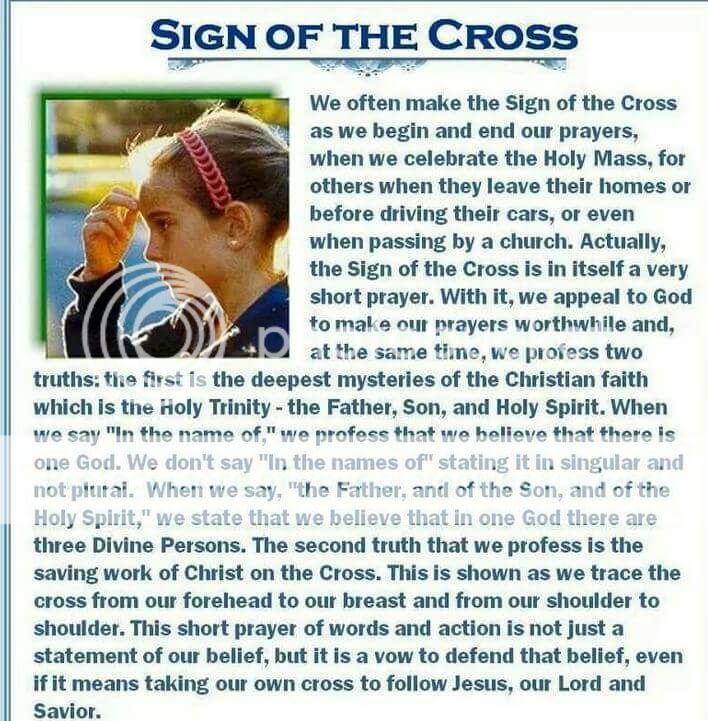
QUOTE(yeeck @ Jan 13 2016, 06:01 PM) Yes, do not be ashamed to make the sign of the cross in public. Not the rushed, hushed type, but in a dignified manner....saying grace before your meals, in thanksgiving. Too many Catholics are ashamed or scared to make the sign of the cross publicly with a sense of false humility. It's more the case of Catholics being ridiculed and scorned for openly daring to profess their faith in public, hence the reluctance. No small thanks to all that 'religion is a personal and private thing' crap being touted and encouraged.  Isn't it totally ironic that alternative lifestyle is not only tolerated, even encouraged, but a religious one is frowned upon? Welcome to the 21st Century ...  |
|
|
Jan 16 2016, 09:30 AM
Return to original view | Post
#263
|
|
Junior Member
225 posts Joined: Mar 2008
|
 |
|
|
Jan 17 2016, 10:30 PM
Return to original view | Post
#264
|
|
Junior Member
225 posts Joined: Mar 2008
|
QUOTE(yeeck @ Jan 16 2016, 10:17 PM)  |
|
|
Jan 18 2016, 10:34 AM
Return to original view | Post
#265
|
|
Junior Member
225 posts Joined: Mar 2008
|
"Blessed Are The Merciful" California [English] version of the 2016 WYD hymn
Official theme song for World Youth Day 2016, Krakow, Poland! (English Version) (Polish version, original) Amen!   This post has been edited by khool: Jan 18 2016, 10:38 AM |
|
|
Jan 19 2016, 01:48 PM
Return to original view | Post
#266
|
|
Junior Member
225 posts Joined: Mar 2008
|
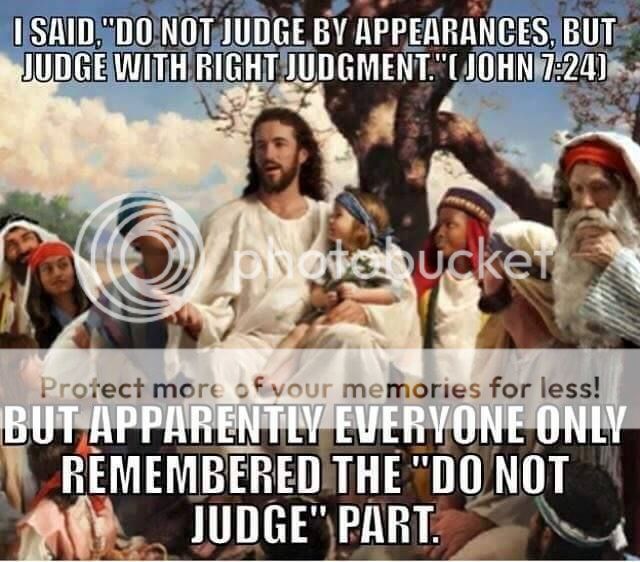
Hehehe!!!
 |
|
|
|
|
|
Jan 19 2016, 02:14 PM
Return to original view | Post
#267
|
|
Junior Member
225 posts Joined: Mar 2008
|
Abit late; last Sunday's Readings, but, still a good read and reflection ...
Scripture Speaks: The Wedding at Cana by Gayle Somers (Source)  At the start of His public ministry, Jesus attended a wedding in Cana. Why was this the perfect setting for Him to work His first miraculous sign? Gospel (Read Jn 2:1-11) St. John tells us that after Jesus called and assembled His disciples, “there was a marriage at Cana in Galilee, and the mother of Jesus was there.” It is interesting, isn’t it, that right at the start of St. John’s description of Jesus’ public ministry, His mother gets first mention in this story. “Jesus and His disciples were also invited to the wedding,” but “the mother of Jesus” is the one on whom the action pivots. St. John never refers to her as “Mary” in his Gospel. We know from Scripture and tradition that Mary and John lived as mother and son from the time of the Crucifixion. We might expect his description of her to be in more familiar terms. Because St. John’s Gospel is considered to be profoundly interpretive in its report of the details of Jesus’ life, we can legitimately wonder if his reference to Mary as “the mother of Jesus” has a deeper meaning than simply their biological relationship. Indeed, it does. Recall that the prologue of this Gospel evokes the Creation: “In the beginning was the Word” (Jn 1:1). St. John wants us to be thinking about the early chapters of Genesis, both the glory we see there and the shadow cast by sin. The only hope for redemption after the Fall will be the fulfillment of a promise made by God. In speaking to the Serpent, He says: “I will put enmity [a battle] between you and the woman, and between your seed and her seed” (Gn 3:15). In many subtle ways throughout his Gospel, St. John lets us know that “the woman” and “her seed” have finally appeared. Their battle against the Serpent has now been enjoined. Thus it is that in describing Mary in this story as “the mother of Jesus,” St. John makes more vivid her connection to God’s promise in Genesis. In this episode at Cana, it is Mary who is alert to the details of the wedding celebration—perhaps it was the wedding of a near relative. Running out of wine was awkward and embarrassing for the bridegroom, but why would Mary think the problem should be referred to Jesus? He was, after all, an itinerant rabbi, not a wine steward! We have so many questions about this scene, don’t we? The mystery is intensified when we see that Jesus wasn’t thinking about this wedding as the occasion of His first public “sign.” Even when Mary comes to Him, there seems to be some resistance from Jesus: “Woman, how does your concern affect Me?” This is an English translation of a Hebrew idiom. We are helped to understand it with a quote from the Ignatius Catholic Study Bible—New Testament: QUOTE [This Hebrew idiom] typically presupposes some perceived tension between two parties having contrary perspectives (Judg 11:12; 1 Kings 17:18; Mk 5:7), though not always (2 Chron 35:21). When the idiom is used in response to a person’s request … the speaker sometimes capitulates to the expressed will of the other (2 Kings 3:13) and sometimes not (2 Sam 16:10). Here… Jesus complies with Mary’s request, and Mary herself appears perfectly confident that Jesus will respond favorably to her petition. In effect, Jesus would not have initiated the miracle at Cana, but neither would Jesus refuse His Mother’s prompting. (ICSB-NT, pg 164) So, why was Mary, so absorbed in the details of the wedding, moved to expect a miracle from Jesus to solve this problem? We don’t know for sure, but we have to wonder if, as she participated in the wedding festivities with her Son in attendance, she recalled that His work, being God’s Son, too, was to be the flesh-and-blood presence of the Bridegroom to God’s people. During the long history of the Jews, God expressed His covenant relationship with them as a “marriage” (more on this in our First Reading). In Genesis, the marriage of Adam and Eve was fractured by sin. Sadly, God’s covenant with His people was also greatly marred by sin. The Jews spurned their loving “Husband.” However, the prophets foretold a restoration of the marriage. Mary knew that Jesus was born to mend this shattered covenant; He was the Bridegroom Who would purify the Bride. Mary, as the new Eve, prompted her Son to fulfill His vocation in this richly meaningful wedding setting. In this, she undid what Eve had done in the Garden, when she prompted her bridegroom to sin. This was Mary’s first public act of advocacy on behalf of God’s people, a work she continues to do for all her children in the Church. Jesus performs the miracle, transforming the water into the “best” wine. To make this possible, the servants had to listen to Mary’s directive: “Do whatever He tells you.” These are Mary’s last words in the Gospel. They continue to ring out over the centuries to all of us who discover that our lives have no wine—that we are living on the water of sin, meaninglessness, and fear. The Bridegroom has come to transform all this. We simply need to do whatever He tells us. Possible response: Blessed Mother, I thank you for your loving advocacy for us in the details of our lives that matter so much to us. First Reading (Read Isa 62:1-5) This is one of the Old Testament prophecies in which God explicitly promises to be the Bridegroom of His people: “For the Lord delights in you and makes your land His spouse. As a young man marries a virgin, your Builder shall marry you; and as a bridegroom rejoices in his bride, so shall your God rejoice in you.” All her life, Mary had heard these prophecies. Is it any wonder that at the wedding at Cana, she was full of expectation of what her Son could do for His people? Possible response: Heavenly Father, help me remember today that You rejoice over us, Your people in the Church. Psalm (Read Ps 96:1-3, 7-10) In the Gospel, St. John tells us that when Jesus turned the water into wine, He “revealed His glory, and His disciples began to believe in Him.” The psalmist today gives us words to use as we ponder and praise not only this historical event but also the fact that in our new lives in Christ, the glory of the Lord continues to be revealed—the water of our lives is transformed into the wine of grace and peace, of joy inexpressible. In thanksgiving for this miracle, we should be ready to do what our responsorial says: “Proclaim His marvelous deeds to all the nations.” Possible response: The psalm is, itself, a response to our other readings. Read it again prayerfully to make it your own. Second Reading (Read I Cor. 12:4-11) If we ask, in a practical way, what it means for the water of our lives to be turned into wine, this passage from St. Paul’s epistle to the Corinthians gets us started on an answer. He writes about how, as a result of our baptism and faith in Jesus, the Holy Spirit pours into us wonderful gifts that make present on earth God’s own divine life. The gifts differ, of course, but “one and the same Spirit produces all of these, distributing them individually to each person as He wishes.” This life of God in us was what was lost in the Garden. The Bridegroom, beginning at the wedding in Cana, came to restore it. Possible response: Lord Jesus, thank You for sharing Your life with Your people, the Church. Help us be faithful stewards of the gifts You have lavished on us. Source: http://catholicexchange.com/scripture-spea...wo5cdM.facebook Have a blessed week ahead! |
|
|
Jan 21 2016, 10:54 AM
Return to original view | Post
#268
|
|
Junior Member
225 posts Joined: Mar 2008
|
Some reflections for this week, for Malaysian Catholics
*Source: From my BEC Whatsapp group* If u like to know how it ended for our catholic bro Bernard Then,, read below..... (Written n reflected by Mildred Lopez.) REFLECTIONS DURING THE WAKE AND FUNERAL OF BERNARD THEN . As I entered the parlor I was greeted by Bernard's sister. She spoke of the many graces that came to them as a result of this tragedy. While it was difficult to find Bernard, to bring him back from Philippines was smooth sailing. Father Jo jo SJ had gone to be with the family. He did not know them so had asked for an officer to tell the family that a priest wanted to meet them. At a place prepared he then said a mass. Had reflections with them and accompanied them home. At every step of the way they felt God's presence with them. And though they did not comprehend the murder of Bernard, God was firmly in charge. Bernard she said was kidnapped on the feast of the Ascension. And the day he was cremated in Manila was the feast of St Francis Ferdinand, a Spaniard, who was ordained a Dominican friar in Manila. He was a great witness and so was beheaded. But many of his captors converted to Christianity afterwards. She said that this ordeal was an awakening never to take life as we know it for granted. Life like a flash it can be taken away from us. So we must live always aware of the presence of God. . I was introduced to an old lady with a quiet smile. It was Bernard's mother. As I hugged her I could feel her strength. I commented 'aunty you are so strong' She said 'God gave Bernard to me for 39years and now HE has taken him back'. Friends I have not seen such faith as this family's in the face of such a heinous tragedy, in all my life. It is a family that trusts God completely. . I then went forward to sprinkle holy water on the tiny box with a crucifix that held Bernard's ashes. As I prayed for the repose of his soul, a great surge came over me. As I opened my eyes I came to the realization that even though I may think that I am tall, beautiful big and accomplished, I am only an insignificant handful of ash that can be contained in a tiny vessel. . In his very moving homily Fr Albertto SJ said that like Christ, said to a hungry and blood thirsty people, Bernard said This is my body , take it.... . All monies given to the wife of Bernard is donated to the slump children in the Philippines so that in Bernard's death there will be new life. . In place of the eulogy, Bernard's brother Gerard spoke : - of the ordeal the family endured while waiting for Bernard's return. It was a contrast of feeling hopeless and expecting the worst in the face of fear and yet yet hoping for the best , that Bernard will return. -He spoke of the need for mercy and forgiveness and not vengeance, hard as it is for the family , it is necessary for healing and new life. - he appealed to the government to deliver on what they are entrusted to do ie to protect and care for all the people in its charge. - for his slain brother Bernard he prayed: May the road rise up to meet you May the wind be always at your back May the sun shine warm upon your face And rains fall soft upon your fields And until we meet again May God hold you in the palm of HIS hands Gloria in Excelsis Deo. Amen! |
|
|
Jan 23 2016, 07:07 AM
Return to original view | Post
#269
|
|
Junior Member
225 posts Joined: Mar 2008
|
QUOTE(yeeck @ Jan 23 2016, 12:49 AM) https://www.lifesitenews.com/news/lutherans...ith-pope-report Hmmm ... no official word from Vatican yet. Best to wait and see, patience is always a virtue I say ... I'm not sure what to make of this. What on earth is happening? |
|
|
Jan 24 2016, 08:14 AM
Return to original view | Post
#270
|
|
Junior Member
225 posts Joined: Mar 2008
|
Keep on praising Him always! Amen!
|
|
|
Jan 25 2016, 10:55 PM
Return to original view | Post
#271
|
|
Junior Member
225 posts Joined: Mar 2008
|
How Are Communion Wafers Made?
God bless everyone! Source: http://ucatholic.com/blog/how-are-communion-wafers-made/ |
|
|
Jan 27 2016, 08:03 AM
Return to original view | Post
#272
|
|
Junior Member
225 posts Joined: Mar 2008
|
LOL ... Absolutely hilarious!!!!
Catholic Problems |
|
|
Jan 28 2016, 05:46 PM
Return to original view | Post
#273
|
|
Junior Member
225 posts Joined: Mar 2008
|
QUOTE(yeeck @ Jan 28 2016, 03:03 PM) Found the following interesting article because I've always been rather annoyed with the usage of the term "Father God" even by some Catholics lately. No one ever used the word "Son God" or "Spirit God", so I was wondering where on earth did this term "Father God" came from? Not just "Father God", "Father Lord" also being used surreptitiously. Who is Father God? (Strange: The Bible Never Mentions "Father God") A relatively new term is now used in our Churches which references and addresses God. The phrase of which we are concerned is whereby Christians address God in Heaven, that is our "Heavenly Father" with the phrase: "Father God". Many public prayers and Christian articles are peppered with a phrase referring to: ... Father God Where does this term "Father God" come from and what does it mean? But before we begin to look at this term, it will be prudent for the reader to recall where in their favorite Bible version does this phrase appear? It is not necessary to grab a concordance at this time or do a word search on a computer Bible program. Can a Bible reader from memory recall ever seeing this term? Neither the Old Testament or the New Testament uses the phrase "Father God" in the most popular Bible versions. Just who is "Father God"? First, we examine the word "God" in our English Bibles and we note that it comes from the Greek word "Theos". This is Strong's number 2316. This is where we get our word "theology" from and when scripture refers to God with a capital "G", it refers to the true God who created heaven and earth, and not the false gods referred to elsewhere. The word "God" in the New Testament refers to a general name of deity, that is, the Godhead, which we refer to as "The Trinity". The trinity is the acknowledgment of a concept whereby the "One God" of Israel is identified specifically as consisting of three members, which includes: God the Father, the first person in the trinity Christ, the second person of the trinity Holy Spirit, the third person in the trinity So now we know that the Bible is using the word "God" to refer to all of the above in the New Testament. Now we turn our attention to the word "Father" which is the Greek word "Pater" which is Strong's number 3962. The word "Father" when associated with deity can refer to one of two things... The Father of our Lord Jesus Christ Our Father in Heaven The context of the passage will tell us in which sense it is being used, but "Father" with reference to deity always refers to the first person of the Trinity... Now when these two words are put together we have the common and popular phrase: "Father God"... Immediately we see that there are two problems with this phrase. First, we have a grammatical error and second, we have a theological problem which becomes apparent... The grammatical error with the phrase "Father God" occurs because the first word "Father" identifies specifically the first person of the trinity. The second word "God" refers to one or all of the trinity depending on the context in how it is used... This doesn't make grammatical sense.. For example, would you introduce you earthly father to an acquaintance as your "Father Man"? Father refers specifically to your biological father, but "man" refers to: an adult male person, as distinguished from a boy or a woman. a member of the species Homo sapiens or all the members of this species collectively, without regard to sex: e.g., prehistoric man. the human individual as representing the species, without reference to sex; the human race; humankind: e.g., Man hopes for peace, but prepares for war. How about introducing your sister as "Sister Man" which would make man refer to Homo sapiens or how about "Sister Woman"? Your English teacher would reprimand you severely for using such nonsense. No, the correct statement of introduction would be for example, " I want you to meet a WOMAN who has been most influential in my life, my SISTER Edith, etc... You begin with the general category of WOMAN and then identify specifically which woman you are talking about, in this case, your SISTER... followed by specifically her name Edith... (Note: if your sister's name were say, Bill, short for Billie, then you might want to follow it up with a specific identification that Bill is a woman, but that is an exception, and not standard practice...) So the phrase "Father God" is categorically and grammatically incorrect... Next, we note that the first word "Father" refers specifically to the first person of the trinity... The second word "God" may include all of the persons of the trinity or one person of the trinity depending on the context of the passage... So based on our understanding of who God is and who the "Father" is, we have an obvious theological problem. The phrase "Father God" is the same as saying... "Father God => God the Father, God the son, Jesus Christ, or God, The Holy Spirit". This implies that all members of the trinity are "Father" which is not true. All are God, but not all can be or ever should addressed as "Father". So by using this phrase it is in effect identifying three as the father... Father: God the Father Father: Jesus Christ the Father Father: Holy Spirit the Father The third and final reason the Phrase "Father God" is incorrect is by referring to the ultimate authority on the subject. That authority is "The Word of God" commonly known as the Bible... We can quickly do a word or phrase search using our most popular Bible software program on any of the most popular Bible versions to see where the phrase "Father God" is used. The Bible search engines return a consistent result: "Phrase not found". Should the Christian be surprised to find that such a phrase does not exist? A search for the phrase "Father God" was performed using our computer Bible program on the following Bible versions: KJV (King James Version) NKJV (New King James Version) NASV (New American Standard Version) NIV (New International Version) RSV (Revised Standard Version) Our search engine returned the result: -- Father God found 0 times--. Do the findings tell you anything? The inspired writers of our New Testament never used "Father God" when addressing God... The inspired writers of our Old Testament never used "Father God" when addressing God... So when you hear Christians addressing God as "Father God", where do they get it? Is it not odd to read the Bible from cover to cover and learn all the names of God and then start addressing God as "Father God" whereas the Bible writers never used it? The non-Biblical phrase "Father God" is completely unbiblical, grammatically incorrect, and theologically incorrect. Yet this 2-word phrase resounds from Church pulpits from Preacher/Teachers some of which have a Doctrinal degree in Theology. This has trickled down to the Christian lay person who mimics this phrase as if it has some divine origin... The result is that the Word of God has been tampered with and such a non-Biblical phrase has now permeated the Churches... Who would ever do such a thing as introduce such a phrase as this into common Christian vocabulary that involves our God the Father in Heaven who has manifested Himself in the person of Jesus Christ and revealed Himself to us in the Scriptures by the indwelling Holy Spirit? Now this particular issue is a problem that the astute Bible student needs to be aware of. Although, not on the same level as the unpardonable sin, when placed alongside a host of other doctrinal errors regarding the Word of God, it is certainly worthy of honorable mention. It can be well noted how Christians are influenced by thoughts, ideas, and now phrases which are completely unbiblical. It is highly unlikely that any Bible student could read their Bible from cover to cover and then start referring to our "Heavenly Father" as: "Father God"... Where could they possibly come up with such a phrase since it is never used that way in the scriptures and then use it profusely? Are there not enough examples in the Bible whereby a Christian could learn to address God the Father, God the Son, and God the Holy Spirit? This unbiblical phrase is a reflection on our Seminaries and seminary graduates who ascend to Church pulpits to reveal how such sloppy theology is tolerated and promoted. On the laymen's side, it reveals how influential and easily this type of doctrinal error is absorbed by the Christian community. This is just another example of how this generation with all of our Bible translations, Lexicons, concordances, Greek interlinears, and study aids manage to usurp the power, authority, and inspiration of the written "Word of God". 2 Timothy 3:16 16) All Scripture is given by inspiration of God, and is profitable for doctrine, for reproof, for correction, for instruction in righteousness, The verses below are Biblical examples to show how we are to address deity, in particular, the God and Father of our Lord Jesus Christ... God the Father (or Father God?) Act_2:33 Therefore being exalted to the right hand of God, and having received from the Father the promise of the Holy Spirit, He poured out this which you now see and hear. Rom_1:7 To all who are in Rome, beloved of God, called to be saints: Grace to you and peace from God our Father and the Lord Jesus Christ. Rom_15:6 that you may with one mind and one mouth glorify the God and Father of our Lord Jesus Christ. 1Co_1:3 Grace to you and peace from God our Father and the Lord Jesus Christ. 1Co_8:6 yet for us there is one God, the Father, of whom are all things, and we for Him; and one Lord Jesus Christ, through whom are all things, and through whom we live. 1Co_15:24 Then comes the end, when He delivers the kingdom to God the Father, when He puts an end to all rule and all authority and power. 2Co_1:2 Grace to you and peace from God our Father and the Lord Jesus Christ. 2Co_1:3 Blessed be the God and Father of our Lord Jesus Christ, the Father of mercies and God of all comfort, 2Co_11:31 The God and Father of our Lord Jesus Christ, who is blessed forever, knows that I am not lying. Gal_1:1 Paul, an apostle (not from men nor through man, but through Jesus Christ and God the Father who raised Him from the dead), Gal_1:3 Grace to you and peace from God the Father and our Lord Jesus Christ, Gal_1:4 who gave Himself for our sins, that He might deliver us from this present evil age, according to the will of our God and Father, Eph_1:2 Grace to you and peace from God our Father and the Lord Jesus Christ. Eph_1:3 Blessed be the God and Father of our Lord Jesus Christ, who has blessed us with every spiritual blessing in the heavenly places in Christ, Eph_1:17 that the God of our Lord Jesus Christ, the Father of glory, may give to you the spirit of wisdom and revelation in the knowledge of Him, Eph_4:6 one God and Father of all, who is above all, and through all, and in you all. Eph_5:20 giving thanks always for all things to God the Father in the name of our Lord Jesus Christ, Eph_6:23 Peace to the brethren, and love with faith, from God the Father and the Lord Jesus Christ. Php_1:2 Grace to you and peace from God our Father and the Lord Jesus Christ. Php_2:11 and that every tongue should confess that Jesus Christ is Lord, to the glory of God the Father. Php_4:20 Now to our God and Father be glory forever and ever. Amen. Col_1:2 To the saints and faithful brethren in Christ who are in Colosse: Grace to you and peace from God our Father and the Lord Jesus Christ. Col_1:3 We give thanks to the God and Father of our Lord Jesus Christ, praying always for you, Col_2:2 that their hearts may be encouraged, being knit together in love, and attaining to all riches of the full assurance of understanding, to the knowledge of the mystery of God, both of the Father and of Christ, Col_3:17 And whatever you do in word or deed, do all in the name of the Lord Jesus, giving thanks to God the Father through Him. 1Th_1:1 Paul, Silvanus, and Timothy, To the church of the Thessalonians in God the Father and the Lord Jesus Christ: Grace to you and peace from God our Father and the Lord Jesus Christ. 1Th_1:3 remembering without ceasing your work of faith, labor of love, and patience of hope in our Lord Jesus Christ in the sight of our God and Father, 1Th_3:11 Now may our God and Father Himself, and our Lord Jesus Christ, direct our way to you. 1Th_3:13 so that He may establish your hearts blameless in holiness before our God and Father at the coming of our Lord Jesus Christ with all His saints. 2Th_1:1 Paul, Silvanus, and Timothy, To the church of the Thessalonians in God our Father and the Lord Jesus Christ: 2Th_1:2 Grace to you and peace from God our Father and the Lord Jesus Christ. 2Th_2:16 Now may our Lord Jesus Christ Himself, and our God and Father, who has loved us and given us everlasting consolation and good hope by grace, 1Ti_1:2 To Timothy, a true son in the faith: Grace, mercy, and peace from God our Father and Jesus Christ our Lord. 2Ti_1:2 To Timothy, a beloved son: Grace, mercy, and peace from God the Father and Christ Jesus our Lord. Tit_1:4 To Titus, a true son in our common faith: Grace, mercy, and peace from God the Father and the Lord Jesus Christ our Savior. Phm_1:3 Grace to you and peace from God our Father and the Lord Jesus Christ. Jas_1:27 Pure and undefiled religion before God and the Father is this: to visit orphans and widows in their trouble, and to keep oneself unspotted from the world. Jas_3:9 With it we bless our God and Father, and with it we curse men, who have been made in the similitude of God. 1Pe_1:2 elect according to the foreknowledge of God the Father, in sanctification of the Spirit, for obedience and sprinkling of the blood of Jesus Christ: Grace to you and peace be multiplied. 1Pe_1:3 Blessed be the God and Father of our Lord Jesus Christ, who according to His abundant mercy has begotten us again to a living hope through the resurrection of Jesus Christ from the dead, 2Pe_1:17 For He received from God the Father honor and glory when such a voice came to Him from the Excellent Glory: "This is My beloved Son, in whom I am well pleased." 2Jn_1:3 Grace, mercy, and peace will be with you from God the Father and from the Lord Jesus Christ, the Son of the Father, in truth and love. Jud_1:1 Jude, a bondservant of Jesus Christ, and brother of James, To those who are called, sanctified by God the Father, and preserved in Jesus Christ: Rev_1:6 and has made us kings and priests to His God and Father, to Him be glory and dominion forever and ever. Amen. Honestly, before I met my wife and got married, I never heard of both terms ever being used. It was either, "Father", "Jesus Christ", "Lord" or "Holy Spirit" for me. Must be a thing for the 'others' Seriously, that kind of usage makes it sound like one is referring to some heathen god of Norse origin like "Odin Father" ... |
|
|
|
|
|
Jan 28 2016, 06:11 PM
Return to original view | Post
#274
|
|
Junior Member
225 posts Joined: Mar 2008
|
Dear Brothers and Sisters in Christ, please take note of the following ...
... "The Bishops' Conference of Malaysia, Singapore, Brunei have declared that Ash Wed 2016, which falls on 10 February (3rd Day of CNY), will be observed with fasting and abstinence." ... God Bless! |
|
|
Jan 29 2016, 12:58 PM
Return to original view | Post
#275
|
|
Junior Member
225 posts Joined: Mar 2008
|
QUOTE(yeeck @ Jan 29 2016, 12:55 AM) Even if Ash Wednesday falls on CNY eve or 1st or 2nd day of CNY, I will still observe the fast and abstinence, because it is not really that difficult because the main meal can be the only full meal of the day. Furthermore, many traditional Chinese folks observe vegetarian diet on the 1st day, so that makes it even easier. Same goes for the usual Friday abstinence.   |
|
|
Feb 2 2016, 12:12 PM
Return to original view | Post
#276
|
|
Junior Member
225 posts Joined: Mar 2008
|
QUOTE(yeeck @ Feb 2 2016, 01:18 AM) 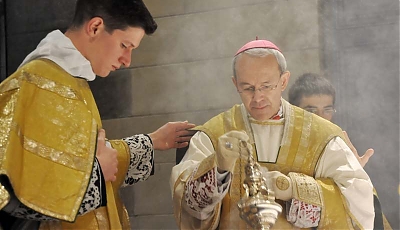 POST-SYNOD CHURCH & UNBELIEVERS IN THE HIERARCHY Rorate Caeli: In the recent Synod, we will not know the legal impact it will have on the Church for some time, as it’s up to Pope Francis to move next. Regardless of the eventual outcome, for all intent and purposes, is there already a schism in the Church? And, if so, what does it mean practically speaking? How will it manifest itself for typical Catholics in the pews? H.E. Schneider: Schism means according to the definition of the Code of Canon Law, can. 751: The refusal of submission to the Supreme Pontiff or of communion with those members of the Church who are submitted to the Supreme Pontiff. One has to distinguish the defect in belief or heresy from schism. The defect in belief or heresy is indeed a greater sin than schism, as Saint Thomas Aquinas said: “Unbelief is a sin committed against God Himself, according as He is Himself the First Truth, on which faith is founded; whereas schism is opposed to ecclesiastical unity, which is a lesser good than God Himself. Wherefore the sin of unbelief is generically more grievous than the sin of schism” (II-II, q. 39, a. 2 c). The very crisis of the Church in our days consists in the ever growing phenomenon that those who don’t fully believe and profess the integrity of the Catholic faith frequently occupy strategic positions in the life of the Church, such as professors of theology, educators in seminaries, religious superiors, parish priests and even bishops and cardinals. And these people with their defective faith profess themselves as being submitted to the Pope. The height of confusion and absurdity manifests itself when such semi-heretical clerics accuse those who defend the purity and integrity of the Catholic faith as being against the Pope – as being according to their opinion in some way schismatics. For simple Catholics in the pews, such a situation of confusion is a real challenge of their faith, in the indestructibility of the Church. They have to keep strong the integrity of their faith according to the immutable Catholic truths, which were handed over by our fore-fathers, and which we find in in the Traditional catechisms and in the works of the Fathers and of the Doctors of the Church. Rorate Caeli: Speaking of typical Catholics, what will the typical parish priest face now that he didn’t face before the Synod began? What pressures, such as the washing of women’s feet on Maundy Thursday after the example of Francis, will burden the parish priest even more than he is burdened today? H.E. Schneider: A typical Catholic parish priest should know well the perennial sense of the Catholic faith, the perennial sense as well of the laws of the Catholic liturgy and, knowing this, he should have an interior sureness and firmness. He should always remember the Catholic principle of discernment: “Quod semper, quod ubique, quod ab omnibus”, i.e. “What has been always, everywhere and from all” believed and practiced. The categories “always, everywhere, all” are not to be understood in an arithmetical, but in a moral sense. A concrete criterion for discernment is this: “Does this change in a doctrinal affirmation, in a pastoral or in a liturgical practice constitute a rupture with the centuries-old, or even with the millennial past? And does this innovation really make the faith shine clearer and brighter? Does this liturgical innovation bring to us closer the sanctity of God, or manifest deeper and more beautiful the Divine mysteries? Does this disciplinary innovation really increase a greater zeal for the holiness of life?” As concretely to the innovation of washing the feet of women during the Holy Mass of the Last Supper on Holy Thursday: This Holy Mass celebrates the commemoration of the institution of the sacraments of the Eucharist and the Priesthood. Therefore, the foot washing of women along with the men not only distracts from the main focus on Eucharist and on Priesthood, but generates confusion regarding the historical symbolism of the “twelve” and of the apostles being of male sex. The universal tradition of the Church never allowed the foot washing during the Holy Mass, but instead outside of Mass, in a special ceremony. By the way: the public washing and usually also kissing of the feet of women on the part of a man, in our case, of a priest or a bishop, is considered by every person of common sense in all cultures as being improper and even indecent. Thanks be to God no priest or bishop is obliged to wash publicly the feet of women on Holy Thursday, for there is no binding norm for it, and the foot washing itself is only facultative. PRIESTLY FRATERNITY OF ST. PIUS X (SSPX) Rorate Caeli: A non-typical situation in the church is the Priestly Society of St. Pius X (SSPX). Why does Your Excellency think that so many Catholics are afraid of the SSPX or anxious about any association with it? From what Your Excellency has seen, what gifts do you think the SSPX can bring to the mainstream Church? H.E. Schneider: When someone or something is unimportant and weak, nobody has fear of it. Those who have fear of the Priestly Society of St. Pius X ultimately have fear of the perennial Catholic truths and of its demands in the moral and the liturgical domain. When the SSPX tries to believe, to worship and to live morally the way our fore-fathers and the best-known Saints did during a millennial period, then one has to consider the life and the work of these Catholic priests and faithful of the SSPX as a gift for the Church in our days – even as one of the several instruments which the Divine Providence uses to remedy the enormity of the current general crisis of the faith, of the morals and of the liturgy inside the Church. In some sectors of the SSPX there are, however, as it is the case in every human society some eccentric personalities. They have a method and a mindset which lack justice and charity and consequently the true “sentire cum ecclesia,” and there is the danger of an ecclesial autocephaly and to be the last judicial instance in the Church. However, to my knowledge, the healthier part corresponds to the major part of the SSPX and I consider their General Superior, His Excellency Monsignor Bernard Fellay, as an exemplarily and true Catholic bishop. There is some hope for a canonical recognition of the SPPX. THE SYNOD AND PAPALOTRY Rorate Caeli: Back on the Synod, while focusing on tradition, does Your Excellency believe that the changes in the Roman liturgy post-Vatican II contributed to the current crisis in the Church, the crisis of marriage, the family and societal morality in general?? H.E. Schneider: I wouldn’t affirm this in such a way. Indeed the very source of the current crisis in the Church, the crisis of marriage, of the family and of the morality in general is not the liturgical reform, but the defects in faith, the doctrinal relativism, from which flows the moral and liturgical relativism. For, if I believe in a defective manner, I will live a defective moral life and I will worship in a defective, indifferent manner. It is necessary first to restore the clearness and firmness of the doctrine of faith and of morals in all levels and, from there, start to improve the liturgy. The integrity and the beauty of the faith demands the integrity and the beauty of one’s moral life and this demands the integrity and the beauty of the public worship. Rorate Caeli: Still on the Synod, it is clear to those with eyes to see that Pope Francis caused confusion instead of clarity in the Synod process, and encouraged a turn toward rupture by elevating the role of Cardinals Kaspar and Danneels, Archbishop Cupich, etc. What is the proper attitude a Catholic should have towards the pope in these troubled times? Are Catholics obliged to make their views known and “resist” as Cardinal Burke said in an interview last year with us, even when their views are critical of the pope? H.E. Schneider: For several past generations until our days there reigns in the life of the Church a kind of “pope-centrism” or a kind of “papolatria” which is undoubtedly excessive compared with the moderate and supernatural vision of the person of the Pope and his due veneration in the past times. Such an excessive attitude towards the person of the Pope generates in the practice an excessive and wrong theological meaning regarding the dogma of the Papal infallibility. If the Pope would tell the entire church to do something, which would directly damage an unchangeable Divine truth or a Divine commandment, every Catholic would have the right to correct him in a due respectful form, moved out of reverence and love for the sacred office, and person of the Pope. The Church is not the private property of the Pope. The Pope can’t say “I am the Church,” as it did the French king Louis XIV, who said: “L’État c’est moi.” The Pope is only the Vicar, not the successor of Christ. The concerns about the purity of the faith is ultimately a matter of all members of the Church, which is one, and a unique living body. In the ancient times before entrusting to someone the office of a priest and of a bishop, the faithful were asked if they can guarantee that the candidate had the right faith, and a high moral conduct. The old Pontificale Romanum says: “The captain of a ship and its passengers alike have reason to feel safe or else in danger on a voyage, therefore they ought to be of one mind in their common interests.” It was the Second Vatican Council, which very much encouraged the lay faithful to contribute to the authentic good of the Church, in strengthening the faith. I think in a time in which a great part of the holders of the office of the Magisterium are negligent in their sacred duty, the Holy Spirit calls today, namely the faithful, to step into the breach and defend courageously with an authentic “sentire cum ecclesia” the Catholic faith. TRADITION AND ITS ENEMIES FROM WITHIN Rorate Caeli: Is the pope the measure of tradition, or is he measured by tradition? And should faithful Catholics pray for a traditional pope to arrive soon? H.E. Schneider: The Pope is surely not the measure of tradition, but on the contrary. We must always bear in mind the following dogmatic teaching of the First Vatican Council: The office of the successors of Peter does not consist in making known some new doctrine, but in guarding and faithfully expounding the deposit of faith transmitted by the apostles (cf. Constitutio dogmatica Pastor aeternus, cap. 4). In fulfilling one of his most important tasks, the Pope has to strive so that “the whole flock of Christ might be kept away from the poisonous food of error” (First Vatican Council, ibd.). The following expression which was in use since the first centuries of the Church, is one of the most striking definitions of the Papal office, and has to be in some sense a second nature of every Pope: “Faithfully adhering to the tradition received from the beginning of the Christian faith” (First Vatican Council, ibd.). We must always pray that God provides His Church with traditional-minded Popes. However, we have to believe in these words: “It is not for you to have knowledge of the time and the order of events which the Father has kept in his control” (Acts 1: 7). Rorate Caeli: We know there are many bishops and cardinals – possibly the majority – who want to change the Church's doctrinal language and long-standing discipline, under the excuses of "development of doctrine" and "pastoral compassion." What is wrong with their argument? H.E. Schneider: Expressions like "development of doctrine" and "pastoral compassion" are in fact usually a pretext to change the teaching of Christ, and against its perennial sense and integrity, as the Apostles had transmitted it to the whole Church, and it was faithfully preserved through the Fathers of the Church, the dogmatic teachings of the Ecumenical Councils and of the Popes. Ultimately, those clerics want another Church, and even another religion: A naturalistic religion, which is adapted to the spirit of the time. Such clerics are really wolves in sheep’s clothing, often flirting with the world. Not courageous shepherds – but rather cowardly rabbits. ROLE OF WOMEN IN THE CHURCH Rorate Caeli: We hear a lot about the role of women in the Church today – the so-called “feminine genius.” Women obviously have played a critical role in the Church since the beginning, starting with the Blessed Virgin Mary. But liturgically, Christ made His position crystal clear, as have pre-Conciliar popes. Does Your Excellency believe that female involvement in the liturgy, whether it’s women taking part in the Novus Ordo Mass or girl altar boys, has played a positive or negative role in the Church the last four decades? H.E. Schneider: There is no doubt about the fact that the female involvement in the liturgical services at the altar (reading the lecture, serving at the altar, distributing Holy Communion) represents a radical rupture with the entire and universal tradition of the Church. Therefore, such a practice is against the Apostolic tradition. Such a practice gave to the liturgy of the Holy Mass a clear Protestant shape and a characteristic of an informal prayer meeting or of a catechetical event. This practice is surely contrary to the intentions of the Fathers of the Second Vatican Council and there is not in the least an indication for it in the Constitution on Sacred Liturgy. THE TRADITIONAL LATIN MASS Rorate Caeli: Your Excellency is well known for celebrating the traditional Latin Mass in many places around the world. What does Your Excellency find to be the deepest lessons learned from saying the Latin Mass, as a priest and as a bishop, that other priests and bishops may hope to gain by saying the traditional Mass themselves? H.E. Schneider: The deepest lessons I learned from celebrating the traditional form of the Mass is this: I am only a poor instrument of a supernatural and utmost sacred action, whose principal celebrant is Christ, the Eternal High Priest. I feel that during the celebration of the Mass I lost in some sense my individual freedom, for the words and the gesture are prescribed even in their smallest details, and I am not able to dispose of them. I feel most deeply in my heart that I am only a servant and a minister who yet with free will, with faith and love, fulfill not my will, but the will of Another. The traditional and more than millennial-old rite of the Holy Mass, which not even the Council of Trent changed, because the Ordo Missae before and after that Council was almost identical, proclaims and powerfully evangelizes the Incarnation and the Epiphany of the ineffably saintly and immense God, who in the liturgy as “God with us,” as “Emmanuel,” becomes so little and so close to us. The traditional rite of the Mass is a highly artfully and, at the same time, a powerful proclamation of the Gospel, realizing the work of our salvation. Rorate Caeli: If Pope Benedict is correct in saying that the Roman Rite currently (if strangely) exists in two forms rather than one, why has it not yet happened that all seminarians are required to study and learn the traditional Latin Mass, as part of their seminary training? How can a parish priest of the Roman Church not know both forms of the one rite of his Church? And how can so many Catholics still be denied the traditional Mass and sacraments if it is an equal form? H.E. Schneider: According to the intention of Pope Benedict XVI, and the clear norms of the Instruction “Universae Ecclesiae,” all Catholic seminarians have to know the traditional form of the Mass and be able to celebrate it. The same document says that this form of Mass is a treasure for the entire Church – thus it is for all of the faithful. Pope John Paul II made an urgent appeal to all bishops to accommodate generously the wish of the faithful regarding the celebration of the traditional form of the Mass. When clerics and bishops obstruct or restrict the celebration of the traditional Mass, they don’t obey what the Holy Spirit says to the Church, and they are acting in a very anti-pastoral way. They behave as the possessors of the treasure of the liturgy, which does not belong to them, for they are only administrators. In denying the celebration of the traditional Mass or in obstructing and discriminating against it, they behave like an unfaithful and capricious administrator who – contrary to the instructions of the house-father – keeps the pantry under lock or like a wicked stepmother who gives the children a meager fare. Perhaps such clerics have fear of the great power of the truth irradiating from the celebration of the traditional Mass. One can compare the traditional Mass with a lion: Let him free, and he will defend himself. RUSSIA NOT YET EXPLICITLY CONSECRATED Rorate Caeli: There are many Russian Orthodox where Your Excellency lives. Has Alexander of Astana or anyone else in the Moscow Patriarchate asked Your Excellency about the recent Synod or about what is happening to the Church under Francis? Do they even care at this point? H.E. Schneider: Those Orthodox Prelates, with whom I have contact, generally are not well informed about the internal current disputes in the Catholic Church, or at least they had never spoken with me about such issues. Even though they don’t recognize the jurisdictional primacy of the Pope, they nevertheless look on the Pope as the first hierarchical office in the Church, from a point of view of the order of protocol. Rorate Caeli: We are just a year away from the 100th anniversary of Fatima. Russia was arguably not consecrated to the Immaculate Heart of Mary and certainly not converted. The Church, while ever spotless, is in complete disarray – maybe worse than during the Arian Heresy. Will things get even worse before they get better and how should truly faithful Catholics prepare for what is coming? H.E. Schneider: We have to believe firmly: The Church is not ours, nor the Pope’s. The Church is Christ’s and He alone holds and leads her indefectibly even through the darkest periods of crisis, as our current situation indeed is. This is a demonstration of the Divine character of the Church. The Church is essentially a mystery, a supernatural mystery, and we cannot approach her as we approach a political party or a pure human society. At the same time, the Church is human and on her human level she is nowadays enduring a sorrowful passion, participating in the Passion of Christ. One can think that the Church in our days is being flagellated as our Lord, is being denuded as was Our Lord, on the tenth Cross station. The Church, our mother, is being bound in cords not only by the enemies of Christ but also by some of their collaborators in the rank of the clergy, even sometimes of the high clergy. All good children of Mother Church as courageous soldiers we have to try to free this mother – with the spiritual weapons of defending and proclaiming the truth, promoting the traditional liturgy, Eucharistic adoration, the crusade of the Holy Rosary, the battle against the sin in one’s private life and striving for holiness. We have to pray that the Pope may soon consecrate explicitly Russia to the Immaculate Heart of Mary, then She will win, as the Church prayed since the old times: “Rejoice O Virgin Mary, for thou alone have destroyed all heresies in the whole world” (Gaude, Maria Virgo, cunctas haereses sola interemisti in universo mundo). Source: Rorate Caeli He is quite the traditionalist, i.e. a staunch advocate of communion by mouth while kneeling. After reading this, is the reader to surmise that while the good Bishop accepts the documents of the Second Vatican Council; he, however, does not condone the contemporary Order of the Mass, post Vatican II? |
|
|
Feb 2 2016, 03:57 PM
Return to original view | Post
#277
|
|
Junior Member
225 posts Joined: Mar 2008
|
QUOTE(yeeck @ Feb 2 2016, 01:16 PM) He still says the Mass of Paul VI, though I'm not sure if His Lordship will give communion in the hand in the new Mass. I do support that stance because of the danger of the sacred particles dropping on the floor and being trampled upon. Usually only those distributing Communion perform ablution after handling the sacred Hosts, but not the people receiving in the hand, thus the high probability of profanation. That would be the duty of each and every Catholic attending mass then. After all, there is a reason we do the sign of the cross with holy water and genuflect before we enter Church right? All this results from poor Catechism, IMO. |
|
|
Feb 2 2016, 05:06 PM
Return to original view | Post
#278
|
|
Junior Member
225 posts Joined: Mar 2008
|
FYI ...
 |
|
|
Feb 2 2016, 05:08 PM
Return to original view | Post
#279
|
|
Junior Member
225 posts Joined: Mar 2008
|
 |
|
|
Feb 2 2016, 06:09 PM
Return to original view | Post
#280
|
|
Junior Member
225 posts Joined: Mar 2008
|
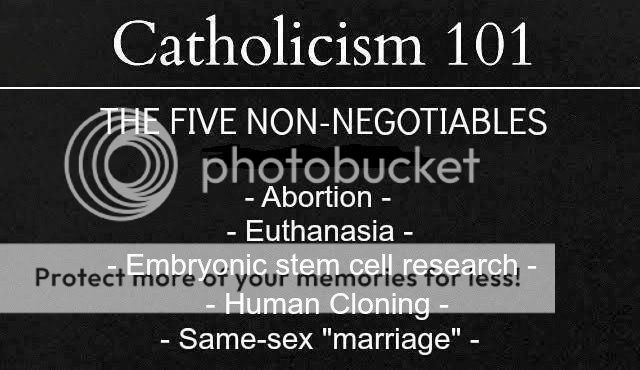
QUOTE(yeeck @ Feb 2 2016, 05:48 PM) Why only five? Haha... top 5 maybe? LOL! |
|
Topic ClosedOptions
|
| Change to: |  0.2158sec 0.2158sec
 0.37 0.37
 7 queries 7 queries
 GZIP Disabled GZIP Disabled
Time is now: 12th December 2025 - 07:08 AM |
 Quote
Quote